Raytheon to Continue to support U.S. Navy Counter-Narco-Terrorism Operations
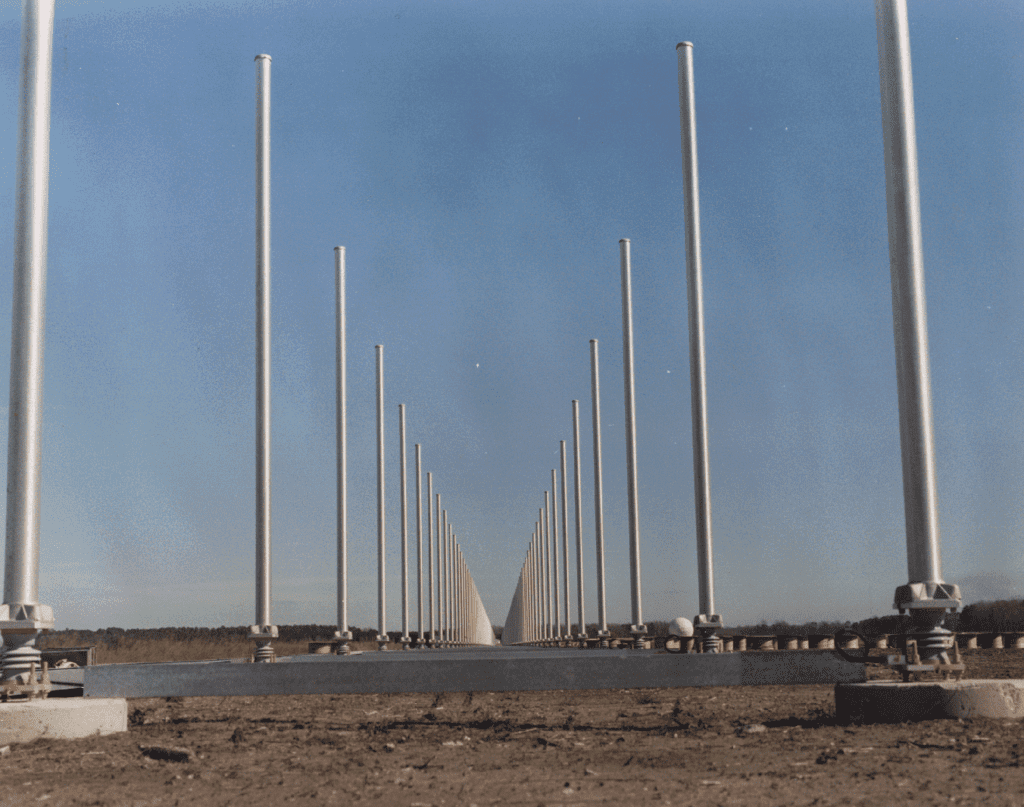
U.S. Navy AN/TPS–71 Relocatable Over-the-Horizon Radar (ROTHR) stations. U.S. NAVY / Wikipedia
ARLINGTON, Va. — Raytheon Intelligence & Space (RI&S), a Raytheon Technologies business, will continue operating and maintaining the U.S. government’s Relocatable Over-the-Horizon Radar (ROTHR) system under a $146 million, five-year contract, the company said in a March 24 release.
Originally developed to track long-range targets for aircraft and ships, ROTHR is now the primary detection system for border security and drug smuggling interdiction for the Joint Interagency Task Force South. In 2020 alone, ROTHR contributed to the seizure of 26 metric tons of cocaine from drug smugglers attempting to cross into U.S. territory.
“Raytheon Technologies’ ROTHR systems have supported U.S. Navy operations for over 30 years,” said John DeSimone, vice president of Cybersecurity, Training and Services for RI&S. “We will continue to work closely with the Navy and JIATF South to help protect our national security.”
The contract covers operations and maintenance at six ROTHR locations in Puerto Rico, Texas and Virginia. Each radar provides more than 2.5 million square miles of coverage area, resulting in extremely low operational costs.
Bell Boeing V-22 Osprey Soars Past 600,000 Fleet Flight-hours
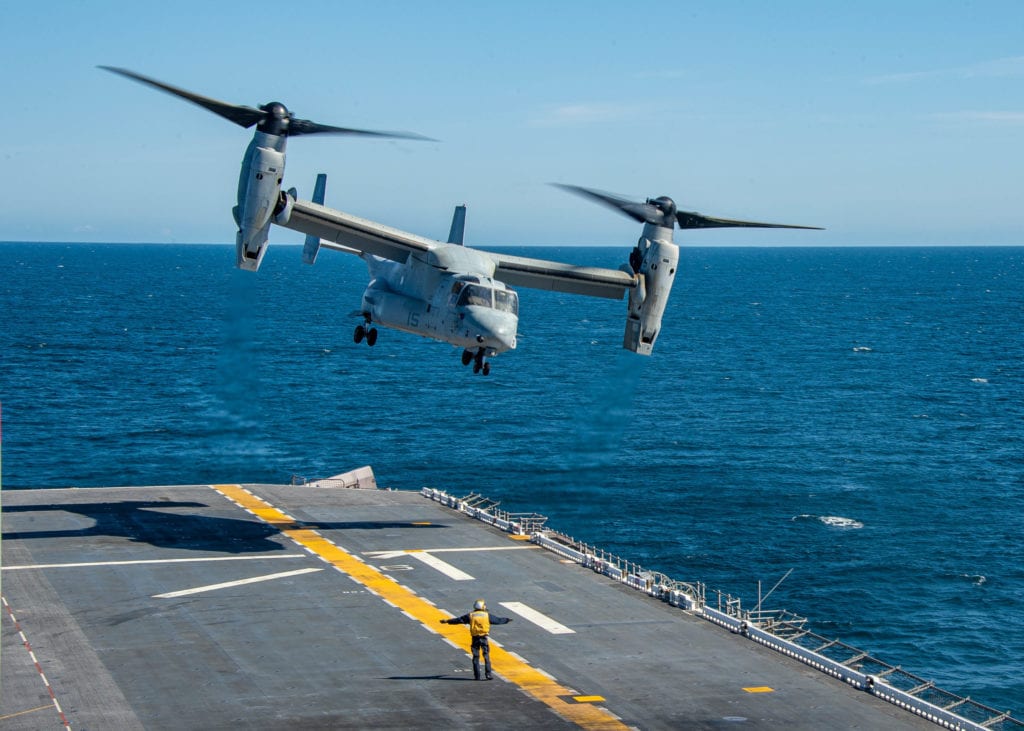
An MV-22 Osprey tiltrotor aircraft, attached with Marine Medium Tiltrotor Squadron (VMM) 165 (Reinforced), 11th Marine Expeditionary Unit, takes off from the flight deck of Wasp-class amphibious assault ship USS Essex (LHD 2) on March 21. U.S. NAVY / Mass Communication Specialist 3rd Class Brett McMinoway
ARLINGTON, Va., and Fort Worth, Texas– The Bell Boeing V-22 Osprey has logged more than 600,000 flight-hours, providing continuous customer support to maintain mission readiness and transport critical cargo and personnel, Bell and Boeing said March 24 in a joint release.
Built by Bell Textron Inc., a Textron Inc. company, and Boeing, the V-22 fleet has grown to more than 400 aircraft and is operated by the United States Marine Corps, U.S. Air Force, U.S. Navy and the Japan Ground Self-Defense Force.
The V-22 is the only military production tiltrotor aircraft in the world. Its speed, range, maneuverability and logistical capability make it one of the most versatile and cost-effective solutions for its customers.
“There is no other aircraft in the world capable of matching the unique capabilities of the Osprey,” said Kurt Fuller, Bell V-22 vice president and Bell Boeing program director. “The 600,000 flight-hours represent countless tactical, logistical and humanitarian assistance missions, and the dedication of the men and women who maintain and operate the aircraft every day to keep it an advanced aircraft.”
Bell Boeing directly supports V-22 readiness by providing comprehensive global services to V-22 squadrons, including maintenance support, training, on-site field representatives, data analytics and new and repaired parts. For example, the Naval Air Systems Command recently awarded Bell Boeing a contract to deliver and install kits for nacelle improvements and the conversion area harness onto the CV-22 aircraft for the Air Force. The program refines the design of the nacelles and wiring harnesses for better reliability and maintainability, ultimately reducing repair time and improving readiness.
“Each V-22 flight hour is the product of a team effort,” said Col. Matthew Kelly, V-22 Joint Program Office program manager. “Enabled by pilots, maintainers, testers, engineers, the program workforce and our industry partners who, together, ensure safe and effective V-22 operation.”
Recent program accomplishments include the V-22’s latest variant, the CMV-22B, assigned to the “Titans” of Fleet Logistics Multi-Mission Squadron 30, completing the first delivery of an F-35 engine to the USS Carl Vinson, along with successful paradrops with the U.S. Navy’s parachuting team, “The Leap Frogs,” earlier in the year.
“From its first flight over 30 years ago to achieving this significant flight-hour milestone, the V-22 has a demonstrated legacy of mission success,” said Shane Openshaw, Boeing V-22 vice president and Bell Boeing V-22 deputy program director. “As we look at optimizing future sustainment and support, our customer partnerships and commitment to innovation, flexibility and agility will ensure we build on the aircraft’s ability to support whatever the mission demands.”
Coast Guard Offloads More than 19,600 Pounds of Cocaine, Marijuana
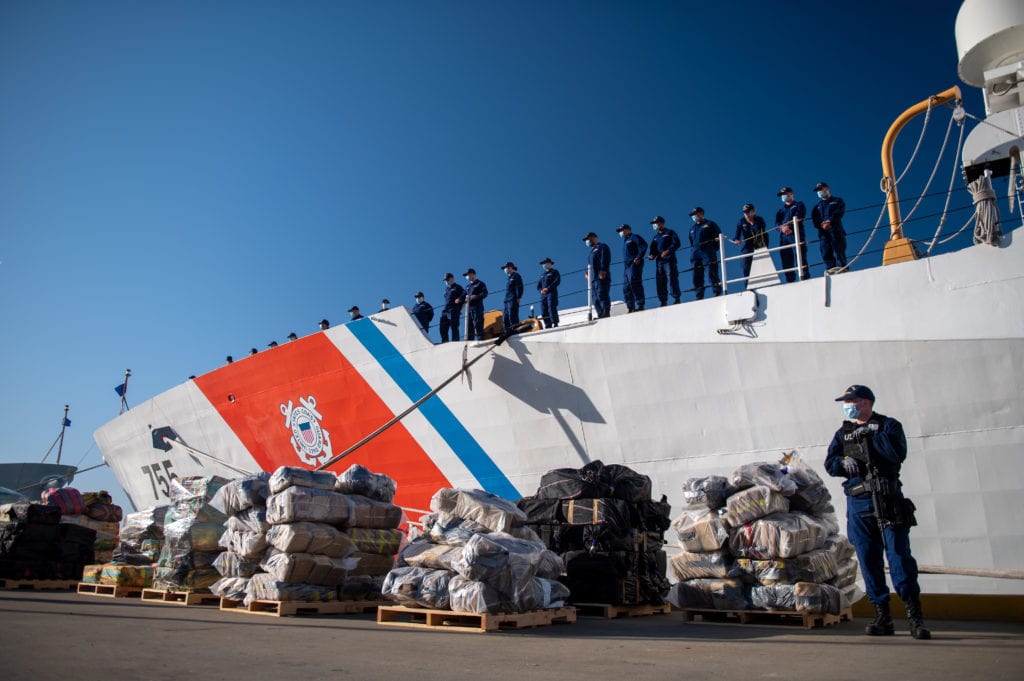
The crew of the Coast Guard Cutter Munro gather in formation behind seized contraband during a drug offload in Alameda, California, March 23, 2021. U.S. COAST GUARD / Petty Officer 3rd Class Taylor Bacon
ALAMEDA, Calif. — The crew of the Coast Guard Cutter Munro (WMSL 755) offloaded approximately 8,200 pounds of seized cocaine and 11,450 pounds of marijuana March 23 at the ship’s homeport at Coast Guard Base Alameda, the Coast Guard Pacific Area said in a release.
Prior to the Munro’s arrival in Alameda, the crew transferred 12 detainees, approximately 9,200 pounds of cocaine and 2,150 pounds of marijuana to law enforcement officials in San Diego.
The drugs, in total worth an estimated $330 million, were seized in international waters of the Eastern Pacific Ocean between January and March, representing 15 suspected drug smuggling vessel interdictions off the coasts of Mexico, Central and South America by the following Coast Guard and Navy ships:
The Coast Guard Cutter Munro (WMSL 755) crew was responsible for nine interdictions, seizing approximately 10,200 pounds of cocaine and 11,450 pounds of marijuana.
The Coast Guard Cutter Bear (WMEC 901) crew was responsible for two interdictions, seizing approximately 66 pounds of cocaine.
The Coast Guard Cutter Vigilant (WMEC 617) crew was responsible for one interdiction, seizing approximately 1,870 pounds of cocaine.
The Coast Guard Cutters Bear and Munro conducted a joint interdiction, seizing approximately 3,747 pounds of cocaine.
Coast Guard Law Enforcement Detachment 107 deployed aboard the USS Freedom (LCS 1) was responsible for two interdictions, seizing approximately 1,600 pounds of cocaine and 2,150 pounds of marijuana.
“National security cutters like Munro are national-level assets and are game changers for the United States government’s maritime interdiction capability,” said Vice Adm. Linda Fagan, the commander of Coast Guard Pacific Area. “As your Coast Guard, we use our unique capabilities and authorities as a military service and a law enforcement agency to secure the nation’s maritime border and to disrupt illegal activity of dangerous cartels. This offload demonstrates another successful cycle of justice.”
“Transnational criminal organizations have not slowed down due to the pandemic, and the Coast Guard women and men continue to protect our nation on the frontlines,” said Capt. Blake Novak, the commanding officer of the Munro. “Our crew intercepted a group of suspected smugglers, on average, every 90 hours for 45 days straight, seizing nearly 30,000 pounds of cocaine and marijuana valued at over $330 million. Maintaining such a high level of performance was only possible because of a total team effort. This crew set the bar for excellence, and I am incredibly proud of all of them.”
Munro is one of four national security cutters homeported in Alameda. These Legend class cutters are 418-feet long, 54-feet wide, and have a 4,600 long-ton displacement. They have a top speed in excess of 28 knots, a range of 12,000 nautical miles, endurance of up to 90 days and can hold a crew of nearly 150.
China is the Biggest Challenge and Taiwan the Biggest Risk: INDO-PACOM Nominee Says
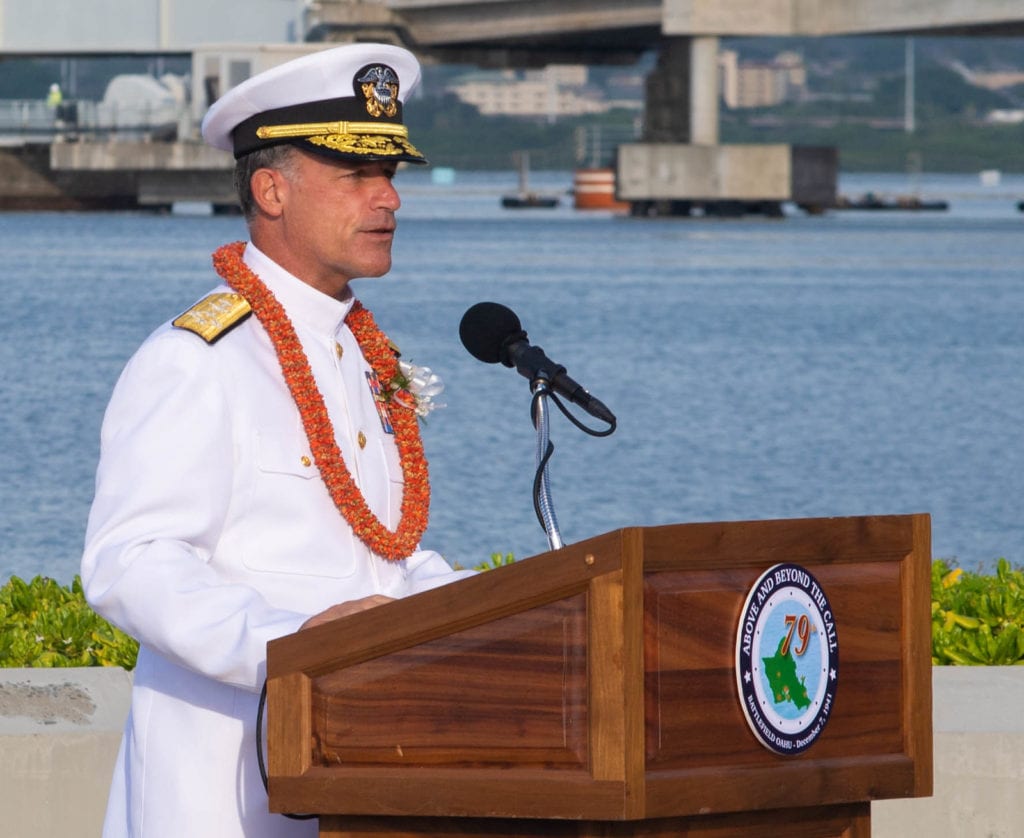
Adm. John Aquilino, Commander, U.S. Pacific Fleet, speaks during the 79th Pearl Harbor Remembrance Day ceremony at the Pearl Harbor National Memorial in Honolulu, Hawaii, in 2020.Aquilino, nominated to be the next commander of Indo-Pacific Command, testified before the Senate Armed Services Committee March 23, 2021. U.S. NAVY / Mass Communication Specialist 2nd Class Jessica O. Blackwell
ARLINGTON, Va. — The Navy admiral nominated to lead U.S. Indo-Pacific Command says his immediate challenge is to deter China from seizing Taiwan, while assuring regional allies and partners that the United States is serious about opposing Beijing’s belligerence.
“This problem is much closer to us than most think,” Adm. John C. Aquilino, currently commander of the U.S. Pacific Fleet, told the Senate Armed Services Committee at his confirmation hearing March 23.
“The Indo-Pacific is the most consequential reason for America’s future and remains the priority theater for the United States,” he said, adding that the region includes four of the five security challenges for the U.S. military: China, Russia, North Korea and violent extremist organizations.
But “of all the threats we face, [Defense Secretary Lloyd J.] Austin was very clear when he stated, ‘China is our pacing threat,’” Aquilino added. The admiral said he agreed with the assessment of the departing INDO-PACOM commander, Adm. Philip S. Davidson, that the most dangerous concern with China was if it used “military force against Taiwan.” To deter that, forward deployed U.S. forces rely on the support of “our allies and partners –those nations with common values,” he said.
While the threat of a Chinese attack is not immediate, Aquilino said it was likely sooner than the six years Davidson projected in testimony before the committee March 9. If China seized Taiwan and subsequently based ships and aircraft there, “it would certainly extend their reach. It would extend the contested environment. It would threaten our allies and partners, think [of] the Philippines,” he said.
Aquilino said conducting exercises with allies and partner nations, like Japan, Korea and India would complement the administration’s focus on deterrence through diplomatic, development and economic means. He also said the Pacific Deterrence Initiative (PDI) a multibillion dollar fund created by Congress last year, “is the foundational approach” to advancing capabilities and capacity in lethality, force design and logistics to help strengthen partnerships for an integrated joint force.
Reclaiming Taiwan, which broke away from the People’s Republic of China in 1949, is important “because the rejuvenation of the Chinese Communist Party is at stake,” the admiral said, adding “They view it as their No. 1 priority.” The fate of the island nation of 23 million, located about 100 miles from China, puts U.S. credibility on the line with regional partners. “The status of the United States as a partner with our allies and partners also is at stake should we have a conflict in Taiwan,” Aquilino said.
“The United States maintains its longstanding commitments as outlined in the Three Communiqués, the Taiwan Relations Act, and the Six Assurances. We will continue to assist Taiwan in maintaining a sufficient self-defense capability,” Aquino said in written answers to questions previously submitted by the committee.
A 1984 U.S. Naval Academy graduate and naval aviator since 1986, Aquilino was nominated in December 2020 by then-President Trump for the INDO-PACOM post but was not confirmed by the Senate before the change in administrations. He was nominated again by President Joe Biden, Austin announced March 5.
A graduate of the Navy Fighter Weapons School (TOPGUN), Aquilino made several extended deployments in support of operations Deny Flight, Deliberate Force, Southern Watch, Noble Eagle, Enduring Freedom and Iraqi Freedom. His flag assignments have included deputy director, Joint Force Coordinator on the Joint Staff; commander, CSG-2, director of Maritime Operations, U.S. Pacific Fleet and commander, U.S. Naval Forces Central Command, U.S. 5th Fleet, Combined Maritime Forces.
Navy Orders 10th Block V Virginia-Class Attack Submarine
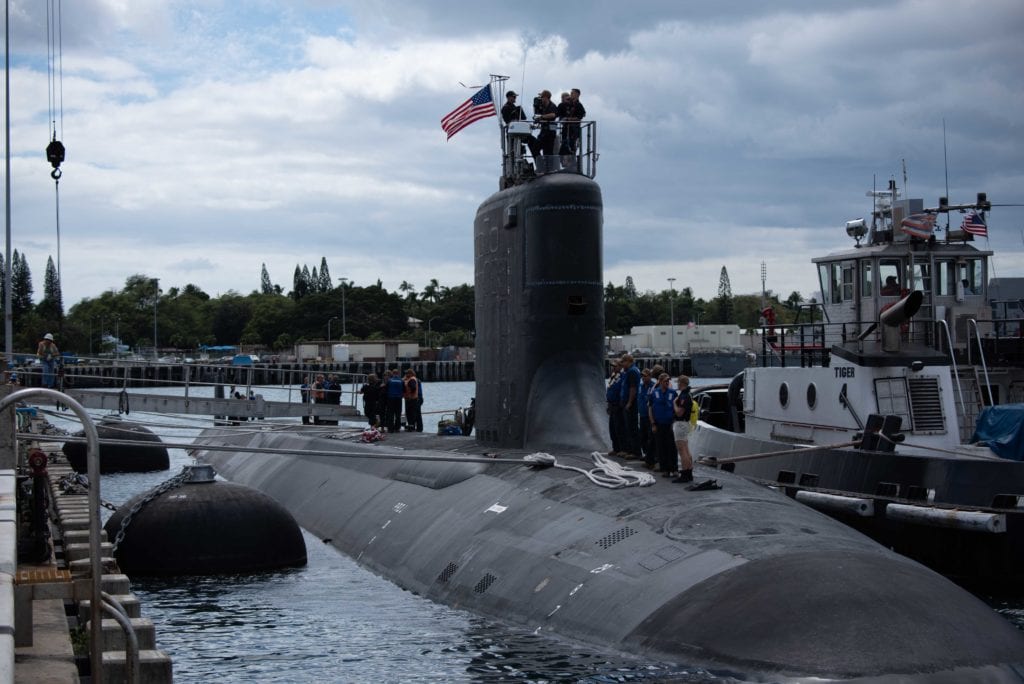
The U.S. Navy has exercised a contract option for a tenth Block V version of the Virginia-class submarine to join its other Virginia-class subs, including the USS Illinois, shown here preparing to leave Pearl Harbor in 2019. U.S. NAVY / Mass Communication Specialist 1st Class Daniel Hinton
ARLINGTON, Va. — The Navy has exercised a contract option and ordered a tenth Block V version of the Virginia-class nuclear-powered attack submarine (SSN).
The Naval Sea Systems Command awarded General Dynamics Electric Boat a $2.4 billion fixed-price incentive modification to a contract for the SSN, according to a March 19 Defense Department contract announcement. Electric Boat subcontracts Huntington Ingalls Newport News Shipbuilding for part of the work on the program.
This 460-foot, 10,200-ton Block V SSN, like seven of its nine sister Block Vs, will include a Virginia Payload Module, an 84-foot-long section of launch tubes which can fire 28 Tomahawk cruise missiles, in addition to the 12 launch tubes in the submarine’s bow, giving the submarine a payload of 40 Tomahawks.
Work on this contract option is expected to be completed by 2030. This SSN will bring to 38 the number of Virginia-class SSNs in the fleet.
Coast Guard to Rename Training Center Wing after Arnold Palmer
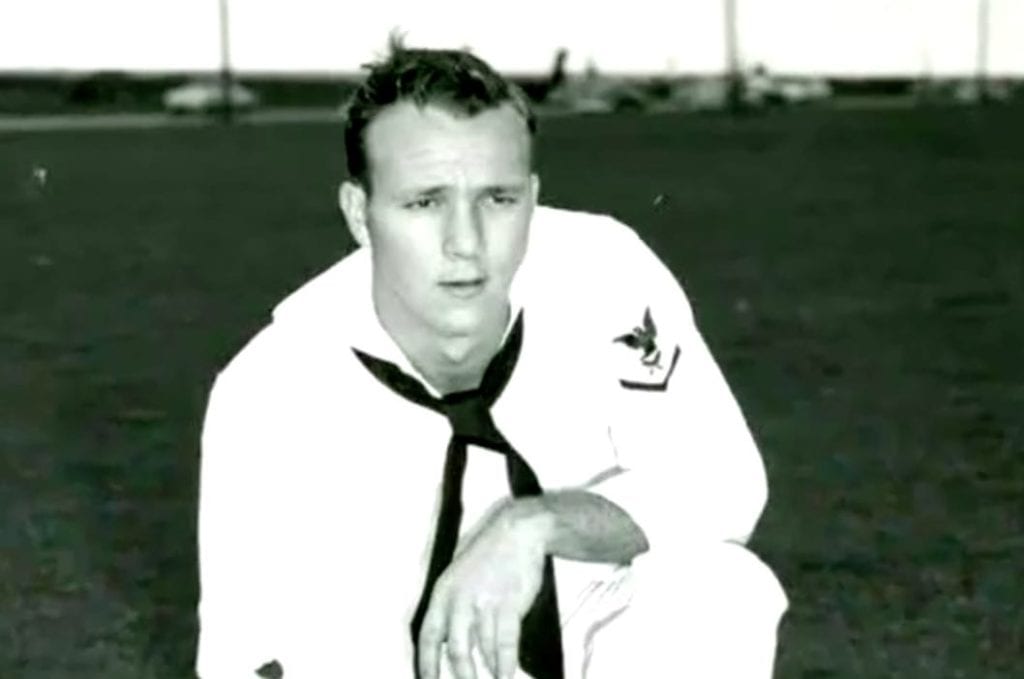
Golfing great Arnold Palmer in his Coast Guard days. U.S. COAST GUARD
PETALUMA, Calif. — The Coast Guard announced plans to rename a training wing after golfing legend Arnold Palmer at Coast Guard Training Center Petaluma, the Coast Guard 11th District said in a March 23 release.
Training Center Petaluma plans to officiate the renaming of the Yeoman and Storekeeper “A” School wing of the Juliet Nichols Building in a ceremony later this year.
Palmer served with distinction as a yeoman in the Coast Guard from 1951 to 1953 and worked for the 9th Coast Guard District commander in Cleveland, Ohio.
Palmer reportedly joined the Coast Guard after his college roommate was tragically killed in an automobile accident as a way to get away from how distraught he was over the loss of his friend.
“My dad said that the U.S. Coast Guard ‘made [him] a better person for the world,’” said Amy Palmer Saunders, chair of the Arnold & Winnie Palmer Foundation. “He would be touched to know that others will be given the same opportunity to learn and grow in a space named for him, and my family and I are grateful to the Pennsylvania delegation, to members of the Coast Guard and to others who made this possible.”
Located just west of the city of Petaluma, Training Center Petaluma is the Coast Guard’s largest West Coast training center. The graduates are the latest chiefs, medics, storekeepers, yeoman, information system technicians, electronics technicians and operations specialists. Training Center Petaluma is also the home to the Coast Guard Leadership Development Center’s Chief Petty Officer Academy.
CNO Visits Fincantieri Marinette Marine Shipyard
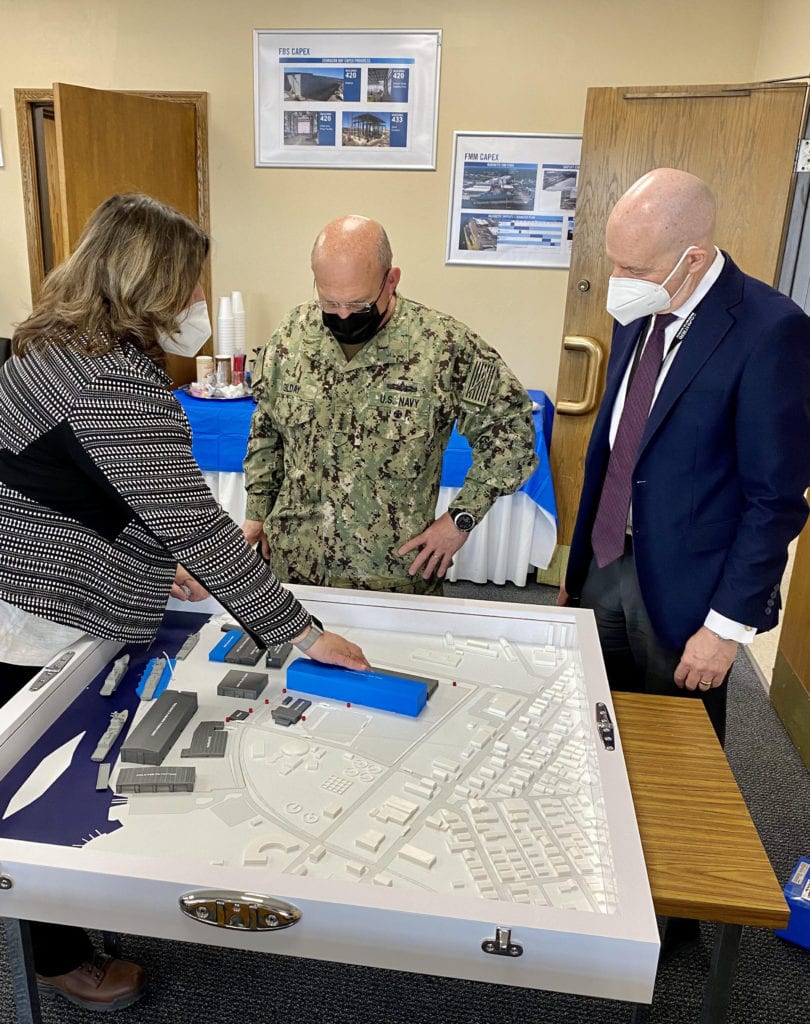
Chief of Naval Operations (CNO) Adm. Mike Gilday tours Fincantieri Marinettte Marine Shipyard with leadership from the shipyard. During the visit, CNO also received briefs on a range of topics, including the Navy’s new Constellation-class Guided-Missile Frigate and Large Unmanned Surface Vehicle development. U.S. NAVY / Cmdr. Nate Christensen
WASHINGTON — Chief of Naval Operations (CNO) Adm. Mike Gilday traveled to Marinette, Wisconsin on March 23, to visit Fincantieri Marinette Marine shipyard, the Navy said in a release.
During the visit, CNO toured the facility and received briefs on a range of topics, including the Navy’s new Constellation-class Guided-Missile Frigate and Large Unmanned Surface Vehicle development.
“One of the most important reasons I am here in Wisconsin is to remind the thousands of men and women working in and around the shipyard that their work is important to our Navy and to our nation” said Gilday. “While Wisconsin seems far from our oceans, its connection to the U.S. Navy remains strong.”
The CNO said an important reason for his visit was to better understand design efforts of the Constellation-class frigates.
“This class of ships is going to be a workhorse in the fleet, and I don’t want anyone to forget the fact that our Sailors are depending on the quality of work done here,” said Gilday. “The ships need to leave Marinette ready for the fight, and that’s what we intend to do. I’m excited to see the FFG ships come to life over the months and years come.”
Dario Deste, president and CEO of Fincantieri Marine Group, echoed similar sentiments.
“We know that the Constellation-class frigates are going to be important for tomorrow’s Navy,” said Deste. “It’s great to have the CNO here in Wisconsin, walking the shipyard, meeting our team and seeing the pride and commitment we have in our work.”
During the visit, the CNO had the chance to meet with shipyard workers and said he was impressed by the innovation and dedication shipyard workers have shown to keeping production lines on track, especially amidst the pandemic.
“To the entire workforce here in Marinette who are responsible for helping us generate warfighting readiness, you have my profound thanks,” said Gilday. “Your innovation and dedication to keeping production lines on track is greatly appreciated, as is your commitment to readiness, which is critical for us to be able to protect our nation.”
Low-Yield Warhead, Nuclear Sea-Based Cruise Missile Will Survive, HASC Ranking Member Says
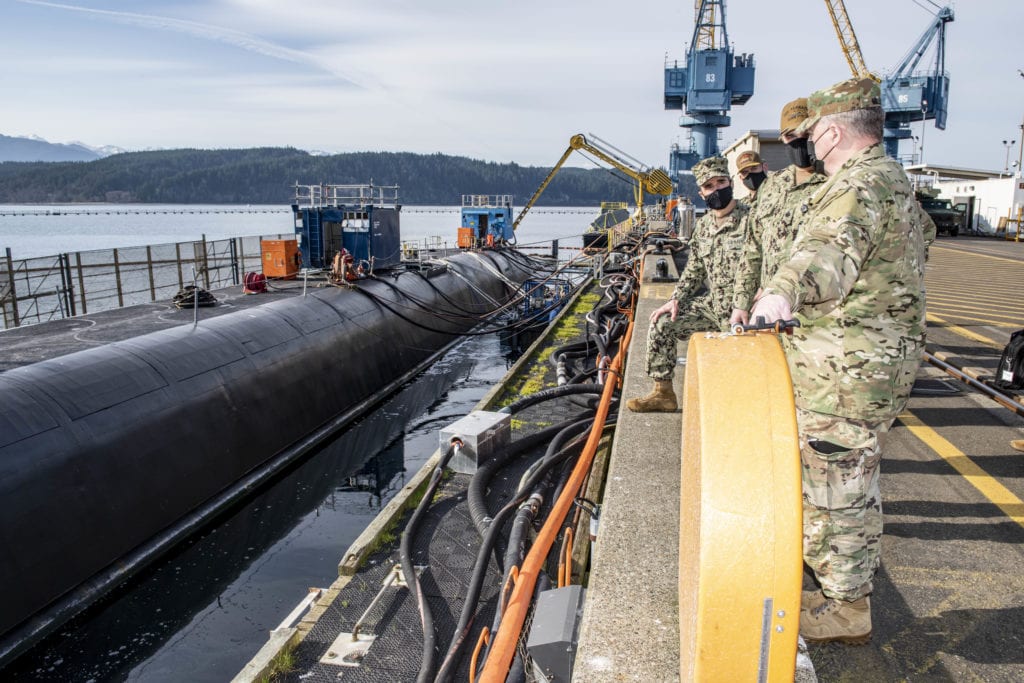
Chairman of the Joint Chiefs of Staff Gen. Mark A. Milley speaks to Cmdr. Brian Murphy, commanding officer of the Ohio-class ballistic-missile submarine USS Alabama (SSBN 731) Blue crew, March 3. Milley toured Alabama, visited with Sailors, and toured Trident Training Facility Bangor and Strategic Weapons Facility Pacific while visiting strategic-deterrent units in the Pacific Northwest. U.S. Navy/ Mass Communication Specialist 1st Class Andrea Perez
ARLINGTON, Va. — Two naval nuclear weapons deployed or planned are likely to survive cancellation efforts from Democratic members Congress, said the new ranking member of the House Armed Services Committee (HASC).
Mike Rogers, R-Alabama, speaking March 22 during a webinar of the Defense Writers Group, was asked by Seapower about the future of the W76-4 low-yield warhead deployed in 2019 on some Trident submarine-launched ballistic missiles — carried on Ohio-class ballistic-missile submarines — and the planned nuclear-armed sea-launched cruise missile (SLCM) called for in the Defense Department’s 2018 Nuclear Posture Review.
The NPR said that “a low-yield SLBM warhead and SLCM will not require or rely on host nation support to provide deterrent effect. They will provide additional diversity in platforms, range, and survivability, and a valuable hedge against future nuclear ‘break out’ scenarios.”
The review said the “SLCM will provide a needed non-strategic regional presence, an assured response capability. It also will provide an arms-control-compliant response to Russia’s noncompliance with the Intermediate-range Nuclear Forces Treaty, its nonstrategic nuclear arsenal, and its other destabilizing behaviors.”
The new HASC chairman, Rep. Adam Smith, D-Washington, has stated his opposition to the low-yield warhead and SLCM as being destabilizing to the nuclear balance.
“We’ll hold the line,” Rogers said, speaking of the congressional Republicans. “I’m sure there will be a big debate. We’ve got some people [opponents of weapons], as long as there are TV cameras in the room, they’re going to run their mouth, but I think we’ll have the votes.”
Japan Launches Lead Ship of 22 Mogami-Class Frigates
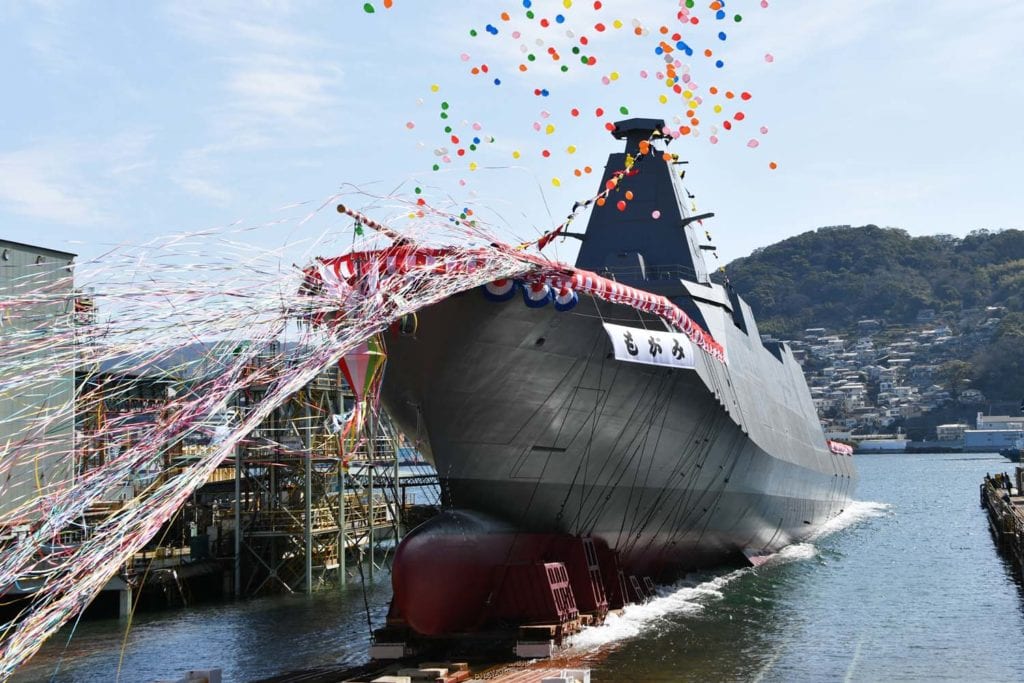
Mitsubishi Heavy Industries launched Mogami, the first of a new class of 22 multirole frigates for the Japanese Maritime Self Defense Force, in a March 3 ceremony at the company’s Nagasaki Shipyard & Machinery Works. Japanese Maritime Self Defense Force
The Japanese Maritime Self Defense Force has launched the first of a new class of multi-mission surface combatant.
The Mogami (FFM 1)-class frigate, also known as the 33FFM program, will be stealthy multi-mission surface combatants with the capability to employ unmanned surface and undersea vehicles to conduct mine countermeasures operations.
The first ship was launched at Mitsubishi Heavy Industries in Nagasaki on March 3. The second ship in the class, Kumano, is being built at Mitsui Engineering and Shipbuilding Tamano Works in Okayama.
Eight of the 426-foot, 5,500-ton Mogami-class FFMs are currently under contract, with 22 of them planned. The Maritime Self Defense Force plans to build two per year.
The Mogami will be armed with a MK 45 5-inch gun, 16 MK 41 Vertical Launch System tubes, eight anti-ship missiles, SeaRAM ddefensive missiles, torpedoes and decoy launchers.
The FFM has a flight deck and hanger to embark an SH-60L helicopter and could also handle unmanned aircraft systems. A rear ramp beneath the flight deck can be used to launch and recover unmanned surface vehicles and unmanned underwater vehicles as well as lay sea mines.
The 30FFM features a futuristic combat information center with a 360-degree video wall.
The stealthy design draws from MHI’s experience with the Mitsubishi X-2 Shinshin stealth fighter technology demonstrator.
The Combined Diesel and Gas Turbine propulsion system features a Rolls Royce MK30 gas turbine and two MAN diesels, delivering speeds of up to 30 knots. The crew of 90 personnel is smaller than existing combatants of comparable size.
The Mogami class will replace some mine warfare ships and escort ships, and will be available for peacekeeping, anti-piracy and humanitarian missions, freeing larger and more capable combatants that are now being used in those roles to assume other duties.
Philippine Navy Retires Four Ships as it Transitions to Modern Fleet
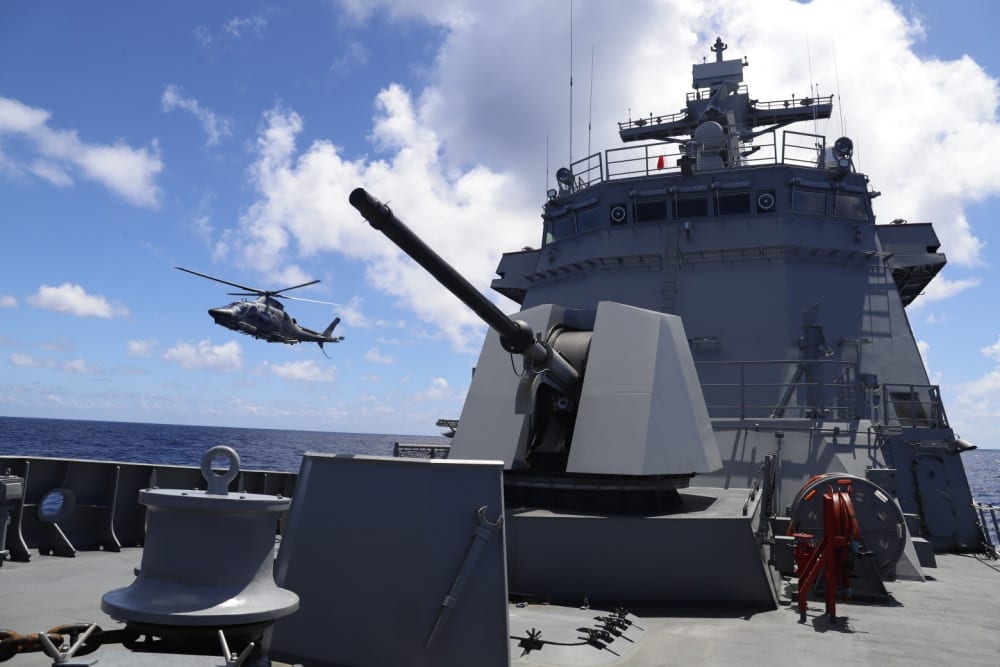
Republic of the Philippines navy ship BRP Jose Rizal (FF 150) conducts flight operations during Exercise Rim of the Pacific 2020. Republic of the Philippines navy / SN1 Pataueg
The Republic of the Philippines’ navy is making a pivot from older legacy ships and craft to newer and more capable surface combatants.
On March 1, 2021, the RPN decommissioned four of its oldest ships in a ceremony at the Heracleo Alano Naval Base in Sangley Point, Cavite City on the island of Luzon. Following guidance from Defense Secretary Delfin Lorenzana, decommissioning “vintage assets” paves the way for the new platforms pursuant to the Armed Forces of the Philippines Modernization Program.
To be decommissioned are Patrol Corvettes BRP Pangasinan (PS-31) and BRP Quezon (PS-70), and Fast Attack Craft BRP Salvador Abcede (PC-114) and BRP Emilio Liwanag (PC-118).
“Indeed, the decommissioning of PS-31, PS-70, PC-118, and PC-114 is a symbolism that there is a new horizon in sight. We are geared towards becoming a stronger and more capable Philippine navy [PN]. With our newest acquisitions, we are more confident that we can better perform our mandate and provide better protection of our maritime domains,” Vice Adm. Giovanni Carlo Bacordo, chief of the navy, said in a statement.
“The accomplishments of these PN vessels won’t be possible without their courageous crew. We are preparing and transitioning from a legacy navy into a modern navy, and part of this is making sure that we allocate our valuable resources and manpower to our new platforms,” Bacordo said in his speech, delivered by PN vice commander Rear Adm. Adeluis Bordado.
The Navy is implementing Defense Secretary Delfin Lorenzana’s guidance to decommission vintage assets to pave the way for the incoming platforms as part of the Armed Forces of the Philippines Modernization Program, and supports the PN’s capability development program to acquire modern platforms with state-of-the-art equipment, sensors, weapons and combat management systems.
In a release from the government-run Philippine News Agency (PNA), Bacordo said the old ships are too old and costly to maintain and operate, and that by decommissioning them, the Navy could “devote more resources to our newly-acquired ships.”
Long-serving veterans
BRP Quezon was one of the last of the 95 Auk-class of minesweepers built during the second world war. She was originally the 221-foot, 1,100-ton Auk-class minesweeper USS Vigilance (AM-324), and was commissioned in January 1943, serving in the Pacific during World War II. She was transferred to the Philippines in 1967 and underwent a major refit in the mid-1990s. At the time of her decommissioning, Quezon was one of the oldest active fighting ships in the world, serving for 77 years, of which 53 years were with the Philippine navy.
The 185-foot, 914-ton BRP Pangasinan began life as PCE 891, a patrol craft commissioned in the U.S. Navy in 1944 and transferred to the Philippines four years later. Although her armament changed over the years, at the time of her deactivation she carried a Mk.26 3-inch/50-caliber gun, three twin Mk.1 Bofors 40mm cannons, four Mk.10 Oerlikon 20mm cannons, and four M2 Browning 12.7mm 50-caliber machine guns. She had 72 years of active service at the time of her retirement.
The two Tomas Batilo-class patrol boats among the four ships deactivated, BRP Salvador Abcede (PC-114) and BRP Emilio Liwanag (PC-118), previously served in the Republic of Korea navy as fast attack craft, designated Patrol Killer Medium (PKM), and were the last of eight ex-Korean PKMs in the Philippine Navy. The PKMs were built in Korea in the 1970s. Five of them were acquired in 1995, one in 1998 and two in 2006. Salvador Abcede and Emilio Liwanag were transferred from the Korean navy in 1996.
The 121-foot, 170-ton PKMs could achieve speeds up to 37 knots, and were armed with Bofors 40/60 caliber guns and pair of Oerlikon 20mm/70 caliber Gatling guns and two 12.7mm/50 caliber machine guns.
Fleet renewal
New ships are joining the fleet. Two new Jose Rizal-class frigates, built by Hyundai Heavy Industries (HHI) in South Korea BRP Antonio Luna (FF 151) was commissioned at Subic Bay earlier this month. The lead ship in the class, BRP Jose Rizal (FF 150), was commissioned in July 2020, and promptly deployed to Hawaii to participate in the Rim of the Pacific multi-national fleet exercise.
These two ships are the Philippine Navy’s most modern surface combatants, and the first with surface-to-air missiles for defense, but the ships were delivered without all of the combat systems installed, including VLS launchers, a close-in weapon system and towed array sonar. They will also be able to embark an AW-159 Wildcat helicopter.
The Philippine navy also received one former Republic of Korea navy Pohang-class coastal defense and anti-submarine corvettes, the BRP Conrado Yap (PS 39), in 2019. At 353 feet long and 2,600 tons, she carries a 76-mm gun, twin 40mm/70 caliber guns and torpedoes.
The 24 ships of the Pohang class were designed and built in Korea and commissioned in the Republic of Korea navy between 1984 and 1993. Ten remain in service with the ROKN, while others have been disposed of or transferred to other navies, as was BRP Conrado Yap. One of the ships in the class, ROKS Cheonan (PCC 772), was sunk by North Korean torpedoes in 1989.
Three former U.S. Coast Guard 378-foot Hamilton-class cutters — Hamilton (WHEC 715), Dallas (WHEC 716) and Boutwell (WHEC 719) — were transferred to the Philippine navy between 2011 and 2016 and became BRP Gregorio del Pilar (PS-15), BRP Ramon Alcaraz (PS 16) and BRP Andres Bonifacio (PS 17), respectively. Although these former 3,250-ton cutters had been in service for about 45 years, they were extensively modernized before being turned over to the Philippines.