Coast Guard Cutter Northland Returns from Gulf of Mexico Patrol
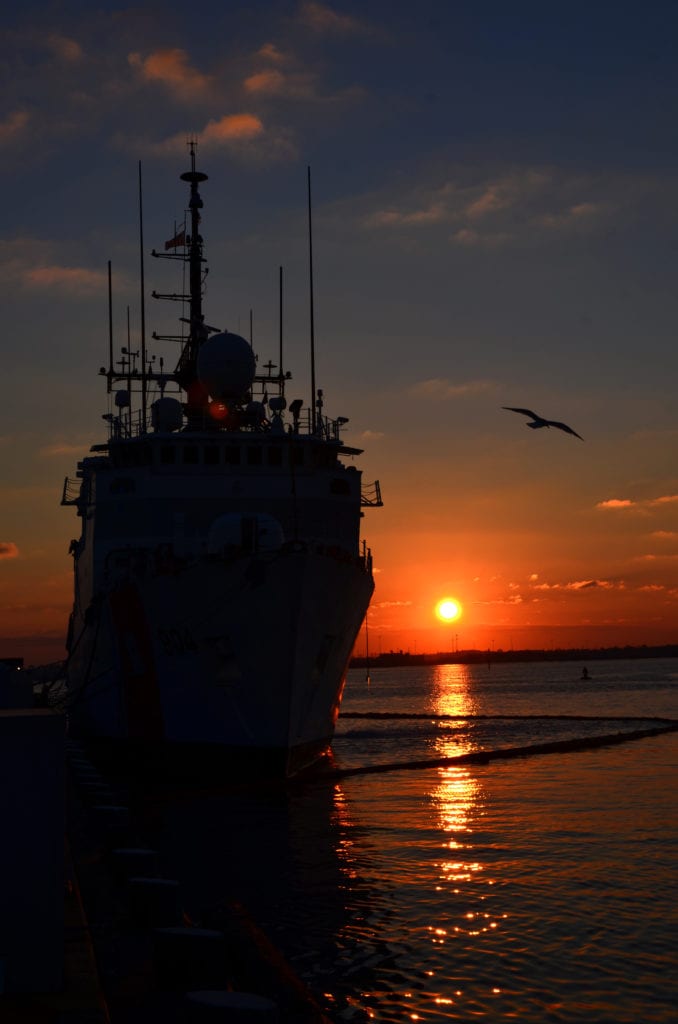
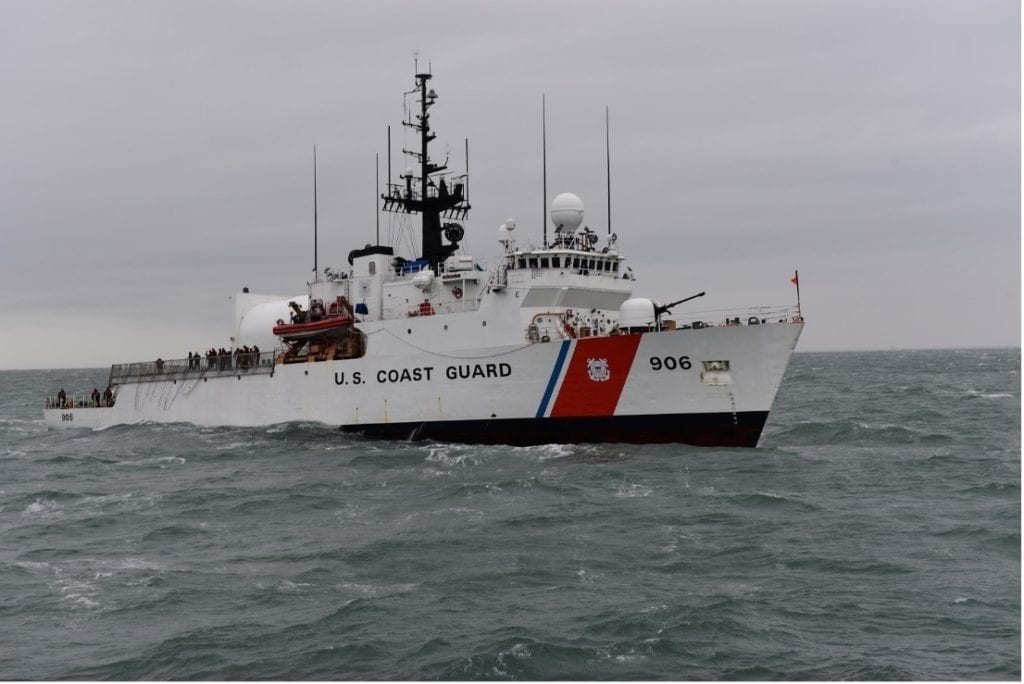
The Coast Guard 270-foot medium endurance cutter Northland lies in her berth at homeport, Coast Guard Base Portsmouth, Feb. 25, 2014. The Northland conducts search and rescue, law enforcement, homeland security, and defense operations missions in the Atlantic Ocean, Caribbean Sea, and Gulf of Mexico. U.S. Coast Guard

PORTSMOUTH, Va. — The Coast Guard Cutter Northland returned home March 22 to Portsmouth from a patrol in support of the Eighth Coast Guard District, the Coast Guard 5th District said in a March 23 release. 

During the patrol, the crew of the Northland conducted daily law enforcement boardings and patrolled the waters for any illegal fishing boats or gear to ensure fair, safe, and sustainable practices. 

The Northland crew embarked an MH-65 Dolphin helicopter aviation detachment for the patrol to assist in spotting vessels and targets of interest before launching the cutter small boats.  

Prior to beginning patrol, the Northland crew underwent a training availability to test their ability to respond to a variety of shipboard scenarios, such as engine room fires and defense operations. Immediately following the inspection, the Northland crew sailed to Pensacola, Florida, where they successfully completed a biennial evaluation of shipboard helicopter operations. 

Upon leaving Pensacola, the cutter patrolled the Maritime Boundary Line, between the United States and Mexico. Once on scene, the crew began fisheries enforcement, deterring illegal fishing and ensuring compliance with federal laws.  

Constant surveillance led to the interdiction of one vessel illegally fishing in U.S. waters and the retrieval of miles of fishing gear intentionally left behind by foreign fishermen. The Northland’s presence and enforcement of laws ensured the safety, fairness, and longevity of fisheries throughout the Gulf of Mexico. 

“I continue to be impressed with the drive and adaptability that the crew demonstrates on a daily basis,” said Cmdr. Patricia Bennett, commanding officer of Coast Guard Cutter Northland. “I am thankful for the crew’s desire for mission excellence, and also grateful for the Northland being afforded the opportunity to conduct domestic fisheries operations. It is a mission that helps ensure the safety of fishermen and helps sustain a natural marine resource with global implications. Halting illegal fishing through the combination of effective policy and enforcement actions is the best way to prevent the detrimental impact to coastal communities, nations reliant upon seafood as a primary source of protein, and the entire oceanic ecosystem.” 

The Northland is a 270-foot medium-endurance cutter that routinely deploys in support of counter-drug, alien migrant interdiction, fisheries, search and rescue and homeland security missions. 
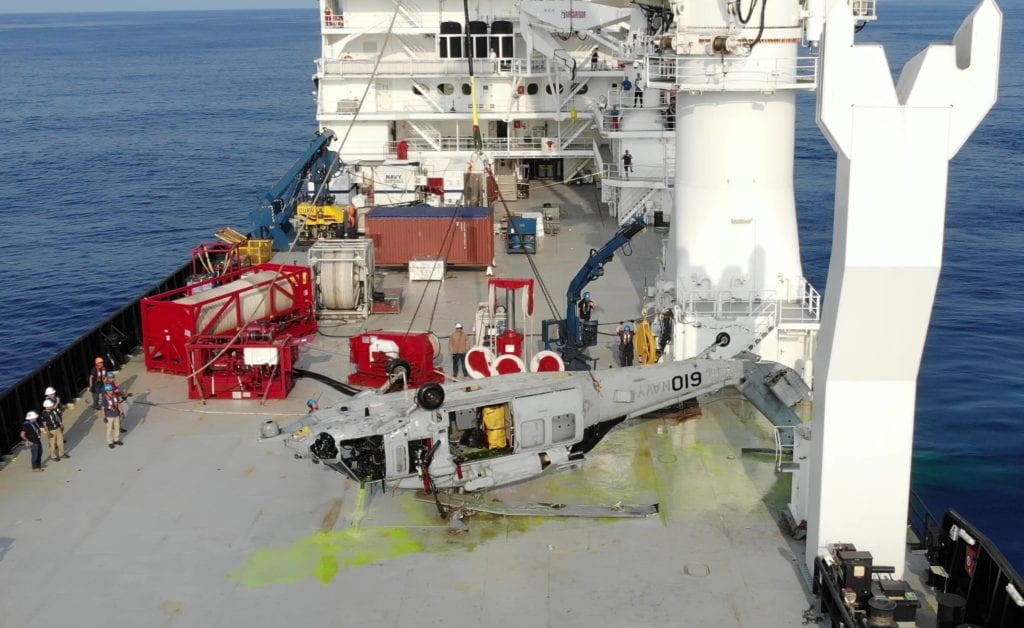


U.S. Navy Recovers MH-60S Helicopter From Record Depth

An MH-60S on deck of contracted salvage vessel off the coast of Yokosuka, Japan on March 18, 2021, having just been pulled from the depth of 19,075 feet by NAVSEA Supervisor of Salvage and Diving, (SUPSALV) at the request of the Navy Safety Center to facilitate accident investigation. NAVAL SEA SYSTEMS COMMAND

NORTH PACIFIC — The Naval Sea Systems Command’s (NAVSEA’s) Supervisor of Salvage and Diving (SUPSALV) recovered a downed Navy MH-60S helicopter from a depth of 19,075 feet off the coast of Okinawa, Japan, March 18, the Naval Sea Systems Command Office of Corporate Communication said in a March 22 release. 

The helicopter, a twin-engine Sikorsky Seahawk, crashed into the Pacific Ocean last year while operating from the amphibious command ship USS Blue Ridge (LCC-19). The air crew was able to escape the MH-60S before it sank, and no lives were lost in the accident. 

Responding to a U.S. Pacific Command Fleet request, SUPSALV located and documented the wreckage using side-scan sonar and photographs of the helicopter as it lay on the ocean floor during North Pacific operations last spring.  

SUPSALV returned to the site this month at the request of the Navy Safety Center with CURV 21, a deepwater remotely operated vehicle with the ability to meet deep ocean salvage requirements to a maximum depth of 20,000 feet. 

The SUPSALV team met the contracted salvage vessel in Guam, completed mobilization of CURV and its deep-lift take-up reel, and departed for the five-day transit. Arriving on the crash site March17, the team began recovery operations. Pulled from its depth of 19,075 feet below sea level, the MH-60S’s recovery broke SUPSALV’s own world depth record for an aircraft recovery.  

The salvage vessel will proceed to Fleet Activities Yokosuka where the MH-60S will be offloaded for transport back to the United States. 

“As a whole, this operation was fast-paced and entirely successful,” said Bryan Blake, SUPSALV’s Deep Ocean program manager. “Our efforts validated the Navy’s deep ocean search-and-recovery requirements. The capability to recover the airframe and make it available to determine the cause of the accident is a huge plus helping to ensure Naval Aviation safety.” 

The Navy’s Supervisor of Salvage and Diving provides technical, operational and emergency support to the Navy, Department of Defense and other federal agencies in the ocean engineering disciplines of marine salvage, towing, pollution control and abatement, diving and diving system safety and certification, diving and salvage equipment procurement, and underwater ship husbandry. 


Congressman Supports Defense Digital Service Academy for Cyber, AI

Rep. Mike Rogers foresees a military academy that focuses on cybersecurity, artificial intelligence and other high-tech skills. NAVAL INFORMATION WARFARE CENTER PACIFIC

ARLINGTON, Va. — The ranking member of the House Armed Services Committee supports establishment of a new training institution for cyberwarfare and artificial intelligence (AI) to help the nation to meet cyber threats. 

Rep. Mike Rogers, R-Alabama, speaking March 22 in a webinar of the Defense Writers Group, said one of his top priorities is developing the nation’s defense work force in cyber and artificial intelligence capabilities. 

“We just had a cool subcommittee hearing a little over a week ago that recommended a digital service academy, much like the military academies now, but we’d train cyber and AI and other IT [information technology] skills,” Rogers said, noting that the academy could offer qualification “anywhere from a certificate level to an associate degree, bachelor’s degree, to a doctoral degree.” 

Rogers said the concept would recruit students that would attend at no charge and would have an obligation to work five years for the government.  

“That’s something I’m really focused on, because cyber is an emerging threat that we’ve go to recognize we’re not prepared to meet,” he said. 


Coast Guard, CBP Stop Suspected Human Smuggling Venture Off West Palm Beach

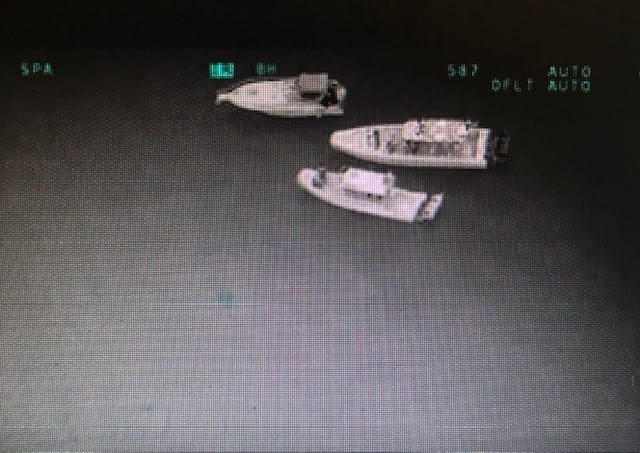
A Coast Guard Station Lake Worth Inlet law enforcement team and Customs and Border Protection Air and Marine Operations law enforcement team interdict a 29-foot vessel with two Bahamians, seven Jamaicans, two Haitians and four Dominican Republicans aboard March 17, 2021 approximately 5 miles off West Palm Beach, Florida. Some passengers were brought ashore for further investigation of potential criminal charges by Homeland Security Investigations while the remaining passengers were repatriated to the Bahamas. U.S. COAST GUARD

MIAMI — A Coast Guard Station Lake Worth Inlet law enforcement team and Customs and Border Protection Air and Marine Operations (CBP AMO) law enforcement teams interdicted a 29-foot vessel with 16 people aboard Wednesday approximately 5 miles off West Palm Beach, the Coast Guard 7th District said in a March 19 release.  

Coast Guard Robert Yered arrived on scene and a crew brought all the vessel occupants: two Bahamians, seven Jamaicans, two Haitians and four Dominican Republicans, aboard the ship. Some passengers were brought ashore for further investigation of potential criminal charges by Homeland Security Investigations. The remaining passengers were repatriated to the Bahamas Friday. 

A CBP AMO aircraft notified Coast Guard Station Miami watchstanders of the suspected smuggling vessel at approximately 12:20 a.m.  

“Wednesday’s case spotlights the great work done every day by Air and Marine and our DHS partners,” stated John Priddy, executive director of the AMO Southeast Region. “With our integrated operations, we get the job done and protect our homeland.” 

Since Oct. 1, 2020, Coast Guard crews have interdicted 78 Bahamians, eight Jamaicans, 182 Haitians, 194 Dominican Republicans compared to fiscal year 2020, where crews interdicted 194 Bahamians, four Jamaicans, 418 Haitians and 1,117 Dominican Republicans.   

Once aboard a Coast Guard cutter, all migrants receive food, water, shelter and basic medical attention. Throughout the interdiction, Coast Guard crew members were equipped with personal protective equipment to minimize potential exposure to any possible case of COVID-19. There were no migrants in these cases reported to have any COVID-19 related symptoms. 


Cutter Seneca Returns Home Following 42-Day Mid-Atlantic Patrol

Coast Guard Cutter Seneca approaches the Coast Guard Cutter Angela McShan for a towing exercise in the Mid-Atlantic Ocean in March 2021. U.S. COAST GUARD

PORTSMOUTH, Va. — The crew of the Coast Guard Cutter Seneca returned to their homeport in Portsmouth on March 13 after a 42-day Mid-Atlantic patrol, the Coast Guard 5th District said in a March 19 release. 

The ship’s law enforcement teams boarded commercial fishing vessels from the coast of New Jersey to Florida in support of the Coast Guard’s mission of protecting vital living marine resources. The Coast Guard Cutter Seneca also partnered with aircrews from Coast Guard Air Station Elizabeth City, North Carolina, to help train and maintain proficiency in shipboard helicopter operations. 

The Seneca’s law enforcement teams boarded over 24 U.S.-flagged fishing vessels, ensuring compliance with safety, fisheries and environmental regulations. The Seneca crew also worked with the Coast Guard Cutter Angela McShan and the Coast Guard Cutter Lawrence Lawson, two fast-response cutters homeported in Cape May, New Jersey, by conducting joint law enforcement operations and fueling at sea evolutions.   

These operations are integral to protecting the $5.6 billion commercial fishing industry, a major economic driver throughout the East Coast, according to the release. Through fisheries enforcement operations, Seneca crews deterred illegal, unreported and unregulated fishing while standing by to answer any calls of distress to members of the commercial fishing industry, which is comprised of more than 39,000 fishermen in the United States. 

“This has been a fast-paced and rewarding patrol,” said Cmdr. Matthew Rooney, commanding officer of the Seneca. “The crew did amazing work this patrol. The 30 at-sea boardings promoted safety and let the fishing fleet know the Coast Guard is out here and ready to assist if needed. Their outstanding results and positive attitudes set the standard for Coast Guard operations in the Mid-Atlantic.” 

The Seneca is a 270-foot medium-endurance cutter with a crew compliment of 14 officers and 86 enlisted personnel. The cutter’s primary missions include search and rescue, living marine resources, illegal drug interdictions, counter narcotics, migrant interdictions, ensuring the safety of life at sea, and enforcing international and domestic maritime laws in both the Atlantic and Pacific oceans. 


Boeing Inducts First EA-18G Growler for U.S. Navy Modification Program

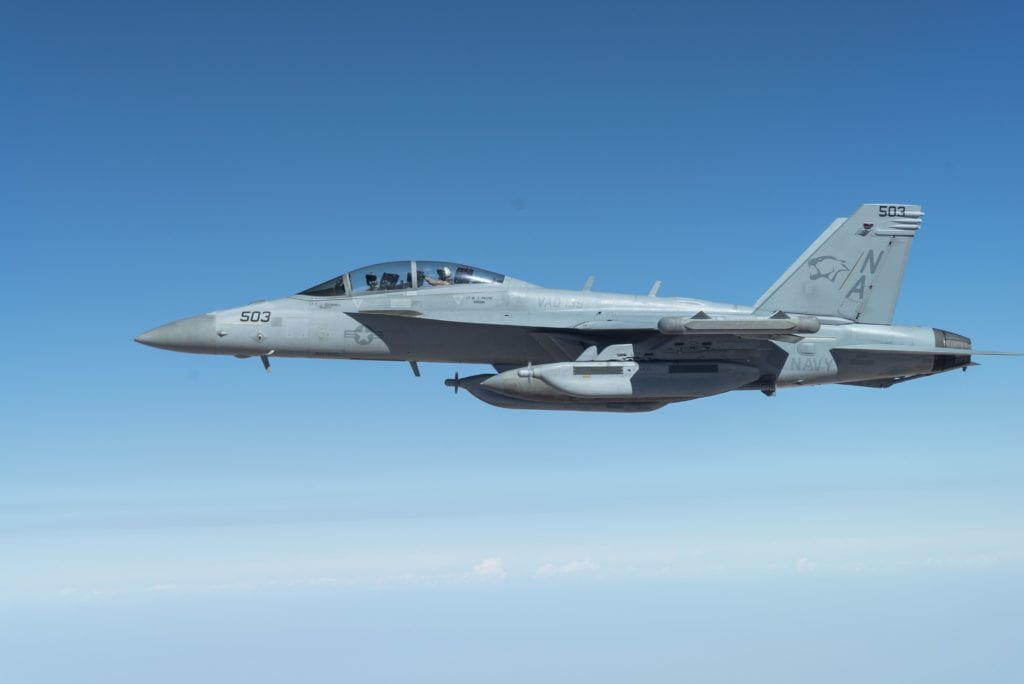
A U.S. Navy EA-18G Growler assigned to Electronic Attack Squadron (VAQ) 139, deployed aboard the aircraft carrier USS Nimitz (CVN 68), flies over the U.S. Central Command area of responsibility, Sept. 30, 2020. VAQ-139 is assigned to Carrier Air Wing 17, deployed aboard the aircraft carrier USS Nimitz (CVN 68), flagship of Nimitz Carrier Strike Group. The EA-18G has an array of sensors and weapons that provide the warfighter with the ability to counter current and emerging threats. (U.S. Air Force photo by Staff Sgt. James Merriman)
A U.S. Navy EA-18G Growler assigned to Electronic Attack Squadron (VAQ) 139, deployed aboard the aircraft carrier USS Nimitz (CVN 68), flies over the U.S. Central Command area of responsibility, Sept. 30, 2020. U.S. AIR FORCE / Staff Sgt. James Merriman

WHIDBEY ISLAND, Wash. — Boeing has started a five-year modification program for the U.S. Navy’s EA-18G Growler fleet with the induction of the first jet at Naval Air Station Whidbey Island, the company said in a March 19 release. 

The modifications are focused on updating the jets’ structural and mission systems architecture, enabling future capability growth for the Navy’s 160 Growler aircraft. Growlers serve a critical role in jamming radar and communications signals of threat forces, disabling their ability to detect and track U.S. and allied military forces. 

“We’re excited to have the Growler industry team here working on capabilities that will bring the fleet enhanced electronic surveillance, enhanced data link and the ability to carry the Next-Generation Jammer pod,” said Capt. Chris “Needles” Bahner, commander, Electronic Attack Wing, U.S. Pacific Fleet. “We look forward to being a cooperative partner with PMA-265 and PMA-234 at Naval Air Systems Command and the Growler industry team on this exciting work.” 

Following contract awards in October 2020 and February 2021 for materials and labor, the modification work includes various upgrades for Growler mission systems. The aircraft’s ALQ-218 receiver system will receive the Airborne Electronic Attack System Enhancements modification, enabling the Growler to operate in increasingly complex electromagnetic environments. 

Additional modifications will expand the Growler’s information pipeline for more rapid and secure data transfer to other aircraft and platforms as well as substantially improve the speed of data processing. Boeing also will prepare the Growler for the Next Generation Jammer, which greatly improves the Growler’s electronic attack capability. 

“As the world’s premier electronic attack platform, we’re starting this program for the EA-18G Growler in solid partnership with the Navy,” said Mark Sears, Boeing vice president of Fighters and Strike Product Support. “These modifications will position it to meet the threats of today and those in the future.” 

The program schedule forecasts that all Navy Growlers will be modified in five years. Full rate modification is expected to start in June 2021. Boeing has positioned people onsite at Whidbey, following state, local, customer and corporate COVID-19 protocols, to ensure the program is fully staffed to support the workflow. 


Team Cohort to Develop Multi-Domain, Multi-Autonomous Vehicle Control System for Canadian Warships

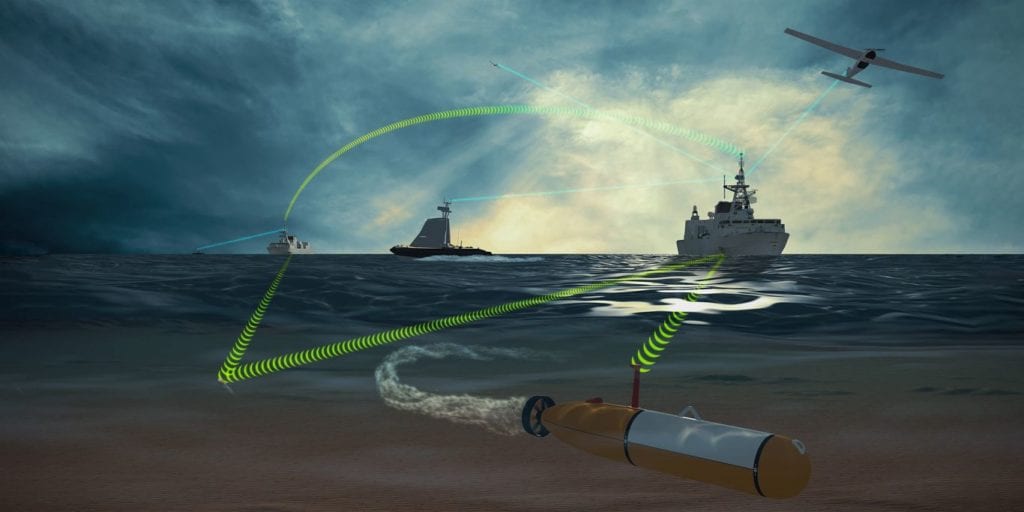
Team Cohort has been awarded a contract to develop a Multi-Domain, Multi-Autonomous Vehicle Control System for Canadian warships, as illustrated here. Kongsberg Geospatial

OTTAWA, Ontario — Team Cohort, a team of autonomous industry experts comprising Kongsberg Geospatial, Four DRobotics Corp and SeeByte, has been awarded a contract from Weir Marine Engineering to develop and test a Maritime Multi-Domain Control System (MMDCS), Kongsberg Geospatial said in a March 18 release. The system will allow operators to simultaneously operate multiple autonomous vehicles in the air, on the water, and underwater — all from a single shipboard control station. 

The system could allow Royal Canadian Navy (RCN) warships to effectively extend their sensor range using autonomous vehicles, while providing protection from seaborne threats such as mines or hostile unmanned craft. 

The MMDCS is a challenging project that requires experience with the deployment of autonomous unmanned vehicles, and operations of maritime control stations, as well as existing and emerging NATO standards including Stanag 4586 and 4817. This specialized knowledge and expertise is provided by the team of Kongsberg Geospatial and Four DRobotics Corp of Ottawa, Canada, and SeeByte of Edinburgh, Scotland. 

For this project, Kongsberg Geospatial will provide operator control stations based on its IRIS UxS vehicle command and control software product, which provides an overall real-time picture of the terrain, airspace, and underwater environment where the ships and their supporting UxV (Unmanned [X] Vehicle) teams are operating. 

Four DRobotics Corp and SeeByte will provide goal-based mission planning and reasoning (AI-supported) software systems to support autonomous mission development and execution for a UxV team consisting of an unmanned aerial vehicle, an unmanned surface vehicle, and an unmanned underwater vehicle. 

The MMDCS will provide a tactical capability for the command and control and information management required to simultaneously support unmanned vehicles in all three naval operations domains, including air, surface, and subsurface. 

The final objective of the project is to provide real-time or near-real-time situational awareness for warships in all three domains: underwater, on the water, and in the air, allowing improved threat assessment and target engagement. 

The development and testing of the prototype MMDCS is expected to be completed by mid-2021. 


Marine Corps to Procure 18 MQ-9 Reapers to ‘Close Kill Chain,’ General Says

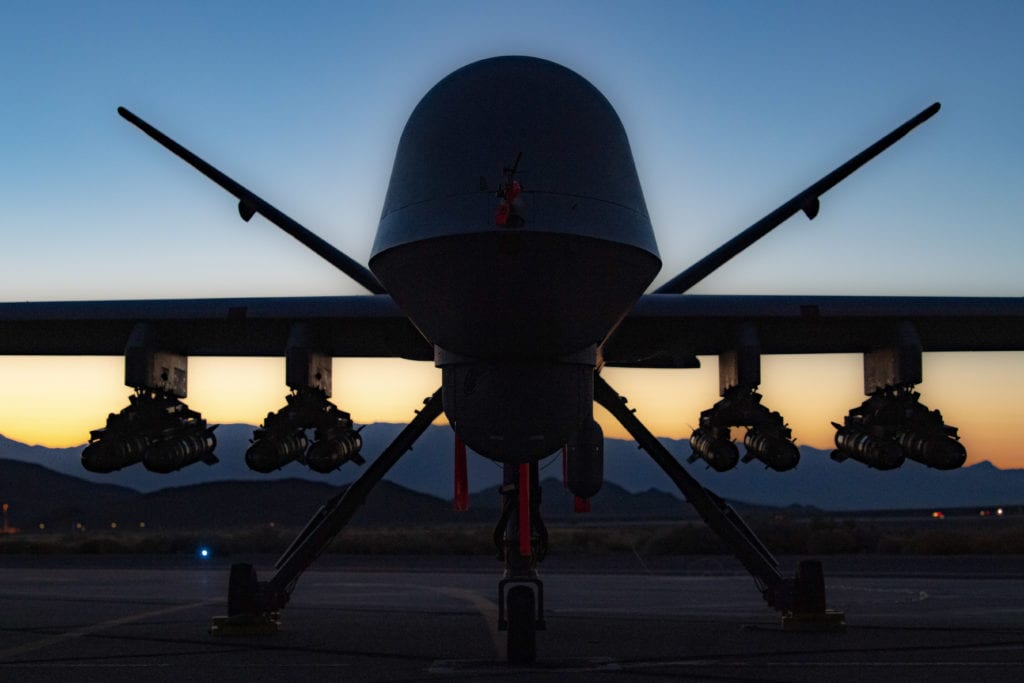
An MQ-9A Reaper assigned to the 556th Test and Evaluation Squadron sits on the ramp at Creech Air Force Base carrying eight Hellfire missiles. U.S. Air Force / SrA Haley Stevens

ARLINGTON, Va.—The Marine Corps plans to procure a total of 18 MQ-9A extended range Reaper unmanned aerial vehicles to operate in support of distributed maritime operations and expeditionary base operations, particularly in the Indo-Pacific region. 

The Corps currently operates two MQ-9As in the U.S. Central Command area of responsibility. The two are operated by a Marine UAV squadron (VMU). 

“We will procure 16 more for a total of 18,” said Lt. Gen. Eric M. Smith, commanding general, Marine Corps Combat Development Command, testifying March 18 before the Seapower and Projection Forces Subcommittee of the House Armed Services Committee. “That’s three [VMU] squadrons of six [each].”  

The Reapers — built by General Atomics Aeronautical Systems — being procured have the Block 5-20 upgrades, which will be updated because of the open architecture of the system and will be able “to keep pace with or outpace the threat,” Smith said, who noted that the Reapers have on board “systems that give both inflight protection and protection from tampering.” 

Smith said the Reapers could operate from a variety of locations, including the continental United States, Hawaii, Guam, or a partner nation. 

The MQ-9A is incredibly important to us to pass data across the battlefield, the closer of the maritime kill chain as we operate underneath an alternate precision navigation and timing network,” Smith said. “That system has the duration and the range to be operated from those bases that we do control and still give us the loiter time that we need to both close the kill chain and to move that asset around something as vast as the Indo-Pacific theater.”

Earlier, the Corps garnered extensive experience with the Reaper by using ISR (intelligence, surveillance and reconnaissance) services provided by General Atomics in support of Marine forces in Southwest Asia. 


Coast Guard Commissions Newest National Security Cutter

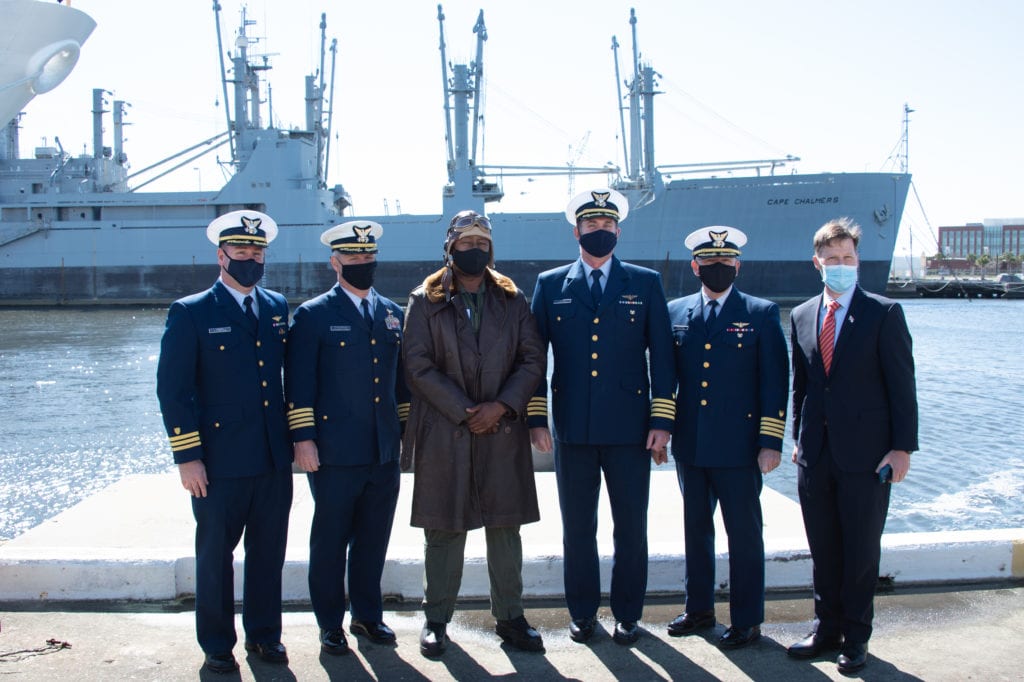
Fellow Aviators pay tribute to the USCGC Stone (WMSL- 758) during the commissioning ceremony at Coast Guard Base Charleston, S.C., Mar. 19, 2021. The cutter’s namesake is the late Cmdr. Elmer “Archie” Fowler Stone, who in 1917 became the Coast Guard’s first aviator and, two years later, was one of two pilots to successfully make a transatlantic flight in a Navy seaplane landing in Portugal. U.S. Coast Guard / Petty Officer 3rd Class Vincent Moreno

NORTH CHARLESTON, S.C., — The USCGC Stone (WMSL 758) became the Coast Guard’s newest national security cutter during a commissioning ceremony March 19 at Coast Guard Base Charleston, the Coast Guard Atlantic Area said in a release.   

Adm. Karl Schultz, commandant of the U.S. Coast Guard, presided over the ceremony. Laura Cavallo, the grandniece of the ship’s namesake and ship’s sponsor, was also in attendance. 

The cutter’s name comes from Cmdr. Elmer “Archie” Fowler Stone, who in 1917 became the Coast Guard’s first aviator and, two years later, was the pilot of the NC-4, a Navy airplane, which in 1919 was the first aircraft to accomplish a transatlantic flight, landing in Portugal. 

The Stone is the ninth legend-class national security cutter in the Coast Guard’s fleet. The Legend class national security cutters can execute the most challenging national security missions, including support to U.S. combatant commanders.  

They are 418 feet in length, 54 feet in beam, and 4,600 long tons in displacement. They have a top speed of more than 28 knots, a range of 12,000 nautical miles, an endurance of up to 90 days, and can hold a crew of up to 150. These new cutters are replacing the high-endurance Hamilton-class cutters in service since the 1960s. 

The Stone launched Oct. 4, 2019, for sea trials. Following sea trials, the crew conducted its first voyage, Operation Southern Cross, a patrol to the South Atlantic supporting counter illegal, unreported and unregulated fishing.  

Taking the newly accepted cutter on its shakedown cruise, Stone’s crew covered over 21,000 miles (18,250 nautical miles) over 68 days. A mutual interest in combating IUUF activities offered an opportunity to collaborate for Stone’s crew. They interacted with partners in Guyana, Brazil, Uruguay and Portugal, strengthening relationships and laying the foundation for increased partnerships to counter illicit maritime activity. 

Ship commissioning is the act or ceremony of placing a ship in active service.  


Winston S. Churchill Returns to Homeport after 9-Month Deployment

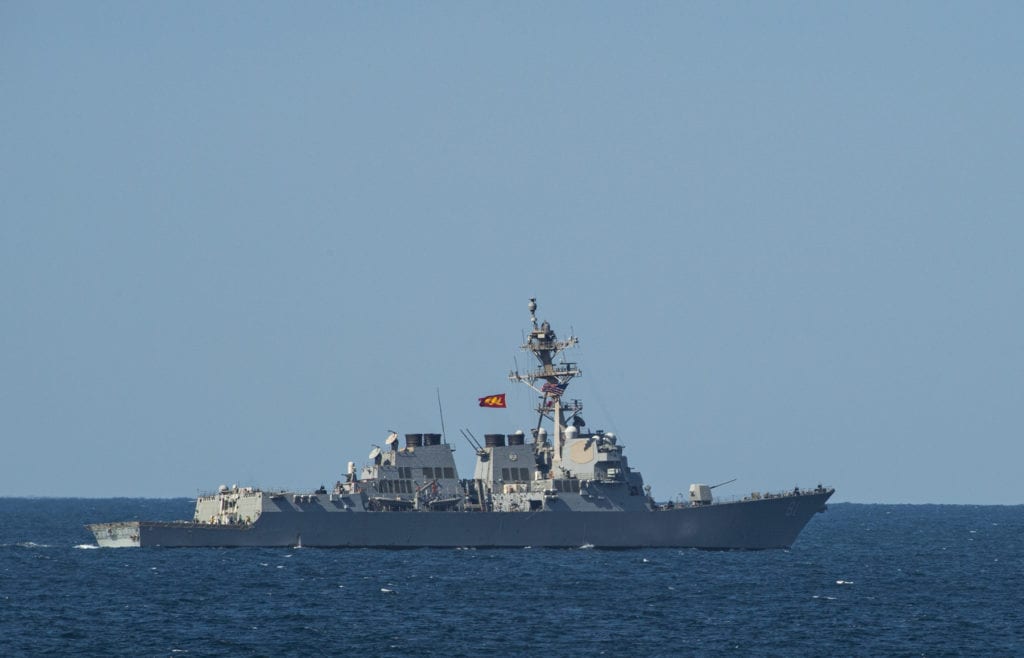
The guided-missile destroyer USS Winston S. Churchill (DDG 81) steams in the Arabian Sea. Winston S. Churchill is deployed to the U.S. 5th Fleet area of operations in support of naval operations to ensure maritime stability and security in the Central Region, connecting the Mediterranean Sea and Pacific Ocean through the western Indian Ocean and three critical chokepoints to the free flow of global commerce. U.S. Navy / Mass Communication Specialist 1st Class John Philip Wagner, Jr

NORFOLK, Va. – The guided-missile destroyer USS Winston S. Churchill (DDG 81) returned to homeport in Naval Station Norfolk March 19, after nearly nine months deployed in the U.S. 5th and 6th Fleet areas of operation, U.S. 2nd Fleet Public Affairs said in a March 19 release. 

Winston S. Churchill participated in important training exercises with international partners to foster positive relationships while encouraging freedom of navigation and maritime security. 

“I’m so proud of the Churchill Team, the crew and their families are the most resilient people I have ever come across,” said Capt. Timothy F. Stanley, commanding officer of Winston S. Churchill. “Returning today is almost nine months since the crew was last with their friends and family.” 

Winston S. Churchill, along with the embarked Helicopter Maritime Strike Squadron (HSM) detachment, traveled nearly 60,000 miles during the deployment and completed 26 strategic choke point transits, escorting a total of 23 vessels over 14 of those transits. She transited the Strait of Gibraltar twice, the Suez Canal twice, the Straits of Bab-el-Mandeb 14 times (nine transits with escort duties), and the Strait of Hormuz eight times (five transits with escort duties). 

“Churchill has nearly completed the equivalent of three laps around the Earth meeting important fleet tasking, all the while consistently meeting mission requirements, and keeping sea lines of communication open through the majority of the world’s key straits,” Stanley said. 

Winston S. Churchill participated in a 14-Day Restriction of Movement on June 22, 2020, prior to getting underway for pre-deployment exercises and training in order to combat the effect of COVID-19 on ship’s readiness. It officially deployed on Aug. 10, 2020. 

Winston S. Churchill conducted a landmark port visit in Port Sudan, Sudan, the first U.S. Navy warship to do so in over 30 years. The visit served to build a foundation of military cooperation between the U.S. and Sudan. Additionally, Winston S. Churchill visited Souda Bay, Djibouti, and Bahrain, where the crew was restricted to the pier. 

“Amongst a global pandemic, these sailors have met their personal and professional goals, making themselves and the Navy better,” Stanley said. “This team onboard has been galvanized through this deployment, and I’d argue is the best, most synergized, and resilient tactical-level force in the Navy.” 

Churchill conducted counter-smuggling operations with embarked Advanced Interdiction Team, comprised of U.S. Coast Guardsmen, U.S. Army Soldiers and U.S. Navy Sailors. AIT boarded two stateless dhows flying no flags in international waters off the coast of Somalia in accordance with international law. A large cache of weapons was discovered while conducting maritime security operations in the U.S. Central Command area of operations. The weapons disposed of included thousands of AK-47 assault rifles, light machine guns, heavy sniper rifles, rocket-propelled grenade launchers and crew served weapons. Other weapon components disposed of include barrels, stocks, optical scopes and weapon systems. 

The only U.S. warship named after a Briton, Winston S. Churchill worked with the Royal Navy HMS Trent in the Eastern Mediterranean. The cooperation demonstrates the long-standing high-end warfare capabilities of the Alliance, which will culminate in the deployment of the international Queen Elizabeth Strike Group this summer. 

While in the Mediterranean, Winston S. Churchill also sailed with the Tunisian navy, reinforcing the commitment to African Maritime security. 

After disembarking the HSM-70 detachment to its homeport at Naval Air Station, Jacksonville, Florida, Churchill will return to homeport in Naval Station Norfolk.