Arlington, Va. — Secretary of Defense Lloyd J. Austin III announced June 24 the president has made the following nomination:
Navy Rear Adm. (lower half) Thomas J. Anderson for appointment to the grade of rear admiral. Anderson is currently serving as program executive officer for ships, Navy Yard, Washington, D.C.
Cutter Diligence Returns Home After 65-day Caribbean Sea Patrol
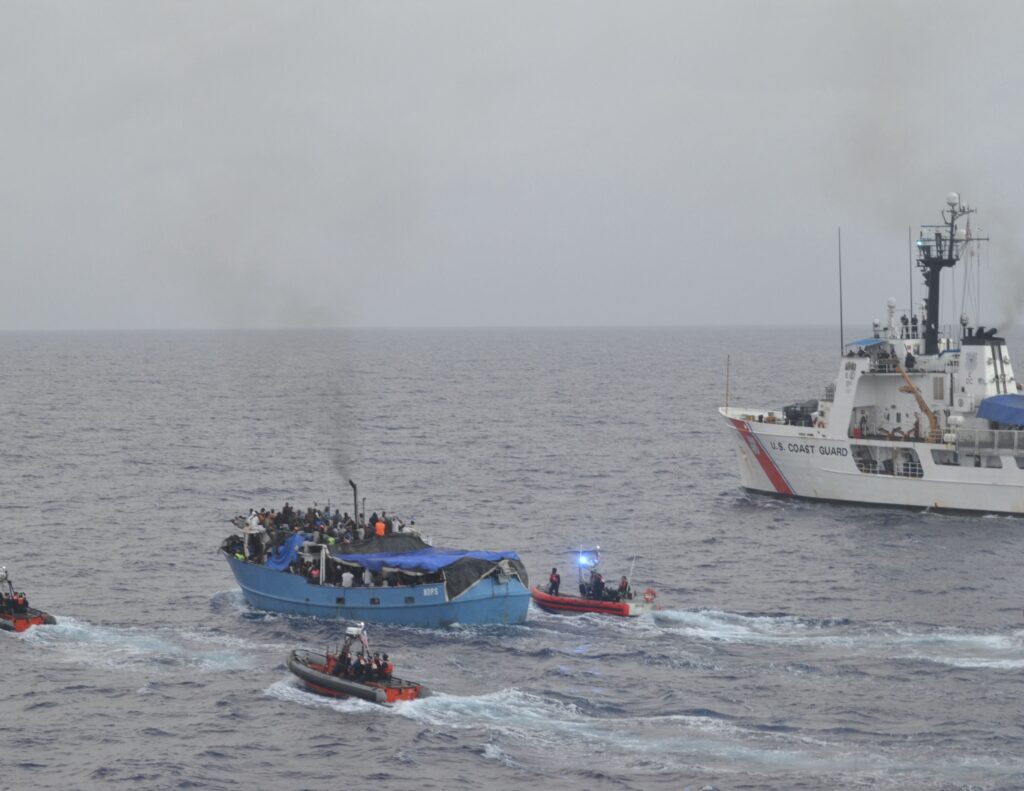
The Coast Guard interdicts a migrant vessel on the Caribbean Sea. The overloaded Haitian vessel was interdicted by the Coast Guard Cutters Diligence (WMEC-616) and Confidence (WMEC-619) while engaged in an illegal maritime migration. U.S. Coast Guard / Petty Officer 3rd Class Seth Rentz
PENSACOLA, Fla. — The crew of Coast Guard Cutter Diligence returned to their home port in Pensacola, Florida on Friday after a 65-day Caribbean Sea patrol, the Coast Guard 8th District said in a June 26 release.
During the patrol, Diligence’s crew conducted migrant interdiction operations in support of Operation Southeast Watch, in an interagency effort to detect and deter vessels engaged in illegal maritime migration.
Partnering with six other Coast Guard cutters and three Coast Guard aircraft, Diligence interdicted, cared for and repatriated 127 migrants who departed from Haiti and Cuba. Additionally, Diligence’s crew worked with the cutter Confidence to safely escort one overloaded vessel engaged in an illegal migrant venture, ensuring the safety of more than 500 people.
The Diligence crew also completed the Coast Guard’s biennial shipboard training assessment, Tailored Ships Training Accountability (TSTA), at Naval Station Mayport in Mayport, Florida. TSTA is a three-week training period in which a team of evaluators assess the crew’s mission readiness and ability to respond to shipboard emergencies and execute missions. Diligence achieved a 98% drill average during weapons, command and control, damage control, engineering, navigation and seamanship evaluations.
“Throughout the deployment, Diligence’s crew exemplified the Coast Guard’s core values of honor, respect and devotion to duty,” said Cmdr. Jared Trusz, Diligence’s commanding officer. “In response to a challenging mission, they supported national security objectives by deterring illegal maritime migration, while ensuring the safety of life at sea. The crew provided humanitarian care for those interdicted and treated all migrants with dignity and respect until we were able to safely return them to Haiti. I cannot thank Diligence’s crew enough for the hard work and sacrifices made during this patrol.”
Diligence is a 210-foot medium-endurance cutter homeported in Pensacola with 78 crewmembers. The cutter’s primary missions are counter drug operations, migrant interdiction, enforcing federal fishery laws, as well as search and rescue in support of Coast Guard operations throughout the Western Hemisphere.
Cutter Steadfast Returns Home after 55-day Counter-Narcotics Patrol
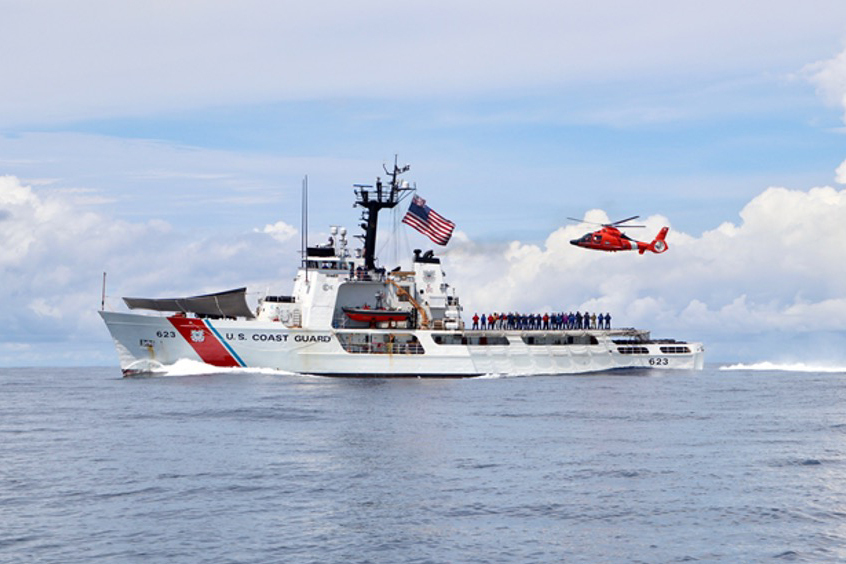
The crew aboard U.S. Coast Guard Cutter Steadfast (WMEC-623) stands in formation on the ship’s flight deck while underway off the coast of Central America Memorial Day, 2022. An embarked MH-65 Dolphin helicopter detachment crew from Air Station Port Angeles hovered overhead for the photo in recognition of the day of remembrance. U.S. Coast Guard / Seaman Brad O’Brien
ASTORIA, Ore. — United States Coast Guard Cutter Steadfast (WMEC-623) returned to homeport in Astoria on Saturday, June 18, following a 55-day counter narcotics deployment to the Eastern Pacific Ocean, the Coast Guard 13th District said in a release.
The 210-foot medium-endurance cutter and crew covered more than 11,000 miles conducting law enforcement and search-and-rescue operations in international waters off Central America from Mexico to Costa Rica.
The Steadfast deployed with an MH-65E Dolphin helicopter and aviation crew from Air Station Port Angeles, Washington, and with additional Coast Guard members from the Tactical Law Enforcement Team Pacific, Electronics Support Detachment Detroit, Base Galveston and three Coast Guard Academy cadets.
The crew of the Steadfast also worked with Mexican law enforcement assets on two occasions, to locate, track, and interdict fast-moving drug smuggling vessels, resulting in the seizure of 2,747 kilograms of cocaine by Mexican authorities, valued at $109 million.
While transiting south of Mexico, Steadfast’s bridge team sighted a disabled and adrift open-hull vessel with two Mexican adult males waving life jackets. Steadfast approached the vessel to investigate and determine the nature of distress. The imperiled mariners stated that they were fishermen who had been adrift for 23 days after their vessel had been beset by weather. Steadfast embarked both persons, provided meals and medical care, and returned them safely back to Mexico.
This was the last patrol for Cmdr. Craig Allen Jr., who has served as the Steadfast’s commanding officer since July 2020. A change-of-command ceremony is scheduled to take place on July 22 in front of the Columbia River Maritime Museum.
Steadfast is a 54-year-old Reliance-class cutter that has been homeported in Astoria since 1994. Previously, Steadfast was homeported in St. Petersburg, Florida, where she earned the nickname “El Tiburon Blanco” (‘the White Shark’), from drug smugglers for her notoriety in counter-narcotics operations in the Florida Straits and Caribbean Sea.
Navy to Commission Virginia-Class Fast Attack Submarine Montana
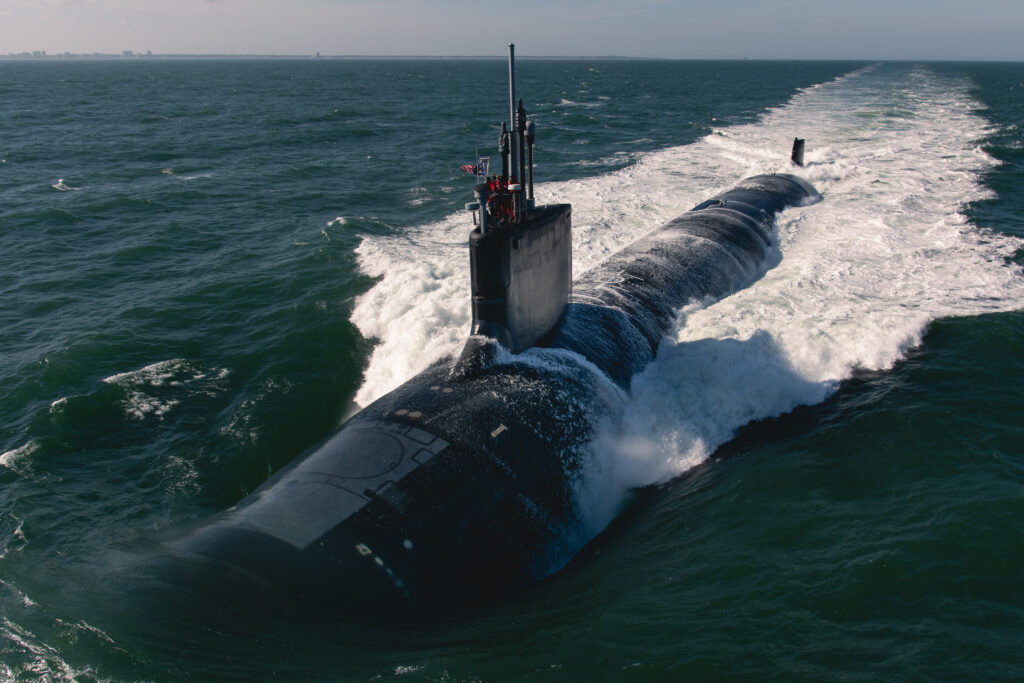
The U.S. Navy submarine USS Montana (SSN-794) conducts initial sea trials in the Atlantic Ocean Feb. 1. HII / Ashley Cowan
ARLINGTON, Va. — The Navy will commission the future USS Montana (SSN 794), the newest Virginia-class fast attack submarine, during a 10:00 a.m. EST ceremony on Saturday, June 25, at Naval Station Norfolk, the Defense Department said June 24.
Gov. Greg Gianforte of Montana will deliver the principal address. Additional speakers include U.S. Rep. Bobby Scott of Virginia’s 3rd District; Undersecretary of the Navy Erik Raven; Adm. James Caldwell, director, Naval Nuclear Propulsion Program; and Jennifer Boykin, president of Newport News Shipbuilding.
The submarine’s sponsor is Sally Jewell, former Secretary of the United States Department of Interior. Montana was christened at Newport News Shipbuilding, a division of Huntington Ingalls Industries, in Newport News, Virginia, on Sept. 12, 2020. Jewell will give the order to “man our ship and bring her to life.”
The future USS Montana (SSN 794) honors the Treasure State and will be the second commissioned warship bearing the name. The first USS Montana (ACR-13), an armored cruiser, was also built at Newport News Shipbuilding and commissioned in July 1908. ACR-13 served in the Atlantic and Mediterranean, landed Marines during unrest in Haiti in 1914, and escorted convoys during World War I. The Navy decommissioned the first USS Montana in 1921, and two other vessels named after the state never saw commissioned service.
“This boat is a true treasure of the U.S. Navy, and will play an integral part in protecting and promoting American prosperity and security abroad,” said Secretary of the Navy Carlos Del Toro. “I am so proud of the brave men and women who will man this submarine, and I look forward to their success on the high seas.”
Montana is the third Block IV Virginia-class submarine to enter service, designed to carry out the core missions of the submarine force: antisubmarine warfare; anti-surface warfare; delivery of special operations forces; strike warfare; irregular warfare; intelligence, surveillance and reconnaissance; and mine warfare. These capabilities allow the submarine force to operate anywhere, at any time, and contribute to regional stability and the preservation of future peace.
Montana is 377 feet long, has a 34-foot beam, and will be able to dive to depths greater than 800 feet and operate at speeds in excess of 25 knots submerged. It has a crew of approximately 136 Navy personnel.
Navy to Christen Expeditionary Sea Base Ship USS John L. Canley
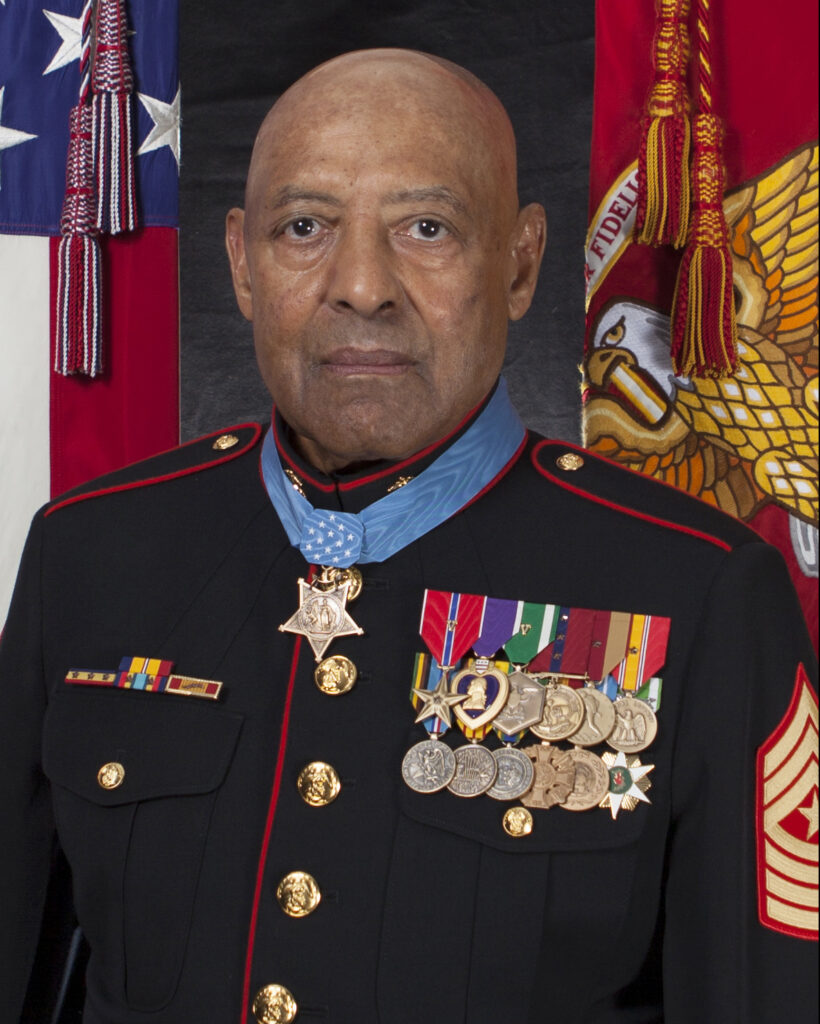
Retired U.S. Marine Corps Sgt. Major John L. Canley, the 300th Marine Medal of Honor recipient, poses for a command board photo at the Pentagon in Arlington, Virginia, Oct. 18, 2018. U.S. MARINE CORPS / Lance Cpl. Morgan Burgess
ARLINGTON, Va. — The Navy will christen its newest expeditionary sea base, the future USS John L. Canley (ESB 6), during a 9:00 a.m. PDT ceremony Saturday, June 25, at General Dynamics National Steel and Shipbuilding Company (GD-NASSCO) shipyard in San Diego, the Defense Department said June 24.
The principal speaker is Lt. Gen. Michael Langley, commanding general, Fleet Marine Force, Atlantic, and commander, Marine Forces Command and Marine Forces Northern Command. Additional speakers include Deputy Assistant Secretary of the Navy for Installations, Energy, and Facilities Robert Thompson; Vice Adm. Ross Myers, commander, U.S. Fleet Cyber Command/commander, U.S. 10th Fleet; Thomas Kiss, director of ship management, Military Sealift Command; Sgt. Maj. David Wilson, command sergeant major, First Marine Division; and David Carver, president of GD-NASSCO.
In a time-honored Navy tradition, the ship’s sponsor, Patricia Sargent, daughter of Sgt. Maj. Canley, will christen the ship by breaking a bottle of sparkling wine across the bow.
The ship is named for Medal of Honor recipient, retired Sgt. Maj. John L. Canley. Canley, who served in the Marine Corps for 28 years, was awarded the nation’s highest honor 50 years after his actions while serving as Company Gunnery Sergeant, Company A, First Battalion, First Marine Division in the Republic of Vietnam during the Battle of Hue City. Initially awarded the Navy Cross for his actions, his award was upgraded to the Medal of Honor in 2018. Canley passed away on May 11, 2022.
“Tomorrow we christen the future USS John L. Canley, recognizing a pioneer in the Marine Corps and a devoted patriot, who earned our nation’s highest honor for his gallant actions in the Battle of Hue City,” said Secretary of the Navy Carlos Del Toro. “Sgt. Maj. Canley is an example to the men and women who will proudly serve aboard this ship and he will be remembered every day ESB 6 operates.”
ESBs are highly flexible platforms used across a broad range of military operations, supporting multiple operational phases and directly contributing to American prosperity and security abroad. Acting as a mobile sea base, they are a part of the critical access infrastructure that supports the deployment of forces and supplies to provide prepositioned equipment and sustainment with adaptable distribution capability.
Coast Guard Cutter Campbell Returns Home after 80-Day Patrol
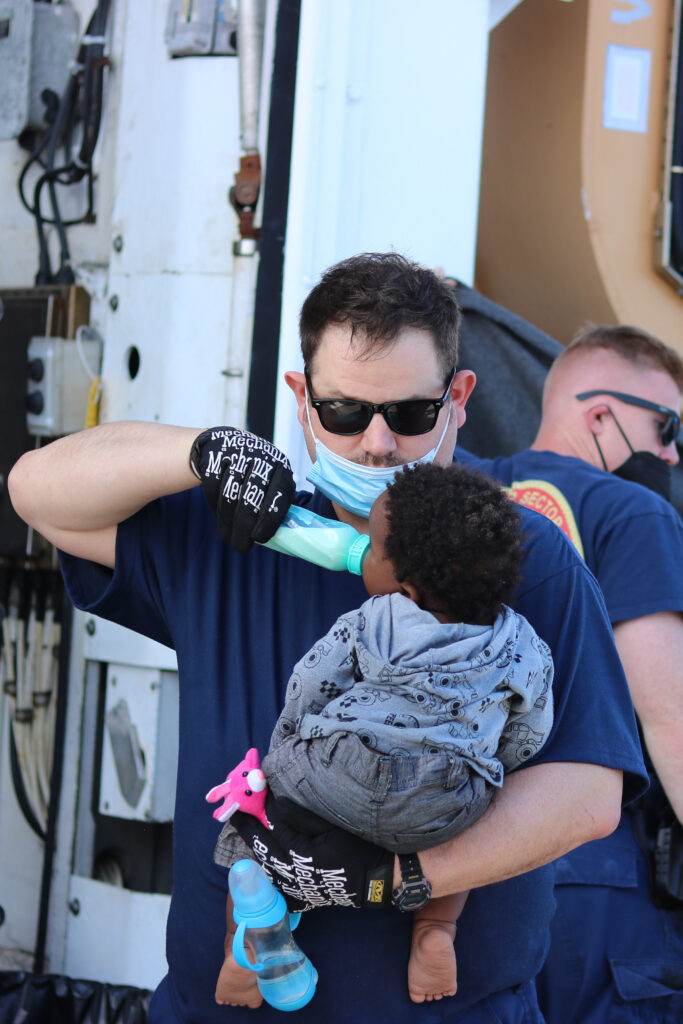
Coast Guard Cutter Campbell’s crew member feeding a baby near Anguilla Cay, Bahamas, April 11, 2022. Coast Guard Cutter Charles Sexton crew transferred 67 Haitians to Bahamian authorities after the Cutter Campbell crew rescued them. U.S. COAST GUARD
BOSTON — Coast Guard Cutter Campbell’s crew returned home to Newport, Rhode Island, June 23, following an 80-day, multi-mission patrol in the Caribbean Sea and Atlantic Ocean in support of the Coast Guard 7th District’s Operation Southeast Watch and the U.S. Navy’s Composite Training Unit Exercise, the Coast Guard 1st District said in a release.
Amidst the largest surge in maritime migration in nearly two decades, Campbell patrolled the Windward Pass and South Florida Straits, tasked with the disruption and interdiction of dangerous and illegal migrant ventures departing from Haiti and Cuba.
On April 10, within hours of entering the South Florida Straits, Campbell’s crew intercepted a wooden sail freighter with 67 Haitians aboard. The group, which included minors as young as five months, departed the north coast of Haiti nearly a week prior, and ran dangerously short on food, water, baby formula, and other essential supplies. The crew embarked the distressed migrants, providing care and medical attention before transferring the case to the Royal Bahamian Defense Force.
Throughout April and May, Campbell interdicted five additional migrant vessels that departed from Haiti and Cuba. In one notable case, Campbell interdicted a 50-foot, power-driven vessel carrying 212 Haitians south of Turks and Caicos. In total, Campbell’s crew rescued and cared for 528 Haitians and 21 Cubans during the patrol.
In June, Campbell shifted focus and joined a U.S. Navy Carrier Strike Group for COMPTUEX, a joint training mission off the North Carolina and Florida coasts. The training exercise, which serves as the Navy’s capstone prior to overseas deployment, included live-fire weapons exercises, formation steaming, and multi-day at-sea combat simulations.
The Campbell, a 270-foot Cutter with a crew complement of 100, is homeported in Newport, Rhode Island. The crew’s missions include search and rescue operations, counter-drug, migrant interdiction and living marine resources protection.
Coast Guard Cutter Thetis Returns Home from 77-day Counter-Narcotic Deployment
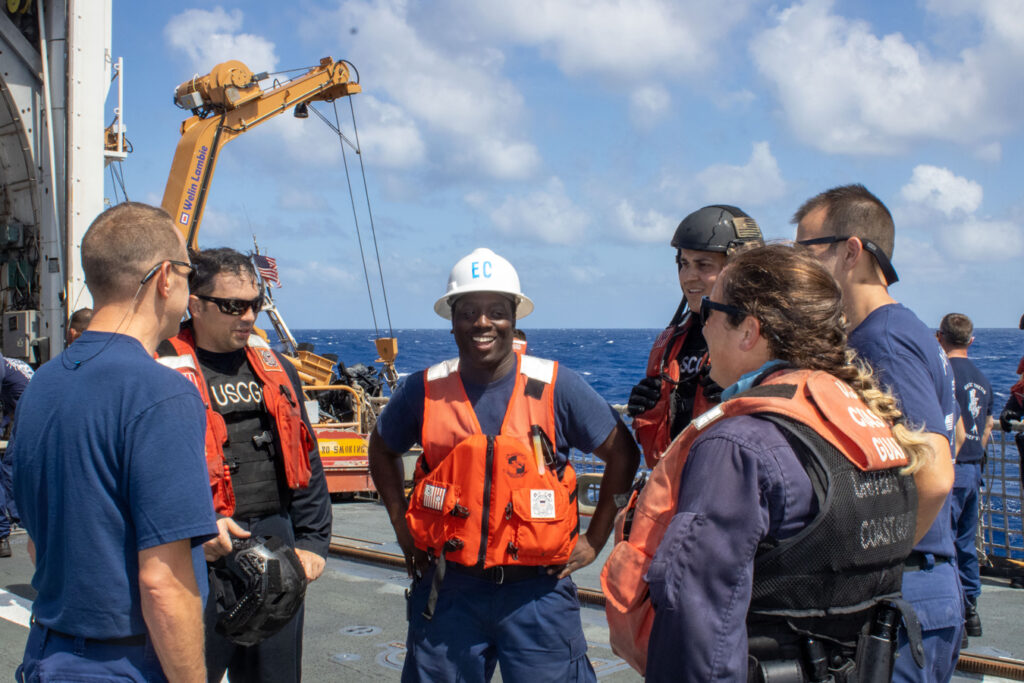
U.S. Coast Guardsmen assigned to the U.S. Coast Guard Cutter Thetis (WMEC 910), boost morale during a 77-day counter-narcotic deployment in the Caribbean sea, June 19. U.S. COAST GUARD
KEY WEST, Fla. — The U.S. Coast Guard Cutter Thetis (WMEC 910) crew returned to homeport in Key West, June 21, after a 77-day counter-narcotics patrol in the Caribbean Sea, the Coast Guard Atlantic Area said in a release.
The Thetis crew repatriated 88 Haitian migrants to Cap Haitien, Haiti, after they were reported to be on an unseaworthy sailing vessel in the Windward Passage between Cuba and Haiti.
An embarked U.S. Coast Guard law enforcement detachment disabled a smuggling vessel transporting an estimated 1,323 pounds of cocaine in the Central Caribbean.
The Thetis’s crew assisted with a search and rescue case of 14 mariners that went into the water after their commercial ship began taking on water in the middle of the Caribbean Sea.
“While on a counter-narcotics patrol, our crew quickly shifted gears to help locate and provide situational awareness during an unfortunate search and rescue case,” said Cmdr. Justin Nadolny, the commanding officer of the Thetis. “Working alongside our international and commercial partners showcased the can-do spirit of mariners and our universally shared duty of assisting those in distress and ensuring safety of life at sea.”
The Thetis’s crew strengthened international partnerships while in Cartagena, Colombia, hosting Colombian naval officers aboard to gain a deeper understanding of maritime activity in the region and to develop relationships with international maritime partners operating in Caribbean waters.
The Thetis, a 270-foot Famous-class cutter homeported in Key West and has a crew of 104. Their primary missions are counter-drug operations, migrant interdiction, the enforcement of federal fisheries laws, and search and rescue in support of U.S. Coast Guard operations throughout the Western Hemisphere.
Navy Orders Two More MQ-4C Triton UAVs
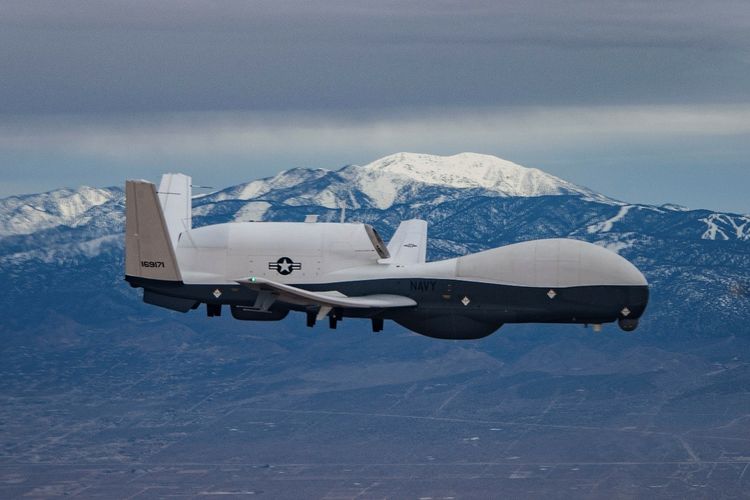
An MQ-4C Triton takes to the skies over the California desert as the Triton low-rate initial production schedule progresses. NORTHROP GRUMMAN
ARLINGTON, Va. — The U.S. Navy has ordered two more MQ-4C Triton high-altitude, long-endurance unmanned aerial vehicles from Northrop Grumman, the Defense Department said June 22.
The Naval Air Systems Command, Patuxent River, Maryland, awarded Northrop Grumman Systems a $248.2 million contract modification to procure two MQ-4Cs as an addition to Lot 5 low-rate initial production.
The contract modification follows two other contracts awarded in June to Northrop Grumman for the Triton program.
The Naval Air Systems Command awarded Northrop Grumman a $15.1 million contract modification on June 14 to incorporate production engineering change proposals that modify MQ-4C Triton unmanned aircraft system production UAVs to an integrated functional capability 4.0 multiple intelligence configuration for the Navy and the government of Australia.
Another contract issued June 16 awarded the company $20.5 million to incorporate IFC-4 for MQ-4Cs construction numbers B13 through B15.
The MQ-4C’s IFC-4 is designed to bring an enhanced multi-mission sensor capability as part of the Navy’s Maritime Intelligence, Surveillance, Reconnaissance and Targeting transition plan. The Triton in the IFC-4 configuration is designed to complement the Navy’s P-8A Poseidon maritime patrol aircraft and eventually will enable the Navy to retire its EP-3E Orion electronic reconnaissance aircraft. The initial operational capability for the Triton will be declared in 2023 when IFC-4-configured Tritons are deployed in enough quantity to field one complete orbit.
Work on the two additional UAVs is expected to be completed in February 2027.
Navy’s RQ-4A BAMS-D UAVs End 13-Year Mideast Deployment
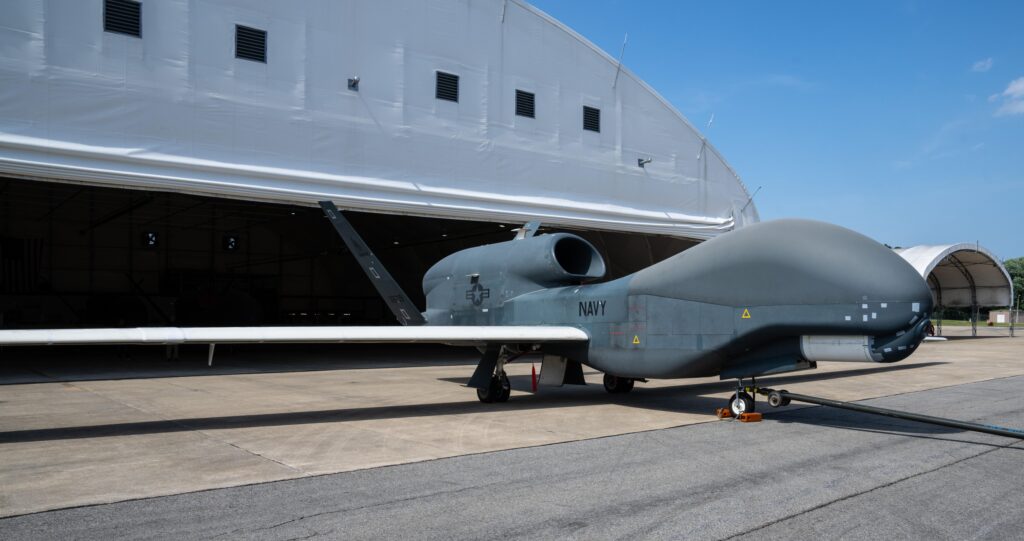
The Broad Area Maritime Surveillance Demonstrator returned from 5th Fleet to Patuxent River, Maryland, June 17 after accruing more than 42,500 flight hours and over 2,000 oversea missions during a 13-year deployment. NORTHROP GRUMMAN
ARLINGTON, Va. — The Navy has brought home from the Middle East its last deployed RQ-4A Global Hawk Broad-Area Maritime Surveillance – Demonstrator (BAMS-D) unmanned aerial vehicle, culminating a 13-year span of operations that began as a six-month experiment.
According to a June 22 release from the Naval Air Systems Command, the RQ-4A returned to its home base, Naval Air Station Patuxent River, Maryland, from the U.S. 5th Fleet area of responsibility on June 17.
The Navy had deployed the RQ-4A to Southwest Asia since 2009 as a component of the BAMS-D program. Five Block 10 RQ-4As were acquired from the U.S. Air Force and were based at Patuxent River and operated in sequence over the years by detachments of Patrol Reconnaissance Wings 5, 2, and 11. The detachment kept at least one RQ-4A in the rotation to a base in the Persian Gulf region. One was lost in a mishap in Maryland in June 2012. Another was shot down June 19, 2019, in an unprovoked attack in international airspace over the Strait of Hormuz by an Iranian surface-to-air missile.
“BAMS-D has been a singular force multiplier for 5th Fleet and U.S. Central Command and has provided invaluable insights into the use of unmanned air systems as part of an overall concept of operations for naval ISR,” said Dave Seagle, BAMS-D deputy program manager, who has led the program since its inception, in the release.
BAMS-D provided more than 50% of maritime intelligence, surveillance and reconnaissance in theater accruing over 42,500 flight hours in 2,069 overseas missions, the Navy said.
“By 2013, BAMS-D had ramped up its capabilities to 15 24-hour missions every month, supplementing its first deployed aircraft with a second aircraft,” Seagle said. “Through the next nine years, BAMS-D provided uninterrupted operations and collected almost 1.4 million ISR scenes, highlighted over 11,500 targets of interest and provided the fleet with over 15,000 tactical reports, becoming an indispensable asset for the warfighter. One of many notable achievements occurred as recently as August 2021 when BAMS-D provided ISR coverage to non-combatant evacuation operations during the U.S. drawdown in Afghanistan.
“Despite the aging of the system and limited spares available, BAMS-D’s incredible operations and maintenance team achieved an overall mission availability rate of 96%, with more than 94% of scheduled missions completed,” he said.
The BAMS-D Integrated Sensor Suite featured electro-optical/infrared, synthetic aperture radar, ground moving target indicator and wide-area search modes retained from the Air Force production system. To improve performance in the maritime environment, LR-100 electronic surveillance sensors, Automatic Identification System receiver, inverse synthetic-aperture radar, and maritime search and maritime moving target indicator radar modes were integrated into the demonstrator system. The ground segment consisted of three launch and recovery elements, two mission control elements and a Navy-designed tactical auxiliary ground station.
In the Navy’s 2022 budget request, divestment of the RQ-4A Global Hawk Broad-Area Maritime Surveillance-Demonstrator UAV had been planned for acceleration from 2023 to 2022, with the savings invested in higher priorities.
The BAMS-D is being replaced by a Global hawk derivative, the MQ-4C Triton, which has been deployed to the Western Pacific in an Early Operational Capability deployment. The Triton with an upgraded sensor capability will be deployed in 2023.
Navy Announces New Flag Officer Assignments
ARLINGTON, Va. — The secretary of the Navy and chief of naval operations announced June 22 the following assignments:
Rear Adm. Grafton D. Chase Jr. will be assigned as commander, Defense Logistics Agency – Distribution, New Cumberland, Pennsylvania. Chase is currently assigned as director, Joint Reserve Forces, J9, Defense Logistics Agency, Fort Belvoir, Virginia.
Capt. Michael L. Baker, selected for promotion to rear admiral (lower half), will be assigned as senior defense official/defense attaché – India, New Delhi, India. Baker is currently serving as International Affairs Branch head, N5, Office of the Chief of Naval Operations, Washington, D.C.