CNO Travels to Colombia, Australia, Singapore, and Japan 

Release from Chief of Naval Operations Public Affairs 

***** 

From Chief of Naval Operations Public Affairs 

YOKOSUKA, Japan – Chief of Naval Operations (CNO) Adm. Mike Gilday and his wife, Linda, visited Colombia, Australia, Singapore, and Japan, to meet with partner navies, government and military leaders, and Sailors, July 16-27. 

The overseas trip began in Cartagena, Colombia, and was followed by visits to Sydney, Australia; Singapore; Tokyo and Yokosuka, Japan.  

Gilday visited Colombia, where the Colombian Navy hosted UNITAS 2023, the world’s longest-running multinational maritime exercise, which featured 26 warships/vessels, three submarines, 25 aircraft, and approximately 7,000 people from 20 partner nations.  This year’s exercise marked the first time unmanned systems were operationalized at scale, integrating an unmanned and AI-supported family of systems to provide persistent Maritime Domain Awareness capability in the U.S. Southern Command area of responsibility. 

In Cartagena, Gilday toured the UNITAS maritime operations center, where he observed deployed unmanned systems and artificial intelligence tools, as well as preparations for a live-fire sinking exercise.   

“Colombia is a maritime nation like the United States, and shares common goals in keeping the seas free and open,” said Gilday. “One of the most important aspects of this year’s UNITAS is the introduction of unmanned platforms in the air, at sea, and under the sea.”  He added, “Unmanned platforms are synchronizing with manned platforms and providing us additional sensors in the maritime environment so that countries like Colombia and other neighbors have better insight into illegal activity.” 

Separately, CNO met with the Commander of the Colombian Navy Adm. Francisco Hernando Cubides Granados, who presented Gilday with the Order of Naval Merit “Almirante Padilla” for his work and leadership as the U.S. Chief of Naval Operations. 

“I’m incredibly honored to receive the Colombian Order of Naval Merit from my friend and ally Adm. Cubides,” said Gilday. “Colombia has been an incredible host during UNITAS 2023, and I am proud of our long-standing friendship and partnership.”  

CNO and Linda then traveled to Sydney for the commissioning of the Independence-variant littoral combat ship USS Canberra (LCS 30). 

The commissioning aligned with the opening ceremonies for Talisman Sabre 2023, a bilateral exercise with multinational participation that focuses on crisis-action planning and contingency responses. CNO attended the opening ceremony for the exercise held aboard HMAS Canberra (L02), where he met with senior leaders from the Australian government and military. 

“Trained, ready forces help us preserve peace and prevent conflict,” said Gilday. “Realistic exercises like Talisman Sabre allow our forces to work with partner nations to increase interoperability and strengthen relationships to ensure we are ready in the event of conflict or crisis.”  

Australia hosted the commissioning of USS Canberra, which is one of the first U.S. Navy warships to be commissioned in an allied country. The commissioning took place at Royal Australian Fleet Base East in Sydney, July 22.   

“Today we commission USS Canberra into service as a combat unit that will integrate with the Australian fleet and with the combined maritime force of allies and partners who stand united across the entire Indo-Pacific,” said CNO. “The Sailors of the USS Canberra are the men and women who underwrite our Navy’s commitments: to safeguard our country, to defend our allies and partners, and to honor the nation of Australia, who has embarked with us on our voyage through the seas of history to defend freedom and democracy around the world.” 

Afterward, CNO and Linda traveled to Singapore, where CNO met with Singapore’s Minister for Defense Dr. Ng Eng Hen, Chief of Defense Vice Adm. Aaron Beng, and Chief of Navy Rear Adm. Sean Wat. Throughout the meetings, the leaders discussed their shared commitment to promoting safety and stability in the region.   

The visit concluded with Dr. Eng Hen presenting CNO with the Pingat Jasa Gemilang, Singapore’s Meritorious Service Medal, for his work in advancing the relationship between the two navies during his tenure. 

“I’m grateful for the opportunity to meet with Singaporean government and military leadership, and I am humbled to receive this award,” said Gilday. “Our partnership with Singapore is rooted in our shared common values and commitment to peace and stability in the Indo-Pacific.” 

After their stop in Singapore, CNO and Linda traveled to Tokyo, where they participated in an honor guard reception and wreath laying ceremony at Ichigaya. 

CNO also met with government officials and military leaders to include Prime Minister Fumio Kishida, Minister for Defense Yasukazu Hamada, U.S. Ambassador to Japan Rahm Emanuel, and Japan Maritime Self-Defense Force Chief of Staff Adm. Ryo Sakai. 

On behalf of the Japanese emperor, Hamada conferred the Grand Cordon of the Order of the Rising Sun upon CNO for his contributions in strengthening the national defense relationship between the United States and Japan.  

Established in 1875 by Emperor Meiji, the Order of the Rising Sun recognizes individuals who have accomplished distinguished achievements in international relations, the promotion of Japanese culture, and the preservation of the environment. After World War II, the Japanese government began presenting the award to individuals who demonstrated exemplary military service or contributed to national defense. 

“I am overwhelmed and honored to be bestowed the Grand Cordon of the Order of the Rising Sun today,” said Gilday. “I’m grateful for this strategic partnership, deep friendship, and mutual commitment to peace and security.”  He added, “I have no doubt that the strong bond between our two nations will only continue to grow.” 

After his engagements in Tokyo, Gilday traveled to Fleet Activities Yokosuka, Japan, where he met with and presented awards to Sailors aboard the guided-missile destroyers USS Higgins (DDG 76) and USS Milius (DDG 69). Aboard Milius, he presented the crew with the Spokane Award.  The Spokane Award is presented annually to the most combat ready ship in the Pacific Fleet area of responsibility. 

While aboard Higgins, Linda spoke with Sailors about the Women In the Navy (WIN) initiative and exchanged dialogue about mentorship, leadership and service. 

“The United States Navy is committed to ensuring a free and open Indo-Pacific,” said CNO. “Every day, our Sailors are standing the watch, operating forward, strengthening our strategic partnerships, and increasing interoperability.  

“I am continually impressed and proud of the incredible talent and dedication from our Sailors and their families,” he added.   

The visit to Japan marked the conclusion of Gilday’s last international trip as the CNO. Gilday became the 32nd Chief of Naval Operations Aug. 22, 2019, and is scheduled to relinquish office in mid-August.   


NEDU Saturation Dive Team Joins DPAA Recovery Mission

Release from Naval Sea Systems Command 

***** 

July 26, 2023 

By NAVSEA Office of Corporate Communication 

A team of divers from the Naval Sea Systems Command (NAVSEA) Navy Experimental Diving Unit (NEDU) supported a Defense POW/MIA Accounting Agency (DPAA) mission off the coast of Papua New Guinea as part of a recovery mission for service members lost in World War II. 

The team of approximately 15 divers from NEDU’s Saturation Detachment (NSD), supplemented by two additional Navy divers from Undersea Rescue Command, joined the DPAA team in their work to recover evidence and remains from the wreckage of a B-24 bomber named “Heaven Can Wait.”   

“Our mission objective was to make the fullest possible accounting of 11 U.S. Army Air Force service members lost on March 11, 1944, when their B-24 was shot down by anti-aircraft fire off Awar Point, Papua New Guinea, while on a bombing run as part of WWII Allied operations in the Pacific,” said Army Capt. Weston Iannone, DPAA mission commander. 

Planning for the mission began in 2018 as a discussion with DPAA to explain NEDU’s saturation diving capability and how it could contribute to their organization.  

“That simple conversation set in motion what became this mission, and the NEDU team began working with DPAA underwater planners to develop a scope of work, timeline, and budget for the ‘Heaven Can Wait’ recovery,” said Navy Capt. Sal Suarez, NAVSEA Supervisor of Salvage and Diving (00C) and Director of Ocean Engineering. “Previously, the water depth and size of this wreck site precluded it from being excavated in any major capacity with traditional surface supplied diving.” 

Mission plans were temporarily delayed by unforeseen circumstances including the COVID-19 pandemic and the Category 5 Hurricane Michael, which devastated NEDU and the surrounding Panama City community. 

“In early 2022 NEDU reinitiated planning, and in June 2022 we finalized the scheme of maneuver to be executed in February 2023,” Suarez said. “In November 2022 NEDU began deploying our Saturation Fly-away Dive System (SATFADS) to Singapore from Panama City, Florida, with personnel deploying in January and February 2023.” 

The SATFADS is a fly-away capable saturation diving system based at NEDU that is designed to accommodate six divers under pressures down to the equivalent of 1,000 feet of seawater for up to 30 days. The system has a dive bell that is designed to mate with the Dry Deck Chamber (DDC), where the divers live, and transport the divers from the DDC over the side of the ship to their work site on the sea floor. NEDU’s saturation fly-away diving system (SATFADS) enables the U.S. Navy to maintain its saturation diving proficiency and future development of equipment and procedures. 

“SATFADS, and saturation diving, brings the ability to put a ‘human in the loop’ for complex deep diving operations that cannot be accomplished effectively by traditional surface supplied mixed-gas diving, or when a remote operated vehicle (ROV) cannot accomplish a necessary task,” said Cmdr. Dustin Cunningham, NEDU Commanding Officer. “Saturation diving also provides the capability to work at depth for longer periods more safely, with little to no risk of decompression sickness, oxygen toxicity, or hypothermia.” 

While all of the divers at NEDU already have extensive diving experience and mechanical aptitude to operate and fix their own equipment on site in remote locations, this mission required approximately 1,200 additional man-hours of specialized training. 

“All divers who were going to perform dives and underwater work on this mission went through a two-month training program at NEDU,” Cunningham said. “This included diving equipment familiarization; maintenance training; watch supervisor training to control the Launch and Recovery System for deploying the dive bell; simulated dives leaving the bell, or what is referred to as ‘locking out;’ and simulated seafloor work with hydraulic cutting tools, rigging gear and dredging equipment.” 

The well-trained team and state-of-the-art equipment enabled NSD to use new techniques during the deployment while also reaching a number of milestone achievements. New techniques included conducting underwater crane and lifting operations on a large magnitude and performing complex hydraulic cutting operations of the aircraft wreckage on the sea floor. 

“In addition to being the longest dives the NEDU Saturation Detachment had ever done, the two dives conducted were the longest working dives that anyone in the Navy has accomplished in the last 20 years,” Suarez said. “This operation became the longest working saturation mission in the last 20 years, completing a total of 37 diving days, accumulating over 367 hours of working ‘bottom time,’ 5,304 total man hours under pressure, and 102 diver excursions, making it the longest consecutive working saturation dive on a U.S. Navy diving platform in history. The amount of recovered evidence also exceeded any terrestrial or underwater mission ever performed for DPAA.” 

While the technical achievements of the operation are many, for the divers on the assignment, their experiences focused on their role in supporting DPAA’s mission to provide the fullest possible accounting for missing personnel to their families and the nation. 

“It was the most honored I have ever been in my career to get to do this type of mission and hopefully bring the families some sense of closure about their loved ones,” said Navy Diver 1st Class Nathan Fisher, NEDU diver. 

The divers from the mission described feeling a sense of brotherhood and connection with the crew of “Heaven Can Wait” that motivated their mission. 

“The nature of our job at NEDU is inherently dangerous, so when I think about these guys who gave the ultimate sacrifice while knowingly going into danger, I think we owe it to their legacy to bring them home if possible,” said Navy Diver Chief Nicholas Lee, NEDU diver. 

For Master Chief Master Diver Bryan McCurley, NSD Assistant Officer in Charge and Master Diver, it was rewarding to see his team of divers come together for the effort. 

“I got to see the whole team benefit as they worked on this selfless effort in a difficult environment with high temperatures and long work days that did not end with their dives.” 

The mission for NEDU concluded with participation in two repatriation ceremonies, one in Papua New Guinea and a second ceremony in Singapore. The focus of these ceremonies is repatriating possible remains found during the mission, while also acknowledging the support of foreign national and local governments in the mission execution. Now the material evidence recovered will return to DPAA labs for analysis. 

“NEDU and the Saturation Detachment were indispensable in this pursuit,” Iannone said. “Their efforts also proved the legitimacy of this mission’s groundbreaking concept: recovering evidence from depths DPAA never has before. This blazes the trail for numerous future opportunities where unaccounted for service members were previously considered unrecoverable due to the water depth at their last known location.” 


11th Marine Regiment activates first long-range missile battery 

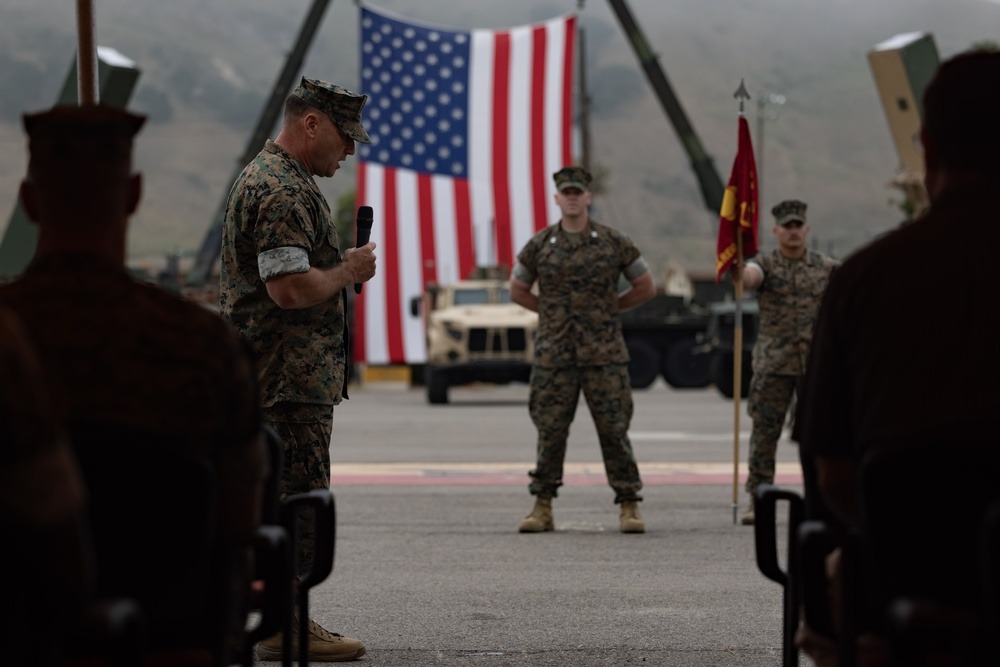
Photo By Lance Cpl. Migel Reynosa | U.S. Marine Corps Col. Patrick Eldridge, the commanding officer of 11th Marine Regiment, 1st Marine Division, gives a speech during the activation ceremony for Long Range Missile Battery A, 11th Marines, at Marine Corps Base Camp Pendleton, California, July 21, 2023.

Release from the 1st Marine Division 

***** 

CAMP PENDLETON, CA, UNITED STATES 

07.24.2023 

Story by  Capt. Joseph DiPietro, 1st Marine Division  

In a historic event at Marine Corps Base Camp Pendleton, California, the 11th Marine Regiment, 1st Marine Division activated the Marine Corps’ first long-range missile battery during a ceremony July 21. 
 
The new battery, which falls directly under 11th Marines, is designed to enhance the division’s and the joint force’s long-range strike and eventually sea denial capability and lethality. 
 
“It is truly a privilege and honor to stand with these Marines as we move forward with the long-range fires capability,” said Capt. Justin Hillebrand, who became the battery’s first commander during the ceremony. “These Marines have done phenomenal things. They took an idea and are making it work. The job just started, but this capability will be able to reach out and provide devastating and lethal fires.” 
 
The battery will train with long-range fires launchers, designed to fire Tomahawk cruise missiles, and various supporting assets to further refine the structure and requirements necessary for successful employment of the system. The battery’s Marines, along with 11th Marines’ leadership, will continue to refine tactics, techniques, and procedures to employ the long-range fires system in support of 1st MARDIV and I Marine Expeditionary Force initiatives. 
 
“This is a historic chapter in the Marine Corps and the 11th Marine Regiment. The American people expect the Marine Corps to prepare for war,” added Col. Patrick Eldridge, the commanding officer for 11th Marines. “There are nefarious states and actors in our world today who are credible threats to their neighbors, to our allies, and to the United States. The requirement for this capability now exists and the SecDef turned to the Marine Corps, the Marine Corps turned to 11th Marines, and we turn to Alpha Battery and our test and evaluation partners to make this capability a reality.” 
 
The long-range fires platform is an emerging capability for the Marine Corps and is growing as part of the broader ground-based anti-ship missile development for the service. 
 
Col. Eldridge concluded his activation ceremony remarks on a lighter note adding, “I imagine someone pretty high up said, ‘We’ve seen what Marines can do with rifles, let’s see what Marines can do with Tomahawks.’” 
 
In addition to the long-range missile battery activation, Marines with 2nd Battalion, 11th Marine Regiment, 1st MARDIV executed the first live-fire Naval Strike Missile test conducted by Marines of the Navy/Marine Corps Expeditionary Ship Interdiction System last month to demonstrate the firepower of another emerging capability. In conjunction with Marine Corps Systems Command, the NMESIS successfully launched and engaged a simulated target off the coast of Southern California. 
 
“NMESIS is the Marine Corps’ material solution for the ground based anti-ship missile capability through the Remotely Operated Ground Unit for Expeditionary Fires platform,” explained Staff Sgt. Derek Reddy, the NMESIS team leader for 11th Marines, during the flight test. “The guided flight test is absolutely imperative. It is so important that the Marines are actually conducting the exercise now to show off the system and its capabilities to the Marine Corps.” 
 
The long-range fires platform, NMESIS, and other fire support assets are only part of 1st MARDIV’s commitment to sea denial. Maritime reconnaissance, port and airfield seizure, and a continued emphasis on small unit leadership and tactics all drive the division toward capabilities and experience necessary to compete on the modern battlefield. Despite the advances in technology, formations, and tactics, 1st MARDIV Marines and Sailors relentlessly train fire and maneuver skills and will continue to build on the basics of the combined arms dilemma. 


Fairbanks Morse Defense Teams with Marand for Global Expansion

Release from Fairbanks Morse Defense 

***** 

Collaboration positions defense contractors to support the sale, design and manufacturing of ships in Australia 

BELOIT, Wis. – July 26, 2023 – Fairbanks Morse Defense (FMD), a portfolio company of Arcline Investment Management (Arcline), is teaming with Marand Precision Engineering (Marand) to expand its best-in-class marine technologies, OEM products, and service solutions to marine defense customers in Australia. Under the terms of the long-term agreement with FMD, Marand will manufacture and service components, as well as provide integrated solutions for FMD’s global customer base.

“Our collaboration with Marand positions us to support the sale, design, and manufacture of specialized components for the Royal Australian Navy’s future programs while also giving Marand access to our highly trained field service technicians and service centers,” said FMD CEO George Whittier. “All our customers benefit from this arrangement.”

Fairbanks Morse Defense has over 80 years of working with the US Navy on their nuclear projects, and this partnership will allow the Australian market to take advantage of FMD’s expertise and experience for their own new nuclear submarine programs.

“This collaboration combines the expertise of two highly respected defense contractors, giving our customers worldwide access to an even broader range of manufacturing and engineering solutions,” said Stuart Lindley, Future Business and Strategy for Marand Defence. “We’re looking forward to working with Fairbanks Morse Defense and expanding our ability to serve customers globally.” 

Based in Victoria, Australia, Marand has established itself as a global provider of precision-engineered solutions for the defense industry.


HII COMPLETES INSTALLATION OF USS JOHN C. STENNIS (CVN 74) MAIN MAST

Release from HII 

***** 

NEWPORT NEWS, Va., July 26, 2023 (GLOBE NEWSWIRE) — HII’s (NYSE: HII) Newport News Shipbuilding (NNS) division has completed a significant milestone in the refueling and complex overhaul (RCOH) of the aircraft carrier USS John C. Stennis (CVN 74). 

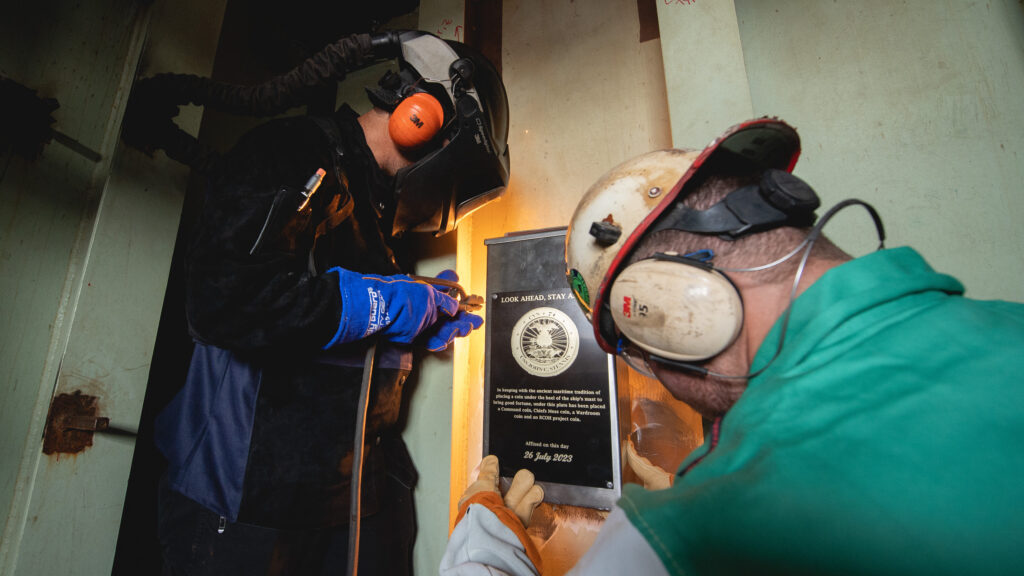
NNS shipbuilders and USS John C. Stennis sailors held a mast-stepping ceremony Wednesday, an ancient maritime custom of placing a coin underneath the ship’s mast to bring good fortune. A time capsule containing photos, a piece of the old mast, several coins and other artifacts was attached to the interior of the main mast. 

“It’s always great making significant progress and checking off major accomplishments during this RCOH period – today is yet another triumph by this team,” said Capt. J. Patrick Thompson III, the ship’s commanding officer. “This mast stepping allows us to acknowledge our past as we move into the future. Today we place a number of items in our time capsule to weld to the mast – to honor this moment in history, and more importantly to honor the workers and Stennis crew members helping us prepare the ship for another 25 years.” 

The ceremony followed a major milestone this spring when the shipyard installed the ship’s new main mast, which raises the carrier’s distinctive profile 123 feet above the flight deck. This marks the first RCOH during which the mast was installed all in one section using a new 315-ton crane HII invested in to support the RCOH program. 

Photos and video accompanying this release are available at: 
https://hii.com/news/uss-john-c-stennis-mast-stepping-rcoh-newport-news-shipbuilding 

“When the mast lands on the carrier, it represents one of the most visible construction milestones in the overhaul,” said Rob Check, NNS vice president, in-service aircraft carrier programs. “Our highly skilled shipbuilders are working with our Navy partners, our suppliers and numerous contractors to recapitalize this ship and deliver her back to the Navy for another 25 years of service.” 

The RCOH process is performed only once during the ship’s 50-year lifetime and involves upgrades to nearly every space and system on the ship. Tanks, the hull, shafting, propellers, rudders, piping, ventilation, electrical, combat and aviation support systems are repaired, upgraded and modernized. Work also includes defueling and refueling the ship’s two nuclear reactors, and repairs, maintenance and upgrades to the propulsion plant. 

After the RCOH, USS John C. Stennis will be the most modern and technologically advanced Nimitz-class aircraft carrier in the fleet and will continue to be a vital part of the nation’s defense. The RCOH represents 35% of all maintenance and modernization in an aircraft carrier’s service life. 

NNS is the only shipyard with the skilled workforce and facilities equipped for this project. USS John C. Stennis is the seventh Nimitz-class carrier to undergo RCOH. 


Fleet Forces Commander Caudle: Navy Is Flexing Proficiency in Operational Level of War

*****

ARLINGTON, Va. — The Navy’s ability to plan and execute war at the operational level in a joint environment is one factor being tested in an upcoming large-scale exercise, with fleet commander staffs and their fleets set to be stressed in various scenarios. The Navy is leveraging the operational planning expertise of the Marine Corps officers integrated in its staffs.

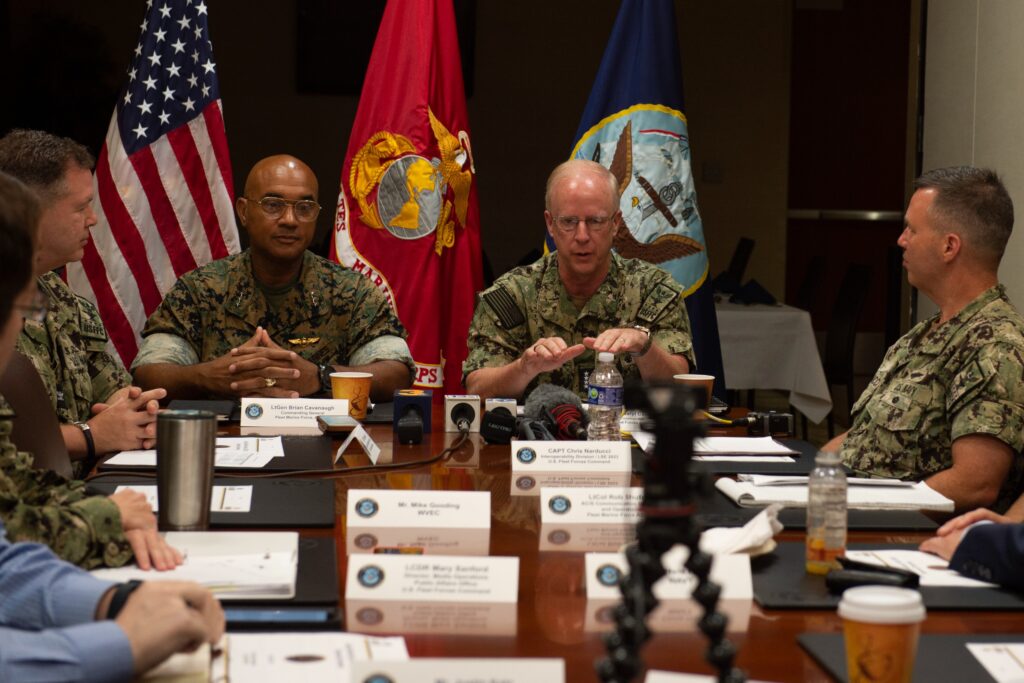
Admiral Daryl Caudle, commander, U.S. Fleet Forces Command, speaking July 24 to reporters during a briefing on the upcoming Large-Scale Exercise 2023, was asked by Seapower to address the Navy’s proficiency in the operational level of war, the lack of which was years ago a noted weakness.

“Our ships are fantastically engineered and built, they’ve got all the kit,” Caudle said. “We embark on those, lean forward, and can sustain in operations … so the ability for the Navy to think about how we actually plan and utilize those forces was somewhat dampened maybe by the fact that our ability to conduct warfare with those ships was so good. So, we found ourselves in a place where we needed to improve our ability to plan.

“We are — in a very prescribed and repeated manner — sending more of our Navy leaders to planning school,” the admiral said. “We’re building naval planners. We’re getting them in position of fleet command staffs, combatant command staffs, to actually exercise that level of Navy planning required to conduct this global warfare more effectively.

“We integrate with the Marine Corps who are excellent at this, and we bring our Marine partners into our planning cells,” he said. “Our future planning cells at all of our MOCs [Maritime Operations Centers] is part of that. Our future operations — where talk about that three-to-six-month time frame — where Marine Corps officers really bring a lot of knowledge and capability to Navy staffs. We’re completely integrated there. Our targeting cells are completely integrated. The things that the Marines have a lot of expertise in this that the Navy is still learning how to do at that level. It’s been a great success story.”

Over the last two decades the Navy has established Maritime Operations Centers to support fleet staffs and other commanders in planning and executing operations.

Caudle described the MOCs as “really a maritime operational concept … that informs the commander’s decision cycle. When you hear the word ‘MOC,’ what should really come to your mind is a battle rhythm. We can scale that level of battle rhythm to the conflict that it needs to scale to. So, we’re going to test the different echelons of scale during Large-Scale Exercise 23 to enable a global battle rhythm between three fleet commanders, exercising that decision cycle…. So, that’s part of this as well, testing out how that operational concept works.”

Large-Scale Exercise 2023, scheduled for Aug. 9 through Aug. 18, is a global exercise that will involve 22 time zones, six combatant commanders, seven fleets, nine MOCs, six carrier strike groups (four virtually in Live Virtual Constructive (LVC)), three amphibious ready groups (two in LVC), 25 ships and submarines (plus another 50+ LVC), and 25,000 Sailors and Marines.


JCREW Counter IED Program Achieves Full Operational Capability

Release from Naval Sea Systems Command

*****

By Program Executive Office Unmanned and Small Combatants Public Affairs

WASHINGTON – The Program Executive Office for Unmanned and Small Combatants (PEO USC) announced that the Joint Counter Radio-Controlled Improvised Explosive Device (RCIED) Electronic Warfare (JCREW) Increment One Block One (I1B1) program has achieved full operational capability ahead of schedule.

The I1B1 is a family of systems sharing common hardware and software, delivering protection against RCIEDs. The systems include three capabilities: mounted, dismounted, and fixed sites that provide critical support to warfighters.

The mounted systems provide protection from RCIEDs for mobile ground vehicles. The dismounted systems, also called “Manpack” systems, are carried by warfighters to provide protection from RCIEDs. The fixed sites systems provide protection from RCIEDs for temporary, semi-permanent, and permanent facilities and infrastructure. This includes compounds, airfields, buildings, and guard posts.

“The I1B1 program achieving full operational capability shows our commitment to the warfighter, who can now fully employ this technology in multiple domains to counter threats from RCIEDs,” said Capt. Jon Haase, Expeditionary Missions program manager.

The JCREW I1B1 program includes a full government-owned technical data package, open architecture hardware, upgradable software and firmware, and comes with an integrated test mechanism that verifies readiness to operate without the need for external test equipment.

With the JCREW I1B1 achieving FOC, the Navy’s inventory requirements have been met. Fleet operators are trained to employ and maintain the system. A supply support infrastructure is in place, including a government-owned-and-operated depot for repair.

JCREW I1B1 is currently employed by the U.S. Navy, Air Force, and partner countries Australia and New Zealand.

PEO USC designs, develops, builds, maintains, and modernizes the Navy’s unmanned maritime systems; mine warfare systems; special warfare systems; expeditionary warfare systems; and small surface combatants.


HII is Awarded Contract for Aircraft Carrier Maintenance in San Diego

Release from HII

*****

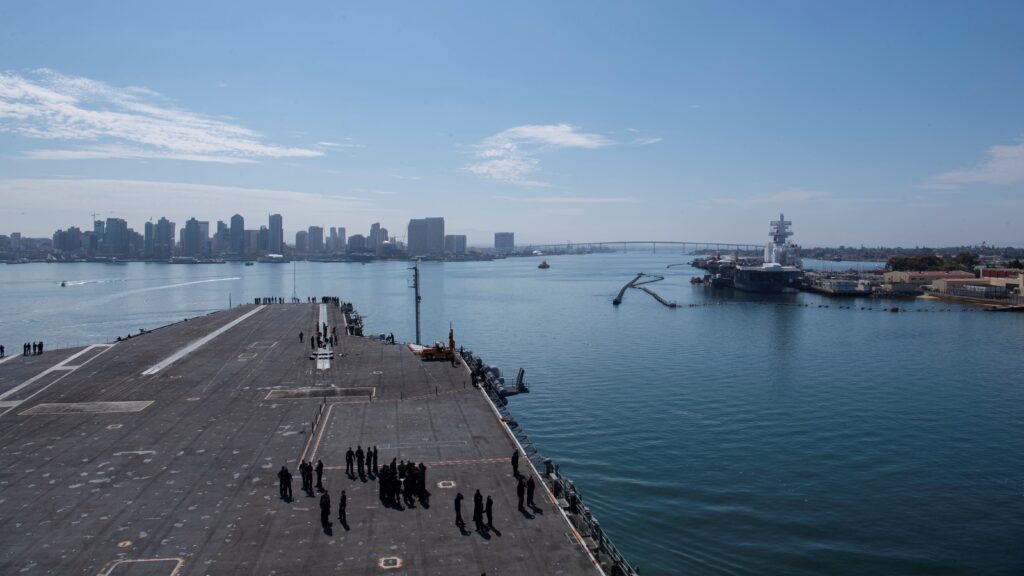
NEWPORT NEWS, Va., July 24, 2023 (GLOBE NEWSWIRE) — HII (NYSE: HII) announced today that its Newport News Shipbuilding (NNS) division has been awarded a contract from the U.S. Navy to support maintenance of nuclear-powered aircraft carriers in San Diego. The indefinite delivery, indefinite quantity (IDIQ), cost-plus incentive and award contract has a potential value of $528.4 million over five years, if all options are exercised.

The contract covers maintenance, repair and modernization efforts for Nimitz– and Gerald R. Ford-class aircraft carriers home-ported in and visiting the San Diego area. It will support emergent work, continuous maintenance availabilities, as well as Chief of Naval Operations (CNO) scheduled availabilities.

“We are honored to continue our longstanding tradition of providing world-class service to our U.S. Navy aircraft carriers in San Diego,” said Thomasina Wright, NNS vice president of fleet support programs. “For more than two decades, we’ve earned the Navy’s trust to carry out this important task, and we look forward to continuing that legacy with the highest quality, on-time and on-budget work.”

NNS is the nation’s sole designer, builder and refueler of nuclear-powered aircraft carriers.

A photo accompanying this release is available at: https://hii.com/news/hii-newport-news-shipbuilding-san-diego-2023/.


BAE Systems to deliver next-generation digital Identification Friend or Foe interrogator for the U.S. Navy

Release from BAE Systems

*****

Modernized design provides advanced capabilities to support mission success

GREENLAWN, N.Y. – July 25, 2023 – BAE Systems has received a $15 million contract from the U.S. Navy to deliver its next-generation digital interrogator for maritime vessels. The interrogator will have advanced capabilities—providing time-critical insights that reduce friendly fire incidents and support mission success in hostile environments.

BAE Systems’ modernized AN/UPX-50(C) Digital Interrogator will provide a common modular design and open system architecture. Its design enables the rapid integration of new technology within the existing footprint through software updates instead of hardware configuration.

“The flexibility of our design provides high performance without changes to existing fleet infrastructure—getting critical system updates to the warfighter faster,” said Donna Linke-Klein, director of Tactical Systems at BAE Systems. “This investment will accommodate IFF technology growth for several decades to best equip the U.S. Navy in the evolving battlespace.”

The AN/UPX-50(C) Digital Interrogator will serve the U.S. Navy fleet. It delivers high-performance, multi-function Identification Friend or Foe (IFF) solutions for air defense, weapon systems, air traffic control, and range instrumentation. Used for Mark XIIB IFF processing, including Mode 5 and Mode S, it provides secure and encrypted data exchange. It also includes a third receive channel for passive acquisition of Mode 5 Level 2 and Automatic Dependent Surveillance—Broadcast In, providing enhanced situational awareness for warfighters.

With more than 80 years of IFF experience, BAE Systems has delivered over 16,000 transponders, 1,500 interrogators, and 6,000 combined interrogator transponder systems for use on new and existing platforms, including unmanned aerial vehicles, ships, and rotary- and fixed-wing aircraft.

Work on the upgraded AN/UPX-50(C) Digital IFF Interrogator will be performed at BAE Systems’ state-of-the-art facility in Greenlawn, New York.


USSOCOM Declares Initial Operational Capability for Lockheed Martin’s New Dry Combat Submersible

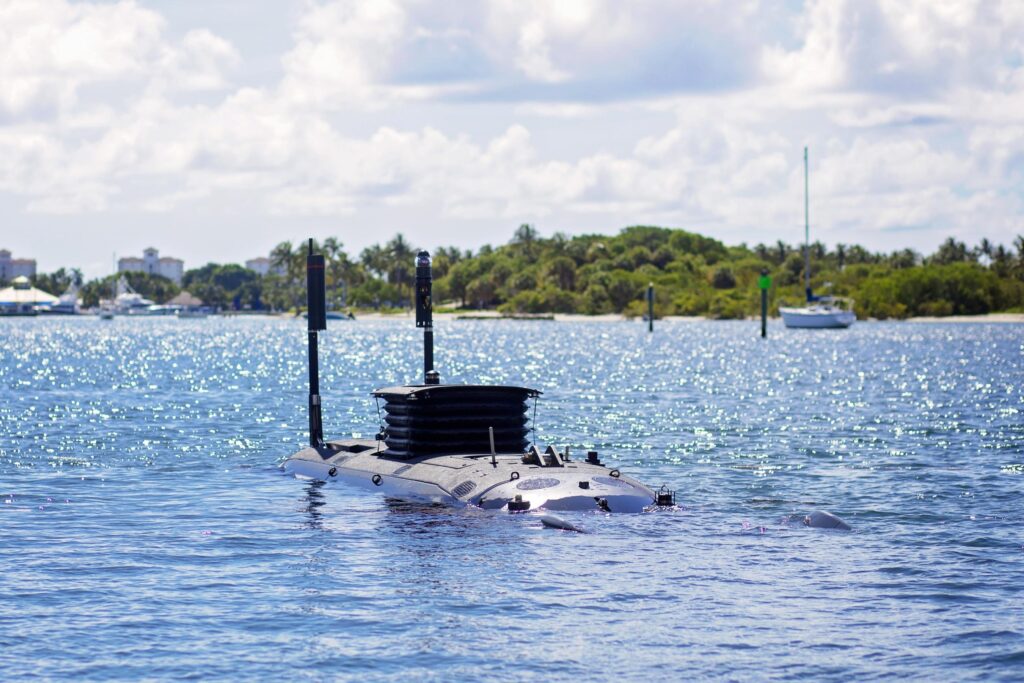
A Dry Combat Submersible, manufactured for U.S. Special Operations Command, departs from Lockheed Martin’s Palm Beach, Florida facility in transit to open water sea trials which were completed in March 2023. Photo courtesy Lockheed Martin.

Release from Lockheed

*****

WEST PALM BEACH, Fla., July 24, 2023 — U.S. Special Operations Command (USSOCOM) declared Initial Operational Capability for Lockheed Martin’s Dry Combat Submersible (DCS) last month. This milestone represents a transformational capability for USSOCOM forces in Maritime and Undersea Systems.

The Dry Combat Submersible has the potential to transform undersea warfare for special operators,” said Gregg Bauer, C6ISR vice president and general manager at Lockheed Martin. “DCS provides safe, clandestine delivery for occupants over long distances in a completely dry environment and features a lock-in and lock-out chamber. Occupants arrive at the mission warm, rested, hydrated and ready, making this vessel a key advantage in mission success.”

A Deeper Dive

With this capability, U.S. Special Operations Forces traveling extended distances below the surface of the ocean will be safe to do so without a wetsuit and without exposure to the elements. Due to the DCS’s lock-in/lock-out technology, special operators can get in and out of the vehicle while entirely submerged and undetected.

DCS is designed to transport a special operations team to their destination and enables personnel to arrive discretely to their desired exit point.

“The Lockheed Martin team is proud of the work that has gone into the development and delivery of DCS and supporting USSOCOM to this IOC milestone,” says Jason Crawford, senior program manager for Manned Combat Submersibles. “We look forward to delivering the third DCS and supporting DCS into Full Operating Capacity, filling a critical gap for USSOCOM.”

DCS is manufactured in Palm Beach, Florida. Sustainment operations will include lifecycle support, post-delivery logistics support, pilot and special operator training, and training equipment to ensure the safe and effective operation of the new capability in future special forces efforts.