USS Beloit Commissioned
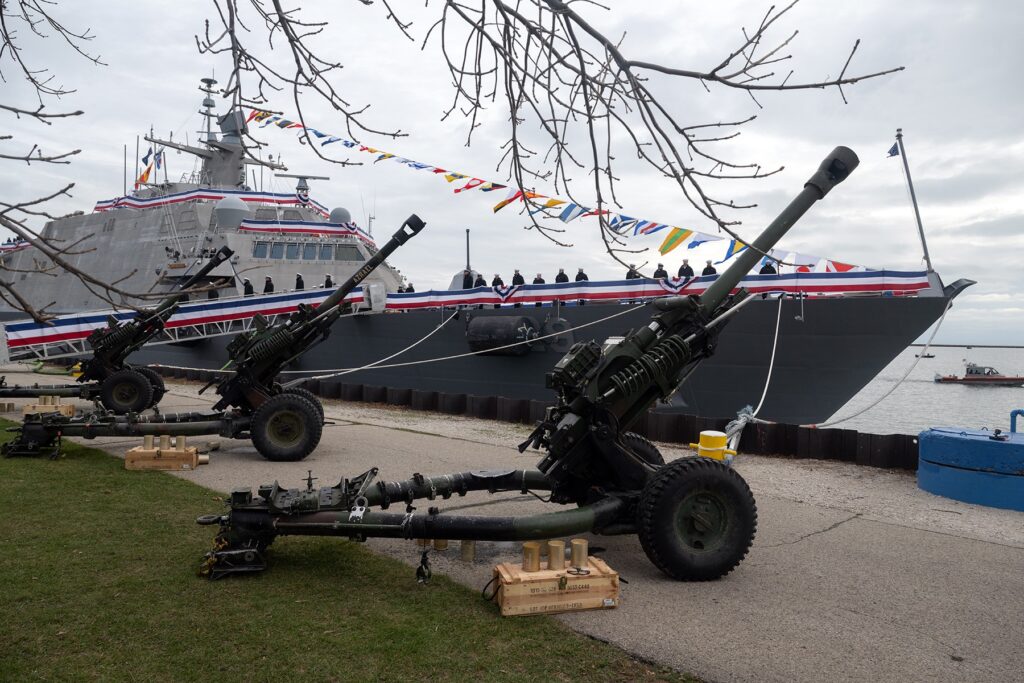
Sailors aboard USS Beloit (LCS 29) man the ship and bring it to life during its commissioning ceremony in Milwaukee. (EJ Hersom) 

From Lt. Ayifa Brooks, Nov. 25, 2024 

MILWAUKEE, Wis. — The U.S. Navy commissioned its newest Freedom-variant littoral combat ship USS Beloit (LCS 29) November 23, 2024, in Milwaukee, Wisconsin. 

“I take great pride in representing Wisconsin’s manufacturing economy and the workers who power it,” said the Honorable Tammy Baldwin, U.S. Senator, State of Wisconsin. “When it comes to our ship building industry our workers have helped sustain America’s security for our national defense for generations. We boast a successful history of building ships and the city of Beloit has long played an essential role in that.” 
 
Guest speakers for the event also included the Honorable Tony Evers, Governor of Wisconsin, who delivered the commissioning ceremony’s principal address. Remarks were also provided by Adm. James Kilby, Vice Chief of Naval Operations; the Honorable Gwen Moore, U.S. Representative, Wisconsin’s Fourth District; Secretary of the Navy, the Honorable Carlos Del Toro; and Mr. Ali Ruwaih, Vice President, Lockheed Martin Rotary and Mission Systems, Small Combatants and Ships. 
 
“Today we commission the Navy’s newest freedom-class littoral combat ship, the first ever to bear the name of the best city in Wisconsin, USS Beloit.” said Kilby. “Beloit will play a key role in implementing the Chief of Naval Operations’ strategy as a platform with a crew ready with the right capabilities, weapons, sustainment, and training deterring our adversaries and ready to fight.” 
 
Beloit completed 19 certifications in just seven weeks after moving onboard and successfully passed each certification the first go round, scoring above the Navy’s standards for the LCS community including completing their Light off Assessment (LOA) in less than a week with flying colors. 
 
“I would like to thank our employees and our industry partners for their resiliency and dedication to Littoral Combat Ship Freedom Class who demonstrated exceptional commitment and delivered outstanding results,” said Ruwaih. “The USS Beloit has been designed to protect and guide the crew as they carry forth the ship’s motto Forward for Freedom. I could not think of a more fitting description of an LCS Sailor who displays the most versatile set of skills to help ensure freedom of the seas.” 
 
The audience was honored with the presence of veterans from World War II, the Korean War, Vietnam, the Iraqi war and many other significant battles. The Sailors, family and friends and community of Beloit were reminded of the profound responsibility that comes with such a legacy that the officers and crew of Beloit will undoubtedly uphold with honor, integrity and valor. 
 
“Today is about the commissioning of a ship. But it’s also a ceremony about a calling, a calling to serve and a calling to sacrifice,” said Moore. “I am proud that this ship is being commissioned in the state where it was built. It will be the first commissioned ship named after Beloit, Wisconsin in honor of that city’s contributions to the US Navy, especially the ship engines built in that city.” 
 
The ship’s sponsor, retired Army Maj. Gen. Marcia M. Anderson, gave the first order to “man our ship and bring her to life.” 
 
“The commissioning of the USS Beloit is not merely a naval event – it is a celebration of American industrial might, a testament to the enduring spirit of the American people, and a tribute to the city of Beloit and the state of Wisconsin,” said Del Toro. “Everywhere you go, you will sail Forward for Freedom – serving as a beacon of our nation’s enduring commitment to independence and security for all and a reminder of the many thousands of Sailors and Marines who have gone before us.” 
 
“We are making history! Our Badger crew and the city of Beloit have worked and waited for this moment.” said Kissinger. “We are incredibly blessed and humbled to celebrate the commissioning of the USS Beloit with the cities of Milwaukee and celebrating Beloit. Forward to Freedom!” 
 
LCS class ships like Beloit will be equipped with Over the Horizon – Weapons System (OTH-WS) Naval Strike Missile (NSM). The OTH NSM provides the U.S. and its allies with long range anti-surface offensive strike capability as well as increased coastline defense, deterrence, and interoperability. This will include the MK 70 Payload Delivery System (PDS) which uses combat proven MK 41 Vertical Launching System (VLS) technology to provide mid-range precision fires capabilities. The MK 70 enables rapid deployment of offensive capability to non-traditional platforms and locations. 
 
The ceremony featured early successes, future developments, milestones, fair winds and following seas while showcasing a weeklong series of events celebrating the ship, its crew, community and namesake city. 
 
Beloit is the 15th Freedom-variant littoral combat ship (LCS) commissioned in the United States Navy and the first to be commissioned in naval service to bear this namesake. 
 
USS Beloit (LCS 29) was built by the Lockheed Martin and Fincantieri Marinette Marine in Marinette, Wisconsin, the named on Feb. 10, 2018, and authorized on Oct. 10, 2018. It was christened May 7, 2022, and completed acceptance trials the following year. The ship was delivered to the U.S. Navy on Sept. 30, 2024. 
 
LCS is a fast, agile, mission-focused platform designed for operation in near-shore environments yet capable of open-ocean operation. It is designed to defeat asymmetric “anti-access” threats such as mines, quiet diesel submarines and fast surface craft. They are capable of supporting forward presence, maritime security, sea control, and deterrence. 
 
USS Beloit will be homeported at Naval Station Mayport, Florida. 
 
The mission of CNSP is to man, train, and equip the Surface Force to provide fleet commanders with credible naval power to control the sea and project power ashore. 
 
For more news from Naval Surface Forces, visit DVIDS – Commander, Naval Surface Force, U.S. Pacific Fleet, and Commander, Naval Surface Force, U.S. Pacific Fleet. 


USS Boxer and 15th Marine Expeditionary Unit Return Home After Indo-Pacific Deployment 

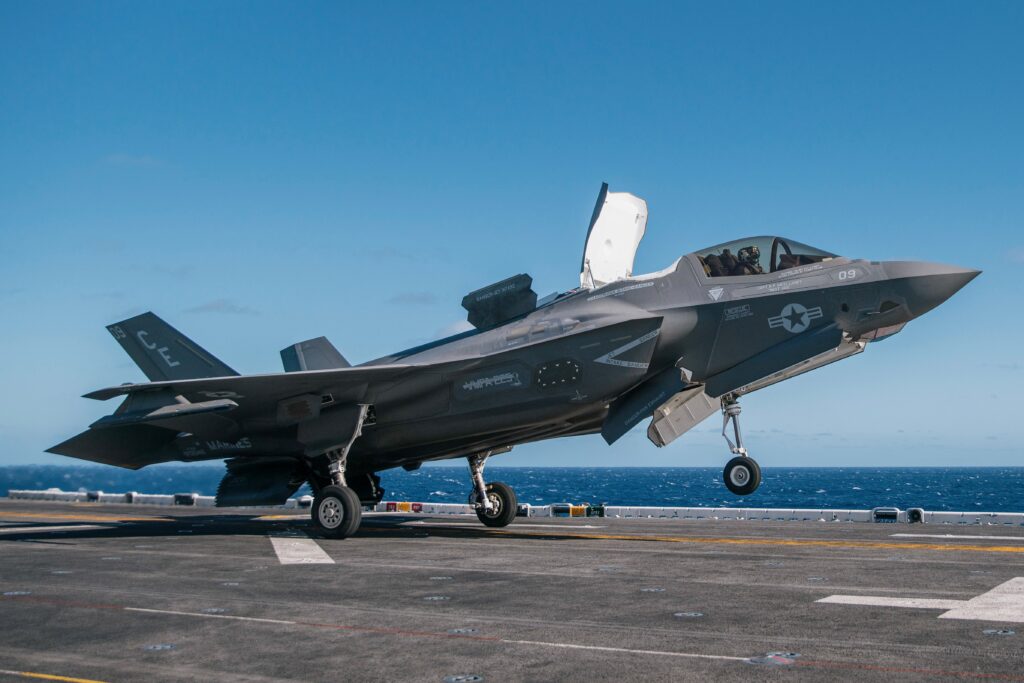
An F-35B Lightning II attached to VMFA-225 taxis before take-off from USS Boxer (LHD 4) in the Pacific Ocean. (Sgt. Amelia Kang) 

From U.S. Third Fleet Public Affairs, Nov. 25 2024 

SAN DIEGO – Sailors assigned to the Wasp-class amphibious assault ship USS Boxer (LHD 4) and embarked elements of the 15th Marine Expeditionary Unit (MEU) returned to homeport in San Diego and Camp Pendleton, this week after a deployment to the U.S. 7th and 3rd Fleet areas of operations. 

As part of the Boxer Amphibious Ready Group and the 15th MEU (ARG-MEU), more than 2,500 Sailors and Marines participated in a wide range of joint and combined exercises and provided foreign disaster support, showcasing the ready and responsive combined-arms team of the Navy and Marine Corps.

“The tactical expertise, professionalism, and stealth of the Sailors and Marines who make up our amphibious force team is unmatched, and that was proven time and time again throughout our deployment to the 7th Fleet area of operations,” said U.S. Navy Capt. Tate Robinson, commodore of Amphibious Squadron (PHIBRON) 5. “From exercising and training alongside our allies and partners to supporting foreign disaster response missions, our Navy and Marine Corps team demonstrated the true flexibility and maneuverability of the ARG-MEU construct, and I could not be more honored to serve alongside each and every member of this team.” 
 
During deployment, Boxer and the 15th MEU participated in exercise Ssang Yong. The exercise strengthened the Republic of Korea-U.S. alliance through bilateral, joint training, contributing toward combined amphibious capability in defense of the Korean Peninsula. 
 
In September, Boxer also sailed alongside and participated in a personnel exchange with the Japan Maritime Self-Defense Force Kongo-class guided-missile destroyer JS Kongo (DDG 173) and conducted three replenishments-at-sea with the Royal New Zealand Navy’s Polar-class sustainment vessel HMNZS Aotearoa (A11) before returning to the Republic of Korea to participate in the Republic of Korea Armed Forces Day celebration. As part of the celebration, Boxer and the 15th MEU welcomed more than 245 visitors to the ship for tours, giving the Sailors and Marines an opportunity to showcase their equipment, expertise, and professionalism while building relationships with the local community. 
 
Later in September, the H-1 Helicopter detachment from Marine Medium Tiltrotor Squadron (VMM) 165, Reinforced temporarily transferred to the expeditionary sea base USS Miguel Keith (ESB 5), marking the first time a full H-1 detachment operated from this class of ship. The detachment, consisting of UH-1Y Venom and AH-1Z Viper helicopters, conducted day and night close-air support training missions with live ordnance, enhancing the capability and capacity of the MEU’s Marine Air Ground Task Force. 
 
After departing the Republic of Korea, Boxer and the 15th MEU rapidly shifted course to head to the Philippines at the direction of U.S. Secretary of Defense Lloyd Austin and U.S. Indo-Pacific Command to support U.S. Agency for International Development’s (USAID) efforts in foreign disaster response operations following Typhoon Krathon (locally know as Julian) at the request of the Philippine government. The Boxer ARG-MEU provided critical logistics support, transporting much-needed foreign disaster response supplies to remote locations in the Philippines alongside USAID, the Armed Forces of the Philippines, and personnel from I Marine Expeditionary Force’s Marine Rotational Force-Southeast Asia (MRF-SEA). The foreign disaster response mission exemplified the benefits of the unique construct of the ARG-MEU, providing commanders the flexibility to respond to crises with air and sea-based connectors, ultimately enhancing maneuverability and ability to respond whenever and wherever called upon. 
 
Following foreign disaster response in the provinces of Cagayan and Batanes, Philippines, the BOX ARG-MEU remained in the region to participate in Exercise KAMANDAG 8, an annual Philippine and U.S. Marine Corps-led exercise aimed at enhancing shared defense and humanitarian capabilities through realistic training scenarios and information exchanges. This year’s iteration included participants from Australia, France, Indonesia, Japan, Republic of Korea, Thailand, and the United Kingdom. 
 
“Together, the entire 15th MEU and the three ships of the Boxer Amphibious Ready Group have demonstrated an exceptional level of versatility, resilience, and operational capability,” said Col. Sean Dynan, commanding officer, 15th MEU. “From crisis response during foreign disaster relief to supporting 10 theater exercises, the accomplishments of our amphibious force reflect the skill, resilience, dedication and professionalism of every Marine and Sailor. I’m incredibly proud of what we’ve achieved together and the lasting impact this deployment will have on future operations in the Indo-Pacific working with our allies and partners.” 
 
Boxer is the flagship of the Boxer Amphibious Ready Group. In addition to Boxer and the 15th MEU Command Element, units assigned to the ARG-MEU during the deployment included the San Antonio-class amphibious transport dock ship USS Somerset (LPD 25), Harpers Ferry-class dock landing ship USS Harpers Ferry (LSD 49), Amphibious Squadron (PHIBRON) 5, Helicopter Sea Combat Squadron (HSC) 23, Tactical Air Control Squadron (TACRON) 11, Fleet Surgical Team (FST) 5, Assault Craft Units (ACU) 1 and 5, Beachmaster Unit (BMU) 1, Battalion Landing Team (BLT) 1/5, Combat Logistics Battalion (CLB) 15, Marine Medium Tiltrotor Squadron (VMM) (reinforced) 165, and Marine Fighter Attack Squadron (VMFA) 225 with embarked F-35B Lightning II aircraft. Harpers Ferry and Somerset returned to San Diego, Aug. 13 and Oct. 18, 2024, respectively. 
 
Throughout the deployment, Boxer executed more than 3,500 launches and recoveries of U.S. Navy and Marine Corps aircraft, completing more than 2,100 flight hours in support of the 15th MEU Air Combat Element, VMM-165 (REIN), VMFA-225, and the HSC-23 detachment. Embarked aircraft on Boxer include MH-60S Nighthawk helicopters, MV-22 Osprey tiltrotor aircraft, AH-1Z Viper helicopters, UH-1Y Venom helicopters, and F-35B Lightning II vertical and/or short take-off and landing aircraft. 
 
Boxer’s air department team received more than 350 pallets of food, stores, and equipment via vertical replenishment (VERTREP) and over 1 million gallons of JP-5 via underway replenishment (UNREP) and in port replenishment. Additionally, the Amphibious Air Traffic Control Center (AATCC) conducted more than 500 instrument approaches, both day and night, while the flight deck and hangar deck conducted more than 2,100 aircraft movement evolutions and 240 aircraft elevator movements in direct support of daily operations. 
 
Boxer completed eight underway replenishments in the Indo-Pacific region with the Henry J. Kaiser-class underway replenishment oilers USNS Pecos (T-AO 197) and USNS Yukon (T-AO 202), the Lewis and Clark-class dry cargo ships USNS Carl Brashear (T-AKE 7), USNS Charles Drew (T-AKE 10) USNS Cesar Chavez (T-AKE 14) and HMNZS Aotearoa, , and USNS Yukon, transferring more than 5 million gallons of fuel over the deployment period. 
 
Boxer and the 15th MEU transited over 3,200 nautical miles in support of deterring aggression, crisis response, presence operations, and promoting a free and open Indo-Pacific. Boxer conducted routine port visits to Guam, Japan, and the Republic of Korea. 
 
The 15th MEU is based at Camp Pendleton and is part of I Marine Expeditionary Force. As a premiere global crisis response force, 15th MEU is trained and ready to operate within the U.S. Indo-Pacific Command area of responsibility with the Navy’s U.S. 3rd Fleet. 
 
Boxer is a Wasp-class amphibious assault ship homeported in San Diego. Commissioned Feb. 11, 1995, Boxer is the sixth ship to bear the name. Boxer’s crew is made up of approximately 1,200 officers and enlisted personnel and can accommodate up to 1,800 Marines. 
 
As an integral part of U.S. Pacific Fleet, Commander, U.S. 3rd Fleet operates naval forces in the Indo-Pacific and provides the realistic and relevant training necessary to execute the U.S. Navy’s timeless role across the full spectrum of military operations—from combat missions to humanitarian assistance and disaster relief. U.S. 3rd Fleet works together with our allies and partners to advance freedom of navigation, the rule of law, and other principles that underpin security for the Indo-Pacific region. 


Keel Laid for Future USS Sam Nunn

By Team Ships Strategic Operations, Nov. 22, 2024 

PASCAGOULA, Miss. – The keel for the future USS Sam Nunn (DDG 133), an Arleigh Burke-class guided-missile destroyer, was laid during a ceremony on Nov. 22 at HII’s Ingalls Shipbuilding division. 

The ship is named in honor of United States Senator Samuel Augustus Nunn Jr, who represented the state of Georigia, served as Chairman of both the United States Senate Committee on Armed Services and the Permanent Subcommittee on Investigations. 

As the living namesake, Sen. Nunn attended the keel laying ceremony alongside his daughter and ship’s sponsor, Michelle Nunn. 

A keel laying ceremony represents the joining together of the ship’s first major modular components at land level. During the ceremony, the keel is authenticated when a welder etches the initials of the ship’s sponsor into the keel plate. In addition to Ms. Nunn’s initials, Sen. Nunn’s initials were also etched into the plate. 

“The future USS Sam Nunn and all who sail aboard her will honor the legacy of Sen. Nunn and his dedication to the men and women serving our country,” said Capt. Seth Miller, DDG 51 class program manager, Program Executive Office, Ships (PEO Ships). “DDG 133 will be yet another player on the field providing the most advanced capability to our Navy and the nation. 

DDG 51 Flight III destroyers feature the AN/SPY-6(V)1 Air and Missile Defense Radar and incorporate upgrades to the electrical power and cooling capacity plus additional associated changes to provide greatly enhanced warfighting capability to the fleet. 

Future destroyers USS Ted Stevens (DDG 128), USS Jeremiah Denton (DDG 129), USS George M. Neal (DDG 131), and USS Thad Cochran (DDG 135) are also under construction at Ingalls. 

PEO Ships, one of the Department of Defense’s largest acquisition organizations, is responsible for executing the development and procurement of all destroyers, amphibious ships and craft, auxiliary ships, special mission ships, sealift ships and support ships. 


Task Group 59.1 Conducts Digital Talon 3.0

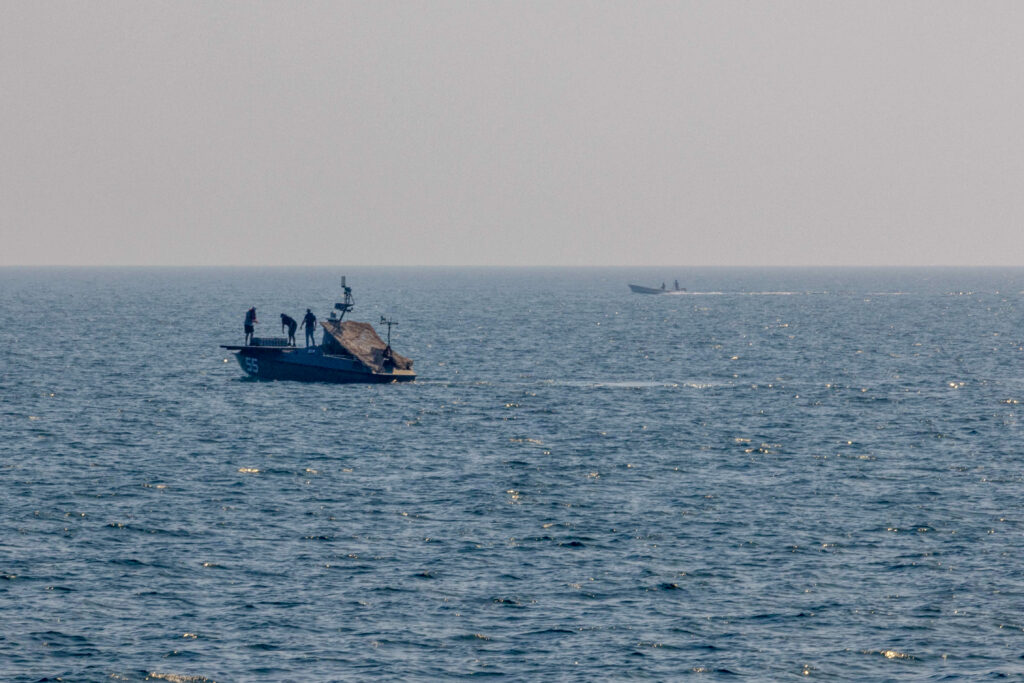
241105-A-BO737-1011 U.S. CENTRAL COMMAND AREA OF RESPONSIBILITY (Nov. 5, 2024) An unmanned aerial vehicle, operated by U.S. Naval Forces Central Command’s Task Force 59, prepares for launch on an unmanned surface vessel during exercise Digital Talon 3.0 in the U.S. Central Command area of responsibility. (Official U.S. Army photo)

By Commander U.S. Naval Forces Central Command Public Affairs | November 24, 2024 

MANAMA, Bahrain –Task Group (TG) 59.1 conducted the third iteration of exercise Digital Talon in the U.S. 5th Fleet area of operations, Nov. 5. 

Known as Digital Talon 3.0, the exercise tested the electronic and mechanical effectiveness of robotics and autonomous systems (RAS), the capabilities of over-the-horizon communications between unmanned systems, and testing aerial autonomous launch and recovery of an unmanned aerial vehicle (UAV) off a unmanned surface vessel (USV). 

Lt. Luis Echeverria, commanding officer of TG 59.1, said Digital Talon 3.0 expanded the over-the-horizon capabilities of these unmanned systems. 

“Under Digital Talon 3.0 we were able to test the remote launch of a loitering munition, and vertical take-off and landing of UAVs from a USV,” said Echeverria. “These evolutions resulted in the successful remote launch of a loitering munition at sea.” 

Commander, Special Operations Forces Central Command, the Avenger-class mine countermeasures ship USS Devastator (MCM 6) and the U.S. Coast Guard Sentinel-class fast response cutter USCGC Emlen Tunnell (WPC 1145) also participated in Digital Talon 3.0. 

The first Digital Talon exercise, held in October 2023, and the second iteration a month later, advanced lethality and kinetic applications for unmanned systems. Digital Talon 3.0 examined more advanced tactics, according to TG 59.1’s executive officer, Royal Navy Lt. Samuel Hendy. 

“As with all pioneering ventures and first-of-its-kind feats, there are plenty of challenges to overcome, lessons to be analyzed, but we are a learning organization and it all combines to further benefit 5th Fleets’ understanding and employment of this state-of-the-art warfare,” Hendy said. “If there is one thing we can take away, Digital Talon 3.0 affirms that the U.S. Navy, as well as her partner nations, remains at the forefront of cutting-edge unmanned system integration and deployment.” 

Established in January 2024, Task Group 59.1, dubbed “The Pioneers,” tests industry solutions and focuses on the operational deployment of unmanned systems teamed with manned operators to bolster maritime security across the Middle East region. TG 59.1 reports directly to Task Force 59, the Navy’s first Unmanned and Artificial Intelligence Task Force. TF 59 integrates unmanned systems and artificial intelligence with maritime operations in the U.S. 5th Fleet area of operations to support maritime security and stability in the Middle East region. It has tested, upgraded, evolved and operated with more than 23 different unmanned systems. 

U.S. Naval Forces Central Command/U.S. 5th Fleet’s area of operations encompasses about 2.5 million square miles of water area and includes the Arabian Gulf, Red Sea, Gulf of Oman, Gulf of Aden, Arabian Sea and parts of the Indian Ocean. This expanse, comprising 21 nations, includes three critical choke points at the Strait of Hormuz, the Suez Canal and the Strait of Bab al Mandeb. 


Coast Guard Cutter Valiant Returns Home After 46-Day Patrol in the Windward Passage

U.S. Coast Guard Cutter Valiant (WMEC 621) and French Navy Frigate FS Ventôse (F733) conduct joint exercises at sea, Sept. 29, 2024, while underway in the Windward Passage. The crew of Valiant conducted a 49-day migrant interdiction operations patrol in the region to protect life at sea and enforce U.S. maritime law. (Photo courtesy of FS Ventôse) 

Nov. 22, 2024 

From Coast Guard 7th District, Nov. 22, 2024 

NAVAL STATION MAYPORT, Fla. — The crew of Coast Guard Cutter Valiant (WMEC 621) returned to their home port at Naval Station Mayport, Nov. 7, following a 49-day migrant interdiction operations patrol in the Windward Passage. 

Valiant’s crew deployed in support of Homeland Security Task Force – Southeast (HSTF-SE) and Operation Vigilant Sentry (OVS) while operating in the Seventh Coast Guard District’s area of responsibility. Throughout the patrol, the crew of Valiant conducted maritime safety and security missions to protect life at sea and enforce U.S. maritime law. 

While at sea, Valiant rendezvoused with French Navy Frigate FS Ventôse (F733) during the vessels’ independent patrols off coastal Haiti, where the two crews conducted North Atlantic Treaty Organization (NATO) exercises. Valiant’s crew applied cutter refueling at sea techniques and exercised NATO code signaling with their French counterparts. Valiant’s small boat team received the unique opportunity to perform small-boat operations with a French warship. And Ventôse embarked a team from Valiant for a simulated boarding, where Coast Guard members shared techniques, procedures and best practices with their French counterparts. 

International professional exchanges at sea such as these are vital for strengthening partnerships between nations, clearing the path for joint operations where shared missions, such as search and rescue and maritime drug interdiction, overlap. 

Additionally, the crew of Valiant provided care for 363 Haitian migrants and conducted their safe repatriation home. Valiant’s crew also transferred nearly 1,000 pounds of illegal narcotics and 14 suspected drug traffickers to proper authorities. 

HSTF-SE serves as the Department of Homeland Security lead for operational and tactical planning, command and control, and acts as a standing organization to interdict unlawful maritime migration attempts with federal, state and local partners. HSTF-SE continues to enhance enforcement efforts in support of OVS, which is the 2004 DHS plan to respond to mass maritime migration in the Caribbean Sea and the Florida Straits. 

Valiant is a multi-mission, 210-foot, Reliance-class medium endurance cutter. Its primary missions include search and rescue, maritime law enforcement, marine environmental protection, homeland security and national defense operations. 

For information on how to join the U.S. Coast Guard, visit www.GoCoastGuard.com to learn more about active duty and reserve, officer and enlisted opportunities. Information on how to apply to the U.S. Coast Guard Academy can be found here.  


Last of the Sea Dragons to Qualify on the MH-53E 

by Commander, Naval Air Force Atlantic Public Affairs 

22 November 2024 

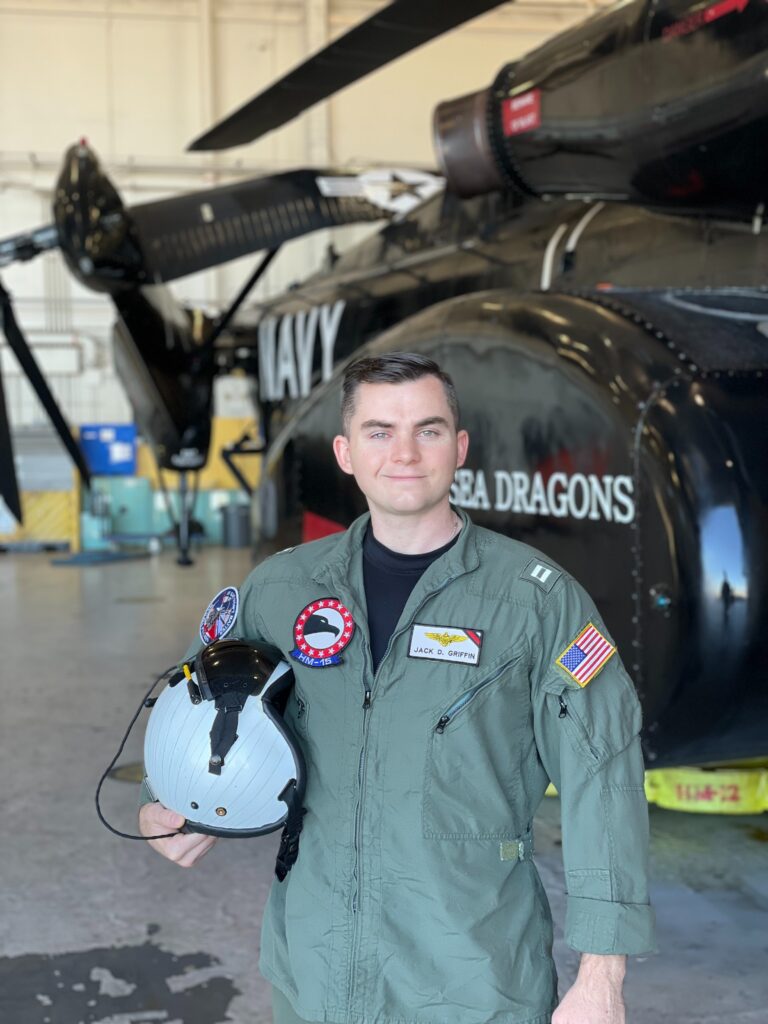
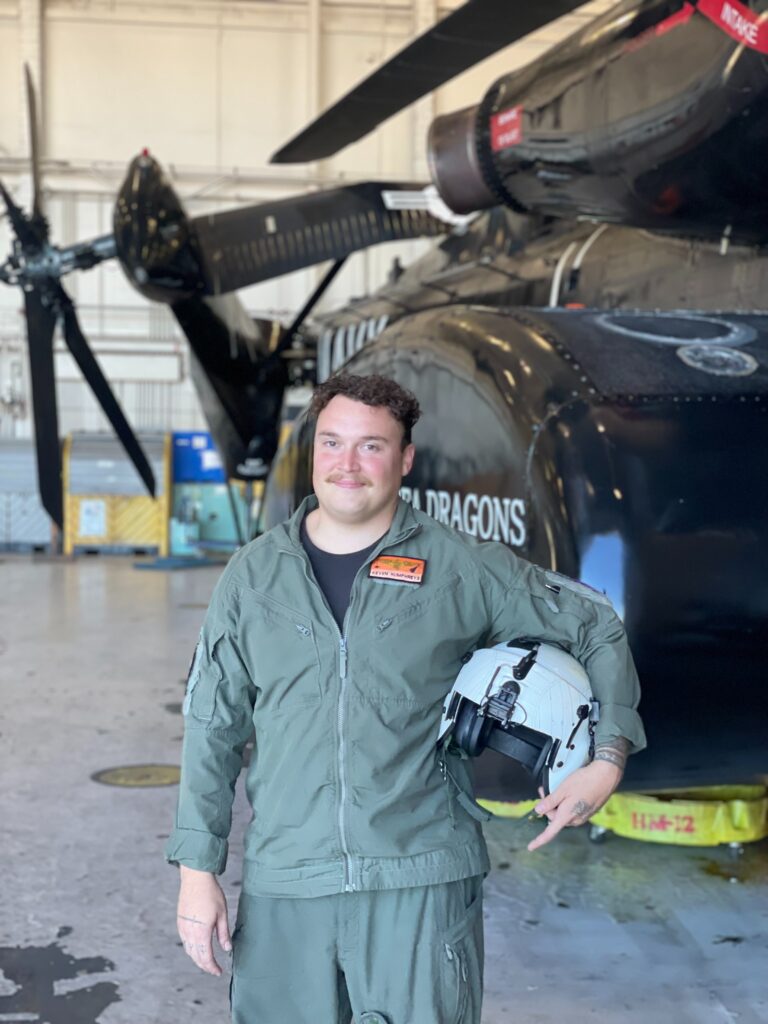
NORFOLK, Va. – The last two naval aviators to qualify to operate the MH-53E Sea Dragon are completing the final phases of their training while assigned to training squadron Helicopter Mine Countermeasures Squadron (HM) 12 in Norfolk.  

Lt. Jack Griffin and Lt. Keven Humphreys are set to close the chapter on the aircraft’s 42-year history of qualifying pilots to operate the storied MH-53E Sea Dragon. 
 
This specialized helicopter, renowned for its Airborne Mine Countermeasures (AMCM) capabilities, is drawing close to the end of its operational life with a sunset ceremony planned for March 2025. The MH-53E, introduced to the U.S. Navy in 1982, has long served as a critical asset in mine hunting, sweeping, and neutralization, as well as a heavy-lift aircraft transporting troops and equipment.   
 
Since 1986, HM-12 has qualified over 580 naval aviators to operate the MH-53E spanning nearly five generations. 
 
As the Navy phases out this iconic aircraft, Griffin and Humphreys will be the last pilots to master its unique skill set while the last two remaining squadrons – HM-12 and HM-15 – prepare for the sundown of this aircraft type model series. Both men originally set their sights on serving as naval officers but did not initially envision becoming naval aviators. 
 
Humphreys credits his inspiration to join the aviation community from experiences a close friend of his brothers shared after joining the U.S. Marine Corps to serve as a fighter pilot. 
 
“Growing up, I looked up to my best friend’s brother,” Humphreys recalled. “I knew I wanted to serve and become a leader in the military, but becoming a pilot wasn’t initially part of my plan. Seeing him as a leader and a pilot was pretty cool, though.” 
Griffin emphasized what he likes best about serving in the MH-53E community. 
 
“The MH-53E community is extremely tight-knit,” Griffin said. “There is a close relationship between pilots and aircrewmen. Everyone is down-to-earth and focused on the mission. I really appreciate how well the crews work together to get the job done.” 
As the MH-53E nears its retirement, Griffin and Humphreys are still preparing for their final missions and upcoming overseas deployment and will continue to enhance their proficiency with the aircraft. 
 
“We are excited to be here,” Griffin said. “We love what we do and where we are right now.” 
 
A special ceremony will be held to honor Griffin and Humphreys as they mark the end of an era and their place in history as preparations are being made to sundown the MH-53E Sea Dragon. This event will celebrate their contributions and the legacy of an aircraft that has played a pivotal role in Naval Aviation history.


Gulfstream Again Selected for C-20, C-37 Fleet Support

Gulfstream Special Missions Awarded Significant Contract to Service U.S. Military Aircraft 

From Gulfstream Aerospace Corp. 

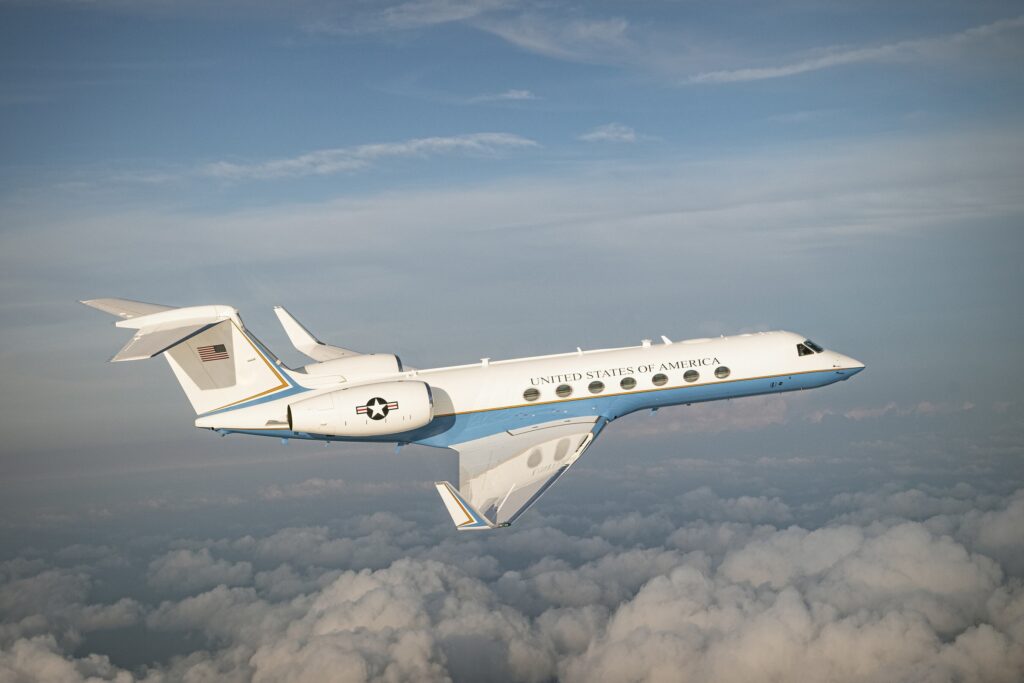
SAVANNAH, Ga., November 22, 2024 — Gulfstream Aerospace Corp., a business unit of General Dynamics (NYSE:GD), has been awarded a contractor logistics support services (CLS) contract from the U.S. Air Force Life Cycle Management Center for C-20 and C-37 fleets. This contract extends over a seven-year period and provides services to the U.S. Air Force, U.S. Navy, U.S. Marine Corps, U.S. Army and U.S. Coast Guard.  

“For nearly 60 years, Gulfstream has been a trusted partner to governments and military organizations worldwide, and we are honored that the U.S. Air Force has once again selected our company to support the U.S. military’s fleet,” said Mark Burns, president, Gulfstream. “This demonstrates the strength of our world-class Customer Support network and its ability to support all of our customers’ missions. Gulfstream’s Special Missions business delivers cutting-edge aircraft expertly engineered for a wide range of critical operations and is currently experiencing unprecedented activity with customers around the world.”  

The latest CLS contract is valued at $991 million and includes a wide variety of support such as global maintenance, component overhaul, repair and modification services. Gulfstream Customer Support will perform the work at Joint Base Andrews, Maryland; Joint Base Pearl Harbor-Hickam, Hawaii; Ramstein Air Base, Germany; Marine Corps Base Hawaii, Kaneohe Bay; and Naval Base Ventura County, California. 

To date, Gulfstream has delivered more than 200 special missions aircraft to over 40 countries, including all branches of the U.S. military and key U.S. government agencies. 


George Washington Returns to Yokosuka

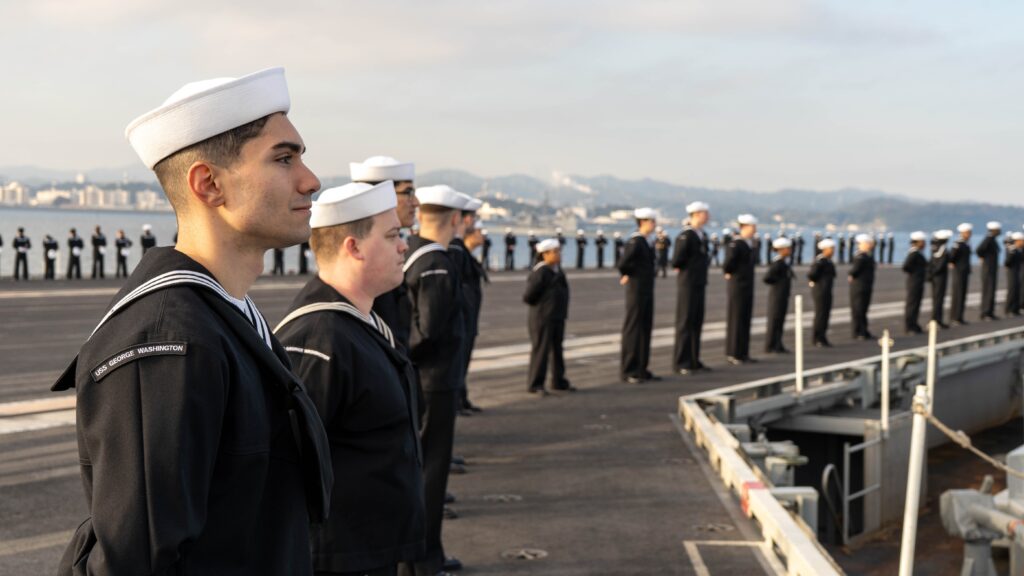
Sailors man the rails as USS George Washington (CVN 73) returns to Fleet Activities Yokosuka, Japan. (MC3 Lucas Hastings)

By Ensign Kenadall Hill, Nov. 22,2024 

YOKOSUKA, Japan - The Nimitz-class aircraft carrier USS George Washington (CVN 73) returned to Commander, Fleet Activities Yokosuka, Japan as the United States’ only forward-deployed aircraft carrier, Nov. 22. 

This marks the second time George Washington has served as the forward-deployed naval forces-Japan (FDNF-J) aircraft carrier. In 2008, it became the first nuclear-powered aircraft carrier to be forward-deployed to Japan before being relieved by USS Ronald Reagan (CVN 76) in 2015. 

“A US carrier represents the most advanced maritime capability we have, and it’s the most advanced investment we can make in the security of Japan and of the Western Pacific,” said Vice Adm. Fred Kacher, Commander, U.S. 7th Fleet. “The George Washington returns with modernized, cutting-edge technology that represents our investment in deterrence and security in this region.” 
 
During George Washington’s transit from Norfolk, Virginia to Japan, the crew completed Exercise Southern Seas in U.S. 4th Fleet and a seven-week transit from San Diego. 
 
“Arriving here in Yokosuka has been a milestone for this crew for many months, and for some the journey started in April when we departed from Virginia,” said Capt. Tim Waits, commanding officer of George Washington. “I could not be more proud of this team. Not only have we arrived safely and on time, but from day one of deployment we have met every goal, exceeded all expectations, and were ready for tasking the day we arrived in the 7th Fleet area of operations.” 
 
George Washington, with embarked Carrier Air Wing (CVW) 5, recently participated in the multi-domain exercise Freedom Edge with the Japan Maritime Self-Defense Force and Republic of Korea Navy in the East China Sea. U.S. participation included Strike Fighter Squadron (VFA) 147, the first F-35C Lightning II squadron to join FDNF-J, adding fifth generation strike fighter jets to the roster of forward-deployed carrier-based aircraft in the Indo-Pacific region. 
 
“We are proud to bring George Washington back to Yokosuka and back to the location of the most meaningful time in the ship’s history,” said Rear Adm. Greg Newkirk, Commander, Task Force 70 and the George Washington Carrier Strike Group. “Her crew is made up of both returning friends and many new to Japan, where they and their families will create lifelong memories and friendships in this magnificent Japanese city. Together, the combined community – back dropped by the JMSDF fleet and America’s only forward-deployed aircraft carrier – represents a shared vision of peace and prosperity across the region. We are truly allies, friends and family.” 
 
George Washington recently hosted distinguished visitors at sea, including U.S. Ambassador to Japan, Rahm Emanuel; Japan’s Vice Minister of Foreign Affairs, Mr. OKANO Masataka; and the mayor of Iwakuni City, Mr. FUKUDA Yoshihiko. 
 
CVW-5 includes VFA 147 “Argonauts,’ VFA-102 “Diamondbacks,” VFA-27 “Royal Maces,” VFA-195 “Dambusters,” Electronic Attack Squadron (VAQ) 141 “Shadowhawks,” Fleet Logistics Support Squadron (VRM) 30 Detachment 5 “Titans,” Airborne Command & Control Squadron (VAW) 125 “Tigertails,” Helicopter Sea Combat Squadron (HSC) 12 “Golden Falcons,” and Helicopter maritime Strike Squadron (HSM) 77 “Saberhawks,” operating F/A-18F Super Hornets, F/A-18E Super Hornets, F-35C Joint Strike Fighters, EA-18G Growlers, CMV-22 Ospreys, E-2D Hawkeyes, MH-60S, and MH-60R Helicopters. 
 
George Washington is 7th Fleet’s premiere forward-deployed aircraft carrier, a long-standing symbol of the United States’ commitment to maintaining a free and open Indo-Pacific region, and operates alongside allies and partners across the U.S. Navy’s largest numbered fleet. 


Coast Guard Establishes First Hawaii-Based JROTC Program 

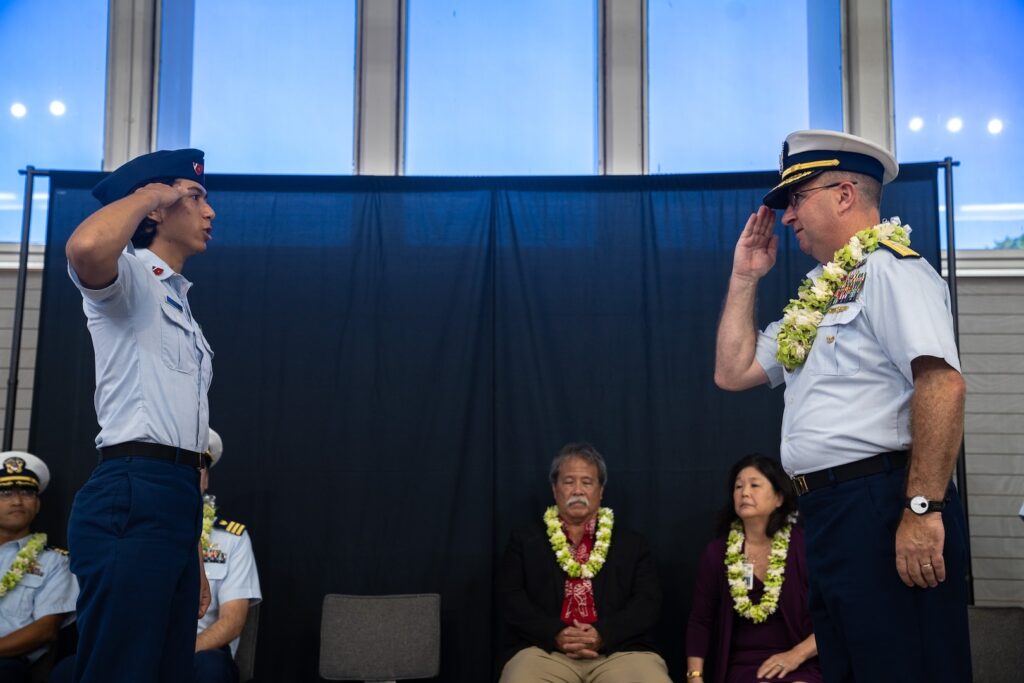
A cadet with Kalani High Schools Coast Guard JROTC program renders a salute to Coast Guard Rear Adm. Sean Regan, commander, Coast Guard District Fourteen at the high school in Honolulu, Hawaii, Nov. 21, 2024. The Coast Guard established its first Hawaii based JROTC at Kalani High School. (U.S. Coast Guard photo by Petty Officer 2nd Class Tyler Robertson)

From Coast Guard District 14, Nov. 21, 2024 

HONOLULU – The Coast Guard established a new Junior Reserve Officers’ Training Corps Program at Kalani High School in Honolulu Thursday. 

Coast Guard Rear Adm. Sean Regan, commander, District Fourteen, served as keynote speaker during the JROTC unit’s commissioning ceremony. 

“I am so proud to be part of such a great event and to see fantastic young men and women seeking new challenges, opportunities and adventures,” said Regan. “Thank you to the cadets’ families for their support, to Congress, the State of Hawaii and the City of Honolulu for bringing this program to fruition, and to Kalani High School’s administrators and teachers for partnering with the Coast Guard.” 

Kalani High School’s Coast Guard JROTC unit is the 14th in the nation and has over 20 cadets enrolled in the inaugural semester. 

“We’re exceedingly grateful to be working with the State of HI Department of Education, Honolulu District, to launch this incredible partnership,” said Cmdr. Clay Cromer, Coast Guard JROTC program manager. “We look forward to seeing cadets learn, grow, and achieve in a supportive and fun learning environment. My hope is they’ll look back on their time in Coast Guard JROTC at Kalani High School with incredible fondness as they go out equipped to make a positive difference wherever they’re called to serve.” 

Coast Guard JROTC instructors are hired and employed by the school district and certified by the service. Instructors must be Coast Guard retired, selected reserve, or qualified veterans with at least eight years of service. Kalani High School’s Coast Guard JROTC instructor is Retired Chief Petty Officer Ash Armstrong. 

The National Defense Authorization Act of 2023 mandated the Coast Guard to establish and maintain JROTC programs in each of the nine Coast Guard districts by Dec. 31, 2025. The Coast Guard established four new JROTC units this fall, making Kalani High School’s unit the 14th with program-wide enrollment of over 1,200 cadets. These new units are at the following host schools:    

  • Barnstable High School in Barnstable, Massachusetts     

  • Innovation High School in Orlando  

  • Veterans Memorial High School in Corpus Christi, Texas    

  • Kalani High School in Honolulu    

Coast Guard JROTC is not a recruiting program. Cadets incur no military service obligation by participation in JROTC, but they may be eligible for advanced enlistment opportunities with two or more years of participation in the program. The program helps equip cadets with the skills necessary to be more prepared for tomorrow’s challenges, no matter what path they take.    

To learn more about the Coast Guard JROTC program, visit their website: U.S. Coast Guard Junior Reserve Officers’ Training Corps (CGJROTC).   


USS Jefferson City Returns Home to Naval Base Guam Following Successful Indo-Pacific Deployment 

Sailors moor USS Jefferson City (SSN 759) as it arrives at Naval Base Guam. (MC1 Justin Wolpert)

From U.S. Pacific Fleet, Nov. 21, 2024 

NAVAL BASE GUAM - The Los Angeles-class fast-attack submarine USS Jefferson City (SSN 759) returned to its homeport of Naval Base Guam after a successful deployment in the Indo-Pacific region, Oct. 27, 2024. 
 

“USS Jefferson City exceeded all expectations on this short deployment,” said Capt. Neil Steinhagen, Commander, Submarine Squadron 15. “The crew’s unwavering dedication to theater security and operational excellence reflects the strength of our forward-deployed forces. Standing true to their motto, ‘When Any Exigence Calls,’ the crew met every challenge with distinction, directly supporting our mission in the Pacific. Job well done team – welcome home!” 
 
During this deployment, Jefferson City undertook critical missions that strengthened national security, elevated operational maritime capabilities, and bolstered deterrence within the Indo-Pacific, underscoring the strategic importance of a forward-deployed submarine force. 
 
“No matter the mission or task, my crew rose to every occasion,” said Cmdr. Alexander (AJ) Franz, commanding officer of USS Jefferson City. “Their focus, determination, and relentless pursuit of excellence shaped an extraordinary deployment. I couldn’t be prouder of their accomplishments, as each Sailor’s dedication and resilience shone brightly in our mission’s success.” 
 
During the deployment, 38 Jefferson City Sailors earned their submarine warfare insignia, the distinguished ‘dolphins’ or ‘fish,’ symbolizing their qualification to operate at the highest standards. This emblem represents their mastery and commitment to the submarine force’s tradition of excellence. 
 
“The strength of our Navy lies in its true source of power—our Sailors,” said Jefferson City Chief of the Boat Master Chief Machinist Mate (Auxiliary) Chris Halamoutis. “The dedication these Sailors have shown to achieve this honor is truly commendable. Their perseverance, hard work, and commitment to our mission reflect the spirit of those who came before them, as they join the ranks of a distinguished community with the privilege of wearing this insignia.” 
 
As part of Jefferson City’s homecoming celebration, the Navy’s cherished “first kiss” and “first hug” traditions took place. The “first kiss” was awarded to Lt. j.g Jonathan Lopez and the “first hug” was awarded to Senior Chief Machinist Mate (Auxiliary) Timothy Murphy. 
 
Commissioned on February 29, 1992, USS Jefferson City is the only U.S. Navy vessel named for Jefferson City, Missouri. Assigned to Commander, Submarine Squadron 15 at Polaris Point, Naval Base Guam, Jefferson City is one of four Los Angeles-class fast-attack submarines forward-deployed in the Pacific. Renowned for their unparalleled speed, endurance, stealth, and mobility, the Los Angeles-class submarine serves as the backbone of the Navy’s submarine force, ensuring readiness and agility in safeguarding maritime interests around the world.