Successful tests for Hugin LDUUV to U.S. Navy  

Kongsberg Discovery successfully completes acceptance testing of a HUGIN Superior Autonomous Underwater Vehicle system for the Defense Innovation Unit and U.S. Navy. 

From KONGSBERG 

Only one year after being awarded a 24-month frame contract for Large Diameter Unmanned Underwater Vehicles (LDUUV) by the Defense Innovation Unit (DIU), KONGSBERG completed acceptance testing and delivery of the first HUGIN Superior Autonomous Underwater Vehicle (AUV) for this customer. 

This final testing was completed at the beginning of the year in Norway. The vehicle will now go on to provide real-world operational relevance and enhance the undersea capabilities of the U.S. Navy. 

The completion of this effort is a testament to DIU’s commitment to fulfilling its mission of accelerating the adoption of commercial technology for national security. In the last year, the DIU team performed a rigorous technology assessment which culminated in the order and delivery of a highly capable HUGIN AUV system in a short time.  

“KONGSBERG is excited to be expanding our relationship with the U.S. Navy and provide the cutting-edge capabilities that come standard with our HUGIN Superior AUV system. We applaud the DIU team for enabling this transfer of capability to the warfighter at an accelerated pace and look forward to valuable operator feedback and continued partnership to further evolve our product line,” said Rich Patterson, Vice President of Sales, Uncrewed Platforms Division. 

KONGSBERG’s HUGIN Superior is a proven AUV system that has been in active use by both commercial and military customers since 2019. It provides immediate operational capability for Subsea and Seabed Warfare (SSW), Intelligence Preparation of the Operational Environment (IPoE), Mine Countermeasures (MCM), and inspection of critical undersea infrastructure at delivery with no required modifications. With full ocean depth design, an endurance of over 70 hours, a navigational accuracy of <0.04% of distance travelled, and multiple mapping and imaging sensors, it leads the large AUV market in reliability and capability. 

KONGSBERG has an extensive history of developing AUVs. From the first HUGIN dive in 1993 to the record-breaking multi-week mission of HUGIN Endurance last summer, HUGIN continues to be the gold standard of AUVs on the market. HUGIN is tightly integrated with KONGSBERG acoustic sensors, autonomy, navigation, and battery technology resulting in a finely tuned system that produces the highest quality data. 


Leonardo DRS Gets $45M Navy Commitment to Bolster US Submarine Industrial Base 

ARLINGTON, Va., Feb. 24, 2025  ̶  Leonardo DRS, Inc. (NASDAQ: DRS) announced today that it has received a $45 million U.S. Navy Submarine Industrial Base (SIB) investment commitment through contracts with HII’s Newport News Shipbuilding. The investment is expected to expand the capabilities of DRS’s new, 140,000 square-foot naval propulsion manufacturing facility currently under-construction in Goose Creek, South Carolina, and includes capital equipment and other infrastructure enhancements. 

The $45 million SIB investment will serve as a catalyst for a 40,000 square-foot expansion of the facility in support of capabilities critical to current and future U.S. Navy nuclear submarines and aircraft carriers.  This investment builds on several Navy funded engineering contracts, including Newport News Shipbuilding, and from General Dynamics Electric Boat previously issued to Leonardo DRS.  These contracts, combined with internal investments, will strengthen steam turbine system design, manufacture, integration, and test capabilities, including steam turbine generators. 

“This significant investment is the result of extensive collaboration between Leonardo DRS, the U.S. Navy, and our shipbuilding customers. said Jon Miller, senior vice president and general manager of the Leonardo DRS Naval Power Systems business unit. “It signifies the depth of our combined resolve to address some of the most pressing challenges facing our nation’s submarine industrial base with respect to capacity needed to deliver critical capability on-time and on-budget for the warfighter.” 

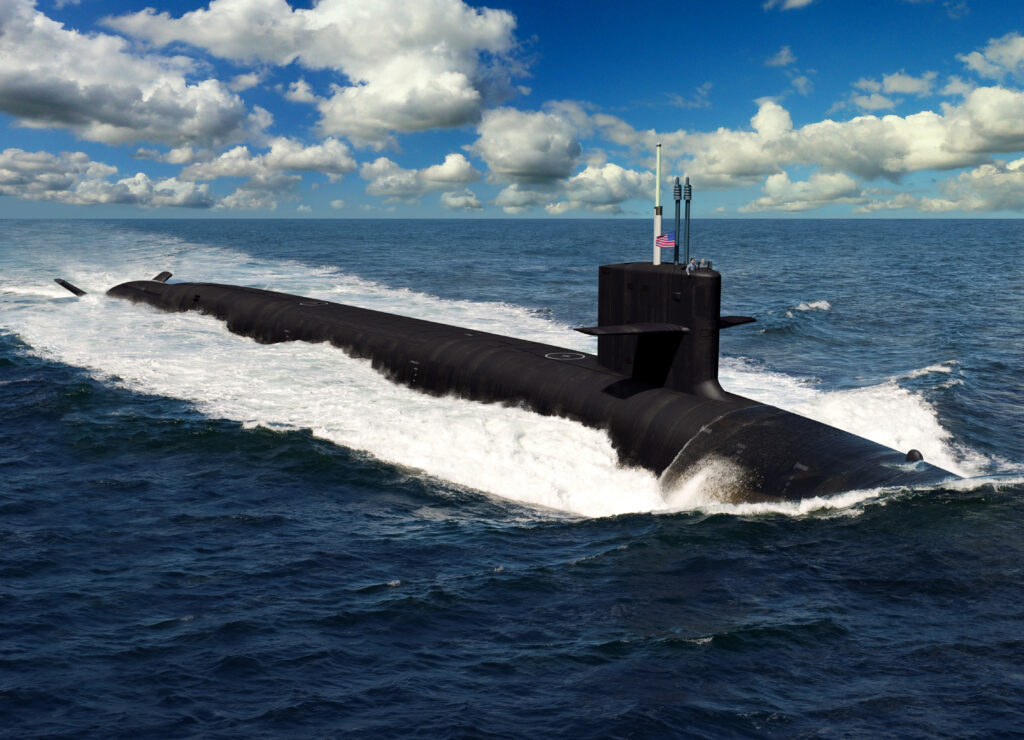
The Leonardo DRS purpose-built facility is expected to open in 2026 and will grow the company’s naval propulsion capability and streamline its support of the Columbia Class submarine program. The company is currently producing the Columbia Class electric propulsion system components, including the main propulsion motor, the main propulsion drives, and main propulsion controller, and other components in addition to similar systems for international allied navies. The facility will support electric drive for next-generation naval platforms and enables an expansion of DRS’s organic capability. It represents a significant expansion in the company’s ongoing collaboration with the U.S. Navy and enhances the nation’s submarine industrial base.  


GA-ASI Advances Unmanned Sub-Hunting with Test of New Air-Dropped Sensors 

From GA-ASI 

SAN DIEGO – 25 February 2025 – General Atomics Aeronautical Systems, Inc. (GA-ASI) continues to expand the role of unmanned aerial systems, demonstrating the first-ever Anti-Submarine Warfare (ASW) capability on an MQ-9B SeaGuardian®. In a groundbreaking test from January 20-30, 2025, a company-operated MQ-9B SeaGuardian successfully deployed and tested anti-submarine sensors using multiple pre-production Sonobuoy Dispensing System (SDS) pods. 

Having already proven its ability to track submerged targets, SeaGuardian took this capability further with GA-ASI’s newly designed SDS pods. These pods deployed multiple sonobuoys to conduct onboard thermal-depth and acoustic data processing. Using Directional Frequency Analysis and Recording (DIFAR), Directional Command Activated Sonobuoy System (DICASS), and Bathythermograph sonobuoys, SeaGuardian effectively detected, tracked, and analyzed underwater targets while collecting critical acoustic intelligence. 

“This demonstration represents a major leap forward in unmanned capabilities and marks a major milestone in proving that an unmanned aircraft can perform end-to-end persistent ASW operations,” said GA-ASI President David R. Alexander. “The success of this testing paves the way for enhanced anti-submarine warfare capabilities on the MQ-9B SeaGuardian. We look forward to continued collaboration with the U.S. Navy as they explore innovative solutions for distributed maritime operations in the undersea domain.” 

As part of the development process, GA-ASI successfully deployed multiple DIFAR and DICASS test sonobuoys, precisely correlating ejection speed with stress/strain data. This provided a high-fidelity launch model to refine future deployment capabilities. 

Naval Air Warfare Center Aircraft Division (NAWCAD) AIRWorks played a key role in supporting and overseeing the development, ensuring the system meets emerging warfighter needs. AIRWorks has partnered with GA-ASI in multiple ASW demonstrations, including the Rim of the Pacific (RIMPAC) exercise in July 2024. 

With strong demand already in place from multiple customers, GA-ASI anticipates increasing interest in the MQ-9B SeaGuardian, given its high-end maritime capabilities at a significantly lower cost than traditional manned maritime platforms. 


Truman returns to sea following repairs 

By USS Harry S. Truman (CVN 75) Public Affairs, Feb. 24, 2025 

MEDITERRANEAN SEA   –  The Nimitz-class aircraft carrier USS Harry S. Truman (CVN 75) is underway conducting routine flight operations in the U.S. Sixth Fleet area of operations, Feb. 24, after departing Souda Bay, Greece, on Feb. 23, following completion of an emergent repair availability (ERAV). 

“Our ship remains operationally ready to complete deployment with mission and purpose on full display by the entire crew,” said Capt. Chris Hill, commanding officer of Harry S. Truman. “We are out here launching and recovering aircraft, ready to ‘Give ‘em Hell’ with combat credible power.” 

The U.S. Navy’s ability to rapidly repair its warships anywhere in the world is a testament to our lethality and the warfighting advantage of relationships with Allies and partners. 

Led by Forward Deployed Regional Maintenance Center (FDRMC), Truman completed the five-day ERAV at Naval Support Activity (NSA) Souda Bay, Greece. In an all-hands effort, Sailors worked with FDRMC personnel, Norfolk Naval Shipyard, and local industry partner Theodoropoulos Group to assess damage, develop a repair plan, and restore weathertight integrity to the ship following the collision on Feb. 12. 

“FDRMC is focused on keeping our forward-deployed naval forces mission-ready across 5th and 6th Fleets, maintaining critical combat readiness for the ships and their Sailors,” said Capt. Mollie Bily, FDRMC commanding officer. “The rapid repair effort on Truman was a testament to our expeditionary maintenance expertise and the exceptional collaboration with our Norfolk Naval Shipyard teammates and industry partners.” 

Since deploying, Carrier Air Wing (CVW) 1 has flown over 5,500 sorties, including two self-defense strikes into Houthi-controlled Yemen territory and a large force strike against ISIS-Somalia targets in Northeast Somalia in coordination with U.S. Africa Command. The Harry S. Truman Carrier Strike Group continues to provide maritime security and regional stability in support of its component commanders. 

The carrier strike group includes the flagship USS Harry S. Truman (CVN 75); Carrier Air Wing (CVW) 1, with eight embarked aviation squadrons; staffs from CSG-8, CVW-1, and Destroyer Squadron (DESRON) 28; the Ticonderoga-class guided-missile cruiser USS Gettysburg (CG 64); and three Arleigh Burke-class guided-missile destroyers, USS Stout (DDG 55), USS The Sullivans (DDG 68), and USS Jason Dunham (DDG 109). 

HSTCSG’s mission is to conduct prompt and sustained combat operations at sea and maintain a forward presence through sea control and power projection capabilities. For more information, visit DVIDS at https://www.dvidshub.net/unit/CVN75


Navy CNO Franchetti Fired

Chief of Naval Operations Admiral Lisa Franchetti presents an award to a Sailor at Naval Support Activity (NSA) Crane, in Crane, Indiana, Feb. 10, 2025. Photo Credit: U.S. Navy | Senior Chief Petty Officer Elliott Fabrizio

Secretary of Defense Pete Hegseth announced he was firing Chief of Naval Operations Admiral Lisa Franchetti on Friday, the same day as he relieved Air Force General Charles Q. Brown as chairman of the Joint Chiefs of Staff, according to the New York Times.

According to the Times and other reports, Hegseth said Franchetti and Air Force General James Slife, the service’s vice chief of staff, also fired, had “distinguished careers,” and “we thank them for their service and dedication to our country.”

Franchetti was the 33rd chief of naval operations, the first woman to be CNO and the first woman to serve on the Joint Chiefs of Staff. She entered the Navy after earning a degree in journalism at Northwestern University and joining the Naval ROTC program there.

She later commanded the destroyer USS Ross, commanded U.S. Naval forces in Korea, served as commander of the U.S. 6th Fleet in the Mediterranean and director of strategy, plans and policy for the U.S. Joint Chiefs of Staff.


Coast Guard Cutter Joseph Gerczak Returns Home Following 37-Day Law Enforcement Patrol in American Samoa 

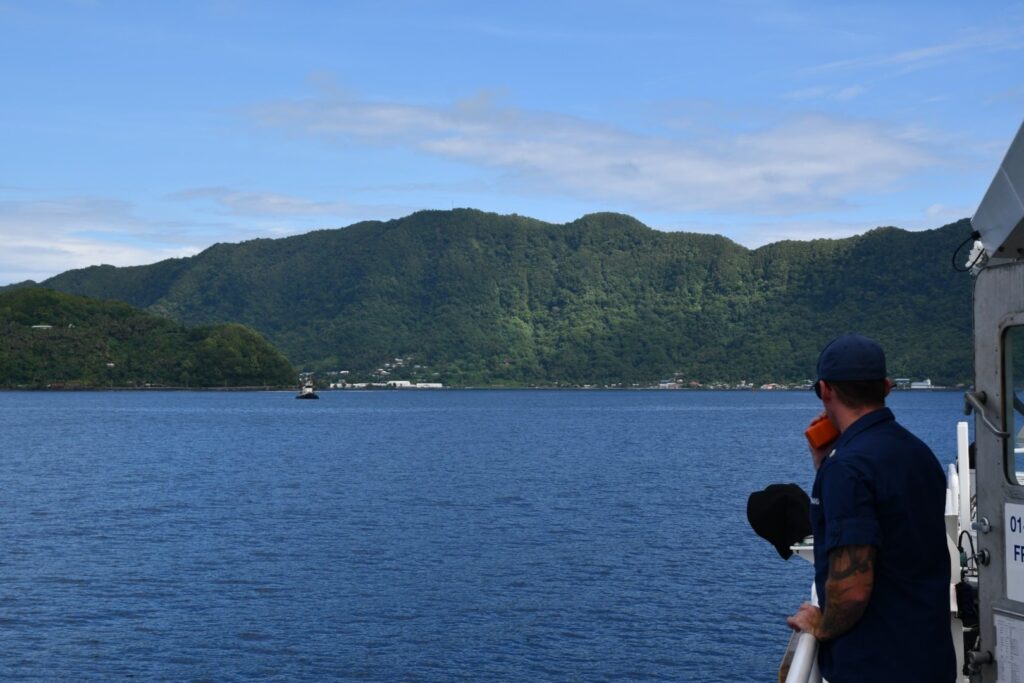
U.S. Coast Guard Petty Officer 1st Class Kyle Cassidy, a boatswain’s mate assigned to Coast Guard Cutter Joseph Gerczak (WPC 1126), monitors the cutter’s approach of Pago Pago, American Samoa, Feb. 5, 2025.  (U.S. Coast Guard photo by Petty Officer 1st Class Steven Zea)

From U.S. Coast Guard District 14 External Affairs, Feb. 23, 2025 

HONOLULU – The crew of the U.S. Coast Guard Cutter Joseph Gerczak (WPC 1126) returned home to Honolulu Saturday following a 37-day territorial integrity patrol along the U.S. maritime border in American Samoa.  

The Joseph Gerczak crew departed Coast Guard Base Honolulu in January and traveled more than 7,300 nautical miles spanning from the Hawaiian Islands to American Samoa.  

The crew patrolled the U.S. territorial maritime border and safeguarded the U.S. Exclusive Economic Zone surrounding American Samoa, which extends up to 200 miles offshore.   

During the patrol, the crew conducted boardings on two U.S.-flagged fishing vessels to ensure the territorial integrity of the U.S. maritime border and deter any threat of illicit trafficking. The crew also ensured the safety of the U.S. fishing fleet by reviewing the vessels’ documentation, examining the captains’ permits and inspecting the vessels’ required safety equipment, fishing gear and, when applicable, the on-board catch. The crew worked alongside a National Oceanic and Atmospheric Administration Office of Law Enforcement Officer, who assisted the boarding team in identifying two living marine resource violations for which the vessel was cited.  

The cutter’s boarding teams observed 10 total violations, including a non-U.S. master who was neither a U.S. citizen nor U.S. national, expired documentation, an expired survival craft, expired hydrostatic releases for emergency position indicating radio beacons, expired flares, unsatisfactory condition of life jackets, and damaged turtle mitigation gear.   

Due to safety violations, the Joseph Gerczak crew terminated the voyage of one fishing vessel and escorted the vessel to port in Pago Pago, American Samoa.   

“Coast Guard law enforcement boardings and vessel safety inspections are vital to ensuring safety of those at sea and protecting our precious marine ecosystems,” said Lt. Caitlin Piker, commanding officer, Cutter Joseph Gerczak. “Our patrols also enhance maritime domain awareness and serve as a critical line of defense against illegal activities that threaten our nation’s security.”  

In accordance with the President’s Executive Orders and direction from Adm. Kevin Lunday, the acting commandant of the Coast Guard, the Coast Guard is increasing cutter patrols and operations in American Samoa. The Coast Guard is surging assets to increase presence in key areas to protect America’s maritime borders, territorial integrity, and sovereignty.  

The Joseph Gerczak is a 154-foot Sentinel-class fast response cutter homeported in Honolulu. The cutter’s primary missions are maritime law enforcement, search and rescue, and national defense.   


The Navy’s Carrier Airwing Flies Further With Hercules’ New Tanker Approval

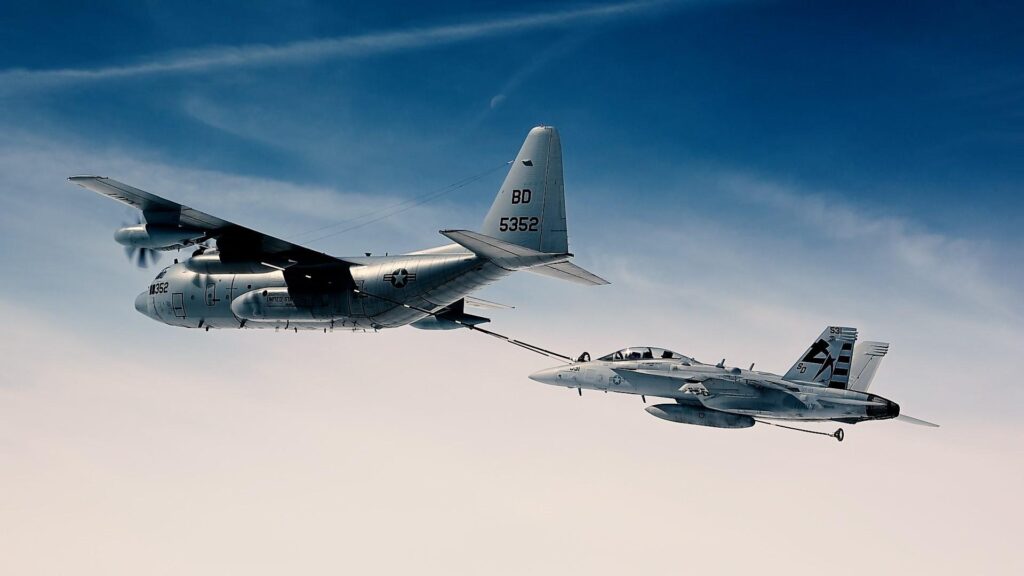
A U.S. Navy Reserve KC-130T refuels an EA-18G Growler in the skies over Naval Air Station Patuxent River in Maryland during testing that enabled the service’s fleet of Hercules aircraft to aerially refuel a significantly expanded number of aircraft in early 2025. The testing led by the Naval Air Warfare Center Aircraft Division significantly expands Hercules’ mission, as well as the mission of the U.S. Navy Reserves which exclusively operates the aircraft. (U.S. Navy photo by Erik Hildebrandt) 

From Naval Air Warfare Center Aircraft Division, Feb. 24, 2025 

PATUXENT RIVER, Md.  –- The Navy Reserve’s KC-130T Hercules fleet, upgraded with the NP200 propeller system, is cleared to aerially refuel a significantly wider range of aircraft across the carrier airwing following envelope expansion testing at the Naval Air Warfare Center Aircraft Division (NAWCAD) which concluded in early 2025. 

The test effort expands Hercules’ mission – and that of the Navy’s fleet reserve, which exclusively operates the aircraft – beyond its primary focus on logistics and cargo transport. 

“Prior to this testing we only had a single aircraft cleared for refueling from the upgraded KC-130T,” said NAWCAD’s developmental test wing Commodore Capt. Elizabeth Somerville. “This advanced capability gives us flexibility in any future conflict.” 

Naval aviation’s F-35B/C, F/A-18, EA-18. CH-53K, CH-47, H-60s and AV-8B were cleared for air-to-air refueling from KC-130T after testing by NAWCAD federal government engineers, testers, and military test pilots from Air Test and Evaluation Squadron (VX) 20 along with industry partners who worked to make sure Hercules could safely refuel the aircraft with its upgraded NP2000 propeller system. 

“If we look forward to any future fight, it’s going to take intense collaboration between all of the forces: Navy, Marine Corps, Air Force, Army, Coast Guard,” said Somerville. “Any resource that provides fuel airborne is going to be invaluable to all assets that are flying.” 

The test effort significantly increases naval aviation’s operational reach and flexibility, as well as several international allies, following a request by U.S. Pacific Fleet. 

The KC-130T Hercules is a multi-role, long-range, land-based tactical aircraft that provides logistical support to fleet operating forces. 

Check out a video of the test effort here: https://www.youtube.com/watch?v=triR4w11yR4 

NAWCAD employs more than 20,000 military, civilian and contract personnel. It operates test ranges, laboratories and aircraft in support of test, evaluation, research, development and sustainment of everything flown by the Navy and Marine Corps. Based in Patuxent River, Maryland, the command also has major sites in St. Inigoes, Maryland, Lakehurst, New Jersey, and Orlando, Fl


USS Stockdale Returns Home After Seven-Month Deployment To 5th Fleet And 7th Fleet

The Arleigh Burke-class guided-missile destroyer USS Stockdale (DDG 106) pulls into their homeport of Naval base San Diego, Feb. 21, 2022. (U.S. Navy photo by MCSN Kristine Joy Nool)

From MC1 Storm Henry, Feb. 22, 2025 

NAVAL BASE SAN DIEGO — The Arleigh Burke-class guided-missile destroyer USS Stockdale (DDG 106) returned to their homeport, Naval Base San Diego, after a seven-month deployment to U.S. 3rd, 5th Fleet and 7th Fleet areas of operations, Feb. 21. 

NAVAL BASE SAN DIEGO — The Arleigh Burke-class guided-missile destroyer USS Stockdale (DDG 106) returned to their homeport, Naval Base San Diego, after a seven-month deployment to U.S. 3rd, 5th Fleet and 7th Fleet areas of operations, Feb. 21. 
 
Stockdale departed San Diego on an independent deployment to U.S. 5th Fleet to conduct operations in support of regional stability, July 24, 2024. They joined the USS Abraham Lincoln Carrier Strike Group (ABECSG) August to November 2024 and remained in 5th Fleet following the departure of the ABECSG. 
 
“The crew of Stockdale displayed immeasurable courage and unwavering dedication while serving in some of the most complex naval combat operations since World War II,” said Cmdr. Lauren Johnson, commanding officer, Stockdale. “This has been a historical deployment, and the crew answered every challenge with strength and resilience. Driven by their determination, professionalism, and training, Team 007 demonstrated that we remain the most lethal destroyer in the Navy. I could not be more proud of every crew member and our families at home who supported us along the way.” 
 
While in 5th Fleet, Stockdale successfully repelled multiple Iranian-backed Houthi attacks during transits of the Bab el-Mandeb strait and escort operations of U.S.-flagged vessels in the Gulf of Aden. During these engagements, Stockdale successfully engaged and defeated one-way attack uncrewed aerial systems (UAS), anti-ship ballistic missiles and anti-ship cruise missiles. Stockdale received no damage and no personnel were hurt. Stockdale and her crew were well prepared, trained, and supported, to defend the ship. 
 
Stockdale deployed to the U.S. Central Command (CENTCOM) area of responsibility to bolster U.S. military force posture in the Middle East and deter regional escalation to promote security, stability and prosperity throughout the region. While in 5th Fleet, Stockdale worked alongside the Abraham Lincoln Carrier Strike Group and CENTCOM joint forces to support global maritime security operations. 
 
Stockdale held bilateral partnership meetings to reinforce regional stability and capability. Stockdale made a port call in Safaga, Egypt, where Johnson met with Egyptian Red Sea Naval Base leadership, and subsequently participated in an at-sea sailing exercise with Egyptian Navy corvette ENS Abu Qir (F941) to increase interoperability. In the Republic of Maldives, Stockdale hosted the Chief of Defense Force for the Maldives National Defense Force and other leadership during an onboard reception and dinner. Both events reinforced U.S. commitment to its international network of partners to further enhance free and open seas. 
 
Throughout deployment, Stockdale, with an air wing detachment from Helicopter Maritime Strike Squadron (HSM) 71, traveled over 44,000 nautical miles, conducted 12 replenishments-at-sea, 28 sea and anchor details, and HSM 71 conducted over 650 hours of rotary air wing hours and achieved an air-to-air kill of an Iranian-backed Houthi one-way attack UAS. Stockdale was recognized as Destroyer Squadron 21’s recipient of the 2024 Battle Effectiveness Award, and the Sailors were awarded the Combat Action Ribbon for their actions in 5th Fleet. 
 
Stockdale was led by their commanding officer, Cmdr. Lauren Johnson, executive officers Cmdr. Jacob Beckelhymer and Cmdr. Carissa Moore, and Command Master Chief Gomer Turiano. 
 
As an integral part of U.S. Pacific Fleet, Commander, U.S. 3rd Fleet operates naval forces in the Indo-Pacific and provides the realistic and relevant training to ensure the readiness necessary to execute the U.S. Navy’s timeless role across the full spectrum of military operations. U.S. 3rd Fleet works together with our allies and partners to advance freedom of navigation, the rule of law, and other principles that underpin security for the Indo-Pacific region. 


General Atomics Awarded Contract from General Dynamics Electric Boat

From General Atomics Electromagnetic Systems, Feb. 24, 2025 

SAN DIEGO – Feb. 24, 2025 – General Atomics Electromagnetic Systems (GA-EMS) announced today that it has been awarded a contract from General Dynamics Electric Boat to fabricate and deliver three shipsets of Virginia Payload Tubes (VPT) to be utilized on Block VI Virginia-class submarines. Each shipset includes two payload tubes.  Under the terms of the contract, GA-EMS will complete delivery of the VPTs by the end of 2030.  

“This contract follows a 2023 contract award for a single VPT shipset that qualified GA-EMS as a viable supplier with proven manufacturing capability to fabricate and deliver complex, safety-critical components for use on Navy submarines,” stated Scott Forney, president of GA-EMS. “We are excited to continue working with Electric Boat to apply our world-class fabrication and precision machining capabilities, experienced program management, and engineering and quality assurance expertise to help ensure the VPTs are available on time to support an aggressive Virginia-class build schedule.”   

“As the submarine industrial base continues to expand amid supply chain and workforce retention challenges, we look forward to providing the critical capacity necessary to support multi-year procurement and sustainment programs such as this,” stated Rolf Ziesing, vice president of GA-EMS Maritime Programs. “Under multiple contract awards and over several decades, we’ve been recognized for our expertise in developing and delivering components and systems for the Navy’s surface warships, including the first of kind Electromagnetic Aircraft Launch and Advanced Arresting Gear systems for Ford-class carriers. We have undertaken continuous expansion of our manufacturing capabilities and footprint, while developing a highly skilled workforce at our Tupelo and Iuka, Mississippi manufacturing facilities. GA-EMS is well positioned to be a valued, stable resource for the development and production of complex components like the VPTs in support of the Navy’s subsurface and surface shipbuilding enterprise.”     


Northrop Grumman to Collaborate with Hanwha on the Republic of Korea’s Mine Countermeasures Program 

Northrop Grumman and Hanwha signed a Memorandum of Understanding to collaborate on the Republic of Korea’s Mine Countermeasures Program. (Photo Credit: Northrop Grumman) 

From Northrop Grumman 

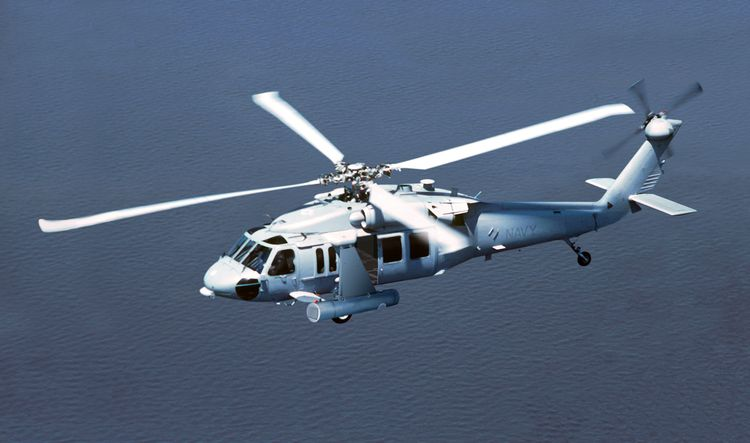
MELBOURNE, Fla. – Feb. 20, 2025 – Northrop Grumman Corporation (NYSE: NOC) and Hanwha have signed a Memorandum of Understanding (MOU) in connection with the Republic of Korea’s Mine Countermeasures Helicopter (KMCH) program. The agreement supports Northrop Grumman’s longstanding industrial cooperation with the Republic of Korea’s Defense Acquisition Program Administration and defines the work that Hanwha will perform as a supplier. 

This MOU follows Korea Aerospace Industries’ (KAI) 2023 contract for Northrop Grumman to provide Airborne Laser Mine Detection System (ALMDS) solutions and technical support for the Engineering, Manufacturing and Design phase of the Republic of Korea’s KMCH program. 

Under the agreement, Hanwha will support the manufacturing of ALMDS hardware components. 

To date, Northrop Grumman has delivered ALMDS units to the U.S. Navy and the Japan Maritime Self-Defense Force (JMSDF). 

Expert: 

Janice Zilch, vice president, multi-domain command and control programs, Northrop Grumman: “Industry collaborations with companies such as Hanwha and KAI are key to Northrop Grumman’s approach to technology development across the globe. Our team is committed to delivering advanced solutions to meet the security needs of the Republic of Korea’s Ministry of National Defense.” 

Details: 

Northrop Grumman’s AN/AES-1 ALMDS detects, classifies and locates floating and near-surface moored mines. Mounted onto a variety of helicopter platforms, the system is capable of untethered day or night operations, which allow it to attain high area search rates. ALMDS also provides accurate target geo-location to support follow-on neutralization of the detected mines. Northrop Grumman’s support of the KMCH program leverages the company’s extensive systems integration and digital engineering expertise. 

Hanwha Systems is a company that manufactures, develops, and mass-produces defense systems for the defense and civil sectors based on the synergy capabilities of the defense and ICT industries. After its establishment in 1977, it took its first steps into the defense industry by producing night vision goggles, an electro-optical product, in 1978. Currently, it is solidifying its status as Korea’s leading defense company by continuously expanding its scope and capabilities beyond land and marine to aerospace and cyber fields.