CMF’s Combined Task Force 150 and U.S. Coast Guard Integration Key in Recent Drug Seizure
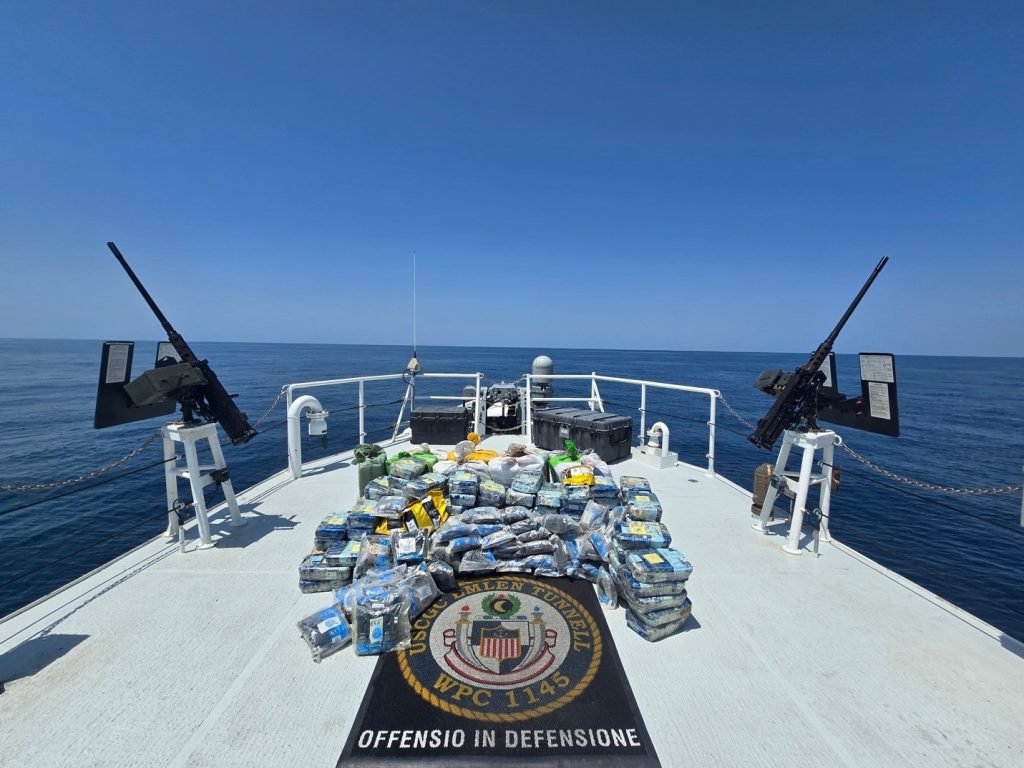
ARABIAN SEA (March 23, 2025) Illegal narcotics seized from a stateless vessel are stacked on the deck of the U.S. Coast Guard Sentinel-class fast response cutter USCGC Emlen Tunnell (WPC 1145) in the Arabian Sea. (Photo by U.S. Coast Guard)
By Commander U.S. Naval Forces Central Command Public Affairs | March 24, 2025
MANAMA, Bahrain — A U.S. Coast Guard fast-response cutter, working in direct support of New Zealand-led Combined Task Force (CTF) 150 of Combined Maritime Forces (CMF), seized 260 kilograms of illegal narcotics from a vessel in the Arabian Sea, March 19.
The Sentinel-class fast-response cutter USCGC Emlen Tunnell’s (WPC-1145) boarding team discovered and seized 200kg of methamphetamine and 60kg of heroin from the vessel. After weighing and documenting the haul, the crew properly disposed of the narcotics.
Royal New Zealand Navy Capt. Dave Barr, CTF 150 deputy commander, said this drug bust is a testament to the tenacity and expert seamanship of the Coastguardsmen on the Emlen Tunnell operating so far off the coast in challenging waters, and the ability to seamlessly integrate with the multinational CTF 150 staff.
“The waters in this area are full of legitimate fishing and trading vessels so it’s important to get this part right and accurately identify those vessels that are likely to be carrying narcotics,” said Barr. “A big part of our mission is to deter smugglers, so that those legitimate operators can continue to navigate freely to carry out their business.”
This interdiction is part of ongoing efforts to combat illicit drug trafficking in international waters and demonstrates the CMF’s continued commitment to safeguarding maritime security against malign non-state actors.
Emlen Tunnell is forward deployed to Bahrain. The fast response cutter is part of a contingent of U.S. Coast Guard ships operating in the region under Patrol Forces Southwest Asia (PATFORSWA). PATFORSWA deploys Coast Guard personnel and ships alongside U.S. and regional naval forces throughout the Middle East.
CTF 150 is one of five task forces under CMF, the world’s largest international naval partnership. CTF 150’s mission is to deter and disrupt the ability of non-state actors to move weapons, drugs and other illicit substances in the Indian Ocean, the Arabian Sea and the Gulf of Oman.
Combined Maritime Forces is a 46-nation naval partnership upholding the international rules-based order by promoting security and stability across 3.2 million square miles of water encompassing some of the world’s most important shipping lanes.
Coast Guard offloads over $517.5 million in illicit drugs interdicted in Eastern Pacific Ocean
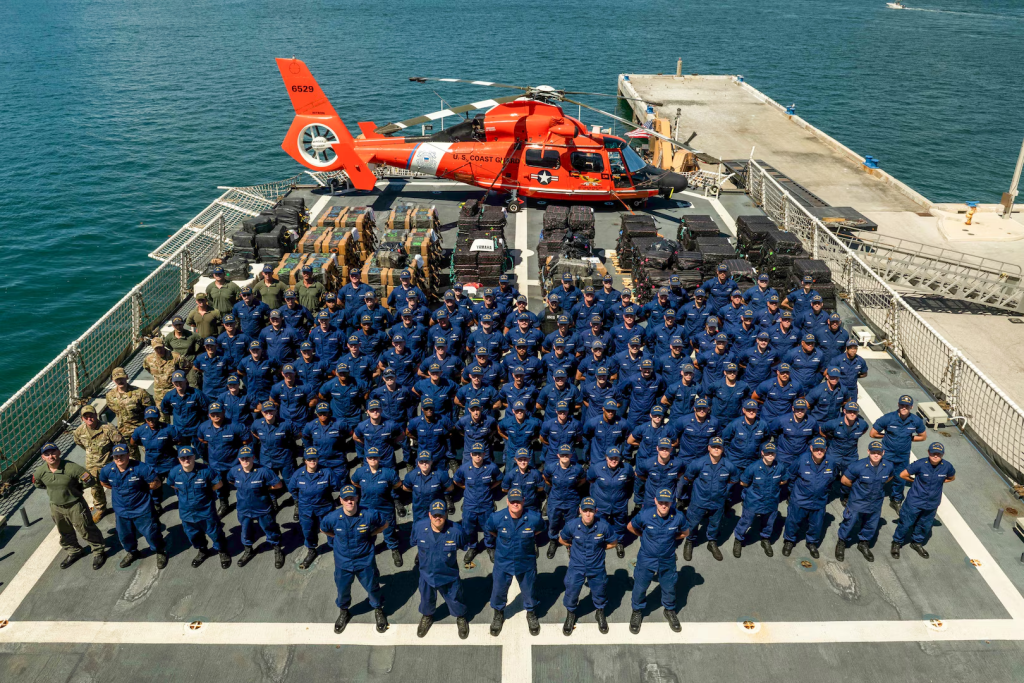
Crew members from USCGC Stone (WMSL-758) stand at parade rest in front of interdicted narcotics at Port Everglades, Florida, Mar. 20, 2025. The Stone’s crew secured the illegal drugs from 14 interdictions in the international waters of the Eastern Pacific. (U.S. Coast Guard photo by Petty Officer 2nd Class James Hague)
From U.S. Coast Guard 7th District, March 20, 2025
MIAMI – The crew of U.S. Coast Guard Cutter Stone offloaded approximately 45,600 pounds of illicit narcotics worth more than $517.5 million at Port Everglades, Thursday.
The seized contraband was the result of 14 interdictions in international waters of the Eastern Pacific Ocean, and 35 suspected smugglers were transferred ashore to face federal prosecution in U.S. courts.
“You heard it said before that the Coast Guard’s national security cutters are game changers in the counter-drug mission, but they still require a crew of men and women willing to serve on or over the sea, and place themselves in harm’s way,” said Capt. Jonathan Carter, commanding officer of Stone. “I’m incredibly proud of our crew’s performance and their efforts to combat narco-terrorism this deployment. In one exceptional case, the crew interdicted four go-fast vessels in 15 minutes, seizing nearly 11,000 pounds of cocaine that will never be mixed with deadly fentanyl to threaten American lives here at home.”
On Dec. 21, Stone’s embarked aircrew from Coast Guard Helicopter Interdiction Tactical Squadron detected a suspicious vessel in international waters approximately 321 miles west of Ecuador. Stone’s boarding team interdicted the go-fast vessel, apprehended three suspected smugglers and seized over 1,630 pounds of cocaine.
On Dec. 22, a maritime patrol Dash-8 aircrew detected a suspicious vessel in international waters approximately 180 miles southeast of the Galapagos Islands, Ecuador. Stone’s embarked HITRON aircrew and boarding team interdicted the low-profile go-fast vessel, apprehended three suspected smugglers and seized approximately 12,220 pounds of cocaine.
On Jan. 9, a maritime patrol Dash-8 aircrew detected a suspicious vessel in international waters approximately 148 miles west of Salinas, Ecuador. Stone’s embarked HITRON aircrew and boarding team interdicted the go-fast vessel, apprehended three suspected smugglers and seized approximately 2,370 pounds of cocaine.
On Jan. 28, Stone’s embarked unmanned aircraft system (drone) crew detected a suspicious vessel in international waters approximately 459 miles south of Manzanillo, Mexico. Stone’s boarding team interdicted the vessel, apprehended five suspected smugglers and seized approximately 3,885 pounds of cocaine.
On Jan. 30, Stone’s embarked UAS crew detected a suspicious vessel in international waters approximately 715 miles off Mexico. Stone’s boarding team interdicted the vessel, apprehended two suspected smugglers and seized approximately 3,800 pounds of cocaine.
On Jan. 31, Stone’s embarked UAS crew detected a suspicious vessel in international waters approximately 630 miles off Mexico. Stone’s embarked HITRON aircrew employed airborne use of force tactics to compel the non-compliant vessel to stop, and the boarding team apprehended three suspected smugglers and seized more than 2,565 pounds of cocaine.
On Feb. 12, Stone’s embarked UAS crew detected a suspicious vessel in international waters approximately 655 miles south of Mexico. Stone’s embarked HITRON aircrew employed airborne use of force tactics to compel the non-compliant vessel to stop, and the boarding team apprehended three suspected smugglers and seized more than 3,640 pounds of cocaine.
On Feb. 18, Coast Guard Cutter Mohawk’s crew detected and boarded a sailing vessel approximately 70 miles northwest of Isla Malpelo, Colombia. Mohawk’s boarding team apprehended three suspected smugglers and seized approximately 635 pounds of cocaine.
On Feb. 19, Stone’s embarked UAS crew detected multiple suspicious vessels approximately 110 miles south of the Galapagos Islands, Ecuador. Stone’s embarked HITRON aircrew employed airborne use of force tactics to compel the non-compliant vessels to stop, and their boarding teams interdicted four go-fast vessels, apprehending eight suspected smugglers and seizing approximately 10,885 pounds of cocaine.
On Feb. 25, Mohawk’s crew detected and interdicted a suspicious vessel approximately 230 miles south of Costa Rica. Mohawk’s boarding team apprehended three suspected smugglers and seized approximately 1,600 pounds of cocaine and 330 pounds of marijuana. Costa Rican authorities took custody of the fishing vessel, suspects and bulk contraband for prosecution.
On March 10, Stone’s embarked HITRON aircrew detected a suspicious vessel in international waters approximately 270 miles southeast of the Galapagos Islands, Ecuador. The HITRON aircrew employed airborne use of force tactics to compel the vessel to stop, and Stone’s boarding team interdicted the go-fast vessel, apprehending two suspected smugglers and seizing approximately 3,980 pounds of cocaine. The transfer of custody from this case will occur at a later date.
“The fight against drug trafficking and transnational criminal organizations doesn’t begin at our U.S. maritime borders,” said Cmdr. David Ratner, commanding officer of Mohawk. “Our efforts to defend Americans at home begins with denying drug traffickers access to maritime routes and disrupting the flow far out at sea where we operate alongside interagency and strategic regional partners like Costa Rica.”
The following assets and crews were involved in the interdiction operations:
Detecting and interdicting illicit drug traffickers on the high seas involves significant interagency and international coordination. Joint Interagency Task Force-South, in Key West, conducts the detection and monitoring of aerial and maritime transit of illegal drugs. Once an interdiction becomes imminent, the law enforcement phase of the operation begins, and control of the operation shifts to the U.S. Coast Guard for the interdiction and apprehension phases. Interdictions in the Eastern Pacific Ocean are performed by members of the U.S. Coast Guard under the authority and control of the Eleventh Coast Guard District, headquartered in Alameda, California.
The Coast Guard continues increased operations to interdict, seize and disrupt transshipments of cocaine and other bulk illicit drugs by sea. These drugs fuel and enable cartels and transnational criminal organizations to produce and traffic illegal fentanyl, threatening the United States.
Each of these interdictions initiate criminal investigations by federal law enforcement partners. Several were tied to the transnational criminal organizations responsible. Drug evidence from these cases is linked to cartels recently designated as foreign terrorist organizations by the U.S. government, including Sinaloa and Cartel Jalisco Nueva Generaciόn. These interdictions denied those criminal organizations more than half a billion dollars and provide critical evidence for their total elimination.
USCGC Stone is one of four 418-foot Legend-class national security cutters homeported in Charleston, South Carolina under U.S. Coast Guard Atlantic Area Command. The U.S. Coast Guard Maritime Law Enforcement Academy where Coast Guard boarding officers train to conduct these missions, in Charleston, celebrated its 20th anniversary on March 14.
Make a difference on land, at sea or in the air with the Coast Guard. Visit GoCoastGuard.com to learn more about active duty and reserve, officer and enlisted opportunities. Information on how to apply to the U.S. Coast Guard Academy can be found here.
Keel laid on UK’s new Dreadnought submarine
From BAE Systems, March 20, 2025
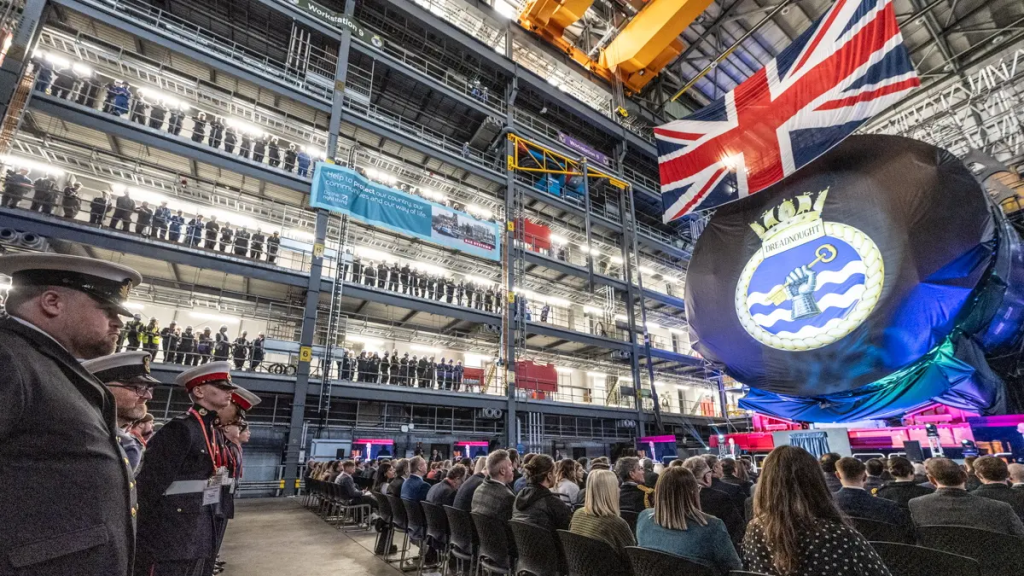
The keel of the first of the UK’s new Dreadnought submarines, the most powerful and technically advanced boats ever designed for the Royal Navy, has been laid at BAE Systems’ Barrow-in-Furness shipyard.
HMS Dreadnought is the first of four Dreadnought Class ballistic missile submarines, which BAE Systems is designing and building in Cumbria, and will succeed the Vanguard Class of submarines.
The ceremonial event, attended by UK Prime Minister, Sir Keir Starmer, and Secretary of State for Defence, John Healey, marked a significant milestone in the program to maintain the UK’s Continuous at Sea Deterrent (CASD) and protect national security.
The Dreadnought Class will begin to enter service in the early 2030s. CASD will be maintained throughout the transition from Vanguard to Dreadnought Class.
Steve Timms, Managing Director of BAE Systems’ Submarines business, said: “Laying the keel for the first of class, HMS Dreadnought, is an incredibly proud moment for everyone across the Company, Defence Nuclear Enterprise and Royal Navy. It comes as the boat’s last major unit prepares to make its way into the Devonshire Dock Hall for final integration, demonstrating the progress made across the program to date.
“Our collective role in maintaining Continuous at Sea Deterrence is our most critical responsibility. It’s a truly national endeavour vital to safeguarding our way of life, as well as making a significant contribution to local and national prosperity. I’m proud that thousands of our highly-skilled people are at the heart of today’s achievement.”
Prime Minister, Keir Starmer said: “It’s an honor to be in Barrow to lay the keel for the next generation of nuclear-armed submarines. These boats will protect our people and Allies from the most extreme threats to our national security and way of life for future generations.
“Investing in the British defense industry, underpinned by companies like BAE Systems, is at the heart of my government’s commitment to national and economic security as part of our Plan for Change. This investment is supporting good, secure jobs and putting money in the pockets of working people.
“The people of Barrow, and the submarines manufactured here, have been an integral part of our deterrent capability for decades. We will continue to foster that innovation and industrial excellence to protect the UK for the decades to come.”
Admiral Sir Ben Key, First Sea Lord and Chief of Naval Staff, said: “Since April 1969, Royal Navy submariners have been proud to deliver the Continuous at Sea Deterrent, maintaining at least one nuclear-armed ballistic missile submarine on patrol, ready to respond to the most extreme threats to the UK.
“Whilst the Vanguard Class of submarines continues to deliver CASD today, the Royal Navy is greatly looking forward to operating highly sophisticated and advanced Dreadnought Class submarines. This keel laying ceremony is considered the ‘birth’ of a vessel and I congratulate all those involved across the Alliance for reaching this important milestone in the life of HMS Dreadnought and look forward to bringing this exciting and highly capable submarine into service.”
Dreadnought submarines will be the largest ever operated by the Royal Navy at 153.6 metres long – approximately the length of three Olympic swimming pools.
Technological advances, changing threats and new methods of design and production mean the new boats will represent a significant step change compared to their predecessors. It is one of the largest and most complex engineering projects in the world.
The Dreadnought Alliance, a partnership between BAE Systems, Rolls-Royce and the Ministry of Defence’s Submarine Delivery Agency, manages delivery of the UK’s next nuclear deterrent platform.
As part of the Government’s Nuclear Skills Plan initiative, the Submarines workforce, centred in Barrow, has grown by more than 3,000 since 2023 to 14,700. That growth is set to continue as both the Dreadnought and SSN-AUKUS programs develop.
The overall Dreadnought programme is expected to support in the region of 30,000 jobs across the UK over the life of the programme.
The Barrow shipyard has undergone more than £1 billion of redevelopment to drive efficiencies and boost capacity to accommodate the build of Dreadnought and ensure the historic shipyard can continue delivering world-class submarines to the Royal Navy for generations to come.
BAE Systems estimates that it will spend in the region of £7.5 billion with 1,500 suppliers in England, Scotland, Wales and Northern Ireland, ensuring the economic impact of the programme is felt right across the UK.
DOD to Cut $580 Million in Spending
March 20, 2025 | By Matthew Olay, DoD News
As part of the Defense Department’s ongoing effort to cut wasteful spending, Defense Secretary Pete Hegseth signed a memo today directing the termination of more than $580 million in programs, contracts and grants.
“In other words, are not a good use of taxpayer dollars; , ultimately, that’s who funds us,” Hegseth said.
“We owe transparency and making sure we’re using well,” he added.
The top contract being cut is a software development program for the Defense Civilian Human Resources Management System, which was intended to streamline a significant portion of DOD’s legacy human resources program.
The program started in 2018 and was supposed to take one year to develop at a cost of $36 million. However, Hegseth said it is now nearly eight years behind schedule and $280 million over budget.
“So, that’s 780% over budget; we’re not doing that anymore,” he added.
The Pentagon is also cutting contracts for external consulting services, including $30 million allotted to one company that purchased several unused licenses, Hegseth said.
In addition to contracts, DOD is also cutting $360 million in grants.
Included are a $6 million grant to decarbonize emissions from Navy ships, a $5.2 million grant to diversify the Navy and a $9 million university grant for developing “equitable AI and machine learning” models,” Hegseth said.
“I need lethal machine learning models, not equitable machine learning models,” he added.
Hegseth said the $580 million of cuts announced in today’s memo brings the total money saved to $800 million since his Feb. 20, 2025, announcement on future DOD cuts.
He said that the money saved would ensure warfighters have what they need thanks to the cutting of fraud, waste and abuse.
“[We’re] working hard, we’re working hard with them, we appreciate the work that they’re doing, and we have a lot more coming,” Hegseth said.
“So, stay tuned … We’re going to keep going for you guys,” he concluded.
Thales Delivers the World’s 1st Autonomous Mine Hunting System to the Royal Navy
From Thales, March 14, 2025
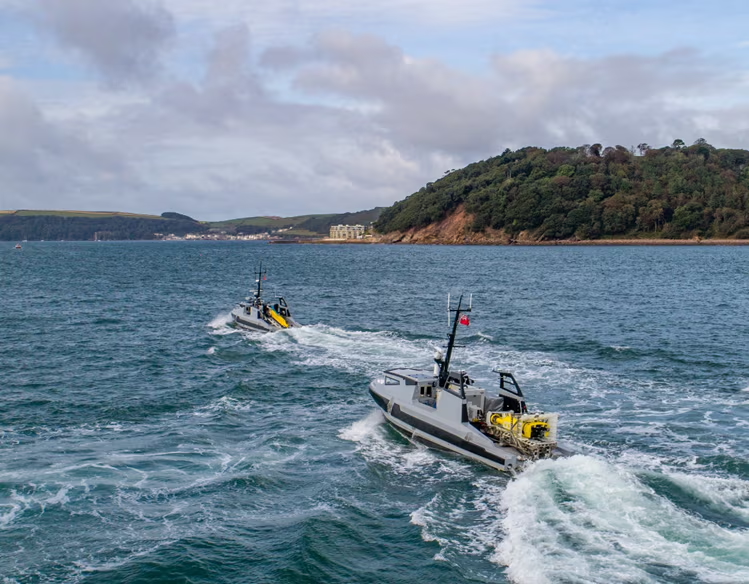
Thales has reached a historic milestone by delivering the first end-to-end autonomous maritime mine hunting system to the Royal Navy. This achievement comes under the aegis of the Joint Armament Cooperation Organization (OCCAr) and within the framework of the Franco-British MMCM (Maritime Mine Counter Measures) project.
This cutting-edge system places the UK and France at the forefront of naval innovation. Utilising cyber-secured autonomous drones equipped with Artificial Intelligence (AI), Thales is revolutionising mine countermeasures operations with unprecedented precision and safety.
Thales relies on 200 skilled jobs, thereby contributing to the dynamism of the British defence industry.
Marking a technological breakthrough in the conduct of mine countermeasure missions, this system drastically reduces the exposure risk for personnel on board ships while contributing to the safety of maritime routes, the backbone of the global economy.
The Royal Navy will receive its first four systems over the course of the year. Each system includes several integrated pieces of equipment and subsystems, enabling the accomplishment of highly complex missions: an Unmanned Surface Vehicle (USV), an advanced towed sonar (TSAM) with a cutting-edge multivision sonar (SAMDIS), a Remotely Operated Vehicle (ROV), and a lightweight operations centre (e-POC), all supported by a secure command and control system.
Thanks to its expertise in sensors, data analysis, and machine learning, Thales has developed a sonar analysis application, Mi-Map, which processes sonar data up to four times faster, allowing even more precise detection and classification of sea floor mines.
Deployed and operated from a mother ship and coastal bases, the platforms can handle vast volumes of data, enabling operators to expedite the process of identifying and neutralising mines. This innovative system aligns with the British government’s ambitious policy to position the UK as a global leader in autonomous maritime technologies.
Minister for Defence Procurement and Industry, Rt Hon Maria Eagle MP, said: “This delivery marks a significant milestone in our mine-hunting capabilities and the autonomous technology will keep Britain and our Royal Navy sailors safer by identifiying & removing them from mines. It has also supported hundreds of skilled jobs across UK industry – a clear demonstration that defence is an engine for economic growth.”
Rebecca Smith, Member of Parliament for South West Devon, attended the ceremony at the Thales Maritime Autonomy Centre in Plymouth, officially marking the delivery of this cutting-edge technology capable of detecting and neutralising the growing threat of naval mines.
“I welcome today’s announcement by Thales regarding the delivery to the Royal Navy of the world’s first end-to-end autonomous mine hunting system. I am pleased to see that a city with such a prestigious naval history as Plymouth now finds itself at the heart of a future rich in innovations for the Royal Navy. I hope we continue to see new activities develop, resulting in new local jobs in high-tech maritime areas. In the current climate, it is important to ensure strong military and industrial cooperation across Europe, and I am proud to see Plymouth playing a key role in effectively supporting the relationship between the UK and France”, declared Rebecca Smith, MP South West Devon
Phil Siveter, CEO of Thales in the UK, stated, “We are extremely proud to deliver the world’s first end-to-end autonomous mine hunting system to the Royal Navy. With the introduction of AI and advanced sensor technology, this innovation marks a new era in naval defence and underlines our unwavering commitment to providing cutting-edge solutions that enhance the capabilities of our armed forces. The Royal Navy will now have a powerful tool to protect its national interests and maintain safety at sea.”
A historic partner of the Royal Navy for over a century, Thales has long contributed to the advanced technologies that equip its sonar and mine hunting systems. The Franco-British MMCM program highlights Thales’s determination to provide world-class capabilities in these areas. Significant investments made by the UK have maintained over 200 skilled jobs, particularly at Thales sites in Somerset and Plymouth, strengthening the entire ecosystem of suppliers and partners.
Lasers Destroy Drones as Additive Manufacturing Builds Them: NPS Accelerates Emerging Technology at JIFX to Fulfill U.S. Navy and DOD’s Critical Needs
From Dan Linehan, March 21, 2025
MONTEREY, Calif. – Rapidly fielding emerging technologies and prioritizing investments in AI, drones, and counter-drone systems, among other technologies, are key to military modernization and remaining the strongest, most lethal force in the world.
The Joint Interagency Field Experimentation (JIFX) team at the Naval Postgraduate School (NPS) is meeting this challenge by executing another highly collaborative week of rapid prototyping and defense demonstrations with dozens of emerging technology companies. Conducted alongside NPS’ operationally experienced warfighter-students, the event is a win-win providing insight to accelerate potential dual-use applicationtops.
Conducted in partnership with Camp Roberts, the California Army National Guard post in southern Monterey County, and occurring quarterly, February’s weeklong JIFX featured innovative technologies that directly addressed many of the needs designated within DOD’s Critical Technology Areas, including: Directed Energy, Trusted AI and Autonomy, Advanced Materials, Integrated Sensing and Cyber, Operational Energy Generation and Storage, and much more.
Even though downpours from a week of heavy storms made for less-than-ideal flight conditions in the unrestricted airspace available for use during JIFX, a single-day record for sorties flown by uncrewed autonomous systems (UAS)—or drones—was broken. On the third day, 85 sorties were flown by 11 different drones at three different tactical locations—McMillan Airfield, the Combined Arms Collective Training Facility (CACTF), and the Forward Operating Base (FOB).
According to JIFX Director, retired U.S. Army Special Forces Col., Michael Richardson, “This February event was the most engaging experimentation week since before the pandemic. Part of that was the weather. The periodic heavy rain and strong winds gave our participating firms the same challenging conditions their technologies will be expected to perform if part of the fleet or force.
“I’m happy to report that all of them rose to the challenge. Several firms accomplished firsts with their systems and nearly everyone collaborated in an ad-hoc experiment or two that demonstrated their capacity to address operational challenges more effectively together.”
The hard rain and wind did not even deter a laser weapon system (LWS) from zapping a steady stream of static and towed Group 1 UAS. This was the first use of an LWS at JIFX over the course of its nearly two decade-long history.
During the week, 23 industry partners conducted experiments with 24 unique technologies that represented the following research areas:
– Communication and networking
– Countering uncrewed systems (including by laser weapon systems)
– Cyber, cyber security and electronic warfare
– Expeditionary operations (including with additive manufacturing)
– Infrastructure and power
– Precision strike, non-lethal weapons and information operations
– Situational awareness
– Uncrewed aerial systems
– Uncrewed systems design, deployment, operation, networking and control
These technologies were evaluated by DOD stakeholders from Air Force Special Operations Command (AFSOC), Army Futures Command (AFC), Department of the Navy Small Business Innovation Research Experimentation Cell (DON-SEC), Defense Threat Reduction Agency (DTRA), Joint Special Operations Command (JSOC), Navy Special Warfare (NSW), U.S. Central Command (USCENTCOM) and U.S. Transportation Command (USTRANSCOM).
JIFX lowers barriers for emerging technology companies, industry, academia, and researchers to collaborate with the fleet/DOD on solving real-world problems in a DevOps environment with the warfighter. Attending JIFX were 18 NPS officer-scholars and faculty, some of whom were researching counter UAS technology in preparation for an upcoming international exercise.
LASERS VS. DRONES, BATTLEFIELD POWER, AND EXPEDITIONARY ADDITIVE MANUFACTURING
Perched on a firing range hilltop, an LWS fielded by Aurelius Systems blasted Group 1 quadcopters at ranges of 50 and 110 meters—the longest distance that Aurelius had ever engaged a target.
“We’re demonstrating that if there’s a drone out there, then we can enter a sentry mode, scan an area of the sky or backdrop against the ground or a mountain, identify the drone, continue to track it as it moves around and bring the laser to bear on it,” said Michael Laframboise, Aurelius’ founder and chief executive officer (CEO).
The LWS used near-infrared fiber lasers, and the targeted drones were initially affixed to static mounts then later towed along by a moving target gunnery line.
JIFX plays an important role in the steps of Aurelius’ LWS development. “It can be difficult to get access to firing ranges if you’re a small company like ours,” added Laframboise. “We can come out here to test and do live destructive firing.”
Aurelius intends to bring their LWS to the next JIFX event in May. Based on their successes this go-around, they’re planning to use more powerful lasers and live fire at free-flying drones.
On that same hilltop, Chariot Defense pulled up in a pickup truck with its advanced high-voltage battery system, which only took up half the space in the pickup’s bed. To reduce the detectability of the LWS’ presence and demonstrate improved portability, the three large, heavy, noisy, inefficient, and high-thermal signature generators running on fossil fuel and powering Aurelius’ LWS were disconnected.
“We provided expeditionary power solutions for a number of different experiments,” said Adam Warmoth, founder and CEO of Chariot. “More and more, on today’s modern battlefield, there’s a demand for power—to power computers for AI, to power sensors, to power electronic warfare equipment. That’s the kind of equipment you need in today’s environment.”
Chariot’s low-signature battery system emitted very little heat and was smaller, quieter, lighter, and more efficient than just one of the three generators used by Aurelius. It not only powered successful shots of the LWS, but it also had enough remaining juice to fire over 1,000 more blasts.
Several miles away, at McMillan Airfield, Firestorm Labs had set up its mobile expeditionary additive manufacturing station called xCell. Within its two, 20-foot-long shipping container-like sections, equipment fabricated the airframe components of Firestorm’s Tempest, a modular Group 2 multimission UAS.
“The idea for xCell came to fruition so that we could manufacture our drone at the edge in a contested logistics environment,” said Bill Buel, vice president of hardware at Firestorm. “But during development, we realized there’s also a much broader need for xCell as producer for spare parts and other drones. It doesn’t even have to be our drones. So, we really embrace that.”
The concept of flexibility continued to be exercised with Firestorm’s Tempest. It carries payloads of 10–20 pounds over ranges of 100–675 miles at speeds of 75–150 mph, depending on its variable configuration and plug-and-play engine—turbojet (high speed) or pusher prop (extended range).
“We have taken an operator first approach, and we want to empower the operator to make this truly modular,” Buel continued.
Inside the xCell miniature factory, the interchangeable airframe components piled up—a nosecone with a camera port, fuselage segments for payloads, wing and tail segments. But outside, Chariot arrived on the scene ready to collaborate. A large, bulky generator ran both the printing and assembly sides of xCell.
While the generator could power three to four xCells, the technologists understood that one xCell would require more power output for the complete drone making operations than a single Chariot battery could provide. But Chariot was still able to make a high voltage connection to the assembly side and provide power to run some of its components.
“We were able to power Firestorm’s mobile manufacturing station off our battery, providing increased reliability, decreased fuel usage and the ability to power it at the edge where it matters,” Warmoth added.
NPS OFFICER-SCHOLARS INTEGRATE JIFX
It wasn’t all just high energy lasers, drones (one of which was rocket-assisted), and other wide-ranging, cutting-edge technologies. In preparation for the Bold Machina (BOMA) exercise run by Allied Special Operations Forces Command (SOFCOM) later this year, NPS officer-scholars, who are participating in a BOMA-directed studies program at NPS, visited JIFX as part of their coursework.
NPS Vice Provost of Research and Innovation, Kevin Smith, helped develop the BOMA program and escorted the NPS officer-scholars and faculty members to JIFX.
“JIFX is a tremendous asset to the DON, DOD, and industry partners,” said Smith. “More than simply a field experimentation venue, JIFX provides a low-cost option for industry to receive real-time feedback on emerging tech, both on technology readiness as well as operational relevance. Seeing these types of direct engagements between the warfighters and the companies pursuing solutions to support them is extremely valuable.
“The BOMA-directed study class benefited greatly from the opportunity to directly engage during these JIFX tests to better understand the processes by which technologies can be rapidly evaluated and accelerated for adoption, and is a great example of how JIFX fits into the NPS innovation operating concept.”
A total of 18 NPS officer-scholars attended JIFX, though not all were affiliated with BOMA.
“JIFX was a great opportunity for us to get a deeper understanding of how industry is connected to the military,” said U.S. Navy Lt. Charlotte Lohr, a surface warfare officer studying operations research.
Like the others, she joined the BOMA program at NPS on top of her existing studies. She was especially interested by the synchronized operation of the five drones flown by Gambit Defenses on patrol, follow-the-leader, and follow-the-target missions at JIFX.
“No matter your background, we come to NPS with subject matter expertise in our community,” said Lohr. “So, it’s cool to be able to offer our insights to industry. Even though I’m not highly involved with them, I was able to have conversations about how their products could impact the future of my community.”
The NPS officer-scholars in the BOMA program with Lohr are tasked with developing a technological solution for countering drones that can potentially be fielded during the BOMA exercise, which will be run off the coast of the Netherlands this fall. By attending JIFX, they got firsthand exposure to innovative technology well before it has a chance to become available to the fleet, and they learned about the process of turning emerging technology into operational technology.
“I was impressed at JIFX by their practice of bringing together the warfighter, academia and industry in same place. This speeds up the pace of research and development,” said a Swedish special operations officer studying at NPS and participating in the BOMA program, who also noted that the antenna and battery technologies at JIFX were among those that stood out him.
“Today, it’s so much about personal relationships, and JIFX allows you to establish relationships with industry representing different kinds of technologies all in one place,” said the Swedish officer. “I actually heard different companies working together to leverage their respective products. So, I think JIFX is a really good driver for fast development addressing the problem sets that DOD and the different special forces commands have.”
REAL-WORLD TECHNOLOGY EVALUATORS FILL OPERATIONAL GAPS
The February JIFX event was sponsored by NavalX. NavalX is a U.S. Navy and Marine Corps organization that drives collaboration, discovery, learning, experimentation, innovation, and agility to address critical needs of the military community.
“JIFX is a great platform for NavalX and invaluable to DON and DOD. We get the early look at technologies and capabilities on the horizon,” said Troy Clarke, the Inland Empire Tech Bridge Director for NavalX. “It gives us a regular, quarterly drumbeat to iterate more quickly and lets us get developing technologies into the hands of the end users—the warfighters—faster. It also draws a collection of at least 30 outstanding evaluators from across the government.”
Many of these evaluators are active duty or civilians who’ve already had long careers in the service. It’s this brain trust that individually interacts with the technologists and provides them with vital feedback.
Describing a typical interaction at JIFX, Clarke added, “An evaluator says, ‘This is what our warfighters are saying they need. Can you fill the gap? Can you make it do this?’ The technologist says, ‘Yeah, I could do that.’ Then you bring the warfighters in, who say, ‘This is how we use it in the field. Okay, now can it do that? And can it do that and that?’ This real-world feedback coming from our end users really accelerates our technology fielding capability.”
The effective exchange of thoughts and ideas between the evaluators and technologists has led to many impressive solutions coming from JIFX.
“I’m in an operational unit, and, throughout the years, I’ve attended JIFX,” said an NSW Sailor, who has been evaluating technologies at JIFX since 2012. While on deployments, he uses technology developed through JIFX, like the ScanEagle, a sweptwing, propeller-pushed UAS that’s often used for reconnaissance.
“Insitu brought it to JIFX and showcased it,” continued the NSW Sailor. “An NSW team was out there and part of the initial down select.”
Since then, for well over a decade, ScanEagle has been an operational mainstay across the armed services. In fact, in 2009, a ScanEagle deployed by the USS Bainbridge (DDG-96) helped the NSW operation to rescue merchant mariner Capt. Richard Phillips, who was held hostage by pirates inside a motorized lifeboat in the Indian Ocean.
Another JIFX success is the Flying Launch and Recovery System (FLARES), a gangly-looking, quadcopter mothership that can—in midair—release and retrieve a ScanEagle, which has a wingspan of about 10 feet.
“We needed an expeditionary launch and recovery system,” added the NSW sailor. “JIFX had Hood Tech bring FLARES. So, a bunch of us came out and learned how to operate it. We went back to our acquisition people and said, ‘We must have this. It addresses our operational deficiency.’ The normal process would have taken three to five years. Because of JIFX, we had it in less than two years.”
As the list of field technology spawned at JIFX continues to expand, NavalX introduced new technology of its own called the Defense Innovation Navigation Assistant (DINA).
“DINA is being developed to help NavalX, evaluators, end users and companies navigate the defense innovation system,” said Clarke. “We wanted to leverage the power of artificial intelligence, machine learning and data science to help the process of accelerating and fielding usable technology.”
An application that can be run on a phone, DINA records conversations and uploads them for transcription and summarization by NavalX’s AI natural language processing. DINA was initially tested during daily briefings with the technologists at JIFX in November 2024. During JIFX last month, some of the evaluators used DINA during their interactions with the technologists. As development continues, more and more information will be integrated, such as technical product specifications provided by the companies.
When fully developed, NavalX envisions DINA will be an effective tool that further helps NPS and JIFX facilitate and improve the rapid transfer of technological solutions to the warfighters. DINA is just another example of JIFX looking to best meet the challenges of equipping them in the face of the rapidly changing modern battlefield.
The NSW sailor reflected over his years going back and forth between deployments and attending JIFX events. It’s not easy adding or making changes to mission critical equipment in a timely manner.
“We need to get better with our procurement process,” he said. “We need to be able to keep up with peer-to-peer competition, which means we need to get after new technology faster. We need to innovate. And that’s what JIFX is, allowing collaboration to happen in a controlled environment. It’s innovation at its best.”
–––––
Participation in Joint Interagency Field Experimentation (JIFX) events does not constitute endorsement of participating companies or their products or services by the Naval Postgraduate School, the Department of the Navy, or the Department of Defense.
USNS John Lewis Completes First Fleet Tasked Underway Replenishment
From Sarah Cannon, Military Sealift Command Pacific, March 19, 2025
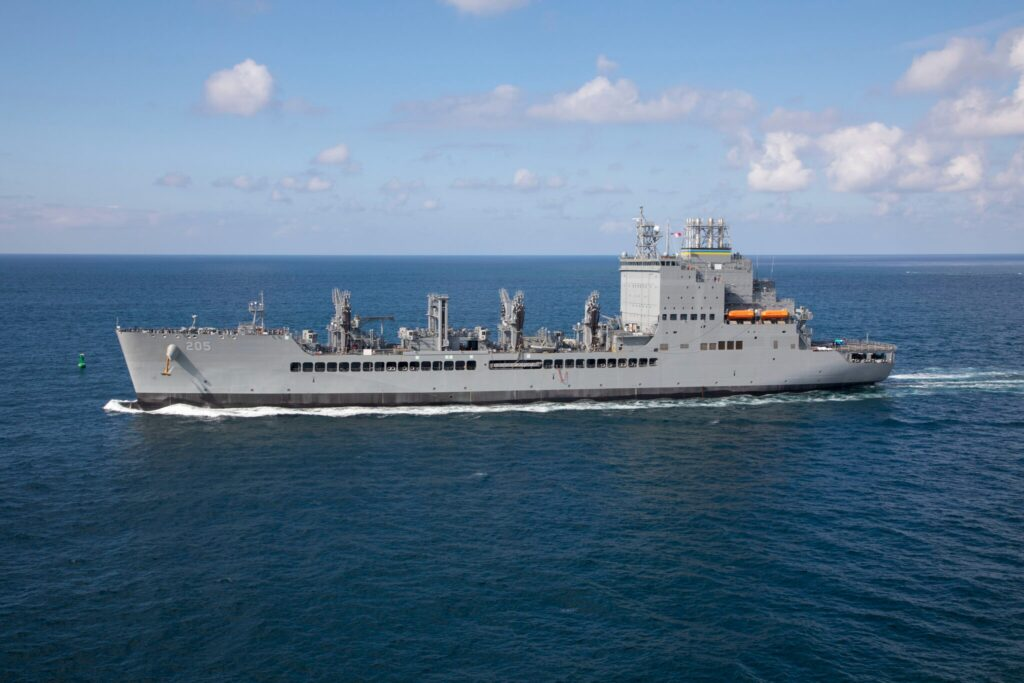
Military Sealift Command fleet replenishment oiler, USNS John Lewis (T-AO 205) became the first ship in the new John Lewis class to conduct a fleet task under Commander, U.S. Third Fleet, by refueling the U.S. Navy guided-missile destroyer
USS Mustin (DDG 89) of the coast of Southern California Saturday.
Christened at the General Dynamics NASSCO shipyard in San Diego, Calif., in 2021, Lewis has been operating in the Military Sealift Command Pacific (MSCPAC) area of operations as an MSC tasked ship. Lewis was officially introduced to Third Fleet as a trained and certified ship on March 10, 2025, with Saturday’s UNREP, the first fleet tasking, as the ship becomes fleet operational. Certified “Ready for Tasking”, Lewis will depart on its first deployment later this year.
“Providing logistics services to the Navy is the bedrock mission of MSC,” said Nikki Phelps, MSCPAC’s deputy operations officer. “Having USNS John Lewis certified for tasking, providing support to Third Fleet, gives the United States another asset to provide logistics services in a timely, safe and professional manner that MSC is known for throughout the Navy and throughout the world. This is a very positive step in the life of this ship and its fellow ships in the class.”
The 746-foot Lewis is the first ship of the John Lewis-class previously known as the TAO(X). This class of oilers has the ability to carry 162,000 barrels of diesel ship fuel, aviation fuel and dry stores cargo. The upgraded oiler is built with double hulls to protect against oil spills and strengthened cargo and ballast tanks. The Lewis-class oilers will replace the current Kaiser Class fleet replenishment oilers as they age out of the MSC fleet.
MSC directs and supports operations for approximately 140 civilian-crewed ships that replenish U.S. Navy ships at sea, conduct specialized missions, preposition combat cargo at sea around the world, perform a variety of support services, and move military equipment and supplies to deployed U.S. forces. MSC exists to support the joint warfighter across the full spectrum of military operations, with a workforce that includes approximately 6,000 Civil Service Mariners and 1,100 contract mariners, supported by 1,500 shore staff and 1,400 active duty and reserve military personnel.
Official: Roughly 21,000 DOD Civilians Volunteered for Deferred Resignation
March 18, 2025 | By Matthew Olay, DoD News
A senior defense official told the media today that approximately 21,000 Defense Department civilian employees volunteered to participate in the Deferred Resignation Program.
The DRP, implemented by the Office of Personnel Management Jan. 28, 2025, offered most full-time federal employees — including most of the nearly 900,000 DOD civilians — the opportunity to resign with full pay and benefits until Sept. 30, 2025.
As part of DOD’s effort to align its civilian workforce with national security priorities, the department has been actively processing DRP applications while working to achieve a strategic reduction in manpower of 5-8%, or approximately 50,000-60,000 employees.
“When DRP was offered broadly to the workforce, there was very good participation civilian employees raising their hands and saying they would like to be considered to go on leave and be paid throughout that time,” the senior defense official said, adding that DOD has approved a majority of the applications.
The senior defense official said that DOD’s human resources team properly vetted each employee and the role that they performed.
“We worked with the services and components to ensure that any of the employees who volunteered to participate … could be approved without negatively impacting the department’s lethality and readiness,” the official said.
The official also addressed concerns within DOD that a 5-8% reduction in the workforce would push uniformed service members into more civilian-type roles.
“We are confident that we can absorb removals without detriment to our ability to continue the mission, and that’s we can be confident that we don’t need to worry about any resulting impact on the uniformed force,” the official said.
The DPR is one initiative in a three-part strategy the Pentagon is undertaking while realigning its civilian workforce. The other two measures are a hiring freeze and the removal of certain probationary employees.
Ordered by Defense Secretary Pete Hegseth Feb. 28, 2025, DOD’s hiring freeze acts as a “passive attrition measure,” the official said.
By freezing the approximately 6,000 employees the Defense Department had been hiring monthly in the past, the senior official explained that the total number of DOD civilians would gradually thin over time.
“There’s always some friction in any employee pool, it’s no different at the ,” the official said. “Employees are moving on to other things employees are retiring; and as long as we maintain the hiring freeze, we’re gaining thousands towards the workforce reduction target each month just by instituting it,” the official added.
The third initiative in workforce realignment is the planned removal of roughly 5,400 probationary workforce employees, which DOD announced Feb. 21, 2025.
Though limited in what could be discussed because of pending litigation, the senior defense official pointed out that choosing the first wave of employees to be released was not done arbitrarily.
“The first removal … directly focused on employees that were documented as significantly underperforming in their job functions and/or had misconduct on their records. So, our guidance was for those to be the first probationary employees removed,” the official said, adding that DOD didn’t undertake probationary removals “blindly based on the time they had been hired.”
When asked whether a reduction in force will be implemented following the hiring freeze, the senior official said the department is currently focused on the three aforementioned initiatives and that it wouldn’t be appropriate to get ahead of the next steps Hegseth chooses to take.
“It’ll be the secretary’s prerogative to designate how and when he might use any of the other tools that would be available to him to achieve the stated reduction targets,” the official said.
Australia, India, Japan, Korea, U.S. Complete Multinational Exercise Sea Dragon 2025
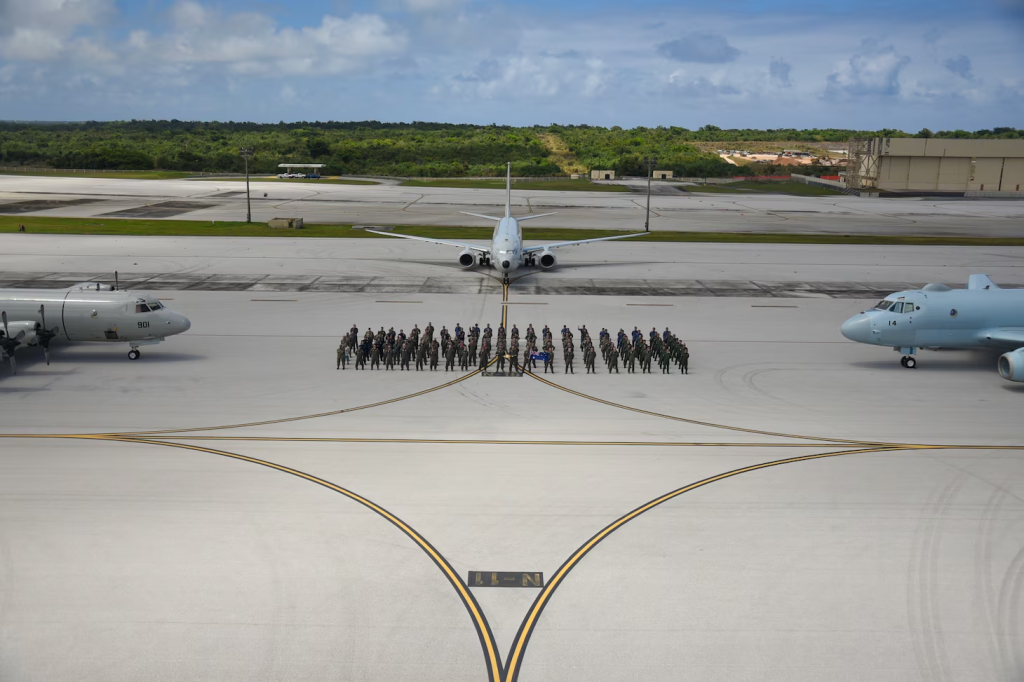
250313-N-ER662-0384 ANDERSEN AIR FORCE BASE, Guam (March 13, 2025) Participants from the Royal Australian Air Force (RAAF), Indian Navy, Japan Maritime Self-Defense Force(JMSDF), Republic of Korea Navy(ROKN), and the United States Navy pose for a group photo alongside a ROKN P-3 Orion (left), RAAF P-8A Poseidon (center), and JMSDF Kawasaki P-1 (right) during Exercise Sea Dragon 2025 at Andersen Air Force Base , Guam, March 13, 2025. (U.S. Navy photo by MCC Matthew Cole).
From Commander, Task Force 72 Public Affairs, March 19, 2025
ANDERSEN AIR FORCE BASE, Guam — Exercise Sea Dragon 2025 successfully concluded at Andersen Air Force Base, Guam, marking the completion of two weeks of intensive multinational anti-submarine warfare training, March 18, 2025.
Hosted by Commander, Task Force (CTF) 72, the exercise brought together participants from the Royal Australian Air Force (RAAF), Indian Navy (IN), Japan Maritime Self-Defense Force (JMSDF), Republic of Korea Navy (ROKN), and the United States Navy.
Two U.S. Navy P-8A Poseidon aircraft from Patrol Squadron (VP) 16 and Patrol Squadron (VP) 47 participated in the exercise. Allied and partner aircraft participating in this exercise included the RAAF P-8A Poseidon, JMSDF Kawasaki P-1, ROKN P-3 Orion, and IN P-8I Neptune. SD25 focused on enhancing ASW proficiency and multinational collaboration in the Indo-Pacific.
Exercises like SD25 demonstrate the U.S. Navy’s commitment to regional security and strengthening maritime partnerships with allied and partner nations.
“CTF 72 was proud to host Sea Dragon 2025 from Andersen AFB, Guam,” said Lt. Cmdr. Dan O’Keefe, assigned to Theater Security Cooperation, CTF 72. “This annual, multilateral ASW exercise included a competition phase and provided an opportunity for continuous multilateral ASW prosecution against simulated targets.”
SD25 featured a structured training format to include a mobile ASW training target, the MK-30 “SLED” for tracking drills, and a U.S. Navy anti-submarine warfare exercise (ASWEX) where exercise participants tracked a live U.S. Navy submarine. This structure enabled aircrews to develop their ASW expertise progressively while ensuring seamless, international mission coordination.
“Operating alongside partner nations’ maritime patrol forces strengthens security and cooperation, contributing to a free and open Indo-Pacific,” said O’Keefe. “The high level of coordination and skill displayed throughout the exercise underscores our commitment to shared regional security.”
As with previous years, SD25 included a competitive component in which each nation’s performance was assessed and graded to earn the Dragon Belt award, testing each nation’s ASW tactics and response effectiveness in a realistic scenario.
This year, the RAAF emerged victorious, securing the Dragon Belt for 2025.
The “War Eagles” of VP-16, part of CTF 72, are stationed in Jacksonville, Florida, and are currently deployed to Misawa Air Base in Misawa, Japan. The “Golden Swordsmen” of VP-47, also part of CTF 72, are stationed in Whidbey Island, Washington, and are currently deployed to Kadena Air Base in Okinawa, Japan. Throughout the deployment, both squadrons will continue conducting maritime patrol, reconnaissance, and theater outreach operations in the U.S. 7th Fleet area of operations.
U.S. 7th Fleet is the U.S. Navy’s largest forward-deployed numbered fleet, and routinely interacts and operates with allies and partners in preserving a free and open Indo-Pacific region.
Coast Guard Achieves Major Milestone in Drug Interdiction, Border Control Operations
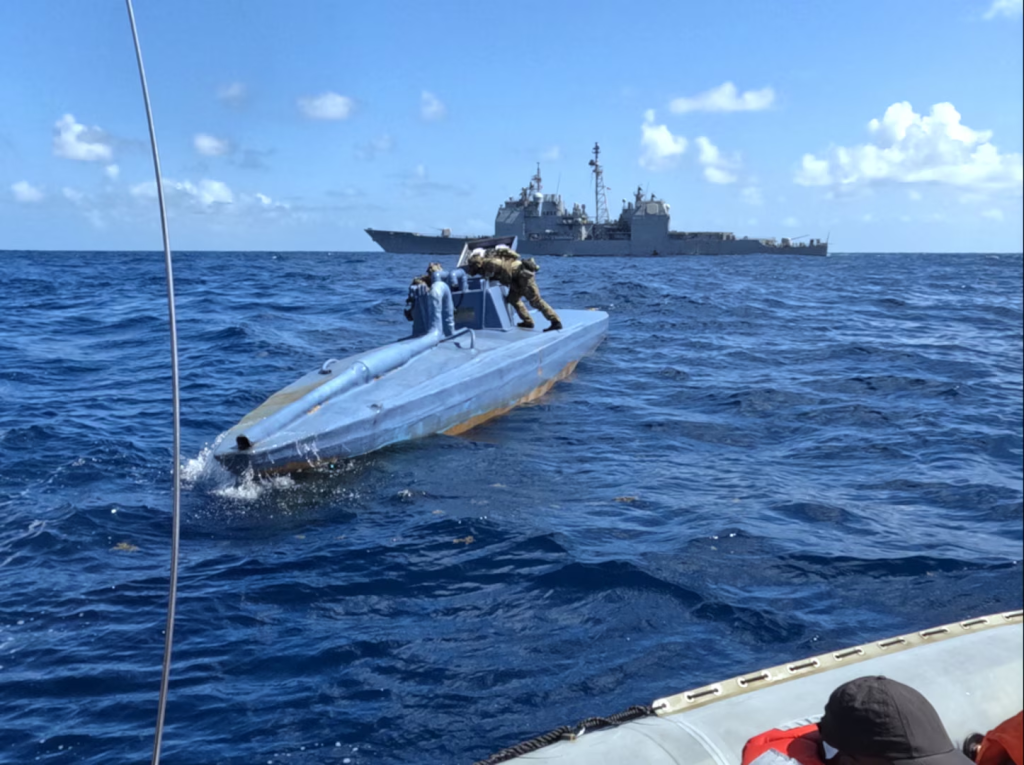
ATLANTIC OCEAN (March 22, 2024) – The Ticonderoga-class guided missile cruiser USS Leyte Gulf (CG 55), embarked U.S. Coast Guard Law Enforcement Detachment (LEDET) and Helicopter Maritime Strike Squadron (HSM) 50 work together to intercept a self-propelled semi-submersible drug smuggling vessel (SPSS), in the Atlantic Ocean, March 22, 2024. (U.S. Coast Guard Courtesy Photo/Released)
From U.S. Coast Guard Headquarters, March 18, 2025
WASHINGTON — The U.S. Coast Guard achieved a major milestone this week, interdicting over 80,000 pounds of illicit drugs since Jan. 21, being smuggled by drug cartels in an attempt to reach the U.S.
The Coast Guard’s achievement comes as U.S. Northern Command (NORTHCOM) deployed two U.S. Navy warships to the southern border to support Department of Homeland Security (DHS) and Coast Guard operations.
These U.S. Navy warships will operate in direct support of the Coast Guard and carry Coast Guard law enforcement teams that will enable them to shift to Coast Guard control during interdiction operations. As the Coast Guard hardens and sustains its operational posture, including the arrival of these U.S. Navy warships, it is fully integrated with DHS and the Department of Defense (DoD) through NORTHCOM and U.S. Southern Command.
“The Coast Guard leads the U.S. government’s efforts to control, secure and defend the nation’s borders and maritime approaches, starting at the U.S. southern border where the president has declared a national emergency,” said Adm. Kevin Lunday, acting Coast Guard commandant. “We are now leveraging U.S. Navy capabilities with Coast Guard teams aboard to augment our forces off Southern California and Texas. We are grateful for this crucial support from our teammates at NORTHCOM and the U.S. Navy. These Navy ships provide unique capability to complement U.S. Coast Guard operations to achieve 100% operational control of the border.”
Since Jan. 21, the Coast Guard has tripled its forces operating on the southern border.
Later this week, the Coast Guard will further recognize its interdiction efforts with a record-setting drug offload by Coast Guard Cutter Stone (WMSL 758). Additional details will be provided via media advisory.
For more information about the Coast Guard, visit www.uscg.mil.