Navy Reserve Chief Looks Forward to KC-130J Aircraft
By Richard R. Burgess, Senior Editor
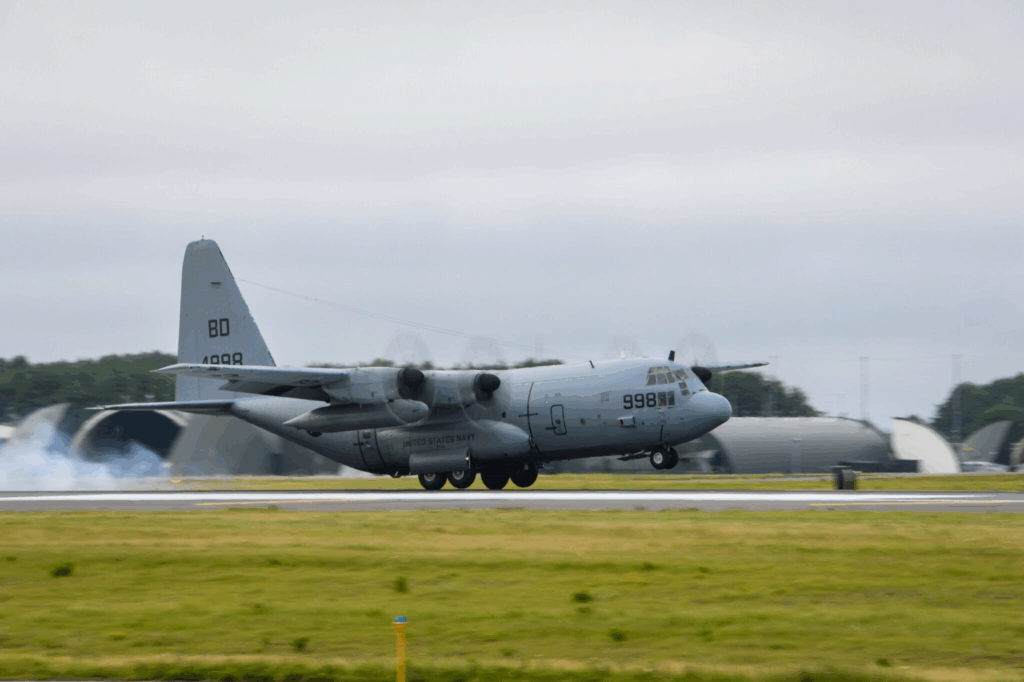
ARLINGTON, Va. — The admiral in charge of the U.S. Navy Reserve Force expressed appreciation for congressional support in procuring KC-130J Super Hercules tanker/transport aircraft to modernize the force’s organic airlift fleet.
“We are grateful for the strong bi-partisan alignment on this priority,” said Rear Admiral Nancy S. Lacore, chief of Navy Reserve, testifying May 20 before the House Appropriations Committee’s defense subcommittee. “We are grateful for the adds we got in 2024 [and] 2025 for the C-130. The C-130 is our number one equipment priority, and we are behind in that re-capitalization effort.”
The Navy Reserve operates 27 C-130T/KC-130T Hercules aircraft with an average age of 34 years and a mission-capable rate of 40%. Lacore anticipates a mission-capable rate of 75% with a fleet of KC-130Js.
We’re also anticipating a 75% mission-capable rate, which will go a long way,” Lacore said. “The plan was to be at 32 aircraft by 2030. We got one in 2024, two in 2025 and we’re super-grateful for them. Right now, in the out years, we need to be looking at six per year in order to get us to where we need to go.”
Lacore said the C-130T Hercules “operates exclusively by the Reserve is the Navy’s only long-range, inter-theater airlift for oversize cargo. Its capability is in high demand from fleet commanders, particularly in the Indo-Pacific, playing a critical role in the contested logistics necessary to sustain a maritime fight.
“For the past few months, Reserve C-130 crews have transported thousands of pounds of ordnance into the Red Sea fight, keeping our ships on station intercepting Houthi missiles, conduction precision strikes, and safeguarding global commerce,” she said. “When the fleet needs logistics, whether to deliver firepower or staying power, Navy Reserve answers the call.”
She pointed out that the C-130T fleet “lacks the survivability necessary to operating in a contested environment. Recapitalizing with the KC-130J is critical to ensuring that we effectively and safely carry out the critical inter-theater logistics mission for the fleet in 2027 and well beyond that.”
Lacore also noted the need for improved aerial refueling capability in the Pacific theater.
“The PACFLT [U.S. Pacific Fleet] commander has already asked us to work on organic aerial refueling and we are doing that with the Tangos [KC-130Ts],” she said. “It’s a long haul; they’re not all plumbed for that, whereas the Juliets [KC-130Js] will come with that plumbing already established. We anticipate that at least two times the aerial refueling rate. And if we include ground refueling as well, we’re looking at probably eight times our refueling capability in theater, which is a huge win for us in the Pacific.