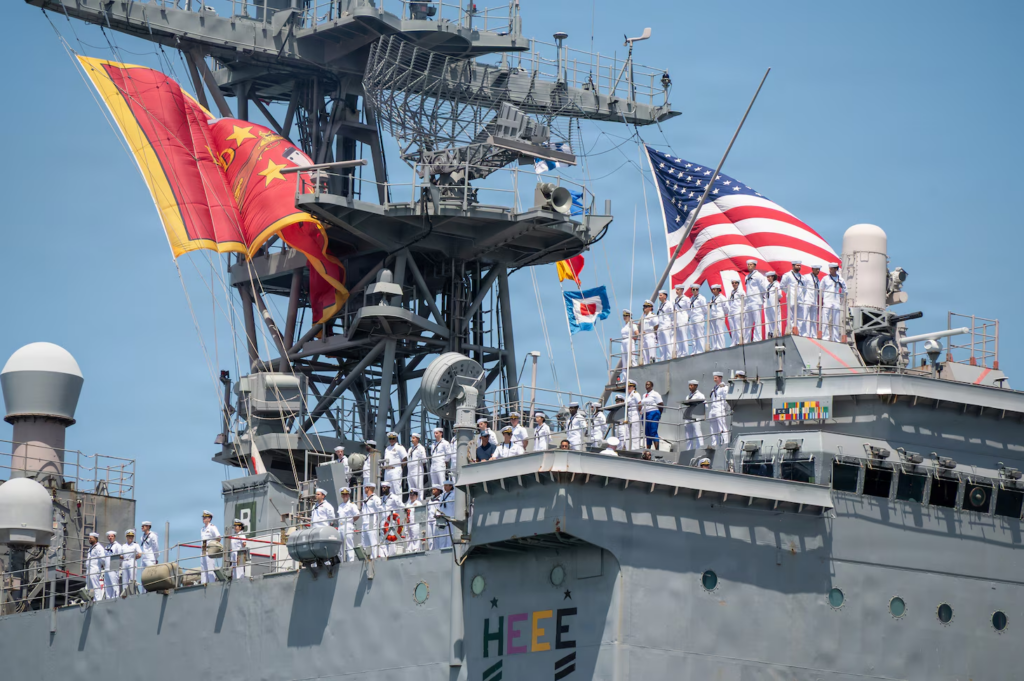
RENK America Moving to Become Second Builder of Ship Propulsion Bull Gears for U.S. Navy Ships
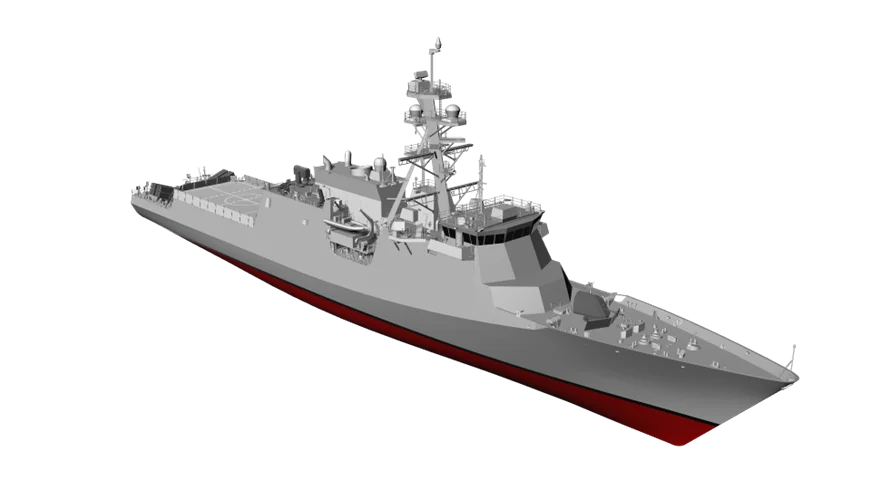
RENK is positioning itself to offer to provide the main gearboxes for the Navy’s proposed FF(X) frigate, a development of the Coast Guard’s Legend-class national security cutter. (U.S. Navy)

By Richard R. Burgess, Senior Editor 

ARLINGTON, Va. —  A 120-year-old American manufacturing company now owned by a German firm is positioning itself to return to building main gearboxes for new U.S. Navy ships as a Tier 1 supplier. 

RENK America Marine and Industry (RAMI), which bought Cincinnati Gear of Cincinnati, Ohio, last year, made the main reduction gear sets for the two fast combat support ships (AOEs) and the Kaiser-class fleet replenishment oilers three decades ago. RAMI is a unit of Renk America, part of RENK Marine and Industry, part of RENK Germany, a sector of the RENK Group. 

RENK Germany provided the main gear boxes for the Coast Guard’s Legend-class national security cutters and is providing the main gear boxes for the Heritage-class offshore patrol cutters. 

“Right now, for the big gear boxes — on aircraft carriers, cruisers, destroyers — there’s really only one supplier in America,” said Thom Burke, president of RENK America Marine and Industry (RAMI), in an interview with Seapower. “RENK’s big idea was to use Cincinnati Gear’s legacy experience in gearboxes to get back into bringing the Navy a second supplier. I was brought in to pivot us harder towards Navy business.” 

During his Navy career, Burke commanded two ships, including a nuclear-powered aircraft carrier. 

RAMI has approximately 120 employees who “grind the gears, make all the components, assemble the components, [and] test the assemblies.” Burke said.  

Since supplying gear boxes to the AOEs and T-AOs 25 or 30 years ago, “we fell out of the ability to make the big, giant bull gears that drive those main reduction gear sets,” he said. “RENK is making investments in the company to prepare us to do that so that we can compete on frigate, destroyer, battleship, cruiser, whatever that next ship is going to be for the Navy. 

Noting that the Navy is planning on building new frigates based on the Legend-class national security cutters, Burke said that “we’re [RENK] the incumbent for those vessels, so we’re preparing to deal ourselves up to be able to make frigates for the Navy if they so choose to do that.” 

RAMI has been asked for a price quote for the proposed frigate Flight 1 design and is “trying to figure out ways to make those gearboxes here in America, here in Cincinnati, instead of Germany.”  

Burke said that Cincinnati and now RENK products are on every destroyer in the U.S. Navy right now.” 

The company also builds equipment for Textron’s LCAC 100-class of Ship-to-Shore Connectors and components for sustaining the Ohio-class submarines and for equipping the new Columbia-class submarines. 

“There’s plenty going on now, and there’s plenty potential for the future,” Burke said, noting that RAMI wanted “to be able to offer the Navy a robust capability.” 

Asked about RAMI’s workforce and the current industry-wide workforce challenges, Burke said, “We have been very aggressively trying to grow the workforce … [and] get a second shift. … “We’re filling out that second shift now.” 

He said RAMI has hired 15 workers over the last six months.  

“I’m trying to grom my own,” he said. “So far we’ve made a lot of progress, but it’s a continuing challenge for sure.” 

RAMI has a partnership with a local high school and community college and is leveraging the Navy Talent Pipeline Program and the Accelerated Training in Defense Manufacturing (ATDM) Program in Denville, Virginia, which is “specifically designed to help adult learners earn the skills necessary to make an immediate impact in the submarine industrial base (SIB),” the ATDM website said. 


NSWC Indian Head Division Hits Milestone with First-Ever Mk 70 Solid Rocket Motor Cast

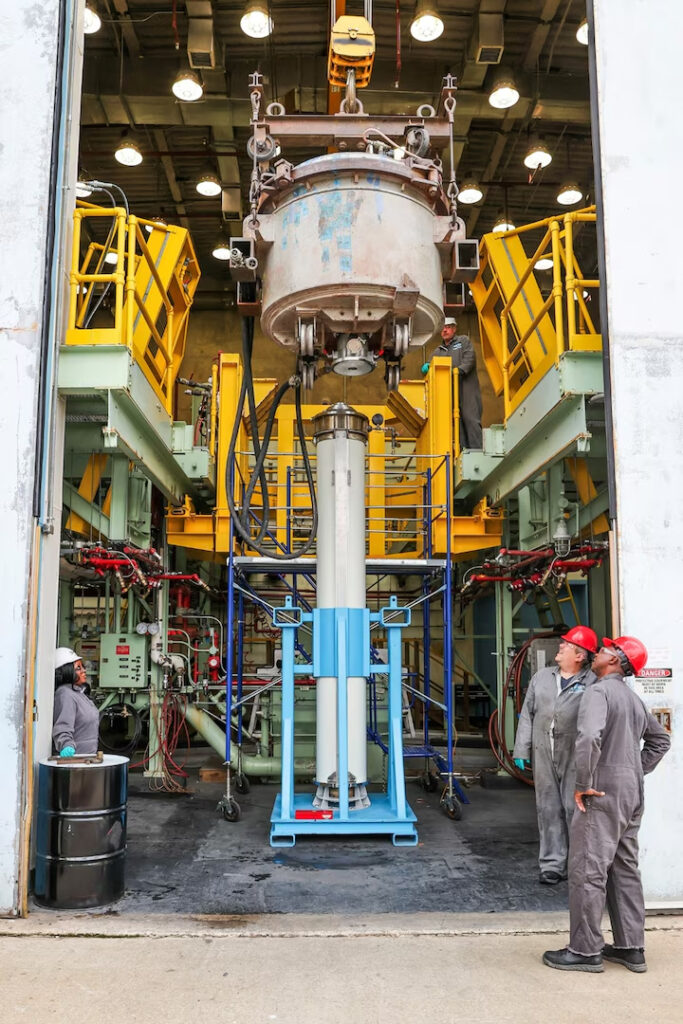
 NSWC IHD cast its first-ever Mk 70 propellant grain into a salvaged Mk 12 booster case, a significant step toward increasing the command’s production capacity of large solid rocket motors for national defense programs. The command’s Mk 70 Production Using Salvaged Hardware (PUSH) program reuses components from Mk 12 Terrier boosters to produce certified Mk 70 boosters for fleet readiness and training requirements. (U.S. Navy photo Released)

By NSWC IHD Public Affairs, June 4, 2026 

INDIAN HEAD, Md.  –  Naval Surface Warfare Center Indian Head Division (NSWC IHD) recently cast its first-ever regrained Mk 70 solid rocket motor (SRM) in the command’s manufacturing facilities in Indian Head, Maryland. This effort represents a major milestone in NSWC IHD becoming the Department of War’s (DoW) second source for reclaimed and re-grained SRMs. 

The cast was a significant step toward increasing NSWC IHD’s production capacity of large SRMs for national defense programs and to address a bottleneck in the defense industrial base. The Mk 70 is a high-performance solid rocket booster heavily used by the DoW and NASA for various missions across the globe. 

“This cast was more than four years in the making. A lot of learning and adjustment went into this,” NSWC IHD Cast Propellant Production Branch Manager Frank Cooper said. “The ability to cast a Mk 70 is a big first step in revitalizing the command’s diminished capacity.” 

The team cast approximately 1,500 lbs. of propellant grain into a Mk 12 booster case before sending it to cure, which enables them to be one step closer to this summer’s Mk 70 SRM static firing test. 

“This Mk 70 booster is a true drop-in replacement for the customer and ultimately the fleet,” NSWC IHD Surface Systems Branch systems engineer and project manager Vandit Shah said. “Our team took this from concept all the way to the actual unit. It shows collaboration across all Indian Head departments and detachments, as well as [Naval Air Weapons Station] China Lake and the U.S. Army [Futures Command, DEVCOM Aviation and Missile Center]. The government owns every aspect of this production line.” 

NSWC IHD’s Mk 70 Production Using Salvaged Hardware (PUSH) program, funded by Test Resource Management Center (TRMC) and the Navy’s Aerial Targets Program Office (PMA 208), produces “new” Mk 70 rocket boosters by harvesting, refurbishing and refilling existing components from older, retired missile inventories like Mk 12 Terrier boosters to deliver units quicker and more cost-effectively to the fleet. 

“The ability to mix, cast, cure and test a Mk 70 SRM represents a critical milestone that will propel Indian Head forward in the realm of cast composite rocket motor manufacturing, including Mk 104 dual thrust rocket motor re-grain operations in partnership with industry,” NSWC IHD Commanding Officer Capt. Steve Duba said. “The team at Indian Head Division continues to take on the Navy’s most challenging and relevant energetic systems work to meet wartime surge demand now.” 

NSWC IHD — a field activity of the Naval Sea Systems Command and part of the Navy’s Science and Engineering Establishment — is the leader in ordnance, energetics, and EOD solutions. The Division focuses on energetics research, development, testing, evaluation, in-service support, manufacturing and disposal; and provides warfighters solutions to detect, locate, access, identify, render safe, recover, exploit and dispose of explosive ordnance threats. 


Fincantieri: WASS Submarine Systems and Magellan Aerospace Sign Agreement to Support Canadian Underwater Defense Capabilities  

The understanding establishes a framework to explore Canadian industrial cooperation in heavyweight torpedoes and countermeasures capabilities  

From Fincantieri, June 4, 2026 

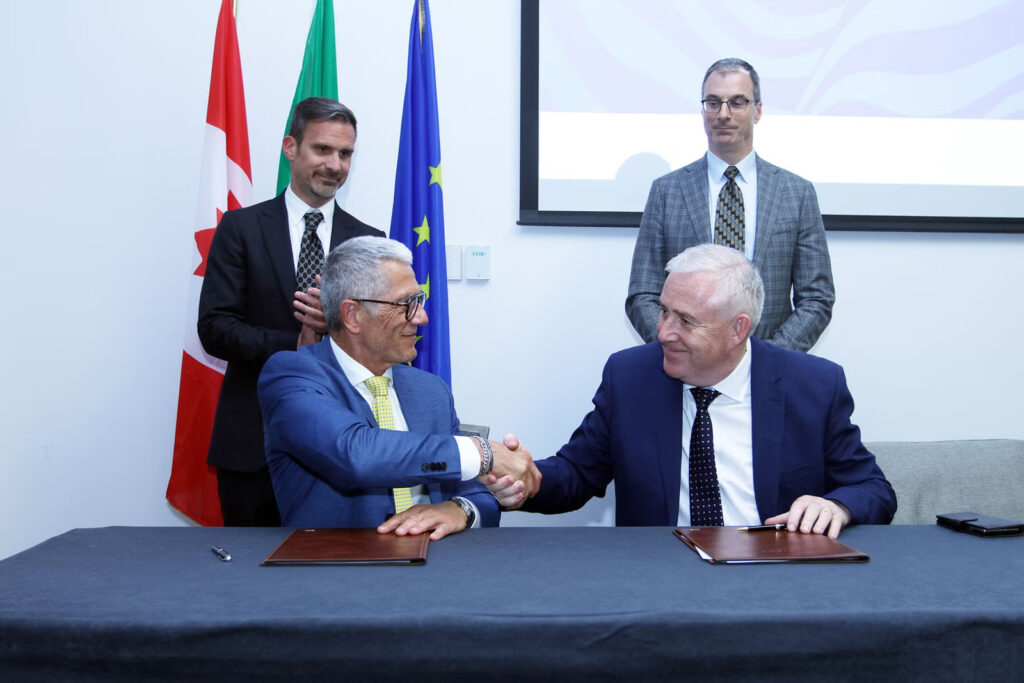
Fincantieri, through its subsidiary WASS Submarine Systems, a leader in the design and development of advanced underwater defense systems, and Magellan Aerospace Corporation (“Magellan”), have signed a Memorandum of Understanding (MoU) to identify and develop areas of industrial cooperation aimed at strengthening Canada’s defense sovereignty and enhancing its underwater defense capabilities. The agreement was signed during CANSEC 2026, the defense exhibition recently held in Ottawa, Canada.   

Within this framework, WASS Submarine Systems and Magellan will work together to explore opportunities for Canadian industrial participation in heavyweight torpedoes and torpedo countermeasures system capabilities. Areas of cooperation include the production of components, energetic sections, subassemblies, final assembly and factory testing, as well as maintenance and in-service support activities.  

With over 150 years of heritage in underwater defense, WASS brings extensive industrial and technological expertise in advanced underwater systems to this collaboration. The agreement provides a foundation for progressive cooperation between the two companies, contributing to the development of a sustainable and competitive industrial capability in Canada across the lifecycle of underwater defense systems. By combining WASS’ long-standing expertise in underwater defense systems with Magellan’s established industrial presence in Canada, the collaboration aims to support the long-term development of sovereign underwater capabilities, strengthen local industrial participation, and enable sustainable in-country sustainment.  


Austal USA Grows Leadership Team

From Austal USA, June 4, 2026 

MOBILE, Ala. – Austal USA welcomed three new members to the company’s senior leadership team.  Michael Pruitt, Vice President of Surface Ship Programs; Michael Oberdorf, Vice President of Submarine Programs; and Andrew Hinkebein, Director of State and Local Government Relations. 

With over 25 years of experience directing large-scale shipbuilding activities, Michael Pruitt has managed multi-billion-dollar Navy surface ship portfolios at both Huntington Ingalls Industries and Northrup Grumman Shipbuilding.  He’s led cross-functional teams to deliver complex Naval and commercial programs. His expertise spans production efficiency, supply chain management, and workforce training development, with a proven track record of fostering safety, compliance, operational excellence, and risk mitigation across all stages of ship construction and delivery. 

Pruitt holds a Bachelor of Science in Business and is a certified Six Sigma Green Belt, bringing a strong foundation in business and process improvement to his new role. 

A qualified nuclear engineer with a master’s of science in electrical engineering and a Navy career that spanned over 30 years, retired Captain Michael C. Oberdorf brings deep expertise in nuclear submarine operations, Navy program funding, and strong relationships with senior leaders, making him uniquely positioned to drive growth in Austal’s submarine module business. He joins Austal USA from Bath Iron Works where he was senior director of operations demonstrating exceptional leadership in new construction programs. 

Oberdorf served as Shipyard Commander and Installation Commander at Portsmouth Naval Shipyard, leading a $1.5B organization of 6,700 personnel in submarine overhauls, modernization, and refueling. His Navy career includes key leadership roles at Norfolk Naval Shipyard and aboard USS RONALD REAGAN (CVN 76), where he was responsible for consistently improving safety, quality, and operational efficiency. 

As director of local and state government affairs, Andrew Hinkebein will lead the company’s engagement efforts with state and local governments, economic development organizations, community stakeholders, and strategic partners. He’ll also oversee Austal USA’s external communications initiatives. 

A United States Marine Corps veteran, Hinkebein brings extensive experience in the areas of government affairs, public policy, economic development, and maritime defense. Most recently, he served as director of government affairs for Bollinger Mississippi Shipbuilding, where he worked with federal, state, and local stakeholders to advance shipbuilding initiatives, workforce development efforts, infrastructure investments, and defense industrial base priorities. 

Hinkebein previously served as State Director for U.S. Senator Tommy Tuberville of Alabama, overseeing statewide operations and stakeholder engagement across Alabama. He also served on the staff of Senate Armed Services Committee Chairman Roger Wicker of Mississippi, where he worked on issues involving national defense, shipbuilding programs, economic development, and strategic investments supporting the nation’s defense industrial base. 

“These three highly experienced industry professionals each boast broad defense backgrounds that will contribute unique perspectives to their Austal USA leadership roles,” Austal USA President Gene Miller stated.  “We are excited to have them join our senior leadership team and look forward to having them help to grow Austal USA.” 


Coast Guard takes delivery of 19th HC-130J long range surveillance aircraft

HC-130J CGNR 2019 departs the Lockheed Martin Aeronautics facility in Marietta, Georgia, on April 14, 2026, for the Coast Guard Aviation Projects Acquisition Center in Elizabeth City, North Carolina, where warranty and logistics flights were conducted before the aircraft’s induction into the missionization process. (U.S. Coast Guard photo courtesy of Lockheed Martin Aeronautics)June 5, 2026

WASHINGTON — The Coast Guard accepted delivery of its 19th HC-130J Super Hercules long range surveillance aircraft, designated CGNR 2019, from Lockheed Martin Aeronautics in Marietta, Georgia, on April 10, 2026. 

The aircraft entered the year-long missionization effort needed to make it fully mission-ready on June 3, following completion of warranty and logistics flights by the Coast Guard Aviation Projects Acquisition Center in Elizabeth City, North Carolina. 

The acquisition of CGNR 2019 is part of a broader, ongoing modernization of the Coast Guard’s aviation fleet. The HC-130J serves as the long-range search and rescue variant of the C-130J. Compared to the legacy HC-130H model, the new HC-130J aircraft features a more advanced engine and propellers, yielding a 20 percent increase in speed and altitude, as well as a 40 percent increase in range. Notably, this is the first C-130J aircraft delivered to the Coast Guard in which a Block 8.1 upgrade – providing enhanced approach and landing systems, expanded diagnostics, and civil GPS – was installed during baseline production at Lockheed Martin. 

These enhancements allow the aircraft to travel further, stay on scene longer, and respond more rapidly to emergencies. 

“Every new HC-130J we add to the fleet drastically expands our operational reach and maritime domain awareness,” said Rear Adm. Mike Campbell, Director of Systems Integration (CG-SI) and Assistant Commandant for Aviation (CG-AIR). “CGNR 2019 represents our ongoing commitment to providing our aircrews with the most advanced command and control platforms available to execute our complex, demanding missions across the globe.” 

With an extended endurance of over 20 hours, the HC-130J plays a vital role in executing the Coast Guard’s most demanding traditional missions. These include search and rescue, drug and migrant interdiction, law enforcement, cargo and personnel transport, and securing U.S. maritime borders and approaches. Furthermore, its advanced command, control, communications, computers, cyber, intelligence, surveillance, and reconnaissance (C5ISR) equipment allows it to serve as a vital command and control platform, identifying objects and seamlessly sharing real-time data with operational forces and cooperating agencies. 

The missionization process, executed by L3Harris Integrated Mission Systems in Waco, Texas, integrates specialized equipment necessary to execute Coast Guard missions, including the Minotaur Mission System Suite. This advanced open-architecture system provides real-time tracking and Rescue 21 integration to enhance the common operating picture and maritime domain awareness. The aircraft will also be equipped with an advanced electro-optical/infrared (EO/IR) sensor turret and a 360-degree, belly-mounted, multi-mode surface search radar, a feature that was first used on the Coast Guard’s HC-130J configuration. 

The expansion of the HC-130J fleet is heavily supported by the Fiscal Year 2025 (FY25) budget reconciliation. This investment will enable the Coast Guard to expand HC-130J operations to two additional air stations, bringing the total number of funded aircraft to 25. Using the historic $25 billion investment provided by the FY25 budget reconciliation, the Coast Guard has already ordered over $13 billion in new fleet assets and capabilities, demonstrating the Service’s commitment to modernizing acquisition and delivering next-generation technology. 

The Coast Guard currently operates the HC-130J out of three air stations: Elizabeth City, North Carolina; Kodiak, Alaska; and Barbers Point, Hawaii. After completing its missionization process in mid-2027, CGNR 2019 will be fully operational as an HC-130J and will support the transition of Air Station Sacramento, California, from C-27J to HC-130J operations. 


VMA-223 celebrates sundown as Marine Corps’ final Harrier squadron 

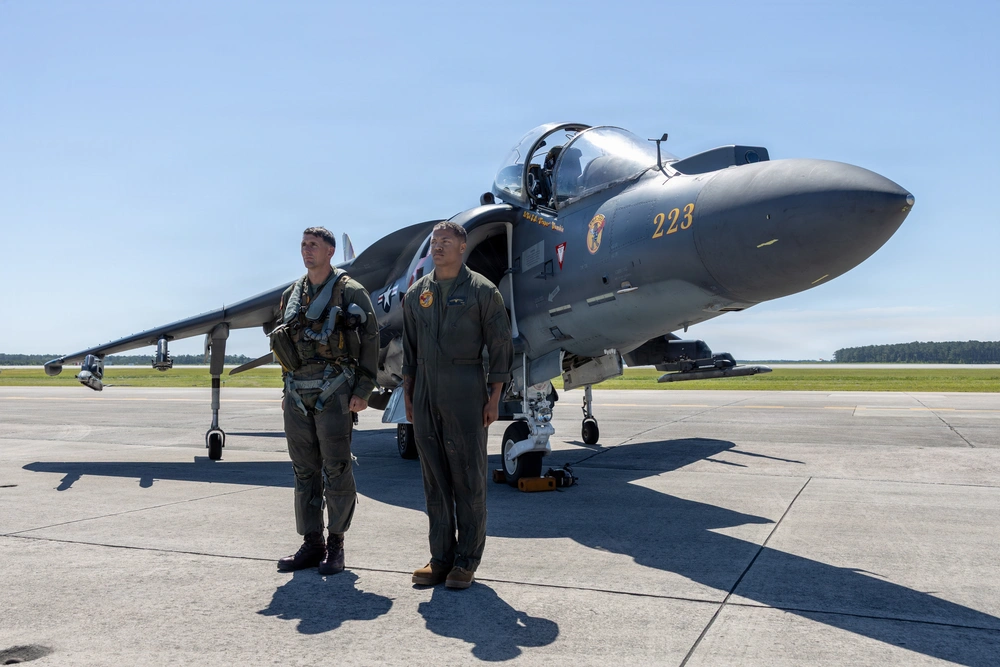
U.S. Marine Corps Lt. Col. John B. Cumbie, left, a native of Texas and the commanding officer of Marine Attack Squadron (VMA) 223, Marine Aircraft Group 14, 2nd Marine Aircraft Wing and Cpl. Myles J. Howard a native of Georgia, a fixed-wing aircraft mechanic with VMA-223, stand at attention in front of an AV-8B Harrier II at Marine Corps Air Station Cherry Point, June 3, 2026. The “sundown” of the AV-8B Harrier II, an iconic aircraft that has supported joint and Marine Corps operations for over 40 years, also represents the dawn of a new era; it paves the way for 2nd MAW’s full transition to the F-35B and C Lightning II. VMA-223 is the U.S. Marine Corps’ last operational Harrier squadron. (U.S. Marine Corps photo by Lance Cpl. Donovan Pimentel)

From Communication Strategy and Operations Office, 2nd Marine Aircraft Wing 

June 4, 2026 

MARINE CORPS AIR STATION CHERRY POINT, N.C. – Marine Attack Squadron (VMA) 223, known as “the Bulldogs”, celebrated the conclusion of nearly 40 years of operational history with the AV-8B Harrier II during a public ceremony at Marine Corps Air Station Cherry Point, Wednesday. The ceremony marked an important moment in time for VMA-223 and also signaled the end of an era for Marine Corps aviation as the service continues its transition to an all-5th generation tactical aircraft fleet.     

“The Bulldogs are extremely proud to conduct the final Harrier operations for the U.S. Marine Corps”, said Lt. Col. John B. Cumbie, commanding officer of VMA-223.  “As a platform that has continuously forward deployed across the globe, the Harrier will be remembered for its distinguished combat legacy, legendary Vertical/Short Take Off and Landing (V/STOL) capability, and the Marines and Sailors that made the community special.” 

Wednesday’s ceremony was attended by over 5,000 people. Attendees included senior Marine Corps leaders, state and local officials, active-duty service members, local community members, family and friends of VMA-223, and veterans with ties to the Harrier community. The ceremony included a five-aircraft formation flight and vertical landing that showcased the Harrier’s unique V/STOL capability.    

The Harrier platform has maintained a proud and storied legacy throughout its 55 years of service with the U.S. Marine Corps. In 1971, the Marine Corps accepted the first AV-8A into its inventory. In 1985, VMA-331, stationed aboard Marine Corps Air Station Beaufort, South Carolina, became the Marine Corps’ first operational AV-8B squadron. VMA-223 began flying the AV-8B in early 1987. Since its inception with the Marine Corps, the Harrier has been instrumental in numerous combat operations, including Operations Desert Shield and Desert Storm, Operation Allied Force, Operation Enduring Freedom, Operation Iraqi Freedom, Operation Odyssey Dawn, Operation Inherent Resolve, and operations during the Red Sea crisis. Time and again, the Harrier distinguished itself as a lethal, capable and versatile tactical air platform.  

Colloquially known as a “jump jet” for its ability to take off and land within short distances, the AV-8B is a V/STOL aircraft designed to support the Marine Air Ground Task Force commander by destroying surface targets and escorting friendly aircraft. The AV-8B’s lethality and V/STOL capability made it uniquely suited for deployments in support of Marine Expeditionary Units (MEUs). VMA-223’s final detachment of Harriers to support a MEU returned to Marine Corps Air Station Cherry Point last month after supporting operations with the 22nd Marine Expeditionary Unit in the Caribbean. 

In fiscal year 2028 VMA-223 is scheduled to reactivate as Marine Fighter Attack Squadron (VMFA)-223 and will begin flying the F-35B Lightning II. VMA-223 is the last Marine Corps squadron to operate the Harrier.  


Gogo secures $7.5 million NOAA contract, providing mission-critical communications services for ‘hurricane hunter’ aircraft 

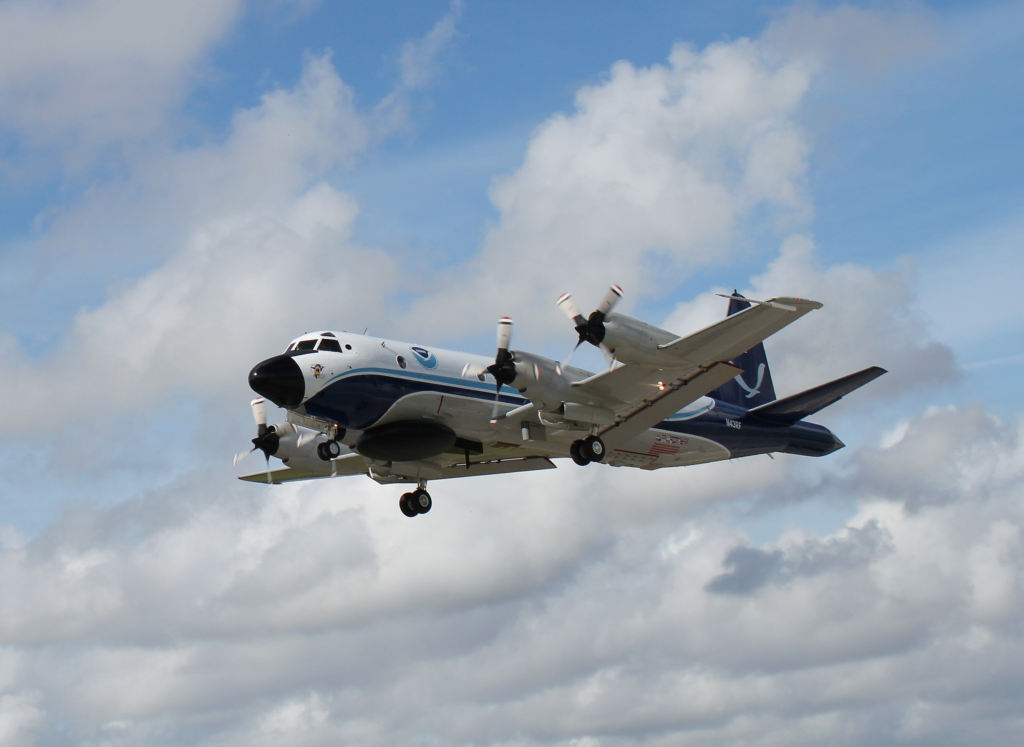
SD Government, a Gogo company, has secured a $7.5 million NOAA contract providing mission-critical communications services for ‘hurricane hunter’ aircraft including this NOAA Lockheed WP-3D Orion N43RF (Photo: NOAA) 

From SD Government, June 4, 2026 

BROOMFIELD, Colo. / 4 June 2026 – SD Government, a Gogo (NASDAQ: GOGO) company serving the military and government markets, announced today that it has secured a multi-year framework contract from the U.S. Department of Commerce’s National Oceanic and Atmospheric Administration (NOAA). This contract supports the NOAA Aircraft Operations Center (AOC), home to the renowned Hurricane Hunter fleet, including the Lockheed Martin WP-3D aircraft known as “Kermit” and “Miss Piggy,” among others. These aircraft provide essential research data, enabling effective, real-time, actionable information.  

The agreement includes a total obligation of $7.5 million for SD Government to deliver a comprehensive mission communications solution. This includes L-Band satellite communications (SATCOM), ground infrastructure, and cybersecurity solutions via Gogo’s data center in Melbourne, Florida, along with Gogo’s FlightDeck Freedom cockpit datalink software suite, ensuring reliable communications and streamlined flight operations ahead of the upcoming hurricane season. 

“NOAA is a trusted global leader in airborne research, offering life-saving services to the U.S. and other nations. We’re proud to support the delivery of vital data from the storm’s eye to decision-makers, utilizing our robust and reliable networks and infrastructure,” says Ben Massey, Senior Vice President of Government Sales at Gogo.


13th MEU Completes Realistic Urban Training, Boosts Deployment Readiness 

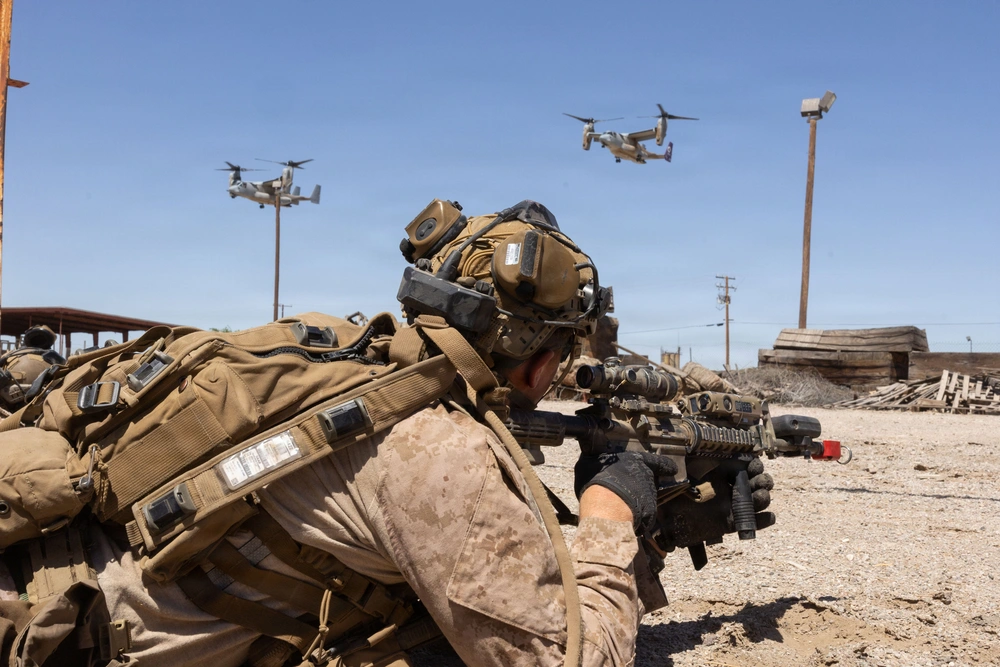
U.S. Marine assigned to Battalion Landing Team 2/4, 13th Marine Expeditionary Unit, provides security as MV-22B Ospreys prepare to land after conducting a simulated raid during Realistic Urban Training at Blythe, California, May 31, 2026. RUT is a critical pre-deployment exercise that enables the 13th MEU to integrate its command, aviation, ground and logistics combat elements, ensuring the force is prepared to respond rapidly and effectively to crises in unfamiliar, urban environments. (U.S. Marine Corps photo by Lance Cpl. Christian Cutter)  

From 13th Marine Expeditionary Unit Communication Strategy and Operations 

June 4, 2026 

YUMA, Ariz. – The 13th Marine Expeditionary Unit (MEU) successfully concluded Realistic Urban Training (RUT), a major pre-deployment exercise held from May 26 to June 3, 2026, across various locations in the Southwest United States. This rigorous evolution featured diverse training missions designed to forge tactical cohesion across the Marine Air-Ground Task Force and maximize operational effectiveness in complex urban environments. 

Throughout the exercise, over 1,000 Marines and Sailors from the 13th MEU’s Command Element, Battalion Landing Team 2/4, Marine Medium Tiltrotor Squadron 364 (Reinforced), Marine Fighter Attack Squadron 211, and Combat Logistics Battalion 13 integrated to form a cohesive MAGTF. The training took place in challenging and unfamiliar urban environments, including Glendale, Arizona, and Blythe and Glamis, California, providing realistic settings for complex, decentralized operations. While the MEU operated from Marine Corps Air Station Yuma, training also occurred at military installations across the Southwest. 

“Realistic Urban Training is a critical milestone that forges the individual elements of the 13th MEU into a unified, combat-ready MAGTF,” said Col. Richard Alvarez, commanding officer of the 13th MEU. “Operating in complex, austere and urban environments provides the realism necessary to develop the essential skills required for rapid crisis response around the globe. RUT has made the 13th MEU a better prepared, more lethal force.” 

During RUT, the 13th MEU executed several core missions essential for crisis response, including two expeditionary strikes, three amphibious raids, and two Tactical Recovery of Aircraft and Personnel (TRAP) missions. Both the Maritime Raid Force, comprised primarily of Reconnaissance Marines, and Battalion Landing Team 2/4 infantry elements conducted raids supported by the full MAGTF. 

The exercise showcased the full spectrum of the MEU’s aviation capabilities, employing the MV-22B Osprey, CH-53E Super Stallion, AH-1Z Viper, UH-1Y Venom, F-35B Lightning II, and KC-130J Super Hercules aircraft. These platforms supported a wide range of operations, including a forward arming and refueling point (FARP) and aviation delivered ground refueling (ADGR) that extend the reach and lethality of the MEU. 

By integrating its command, air, ground, and logistics elements, the 13th MEU has demonstrated its readiness to respond swiftly and effectively to any contingency. The successful completion of RUT validates the 13th MEU as a versatile expeditionary force prepared for future operations.


Secretary of War Announces Marine nominated for Brigadier General  

From the Department of War, June 4, 2026 

Secretary of War Pete Hegseth announced today that the president has made the following nominations: 
 
Marine Corps Col. Frank Diorio, Jr. for appointment to the grade of brigadier general. Diorio is currently serving as programs development branch head, Programs and Resources Department, Headquarters, U.S. Marine Corps, Pentagon, Washington, D.C.


Task Force Ashland’s Navy-Marine Corps team returns to San Diego after four months of operations in the Indo-Pacific 

NAVAL BASE SAN DIEGO (Jun 1, 2026) Sailors assigned to Whidbey Island-class amphibious dock landing ship USS Ashland (LSD 48) man the rails as the ship returns to its homeport of Naval Base San Diego, June 1, 2026. USS Ashland returns to its homeport of Naval Base San Diego following operations in the U.S. 7th Fleet. (U.S. Navy photo by Mass Communication Specialist 2nd Class Aja Bleu Campbell)

From U.S. Third Fleet, June 1, 2026 

SAN DIEGO  –  Marines and Sailors of Task Force (TF) Ashland returned to San Diego aboard Whidbey Island-class dock landing ship USS Ashland (LSD 48), following four months of operations in the Indo-Pacific region, June 1, 2026. 

TF Ashland is composed of Ashland’s crew and a command element from the 15th Marine Expeditionary Unit (MEU); a ground combat element from 3rd Assault Amphibian Battalion, 1st Marine Division; and a logistics combat element from Combat Logistics Regiment 17, I Marine Logistics Group. Assault Craft Unit (ACU) 5 also deployed a detachment with two landing craft, air cushion to support amphibious operations. The task force departed San Diego aboard Ashland Jan. 24, 2026, demonstrating a flexible and scalable model of naval integration. 

“I couldn’t be prouder of the team’s work over these past four months at sea,” said U.S. Navy Cmdr. Adam Peeples, commanding officer of Ashland. “As our Sailors and Marines look back at their accomplishments, I hope they feel the same pride and satisfaction I do leading this team.”  

Throughout their underway, the Navy-Marine Corps team was a visible and engaged presence across the Indo-Pacific. The task force participated in a multitude of demanding exercises, including the 45th iteration of Exercise Cobra Gold in February, the largest joint military exercise in mainland Asia, and the 40th iteration of Exercise Balikatan in April, an annual exercise focused on the long-standing alliance between the Philippines and the United States. These exercises involved complex scenarios, such as combined-arms live-fire events, amphibious operations, and disaster response training, conducted alongside the Royal Thai Armed Forces, the Republic of Korea Marine Corps, and the Armed Forces of the Philippines.  

“Combining the 15th MEU, ACU-5 craft team, and Sailors of Beachmasters Unit (BMU) 1, the Grizzly Gators of Ashland built something truly greater than the sum of its parts — TF Ashland,” said Peeples. “Together, we tackled the challenges with flawless results and worked with our regional partners, building cooperation within the region and demonstrating our commitment to the most consequential theater.”  

While in port at Cebu, Philippines, Ashland completed a three-week ship repair and maintenance (SRMX) exercise, as part of its scheduled port visit. SRMX is designed to rehearse coordination and execution of ship damage repair from forward locations within the Indo-Pacific region, strengthening ties with the skilled workforce within allied and partner countries. 

Further showcasing its commitment to regional stability, TF Ashland participated in a multilateral exercise alongside Australian and Canadian forces, a multi-phase exercise focused on surface action group operations and interoperability with allied navies. By executing key components of distributed maritime operations, TF Ashland provided combatant commanders with a flexible force for credible deterrence and crisis response, which significantly enhanced regional capabilities and bolstered maritime security alongside our allies. 

“The 15th MEU executed as TF Ashland proved that a task-organized, scalable force can deliver credible combat power while continuing to strengthen relationships with our allies,” said U.S. Marine Corps Lt. Col. Matt Bride, the commander of troops for TF Ashland and the 15th MEU executive officer. “Whether executing complex, multinational exercises or demonstrating the forward-thinking principles of distributed maritime operations, our Navy-Marine Corps team consistently met every challenge with the professionalism and effectiveness that underpins the legacy of our respective organizations.” 

TF Ashland’s return marks the completion of operations that reinforced the United States’ commitment to peace through strength. 

Task Force Ashland is a flexible, purpose-built force designed to integrate with allies and partners or respond to crisis, in support of a free and open Indo-Pacific.