Senior Leaders Forecast the Future of Maritime Dominance
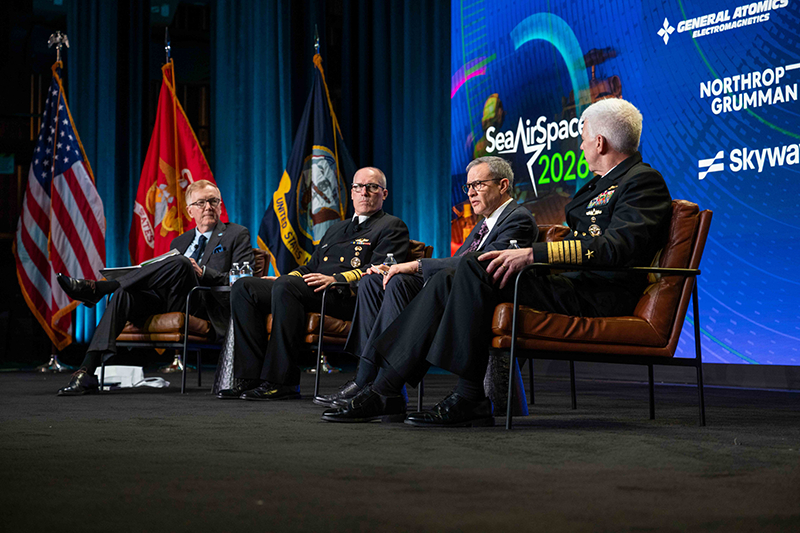
From left to right: Retired Admiral James Foggo, Vice Admiral Rob Gaucher, retired Captain William Toti and Admiral Karl Thomas discussed their visions of the future of U.S. maritime dominance during the fifth annual CMS breakfast on Tuesday. (Credit: Laura Hatcher)

By Vicky Uhland, Seapower Correspondent 

The U.S. Department of Defense is at an inflection point in maritime dominance through acquisition reform, said panelists at Tuesday morning’s fifth annual breakfast hosted by the Navy League’s Center for Maritime Strategy. 

The Department of War is not just a moniker, “it represents a sea change in the way we go about business,” said U.S. Navy retired Captain William Toti, senior advisor to the deputy secretary of war. “We are mobilizing our industrial base in a way that’s never been done probably since World War II. We need everybody in industry to pull along as we go down this lane.” 

Toti said when he joined the Department of Defense a year ago, he conducted a review and found war preparation was not taken seriously, critical munitions programs had been terminated and 100% of other critical programs were late and over budget.  

“There was complacency all over the department and a loss of military dominance,” he said. “It was a department that lost its way; it was focused on the wrong things” and a reboot was necessary.  

Vice Admiral Rob Gaucher, direct reporting portfolio manager (DPRM) submarines and program acquisition executive (PAE) undersea, said DRPM handles submarine building and the PAE structure maintains existing submarines.  

For submarine building, the first priority is a “forward-looking supply-chain view to find bottlenecks,” he said. On the PAE side, he’s building out scorecards to measure five specific types of maintenance.  

Panelists answered a series of questions about the future of maritime dominance from audience members and the session moderator, retired Navy Admiral James Foggo, dean of the Center for Maritime Strategy. Questions included:  

There are going to be three carrier strike groups coming home from the Gulf; how do you get them repaired? 

Admiral Karl Thomas, commander of U.S. Fleet Forces Command, said the biggest problem is capacity issues in the shipyard. The main levers include prioritizing maintenance continuum and “ensuring that shipyard workers are turning wrenches,” he said. 

“Longer deployments mean more maintenance,” Thomas said. Maintenance of the USS Gerald R. Ford (CVN 78), which had a major fire on board in March, will exceed 10 months, he said, noting the Navy plans to hire 3,000 more shipyard workers a year to deal with those chores.  

What challenges have you learned from Virginia-class submarine procurement maintenance, and how are we postured to overcome those challenges for Columbia and SSN(X)? 

Thomas said the gap from “the kill chain from thinking I can manufacture something to when I actually get the ability to get the part” takes more than a year. “We as the Navy have not made it clear to industry” about the manufacturing requirements. This was a huge problem for the Virginia class, he said, and the Navy is leaning into advanced technology to do things quicker.  

What is your metric for deciding if industry is supporting the Navy, and what does industry support look like to you? 

“Accept the new paradigm [Deputy] Secretary [Steve] Feinberg has put in place. Don’t push back. This is how it’s going to be,” Toti said. “It’s OK to think outside the box but not OK to go to Congress. Congress is fully on board; nobody is pushing back on this.”  

What advice would you give at this point in your careers that would make a difference to a junior Sailor or junior officer? 

“The thing that kept me in the Navy to this point is the camaraderie,” Thomas said.  

Toti said he’s been “so blessed to have three lucrative careers, and none of them was planned. Enjoy what you’re doing now and don’t worry about the future.”  

“There are going to be plenty of bad deals out there, but there are incredibly good deals and things you get to do,” Gaucher said, recommending that young Sailors and officers “take a minute to remember the importance of what you do and what the Navy offers as a career.” 
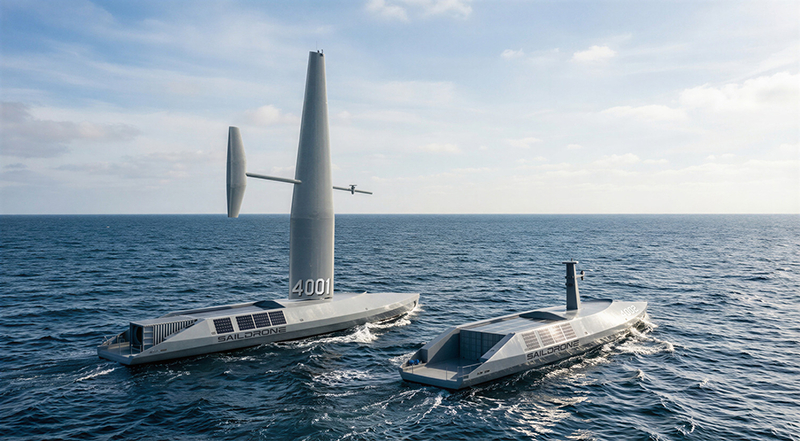


Saildrone Unveils Spectre High-speed USV for Naval Operations

A rendering of the Saildrone Spectre with its sail, and in sail-less kinetic strike mode. CREDIT: Saildrone

Saildrone (Booth 1315) today released the design of the Saildrone Spectre, a 52-meter-long, 250-ton uncrewed surface vessel intended for anti-submarine warfare. 

Capable of speeds up to 30 knots, Spectre is the largest, fastest, and most capable Saildrone platform to date, the company said. It leverages the endurance and reliability of the company’s Saildrone wing system but is designed to operate without the wing for kinetic strikes. 

“Spectre is the result of 25 years of continually pushing the boundaries of what’s possible. A unique design evolved through the hard lessons of operational experience in the real world,” said Richard Jenkins, Saildrone’s founder and CEO. “Spectre is not a craft hurriedly readied to meet a particular RFP, but diligently evolved over multiple years to meet the operational requirements of our customers and fill critical capability gaps in the ASW domain.” 

Cruising at 25 knots with a 25,000 kilogram payload, Spectre has a range of 3,280 nautical miles in flat water and 2,790 nautical mile range in Sea State 4 head sea. Controllable-pitch propellers enable efficient operations throughout the speed range, allowing for controllable acoustic signatures and near-silent slow-speed operations for tow bodies such as thin-line towed arrays and variable-depth sonar systems. 

The concealed payload deck provides room for containerized payloads, ranging from dual 40-foot containers, up to five 20-foot containers, or a mixture of configurations. Spectre’s maximum payload capacity is over 70 tons. 

“Spectre represents a transformative step forward for naval surface warfare. Its endurance, payload flexibility, and seamless integration with advanced missile and sonar systems will give the U.S. Navy a persistent, low observable USV that can deliver on a spectrum of maritime missions,” said Paul Lemmo, vice president and general manager, sensors, effectors, and mission systems at Lockheed Martin. “Lockheed Martin is proud to partner with Saildrone to bring this capability to life, and we look forward to demonstrating its power at upcoming on-water, live fire demonstrations.” 

Spectre performance has been verified and tested at Force Technologies’ tow tank in Copenhagen, Denmark, the company said.  

Spectre is constructed from aluminum and will be built in Wisconsin at the Fincantieri system of shipyards, which has the capacity to manufacture five Spectre vessels per year. Construction will begin shortly, with the first vessel undergoing sea trials in early 2027.  

The 43-meter (140-foot) composite Saildrone Wing will be manufactured by American Magic Services (AMS) at the American Magic High Performance Center in Pensacola, Florida. Building on its experience serving the marine, aerospace, and defense industries, AMS is capable of producing five Spectre wings per year. 

Working with Lockheed Martin, Saildrone has ensured Spectre design compatibility with a wide range of Lockheed Martin payloads, including thin-line towed arrays such as the TB29 and the Mk70 VLS Launcher. Spectre can carry two Mk70s and is capable of deploying the CAPTAS-4 variable-depth sonar system from Thales/AAC. 


New Microwave Technology Can Disable Drone Swarms, Other Electronic Threats

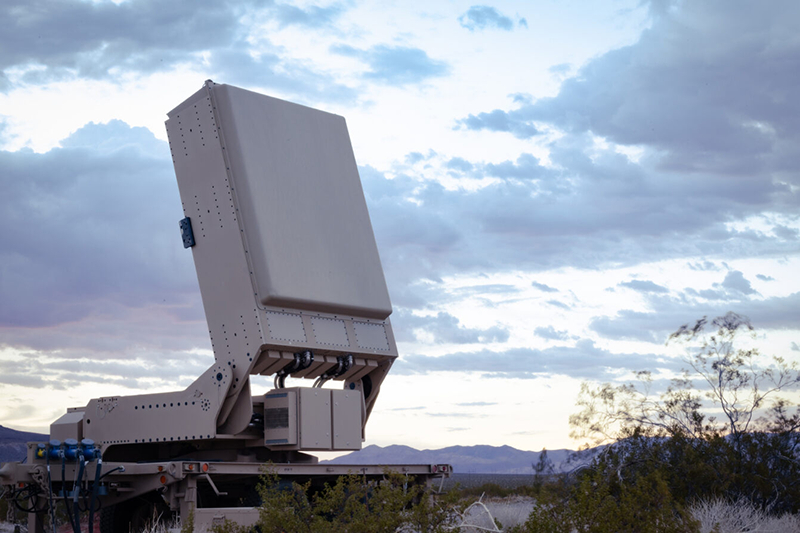
Epirus’ Leonidas counter-unmanned aircraft system. (CREDIT: Epirus)

By Vicky Uhland, Seapower Correspondent 

In a warfighting world increasingly focused on swarming, uncoordinated unmanned systems across both air and sea, there’s a need for defense approaches that are effective against all types of electronic threats. 

Epirus (Booth 346) is demonstrating its Leonidas Electronic Protection counter-UAS systems, which use a high-power microwave platform that’s built for the Sixth Domain — a battlespace that relies on robotic and autonomous electronic threats that can overwhelm legacy warfighting defenses.  

“Leonidas goes beyond drone threats and targets anything with electronics that’s vulnerable to a microwave pulse,” said Andrew Wargofchik, Epirus’ director of marketing and communications. 

Leonidas’s scalable systems range in size from inches to feet and can defend borders, fixed installations and critical infrastructure. They offer mobile coverage for convoys and expeditionary forces, and integrate directly into vehicles and aerial systems and across ship classes.    

Leonidas’ microwave technology uses line-replicable amplifier modules (LRAM), tailored to fit different mission profiles and range requirements. They operate off a small generator or internal batteries and never need a recharge, and have unlimited magazine depth. In addition, Wargofchik said Leonidas systems need only one or two operators and because innovations can be made through software updates, the hardware doesn’t have to leave the battlefield.   


Department of the Navy Releases FY27 Budget Request

From the Department of the Navy, April 21, 2026 

WASHINGTON, D.C. – The Department of the Navy released their Fiscal Year (FY) 2027 President’s Budget request today focused on restoring American maritime dominance with a total Navy topline of $377.5B, an increase of more than $70.B compared to last year. This generational investment in our future fleet represents a 23% growth over the previous fiscal year and signals a clear commitment to the Golden Fleet Initiative, modernization and readiness.   

ShapeThe budget request is part of President Trump’s historic $1.5T topline provided for national defense submitted to Congress on April 3, that ensures the United States is able to maintain the world’s most powerful and lethal naval force. 

“This is a strategy-driven budget,” said Secretary of the Navy John Phelan. “It’s not about business as usual – it’s about making generational investments in real, usable capability for our warfighters.” 

This year’s budget submission was guided by Secretary of the Navy John Phelan’s priorities: strengthening shipbuilding and the maritime industrial base; fostering a more adaptive, accountable, and innovative warfighter culture; and investing in the health, welfare and training of our people. The submission was also guided by Chief of Naval Operations Adm. Daryl Caudle’s Fighting Instructions and the Commandant of the Marine Corps Gen. Eric Smith’s Force Design Strategy. 

This budget request will launch a new age of American shipbuilding, bolster munitions supplies, enhance operational strength, sustain the force, and improve the health, welfare and training of our people and their families. 

“This is the money that builds the future fleet,” said Deputy Assistant Secretary of the Navy for Budget Rear Adm. Ben Reynolds. “It funds the acquisition of 34 new ships and 123 new aircraft, directly translating dollars into the steel and systems that will guarantee our maritime dominance for decades to come.” 

To usher in America’s Golden Fleet Initiative, the Department of the Navy is requesting $65.8 billion in shipbuilding funds to buy 18 battle force ships and 16 auxiliary ships. This funding will allow the Navy to purchase one Columbia-class submarine, two Virginia-class submarines, one FF(X) Frigate, one Arleigh Burke-class Destroyer, one America-class Amphibious Assault ship, one San Antonio-class Amphibious Transport Dock, six Medium Landing Ships, two John Lewis-class Oiler Tankers, two Submarine Tender Replacements, and one Ocean Surveillance Ship. The request also continues incremental funding for the third Ford-class carrier, CVN 80, and fourth Ford-class carrier, CVN 81. This request will also support the design and development of the Navy’s premier large surface combatant, the BB(X) Battleship. 

For aircraft procurement, the Department’s request of $34.4B billion supports the purchase of 123 aircraft, including 47 F-35s, 12 P-8As, 6 E-2Ds, 22 CH-53Ks, 3 MQ-25s, 5 MQ-9As, as well as modification, spares, and support equipment. This request doubles F-35 procurement and accelerates aircraft procurement to ensure a robust industrial base. 

The weapons procurement request of $22.6 billion includes significant investments in a variety of munitions including Standard Missiles, Tactical Tomahawk Missiles, and Patriot PAC-3s. 

The ground procurement request for the Marine Corps for $6.3B supports units across the Fleet Marine Force, investing in key warfighting capabilities including 32 Navy/Marine Expeditionary Ship Interdiction System (NMESIS) Launchers and 103 Naval Strike Missiles (NSM) that enhance precision fires capabilities and contribute meaningfully to the joint kill chain. The request also invests in ground based air defense, supporting 42 Marine Air Defense Integrated Systems (MADIS) and 16 Medium Range Intercept Capability (MRIC) systems along with 410 missiles that enable Marines to maneuver and operate under complex aerial threat conditions. 

“This budget significantly enhances our ability to be a globally responsive, resilient, and lethal naval expeditionary force in readiness,” said Gen. Smith. “It delivers much-needed investment in amphibious warships and medium landing ships, strengthens our aviation combat element, increases our magazine depth, and takes care of our strategic advantage, our Marines. Together, these investments ensure we are ready to fight today and modernizing to meet the demands of the future fight.” 

Fostering a More Adaptive, Accountable, and Innovative Warfighter Culture 

The budget request invests smartly in our capabilities – acquiring the new FF(X) frigate to take-on lower priority missions and freeing up our advanced destroyers for high-end combat. Additionally, we are investing heavily in unmanned platforms to provide a strategic hedge and multiply our force. We are making key investments in the Golden Fleet Initiative that will revitalize America’s maritime industrial base and restore American maritime dominance. 

The Department of the Navy includes a $150B request for operations and maintenance, emphasizing our desire to drive platform readiness towards an 80% combat surge ready posture by reducing maintenance delays and applying a disciplined focus across manning, training, modernization and sustainment. This investment supports training, deployment costs and flying hours to ensure our Sailors and Marines remain the most lethal force in the world. 

Ensuring the United States maintains the world’s most innovative and capable military, the Department of Navy is investing $36.2B in research and development. The Department will continue to focus on a major modernization effort across the force, from strategic deterrence recapitalization to air and surface warfare posturing to counter emerging threats and maintain our decisive edge 

“The FY27 budget request is a definitive order to shift our Navy from a peacetime posture to a warfighting footing,” said Caudle. “Operationalizing the Foundry, Fleet and Fight framework, we are ensuring our Sailors have the lethal platforms and the delegated autonomy they need to win decisively. We are not just observing the security environment; we are actively shaping it with credible tailored forces to ensure peace through strength.” 

Investing in the Health, Welfare and Training of our People 

Our greatest asset continues to be the extraordinary men and women of our United States Navy, Marine Corps and civilian workforce. This budget request dedicates $70.1B to military personnel, funding an overall military end strength of 621,500 Sailors and Marines, and dedicating $2.5B to enhance the quality of life for our Sailors and Marines so that they can continue providing the expeditionary force necessary to promote and protect America’s interests at home and abroad. The Department of the Navy is taking direct action to improve unaccompanied housing, deliver healthier and more accessible dining, and expand child and youth programs. 

To view the proposed FY27 DoN budget documents, visit: https://www.secnav.navy.mil/fmc/Pages/Fiscal-Year-2027.aspx 

Media may direct further queries to the U.S. Navy Office of 


FRCSW Produces First Organic Super Hornet to Undergo Block III Modifications

From Fleet Readiness Center Southwest, April 21, 2026 

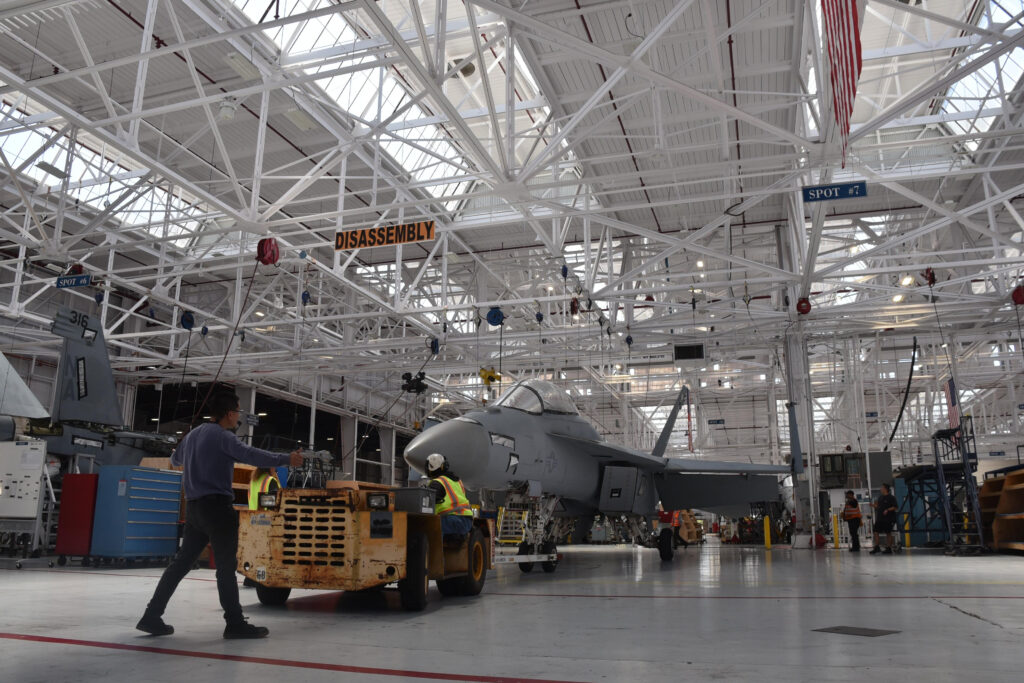
SAN DIEGO — At Fleet Readiness Center Southwest (FRCSW), innovation is not a buzzword, it’s a daily commitment to the warfighter. That commitment reached an historic milestone with the command’s completion of its first fully organic F/A-18 Super Hornet Block III modification. For the first time, U.S. military artisans and engineers executed the complete upgrade in-house, marking a pivotal step forward in naval aviation readiness. 

This achievement represents more than technical success. It is the culmination of deliberate planning, disciplined execution, and the relentless professionalism of FRCSW’s workforce and partners. 

The Block III modification is the third and most advanced phase of the Service Life Modification (SLM) effort for the Super Hornet fleet. FRCSW and its partners approached this modernization in three phases: 

  • Structural Service Life Extension – Expanding aircraft life from 6,000 to 10,000 flight hours. 

  • Block III upgrades to deliver network and mission enhancements. 

  • Block III Advanced Cockpit System (ACS) and comprehensive avionics modernization. 

This phased approach allowed FRCSW artisans and engineers to refine processes, sequence work efficiently, and reduce cost and turnaround time (TAT). 

The Block III effort is embedded within the broader SLM program pioneered by FRCSW and Boeing. 

The Block III configuration includes significant upgrades including: 

  • Advanced Cockpit System (ACS) installation 

  • A new large-area cockpit display 

  • Comprehensive avionics suite upgrades 

  • Enhanced aircraft networking capability 

  • Electrical system modernization to support upgraded systems 

The ACS fundamentally transforms the cockpit. Aircraft that once relied on older display technology are now equipped with modern, user-friendly large screen interfaces. This upgrade allows pilots to fully leverage the aircraft’s enhanced capabilities, bringing this fourth-generation platform significantly closer to fifth-generation performance at a fraction of the cost. 

The modification does not extend the physical life of the aircraft, that is the purpose of the structural SLM, but it ensures the avionics and mission systems remain tactically relevant for the aircraft’s service life. Together, structural SLM and Block III modernization form a comprehensive life-extension and capability-enhancement strategy that ensure the Super Hornet will remain a key component of the Navy’s carrier air wing well into the 2040s. 

The Block III modification is one of the most complex avionics upgrades undertaken at FRCSW in over a decade. 

The process essentially guts the cockpit: 

  • Removal and replacement of structural components 

  • Extraction and reinstallation of wiring and fiber optics 

  • Installation of new displays and interface systems 

  • Electrical upgrades to support modern avionics 

The governing Technical Directive (TD) is more than 350 pages long and provides extremely specific instructions, down to how wiring and fiber optics must be routed and secured. FRCSW artisans and engineers work closely with Boeing engineers to ensure every step meets current safety and quality standards. 

As aircraft are disassembled, teams frequently discover unplanned issues, corrosion, worn wiring, or legacy damage that must be corrected before modernization can proceed. This adds layers of complexity to an already intricate effort and highlights the need for, and success of, the command partnerships with Boeing and F/A-18 and EA-18G Program Office (PMA-265). 

One hurdle the team had to overcome in this effort was that multiple trades must operate in tight cockpit spaces: 

  • Avionics technicians 

  • Sheet metal mechanics 

  • Ordnance specialists 

  • Engineers and quality assurance personnel 

Thus, sequencing becomes a carefully choreographed process. One team’s delay affects all others. Planning is everything. 

Any new process at FRCSW must meet the same uncompromising safety and quality standards as legacy programs. The command’s award-winning safety culture underpins every evolution. That culture was recently recognized with the CNO Aviation Safety Award: 
https://www.dvidshub.net/news/495142/frcsw-wins-cno-aviation-safety-award 

For 3 years, FRCSW has successfully executed structural SLM repairs. Now, with full Block III capability added to its portfolio, the command has evolved into a complete modernization hub for the Super Hornet fleet. 

With a current turnaround time of approximately 365 days, reduced from an originally projected 15 months, the command has already exceeded expectations and cost performance has been equally impressive coming in well under budget, all while maintaining strict adherence to safety and quality standards. 

Looking ahead, all fleet squadrons are transitioning to full Block III configuration thus this workload will continue well into the 2030’s. 

While this milestone represents the first fully organic execution of the modification, it is not accomplished in isolation. FRCSW collaborates closely with PMA-265, which oversees F/A-18 programs, and maintains coordination with Boeing during TD validation and engineering alignment. 

The true strength of this program lies in integration, engineering, logistics, supply, manufacturing, quality assurance, and production operating as a unified team across the command and the COMFRC enterprise. 

This is not simply maintenance. It is modernization. It is capability generation. It is combat readiness built by American hands. FRCSW employees have supported naval aviation for more than a century. From early aviation maintenance efforts to today’s advanced Super Hornet and Growler modernization programs, the workforce has consistently delivered. 

Integrating structural life extension with full avionics transformation, FRCSW has ensured that the F/A-18 Super Hornet remains lethal, relevant, and deployable well into the future. 


Ship Welding Goes to the Dogs

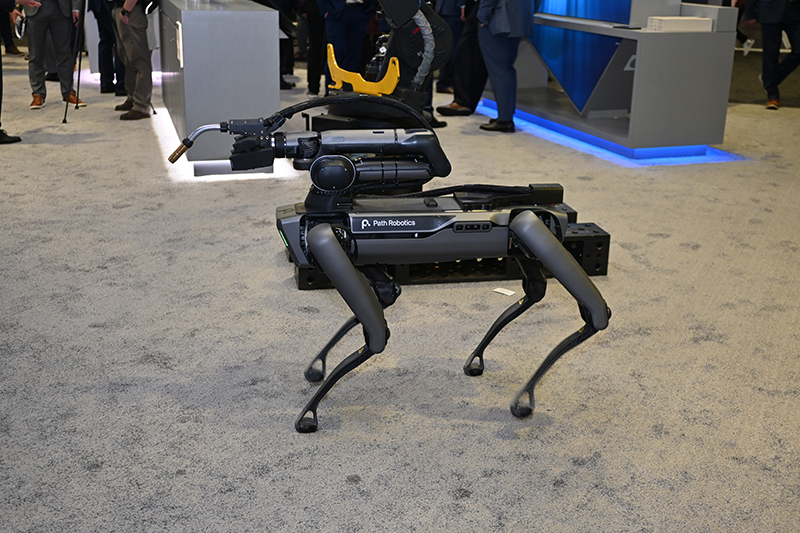
Path Robotics’ Rove robotic welding system, seen here visiting the booth of partner company HII. Credit: Brett Davis

By Vicky Uhland, Seapower Correspondent 

Welding is a challenge in shipbuilding. There’s a critical shortage of skilled welders, and massive ship assemblies, inconsistent fit-up stages and large metal pieces that can’t be moved make it difficult to automate welding processes.  

Enter Rove, a quadruped robotic welding system the size of a standard poodle.  

Rove is produced by Path Robotics, which specializes in artificial intelligence for manufacturing. Path Robotics’ AI program Obsidian delivers autonomous welding inside cells, and Rove takes that one step further, bringing Obsidian into the field. In essence, Rove comes to the ship rather than the ship coming to Rove.   

Legged robots aren’t a new concept in welding, but they’ve traditionally been considered too unstable for precision welding. Obsidian gives Rove the ability to maneuver successfully in high-variability environments like shipbuilding.  

Rove, which has a welding torch attached to its head, uses cameras and AI to scan a ship and identify where welds are needed. It can evaluate uneven terrain, climb around large ships and reach remote weld points that humans may have difficulty accessing. Path Robotics says Rove can weld with consistent quality, even when metal parts aren’t perfectly aligned.  

Saronic Technologies, which manufactures autonomous maritime vessels, is one of the first companies to use Rove.  

“Building the next generation of autonomous vessels means rethinking not just how ships operate, but also how they’re made,” John Morgan, Saronic’s head of manufacturing, said in a press release from Path Robotics.  

To see a demonstration of Rove, visit the Path Robotics booth, T76 in the Terrace Exhibits area.   


Australia, Canada, and U.S. conduct multilateral operations in South China Sea 

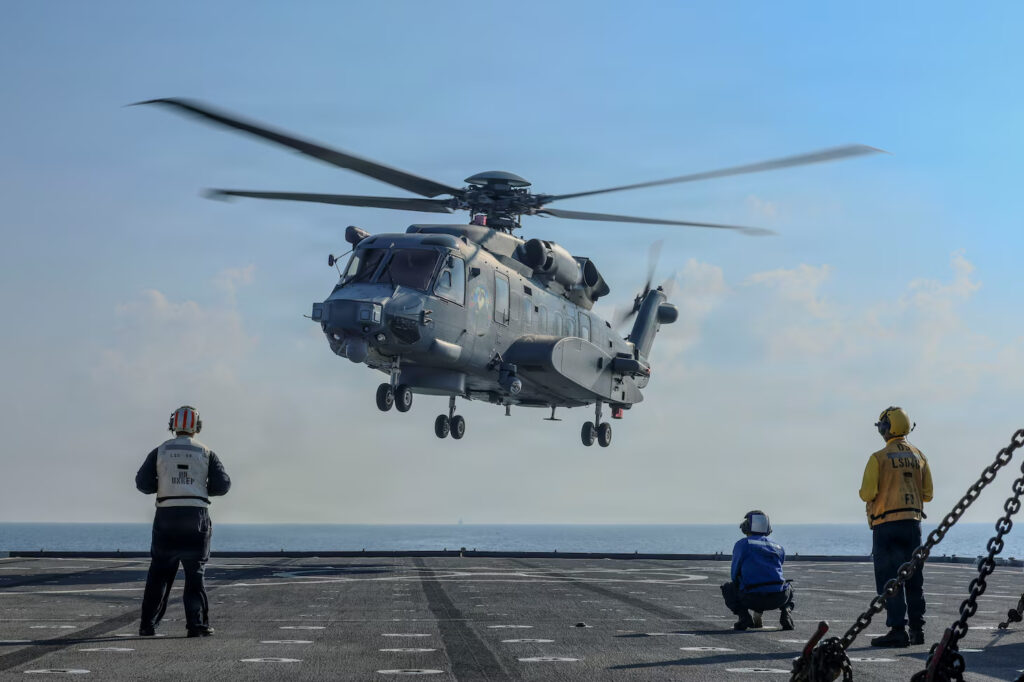
A Royal Canadian Air Force Super Puma assigned to Royal Canadian Navy Halifax-class frigate HMCS Charlottetown (FFH 339) prepares to land on the flight deck of U.S. Navy Whidbey Island-class dock landing ship USS Ashland (LSD 48) during a multilateral exercise with the Royal Australian Navy and Royal Canadian Armed Forces in the South China Sea, April 18, 2026. (U.S. Navy photo by Mass Communication Specialist Seaman Maliq J. Martin) 

By CTF-76 Public Affairs, April 20, 2026 

SOUTH CHINA SEA   –  Ships from the Royal Australian Navy, Royal Canadian Armed Forces, and U.S. Navy conducted multilateral operations in support of a free and open Indo-Pacific in the South China Sea, April 12-18. 
  
Participants included Royal Australian Navy Anzac-class frigate HMAS Toowoomba (FFH 156), Royal Canadian Air Force Super Puma helicopter, Royal Canadian Navy Halifax-class frigate HMCS Charlottetown (FFH 339), and U.S. Navy Whidbey Island-class amphibious dock landing ship USS Ashland (LSD 48) with embarked Marines from Task Force Ashland. 
  
During the exercise, ships conducted tactical maneuvers, helicopter cross-decks, and personnel exchange during the combined transit through the South China Sea. 
  
“We embrace any chance to engage with our allies and friends in the region to learn from each other and build upon our strong relationships,” said Cmdr. Adam Peeples, commanding officer of Ashland. “These exercises provide an opportunity to increase interoperability, information-sharing, and access with our allies and partners across the globe. The Sailors and Marines of Task Force Ashland are dedicated to supporting regional security and committed to ensuring a free and open Indo-Pacific.” 
  
This operation builds on numerous other engagements, such as Exercise Rim of the Pacific (RIMPAC) 2024, where the three U.S. allies were part of 29 nations training to foster and sustain cooperative relationships among participants critical to ensuring the safety of sea lanes and security on the world’s oceans.   
  
Multilateral operations such as this provide valuable opportunities to improve combined readiness and promote peace and stability in the Indo-Pacific. The U.S. Navy regularly operates alongside our allies in the Indo-Pacific region as a demonstration of our shared long-term commitment to the region. 
  
Ashland and embarked Marines from Task Force Ashland are a flexible crisis response force, purpose-built to integrate with allies and partners in support of a free and open Indo-Pacific. Their forward deployment to U.S. 7th Fleet demonstrates the unwavering U.S. commitment to regional security and stability. 
  
U.S. 7th Fleet, the U.S. Navy’s largest forward-deployed numbered fleet, routinely interacts and operates with allies and partners in preserving a free and open Indo-Pacific. 


Kaine Discusses AUKUS Agreement During SASC Hearing 

From the Office of Senator Tim Kaine, D-Virginia, April 21, 2026 

WASHINGTON — Today, during a Senate Armed Services Committee (SASC) hearing on U.S. posture in the Indo-Pacific, U.S. Senator Tim Kaine (D-VA) asked Admiral Samuel J. Paparo, Jr., USN, Commander of United States Indo-Pacific Command (INDOPACOM), about the progress of the Australia-U.K.-U.S. (AUKUS) agreement. 

“I was in Australia recently … 37 events in seven days in four cities,” said Kaine. “I heard a lot. Answered some tough questions on our end. And I was impressed, but I wonder – are you satisfied with the pace of upgrades to [HMAS] Stirling that could support the increased rotational presence of Virginia-class submarines?”   

Admiral Paparo responded, “From a shore power standpoint and for the capability that they have, with a tender and Marine Security Detachment, we could move submarines to Stirling today. That’s been the progress at Stirling. I laid eyes on it multiple times. The commitment is there. The progress is there. The place where we have to make the most progress is in the defense industrial base to deliver the capability, but our partners in Australia [and the] U.K. through Pillar One and Two … has been full throttle. It’s now as much up to industry as anyone else to deliver.”  

During the hearing, Kaine also discussed today’s announcement that the Japanese government will allow the sale of more weapons abroad and the benefits to U.S. defense agreements with Japan and security in the Indo-Pacific.  

Full video of the exchange is available here. 

Kaine, who is Ranking Member of the SASC Subcommittee on Seapower and also a member of the Senate Foreign Relations Committee (SFRC), has been a strong champion of AUKUS in Congress. In February, Kaine held a series of bilateral meetings with Australian local, state, and federal lawmakers and defense industrial base partners in Sydney, Adelaide, Perth, and Darwin to discuss the AUKUS partnership. Kaine has helped get signed into law provisions to implement and strengthen the AUKUS agreement. He has played a key role in securing more resources for the submarine industrial base, including additional funding for the Virginia-class submarine program


Leidos, HavocAI Join Forces to Advance UAV Interoperability Across Domains

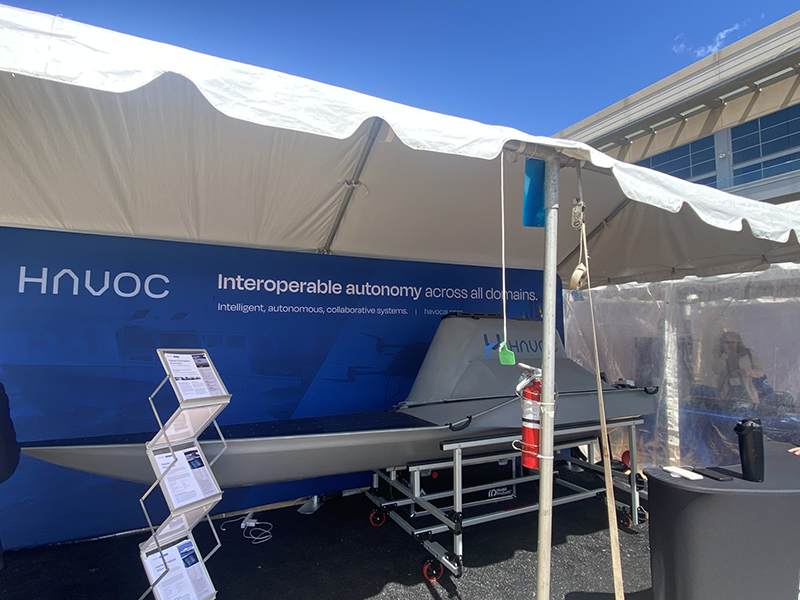
One of HavocAI’s USVs, displayed on the Gaylord Pier. Credit: Erika Fitzpatrick. 

By Erika Fitzpatrick, Seapower Correspondent 

Leidos (Booth 1125)and HavocAI (D 17) have teamed to test a new fleet of autonomous uncrewed surface vehicles that offer unique capabilities in multidomain environments, company leaders said April 20 at Sea-Air-Space 2026. 

“Warfare is changing rapidly,” said Cindy Gruensfelder, president of Leidos Defense, a global defense contractor with 9,000 employees. “It’s really requiring systems to connect together even more than normal and collaborate across all domains.” 

She noted that the Navy can best deploy USVs that are integrated within a larger ecosystem that enables real-time collaboration with greater reach. She said the new partnership pairs Leidos’s proven autonomy at scale with HavocAI’s “all-domain collaborative autonomy” to deliver the Navy autonomy at speed and scale. 

The defense sector has dived headlong into the USV space in the hopes of securing some of the billions of dollars the military is expected to allocate for small, medium, and large USVs in the coming years.  

The Navy’s 2025 shipbuilding plan calls for spending $40 billion per year to create a 381-ship battle force by 2054, about 85 more ships than it has now, and an additional 130 unmanned surface and undersea vessels. This combined fleet would result in a “more lethal and distributed naval force,” the Navy has said. 

To expand access to innovation, more traditional defense firms like Leidos are pairing with upstart players such as HavocAI, a Providence, Rhode Island-based aerospace and defense company founded in 2024. 

HavocAI specializes in collaborative autonomy, CEO and cofounder Paul Lwins said at the event.  

“What that means is making thousands of autonomous systems work together and work with the humans to do very sophisticated things,” Lwin said.  

So far, Lwin said, HavocAI’s 100 or so USVs have shown they can work together. The company also acquired an aerial drone company to integrate those types of systems with autonomous surface vessels.  

This fall, the Leidos-HavocAI team will conduct an on-the-water operational evaluation of about 10 UAVs at disparate locations. The test aim to prove the hybrid vessels are interoperable at sea, undersea and in the air, across far-flung locations. 


CH-53K lifts CH-53K expanding capabilities 

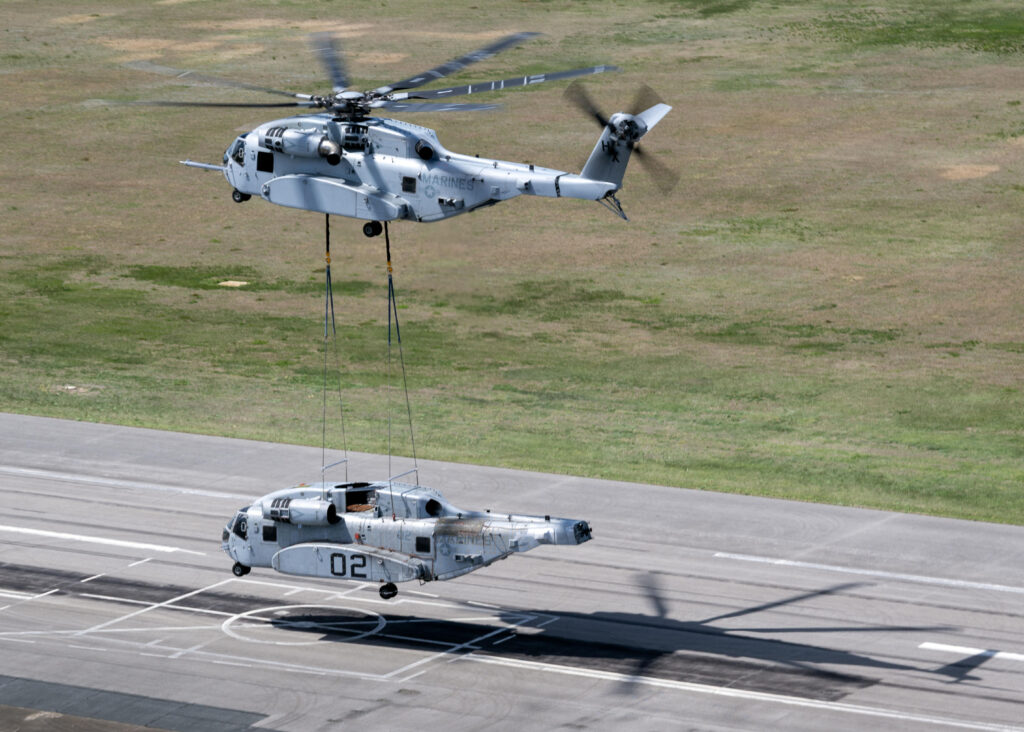
A CH-53K from Air Test and Evaluation Squadron 21 (HX-21) performs a recovery rigging evaluation of a CH-53K Engineering Development Model without engines, most gearboxes and tail pylon. This expansion of the aircraft’s capabilities, including understanding the flight characteristics and load dynamics in such a heavy lift, ensures the Marine Corps can safely execute a Tactical Recovery of Aircraft and Personnel (TRAP) mission in the future. U.S. Navy Photo by Erik Hildebrandt.

From Naval Air Systems Command, Apr 20, 2026 

NAS PATUXENT RIVER, Md. — The CH-53K King Stallion helicopter, under the direction of H-53 Heavy Lift Helicopters Program Office (PMA-261), achieved a major milestone by successfully lifting another CH-53K King Stallion. The test, performed by Air Test and Evaluation Squadron 21 (HX-21), is part of the CH-53K aircraft recovery rigging evaluation and a critical step toward developing new operational capabilities and procedures for the CH-53K fleet. 

“This is a capability we hope will never be needed in the fleet,” said Col. Kate Fleeger, Program Manager, PMA-261. “However, the continued expansion of the aircraft’s capabilities ensures a faster response to emerging requirements and highlights its ability to perform.”    

The primary purpose of the evaluation was to validate the specialized rigging and procedures required to safely recover a downed or disabled CH-53K aircraft, a capability that is not yet standardized in the U.S. Navy’s official salvage manuals. During the test, the team aimed to understand the flight characteristics and load dynamics involved in such a heavy lift, ensuring that the Marine Corps can safely execute a Tactical Recovery of Aircraft and Personnel (TRAP) mission in the future. 

“The insights and data gathered from this test will directly inform updates to the Aircraft Salvage Operations manual, providing the fleet with standardized procedures for a dual-point external lift of a CH-53K,” said Fleeger. 

The lifted aircraft was an Engineering Development Model (EDM) used in the King Stallion program early years of test. The three engines, most gearboxes and the tail pylon were removed prior to the lift to reduce weight to approximately 28,000 lbs., still well within the CH-53K’s current external lift envelope of 36,000 lbs. The EDM will continue to serve the program as it will be transferred to Marine Heavy Helicopter Training Squadron 302 (HMHT-302), New River, North Carolina, where it will be used as a Ground Operations Aircrew Trainer, helping to educate and train the next generation of King Stallion aircrew and maintainers. 

This test underscores the remarkable lift capabilities of the CH-53K and highlights the innovative efforts of the CH-53 Test team at HX-21 to continuously evaluate new fleet capabilities. 

PMA-261 manages the cradle to grave procurement, development, support, fielding and disposal of the entire family of H-53 heavy lift helicopters.