Bollinger Shipyards and Edison Chouest Offshore Launch United Shipbuilding Alliance (USA)

USA has capacity to utilize any of its 19 strategically located shipyards and 14 fabrication facilities across Louisiana, Mississippi and Florida to optimize labor resources and accelerate project timelines 

USA responds to Arctic Security Cutter RFI with a 33-month contract award-to-delivery timeline utilizing a commercial vessel construction for national security purpose model 

WASHINGTON, D.C. – [May 6, 2025] – Bollinger Shipyards, the largest privately-owned and operated shipbuilder and vessel repair company in the United States, and Edison Chouest Offshore (ECO), a global leader in advanced commercial vessel construction and operation, today announced the formation of a strategic partnership called United Shipbuilding Alliance (USA).  

This partnership is designed to offer a fully integrated solution to expedited design, construction, and delivery of next-generation icebreakers to directly meet the urgent Arctic operational needs. USA recently responded to the U.S. Coast Guard’s April 11th Request for Information titled, “Arctic Security Cutter (ASC): Icebreaking Capable Vessels or Vessel Designs that are Ready for Construction,” outlining the utilization of a commercial vessel for national security purposes acquisition process that spans 33 months from contract award to delivery.    

The viability and effectiveness of commercial vessel construction for national security purposes have been firmly demonstrated through the recent acquisition of the USCGC STORIS (WAGB-21) [ex – M/V AIVIQ]. The STORIS is an American-built icebreaker designed for Arctic conditions and delivered in under three years.  

The proposed commercial acquisition method will save U.S. taxpayers more than 40% by reducing and eliminating excess program bloat, government vendor source selection mandates, and redundant bureaucratic reporting mandates.  The streamlined approach enables agile execution, smart vendor selection, and the flexibility to shift work across multiple facilities, ensuring projects stay on schedule, minimize disruption, and remain on budget. Programs benefit from stable, contract-driven workforces and flexible timelines, with the ability to shift work across multiple facilities to stay on schedule and control costs. In contrast, government acquisition often suffers from regulatory delays, rigid change management, and increased costs.  

“If the mission demands speed, efficiency, and innovation, the answer is clear, let American industry lead,” said Ben Bordelon, President and CEO of Bollinger Shipyards. “The formation of the United Shipbuilding Alliance comes at a pivotal moment and answers President Trump’s call to action in making American Shipbuilding Great Again. I am excited by President Trump’s efforts to reinvigorate America’s shipyards. Through his leadership, he has reignited demand, sparked competition, and challenged American industry to rise to the occasion with urgency and creativity.”  

“The creation of the United Shipbuilding Alliance represents a significant evolution in America’s capacity to rapidly address urgent Arctic operational requirements,” said Gary Chouest, President and CEO of Edison Chouest Offshore. “Our collaboration underscores a dedicated commitment to ensuring America retains a decisive edge in maritime capabilities and enhancing national security within the increasingly strategic Arctic region.” 

USA will leverage the combined 144 years of expertise and capacity of Bollinger and ECO’s 6,000-plus skilled American workers across their 33 operational shipyards and fabrication facilities across the Gulf of America to rapidly design, build, and deliver icebreakers for commercial and government customers. Between the two American companies, they have built and delivered four icebreakers in the last three decades, and Bollinger is currently constructing the Polar Security Cutter (PSC) program for the U.S. Coast Guard.  

Bollinger took over the struggling PSC program in late 2022 when it acquired Singapored-owned VT Halter, which had amassed more than a quarter billion dollars in losses over the first three years of the program. Last week, Bollinger announced it has received approval from the U.S. Coast Guard to begin full production activities on the PSC program, underscoring the confidence the U.S. Government places in Bollinger to deliver the nation’s first heavy polar icebreaker in nearly fifty years. Bollinger has delivered over 180 vessels for the U.S. Coast Guard in its more than 40 years of building for the U.S. government.  

Bordelon continued, “It is critically important that any vessel transporting U.S. servicemembers and projecting American power abroad be built here in the United States. The United Shipbuilding Alliance is proof that American industry can and will deliver faster, better, and more cost-effectively, by aligning commercial innovation with national security priorities. Together with our partners at Edison Chouest Offshore, we’re leveraging our combined experience, infrastructure, and skilled American workforce to give the United States the tools it needs to lead in the Arctic.”  

The U.S. government has demonstrated a clear need for growing, strengthening and accelerating America’s Arctic operational capabilities. Emphasizing innovation, fiscal responsibility, and efficiency, USA will leverage the speed and advanced maritime engineering, naval architects, and designer techniques of commercial construction to streamline the procurement of each vessel, significantly expediting production schedules, and achieving substantial cost efficiencies, benefiting both government needs and taxpayers. 

About United Shipbuilding Alliance 

United Shipbuilding Alliance (USA) is a teaming agreement between Bollinger Shipyards and Edison Chouest Offshore, combining over 140 years of government and commercial maritime construction experience, during which they have constructed and delivered over 4,000 vessels. The alliance is specifically organized to rapidly design, build and deliver advanced, mission-critical icebreaking vessels, directly addressing operational needs and enhancing strategic national capabilities of the United States in Arctic waters. Together, Bollinger and ECO have 33 operational shipyard and fabrication facilities.  

About Bollinger Shipyards 

With an 80-year legacy of excellence, Bollinger Shipyards is a leading designer and builder of high-performance military patrol boats, salvage vessels, research vessels, and a wide array of specialized maritime assets. With 13 strategically located shipyards and 22 dry-docks across Louisiana and Mississippi, Bollinger is the largest privately-owned shipbuilder in the Gulf of America region, dedicated to innovation and the highest standards of quality in shipbuilding. 

About Edison Chouest Offshore 

Founded in 1960, Edison Chouest Offshore (ECO) is recognized as one of the most diverse and dynamic marine transportation solution providers and commercial shipbuilders in the world. ECO operates a global fleet of nearly 300 vessels, including some of the most technically advanced ships serving the offshore, research, and national security sectors. With capabilities spanning vessel design, new construction, port operations, and subsea services, ECO maintains shipyards, fabrication facilities, and port terminals throughout the Americas. ECO continues to be an innovative leader in new technologies, integrated bridge systems, and global vessel monitoring technologies. 


EOS Awarded Laser Powder Bed Fusion Training Contract by U.S. Navy

The U.S. Navy’s Maritime Industrial Base (MIB) Program, in partnership with BlueForge Alliance, has funded the EOS Additive Minds Academy to train the MIB suppliers in laser powder bed fusion (LPBF) process chain to strengthen the industrial 3D printing workforce 

MIB suppliers will participate in hands-on and online Additive Minds Academy courses, designed to equip users with critical skills in additive manufacturing 

From EOS  

NOVI, Michigan, May 7, 2025 – EOS, a leading supplier of additive manufacturing (AM) solutions for industrial 3D printing, today announced a contract to support the U.S. Navy’s Maritime Industrial Base initiative to provide end-to-end LPBF process training for MIB suppliers. The initiative aims to strengthen AM efficiency and bridge the maritime AM education and workforce gap. 

Beginning in May 2025, the training program will take place at the Additive Minds Academy Center in Novi, Michigan, and combines online coursework with hands-on experience to equip MIB suppliers with critical skills in AM software, LPBF system operation, and ASTM machine certifications free of charge. 

“This program helps the U.S. Navy offer suppliers skilled personnel trained in new technologies like laser powder bed fusion, which will enable us to quickly fill critical component gaps that our traditional manufacturing base can’t provide in a timely fashion,” according to Dr. Justin Rettaliata, MIB Program Additive Manufacturing Lead. “Through initiatives like this, the MIB Program is advancing more agile and responsive manufacturing technologies in the U.S. Navy’s supply chain to quickly produce parts.” 

The initiative aims to strengthen AM efficiency and bridge the maritime AM education and workforce development gap. All courses will be led by EOS and ASTM certified Additive Minds Academy trainers, and upon completion, participants will earn industry-recognized certifications for metal AM data preparation and metal machine operation, certified by ASTM. 

The EOS Additive Minds Academy training courses include: 

  • Data Preparation Metal Certification 

  • Metal LPBF System Operator Training 

  • ASTM Machine Operator Certification  

“In recent years, the imperative for faster, more adaptable manufacturing processes to meet the U.S. Navy’s production objectives has become increasingly evident,” said Fabian Alefeld, Director of Business Development and Additive Minds Academy at EOS. “Bridging this manufacturing gap demands innovative thinking, advanced technologies, and – most critically, a skilled workforce equipped to leverage these new tools effectively. We are honored to provide the training and education essential for the MIB and the U.S. Navy to successfully integrate additive manufacturing into their broader operational framework.” 


Rite-Solutions Awarded $234M SBIR Phase III Contract for Combat Systems of the Future  

From Rite Solutions 

MIDDLETOWN, R.I. (May 6, 2025)—On May 1st, the Naval Sea Systems Command (NAVSEA) awarded a 5-year, SBIR Phase III contract to Rite-Solutions. This $243M contract — the largest in the history of the company — will enable Rite-Solutions to provide innovative solutions in systems and software engineering that are geared towards maximizing the effectiveness and suitability of future combat system while reducing risk and total cost. 

“This contract award is one of the most significant achievements in the history of our company,” said CEO and Co-Founder Joe Marino. “We are extremely excited to be able to bring our innovation and energy to the next evolution of combat systems.” Co-Founders and Board members Jim and Linda Lavoie agree, stating that “this contract, resulting from the hard work and excellent support of our workforce, solidifies our place as a significant contributor to the advancement of our Undersea Warfare capabilities.” 

The goals of the CSoF initiative include (1) improving mission effectiveness while achieving optimal manning levels and reducing total life-cycle costs; (2) inserting new functionality and capability for current and future ship platform and combat systems improvements in both organic and off-hull systems; and (3) leveraging systems engineering to develop cost-effective improvements in the lab environment for modeling, simulation, test and integration. Efforts will be focused on new submarine platforms, including but not limited to the Next-Generation Attack Submarine (SSN(X)), to support technology innovations and improvements, acquisition, research and development, design, specification development, and test and evaluation. 

“This is a big win for Rite-Solutions and our many talented industry partners,” said Laurie Carter, Executive Vice President for Business Development and CSoF Capture Manager. “We are eager to get started – bringing our innovative mindset to the goal of building a more efficient, flexible and adaptable combat system.” 

Execution of tasking under the CSoF contract will be managed by Mike Miller, CSoF Director and Program Manager, who will be responsible for coordinating the efforts of Rite-Solutions and nearly 20 industry partners. 


SECDEF Directs Flag and General Billet Reductions

From the Department of Defense, May 5, 2025  

ARLINGTON, Va. — The following memorandum was issued by Defense Secretary Pete Hegseth: 

MEMORANDUM FOR SENIOR PENTAGON LEADERSHIP SUBJECT:  

General/Flag Officer Reductions  

The Department of Defense is committed to ensuring the lethality of U.S. Military Forces to deter threats and, when necessary, achieve decisive victory. To accomplish this mission, we must cultivate exceptional senior leaders who drive innovation and operational excellence, unencumbered by unnecessary bureaucratic layers that hinder their growth and effectiveness.  

A critical step in this process is removing redundant force structure to optimize and streamline leadership by reducing excess general and flag officer positions.  

Therefore, I direct the following actions:  

• A minimum 20% reduction of 4-star positions across the Active Component;  

• A minimum 20% reduction of general officers in the National Guard; and  

• An additional minimum 10% reduction in general and flag officers with the realignment of the Unified Command Plan.  

Through these measures, we will uphold our position as the most lethal fighting force in the world, achieving peace through strength and ensuring greater efficiency, innovation, and preparedness for any challenge that lies ahead. 


Interdisciplinary Engineering Major Now Offered at CGA

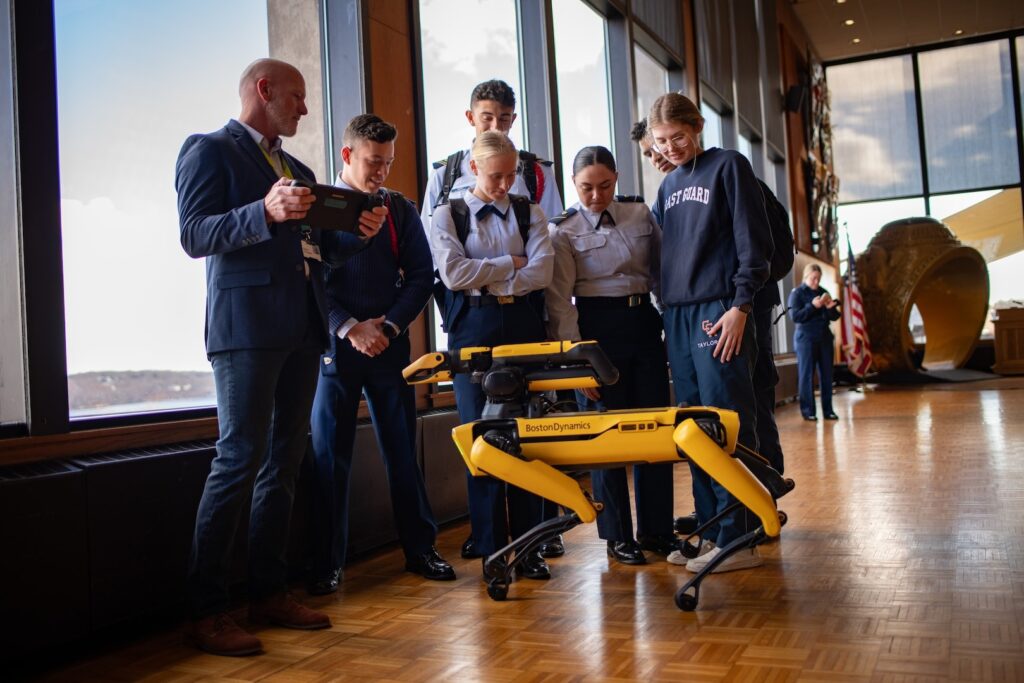
U.S. Coast Guard Academy (USCGA) cadets observe Boston Dynamic’s robot, Spot, controlled by a Massachusetts Institute of Technology (MIT) Lincoln Laboratory researcher (left) at USCGA, New London, Connecticut, Nov. 27, 2023. (Photo by U.S. Coast Guard Petty Officer Third Class Matthew Thieme.)

From the U.S. Coast Guard Academy, May 5, 2025 

NEW LONDON, Conn. — The U.S. Coast Guard Academy has launched a new academic major. Interdisciplinary Engineering (IDE) prepares future officers for careers across a wide spectrum of Coast Guard missions. IDE is open to cadets beginning with the Class of 2028. 

The new academic major advances an interdisciplinary approach to prepare cadets to serve in a wide variety of Coast Guard careers. Interdisciplinary Engineering students will be able to customize their plan of study to suit their interests and be well prepared to pursue a Professional Engineer license and graduate school in engineering or other disciplines. 

In addition to the core curriculum for all cadets, IDE students will complete required engineering, math, and science courses to meet accreditation criteria in ABET’s Engineering Accreditation Commission. The IDE curriculum also leaves room for a series of engineering and free electives, making it much more flexible compared with CGA’s other engineering programs.  This flexibility allows students to take courses in areas of interest related to Coast Guard missions and sub-disciplines.  Potential areas of focus include (but are not limited to): Aviation/Aerospace Engineering, Environmental Engineering, Marine Safety Engineering, Cybersecurity, Engineering Management, Industrial Engineering, Ocean Engineering, Power Systems & Control Engineering, and Systems Engineering. 

“The Interdisciplinary Engineering major equips cadets with the ability to tackle complex, real-world challenges that don’t fit neatly into a single discipline. By blending foundational engineering principles with systems thinking and innovation, our graduates will be uniquely prepared to support the Coast Guard’s evolving missions and lead in dynamic, mission-critical environments.” 

Housed in the School of Engineering and Cyber Systems, the IDE program will give cadets a hands-on educational experience. IDE students will have access to the Academy’s power lab, circulating water channel, wind tunnel, towing tank, 3-D printers, and other engineering lab facilities.  

The announcement of the new major comes after recent recognition from the Carnegie Foundation on the Academy’s second Carnegie Classification for continued leadership in providing high-impact, STEM-focused academic programs to prepare cadets for future service. 


USS Miguel Keith Completes Overhaul at MHI 

From U.S. Naval Ship Repair Facility Japan RMC (SRF-JRMC), May 2, 2025 

YOKOHAMA, KANAGAWA, Japan — The U.S. Navy’s Lewis B. Puller-class expeditionary mobile base USS Miguel Keith (ESB-5) completed a five-month Regular Overhaul (ROH) availability at Mitsubishi Heavy Industries (MHI), Yokohama, Japan, April 15, 2025. 

The ROH marks the first time a Japanese shipyard has bid on and won an ROH contract of this scale for a U.S. Navy Vessel. The ROH is much larger work vice voyage repairs (VRs), which have been conducted at the shipyard previously. 10 U.S.C. § 863 prohibits overhauling, repairing, or maintaining U.S. naval vessels in foreign-owned and operated shipyards outside the United States, except for VRs. Still, since the USS Miguel Keith’s availability was under 6 months and the ship was not due to return to the U.S. within 15 months, this statute did not apply. 
 
U.S. Ship Repair Facility and Regional Maintenance Center’s (SRF-JRMC) Singapore Detachment, which usually supports the ship’s maintenance availabilities, planned the $12 million project executed by MHI. During the availability, 56,000 square feet of nonskid decking was replaced on the flight deck and mission deck. In twenty-nine spaces, including the galley, scullery, laundry, and berthing areas, deck replacement and preservation were accomplished. Over 10,000 square feet of the forward deckhouse superstructure and MOGAS deck and associated equipment were also preserved. MHI also fabricated, welded, and replaced over 300 feet of flight deck catwalk safety handrails. Additionally, four galley ovens were replaced, and the entire exterior of the ship was painted bow to stern. 
 
This was the first ROH for the Singapore Detachment, according to Douglas Cabacungan, the Project Manager. “Usually, we provide shorter emergent and continuous maintenance repairs outside of Japan,” said Cabacungan. “So, we were able to expand our skill set, work outside of our comfort zone, and work with a contractor we normally do not work with which will pay dividends when we need to start operating in places we aren’t currently.” 
 
“The ability to use Mitsubishi Heavy Industry’s shipyard to conduct this level of maintenance availability has allowed SRF-JRMC’s organic workforce in Yokosuka to focus their efforts on the three other warship maintenance availabilities being conducted simultaneously,” said Capt. Wendel Penetrante, Commander of SRF-JRMC. “We were even able to complete one of those availabilities 3 days early and respond to two unplanned voyage repairs.” 
 
The USS Miguel Keith is a 240-meter-long vessel designed to be a customizable floating command base that can launch helicopters and small boats, provide living quarters for troops, and command-and-control facilities. Her large open decks can accommodate a variety of other capabilities, including berthing for special operations troops, laundry facilities, or cold storage. The ship has been operating in the U.S. 7th Fleet area of operations since September 2020 with a mixed crew of Sailors and civilian mariners from Military Sealift Command (MSC). 
 
For over 75-years, U.S. Naval Ship Repair Facility and Japan Regional Maintenance Center (SRF-JRMC) has been the linchpin of U.S. naval operations in the Indo-Pacific region, providing intermediate-level and depot-level repair for the ships of the U.S. Navy and the U.S. Seventh Fleet. 


Department of Defense Demonstrates Reusability of Hypersonic Test Vehicle

From the U.S. Department of Defense, May 5, 2025 

The U.S. Department of Defense Test Resource Management Center (TRMC), in partnership with Naval Surface Warfare Center Crane Division (NSWC Crane), conducted a second successful flight of a fully recoverable uncrewed hypersonic test vehicle in March 2025, within three months of the first test in December 2024. This test campaign marks the Nation’s first return to reusable hypersonic flight testing since the manned X-15 program ended in 1968. 

In both tests, the Stratolaunch Talon-A hypersonic vehicle launched from the Roc carrier aircraft, flew over the Pacific Ocean and achieved speeds greater than Mach 5 before landing at Vandenberg Space Force Base. The landmark tests supported the ongoing TRMC Multi-Service Advanced Capability Hypersonics Test Bed (MACH-TB) project. 

George Rumford, Director of the TRMC, stated, “Demonstrating the reuse of fully recoverable hypersonic test vehicles is an important milestone for MACH-TB. Lessons learned from this test campaign will help us reduce vehicle turnaround time from months down to weeks.” 

MACH-TB accelerates delivery of advanced hypersonic capabilities to the warfighter by providing DoD, other Federal agencies, industry, and academia the capability to affordably and rapidly conduct hypersonic experiments and test hypersonic system components. 

NSWC Crane awarded the MACH-TB contract to Leidos through the Strategic and Spectrum Missions Advanced Resilient Trusted Systems (S2MARTS) Other Transaction Authority (OTA) vehicle on behalf of the TRMC. As the prime contractor for MACH-TB, Leidos awarded Stratolaunch, LLC a competitive contract to provide flight test services for the program. 

About TRMC 

The U.S. Department of Defense Test Resource Management Center (TRMC) is a DoD Field Activity that reports directly to the Under Secretary of Defense for Research and Engineering within the Office of the Secretary of Defense. The mission of the TRMC is to ensure the readiness of DoD to experiment and test. 


Maritime Program Previews Talent Pipeline Program, Future of Maritime Careers 

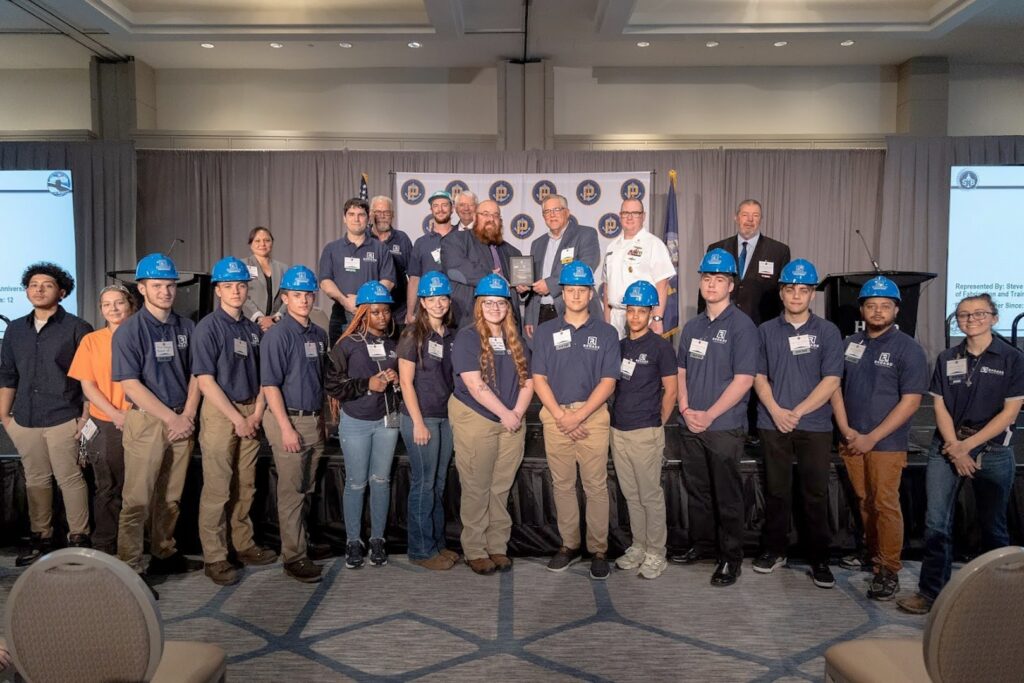
Matt Sermon, Direct Reporting Program Manager, Maritime Industrial Base Program, participates in the 2024 Philadelphia Signing Day event in June 2024. 

By Maritime Industrial Base Program, May 6, 2025 

WASHINGTON — Across shipyards and classrooms, welding booths and engineering labs, a new wave of talent prepares to step into critical roles shaping America’s defense future. 

In May and June, the U.S. Navy’s Talent Pipeline Program (TPP) will recognize the individuals, employers, and training partners driving this workforce initiative, kicking off the third year of a program now aligned under the Navy’s expanded Maritime Industrial Base (MIB) Program. 

The 2025 TPP Signing Day season begins this month with a series of regional celebrations hosted across seven pipelines serving key maritime hubs and national employers. These events will honor thousands of new hires entering the Defense Industrial Base and highlight the growing collaboration among local industry, academia, and Navy leadership. The season will culminate with a national Signing Day event in late June that will bring all regions together for a shared celebration of purpose and progress. 

The newest program, known as the Enterprise Plus pipeline, applies the same proven approach to companies that have a national presence and multiple facilities, which are suppliers located outside of one of the six regional pipelines. This addition ensures that TPP remains accessible to employers and workers across the country, regardless of geography. 

“This isn’t just a hiring effort,” said Matt Sermon, Direct Reporting Program Manager of the MIB Program. “The young men and women preparing to join this workforce are answering a national call. Each of them plays a role in securing the American way of life.” 

The TPP provides the training and tools needed to create and sustain a talent pipeline that empowers employers to recruit, hire, train and retain a skilled workforce. 

A Strategic Evolution: TPP Now part of the MIB Program 

The MIB Program leads the Navy’s effort to revitalize America’s shipbuilding and repair capabilities. Established in September 2024, it strengthens and expands the industrial base that builds and maintains surface ships, aircraft carriers, and submarines vital to national defense. 

Originally part of the Submarine Industrial Base (SIB) Program, TPP is now a cornerstone of the MIB Program’s workforce strategy. This realignment allows the program to expand beyond submarines to include careers tied to the full range of naval shipbuilding—opening new pathways for skilled tradespeople across the country. 

Six Regions, One Mission 

The 2025 regional Signing Day events will take place across six strategic locations: Virginia, two locations in Pennsylvania, Southern California, New York, and Massachusetts. Each site represents a unique collaboration among regional employers, workforce boards, academic institutions, and Navy partners, all focused on cultivating talent pipelines tailored to local industry needs. 

From first-time participants to returning employers, the momentum is strong. New training partners, expanded industry participation, and rising student interest point to a banner year for TPP. 

“The US Navy Talent Pipeline Program trains, coaches, encourages, and recognizes Small/Medium sized Defense Industrial Base Employers for improving the performance of their Talent Acquisition and Retention systems, running a better business and providing more industrial base capacity to support the Navy demand,” said Joe Barto, Talent Pipeline Program Manager.  “The 2025 Signing Days across all the Regional Flags and culminating with the National Signing Days are all about recognizing the 452 Employer Partners for their work in recruiting, hiring, onboarding and retaining new teammates.” 

A Growing Legacy of Opportunity 

Now entering its third year, TPP has helped facilitate hiring more than 9550 individuals since its launch. In 2025 alone, over 4,200 new hires are expected to be recognized through the Signing Day events. 

The program’s network has expanded to include more than 450 employers this year. 

“To those embarking on a career in national security, what you do is vital to defending the American way of life,” Sermon said. “The only way America will keep pace with the industrial might of our competitors is with American workers, American innovation, and technical excellence.” 

Looking Ahead: A National Celebration of Service and Skill 

This year’s regional events will build toward a culminating national Signing Day in late June, where leaders from across the Navy, industry, and education will gather to celebrate this new generation of maritime professionals. 

“These events aren’t about the numbers—they’re about the people,” Sermon added. “These men and women are the foundation of our national defense. With every submarine and surface ship we build, their impact is clear.” 

With more than 250,000 skilled workers needed over the next decade to meet the Navy’s construction and maintenance goals, the stakes are high—but so is the energy behind this mission. 

The TPP’s upcoming Signing Day events are more than ceremonies. They’re a signal to the nation that the workforce behind the fleet is strong, growing, and ready. 


U.S. Naval Research Laboratory’s NIKE Laser-Target Facility Helps to Advance DoD Nuclear Mission

06 May 2025 

From U.S. Naval Research Laboratory Corporate Communications, May 6, 2025 

WASHINGTON, D.C. — The U.S. Naval Research Laboratory (NRL) has announced a new strategic direction for its NIKE laser-target facility to align its world-class capabilities with the Department of Defense’s (DoD) nuclear strategic priorities. 

The new strategic direction marks a shift from the facility’s historical focus on Department of Energy (DoE) missions, specifically those related to the National Nuclear Security Administration (NNSA). The initiative emphasizes NRL’s commitment to advancing national security through cutting-edge science and technology. 
  
Originally constructed in 1995 with support from the NNSA, the NIKE (pronounced nai-kee) laser was designed to explore the physics of direct-drive inertial confinement fusion in support of the Nation’s nuclear stockpile stewardship mission. 
  
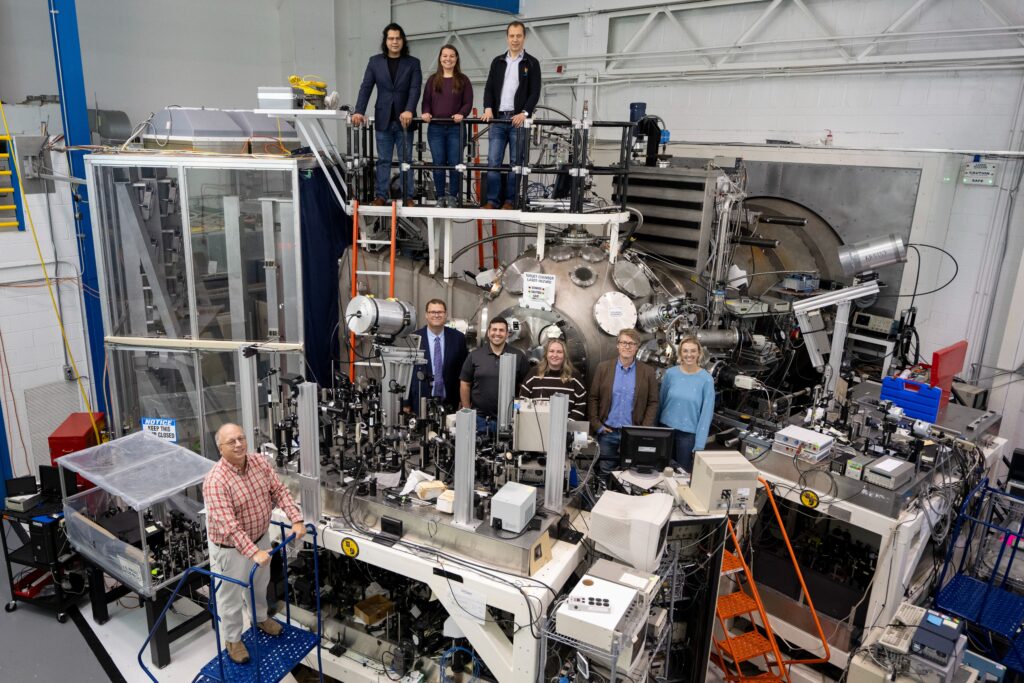
“NIKE is the world’s most energetic krypton-fluoride excimer laser, delivering ultrasmooth pulsed beams at a wavelength of 248 nanometers with 2-3 kilojoules of energy,” said Jason Bates, Ph.D., head of NRL’s Laser Plasma Branch. “These unique capabilities enable researchers to generate strong, stable shock waves and create exceptionally clean experimental conditions for studying extreme physical states of matter.” 
  
For decades, the NIKE facility and its scientific team have contributed to NNSA’s flagship laser program at the National Ignition Facility (NIF), which recently achieved its landmark goal of ignition where the fusion of hydrogen nuclei produces more energy than the laser energy used to drive the reaction. 
  
Over the years, NRL researchers have pioneered several critical innovations that have transitioned to other NNSA programs including monochromatic x-ray radiography, the Virgil gold M-band spectrometer, and the flashlamp-pumped disk amplifiers for neodymium-doped glass (Nd:glass) lasers. Nd:glass is a material used in certain high-powered laser systems. 
  
Through the creative work of its research team, and a strategic partnership with the Air Force, NIKE’s capabilities are now being harnessed to address the central science and technology needs of the DoD nuclear deterrence mission. 
  
“This partnership between NRL and the Air Force Research Laboratory represents a vital leap forward in our ability to simulate and understand the extreme environments that nuclear assets must navigate,” Bates said. “NIKE’s unique laser and diagnostic capabilities are unmatched, enabling us to close critical gaps in assessing the survivability of our platforms.” 
  
With adversaries such as China and Russia racing to build similar excimer-laser technologies, maintaining and safeguarding the NIKE facility is essential. A recapitalization and reinvestment strategy is underway to secure NIKE’s future and support the revitalization of the Nation’s nuclear deterrence capability. 
  
“NRL’s NIKE facility is an important national asset with unique capabilities that allow it to serve a broad range of missions supporting stockpile stewardship, fusion energy research, directed energy, hypersonics, and fundamental studies of materials at extreme conditions. Its continued operation for the good of the Nation remains our goal through its new focus,” said Joe Peñano, Ph.D., superintendent of NRL’s Plasma Physics Division. 
  
The Plasma Physics Division conducts broad theoretical and experimental programs of basic and applied research in plasma physics, laboratory discharge, and space plasmas, intense electron and ion beams and photon sources, atomic physics, pulsed power sources, laser physics, advanced spectral diagnostics, and nonlinear systems.  
 
The effort of the Division is concentrated on closely coordinated theoretical and experimental programs in key areas. Considerable emphasis is placed on large-scale numerical simulations related to plasma dynamics; ionospheric, magnetospheric, and atmospheric dynamics; nuclear weapons effects; inertial confinement fusion; atomic physics; plasma processing; nonlinear dynamics and chaos; free electron lasers and other advanced radiation sources; advanced accelerator concepts; and atmospheric laser propagation. 
  
The NRL Laser Fusion Program traces its origins to the late 1960s, when laser-produced plasmas were first used to investigate the effects of high-altitude nuclear explosions. The program was formally established in 1972 by the Atomic Energy Commission, the predecessor to today’s NNSA. 
  
About the U.S. Naval Research Laboratory 
 

NRL is a scientific and engineering command dedicated to research that drives innovative advances for the U.S. Navy and Marine Corps from the seafloor to space and in the information domain. NRL, located in Washington, D.C. with major field sites in Stennis Space Center, Mississippi; Key West, Florida; Monterey, California, and employs approximately 3,000 civilian scientists, engineers and support personnel. 


Coast Guard Offloads More Than $14M In Illicit Drugs

The crew members from Coast Guard Cutter Venturous pose before preparing to offload a pallet of illegal narcotics at Coast Guard Base Miami Beach, May 2, 2025. (U.S. Coast Guard photo by Petty Officer 3rd Class Jessica Walker) 

From U.S. Coast Guard 7th District, May 2, 2025 

MIAMI – U.S. Coast Guard Cutter Venturous’ crew offloaded approximately 5,300 pounds of cocaine and marijuana worth an estimated $14.1 million, Friday, at Coast Guard Base Miami Beach.   

The seized contraband was the result of four interdictions in the Caribbean Sea by the crews of USCGC Diligence and HNLMS Groningen with an embarked Coast Guard law enforcement detachment.   

“Stopping harmful and illicit narcotics from reaching our shores and entering our communities is a team effort,” said Cmdr. Karen Kutkiewicz, Venturous’ commanding officer. “It takes the combined efforts of our joint force DoD, DHS, and international partners to combat transnational criminal organizations.”  

The following assets and crews were involved in the interdiction operations:   

  • U.S. Coast Guard Tactical Law Enforcement Team (TACLET) Pacific, LEDET 105  

  • Seventh Coast Guard District command center watchstanders  

Detecting and interdicting illicit drug traffickers on the high seas involves significant interagency and international coordination. Joint Interagency Task Force-South, in Key West, conducts the detection and monitoring of aerial and maritime transit of illegal drugs. Once an interdiction becomes imminent, the law enforcement phase of the operation begins, and control of the operation shifts to the U.S. Coast Guard for the interdiction and apprehension phases. Interdictions in the Caribbean Sea are performed by members of the U.S. Coast Guard under the authority and control of the Seventh Coast Guard District, headquartered in Miami.  

Read more about the Groningen crew’s interdictions: Royal Netherlands Navy intercepts 3 drug shipments in one week.  

USCGC Venturous is a 210-foot Reliance-class medium endurance cutter homeported in St. Petersburg under U.S. Coast Guard Atlantic Area Command.   

For breaking news, follow us on X (formerly Twitter). For additional information, find us on Facebook and follow us on Instagram.   

Make a difference on land, at sea or in the air with the Coast Guard. Visit GoCoastGuard.com to learn more about active duty and reserve, officer and enlisted opportunities. Information on how to apply to the U.S. Coast Guard Academy can be found here.