HII Installs First Additively Manufactured Valve Manifold Assembly on Aircraft Carrier 

From HII 

 
NEWPORT NEWS, Va., March 04, 2025 (GLOBE NEWSWIRE) — HII (NYSE: HII) announced today that shipbuilders at its Newport News Shipbuilding division have successfully installed the first valve manifold assembly created by additive manufacturing technology on a new construction aircraft carrier. 

NNS continues to integrate additive manufacturing, also known as 3D printing, into the shipbuilding process. The use of certified 3D-printed parts has the potential to accelerate construction and delivery of vessels to the U.S. Navy by cutting lead times and improving manufacturing quality for critical components. 

The valve manifold assembly, a specialized assembly that allows distribution of a single source of fluid to multiple points on the ship, is installed in a pump room on Gerald R. Ford-class aircraft carrier Enterprise (CVN 80). The assembly, which is approximately 5 feet long and 1,000 pounds, reflects the shipyard’s pursuit of all opportunities to support construction using additive manufacturing. NNS collaborated with DM3D Technology to manufacture the manifold body. 

With the completion of this evolution on Enterprise (CVN 80), similar manifolds planned for Doris Miller (CVN 81) will employ additive manufacturing rather than traditional casting methods, reducing schedule risk and improving efficiency. 

Photos accompanying this release are available at: http://hii.com/news/hii-installs-first-additively-manufactured-valve-manifold-assembly-on-aircraft-carrier-at-newport-news-shipbuilding/

“What started as a proof of concept quickly turned into a tangible result that is making a meaningful difference to improve efficiencies in shipbuilding,” said Dave Bolcar, NNS vice president of engineering and design. “The benefits of this innovation will extend well beyond Enterprise (CVN 80), as we incorporate our expertise in additive manufacturing into the fundamentals of shipbuilding.” 

This latest advancement in the development and deployment of additive manufacturing builds on NNS’ prior certification and approval as a supplier for additive manufacturing components on Naval Sea Systems (NAVSEA) platforms. To date, the shipyard has created more than 55 additively manufactured parts installed on both new construction vessels and those currently in the fleet, with plans to install more than 200 additional parts this year. 



Wittman, Ryan Relaunch House Defense Modernization Caucus 

From the office of Rep. Rob Wittman, R-Virginia 

WASHINGTON — Today, Congressman Rob Wittman (R-VA-01) and Congressman Pat Ryan (D-NY-18) relaunched the House Defense Modernization Caucus (HDMC) for the 119th Congress to continue their efforts to advance the national security ecosystem through the integration and adoption of emergent technologies. The relaunch was unveiled at the “Defense Modernization Outlook for the 119th Congress: Priorities and Pathways” event on Capitol Hill, featuring expert discussions with leaders from government, private capital, and the defense industry. 

Originally founded by Wittman and Ryan, the bipartisan caucus serves as a driving force behind key policy and funding initiatives aimed at modernizing the U.S. Department of Defense (DoD) and strengthening national security. 

“As warfare continues to evolve with emerging technologies, our national security agencies must prioritize agile and responsive modernization efforts. Ensuring this progress requires dedicated focus and support,” said Congressman Wittman. “As the founding co-chair of the bipartisan Defense Modernization Caucus, it’s been a pleasure to watch our caucus grow, and I’m eager to collaborate with colleagues on both sides of the aisle during the 119th Congress to drive innovation and strengthen America’s security through cutting-edge advancements.” 

“There’s no more time for screwing around. We need to deliver and scale capabilities at the speed of combat, not the speed of Congress,” said Congressman Ryan. “The incredible growth of the HDMC in just the past few months shows the bipartisan appetite for action. Now we need to push – hard. And probably piss some people off along the way. Get on board with a software-centric Pentagon, PPBE reform, and increased partnerships with VC and the private sector, or get out of the way.” 

“The Silicon Valley Defense Group applauds Representatives Wittman and Ryan and the critically important work of the House Defense Modernization Caucus,” said Jacqueline Tame, executive director, Silicon Valley Defense Group. “These long-needed efforts to catalyze systemic modernization via digital transformation, comprehensive and lasting acquisition reform, and forging pathways towards emerging technology readiness, require strong, unwavering, bipartisan leadership. We are proud to support your vision and agenda for the 119th Congress.” 

During the HDMC relaunch event, Tame moderated a panel discussion featuring Wittman and Ryan, exploring key initiatives such as streamlining the DoD’s Planning, Programming, Budgeting, and Execution (PPBE) process, accelerating defense acquisitions, and leveraging venture and private capital to drive innovation. 

A follow-up expert panel examined the Pentagon’s efforts to enhance collaboration with private-sector tech firms, scale emerging technology adoption, implement AI at scale, and address ethics and security concerns in AI integration. Panelists included: 

  • Colin Carroll, Chief of Staff to the Deputy Secretary of Defense 

  • Liz McNally, Deputy Director, Defense Innovation Unit 

  • Dan Tadross, Head of Federal, Scale AI 

  • Michael Brown, General Partner, Battery Ventures 

In December, Wittman and Ryan announced several key wins they secured in the Fiscal Year 2025 National Defense Authorization Act to bolster the defense innovation ecosystem. Wittman and Ryan led efforts to streamline and accelerate the U.S. Department of Defense (DoD)’s Authority to Operate (ATO) process, expand rapid hire authority for DoD innovation engines, and increase access to classified space for startup and scaleup companies. 


Chief of Naval Air Training Announces Covered Aircraft Refueling Sites 

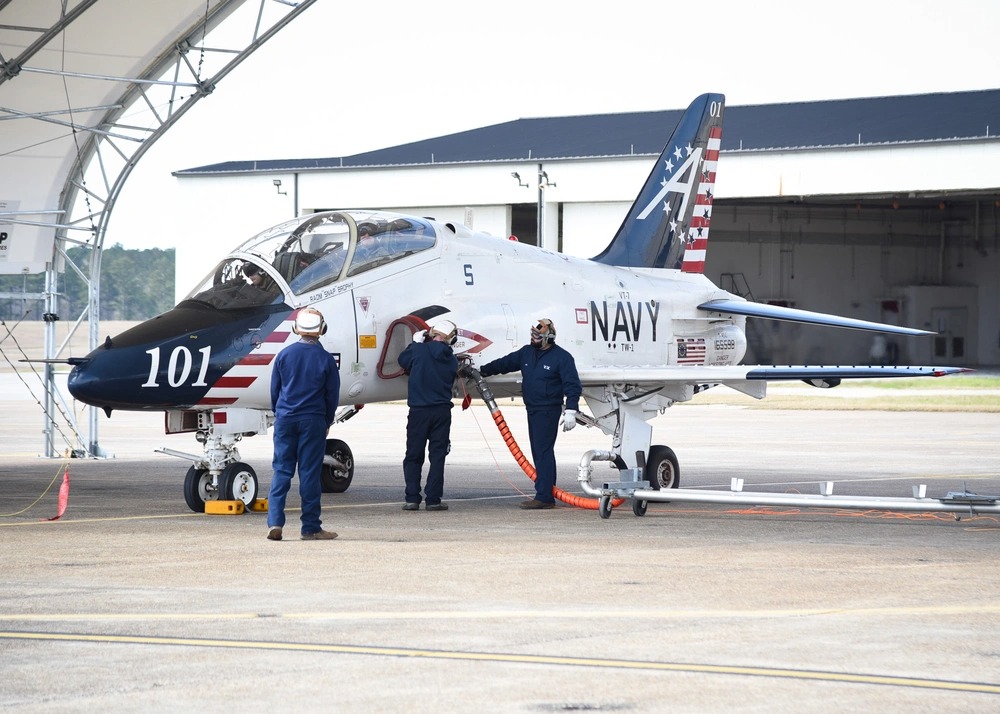
T-45 Goshawk assigned to Training Wing ONE refuels in the covered hot pit at NAS Meridian.  (Photo By Petty Officer 2nd Class Molly Crawford )

From Chief of Naval Air Training, Feb. 28, 2025 

CORPUS CHRISTI, Texas — The Chief of Naval Air Training (CNATRA) is excited to announce the official completion of the first aircraft protective enclosures (APEs) over refueling sites known as ‘hot pits’ at two training wings in the Naval Air Training Command (NATRACOM). 
 
The first installations of APEs over hot pits took place at Training Wing ONE (TW-1) at Naval Air Station (NAS) Meridian and Training Wing TWO (TW-2) at NAS Kingsville. TW-2 held a ribbon cutting ceremony on Friday, February 28 to highlight the advances. 
 
A hot pit refueling is when an aircraft is refueled immediately after landing, while the aircraft keeps one engine running. This form of refueling reduces response time and keeps aircraft mission ready. This technology enhances the operational efficiency and safety of our fleet while providing a modernized infrastructure for training operations. 
 
“We are absolutely thrilled to bring these new capabilities to these wings and to the rest of the Naval Air Training Command,” said Rear Admiral Brophy, Chief of Naval Air Training. “APEs over refueling pits are a game-changer in the way we conduct operations. Temperatures in the summer for unprotected aircraft can become excessive and the APEs will enhance overall safety while we train the future of naval aviation.” 
 
The new aircraft protection enclosures over the refueling pits ensure the longevity and safety of military aircraft and its aviators by offering protection from environmental elements during critical training phases. 
 
These advancements are a clear demonstration of CNATRA’s continued commitment to excellence in aviation training, readiness and safety. The improvements will directly benefit the fleet’s performance and prepare the next generation of naval aviators for success. With the successful completion of the project at two training wings, the project continues with the intent to cover all hot pits at every training wing under CNATRA. 
 
The mission of Naval Air Training Command is to train, mentor, and deliver the highest quality Naval Aviators that win in competition, crisis, and conflict. Headquartered on board NAS Corpus Christi, Texas, CNATRA leads the NATRACOM composed of five training air wings located on Naval Air Stations in Florida, Mississippi and Texas. The wings are home to  


General Atomics Acquires North Point Defense

From General Aomics  

SAN DIEGO – March 3, 2025 – General Atomics (GA) today announced the strategic acquisition of North Point Defense, Inc. (NPD), a leading provider of Signals Intelligence (SIGINT) exploitation software and sensor integration, by General Atomics Integrated Intelligence, Inc. (GA-III), formerly known as General Atomics Commonwealth Computer Research, Inc. This acquisition enhances GA’s capabilities in the rapidly evolving SIGINT field, positioning the company to deliver advanced ISR solutions for air, sea, ground, and space platforms. 

From concept to deployment, NPD delivers AI/ML-based autonomous signal processing and data dissemination solutions providing real-time actionable intelligence, supporting tactical and national mission priorities. “Joining GA represents an incredible opportunity to enhance our impact in delivering cutting-edge SIGINT solutions in support of national and tactical users,” said Bruce Benenati, President of NPD. “As part of a mission-focused organization with a proven track-record in tactical intelligence across the DoD and IC, we can accelerate innovation and deployment at scale. The integration gives our team access to unmatched operational expertise, resources, and a broader customer base. Together, we are poised to deliver even greater capabilities to those who depend on us in the field.” 

GA-III is committed to providing a comprehensive suite of “out-of-the-box” hardware and software tools to meet mission requirements and expand the innovative intelligence capabilities within the GA group of companies. “The integration of NPD technologies into a division of GA-III is a strategic shift, enhancing GA’s ability to innovate rapidly and provide greater value to customers with end-to-end ISR solutions that are more efficient, effective, and technologically advanced.” said Brian Ralston, President of GA-III. 

Baird served as the exclusive financial adviser and Miles & Stockbridge acted as legal counsel to North Point Defense on the transaction. 


Undersea Warriors: NATO Demos Collaboration During Exercise Dynamic Manta 25

By Allied Maritime Command, March 3, 2025 

CATANIA, Italy   –  Six Allied submarines are planning to taking part in NATO’s most advanced submarine warfare exercise off the coast of Italy between 28 February and 14 March 25. Exercise Dynamic Manta 25 brings surface ships, submarines, aircraft and thousands of personnel together in the Mediterranean Sea, where they will train, demonstrate and refine Allied capabilities in this particularly demanding type of warfare. 

Dynamic Manta builds on the success of previous iterations, incorporating new tactics, technologies and operational insights, ensuring NATO’s forces remain at the forefront of undersea warfare. The exercise prepares NATO submarine crews to respond and adapt to any type of threat below the surface. 

Hosted by Italy, the exercise was planned by NATO Allied Maritime Command (MARCOM) based in Northwood, UK. Commander Submarines NATO, US Navy Rear Admiral Bret Grabbe, said this is the largest and most complex submarine exercise to take place in the Mediterranean Sea. 

“Exercises like Dynamic Manta help NATO maintain the edge when it comes to anti-submarine warfare,” he said. “By practising coordinated operations against both conventional and advanced undersea threats, NATO continues to demonstrate its commitment to safeguarding the strategic waterways that connect member states.” 

For only the third time since the exercise began in 2013, submarine assets will also work with Allied maritime Special Operations Forces (SOF), consolidating interoperability with this critical asset. The capability of Allied SOF teams to cooperate with Allied submarines from different nations represents a force multiplier for NATO. For this iteration of the exercise, a Greek SOF team will make a landing from an Italian submarine to conduct its mission. 

The aim of Dynamic Manta is to provide all participants with complex and challenging warfare training to enhance interoperability and proficiency in anti-submarine and anti-surface warfare skills. Each participating unit will have the opportunity to conduct a variety of submarine warfare operations. The submarines will take turns hunting and being hunted, closely coordinating their efforts with the air and surface participants. 

The exercise plan to involve units, sailors and airmen from nine NATO nations. 

The submarines belong to the navies of France, Greece, Italy, Türkiye and the United States, with NATO Submarine Command (COMSUBNATO) exercising operational control on several, as required by the exercise scenario. 

Maritime Patrol Aircraft (MPA) from Canada, Germany, Greece, Portugal, Türkiye, the United Kingdom and the United States are also planning to take part, alongside Maritime Patrol Helicopters (MPH) from France, Italy and the US, supported by surface ships from Greece, Italy, Spain, Türkiye and the US. 

Standing NATO Maritime Group 2 (SNMG2) is taking part, commanded by Turkish Navy Rear Admiral H. Ilker Avci. 

As the host nation, Italy is providing support in Catania and Augusta Harbors, the naval helicopter base in Catania, Naval Air Station Sigonella, as well as support from Augusta Naval Base. 

Representing Italy during the exercise as the host nation guest is Rear Adm. Alberto Tarabotto, Commanding Officer, 4th Naval Division. 

There are two sister ASW training events as part of NATO’s continuous submarine warfare training and cooperation.  Exercise Dynamic Mongoose which takes place in the cold waters of the North Atlantic, and Playbook Merlin which takes place in the shallow waters of the Baltic Sea. 

Dynamic Manta is one of nearly a dozen MARCOM-led maritime exercises held each year in addition to numerous national exercises, which increase readiness in defense of the Alliance. 


NSW Conducts Training with Lithuanian and German special operations forces 

From Lt.j.g Martin Carey, Feb. 28, 2025 

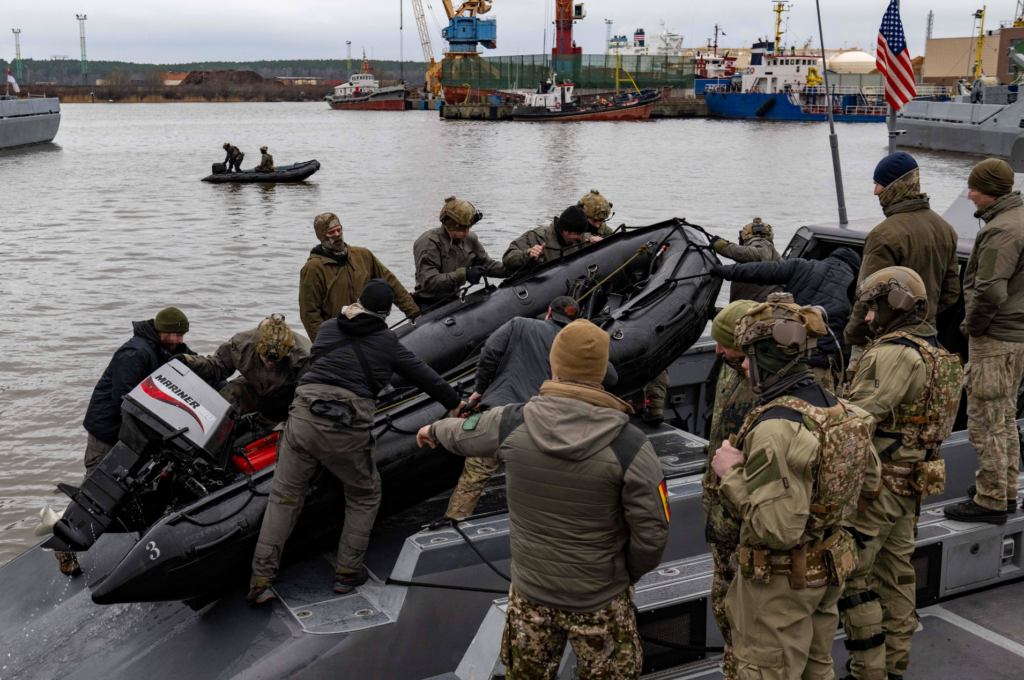
Strengthening NATO alliances, U.S. East Coast-based Naval Special Warfare Operators (SEALs) and U.S. Special Warfare Combat Crewmen (SWCC) recently conducted a two-week training exercise with Lithuanian and German Special Operations Forces. 
 
The exercise, which took place in the Baltic region, aimed to increase warfighting readiness and allied lethality through a series of challenging maritime operations, small boat tactics, and low-light weapons live-fire drills. The training event was designed to foster greater cooperation and interoperability between the participating nations, maintaining a strategic advantage in the region. 
 
“Exercises like this are crucial to ensuring we can operate seamlessly together to fight and win wars,” said CAPT V. Scott King, Commodore of Naval Special Warfare Group TWO. “By training alongside our Lithuanian and German counterparts, we’re not only enhancing our own warfighting readiness but also strengthening the bonds of friendship and cooperation that underpin our alliance.” 
 
Allied training exercises like this are vital to bolstering the collective defense capabilities of NATO nations and builds a stronger, more lethal alliance to address threats in the area. 
 
Throughout the exercise, the units focused on developing and enhancing their skills in maritime special operations, as well as advanced marksmanship and close quarters combat techniques. The special operations forces refined their ability to launch, operate and recover small raiding crafts from the well decks of the Combatant Craft Medium, one of Naval Special Warfare’s most versatile boats. The event culminated with a full-mission profile, bringing together all aspects of the training into a real-world scenario that showcased the special operations forces’ readiness in the maritime domain. 
 
“The training we conducted was both realistic and challenging,” said the senior Naval Special Warfare Operator on site. “We were able to learn from each other and share best practices. This type of cooperation is essential to achieving shared goals and maintaining elite levels of lethality.” 
 
Naval Special Warfare Group TWO produces, supports, and deploys the world’s premier maritime special operations forces to conduct full-spectrum operations and integrated deterrence in support of U.S. national objectives. For more information, visit https://www.nsw.navy.mil/ 


BMT, Japan Marine United Announce Contract Award by Japan’s ATLA

From BMT, Feb. 27, 2025 

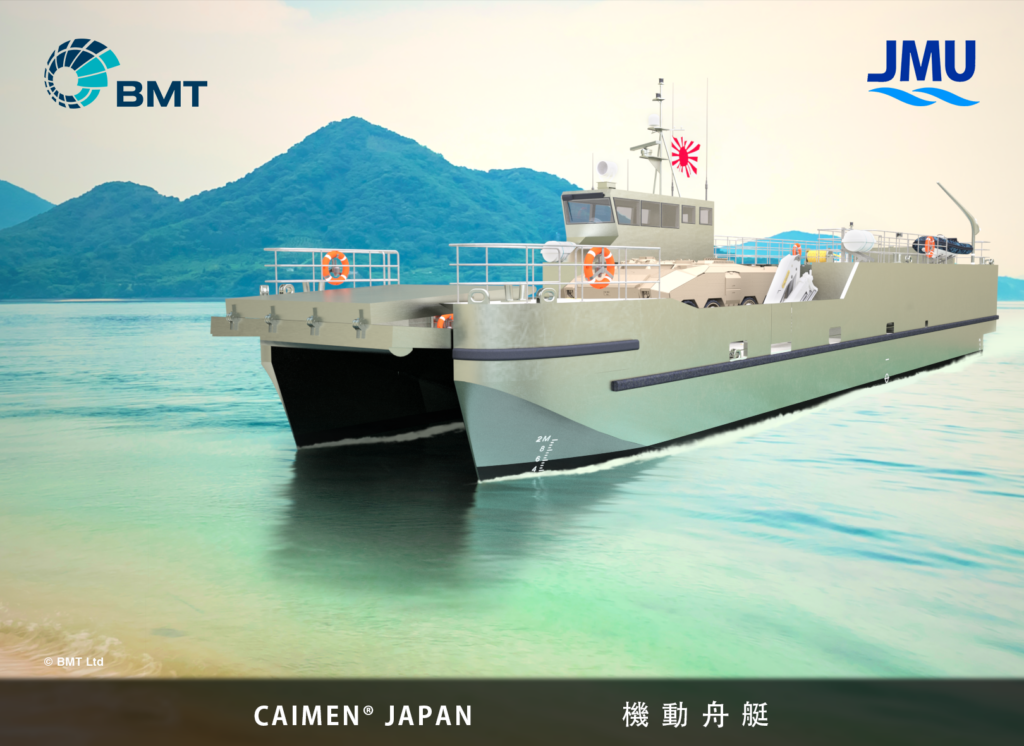
BMT and Japan Marine United (JMU) are pleased to announce that they have been contracted by Japan’s Acquisition, Technology & Logistics Agency (ATLA) to design and build the next-generation High-Speed Landing Craft to be operated by the Japan Self Defense Force. 

BMT, renowned for its world-leading expertise in maritime engineering and excellence in ship design, and JMU, with its long-established track record in constructing high-performance defence platforms, form an outstanding team for this venture. This partnership represents a significant collaborative effort between the United Kingdom (UK) and Japan. 

The groundbreaking program showcases close cooperation between JMU and BMT, with the Caimen ® Landing Craft design provided by the BMT team in the UK, and the production design and construction of the vessels carried out at JMU’s facilities in Japan. 

The design of the next-generation High Speed Landing Craft introduces unparalleled operational advantages over existing models. At approximately 30 metres in length, she boasts a highly efficient tri-bow hull form, resulting in outstanding seakeeping, performance, and beaching capabilities. This innovative design, born from extensive research and development of Caimen® Landing Craft, propels the vessel to speeds over 20 knots, ensuring rapid deployment in critical situations. 

Additionally, she offers extensive vehicle and troop-carrying capabilities, significantly enhancing operational flexibility and efficiency for military operations. This versatility and superior performance make it an invaluable asset for the Japan Self Defense Force, ensuring that personnel and equipment can be delivered swiftly and safely under various maritime conditions. 

Akinori Takeno, JMU Director and Senior Managing Officer: 

“We are pleased to announce the strategic partnership with BMT, which will see our company meet the procurement programmes of the Japan Ministry of Defense. This collaboration presents a valuable opportunity for us to work together to build cutting-edge, high-speed landing crafts with advanced aluminium hulls. By combining BMT’s innovative design concepts with our exceptional technologies and facilities, we hope to deliver landing crafts that exceed expectations. This partnership highlights our commitment to innovation and excellence in the maritime industry.” 

Sarah Kenny, BMT Chief Executive: 

“BMT is immensely proud to have been selected by ATLA and JMU, as design partner, to provide the design for this highly strategic project. The collaboration between our teams in the UK and Japan has been exemplary from the very beginning of our relationship.” 

Martin Bissuel, BMT Head of Sales, Commercial Maritime: 

“The next-generation High Speed Landing Craft stands out as a pivotal investment for the Japan Self Defense Force. Caimen® Japan offers an advanced, reliable, and highly functional platform that enhances their maritime operational capabilities significantly. This contract underscores the importance of international partnerships in achieving technological and defence advancements.” 


Phelan to Focus on Navy Recruiting, Shipbuilding

Sen. Roger Wicker, chairman of the Senate Armed Services Committee, met with Secretary of the Navy nominee John Phelan in January. Photo credit: Sen. Wicker’s office.

WASHINGTON — Businessman John Phelan, nominated by President Trump to be secretary of the Navy, appeared before the Senate Armed Services Committee on Feb. 27 and said he wants to focus on Navy recruitment and training, get shipbuilding back on track and set up an “accountable warfighting culture” is approved.

Sen. Roger Wicker (R-Mississippi), chairman of the committee, said Phelan had a “distinguished career in the private sector” although he has no Navy experience, and said “his background showcases his ability to manage complex business deals to drive efficiency and to deliver results. Our Navy will need someone with all three of those skills and more to get our Navy back on the right track.”

“I understand why some question why a businessman who did not wear the uniform should lead the Navy,” Phelan said, pledging to “step outside the status quo and take decisive action with a results-oriented approach.”

Wicker’s first question to Phelan was what he would do to improve Navy recruiting. The service met its goals last year, he said, but “only by lowering standards. Last year, nearly 20% of Navy recruits were considered category IV —  they tested below the 30th percentile on the military aptitude test.”

Phelan said some recruiting numbers have gone up, “which is a reflection of the president’s victory and return to the warfighting ethos,” and said he would take advantage of the upcoming 250th anniversary of the Navy to highlight the benefits of life in the service.

He also said the Navy should “do better from a digital perspective outreach” to young people, and take a page from the Marine Corps, which has worked with the same advertising company for three decades to build its brand.

Wicker said if Congress “threw a zillion dollars at the Navy” it still couldn’t build enough ships because the industrial base doesn’t have enough workers.

Phelan said he would visit the shipyards and spread best practices, including borrowing some from international shipyards, and also “telegraph demand” for shipbuilding to incentivize the private sector to invest in shipbuilding.

Echoing Wicker’s comment that some shipyard salaries are so low a welder could get the same salary working at a convenience store, Phelan said, “you can’t have those kinds of wage differentials for those kinds of jobs.”

Sen. Jack Reed (D-Rhode Island) asked about Secretary of Defense Pete Hegseth’s recent announcement that the Pentagon should be ready to cut 8% from the defense budget in each of the next five years in addition to laying off thousands of defense workers. Reed said such “disruptions” could jeopardize any gains the shipbuilders might make in recruiting workers.

Phelan said he is “not privy” to the details of the cuts, but “I do think the shipbuilding force is critical. If confirmed, will set with the secretary of defense and president and very quickly talk about that.”

Later, he said he understood the potential cuts to be “a planning tool — where would we cut if we need to cut?” that would move resources from nonlethal to more lethal activities.

“Do I view the construction of submarines and ships as lethal? The answer is yes, because we need to have these ships and we need to get them out there quickly,” he said.


Lockheed Martin Unveils Scalable Counter-Unmanned Aerial System Solution 

Company-funded exercise successfully demonstrates networked detection, tracking and mitigation 

From Lockheed Martin, Feb. 26, 2025 

BETHESDA, Md., Feb. 26, 2025 – As the threat of small Unmanned Aerial Systems (UAS) continues to evolve, Lockheed Martin (NYSE: LMT) is demonstrating a new approach to counter these emerging threats. A recent field event marked the first in a planned series of innovative showcases featuring a scalable, layered defense system, designed to detect, track, identify and defeat UAS. 

This modular, open-architecture solution combines combat-proven command and control with Artificial Intelligence (AI)-enabled detection and track software, low-cost sensors and an increasing array of effectors. The solution has been architected to facilitate rapid deployment and seamless integration with other systems. 

“Integrating diverse sensors through a user-optimized command and control (C2) system helps simplify threat identification, and we have the complementary technology offerings to convert collected data into actionable information,” said Tyler Griffin, C-UAS director at Lockheed Martin. “Our open architecture approach offers an agile, layered defense solution that accelerates outcomes relative to this dynamic threat. This foundational demo highlights how we can deliver the mission today and sets the stage for what Lockheed Martin and our partners will deliver in weeks and months ahead.” 

Key Highlights: 

  • Modular Design: Our open systems approach allows for rapid integration of best-of-breed sensors, effectors and C2 enhancements, providing flexibility and adaptability for dynamic threat evolutions. 

  • Advanced AI: Our AI-driven software, based on extensive real-world operations, enhances threat detection, tracking and mitigation capabilities, bolstering operator efficiency against individual threats and swarm raids. 

  • Rapid Scalability: Our solution is designed to simplify collaboration with partners, ensuring our customers stay ahead of the threat curve. 

Demonstration Success: Lockheed Martin and its partners successfully showcased the ability to detect, track and perform mitigation techniques against a mix of small UAS, including individual targets and incoming drone swarms. This important step underscores our commitment to delivering effective, scalable and integrated solutions for the Counter-UAS mission. 

Why it Matters: Rapid coordination is critical with only a few minutes to detect, track and defeat a swarm. Sensors capable of tracking many small, low-flying drones must be able to instantly communicate with a command and control system that sorts targets, matches them to interceptors and manages dozens of simultaneous engagements. 

Our innovative approach and commitment to open architecture ensures that our customers can leverage the most advanced technologies, and our expertise in systems integration and experience in providing AI-driven software to operators creates resilience against emerging threats. Lockheed Martin stands ready to deliver flexible and scalable C-UAS capabilities as the threat landscape continues to shift. 


Kratos, RAFAEL Establish Prometheus Energetics Joint Venture

From Rafael Advanced Defense Systems Ltd. 

SAN DIEGO, February 26, 2025 (GLOBE NEWSWIRE) – Kratos Defense & Security Solutions, Inc. (Nasdaq: KTOS), a technology company in the defense, national security and global markets, and RAFAEL Advanced Defense Systems Ltd., today announced an approximate 50/50 partnership for the establishment of a U.S.-based merchant supplier of solid rocket motors (SRMs) and other energetics. The new joint venture, named Prometheus Energetics (“Prometheus”), is set to be headquartered on an approximate 500-acre site near the United States Navy and Army facility in Crane, Indiana. 

Kratos and RAFAEL (through its U.S. based subsidiary RAFAEL USA) have jointly committed up to $175 million in capital for the establishment of Prometheus and required property, plant, equipment and personnel needed for the new, state-of-the-art energetics manufacturing campus and facilities. After construction of the plant and once RAFAEL’s technology transfer is completed and certified for operations, Prometheus is projected to begin production in 2027 of SRMs. 

Eric DeMarco, President and CEO of Kratos Defense, said, “We believe Prometheus, once up and running at full rate production, will be a step function catalyst in value creation for Kratos’ stakeholders and the U.S. defense industrial base, similar to Kratos’ recent MACH-TB contract award—the largest single-award contract in Kratos history. Like other major Kratos investments such as Oriole, Zeus, and Erinyes, Prometheus responds to a critical need to strengthen the U.S. Industrial Base and will also provide tens of thousands of SRMs and casted warheads supporting both America’s most reliable partner in the Middle East and United States national security related demand from a true SRM and energetics merchant supplier.”  

Yoav Tourgeman, President and CEO of RAFAEL Advanced Defense Systems Ltd., said: 

“The establishment of Prometheus Energetics is a strategic leap forward, reinforcing RAFAEL’s commitment to strengthening the U.S. defense industrial base while ensuring our allies and partners have access to the most advanced, combat-proven energetics solutions. This step constitutes a strategic vector that combines business considerations in the American market with the increasing demand for energetic products, while significantly enhancing our ability to deliver resilient and reliable supply solutions to our customers. Through this joint venture, we are deepening our longstanding partnership with the United States, strengthening supply chain independence, and bolstering the critical capabilities needed to address evolving national security challenges.”