WASP ARG AND 24TH MEU COMPLETE JOINT FORCE’S MOST COMPLEX TRAINING 

ATLANTIC OCEAN- The Arleigh Burke guided missile destroyer, USS Cole (DDG 67), the Wasp Class amphibious assault ship USS Wasp (LHD-1) and the Harper’s-Ferry class amphibious landing dock USS Oak Hill (LSD 51) transit in formation ahead of the San Antonio Class transport dock USS New York (LPD 21) in the Atlantic Ocean on April 14, 2024. New York is underway in the Atlantic Ocean completing integrated naval training as part of the Wasp Amphibious Ready Group (WSP ARG)-24th Marine Expeditionary Unit (MEU). Carrier Strike Group (CSG) 4 and Expeditionary Operations Training Group (EOTG) work together with Joint and Allied teammates to mentor, train, and assess ARGs and MEUs in support of U.S. and Allied economic, security, and defense interests. (U.S. Navy photo by Mass Communication Specialist 2nd Class Jesse Turner)

BY COURTESY STORY 
13 May 2024 

ATLANTIC OCEAN – The Wasp Amphibious Ready Group (ARG) and embarked 24th Marine Expeditionary Unit (MEU) (WSP ARG-24th MEU) completed Composite Training Unit Exercise (COMPTUEX), May 12, 2024. The Arleigh Burke-class guided missile destroyer USS Cole (DDG 67) completed their COMPTUEX alongside the WSP ARG-24th MEU team, May 7. 
 
ARG-MEU COMPTUEXs bring Navy, Marine Corps, Joint Force, and State Department trainers together to exercise the capabilities of a combined Navy-Marine Corps team. The exercise represents the Department of the Navy’s commitment to deliver highly-capable, integrated naval forces to deter adversaries, reassure allies, secure the free flow of trade and commerce, and enable U.S. diplomatic engagement. 
 
“You must continue to train and be at your highest level of performance and competitive advantage every day,” said Vice Adm. Doug Perry, commander, U.S. Second Fleet and Joint Force Command Norfolk, who visited the amphibious assault ship USS Wasp (LHD 1), May 7. 
 
“While you are deployed, you are going to work extensively with our allies and partners, and your mission focus and leadership is critical. You are the men and women who directly support our national priorities and reinforce the rules based order that is critical to U.S. and Allied security.” 
 
The fleet commander’s visit was one in a series of high-level visits during the at sea training period which included the Senate Appropriations Committee – Defense Sub-Committee and the Offices of the Secretary of Defense for Policy, Personnel and Readiness, and Cost Assessment and Program Evaluation. 
 
During ARG-MEU COMPTUEXs, Carrier Strike Group 4 (CSG-4) and II Marine Expeditionary Force’s Expeditionary Operations Training Group (EOTG) work together to train, mentor, and assess Navy and Marine Corps forces to prepare them for global operations. 
 
“Our Navy and Marine Corps teams must be prepared for every contingency when they deploy,” said Rear Adm. Max McCoy, commander, CSG-4. “Our obligation is to drive scenarios that challenge the training audience and prepare the ARG-MEU to perform at the highest level across a wide range of missions from humanitarian assistance to amphibious assault. Our naval forces must be able to deliver unquestionable capability at the point of impact.” 
 
The exercise made full use of Live, Virtual, and Constructive (LVC) training to prepare for complex operations. The Navy and Joint Force developed an integrated LVC training environment that enables the services to execute high-end training earlier, using synthetic tools while operating live tactical systems. LVC also allows the force to rapidly explore and develop new multi-domain tactics with near real-time, continuous feedback. 
 
“There is nothing as important today as our obligation to train, mentor, and assess the Marines and Sailors of the WSP ARG-24th MEU,” said Col. Neil Berry, director, Expeditionary Operations Training Group, II Marine Expeditionary Force. “We often say the world gets a vote, though our mission with this team was to ensure that they – along with the Joint Force team – have the deciding vote when the nation calls.” 
 
The WSP ARG-24th MEU COMPTUEX exercise provided the environment for the team to execute the latest tactics, techniques, and procedures, informed by recent operations, and provides Navy type commanders and systems commands the data they need to improve future force generation. Feedback captured using the Root Cause Analysis Tool (RCAT), a Navy developed software tool, enables exercise assessors to deliver immediate recommendations to the training audience and actionable ‘external fixes’ to inform fleet-resourcing decisions to improve performance Fleet-wide. 
 
The WSP ARG-24th MEU spent eight days at sea completing training as a team, before beginning the COMPTUEX scenario. It was an opportunity for the team to integrate their processes and sharpen their collective skill sets before increasing complexity. 
 
“COMPTUEX was an invaluable opportunity to train as an integrated naval force,” said Capt. Nakia Cooper, commodore of Amphibious Squadron (PHIBRON) 4, WSP ARG. “We demonstrated the strength of our unique partnership with the 24 MEU, and our Sailors and Marines embodied the ‘One Team, One Fight’ mantra during the certification event.” 
 
During COMPTUEX, the WSP ARG-24th MEU team completed a variety of integrated events such as live-fire exercises, strait transits, maritime security exercises, amphibious landings, maritime interdiction, non-combatant evacuation operations, foreign humanitarian assistance, and counter-unmanned aerial systems (C-UAS) engagements. 
 
The team also exercised a transfer of authority from national authority to NATO authority under Naval Striking and Support Forces NATO (STRIKFORNATO) in Lisbon, Portugal. Transfers of authority are an increasingly common feature in COMPTUEXs, as well as in the operational fleet as the U.S. and NATO Allies continue to train and operate with one another to deter and defend adversary aggression. The STRIKFORNATO team provided command-and-control of the WSP ARG-24th, while concurrently leading vigilance activity Neptune Strike 24-1. 
 
“During COMPTUEX, the Marines and Sailors built an integrated ‘Team of Teams’ that showcased naval warfighting capability to assure our partners and allies and deter our potential adversaries” said Col. Todd Mahar, Commanding Officer, 24th MEU. “We are excited to get underway with our Shipmates and deploy forward as a ready force for our Nation.” 
 
Upon completion of COMPTUEX, the 24th MEU was designated as Special Operations Capable (SOC), signifying they demonstrated proficiency as a specially trained Marine Air Ground Task Force (MAGTF) capable of integrating with, enabling, and supporting SOF operations as part of their enhanced pre-deployment training program. The MEU (SOC) is a uniquely organized, trained, and equipped expeditionary force that provides geographic combatant commanders options for theater campaigning and crisis response. 
 
The exercise also served as a venue to expand upon existing capability in the Navy and Joint Force. 
 
For example, the WSP ARG-24th MEU became the first ARG-MEU team to train with the En-Route Care System (ERCS) and the Expeditionary Resuscitative Surgical System (ERSS). The ERCS and the ERSS are expeditionary medicine capabilities that provide a ready, rapidly deployable and combat effective medical forces to improve survivability across the full spectrum of care, regardless of environment. 
 
Similarly, U.S. Coast Guard Maritime Security Response Team (MSRT) East, USCGC Stone (WMSL 758), and USCGC Angela McShan (WPC 1135) participated in numerous events alongside the Navy and Marine Corps team to train and increase proficiency. 
 
ARG-MEUs are organized, trained, equipped, evaluated, and certified to conduct maritime expeditionary warfare and amphibious operations across the full range military operations. As a highly mobile, versatile, and integrated naval formation, the ARG-MEU offers geographic combatant commanders an organic combined arms force that remains forward deployed and capable of persistent competition. 
 
The WSP ARG consists of the Wasp-class amphibious assault ship USS Wasp (LHD 1), San Antonio-class amphibious transport dock ship USS New York (LPD 21), Harpers Ferry-class dock landing ship USS Oak Hill (LSD 51), and the embarked 24th Marine Expeditionary Unit. 
 
The 24th MEU is a rapidly deployable MAGTF that consists of Battalion Landing Team 1/8, the Ground Combat Element; Marine Medium Tiltrotor Squadron 365 (Reinforced), the Aviation Combat Element; and Combat Logistics Battalion 24, the Logistics Combat Element. 
 
Carrier Strike Group 4’s mission is to train, mentor, and assess carrier strike groups, amphibious ready groups, and independent deployers for global combat against peer competitors. You can find them on LinkedIn, Twitter (@CSG_4), and DVIDS. 
 
II Marine Expeditionary Force’s Expeditionary Operations Training Group (EOTG) mission is to train and evaluate deploying Marine Expeditionary Units (MEU) and other designated forces in select special individual and collective tasks, as well as their ability to conduct assigned mission essential tasks in order to prepare forces to support the geographic combatant commanders. 
 
To learn more about WSP ARG and 24th MEU Team of Teams visit their DVIDS feature page at https://www.dvidshub.net/feature/wasparg24thmeu 


SECDEF Announces Flag Officer Nominations 

U.S. Department of Defense, May 17,2024 

Secretary of Defense Lloyd J. Austin III announced today that the president has made the following nominations: 

Navy Rear Adm. Jeffrey T. Anderson for appointment to the grade of vice admiral, with assignment as commander, Sixth Fleet; commander, Task Force Six; commander, Striking and Support Forces NATO; deputy commander, U.S. Naval Forces Europe; deputy commander, U.S. Naval Forces Africa; and Joint Force Maritime Component commander Europe, Naples, Italy.  Anderson is currently serving as director of Operations, J-3, U.S. Indo-Pacific Command, Camp H.M. Smith, Hawaii. 

Navy Rear Adm. Christopher C. French for appointment to the grade of vice admiral, with assignment as judge advocate general of the Navy, Pentagon, Washington, D.C.  French is currently serving as deputy judge advocate general of the Navy, Pentagon, Washington, D.C. 

Navy Rear Adm. Nancy S. Lacore for appointment to the grade of vice admiral, with assignment as chief of Navy Reserve, N095, Office of the Chief of Naval Operations, Pentagon, Washington, D.C.  Lacore is currently serving as commandant, Naval District Washington, Washington, D.C. 

Navy Rear Adm. Scott W. Pappano for appointment to the grade of vice admiral, with assignment as principal military deputy assistant secretary of the Navy (Research, Development and Acquisition), Pentagon, Washington, D.C.  Pappano is currently serving as program executive officer, Strategic Submarines, Naval District Washington, Washington, D.C. 


U.S. Coast Guard Atlantic Area holds change-of-command ceremony 

US Coast Guard Atlantic Area Vice Admirals Nathan Moore and Kevin Lunday salute one another while Coast Guard Commandant Adm. Linda Fagan presides over a change-of-command ceremony, May 16, 2024, in Yorktown, Virginia. (U.S. Coast Guard photo by Petty Officer 2nd Class Brandon Hillard) 

From U.S. Coast Guard Atlantic Area, May 16, 2024 

PORTSMOUTH, Va. — Vice Adm. Nathan Moore relieved Vice Adm. Kevin Lunday as the U.S. Coast Guard Atlantic Area commander, Thursday, during a change-of-command ceremony held on Coast Guard Training Center Yorktown.  

Adm. Linda Fagan, commandant of the Coast Guard, presided over the ceremony.  

Lunday will report for duty in Washington, D.C. as the Coast Guard’s vice commandant. He served as the U.S. Coast Guard Atlantic Area commander, director of Department of Homeland Security Joint Task Force East (JTF-E), and Defense Force East commander from May 2022 to May 2024.  

While leading complex security operations from the Rocky Mountains eastward to the Arabian Gulf, he led the efforts to address substantial national and international challenges. His deployment of assets to the Arctic, South Atlantic, Africa, Mediterranean Sea, and the Middle East directly supported the Tri-Service Maritime Strategy and greatly enhanced cooperation with the joint force, allies, and partners.  

Pre-positioning of Coast Guard personnel and equipment during hurricane seasons saved lives, mitigated environmental disasters, and led to the expeditious restoration of the maritime transportation system, which is critical to the U.S. economy.  

Additionally, Lunday orchestrated the Coast Guard’s surge response to historic maritime migration levels along the U.S. Southeast maritime border. His expertise and adjudication of competing demands fostered an increased readiness posture and led to the deployment of additional personnel and surface assets. These actions were key to saving lives and preventing a deadly mass migration.  

As Director of JTF-E, he advanced joint operations and cross-component collaboration while spearheading modernization efforts, promoting interoperability among interagency partners, and championing innovative approaches to information-sharing. His efforts forged a sustainable joint architecture and galvanized Departmental unity of effort in an increasingly complex maritime environment.   

Vice Adm. Moore is reporting from U.S. Coast Guard Atlantic Area in Portsmouth, Virginia, where he served as the deputy commander. He previously served as the U.S. Coast Guard Seventeenth District commander, responsible for operations throughout Alaska, the North Pacific Ocean, the Arctic Ocean, and the Bering Sea. Other assignments include the assistant commandant for Engineering and Logistics (CG-4), responsible for all naval, aeronautical, civil, and industrial engineering and logistics for the service, and various operational and engineering assignments, including command afloat.   

Moore graduated from the United States Coast Guard Academy with a bachelor’s degree in naval architecture and marine engineering. He went on to earn two master’s degrees from the University of Michigan, one in naval architecture and marine engineering and the other in business administration. Most recently, he earned a third master’s degree in national resource strategy from the Eisenhower School.  

U.S. Coast Guard’s Atlantic Area command oversees all domestic Coast Guard operations east of the Rocky Mountains, including the Arctic, Atlantic, Gulf of Mexico, Caribbean, and out-of-hemisphere operations in Europe, Africa, and Southwest Asia. Atlantic Area encompasses five regional district commands, each tasked with running day-to-day operations within their areas of responsibility. Atlantic Area is responsible for coordinating and deploying cutters, aircraft, pollution response equipment, and thousands of personnel between districts when significant events occur. After major disasters, the area team assists districts by ensuring resources, equipment, and personnel surge to impacted areas for rescue and recovery efforts while also providing for other Coast Guard operations throughout the region.   

JTF-E coordinates and synchronizes DHS cross-component operations to target, dismantle, and disrupt illicit enterprises, prepare for and respond to mass maritime migration, and ready the DHS enterprise to respond to emerging threats along the Southeast maritime border.  

The change-of-command ceremony is a military tradition representing a formal transfer of authority and responsibility for a unit from one commanding or flag officer to another. The passing of colors, standards, or ensigns from an outgoing commander to an incoming one ensures that the unit and its members are never without official leadership, a continuation of trust.  


SECNAV: Frigate Delay Due to ‘Atrocious’ Shipyard Worker Retention

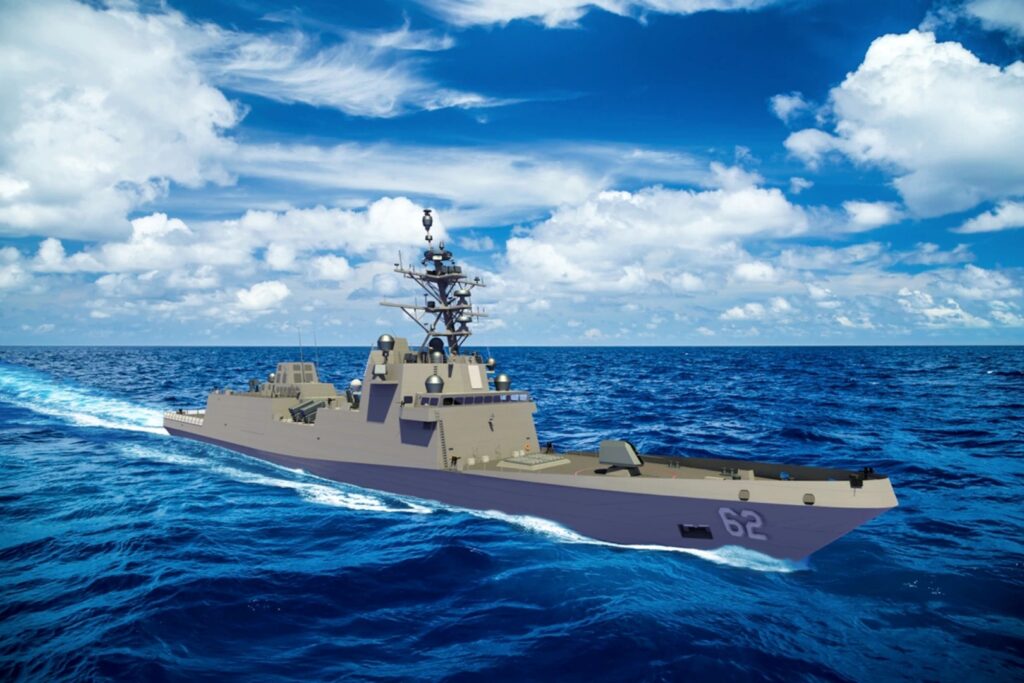
Artist rendering of the future frigate USS Constellation 

By Richard R. Burgess, Senior Editor 

ARLINGTON, Va. — The delay in the program to build the Constellation-class guided-missile frigate (FFG) has been caused by a labor shortage brought on by poor shipyard worker retention, the secretary of the Navy (SECNAV) told a Senate committee, noting that the Navy is trying to rectify the problem by funding retention bonuses for shipyard workers. 

Fincantieri’s Marinette Marine shipyard in Marinette, Wisconsin, has a contract to build up to 10 FFGs for the U.S. Navy. Delivery of the first FFG, Constellation, originally was scheduled for 2026, with operational availability in 2029. 

With Secretary of the Navy Carlos Del Toro and Chief of Naval Operations Admiral Lisa M. Franchetti testifying May 16 before the Senate Armed Services Committee, the ranking member, Roger Wicker, R-Mississippi, delivered in his opening statement a criticism of the Navy’s shipbuilding delays noted in the service’s 45-day shipbuilding review. 

“For example, the Constellation-class frigate will be three years late and will take nearly 10 years to deliver the lead ship,” Wicker said. “This is largely because the Navy cannot keep requirements steady. Almost 70 percent of the requirements have changed since the Navy signed a contract, so the outcome we see today is no surprise. This is not an example of the industry underperforming. This is senior officials unable to manage a program. This is acquisition malpractice, and a terrible waste of time and resources.” 

Del Toro countered that in the case of the frigate program, the delay was the result of a “recruiting and retention problem in Wisconsin.” 

The SECNAV said that Fincantieri’s “retention rate actually last year was atrocious. That is part of the reason why we have actually established up to a three-year delay in the delivery of the Constellation-class frigate. What we’re actually trying to do is put positive efforts in place to help Fincantieri get to a better place.” 

Del Toro said that the Navy was investing $750 million in the surface industrial base over the Future Years Defense Plan, including funds for Fincantieri.  

“In Fincantieri alone we’ve provided $100 million in resources to the shipyard so they could provide $5,000 bonuses to the shipyard workers for the first year if they stayed in place throughout construction of the ship itself,” he said.  

Franchetti as well said the Navy is committed to helping Fincantieri deliver on the frigate program. 

“I just had the opportunity with the secretary [Del Toro] to go up to Marinette and talk with the folks there and [we’re] really committed to supporting them and addressing the workforce challenges that they have,” she said. “The frigate is an absolutely critical ship for our Navy.”  


Navy League Congressional Fly-In Makes Successful In-Person Return to Capitol Hill

Rep. Joe Courtney (D-Connecticut) discusses sea service issues with Navy League National President Christopher Townsend and CEO Mike Stevens during the Congressional Fly-In. James Peterson

Navy League members from councils around the country visited the offices of dozens of lawmakers on Capitol Hill on Wednesday as part of the first in-person Congressional Fly-In held since 2019.

They came to discuss the needs of the sea services with members of the House of Representatives and Senate, and to touch base with lawmakers and staff that represent their council regions during more than 100 meetings.

The messages included calling for funding two Virginia-class submarines in fiscal year 2025 and writing a “SHIPS Act,” modeled on the CHIPS Act that helped restore microchip manufacturing and production capacity in the United States. The Navy League visitors also called for an annual shipbuilding and conversion budget of at least $35 billion.

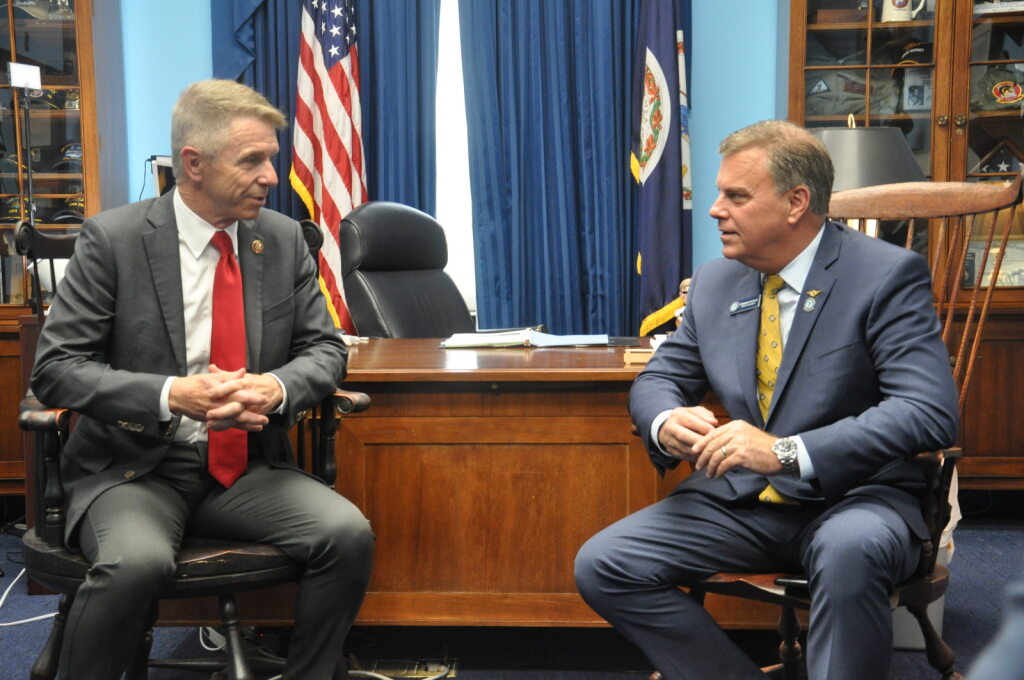
Rep. Rob Wittman (R-Virginia) talks with Christopher Townsend. James Peterson

The council members also discussed the need to fund the sea services’ unfunded priorities, including barracks restoration and modernization for the Marine Corps, icebreakers and new cutters for the Coast Guard and defending the Jones Act for the U.S.-flag Merchant Marine.

They also educated lawmakers and their staffs on the need to create future Sailors, Marines and Mariners by supporting the Sea Cadets, Young Marines and funding for the state Maritime Academies’ student incentive programs.

On the eve of the fly-in, the Navy League notched a major victory for its advocacy work as the House Armed Services Committee voted to include funding for a second Virginia-class submarine in its upcoming National Defense Authorization Act markup.

“We had a great time,” Sinclair Harris, retired rear admiral and national vice president of the Navy League, said at the end of the day. “We had six visits, one with a member of Congress, the rest were staffers, but all of them were very engaged, they all understood the importance of what the Navy League does and supports and educates and advocates for.”

Sara Fuentes, who led a group of council members representing the Southern Region, said, “what makes the Navy League so unique and special is that anyone can get behind our issues because they benefit all Americans. It was a real pleasure to meet with Democrats, to meet with Republicans, all different kinds of offices, inland, coastal, and have them all understand and support our sea services and understand the need to really invest in them.”

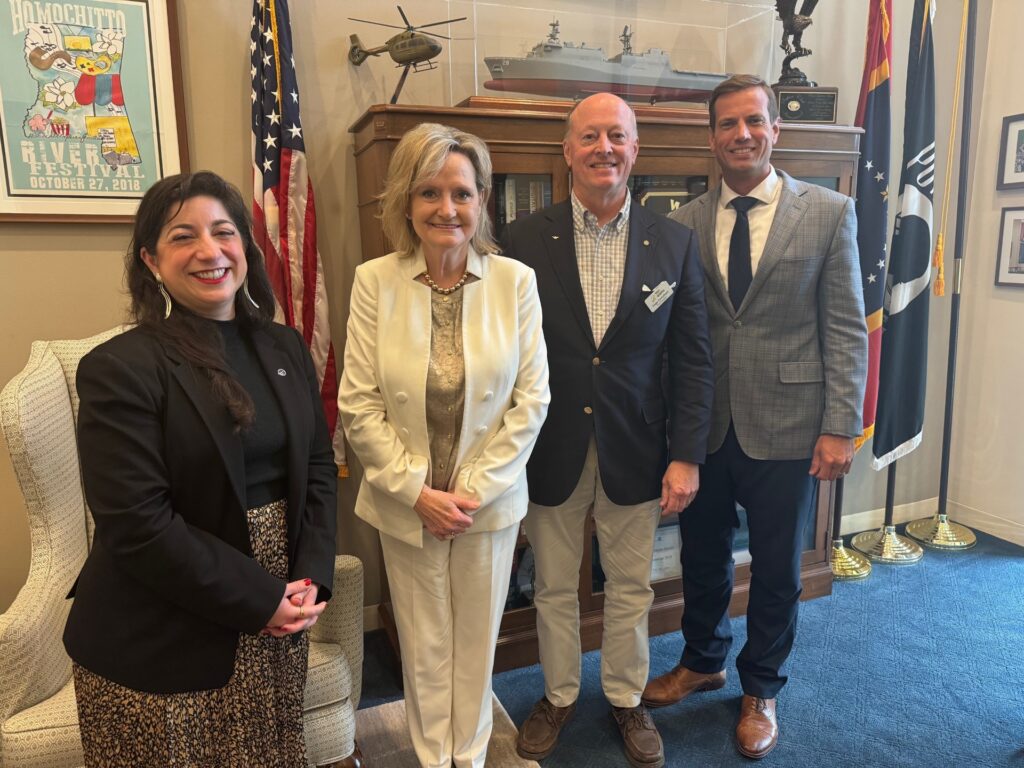
Members of the Southern Region meet with Sen. Cindy Hyde-Smith (R-Mississippi), second from left. Sara Fuentes

Scott Maguire, a board member of the Portland-Blueback Council, said his team made eight visits to House and Senate members, and “they were very receptive to what we had to say and seemed supportive, so I’m looking forward to their approvals on what we have suggested.”

Merilyn Wong and William Stephens of the Marin County Council said they visited their local representative and convinced him to become a co-sponsor of the Pay Our Coast Guard Parity Act, which ensures Coast Guardsmen are compensated for their work during government shutdowns.

“Every staff person was very receptive, interested in our presentation, wanted to learn a little bit more about it. We kept telling them about the Center for Maritime Strategy, to take advantage of that, something they didn’t really know, so that was helpful,” said Michele Langford, Pacific Central Region president.

Navy League National President Christopher “Towny” Townsend said “it was a fantastic day. We got to execute one of our primary missions of advocating for our sea services here in person in the halls of Congress.

COVID-19 restrictions put a hold on events like the Congressional Fly-In, but Townsend said it was a good time to come back in person “and spread the Navy League gospel, talk about the needs of the sea services.”


USS Ronald Reagan Departs After 9 years as FDNF-Japan Carrier

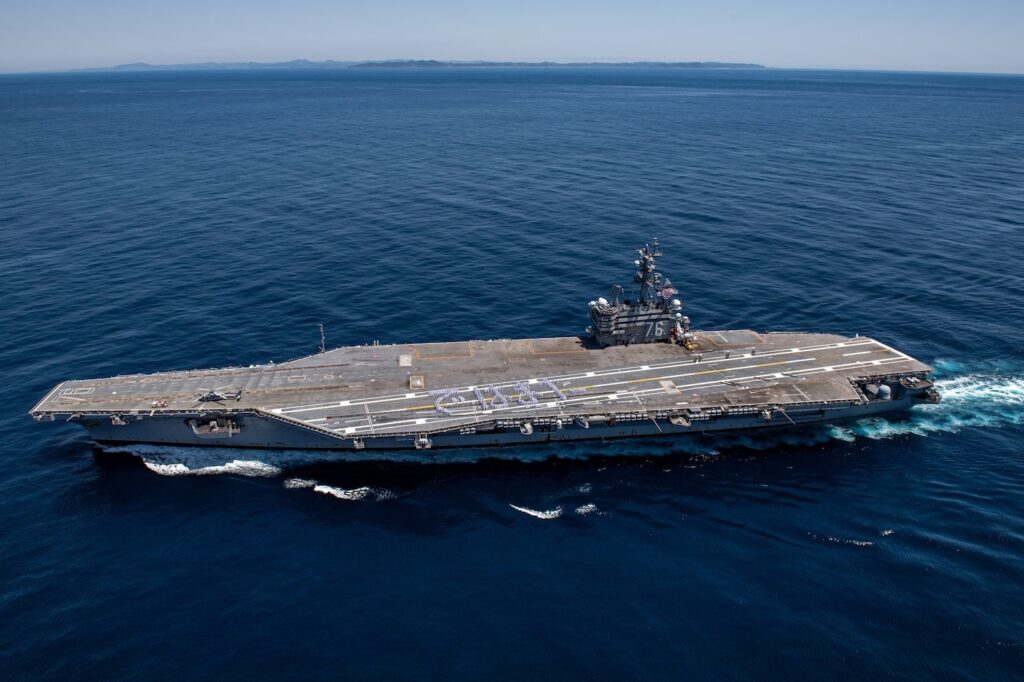
TOKYO INLET (May 10, 2024) Sailors stand in formation to form Japanese hiragana characters spelling “dewa mata,” which translates to “see you again,” on the flight deck of the U.S. Navy’s only forward-deployed aircraft carrier, USS Ronald Reagan (CVN 76), in the Tokyo Inlet, May 10. (U.S. Navy photo by MC2 Charlotte Dudenhoeffer).

By Petty Officer 2nd Class Timothy Dimal, May 16, 2024 

YOKOSUKA, Japan  –  The U.S. Ambassador to Japan Rahm Emanuel, Japanese Government officials and leaders from the U.S. Navy and Japan Maritime Self-Defense Force (JMSDF) bid farewell to USS Ronald Reagan (CVN 76) before the ship departed Yokosuka, Japan, for the last time as the U.S. Navy’s forward-deployed aircraft carrier, May 16. 
 
Ronald Reagan’s departure from Japan marks the beginning of the ship’s final scheduled Indo-Pacific patrol. 
 
“We have a debate in the United States about who constitutes the 1 percent. The true measure is not in how much wealth you acquire, but in how much you give in service to something bigger than yourself,” said Emanuel. “So, to the sailors and aviators of the USS Ronald Reagan, who devote their lives to preserving and protecting the freedoms we all enjoy, it is you and your fellow service members who make up America’s true 1 percent. After nine years of deployment to Japan, the USS Ronald Reagan and her 6,000 crew deserve our heartfelt appreciation for their selflessness, their service, and their sacrifice in keeping the Indo-Pacific safe, secure, and stable.” 
 
Departing with Ronald Reagan were the Ticonderoga-class guided-missile cruiser USS Robert Smalls (CG 62) and the Arleigh Burke-class guided-missile destroyer USS Howard (DDG 83). 
 
“On behalf of the strike group, I want to express my gratitude to the people of Japan and city of Yokosuka. You are our friends, family and our close and trusted allies,” said Rear Adm. Greg Newkirk, commander of Carrier Strike Group (CSG) 5. “Our relationship with Japan and the Japan Maritime Self-Defense Force has never been stronger. Whether it’s aboard USS Ronald Reagan today or USS George Washington in the future, we will continue to strengthen those ties at all levels, on-shore and at-sea.” 
 
As the ship pulled away from the pier and made its final transit through Sagami Bay, hundreds of CSG 5 Sailors manned the rails in their summer dress white uniforms. 
 
Ronald Reagan is scheduled to turn over with USS George Washington (CVN 73), and then transit to Bremerton, Washington, later this year. 
 
“For nearly nine years, thousands of Ronald Reagan Sailors have lived and worked here in Yokosuka, and have deployed throughout the region to uphold the international rule of law and maintain a free and open Indo-Pacific along with our allies and partners,” said Capt. Daryle Cardone, Ronald Reagan’s commanding officer. “And as forward-deployed naval forces, we had the privilege of living in Japan. Japan has been an incredible host and a second home for the crew. And for this, I am very grateful to the Japanese people, the City of Yokosuka, and the Japanese government for their support and for welcoming us as citizens.” 
 
In 2011, while deployed near the Korean Peninsula, Ronald Reagan was heavily involved with the humanitarian assistance and disaster relief mission during Operation Tomodachi. Following the March 11 earthquake and tsunami in Japan, the ship and its crew was instrumental in refueling JMSDF ships, transporting soldiers and Marines, and providing food, water and supplies to affected communities. In addition, Ronald Reagan’s embarked airborne assets flew reconnaissance missions. 
 
In 2015, Ronald Reagan arrived to Japan as part of an historic tri-carrier hull swap. 
 
In 2021, the Nimitz-class carrier deployed to the Middle East in 2021 to assist in Operation Allies Refuge providing safety and security to more than 7,000 U.S. citizens and evacuees in Afghanistan. 
 
“While the crew and I are sad to bid Japan farewell, the Ronald Reagan’s strong relationships with the JMSDF and rich history with the Japanese people assure me that we shall see each other again,” added Cardone. 
 
CSG 5 is forward-deployed under U.S. 7th Fleet, the U.S. Navy’s largest forward-deployed numbered fleet, and routinely interacts and operates with allies and partners in preserving a free and open Indo-Pacific region. 


May 15 U.S. Central Command Update 

From U.S. Central Command 

May 15, 2024 

TAMPA, Fla. –  At approximately 9 p.m. (Sanaa time) on May 14, U.S. Central Command (USCENTCOM) forces successfully destroyed four uncrewed aerial systems (UAS) in an Iranian-backed Houthi controlled area of Yemen.  

It was determined these systems presented an imminent threat to U.S., coalition forces, and merchant vessels in the region. These actions are taken to protect freedom of navigation and make international waters safer and more secure for U.S., coalition, and merchant vessels. 


GA-ASI and USMC Complete MQ-9A WTI Training with SkyTower I Pod

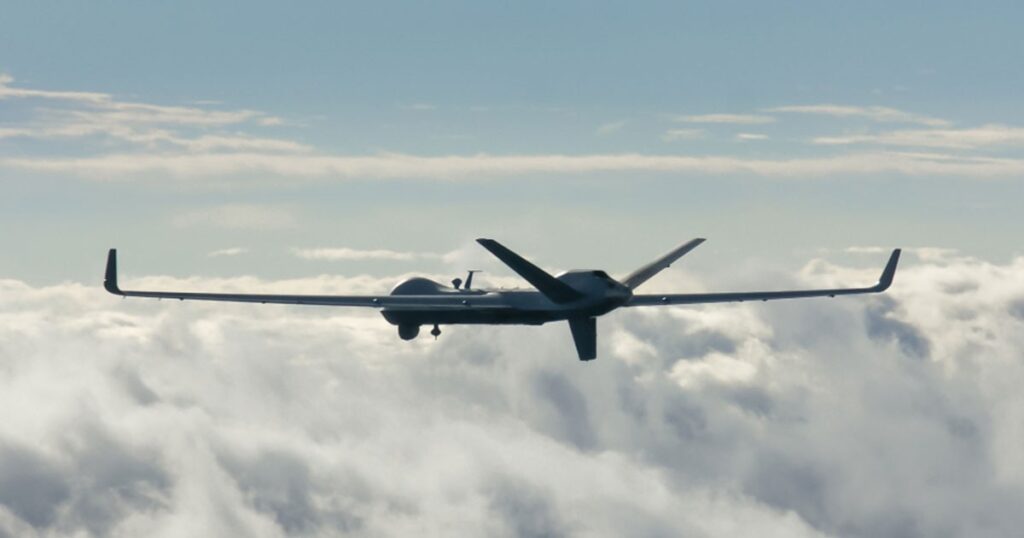
SAN DIEGO – 16 May 2024 – General Atomics Aeronautical Systems, Inc. (GA-ASI) and the U.S. Marine Corps (USMC) teamed up to conduct flight training on the operation of the MQ-9A Block 5 Unmanned Aircraft System (UAS) for the Marine Aviation Weapons and Tactics Squadron One (MAWTS-1) at Marine Corps Air Station in Yuma, Arizona. The students participated in Weapons and Tactics Instructor (WTI) Course 2-24, which is a comprehensive course designed for select pilots and enlisted aircrew that incorporates Marine Corps planning along with implementation of advanced air and ground tactics.  

The seven-week course, which was completed on April 20, 2024, for the first time included the employment of GA-ASI’s SkyTower I pod, which is a USMC-specific payload for MQ-9A that provides airborne communication extension capabilities in various waveforms. SkyTower I provides an Airborne Network Extension to the Marine Air-Ground Task Force (MAGTF) that is a commercial-quality WiFi network, as well as a relay/repeater function connecting geographically disconnected teams. 

“Congratulations to the newest graduates of WTI,” said GA-ASI Vice President of DoD Strategic Development Patrick Shortsleeve. “GA-ASI is proud to support the training of the MAWTS-1 aircrews in the use and utility of the MQ-9A platform, especially now with our SkyTower capabilities.” 

The WTI course is renowned for its advanced graduate-level training, particularly in refining tactical skills and strategies for aviation operations. It is an integral part of developing and implementing cutting-edge aviation weapons and tactics, both in terrestrial and maritime settings. 

In recent training scenarios, the Marines had the opportunity to hone their skills using a GA-ASI-supplied MQ-9A. The platform provides valuable hands-on experience in operating advanced UAS, enhancing their proficiency in utilizing MQ-9A effectively for various missions. 

Graduates of the WTI program are poised to become go-to experts within their squadrons for the employment of MQ-9A Block 5, leveraging their comprehensive training and specialized knowledge. The program ensures that graduates are well-prepared to lead and execute missions utilizing this sophisticated platform with precision and efficiency. 

This training is a critical part of the MAGTF Unmanned Expeditionary (MUX) Medium-Altitude, Long-Endurance (MALE) program meeting Full Operational Capability (FOC). GA-ASI is a committed partner in helping the USMC meet this critical program milestone.  

GA-ASI has delivered 13 MQ-9A UAS to the USMC so far. The USMC awaits delivery of seven additional aircraft, which will fulfill their goal of three squadrons by 2025. 


Airbus Offers Unmanned UH-72 Helicopter for Marine Corps Aerial Logistics 

Photo Credit: Airbus

ARLINGTON, Va. — Naval Air Systems Command awarded Airbus U.S. Space & Defense a Phase I Other Transactional Authority Agreement, through Naval Aviation Systems Consortium, in support of the United States Marine Corps Aerial Logistics Connector.  

The award is part of a Middle Tier of Acquisition (MTA) Rapid Prototyping Program which aims to provide the Marine Corps with prototypes to demonstrate the aircrafts capabilities to the warfighter through a series of operationally experiments. The Airbus U.S. UH-72 Unmanned Logistics Connector, a variant of the proven Lakota platform, is intended to provide logistical support during expeditionary operations within contested environments. 

“Our unmanned UH-72 logistics connector leverages nearly two decades of U.S. military capability and offers Marines a versatile, affordable and enduring solution to address logistics missions around the globe,” said Rob Geckle, chairman and CEO of Airbus U.S. Space & Defense. “We look forward to supporting the Marine Corps with this latest modernization of the Lakota platform.” 


Leidos and Elroy Air to Demonstrate Autonomous Aerial Resupply Drone for U.S. Marine Corps

RESTON, Va. (May 14, 2024) – Leidos (NYSE:LDOS), a FORTUNE 500 innovation company, and Elroy Air, an autonomous aircraft systems and software development company, have been approved to demonstrate an autonomous Medium Aerial Resupply Vehicle – Expeditionary Logistics (MARV-EL) prototype for the Navy and Marine Small Tactical Unmanned Aircraft Systems program office (PMA-263). The flight test activities are scheduled for July 2024. The development and testing are part of a contract awarded last year to develop and demonstrate an uncrewed aircraft system that can autonomously resupply forward-deployed ground forces for the U.S. Marine Corps. 

“Leidos is pleased to team with Elroy Air to bring this critical capability to the warfighter,” said Tim Freeman, Leidos senior vice president and Airborne Systems business area manager. “Approval to proceed to test is a major milestone and is the result of months of hard work by the team. We look forward to demonstrating how the Leidos and Elroy Air MARV-EL solution will help deliver a logistics advantage to the Marines and other branches of the military.” 

Leidos and Elroy Air are slated to demonstrate Elroy Air’s Chaparral system at the U.S. Army Yuma Proving Ground in Yuma, Arizona. The Chaparral is a “lift-plus-cruise” hybrid-electric vertical take-off and landing (hVTOL) cargo aircraft. The Chaparral system leverages the benefits of wing-borne flight driven by electric propulsion and turbo-generation for efficient autonomous operations and longer-range missions. It is designed with an advanced carbon composite airframe and modular automated payload capabilities to help reduce the personnel required versus legacy aircraft and enable zero-touch logistics. 

“We’re excited to work with Leidos to provide these critical capabilities to U.S. and allied forces,” said Elroy Air CEO and co-founder Dave Merrill. “We’ve been designing Chaparral from the beginning to move cargo and resupply troops in the battlespace without putting crews in harm’s way. We look forward to demonstrating these capabilities and working toward serving the U.S. Marine Corps’ goals for expeditionary logistics.” 

MARV-EL is a PMA-263 effort designed to provide commanders with a responsive capability to sustain Marine Corps Forces conducting expeditionary advanced base and other distributed operations. MARV-EL, using autonomous operations, should be the “middle-weight” unmanned logistics asset, providing combat sustainment to Marines when ground or manned aviation assets are unavailable due to threat, terrain, weather, or competing priorities.