Insitu Going Strong at 30, Focusing on Maritime Operations
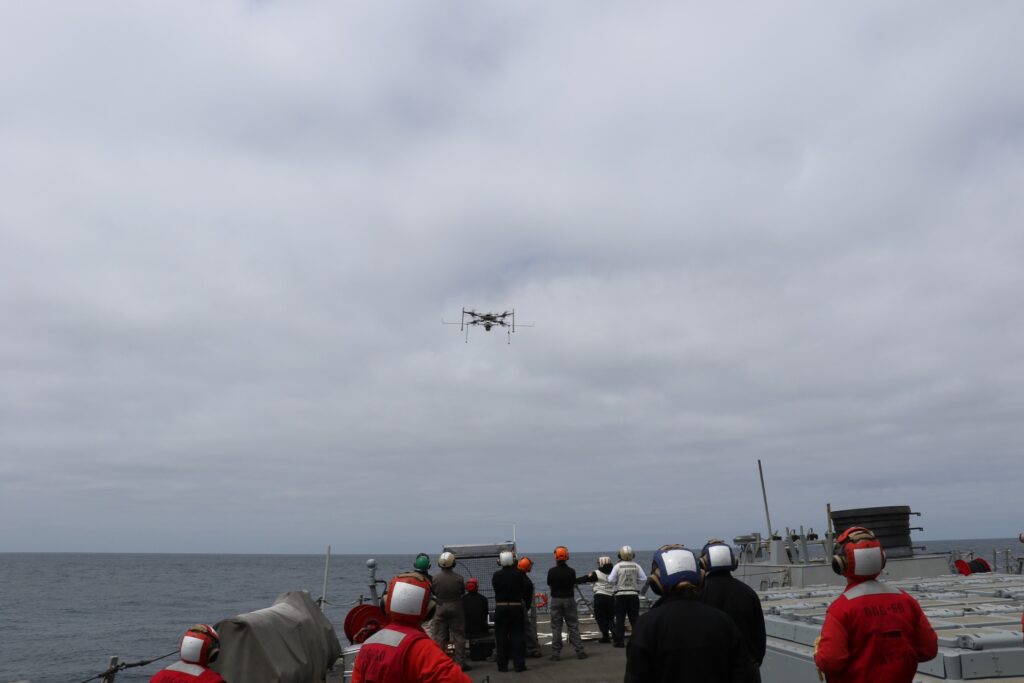
Insitu’s FLARES system carries an Integrator SUAS aloft to launch it. Photo Credit: Insitu

By Richard R. Burgess, Senior Editor 

NATIONAL HARBOR, Md. — Insitu, one of the most experienced companies in the small unmanned aerial systems (SUAS) market, will mark 30 years of operations in May.  

The company (in parent company Boeing’s Booth 1337), noted for its ISR (intelligence, surveillance, and reconnaissance) services and sales of modular SUAS such as ScanEagle and Integrator, especially for U.S. and allied operations in Afghanistan, is emphasizing maritime deployment of its SUAS with the shift of U.S. focus to the Indo-Pacific region, Diane Rose, president and CEO of Insitu, said in an interview with Seapower. 
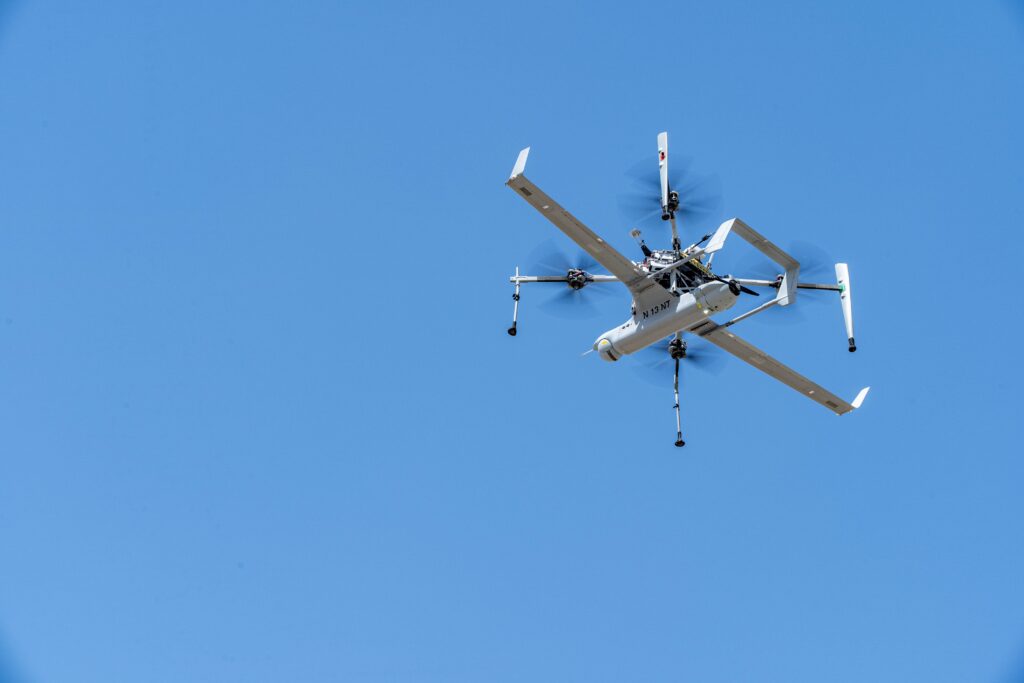
The Integrator UAS gets VTOL capability using the FLARES system. Photo Credit: Insitu

Insitu’s SUAS have flown 175,000 sorties, accumulating 1.5 million flight hours, including 70,000 hours of maritime operations, Rose said. The SUAS are operated by or for 40 customers — to include 20 navies and coast guards — in 35 countries. The SUAS have been operated from 28 classes of naval vessels.  

Insitu’s SUAS have been provided to Ukraine via Foreign Military Sales and have been “very successful in that space,” she said, and Insitu will “continue to support that effort.” 

Insitu continues to manufacture air vehicles and provide spare parts, system upgrades, and training to users. Modular sensors, provided by partner companies, can be swapped in the field to flexibly meet mission requirements. 

“Our architecture allows us to integrate very quickly third-party sensors and payloads,” Rose said. “With the customer’s interests and missions in mind, we have a unique capability to offer solutions that support whatever the customer’s needs may be.” 

Rose said there was a downtick in ISR services at land-based sites for the United States military since the end of the war in Afghanistan, but an uptick in international interest in Insitu’s products and services, especially focused on the maritime domain in the Indo-Pacific region, with an associated evolution in technology to satisfy emerging and changing customer needs.  

The U.S. Navy and Coast Guard continue to use Insitu’s ISR services. The Navy also has procured Insitu SUAS. Navy units continue to use the RQ-21A Blackjack version of the Integrator, while Navy Special Warfare units use the RQ-27B version of the ScanEagle. 

“Maritime operations are hard, and this is what 30 years of experience gives us,” Rose said. “Shipboard movement, shipboard radars and antennas, the EMI [electro-magnetic interference] environment, the harsh weather conditions, global logistics — how do you re-supply your systems, how do you meet the ships at the various ports? 

“There’s a lot to supporting maritime operations, and I think that’s really why you see the success of our systems’ enduring,” she said, speaking of the long service of ScanEagle in the ever-evolving field of uncrewed aerial systems. 

For customers who procure Insitu SUAS, the company provides training on how to operate the systems and also operates a 24/7 Operations Action Center, which provides customers engineering support and responses to trouble reports.   

This year at the Navy League’s Sea-Air-Space (SAS) Expo, Insitu will be highlighting its vertical takeoff capability in the FLARES (Flying Launch and Recovery System (FLARES) octocopter, which it introduced at the 2023 SAS. FLARES can carry an Integrator UAS aloft 500 feet and launch it on its mission, enabling the Integrator to maintain its range, endurance, and payload capacity. The octocopter alleviates the need for a launch rail, reducing the footprint of the system and making shipboard and expeditionary operation easier. The recovery method remains the same.  

Rose said Insitu has one customer so far for FLARES that carries a ScanEagle aloft. 
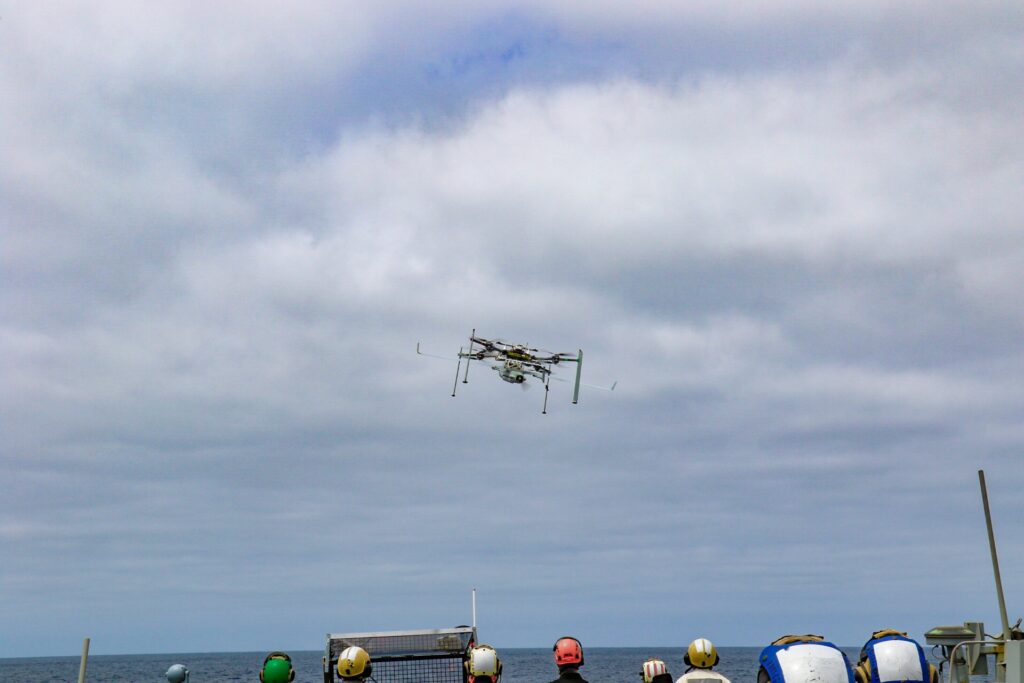
At Sea-Air-Space, Insitu will highlight its FLARES systems, which provides VTOL capability to fixed-wing UAS  Photo Credit: Insitu 

She said the 570-employee company is interested in growing its technical talent but emphasizes lean and efficient operations in a highly competitive industry. 

Insitu continues to press forward to address battlespace challenges, including SUAS operations in a GPS-denied environment and with kinetics. The company has conducted inert-drop flight tests from Group2/3 SUAS.  



Gaming to Win and Learn at Sea Air Space

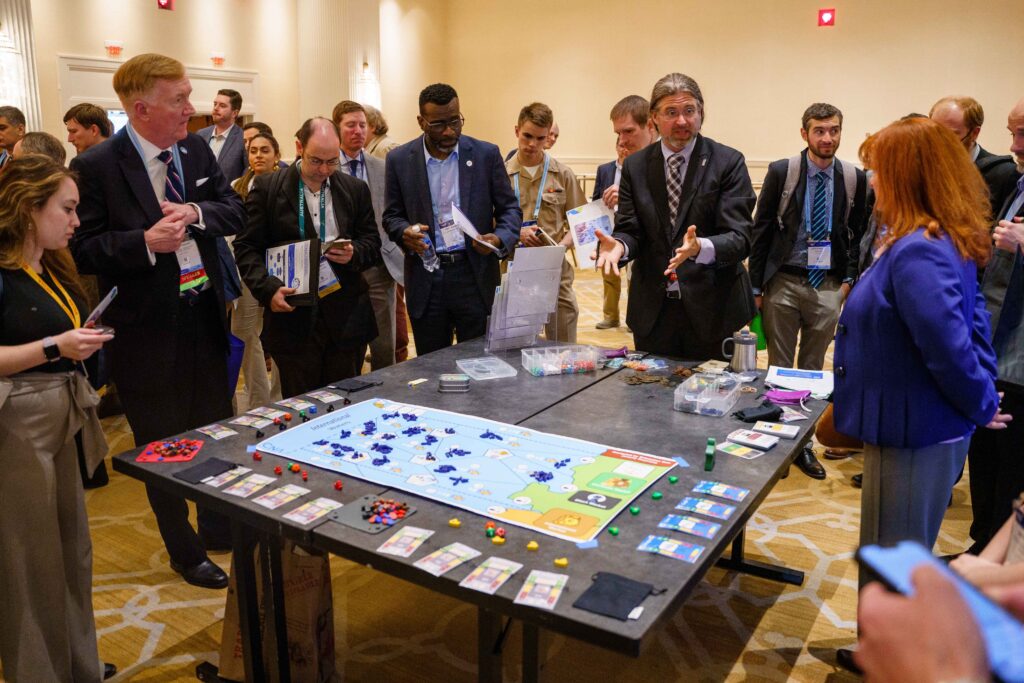
The Center for Maritime Strategy “Gaming to Win” event is in its second year at Sea Air Space and offers a little for everyone within the wider wargaming community. 

It features the presidents of the Naval Postgraduate and Naval War College and directors of wargaming from NWC and the Marine Corps University Krulak Center. It also highlights top-flight wargames and their designers who will invite participants to play along, and then be part of a panel on the design and use of games. 

The first panel on wargaming will Tuesday, April 9 from 2:45 to 3:45 p.m., followed by an interactive wargaming demonstration from 3:45 to 5:00 p.m. and a second panel from 5:00 to 5:45 p.m., all in the Cherry Blossom Ballroom.

Discussion at last year’s inaugural wargaming eventDiscussion at last year’s inaugural wargaming event. Photo Credit: Dan Goodrich

While the panel is called “Gaming to Win,” that is really not what wargames actually do for military commanders and civilian leaders. They perform a vital role in testing assumptions that commanders might possess, as well as offering them the opportunity to explore multiple “what if” scenarios. The late Peter Perla, a famous wargamer, described them as “a dynamic representation of conflict or competition, in a synthetic environment in which people make decisions and respond to the consequences of those decisions.” Wargames do not answer the question of which side will win, or what weapon system(s) are most effective in war. War games build confidence or raise doubts in existing plans. They are a useful tool in evaluating plans but come with limitations that are not always apparent. 

Limitations on Wargaming 

Some wargame results are interpreted as the “sure path to victory,” or the “inevitable road to defeat” depending on who reads the results and how they interpret them. Wargame results are sometimes seen as either confirming the rise of a specific weapon system or the condemnation of another to obsolescence. These are false interpretations of game results. First, wargames are only as “good” as their input data. That not only includes order of battle being correct, but also, when available, aspects of gaming that the Naval War College calls “the intangible aspects of military planning.” How “ready is any one opponent ship, aircraft, or submarine in terms of material readiness? Can that platform perform its intended mission as designed? 

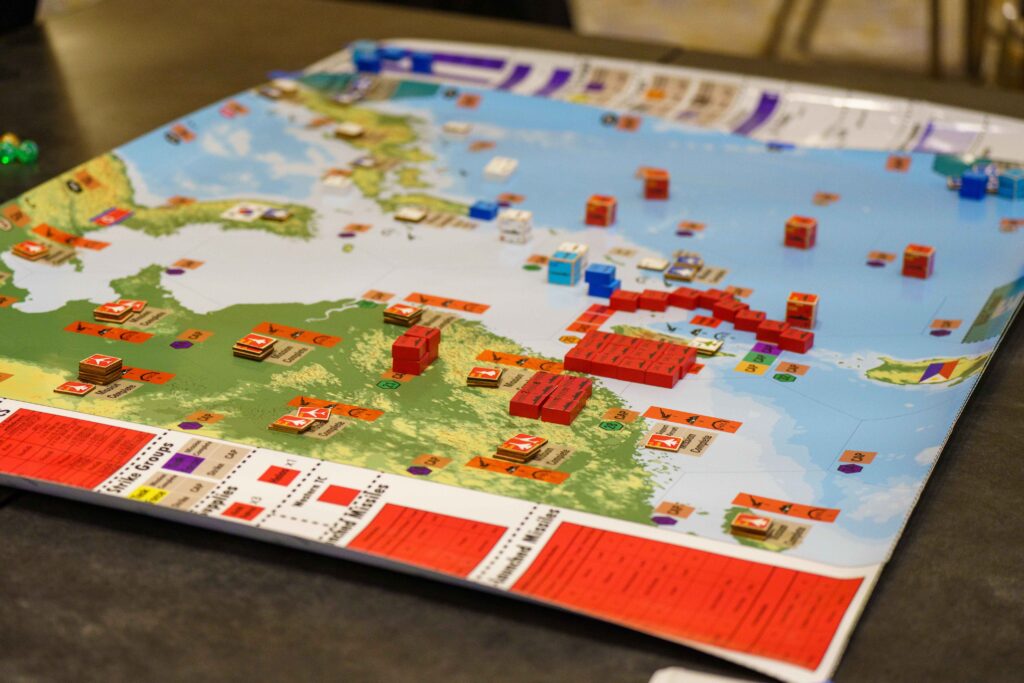
The board at last year’s wargaming event. Photo Credit: Dan Goodrich

What looks good on paper is not always what it appears. The Russian missile cruiser Moskva was generally rated by Cold War and 1990s-era wargames as able to sustain at least four hits from a medium-sized cruise missile like the U.S. Harpoon weapon and remain afloat. In the real world, the Moskva was sunk by two such weapons, with some reports suggesting the Russian crew immediately abandoned the stricken vessel and did not undertake damage control actions to save her.  

Another intangible aspect of wargame design and conduct is the leadership and conduct of the Red Cell, the team of experts who simulate what the opposing forces do. This has in some cases been a past challenge. From the late 1940s to the late 1970s, U.S. Navy leaders believed the growing force of Soviet submarines had only one main purpose, and that was to attack NATO resupply routes from North America to Europe. Russian leaders like fleet commander Admiral Sergei Gorshkov proclaimed the Soviet navy would confront Western navies on the high seas. The large German submarine fleets of World Wars I and II were designed to break Allied supply routes across the Atlantic. Why else would the Soviets build such a force? Intelligence gathered from wiretaps on Soviet undersea communications cables in fact revealed the Soviet navy’s main purpose for its submarines was defense of its ballistic missile submarine force and the protection of the Soviet Union from nuclear attack by Western naval forces. Soviet doctrine said the war would be over before the West could even consider reinforcing NATO by sea.  

Getting all of these aspects of wargaming as accurate as possible from the start is essential to setting the stage for game results that can be used by commanders to evaluate plans and the systems to execute them in both peace and war. Wargaming is pursued with victory as the goal, but if it is not sourced with accurate information, it can be a futile exercise. 


HII Responds to Post-COVID World with Flexibility, Supply Chain Support

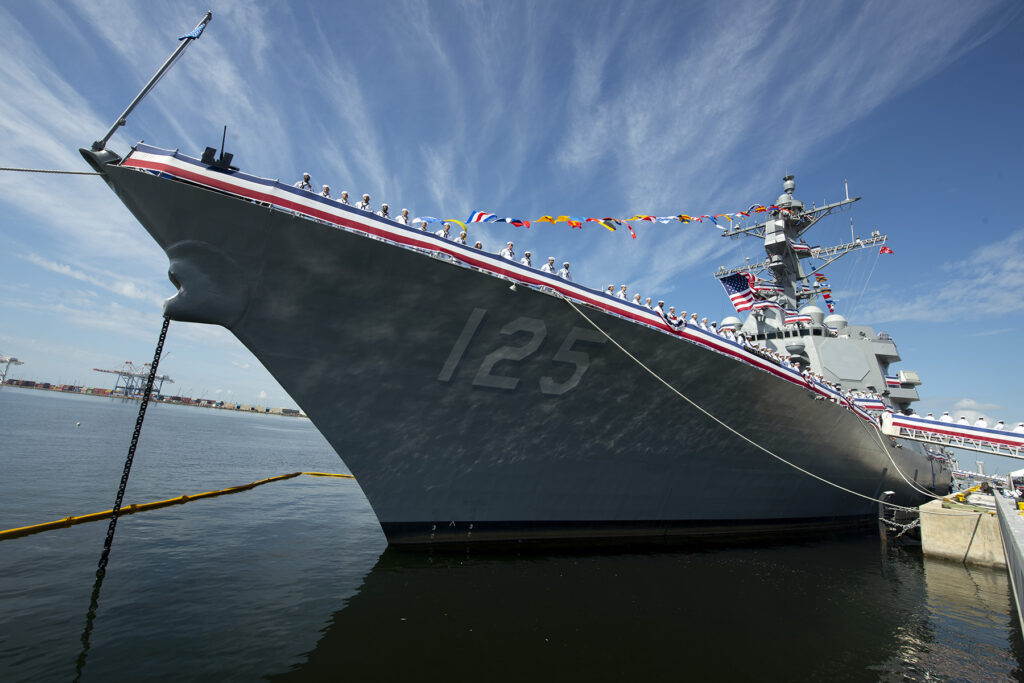
Sailors man the rails during the commissioning ceremony for the Arleigh Burke-class Flight III guided-missile destroyer USS Jack H Lucas (DDG 125) in Tampa, Florida Oct. 7, 2023. 
CREDIT: Department of Defense | EJ Hersom

Shipbuilder HII (Booth 1323) has embarked on a range of efforts to improve its workforce, bolster the supply chain and boost its capital investments, HII President and CEO Chris Kastner said in a briefing on the eve of Sea-Air-Space 2024. 

The company saw as far back as 2015 there would be significant demand for ships, but couldn’t anticipate a worldwide pandemic that affected supply chains and the workforce, followed by rampant inflation, Kastner said. 

“There’s really unprecedented demand in shipbuilding right now that we saw coming, and it has arrived,” he said. “With Navy leadership … the industry has been getting after this since COVID started.” 

The company and its subsidiaries have been outsourcing some of the work they used to do, which helps bolster the supply chain, Kastner said. Since 2020, HII has helped create more than 200 new suppliers and outsourced 3.6 million hours of work.  

It has also spent $450 million on workforce training and is providing new technology tools at its workforce, including artificial intelligence to help make its practices more efficient.  “If we can use AI to improve our processes, we’re going to do that,” Kastner said. 

Issues with shipbuilding came to the fore just this past week, as the preliminary results of a Navy shipbuilding study showed major programs are years behind schedule, including the first Columbia-class submarine and the future USS Enterprise aircraft carrier. 

Advanced procurement is critical to avoiding such issues, Kastner said, one reason the shipbuilder has been pushing for a two-carrier buy for CVNs 82 and 83, similar with what was done for the future Enterprise (CVN 80) and Doris Miller (CVN 81), which were procured as a two-ship buy. 

“We would like to get started in [20]26, potentially in 25 on the critical suppliers, in regard to 82,” Kastner said. “There’s no doubt that a two-ship buy with 80 and 81 really reduced the risk of 81. The risk we had on 80 was alleviated with 81.” 

As for the future USS District of Columbia, the first boat in the Columbia class, Kastner said it has a “very robust” risk management effort, “but you’re going to have first-in-class issues. And couple that with a lot of green labor, that can yield to workmanship issues, and efficiency issues, and you get potential schedule issues. It’s a first-of-class ship, and you’re rebuilding a workforce coming out of COVID.” 

He noted that two shipbuilding programs involving HII are doing well, the LPD amphibious transport dock and DDG Flight III. 

“What are the characteristics of those programs? Stable designs — and when the design changed it was very thoughtfully implemented, I’m talking about DDG Flight III — on time advanced procurement. Consistent workflow. All of those … and a really good core group of shipbuilders,” Kastner said. 

Workforce Adjustments 

“It’s a fact of life that you have a less experienced workforce than you had before, across the board. There’s significant loss of skill after covid. That’s been broadly understood, and it’s been a cross section of our talent base,” Kastner said. 

That’s where HII is trying new things, including providing more flexibility for shipbuilders when they come in, including more time off early in the process. The company also has more programs to help their new hires enter the shipbuilding workforce. 

“We used to just train them and send them out to a crew. Now, we train them, we bring their foreman in the training center and we put them out as a team. So, they have a framework and a cultural that they’re developing with their team, so they feel like they’re not alone when they go out into the shipyard,” he said. 

HII is also recruiting from areas where people are likely to stay, according to data analytics. It is also using targeting incentives, where good performance and attendance lead to a boost in pay. 


STEM Expo Brightens National Harbor with Exciting Science Demonstrations

The STEM Expo brought 5th through 12th grade students face to face with exciting science concepts on Sunday, April 7, filling the Cherry Blossom ballroom with laughter and gasps of wonder. 

The event featured interactive workshops, hands-on demonstrations, STEM career information and just plain fun, including the famous nitrogen ice cream booth and a visit from Slapshot, the feathered mascot for the Washington Capitals hockey team. 

While the event was fun, there was a serious purpose behind it, according to representatives from HII, the shipbuilder that was the Champion Sponsor for the event, alongside sponsors CACI and Booz Allen. 

VR and 3D Printing 

HII gave attendees a slice of real-life modern shipbuilding, demonstrating the use of virtual reality for ship inspections and welding and also showcasing 3D printing, or additive manufacturing, which is being used to create some components in the real world. 

“It’s a safe space to fail, is what it really is. They learn these objectives here and don’t have any real-world consequences like injuries or anything,” said Grant Ronquillo, a software engineer at HII’s Newport News Shipbuilding. 

It’s also the kind of training these students could expect to get if they pursued a career in shipbuilding.  

“We’re working with our training programs to get this implemented as part of the standard training within Newport News Shipbuilding and across HII,” Ronquillo said, while behind him a STEM Expo visitor made her way through a simulated 3D room. 

Visitors to HII’s booth were also shown a virtual welding booth and a 3D printer. The VR welding demonstration allowed students to take a turn, receive instruction on how to do better, and then try again, said Brian Treat, the lead general foreman at Newport News Shipbuilding.  

“They think it’s the real thing,” he said, but it removes all the risk. “What’s key here is removing all the risk of real-life welding, allowing them to feature the same attributes and talk through it before somebody would go do it in real life.” Again, it’s how welders are actually being trained. 

The additive manufacturing is another technology that some kids are already familiar with, said Perry Haymon, the chief technology engineer at HII’s Ingalls Shipbuilding.  

“We brought this today to demonstrate to the kids how 3D parts are printed,” Haymon said. It’s a technology that’s making its way into shipyards. 

“We do polymer as well as metallic,” he said. “It’s a great technology, it’s a good thing to get into, for the kids to learn, because they like to draw, they like to create, so by doing solid models, now they can actually take that and put it into a printer and actually see what they’ve created.” 

Engaging Students 

STEM is important because  “it’s such a broad field and it can be used in so many ways,” said Notashia Thomas, a program manager at STEM sponsor CACI. 

“When students come to this particular expo, they are exposed to just a myriad of options, and I think it really excites them. I absolutely see the children getting engaged. At our table we’ve been doing design principles. They try a design, they try it again, they try it again until they see it work, and that’s what STEM is all about; the problem solving, the persistence that’s involved. It’s just great to see them engaged.” 

The Navy sees the value of STEM as well, contributing several displays and demonstrations for the expo, including in robotics and medicine. 

“What is the value of STEM? The importance of STEM in the Navy cannot be overstated,” said Commander Shannyn Fowler, commanding officer of Navy Talent Acquisition Group Richmond. “It’s the backbone of how we operate, in terms of our engineering programs, in terms of our aviation programs, information technology, cyber warfare, explosive ordnance disposal, and so many more. It’s what keeps our Navy afloat, it’s what keeps our aircraft in the sky, and it’s what keeps our enemies afraid of us.” 

Fowler said she was pleasantly surprised by the enthusiasm she saw in the students coming through the expo.  

“The enthusiasm is beyond measure,” Fowler said. “The excitement of young people between the ages of 5th grade and 12th grade and in STEM programs is beyond my expectation walking in on this.” 


U.S. 4th Fleet Announces Southern Seas 2024 Deployment

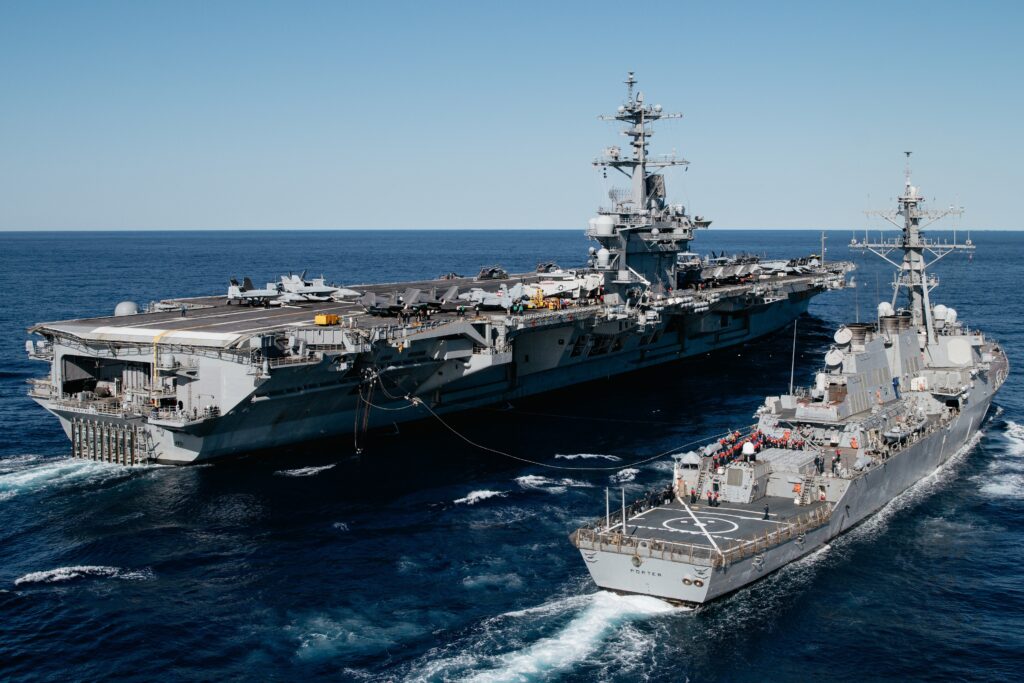
ATLANTIC OCEAN (Feb. 26, 2024) The Arleigh Burke-class guided-missile destroyer USS Porter (DDG 78) conducts a replenishment-at-sea with the Nimitz-class aircraft carrier USS George Washington (CVN 73) while underway in the Atlantic Ocean, Feb. 26, 2024. (USN photo by MC2 Nicholas A. Russell) 

From U.S. 4th Fleet, 5 April 2024 

MAYPORT, Fla. - The U.S. Navy aircraft carrier USS George Washington (CVN 73) will deploy to the U.S. Southern Command area of operations over the next few months as part of U.S. Naval Forces Southern Command/U.S. 4th Fleet’s Southern Seas 2024 deployment. 

George Washington, Arleigh Burke-class guided-missile destroyer, USS Porter (DDG 78), and Henry J. Kaiser-class replenishment oiler USNS John Lenthall (T-AO-189) are scheduled to conduct passing exercises and operations at sea with partner nation maritime forces as the ships circumnavigate the continent of South America. Southern Seas 2024 will feature subject matter expert exchanges and provide the opportunity for distinguished visitors from partner nations to see aircraft carrier operations up close. Engagements are planned with Argentina, Brazil, Chile, Colombia, Ecuador, Peru, and Uruguay, with port visits planned for Brazil, Chile, and Peru. 

“Southern Seas 2024 will provide the opportunity to improve interoperability and increase proficiency with partner nation maritime forces,” said Rear Adm. Jim Aiken, Commander U.S. Naval Forces Southern Command/U.S. 4th Fleet. “Deployments like Southern Seas strengthen maritime partnerships and build trust with our partners in the region.” 

“We look forward to building readiness and advancing training as we engage with our friends and partners in South America,” said Rear Adm. Robert Westendorff, Commander, Carrier Strike Group 10. “We also look forward to visiting several spectacular locations in South America, as U.S. Navy Sailors don’t often get to see this part of the world.” 

New for Southern Seas 2024, an embarked international staff of approximately two dozen officers from 11 partner nations will serve aboard USS George Washington. This international staff will receive instruction from U.S. Naval War College professors and will work alongside embarked Destroyer Squadron 40 personnel to conduct detailed operational planning in support of operations at sea. Countries planning to participate in this embarked international staff include Argentina, Brazil, Canada, Chile, Colombia, Ecuador, the Netherlands, Paraguay, Peru, Trinidad and Tobago, United Kingdom, and the United States. 

Southern Seas 2024 marks the 10th mission to the region since 2007 and the third time involving USS George Washington. The aircraft carrier also conducted Southern Seas 2008 and Southern Seas 2015. Like the previous deployments, Southern Seas 2024 will foster goodwill, strengthen maritime partnerships, counter threats, and build our team. 

Aircraft carrier USS George Washington is one of the centerpieces of America’s Naval forces – the most adaptable and survivable airfields in the world. On any given day, Sailors aboard an aircraft carrier and its air wing come to the fight trained and equipped across a full range of missions. They are ready to control the sea, conduct strikes, and maneuver across the electromagnetic spectrum and cyberspace. No other naval force fields a commensurate range and depth of combat capabilities. 


VMFA-542 achieves full operational capability as U.S. Marine Corps’ first F-35 operational squadron on the East Coast

From Communication Strategy and Operations Office,  

2nd Marine Aircraft Wing   

Apr. 5, 2024 

MARINE CORPS AIR STATION CHERRY POINT, N.C. – Marine Fighter Attack Squadron (VMFA) 542, 2nd Marine Aircraft Wing (MAW), achieved full operational capability, Wednesday, as the U.S. Marine Corps’ first East Coast F-35 Lightning II Joint Strike Fighter squadron in the Fleet Marine Force.    

Full operational capability means that VMFA-542 is ready for full operations and completed its transition from a legacy tactical-aircraft platform to the F-35B Lightning II. The squadron is now capable and eligible to deploy globally in support of planned or contingency operations. As 2nd MAW’s first operational fifth-generation fighter-attack squadron, they can fulfill their mission essential tasks (METs) in support of the Marine Air-Ground Task Force (MAGTF). These METs include close-air support, strike, strike coordination and reconnaissance, offensive anti-air warfare, suppression of enemy air defenses, electronic attack, electronic support, and active air defense.  

“Achieving full operational capability is a testament to the exceptional hard work and professionalism from the Marines of VMFA-542,” said Lt. Col. Brian Hansell, commanding officer of VMFA-542. “This milestone marks the addition of a battle-ready aviation squadron with unmatched combat lethality and survivability to the Marine Expeditionary Force. We are ready and able to conduct missions globally in support of the MAGTF as we continue to prepare for the next challenge.” 

The F-35 is a fifth-generation fighter jet with advanced stealth, agility and maneuverability, sensor and information fusion, and provides the pilot with real-time access to battlespace information. It is designed to meet an advanced threat while improving lethality, survivability, and supportability. The F-35B Lightning II is the short-takeoff and vertical-landing F-35 variant. This capability allows the aircraft to operate from amphibious assault ships and expeditionary airstrips less than 2,000 feet long.  

VMFA-542 began its transition to the F-35B Lightning II in December 2022 and received its first F-35B on May 31, 2023. The squadron then achieved initial operational capability, Feb. 5, before receiving its 10th aircraft, March 25, and achieving full operational capability, April 3. 

The squadron also recently participated in Exercise Nordic Response 24 in Norway, which was a two-week exercise with NATO allies and partners demonstrating military prowess across land, maritime, and aviation domains against challenging arctic and mountainous conditions. During the exercise, VMFA-542 conducted a distributed-aviation-operations event at Kallax Air Base in Lulea, Sweden, March 13, marking the first time a U.S. F-35 Lightning II aircraft landed in Sweden, the first time any F-35 operated at Kallax Air Base, and one of the first training events conducted by Sweden as a NATO member.  

 VMFA-542 is a subordinate unit of 2nd MAW, the aviation combat element of II Marine Expeditionary Force.  


U.S. Coast Guard heavy icebreaker returns to the U.S. following completion of Antarctic mission

U.S. Coast Guard 13th District, April 4, 2024 

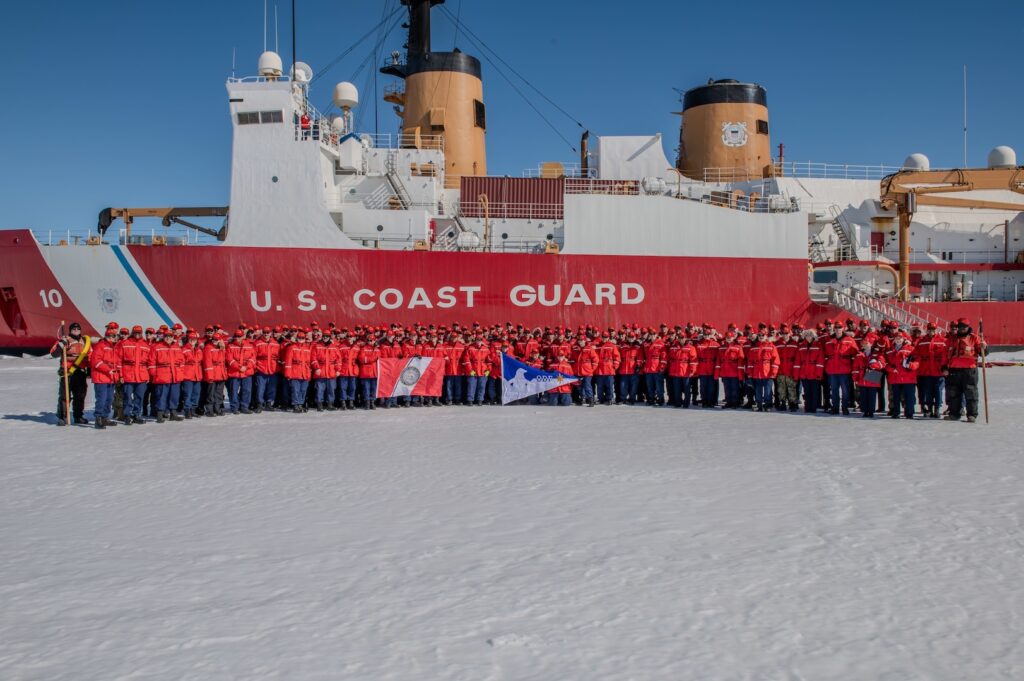
SAN FRANCISCO – The Coast Guard Cutter Polar Star (WAGB 10) and crew returned to the United States Sunday, following a 138-day deployment to Antarctica to support Operation Deep Freeze 2024. 
 
This deployment marks the Polar Star’s 27th journey to Antarctica in support of Operation Deep Freeze, an annual joint military service mission to resupply the United States Antarctic stations, in support of the National Science Foundation (NSF) – the lead agency for the United States Antarctic Program (USAP). This year also marks the 64th iteration of the annual operation. 
 
The Polar Star crew departed Seattle bound for Antarctica on Nov. 15, 2023, traveling more than 27,500 miles through the North Pacific, South Pacific, Indian, and Southern Oceans, as well as the Bering Sea and Gulf of Alaska, which included stops on four continents. 
 
While en route to Antarctica, the Polar Star made three logistical stops in Pearl Harbor, Hawaii, Sydney, and Hobart, Australia. In Hobart, the cutter and crew hosted the U.S. Ambassador for Australia, Caroline Kennedy, Australian members of parliament, Australian and Tasmanian government representatives, and local industry partners. 
 
After arriving in Antarctica, the cutter broke a 38-mile channel through fast ice up to 12 feet thick, creating a navigable route for cargo vessels to reach McMurdo Station. The Polar Star and crew executed three close-quarters ice escorts for cargo vessels through difficult ice conditions to guarantee the delivery of nine million gallons of fuel and 80 million pounds of cargo to advance scientific endeavors in the most remote region of the world. The cutter departed the Antarctic region on Feb. 14 after 51 days of operations in support of Operation Deep Freeze 2024
 
On the return journey, the Polar Star evaded a severe bomb cyclone in the Southern Ocean and had stops in Auckland, New Zealand, Yokosuka, Japan, and Dutch Harbor, Alaska. The Polar Star’s stop in Yokosuka consisted of a media visit and formal reception hosted aboard the cutter, where the crew conducted professional exchanges with senior maritime representatives from the United States, Japan, Australia, and New Zealand, underscoring the importance of collaboration within the Indo-Pacific to promote security and stability across the region. 
 
“The successful completion of this mission stands as a testament to the relentless commitment and selflessness exhibited by our crew,” said Capt. Keith Ropella, Polar Star’s commanding officer. “Despite adverse weather, difficult ice, and formidable mechanical challenges, the crew of Polar Star not only achieved their mission but did so with remarkable expertise and teamwork, proof of their devotion to duty and dedication to their shipmates.” 
 
Operation Deep Freeze is the annual logistical support mission the Department of Defense provides to the NSF, which the USAP manages. This includes strategic and tactical inter-theater airlift and airdrop coordination, aeromedical evacuation support, search and rescue response, sealift, seaport access, bulk fuel supply, port cargo handling, and transportation requirements supporting the NSF. This unique mission demonstrates U.S. commitment to the Antarctic Treaty and scientific research programs. The Polar Star and crew contribute to this yearly effort by breaking the solid ice channel to clear the way for supply vessels. 
 
The Polar Star is now in Vallejo, California, for phase four of its five-year Service Life Extension Project (SLEP). SLEP was awarded to Mare Island Dry Dock, LLC to recapitalize targeted systems, including the propulsion, communication, and machinery control systems, and conduct significant maintenance to extend the cutter’s service life. The Coast Guard will mitigate the risk of lost operational days due to unplanned maintenance or system failures by replacing obsolete, unsupportable, or maintenance-intensive equipment. Each phase is coordinated so that operational commitments, like Operation Deep Freeze missions in Antarctica, will still be met. 
 
The Seattle-based Polar Star is the United States’ only asset capable of providing access to both Polar Regions. The cutter is a 399-foot heavy polar icebreaker commissioned in 1976. It weighs 13,500 tons, is 84 feet wide, and has a 34-foot draft. The six diesel and three gas turbine engines produce up to 75,000 horsepower. 


April 4 Red Sea Update 

U.S. Central Command, April 4, 2024 

TAMPA, Fla. – At approximately 2:20 p.m. (Sanaa time) on April 4, U.S. Central Command (CENTCOM) forces successfully engaged and destroyed one anti-ship missile (ASM) in a Houthi controlled territory of Yemen. There were no injuries or damage reported by U.S., coalition, or commercial ships. 

It was determined that the missile presented a threat to U.S. and coalition forces and merchant vessels in the region. CENTCOM is dedicated to protecting the freedom of navigation and making international waters safer and more secure for Coalition and merchant vessels. 


Coast Guard Offloads More Than $24 Million in Illegal Narcotics Interdicted in Eastern Caribbean

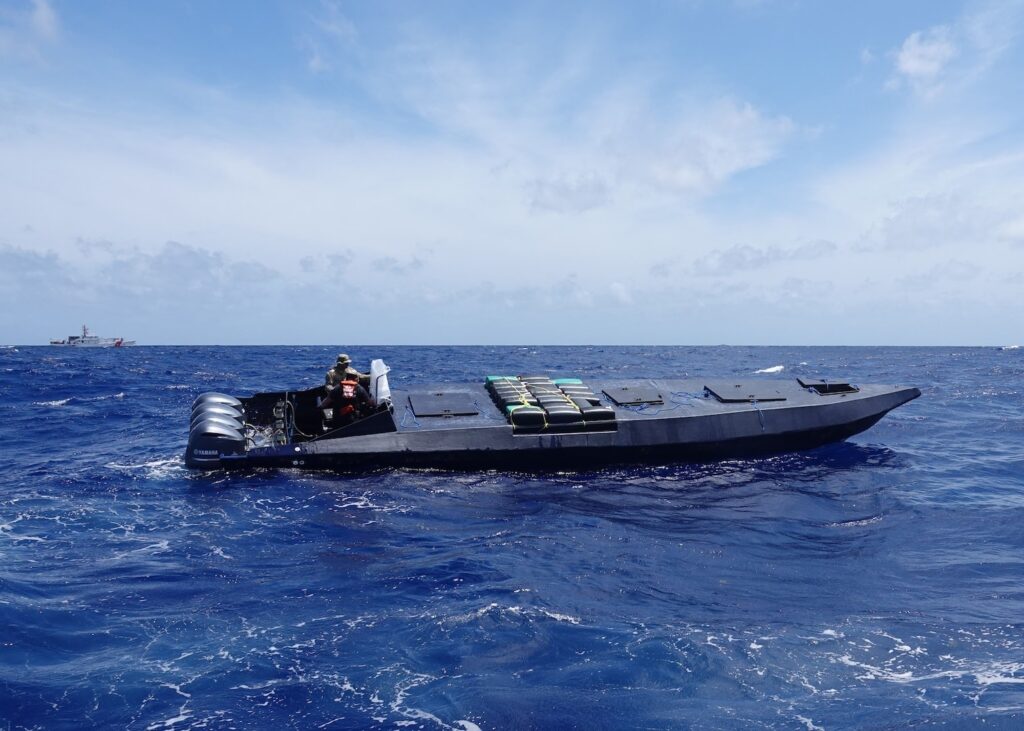
Crew members from USCGC Margaret Norvell (WPC 1105) board a drug smuggling vessel carrying 30 bales of illegal narcotics approximately 190 miles south of Puerto Rico March 24, 2024. The bales weighed more than 1,850 pounds and have an estimated street value of approximately $24.3 million. (U.S. Coast Guard photo courtesy of the USCGC Margaret Norvell crew)

U.S. Coast Guard 7th District, April 5, 2024 

MIAMI – The crew of Coast Guard Cutter Margaret Norvell offloaded more than 1,850 pounds of cocaine with an assessed street value of approximately $24.3 million in Miami, Friday.   

The crew interdicted a low-profile go-fast vessel carrying 30 bales of the illicit narcotics and detained five suspected smugglers approximately 190 miles south of Puerto Rico.   

The suspected smugglers will face prosecution in federal courts by the Department of Justice.   

“I am incredibly proud of our crew,” said Lt. Cmdr. Colin Weaver, Commanding Officer of cutter Margaret Norvell. “I am also grateful for the exceptional coordination and teamwork extending beyond our unit that contributed to this interdiction. Countering drug trafficking organizations that operate throughout the Caribbean depends upon the international and interagency partnerships that JIATF-S and Joint Task Force-East bring to the fight.”   

The Margaret Norvell crew deployed with two boarding officers from Coast Guard Tactical Law Enforcement Team-South (TACLET-S) based in Opa Locka, Florida. TACLET-S is part of the Coast Guard’s deployable specialized forces program, with advanced training in high-risk interdiction operations in the maritime environment, including non-compliant vessel pursuit missions. Law enforcement detachments from TACLET-S deploy aboard Coast Guard, U.S. Navy and foreign allied ships to augment their capabilities and authorities to perform counter drug missions under U.S. law.   

“Drug busts like this one by Margaret Norvell’s crew save lives by reducing the flow of harmful narcotics to the United States and disrupting the illicit maritime activity of transnational criminal organizations,” said Capt. John B. McWhite, chief of enforcement for Coast Guard District Seven. “The efforts to counter illicit smuggling in the Caribbean are truly a collaboration between the Coast Guard and our federal partners and regional allies. The Coast Guard will continue to do our part to deny drug trafficking networks access to maritime smuggling routes in support of the National Drug Control Strategy.”  

Detecting and interdicting illegal drug traffickers on the high seas involves significant interagency and international coordination. The Joint Interagency Task Force South in Key West, Florida conducts the detection and monitoring of aerial and maritime transit of illegal drugs. Once interdiction becomes imminent, the law enforcement phase of the operation begins, and control of the operation shifts to the U.S. Coast Guard throughout the interdiction and apprehension. Interdictions in the Caribbean Sea are performed by members of the U.S. Coast Guard under the authority and control of the Coast Guard’s Seventh District, headquartered in Miami.   

The cutter Margaret Norvell is one of 20 Sentinel-class fast response cutters homeported in the Seventh District. The FRCs are multi-mission patrol boats tasked with vital homeland security missions including drug and migrant interdiction; ports, waterways and coastal security; fisheries enforcement; search and rescue; and national defense. FRCs are named after Coast Guard enlisted heroes in service history, and the cutter’s namesake, Margaret Norvell, served for 41 years with the U.S. Lighthouse Service in Louisiana from 1891 to 1932.   

For breaking news, follow us on “X” (formerly Twitter). For additional information, find us on Facebook and Instagram.   

Visit GoCoastGuard.com to learn about active duty and reserve, officer and enlisted opportunities in the U.S. Coast Guard. Information on how to apply to the U.S. Coast Guard Academy can be found here.   


Metal Shark Set to Debut Autonomous, Amphibious, Semi-Submersible “Prowler” Military Interceptor and “Frenzy” Micro-USV

JEANERETTE, La. – April 4th, 2024: Louisiana-based boat builder Metal Shark has announced the debut of “Prowler,” a versatile military craft combining multiple unique technologies to meet the current and near future warfighting requirements of the US military and its allies. The company is also debuting “Frenzy,” a high-performance, low-cost, amphibious micro-USV with a payload carrying capacity of up to 14 lbs. 

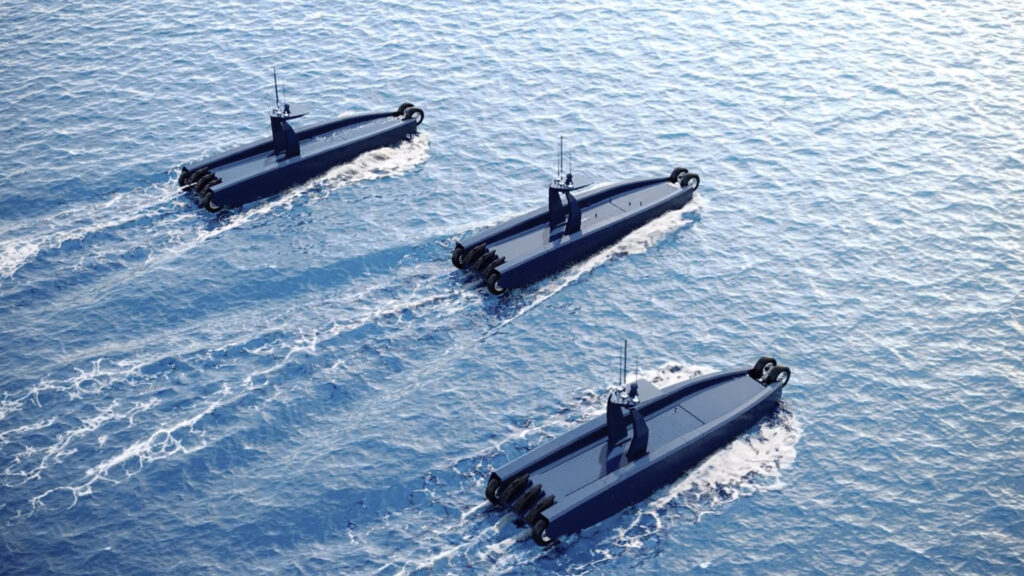
Merging autonomous, amphibious, and semi-submersible capabilities with the performance and seakeeping characteristics of a slender deep-vee monohull surface craft, Prowler has been designed to address operational challenges identified by the United States Navy and Marine Corps, two key Metal Shark clients.  

“Prowler represents the sum total of everything we’ve learned while building 400-plus autonomous and remote operated vessels for our military customers over the past decade,” said Metal Shark CEO Chris Allard. “Every aspect of Prowler’s intended operation draws from proven technology. Prowler delivers massive increases in lethality and versatility, merging multiple capabilities into a compact, flexible, lower-cost platform ready for volume production.” 

Fully amphibious and capable of autonomous or remote operation on land or at sea, Prowler offers drastically simplified launch and recovery compared to traditional vessels. Prowler is capable of self-launch and self-recovery at boat ramps, without a prime mover or trailer, or from the well deck of an amphibious ship, with no need for cumbersome cradles or dollies. Prowler’s low-speed crawl enables autonomous or remote operation on land, allowing vessels to be staged and maneuvered with minimal effort.  

Prowler operates on land via a proprietary electric-drive system developed by Metal Shark, which uses low-pressure, high-traction tires mated to dedicated motors for propulsion and steering. Hydraulic rams raise and lower front and rear wheels for operation on land or at sea. Rear wheels are equipped with OTR-certified tires and marine brakes, and Prowler features DOT-compliant lighting. This allows Prowler to be transported over the road behind a conventional prime mover with no trailer, greatly simplifying logistics for operators. 

Propelled by a 300-horsepower Volvo Penta D6 Aquamatic inboard diesel engine and stern drive, the 30-foot, welded-aluminum Prowler operates as a typical surface vessel while underway, with a deep-vee planing hull delivering a 35-knot sprint speed and 500 nautical mile range.  

Designed for extended loitering in a semi-submerged state, Prowler’s large integrated ballast tanks flood when the vessel is static. In loitering mode, Prowler’s decks are near the waterline, with only the vessel’s arch-style communications mast visible above the water. Semi-submersion reduces Prowler’s operational profile while also improving stability for sensors, surveillance and weapons systems. 

Prowler’s mast carries an array of communications equipment and a situational awareness ensemble for autonomous or remote operation, and can be equipped with port and starboard launch tubes for the deployment of loitering smart drones or other weapons. The mast also serves as the air intake for Prowler’s diesel engine. A lithium-ion battery or optional generator power pack supports station keeping, surveillance, guidance, and communications systems during extended loitering periods of up to a week. 

The lift from Prowler’s planing hull design allows the vessel to quickly climb to the surface from its submerged state to resume normal operation once the surveillance mission concludes.  

Prowler is equipped with a computer networked system able to support a multitude of UMAA-compliant command and control, autonomy, targeting, and AI software packages. Prowler’s system architecture provides the forward flexibility to accommodate third party software and/or hardware upgrades to support collaborative intercept capability or other technologies as they may be required.  

Prowler’s computer system, along with propulsion, mechanical, and electrical systems are contained within a single removable module to allow for expedited onsite servicing, repair, upgrade, or replacement with no need to transport the vessel. 

Prowler can simultaneously carry multiple payloads, with 1,000 lbs. of total payload carrying capacity. In addition to the aforementioned smart loitering drones, Prowler can carry up to twelve “Frenzy” amphibious micro USVs, which are carried on deck and self-launched on their own wheels via Prowler’s stern ramp. Designed and built by Metal Shark, the Frenzy features electric waterjet propulsion, carries a payload of up to 14 lbs., and, like Prowler, can loiter in a semi-submerged state. 

“I’ve been toying with the notion of this little gizmo ever since we began designing the Long Range Unmanned Surface Vessel (LRUSV) for the Marine Corps,” said Mr. Allard, speaking of the Frenzy micro USV. “There’s a huge need for attritable USVs in a compact form factor, and very few sources. Frenzy will serve this demand, and putting Frenzy onboard Prowler makes perfect sense. Pairing an over-the-horizon capable USV with micro-USVs delivers a one-two punch capability, keeping the key asset safe while allowing the attritable drones to do their job, all while being watched from the sky.” 

Prowler and Frenzy will make their public debut April 8th through 10th at Sea-Air-Space 2024 in National Harbor, Maryland, before returning to Metal Shark’s Louisiana facilities for further testing and development. 

“We challenged the men and women of Metal Shark to dream big and to think outside the box to bring Prowler and Frenzy to life in an accelerated timeframe, and I am blown away by their talent, energy, and dedication to this project,” said Mr. Allard. “I look forward to showing off the ingenuity and hard work of our people next week at Sea-Air-Space.”