SWIT Prevents Costly Mistakes Before Weapons Reach the Fleet 
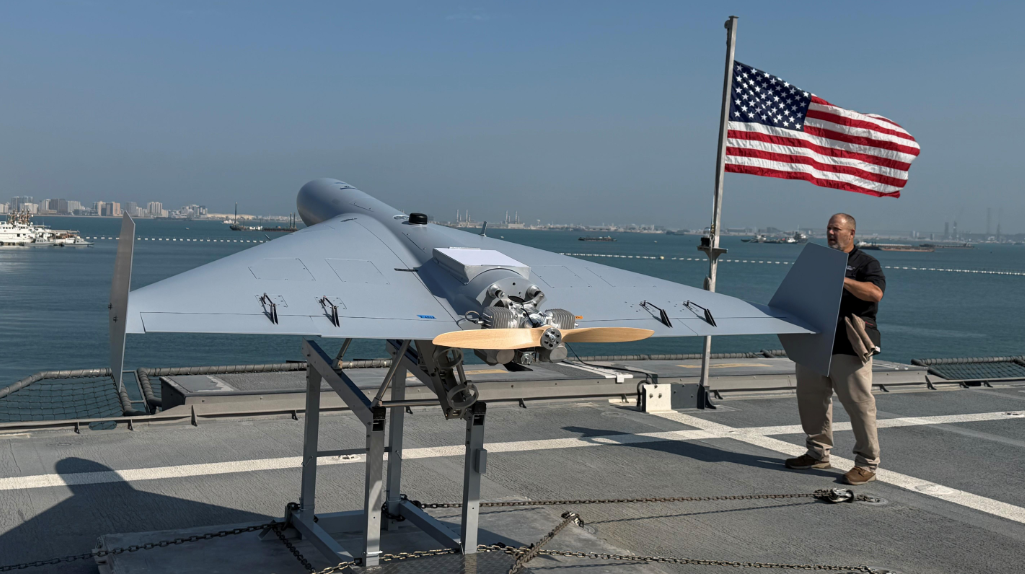
Rob Pavel, a Shipboard Weapons Integration Team logistician with Naval Air Warfare Center Weapons Division, conducts shipboard weapons integration work in support of the Low-cost Unmanned Combat Attack System aboard USS Santa Barbara (LCS 32). SWIT validates that weapons systems can be safely stored, moved, and handled at sea prior to operational use. LUCAS later successfully launched from the ship’s flight deck Dec. 16, 2025, as part of Task Force Scorpion Strike operations while operating in the Arabian Gulf. (Courtesy photo)

From Naval Air Weapons Division, Point Mugu, Calif., Feb 6, 2026 

The Shipboard Weapons Integration Team provides independent assessments that ensure Navy ships can safely store, move, and handle weapons at sea, turning new shipboard firepower into usable fleet capability. 

That work happens far from the flight deck and long before a system ever deploys. SWIT evaluates weapons facilities on new construction ships and ship modifications to confirm crews can safely handle ordnance under real operating conditions. 

Inside the ship, new capability creates hard questions most people never think about: Where does a weapon go when the ship rolls? Can Sailors move it through narrow passageways without forcing unsafe workarounds? Can crews secure it safely alongside other ordnance? 

SWIT answers those questions before a weapon is delivered. 

New capability does not fit the ship by default 

Barry Olson, head of the Sustainment Program Management and Analysis Department, described SWIT as a reality check for weapons integration. 

“These guys work with the safety board and with the fleet on what is real, how we handle stuff, how we load stuff,” Olson said. 

Even small ship modifications can create major problems once a ship is underway. 

“Sometimes it’ll be a ship mod that messes things up,” Olson said. “They put a vending machine in the aisle and now you can’t get weapons to fit down the aisle anymore.” 

By identifying those issues before a system reaches the fleet, SWIT prevents costly rework, deployment delays, and potentially dangerous workarounds. Finding a blocked weapons route in port can save months of delays and costly modifications at sea. 

SWIT’s work spans more than unmanned systems. 

The team may be asked to plan safe storage and movement for helicopter weapons such as rockets and Hellfire missiles, ship self-defense rounds like Rolling Airframe Missile, and even Army rocket launchers temporarily embarked on cargo ships or tankers to meet urgent fleet needs. 

Independent checks built on fleet reality 

Bill Ayers, Shipboard Weapons Integration Team lead, said SWIT’s value comes from its role as an independent assessor. 

The Office of the Chief of Naval Operations designates SWIT as the Navy’s independent assessor for shipboard weapons facilities, placing the team inside magazines, weapons handling spaces, and ordnance movement routes on new construction and modified ships. Naval Sea Systems Command tasks SWIT to certify that those spaces work as designed and that crews can safely move and secure weapons before a ship enters service. 

Rather than relying on drawings alone, Ayers said the team tests ships the way Sailors will actually use them. SWIT brings inert weapons and representative equipment aboard and moves them through intended routes to confirm they can be handled safely. 

Those demonstrations matter because ships rarely match the plans. A few inches lost in a passageway or a late modification can block a weapons route and force crews into unsafe solutions. 

Rapid response for operational urgency 

SWIT’s rapid response capability proved critical when the team deployed on short notice to support Task Force Scorpion Strike aboard USS Santa Barbara (LCS 32) during Central Command operations. 

For the Low-cost Unmanned Combat Attack System, SWIT verified shipboard routes, identified required modifications, and confirmed weapons support equipment fit the littoral combat ship’s layout before the system reached the ship. The team’s validation helped ensure the system could be launched safely within a narrow operational window. 

On Dec. 16, Santa Barbara launched LUCAS from its flight deck while transiting the Arabian Gulf. It was the first shipboard launch at sea for the drone operated by Naval Forces Central Command’s Task Force 59. 

Validation that keeps capability accountable 

SWIT does not install weapons. The team validates them. 

“We’re the independent validation,” Ayers said. “The program gets to say we’re good to go. The installer gets to say we’re good to go. Then we come in and ask what about this, this and this.” 

That role becomes more important as the Navy fields new capability on compressed timelines. By identifying fixes early and testing realistically, SWIT helps ensure speed does not outrun safety or mission readiness. 

When a system launches at sea, it can look simple. What you don’t see are the months of assessments that prevented delays, avoided dangerous workarounds, and ensured the ship and crew were ready when the window opened. 

For Ayers, the entire process is designed for the warfighter. 

“It’s that 19-year-old Sailor on the deck.” Ayers said. “Our job is to make sure that when they have to use this equipment, it works and it’s safe. That’s the only thing that matters.”


Marines Establish Refueling Point in Indo-Pacific 

Feb. 6, 2026 |  By Marine Corps Lance Cpl. David Getz , 1st Marine Aircraft Wing,   

Marines assigned to Marine Wing Support Squadron 171 and Marine Fighter Attack Squadron 232 traveled to Tinian, one of the Northern Mariana Islands, to establish and operate a forward arming and refueling point during an aviation training relocation program aimed at developing expeditionary aviation capabilities and ensuring security throughout the Indo-Pacific region. 

“We are out here training to show we can set up a FARP anywhere quickly and provide support wherever the fight is happening,” said Marine Corps Sgt. Kuyler Brown, an expeditionary fuels technician assigned to the support squadron. 

The FARP was used to conduct simulated real-world scenarios that gave Marines on the ground experience operating a live FARP and pilots the ability to operate away from their main operating base while receiving continuous support. 

“Having a FARP allows us to stay in the fight,” Brown said. “It cuts down on flight time, keeps our jets in the air longer and shows we can set up anywhere and operate.”  

Tinian is located near Andersen Air Force Base, Guam, which provides the ability to rapidly refuel and support aircraft, making it a valuable training area for aviation training relocation operations and projecting power throughout the Indo-Pacific region.   

Conducting training from island locations like Tinian allows Marines to gain real-world experience practicing FARP assembly, disassembly and sustained aviation operations in austere environments — a key aspect of the expeditionary execution of a FARP.   

“This kind of training builds the Marines’ confidence not only in their own capabilities but in each other,” Brown said. “Our Marines know how to do their jobs, and exercises like this prove we can make it happen.”     

The successful setup and operation of the FARP at Tinian demonstrated Marine Wing Support Squadron 171’s ability to deploy and support aviation operations in austere environments. Training events like this give Marines the chance to develop their skills and remain ready to support future operations focused on ensuring a free and open Indo-Pacific region. 


U.S. Coast Guard Marks 200,000 Pounds of Cocaine Seized in Operation Pacific Viper 

From U.S. Coast Guard Headquarters, Feb. 5, 2026 

WASHINGTON – The U.S. Coast Guard announced Thursday it has seized more than 200,000 pounds of cocaine in the Eastern Pacific Ocean since launching Operation Pacific Viper in early August.   

The Coast Guard reached this milestone following recent interdictions of 13,337 pounds of cocaine by Coast Guard Cutter Seneca and 13,263 pounds by Coast Guard Cutter Robert Ward.  

“Operation Pacific Viper has proven to be a crucial weapon in the fight against foreign drug traffickers and cartels in Latin America and has sent a clear message that we will disrupt, dismantle, and destroy their deadly business exploits wherever we find it,” said U.S. Department of Homeland Security Secretary Kristi Noem. “The more than 75 million lethal doses seized during this operation will never reach our schools and neighborhoods to poison our children or tear apart American families. In cutting off the flow of these deadly drugs, the Coast Guard is saving American lives and delivering on President Trump’s promise to Make America Safe Again and reestablish our maritime dominance.”  

With 1.2 grams of cocaine being a potentially lethal dose, the total seized through Operation Pacific Viper equates to more than 75 million potentially deadly doses kept off U.S. streets. Eighty percent of all seizures of U.S.-bound narcotics occur at sea, underscoring the impact of Coast Guard maritime interdiction efforts.  

“Each Coast Guard drug seizure far from our borders prevents deadly drugs from reaching our communities and disrupts the profit that fuels narco-terrorists,” said Admiral Kevin Lunday, Commandant of the U.S. Coast Guard. “The success of Operation Pacific Viper proves that we own the sea, and the proficiency, vigilance, and heart of our crews is our greatest strength.”  

Since its inception, Operation Pacific Viper has accelerated counter-drug operations in the Eastern Pacific, a primary corridor for narcotics smuggling from Central and South America. The Coast Guard has surged cutters, aircraft and tactical teams to interdict, seize and disrupt the flow of cocaine and other illicit drugs. These efforts are a critical component of the broader U.S. strategy to combat narco-terrorism and dismantle transnational criminal organizations.   

Recent operations have highlighted the effectiveness of this approach, including record-setting interdictions. In December, the Coast Guard marked a significant achievement by seizing 150,000 pounds of cocaine and interdicting a drug smuggling vessel carrying more than 20,000 pounds of cocaine, highlighting the sustained effectiveness of Operation Pacific Viper.   

The Coast Guard’s persistent operations and rapid response have resulted in record seizure amounts, denying criminal organizations billions in illicit revenue and preventing the flow of dangerous drugs into American communities.  

Detecting and interdicting narco-terrorism on the high seas involves significant interagency and international coordination. U.S. Southern Command’s Joint Interagency Task Force-South, based in Key West, Florida, detects and monitors both aerial and maritime transit of illegal drugs. Once interdiction becomes imminent, the law enforcement phase of the operation begins, and control of the operation shifts to the U.S. Coast Guard throughout the interdiction and apprehension. Interdictions in the Eastern Pacific Ocean are performed by members of the U.S. Coast Guard under the authority and control of the Coast Guard’s Southwest District, headquartered in Alameda, California.  

The Coast Guard is the United States’ lead federal agency for maritime drug interdiction. We are part of the Department of Homeland Security team protecting our nation and are at all times a military service and part of the joint force defending it.  


Coast Guard Takes Delivery of 18th Mission-Ready HC-130J Surveillance Aircraft 

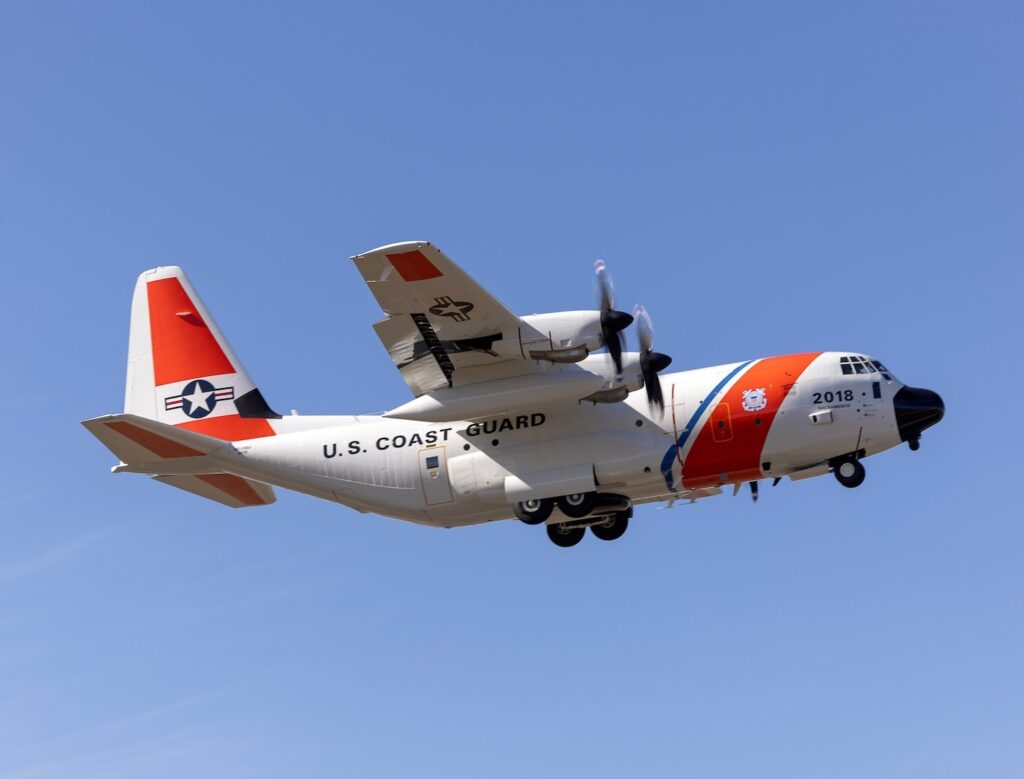
WASHINGTON — A newly delivered mission-ready Coast Guard HC-130J long range surveillance aircraft enhances mission readiness by providing advanced surveillance, command and control capabilities, and real-time information sharing with operational forces. With its extended range and endurance, the HC-130J plays a vital role in securing U.S. borders and maritime approaches, supporting commerce, and responding to emergencies. (U.S. Coast Guard courtesy photo) 

Release From U.S. Coast Guard Headquarters

WASHINGTON — The Coast Guard is completing final delivery activities this week for its 18th fully missionized HC-130J long range surveillance aircraft, designated CGNR 2018, at L3Harris Integrated Mission Systems in Waco, Texas. The aircraft will support the transition of Air Station Sacramento, California, from C-27J aircraft to HC-130Js. 

Three Coast Guard air stations currently operate the HC-130J: Elizabeth City, North Carolina; Kodiak, Alaska; and Barbers Point, Hawaii. The addition of CGNR 2018 marks a step toward expanding HC-130J operations to two additional air stations, beginning with Sacramento later this year. 

The Coast Guard received $1.142 billion in the One Big Beautiful Bill Act (OBBBA) for procurement and acquisition of fixed-wing aircraft, including HC-130Js. The investment, combined with early delivery of CGNR 2018, enables the long-range surveillance fleet to expand operations. 

L3Harris executes missionization of the baseline C-130J aircraft, integrating the Minotaur Mission System Suite, Coast Guard-specific multi-mode radar, sensors and communication systems. Additional capabilities, including enhanced approach and landing systems, expanded diagnostics and civil GPS, were integrated as part of a Block Upgrade 8.1 installation. 

Including funds from OBBBA, the Coast Guard has appropriations for a total of 25 HC-130J aircraft, one HC-130J simulator, initial spare parts inventory and site activation for two additional air stations. 

The HC-130J fleet serves as an on-scene command and control platform or surveillance platform, with the means to detect, classify and identify objects and share information with operational forces. The aircraft has a cruise speed of 320 knots, a range of 4,900 nautical miles and endurance of more than 20 hours. 

The missionized HC-130J enables the Coast Guard to control, secure and defend the U.S. border and maritime approaches, facilitate commerce and respond to crises or contingencies. 


RTX’s Raytheon Selected by DARPA to Develop Advanced Maritime Defense Technologies

Release From RTX

New capability will protect vulnerable vessels from threats at sea 

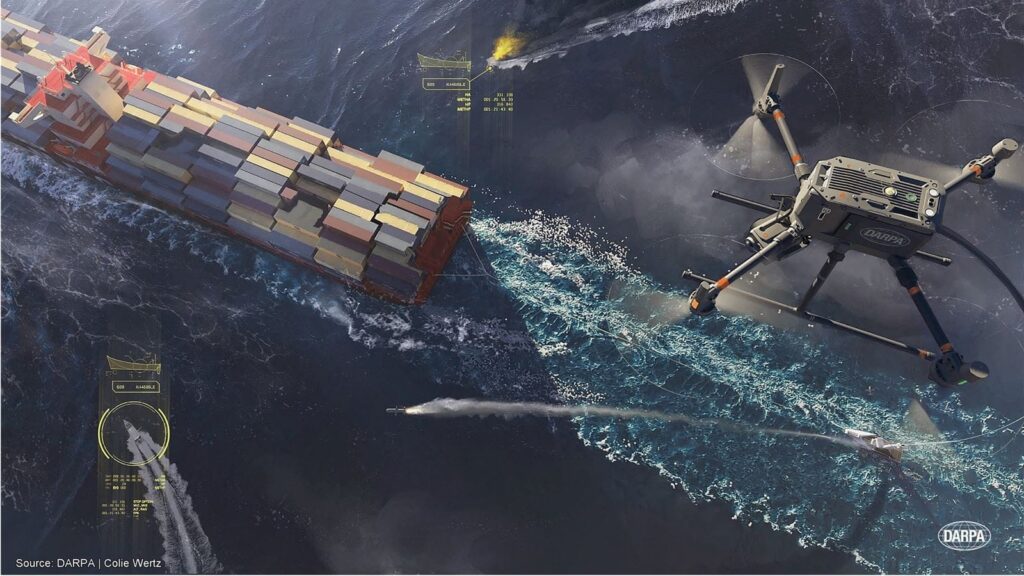
PORTSMOUTH, R.I., (February 2, 2026) — Raytheon, an RTX (NYSE: RTX) business, has been selected by the Defense Advanced Research Projects Agency (DARPA) to develop an advanced sensing and targeting system that will help defend vulnerable commercial shipping and naval logistics vessels against emerging threats such as unmanned surface vehicles (USVs). 

Under the contract, Raytheon’s Advanced Technology team will design, build, and demonstrate a system that consists of Electro-Optical/Infrared (EO/IR) sensors, advanced detection software, and robust command and control capabilities to enhance situational awareness and threat response. 

The system, which is being developed for DARPA’s Pulling Guard program, will deploy the sensors via a tethered drone connected to a semi-autonomous unmanned platform that is towed by commercial and naval logistics vessels. The sensors will provide real-time target tracking data to remote operators, enabling them to make rapid, informed engagement decisions.  

Phase one of the program will focus on simulated engagements to evaluate system performance and operator workflows. In phase two, the system will transition to integrating operational launchers and effectors for live operations. 

“Through this development, we are advancing critical security technologies for commercial shipping in regions like the Red Sea,” said Colin Whelan, president of Advanced Technology at Raytheon. “By integrating our proven expertise in command and control, high-performance sensing, and effectors, we will deliver a scalable, cost-effective solution that minimizes risks to both cargo and naval assets.”  

Beyond its primary focus of vulnerable ship protection, the technology Raytheon is developing has the potential to deliver broader capabilities across a wide range of naval and security operations, including automated overwatch for medium and large USVs and manned combatants operating in multiple theaters. 


USS Greeneville Returns Home Following Deployment 

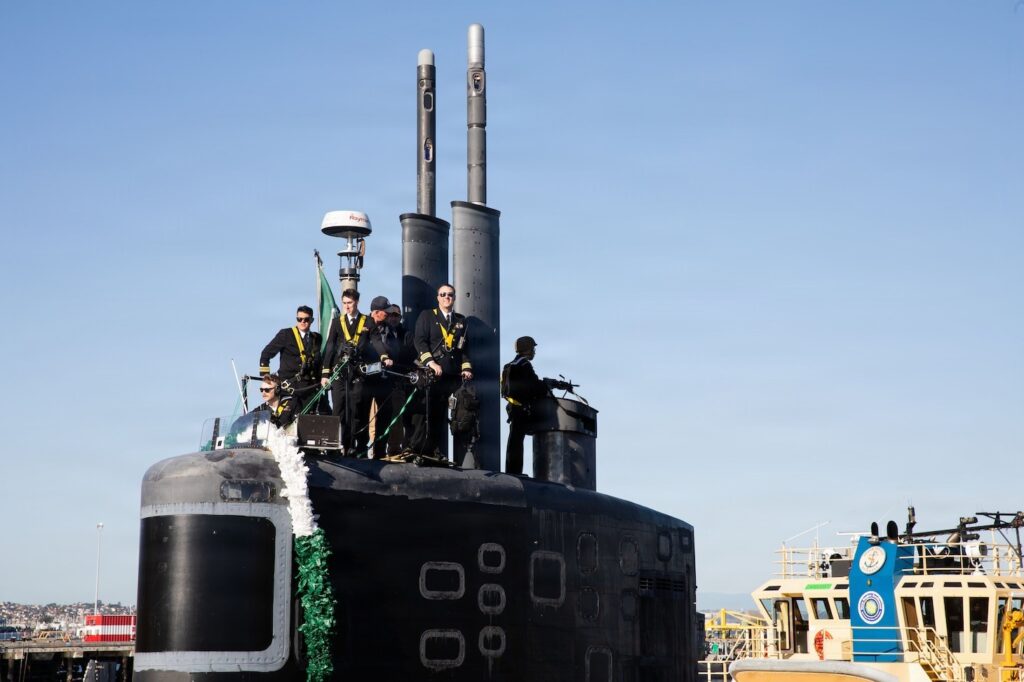
NAVAL BASE POINT LOMA, Calif. (Jan. 30, 2026) – Los Angeles-class fast-attack submarine USS Greeneville (SSN 772) returns to Naval Base Point Loma following a deployment to the U.S. Indo-Pacific Command area of responsibility, Jan. 30, 2026. (U.S. Navy photo by MC2 Rashan Jefferson) 

From Commander, Submarine Squadron 11 Public Affairs

NAVAL BASE POINT LOMA – Los Angeles-class fast-attack submarine USS Greeneville (SSN 772) returned to its homeport of Naval Base Point Loma, following a regularly scheduled deployment to the Indo-Pacific region in support of U.S. national security objectives, January 30, 2026.  

During the deployment, Greeneville steamed over 49,000 nautical miles while conducting the full spectrum of SSN operations alongside U.S. and Allied forces. 

“The return of USS Greeneville marks the successful completion of yet another vital mission for Submarine Squadron 11,” said Capt. Phillip Sylvia Jr., commodore, Submarine Squadron 11. “I am incredibly proud of the Greeneville crew. They operated professionally in challenging environments, proving once again that our undersea forces are the apex predators of the maritime environment and their forward-deployed presence reinforced our commitment to peace through strength.” 

The crew of Greeneville relentlessly pursued excellence and operated in a professional manner in support of maritime operations in the Indo-Pacific region, reaffirming the U.S.’ dedication to deterrence, stability, and prosperity. 

“The American public and our Allies and partners should rest easy at night knowing that the Greeneville team, along with our brothers and sisters throughout the Submarine Force and the Navy have the watch,” said Capt. Chad Tella, commanding officer, USS Greeneville. “Time and time again, the Greeneville team fearlessly met all challenges head on, not only getting the job done, but exceeding all expectations. The team routinely united in the face of adversity to ensure mission accomplishment, no matter the situation.” 

Additionally, while on deployment, Greeneville Sailors completed 695 overall qualifications, and nine officers and 38 enlisted Sailors earned their submarine warfare qualifications. 

“Greeneville Sailors performed second to none,” said Senior Chief Logistics Specialist (Submarines) Daniel Dumitrache, chief of boat, USS Greeneville. “Before we deployed, less than 20 Sailors had deployed to the Western Pacific. Now, 165 Sailors know what it takes to deploy and operate at the tip of the spear.” 

In between their high tempo undersea missions, Greeneville conducted a port visit to Busan, Republic of Korea, giving Sailors an opportunity to experience the local culture while building relationships and friendships. 

“The port visit to Busan provided a great opportunity to relax following extended at sea operations,” said Dumitrache. “The Republic of Korea (Navy) did an amazing job making us feel welcome. Watching our crew play a game of soccer against the crew of ROKS Jeong Ji (SS 073) was a memorable and impactful experience.” 

Commissioned on February 16, 1996, Greeneville is the only vessel in United States naval history named after Greeneville, Tennessee. 

Greeneville is one of four Los Angeles-class fast-attack submarines assigned to Commander, Submarine Squadron 11, capable of supporting various missions, including anti-submarine warfare, anti-ship warfare, strike warfare and intelligence, surveillance and reconnaissance. 


U.S. Navy Completes Final Flight Test Harpoon Block II Obsolescence Update 

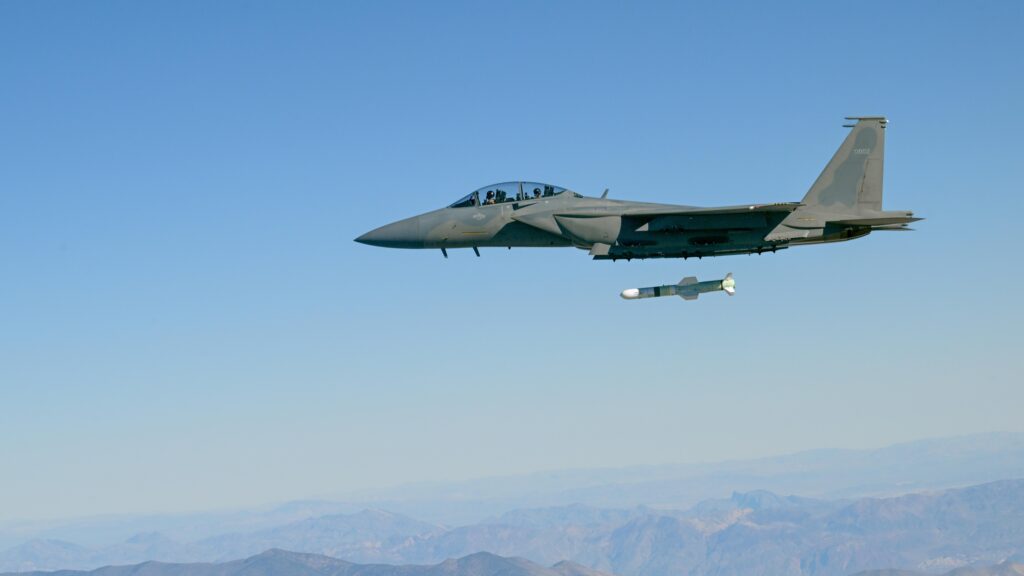
An F-15 launches a Harpoon Block II off the coast of California in January 2026. This was final flight test of the Harpoon Block II Update (HIIU) Obsolescence Update program. (U.S. Navy photo) 

From Naval Air Systems Command, Patuxent River, Md

NAS Patuxent River, Md.–The U.S. Navy successfully completed the third and final planned flight test of the Harpoon Block II Update (HIIU) Obsolescence Update program Jan. 16, marking a key milestone in modernizing and sustaining the weapon system. 

The Precision Strike Weapons (PMA-201) program office, in partnership with Boeing, conducted the test at Naval Air Weapons Station China Lake and the Point Mugu Sea Range in California. The event demonstrated a successful Coastal Target Suppression mission against a representative land target, with all test objectives met based on preliminary assessments. 

“This milestone reflects the strength of the integrated government and industry team and their commitment to delivering reliable, relevant capability to the fleet,” said Capt. Sarah Abbott, PMA-201 program manager. 

During the mission, the missile executed multiple altitude changes to simulate a coastal engagement. After launch from an F-15 at approximately 12,000 feet above ground level, the missile descended to an initial waypoint altitude of 5,000 feet, then proceeded to the target area and performed a steep terminal dive prior to impact. 

The HIIU flight test series consisted of three events designed to progressively validate system performance across mission sets. The first test verified guidance and aerodynamic performance, the second demonstrated engagement of a moving maritime surface target, and the final event confirmed effectiveness against a land-based target—highlighting the weapon’s operational versatility. 

“This achievement reflects the coordinated efforts of professionals across program management, engineering, logistics, test and evaluation, aircrew, ground support, and range teams, alongside our industry partners,” said Bob Cress, SLAM ER/HIIU development team lead. 

Following this event, system-level flight testing for the HIIU Obsolescence Update is nearly complete, with initial deliveries planned for later this year. 

HIIU builds on the Harpoon’s 50+ year legacy by addressing obsolescence items and preparing the weapon to extend production around the world. The U.S. Navy and more than 30 foreign partners use the Harpoon in support of anti-ship and land-strike missions. 


USS Truxtun Departs Naval Station Norfolk for Deployment

NAVAL STATION NORFOLK, Va. (Feb. 3, 2026) – The Arleigh Burke-class guided missile destroyer USS Truxtun (DDG 103) departed Naval Station Norfolk for a scheduled deployment on Feb. 3, 2026. (U.S. Navy photo by MC2 Derek Cole) 

From Commander, U.S. 2nd Fleet

NORFOLK, Va. — Arleigh Burke-class guided missile destroyer USS Truxtun (DDG 103) departed Naval Station Norfolk for a scheduled deployment on Feb. 3, 2026. 

The ship’s company includes approximately 300 Sailors, with an additional 26 embarked air wing personnel assigned to the “Valkyries” of Helicopter Maritime Strike Squadron 50. 

The ship’s independent deployment departure comes after several months of training and maintenance, preparing the ship for a multitude of operations. Truxtun is a multi-mission guided-missile destroyer with air warfare, anti-submarine warfare, naval surface fire support, and surface warfare capability. 

“Truxtun’s recent experiences in the 5th and 6th Fleet areas of operations have sharpened our technical and tactical mastery, translating proven operational readiness into immediate effects,” said Cmdr. James Koffi, commanding officer of Truxtun. “Our presence at sea will not merely be a ‘deployment,’ but a decisive application of Peace Through Strength.” 

Truxtun’s last deployment concluded in October 2025, where they conducted operations in U.S. 5th and 6th Fleet areas of operations. During this time, the ship successfully worked alongside the Harry S. Truman Carrier Strike Group, the Carl Vinson Carrier Strike Group, the Nimitz Carrier Strike Group, and the HMS Prince of Wales Strike Group in various capacities. Truxtun also represented the U.S. Navy in the multi-national operations Mediterranean Strike and Bright Star, which fostered relationships between various allies and partners. 

“The Sailors of USS Truxtun are ready to deploy and accomplish our nation’s work at sea,” said Capt. Bryan Carmichael, commodore, Commander Naval Surface Group Mid-Atlantic. “The combat capabilities that this ship brings to a fight will be ready whenever tasked to deter, and, if necessary, defeat, aggression in defense of America’s interests around the world.” 

Truxtun was commissioned on April 25, 2009. The ship is named for Commodore Thomas Truxtun, who was selected as one of the Navy’s initial six captains on June 4, 1798. 

“We proudly carry the namesake of Commodore Thomas Truxtun,” said Koffi. “Commodore Truxtun’s primary aim as the commanding officer of USS Constellation, one of the U.S. Navy’s original six frigates, was protecting American commerce in the Caribbean during a period of deep regional uncertainty in the fledging years of our new nation.” 

U.S. 2nd Fleet, reestablished in 2018 in response to the changing global security environment, develops and employs maritime ready forces to fight across multiple domains in the Atlantic and Arctic in order to ensure access, deter aggression and defend U.S., allied, and partner interests. 


HII’s Newport News Shipbuilding Completes Successful Builder’s Sea Trials of John F. Kennedy (CVN 79) 

NEWPORT NEWS, Va., Feb. 04, 2026 (GLOBE NEWSWIRE) — HII (NYSE: HII) announced today that its Newport News Shipbuilding (NNS) division has successfully completed builder’s sea trials of John F. Kennedy (CVN 79), the second Gerald R. Ford-class nuclear-powered aircraft carrier. 

Kennedy returned to NNS after testing important ship systems and components at sea for the first time. 

“Taking Kennedy to sea is a testament to the grit and determination of the world’s finest shipbuilders,” said Derek Murphy, NNS vice president of new construction aircraft carrier programs. “Our nation is depending on us to deliver these critical assets that will protect freedom around the world and we’re proud to see CVN 79 take another step toward joining the fleet.” 

The sea trials brought together NNS shipbuilders, John F. Kennedy sailors and Navy personnel to execute the testing and demonstrate ship operations. 

CVN 79 continues the legacy of highly capable nuclear-powered aircraft carrier platforms. Ford-class enhancements incorporated into the design support increased operational efficiency and reduced manning requirements. The Ford class also features a new nuclear power plant, and increased electrical power-generation capacity. 


Up-to-seven-year deals to increase annual production of Tomahawk, AMRAAM, SM-3 Block IB, SM-3 Block IIA, SM-6 

From RTX 

TUCSON, Ariz., Feb. 4, 2026 /PRNewswire/ — Raytheon, an RTX (NYSE: RTX) business, entered into five landmark framework agreements with the U.S. Department of War to significantly increase production capacity and speed deliveries of Land Attack and Maritime Strike variants of Tomahawk, AMRAAM® missiles, Standard Missile-3® Block IB interceptors (SM-3 IB), Standard Missile-3® Block IIA interceptors (SM-3 IIA), and Standard Missile-6® (SM-6). 

As global demand for these precision munitions continues to grow, these up-to-seven-year agreements establish frameworks to build on the company’s previous investments to expand production. Under the frameworks announced today, RTX will increase annual production of Tomahawks to more than 1,000, AMRAAMs to at least 1,900, and SM-6 to more than 500. RTX will also increase production of SM-3 IIA and accelerate production of the SM-3 IB. Many of these munitions will grow 2 to 4 times their existing production rates. 

With the Department of War’s strong commitment to strengthening the defense industrial base and creating American jobs, RTX will continue to make investments in technology, facilities and our workforce to reach and sustain this historically high production rate. 

“These agreements redefine how government and industry can partner to speed the delivery of critical technologies and are a direct result of the administration’s Acquisition Transformation Strategy and commitment to deliver the best technologies faster,” said RTX CEO and Chairman Chris Calio. “We are proud to support the department’s Arsenal of Freedom to ensure the United States and its allies and partners have the decisive edge — now and in the future.” 

RTX has invested heavily in capacity expansion to accelerate production of several critical munitions and will continue investing in capacity expansion and production acceleration projects. Production under these framework agreements will be completed at Raytheon facilities in Tucson, Ariz., Huntsville, Ala., and Andover, Mass. 

The company investments associated with these framework agreements have been contemplated in RTX’s recently announced financial outlook for 2026. The long-term agreements incorporate a collaborative funding approach designed to preserve upfront free cash flow, allowing RTX to invest confidently to meet long-term demand.  

CRITICAL MUNITIONS FOR U.S. AND ITS ALLIES AND PARTNERS 

Tomahawk cruise missile 

A precision weapon launched from ships and submarines and can strike targets precisely from 1,000 miles away, even in heavily defended airspace. U.S. and allied militaries have flight tested the Tomahawk over 550 times and used it in an operational environment more than 2,300 times. It is routinely the first option employed by U.S. forces to target hostile forces anywhere in the world. 

AMRAAM 

The world’s most widely deployed, air-to-air missile. Since 2024, Raytheon has been producing the fifth-generation AMRAAM, featuring advanced guidance, software-defined capabilities and enhanced electronic protection for highly contested combat environments. In service with more than 40 allies and partners, AMRAAM is integrated across fourth and fifth generation aircraft and serves as the primary interceptor for NASAMS, supporting both air-to-air and ground-based air defense. Production nearly doubled in 2025 from 2024 and performance has been proven through more than 6,000 test shots and 13 air-to-air combat victories. 

SM-3 IB 

A combat proven interceptor uniquely designed for exo-atmospheric intercept of short- to intermediate-range ballistic missiles with hypersonic hit-to-kill accuracy. It can be launched from both ships and land-based sites. In April of 2024, SM-3 IB was first used in combat to intercept Iranian ballistic missiles headed toward Israeli targets. 

SM-3 IIA 

An interceptor created in a cooperative development program between the U.S. Missile Defense Agency, the Japan Ministry of Defense and their industry partners. The interceptor features larger rocket motors and an enhanced kinetic warhead compared to its predecessors, allowing it to engage threats faster and protect larger regions from short- to intermediate-range ballistic missile threats. 

SM-6 missile 

Standard Missile-6 is the only missile that supports anti-air warfare, anti-surface warfare and sea-based terminal ballistic missile defense in one solution, and it’s enabling the U.S. and its allies and partners to cost-effectively increase their projected force. SM-6 has been successfully fired from various U.S. Navy ships and launchers on land.