CENTCOM Naval Chief Says Mesh of Sensors and Unmanned Systems Could Protect Region’s Waters
*******
ARLINGTON, Va. — An interconnected mesh of sensors and unmanned systems could provide better maritime security in the Middle East than any single Navy could, the head of U.S. Central Command (CENTCOM) naval forces says.
“No Navy acting alone can possibly protect against all the threats,” Vice Adm. Brad Cooper told an audience Jan. 10 at the Surface Navy Association’s 2023 National Symposium. “The region is simply too big,” he said.
Maritime Security in the Middle East
CENTCOM’s maritime area of responsibility includes the Arabian Gulf, Gulf of Oman, Red Sea, parts of the Indian Ocean and three critical choke points at the Strait of Hormuz, Bab al-Mandeb, and Suez Canal.
“Threats emanating from Iran are very real and they have our attention,” said Cooper, who is also commander of the Navy’s 5th Fleet and Combined Maritime Forces, citing incidents last year and as recently as Jan. 7, 2023.
In late August, the Navy prevented a support ship from Iran’s Islamic Revolutionary Guard Corps Navy from capturing an unmanned surface vessel operated by the 5th Fleet in the Arabian Gulf. A Nov. 15 aerial drone attack on a Liberian-flagged commercial tanker transiting international waters in the Middle East, was identified as a Shahed-136 UAV; the same aerial drone Iran has supplied to Russia for use against Ukraine.
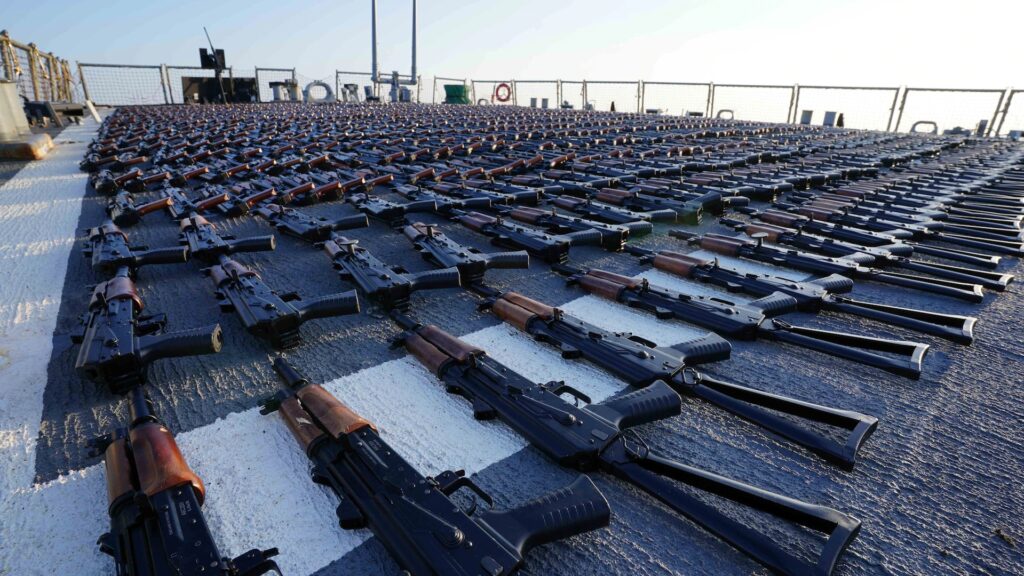
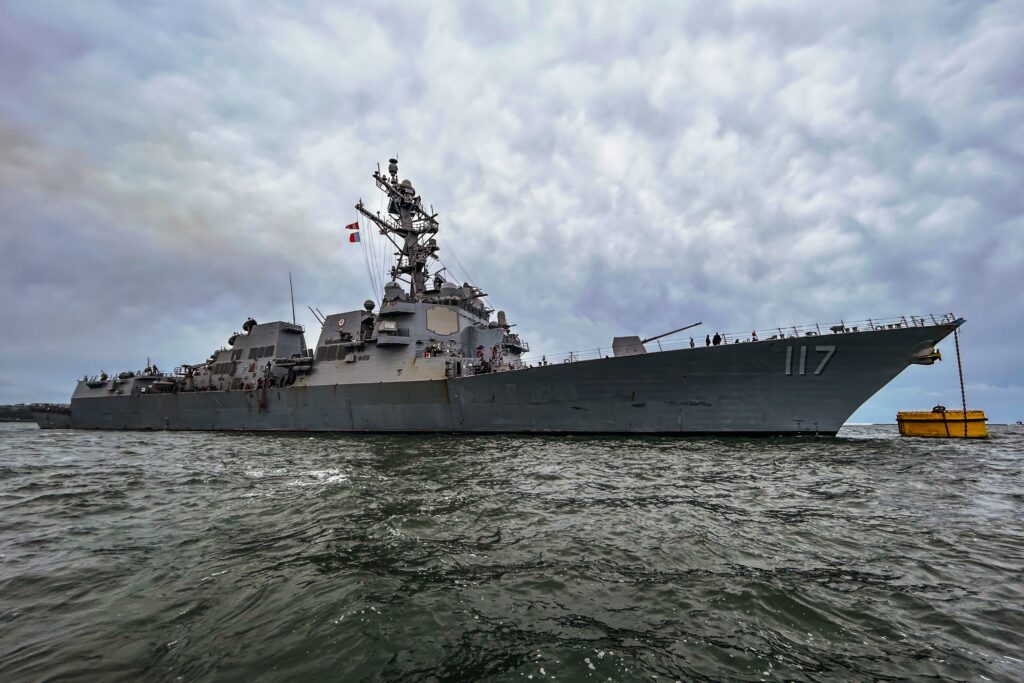
The vessel was sailing on a route historically used to traffic weapons to the Houthis in Yemen. A team from the Cyclone-class patrol ship USS Chinook ship boarded the vessel with support from the Cyclone-class patrol ship USS Monsoon and the guided-missile destroyer USS The Sullivans, according to CENTCOM.
Strengthening Partnerships
The most effective way to monitor the region’s waterways is through strengthening partnerships with other navies and accelerating innovation, Cooper remarked. A good example of that strategy was Digital Horizon, a three-week unmanned and artificial intelligence event in Bahrain.
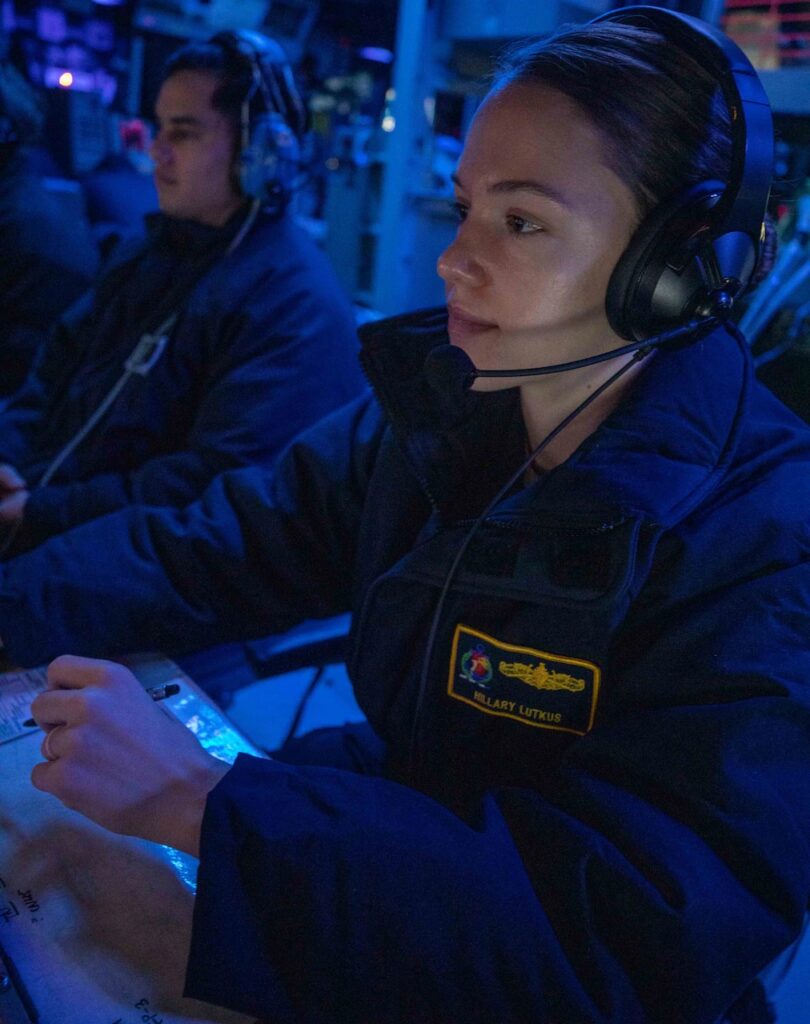
During Digital Horizon, which ended Dec. 15, Task Force 59 leveraged artificial intelligence to create an interface on one screen, also called a “single pane of glass.” The screen displayed relevant data from multiple unmanned systems for watchstanders in Task Force 59’s Robotics Operations Center.
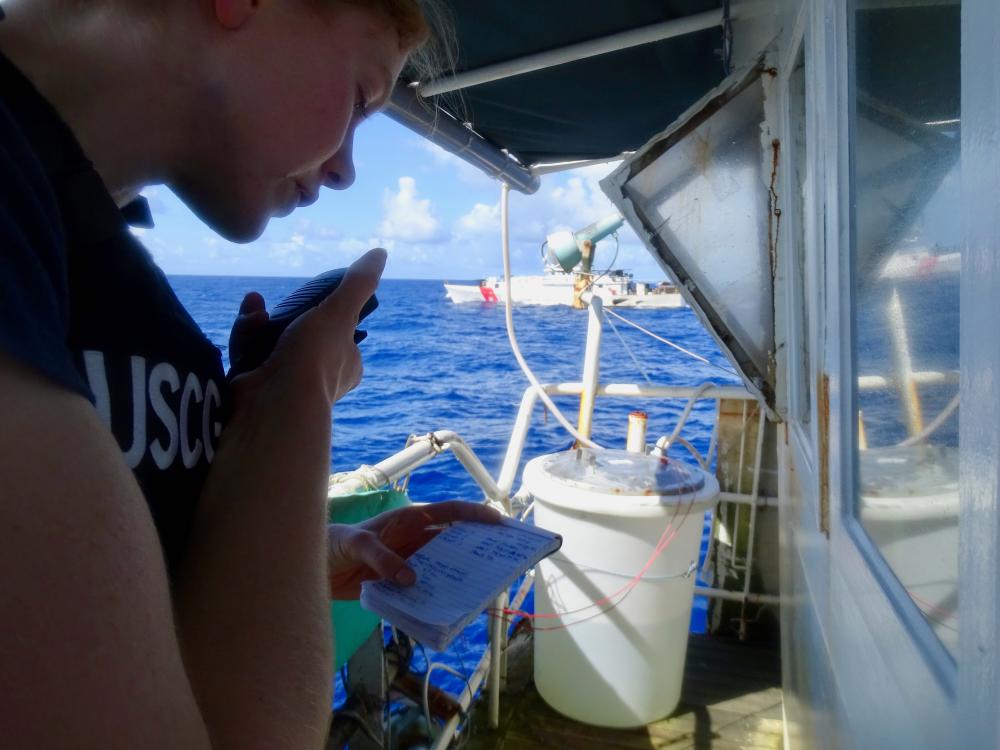
The task force was established in 2021 to rapidly integrate unmanned systems and artificial intelligence with maritime operations in the 5th Fleet area of operations. The task force also launched an unmanned aerial vehicle from a U.S. Coast Guard cutter for the first time. The launch enhanced Task Force 59’s ability to create a mesh network for unmanned systems to relay imagery to command centers ashore and at sea in a communications-denied environment.
Surface Navy Boss Sets Goal of 75 Mission-Capable Ships on Any Day
*******
ARLINGTON, Va. — The type commander of the Navy’s surface combatant fleet has set a goal of sustaining a fleet of 75 mission-capable (MC) ships.
“We’ve come up with a North Star goal to drive all of our readiness objectives, and that’s get at 75 mission-capable ships ready on any given day,” said Vice Adm. Roy Kitchener, commander, Naval Surface Forces and commander, Naval Surface Force, U.S. Pacific Fleet, speaking to reporters in a virtual roundtable on Jan. 5 — embargoed until Jan. 10.
Data-Accessed Readiness Goals
“The goal is not arbitrary,” Kitchener said. “It’s not random. It was born from our investment in our data analytics, a really good, thorough assessment across the fleet’s operational requirement. That 75 drives every program and action we take across our force.”
The admiral characterized the initiative as “sharpening the competitive edge” to produce the most capable ships, weapons technologies and the Sailors that will use them, and “getting more ready” for potential conflict in the Western Pacific.
The 75 MC ships initiative is modelled after an effort by the Naval Aviation Enterprise to achieve a certain number of mission-capable strike fighters. The initiative was in an effort to overcome a lack of readiness that was hampering naval aviation’s combat readiness and aircrew flight proficiency and retention.
The surface boss is defining ship readiness in three categories:
Not Mission-Capable (NMC): a ship in deep maintenance or just emerged from deep maintenance
Mission-Capable (MC): readiness to deploy with a certain level of certification but not fully mission-capable
Full Mission-Capable (FMC): all certifications complete, deployed, ready for high-end combat
Kitchener is establishing readiness groups to staff, train, and equip ships for combat; a Surface Response Plan to prioritize and allocate ships where most needed; and surface maintenance operations centers to reduce engineering casualty reports (CASREPs).
He emphasized the need to more fully stock ships with spare parts to make equipment readiness more sustainable when deployed at sea.
The ships included in the North Star goal include all surface warships with the exception of Zumwalt-class guided-missile destroyers and Lewis B. Puller-class expeditionary sea base ships.
IMSC Task Force Completes Maritime Exercise with Unmanned Systems, A.I.
MANAMA, Bahrain — The International Maritime Security Construct (IMSC) completed a three-day maritime exercise in the Arabian Gulf, Jan. 9, integrating unmanned systems and artificial intelligence during a naval drill for the second time in six months, U.S. Naval Forces Central Command Public Affairs said in a Jan. 9 release.
IMSC’s operational task force, Coalition Task Force (CTF) Sentinel, completed exercise Sentinel Shield with U.S. Navy guided-missile destroyer USS Delbert D. Black (DDG 119) and two Saildrone Explorer unmanned surface vessels from U.S. 5th Fleet
“We planned this exercise to demonstrate how artificial intelligence and unmanned systems effectively increase CTF Sentinel’s maritime domain awareness to maintain maritime security in Middle Eastern waters,” said Royal Saudi Navy Capt. Alamri Assem, CTF Sentinel’s director of plans.
During the exercise, unmanned and artificial intelligence systems operated in conjunction with Delbert D. Black and CTF Sentinel’s command center ashore in Bahrain. The systems were able to help locate and identify objects in nearby waters and relay visual depictions to watchstanders.
“Saildrones transmitted information on contacts of interest and our watch officers coordinated with the destroyer for further monitoring,” said U.S. Navy Capt. Brian Granger, CTF Sentinel’s deputy commander.
CTF Sentinel previously completed a similar exercise Aug. 23 when Royal Bahrain Naval Force ship RBNS Ahmed Al-Fateh (P20) and U.S. Coast Guard patrol boat USCGC Baranof (WPB 1318) participated with another Saildrone Explorer from U.S. 5th Fleet. The late-summer event was the first time IMSC planners specifically designed a Sentinel Shield exercise to integrate unmanned systems.
IMSC was formed in July 2019 in response to increased threats to freedom of navigation for merchant mariners transiting international waters in the Middle East. IMSC’s operational arm, CTF Sentinel, was established four months later to deter state-sponsored malign activity and reassure the merchant shipping industry in the Bab al-Mandeb and Strait of Hormuz.
IMSC membership currently includes 11 nations: Albania, Bahrain, Estonia, Latvia, Lithuania, Romania, Saudi Arabia, Seychelles, United Arab Emirates, United Kingdom, and the United States.
Navy’s SPY-6 Radar to Reach Initial Operational Capability in 4th Quarter Fiscal 2024
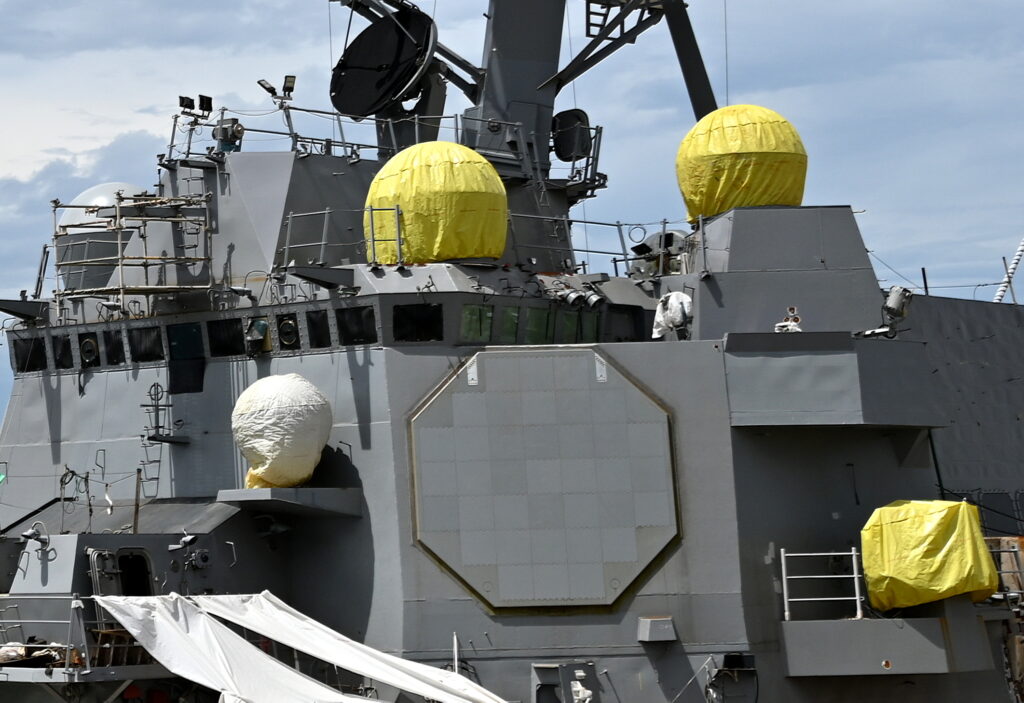
The fixed-face antenna of the SPY-6-(V)1 radar is shown on the future USS Jack H. Lucas (DDG-125), the first ship equipped with the radar. (Raytheon)
************
ARLINGTON, Va. — The U.S. Navy’s new SPY-6(V)1 Air and Missile Defense Radar is scheduled to reach Initial Operational Capability (IOC) during the fourth quarter of fiscal 2024, a Raytheon official said.
The radar, which first went to sea for trials on Flight III Arleigh Burke-class guided-missile destroyer Jack H. Lucas (DDG 125) in December, met all of its test objectives, said Mike Mills, Raytheon’s senior director for Naval Radar Programs in a Jan. 6 interview with Seapower, noting that the radar will be ready for IOC late next year.
New Year, New Radar
The fixed-face SPY-6(V)1 replacing the SPY-1 in the newest version of the Arleigh Burke class DDG, Flight III.
Mills said more software enhancements to the radar will be made as it is readied for the Navy’s acceptance trials scheduled for May or June.
Raytheon is under contract for 25 SPY-6 radars of the various versions, including six SPY-6(V)1 variants for DDGs. The future USS Ted Stevens (DDG 128) will be the second ship DDG to be fitted with the SPY-6(V)1.
The SPY-6(V)2 Enterprise Air Search Radar (EASR) is a rotating antenna version that is first being installed on the Flight I San Antonio-class amphibious platform dock ship Richard M. McCool Jr., the transition ship to the Flight II of the class.
The first SPY-6(V)3 EASR rotating radar has been installed on the future aircraft carrier USS John F. Kennedy (CVN 79), currently under construction.
The SPY-6(V)4 version has a fixed-face antenna and will be retrofitted on some Flight IIA DDGs in place of the SPY-1. Mills said an adapter plate will be installed on the ships to allow for the retrofit of the SPY-6(V)4 antennas. The existing power systems will be 95% leveraged for re-use, he said.
Mills said he expects a contract for the (V)4 to be forthcoming this year.
He said the commonality of the various SPY-6 variants will simplify logistics. They will have common software and common sensor cells.
Superior Defense Capabilities
All DDGs equipped with the SPY-6 will have defense capability against ballistic missiles, Mills said.
He also pointed out that the increased range of the SPY-6 will improve the defensive capability of a DDG and free up more missile launchers for offensive capability.
“We’ve got a whole lot of international interest,” Mills said, noting that several nations that currently use the SPY-1 radars would be potential customers for the SPY-6(V)1. He said his company has given numerous briefings to potential international customers.
CAES Awarded LRIP2 Contract from Lockheed Martin to Support Navy’s AOEW System
ARLINGTON, Va. — CAES has been awarded a Low-Rate Initial Production Phase 2 (LRIP-2) contract from Lockheed Martin Corporation to supply its Phased Array Antennas to support Lockheed Martin’s Advanced Off-Board Electronic Warfare (AOEW) system, CAES announced in a Jan. 5 release. The announcement follows LRIP-1 contract that CAES was awarded earlier this year.
“We’re honored to continue our work with Lockheed Martin to bring critical electronic warfare capabilities to the U.S. Navy,” said Mike Kahn, CAES president and CEO. “Our unique combination of longstanding RF experience and next generation electronic warfare technology allows us to continue to be a trusted partner of choice.”
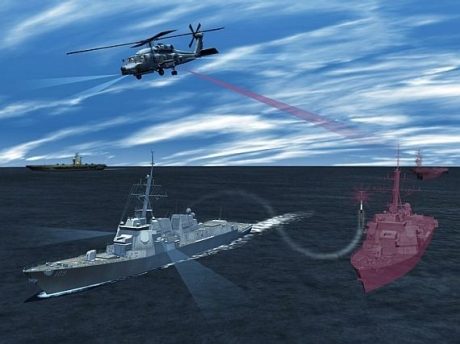
The AOEW program delivers electronic surveillance and attack capabilities for U.S. Navy Ships. The AOEW system is a helicopter-borne pod that has the ability to work independently or with the ship’s onboard electronic surveillance sensor, AN/SLQ-32(V)6, which also features CAES Antennas. The AOEW can be carried aloft by Navy MH-60R/S Seahawk helicopters.
U.S. Navy Surface Warfare Tactics Instructors (WTIs) to Converge in Washington
U.S. Navy Surface Warfare Tactics Instructors (WTIs) are converging in Washington for a conference January 9-12. The conference, known as a “Re-Blue,” is coordinated and hosted by the Naval Surface and Mine Warfighting Development Center (SMWDC), who leads the Surface Warfare WTI program.
Trained and Qualified Instructors
WTIs are highly trained and qualified surface warfare officers who have specialized knowledge and expertise in one of the warfighting areas of integrated air and missile defense (IAMD): anti-submarine and anti-surface warfare (ASW/ASUW), mine warfare (MIW), and amphibious warfare (AMW). WTIs provide their commanding officers with tactical expertise and provide advanced training to warfighting teams.
About 130 WTIs are expected to participate.
Leadership, Technology, and Skills
While at the Pentagon, the WTIs will hear keynote remarks from leadership across the surface force, have an opportunity to refresh their knowledge on updated tactics, and receive briefings on best practices from SWMDC’s flagship underway training, SWATT – Surface Warfare Advanced Tactical Training.
The conference is taking place with the Surface Navy Association’s 35th Annual Symposium in nearby Crystal City, Va., allowing the WTIs to hear from Navy and Marine Corps leaders and see the latest in products and technologies from exhibiting companies.
“Our WTIs are assigned across the fleet in various shore and afloat billets, some as the only WTI at a command,” said Rear Adm. Christopher Alexander, SMWDC Commander. “I’m looking forward to giving everyone the opportunity to come together with the greater WTI cadre, refresh their knowledge on the latest in surface tactics, and at the same time offer them the opportunity to attend SNA’s Annual Symposium.”
Maintaining a Competitive Edge
WTIs help maintain the competitive edge of the surface fleet and are the foundation of SMWDC’s five lines of efforts: • Warfare tactic instructor production • Advanced tactical training • Doctrine and tactical guidance development • Operation support to combatant commanders, numbered fleet commanders, and task force commanders • Capability assessments, experimentation, and future requirements
The program is open to all qualified surface warfare officers in paygrades O1 to O4. Chief warrant officers and limited duty officers may also apply to the program.
USCGC Frederick Hatch Completes Expeditionary Patrol in Oceania
SANTA RITA, Guam — The crew of the USCGC Frederick Hatch (WPC 1143) completed a 41-day 7100-nautical mile expeditionary patrol throughout Oceania on Dec. 23, U.S. Coast Guard Forces Micronesia / Sector Guam said in a Jan. 6 release.
Under Operations Rematau and Blue Pacific, this patrol countered illegal, unreported, and unregulated fishing in the exclusive economic zones of the Federated States of Micronesia, the Republic of the Marshall Islands, and the Republic of Nauru by enforcing applicable laws, regulations, and individual countries’ sovereignty. The crew strengthened partnerships through established bilateral maritime law enforcement agreements, shiprider operations, subject matter exchanges, and community engagements.
“This patrol exemplified the operational advantage the Fast Response Cutter provides the Coast Guard in Oceania, displaying our ability to successfully complete fisheries enforcement and search and rescue missions over 1,800 nautical miles from home. Mixed with fantastic port calls and impactful community relations events, the last 41 days were a testament to the Hatch crew’s adaptability and diligence that made this patrol so successful. It has been an honor to sail with each of them. Making it home for Christmas is a great reward, especially after being away for Thanksgiving,” said Lt. Patrick Dreiss, USCGC Frederick Hatch’s commanding officer.
The crew hosted students from high schools and colleges as well as community members during their port calls to share the missions of the U.S. Coast Guard and provide a look at the ship itself. They also participated in local sporting events and cultural activities. When departing the Republic of the Marshall Islands, the team took on an additional temporary crewmember, Staff Sgt. Gary Likiak, U.S. Army, and part of the local embassy team. Likiak rode along to Kosrae, which is also home for him – the first time he’s been home in six years.
“Reinvigorating our bi-lateral agreements with our partners in the region after COVID-19 was the main objective of this patrol, and our successes with shipriders aboard and warm hospitality received at each island both allowed us to achieve this goal,” said Dreiss.
Of note, on this patrol, the Frederick Hatch team hosted shipriders from the maritime enforcement branches of the FSM, RMI, and Nauru governments. This activity was the first time shipriders could accompany U.S. Coast Guard crews in several years as Pacific Island partners resume normal operations after limiting travel as a COVID precaution.
The team conducted 16 boardings, issued five warnings, and found no significant violations. The fishing vessels were tuna longliners and purse seiners.
On Dec. 17, the Frederick Hatch crew, after departing Kosrae, enacted the newly expanded agreement for maritime law enforcement operations, conducting two boardings on licensed fishing vessels operating in the FSM exclusive economic zone.
“It was very fulfilling to have an opportunity to enact the Expanded Maritime Law Enforcement Agreement for the first time after watching the program develop over the last year,” said Dreiss. “It provides the U.S. Coast Guard with another avenue to support our regional partners and continues to lay the groundwork for increasing Illegal, Unregulated, and Unreported Fishing enforcement in the region.”
The expanded agreement builds on the existing bilateral shiprider agreement between the two countries. It establishes procedures for authorizing the U.S. to conduct maritime law enforcement boardings on behalf of FSM to combat illicit maritime activity when an FSM law enforcement officer is not present. More specifically, the agreement provides a coordinating mechanism and process for U.S. law enforcement personnel to work with the FSM National Police, Division of Border Control and Maritime Surveillance to receive approval from the FSM to act under the agreement.
“This was an excellent warm-up of our bilateral relations and fisheries enforcement process following COVID. It was great to have local experts with us again and provide services to our FSM, RMI, and Nauru partners,” said Capt. Nick Simmons, the commander of U.S. Coast Guard Forces Micronesia/Sector Guam. “The successful application of the expanded agreement now allows us to support our partners better. FSM occupies more than one million square miles of the Pacific Ocean and ranges 1,700 miles from West (Yap) to East (Kosrae) with the enforcement team in Pohnpei. This agreement allows us to help our partners overcome the logistics that limited enforcement in the past when it is difficult to get a shiprider out to the field.”
The U.S. Coast Guard flags IUU-F as one of the top threats to oceans and a significant regional destabilizing factor. The United States continues to emphasize the ocean’s health and good governance, as evidenced by expanded measures to combat illegal fishing in the fiscal 2023 National Defense Authorization Act. Notable items include an expanded High Seas Drift Net Act, improvements to NOAA’s Seafood Import Monitoring Program, programs aimed at reducing the impacts of ships and other vessels on marine mammals, and a federal ban on buying or selling shark fins in the U.S.
The U.S. Coast Guard regularly exercises 11 bilateral fisheries law enforcement agreements on behalf of the United States with countries throughout the Pacific islands. Shiprider agreements allow maritime law enforcement officers to observe, board, and search vessels suspected of violating laws or regulations within a designated EEZ or on the high seas. These law enforcement activities bolster maritime law enforcement operations and maritime domain awareness and provide a mechanism to conduct integrated operations within the Pacific. This expanded agreement is the first of its kind. It seeks to overcome the challenges of the Oceania region’s vast distances while leveraging limited enforcement resources and the trust built between nations over decades.
The U.S. Coast Guard maintains strong partnerships with the maritime forces in the region through extensive training and subject matter expert exchanges. FSM, also known as the Big Ocean State, has one of the world’s largest EEZs, with waters rich in sea life. RMI, located halfway between Hawaii and Australia north of the equator, is an archipelago of 29 atolls, five low coral islands, and 1,151 islets that shares maritime borders with FSM, Kiribati, and Nauru.
RMI’s exclusive economic zone of 1.2 million square kilometers (463,322 square miles). Nauru is the smallest island nation and the third smallest country in the world, with around 10,000 inhabitants. Fishing is essential to their food security. FSM and RMI are signatories to a Compact of Free Association with the United States. They are Pacific Islands Forum Fisheries Association members and party to the South Pacific Tuna Treaty, as is Nauru.
In addition to fisheries enforcement, the Frederick Hatch crew conducted a search and rescue case medically evacuating a 31-year-old Vietnamese fisherman to a higher level of medical care in Pohnpei on Nov. 20.
The cutter’s boarding team learned of the fisherman’s injuries while conducting a bilateral fisheries boarding with an FSM Marine Police Officer aboard the fishing vessel Ocean Galaxy 195 nautical miles (224 statute miles) south of Pohnpei. The ship is a 69.4-meter (227-foot) purse seiner flagged out of Nauru. The fisherman reportedly fell 12 feet earlier the same day, sustaining a head and possible spinal injury. He was conscious and talking but lost feeling and motion in his right arm and both legs, exhibiting severe concussion symptoms.
“It was an absolute team effort by every member of Frederick Hatch to medevac the injured crewmember from the Ocean Galaxy successfully. Witnessing each crewmember perform at the highest level after completing two boardings earlier the same day to help a fellow mariner was awesome to watch,” said Dreiss.
Operation Rematau is how U.S. Coast Guard Forces Micronesia/Sector Guam supports the overarching Coast Guard endeavor Operation Blue Pacific to promote security, safety, sovereignty, and economic prosperity in Oceania. Rematau means people of the deep sea. It recognizes the wisdom of the Pacific Island Forum leaders in that securing the future requires long-term vision and a carefully considered regional strategy for the Blue Pacific Continent. Op Rematau reinforces U.S. commitment to working together to advance Pacific regionalism based on the Blue Pacific narrative. This action supports U.S. national security objectives, bolstering regional maritime governance and security.
The Frederick Hatch is the 43rd 154-foot Sentinel-class fast response cutter and is named for a surfman and lighthouse keeper who was a two-time Gold Life Saving Medal recipient. The Coast Guard commissioned the ship along with its sister ships, Myrtle Hazard (WPC 1139) and Oliver Henry (WPC 1140), in Guam in July 2021. These cutters are a vital part of the U.S. Coast Guard’s enduring regional presence serving the people of the Pacific by conducting 10 of the Service’s 11 statutory missions with a focus on search and rescue, defense readiness, living marine resources protection, and ensuring commerce through marine safety and ports, waterways, and coastal security.
7th Fleet Destroyer Conducts Transit of Taiwan Strait
TAIWAN STRAIT — The Arleigh Burke-class guided-missile destroyer USS Chung-Hoon (DDG 93) conducted a routine Taiwan Strait transit Jan. 5 (local time) through waters where high-seas freedoms of navigation and overflight apply in accordance with international law, U.S. 7th Fleet Public Affairs said in a Jan. 5 release.
“The ship transited through a corridor in the Strait that is beyond the territorial sea of any coastal State. Chung-Hoon’s transit through the Taiwan Strait demonstrates the United States’ commitment to a free and open Indo-Pacific,” the release said. “The United States military flies, sails and operates anywhere international law allows.”
General Dynamics Land Systems Delivers Advanced Reconnaissance Vehicle Prototype to U.S. Marine Corps
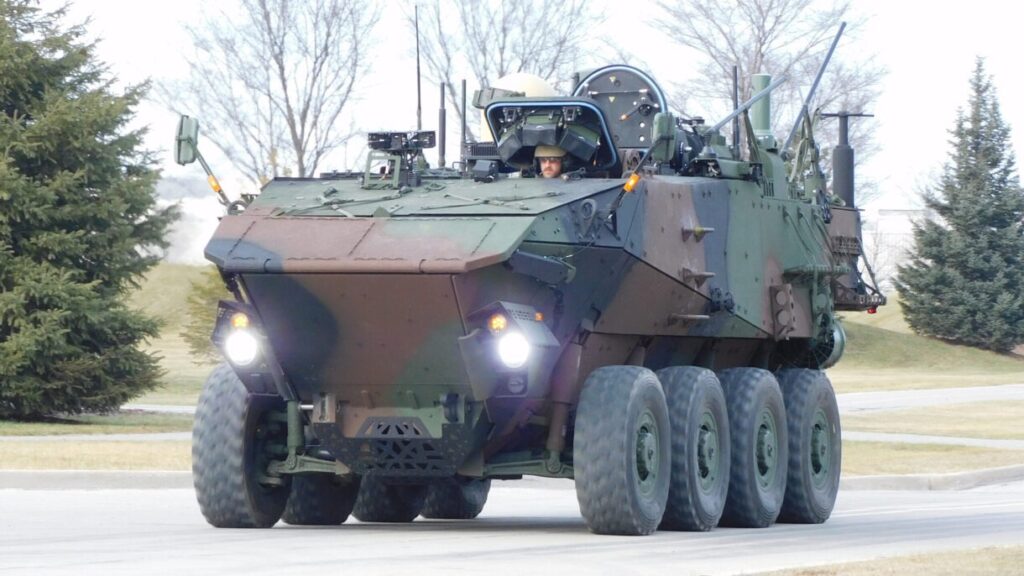
General Dynamics Land Systems Advanced Reconnaissance Vehicle
STERLING HEIGHTS, Mich. — General Dynamics Land Systems, a business unit of General Dynamics, submitted its Advanced Reconnaissance Vehicle (ARV) prototype to the U.S. Marine Corps for evaluation in the service’s ongoing competition, the company said in a release.
“We are proud to have delivered this transformational capability to the Marine Corps,” said Gordon Stein, General Dynamics Land Systems vice president and general manager of U.S. operations. “Our purpose-built ARV prototype is the fruition of several years of research and development internally and in collaboration with the USMC. We can’t wait for Marines to get their hands on this ARV and use it as their quarterback on the multi-domain battlefield.”
General Dynamics Land Systems’ ARV connects to an array of onboard and offboard sensors, uncrewed aerial vehicles, and will eventually include ground robotic systems.
Along with the ARV prototype, General Dynamics Land Systems also delivered a system integration lab, and a blast hull for survivability testing.
“We have continued to align with the Marine Corps’ 10-year transformational initiative, Force Design 2030, and our ARV capability furthers that objective,” said Phil Skuta, General Dynamics Land Systems director of strategy and business development for U.S. Marine Corps and Navy programs. “The ARV is highly mobile on land and in the water and will allow Marines to sense and communicate like never before. Our design also ensures growth margins and modular open architecture to rapidly incorporate new technology as it develops.”
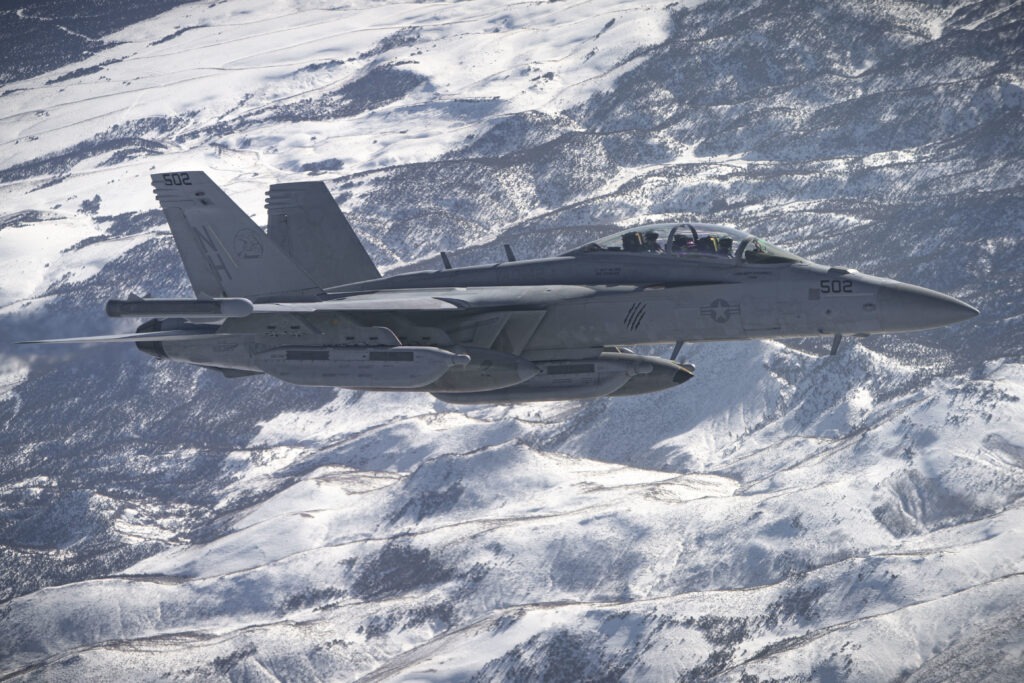
Congress Orders Report on Plan for Future of Navy’s Expeditionary EA-18G Squadrons
A U.S. Navy EA-18G Growlers assigned to the “Garudas” Electronic Attack Squadron (VAQ) 134, Naval Air Station Whidbey Island, Washington, waits to receive air-to-air refueling from a Royal Air Force Voyager tanker assigned to 101 Squadron, RAF Brize Norton, United Kingdom, during a Red Flag-Nellis 22-1 mission Feb. 3, 2022, at Nellis Air Force Base, Nevada. U.S. AIR FORCE / Airman 1st Class Zachary Rufus
ARLINGTON, Va. — Congress rejected the U.S. Navy’s 2023 budget proposal to deactivate five electronic attack squadrons (VAQs) that operate the Boeing EA-18G Growler electronic attack jet in the defense policy bill recently signed into law by President Joe Biden. Instead, Congress directed the Defense Department to submit a plan to meet the joint airborne attack requirements.
In its 2023 budget submission, the Navy proposed to deactivate its entire expeditionary VAQ force, which deploys to overseas bases in order to provide electronic attack capabilities to the joint force. The five expeditionary VAQ squadrons are separate from the Navy’s VAQ squadrons that deploy aboard aircraft carriers.
The five squadrons originally slated for cut included a total of 25 EA-18Gs, which would have been placed in storage at the Aerospace Maintenance and Regeneration Group at Davis-Monthan Air Force Base in Tucson, Arizona. The cuts also would have freed up approximately 1,020 officers and enlisted personnel. The Navy estimated the savings over the Future Years Defense Plan would be $807.8 million.
In the James M. Inhofe National Defense Authorization Act for Fiscal Year 2023, Congress directed the Navy to retain all 160 EA-1G aircraft and required the following:
A report outlining a strategy and execution plan for the Navy and Air Force to continuously and effectively meet airborne electronic attack training and combat requirements of the joint force, to include establishment or continuation of one or more land-based, joint service electronic attack squadrons and integration of both active and reserve components of both services.
The Navy is the only provider of expeditionary electronic attack jets to the joint force. The Air Force retired its last EF-111A Raven jets in 1998, and the Marine Corps retired its last EA-6B Prowler tactical jets in 2019. The expeditionary VAQ squadrons have deployed to Southwest Asia, Japan, and Italy over the years in support of U.S. and coalition forces. Last year, one squadron – VAQ-134 – was deployed to the European Command as part of the build-up of forces in support NATO’s eastern flank after the Russian invasion of Ukraine.
The expeditionary VAQ squadrons are considered high-demand/high-value assets by the Joint Chiefs of Staff.
The Navy’s five expeditionary VAQ squadrons are all based at Naval Air Station Whidbey Island, Washington: VAQs 131, 132, 134, 135, and 138. The Navy’s only reserve VAQ squadron, VAQ-209, has also been used in an expeditionary role.
The carrier-deployable VAQ squadrons are VAQs 130, 133, 136, 137, 139, 140, 141, 142, and VAQ-144, the latter established in October 2022. All are based at Whidbey Island, except for VAQ-141, which is based at Marine Corps Air Station Iwakuni, Japan, as part of the forward-deployed Carrier Air Wing Five for the USS Ronald Reagan.