Navy Contracts MQ-9 Reapers for Marine Corps, Extending Range for Future Operations

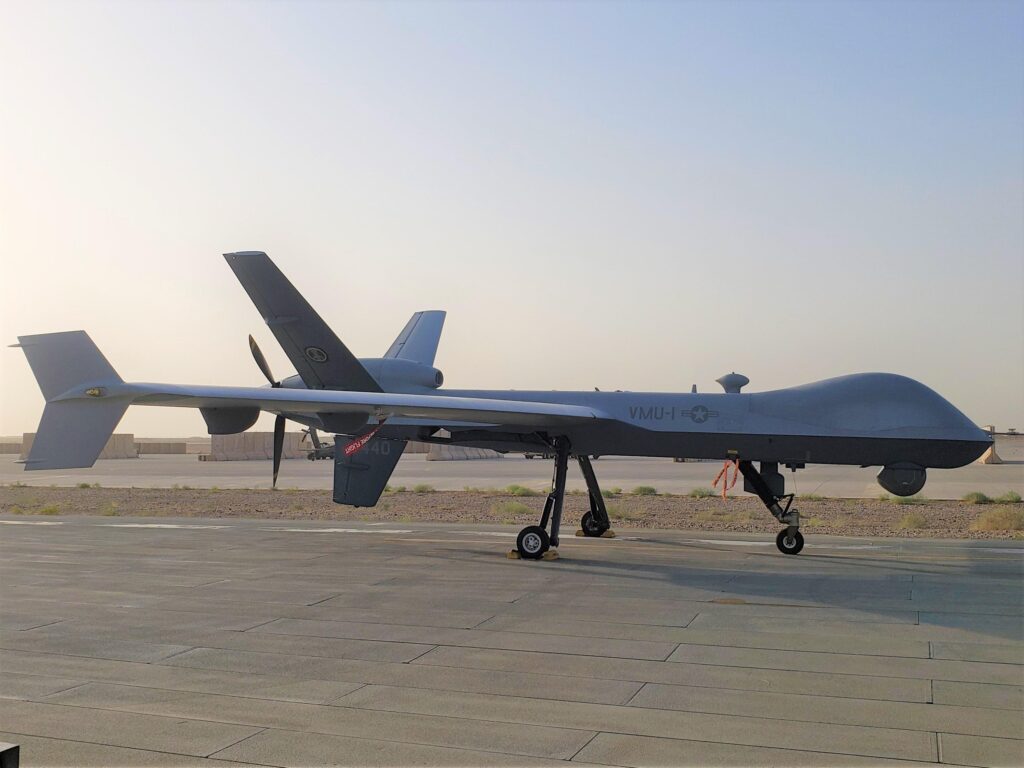
The MQ-9 Reaper provides Marines with a long-range intelligence, surveillance and reconnaissance capability in support of expeditionary advanced based operations, littoral operations in contested environments, and maritime domain awareness. U.S. MARINE CORPS

PATUXENT RIVER, Md. — The U.S. Navy recently awarded a $135.8 million contract to General Atomics Aeronautical Systems Inc. (GA-ASI) for eight MQ-9A Extended Range (ER) Unmanned Aircraft Systems that are scheduled for delivery to the Marine Corps in late 2023, the Naval Air Systems Command said in a release. 

MQ-9A ER will provide a large scale, long-range intelligence, surveillance and reconnaissance capability for the Marine Expeditionary Force. It is designed to extend the aircraft’s endurance to more than 30 hours and equipped with triple redundant avionics architecture. 

As part of the Marine Corps Force Design 2030 efforts, the Marines plan to transition Unmanned Aerial Vehicle Squadron (VMU) 3 located at Kaneohe Bay, Hawaii to MQ-9A operations.  VMU-3 will utilize the MQ-9A ERs to support training for the Marine Littoral Regiment. 

The Multi-Mission Tactical UAS program office (PMA-266), who manages the Marines MQ-9 program, used the Air Force’s Agile Reaper Enterprise Solution (ARES) to award the contract. ARES is a five-year fixed indefinite delivery/indefinite quantity (ID/IQ) contract. 

“Our team has ensured the development and fielding of a new combat capability, critical for the Marine Corps Force Design (FD) 2030 vision, at an exceptional speed,” said Capt. Dennis Monagle, PMA-266 program manager. 

Since the program’s inception in 2018, PMA-266 has leveraged Air Force investments and contracting solutions to procure MQ-9, ultimately accelerating the fielding time.  By tailoring and streamlining the typical acquisition strategy, the MQ-9 program commenced post-Milestone C, eliminating three to five years of traditional acquisition efforts. 

“We closely aligned with the USAF MQ-9 System Program Office (SPO), National Guard Bureau, Marine Corps stakeholders, as well as our vendor teams in order to develop and integrate as quickly as possible,” Monagle said. 

The first two MQ-9 aircraft were delivered in 2019 to Marine Unmanned Air Vehicle Squadron (VMU) 1 and since then have flown over 15,000 operational flight hours. The program continues to develop new, unique payloads and capabilities to meet future requirements for Force Design 2030. These payloads include the Detect and Avoid System (DAAS), a Proliferated Low Earth Orbit (PLEO) satellite system, an airborne network extension payload (Sky Tower), and an electronic warfare payload. 

The MQ-9A and associated payloads will provide the Marines with organic network extension and intelligence, surveillance, reconnaissance, and targeting (ISR-T) in support of expeditionary advanced based operations, littoral operations in contested environments, and maritime domain awareness. 


Silver Ships Delivers Marine Hydrographic Survey Vessel to U.S. Army Corps of Engineers 

Silver Ships Inc. Press Release

MOBILE, Ala. — Silver Ships Inc. has delivered the largest marine surveying vessel of its series, designed for the U.S. Army Corps of Engineers, to the Corps’ Venice Sub Office in Venice, Louisiana, the company said in an Aug. 16 release. The 49-foot marine surveying vessel, Tobin, is the latest expansion in Silver Ships’ Endeavor series of workboats. 

Tobin is custom designed for the U.S. Army Corps of Engineers to hydrographically map the mouth of the Mississippi River. This mission-specific vessel will allow researchers to accurately and effectively obtain and document data on the rapidly changing waters in the Mississippi River. With the intent of keeping waterways open and preventing obstructions to marine navigation, Tobin is equipped to handle challenging river terrain. The custom vessel will conduct condition surveys of the river to further the safety of marine operations.  

“Tobin will join a fleet of vessels operating out of the USACE Venice Sub Office that works year-round to provide river condition data to vessel operators,” says Jason Powers, Director of Business Development for Silver Ships. “This data is essential to the safe and efficient transportation of goods up and down the Mississippi River.” 

The vessel is powered by twin Caterpillar C18 Tier 3 engines making 800 hp each to reach optimal speeds resulting in the prevention of research delays, which is important considering the frequent changes in Mississippi River conditions. The single Caterpillar C2.2 Tier 3 Genset provides 25 ekW of electric power for Tobin’s air conditioning, echo sounder and other electrical needs onboard.  

“Thompson CAT is proud to partner with Silver Ships for their power needs,” says Richard Tremayne, Thompson’s marine business manager. “Together our engineering teams have designed and built significant boats like Tobin over many years. High-performance power installations are always fun puzzles to solve with talented companies like the Silver Ships team.” 

Tobin operates with enhanced features such as the MGX5136RV Twin Disc marine gears, Michigan Wheel propellers, Furuno navigation and communication systems, Delta ‘T’ Systems engine room ventilation, Arid Bilge Series 4 system and Ayres paneling.   

With speeds that reach 28 knots, the surveying vessel allows researchers to acquire data quickly and prevent inconsistencies caused by changes in the river bottom. Additionally, Tobin is equipped with state-of-the-art technology including the EchoTrac, E-20 survey system which is the key component that allows the vessel to take survey measurements. The E-20 uses a single-beam transducer that charts river depths and monitors water changes that could be potentially hazardous to marine navigation.  

This vessel’s name honors Thomas G. Tobin who worked for the U.S. Army Corps of Engineers New Orleans District for more than 30 years. As a capable engineer and brilliant programmer, Tobin developed systems that automated the processing and mapping of daily navigation condition surveys collected. He was a part of the Engineering Division Channel Improvement team and he achieved success with their automated design functions that ensure successful operations of the Mississippi River. Mr. Tobin passed away in February 2016, at the age of 54, after a courageous battle with cancer. Mr. Tobin dedicated his skills to the Corps mission and made a broad, lasting, and meaningful impact on the entire district and the citizens of south Louisiana.  


USS Bulkeley, Latest FDNF-E ship, Arrives in New Homeport Rota, Spain 

The Arleigh Burke-class guided-missile destroyer USS Bulkeley (DDG 84) pulls into port at Naval Station (NAVSTA) Rota, Spain after completing a homeport shift, Aug. 17, 2022. U.S. NAVY / Mass Communication Specialist 2nd Class Jacob Owen

NAVAL STATION ROTA, Spain — The Arleigh Burke-class guided-missile destroyer USS Bulkeley (DDG 84) arrived in its new homeport, Naval Station Rota, Spain, as the U.S. Navy’s last Forward Deployed Naval Forces–Europe (FDNF-E) destroyer scheduled to shift its homeport to Rota, Spain, Aug. 17, 2022, the ship’s public affairs office said in a release. 

Prior to arriving in Rota, Bulkeley visited Las Palmas, Spain, for a scheduled port visit. The visit marked Bulkeley’s arrival in the U.S. Naval Forces Europe-Africa (NAVEUR-NAVAF) area of operations and is the first port stop since the ship departed Naval Station Norfolk, Aug. 4, as part of the U.S. Navy’s long-range plan to rotate the Rota-based destroyers of the Forward Deployed Naval Forces-Europe (FDNF-E) force. 

“I could not be more proud of the crew,” said Cmdr. Arturo Trejo, Bulkeley’s executive officer. “The massive effort it takes to conduct a homeport shift is a representation of the hard work and brilliance everyday Americans and our allies do on a daily basis.” 

Arriving in a new homeport also brings unique opportunities to the Bulkeley crew. 

“The crew of Bulkeley is happy to arrive in our new home, and we are looking forward to a continued partnership with our host nation, Spain, as well as continuing to foster the strong relationship with our NATO allies,” said the ship’s Command Master Chief Jeremiah Hoyt. “We’ll have a few days to settle in, but we are ready to get back out and operate in the most dynamic environment in the U.S. Navy’s surface fleet.” 

Earlier this year, USS Paul Ignatius (DDG 117), another FDNF-E ship, shifted its homeport to Rota, Spain. With Paul Ignatius and Bulkeley’s arrival, fellow destroyers USS Porter (DDG 78) and USS Ross (DDG 71) will conclude their time stationed in Rota, heading back to the continental United States for their own home port shifts later this fall. These shifts mark the final scheduled homeport shifts in the long-planned FDNF-E rotation. These FDNF-E ships have the flexibility to operate throughout the waters of Europe and Africa, from the Cape of Good Hope to the Arctic Circle, demonstrating their mastery of the maritime domain. 

“The Wolfpack aboard USS Bulkeley is excited to finally be joining our allies as part of Forward Deployed Naval Forces – Europe,” said Capt. Mac Harkin, Bulkeley’s commanding officer. “We are grateful to our Spanish partners for welcoming us to Rota.” 

Bulkeley will operate under Commander, Task Force 65 and Destroyer Squadron 60 in support of NATO’s Integrated Air Missile Defense architecture. These FDNF-E ships have the flexibility to operate throughout the waters of Europe and Africa, from the Cape of Good Hope to the Arctic Circle, demonstrating their mastery of the maritime domain. 

Commissioned on Dec. 8, 2001, the ship is named in honor of Medal of Honor recipient Rear Adm. John Duncan Bulkeley, whose 55 years of naval service included action in both the Pacific and Atlantic theaters during World War II and the Korean War. Bulkeley was awarded the Medal of Honor for his actions as commander of Motor Torpedo Boat Squadron 3 in Philippine waters from December 7, 1941, to April 10, 1942. He died on April 6, 1996, and is buried at Arlington National Cemetery.


Pilot Safe after Ejection from Navy T-45C Crash near NAS Kingsville, Texas 

Lt. Joseph Dejunco, from Atlanta, assigned to the aircraft carrier USS Gerald R. Ford (CVN 78) air department, signals a T-45C Goshawk attached to Training Air Wing (TW) 2 to launch from the flight deck, March 17, 2021. U.S. NAVY / Mass Communication Specialist 3rd Class Riley McDowell

CORPUS CHRISTI — On Aug. 16 at approximately 12:00 p.m. CDT, a U.S. Navy T-45C Goshawk jet trainer aircraft assigned to Training Air Wing 2 at Naval Air Station Kingsville, Texas, crashed on approach to NAS Kingsville, the Chief of Naval Air Training Public Affairs Office said in a release.  

One instructor pilot was aboard and ejected from the aircraft. The pilot has been transported to Christus Spohn Hospital-Kleberg for further evaluation.  

The aircraft impacted an empty field on Navy property just north of the airfield. NAS Kingsville Emergency Services and Kingsville Sheriff’s Office responded to the scene. No civilians were harmed in this incident.  

The pilot was conducting a routine training flight that originated at NAS Kingsville. The incident is under investigation. 

This loss is the first for a T-45 this calendar year. Three were lost in 2021.


Keel Authenticated for Future USS Jeremiah Denton

Ingalls welder Troy Maddox traces the sponsors’ initials on a keel plate that will be permanently placed in Jeremiah Denton (DDG 129) on August 16, 2022 at Huntington Ingalls Industries (HII) Ingalls Shipbuilding division, Pascagoula, Mississippi. Michael Duhe

WASHINGTON — The keel for the future USS Jeremiah Denton (DDG 129), a Flight III Arleigh-Burke class destroyer was ceremonially laid at Huntington Ingalls Industries (HII) Ingalls Shipbuilding division, August 16, Team Ships Public Affairs said in a release. 

The ship is named for former Senator Jeremiah Denton, Jr., a Vietnam War veteran who was awarded the Navy Cross for his heroism as a prisoner of war. Following his Navy career, he was elected to the U.S. Senate representing his home state of Alabama in 1980. 

The contemporary keel laying ceremony represents the joining together of a ship’s modular components at the land level. The keel is authenticated with the ship sponsors’ initials etched into a ceremonial keel plate as part of the ceremony. Co-sponsors of DDG 129 are the daughters of the namesake, Madeline Denton Doak and Mary Denton Lewis. 

“We are honored to build a ship named for the late Senator Denton and to have his family present to celebrate this important milestone on the path to delivering another Flight III destroyer to the Fleet,” said Capt. Seth Miller, DDG 51 class program manager, Program Executive Office (PEO) Ships. “The USS Jeremiah Denton is the Navy’s next great warship, which will provide power projection with the latest advanced combat capability.” 

The DDG 51 Flight III upgrade is centered on the AN/SPY-6(V)1 Air and Missile Defense Radar and incorporates upgrades to the electrical power and cooling capacity plus additional associated changes to provide greatly enhanced warfighting capability to the fleet. Flight III is the latest Flight upgrade in the more than 30-year history of the class, building on the proud legacy of Flight I, II and IIA ships before it. 

HII’s Ingalls Shipbuilding is also in production on the future USS Lenah Sutcliffe Higbee (DDG 123), the future USS Jack H. Lucas (DDG 125), the future USS Ted Stevens (DDG 128) and the future USS George M. Neal (DDG 131).


Marine Corps Awards BAE Systems $88 million Contract for ACV-30 Test Vehicles

An Amphibious Combat Vehicle (ACV) with the 3rd Assault Amphibian Battalion, 1st Marine Division disembarks the well deck of the amphibious transport dock USS Anchorage (LPD 23) during waterborne training. Anchorage is underway conducting routine operations in U.S. 3rd Fleet. U.S. NAVY / Mass Communication Specialist 2nd Class Hector Carrera

STAFFORD, Va. — The U.S. Marine Corps has awarded BAE Systems an $88 million contract to build multiple ACV-30 Production-Representative Test Vehicles (PRTVs), BAE Systems said in an Aug. 15 release. Once delivered, the PRTVs will undergo a period of testing prior to a full-rate production decision. 

The ACV-30 mounts a stabilized, medium caliber Remote Turret System manufactured by KONGSBERG. The 30mm RT-20 is a remotely controlled and operated weapons system that enhances crew protection. The remote turret eliminates the space requirement of legacy lethality systems. It provides more space to transport troops or mission essential equipment, and reduces weight for better mobility. 

“We are committed to equipping the Marine Corps with the best technology available to provide them with a decisive edge,” said John Swift, vice president of amphibious programs at BAE Systems. “We have carefully chosen proven industry partners who are equally committed to ensuring Marines have the capabilities to dominate on the battlefield.” 

The ACV represents the optimum balance of sea/land mobility and survivability, with future growth potential. The ACV was born out of a combination of BAE Systems’ amphibious vehicles legacy and Iveco Defence Vehicles’ long history of producing more than 30,000 multi-purpose armored vehicles. 

“The unmanned KONGSBERG RT-20 medium caliber turret is designed to meet the current and future needs of the Marine Corps as they move forward in implementing the future operating vision known as Force Design 2030,” said Scott Burk, president of KONGSBERG Protech Systems USA. “The fielding of this vehicle system provides the Marines with a low risk, and operationally proven solution.” 

The ACV-30 is one of four variants in the ACV Family of Vehicles. BAE Systems is under contract for a personnel variant (ACV-P), a command variant (ACV-C), and a recovery variant (ACV-R). 

In addition, BAE Systems has received task instructions from the U.S. Marine Corps to complete a study of incorporating a Command, Control, Communication and Computers/Unmanned Aerial Systems mission payload into an Amphibious Combat Vehicle (ACV) variant. 

ACV production and support is taking place at BAE Systems locations in: Stafford, Virginia; San Jose, California; Sterling Heights, Michigan; Aiken, South Carolina; and York, Pennsylvania. 


Marine Corps’ G/ATOR Demonstrates Advanced Fire-Control Radar Capability 

G/ATOR supporting a series of live-fire tests in White Sands Missile Range, New Mexico. Northrop Grumman

BALTIMORE — Northrop Grumman Corporation’s AN/TPS-80 Ground/Air Task Oriented Radar (G/ATOR) multifunction sensor successfully detected and tracked multiple cruise missile threats simultaneously during a recent live-fire test at White Sands Missile Range, New Mexico, the company said in an Aug. 15 release. G/ATOR successfully tracked each target immediately after launch and passed relevant information in real time to intercept numerous cruise missile targets from multiple angles. 

The tests were part of the U.S. Marine Corps’ mid-tier acquisition rapid prototyping effort, known as the Ground Based Air Defense Medium-Range Intercept Capability (GBAD MRIC), a developmental program established to protect high-value areas and assets from airborne threats such as cruise missiles and aircraft. 

“During this test event, the AN/TPS-80 demonstrated a combination of performance capabilities during a realistic representation of an adversary attack,” said Michael Hahn, director, advanced land radar solutions, Northrop Grumman. “G/ATOR is an expeditionary radar and is unrivaled in its ability to simultaneously provide weapons quality tracks on numerous, concurrent airborne targets while maintaining 360-degree surveillance coverage. The software-defined nature of the AN/TPS-80 was critical in rapidly developing and demonstrating this advanced capability in support of challenging threat scenarios to support the Marine Corps.” 

The rapid emplacement and displacement of the AN/TPS-80 means troops can quickly stand up this mission capability in the field, perform the mission, and rapidly move assets to avoid vulnerability of enemy targeting. Unlike traditional sensors, multifunction systems like G/ATOR consolidate multiple capabilities into a single sensor, decreasing the size, weight and power requirements. G/ATOR is one piece of the solution providing the joint forces with an operational picture and deep breadth of data to operate in today’s contested environment, in support of the Marine Corps’ Force Design 2030 strategy. 

The GBAD MRIC program, led by the Marine Corps, integrates existing systems — specifically, G/ATOR and the Common Aviation Command and Control System (CAC2S) — with components of the Israeli Iron Dome System including the Tamir interceptor to provide integrated surveillance and coverage. 


Kaman Fuzing Receives Boeing Order for SLAM-ER Arming Fuzes 

MIDDLETOWN, Conn. — Kaman Corp.’s Kaman Precision Products Fuzing division located in Middletown, Connecticut, has received an award from The Boeing Company for the Standoff Land-Attack Missile — Expanded Response (SLAM-ER) program, Kaman said in a release. Kaman is contracted to support engineering for obsolescence redesign and production of 650 safe and arming fuze systems for the SLAM-ER advanced precision-guided, air-launched cruise missile. This award has a total value of approximately $38 million and secures deliveries in support of the SLAM-ER program through 2028. 

Kaman’s workforce of highly skilled engineers, technicians, assemblers, and support personnel in Middletown will support this program. “We are excited to support Boeing and NAVAIR on this vital program and are committed to delivering safe and arming devices in support of U.S. allies,” stated Darlene Smith, vice president and general manager of the Kaman Precision Products Segment. 

Kaman Precision Products Fuzing, a division of Kaman, possesses extensive knowledge of energetics and explosives for complex electro-mechanical devices. The experience and detailed product knowledge have established Kaman as a world class production and test facility. Kaman designs and manufactures missile and bomb fuzes that are highly reliable and recognized throughout the defense industry.


GE’s LM2500 Engines to Power India’s 1st Indigenous Aircraft Carrier

EVENDALE, Ohio — The Indian Navy’s newest carrier, the Vikrant, was commissioned Aug. 16 with four GE LM2500 engines powering the ship with 88 MW giving it a maximum speed of 28 knots, the company said in a release. The addition of the Vikrant to the Indian Navy’s fleet is a significant accomplishment for the Government’s “Make In India” initiative, as 76% of the content is indigenous, adding India to an elite group of nations with indigenous aircraft carriers (IAC). With the commissioning of the Vikrant, the Indian Navy has 18 GE Marine engines in service, with additional engines in production to support the ongoing Project 17A ship construction. 

The IAC project started in 2007, and when selected, GE Marine announced the LM2500 marine gas turbines would power the ship and be built by Indian partner Hindustan Aeronautics Limited (HAL). The 262-meter-long carrier has 14 decks, can accommodate a crew of 1,700, and is capable of operating 30 aircraft. 

The Vikrant underwent four phases of sea trials of major equipment and systems between August 2021 and July 2022.  “On this monumental day for the Indian Navy, having commissioned their first indigenous aircraft carrier, GE Marine is proud to be the power behind its propulsion. We are committed to supporting India’s indigenous military programs through our long-standing in-country relationships,” said GE’s Kris Shepherd, vice president and general manager, GE Marine. 

For more than 30 years, GE has worked with HAL, which assembles, inspects, and tests all LM2500 gas turbines built for the Indian Navy. The LM2500 gas turbine kits were manufactured at GE’s Evendale, Ohio, facility and assembled and tested by HAL’s Industrial & Marine Gas Turbine Division in Bangalore, India. HAL is one of the world’s leading aerospace companies involved in the manufacture and maintenance of aircraft, helicopters, avionics and aerospace defense equipment.


Coast Guard to Mark Beginning of Construction of a National Coast Guard Museum 

The future home of the National Coast Guard Museum in New London, Connecticut. U.S. COAST GUARD

NEW LONDON, Conn. — The Coast Guard will be hosting a formal ceremony to commemorate the construction of a National Coast Guard Museum in New London, Connecticut, Friday, Aug. 19 at 2:00 p.m., on the City Pier in New London, Connecticut, the Coast Guard Academy said in an Aug. 15 release 

Rep. Rosa DeLauro, D-Connecticut; Rep. Joe Courtney, D-Connecticut, Adm. Linda Fagan, commandant of the Coast Guard; and local government officials will attend the event.  

Principle speakers will give remarks during a formal “keel-laying” ceremony to commemorate the construction of a National Coast Guard Museum that will memorialize over 230 years of service into one central location to honor the legacy and heritage of the world’s greatest Coast Guard. The Coast Guard Band, silent drill team and operational assets will also be part of the event.  

A longstanding tradition in the shipbuilding industry, a “keel-laying” celebrates the laying down of a ship’s keel, marking the start of its construction. Although modern shipbuilding techniques have evolved and the ceremony is now properly called a “keel authentication”, the Coast Guard is drawing from the traditions and nomenclature of old when inaugurating the building of the nation’s first and only National Coast Guard Museum.