Cutter Tampa Returns Home following Successful 56-Day Caribbean Sea Patrol
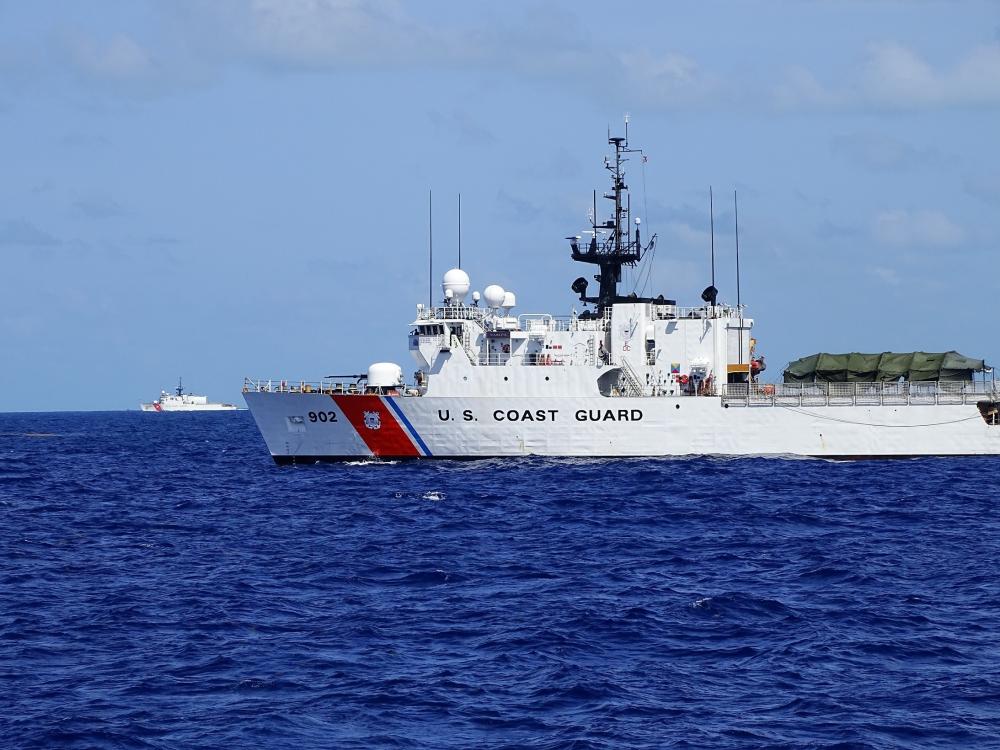
The USCGC Tampa returned to its Portsmouth, Virginia homeport on Aug. 24. U.S. COAST GUARD
PORTSMOUTH, Va. — The crew of the USCGC Tampa (WMEC 902) returned to their homeport in Portsmouth, Virginia, on Aug. 24 after a 56-day Caribbean Sea patrol, the Coast Guard Atlantic Area said Sept. 9.
During the patrol, Tampa’s crew collaborated with 12 other Coast Guard cutters, numerous Coast Guard aircraft and other Department of Homeland Security boats and aircraft to detect, deter, and intercept unsafe and illegal ventures to the United States.
Tampa’s crew primarily patrolled the South Florida Straits, south of the Florida Keys and the Windward Pass, off the northwest coast of Haiti, contributing to the interdiction, care, and repatriation of 612 migrants from Haiti, Cuba and the Dominican Republic.
“Showcasing professionalism, teamwork, and empathy, our crew once again selflessly performed our assigned missions,” said Cmdr. Sky Holm, Tampa’s commanding officer. “I am continually impressed by their dedication and devotion to duty and I am humbled to be serving alongside them. We acknowledge the tremendous collaboration from team Coast Guard and our international and interagency partners, who seamlessly integrate to meet collective objectives. Of course, our crew sincerely appreciates the extraordinary assistance from our mission support units shore side, who keep our cutter operational, as well as the compassionate support from our loved ones ashore, who provide us strength while we are away.”
Tampa is a 270-foot medium-endurance cutter homeported in Portsmouth with 100 crewmembers. The cutter’s primary missions are counter drug operations, migrant interdiction, enforcing federal fishery laws, as well as search and rescue in support of Coast Guard operations throughout the Western Hemisphere.
COVID-19 Vaccination Mandate Still an Issue Across the Sea Services
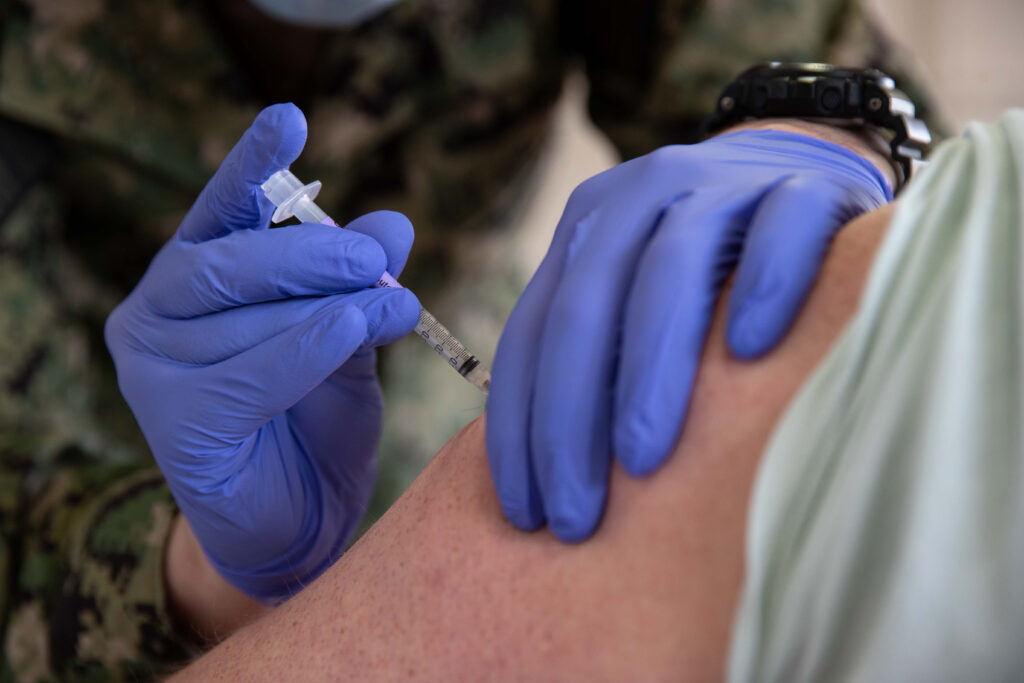
Hospital Corpsman 3rd Class Joseph Casassa, assigned to USS Gerald R. Ford’s (CVN 78) dental department, administers a COVID-19 vaccine at the McCormick Gym onboard Naval Station Norfolk, April 8, 2021. The Defense Department is now authorizing the use of Novavax COVID-19 vaccinations for service members. U.S. NAVY / Mass Communication Specialist Seaman Jackson Adkins
ARLINGTON, Va. — Seven cadets at the U.S. Coast Guard Academy who refused to comply with the military’s COVID-19 vaccination mandate were disenrolled and ordered off the school’s New London, Connecticut, campus in late August.
“While the seven cadets have been disenrolled, they have not been separated from the Coast Guard Academy and are continuing to receive cadet pay and entitlements until their separation is processed,” the Coast Guard said in a statement sent to Seapower Sept. 8.
Two days after Defense Secretary Lloyd Austin’s Aug. 24, 2021, mandate requiring COVID-19 vaccine for all service members to protect the force and maintain readiness, the Coast Guard announced a vaccination requirement.
Fifteen cadets filed medical exemption or religious accommodation requests in September 2021. They were evaluated on a case-by-case basis by the Coast Guard’s Office of Military Personnel Policy and denied. The 15 cadets were notified March 14, 2022, and given 10 business days to file an appeal. The appeals were denied by Coast Guard Headquarters and all 15 were directed to report to the Academy clinic for their first dose of a COVID-19 vaccine. Four chose vaccination, four others resigned from the Academy, the Coast Guard said.
On June 13, the remaining seven cadets were told they were “in violation of the Uniform Code of Military Justice Article 90, Willfully disobeying a superior commissioned officer, and Article 92, Failure to obey [an] order or regulation,” according to the statement. They were given an additional five days to comply. On June 22, they were notified of their disenrollment and give a chance to appeal to Coast Guard Headquarters. The cadets were notified Aug. 15 their disenrollment appeals were denied and were directed “to proceed to an alternate worksite status beginning on August 19th, 2022.”
All seven “departed the Academy at their own convenience on August 19” based on their individual travel arrangements assisted by Academy staff. “All seven cadets are currently residing at a safe location, having either returned to their families or are being hosted by the families of fellow cadets,” according to the Coast Guard statement.
Several federal lawsuits are challenging the military’s process for granting religious exemptions from the vaccination mandate, including two in South Carolina and Texas involving some of the dismissed Coast Guard cadets.
Almost 5,000 Sailors and Marines have been separated from the sea services since late 2021 for vaccination refusal. The Navy has received 4,251 for religious accommodation, the Marines 3,733. Only a handful have been approved. However, a federal judge in Texas certified a class action by Sailors, including several Navy SEALS, seeking a religious exemption and issued a preliminary injunction March 30, halting separation for members of the class. A similar injunction was issued against the Marine Corps Aug. 18 by a federal judge in Florida.
A coalition of more than 20 state attorneys general has filed an amicus brief before the 5th U.S. Court of Appeals, supporting the religious liberty claims of Navy SEALs seeking exemptions from the mandatory vaccination requirement in the Texas case. While lower courts have blocked separation of vaccine refusers, the U.S. Supreme Court has ruled the Navy could consider a Sailor’s vaccination status in making deployment and other operational decisions while court challenges move through the system.
As of Aug. 31, the latest Defense Department COVID-19 statistics, 1.99 million service members have been fully vaccinated, including 387,477 in the Navy and 200,435 in the Marine Corps.
Nevertheless, as of Aug. 24, 3,000 active duty Sailors and 3,376 in the Ready Reserve remain unvaccinated. The Marine Corps’ latest COVID update doesn’t give specific figures, only stating that as of Aug. 4, just 5% of both the active duty and the reserve force were not vaccinated.
Novavax Arrives
In a related development, the Defense Department announced Aug. 29 a new COVID-19 vaccine, Novavax, will be available as an option at military clinics. Officials hope Novavax, which is approved by the Food and Drug Administration under an emergency use authorization for individuals 12 years of age and older, may be more acceptable to the thousands of troops who have refused the Pfizer, Moderna and Johnson & Johnson vaccines for religious or moral reasons.
Novavax uses technology that has been used in other vaccines required by the military, like hepatitis B vaccine. Novavax is not made with, or tested on, cells from fetal tissue. It does not use mRNA or DNA technology and does not enter the nucleus of cells, Pentagon officials said.
“We now have a range of COVID-19 vaccines available at our military medical treatment facilities and they all provide strong protection against hospitalization, severe illness and death,” Dr. Michael Malanoski, deputy director of the Defense Health Agency, said in a statement. However, as in the early days of the three other vaccines, the FDA’s emergency use authorization approval means service members cannot be compelled to take Novavax.
CNO, Chief of Italian Navy Meet and Discuss Regional Security
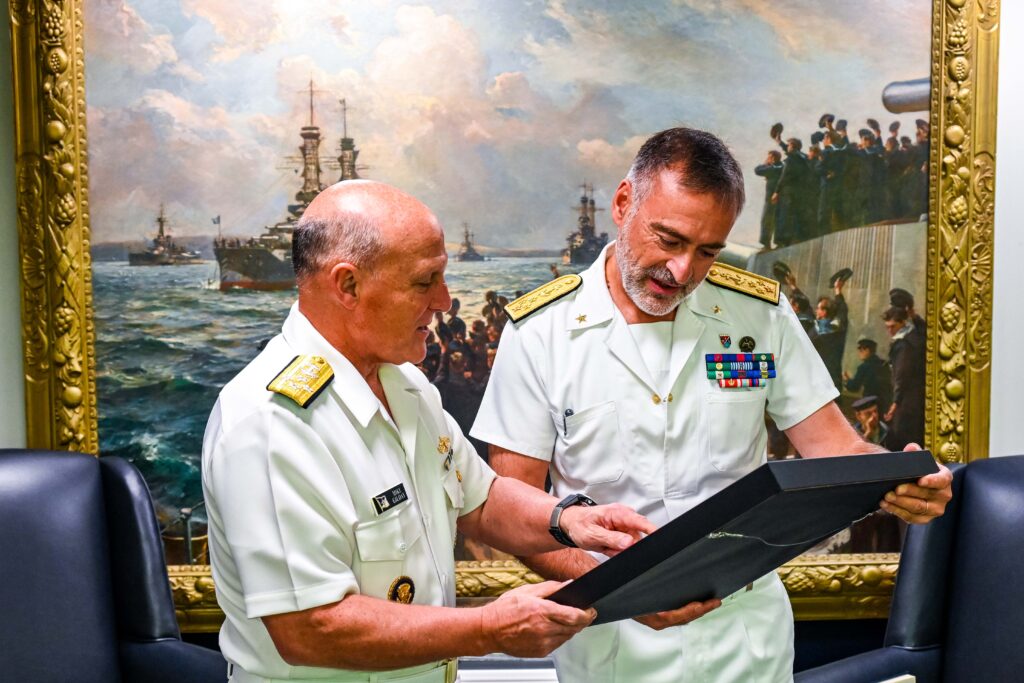
Chief of Naval Operations Adm. Mike Gilday meets with Chief of Italian Navy Adm. Enrico Credendino at the Pentagon for an office call, Sept. 7. U.S. NAVY / Mass Communication Specialist 1st Class Michael B. Zingaro
WASHINGTON — Chief of Naval Operations Adm. Mike Gilday hosted Chief of Italian Navy Adm. Enrico Credendino at the Pentagon for an office call on Sept. 7, the CNO’s public affairs office said in a release.
Gilday and Credendino discussed their visions to grow the already successful maritime partnership between Italy and the United States, emphasizing the need to strengthen the warfighting advantage in the region, maximize cooperative training opportunities, and improve capabilities sharing.
“An ally and partner like Italy is crucial to our success in the European theater,” said Gilday. “Our navies have a long and storied history together — Harry S. Truman Carrier Strike Group’s recent tri-carrier operations with ITS Cavour and FS Charles de Gaulle is a testament to the strength of our maritime partnership.”
“I’m incredibly thankful to Adm. Credendino and the Marina Militare for their leadership in the security and stability of the wider Mediterranean region,” Gilday added.
The two leaders also talked about the security environment in Europe, stressing the importance of continued interoperability among NATO forces. U.S. and Italian aircraft carriers have operated together this year in support of real-world contingency operations, and both chiefs expressed interest in expanding similar operations in the future.
“The U.S. Navy is the exemplary partner for Italian Navy — in bilateral cooperation, within the alliance and in coalitions — for the sake of maritime security and the prosperity of our nations. Our relationship reflects the long-standing and strong bonds of friendship between our people and our countries,” said Credendino.
“That’s why I am deeply grateful to Adm. Gilday — the continuous effort in fostering cooperation is, indeed, the key to face present challenges to peace and stability, posed by the international scenario, in order to preserve our common reference values.”
The U.S. and Italian Navy regularly operate together around the globe. In addition to regional tasking earlier this year, the two navies have also participated in exercises and activities such as Neptune Strike 2022, Obangame Express and bilateral drills. These exercises highlight NATO’s ability to integrate high-end maritime warfare capabilities to defend the alliance.
Italy hosts American Sailors at Naval Support Activity Naples, Naval Air Station Sigonella and NSA Naples Detachment Gaeta.
This was the first meeting between the two heads of navy. Gilday has previously met with Credendino’s predecessor, current Italian Chief of Defense Staff Adm. Giuseppe Cavo Dragone.
DoD Submits Updated Red Hill Defuel Plan to Hawaii DOH
A Naval Facilities Engineering Systems Command contractor pours a water sample in February to conduct real-time monitoring at Red Hill Well in support of Joint Base Pearl Harbor-Hickam’s water recovery efforts. U.S. NAVY / Mass Communication Specialist 2nd Class Mar’Queon A.D. Tramble
JOINT BASE PEARL HARBOR-HICKAM, Hawaii — The Department of Defense submitted on Sept. 7 its updated plan to defuel the Red Hill Bulk Underground Storage Facility to the Hawaii Department of Health, Commander Navy Region Hawaii public affairs said in a release.
Under the analysis completed as of the submission of Supplement 1.A, DoD projects completion of defueling by July 2024.
The new timeline reflects the DoD’s commitment to defuel Red Hill safely while consolidating and accelerating work at every opportunity. A team of experts from DoD, Navy and Defense Logistics Agency worked together over two months to refine and improve the defueling plan. The team condensed the repair timeline, determined certain activities could be conducted in parallel, and reduced the duration of the final phase of defueling from 8 months to approximately 5 months.
The DoD Red Hill Defueling Plan Supplement 1.A includes information on the DoD unpacking plan, infrastructure repairs and enhancements, training updates, schedule updates, and general comments addressing DOH feedback. Moving forward, DoD will continue to identify opportunities to accelerate timelines without sacrificing safety.
“This plan represents considerable work by our DoD and Navy team along with the regulators, and we remain completely focused on the safe and expeditious defueling of the facility,” said Rear Adm. Steve Barnett, commander, Navy Region Hawaii. “As we move forward, we will continually refine and improve this plan, and keep stakeholders and the community informed throughout the process. Every action we take must protect the environment and the community.”
The DoD plans to provide the Department of Health with an additional defueling plan supplement later this month. The next supplement will incorporate analysis from recent and expected studies that DoD did not receive in time to address in Supplemental 1.A, and which may identify additional infrastructure modifications to support defueling. If the incorporation of the above reports and their findings affect the defueling plan and its timelines, the next supplement will provide supporting details.
Throughout execution of this plan, DoD will coordinate with DOH and the U.S. Environmental Protection Agency to meet the requirements of and timelines established in the State’s Emergency Order, ensure compliance with environmental safeguards and defuel Red Hill in accordance with applicable federal, state and local regulations.
More information on the defueling work, including the updated plan, can be found here: www.navy.mil/jointbasewater.
Littoral Combat Ships Conduct Joint Oceania Maritime Support Initiative
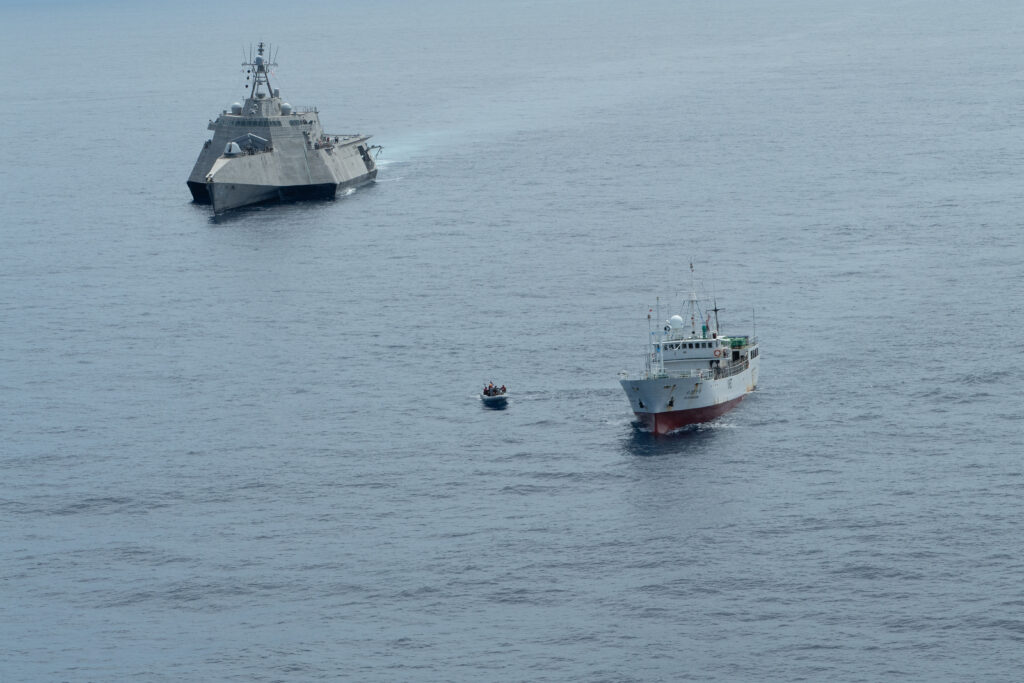
Independence-variant littoral combat ship USS Oakland (LCS 24) stations behind a fishing vessel while Tactical Law Enforcement Team Pacific Coast Guardsmen conduct an Oceania Maritime Support Initiative vessel compliance boarding, Aug. 19. U.S. NAVY / Mass Communication Specialist 2nd Class Ian Zagrocki
PACIFIC OCEAN — Independence-variant littoral combat ships USS Jackson (LCS 6) and USS Oakland (LCS 24) deployed to the Oceania region with embarked U.S. Coast Guard Pacific Tactical Law Enforcement Team detachments to conduct maritime law enforcement operations in support of U.S. and Pacific Island nations fisheries laws, August 2022, Commander, Littoral Combat Ship Squadron One Public Affairs Office said Sept. 7.
The Oceania Maritime Support Initiative (OMSI) is a secretary of defense program that leverages Department of Defense assets transiting the region to improve maritime security and maritime domain awareness, ultimately supporting regional stability and partnerships in Oceania.
“The joint Navy and Coast Guard OMSI mission capitalizes on the agility and mission adaptability LCS was designed for,” said Cmdr. Derek Jaskowiak, commanding officer of Oakland. “It is our privilege to support our partner nations through presence in Oceania and to ensure continued security, stability, and prosperity throughout the region.”
Finishing up their OMSI patrol in late August, Oakland operated alongside the U.S. Coast Guard, a detachment from Helicopter Maritime Strike Squadron 35, and partners throughout the region to suppress illicit maritime activities like illegal, unregulated, unreported fishing and transnational crime.
“Partnering with the U.S. Navy in support of the OMSI mission enables the Coast Guard to extend our reach into and throughout Oceania as the tyranny of distance when operating in the Pacific is exceptionally vast,” said Lt. C.K. Williams, chief intelligence officer of USCG Sector Honolulu.
Jackson will continue the OMSI mission through September 2022.
USS Ross Concludes 8-Year Forward-Deployment to Europe
The Arleigh Burke-class guided-missile destroyer USS Ross (DDG 71) transits the Mediterranean Sea Sept. 29, 2018. U.S. NAVY / Mass Communication Specialist 3rd Class Krystina Coffey
ROTA, Spain — The Arleigh Burke-class guided-missile destroyer USS Ross (DDG 71) departed the U.S. Naval Forces Europe-Africa area of operations, marking the end of its time as a Forward Deployed Naval Forces-Europe (FDNF-E) Destroyer, Sept. 6, said U.S. 6th announced Sept. 7.
USS Paul Ignatius (DDG 117), named after Paul Ignatius who served as the secretary of the Navy from 1967 to 1969, replaced Ross in the third of four scheduled homeport shifts to occur in support of the U.S. Navy’s long-range plan to gradually rotate the Rota-based destroyers. USS Roosevelt (DDG 80) replaced USS Carney (DDG 64) in the first homeport shift and USS Arleigh Burke (DDG 51) replaced USS Donald Cook (DDG 75) in the second.
“Ross and her crew performed admirably while operating as a FDNF-E destroyer,” said Capt. Ed Sundberg, Commander, Destroyer Squadron 60 and Task Force 65. “For eight years, the entire Ross team stood shoulder to shoulder with our allies and partners building interoperability and bolstering capabilities by playing critical roles in exercises and operations.”
Ross joined USS Donald Cook in June 2014 as the first two Rota-based FDNF-E destroyers under Commander, Task Force 65. Upon arrival to C6F, Ross executed its first patrol in the Baltic Sea participating in Sea Breeze with Ukraine.
After 12 patrols while assigned to U.S. 6th Fleet, Ross wrapped up its final patrol in the Mediterranean while operating alongside NATO allies and regional partners during the onset of the Russian invasion into Ukraine. Ross’s contribution as an FDNF-E ship has demonstrated the U.S.’s enduring commitment to its NATO allies and partners.
Ross’ commitment to NATO Allies and regional partners extended well beyond the Mediterranean. During its eight years sailing from Rota, Spain, Ross frequented exercises and operations with allies in the Black Sea, Baltic Sea, Barents, Artic Circle and off the coast of Africa and visited numerous countries.
“Today’s challenges require strong alliances and partnerships that demonstrate our integration and interoperability capabilities. I am extremely grateful for for the opportunities Ross has had, and humbled to have the privilege serving overseas with such a phenomenal crew,” said Cmdr. Scott Jones, Ross’ commanding officer. “Our experiences in 6th Fleet have been priceless, and we will not soon forget the lessons we have learned, or the friendships we have made, as we set sail to Norfolk.”
Throughout Ross’ time in U.S. 6th Fleet, the ship participated in previous iterations of Exercise Sea Breeze, Breeze, African Lion, FOST, BALTOPs, Formidable Shield and other multi-lateral maritime training opportunities with partners to include Cyprus, France, Georgia, Greece, Italy, Morocco, Norway, Romania, Ukraine and the United Kingdom. Mission sets during these exercises included surface warfare, antisubmarine warfare, anti-air warfare, and strike warfare scenarios that focus on maintaining maritime stability and security.
Ross completed one final underway to the Baltic Sea to ensure freedom of navigation of the high seas by establishing its presence and working with NATO allies in the region.
Named after Medal of Honor recipient Donald Kirby Ross for his action during the Japanese attack on Pearl Harbor, Ross is scheduled to return to its former homeport of Norfolk, Virginia.
Navy Awards Curtiss-Wright Contracts to Support Columbia Submarine Program
DAVIDSON, N.C. — Curtiss-Wright Corp. has been awarded contracts valued at approximately $120 million when fully funded to provide generators for the U.S. Navy’s next-generation Columbia-class submarine, the company said Sept. 6.
“We are very proud to have been chosen by Northrop Grumman to provide generators for this significant U.S. nuclear naval defense platform,” said Lynn M. Bamford, president and CEO of Curtiss-Wright. “The Columbia-class ballistic missile submarine program is the U.S. Navy’s top priority to maintain the nation’s force structure, and Curtiss-Wright’s selection for this award reflects our long-standing commitment to and our ongoing support of the U.S. Navy’s most critical platforms.”
The Columbia-class submarines will replace the fleet of Ohio-class ballistic-missile submarines. The lead ship is scheduled to be delivered to the Navy in 2027.
Curtiss-Wright is performing this work at its Cheswick, Pennsylvania, facility within the company’s Naval & Power Segment.
Navy F/A-18 Super Hornet Flies with LITENING Targeting Pod
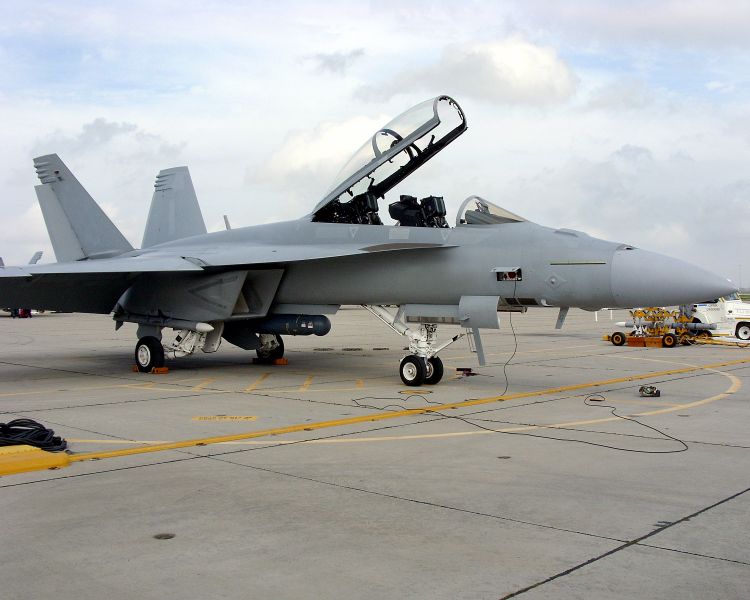
The LITENING advanced targeting pod has had its first flight on a Navy F/A-18 Super Hornet. NORTHROP GRUMMAN
ROLLING MEADOWS, Ill. — Northrop Grumman’s LITENING advanced targeting pod has successfully completed its first test flights on the U.S. Navy’s F/A-18 Super Hornet. The Navy selected LITENING to replace the legacy targeting pods on the F/A-18 fleet in early 2022.
“This first flight demonstrated LITENING’s ability to rapidly add modern, upgradeable mission capabilities to the Super Hornet,” said James Conroy, vice president, navigation, targeting and survivability at Northrop Grumman. “The pod’s digital video, autonomous target tracking, and laser sensors will give Naval aviators an entirely new set of capabilities for operations over land and sea today, and the growth capabilities built into LITENING’s modular design ensure that the pod can evolve to meet changing requirements.”
During the flight, pilots executed maneuvers and operations representative of combat missions, including ground moving target tracking, air-to-air tracking and target designation. The pilots also engaged the eye-safe training laser mode that allows the pod to be used for realistic training with combat controllers on the ground. The pilots were able to carry out these operations without advance training, showing the ease of use that has been made possible by close collaboration with the aviation community.
LITENING is currently in service with the Marine Corps, Air Force, Air National Guard and international customers. Northrop Grumman has delivered more than 900 LITENING pods.
Navy, Marine Corps Set to Reach 2022 Recruiting Goal, Raven Says
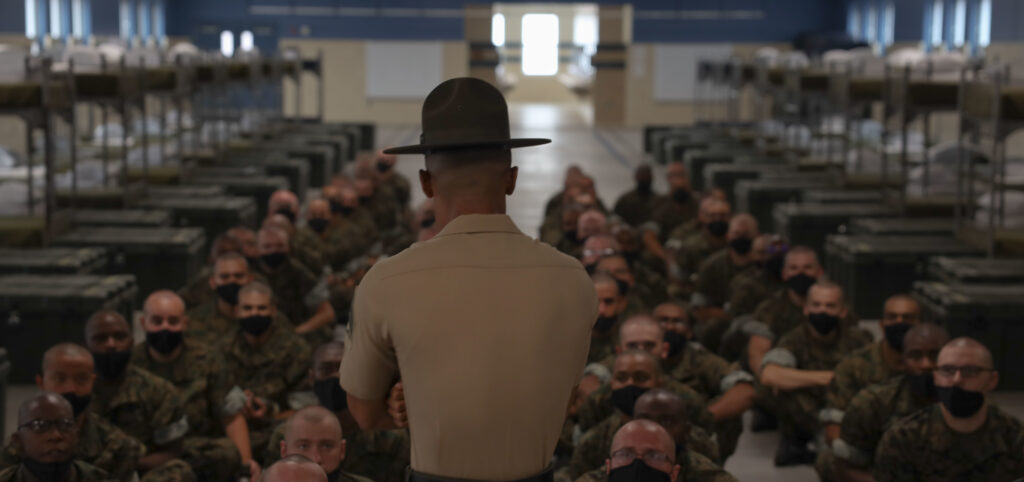
A U.S. Marine Corps drill instructor with Lima Company, 3rd Recruit Training Battalion, introduces himself to new recruits on Marine Corps Recruit Depot Parris Island, S.C., Sept. 2. U.S. MARINE CORPS / Lance Cpl. Bradley Williams
ARLINGTON, Va. — As fiscal 2022 approaches its close, the Navy and Marine Corps are set to reach their recruiting goals, the Navy Department’s undersecretary said. But the department is not resting, looking ahead to future years to sustained campaigning in the face of demographic challenges.
“The latest information that I have is that both the Navy and Marine Corps are set to meet their targets for this year,” said Erik Raven, undersecretary of the Navy, speaking Sept. 7 at the Defense News Conference in Arlington.
“We are looking very carefully at what the next fiscal year — 2023 — will mean,” Raven said. “There are some challenges there. Secretary [of the Navy Carlos] Del Toro has directed that we have an organized campaign to make sure that we are able to meet our recruiting goals, not just in ’22 but in ’23 and beyond. That means keeping very close track. I’ve made some really good friends at the recruiting commands because we’re talking almost all the time about where we are on our numbers, what we’re hearing from recruiting stations across the nation. I’ve talked with recruiters and understand the headwinds that they’re facing.”
Raven said the headwinds involve several issues.
“When unemployment is low, recruiting is more challenging,” he said. “We’re also seeing the propensity of Americans to serve — and the ability to serve — has been declining over time.
“We really to engage with the public in a new way to help explain what the value of military service is to our nation, not just as a Navy and Marine Corps equity, but in terms of the career opportunities young people can pursue, what the compensation benefits of military service are, and what we can provide for, not just a career in the military, but outside the military,” he said.
“We’re pulling out all the stops to be able to do that, and a lot of this will also be engaging with schools,” he said. “We need to make sure that our recruiters have access to schools, to just have that conversation and offer up opportunities to young Americans who may be looking at their options as they graduate.”
Also speaking at the conference was Gen. Eric Smith, assistant commandant of the Marine Corps, who was asked by an attendee what keeps him up at night.
“As a father of a Marine, what keeps me up at night is people and recruiting,” Smith said. “We are at a point now where recruiting is a challenge and I think we are all collectively not doing a good enough job of explaining the virtue and value of military service. … Military service is not just a good thing. It is an honorable thing.
“There’s this narrative out there that you come in, you’re going to leave broken, you’re going to leave damaged,” the general said. “A small percentage, yes. We put our lives on the line, as you know for certain, when we go to war. But in the main, you come in, and you leave four to 35 years later, with a skill that you didn’t have. What keeps me up at night is trying to remind people, is that we are warfighters, we bring lethality, that’s what we do: we defend the Constitution. … the value of military service is that you defend your Constitution, defend your nation, gain a skill, and return to civil society as, hopefully, a better person than we found you.
“But that narrative seems to be getting lost, and that concerns me, because we do have to recruit and retain our people, because people are the most valuable thing,” he said. “That’s who fight and win wars. Machines don’t do that; it’s people.”
Britain’s Flagship Heads to USA Ahead of Autumn on European Operations
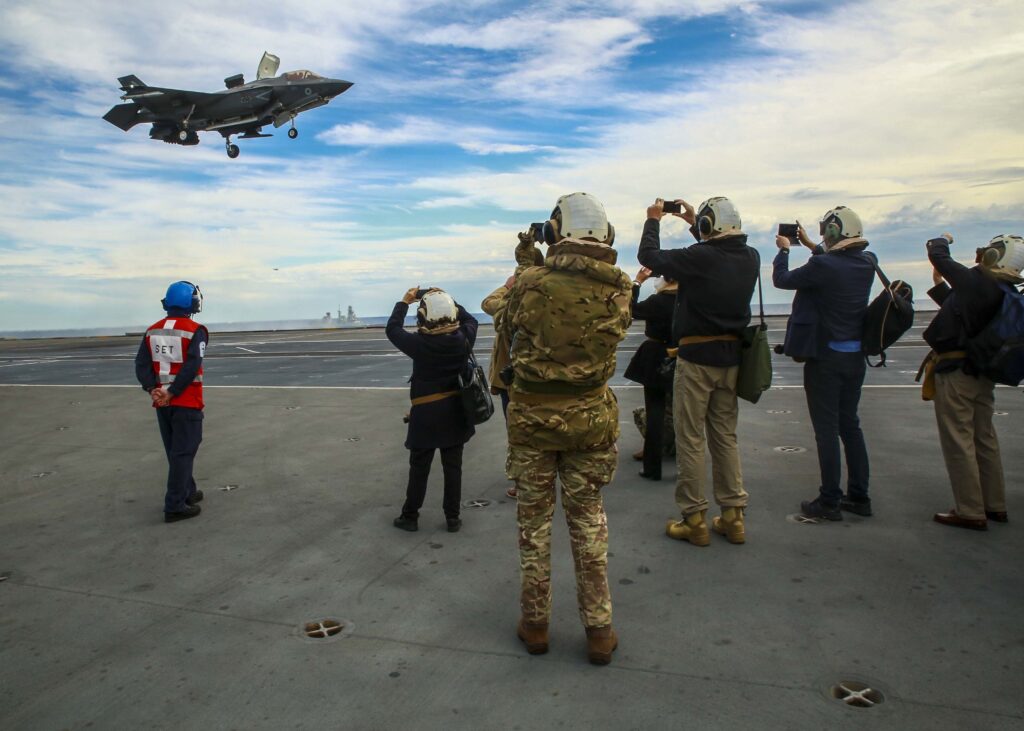
NATO Ambassadors observe an F-35 Lightning jet land on the flight deck of Her Majesty’s Ship Queen Elizabeth, Nov. 22, 2021. U.S. MARINE CORPS / Staff Sgt. Bryani Musick
WASHINGTON — In the coming months, HMS Queen Elizabeth will be at the heart of a powerful task group made up of thousands of Sailors, up to 10 ships, F-35B Lightning jets, helicopter squadrons and Royal Marines Commandos which will operate across Europe this autumn, said Georgina Burros, chief communications officer for Global Issues for the British Embassy in Washington, D.C.
But the aircraft carrier will first deploy to the East Coast of the United States to undertake parts of HMS Prince of Wales’ deployment as its sister ship undergoes repairs.
“After a period of maintenance it is fantastic for the fleet flagship to be underway again to conduct operational activity with allies and partners,” said Capt. Ian Feasey, HMS Queen Elizabeth’s commanding officer.
The Royal Navy task force will work closely with allies and partners across Europe — from the Baltic all the way south to the Balkans and Black Sea region — over the coming months.
The operations are part of galvanized NATO efforts in the face of Russia’s unprovoked invasion of Ukraine to safeguard security, stability and prosperity across Europe. HMS Queen Elizabeth will primarily be focused on operations in the Baltic and work closely with forces from Denmark, Estonia, Finland, Iceland, Latvia, Lithuania, the Netherlands, Norway and Sweden.
Together, these nations form the U.K.-led Joint Expeditionary Force, designed to react to crises whenever and wherever they unfold.
Before the operational phase of the deployment, HMS Queen Elizabeth will be in New York to host the Atlantic Future Forum, a conference that brings together the brightest minds and most influential thinkers from defense and beyond to strengthen U.K. and U.S. bonds.
Submarine-hunting frigate HMS Richmond will accompany the aircraft carrier across the Atlantic.
At the same time, the Royal Navy’s Littoral Response Group is completing its final preparations before deploying to the Mediterranean to operate with NATO allies and partners in a region vital for European security.
The amphibious task group is made of more than a thousand Sailors and Royal Marines and will be led by HMS Albion.