HII Christens National Security Cutter Calhoun (WMSL 759) 

Christina Calhoun Zubowicz, ship sponsor and granddaughter of its namesake, christened the ship on June 4. HII

PASCAGOULA, Miss. — HII christened Legend-class national security cutter Calhoun (WMSL 759) June 4 at the company’s Ingalls Shipbuilding division, the company said in a release. 

Calhoun (WMSL 759) is named to honor Charles L. Calhoun, the first master chief petty officer of the U.S. Coast Guard. Calhoun served in the U.S. Navy for three years during World War II and was honorably discharged in 1946 as a torpedoman second class. He enlisted in the Coast Guard that same year and held varying positions of leadership over the course of his career. 

“Today’s christening is an acknowledgement of an important and valued partnership between our shipyard and the United States Coast Guard,” Ingalls Shipbuilding President Kari Wilkinson said. “We consider it a privilege to build these magnificent ships and as shipbuilders, we are humbled to further Master Chief Calhoun’s legacy.” 

The keynote speaker was commandant of the U.S. Coast Guard Adm. Linda Fagan, who was recently appointed to lead the Coast Guard and is the armed forces’ first female service chief. 

“I’m super proud of the Ingalls team, I know how much heart and soul goes into building a ship like this,” Fagan said. “These national security cutters are absolutely vital to our national security and economic prosperity. We are a global coast guard, forward deployed — conducting exercises with maritime forces, strengthening security partnerships and maritime governance in critical parts of the world right now.” 

Christina Calhoun Zubowicz, ship sponsor and granddaughter of the namesake, christened the ship by breaking a bottle of sparkling wine across the bow. 

“On behalf of the Calhoun family, I would like to extend our sincere appreciation for the tremendous work being done here at Ingalls Shipbuilding,” Zubowicz said. “Rest assured that my grandfather would be admiring this ship with great pride today knowing that his name would continue his life’s work of carrying out Coast Guard missions.” 

U.S. Rep. Steven Palazzo joined Ingalls Shipbuilding to celebrate the ship christening. 

“The national security cutters coming out of Ingalls are contributing greatly to our national security, stemming the flow of drugs throughout our oceans, and proving that we have the best shipbuilders right here in south Mississippi,” Palazzo said. “Congratulations to everyone at Ingalls on another successful christening, and I look forward to seeing the Calhoun (WMSL 759) in action.” 

Ingalls Shipbuilding is the sole designer and provider of the Coast Guard Legend-class national security cutter. The flagship of the Coast Guard fleet, national security cutters are capable of embarking and supporting a wide range of Coast Guard, Navy and NATO manned and unmanned aircraft. National security cutters have proven to be ideal platforms for drug interdiction, global illegal fishing, disaster relief and defense support operations. 

Ingalls has delivered nine Legend-class national security cutters, and two more are under construction. Calhoun, the 10th national security cutter, is scheduled to be delivered early next year. 


Raytheon Technologies Establishes Global Headquarters Office in Northern Virginia

Raytheon Technologies’ building in Arlington, Virginia. RAYTHEON TECHNOLOGIES

ARLINGTON, Va. — Raytheon Technologies announced today June 7 it will establish its global headquarters in Arlington, Virginia, just outside of Washington, D.C., a move similar to the one recently announced by Boeing.

The location increases agility in supporting U.S. government and commercial aerospace customers and serves to reinforce partnerships that will progress innovative technologies to advance the industry, Raytheon said in a press release, adding that Washington, D.C., serves as a convenient travel hub for the company’s global customers and employees.

The new global headquarters office will be in Arlington’s Rosslyn neighborhood alongside the Raytheon Intelligence & Space business. Each of the company’s four business units currently have operations in Virginia, the company said, and it will maintain its U.S. presence, which includes 600 facilities across 44 states and territories.

Raytheon Technologies said it has not accepted or sought any financial incentives from any state or municipality to support the establishment of the global headquarters office in Virginia.


DC Congresswoman Pushes DC Statehood at Keel-Laying for Navy Submarine 

U.S. Rep. Eleanor Holmes Norton (D-District of Columbia), approves the welding of her initials onto a metal plate during a ceremony at the General Dynamics Electric Boat Facility at Quonset Point, Rhode Island, June 4. The congresswoman is the sponsor of the future U.S. Navy ballistic missile submarine District of Columbia. U.S. NAVY / GENERAL DYNAMICS ELECTRIC BOAT

ARLINGTON, Va. — The keel-laying of the U.S. Navy’s next-generation ballistic-missile submarine (SSBN) was celebrated June 4 in Quonset Point, Rhode Island, by the submarine’s designers and builders and the Navy that will operate it.

At the ceremonies for the future USS District of Columbia (SSBN 826), one of the ship’s two sponsors, Rep. Eleanor Holmes Norton, D-District of Columbia, also used the event as an occasion to advocate for the cause of her life: statehood for the District of Columbia. 

The day before the ceremonies, Navy Secretary Carlos Del Toro announced that the first ship of the Columbia class would be named USS District of Columbia, instead of Columbia. 

“The decision to name SSBN 826 is to alleviate any name conflicts with the already-commissioned USS Columbia (SSN 771). §10 U.S.C. 8662(a) states that not more than one vessel of the Navy may have the same name,” the secretary’s public affairs officer said in a June 3 release. “The Columbia program was named in 2016 with the lead ship projected to enter service in 2027, consequently overlapping with the existing USS Columbia (SSN 771). SSBN 826 will be named after the nation’s capital while SSN 771 is named after cities in South Carolina, Missouri, and Illinois named Columbia, following the naval tradition of SSNs being named after U.S. cities.” 

General Dynamics Electric Boat President Kevin Graney presided at the keel-laying ceremonies. Also speaking were Jennifer Boykin, president of Newport News Shipbuilding, a Huntington Ingalls company that builds sections of the Columbia-class submarines; Rep. Joe Courtney (D-Connecticut), in whose district the Columbia SSBNs will be assembled; Reps. David Cicilline and Jim Langevin and Sens. Sheldon Whitehouse and Jack Reed, all Democrats from Rhode Island, site of Electric Boats’ Quonset Point fabrication facility; Adm. Daryl Caudle, commander, U.S. Fleet Forces Command; Del Toro; and Norton.  

Graney said the new SSBN was going to be “the most capable and quiet submarine ever built.” 

He noted Electric Boat invested almost $2 billion in facilities and hired thousands of workers to build the Columbia class, and that as the program progressed the company would “need to hire and train many thousands more.”   

Graney called the Columbia class SSBN was “arguably be the greatest engineering achievement of the most advanced military in the world.” 

Boykin noted that “our Sailors’ lives depend on the quality of our product, and it is this responsibility that guides everything that we do.” 

She noted Newport News Shipbuilding has been allied with Electric Boat in the Virginia-class attack submarine program that began nearly 25 years ago. 

“As every ballistic-missile submarine has since the keel laying of USS George Washington (SSBN 598) here at Electric Boat in November 1958 — the District of Columbia, and all those in its class will continue to serve as the most survivable leg of the nuclear triad — standing constant watch far beneath the waves, as we have done for over 63 years, a stalwart deterrent against those who would seek to do the unspeakable,” Caudle said. 

Del Toro noted the Washington Navy Yard in the district is the Navy’s oldest shore facility. 

“While it’s common to refer to D.C. as our nation’s capital, I also like to think of it as our naval capital,” Del Toro said, in reference to notable Sailors and Marines who were born and raised in the district. “That’s why I want to make it clear that this boat honors the people and the spirit of the District of Columbia.”  

Norton — the boat’s sponsor along with the district’s mayor, Muriel Bowser — wrote her initials on a steel plate. The initials were then welded onto the plate by Electric Boat welder Maria Betance-Pizarro. The plate will be fixed to the structure of the submarine. 

“I can’t say how pleased I am today as we celebrate the USS District of Columbia-class submarine, commissioned in recognition of my hometown and the jurisdiction I represent in the Congress, the District of Columbia,” Norton said. 

Norton, who has been a staunch advocate for statehood for the district during her long career, used the occasion to plug her top political goal.  

Norton said the submarine’s name is “fitting that it recognizes the jurisdiction that will become the 51st state of the United States of America. … As we celebrate this keel-laying today, we also underline the Congress must no longer exclude the residents of our nation’s capital from the democratic presence, forcing residents to watch from the sidelines as Congress votes on laws that affect the nation or votes even on laws on the duly elected government. Democracy demands more, D.C. residents demand much more. They deserve statehood.”  


Mayflower Autonomous Ship Reaches Canada After Suffering Mechanical Issues

The Mayflower Autonomous Ship arrives in Halifax, Nova Scotia, for equipment troubleshooting before continuing its journey. IBM

HALIFAX, NOVA SCOTIA — After a 40-day voyage, and after more than year of delay due to a mechanical problem, the Mayflower autonomous ship arrived in North America, at Halifax, Nova Scotia on June 5, announced program partners IBM and ProMare.

The ship has been dogged by mechanical problems even as its artificial intelligence guidance system was able to guide it across the ocean.

The catamaran traveled from Plymouth, United Kingdom, to Halifax, and later is expected to make appearances in the Washington, D.C. area. According to IBM, it’s the first nautical vessel to complete an unmanned, crewless voyage across the Atlantic.

Mayflower was intended to reach Plymouth, Massachusetts. Over the May 28-29 weekend, the Mayflower developed an issue with the charging circuit for the generator starter batteries, according to IBM.

On May 30, the team had to switch to the back-up navigation PC. ProMare decided to divert to Halifax, Nova Scotia, as the closest viable port, to investigate and fix these issues.

The ship was designed and built by marine research nonprofit ProMare, with IBM acting as lead technology and science partner.

Artificial intelligence and edge computing technologies underpin the ship’s AI Captain, which uses six cameras, more than 30 sensors and 15 edge computing devices to help make decisions.

“This makes it possible for the AI Captain to adhere to maritime law while making crucial split-second decisions, like rerouting itself around hazards or marine animals, all without human interaction or intervention,” IBM said in a blog post.


Cubic Teams with Carley to Enhance Navy Fleet Readiness, Support Training Modernization 

SAN DIEGO — Cubic Corp. has been awarded a subcontract by Carley Corp. under its prime contract for the U.S. Navy’s Sailor 2025 Ready, Relevant Learning fiscal 2022 content conversion contract, the company announced in a June 2 release. 

As part of the agreement, with support from Cubic, Carley will deliver training content to include designing, developing and delivering modernized training content, including courseware training products for multiple Navy ratings. The content will be provided to Sailors over the course of their career-long learning continuum. 

“It is an honor to continue to deliver modernized training content to our Sailors at the point of need,” said Mike Knowles, president of Cubic Mission and Performance Solutions. “This is the third contract award for the collective Carley-Cubic team and demonstrates the Navy’s continued confidence in our ability to deliver operationally relevant training to our Sailors and the fleet.” 

As part of its work with Carley, Cubic will utilize innovative instructional systems design, systems engineering, and training assessment approaches in conjunction with new technologies to support ratings-accession training. This will simultaneously support the S2025 overarching goal of improving Sailors’ transfer of training to the operational work environment. 

The Navy’s S2025 program is designed to improve personnel management and training systems to effectively recruit, develop, manage, reward, and retain future forces. The Ready, Relevant Learning pillar is a long-term investment in the improvement of individual Sailor performance and enhancing fleet readiness. 

Work will be performed in Orlando, Florida, and is expected to be completed by March 2027. 


Navy Identifies Pilot Killed in Super Hornet Crash Near Trona, California 

U.S. Navy pilot Lt. Richard Bullock. U.S. NAVY

SAN DIEGO – U.S. Navy pilot Lt. Richard Bullock was killed when his F/A-18E Super Hornet crashed in the vicinity of Trona, Calif., at approximately 2:30 p.m. (PDT), June 3, Naval Air Force, U.S. Pacific said in a June 5 release.  

Bullock was assigned to Strike Fighter Squadron (VFA) 113 based at Naval Air Station Lemoore, California, and was flying a routine training mission at the time before his aircraft when down in a remote, unpopulated area. No civilians were harmed as a result of this incident. 

The incident is currently under investigation and the scene of the crash is secured by Navy and local authorities while recovery efforts are ongoing. 


Coast Guard Accepts Delivery of 49th Fast Response Cutter Douglas Denman 

The Coast Guard accepts delivery of the 49th Fast Response Cutter Douglas Denman, in Key West, Florida, May 26, alongside the Denman family. The cutter will be homeported in Ketchikan, Alaska. U.S. COAST GUARD

KEY WEST, Fla. — The Coast Guard accepted the Coast Guard Cutter Douglas Denman (WPC 1149), the 24th Fast Response Cutter built by Bollinger Shipyards, during a May 26 ceremony at Coast Guard Sector Key West, the Coast Guard 17th District said June 2. 
 
“We were honored to have Douglas Denman’s son, Doug Jr., and daughter Karen there for the momentous occasion,” said Lt. Paul Kang, commanding officer of the cutter. “In addition to that, two of Douglas Denman’s granddaughters drove down from Georgia with their families.” 
 
The cutter, which is 154 feet long and has a crew complement of 24, will be homeported in Ketchikan, Alaska. 
 
The Douglas Denman is scheduled for commissioning in September in Ketchikan. It is the third Fast Response Cutter to be stationed in the Coast Guard’s 17th Coast Guard District, which covers the state of Alaska and the North Pacific. The Denman will join the John McCormick (WPC 1121) and the Bailey Barco (WPC 1122), which arrived in Alaska in 2016 and 2017. 
 
Born in Tallapoosa, Georgia, the cutter’s namesake joined the U.S. Coast Guard in 1940 and was eventually assigned as a coxswain to the USS Colhoun (DD-85), a Wickes-class destroyer in the U.S. Navy during World War I and later re-designated APD-2 in World War II. On Aug. 30, 1942, the Colhoun was positioned off the coast of Guadalcanal when it was attacked by hostile aircraft. Denman was seriously wounded during the attack but remained at his duty station. When the order was given to abandon ship, Denman and another crew member helped evacuate the crew and get life jackets to those already in the water. Because of Denman’s selfless actions, 100 of the 150 officers and staff survived the attack and sinking of Colhoun. Denman received the Silver Star and Purple Heart medals for his heroic efforts. He served for 20 years in the Coast Guard, retiring as a senior chief petty officer in 1961. 
 
The Fast Response Cutter is replacing the aging Island-class 110-foot patrol boats and features advanced command, control, communications, computers, intelligence, surveillance, reconnaissance equipment, and an over-the-horizon cutter boat. The cutter features advanced seakeeping capabilities and can achieve more than 32 mph (28 knots). The cutter has an endurance of five days. The Coast Guard is in the middle of the FRC acquisition program. 
 
Earlier this year, President Biden signed the Consolidated Appropriations Act for Fiscal Year 2022, which included a $130 million increase for two additional FRCs, continuing the program beyond its 64-vessel program of record. This is the second time Congress has added FRCs beyond the original 58 vessel program of record. 
 
Douglas Denman is designed for multiple missions, including law enforcement, fisheries enforcement, waterways and coastal security, search and rescue, and national defense. 


U.S. Coast Guard Cutter Helps Solomon Islands Patrol Their Waters

Crewmembers aboard the Coast Guard Cutter Myrtle Hazard stand watch on the bridge while underway in Oceania. The crew recently helped to fill the operational presence needed by conducting maritime surveillance to deter illegal, unreported, and unregulated fishing in the northern Solomon Islands. U.S. COAST GUARD

SOLOMON ISLANDS — The U.S. Coast Guard has responded to a request from the Solomon Islands to help patrol that country’s exclusive economic zone while maintenance was being conducted on the Royal Solomon Islands Police Vessel Taro.

The Fast Response Cutter Myrtle Hazard (WPC 1139) was dispatched on short notice to provide operational presence by conducting maritime surveillance to deter illegal, unreported, and unregulated fishing in the northern Solomon Islands.

The 154-foot Myrtle Hazard was already deployed on an expeditionary patrol in support of Operation Blue Pacific, where the is cutter was protecting against IUU fishing in the EEZs of five different Pacific Island Countries and the high seas.

According to a Coast Guard statement, IUU fishing has replaced piracy as the leading global maritime security threat and has the potential to jeopardize the efforts of PICs to conserve fish stocks, an important renewable resource in the region. 

The Solomon Islands has a population of 652,000 people, and encompasses more than 900 islands.  The capital, Honiara, is located on the island of Guadalcanal. It has an EEZ of more than 600,000 square miles.  Like its neighbors in Oceania, the country is reliant of fisheries for sustenance and income.

Myrtle Hazard’s mission followed coordination between the Coast Guard, the Solomon Islands’ commissioner of police, assistant commissioner of police, and the deputy commissioner for national security and operations.

The Coast Guard’s assistance is significant because the government of the Solomon Islands recently signed an agreement on policing cooperation with China and is reportedly in the process of concluding a security agreement that could allow an ongoing Chinese military and naval presence. Such an agreement has been characterized by some as “destabilizing” for the region.

According to the Washington Post, China is trying to formalize agreements with other Pacific island countries on policing, cybersecurity, maritime surveillance, fishing rights and the creation of a free-trade area.

“We need to respond to this because this is China seeking to increase its influence in the region of the world where Australia has been the security partner of choice since the Second World War,” said Australian Prime Minister Anthony Albanese in an interview with the Australian Broadcasting Corporation.

Federated States of Micronesia President David Panuelo called the deal a “smokescreen” hiding a Chinese attempt to “acquire access and control of our region.”

“Through Operation Blue Pacific, the United States Coast Guard looks for opportunities to assist our regional partners with maritime governance and security,” said Capt. Craig O’Brien, chief of response of Coast Guard District 14. “Working closely with the Forum Fisheries Agency and the government of Solomon Islands, it was a privilege for the United States Coast Guard to assist the Solomon Islands while their police vessel was down for maintenance.”

With the controversy over China’s engagement with the Pacific nations, and the Solomon Islands in particular, the request from the Solomon Islands to the U.S. Coast Guard is especially meaningful.


NATO Concludes Vigilance Activity Neptune Shield 22 

An F/A-18E Super Hornet, attached to the “Fighting Checkmates” of Strike Fighter Squadron (VFA) 211, refuels a Spanish air force AV-8B II+ Harrier in support of Neptune Shield 22, May 21. U.S. NAVY / Strike Fighter Squadron 11

OEIRAS, Portugal — Naval Striking and Support Forces NATO (STRIKFORNATO) and U.S. 6th Fleet concluded the NATO-led Vigilance Activity Neptune Shield 2022 from STRIKFORNATO’s Joint Operations Centre in Oeiras, Portugal, May 31, STRIKFORNATO said June 3. 

The two-week vigilance activity demonstrated NATO’s ability to integrate the command and control of multiple carrier strike groups, an amphibious ready group and a Marine expeditionary unit, involving the participation of 25 NATO allied and partner nations. 

Neptune Shield kicked off May 17 from the Baltic, Adriatic, Ionian and Mediterranean Seas, and involved missions at sea, in the air and on the ground across Europe, supporting both Allied Joint Force Command Naples and Joint Force Command Brunssum. 

“Credible force projection to defend the alliance has to be integrated across multiple domains; sea, air, land as well as space and cyberspace. NESH22 further integrated those domains, and was an essential step in the progression of the Neptune series to demonstrate NATO’s ability to defend against any threat from any direction,” said Adm. Robert P. Burke, commander, JFC Naples. 

While STRIKFORNATO executed command and control of the USS Harry S. Truman CSG, the ITS CAVOUR CSG and the Combined Task Force 61/2, which included the USS Kearsarge ARG and the 22nd MEU, Supreme Headquarters Allied Powers Europe coordinated the activity, integrating NATO Allied Maritime Command and NATO Allied Air Command. 

“Demonstrating and enhancing NATO’s high-end maritime warfare capabilities shows the world the true strength and teamwork of our alliance,” said Vice Adm. Gene Black, commander, STRIKFORNATO and 6th Fleet. “NATO’s capacity to conduct integrated operations in the maritime domain ensures stability and peace throughout Europe, and validates more than seven decades of alliance interoperability.” 

STRIKFORNATO led and coordinated maritime and expeditionary forces composed of four carrier strike groups from three different nations, more than 30 ships and 160 aircraft, including forces from the Harry S. Truman CSG, the Kearsarge ARG-MEU, the Italian Navy CAVOUR CSG, the Spanish Navy Juan Carlos I CSG and the Standing NATO Maritime Group 1 and 2. More than 200 aircraft sorties and 80 vigilance activities were executed by more than 11,000 personnel from 25 NATO and partner countries. 

Nations participating in Neptune Shield 2022 included Albania, Belgium, Bulgaria, Canada, Czech Republic, Croatia, Denmark, Estonia, Finland, France, Germany, Greece, Hungary, Italy, Latvia, Lithuania, the Netherlands, Poland, Portugal, Romania, Slovenia, Spain, Turkey, the U.K. and the U.S. 


Q&A: Rear Adm. Joseph A. DiGuardo Jr., Commander, Navy Expeditionary Combat Command

Rear Adm. Joseph A. DiGuardo Jr. U.S. NAVY

Rear Adm. Joseph A. DiGuardo Jr. serves as commander, Navy Expeditionary Combat Command. A native of Fallston, Maryland, he received his commission and graduated from the U.S. Naval Academy in 1991 with a Bachelor of Science in history. He commenced explosive ordnance disposal training in February 1995. He also holds a Master of Science in national security strategy from the National War College. He is a designated EOD officer with qualifications as a special operations officer, master EOD technician, surface warfare officer, naval parachutist, basic diving officer and combat craft patrol officer.

DiGuardo’s sea duty and operational assignments include officer in charge, Special Boat Unit 12; auxiliary and electrical officer, USS Frederick (LST 1184); OIC, EOD Mobile Unit 8 Detachment, Bahrain; special projects officer, Joint Special Operations Command; executive officer, EOD Mobile Unit 2; deputy director, Counter Improvised Explosive Devices Task Force, U.S. Central Command; commanding officer, EOD Mobile Unit 11; and commodore, Navy Expeditionary Combat Forces Central, Task Force 56, where he was made an honorary chief petty officer. He has completed eight combat deployments in support of Operations Enduring Freedom, Iraqi Freedom and commander, U.S. 5th Fleet.

His shore assignments include OIC, Navy Counter IED Center of Excellence, Joint IED Defeat Organization; director, Navy Warfare Group, OPNAV N515; branch head, Navy Expeditionary Combat, OPNAV N957; vice deputy director, Global Operations (J39), Joint Chiefs of Staff; and director, Countering Weapons of Mass Destruction Fusion Cell, U.S. Special Operations Command.

DiGuardo responded to questions from Senior Editor Richard R. Burgess.

How is NECC affected by the end of U.S. participation in the war in Afghanistan and reduction of presence in Iraq and Syria?

DIGUARDO: There are really two sides to this coin. First, for things like force design and force employment, we’re taking a look across the entirety of NECC to ensure we’re adjusting our force as necessary to continue operating in support of integrated all-domain American naval power. Adaptability has always been a key component of our expeditionary forces, and it’s one of the main reasons our men and women are so good at what they do. As the big picture shifts and our mission sets change, we’re being very calculated and deliberate in how we build in timing, scalability, tempo and flexibility to ultimately deliver a more agile force for our Navy and the joint force and a more capable, less predictable one to our adversaries.

The other side of that coin is that while we understand the need to adjust to the new mission priorities, we cannot forget that many of our men and women had vital roles in places like Iraq and Afghanistan over the past two decades. It’s always going to be a part of them. It’s essential that we remind them that just because our role in a conflict has ended, it doesn’t mean the work they did to get there was done in vain. I wrote a letter to our force reminding them of that fact shortly after the withdrawal from Afghanistan.

It said we believe oppression and tyranny must always be fought against, because their defeat, whether it lasts two weeks or 20 years, is a worthwhile endeavor. That is what we saw in Iraq and Afghanistan, where we were joined by a coalition of more than 40 other nations — all in pursuit of freedom — for us and for others.

How is NECC affected by the new emphasis on high-end capabilities to counter China and Russia?

DIGUARDO: Our “what and why” have not changed … the “where and how” is evolving based on the environment and changes to Navy strategy.

Navy Expeditionary Combat Forces exist to conduct and support fleet operations by dominating in the littorals and reinforcing maritime lethality. NECF will clear the battlespace of hazards; secure critical maritime terrain, sea lines of communication and resources; build infrastructure, awareness, logistics chains and partnerships; and protect the fleet, facilities and joint, allied and partner forces.

The Maritime Sustainment Vector model aligns the logistics enterprise with standing and developing naval concepts related to DMO [distributed maritime operations]. These vectors are core activities which provide a framework to inform the development of a more agile and resilient logistics force — one that better enables the Navy to compete in ways that are sustainable and integrated with the joint force, allies and partners in a high-end maritime conflict. NECF employs smaller, less detectable, less expensive and more risk-tolerant logistics platforms to enable the transfer of sustainment from afloat and shore based expeditionary nodes to warfighting forces in the contested environment.

NECF performs the “Rs” required for effective DMO in contested and austere areas enabling integrated American naval power to keep the fight forward.

Refuel: Fuel fleet units to ensure agility in force projection through distributed maritime operations.

Rearm: Rearm fleet units to ensure persistent lethality in the distributed maritime fight.

Resupply: Sustain fleet units to keep them on station in the distributed maritime fight.

Repair: Rapidly repair battle damage to fleet units and critical infrastructure to return them to the fight.

Revive: Sustain force end-strength preventing injury and illness through Force Health Protection measures and rapidly triage, diagnose, treat and evacuate or return medical casualties to the force.

Rebuild: Replace or reinforce infrastructure for Expeditionary Advanced Base Operations.

How do the new Expeditionary Advance Base Operations and Distributed Maritime Operations concepts affect the roles of NECC?

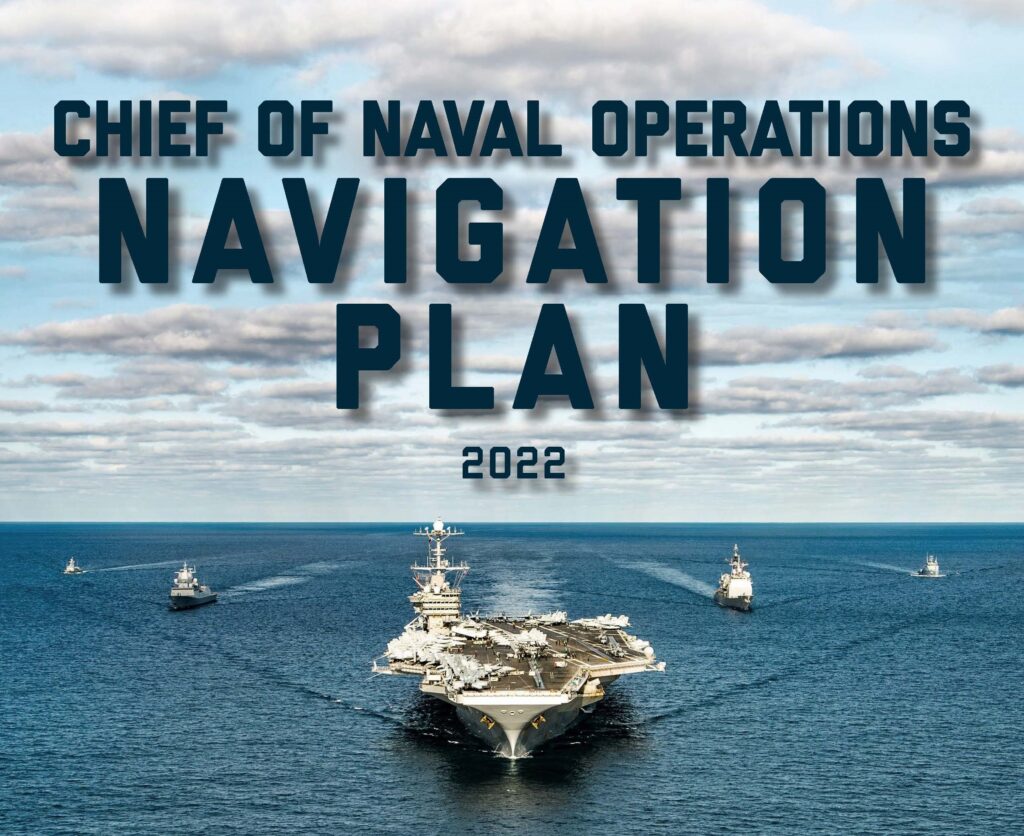
DIGUARDO: The chief of naval operations’ NAVPLAN says there are six critical elements for successful DMO. They are repair, resupply, refuel, rearm, revive and rebuild. The NECF has a significant role in delivering each of these in the austere environments of the ANB [advance naval base] and EAB [expeditionary advance base].

Our ability to integrate with our Marine Corps teammates and provide essential support and expertise to the EABO model has been on display a lot in the last year through a variety of exercises and experiments.

Rear Admiral Joseph DiGuardo, commander Navy Expeditionary Combat Command talks with Marines at the Expeditionary Advanced Base entry control point during Fleet Battle Problem (FBP) 22-1. U.S. NAVY / Chief Mass Communication Specialist Kim Martinez

What changes, if any, are affecting the Naval Construction Battalions and the Naval Expeditionary Logistics Force?

DIGUARDO: Across the board, we’re making the force more lethal, resilient, sustainable, survivable, agile and responsive as 2022 National Defense Strategy describes and CNO NAVPLAN implements.

As EABO and ANB continues to evolve, it’s becoming clearer to those operating in the battlespace just how essential NECF is in reinforcing DMO lethality.

Our role at the last tactical mile, ensuring logistics nodes are sustained through things like airfield damage repair and port damage repair efforts, is where our support of the fleet and joint force is so important. Our ability to adapt to complex and austere environments, scale the size of our necessary forces and remain agile to evolving mission requirements is something consistent across our force.

Our Seabees within the Naval Construction Forces and logistics experts at Navy Expeditionary Logistics Support Group are essential to building the infrastructure necessary to enable and sustain operations forward.

In recent wars, EOD provided critical support to operations on land. Is that focus changing more in the direction of maritime operations?

DIGUARDO: We’re always going to adapt to any new requirement, and today with strategic competition driving a greater need for emphasis in the maritime environment, that’s where we’re putting a lot of our focus.

Maritime traffic is increasing, new sea lanes are opening and with our adversaries getting more creative and autonomous in how they can disrupt that environment, the need for Navy EOD is greater than ever.

Operating in the maritime arena, and all the nuances and complexities that come with it, though, are nothing new to us. That’s what sets Navy EOD apart — we are uniquely qualified to understand those challenges, overcome them and do our part to reinforce maritime lethality.

Our expeditionary mine countermeasures capability is increasingly important to the fleet and provides a fast, scalable and adaptable option for clearing threats away from our ships and forces. This is one area where this particular skillset allows us to use the enduring EOD knowledge to remove old threats in the maritime arena, but learn about, develop and introduce emerging technologies that will better equip us in the high-end fight ahead.

All that said, the Navy still owns a role as the Joint Service EOD executive agent, so we have responsibilities across the entiretyof Department of Defense. We are also mindful not to forget the hard lessons learned while operating in Iraq and Afghanistan. While much of our focus for Navy EOD may be in the maritime environment for the foreseeable future, we have a responsibility to ensure proficiencies across the full spectrum of operations.

How is the new 40-foot patrol boat an improvement over the boats it is replacing? How many are being procured?

DIGUARDO: The current platform was a speed to fleet procurement that was not fully suited for the missions performed and has reached end of useful service life.

When looking at a replacement, there was a need for a platform specifically designed to meet the needs of our mission requirements.

These boats and our operators serve a significant role for our force and for the fleet in operating at sea, in harbors, rivers, bays and across the littorals while conducting maritime expeditionary security operations across all phases of military operations.

They defend and protect high value units, critical maritime infrastructure, ports, and harbors both inland and on coastal waters against enemies as well as conduct operational plan level missions and sustained day-to-day security in all force protection threat levels. The initial contract is for 56 boats, which could grow to 120 over the next 10 years.

Why does the Navy plan to remove its Mark VI patrol boats from service?

DIGUARDO: The Navy analyzed the Mark VI’s ability to compete against a near-peer adversary as part of the strategic alignment analysis that is the beginning of the POM [program objective memorandum] process for every fiscal year. Navy ship procurement focuses on a force structure that aligns with the demands of the National Defense Strategy, and the Navy determined the savings from divesting of Mark VI could be better invested in higher priority platforms better suited for competition with a near-peer adversary.

Why did the Navy retire its riverine boat force?

DIGUARDO: Like many of the other topics we’ve discussed, this was just part of the ongoing refinement of our Navy Expeditionary Combat Force to maximize the efficiency of our warriors and their ability to deliver in the high-end fight.

This particular mission set with the riverine force was generated to support Marine Corps operations as part of Operation Iraqi Freedom, and as that requirement wound down, we took those proficiencies, the lessons we learned from it, and applied them in a way that was more relevant to battlespace we were transitioning into.

Our Maritime Expeditionary Security Forces continue to play an essential role every day in anti-terrorism/force protection operations across the globe and in support of our fleets.

What would be needed to reconstitute the riverine force if needed?

DIGUARDO: If ever asked to reconstitute a riverine mission, it would require the equipment, training, and methods we used to generate the Riverine force for Iraq. We have done so before and could do so again. However, we do not anticipate this and remain focused on our MESF core missions.

How are unmanned systems being used by NECC?

DIGUARDO: We are increasingly utilizing unmanned systems across our force. This is done to modernize the technology that our warfighters are familiar with, but also to enhance their capabilities they bring to the fight.

Clearing the battlespace of explosive, physical and security hazards is one of our main lines of operation. Unmanned technology extends our organic sensor range, increases our area coverage and improves our detect-to-engage sequences at the front of those efforts, while mitigating risk to our operators.

Much of our effort has been in in the underwater realm in support of expeditionary mine countermeasure operations with things like UUVs [unmanned underwater vehicles] and ROVs [remotely operated vehicles], but we continue to explore platforms outside of that and other mission areas for application of that technology.

Master Chief Culinary Specialist Dexter Baird, senior enlisted leader assigned to Maritime Expeditionary Security Squadron 11 (MSRON-11), Commander, Task Group 68.6, currently deployed to Camp Lemonnier, says goodbye to members of the Djiboutian navy following a six-week professional maritime orientation course, Oct. 14, 2021. The course, initiated by MSRON-11, was designed around basic line handling, man overboard, engineering, seamanship, lifesaving, and nautical terminology. U.S. NAVY / Mass Communication Specialist 2nd Class Jonathan Word

With that said, we’re always exploring opportunities to experiment with and identify potential areas of unmanned aerial and surface technology that would effectively integrate into our force.

What role, if any, does NECC have in training foreign forces in operation of patrol boats, EOD operations and other expertise?

DIGUARDO: One of SECNAV’s enduring priorities is for us to strengthen strategic partnerships, and we’re certainly doing that.

Although the Navy divested from the Maritime Civil Affairs and Security Training Command in the early part of the last decade, and even without a specific command coordinating those efforts within NECC, our men and women continue to build partner capacity through subject matter expertise exchanges and exercises with partner nation forces around the world.

These exchanges are effective, and the relationships and partnerships that result are truly authentic. There’s a photo from late last year where we had Maritime

Expeditionary Security Squadron 11 conducting a six-week professional maritime orientation course to the Djiboutian navy, and the photo shows one of their guys hugging our master chief at the end of it. There was gratitude and joy, but more importantly, a relationship.

That photo is validation of the importance of those types of exchanges. Not only that, but now there are 15 more Djiboutian sailors with a better level of technical aptitude in an extremely critical part of the world.

And our EOD take advantage of some of those same training and interoperability opportunities to continue our partnership initiatives and the long-term benefits that come from doing them.

What aspect of NECC do people find the most surprising?

DIGUARDO: NECC’s relevancy to current fight. It is not all about carriers, submarines and airplanes. Those are essential components of American naval power, but for NECC, our people are our weapons system. Much of what they do is in support of those larger platforms, but NECF do so through operations forward, in austere environments, while integrated with the joint force, allies and partners, or in concert with our Marine and Coast Guard teammates.

The fleet needs our Navy Expeditionary Combat Forces to close the last tactical mile so those vital platforms never run out of fuel, ammunition or other needed supplies. They need us to clear, secure, build and protect across the spectrum of operations.

We’re already doing that, but what might come as a surprise is how widespread that support is. In 2021

alone, we had more than 5,300 NECF Sailors deployed forward to 55 countries, supporting 64 requirements generated by six geographic and two functional combatant commands. That is enabling DMO lethality.

Our forces clear, secure, build and protect for the fleet and joint force. NECC is uniquely qualified to deliver at the time and point of need, often exclusive capabilities, to support integrated American naval power.