Textron Systems Selected for Continued U.S. Navy Expeditionary Sea Base UAS Operations  

The Aerosonde unmanned arial surveillance vehicle Buck G returns to the Expeditionary Sea-Base USS Hershel “Woody” Williams (ESB 4) from a 10- hour night surveillance in the Atlantic Ocean, Sept. 26, 2020. U.S. MARINE CORPS / Sgt. Megan Roses

HUNT VALLEY, Md. — Textron Systems Corp. has been awarded a contract valued up to $18.3 million including all options by the U.S. Navy’s Naval Air Systems Command to provide continued unmanned aerial systems operations support for the USS Hershel “Woody” Williams (ESB 4), the company said June 2.

The one-year base contract includes two 12-month options and two six-month options, for a total potential performance period of four years. The company was originally selected to support the ESB 4 in 2018.  

Under this contract, Textron Systems will continue to deploy its Aerosonde UAS to provide maritime operations aboard the ESB 4. The company’s personnel work alongside Sailors to provide on-demand Aerosonde UAS operations to support a variety of maritime missions.

“Our shipboard customers need UAS solutions that can deliver actionable data from multiple mission payloads without sacrificing valuable space on deck,” said Wayne Prender, senior vice president, Air Systems. “It’s equally important that we create a strong support ecosystem to keep availability and reliability rates high as operational tempo demands. In continuing to support our ESB 4 customer, we maintain our focus on setting the bar higher and higher in all these areas to keep our Sailors informed and out of harm’s way.”  

Textron Systems’ UAS operators also support U.S. Navy Arleigh Burke-class guided-missile destroyers with the Aerosonde UAS, as well as multiple DoD and international customers with land-based contractor owned, contractor operated activities. 


Boeing Teams with Canadian Industry to Offer P-8A Poseidon 

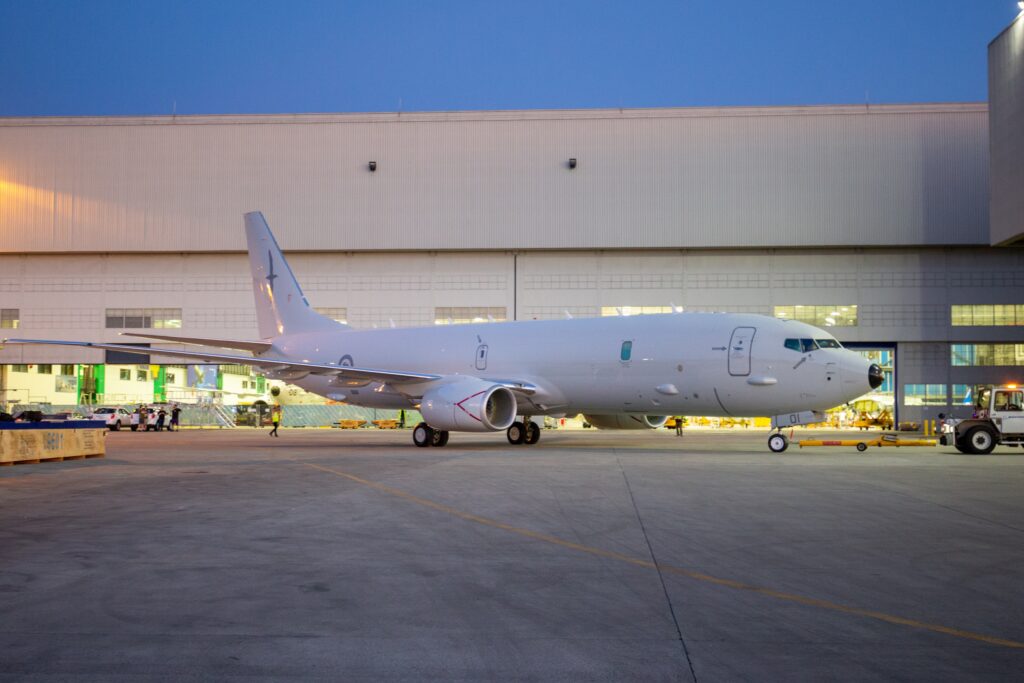
Boeing and Canadian industry partners plan to collaborate to provide the P-8A Poseidon for the Canadian Multi-Mission Aircraft requirement. BOEING

OTTAWA, Ontario — Boeing and several Canadian industry partners announced June 1 their intent to collaborate to provide the capability and sustainability of the proven P-8A Poseidon for the Canadian Multi-Mission Aircraft requirement. 

Team Poseidon, consisting of CAE, GE Aviation Canada, IMP Aerospace & Defence, KF Aerospace, Honeywell Aerospace Canada and Raytheon Canada, forms the cornerstone of a Canadian P-8 industrial footprint. The team builds on 81 Canadian suppliers to the platform and to more than 550 Canadian suppliers across all provinces contributing to Boeing’s annual CAD $5.3 billion in economic benefit to Canada, supporting more than 20,000 Canadian jobs. 

The Boeing P-8A is a proven military off-the-shelf solution with nearly 150 aircraft delivered to five nations to date. The P-8 will improve Canada’s capability to defend its northern and maritime borders while ensuring interoperability with NORAD and NATO allies. As a leading platform for reducing the environmental impact of military aircraft, the P-8 can operate on a 50% blend of sustainable aviation fuel today with aspirations to move toward 100% with investment in new technology. 

“As a dedicated partner of Canadian industry for more than a century, Boeing is proud to bring together a world-class team of companies in support of our P-8 offering to Canada,” said Heidi Grant, president, Business Development, Boeing Defense, Space & Security and Government Services. “Together, we will bolster Canada’s aerospace and defense industry through a 100% Industrial and Technical Benefits commitment if awarded the CMMA contract.” 

The P-8A Poseidon offers advanced anti-submarine warfare, anti-surface warfare, intelligence, surveillance and reconnaissance, and search and rescue capability, and is the only in-service, in-production multi-mission aircraft that meets all CMMA requirements. The P-8 also has the added distinction of strengthening the connection between national security and environmental stewardship.  

Built on the proven 737 Next-Generation airframe, P-8’s 86% commonality with more than 4,000 in-service 737NGs delivers lower life-cycle sustainment costs due to large economies of scale. 


Navy Successfully Completes First Flight Test of Mission Computer Alternative on the T-45 

The Navy’s Air Combat Electronics program office (PMA-209) successfully completed first flight test of the Mission Computer Alternative in a T-45, at Naval Air Station Patuxent River on March 30. Pictured are PMA-209 team members (from left) Bill Brown, Michael Kay, Jason Bean, Jeff Boyce, Kelly Pruitt, Jeff Williamson, Brandon Patz, Richard Boecher and Tom Adams. U.S. NAVY

PATUXENT RIVER, Md. — The Navy’s Air Combat Electronics program office (PMA-209) recently completed the first test flight of the T-45 trainer aircraft’s Mission Computer Alternative, intended to improve readiness for the legacy system, the Naval Air Systems Command said May 31. 

PMA-209 collaborated with the Naval Undergraduate Flight Training Systems program office (PMA-273), which manages the T-45 aircraft, and Air Test Evaluation Squadron (VX) 23 to execute the March 30 flight at Patuxent River and test out the design replacement for the existing Mission Display Processer. 

“The flight was flown successfully, proving MCA is on the right track,” said Lt. Alex Mensing, VX-23 test pilot. “We know what needs to be improved and will continue to work together to bring an accurate and reliable system to the fleet.” 

PMA-273 sought out MCA as a mission computing solution primarily to address the potential obsolescence issues the Navy may face on an aging platform. They plan to leverage the MCA to support additional capabilities such as required navigation performance/area navigation. 

The MCA is a Hardware Open Systems Technologies-conforming mission computer that drastically reduces schedule for regular hardware and software updates associated with mission computing. It can be economically and rapidly adapted to support platform requirements and processing needs. The system is on track to provide required navigation performance/area navigation in the near future. 

“The Navy developed this mission computer technology using OA standards, bringing the government one step closer to getting much needed capabilities and functionality to the fleet cheaper and faster,” said Capt. Margaret Wilson, PMA-209 program manager.  

The Navy will leverage investments made during the MCA’s development to support and minimize development cost of future MCA iterations, and lower the hardware and software logistics lifecycle funding footprint by using common, commercial-off-the-shelf hardware and software development designed to OA standards.  


Fairbanks Morse Defense Acquires Research Tool & Die 

BELOIT, Wis. — Fairbanks Morse Defense (FMD), a portfolio company of Arcline Investment Management, has acquired Research Tool & Die (RT&D), a privately owned manufacturer of marine electrical-systems hardware based in Carson, California.

RT&D products secure and support cables and wires throughout naval ships. This acquisition adds to FMD’s expanding portfolio of turnkey solutions. 

“Over the last few years, FMD has broadened the scope of our product offerings to our valued customers through the acquisition of best-in-class marine manufacturers like Research Tool & Die,” said FMD CEO George Whittier. “The global mission to defend our nation’s freedom is nonstop and requires a service partner who is up to the task, and RT&D puts FMD in an even better position to meet the needs of our customers while we support the mission of our military and marine partners.” 

Founded in 1944, RT&D is a supplier of critical electrical hardware to the United States Navy and Canadian Navy. The company operates from two manufacturing facilities on its campus in Carson, California. It designs and manufactures its hardware products, including wireways, cable trays, racking systems, and light supports, and sells its products directly to naval shipyards.   

“FMD has a prestigious reputation as a top-of-the-line defense contractor for clients that RT&D also serves,” said RTND President Kevin Perrault. “This merger makes perfect sense. Our companies are forward-thinking and well-positioned to provide top-tier parts and services to our customers.” 


U.S. Coast Guard Seizes Heroin Shipment in Gulf of Oman 

Personnel from U.S. Coast Guard fast response cutter Glen Harris (WPC 1144) recover bags of illegal narcotics discarded by a fishing vessel interdicted in the Gulf of Oman, May 31. U.S. COAST GUARD

MANAMA, Bahrain — A U.S. Coast Guard fast response cutter seized 310 kilograms of heroin worth an estimated U.S. street value of $11 million from a fishing vessel while conducting patrols in the Gulf of Oman, May 31, U.S. Naval Forces Central Command Public Affairs said June 2. 

USCGC Glen Harris (WPC 1144) was operating as part of Combined Task Force 150, one of four task forces under the Combined Maritime Forces. 

The fast response cutter arrived in the U.S. 5th Fleet region in January and operates from Bahrain where Combined Maritime Forces is headquartered with U.S. Naval Forces Central Command and U.S. 5th Fleet. 

Combined Maritime Forces is the largest multinational naval partnership in the world. The U.S.-led international naval force has 34 member nations, which have increased regional patrols to locate and disrupt unlawful maritime activity. 


U.S. Navy Announces 28th RIMPAC Exercise 

Exercise Rim of the Pacific (RIMPAC) 2022 senior leadership and staffs pose for a group photo onboard Naval Base Point Loma, Feb. 18. The weeklong conference brought the RIMPAC senior leadership and staffs from seven RIMPAC partner nations together for detailed planning in advance of the world’s largest maritime exercise, scheduled to be held this summer in both Hawaii and San Diego. U.S. NAVY / Mass Communication 2nd Class Kevin F. Johnson

SAN DIEGO — Twenty-six nations, 38 surface ships, four submarines, nine national land forces, more than 170 aircraft and approximately 25,000 personnel will participate in the biennial Rim of the Pacific (RIMPAC) exercise scheduled June 29 to Aug. 4, in and around the Hawaiian Islands and Southern California, Commander, U.S. 3rd Fleet Public Affairs, said May 31. 

RIMPAC 2022 is the 28th exercise in the series that began in 1971. 

As the world’s largest international maritime exercise, RIMPAC provides a unique training opportunity designed to foster and sustain cooperative relationships that are critical to ensuring the safety of sea lanes and security on the world’s interconnected oceans. 

The theme of RIMPAC 2022 is “Capable, Adaptive, Partners.” Participating nations and forces will exercise a wide range of capabilities and demonstrate the inherent flexibility of maritime forces. These capabilities range from disaster relief and maritime security operations to sea control and complex warfighting. The relevant, realistic training program includes amphibious operations, gunnery, missile, anti-submarine and air defense exercises, as well as counter-piracy operations, mine clearance operations, explosive ordnance disposal and diving and salvage operations. 

This year’s exercise includes forces from Australia, Brunei, Canada, Chile, Colombia, Denmark, Ecuador, France, Germany, India, Indonesia, Israel, Japan, Malaysia, Mexico, Netherlands, New Zealand, Peru, the Republic of Korea, the Republic of the Philippines, Singapore, Sri Lanka, Thailand, Tonga, the United Kingdom and the United States. 

Hosted by Commander, U.S. Pacific Fleet, RIMPAC 2022 will be led by Commander, U.S. 3rd Fleet, who will serve as Combined Task Force commander. Royal Canadian Navy Rear Adm. Christopher Robinson will serve as deputy commander of the CTF, Japan Maritime Self-Defense Force Rear Adm. Toshiyuki Hirata as the vice commander, and Fleet Marine Force will be led by U.S. Marine Corps Brig. Gen. Joseph Clearfield. Other key leaders of the multinational force will include Commodore Paul O’Grady of the Royal Australian Navy, who will command the maritime component, and Brig. Gen. Mark Goulden of the Royal Canadian Air Force, who will command the air component. 

During RIMPAC, a network of capable, adaptive partners train and operate together in order to strengthen their collective forces and promote a free and open Indo-Pacific. RIMPAC 2022 contributes to the increased interoperability, resiliency and agility needed by the joint and combined force to deter and defeat aggression by major powers across all domains and levels of conflict. 


Navy Announces Flag Officer Assignments 

ARLINGTON, Va. — The secretary of the Navy and chief of naval operations announced June 1 the following assignments: 

Rear Adm. Frederick W. Kacher will be assigned as vice director for operations, J-3, Joint Staff, Washington, D.C. Kacher is currently assigned as assistant deputy chief of naval operations for Operations, Plans, and Strategy, N3/N5B, Office of the Chief of Naval Operations, Washington, D.C. 

Rear Adm. (lower half) John V. Menoni, selected for promotion to rear admiral, will be assigned as assistant deputy chief of naval operations for Operations, Plans, and Strategy, N3/N5B, Office of the Chief of Naval Operations, Washington, D.C. Menoni is currently serving as commander, Expeditionary Strike Group Two, Virginia Beach, Virginia. 

Rear Adm. (lower half) Michael J. Steffen, selected for promotion to rear admiral, will be assigned as commander, Navy Reserve Forces Command, Norfolk, Virginia. Steffen is currently serving as commandant, Naval District Washington, Washington, D.C. 

Rear Adm. (lower half) Rick Freedman will be assigned as director, Education and Training, Defense Health Agency, Falls Church, Virginia. Freedman is currently serving as director, Medical Systems Integration and Survivability, N44, Office of the Chief of Naval Operations, Washington, D.C. 

Rear Adm. (lower half) Patrick S. Hayden will be assigned as director, Readiness and Logistics, U.S. Naval Forces Europe-Africa, Naples, Italy. Hayden is currently serving as deputy director, Logistics, Fleet Supply and Ordnance (N4), U.S. Pacific Fleet, Pearl Harbor, Hawaii. 

Rear Adm. (lower half) Jonathan E. Rucker, selected for promotion to rear admiral (lower half), will be assigned as program executive officer, Attack Submarines, Washington, D.C. Rucker is currently serving as major program manager, Program Executive Office, Columbia, Washington, D.C. 

Rear Adm. (lower half) Darin K. Via will be assigned as deputy chief, Bureau of Medicine and Surgery; deputy surgeon general of the Navy; and director, Medical Resources, Plans and Policy Division, N0931, Office of the Chief of Naval Operations, Washington, D.C. Via is currently serving as commander, Naval Medical Forces Atlantic, with additional duties as director, Tidewater Market, Portsmouth, Virginia. 

Capt. Luke A. Frost, selected for promotion to rear admiral (lower half), will be assigned as director, Reserve Warfare, Office of the Chief of Naval Operations, Washington, D.C. Frost is currently serving as chief of staff, Office of the Chief of Navy Reserve, Washington, D.C. 


Navy Orders Two CH-53K Helicopters for Marine Corps 

U.S. Marines with Marine Heavy Helicopter Squadron (HMH) 461 taxi in a CH-53K King Stallion after its first operational flight at Marine Corps Air Station New River, North Carolina, April 13. U.S. MARINE CORPS / Lance Cpl. Elias E. Pimentel III

ARLINGTON, Va. — The U.S. Navy has placed an order for two more CH-53K King Stallion heavy-lift helicopters for the Marine Corps. 

The Naval Air Systems Command awarded a $185.7 million contract modification to Sikorsky Aircraft Corp., a Lockheed Martin company, to add two CH-53Ks to low-rate production Lot 6, the Defense Department said May 31. 

These two helicopters were in the Marine Corps’ fiscal 2022 unfunded priorities list and were added to the 2022 budget appropriation by Congress. Lot 6 originally included nine CH-53Ks under a Feb. 3 contract award for $685 million.  

The King Stallion achieved Initial Operational Capability in April 2022 when Marine Heavy Helicopter Squadron 461 received its fourth CH-53K. 

The Marine Corps program of record is 200 CH-53Ks to replace the fleet of CH-53 Super Stallion helicopters. The Lot 6 helicopters are expected to be completed by December 2025. 


Fagan Succeeds Shultz as Coast Guard Commandant, First Woman to Rise to the Top 

Adm. Linda Fagan relieves Adm. Karl Schultz as the 27th commandant of the Coast Guard during a change of command ceremony at Coast Guard headquarters June 1, 2022. Fagan is the first woman service chief of any U.S. military service. U.S. COAST GUARD / Petty Officer 1st Class Travis Magee

WASHINGTON — Adm. Linda Fagan succeeded Adm. Karl Schultz on June 1 to become the 27th commandant of the U.S. Coast Guard, the first woman to command the service and the first woman to lead any of the U.S. armed services. 

In ceremonies at Coast Guard Headquarters in Washington, President Joe Biden and Homeland Defense Secretary Alejandro Mayorkas spoke in praise of Shultz’s performance as commandant and of Fagan’s service that influenced her selection as commandant. 

Mayorkas noted that Fagan graduated from the sixth class of the Coast Guard Academy to accept women as cadets — the Class of ’85 — and was the only woman in the crew of the icebreaker USCGC Polar Star in her first assignment. 

“Today is a historic day for the U.S. armed forces and a historic day for the United States,” Mayorkas said. 

Biden spoke of Fagan’s “trail-blazing career,” noting that “there are no doors closed to women” and that Fagan’s daughter Aileen is now a Coast Guard lieutenant. He also noted that Fagan was one of only 16 women — 8% of her class — commissioned at the Coast Guard Academy, but now 40% of the 1,000 cadets at the academy are women.  

“Now we need to keep working to make sure Adm. Fagan may be the first but not the only person [to head a service],” Biden said. “We need to see more women in command at the highest levels of the Coast Guard and across every service in the armed forces.” 

In her first speech as commandant, Fagan praised Schultz for is leadership and dedication. 

“We are truly a more ready, responsive and relevant Coast Guard today as a result of your leadership,” she said of Schultz. “It has been a true honor to serve with you.” 

Fagan collectively thanked the hundreds of people who influenced and mentored her since she decided at age 16 to apply to the Coast Guard Academy, but she singled out one in particular, Adm. Owen Siler, the 15th commandant, who she said had the courage to integrate the Coast Guard Academy in the summer of 1975. 

“If it were not for Owen Siler’s courage, I do not believe I would not be standing here today,” Fagan said. “I want to thank him; I’m wearing his shoulder boards that he wore as 15th commandant.” 

Speaking of her command ahead, Fagan noted “the demand for Coast Guard missions has never been higher. … Today we will advance the Coast Guard America needs for tomorrow. Tomorrow looks different and so will we. We will be more adaptive and connected, generate sustained readiness, resilience and capabilities in new ways to enhance our nation’s maritime safety, security and prosperity.” 

Fagan said her highest priority as commandant will be to “transform our talent management system. We will deliver each of you tools, policy, training and support to succeed across all missions. We will empower you with reliable cutting-edge assets — cutters, boats, aircraft as well as data systems and shore facilities — that you need to remain the world’s best coast guard. We will unite people, assets, systems and data in new ways to be a more agile force.” 


U.K. Royal Navy Submarines Set for £265 Million Tomahawk Missile Upgrade  

The guided-missile destroyer USS Chafee (DDG 90) launches a Block V Tomahawk, the weapon’s newest variant, during a three day missile exercise in 2020. U.S. NAVY / Ens. Sean Ianno

LONDON — The United Kingdom’s stock of Tomahawk Land-Attack Missiles will be upgraded on Royal Navy submarines to ensure the weapon is even more effective against future threats, the U.K. Ministry of Defence said June 1. 

In a £265 million ($334 million USD) contract with the U.S. government, with maintenance and technical support at the U.K. sites of BAE Systems, Babcock International and Lockheed Martin, the Royal Navy’s Astute-class submarines will be armed with an enhanced Block V standard missile, capable of striking severe threats at a range of up to 1,000 miles. 

At approximately 5.6 meters long and weighing 2,200 kilograms — a similar weight to a 4×4 car — the high subsonic Tomahawk was first introduced into U.K. service in 1998 and can hit inland targets from the sea within minutes. A weapon of choice since then, it has been successfully deployed during operations in Afghanistan, Libya and Iraq. 

“This upgrade will equip our Astute-class attack submarines with the one of the most lethal and precise long-range strike weapons,” said Minister for Defence Procurement Jeremy Quin. “Enhancing this cutting-edge missile system will ensure the U.K. can strike severe threats up to 1,000 miles away.” 

The Tomahawk missiles will be upgraded as part of a foreign military sale with the U.S. government, which was negotiated by the MoD’s procurement arm, Defence Equipment and Support, and will be active from July. 

Making use of existing U.S. research and expertise on the upgraded missile, the contract will mean the United Kingdom continues to receive full access to the U.S. Tomahawk program, support package and upgrades. 

“Not only will this FMS sustain and improve a proven, crucial operational capability for any future conflicts, it will continue to ensure interoperability with our U.S. allies and the follow-on support arrangements will sustain jobs for UK industry,” said Ed Cutts, DE&S’ director of weapons. 

Due to be operational in the mid-2020s, the upgraded Tomahawk will align with the delivery of the latest Astute-class submarines.