Marine Corps to Neck Down Operational Support Aircraft Types; Increase Indo-Pacific Capabilities

UC-12W U.S. MARINE CORPS

ARLINGTON, Va.—The Marine Corps plans to neck down the number of types of operational support aircraft (OSAs) over the next decade in order to achieve economies with reduced operating costs while increasing capability. The Corps also plans to increase its OSA capabilities in the Indo-Pacific region.  

“OSA directly provides an economical and efficient alternative for the movement of personnel and cargo by reducing the burden that small payloads place on large tactical aircraft,” the recently released 2022 Marine Corps Aviation Plan said. “Moving high volumes of small payloads to widely dispersed Marine air-ground task force (MAGTF) elements poses logistical challenges for Marine Corps aviation; OSA relieves this burden. Marine Corps OSA units perform the same airlift missions whether deployed or at their home stations. Unpredictable, short notice movements are not compatible with the United States Transportation Command’s and United States Air Force’s airlift missions or commercial route structures. This flexibility is vital to MAGTF logistics, communications and security in all phases of deployment.” 

The Marine Corps operates 27 OSAs and keeps two of those deployed to support Marine Forces Europe/Africa and Marine Forces Central Command. The Corps plans to replace four UC-12F, two UC-12M, and 10 UC-35D aircraft a total of 28 UC-12Ws including eight already on strength. The current program of record for UC-12Ws is 12 aircraft.  

“The cost of sustaining UC-35s is increasing and the USMC is looking to replace the UC-35 fleet with UC-12W,” the aviation plan said. “This will require an increase to the program of record of UC-12Ws to 28. Divestment of UC-35s will be based on the procurement and delivery of the UC-12Ws.” 

The Marine Corps operates one transport squadron, VMR-1, which flew two C-9B Skytrain II aircraft from Joint Base Andrews-NAF Washington, Maryland, until 2017, when the squadron moved to Naval Air Station-Joint Reserve Base Fort Worth, Texas, to provide crews to share C-40A Clipper transports with Navy Fleet Logistics Support Squadron 59. VMR-1 is receiving two C-40As of its own this fiscal year. The squadron will move to Marine Corps Air Station Kaneohe Bay, Hawaii, by fiscal 2024 to replace the two C-20G Gulfstream IV transports there that support the Indo-Pacific Command. 


SECDEF Announces Marine Corps General Nomination 

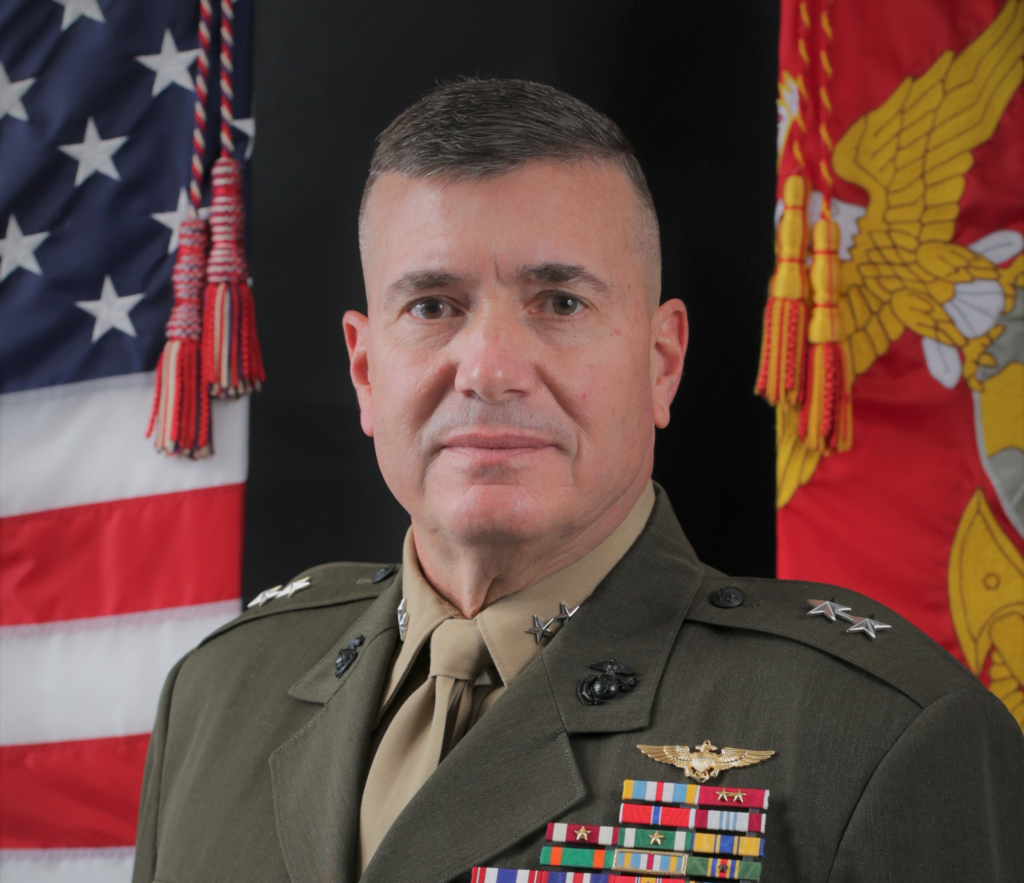
Maj. Gen. Michael S. Cederholm. U.S. MARINE CORPS

ARLINGTON, Va . — Secretary of Defense Lloyd J. Austin III announced May 16 that the president has made the following nomination: 

Marine Corps Maj. Gen. Michael S. Cederholm for appointment to the grade of lieutenant general, with assignment as deputy commandant, aviation, Headquarters, U.S. Marine Corps, Washington, D.C.  Cederholm is currently serving as commanding general, 2d Marine Aircraft Wing, Cherry Point, North Carolina. 


Navy Establishes Unmanned Surface Vessel Division One 

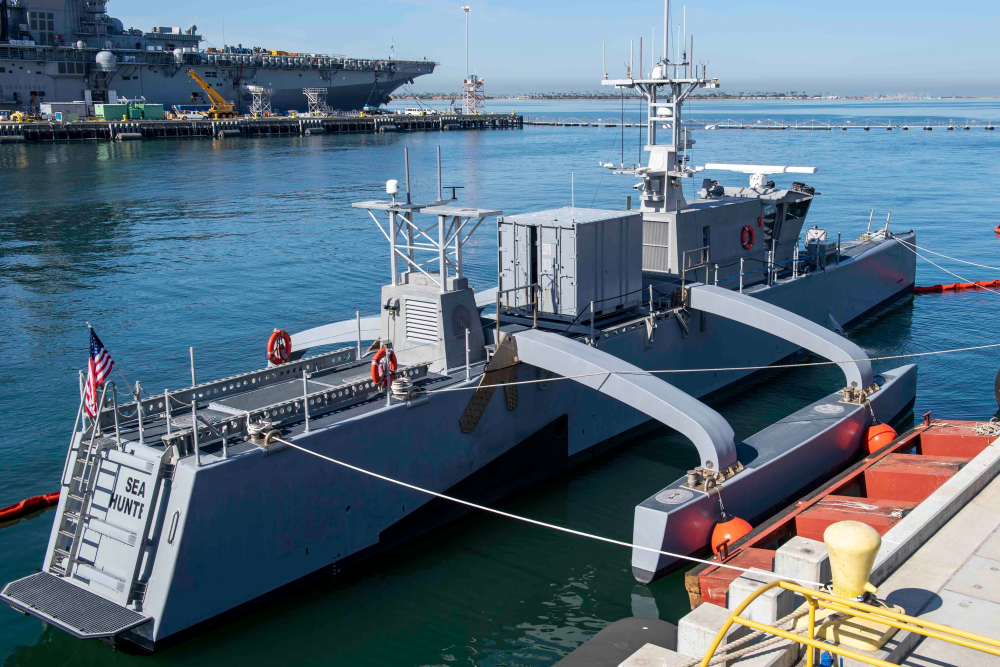
The medium-displacement unmanned surface vessel Sea Hunter sits pierside at Naval Base San Diego, during the Unmanned Surface Vessel Division One Establishment ceremony. USDIV One will focus on unmanned surface vessel experimentation and fleet advocacy for the surface force. U.S. NAVY / Mass Communication Specialist 2nd Class Kevin C. Leitner

SAN DIEGO – Commander, Naval Surface Force, U.S. Pacific Fleet established Unmanned Surface Vessel Division (USVDIV) One during a ceremony, May 13, which also included a change of command ceremony for Surface Development Squadron One, said Ens. Ronan Williams of the Force’s public affairs office in a May 13 release. 

During the combined ceremony, Cmdr. Jeremiah Daley assumed command of the newly established USVDIV One. 
 
“To meet the challenges of the 21st century, we must continue to innovate the surface force,” said Daley. “USVDIV One will accelerate the delivery of credible and reliable unmanned systems in conjunction with increasingly capable manned platforms into the fleet.” 
 
USVDIV One will oversee medium and large unmanned surface vessels including the Sea Hunter and its sister vessel, the Sea Hawk. The division will focus on unmanned surface vessel experimentation and fleet advocacy for the surface force. The division will be a cornerstone in building the foundational knowledge required for Sailors to operate and maintain the USV fleet and spearhead the development of the processes required for USV operations and sustainment. 
 
Vice Adm. Roy Kitchener, Commander, Naval Surface Force, U.S. Pacific Fleet, presided over the ceremony. 
 
“USVDIV One will be a catalyst for innovation as we employ unmanned surface capabilities in the Pacific Fleet,” said Kitchener. “The implementation of unmanned systems will increase decision speed and lethality to enhance our warfighting advantage.” 
 
Capt. Shea Thompson relieved Capt. Jeffrey Heames as commodore of SURFDEVRON One. 
 

“It’s been an honor and privilege to lead a team of surface warriors who are shaping the future of our force,” said Heames. “I know Capt. Thompson shares this enthusiasm and drive to innovate and transform the surface force into a formidable 21st century fighting organization.” 
 
Heames was SURFDEVRON One’s second commodore. Previously, he commanded USS Preble (DDG 88) and served as the Commodore for Destroyer Squadron 23. 
 
SURFDEVRON One is responsible for the maintenance, training, and manning oversight for medium and large USVs and the Zumwalt-class guided-missile destroyers, including the future USS Lyndon B. Johnson (DDG 1002). 


USS Hershel ‘Woody’ Williams Blue MILCREW Begins Deployment

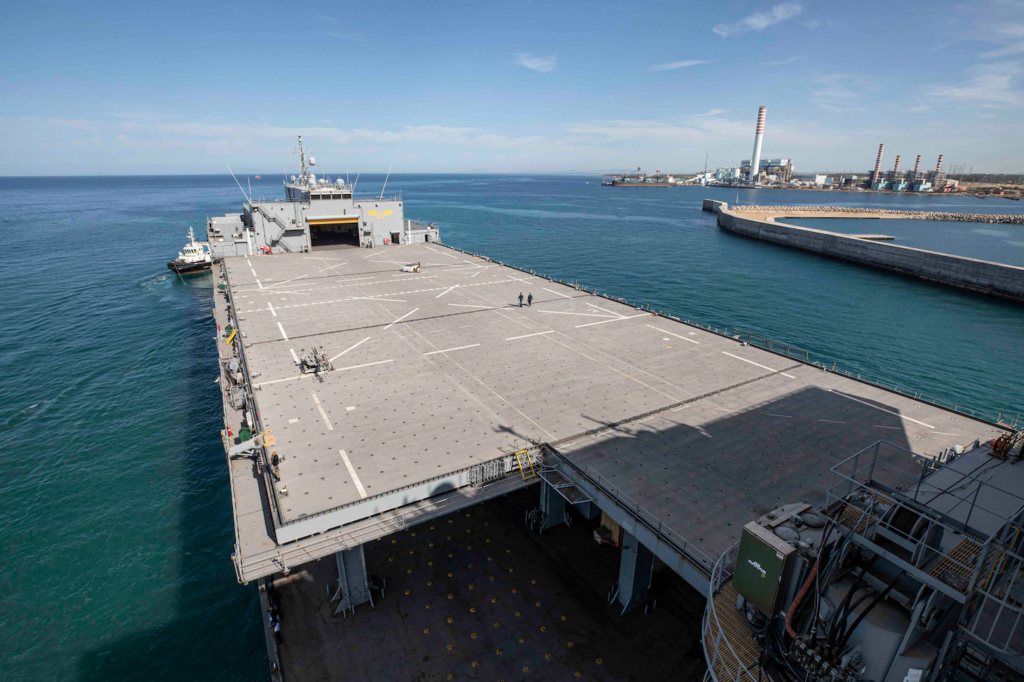
The Expeditionary Sea Base USS Hershel “Woody” Williams (ESB 4) departs Civitavecchia, Italy, to begin a deployment May 14, 2022. U.S. NAVY / Mass Communication Specialist 1st Class Fred Gray

CIVITAVECCHIA, Italy — The Blue military crew of the USS Hershel “Woody” Williams (ESB 4) and the ship’s Military Sealift Command Civilian Mariners departed Civitavecchia, Italy, to begin a scheduled deployment in the U.S. 6th Fleet area of operations, May 14, 2022, said Mass Communication Specialist 1st Class Fred Gray IV of the U.S. 6th Fleet in a May 16 release.

The Blue Crew took over for the Gold Crew while in Civitavecchia May 9. This crew swap follows Gold Crew’s five-month deployment, which included participation in exercise Obangame Express and security operation patrols with African partners along the west coast of Africa.

“We are rested and ready to get back on the open seas to execute our mission requirements,” said Capt. Chad W. Graham, commanding officer of Hershel “Woody” Williams Blue MILCREW. “The Hershel ‘Woody’ Williams is a unique platform that enables us to integrate and operate with internal and international partners improving interoperability, maritime domain awareness and building upon our existing relationships.”

During the deployment, the ship and crew will complete a mobility air qualification. They will also participate in a variety of exercises and operations with partner nations.

USS Hershel “Woody” Williams is the first warship permanently assigned to the U.S. Africa Command area of responsibility. The U.S. shares a common interest with African partner nations in ensuring security, safety and freedom of navigation on the waters surrounding the continent, because these waters are critical for Africa’s prosperity and access to global markets.

The ESB ship class is a highly flexible platform that operates across a broad range of military operations. Acting as a mobile sea base, they are part of the critical access infrastructure that supports the deployment of forces and supplies to support missions assigned.


USS Frank E. Petersen Jr. Commissioned in Charleston 

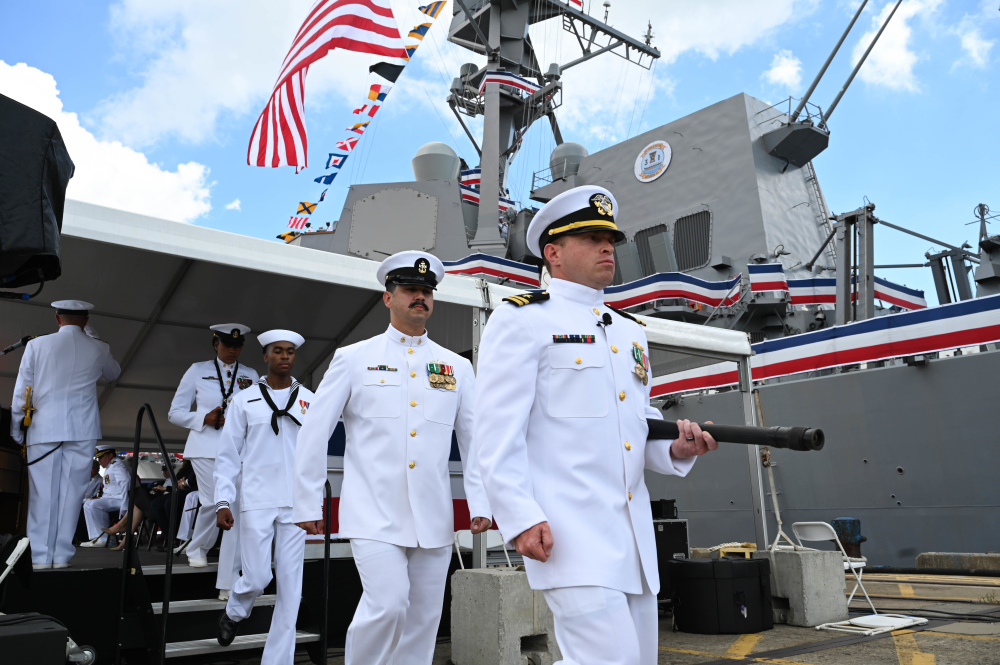
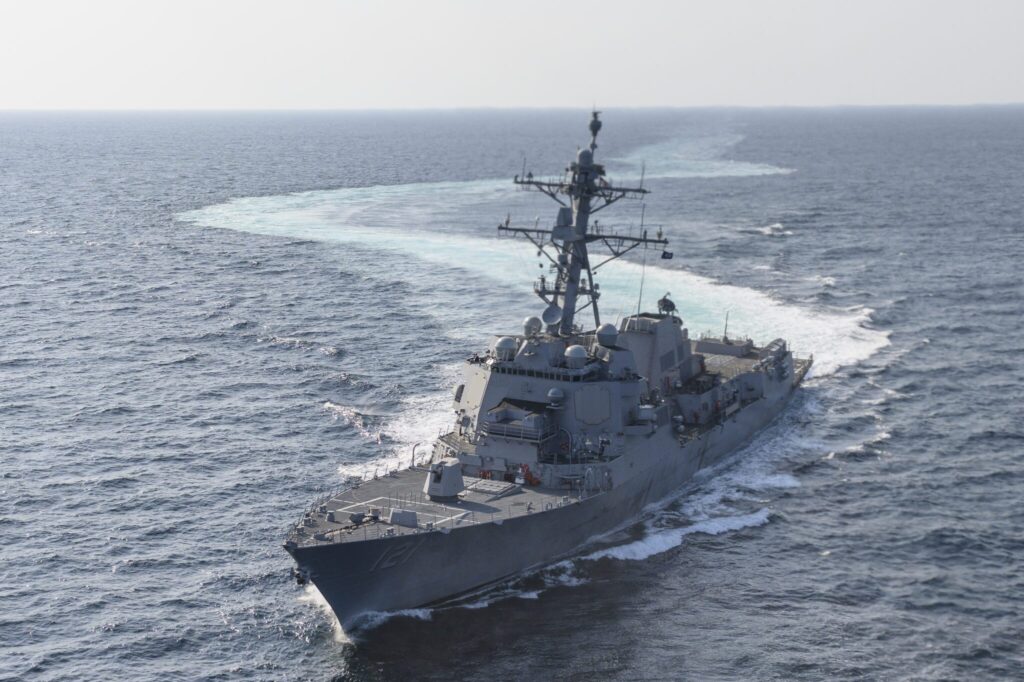
USS Frank E. Petersen Jr. is named after the first black U.S. Marine Corps aviator and the first black Marine to become a three-star general. U.S. NAVY

CHARLESTON, S.C. — The Navy commissioned its newest Arleigh Burke-class destroyer USS Frank E. Petersen Jr. (DDG 121), May 14 in Charleston, South Carolina, said a Navy spokesperson in a May 14 release.

Secretary of the Navy Carlos Del Toro attended the ceremony. He began by thanking the Petersen family for their lifetime of service to the nation. “All of us join you in honoring Lt. Gen. Frank E. Petersen Jr.”

Del Toro also recognized the plankowners bringing the ship to life. “As Secretary of the Navy I contribute all that I can to make sure that you and your families are equipped for the many challenges that lie ahead. That starts with making sure that you have the very best ship that our nation has to offer.”
 
The principal speaker was Carlos Campbell, naval aviator and former assistant secretary of Commerce for Economic Development, who served alongside Petersen and relayed stories exemplifying the general’s strength and dedication. Recalling Petersen’s ethic, Campbell said, “He received a frag wound, he was treated in the field, and returned to combat.”
 
Chief of Naval Operations Adm. Mike Gilday also attended the ceremony. “It’s fitting that a name synonymous with service and sacrifice be emblazoned on the steel of this American warship,” said Gilday. “Sailors aboard this mighty warship will deploy wherever, whenever needed, with General Petersen’s fighting spirit and tenacity, for generations to come.”
 
Gen. David Berger, commandant of the Marine Corps, also attended the ceremony. “General Petersen was a man of many firsts,” said Berger. “There’s a saying that ships take on the characteristics of their namesakes, and if that’s true, then God help any adversary to ever confronts the Frank E. Petersen Jr.”
 
Gayle Petersen, Lt. Gen. Petersen’s daughter, expressed thanks on behalf of her family and made a special recognition. “We would not be having this ceremony today if not for a gentleman named Robert Adams. When my dad was shot down in Vietnam he was rescued by Robert Adams.” Gayle continued, “I would like to thank all who had a hand in building this ship, from stem to stern.”
 
Guest speakers for the event included Rep. Nancy Mace, R-South Carolina; John Tecklenberg, mayor of Charleston, South Carolina; and George Nungesser, vice president of Program Management, Ingalls Shipbuilding.
 
The ship’s sponsors are D’Arcy Ann Neller, wife of former commandant of the Marine Corps, Gen. Robert Neller, and the late Dr. Alicia J. Petersen, Lt. Gen. Petersen’s wife at the time of his passing in 2015. Dr. Petersen passed away in September 2021. Both sponsors participated in the keel laying, mast stepping and christening ceremonies.
 
D’Arcy Ann Neller thanked the families. “Our service members can’t do what they do without you and your love and support. To the officers and crew: A ship without a crew is like a body without blood. You will all make this ship come alive.”
 
During the ceremony, USS Frank E. Petersen’s commanding officer Cmdr. Daniel Hancock reported the ship ready. Assisted by Lt. Gen. Petersen’s daughters, Gayle Petersen, Dana Petersen Moore, Lindsay Pulliam and Monique Petersen, Neller gave the traditional order to “Man our ship and bring her to life!”
 
Lt. Gen. Petersen continues a family legacy of service begun by his great grandfather. Private Archibald (Archie) Charles McKinney enlisted in 1863 and served in the Massachussetts 55th Regiment, Company E during the Civil War. McKinney’s trip home included traveling aboard a steamship, disembarking at the Port of Charleston.
 
The future USS Frank E. Petersen, Jr. honors Lt. Gen. Frank E. Petersen, Jr. Petersen was the first black U.S. Marine Corps aviator and the first black Marine to become a three-star general. Petersen served two combat tours, Korea in 1953 and Vietnam in 1968. He flew more than 350 combat missions and had more than 4,000 hours in various fighter and attack aircraft. Petersen passed away in Aug. 2015 at the age of 83.
 
Retiring in 1988 after 38 years of service, Petersen’s awards included the Defense Superior Service Medal, Legion of Merit with Combat “V,” Distinguished Flying Cross; Purple Heart, Meritorious Service Medal, Air Medal, Navy Commendation Medal with Combat “V;” and the Air Force Commendation Medal.
 
Arleigh Burke-class destroyers are the backbone of the U.S. Navy’s surface fleet. These highly capable, multi-mission ships conduct a variety of operations, from peacetime presence to national security providing a wide range of warfighting capabilities in multi-threat air, surface and subsurface.


Pappano: Studying ‘Shortish’ Life Extension of Ohio SSBNs as Risk Mitigator  

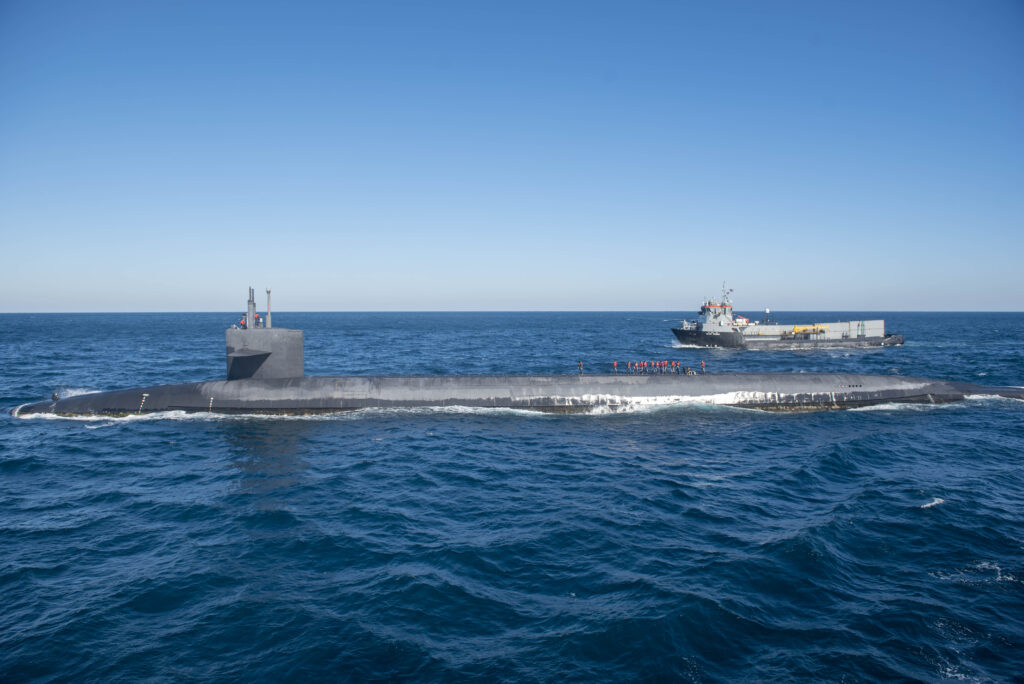
The Ohio-class ballistic-missile submarine USS Wyoming (SSBN 742), supported by USNS Black Powder (T-AGSE 1), prepares to execute an exchange of command and crews at sea. This regularly scheduled exchange of command at sea demonstrates the continuity and operational flexibility of our sea-based nuclear deterrent operations and our ready, reliable ballistic-submarine force. The efficiency of exchanges of crews at sea allows Sailors to reunite with their families and provides a ready, resilient submarine force. U.S. NAVY / Mass Communication Specialist 2nd Class Aaron Xavier Saldana

ARLINGTON, Va. — The U.S. Navy admiral in charge of procuring and sustaining the Navy’s ballistic-missile submarines (SSBNs) said the Navy is studying possible short service-life extensions of some Ohio-class SSBNs and even the Ohio-class guided-missile submarines. 

The Ohio-class SSBNs are scheduled to be replaced by the Columbia-class SSBNs now under construction. The first Columbia SSBN is scheduled to be on patrol in fiscal 2031 in order to maintain the undersea leg of the nation’s nuclear deterrent force. The margin available in the schedule for the Columbia program is tight. 

“Because it is the prudent thing to do, we are evaluating potential — not class extensions — but individual hull extensions for up to five of our Ohio-class SSBNs,” said Rear Adm. Scott Pappano, the program executive officer for strategic submarines, speaking May 12 in a webinar of the Advanced Nuclear Weapons Alliance Deterrence Center. 

The Ohio-class SSBNs were built for 30-year service lives, which were lengthened to 42 years through an extension program. 

“It’s very hard to get past 42 years,” Pappano said. “We’re going to at least evaluate that in the background. The first time we’d actually have to start thinking about doing that — to actually do one — would be in the FY29 time frame. So, we’re doing the evaluations right now on what it would take to do a ‘shortish’ repair availability to extend those ships for a couple of years as a risk mitigator, if need be. My goal is to not have to do that, but we want to understand the opportunities and risks associated with that short extension of the Ohio if we need to go do that, depending on what the world situation looks like at the end of the ‘20s and into the ‘30s.” 

The admiral said the Ohio class has been upgraded with a modernized Strategic Weapon System and COTS [commercial-off-the-shelf] systems and sensors. 

“That class is doing very, very well,” he said. 

Pappano also said that “as part of that we’ll also evaluate the SSGNs [Ohio-class guided-missile submarines] right now. That’s a bit more of a challenge because those ships are operated vigorously than the SSBNs are in the current roles they have right now, but we will continue to look forward to doing that.  

“Eventually, the Virginia-class [SSN] VPM [Virginia Payload Module] capability will supplant much of that [SSGN] missile inventory,” he said. “Until that comes online, we want to make sure we have the missile shooter capability in the SSGNs for as long as we can, but it’s going to be a delicate balancing act of maintaining the current SSBN fleet versus extending the SSGN fleet. One of the things we’re looking at right now as we go forward is to make sure we provide as much capability to the warfighters as we can at the right amount of risk.”


Navy to Commission Guided-Missile Destroyer Frank E. Petersen Jr. 

Frank E. Petersen Jr. (DDG 121) navigates in the Gulf of Mexico during bravo trials. HUNTINGTON INGALLS INDUSTRIES

ARLINGTON, Va. — The Navy will commission the future USS Frank E. Petersen Jr. (DDG 121), the newest Arleigh Burke-class guided-missile destroyer, during a 10:00 a.m. EDT ceremony on Saturday, May 14, in Charleston, South Carolina, the Defense Department said in a release. 

The future USS Frank E. Petersen Jr. is the first ship to honor Marine Corps Lt. Gen. Frank E. Petersen, Jr., the first Black Marine Corps aviator and the first Black Marine Corps officer promoted to brigadier general. When Petersen retired in 1988 after 38 years of service, he was, by date of designation, the senior-ranking aviator in the Department of the Navy. 

The principal speaker is The Honorable Carlos Campbell, Naval aviator and former Assistant Secretary of Commerce for Economic Development. Additional speakers include The Honorable Nancy Mace, U.S Rep. from South Carolina’s 1st District; The Honorable Carlos Del Toro, Secretary of the Navy; Gen. David Berger, Commandant of the Marine Corps; Adm. Michael Gilday, Chief of Naval Operations; The Honorable John Tecklenberg, Mayor of Charleston, South Carolina; Mr. George Nungesser, Vice President of Program Management, Ingalls Shipbuilding; and Ms. Gayle Petersen, daughter of the ship’s namesake.  

The ship’s sponsors are Mrs. D’Arcy Ann Neller, wife of former Commandant of the Marine Corps, retired Gen. Robert “Bob” Neller, and the late Dr. Alicia J. Petersen, Lt. Gen. Petersen’s wife at the time of his passing in 2015. Dr. Petersen passed away in September 2021. Both sponsors participated in the keel laying, mast stepping, and christening ceremonies. Mrs. Neller will give the order to “man our ship and bring her to life.” 

“This ship honors the life and legacy of Lt. Gen. Frank E. Petersen, Jr., a pioneer not just for Marine Corps aviation but for our entire naval force,” said Secretary of the Navy Carlos Del Toro. “I have no doubt the crew will be a cornerstone of the Surface Force carrying his legacy forward and strengthening the bond between our Navy and Marine Corps team.” 

Arleigh Burke-class destroyers are the backbone of the U.S. Navy’s surface fleet providing protection to America around the globe. These highly capable, multi-mission ships conduct a variety of operations, from peacetime presence to national security, providing a wide range of warfighting capabilities in multi-threat air, surface and subsurface domains. These elements of seapower enable the Navy to defend American prosperity and prevent future conflict abroad. 

The nearly 9,500-ton USS Frank E. Petersen Jr. is 509.5 feet in length, has a waterline beam of 59 feet, and a navigational draft of 31 feet. Four gas turbine engines will power the ship to speeds in excess of 30 knots. USS Frank E. Petersen Jr. will homeport at Joint Base Pearl Harbor-Hickam.  

The ceremony will be live streamed at: USS Frank E. Petersen, Jr. Commissioning. The link becomes active approximately ten minutes prior to the event (9:50 a.m. EST). 

Additional information on a history of the ship and its namesake can be found at: https://www.history.navy.mil/news-and-events/multimedia-gallery/infographics/heritage/history-of-u-s–marine-corps-pioneer–frank-e–petersen.html 


SECDEF Announces Flag and General Officer Nominations 

ARLINGTON, Va. — Secretary of Defense Lloyd J. Austin III announced on May 11 that the president has made the following nominations: 

Marine Corps Maj. Gen. Brian W. Cavanaugh for appointment to the grade of lieutenant general, with assignment as commander, U.S. Marine Corps Forces Command; commanding general, Fleet Marine Force Atlantic; and commander, Marine Corps Forces North, Norfolk, Virginia. Cavanaugh is currently serving as commanding general, 1st Marine Aircraft Wing, Okinawa, Japan. 

Navy Rear Adm. Michael E. Boyle for appointment to the grade of vice admiral, and assignment as commander, Third Fleet, San Diego, California. Boyle is currently serving as director, Maritime Operations, U.S. Pacific Fleet, Pearl Harbor, Hawaii.  

Navy Rear Adm. Frank M. Bradley for appointment to the grade of vice admiral, and assignment as commander, Joint Special Operations Command; and commander, Joint Special Operations Command Forward, U.S. Special Operations Command, Ft. Bragg, North Carolina. Bradley is currently serving as commander, Special Operations Command Central, MacDill Air Force Base, Florida. 

Navy Rear Adm. Richard A. Correll for appointment to the grade of vice admiral, and assignment deputy commander, U.S. Strategic Command, Offutt Air Force Base, Nebraska. Correll is currently serving as director, Strategic Integration, N2/N6T, Office of the Chief of Naval Operations, Washington, D.C. 

Navy Capt. Aaron C. Rugh for appointment to the grade of rear admiral (lower half), and assignment as chief prosecutor for military commissions. Rugh is currently serving as division director, Criminal Law Division, Office of the Navy Judge Advocate General, Washington, D.C. 


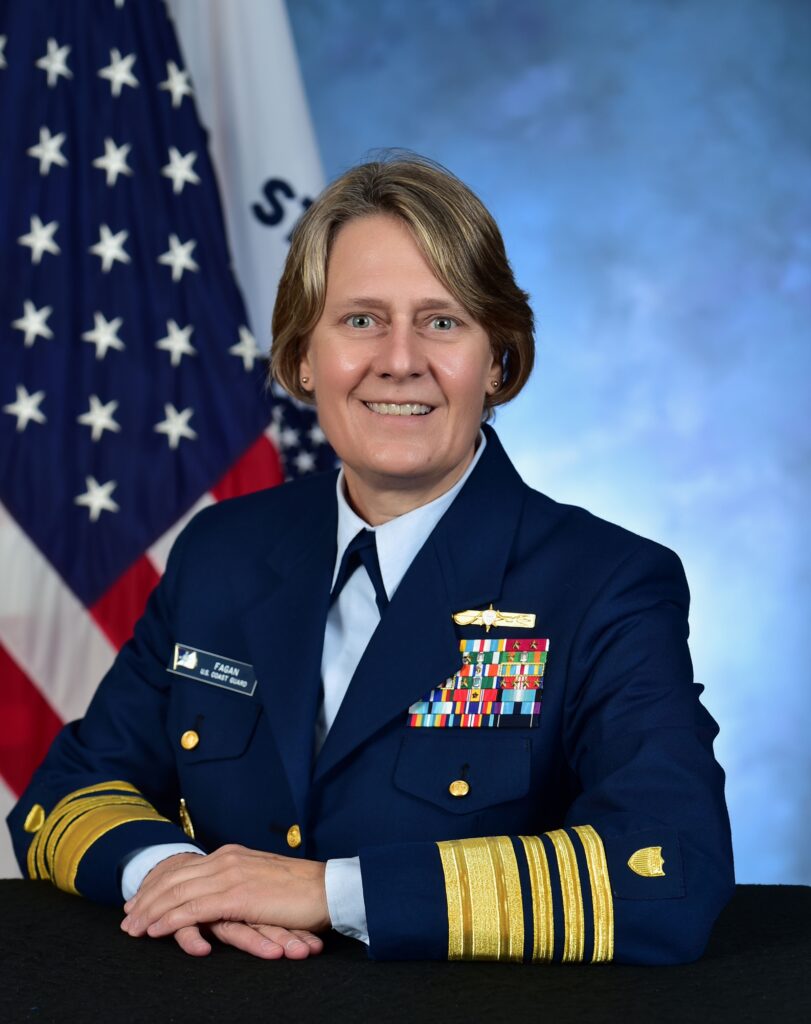
Fagan Confirmed as Next Coast Guard Commandant 

U.S. Coast Guard Vice Commandant Vice Adm. Linda Fagan, who was confirmed by the Senate as the next commandant of the sea service and will be the first woman to lead a U.S. military service branch. U.S. Coast Guard

WASHINGTON — The U.S. Senate confirmed Adm. Linda Fagan Wednesday to lead the Coast Guard as its next commandant, said Kara Noto of the Coast Guard’s MYCG staff. 

Fagan will be the first woman to lead a U.S. military service branch.   

Fagan has served as the service’s vice commandant since June 2021, when she became the first woman four-star admiral in Coast Guard history.  

The White House issued the following May 12 statement from President Joe Biden: 

“It is with deep pride that I congratulate Admiral Linda L. Fagan on her confirmation by the Senate as Commandant of the U.S. Coast Guard. Admiral Fagan is the Coast Guard’s first woman to hold the rank of four-star admiral. Today, she again makes history not only as the first woman to lead the Coast Guard—but also as the first woman Service Chief of any U.S. military service. Admiral Fagan’s leadership, experience, and integrity are second to none, and I know she will advance the Coast Guard’s mission to ensure our nation’s maritime safety and security.  

“My administration is committed to seeing more qualified women in senior leadership and command roles; making sure women can succeed and thrive throughout their military careers. Today, Admiral Fagan’s confirmation as Commandant of the U.S. Coast Guard signals to women and girls across our nation they have a place in protecting their country at the highest level.” 

The Senate also confirmed five other significant roles:   

  • Vice Commandant – Adm. Steven D. Poulin  
  • Deputy Commandant for Operations – Rear Adm. Peter Gautier   
  • Commander, District 14 – Rear Adm. Michael H. Day    
  • Commander, Atlantic Area – Rear Adm. Kevin Lunday   
  • Commander, Pacific Area – Rear Adm. Andrew J. Tiongson   

Previously announced senior leadership assignments include:  

  • First District Commander – RADM J.W. Mauger  
  • Fifth District Commander – RADM (Select) S.N. Gilreath  
  • Seventh District Commander – RADM (Select) B.C. McPherson  
  • Eighth District Commander – RADM (Select) R.V. Timme  
  • Ninth District Commander – RADM M.J. Johnston  
  • Eleventh District Commander – RADM (Select) A.M. Sugimoto  
  • Thirteenth District Commander – RADM M.W. Bouboulis  
  • Seventeenth District Commander – RADM N.A. Moore 


Saab Awarded Contract for Carl-Gustaf Recoilless Rifles for Army, Marine Corps 

Carl-Gustaf M4 in artic environment with AFCD from SENOP. Saab

STOCKHOLM — The U.S. Army MAAWS Program Office has awarded Saab a contract for Carl-Gustaf M4 recoilless rifles for the Army and Marine Corps. The Carl-Gustaf rifles are also known as Multi-purpose Anti-Armor Anti-personnel Weapon System (MAAWS) and M3A1 in the U.S. Army. The order will include deliveries of weapons for both the Army and the US Marine Corps. The contract has a total value of USD 16 million and is awarded under a current ID/IQ agreement.   

Saab will provide Carl-Gustaf recoilless rifles to continue supporting the ongoing fielding effort in both the Army and the Marine Corps.   

“At Saab, we are always striving to support the Infantry with light-weight solutions that make their jobs easier. This order will make Soldiers and Marines more agile thanks to the reduced weight and increased capability compared to the previous version currently in operational use. Additionally, this order will increase interoperability across services, alliances, and partnerships, with so many already fielding the Carl-Gustaf M4,” said Erik Smith, president and CEO of Saab in the United States.   

Carl-Gustaf M4 increases tactical flexibility, enabling soldiers to deal with any situation. Built to satisfy future requirements, it is compatible with advanced fire control devices and prepared for specialized ammunition, putting advanced technology at forces’ fingertips. The wide range of ammunition provides extreme tactical flexibility ready for any combat situation, delivering faster engagement, increased hit probability and greater effectiveness. 

The Carl-Gustaf system of lightweight weapons, now in its fourth generation. It is in use in more than 40 different countries, including many NATO allies.