Russia’s a ‘Threat,’ but China’s Still the Focus of New National Defense Strategy, 2023 Pentagon Budget

Deputy Secretary of Defense Dr. Kathleen H. Hicks and Vice Chairman of the Joint Chiefs of Staff U.S. Navy Adm. Christopher W. Grady deliver opening remarks on the President’s Fiscal Year 2023 Defense Budget, the Pentagon, Washington, D.C., March 28. DOD / Air Force Staff Sgt. Brittany A. Chase

ARLINGTON, Va. — More money for science and technology research, dealing with climate change, modernizing the nuclear triad and deterring Russia in Europe and China in the Indo-Pacific region are among the priorities outlined in President Joe Biden’s fiscal 2023 defense budget request.

The $813 billion national defense budget request released March 28 includes $773 billion for the Defense Department and more than $40 billion for defense-related activities at other agencies.

The request reflects the updated National Defense Strategy, which continues to focus on the pacing challenge of China, Defense Secretary Lloyd Austin III said in a statement accompanying the 2023 budget rollout. “It will help us prepare for other future challenges, as well, including those by climate change  … North Korea, Iran and violent extremist organizations.”

While Russia’s “brutal and unprovoked” invasion of Ukraine illustrates how Moscow “poses an acute threat to the world order,” the 2022 NDS sees the People’s Republic of China “as our most consequential strategic competitor and the pacing challenge for the department,” Deputy Defense Secretary Kathleen Hicks told a March 28 livestreamed Pentagon press briefing on the budget request.

The same day, a classified version of the new strategy was delivered to Congress and a two-page unclassified fact sheet was released. It stated mutually beneficial alliances and partnerships are “critical to achieving our objectives, as the unified response to Russia’s further invasion of Ukraine has demonstrated.”

Additional Investments

The focus on China “required additional investments for both the Navy and the Air Force,” said Undersecretary of Defense Michael McCord, the department’s chief financial officer. While the U.S. Navy and Air Force are slated to receive more than $230 billion each in the 2023 funding request, the Biden administration is seeking only $173 billion for the Army.

The budget request is devoting $134.7 billion to joint force readiness: Allocating $29.4 billion to the Army, $47.4 billion to the Navy, $4.1 billion for the Marine Corps, $35.5 billion for the Air Force, $3 billion for Space Force and $9.7 billion for Special Operations Command.

The proposed budget seeks $6.1 billion for the Pacific Deterrence Initiative, including $892 million for the defense of Guam including improved missile defense, command, and control capabilities, radar capacity and new construction. The Indo-Pacific Command funding adds $133 million for other base defense enhancements throughout the region. U.S. European Command would get $4.2 billion for the European Deterrence Initiative, including $300 million in security assistance for Ukraine.

To meet new technology challenges, the Pentagon is seeking $130.1 billion for research, development, testing and evaluation — an all-time high, more than 9.5% above RTD&E funding in the enacted 2022 defense legislation — that includes artificial intelligence, machine learning and 5G wireless networks and investments in chemical production, bio-manufacturing and rare earth element supply chains.

Investments in the industrial base and supply chain include $1.3 billion to improve critical naval infrastructure through the Shipyard Infrastructure Optimization Program; $3.3 billion for microelectronics; $48 million for casting and forging; $43 million for batteries and energy storage, including establishing safety and testing capacity for future weapon systems; $605 million for kinetic capabilities, such as expanding the industrial base for hypersonic missiles and directed energy weapons.

Other plans include $543 million to strengthen the submarine industrial base through expanding sub-tier suppliers, and $207 million to train the submarine workforce.

The budget invests over $11 billion to continue modernization of cyber network defense capabilities for a more resilient Defense Department information network and defense industrial base.

For the first time, the budget is committing $3.1 billion exclusively to dealing with climate change, including $2 billion for installation resiliency and adaptation and $247 million for operational energy and buying power.

“We have to be resilient to cyber threats, we have to be resilient to climate change,” said Hicks.

The 2023 budget request seeks $34.4 billion to modernize the nuclear triad, including $6.3 billion to fully fund the Columbia-class ballistic missile submarine, the Navy’s top platform priority; $5 billion for the B-21 Raider, the Air Force’s long range strike bomber, and $3.6 billion for the next generation intercontinental ballistic missile system, the Ground Based Strategic Deterrent; and $1 billion for the Long-Range Stand-Off missile.

The 2023 request includes a 4.6% pay raise for civilian and military personnel, the largest pay raise for all Defense Department workers in 20 years.

Inflation Effects

The $773 billion 2023 budget request is a 4.1% increase, $30.7 billion, over the fiscal 2022 budget passed by Congress in December and $58 billion, or 8%, higher than the Biden administration’s initial $715 billion fiscal 2022 request. However, taking inflation into account, McCord conceded the $773 2023 request actually represents about 1.5% in real growth spending over the $742 billion enacted in the fiscal 2022 budget.

Republican lawmakers say the increased budget request does not account for record high inflation. Sen. Jim Inhofe (R-Oklahoma) and Rep. Mike Rogers (R-Alabama), the ranking members of the Senate and House Armed Services Committees, announced March 29 they have requested information on the effects of inflation on the Defense Department budget from Pentagon leadership and the military services.

Inhofe and Rogers noted that current inflation is “effectively a 5% to 8% cut to the department’s buying power, which could amount to between $20-$30 billion in unfunded costs in fiscal year 2022 alone, not to mention lost buying power in fiscal year 2021 and potential lost buying power in fiscal year 2023.”
Proposed Navy Aircraft Procurement Reduced for 2023 

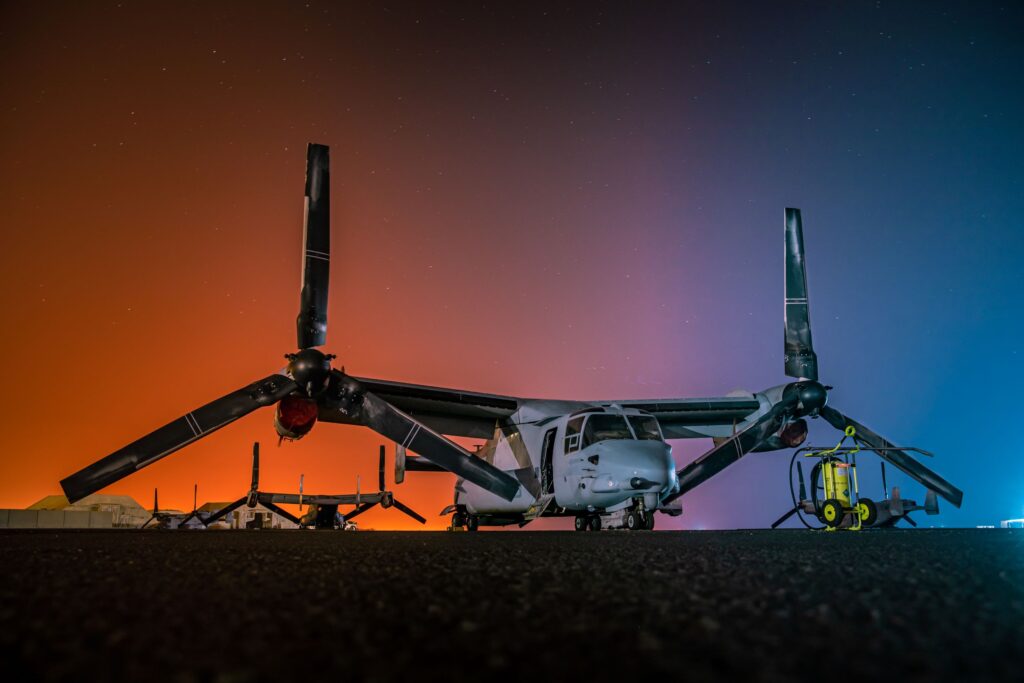
The new fiscal year will mark the sunset on new MV-22 Osprey purchases, according to new budget documents. U.S. MARINE CORPS / Lance Cpl. Andrew Skiver

ARLINGTON, Va. — The Navy plans to procure 96 aircraft in fiscal 2023, down from the 129 aircraft enacted in the fiscal 2022 appropriations law. The numbers are expected to go even lower over the years of the Future Years Defense Program. 

The Department of the Navy has requested the following: 

  • 15 F-35B Lightning II strike fighters for the Marine Corps 
  • 13 F-35C Lightning II strike fighters (9 for the Navy, 4 for the Marine Corps) 
  • 5 E-2D Advanced Hawkeye command and control aircraft 
  • 5 KC-130J Super Hercules transport/refueling aircraft 
  • 10 new multi-engine training aircraft 
  • 10 CH-53K King Stallion heavy-lift helicopters 
  • 25 TH-73A Thrasher training helicopters 
  • 3 MQ-4C Triton unmanned surveillance aircraft 
  • 4 MQ-25A Stingray unmanned aerial refueling aircraft 
  • 5 MQ-9A Predator unmanned aerial surveillance aircraft 

Assuming 10-plane squadron strength, the planned F-35C procurement does not even fill one Navy F-35C squadron or half of a Marine Corps F-35C squadron. But F-35C procurement is planned to increase significantly starting in 2024, to 15 per year for the Navy and four per year for the Marine Corp, except for three in 2027.  

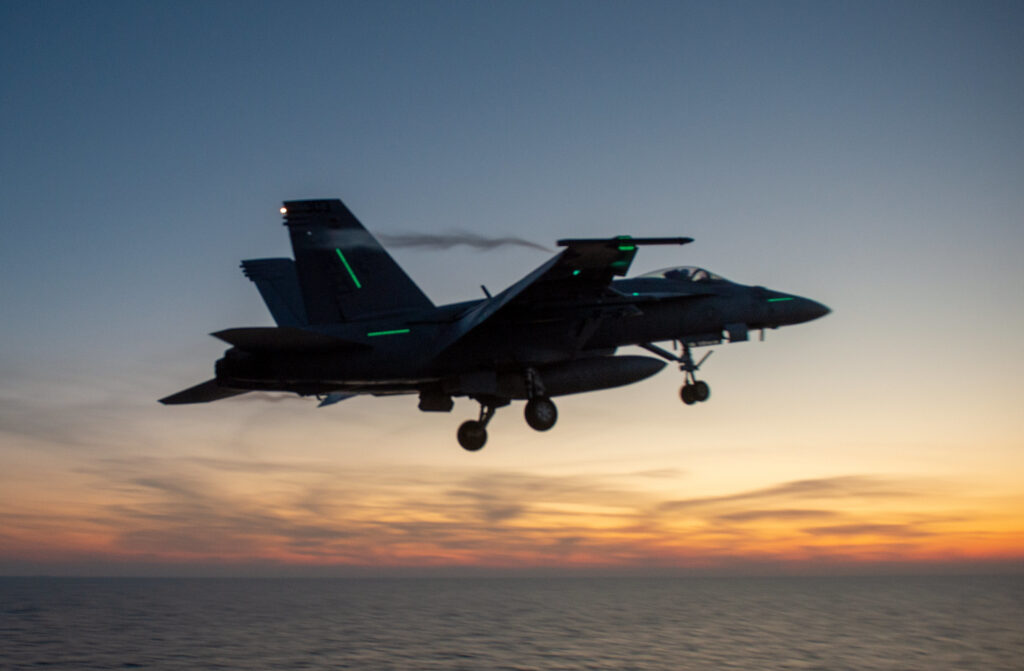
The Navy — again — is planning on ending F/A-18E/F Super Hornet strike fighter procurement with the 2022 batch of 12 mandated by Congress. It remains to be seen if Congress will again keep procurement of the Super Hornet alive.  

As proposed, the new fiscal year would be the last year of procurement of the E-2D and the TH-73A. No more P-8A Poseidon maritime patrol aircraft or MV-22B or CMV-22B Osprey tilt-rotor aircraft are planned. 

Procurement of the KC-130J would pause or stop after two are purchased in 2024. The Navy has been hoping to replace its C-130T/KC-130T organic airlift fleet with C-130Js, but that seems far in the future if it happens. 

The new fiscal year will be the first for procurement of the MQ-25A as it heads for operational capability in 2025. The 2023 budget also resumes procurement of the MQ-4C after a year gap, and more MQ-9As for the Marine Corps as it fills its unmanned squadrons with the Reaper to support expeditionary advance base operations. 

The type aircraft to be procured to replace the T-44C multi-engine training aircraft has yet to be announced, but the 2023 budget plans to procure 10 Multi-Engine Training Systems, with a total of 58 in a three-year run. 

The T45TS line in the Navy’s budget graph shows procurement starting in 2025. The term T45TS is familiar as T-45 Training System, of which the Boeing T-45 Goshawk aircraft is the main component. However, Seapower understands this line item to be a surrogate for a yet-to-be solution for the Navy’s need for a T-45C replacement. 


New National Defense Strategy Delivered to President 

An F/A-18E Super Hornet, attached to the “Blue Blasters” of Strike Fighter Squadron (VFA) 34, launches from the flight deck the Nimitz-class aircraft carrier USS Harry S. Truman (CVN 75), Mar. 25. U.S. NAVY / Mass Communication Specialist 3rd Class Tate Cardinal

ARLINGTON, Va. — The Department of Defense delivered the new 2022 National Defense Strategy to the president March 28, the department said. 

The NDS is classified, but DoD released a fact sheet to inform readers until an unclassified version is released.

“For the first time, the department conducted its strategic reviews in a fully integrated way — incorporating the Nuclear Posture Review and Missile Defense Review in the NDS — ensuring tight linkages between our strategy and our resources,” the fact sheet says. The unclassified NDS will be forthcoming. 

Consistent with the president’s Interim National Security Strategic Guidance, the classified NDS sets out how the Department of Defense will contribute to advancing and safeguarding vital U.S. national interests. The defense priorities are: 

  1. Defending the homeland, paced to the growing multi-domain threat posed by China 
  1. Deterring strategic attacks against the United States, allies and partners 
  1. Deterring aggression, while being prepared to prevail in conflict when necessary, prioritizing the challenge of China in the Indo-Pacific, then the Russia challenge in Europe 
  1. Building a resilient joint force and defense ecosystem. 

“The department will act urgently to sustain and strengthen deterrence, with the People’s Republic of China [PRC] as our most consequential strategic competitor and the pacing challenge for the department. 

“Russia poses acute threats, as illustrated by its brutal and unprovoked invasion of Ukraine. We will collaborate with our NATO allies and partners to reinforce robust deterrence in the face of Russian aggression. 

“The department will remain capable of managing other persistent threats, including those from North Korea, Iran, and violent extremist organizations. 

“Changes in global climate and other dangerous transboundary threats, including pandemics, are transforming the context in which the department operates. We will adapt to these challenges, which increasingly place pressure on the joint force and the systems that support it. 

“Recognizing growing kinetic and non-kinetic threats to the United States’ homeland from our strategic competitors, the department will take necessary actions to increase resilience — our ability to withstand, fight through, and recover quickly from disruption. 

“Mutually beneficial alliances and partnerships are an enduring strength for the United States, and are critical to achieving our objectives, as the unified response to Russia’s further invasion of Ukraine has demonstrated. Answering this ‘call to action,’ the department will incorporate ally and partner perspectives, competencies, and advantages at every stage of defense planning. 

“The Department will advance our goals through three primary ways: integrated deterrence, campaigning, and actions that build enduring advantages. 

  • Integrated deterrence entails developing and combining our strengths to maximum effect, by working seamlessly across warfighting domains, theaters, the spectrum of conflict, other instruments of U.S. national power and our unmatched network of alliances and partnerships. Integrated deterrence is enabled by combat-credible forces, backstopped by a safe, secure, and effective nuclear deterrent. 
  • Campaigning will strengthen deterrence and enable us to gain advantages against the full range of competitors’ coercive actions. The United States will operate forces, synchronize broader department efforts, and align department activities with other instruments of national power, to undermine acute forms of competitor coercion, complicate competitors’ military preparations and develop our own warfighting capabilities together with allies and partners.
  • Building enduring advantages for the future joint force involves undertaking reforms to accelerate force development, getting the technology we need more quickly, and making investments in the extraordinary people of the Department, who remain our most valuable resource. 

“The department will develop, design, and manage our forces — linking our operational concepts and capabilities to achieve strategic objectives. This requires a joint force that is lethal, resilient, sustainable, survivable, agile, and responsive.” 


Navy Fleet Would Shrink Further Under 2023 Ship Decommissioning Plan  

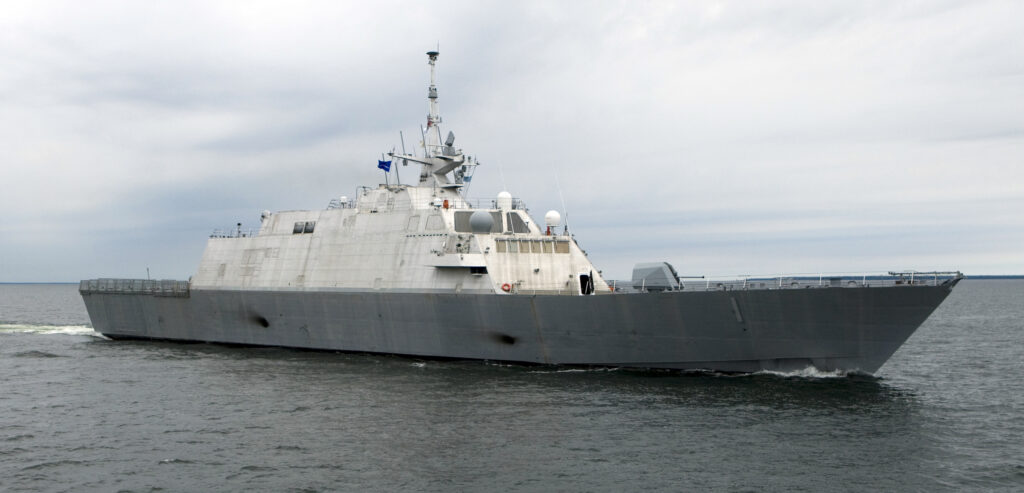
The first U.S. Navy Littoral Combat Ship, Freedom. The Navy plans to retire nine LCS, most or all from the Freedom class. U.S. NAVY

ARLINGTON, Va. — Normally the number of new U.S. Navy ships requested for the next a new fiscal year garners the most attention of reporters, but this time it was the number of ships the Navy is seeking to decommission that drew the most attention.  

Under the Future Years Defense Plan, the size of the Navy’s battle force would shrink from 298 today to 280 in fiscal 2027. Chief of Naval Operations Adm. Michael Gilday has advocated divesting in order to invest, and this budget supports that concept.  

During the Navy Department’s March 28 fiscal 2023 budget briefing at the Pentagon, Rear Adm. John Gumbleton, deputy assistant secretary of the Navy for Budget, said the Navy is requesting the retirement of 24 ships, compared with the construction of nine battle force ships. 

Gumbleton listed the types of the 24 ships targeted for retirement: 

  • 9 littoral combat ships
  • 5 Ticonderoga-class guided-missile cruisers
  • 2 Los Angeles-class nuclear-powered attack submarines 
  • 2 Henry J. Kaiser fleet replenishment oilers
  • 4 Whidbey Island- or Harpers Ferry-class dock landing ships
  • 2 Montford Point-class expeditionary transfer dock ships

He said the retirements would save the Navy $3.6 billion over the Future Years Defense Plan. 

Most, if not all, of the littoral combat ship retirements would be of the troubled Freedom variant and would save the Navy $50 million annually. Also, under the 2023 plan the LCS antisubmarine warfare mission package would not be installed on the remaining LCSs, with the ASW mission taken up by the new Constellation-class frigate. 

The two Montford Point-class expeditionary transfer dock ships are less than 10 years old and their proposed retirement reflects changes in Marine Corps amphibious operational concepts toward more distributed maritime operations. 

The Navy recently has pointed our more problems with the older Ticonderoga-class guided-missile cruisers to the level of safety concerns being a major issue.  

The nine battle force ships requested for 2023 by the Navy include:  

  • 2 Virginia-class SSNs 
  • 2 Flight III Arleigh Burke-class guided-missile destroyers
  • 1 Constellation-class guided-missile frigate
  • 1 America-class amphibious assault ship
  • 1 Flight II San Antonio-class amphibious transport dock ship
  • 1 John Lewis-class fleet replenishment oilers 
  • 1 Navajo-class towing, salvage and rescue ship

For 2022, the Navy requested eight ships, but Congress increased the number to 13 in the enactment of that budget. 

The 2023 budget would continue to fund the Columbia-class ballistic-missile submarine, the Ford-class aircraft carriers, and advance procurement for two Virginia-class nuclear-powered attack submarines. 

Gumbleton said 2023 would be the last year for procurement of the San Antonio-class transport dock ship. 

Also, under the Future Years Defense Plan, production of the Constellation-class guided-missile frigate would alternate one and two ships year by year.  

Procurement of the light amphibious warship and the submarine tender replacement would begin in fiscal 2025, followed by the next-generation logistics ship in 2026. Research and development funding is provided for the large unmanned surface vessel and the extra large unmanned underwater vessel. 

The 2023 budget also would fund the purchase of two used sealift ships for the Maritime Administration’s Ready Reserve Force. 

The fiscal 2023 also requests funding for two LCAC 100-class ship-to-shore connectors and the service-life extension of two LCAC 01-class connectors; but does not request more new LCU 1700-class utility landing craft. The plan also would fund advance procurement funds for the refueling and comprehensive overhaul of the USS Harry S. Truman (CVN 75), which the Navy not long ago wanted to decommission to fund other priorities.  

Rep. Rob Wittman (R-Virginia), ranking member of the House Armed Services Committee’s Seapower and Projection Forces panel, has been critical of the Navy’s “divest to invest” strategy, which is shrinking the fleet. He issued a statement March 28, excerpted below:    

“I am particularly disappointed that even as we aim to grow our naval and projection forces, this budget continues the divest to invest strategy that will shrink our fleet once again, underinvest in the fifth-generation fighters we need to compete with peer adversaries, reduces our Air Force tanker force structure and once again prioritizes future technologies over the capacity and capabilities servicemembers need now to ensure we have a credible American military. I will work with my colleagues in Congress this year to ensure that we deliver a defense budget that genuinely invests in the national security of our nation.” 


Navy Deploys More EA-18G Electronic Attack Jets to EUCOM 

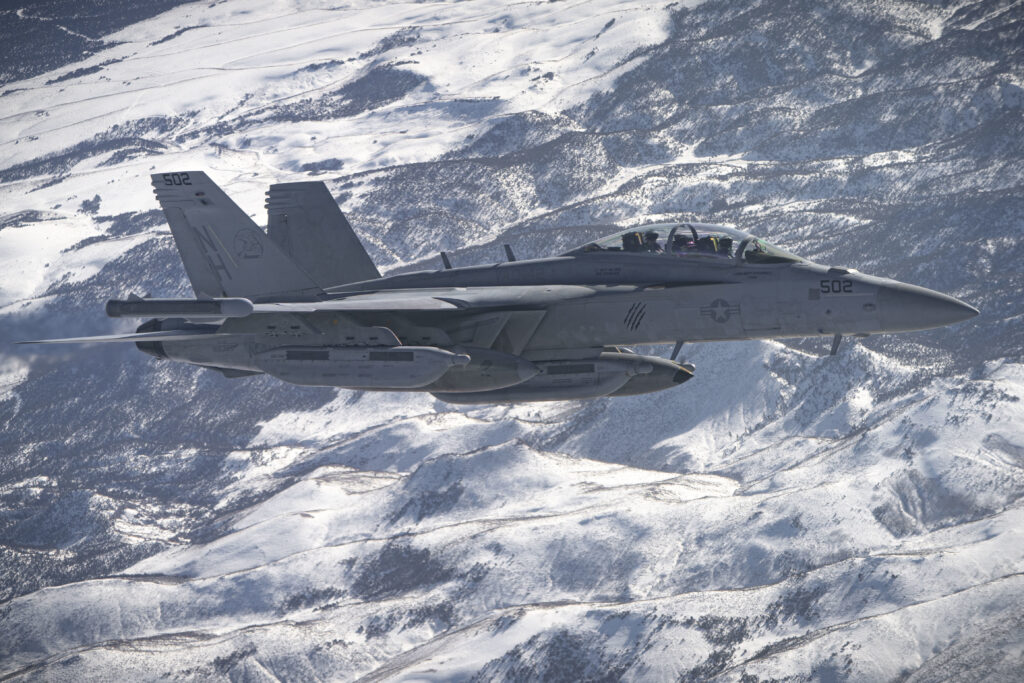
A U.S. Navy EA-18G Growlers assigned to the “Garudas” Electronic Attack Squadron (VAQ) 134, Naval Air Station Whidbey Island, Washington, waits to receive air-to-air refueling from a Royal Air Force Voyager tanker assigned to 101 Squadron, RAF Brize Norton, United Kingdom, during a Red Flag-Nellis 22-1 mission Feb. 3, 2022, at Nellis Air Force Base, Nevada. U.S. AIR FORCE / Airman 1st Class Zachary Rufus

ARLINGTON, Va. — A squadron of U.S. Navy EA-18G Growler electronic warfare aircraft has been deployed to the European Command as part of the build-up of forces in support NATO’s eastern flank. 

According to Defense Department spokesman John Kirby, the six EA-18Gs of Electronic Attack Squadron 134 (VAQ-134) — the Garudas — and their support personnel were to be staged by March 28 at Spangdahlem Air Base in Germany, home of the U.S. Air Force’s 52nd Fighter Wing, which fields one squadron of F-16CJ fighters. The EA-18Gs are home-based at Naval Air Station Whidbey Island, Washington. Spangdahlem is approximately 650 miles from the borders of NATO countries in Eastern Europe with Ukraine. 

“The purpose of this deployment is to bolster readiness, enhance NATO’s collective defense posture and further increase air integration capabilities with our allied and partner nations,” Kirby said in a release. “They are not being deployed to be used against Russian forces in Ukraine. They are being deployed completely in keeping with our efforts to bolster NATO’s deterrence and defense capabilities along that eastern flank. The deployment is not in response to a perceived threat or incident.” 

The Navy has five-land-based expeditionary VAQ squadrons in addition to nine carrier-based VAQ squadrons, all equipped with EA-18Gs. For many years they deployed to bases in Southwest Asia to support combat in Afghanistan, Iraq, and Syria, and currently deploy to Misawa, Japan. The Navy’s Growlers provide electronic attack support for all of the armed services. The aircraft can jam enemy radars and communications and fire anti-radiation missiles at radar sites. 

“I am extremely proud of the men and women in VAQ-134,” said Navy Capt. Christopher M. Bahner, commander, Electronic Combat Wing, U.S. Pacific Fleet, in a Defense Department release. “The Garudas have performed exceptionally well during their planned work-up cycle and stand ready to support U.S. expeditionary and allied task forces in Europe. Expeditionary EA-18G squadrons integrate with joint and coalition forces to provide our commanders capabilities to defend our forces in all potential phases of operation, while allowing our Carrier Air Wing EA-18G squadrons to remain at sea, defending freedom of navigation with our carrier strike group teams.” 

Another EA-18G squadron, VAQ-137, currently is deployed with Carrier Air Wing One on board USS Harry S. Truman in the Mediterranean Sea. VAQ-137 has been flying patrols over Romania and Poland in support of NATO operations since the Russian invasion of Ukraine. 


Marine Corps Orders 36 More Amphibious Combat Vehicles 

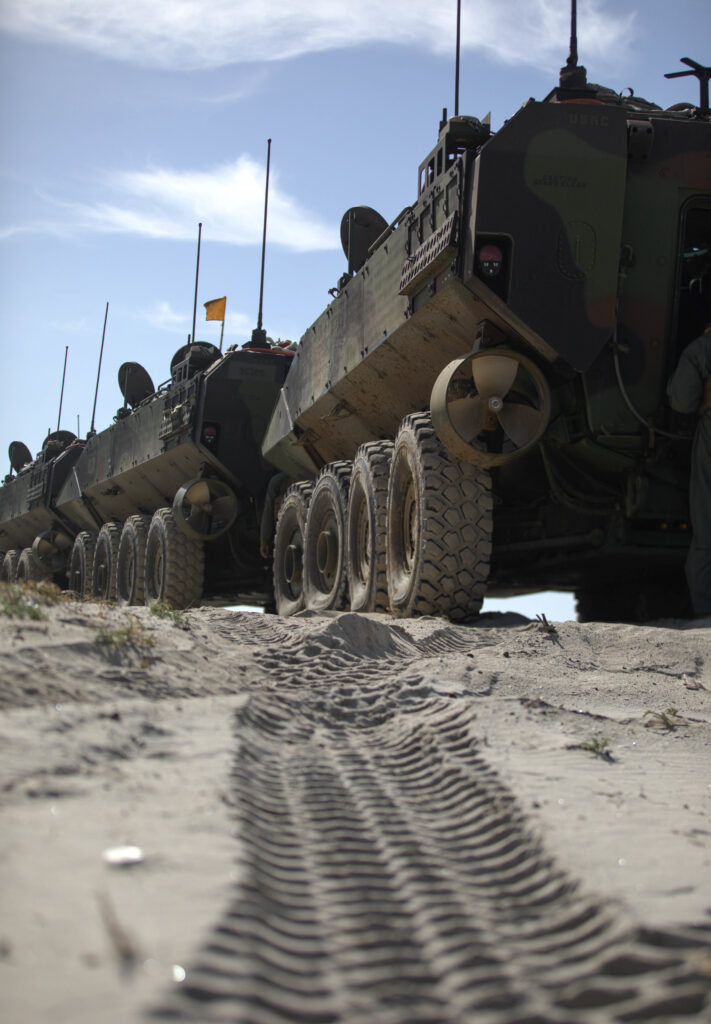
U.S. Marine Corps amphibious combat vehicles with 3d Assault Amphibian Battalion, 1st Marine Division, conduct movement on the shore after a successful training evolution at Marine Corps Base Camp Pendleton, California, March 13. U.S. MARINE CORPS / 2nd Lt. Joshua Estrada

ARLINGTON, Va. — The Marine Corps has ordered 36 more Amphibious Combat Vehicles, the Defense Department announced March 25. 

Marine Corps Systems Command, Quantico, Virginia, awarded BAE Systems Land & Armaments L.P., Sterling Heights, Michigan, a $173.6 million contract modification for a full-rate production lot of ACVs and “associated production, and fielding and support costs.” The deliveries are expected to be completed by March 2024. 

The ACV is an amphibious armored vehicle — with a crew of three Marines — designed to carry 13 Marines in shock-mounted seats from ship to shore in an opposed landing and to carry those Marines inland. Its V-shaped hull is designed to provide blast protection from mines.  

In addition to the personnel carrier versions (ACV-P), BAE Systems has delivered the prototype of the command variant (ACV-C) and is under contract to design and develop the 30mm cannon-armed variant (ACV-30) and the recovery variant (ACV-R). 

The contract raises the number of ACV-Ps ordered so far to more than 250. They are in full-rate production.

The ACV achieved initial operational capability on Nov. 13, 2020. The ACV is replacing the AAV7 family of assault amphibious vehicles that have been in service since the early 1970s. 


HII Christens Flight III Destroyer Jack H. Lucas  

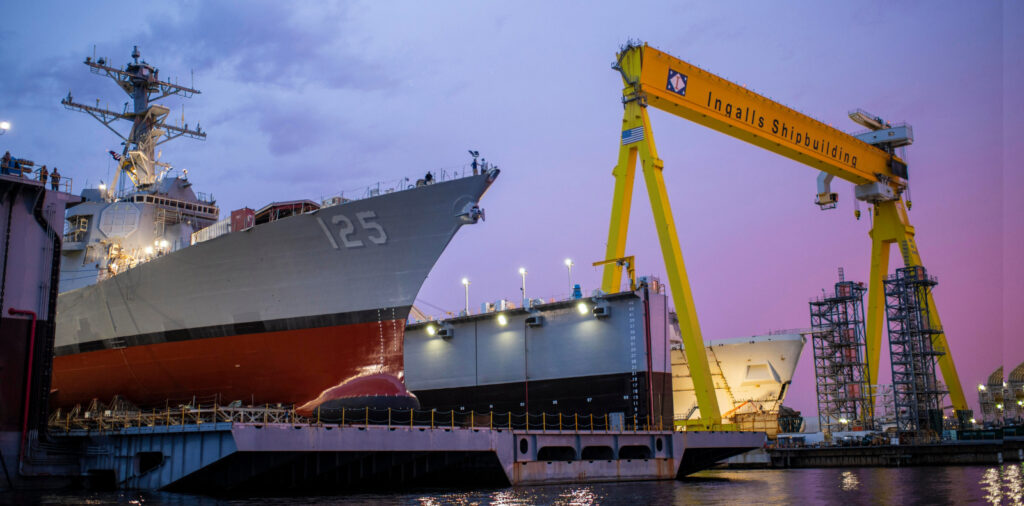
HII christened the pre-commissioning unit Jack H. Lucas on March 26. HII

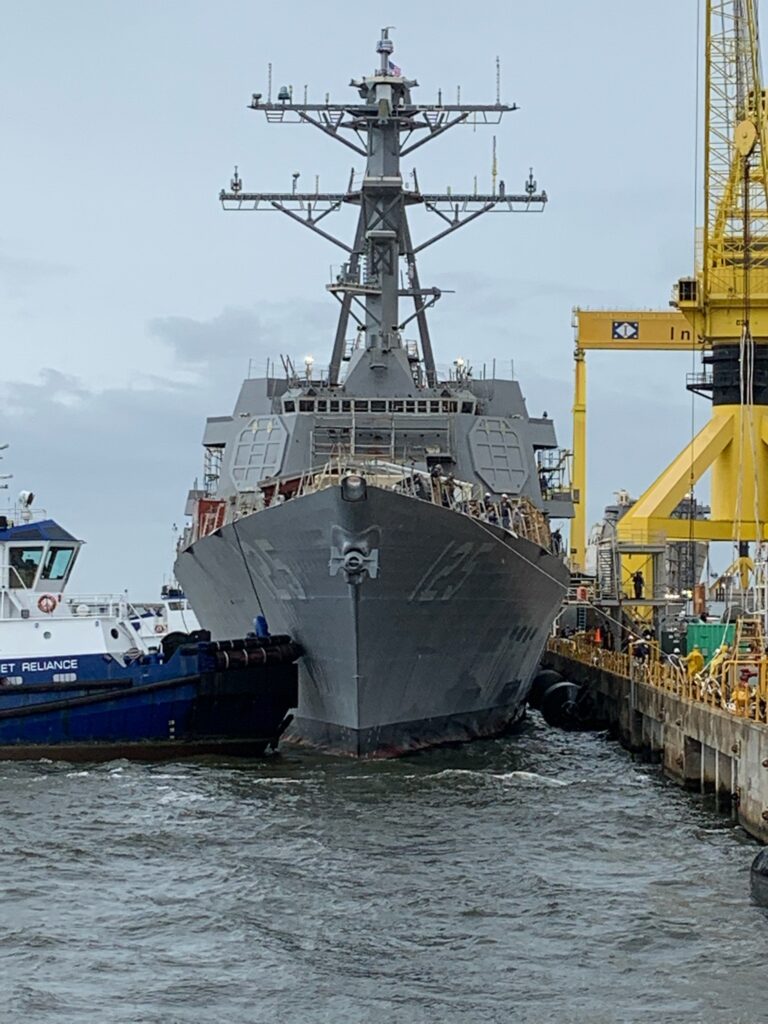
PASCAGOULA, Miss. — HII christened pre-commissioning unit Jack H. Lucas (DDG 125) on March 26 at the company’s Ingalls Shipbuilding division, the company said in a release. 

Jack H. Lucas, a longtime resident of Hattiesburg, Mississippi, was the youngest Marine and youngest service member in World War II awarded the Medal of Honor. During a close firefight with Japanese soldiers, Lucas saved the lives of three Marines when he unhesitatingly placed himself on two grenades. 

“Jack H. Lucas made a selfless decision to choose others and country over self,” Ingalls Shipbuilding President Kari Wilkinson said. “Our Ingalls shipbuilders have a deep appreciation and respect for what sailors and Marines do on behalf of our nation. We are proud to support them and to provide them this remarkable ship, our first Flight III destroyer.” 

Chief of Naval Operations, Adm. Mike Gilday, was the keynote speaker. 

“Jack H. Lucas is not only the most capable and sophisticated surface combatant ever built by man, but it also represents the bridge from the past to the future, as we bring a new radar, the Aegis Baseline 10, and a new electric plant onto an already highly capable platform,” Gilday said. “Such an evolution would be impossible without the shipbuilders of Huntington Ingalls Industries and the Pascagoula community. Flight III represents the dedication and commitment of our Sailors and civilians — the skill and innovation of our shipyards and industry partners — and the commitment of the American people to keep the seas free and open for all.” 

“You have built the finest destroyer in the world,” Gilday said. 

Jack H. Lucas is cosponsored by Ruby Lucas, widow of the ship’s namesake, and Catherine B. Reynolds, chairman and CEO of the Catherine B. Reynolds Foundation. Together, the two sponsors officially christened the ship and made remarks during the ceremony. 

“May the Jack H. Lucas be indestructible, just like he was,” Ruby Lucas said. “This first of its kind ship is advanced in integrity, courage and commitment to serve our great country. Jack never ran from a fight, and I’m certain that all aboard his namesake will represent Jack with honor. Just as I feel his spirit with me, be assured that he will be with all of you all the time.” 

U.S. Sen. Roger Wicker and U.S. Rep. Steven Palazzo, both of Mississippi, delivered remarks. Other speakers included Meredith Berger, performing the duties of undersecretary of the Navy, and Maj. Gen. Jason Bohm, commanding general, Marine Corps Recruiting Command.  


U.S. Coast Guard Decommissions Three Cutters in Bahrain 

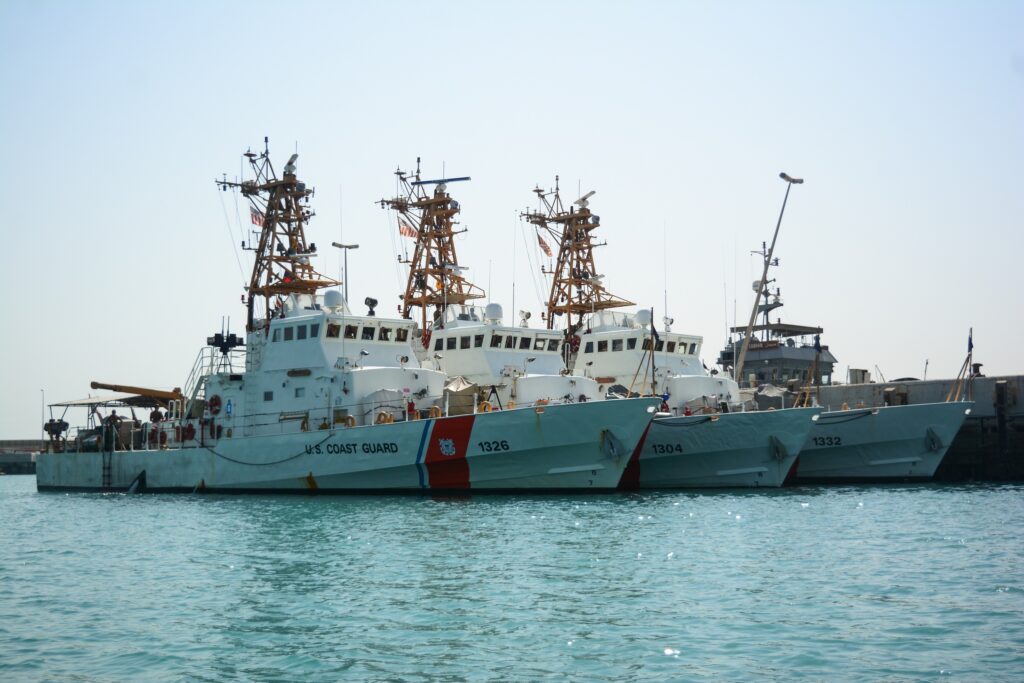
USCGC Monomoy (WPB 1326), USCGC Maui (WPB 1304), and USCGC Wrangell (WPB 1332) sit pierside in the U.S. 5th Fleet Area of Operations. U.S. COAST GUARD

NAVAL SUPPORT ACTIVITY BAHRAIN — The U.S. Coast Guard decommissioned three Island-class patrol boats, March 22, in a ceremony at Naval Support Activity Bahrain, U.S. 5th Fleet Public Affairs said in a release. 

Rear Adm. Keith Smith, deputy commander of U.S. Coast Guard Atlantic Area, attended the ceremony and commemorated 102 years of combined active service by USCGC Maui (WPB 1304), Monomoy (WPB 1326), and Wrangell (WPB 1332).  

“For nearly two decades, these cutters and the Coast Guardsmen that crewed them have worked closely with our [U.S. Naval Forces Central Command] partners and served as the heart of Coast Guard operations in the Middle East,” said Smith. 

Maui was originally homeported in Miami and conducted counter-narcotics and other law enforcement activities near United States for 18 years. 

Monomoy was previously homeported in Woods Hole, Massachusetts. The ship helped secure New York City’s harbor immediately following terrorist attacks in the United States on Sept. 11, 2001. 

In 2004, Maui and Monomoy arrived in the U.S. 5th Fleet region where they have remained for the next 18 years in support of U.S. 5th Fleet maritime security operations. 

Previously homeported in Portland, Maine, Wrangell conducted counter-narcotics and maritime patrol operations along the East Coast of the United States before deploying to the Middle East in 2003. 


Navy to Christen Guided-Missile Destroyer Jack H. Lucas 

The future Jack H. Lucas (DDG 125), an Arleigh Burke-class guided missile destroyer (Flight III configuration) successfully launched at Huntington Ingalls Industries, Ingalls Shipbuilding division, June 4, 2021. HUNTINGTON INGALLS INDUSTRIES

ARLINGTON, Va. — The U.S. Navy will christen the future USS Jack H. Lucas (DDG 125), the first Flight III Arleigh Burke-class guided-missile destroyer, during a 10 a.m. CDT ceremony on Saturday, March 26, in Pascagoula, Mississippi, the Defense Department announced. 

Jacklyn Harold “Jack” Lucas, the ship’s namesake, served as a U.S. Marine during World War II and was awarded the Medal of Honor at the age of 17, making him the youngest recipient. Private First Class Lucas received the award during the Iwo Jima campaign when he hurled himself on two grenades to absorb the explosion with his own body and protect his fellow Marines. Surviving the blast, Lucas lived until June 5, 2008, when he died from cancer. The future USS Jack H. Lucas (DDG 125) is the first combat warship to bear his name. 

Chief of Naval Operations Adm. Michael Gilday will deliver the christening ceremony’s principal address. Mississippi’s Sen. Roger Wicker and Rep. Steven Palazzo will attend, along with Meredith Berger, performing the duties of the undersecretary of the Navy; Maj. Gen. Jason Bohm, commanding general, Marine Corps Recruiting Command; and Kari Wilkinson, president of Ingalls Shipbuilding will also provide remarks. In Navy tradition, the ship’s sponsors, Ruby Lucas and Catherine B. Reynolds, will christen the ship by breaking a bottle of sparkling wine across the bow. 

“The future USS Jack H. Lucas will serve as a constant reminder of the immense impact actions taken by any one Sailor or Marine can truly have,” said Navy Secretary Carlos Del Toro. “Private First Class Lucas is a national hero and this ship and crew will honor his legacy for decades to come.” 

The ship will be the 73rd Arleigh Burke-class destroyer and is one of 20 ships currently under contract for the DDG 51 program. The Flight III upgrade is centered on the AN/SPY-6(V)1 Air and Missile Defense Radar, which enables Flight III ships to perform anti-air warfare and ballistic missile defense simultaneously. The Flight III baseline begins with DDGs 125-126 and continues with DDG 128 and follow-on ships. The future USS Jack H. Lucas will be 509.5 feet long and 59 feet wide, with a displacement of 9,496 tons. The ship will homeport in San Diego. 


HII Authenticates Keel of Guided Missile Destroyer Ted Stevens (DDG 128) 

PASCAGOULA, Miss. — Huntington Ingalls Industries’ Ingalls Shipbuilding division authenticated the keel of the Arleigh Burke-class guided missile destroyer Ted Stevens (DDG 128), the company announced March 25.

The ship’s name honors former U.S. Senator Ted Stevens, who served as a pilot in World War II and later as a senator representing Alaska. At the time he left office in 2009, he was the longest serving Republican U.S. senator in history. 

“With this ship we honor Sen. Stevens’ exemplary service to our nation,” said Kari Wilkinson, president of the Ingalls Shipbuilding division. She was joined at the ceremony by the senator’s wife of 29 years, Catherine Stevens, his eldest daughter, Sue Stevens Covich, and his granddaughter, Laura Sexton, who represented his youngest daughter, Lily Stevens-Becker, who could not attend. “Each one of these women has a unique connection to our ship’s namesake,” Wilkinson said, “and we are grateful that each of them accepted the important responsibility of sponsor. Ingalls shipbuilders welcome them as part of our extended family and we will work steadfastly together to build the legacy of this public servant.” 

Closing out the tradition of a keel authentication ceremony, the ship’s sponsors joined Ingalls welder Henry Johnson to weld their initials onto a steel plate, signifying the keel of DDG 128 as being “truly and fairly laid.” The plate will remain affixed to the ship throughout its lifetime. 

Ted Stevens is the 76th Arleigh Burke-class ship ceremonially laid and the second Flight III destroyer to be constructed at Ingalls Shipbuilding. The Flight III upgrade incorporates a number of design modifications that collectively provide significantly enhanced capability.