Crowley to Operate Ice-Class Tanker for Military Sealift Command 
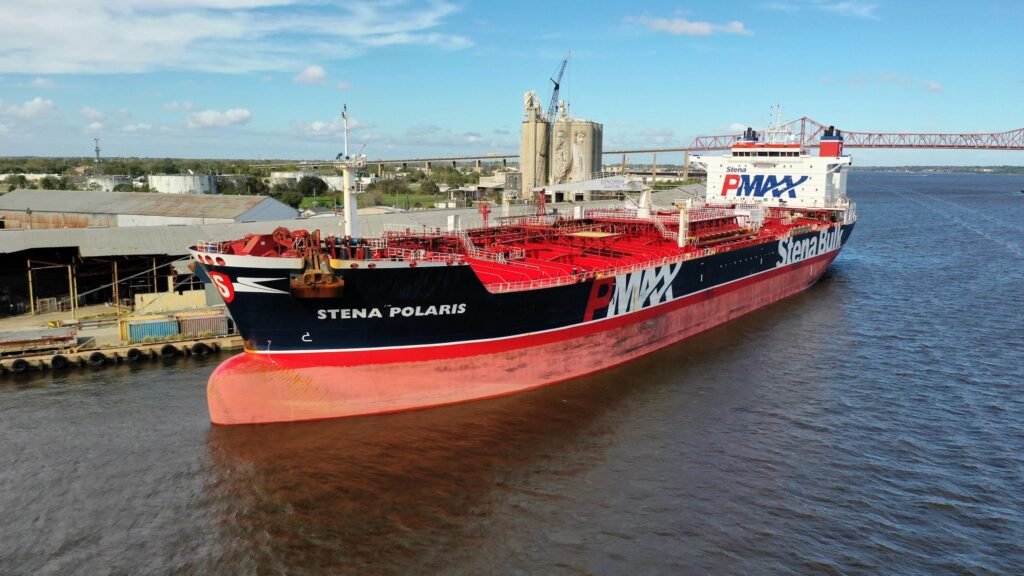
The Stena Polaris, an Ice-class tanker that will be operated by Crowley for Military Sealift Command. CROWLEY

JACKSONVILLE, Fla. — Crowley has been awarded the Military Sealift Command charter contract to operate the Stena Polaris, an Ice-class tanker serving bulk fuel needs of the U.S. Department of Defense, the company said March 21. 

Crowley’s government ship management group has completed the conversion of the ship to meet government and military service standards, including registration as a U.S.-flag vessel. The tanker will transport necessary fuel for defense operations in the Arctic and Antarctica regions. When not operating in those regions, the vessel will transport fuel for defense services in the Mediterranean Sea. 

Crowley has partnered with the DNV classification society and the U.S. Coast Guard to verify the vessel meets the applicable standards to support its missions safely and effectively. Enhancements include adding at-sea refueling capabilities for the military. The tanker, now U.S.-flagged with U.S. mariners, is set to enter service this week.   

The conversion was completed at Fincantieri Marine Repair near downtown Jacksonville, Florida, supporting investment, jobs and the economy of the home city of Crowley’s global headquarters.  

“The Stena Polaris plays a critical mission for our warfighters serving our nation in austere environments, and fundamental work to help our military succeed will be done by the strong workforce and maritime industry in Jacksonville,” said Mike Golonka, vice president, government maritime services, for the Crowley Solutions business unit. “Crowley’s team is fortunate to partner with the U.S. Coast Guard, DNV and Fincantieri Marine Repair to complete the conversion, and we are honored that the U.S. government continues to trust Crowley’s ship management team to meet the Defense Department standards for success and efficient service.” 

“We are excited to partner with Crowley here in Jacksonville to successfully complete this tanker reflagging project,” said Ryan Smith, Fincantieri Marine Repair’s president. “We are now operating in Northeast Florida providing high-quality services to meet the operational needs of military, government, and commercial clients.” 

The contract, which carries a one-year term with multiple option years, has a potential cumulative value of more than $98 million.  


CNO Visits Norfolk for Carrier Aviation Centennial Celebration   

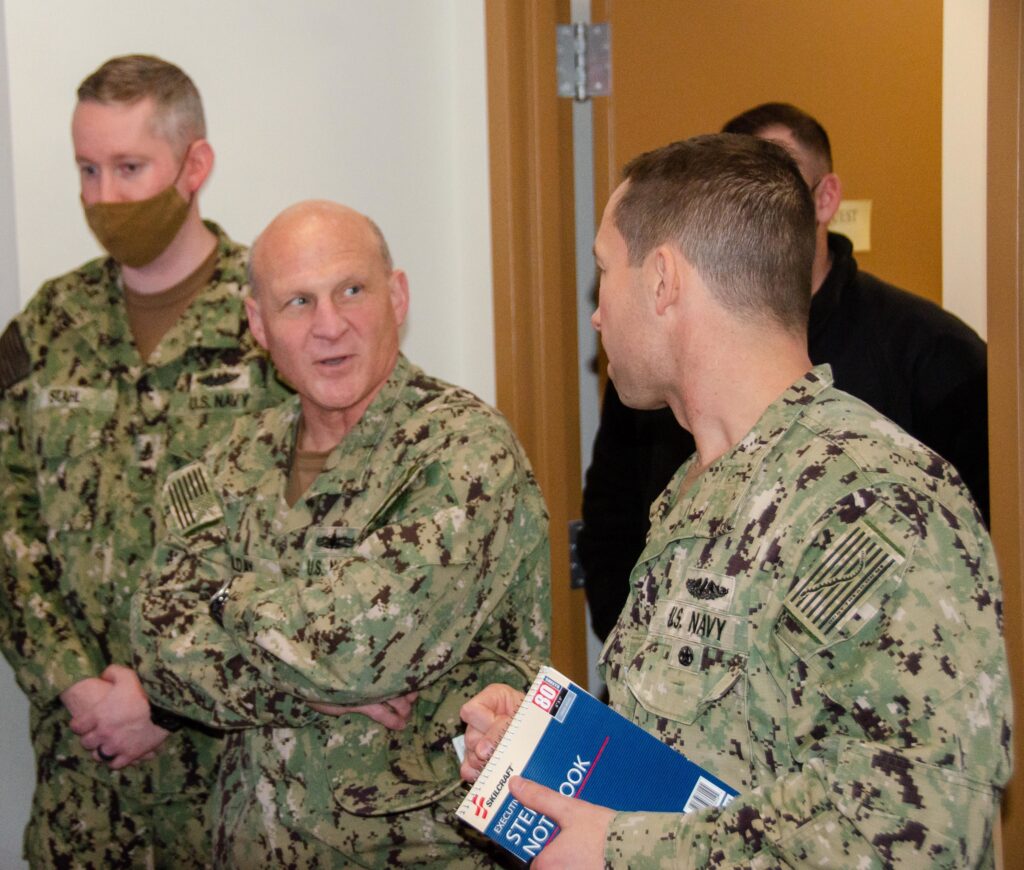
Chief of Naval Operations Adm. Mike Gilday during a visit to Naval Submarine School in February. On March 20-21, he visit Hampton Roads, Virginia, to celebrate a century of U.S. aircraft carrier aviation. U.S. NAVY / Charles E. Spirtos

NORFOLK, Virginia — U.S. Chief of Naval Operations Adm. Mike Gilday traveled to Hampton Roads, Virginia, for the 100 Years of Carrier Aviation Celebration, to visit local commands and to meet with Sailors and industry partners, March 20-21, the CNO’s public Affairs office said in a release. 

Gilday delivered remarks during the centennial celebration ceremony, hosted by the Navy League, held to honor the legacy of U.S. Navy aircraft carriers and aviation. 

“For 100 years aircraft carriers have been the most survivable and versatile airfields in the world,” said Gilday. “Perhaps no single military platform distinguishes what our nation is … and what it stands for … more than the aircraft carrier.”  

While in Hampton Roads, Master Chief Petty Officer of the Navy Russell Smith joined Gilday to meet with Sailors and leadership at Airborne Command and Control Squadron (VAW) 121 and Board of Inspection and Survey, where they spoke to the “get real, get better” call to action. 

The get real, get better mindset seeks to reduce the gap between the Navy’s least and most capable performer, cement dynamic learning and innovation into Navy culture, and build better leaders and teams ready to solve problems more effectively.  

“Our Sailors need to be self-assessing, finding and fixing problems, and embracing the red,” said Gilday. “We need to expand and empower this across the fleet, we have no room for complacency — each ship, squadron and command must hold themselves accountable. We need to continue to get real and get better.” 

Gilday also met with Virginia congressional Democratic Reps. Bobby Scott and Elaine Luria for a working lunch and discussion at Mid-Atlantic Regional Maintenance Center. During lunch, they received updates about ship maintenance.  

Finally, Gilday visited BAE Systems Norfolk Ship Repair for a tour and discussion about shipbuilding and maintenance progress and initiatives. 

“The work being done here in Norfolk, in partnership with BAE Systems, is helping to ensure our Navy is ready and has cutting edge capabilities,” said Gilday. “Working together with industry partners, we will drive down maintenance delays that reduce our readiness, while we continue to make sure our Sailors have what they need to fight and win.”    

The Hampton Roads area has the largest concentration of fleet headquarters administrative and communication facilities outside of Washington, D.C. It is home to more than 82,000 personnel and several major tenant commands: U.S. Fleet Forces Command, Joint Staff Hampton Roads, U.S. Marine Corps Forces Command, Naval Submarine Forces, Atlantic, and Naval Reserve Forces Command. 


Marine Corps Orders Development of Recovery Variant of ACV 

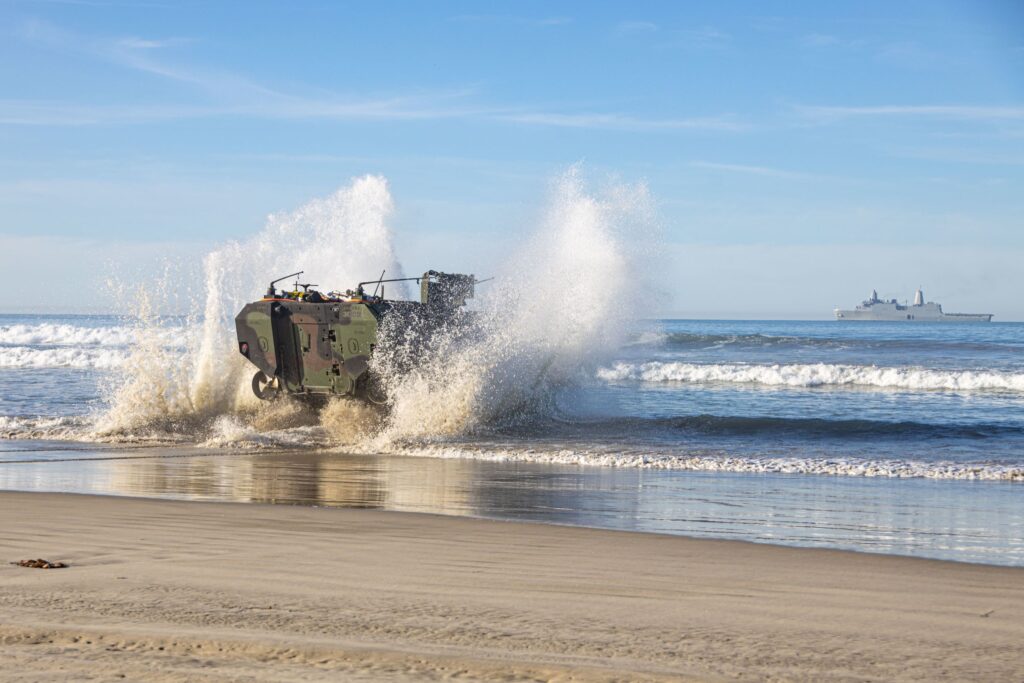
U.S. Marines assigned to the 3rd Assault Amphibian Battalion, 1st Marine Division, conduct waterborne training with an Amphibious Combat Vehicle from shore to loading amphibious transport dock ship USS Anchorage (LPD 23) at Marine Corps Base Camp Pendleton, California, Feb. 12. U.S. MARINE CORPS / Lance Cpl. Willow Marshall

QUANTICO, Va. — The Marine Corps has taken the next step in developing its family of Amphibious Combat Vehicles by beginning development of a maintenance/recovery variant of the ACV. 

The Marine Corps Systems Command awarded BAE Systems Land & Armaments L.P., Sterling Heights, Michigan, a $34.9 million cost-plus-fixed-fee contract modification to procure labor and material for the design and development of the ACV-R maintenance/recovery variant, according to a March 18 Defense Department contract announcement.   

Development of the command-and-control variant, the ACV-C, and the ACV-30 — the latter armed with a 30mm cannon — began in June 2019. The first ACV-C variant was delivered to the Marine Corps in February 2021. 

The basic infantry personnel carrier, the ACV-P, is in full-rate production and is in service with amphibious assault battalions. 

Work on the ACV-R under the contract modification has an expected completion date of October 2023.  


Four Marines Die in MV-22B Crash in Norway 

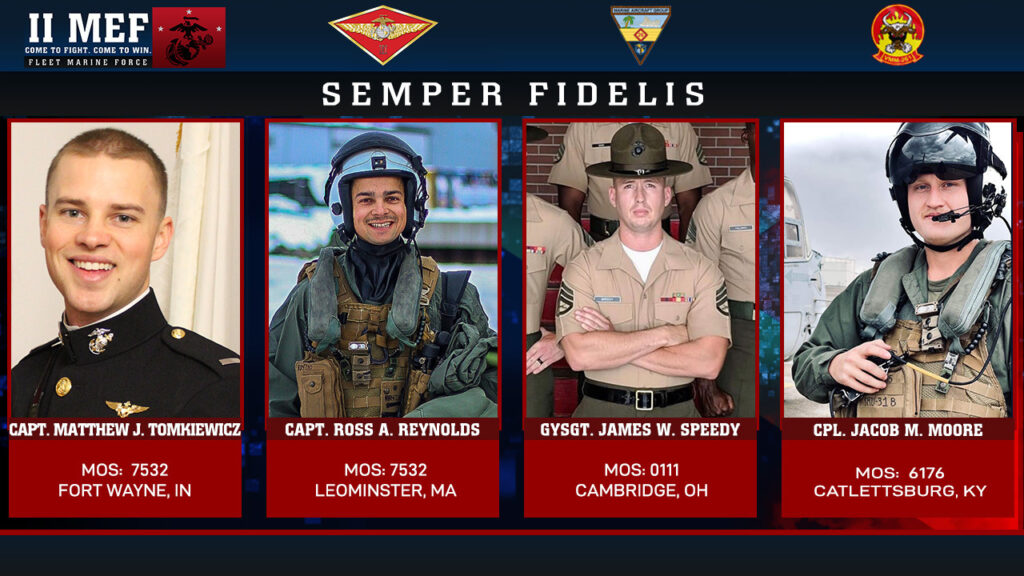
Four Marines died in a crash during a training flight south of Bodo, Norway, in support of Exercise Cold Response 2022, March 18. All four Marines were assigned to Marine Medium Tiltrotor Squadron 261. U.S. MARINE CORPS

ARLINGTON, Va. — A Marine Corps MV-22B Osprey tilt-rotor transport aircraft crashed in Norway on March 18, killing all four Marine crewmen on board. 

The Osprey, assigned to Marine Medium Tiltrotor Squadron 261 (VMM-261), based at Marine Corps Air Station New River, North Carolina, was on a flight south of Bodo, Norway, when it crashed while supporting NATO’s Exercise Cold Response 2022. 

Killed in the crash were Capt. Matthew J. Tomkiewicz of Fort Wayne, Indiana; Capt. Ross A. Reynolds of Leominster, Massachusetts; Gunnery Sgt. James W. Speedy of Cambridge, Ohio; and Cpl. Jacob M. Moore of Catlettsburg, Kentucky, according to a March 21 release from the II Marine Expeditionary Force.   

Norwegian agencies, including the Royal Norwegian Air Force’s 330 Squadron and the Hoved Redning Sentralen civil emergency and response organization led in locating the aircraft’s wreckage and in recovery of the bodies of the victims. 

“The pilots and crew were committed to accomplishing their mission and serving a cause greater than themselves,” said Maj. Gen. Michael Cederholm, commanding general, 2d Marine Aircraft Wing, in a release. “We will continue to execute the mission while keeping these Marines and their service in the forefront of our minds. We will never allow these Marines and their service to go unnoticed or unappreciated. Keep these Marines and their loved ones in your thoughts and prayers.” 

The mishap is under investigation. 


Boeing’s Australian-Produced Unmanned Aircraft to be Named MQ-28A Ghost Bat  

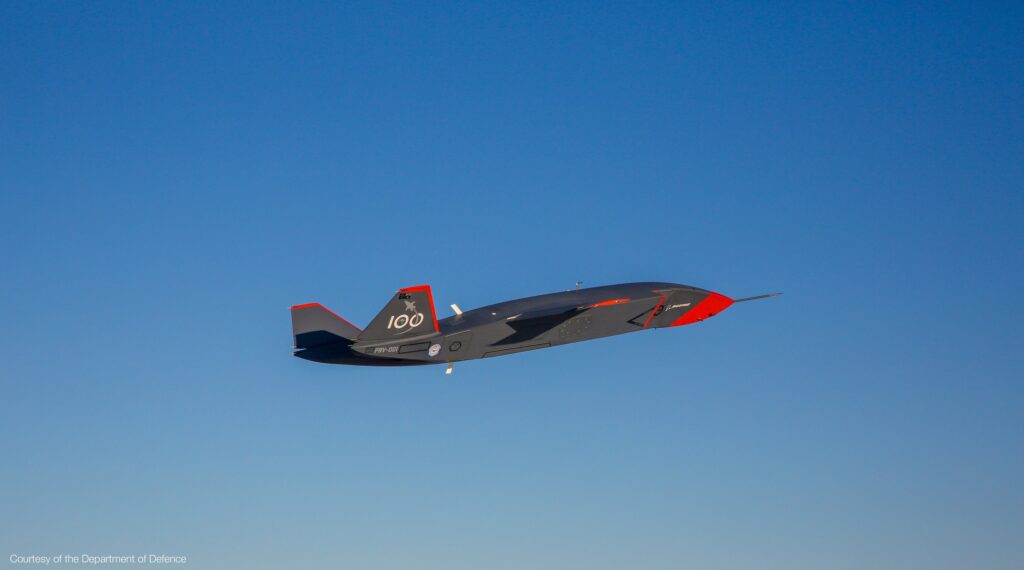
The newly named MQ-28A during the second test flight series at Woomera Range Complex in South Australia. BOEING

AUSTRALIA — Australia has selected MQ-28A Ghost Bat as the military designator and name for the first Australian-produced military combat aircraft in over 50 years. 

Australia’s Defence Minister, Peter Dutton MP, announced the designator and name at a dedicated ceremony held at RAAF Base Amberley, Queensland. 

“The introduction of the new popular name is a rare and special moment in aviation history for our RAAF [Royal Australian Air Force] partners and industry team of over 35 Australian suppliers,” said Glen Ferguson, director of Boeing’s Airpower Teaming System Australia and International. 

“Selecting the Ghost Bat, an Australian native mammal known for teaming together in a pack to detect and hunt, reflects the unique characteristics of the aircraft’s sensors and intelligence, surveillance and reconnaissance abilities, and is a fitting name for this pioneering capability,” said Ferguson. 

With a rapid development timetable of just three years from ideation to first flight, the development program leverages advancements in digital engineering, advanced manufacturing and unique Australian supply chain technologies. 

While the RAAF Loyal Wingman development program name will phase out, Boeing’s product name for global customers will remain the Airpower Teaming System. 

“Our enduring partnership with Commonwealth of Australia and Australian Defence Force is fundamental to the successful development of MQ-28A’s complex technologies and capabilities, and has global export potential for Australia,” said Brendan Nelson AO, president, Boeing Australia, New Zealand and South Pacific. 

During 2022, the program will continue to accelerate the development and testing of the MQ-28A Ghost Bat, with a focus on sensor and missionization capabilities to deliver on RAAF commitments. These requirements will continue to expand as Boeing moves towards the aim of delivering an operational capability for the ADF. 


Cutter Stratton Returns to Alameda Following 97-Day South Pacific Patrol 

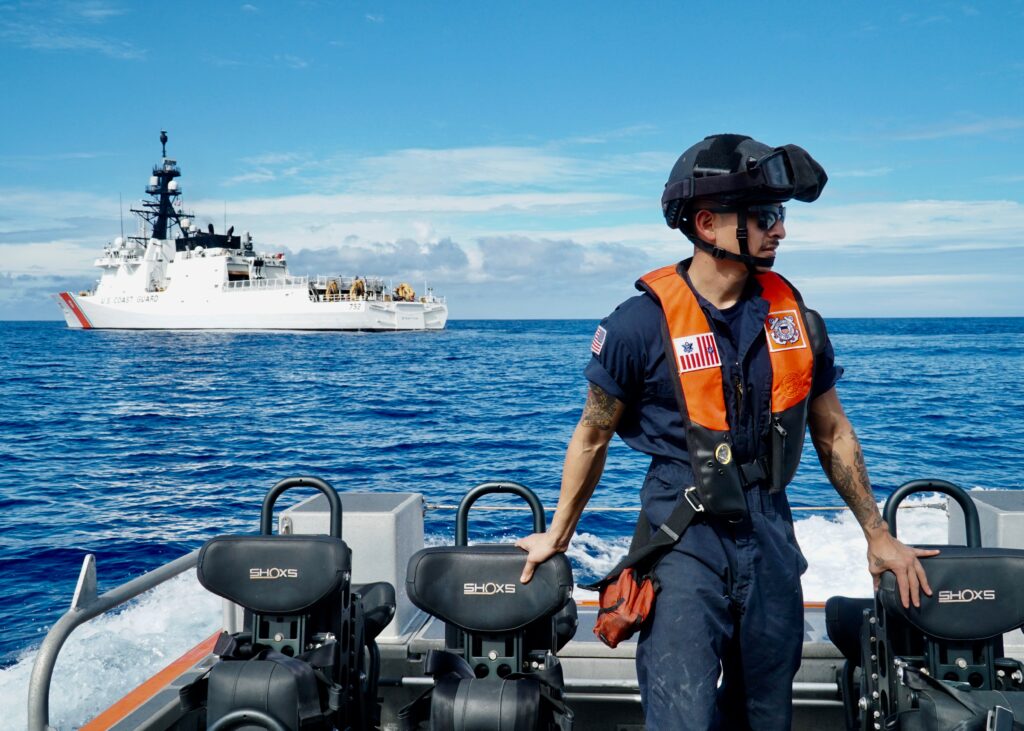
Petty Officer 2nd Class Jose MataAyala, a machinery technician stationed on the Coast Guard Cutter Stratton, observes unqualified crew members as they participate in man-overboard drills off the coast of the Hawaiian Islands, Dec, 31, 2021. U.S. COAST GUARD / Petty Officer 3rd Class David Graham

ALAMEDA, Calif. — The crew of Coast Guard Cutter Stratton (WMSL 752) returned to Alameda, California, March 19 after completing an Operation Blue Pacific Patrol in the south Pacific, the Coast Guard Pacific Area said in a release. 

While underway, Stratton’s crew worked with Pacific partner nations, including Fiji, France, New Zealand, Papua New Guinea, Australia and the United Kingdom on an array of missions and prioritized combating illegal, unreported and unregulated fishing on the high seas or in partner nations’ exclusive economic zones.   

In the effort to combat IUU fishing, Stratton teams boarded 11 vessels during the 20,348-mile patrol and found 21 violations. 

“Our collaboration with our partners and utilization of our shiprider agreements gave us the ability to accomplish our mission of combatting illegal, unreported and unregulated fishing in order to maintain regional stability and protect the fishing industry,” said Capt. Steve Adler, Stratton’s commanding officer. “By bringing aboard shipriders from Fiji, we were able to patrol their exclusive economic zones to better assist them in enforcing their maritime laws.” 

In February, Stratton embarked three shipriders from Fiji with representatives from the Fiji Revenue and Customs Services, the Fiji Ministry of Fisheries and the Republic of Fiji Navy, who led bilateral enforcement efforts for Stratton to patrol their exclusive economic zones. 

There is a shared interest for both Fiji and the United States, as well as other partner nations, to protect fisheries as they provide a renewable source of food and income to the Pacific nations. 

The Stratton crew also used small unmanned aircraft systems to increase the ship’s capabilities and further extend the cutter’s patrol area. 

“Stratton’s capacity for employing cutting-edge technology like sUAS, gives the Coast Guard the upper hand in the fight against IUU fishing,” said Cmdr. Charter Tschirgi, Stratton’s executive officer. “The vast area covered during patrols like these displays the reach the Coast Guard has and the length we will go to assist our partners in the Pacific.” 

While on patrol, Stratton’s crew also participated in multiple joint exercises with partners in the region. These included a formation sailing with the HMS Spey, a tactical maneuvering drill with HMS Spey and USS Sampson, a joint patrol with an Australian Border Force patrol aircraft, fueling-at-sea with New Zealand’s newest replenishment vessel HMNZS Aotearoa, and joint steaming with the French naval vessel FMS Arago and Fijian Patrol vessel Savenaca. 


U.S. Navy Selects Leidos for Undersea Warfare Systems Contract 

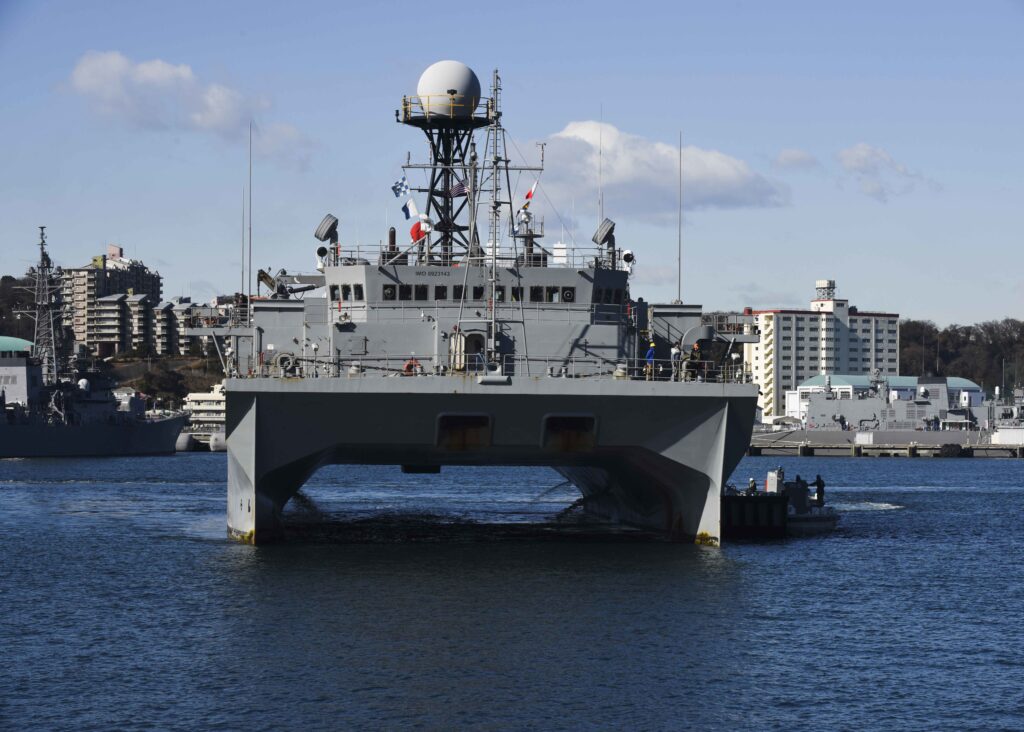
The ocean surveillance ship USNS Able (T-AGOS 20) prepares to moor at Fleet Activities Yokosuka in 2014. U.S. NAVY / Mass Communication Specialist 2nd Class Brian G. Reynolds

RESTON, Va. — Leidos has been awarded a prime contract by the U.S. Navy’s Naval Information Warfare Systems Command to support the service’s undersea warfare systems, the company said March 17.

This single-award, Seaport Next Generation task order has a total estimated value of $84 million. It includes a one-year base period, as well as four one-year options. Work will be performed in Virginia and Japan. 

“Ensuring our Sailors have the most advanced capabilities to defeat advancing threats is a top priority for our company,” said Will Johnson, Leidos senior vice president, Logistics and Mission Support. “We look forward to continuing our longstanding support of the Program Executive Office – Undersea Warfare Systems as they work to keep the seas open and free.” 

Through this contract, Leidos will provide operations and maintenance crews aboard USNS Tactical Auxiliary General Ocean Surveillance (T-AGOS) platforms and contract vessels. Additionally, the company will provide a cadre of field support team engineers to provide engineering, logistics and technical support to the Surveillance Towed Array Sensor System fleet and IUSS (Integrated Undersea Surveillance System) Operations Support Center. 


U.S., Japan Navy Chiefs Conduct Call, Discuss Defense Cooperation

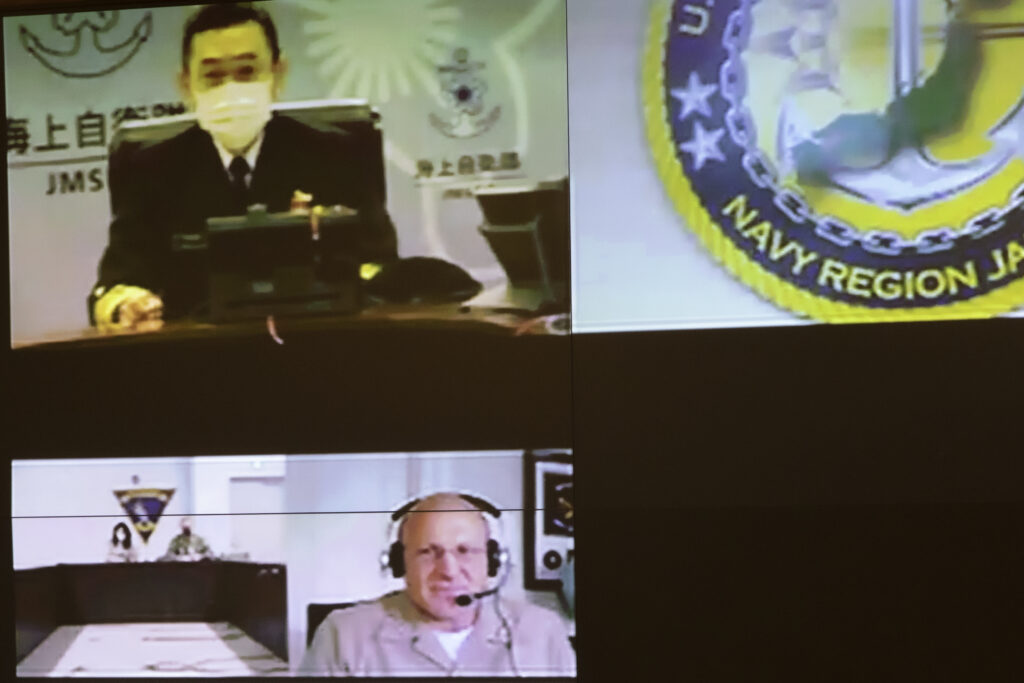
Chief of Naval Operations Adm. Mike Gilday speaks with Japan Chief of Staff Adm. Hiroshi Yamamura during a video teleconference in 2021. The leaders met virtually again on March 17, 2022. U.S. NAVY / Chief Mass Communication Specialist Nick Brown

WASHINGTON — Chief of Naval Operations Adm. Mike Gilday met virtually with Japan Maritime Self-Defense Force Chief of Staff Adm. Hiroshi Yamamura on March 17, the CNO’s Public Affairs office said in a release. 

During the video conference, the two addressed common challenges and discussed strategies to keep the seas open and free.  

“Today’s maritime challenges emphasize the importance of interoperability with our partner nations,” said Gilday. “The alliance between Japan and the United States is the cornerstone of peace and stability in the Indo-Pacific. Together, we will continue to work to keep the maritime commons open and free.”  

According to Gilday, meetings like this reaffirm the special relationship between the two navies and allow for continued collaboration and cooperation.  

“The JMSDF and U.S navies agreed to further strengthen relationships to realize a free and open Indo-Pacific, and recognized the unique strength of navies to continue defense cooperation in a contactless manner even during a pandemic,” said Yamamura. 

Gilday expressed condolences for the recent earthquake off the coast of Fukushima. He told Yamamura that the U.S. Navy stands with the people of Japan, as the U.S. Navy did following the earthquake in 2011.  

The JMSDF and U.S. navies operate together regularly in the Indo-Pacific region and around the globe. Most recently, U.S. and JMSDF navies conducted anti-submarine warfare torpedo training in Tokyo Bay.  

Gilday and Yamamura have met numerous times during their tenures. 


U.S. Navy Concludes ICEX 2022 

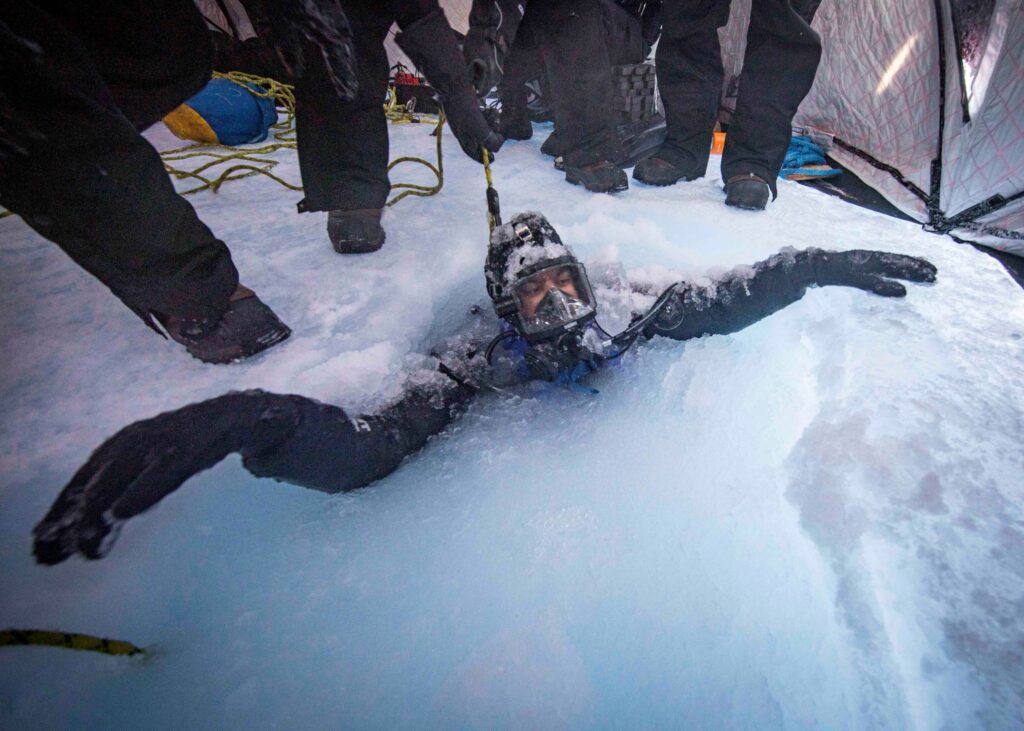
Nick Savage, assigned to Naval Undersea Warfare Center Newport, surfaces from beneath the Arctic ice after successfully retrieving a test torpedo during Ice Exercise 2022. U.S. NAVY / Mass Communication Specialist 1st Class Cameron Stoner

U.S. NAVY ICE CAMP QUEENFISH — The U.S. Navy is concluding its Ice Exercise 2022 this week, wrapping up nearly three weeks of research and training on, above and below Arctic Ocean ice, said Lt. Seth Koenig, commander, Submarine Force Atlantic Public Affairs, in a March 17 release. 

In addition to Ice Camp Queenfish, a temporary encampment built on a sheet of ice 160 nautical miles offshore, the exercise involved two operational Navy fast attack submarines and a support team stationed in Prudhoe Bay, Alaska. 
 
“The Navy maintains a presence on, under and above Arctic waters, and it’s important that we continue to train in this challenging environment to not only stay ready to operate here, but also gain efficiency and look for new ways to innovate,” said Rear Adm. Richard Seif, commander of the Navy’s Undersea Warfighting Development Center in Groton, Connecticut, and ranking officer at ICEX 2022. 
 
“The Arctic is an unforgiving, rapidly changing region. Several chokepoints near or above the Arctic Circle — such as the Bering Strait, Bear Gap between the Norwegian and Barents seas, and the Greenland-Iceland-United Kingdom Gap — are seeing increases in commercial maritime activity,” he continued. “By training in this extreme cold-weather environment, we’re best prepared to rapidly respond to any crises in these regions and ensure common domains in the far north remain free and open.” 
 
Joining the U.S. armed forces for ICEX 2022 were personnel from the Canadian air force and navy, and the United Kingdom Royal Navy. 
 
During ICEX, participating fast attack submarines under the Arctic sea ice fired exercise torpedoes, which Navy divers then recovered from the frigid water. The exercise also provided an opportunity for Navy specialists and civilian scientists to conduct research from the floating ice camp, collecting data on the Arctic conditions and how equipment responds to the extreme temperatures. 
 
ICEX allows the Navy to assess its operational readiness in the Arctic, increase experience in the region, advance understanding of the Arctic environment, and continue to develop relationships with other services, allies and partner organizations. 
 
ICEX 2022 is taking place in the Arctic region at the same time as U.S. Northern Command’s Arctic Edge, a biennial exercise designed to provide realistic and effective training for participants using the premier training locations available throughout Alaska, ensuring the ability to rapidly deploy and operate in the Arctic. Arctic Edge takes place over the course of three weeks and will have approximately 1,000 participants, including U.S. and Canadian service members, U.S. Coast Guardsmen, and government employees from the U.S. Department of Defense and Canada’s Department of National Defence. 


Bollinger Submits Final Proposal to Build Coast Guard Offshore Patrol Cutter 

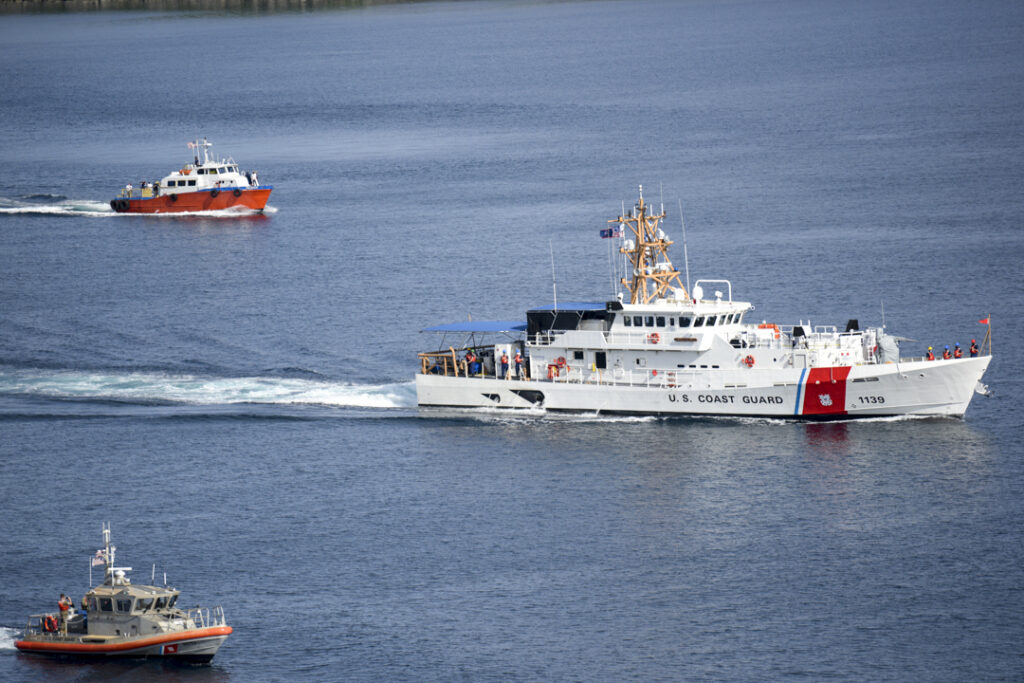
Coast Guard Cutter Myrtle Hazard (WPC 1139), built by Bollinger Shipyards, steams through Apra Harbor before arriving at its new homeport in Santa Rita, Guam, in 2020. U.S. NAVY / Mass Communication Specialist 3rd Class MacAdam Kane Weissman

LOCKPORT, La. — Bollinger Shipyards submitted on March 18 its final proposal to the United States Coast Guard to build Stage 2 of the Heritage-class Offshore Patrol Cutter program. If chosen, Bollinger would construct and deliver a total of 11 vessels to the U.S. Coast Guard over the next decade, helping to sustain the Bollinger workforce through 2031.

The proposal submitted by Bollinger states the construction will occur at its facilities in Houma, Louisiana, a shipyard strategically placed within a 100-year hurricane risk reduction system with direct access to the Gulf of Mexico and without drafts or time-zone differences.

In a new study conducted by the Economics & Policy Research Group at Louisiana State University on the economic impact should Bollinger be chosen to build up to 11 ships for the OPC Program, LSU found the project would create more than 2,700 direct and indirect jobs and generate $7.3 billion in economic output for Louisiana.

“The numbers tell a compelling story — the Offshore Patrol Cutter program would be a major game changer for the state of Louisiana and Bollinger is the right shipyard at the right time to build this platform for the U.S. Coast Guard,” said Ben Bordelon, Bollinger president and CEO. “For over 75 years, Bollinger has been proud to be a major job creator and economic contributor in south Louisiana. To be awarded the contract for OPC would allow us to continue that legacy. It is my hope that we’re able to continue our long partnership supporting the brave men and women of the U.S. Coast Guard.”

Bollinger has been actively involved in the U.S. Coast Guard’s OPC acquisition process, including execution of the Stage 1 Preliminary and Contract Design, where the company was included in the final three shipyards, as well as execution of the OPC Stage 2 industry study. In June 2021, Bollinger submitted its initial proposal to build Stage 2 of the OPC program.

Bollinger has delivered Sentinel Class Fast Response Cutter hulls 1139 through 1148 a total of 180 days ahead of the contract schedule, despite the challenges of the COVID-19 global pandemic and sustaining significant damage from a direct hit by Hurricane Ida, a powerful Category 4 storm.