Russian Air Defenses Working Well When Operated by Ukrainians, ACC Chief Says

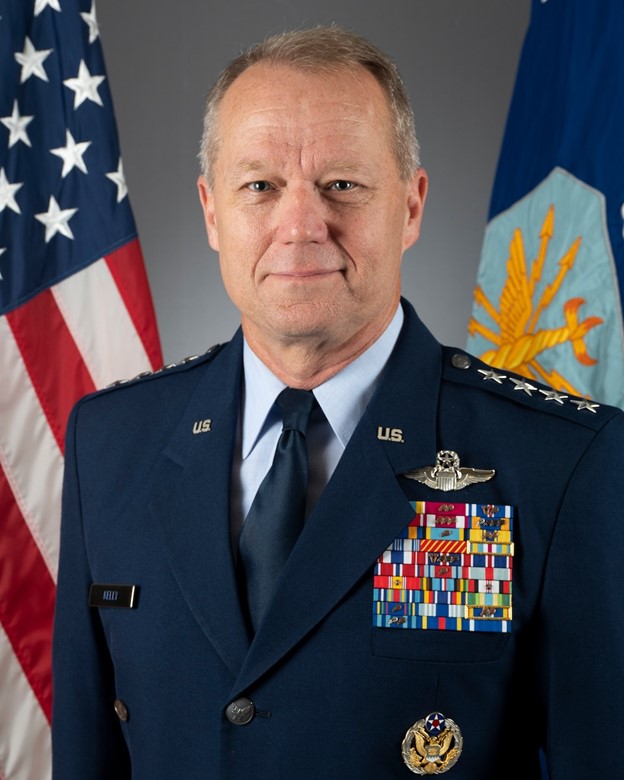
Air Force Gen. Mark D. Kelly, commander, Air Combat Command. U.S. AIR FORCE

WASHINGTON — Air Force Gen. Mark D. Kelly, who leads Air Combat Command, was asked about the capabilities of Russia’s air defense systems since the beginning of Russia’s invasion of Ukraine.  

“They’re operating pretty well when they’re operated by Ukrainians,” he said.

Kelly was one of the presenters at the McAleese & Associates conference in Washington on Wednesday, March 9. Generally speaking, Kelly said Russia does not have an air base defense challenge.

“They operate on layer upon layer upon layer of S-300 and S-400 (anti-air missiles), as well as SA-23s, etcetera,” he said.

Some of these systems are operated by Ukraine. According to Kelly, “The Russian air defense units, operated by the Ukrainians, they’re pretty capable systems.”

In the current war, Kelly acknowledged Russia has faced logistics and moral challenges. Furthermore, they are not used to operating without complete air dominance.

“The Russian air force has not adapted agile combat employment for a couple of reasons. One, in my opinion they’re not capable of doing it; and two, they don’t need to,” Kelly said. “They can operate pretty safe from their main air bases with that layer of defense over them.”

“The Russians themselves, I think — and ‘think’ is a key word — they’re struggling with fighting Russian systems and they’re not adhering to Russian doctrine. And we see the challenge that they have. But we also see the challenge of what happens your joint force is organized, trained, equipped to operate with air superiority, and not remotely designed operate without air superiority, what happens when you don’t have it,” he said.

In the Q&A after his remarks, Kelly commented on the value of the F-35 Joint Strike Fighter, even after all of its weapons have been expended.

Kelly said the F-35 can do significant amount of sensing, including the ground moving target indicator capability inherent to the aircraft.

“Very often, in big ‘Red Flag’ exercises, [the F-35] will expend all its weapons, and where traditionally we would go home once we’d expended all of our weapons, the information that it puts out to the rest of the joint force is so valuable, and with its air sensing ground sensing and data linking, they like to keep it out there to contribute to the rest of the joint force,” he said.


Cost of Critical Metals for Submarine Construction Climbs During Ukraine Crisis

The Bystrinsky Mining and Concentration Plant is the largest greenfield project in the Russian metals industry. WIKIPEDIA / Andrey Kuzmin

WASHINGTON, D.C. — The availability of raw materials and components was a topic of conversation at yesterday’s Submarine Industrial Base Council congressional breakfast in Washington, D.C.

Attendees noted the pandemic’s impact on the supply chain has made just-in-time deliveries virtually impossible. In the case of specialty steel companies, the availability and prices of raw material such as nickel, especially critical for the high-quality steel used in submarine construction, has been particularly troublesome. 

The London Metals Exchange, one of the oldest commodity exchanges, had to suspend trading of nickel because of heavy activity and the concern over Russia’s invasion of Ukraine. Nickel is a critical ingredient in heavy-duty vehicle batteries, stainless steel and other alloys and is vital to many defense-industry products.

Nickel is already in short supply, with inventories available on the LME being reduced by half since October. LME nickel prices more than doubled on Tuesday, March 8, to more than $100,000 per ton. The market panic caused the LME to temporarily stop posting prices for the mineral. Other exchanges have experienced similar activity.

Russia is a major supplier of nickel — about 10% of global output — and Russian company Nordickel is the world’s largest supplier of battery-grade nickel, providing 5%-20% of the world’s supply.

Prices on other commodities like copper, tin, lead and zinc are also higher this week

LME hopes to reopen trading on nickel soon. LME’s website currently states that the exchange has “been continuing to work on the evolving nickel situation, with the intention of ensuring it is able to reopen the market, with trading continuing in an orderly manner, in an appropriate timeframe.”

“The current events are unprecedented,” the LME said in a notice to members.


SECDEF Announces Flag Officer Nominations 

ARLINGTON, Va. — Secretary of Defense Lloyd J. Austin III announced March 9 the president has made the following nominations: 

Navy Rear Adm. (lower half) Jeffrey T. Anderson for appointment to the rank of rear admiral. Anderson is currently serving as commander, Carrier Strike Group Three, Bremerton, Washington. 

Navy Rear Adm. (lower half) Anthony C. Carullo for appointment to the rank of rear admiral. Carullo is currently serving as director, plans and operations, U.S. Naval Forces Europe Sixth Fleet; deputy commander, Sixth Fleet; and commander, Submarine Group Eight, Naples, Italy.   

Navy Rear Adm. (lower half) Richard J. Cheeseman Jr., for appointment to the rank of rear admiral. Cheeseman is currently serving as commander, Carrier Strike Group Ten, Norfolk, Virginia.   

Navy Rear Adm. (lower half) Craig A. Clapperton for appointment to the rank of rear admiral. Clapperton is currently serving as commander, Combined Joint Task Force, Cyber, Tenth Fleet, Fort Meade, Maryland. 

Navy Rear Adm. (lower half) Christopher M. Engdahl for appointment to the rank of rear admiral. Engdahl is currently serving as commander, Expeditionary Strike Group Seven; commander, Task Force 76; and commander, Amphibious Force, Seventh Fleet, Yokosuka, Japan. 

Navy Rear Adm. (lower half) Robert M. Gaucher for appointment to the rank of rear admiral. Gaucher is currently serving as commander, Submarine Group Nine, Silverdale, Washington.  

Navy Rear Adm. (lower half) Nicholas M. Homan for appointment to the rank of rear admiral. Homan is currently serving as director of intelligence, J-2, U.S. Special Operations Command, MacDill Air Force Base, Florida.  

Navy Rear Adm. (lower half) Carl A. Lahti for appointment to the rank of rear admiral. Lahti is currently serving as commander, U.S. Naval Forces, Japan/commander, Navy Region Japan, Yokosuka, Japan. 

Navy Rear Adm. (lower half) John S. Lemmon for appointment to the rank of rear admiral. Lemmon is currently serving as commander, Naval Air Warfare Center, Aircraft Division; and assistant commander for research and engineering, Naval Air Systems Command (AIR-4.0), Patuxent River, Maryland.   

Navy Rear Adm. (lower half) John V. Menoni for appointment to the rank of rear admiral. Menoni is currently serving as commander, Expeditionary Strike Group Two, Virginia Beach, Virginia. 

Navy Rear Adm. (lower half) Thomas J. Moreau for appointment to the rank of rear admiral. Moreau is currently serving as director, Supply, Ordnance and Logistics Operations Division, N41, Office of the Chief of Naval Operations, Washington, D.C.   

Navy Rear Adm. (lower half) William P. Pennington for appointment to the rank of rear admiral. Pennington is currently serving as deputy commander, Tenth Fleet, Fort Meade, Maryland. 

Navy Rear Adm. (lower half) Curt A. Renshaw for appointment to the rank of rear admiral. Renshaw is currently serving as commander, Carrier Strike Group Eight, Norfolk, Virginia.  

Navy Rear Adm. (lower half) Scott F. Robertson for appointment to the rank of rear admiral. Robertson is currently serving as commander, Carrier Strike Group Two, Norfolk, Virginia. 

Navy Rear Adm. (lower half) Milton J. Sands III for appointment to the rank of rear admiral. Sands is currently serving as commander, Special Operations Command Africa, U.S. Special Operations Command, Stuttgart, Germany. 

Navy Rear Adm. (lower half) Christopher J. Sweeney for appointment to the rank of rear admiral. Sweeney is currently serving as commander, Carrier Strike Group Eleven, Everett, Washington.  

Navy Rear Adm. (lower half) Douglas C. Verissimo for appointment to the rank of rear admiral. Verissimo is currently serving as director, Assessment Division, N81, Office of the Chief of Naval Operations, Washington, D.C. 

Navy Rear Adm. (lower half) Michael J. Vernazza for appointment to the rank of rear admiral. Vernazza is currently serving as commander, Naval Information Warfighting Development Center, Norfolk, Virginia. 

The Navy made the accompanying statement:  

“These nominations will ensure the Navy is equipped with capable senior leaders to employ, generate, and design the fleet for combat operations, recognizing that the continued preeminence of U.S. naval power is inextricably linked to the ability to successfully change. To do so, officers with proven sustained superior performance in command leadership positions in difficult and challenging assignments, including those in the diplomatic/foreign service arena were chosen. 

“The board sought innovative and bold leaders who are their own toughest critic, who think creatively, challenge assumptions, and take well-calculated risks to maximize effectiveness. The board selected those officers with superior leadership skills that may be further developed in a variety of assignments across the Navy without regard to community, platform, or career paths to serve as the future leaders of the Navy.” 


CNO Gilday Announces Next Master Chief Petty Officer of the Navy 

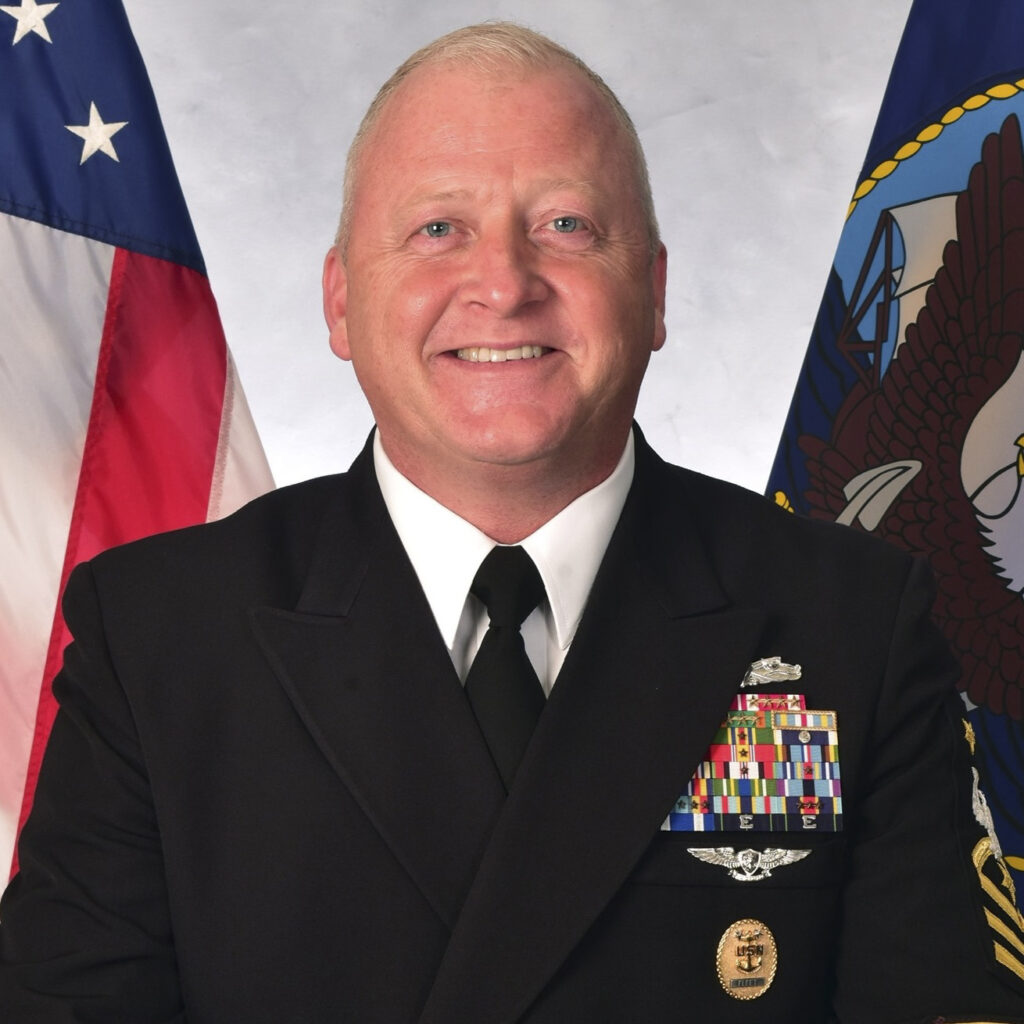
Fleet Master Chief James Honea, selected to be the 16th Master Chief Petty Officer of the Navy. U.S. NAVY

WASHINGTON — Chief of Naval Operations Adm. Mike Gilday announced his selection for the 16th Master Chief Petty Officer of the Navy, during the Navy Flag Officer & Senior Executive Service symposium at the United States Naval Academy on March 10, CNO’s Public Affairs office said in a release.  

Fleet Master Chief James Honea, U.S. Indo-Pacific Command senior enlisted leader, will assume responsibilities from MCPON Russell Smith during a change of office ceremony scheduled for Sept. 8. 

“I selected Fleet Master Chief Honea because he has saltwater in his veins, embodies Navy values in every fiber of his being, and is the right leader to inspire and motivate our Chiefs Mess to continue to be the best in the world,” said Gilday.  “I know he and I will work together to take care of our Sailors and ensure our Navy is the most formidable across the globe.” 

Honea was selected based on career performance, progression and his experience leading Sailors.  According to Gilday, he is the most capable person to advocate on behalf of Sailors, the fleet, and their families.  

During this time of strategic competition, Honea’s fleet experience, which spans nearly every area of responsibility, will help our people to maintain our competitive advantage.  

Honea enlisted in 1987 and rose through the ranks as a Boatswain’s Mate, serving at sea aboard USS Juneau (LPD 10), USS Dubuque (LPD 8), and USS Bonhomme Richard (LHD 6). His command master chief tours include USS Gridley (DDG 1010), USS New Orleans (LPD 18), Naval Support Activity South Potomac and U.S. Naval Forces South Korea.  Most recently he served as fleet master chief of U.S. Pacific Fleet. 

Smith assumed duties as the 15th MCPON on August 29, 2018. 


General Atomics Test Fires Advance Gun-Launched Projectile Interceptor Design 

SAN DIEGO — General Atomics Electromagnetic Systems (GA-EMS) has completed a major test series in collaboration with the Army and Navy to advance the state-of-the-art in gun-launched defensive projectile interceptor designs, the company said March 10.

Identical projectile designs were test fired from a railgun at White Sands Missile Range in New Mexico and a powder gun at Dugway Proving Ground in Utah. The projectiles reached record hypersonic velocities from the railgun launch and tested the projectiles’ guided flight capabilities from both gun systems. GA-EMS delivered projectiles with integrated gun-hardened guidance electronics to test their capability to sustain data links and control trajectory while the projectiles undergo intense G-forces at hypersonic speeds. 

“Close communication among the team members was critical to the outcome of this effort,” said Scott Forney, president of GA-EMS. “We tested significant advancements in our projectile design, demonstrating survivability and good aerodynamic performance at these velocities, while testing guidance capabilities that promise greater precision and accuracy to effectively meet and defeat airborne threats.” 

GA-EMS fabricated and delivered completed projectile assemblies which contain guidance electronics and control actuation systems. GA-EMS worked closely with the US Army Combat Capabilities Development Command Armaments Center and the Naval Surface Warfare Center – Dahlgren Division to perform several test firings. During the first test series, projectiles were launched using the Navy’s 32 megajoule railgun system at the White Sands Missile Range. The second test series fired the same projectile designs from a 120mm powder gun at Dugway Proving Ground 

“We have completed our contract to fabricate, deliver, and test prototype projectiles in railgun and powder gun environments,” Forney said. “GA-EMS continues to develop technologies to bring the most affordable, gun-launched hypersonic and supersonic weapon system capabilities to the future battlespace.”   


HII Appoints Dorsey as VP of Operations at Ingalls Shipbuilding 

Donny Dorsey, the new vice president of operations at Huntington Ingalls Industries’ Ingalls Shipbuilding. HII

PASCAGOULA, Miss. — Global engineering and defense technologies provider Huntington Ingalls Industries has appointed Donny Dorsey as vice president of operations at HII’s Ingalls Shipbuilding division, the company said March 10.

Dorsey, formerly ship program manager for all DDG waterfront efforts at Ingalls Shipbuilding, replaces George Jones, who will retire April 1 after 37 years of service. 

“George’s expertise in shipbuilding has influenced generations of shipbuilders and the capabilities of the shipyard,” said Kari Wilkinson, president of Ingalls Shipbuilding. “We are grateful for his focus on execution excellence and for shaping our ‘shipyard of the future.’ Thank you, George. As we move forward, I am confident that Donny will continue the Ingalls legacy of strong execution and will focus on strategic innovation and transformation as we look to the future.” 

In Dorsey’s new position, he will oversee all manufacturing operations through delivery, across all Ingalls Shipbuilding programs. He will also be responsible for working collaboratively with union partners, cost and schedule performance, process improvements and driving production strategies. 

Dorsey joined Ingalls Shipbuilding in 2000 as a robotic operations technician and spent a portion of his career focused on the Gulfport composite operations for LPD/DDG 1000 serving as quality manager, operations director and then site director. Most recently, Dorsey served in program management with a focus on the DDG 51 class where he and his team managed the installation, test and activation of multiple complex ship systems. 

He holds a bachelor’s degree in management from Nicholls State University, an MBA in project management from Capella University and is a graduate of the Gulf Coast Business Council’s Masters Leadership Program. 


Saab to Provide U.S. Marine Corps with Training Systems  

STOCKHOLM — Saab has received a contract modification from the U.S. Marine Corps within the Force-on-Force Training Systems-Next program, the company said March 9.

The modification value is approximately $122 million USD, where $54 million was booked during 2021. The original contract was announced in June 2021. The contract modification announced today also includes options, which increases the potential total contract value up to $248 million.  

Saab will provide a deployable, live training capability to include equipment for individual Marine weapons and vehicles, as well as logistics, maintenance, and training exercise support.  

The FoFTS-Next program will include U.S. Marine Corps Training Instrumentation Systems equipment for up to 10 battalion training sets, and the establishment of support operations at various Marine Corps Installations.  

“The deployable and expeditionary MCTIS capability is an advanced training solution that will ensure Marines train and learn in the most realistic environment. The system will enhance Marines’ performance and survivability on the battlefield by developing and reinforcing proper tactics, techniques, and procedures. Saab is proud to be the U.S. Marine Corps training partner for the next generation of Marine warfighters,” said Erik Smith, president and CEO of Saab in the United States. 

The expeditionary MCTIS capability is the premier land-based live training capability in the world and is fully interoperable with the land forces training of more than 30 NATO and partner nations. 


Aquilino: Fuel Logistics to Be Dispersed in Wake of Red Hill Closure 

Secretary of the Navy Carlos Del Toro and General Counsel, Department of the Navy John P. “Sean” Coffey receive a brief on well operation and recovery initiatives from Capt. Burt Hornyak, commanding officer, Fleet Logistics Center Pearl Harbor during a tour of the Red Hill Well in Aiea, Hawaii, in February. U.S. NAVY / Mass Communication Specialist 2nd Class Chelsea D. Meiller

WASHINGTON — The commander of U.S. forces in the Indo-Pacific region addressed concerns from Congress about the impact of the closure of the Red Hill fuel depot in Hawaii during March 9 testimony on Capitol Hill. 

Rep. Mike Rogers, ranking member of the House Armed Services Committee, said in his opening remarks that Navy Secretary Carlos Del Toro’s decision to close Red Hill was made “without laying out the resources to replace that capacity. That’s extremely short-sighted. The response from the department has been the same: the answer is just one policy announcement away. And that’s unacceptable.” 

Rogers told Adm. John C. Aquilino, commander, U.S. Indo-Pacific Command, that “he wanted to hear how Indo-Pacific Command will implement new operational concepts and new systems to ensure that logistics support at new operating locations throughout the Indo-Pacific. 

“But most importantly, I want to know how you intend to do that in the next five years,” Rogers said. “We all know China is not going to give us 10 to 20 years to prepare for conflict. We simply cannot procrastinate any further. The issue like Red Hill presents an opportunity to modernize beyond the World War II logistics model. But I’m deeply worried about the cycle of indecision and procrastination at the Pentagon.” 

Aquilino said that as senior leadership looked at options with regard to Red Hill, three criteria had to be met: clean water for the people of Hawaii, service members and their families; meeting the war plan and warfighting requirements; and cost. 

“We developed a plan that actually goes in alignment with a more distributed plan — both forward- and land-based — combined with a sea-based component to allow for a more distributed, survivable, resilient network of fuels, as well as meeting all of the security and the strategic fuel reserve requirements,” the admiral said. “I actually think that we’re going to be in a better place, and we meet all three requirements.” 

Aquilino said the Department of Defense, the Environmental Protection Agency and the Hawaii Department of Health are working together toward a solution. 

“We will go as fast as safe allows,” he said. “We have to make sure the facility is safe, to transfer that fuel into places that we’re going to end it, but we’re certainly not waiting. As soon as we can get it done, we’ll be ready to move, and as soon as we’re able to contract some of those other facilities, as well as the sea-based option.”

The Defense Department had announced the Red Hill facility would be closed within the year. 

“That just allows us to be able to distribute that fuel with the contract requirements, the sea-based requirements, and the need to put it in the correct spots,” Aquilino said. 


FRCSW Inducts Its First CMV-22 to Suffer Mishap 

The VRM-30 CMV-22 Osprey inducted by FRCSW on January 13 is pictured in Building 333. The inner composite skin of the aircraft suffered a four-foot by two-foot crack during a mishap. FRCSW, FST, PMA-275 and industry partners developed a repair plan to return the aircraft to its squadron. U.S. NAVY

NAVAL AIR STATION NORTH ISLAND, Calif. — Fleet Readiness Center Southwest artisans and the Fleet Support Team recently joined industry partners and the V-22 Joint Program Office (PMA-275) to prevent the loss of an CMV-22 Osprey aircraft which had suffered damage during a mishap, the center said March 8. 

The right-hand inner composite skin of the $75 million aircraft sustained a four-foot by two-foot crack with other, but minor, composite damage. 

“A lot of people would have said, `Hey, we need to strike this aircraft,’ but the engineers at the FST and our industry partners decided to figure out a way to keep this asset in the fleet,” said Col. Brian Taylor, PMA-275 program manager. 

John Sandoval, sheet metal mechanic work lead, said the repair required replacing the inner skin panel. 

“We’ve removed over 1,200 fasteners separated by over 42 feet of composite inner skin to composite outer skin,” he said. “This proved to be difficult because this is the first of its kind repair.” 

The V-22 is unique to other airframes serviced by the command because of its aluminum, carbon/epoxy composite fuselage and empennage. Its wings and nacelles are also composite and fiberglass. 

The aircraft, assigned to Fleet Logistics Multi-Mission Squadron 30 (VRM-30), was inducted by FRCSW on Jan. 13 as an in-service repair, or repairs outside of scheduled maintenance. 

“This is the first major ISR and first mishap aircraft my team has performed on a CMV-22,” said Michael Dixon, FRCSW V-22 production manager. 

He said the labor-intense repair would require about 70 days and more than 2,800 man-hours to complete, with sheet metal work taking most of those hours. 

In addition to four sheet metal mechanics, other artisans needed to ensure a successful repair include electricians, mechanics, quality assurance and planner and estimator personnel. All will work in conjunction with engineering departments from the FST and Boeing. 

“These capabilities are what really makes Naval Air Systems Command, the FST and the PMA-275 program so incredibly important to this community because we have the ability to take care of our own stuff and keep these assets in the fight,” Col. Taylor said. 

“The planning department estimated the repair will cost $390,500. Currently, we are tracking to complete the repair on schedule and under budget,” Dixon added. 

The Osprey will be returned to VRM-30 when complete. In the meantime, a safety investigation relating to the mishap is underway. 


Cutter Steadfast Returns Home Following Migrant-Interdiction, Counter-Narcotics Patrol 

The Coast Guard Cutter Steadfast crew conducts cutter boat pursuit training with a crew from the Coast Guard Cutter Forrest Rednour on Feb. 8. U.S. COAST GUARD

ASTORIA, Oregon. — The Coast Guard Cutter Steadfast (WMEC 623) and crew returned to the cutter’s homeport in Astoria March 7 after a 48-day patrol of the California coast, the cutter’s crew said in a release. 

The 54-year-old cutter and crew conducted drug and migrant interdiction, living marine resource protection and search and rescue operations along the U.S.-Mexico maritime border. 

The Steadfast crew coordinated with Customs and Border Protection, Coast Guard aircraft and Mexican Navy vessels to interdict three boats suspected of attempting to illegally transport migrants into the United States, resulting in the safe recovery and repatriation of 75 people. 

Additionally, the crew boarded 23 U.S. vessels operating in the area and participated in a multi-asset search operation following a flare sighting. 

“This was a challenging yet successful patrol for the crew of Steadfast, highlighting the important interagency effort required to secure our maritime borders,” said Cmdr. Craig Allen, commanding officer of the Steadfast. “It was rewarding to work alongside our many partners during the patrol, including Customs and Border Protection, U.S. Border Patrol, and both Mexican and U.S. Navy assets.” 

The Steadfast’s permanent crew makeup is 63 enlisted personnel and 12 officers. To aid in this patrol, the permanent party welcomed multiple temporary duty members from across the nation, including: Petty Officer 1st Class Bradley Kwasny and Petty Officer 2nd Class Christian Matranca, both from Maritime Safety and Security Team San Francisco; Petty Officer 2nd Class Aaron Holroyd from Training Center Yorktown,Virginia; and Lt. Ryan Guinee from the Surface Forces Logistic Center – Patrol Boat Product Line in Seattle. 

“We had a top-notch team on this patrol, and I’m especially proud of them for overcoming some difficult equipment casualties that were necessary to keep the 54-year-old cutter mission capable,” Allen said. “The crew achieved noteworthy results due to superb skill and professionalism. We’re also thankful to the men and women at Coast Guard Sector Los Angeles for the excellent support they provided during multiple port visits.” 

Commissioned in 1968, the Steadfast is a 210-foot Reliance-class medium-endurance cutter homeported in Astoria and routinely deploys in support of counter-drug, migrant interdiction, fisheries, and search and rescue and homeland security missions.