Official: Navy Seeks Integration of Combat Systems Across the Fleet
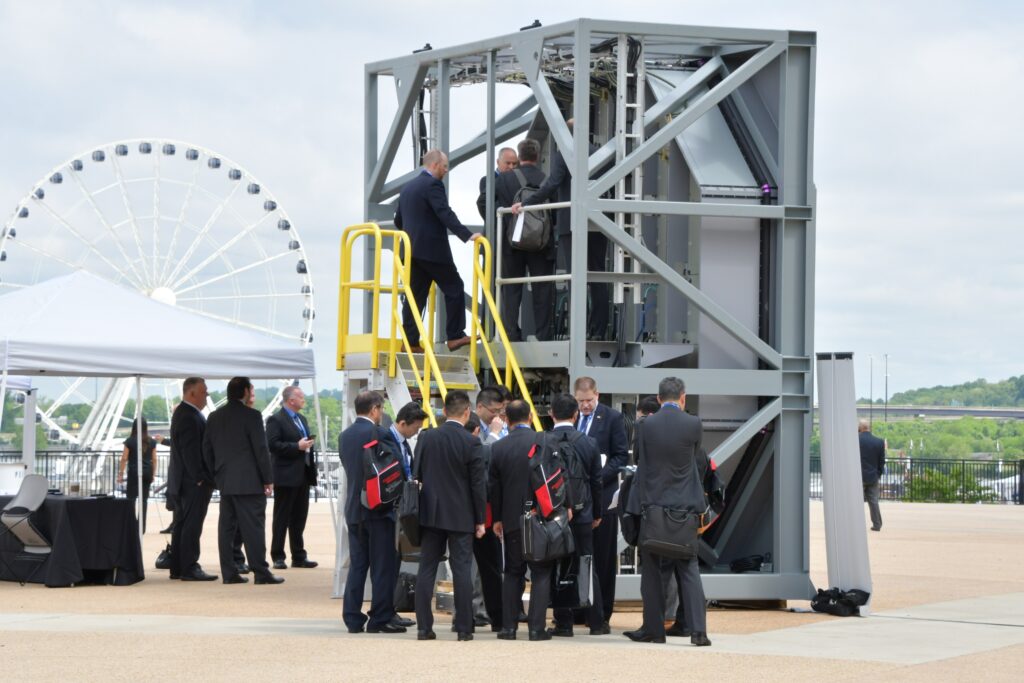
A SPY-6 radar displayed at the Navy League’s Sea-Air-Space Exposition in 2019. RAYTHEON TECHNOLOGIES

ARLINGTON, Va. — A senior Navy program executive said that the service is moving toward integration of combat systems across the fleet to achieve commonality of sensors and weapons and the benefits derived from fielding common and scalable systems. 

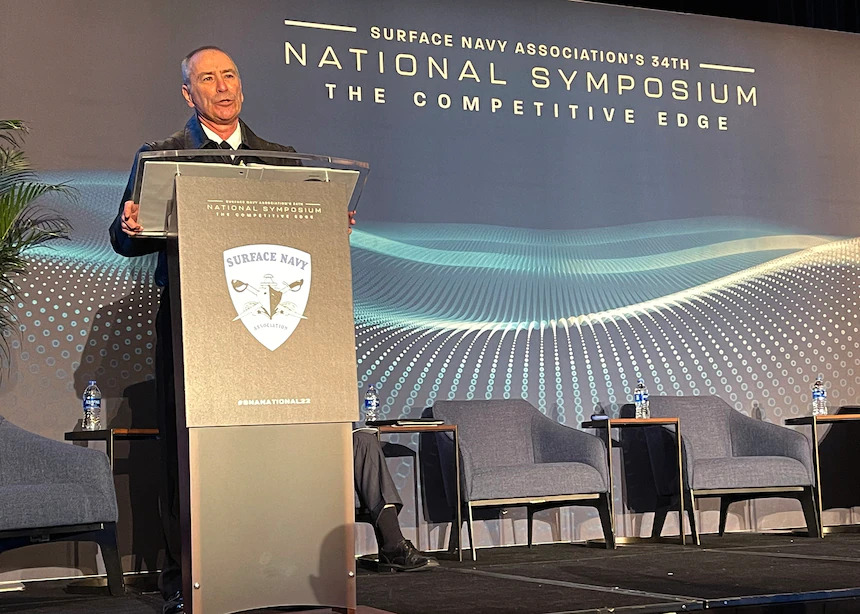
Bob Shevock, executive director of Program Executive Office – Integrated Warfare Systems, speaking Jan. 13 at the Surface Navy Association’s annual symposium in Arlington, used the Raytheon-built SPY-6 radar as an example of commonality and scalability across numerous ship classes that would yield benefits in cost and sustainment. 

The SPY-6 Air and Missile Defense Radar, being installed on the Flight III of the Arleigh Burke-class guided-missile destroyers, is also scalable into the three versions of the SPY-6 Enterprise Air Search Radar which will be installed in various configurations on most aircraft carriers plus amphibious assault ships, amphibious transport dock ships and guided-missile frigates, as well as some Flight IIA Arleigh Burke-class guided-missile destroyers, replacing a number of legacy radars. 

Another example cited by Shevock is the SM-6 Standard missile, which is a refined development of a surface-to-air missile into a more versatile tactical missile with anti-ship capabilities and “a multitude of missions,” Shevock said. 

He also cited the SLQ-32 Surface Electronic Warfare Improvement Program, the RIM-62 Evolved SeaSparrow Missile and the RIM-116 Rolling Airframe Missile “being integrated across a multitude of different platforms.”   

He listed common technology, common parts, similar interfaces and similar training as benefits of the commonality.

Overarching Combat System 

Development and proliferation of an integrated combat system is another part of the Navy’s strategy, with the ultimate goal, he said, of an overarching combat system across the fleet, with the first step being an integrated combat system across platforms. 

The beginning of that first step, Shevock said, would be the merging of the Aegis Combat System — the combat system built by Lockheed Martin and installed on cruisers, destroyers and soon the future Constellation-class frigates — with the Surface Ship Defense System, the combat system built by Northrop Grumman and installed on many aircraft carriers and amphibious warfare ships.  

“That really give us the leverage when we have those common combat systems to scale up to where we really have an overarching integrated combat system across the fleet and across the battle group,” he said. 

Shevock reminded the audience of the original five cornerstones of Aegis: reaction time, power, availability, coverage and environmental immunity. 

“After 40 years, it’s about time to add another cornerstone, and that’s agility,” he said. “We know we’re going to very quickly identify, assess and develop and deliver improvements to our Integrated Combat System to respond to the changing threat characteristics at performance, speed and scale. This ICS is going to enable us to achieve that cornerstone.” 

Shevock’s program executive office has established a new program office, IWSX, responsible for planning and implementing the ICS.   


Navy Ship Construction, Repair Hampered by Lack of Suppliers, Skilled Workers

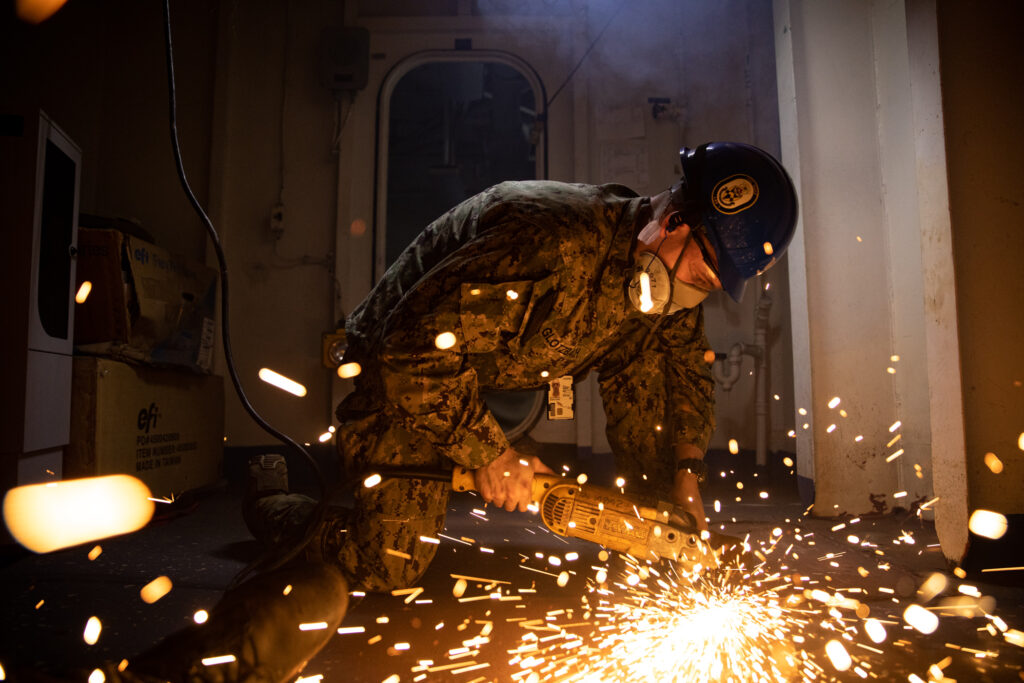
Mass Communication Specialist 3rd Class David Glotzbach grinds deck braces aboard the amphibious assault ship USS Wasp (LHD 1), July 22, 2021. Wasp was in a dry-dock selected restricted availability at BAE Shipyards as part of a planned maintenance period. U.S. NAVY / Mass Communication Specialist 2nd Class Benjamin F. Davella III

ARLINGTON, Va. — A senior Navy shipbuilding executive said some weaknesses in the ship construction and repair enterprise is hampered nationally by a shrinking supplier base and a lack of skilled workers.  

“Material availability is a challenge,” said Matt Sermon, executive director of the Program Executive Office – Strategic Submarines, speaking Jan. 13 at the Surface Navy Association’s annual symposium in Arlington. 

A former nuclear-trained surface warfare officer, Sermon said for new construction of ships, schedule and quality of material is an issue, calling material among the top issues driving schedules affecting ship repair availabilities and new construction progress.  

Sermon said the end of the Cold War and the resulting so-called “peace dividend” in the early 1990s through the current era meant the number of suppliers for the submarine industrial base declined from 17,000 to 5,000, with submarine construction at a rate of less than one per year. He noted an analogous decline for surface ship construction, with the slow rate of destroyer construction and the completion of cruiser and frigate construction programs.  

Globalization of industrial production also reduced the capacity of the U.S. industrial base, he said. Unlike two build-ups in response to large demand in the past, the current great power competition with the rise of China and Russia is trying to respond in the face of significant loss of commercial industrial base available to turn to defense production. 

Regarding the strategic competition, Sermon said, “we weren’t on the front end of it and we’re dealing with that now.” 

His list of fragile market sectors includes castings, forgings, fittings, valves, mechanical and electrical equipment. 

Sermon also said, “we’re a little slow to adapt on technology when it comes to manufacturing,” including additive manufacturing, robotics and automation and non-destructive testing technology. 

He also said some requirements need “some updating and some rethinking, and some innovation,” but the use of data analytics and artificial intelligence is helping address delays and shortages 

Sermon stressed the United States no longer has the “high-skilled technical-trade workforce underlying foundation,” a condition he attributed to the service economy and the emphasis on a college education for young people.  

Throughout the shipbuilding and repair sectors there is a pressing need for more workers with the right skills, including welders, fitters, machinists, and electricians, he said, although industry partnering with technical training schools to train new workers is helping the situation. 


Caudle: Russian, Chinese Submarine Threat Taken Seriously

A P-8A Poseidon multi-mission maritime patrol and reconnaissance aircraft flies over the guided-missile destroyer USS Porter (DDG 78) during a photo exercise in 2020. U.S. NAVY / Mass Communication Specialist 2nd Class Juan Sua

ARLINGTON, Va. — A senior Navy admiral said the U.S. Navy takes seriously the increasingly lethal submarine forces of Russia and China but that the U.S. Navy is increasingly able to counter that threat. 

“Make no mistake about it: submarines are lethal,” said Adm. Daryl Caudle, commander U.S. Fleet Forces Command, speaking Jan. 12 at the Surface Navy Association’s annual symposium in Arlington. “They are really, really good at what they do — China and Russia. They are quite motivated. … It is a major threat vector for us.” 

Caudle said he is happy to report that the Russian and Chinese submarine threat is taken seriously. 

“I don’t think any time in my history have I ever seen undersea warfare taken as a team sport more so than in this current stage,” he said. “It is practiced, it is command and controlled properly now, it is through a spectrum. It is not uncommon that our surface forces are holding contact on enemy submarines for a majority that we hold contact. The cueing and the ability to vector in MPRA [maritime patrol reconnaissance aircraft] to gain contact has probably never been better than it is now. 

“So, this full-spectrum approach that has been going on I quite healthy,” Caudle said, noting that it is easy for a ship to worry about weapon-engagement zones “and the next thing you know there’s going to be two torpedoes there that you didn’t predict. 

“So, we need to be very wide-eyed about that threat,” he said. “I think we are, and I think we’re going the right way, and that’s being well-practiced.” 

Caudle also noted the “Holy Grail” of undersea warfare since the development of nuclear-powered submarines which could stay submerged for long periods has been effective command and control of the submarines. 

“We’ve grown over time to be very mission-command oriented,” he said. “But you’ve still got to communicate because you’ve got to mass the effects at the right place and the right time.” 

He said communicating with submarines at depth and speed is a full-spectrum effort with systems on board surface ships, MPRA, submarines, fixed systems and with partners and allies. 

“Essentially, we’re getting the oceans and areas of interest wired to communicate with submarines,” he said, noting the systems allow the brevity needed to assure communications security so submarines can avoid coming to periscope depth to communicate. 


Rep. Gallagher: Navy Must be Ready to Counter China if Taiwan Is Attacked

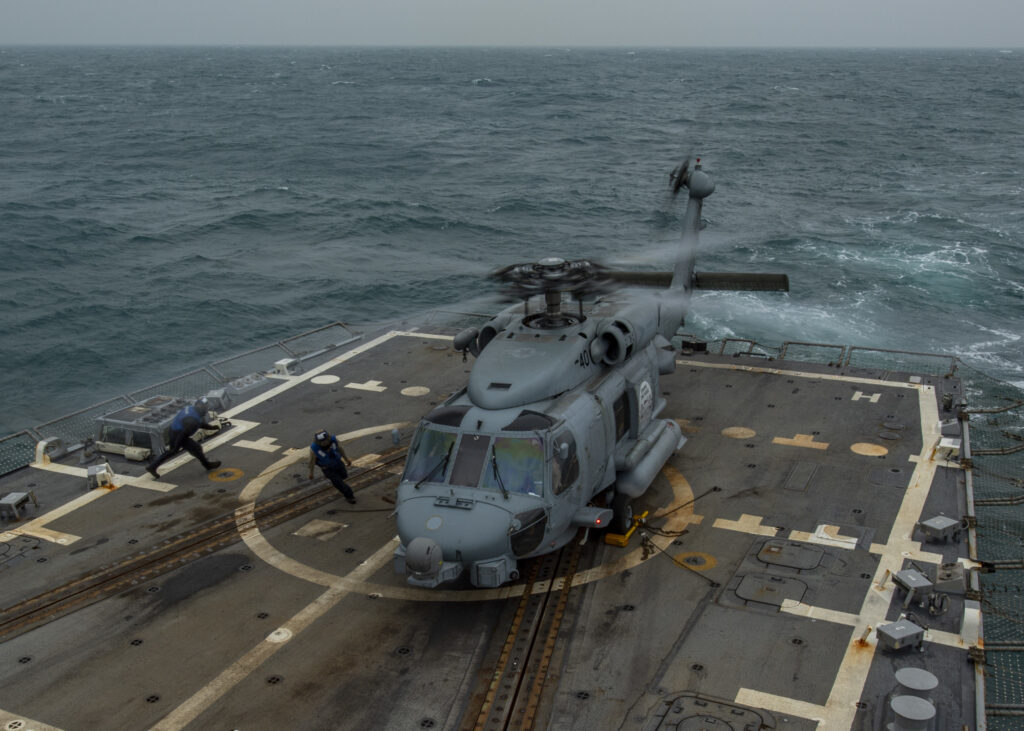
U.S. Navy Boatswain’s Mate 3rd Class Nicholas Rodriguez, right, and Boatswain’s Mate Seaman Tony Williams move in to remove chocks and chains from an MH-60R Sea Hawk on the flight deck of the USS John Finn (DDG 113) March 10, 2021, in the Taiwan Strait. U.S. NAVY / Mass Communication Specialist 3rd Class Jason Waite

ARLINGTON, Va. — A member of Congress on the House Armed Services Committee said the Navy must be ready by 2025 to counter a Chinese invasion of Taiwan. 

Citing the assertion of former commander of Indo-Pacific Command, Adm. Phil Davidson, that China could move against Taiwan by 2025, Rep. Mike Gallagher (R-Wisconsin), speaking Jan 12 at the Surface Navy Association’s annual symposium in Arlington, said the Unites States “must prepare for the reality that war that starts in the territorial waters around Taiwan may not stay there.” 

Gallagher was critical of the concept of integrated deterrence in that it fosters a false hope that soft power can deter a determined enemy. 

“My concern is that integrated deterrence is the latest in a series of Pentagon buzzwords that ultimately serve as a smoke screen for dis-investing in defense and making do with a force that is too small to meet global requirements,” he said. “This jargon provides pseudo-intellectual cover for political leadership that is too weak or too distracted to give the military what it needs to execute its missions and to make hard choice between military services that might actually free up resources for the main effort: deterring China from invading Taiwan.”  

He praised his colleague Rep. Elaine Luria (D-Virginia), also speaking at the symposium, for her “tracing the historical pattern of these calls for ‘divesting to invest.’” 

“What we need to integrate into deterrence is more conventional hard power: more ships, more long-range missiles, more long-range bombers in the Indo-Pacific, things that will make the PLA [People’s Liberation Army] think twice,” he said. 

“Betting on tomorrow’s transformative technology probably makes less sense than fielding reliable technologies that work today,” he said.  

Gallagher offered a few suggested initiatives to improve the Navy’s position versus China: 

  • Using American territories such as Guam, Wake, and Midway to host long-range anti-air and anti-surface weapons and intelligence, surveillance and reconnaissance assets or serve as logistics nodes. 
  • Hardening existing defenses in the island chains. 
  • “Creatively use existing platforms and systems so they can better contribute to the 2025 near-term fight.” 
  • Building a larger Navy, though he noted that ships authorized this year are not likely to be ready for combat by 2025. 

He warned that the current unavailability of the Red Hill fuel farm in Hawaii was “unacceptable” and must be restored to operation. He termed it as “the beating heart of America’s Pacific posture.” 

Gallagher — in whose district some littoral combat ships and frigates are built — listed some near-term initiatives that could improve the Navy’s posture in the Pacific. 

  • Use littoral combat ships as stop-gap craft to enable distributed operations until the light amphibious warship comes on line. 
  • Put Marine anti-ship missiles on board littoral combat ships for expeditionary operations. 
  • Use the LCS as “mother ship for unmanned swarms” and as a command-and-control node. 
  • Use cruisers and early DDGs slated for retirement as missile barges and as missile-defense ships for harbors to keep valuable VLS [vertical launch system] cells “in the game” or for conventional prompt strike 

Gallagher also said the Navy needs to move out on the DDG(X) next-generation destroyer and the Department of the Navy should commit to building two large surface combatants per year for 10 years. 

He asserted that the only short war for Taiwan would be a Chinese victory. 

“So, if we’re going to win, we have to buy time to mass assets in the region while denying a Chinese invasion,” he said. “I’m concerned that our planning has not caught up to that reality.” 

He advocates the re-establishment of U.S. Taiwan Defense Command to “fully integrate wartime planning with Taiwan.” 


USCG Commandant: COVID, Design Complexity Added Construction Delays to Polar Security Cutter

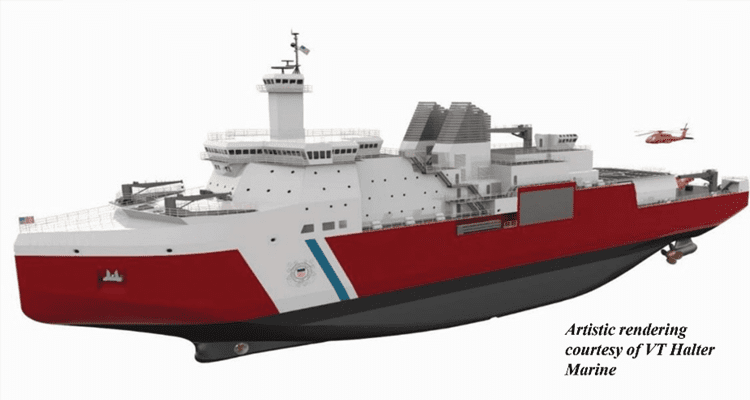
A rendering of the U.S. Coast Guard’s forthcoming Polar Security Cutter. U.S. COAST GUARD

ARLINGTON, Va. — The coronavirus pandemic and the complexity of building the first U.S. heavy ice breaker in nearly 40 years were among the reasons for another year’s delay in the expected delivery of the Polar Security Cutter, Coast Guard Commandant Adm. Karl Schultz said Jan. 12.

“We have publicly stated that the delivery date for Polar Security Cutter number one is going to be May 2025, so it slipped about a year,” Schultz told an audience at the Surface Navy Association’s annual symposium in Arlington. Originally, officials thought the PSC program of record for three heavy ice breakers, with two already fully funded, would begin rolling vessels starting in 2023.

“It’s just a complex thing. COVID really layered in some challenges there,” Schultz said, adding that the United States hasn’t built a heavy ice breaker “in the better part of four-plus decades.“ He noted the new vessel requires “complex steel work that shipyards don’t necessarily do every day.” There also were some issues with international partnerships.

The operational U.S. polar icebreaking fleet currently consists of one heavy polar icebreaker, Polar Star, built in 1976, and one medium polar icebreaker, Healy, which is also used for polar research.

“It’s tough to be an Arctic nation when you have one heavy [ice] breaker that’s almost 50 years old and one medium breaker that’s really science,” Schultz said.

Since the 2013 U.S. National Strategy for the Arctic Region described the United States as “an Arctic Nation with broad and fundamental interests,” the Coast Guard, Navy and other armed services have developed strategies for operating in the northern polar region. Melting sea ice has turned the top of the world into a potential economic, diplomatic and military flash point as sea lanes have opened up  increased commercial sea lanes in summer to large cargo ships, fishing fleets, oil and gas exploration and tourism.

“I think the goal right now would be to continue to work with the Navy Integrated Project Office, continue to work with the shipbuilder, finish up the complex, detailed design and start cutting steel here in 2022,” Schultz said, adding ”I think if we stay at that track line, I am guardedly optimistic we’ll take delivery of that ship in 2025 and be off to the races.”

In the meantime, Schultz said the Coast Guard has been sending its larger cutters into the high latitudes to participate in exercises with partners like France, Canada, Denmark and the United Kingdom.

“It’s one of those places where very few of the Arctic nations, outside of Russia have a whole lot of capacity, Schultz said, noting that Russia currently holds the chairmanship of both the Arctic Council and the Arctic Coast Guard organization.


Heliborne Electronic Warfare Pod Set for Delivery to Navy in Summer 2022

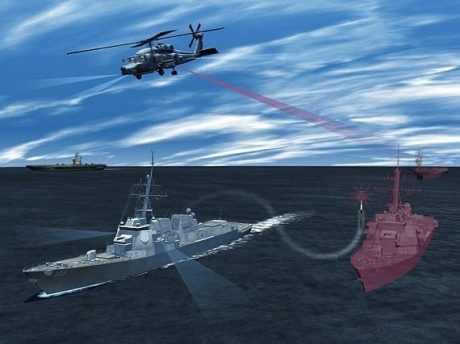
An artist’s conception of the AOEWS at work. LOCKHEED MARTIN

ARLINGTON, Va. — Lockheed Martin expects to deliver the first production pods of a heliborne electronic warfare system to the Navy this summer. 

Joe Ottaviano, director, Maritime & Air Cyber/Electronic Warfare for Lockheed Martin, told reporters Jan. 11 at the Surface Navy Association’s annual symposium in Arlington that Lockheed Martin has completed flight testing of the Advanced Off-Board Electronic Warfare (AOEW) System and expects to deliver the first low-rate initial production examples to the Navy in July or August 2022. 

The ALQ-248 AOEW is a self-contained pod designed to be taken aloft by an MH-60R or MH-60S Seahawk helicopter and serve as an offboard electronic attack system to counter anti-ship cruise missiles. The AOEW will be able to detect an incoming missile, evaluate its direction and use radio frequency countermeasures to deter the missile.  

The pod can be attached to either side of the helicopter, which provides power and mobility for the pod, but the pod’s operation is independent of the helicopter crew and linked to the SLQ-32(V)6 shipboard electronic warfare system. The AOEW can work independently or with the ship’s onboard electronic surveillance sensor, SEWIP Block 2, to detect an incoming missile and then evaluate where it is going. 

The AOEW will be linked in the future to the SLQ-32(V)7 with the Block III version improvements of the Surface Electronic Warfare Improvement Program.  

In September 2021, the Naval Sea Systems Command awarded to Lockheed Martin Rotary and Mission Systems, Liverpool, New York, a $17.8 million firm-fixed-price contract modifications exercise options for AOEW LRIP units.  

The Navy initially ordered four engineering and manufacturing development models for evaluation that were delivered by early 2020. 


UK Royal Navy takes NATO Response Force Helm, with Carrier as Flagship

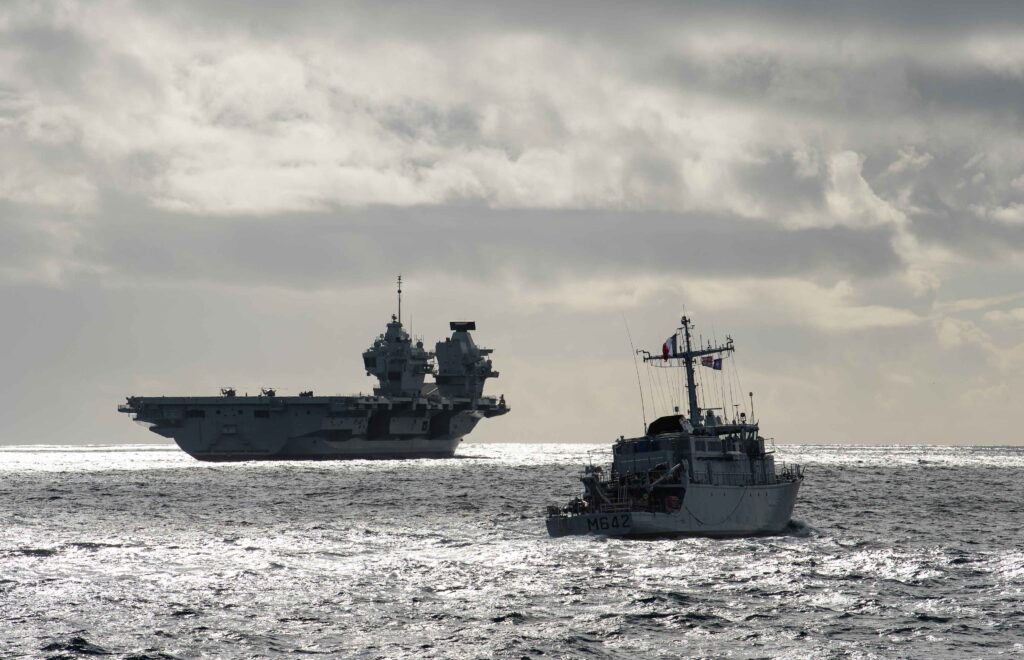
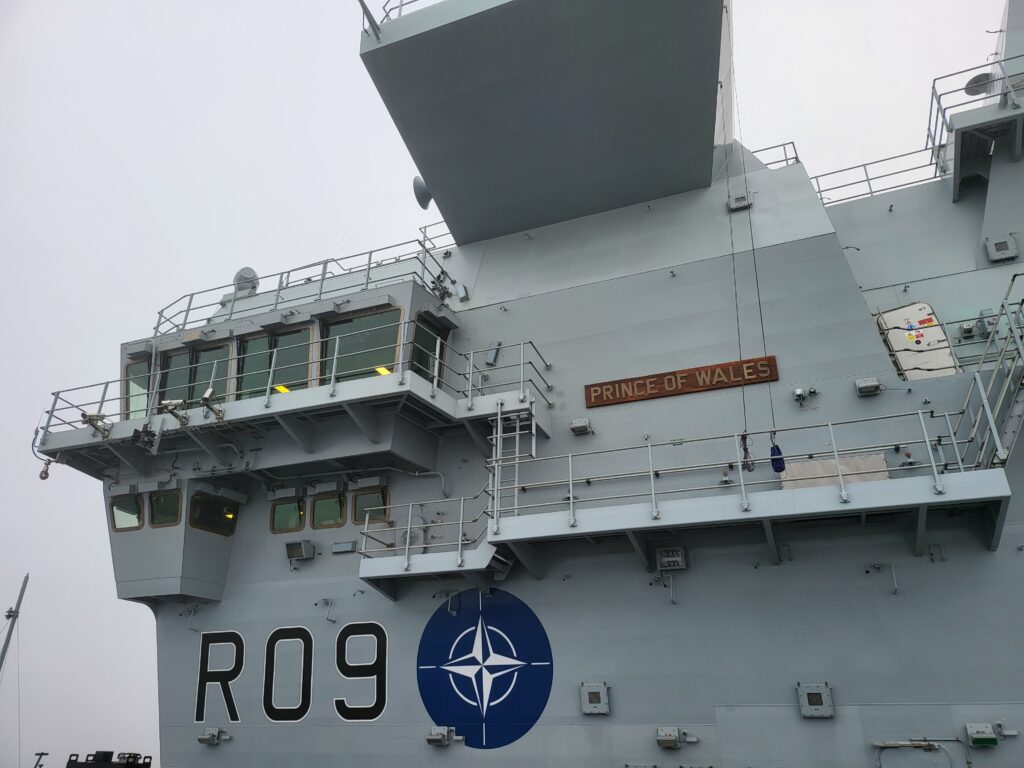
The UK Royal Navy aircraft carrier HMS Prince of Wales is pictured at sea, working with NATO task groups, during the alliance’s Dynamic Mariner exercise off the United Kingdom in late September 2021. The exercise was part of the certification process for the U.K. taking command of the NATO Response Force (Maritime) for 2022. NATO MARITIME COMMAND

The UK Royal Navy has taken command of the NATO Response Force (Maritime) task force, with a transfer-of-command ceremony held onboard the U.K. aircraft carrier HMS Prince of Wales at HM Naval Base Portsmouth, U.K. on Jan. 11.

NRF-M command rotates annually and the U.K. has handed over from the French navy. Under Rear Adm. Michael Utley, commander, U.K. Strike Force and NATO high-readiness maritime force commander, the U.K. will have the helm for 2022, with Prince of Wales as flagship in the role of afloat command platform.

In the ceremony onboard the carrier, the ship’s commanding officer, Capt. Steve Higham said as Prince of Wales begins its service life, it was “entirely fitting that we start that journey as a NATO aircraft carrier.” During 2022, Prince of Wales will lead maritime task groups across the Euro-Atlantic theatre, including in the Arctic and the Mediterranean. The carrier will also remain at very high readiness to respond as required to contingency operations.

Sister carrier HMS Queen Elizabeth deployed to the Indo-Pacific during its own inaugural deployment, between May and December 2021.

“If [that] deployment was a manifestation of our Prime Minister’s ‘Global Britain’ vision, then Prince of Wales’ year as a NATO command platform is a clear statement of intent by our government of the U.K.’s equally important and steadfast commitment to NATO,” Higham said. The U.K. is resolute and enduring in its commitment to security, stability, and peace in the Euro-Atlantic theater, he added.

Prince of Wales is pictured carrying the NATO roundel. The carrier will operate as flagship and afloat command platform for NRF-M. LEE WILLETT

Integrating U.K. carrier strike capability with NATO, the carrier and its multinational battle staff will work with ships, aircraft, submarines and drones from allies and partners, the CO said.

In a media briefing onboard Prince of Wales prior to the ceremony, Higham said, in the context of challenges posed by potential adversaries, “the great advantage for us is that we will be working with partners and allies from across the NATO alliance, and that strength in depth is what gives us the real edge.”

The carrier will embark airwing and other capabilities as required for specific operations.

“My job as the CO of Prince of Wales, as the flag captain, is to make sure this deck is ready to receive helicopters, aircraft and drones from across the NATO alliance, and be ready to work alongside ships and submarines from our partners and allies,” he said. The job of a command platform is to be flexible and ready to respond, he added.

Higham noted that the ship had received an uplift in command-and-control capability to enable interoperability with NATO partners.

The 65,000-ton carrier was commissioned in December 2019, was declared fully operational on Sept. 30, 2021, and spent much of 2021 in operational generation for the very-high-readiness role as Naval Response Force -Maritime flagship.


HII Achieves Significant Light-Off Milestone aboard First Flight III DDG

Ingalls Shipbuilding electrician Joe Ditsworth and electrical foreman Lisa Avery initiate light-off of the Aegis Combat System aboard Jack H. Lucas (DDG 125) in the ship’s combat information center. INGALLS SHIPBUILDING / Luis Solis

PASCAGOULA, Miss. — Huntington Ingalls Industries’ Ingalls Shipbuilding division recently achieved the Aegis light-off milestone on the Navy’s first Flight III Arleigh Burke-class guided missile destroyer Jack H. Lucas (DDG 125), the company said Jan. 12.

This milestone marks the beginning of combat system testing as shipbuilders ready the ship for propulsion tests and eventually sea trials. 

“I am again very proud of our DDG 51 team and the work they have done,” said Kari Wilkinson, Ingalls Shipbuilding president. “Not only have they completed a significant program milestone aboard the first Flight III destroyer, but they have done so in the face of a pandemic. This team continues to prove it’s as strong as the ships it builds.” 

The Flight III upgrade incorporates a number of design modifications that collectively provide significantly enhanced capability. Aegis light-off is an important milestone for integrating and activating all of the new electric plant equipment and combat systems. 

“Through perseverance, a good plan, execution of that plan and relentless follow up, our shipbuilders have reached ALO,” said Jeff J. Davis, DDG 125 construction manager. “There is a huge collaboration effort between Ingalls, the Navy, industry partners and multiple other contractors.” 

Arleigh Burke-class destroyers are highly capable, multi-mission ships and can conduct a variety of operations, from peacetime presence and crisis management to sea control and power projection, all in support of the United States military strategy. Guided missile destroyers are capable of simultaneously fighting air, surface and subsurface battles. The ship contains a myriad of offensive and defensive weapons designed to support maritime defense needs well into the 21st century. 


CNO to Elevate Navy Safety Center to a Two-Star Command

A helicopter from Helicopter Sea Combat Squadron 3 combats a fire aboard the amphibious assault ship USS Bonhomme Richard (LHD 6). U.S. NAVY / Mass Communication Specialist 1st Class David Mora Jr.

ARLINGTON, Va. — The chief of naval operations is increasing the focus of the Navy on safety in its operations by elevating the Naval Safety Center to a full command. 

CNO Adm. Michael Gilday, speaking Jan. 11 to an audience at the Surface Navy Association’s annual symposium in Arlington, said the Naval Safety Center in Norfolk, Virginia, would be redesignated the Navy Safety Command and its commander would be a two-star admiral with experience as a carrier strike group commander. 

“That command will evaluate how the entire Navy — from the fleet commander down — manage safety and risk, and it will grade how effectively commands are self-assessing performance,” the CNO said. 

The commander of the Navy Safety Command would report directly to the CNO. 

Gilday said he considered the Navy’s Board of Inspection and Survey as a model for the Naval Safety Command and how it will perform. 

The Navy has suffered a number of high-profile collisions at sea in recent years, most notably the 2017 collisions of the Arleigh Burke-class guided-missile destroyers USS Fitzgerald and USS John McCain with merchant ships, resulting in the deaths of 17 Sailors. The amphibious assault ship US Bonhomme Richard was damaged beyond economical repair in 2020 by a fire while pierside.   

Gilday noted in his speech that the fleet had suffered “14 other major fire events in the past 12 years.”  


Kitchener: SWO Retention on An Upward Trend

Vice Adm. Roy Kitchener, speaking at the Surface Navy Association’s annual symposium. U.S. NAVY

ARLINGTON, Va. — The retention of surface warfare officers is improving, the U.S. Navy’s “surface boss” said, one metric that affirms the Navy’s efforts to assess its readiness and to take action to address the challenges.  

“Within the wardroom, SWO retention continues on an upward trend, a 5% increase over the past five years, exceeding or remaining on par with the aviation and submarine communities,” said Vice Adm. Roy Kitchener, speaking Jan. 11 to an audience at the Surface Navy Association’s annual symposium in Arlington, Virginia. 

“While a positive indication, there’s still a lot of work to do, and we’re really not satisfied where we are,” Kitchener said. 

“We’ll be looking at the entire career spectrum through an analytical lens to determine what our officer retention goal should be,” he said. “We need to think differently about how we manage retention. I would submit that past retention policies may not help us retain the best talent as we move into the future.”  

Kitchener said the Navy is looking at how other services and other high-performing organizations “manage their talent pool.”  

He also said the Navy will look at important factors such as childcare and family planning. 

“We’re also devoting resources to retention in a number of ways throughout the SWO career path with increased compensation, diverse education opportunities, tours within industry, and additional flexibility in their career path,” he said. “We have a lot of work to do in this area, but we are committed to the task.”