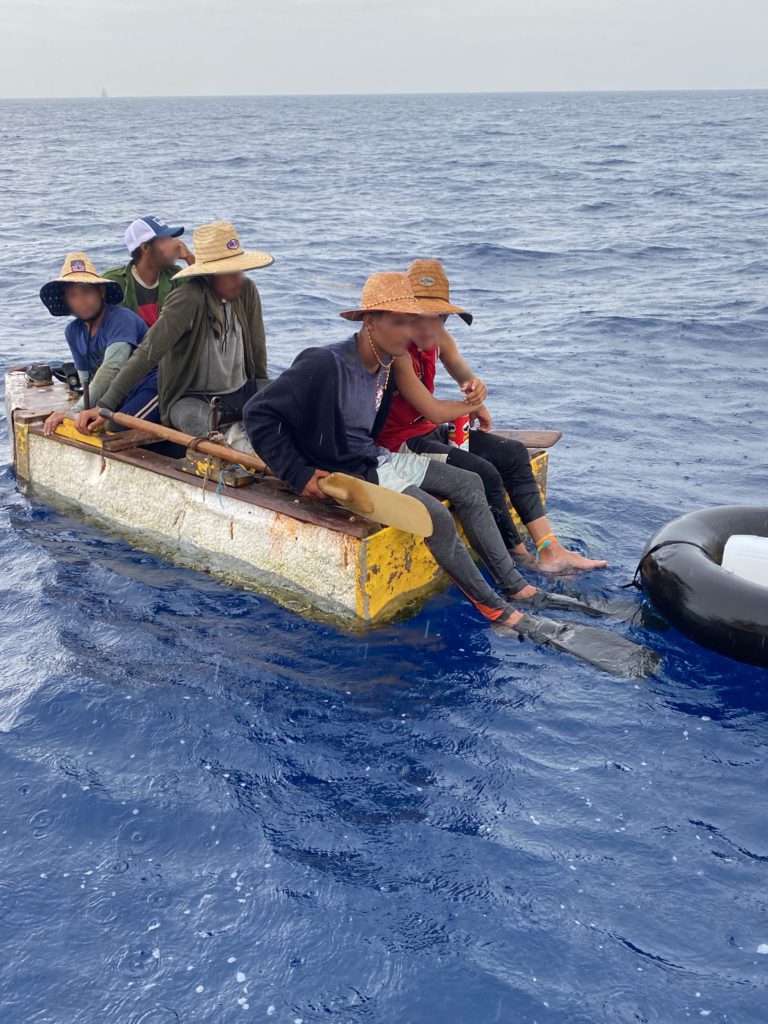
Five Cuban migrants aboard a makeshift vessel approximately 15 miles off the coast of Islamorada, Florida, July 24, 2021. Coast Guard Cutter Charles Sexton’s crew repatriated 27 Cubans to Cuba, Tuesday, following two interdictions off Florida’s coast. U.S. COAST GUARD
MIAMI — Coast Guard Cutter Charles Sexton’s crew repatriated 27 Cubans to Cuba, July 27, following two interdictions off Florida’s coast, the Coast Guard 7th District said in a release.
In the first interdiction, a good Samaritan reported a 21-foot vessel with 22 people aboard, approximately seven miles south of Key West to Coast Guard Sector Key West watchstanders at approximately 3:45 p.m., July 23. They were brought aboard Coast Guard Cutter William Trump and transferred to the Charles Sexton and reported in good health.
In the second interdiction, Coast Guard Station Islamorada reported a makeshift raft with five people aboard, approximately 15 miles offshore of Islamorada to Sector Key West watchstanders at approximately 4 p.m., July 24. A Station Islamorada boat crew picked up the five people and transferred them to the Charles Sexton. They were reported in good health.
“Taking to the seas on unsafe vessels is dangerous and can result in loss of life,” said Capt. Adam Chamie, Coast Guard Sector Key West Commander. “We request all mariners to report any possible migrant voyages to help prevent loss of life at sea.”
Since Oct. 1, 2020, Coast Guard crews have interdicted 595 Cubans compared to:
5,396 Cuban Migrants in Fiscal Year 2016
1,468 Cuban Migrants in Fiscal Year 2017
259 Cuban Migrants in Fiscal Year 2018
313 Cuban Migrants in Fiscal Year 2019
49 Cuban Migrants in Fiscal Year 2020
Once aboard a Coast Guard cutter, all migrants receive food, water, shelter and basic medical attention.
Logos Technologies Successfully Flight Tests SPRITE Multi-Sensor Pod for ONR
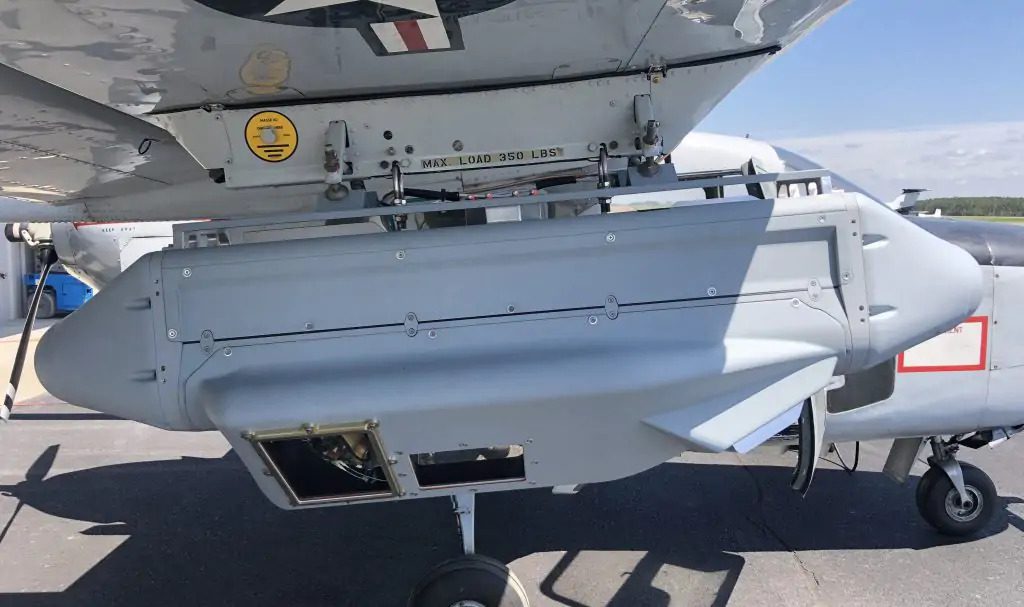
Logos Technologies’ SPRITE pod. LOGOS TECHNOLOGIES
FAIRFAX, Va. — Logos Technologies LLC announced July 27 that, with the successful test flight of the Spectral and Reconnaissance Imaging for Tactical Exploitation (SPRITE) pod earlier this year, has met all the goals of its five-year contract with the Office of Naval Research.
A U.S. military version of the company’s platform-agnostic Multi-Modal Sensor Pod (MMSP), SPRITE was flown on a manned Cessna 337 Super Skymaster.
“We had SPRITE flying between four and five hours a day for a whole week,” said Chris Stellman, lead principal scientist and program manager for Logos Technologies. “We were able to use SPRITE’s sensor modalities to detect signatures of interest, process that data on the fly, and stream it down in real time to users on the ground.
The SPRITE pod houses an ultra-light Logos Technologies RedKite WAMI sensor, a high-definition spotter camera, and commercial shortwave infrared hyperspectral sensor. In addition, SPRITE contained a palm-sized Multi-Modal Edge Processor (MMEP), also developed by Logos Technologies, to process the deluge of raw data being produced by all three sensors, in real time, and cross cue between the sensors.
The MMEP is the brains of the SPRITE pod,” Stellman said. “It’s what makes data actionable to the warfighter and searchable to the analyst.”
Though the Office of Naval Research contract required a specific set of sensors, the MMSP is very flexible regarding the payloads it can house. For example, instead of a hyperspectral sensor, it could include LIDAR or a signals intelligence package, depending on customer need.
Cutter Harriet Lane Interdicts $16 million Worth of Illicit Drugs
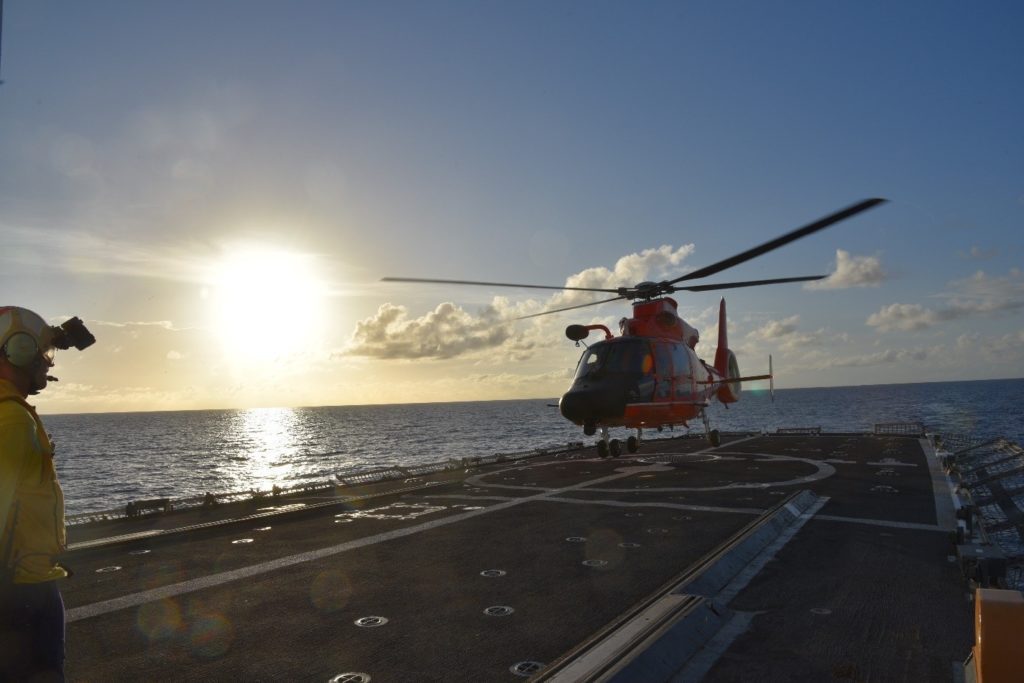
Crewmembers from the Coast Guard Cutter Harriet Lane conduct sunset flight operations with an MH-65 Dolphin aircrew from Coast Guard Air Station Miami in the Caribbean Sea. U.S. COAST GUARD
PORTSMOUTH, Va. — The Coast Guard Cutter Harriet Lane returned to its homeport in Portsmouth, Virginia, after a 72-day patrol in the Caribbean Sea, July 25, the Coast Guard 5th District said in a July 27 release.
The Harriet Lane’s crew performed counter-drug and migrant interdiction operations in support of the Coast Guard 7th District and Joint Interagency Task Force-South.
Throughout the patrol, the crew of the Harriet Lane worked in conjunction with a diverse array of U.S. and foreign military assets to conduct vital training and perform its assigned law enforcement mission, which included interdicting one go-fast vessel carrying approximately 882 pounds of suspected cocaine with an estimated street value of $16 million.
The interdiction was conducted jointly with USS Wichita (LCS 13). Harriet Lane’s crew assumed tactical control of Wichita’s helicopter, which employed airborne use of force executed by a trained Coast Guard crew member. The helicopter disabled the vessel and vectored in Harriet Lane’s small boat with embarked boarding team. Harriet Lane crews also conducted multiple at sea transfers of suspected illegal narcotics and drug-smugglers with the Dutch Navy aboard HNLMS Holland and facilitated the at-sea interdiction of a suspected drug smuggling vessel by the French frigate Ventôse.
In addition to operations, the Harriet Lane crew conducted a towing exercise with the USS Wichita, taking the 378-foot littoral combat ship in tow. During the evolution both vessels exchanged crew members of various rates and rank to provide exposure and promote professional development. This exercise provided invaluable training for both crews and strengthened the special relationships amongst the seagoing services. The crew of Harriet Lane hosted Consul General Allen Greenberg, the U.S. Consul General for Curacao and U.S. Chief of Mission for the former Dutch Antilles. Amidst operations, joint military training and acts of diplomacy, the cutter crew also completed aviation, damage control, seamanship and navigation training to maintain operational readiness and prepare for future multi-mission patrols.
“I am tremendously humbled to have completed my first patrol aboard Harriet Lane with this fine crew of maritime professionals,” said Cmdr. Ben Goff, commanding officer of the Harriet Lane “Throughout, we showcased a diversity of talent unique to the world’s best Coast Guard. I am extremely proud of the crew for their unwavering flexibility and selfless service amidst a variety of scheduling changes and mission challenges. Likewise, it was a true privilege to conduct operations and training with our U.S., Dutch and French navy partners.”
Harriet Lane is a 270-foot medium-endurance cutter responsible for a variety of Coast Guard missions, including search and rescue, enforcement of laws and treaties, maritime defense, and protection of the marine environment.
Coast Guard Breaks Ground on New Air Station in Ventura
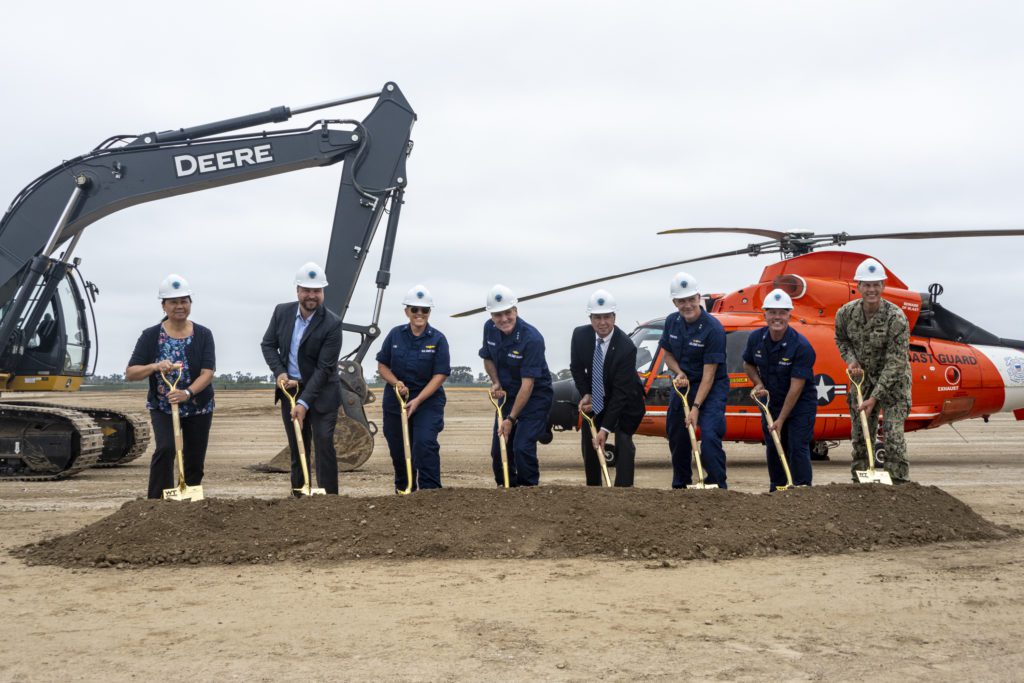
Debra Chinn, a member of the Coast Guard Facility Design and Construction Center, Joe Bissaillon, the Architect and Project Manager for Woolpert, Rear Adm. Carola List, the Coast Guard Assistant Commandant for Engineering and Logistics, Vice Adm. Michael McAllister, the Coast Guard Pacific Area commander, Sam Abutaleb, the Vice President of Whiting-Turner Construction, Rear Adm. Brian Penoyer, District 11 commander, Capt. Thomas Cooper, Coast Guard Air Station San Francisco commanding officer, and Capt. Kirk Lagerquist, the chief staff officers for Naval Base Ventura County, participate in a ground breaking ceremony for the Coast Guard Air Station Ventura, July 27, 2021. U.S. COAST GUARD / Petty Officer 1st Class Richard W. Brahm
SAN PEDRO, Calif. — The Coast Guard helicopter crews flying out of rented space at the naval base at Point Mugu will finally get a permanent home as ground broke July 27 for their new facility, the Coast Guard 11th District said in a release.
The $53 million Coast Guard Air Station Ventura is scheduled to include a 48,000 square-foot hangar and a 12,200 square-foot administration and berthing facility at Naval Base Ventura County in Point Mugu.
Four MH-65 Dolphin helicopters and 82 personnel are slated to be stationed at the air station when it opens for operations in August 2023.
“We’re excited to break ground to re-establish a permanent air station,” said Vice Adm. Michael F. McAllister, commander U.S. Coast Guard Pacific Area. “The new air station in Ventura will enhance critical mission capabilities, allowing us to better serve this critical area.”
Previously, the Coast Guard operated Air Station Los Angeles out of the Los Angeles International Airport for more than five decades until it lost its lease in May 2016. The Coast Guard officially closed the air station and shifted aviation operations to a Forward Operating Base (FOB) located at Naval Base Ventura County supported by Coast Guard Air Station San Francisco. The Point Mugu FOB operates out of a leased hangar facility and leased berthing space from the Navy. Currently, 13 permanent service members and approximately 11 rotating crewmembers from San Francisco fly two MH-65 Dolphin helicopters out of Point Mugu.
Coast Guard operations are scheduled to shift from the FOB to the new facilities of Air Station Ventura upon the facility’s completion.
The air station’s area of responsibility covers 350 nautical miles and stretches from Dana Point to Morro Bay, including the Channel Islands. Missions include 24/7 emergency response, search and rescue, drug and migrant interdiction, law enforcement, and marine and waterways conservation and protection.
Q&A: Charles “C.J.” Johnson-Bey and Jandria Alexander, Booz Allen Hamilton
A poster created using digital illustration software to advertise the “observe, orient, decide, and act” cycle (OODA LOOP) in order to inform Marines and Sailors of the importance of the decision making process. U.S. MARINE CORPS / Lance Cpl. Alexander N. Sturdivant
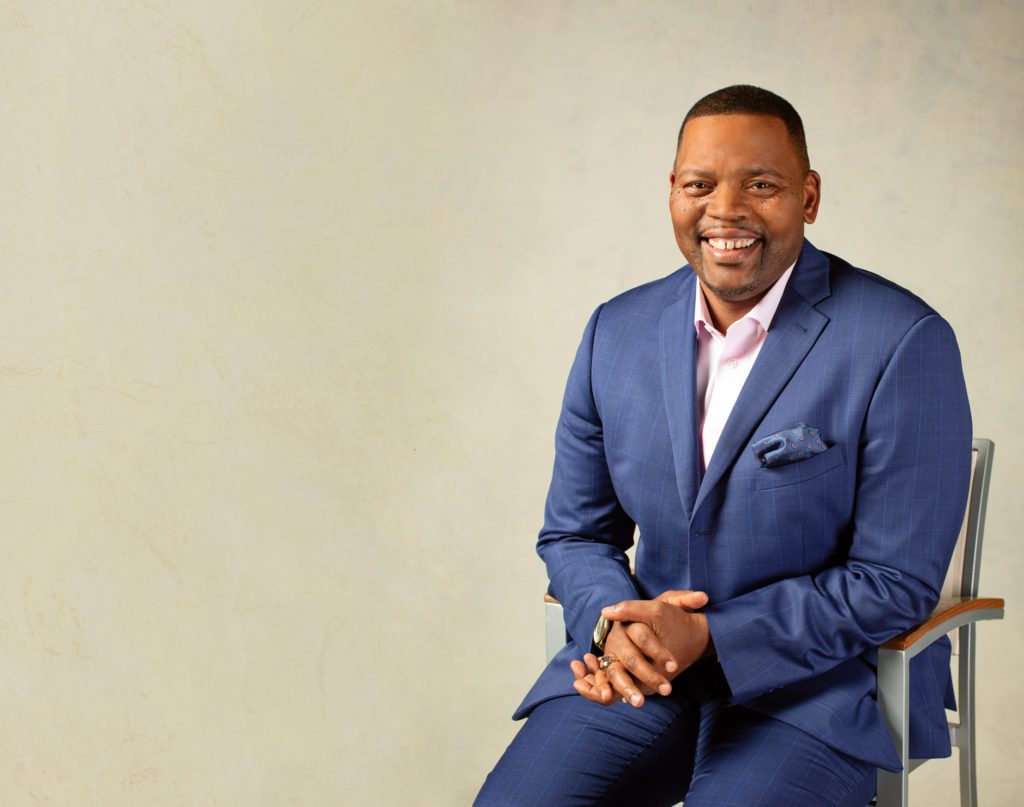
Dr. Charles “C.J.” Johnson-Bey is a leader in electromagnetic technology solutions for Booz Allen Hamilton’s commercial and defense clients. Based out of the company’s Belcamp, Maryland, office, he develops and executes innovative technology strategies that reflect evolving markets and technology dynamics.
Johnson-Bey has more than 25 years of engineering experience spanning cyber resilience, signal processing, system architecture, advanced prototyping and hardware. In leading Booz Allen’s engineering and science community, he inspires leaders and promotes innovation, collaboration and sharing of intellectual capital across the firm.
Prior to joining Booz Allen, he was a research engineer at Motorola Corporate Research Labs and Corning Inc. In addition, he taught electrical engineering at Morgan State University. He also worked at Lockheed Martin Corp. for 17 years, where he galvanized the company’s cyber resources and led research and development activities with organizations including Oak Ridge National Laboratory, Microsoft Research and the GE Global Research Center.
Johnson-Bey is a co-principal Investigator of the National Science Foundation’s Engineering Research Visioning Alliance, which identifies bold and societally impactful engineering research directions that will place the U.S. in a leading position to realize a better future for all. He serves on the Whiting School of Engineering Advisory Board at Johns Hopkins University and the Electrical and Computer Engineering Advisory Board at the University of Delaware. He is also on the Cybersecurity Institute Advisory Board for the Community College of Baltimore County.
Johnson-Bey received both an M.S. and Ph.D. in electrical engineering from the University of Delaware and a B.S. in electrical and computer engineering from Johns Hopkins University.
Charles “C.J.” Johnson-Bey. BOOZ ALLEN HAMILTON
…
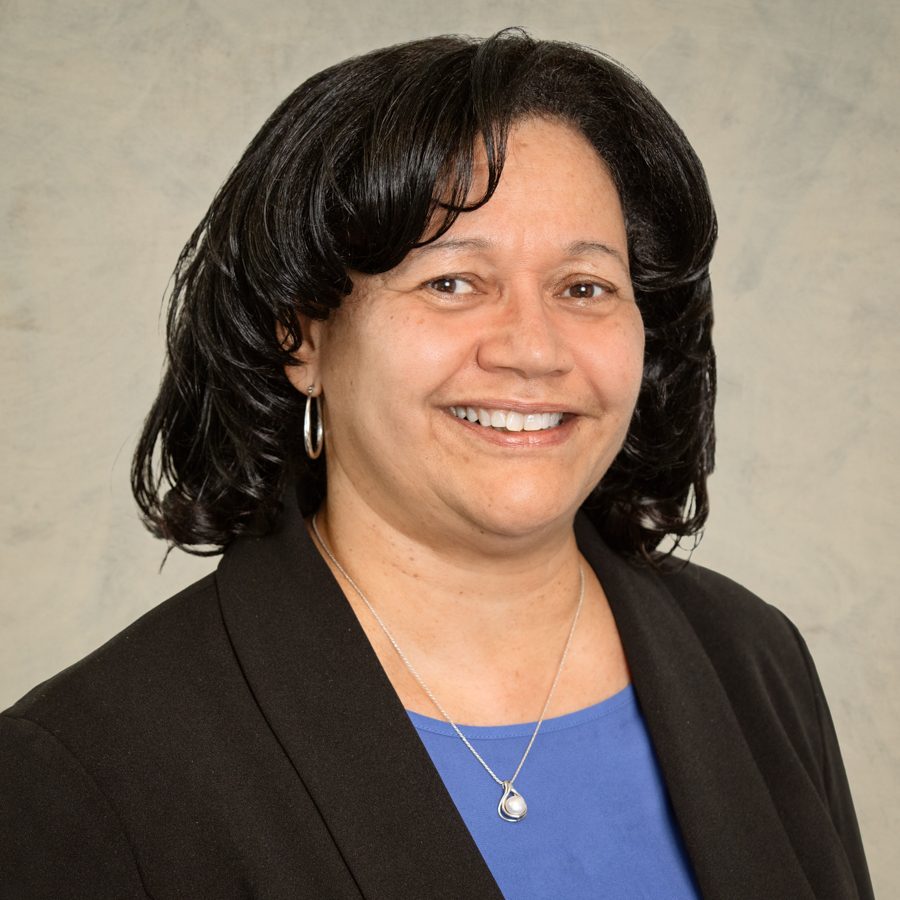
As a cybersecurity leader focused on Navy-Marine Corps clients and cross-market research and development, Jandria Alexander guides the implementation of innovative, technology solutions that drive transformational business growth. She’s a subject matter expert on cybersecurity engineering and assessments, resilient platforms and space systems, infrastructure, and multidomain mission systems.
A nationally recognized cybersecurity expert, Alexander has participated in several National Academy of Sciences studies related to cybersecurity research and new aviation technologies. In 2014, she was appointed by former Virginia Gov. Terry McAuliffe to serve on the bipartisan Virginia Cyber Security Commission to expand the state’s economic footprint in cyber technology and protect critical infrastructure from cyber threats. She led the effort’s unmanned systems cybersecurity industry, government and academia consortium.
Over the length of her career, Alexander has provided cybersecurity and digital transformation leadership, market strategy and solution development for the Department of Defense and the intelligence community as well as many civil and commercial organizations. Prior to joining Booz Allen, she was a cybersecurity leader in engineering and technology at a federally funded research and development corporation.
She holds a B.S. in computer science from Brandeis University and an M.S. in information systems from American University.
Johnson-Bey and Alexander discussed unmanned systems’ technical and operational challenges with Senior Editor Richard R. Burgess.
Jandria Alexander. BOOZ ALLEN HAMILTON
With the Navy’s Project Overmatch in progress and having released its Unmanned Campaign Plan, what is the nature of some of the technical challenges the service is trying to overcome?
JOHNSON-BEY: There’s always an accelerated trend of technology that catches us by surprise, with technology being used in an unexpected way, creating a new set of problems. In cyber, for one example, when you get things too integrated, you actually introduce some vulnerabilities that you hadn’t thought about before. All these things have multi-dimensions to them. I like being in this space, because there’s always a new problem to tackle and it challenges you to think outside the box. And the more we collaborate on these challenges, the smarter we get.
Unmanned maritime systems seem to bring more challenges, from preventing boarding to cyber intrusion and keeping communications, navigation and targeting networks open. How can command and control be sustained in a communications-denied environment?
JOHNSON-BEY: A new book that came out in mid-March — “2034: A Novel of the Next World War,” [by Elliot Ackerman and U.S. Navy Adm. James Stavridis] — talks about the future, 2034, and war in the South China Sea. It talks about cyber and how we handle it. The Chinese have a capability that we did not expect and that wipes out our comms. How do we deal with that? The reason why I bring that up is because it forces you to think about how we’re pushing ahead with new technology, but what if something just comes out of the blue and we have no comms? The new technology we’ve become reliant upon to carry out missions is suddenly not available. For example, the F-35 [strike fighters] are taken over [by cyber intrusion], the ships at sea are taken over, no comms; so, it’s really interesting.
The U.S. Navy has been thinking about the challenges of operating in a communications- or GPS-denied environment. What do you think of these challenges?
JOHNSON-BEY: A lot of old technology is pretty doggone robust, and it had to be. So, we can’t get too far ahead of ourselves. I’m a technologist through and through with a Ph.D. in electrical engineering. I’ve been doing this a long time. But the thing I will say is that we don’t want to become too reliant on our technology or the latest technology, and I think that’s where innovation comes in. You get innovative when you have constraints. If I don’t have any constraints, then I don’t need to be innovative. I can just do what I want to do when I want to do it. But the U.S. and its allies have long been used to using the electromagnetic spectrum to communicate when they want, wherever they want and for however long they want. That’s no longer going to be the case. So, we really do need to think about how we complete the mission in a denied or congested environment. The solutions might not be brand new technology but might be an innovative use of some technology that we’ve had in the past.
Security [of electronic systems] is always an issue and we really look at it from that OODA [observe, orient, decide, act] loop. How do we increase the speed of decision-making for U.S. forces and our allies and decrease if for our adversaries? Part of that is to address it from the OODA loop in the constrained or denied or congested environment. The speed of decision-making saves lives. So, we’re developing and investing in technologies that are looking at the security in that space. We’re also looking at swarms in that space, distributed platforms, AI [artificial intelligence], distributed processing and processing at the edge. So, we are investing in those areas. Jandria [Alexander] actually has led one of our projects in there last year.
ALEXANDER: The key point to your question is what happens in war. We can leverage alternate communication systems, but our goal is the communications at the tactical edge, from platform system to platform system.
As mentioned, complexity and threats increase with mission operations and communications across multiple UAVs groups, as well as unmanned and autonomous systems across domains. Platform systems in air, ground or undersea are critical part of force operations. As such, rapid data processing or sensor and RF data become differentiators. We’ve focused on increasing autonomous processing in a secure manner at the tactical edge and secure cross platform communications, whether they be large or small. If we can provide edge processing in a fashion that’s secure, design against a common architecture that’s driving our solutions, and be able to add advanced artificial intelligence and machine learning algorithms to process different data sets, in an extensible and modular fashion, we are able to efficiently increase capabilities without having to rebuild complete systems from scratch.
From an operational perspective, we’re able to respond quickly based on the algorithmic results processed on the platform. In a world of increased connectivity, cybersecurity needs to be addressed as an integral part of all architectures and built into the systems, including edge systems. Integrated security provides functionality and assurance that we can detect anomalies in parameters and processing that could throw off the compute cycle and exhaust the local resources degrading or disabling necessary platform functionality. And all of a sudden, we get into a situation where we can’t operate. So, we want to be able to make sure we monitor those inputs, and we look for anomalies in the different types of data input. Once we do that, we can be a little more confident about the processing that’s occurring at the platforms.
For each area in platform systems — communications, processing, algorithms and cybersecurity — there are technologies and best practices that support optimal and modular system development. Booz Allen has taken that problem set and divided it into the various functions bringing subject matter experts together into cross-functional project teams. The resulting systems are then able to incorporate integrating our solutions, third-party solutions and government solutions.
What is edge processing?
ALEXANDER: Platform systems range from manned to unmanned systems, including very large airborne to undersea platforms of various sizes. The platform systems have various sensors and functionality to support the mission. As data is collected on the platforms, edge processing allows for rapid analysis, decision support and specific maneuvering locally without having to transmit the data to a data center for central processing. During contested operations, the tactical asset is the edge. We want to be able to make computing decisions and react to those computing decisions based on what occurs at the edge for onboard sensors on the unmanned system as opposed to sending all the data back to a ground system. The local processing enables autonomous operations at the edge.
JOHNSON-BEY: Getting into denied environments, you’ve got to get innovative, so if you cannot get back to the [data] cloud or if you cannot get [the platform] back or time won’t allow, how do we do that computing right where you need it with information that you need to get the mission completed?
Does this create a weapons release authority problem for the man in the loop if you don’t have the central command there to some degree?
ALEXANDER: That’s right. So, we have to be flexible. We have to recognize that there’s a combination of manned and unmanned systems and decision points. As we become more comfortable and have more results and training our confidence and ability to trust the behaviors [of the unmanned systems] will increase. During situations where the volume of data and the need for rapid decisions are critical, edge processing and autonomy provide options that were not previously available. Systems have matured little by little. It’s not going from totally manned to totally unmanned, but it’s that combination, human in/on the loop, where there’s a recommendation and acknowledgment and recommended course of action.
JOHNSON-BEY: I’ve heard the term “human on the loop” instead of “in the loop.” [Humans] are “on the loop,” where they’re helping to make the decisions as needed. But the way things are moving, we need to be able to, in some instances, operate at the speed of computation because — particularly with things like hypersonics or getting so much data — when you look again at that OODA loop, it could just be that you can’t make a decision fast enough, so you’re going to need some AI and autonomy. You’re going to have some overall decision-making, but you are going to have to have some trust or some delegation of the ability to complete a mission done at the edge or where communication is congested or denied.
ALEXANDER: The other point is, it’s not only the speed but it’s also the volume. We have much better sensors right now. We’re collecting so much data that the time to process has to rely on automation. We have to figure out ways to streamline and synthesize the data to make decisions. Credibility of data also is an aspect. We want to be able to weigh the sources and understand which inputs are most trusted to rate and weigh the results. We need AI/ML [machine learning] algorithms that have been trained on actual and synthetic data sets. In an ideal case, the data processing is based on rich data sets, where we have full information; in the worst case, we have limited and lower quality information. The challenge is to develop an edge processing capability that can optimize operations.
JOHNSON-BEY: One of the things we’re investing in is, for example, the project that Jandria’s been working: platform agnostics, so a system can go on an unmanned aerial system, an unmanned underwater system, an unmanned surface system or an unmanned ground system. That unmanned piece is going to grow if the Navy wants to reach 355 ships or that next-generation Navy capability. So, what we’re looking at is how do we help a naval system grow into the unmanned space so that we can advance our capability, ability to make decisions and our ability to complete the mission with the unmanned aspect.
ALEXANDER: That brings up another good point. Large aerospace satellite systems, for example, used to take 20 years to build and deploy. We are transitioning to building constellations with disaggregated functionality. The key is to build smaller satellites — with more specialized function — that collectively perform complex missions. As we break up functionality, we build systems faster. They can be simpler and more secure. We can then integrate those data outputs from the various functional systems to support advanced decisions and assorted missions. Every platform doesn’t have to be all or nothing across every domain. Edge processing can also help with collecting additional or specialized data sources. Specialized platform systems can collect the unique data source provide it to the processing platform and then as the data gets synthesized, the mission advances.
Are micro-satellites part of the solution?
ALEXANDER: Absolutely. We have many examples in communication systems, with platforms that perform certain functions but may be perishable in the long term and don’t persist beyond short-term operations. As disposable assets, we don’t need them to be as rigorous.
How is your company supporting Project Overmatch and other programs?
JOHNSON-BEY: Project Overmatch is something that the Navy is focused in on and that goes everywhere from networks like the tactical grid to the infrastructure that deals with computer storage and tech stacks to the data architecture and then the tools and analytics like AI and ML and those different applications. So, what we’re focusing in on and investing in are these specific areas so that we can get some minimum viable products out. As the Navy grows its capabilities, we’re going to be able to provide some of these solutions to them. And then, as we all get smarter, we will continue to improve. It’s about speed, getting something useful out quickly, something I really do believe saves lives. So, we’re focused on being able to make decisions quickly, to field things quickly, to be very nimble in order to get from idea to deployment efficiently. We’re looking at how do we do things in a very quick way and demonstrate it in the marine environment and in the environment in which it will be used. We’re also looking at the challenge in a multi-domain aspect and how to create products to help the Navy complete its missions.
ALEXANDER: So, we’re tracking Project Overmatch very closely. This includes solutions for the enterprise as well as the tactical edge. The tactical edge is exactly the piece we’ve been talking about — the edge processor — that is one piece of the overall architecture and mission. Beyond the technology, is how the technology is integrated into legacy as well as future systems, as well as the training and the governance around it. Those are other parts that will drive adoption ultimately resulting in more successful mission capabilities.
Where is your company’s support to the Navy directed?
ALEXANDER: We support all the Navy echelons. We support the warfare centers focused on technical solutions and prototypes. We support program offices across Navy System Commands, the Echelon II systems commands — Naval Information Warfare Systems Command [NAVWAR], Naval Air Systems Command, Naval Sea Systems Command. Overmatch is certainly one of those programs that is occurring at all of the levels.
JOHNSON-BEY: One other thing to drive home is that we also are working with the Office of Naval Research [ONR]. We have multiple programs there and we are looking to increase our collaboration with them. We think that is certainly important. That’s where you start getting in with the new ideas, new capabilities, the innovation, and we think that’s a perfect place for us to be. We do a significant amount of work with ONR today, and we’re looking to increase that as well as with the warfare centers but particularly with ONR. Fun fact: Our relationship with the Navy goes back 80 years continuously.
ALEXANDER: We are engaged with our clients to provide thought leadership and diligent execution. Critical initiatives have many aspects. There’s often a policy piece, an acquisition piece and a solution piece. We want to make sure that our solutions align with the missions and provide enhanced operations and that the policies consider all of the various stakeholders and the overall strategic intent. We collaborate across our program and functional teams to address mission requirements. This allows us to leverage the perspectives that are needed, collect lessons learned and bring our innovation leads to solve the emerging problems of our clients.
MDA Test Intercepts Target with SM-6 Missiles
The U.S. Missile Defense Agency, in cooperation with the U.S. Navy, conducted Flight Test Aegis Weapon System 33 in the broad ocean area northwest of Hawaii, July 24. U.S. NAVY
WASHINGTON — The U.S. Missile Defense Agency, in cooperation with the U.S. Navy, conducted Flight Test Aegis Weapon System 33 in the broad ocean area northwest of Hawaii, July 24, the agency said in a release.
The objective of FTM-33 was to intercept a raid of two Short-Range Ballistic Missile targets with four Standard Missile-6 Dual II missiles.
Based on initial observations, one target was successfully intercepted. At this time, destruction of the second target cannot be confirmed.
FTM-33 was the most complex mission executed by MDA (a raid of two test targets and two SM-6 Dual II salvos consisting of four missiles). It was the third flight test of an Aegis BMD-equipped vessel using the SM-6 Dual II missile.
FTM-33, originally scheduled for December 2020, was delayed due to restrictions in personnel and equipment movement intended to reduce the spread of COVID-19.
Program officials will continue to evaluate system performance based upon data obtained during the test.
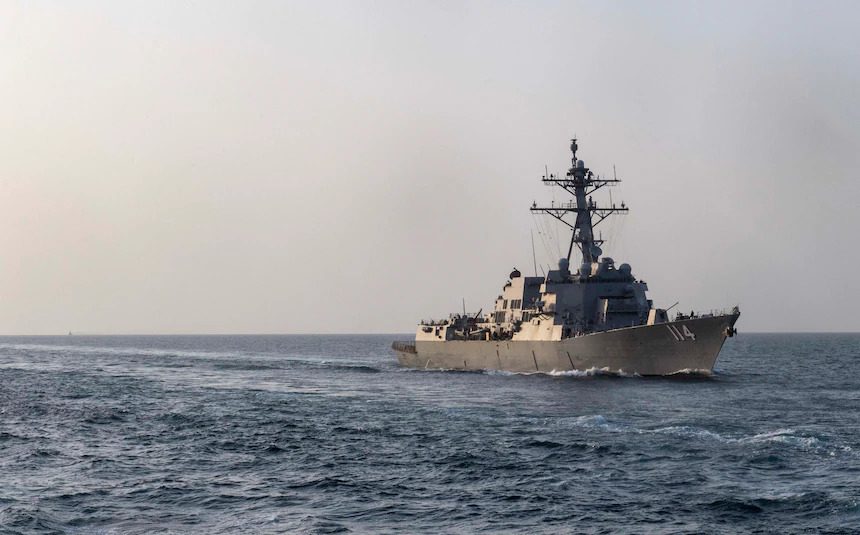
The firing ship for the test was the USS Ralph Johnson (DDG 114).
The SM-6 Dual II missile is designed for use in the terminal phase of a short-to- medium-range ballistic missile trajectory.
USS Mustin Returns to San Diego after 15 Years of Service in Japan
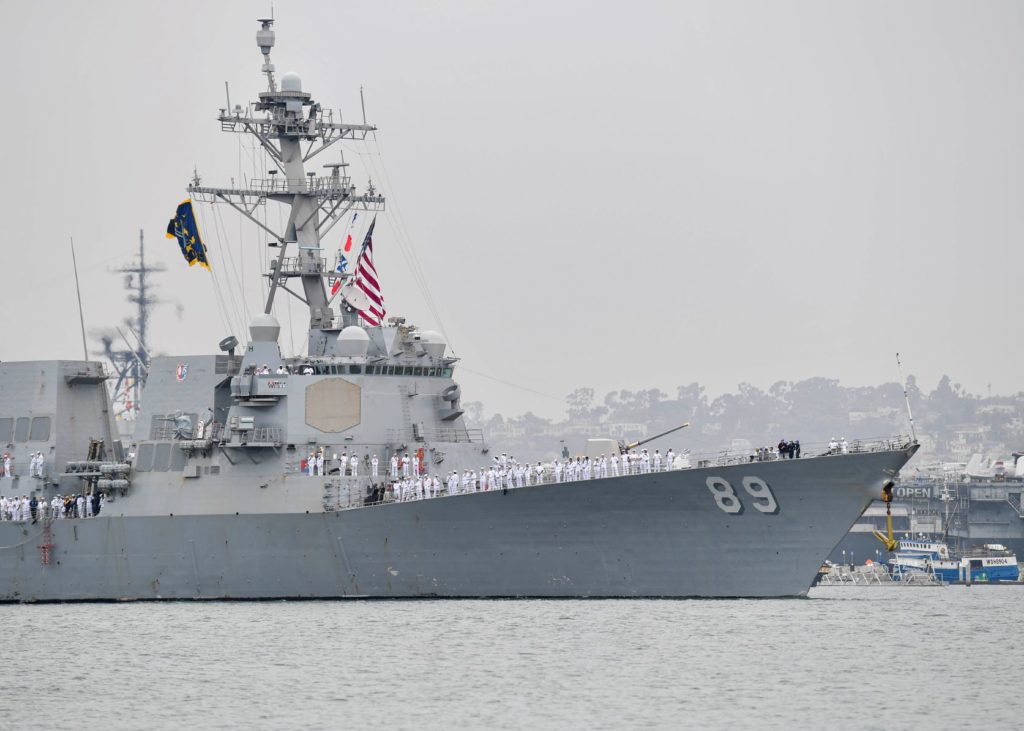
Arleigh Burke-class guided-missile destroyer USS Mustin (DDG 89) returned to San Diego, July 22, after 15 years serving in the Forward Deployed Naval Forces in Japan. U.S. NAVY
SAN DIEGO — Arleigh Burke-class guided-missile destroyer USS Mustin (DDG 89) returned to San Diego, July 22, after 15 years serving in the Forward Deployed Naval Forces (FDNF) in Japan, commander, Naval Surface Forces, U.S. Pacific Fleet, said in a July 23 release.
Mustin executed a change of station to the United States to conduct a planned depot modernization period and will be replaced by Arleigh Burke-class guided-missile destroyer USS Ralph Johnson (DDG 114), which will depart its homeport of Everett, Washington.
“Planned maintenance availabilities like these are critical to ensuring ships are maintained and equipped to perform combat-ready tasking when called upon and achieve their expected service life,” said Cmdr. Robert Briggs, commanding officer of USS Mustin.
Mustin arrived in Yokosuka, Japan in July 2006 and has participated in multiple humanitarian efforts in the Indo-Pacific region while assigned as a FDNF ship. In 2008, as part of USS Essex Amphibious Ready Group, Mustin provided aid to Myanmar in response to Cyclone Nargis. The ship earned the Humanitarian Service Medal for response to the 2011 Tohoku earthquake and tsunami as well as Typhoon Haiyan. Also in 2011, at the request of the government of Thailand, Mustin provided aerial surveillance support following flooding.
While taking precautions against COVID-19 at the onset of the global pandemic, Mustin successfully participated in a number of training exercises and operations including Integrated Ship and Air Team Training, Surface Warfare Advanced Tactical Training, Freedom of Navigation Operations, and carrier strike force operations with USS Ronald Reagan (CVN 76) and USS Nimitz (CVN 68).
“I couldn’t be more proud of Mustin’s accomplishments,” said Briggs. “As we transition into the maintenance phase over the following months, the crew is focused on upgrading the combat systems and engineering plant, and eventually returning this warship back to sea.”
Commissioned in San Diego nearly 18 years ago on July 26, 2003, Mustin spent three years assigned to Destroyer Squadron 23 as part of U.S. 3rd Fleet before joining the FDNF as part of Destroyer Squadron 15 based out of Yokosuka, Japan, with U.S. 7th Fleet.
Forward deployed naval forces improve the ability for the U.S. to protect interests while reassuring their friends and allies in the region of their commitment to peace, stability, and prosperity with unfettered access to the sea lanes for all nations in the Pacific.
SECDEF Announced Flag JAG Flag Nomination
ARLINGTON, Va. — Secretary of Defense Lloyd J. Austin III announced July 23 that the president has made the following nomination:
Navy Capt. David G. Wilson for appointment to the rank of rear admiral (lower half). Wilson is currently serving as assistant judge advocate general (Operations and Management), Washington, D.C.
Sea-Air-Space 2021 Prequel: Post-Columbia Sub Construction Capacity Will Help Relieve SSN Shortage
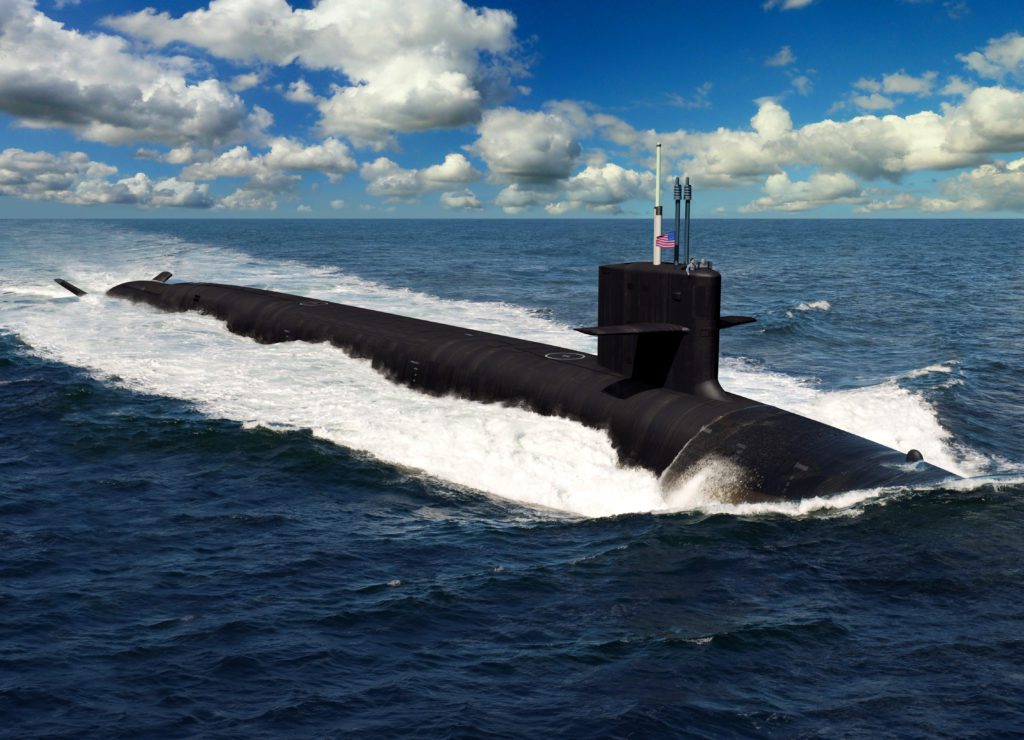
An artist’s rendering of the future Columbia-class ballistic missile submarines. U.S. NAVY
ARLINGTON, Va. — The nation’s submarine construction capacity built up for the Columbia-class ballistic-missile submarine (SSBN) program eventually will help the U.S. Navy to increase production of attack submarines (SSNs) to alleviate a shortage of attack boats, according to Navy and shipbuilding officials.
Under current planning, the Navy’s force structure studies have shown a need 70 SSN. The service currently fields about 50 SSNs, which are heavily used by regional combatant commanders, being only able to meet about 50% of their deployment requirements.
The Navy is building two Virginia-class attack submarines per year, and soon both, in the Block V version, will be equipped with the Virginia Payload Module, which will add cruise missile capacity and hypersonic missile capability to the force, among other payloads.
The Navy would like to procure three SSNs per year but currently is constrained by budget capacity to two per year while the Columbia-class SSBN is under construction. The Columbia program is a once-in-a-generation recapitalization program for the nation’s strategic deterrent force.
“We’re working very closely with industry to make sure we’re making the right long-term decisions, said Rear Adm. Bill Houston, director, Undersea Warfare, Division, Office of the Chief of Naval Operations, who has been selected to be the Navy’s next commander, Submarine Forces, speaking in a pre-recorded webinar of the Navy League’s Sea-Air-Space Prequel.
“We also have to look at it from a budget aspect [and] maintenance capability,” Houston said. “What our concern is that if you go to three [SSNs] per year in trying to peak out [the submarine force] with Virginia — with a 33-year life of ship — when you start building three per year, you’re ending up with a force structure of 99. So, as we’re reconstituting Columbia, and building two Virginias per year, when [construction of] the last Columbia hull commences in ’35, we’re going to have significant capacity then. So, we have the capability to go to three per year right now. The issue is that we’ve got Columbia under construction, so we’re just doing that balancing right now. Working with industry right now to make sure that stability that’s out there for [submarine builders], we’re trying to avoid those peak/troughs.
“As part of our private [shipyard submarine maintenance] plan, that workforce is highly skilled and we can’t go from periods when we have the private industry doing maintenance and then it’s not doing maintenance, because that is a fragile skillset,” he said.
Houston pointed out that stability in work orders is key to shipyard health and performance.
“We’re capable of going to three Virginias [per year] right now, [but] it would impact Columbia, so we’re concentrating on doing the Columbia and two Virginias per year,” he said. “We’re looking [at] how we can get up to three, but we’re sure that when that last Columbia hull is under construction, we’re going to have significant capacity.”
Houston noted that a Block V Virginia SSN displaces 10,000 tons submerged, equating to about half that of the Columbia SSBN, so every Columbia equates to two Virginia SSNs in displacement. Accordingly, with one Columbia and two Block V Virginias under construction, “we’re essentially building the equivalent of four Virginias,” he said.
“So, the capacity is there,” he said. “It’s more about the stability and avoiding the peaks and troughs.”
“I think our industrial base is somewhat fragile as we’ve gone from low-rate production in the 90s to now a two-per-year Virginia, a two-plus-one Virginia and Columbia,” said Kevin Graney, president of General Dynamics Electric Boat, whose company, teamed with Huntington Ingalls Newport News Shipbuilding, is building the Columbia-class SSBN. “That’s requiring us to bring in an awful lot of new suppliers across the industrial base in order to support that.”
Graney also said Electric Boat has been investing in additional facilities including construction halls and laid-out space in Groton, Connecticut, and Quonset Point, Rhode Island; upgrading a floating drydock from which the Columbia will be launched; and purchasing a new transport barge. The company has invested “about $250 million in training programs over the last five years and we’re developing active learning shipyards within the shipyards that have proven effective in improving our proficiency.”
HII Authenticates Keel of National Security Cutter Calhoun
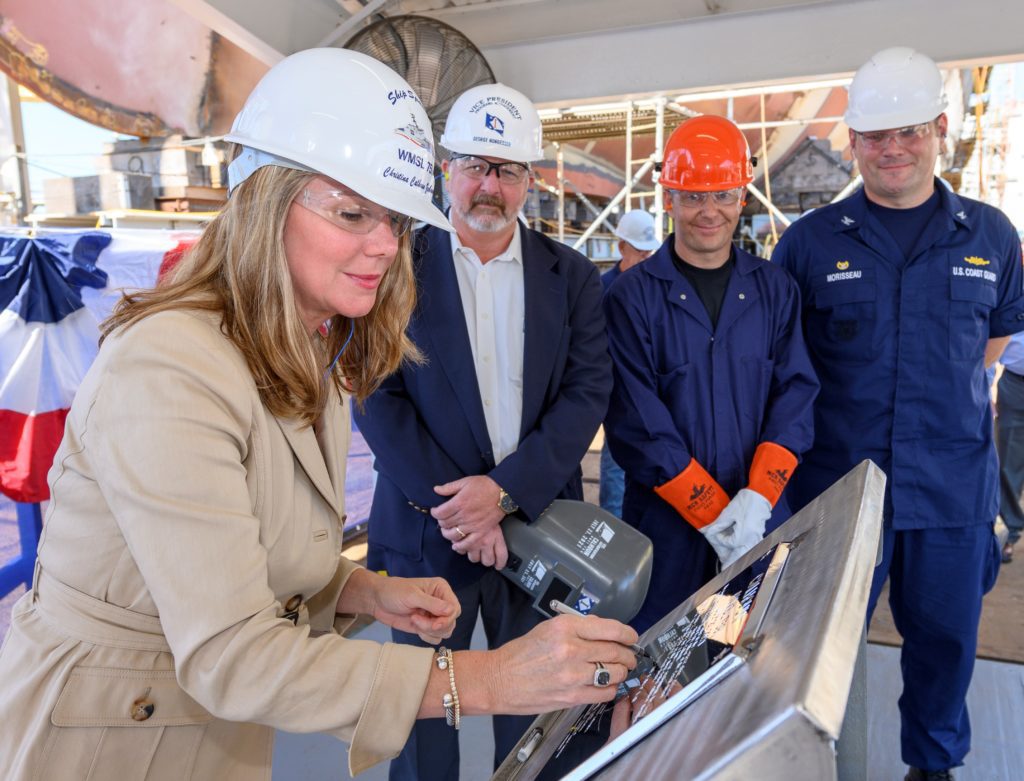
Ship sponsor Christina Calhoun Zubowicz writes her initials onto a steel plate that will be welded inside Calhoun (WMSL 759), the national security cutter named in honor of her grandfather, Charles L. Calhoun. Pictured with Zubowicz are (left to right) George Nungesser, Ingalls Shipbuilding vice president of program management; Christopher Tanner, a structural welder at Ingalls; and Capt. Peter Morisseau, commanding officer, U.S. Coast Guard Project Resident Office Gulf Coast. HUNTINGTON INGALLS INDUSTRIES / Lance Davis
PASCAGOULA, Miss. — Huntington Ingalls Industries’ Ingalls Shipbuilding division ceremonially authenticated the keel of Legend-class national security cutter Calhoun (WMSL 759) July 23, the company said in a release.
The keel authentication, initially planned for 2020, was postponed due to the COVID-19 pandemic.
“This is a very special keel authentication ceremony for a multitude of reasons,” said George Nungesser, Ingalls’ vice president of program management. “While we were able to work steadily and safely though the pandemic, visitation to the shipyard made commemorating major shipbuilding milestones a challenge. We are proud to be able to celebrate our talented shipbuilders and their successes today during this ceremonial keel laying.”
Calhoun recently reached the halfway point of its construction. Ingalls is the builder-of-record for the Legend-class NSC program and has delivered nine national security cutters with two more under construction.
NSC 10 is named for Charles L. Calhoun, the first master chief petty officer of the Coast Guard. He served in the U.S. Navy for three years during World War II and was honorably discharged as a torpedoman second class in February 1946. Seven months later, he enlisted in the Coast Guard and held various leadership positions over the course of 14 years. He served as master chief petty officer of the Coast Guard from Aug. 27, 1969, until Aug. 1, 1973.
The sponsor of NSC 10 is Christina Calhoun Zubowicz, the granddaughter of Charles L. Calhoun.
“I want to thank the entire United States Coast Guard for this opportunity and recognize their fervent efforts in protecting America’s economic, national and border security,” Zubowicz said. “May abundant divine protection, luck and blessings surround the ship: and the men and women — the shipbuilders, in crafting the new innovative national security cutter, Calhoun.”
The Legend-class NSC is the most technologically advanced ship in the Coast Guard’s fleet, which enables it to meet the high demands required for maritime and homeland security, law enforcement, marine safety, environmental protection and national defense missions. NSCs are 418 feet long with a top speed of 28 knots, a range of 12,000 miles, an endurance of 60 days and a crew of 120.