ARLINGTON, Va. — Secretary of Defense Lloyd J. Austin III announced today that the president has made the following nominations:
Capt. Dennis E. Collins has been nominated for appointment to the rank of rear admiral (lower half). Collins is currently serving as officer in charge, Navy Reserve, U.S. Indo-Pacific Command, Detachment 401, Camp H.M. Smith, Hawaii.
Capt. Bradley D. Dunham has been nominated for appointment to the rank of rear admiral (lower half). Dunham is currently serving as chief of staff, Navy Reserve, U.S. Fleet Forces Command, Norfolk, Virginia.
Capt. Mark F. Haigis has been nominated for appointment to the rank of rear admiral (lower half). Haigis is currently serving as commanding officer, Navy Reserve, Naval Leadership and Ethics Center, Newport, Rhode Island.
Capt. Scott W. Ruston has been nominated for appointment to the rank of rear admiral (lower half). Ruston is currently serving as deputy commander, Navy Region Southwest Reserve Component Command, San Diego, California.
Capt. Douglas W. Sasse III has been nominated for appointment to the rank of rear admiral (lower half). Sasse is currently serving as commanding officer, Navy Reserve, Fourth Fleet, Mayport, Florida.
Capt. Michael J. Schwerin has been nominated for appointment to the rank of rear admiral (lower half). Schwerin is currently serving as commanding officer, Navy Reserve, Officer Training Command, Newport, Rhode Island.
Capt. David R. Storr has been nominated for appointment to the rank of rear admiral (lower half). Storr is currently serving as manager, Navy Reserve, Rapid Research and Development Detachment, Patuxent River, Maryland.
Navy Orders Three SPN-50(V)1 Radars from Saab
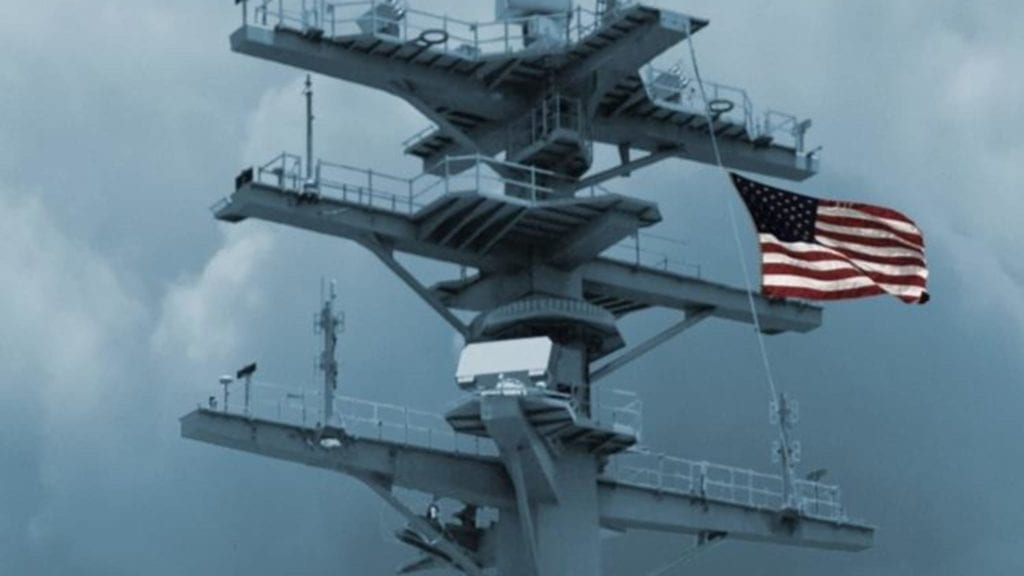
SAAB’s AN/SPN-50(V)1 radar. Saab
STOCKHOLM — Saab has been awarded a second Low-Rate Initial Production (LRIP) contract for three of its AN/SPN-50(V)1 radar systems for the U.S. Navy’s Shipboard Air Traffic Radar program, the company said in an April 28 release. The order value for the LRIP Phase Two contract is $37.1 million USD, with the first delivery scheduled for 2022. Radar manufacturing, delivery, test, and integration will take place at Saab’s Syracuse, New York facilities.
The AN/SPN-50(V)1 radar system, which is one of the U.S. versions of Saab’s Sea Giraffe Agile Multi Beam radar, will function as the primary air traffic control surveillance radar for manned and unmanned aviation aboard the Navy’s nuclear-powered aircraft carriers and amphibious large decks.
“By leveraging Saab’s radar technology already in operational service with the U.S. Navy, the Naval Air Traffic Management Systems Program Office and Saab is addressing shipboard air traffic control capability to ensure readiness and cost-efficiency,” said Erik Smith, president and CEO of Saab in the United States.
Delivery of the Navy’s advanced air traffic control and landing capability is overseen by the Naval Air Traffic Management Systems Program Office. In cooperation with Saab, they are responsible for the radar system’s acquisition, deployment, and through life sustainment while in service within the U.S. Navy fleet.
‘Old Tar’ Designation Passes to Master Chief Bill Smalts
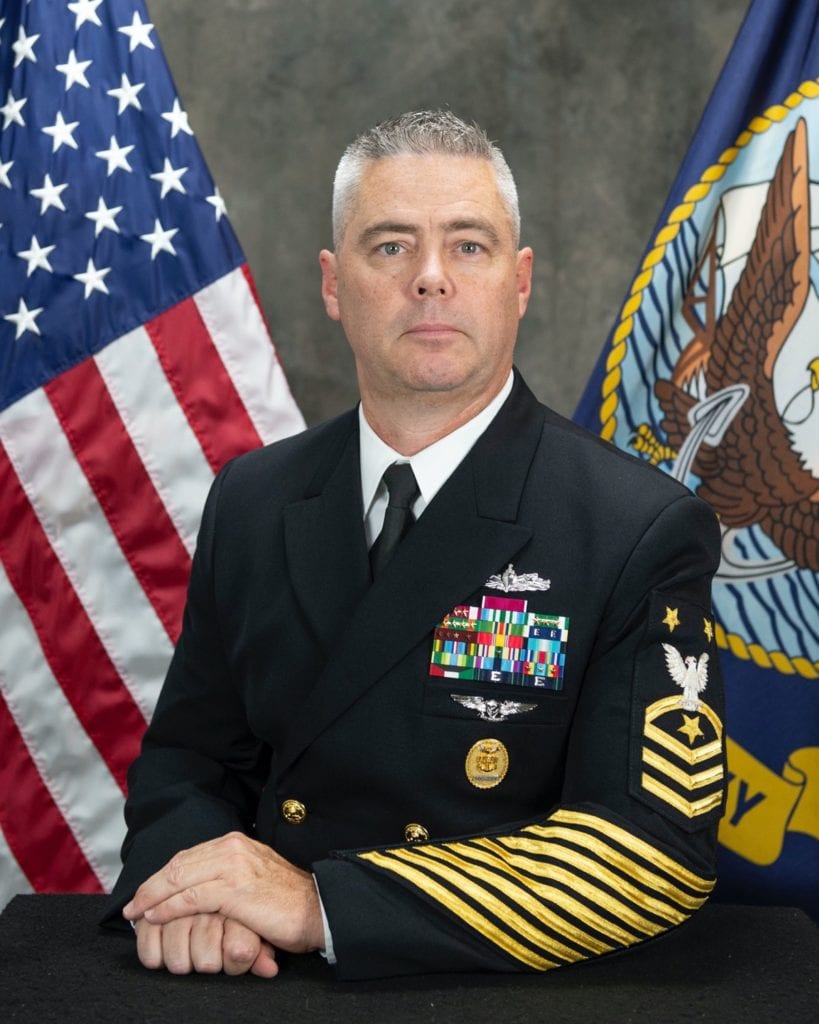
Fleet Master Chief Bill Smalts. U.S. NAVY
The Surface Navy Association’s (SNA) ”Old Tar” designation, honoring the U.S. Navy Enlisted Surface Warfare Specialist (ESWS) serving on active duty with the earliest qualification date, has passed to Fleet Master Chief Bill Smalts. Smalts is currently assigned as the Fleet Master Chief, Commander, United States 2nd Fleet, Norfolk, Virginia.
Smalts is now the 14th individual to receive the Old Tar honor having relieved Force Master Chief David B. Carter, who has recently retired.
“This award is a recognition of the leadership, experience and expertise possessed by a knowledgeable mariner. Master Chief Smalts is such a Sailor and has earned the title an ‘Old Tar,” said Vice Adm. Rick Hunt, U.S. Navy (retired), president of SNA. “This award acknowledges our lore, customs and traditions, and honors the most senior of all our active duty Enlisted Surface Warfare Specialists with the ‘Old Tar’ designation.”
Smalts completed his qualification as an E3 aboard the USS L.Y. SPEAR (AS 36) but was not allowed to be pinned until he was a Third Class Petty Officer on Oct. 18, 1990.
The term comes from the days of sail and wooden ships, when Sailors would board enemy ships in battle and engage in hand to hand combat. Since long hair was the fashion of the era, they would often wear it tied in a knot at the base of the neck. Before entering battle, they would dip this knot in tar that would soon harden and protect their necks from blows from behind. Sailors, therefore, became known as “tars,” and an “Old Tar” was clearly one honored and respected for his knowledge, wisdom, and long experience at sea.
The honor is accompanied by a replica of “The Chief” statue that stands at the Senior Enlisted Academy in Newport, Rhode Island, with all the names of the “Old Tars.” In a ceremony held at the awardees’ command, a miniature replica of the statue was presented to CMDCM Smalts to display at his command and will be permanently retained by him upon retirement.
SNA also recognizes the “Old Salt” award to honor the Surface Warfare Officer with the earliest date of receiving the coveted warfare qualification.
GA-ASI Participates in U.S. Pacific Fleet’s Unmanned Integrated Battle Problem
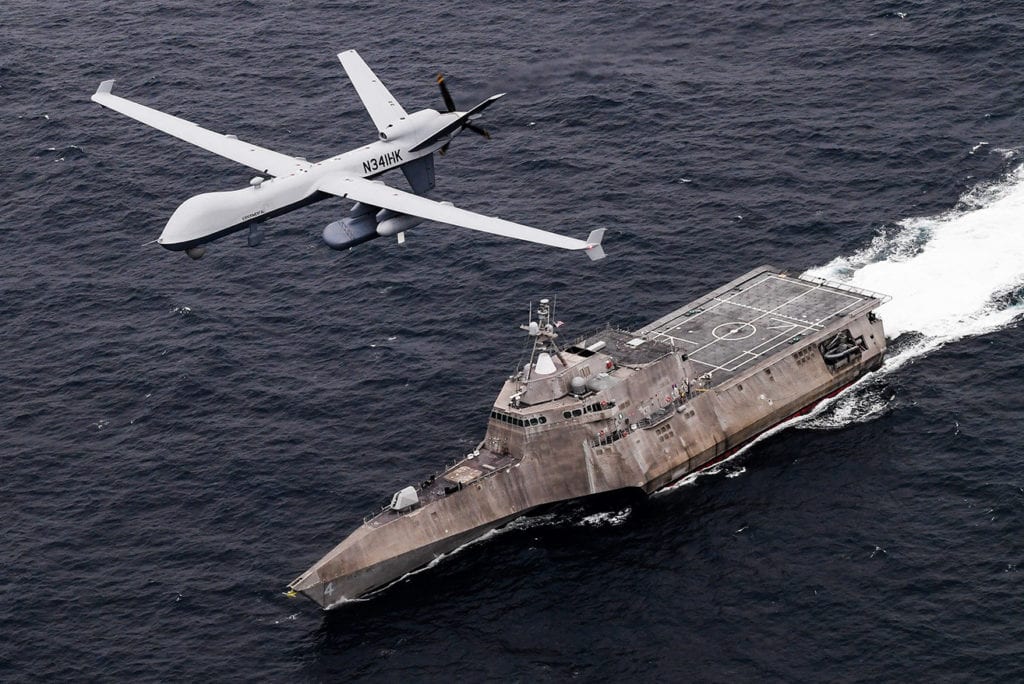
An MQ-9 Block 5 unmanned maritime surveillance aircraft system, acting as a surrogate for the MQ-9A SeaGuardian, flies over Independence-variant littoral combat ship USS Coronado (LCS 4) during U.S. Pacific Fleet’s Unmanned Systems Integrated Battle Problem (UxS IBP) 21, April 21. UxS IBP 21 integrates manned and unmanned capabilities into challenging operational scenarios to generate warfighting advantages. U.S. NAVY / Chief Mass Communication Specialist Shannon Renfroe
AN DIEGO — General Atomics Aeronautical Systems Inc. (GA-ASI) participated in U.S. Pacific Fleet’s (PACFLT) Unmanned Integrated Battle Problem ‘21 (UxS IBP 21), April 21-26, 2021, the company said in an April 28 release.
The UxS IBP 21 integrated manned and unmanned capabilities into the most challenging operational scenarios to generate war fighting advantages. The exercise aimed to directly inform warfighters, warfare centers, and developers to further incorporate unmanned capabilities in day-to-day Fleet operations and battle plans.
During UxS IBP 21, a GA-ASI MQ-9A Block 5 unmanned aircraft system (UAS) acted as a surrogate for the MQ-9B SeaGuardian and was able to demonstrate for the first time: successful Link connectivity with U.S. Navy surface ships and aircraft; cooperative anti-submarine warfare (ASW) operations, to include the first successful high-altitude sonobuoy drop from a UAS; Automatic Identification System (AIS) correlation with a U.S. Navy P-8 Poseidon and MH-60R Seahawk; exchange of Link 16 data over Global Command and Control System – Maritime (GCCS-M) from a UAS; and long-range over-the-horizon targeting from a UAS to a U.S. Navy destroyer.
“Our partnership and collaboration with the U.S. Navy during this exercise has been extremely beneficial and helped set the stage for a revolutionary change in how the U.S. Navy and our foreign partners address the increasing challenges and complexities for accomplishing distributed maritime operations,” said J.R. Reid, GA-ASI’s vice president for Defense Department Strategic Development. “We successfully demonstrated several groundbreaking capabilities for the first time, and we look forward to leveraging this momentum to continue to develop and test more advanced capabilities that provide immense value to the warfighter, both domestically and abroad.”
GA-ASI has expanded the traditional role of the MQ-9 for its U.S. government and foreign customers to support maritime intelligence, surveillance, and reconnaissance missions, including ASW, with the development of the expeditionary MQ-9B SeaGuardian that can safely operate in adverse weather and non-segregated airspace.
Logos Successfully Tests WAMI Sensor on RQ-21A Blackjack UAV
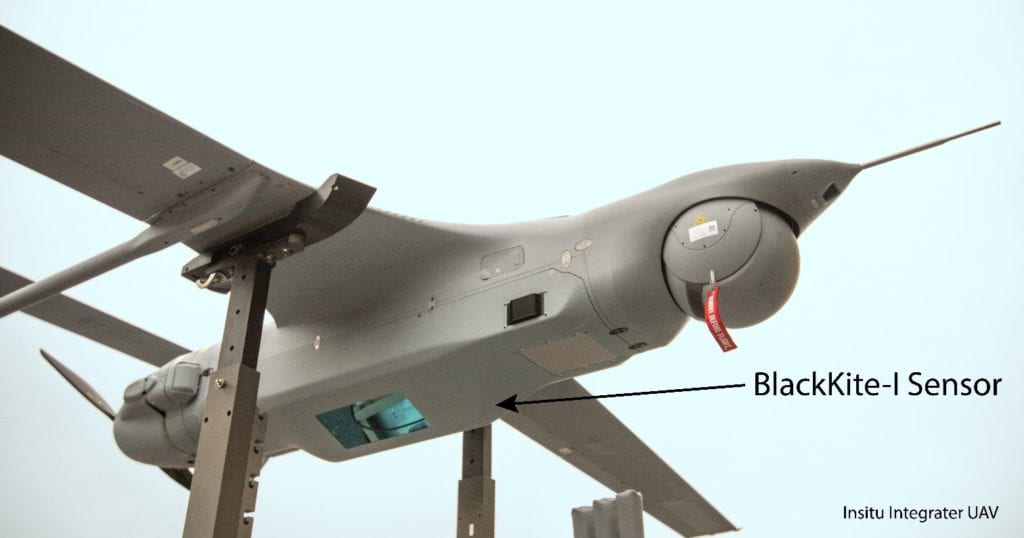
Logos Technologies LLC’s BlackKite-I sensor, shown mounted on an Insitu Integrator unmanned aircraft. LOGOS TECHNOLOGIES LLC
FAIRFAX, Va. – Logos Technologies LLC has successfully flown its wide-area motion imagery (WAMI) sensor aboard an RQ-21A Blackjack unmanned aircraft at a test range in Boardman, Oregon, the company said in a release.
The two-week-long test — which included preparatory groundwork in Bingen, Washington — comes on the heels of a $5.3 million contract the U.S. Naval Air Systems Command had recently awarded to Logos, to develop more WAMI sensors for Navy and Marine users.
“We are very excited by our recent test aboard the RQ-21A Blackjack,” said Doug Rombough, vice president for Business Development at Logos Technologies. “Our ongoing effort to develop an ultra-light WAMI capability for the Blackjack and other small, tactical unmanned aircraft is clearly paying off.”
Logos has created a U.S. military version of BlackKite, currently called Cardcounter, an ultra-light (26 pounds) infrared WAMI system developed by Logos. Despite its low SWaP, BlackKite can detect and track in real time every significant target moving within a city-sized area, giving tactical operators a powerful, hereto unheard of, capability.
In addition, thanks to the WAMI system’s multi-modal edge processor — which can store six or more hours of mission data — users on the ground can also access recorded imagery for on-the-fly forensic analysis.
“No military in the world has anything like the Logos WAMI sensor on their tactical unmanned aircraft,” said Rombough. “This WAMI system views and records the entire area and can stream multiple real-time and recorded video ‘chip-outs’ down to handheld devices.”
Logos was first tasked with converting their BlackKite system to meet government requirements in September 2019, with two units being produced for the U.S. Naval Air Systems Command. The follow-on $5.3 million development contract and March test flight are part of the same effort.
“In total, we will be producing four modular WAMI systems for the Navy,” Rombough said, “with the hope that this will open the door for a wider U.S. military adoption of WAMI, both for the Blackjack and other Group 3 unmanned aircraft.”
Coast Guard Repatriates 72 Migrants from 2 Interdictions to Haiti
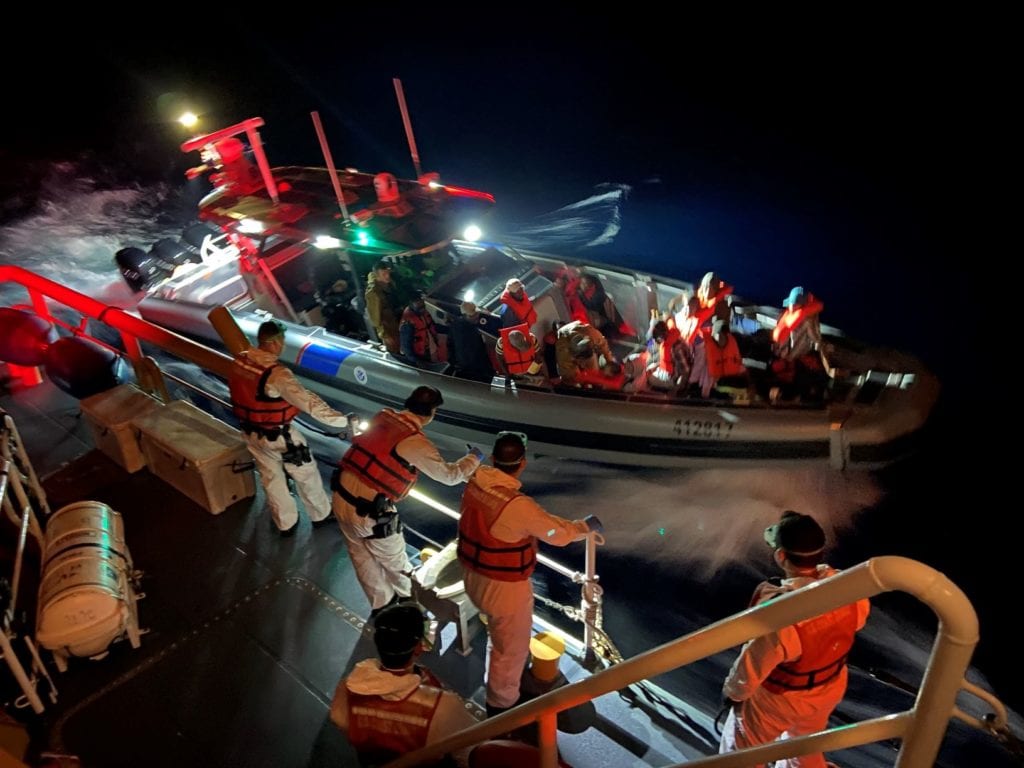
The Coast Guard Cutter Charles Sexton’s crew repatriated 72 Haitian migrants to Haiti on April 27. U.S. COAST GUARD
MIAMI — The Coast Guard Cutter Charles Sexton’s crew repatriated 72 Haitian migrants to Haiti, April 27, the Coast Guard 7th District said in a release.
In the first interdiction, Coast Guard Sector Miami watchstanders received a MAYDAY call April 17 and launched multiple surface asset crews and an Air Station Miami HC-144 Ocean Sentry airplane crew to the scene to assist. The Coast Guard Cutter Robert Yered crew arrived on scene and interdicted migrants from an overloaded 42-foot pleasure craft approximately 15 miles west of the Bahamas.
In the second interdiction, Sector Miami watchstanders received a report from U.S. Customs and Border Protection of an overloaded 25-foot pleasure craft, April 24, approximately 10 miles east of Lake Worth. The Coast Guard Cutter Manatee crew and CBP surface asset crews arrived on scene and interdicted the migrants.
“It is extremely dangerous to take to the sea on an overloaded, homemade or makeshift vessel,” said Lt. Mark Tatara, commanding officer of the Cutter Charles Sexton. “Those who embark on these vessels are risking their lives and it is our duty to protect the safety of life at sea. People should not take to the sea in an attempt to migrate to the United States.”
Since Oct. 1, 2020, Coast Guard crews have interdicted 262 Haitians compared to:
445 Haitian migrants in Fiscal Year 2016
443 Haitian migrants in Fiscal Year 2017
792 Haitian migrants in Fiscal Year 2018
895 Haitian migrants in Fiscal Year 2019
418 Haitian migrants in Fiscal Year 2020.
Once aboard a Coast Guard cutter, all migrants receive food, water, shelter and basic medical attention. Throughout the interdiction, Coast Guard crew members were equipped with personal protective equipment to minimize potential exposure to any possible case of COVID-19. There were no migrants in these cases reported to have any COVID-19 related symptoms.
EMALS, AAG Hit 8,000 Aircraft Recoveries, Launches on Ford
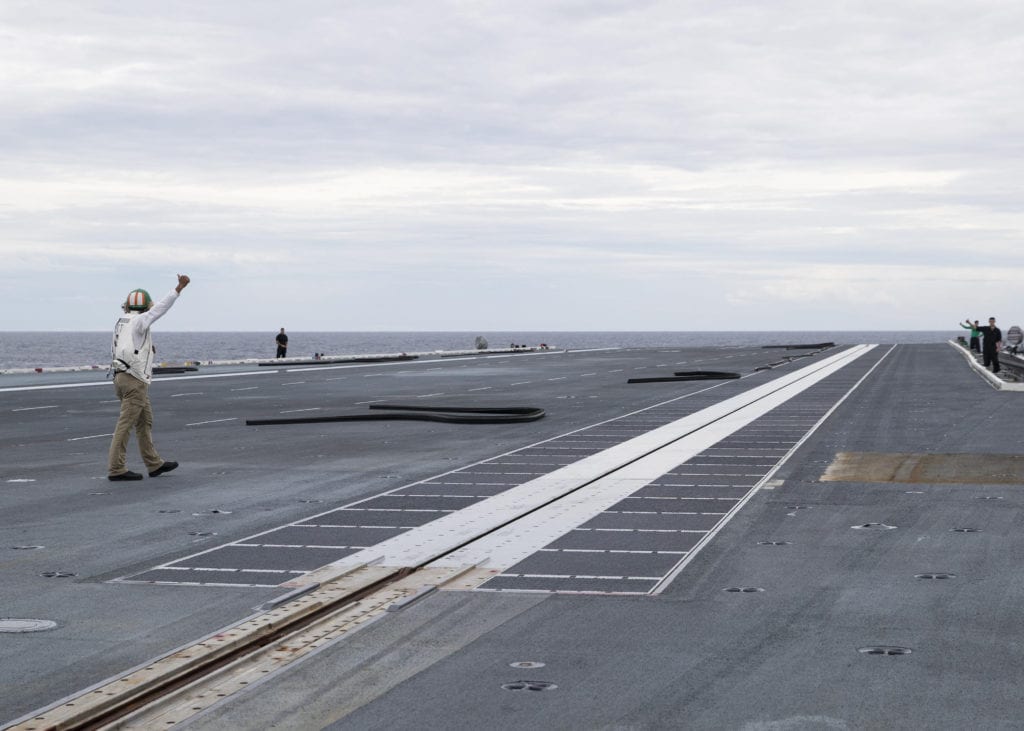
Chief Aviation Boatswain’s Mate (Equipment) Louis Mountain Jr., assigned to USS Gerald R. Ford’s (CVN 78) air department, signals the electromagnetic aircraft launch system (EMALS) to launch during no load testing on the ship’s flight deck. U.S. NAVY / Mass Communication Specialist 3rd Class Zachary Melvin
PATUXENT RIVER, Md. – The Advanced Arresting Gear (AAG) and Electromagnetic Aircraft Launch System (EMALS) achieved 8,000 aircraft recoveries and launches aboard USS Gerald R. Ford (CVN 78) on April 19, during the final independent steaming event of her 18-month Post Delivery Test & Trials (PDT&T) period, the Naval Air Systems Command said in an April 26 release.
Capt. Kenneth Sterbenz, Aircraft Launch and Recovery Equipment (ALRE) program manager (PMA-251) for EMALS and AAG, said ALRE finished PDT&T strong, and they are ready for the next step, as Ford prepares for Full Ship Shock Trials, which is scheduled to begin summer 2021.
“ALRE’s support of EMALS and AAG was admirable throughout the rigorous testing of PDT&T operations,” said Sterbenz. “On the way to reaching 8,000 launches and recoveries, we saw many Ford crew trained, learned a great deal about the systems, and laid invaluable groundwork for future Ford-class ships.”
As CVN 78 moved through PDT&T, ALRE had the opportunity to directly support the fleet, as 351 Naval aviators were qualified using EMALS and AAG throughout 2020 and 2021. Time and training also enabled a great increase in the efficiency of flight operations. More than 7,000 of Ford’s total launches and recoveries were completed in the last 18 months.
Cmdr. Lindsey Buzzell, PMA-251 Deputy Program Manager for Ford CVNs, said ALRE’s accomplishments are the product of years of dedication, expertise, and professionalism.
“PDT&T proved extremely valuable for ALRE, as it allowed for extensive test and evaluation, and the opportunity to expose useful learning opportunities,” said Buzzell. “As we move forward, we’ll continue building on our experience, increase confidence in EMALS and AAG, and do our part to support the warfighter by preparing the systems for whatever Ford’s future deployments bring to the table.”
The Navy’s newest aircraft launch and recovery technology, the Electromagnetic Aircraft Launch System and Advanced Arresting Gear System, were designed for use aboard Ford-class aircraft carriers, beginning with USS Gerald R. Ford (CVN 78). Land-based test sites, located at Joint Base McGuire-Dix-Lakehurst, N.J., enable test, troubleshooting and Sailor training. Developed by prime contractor General Atomics, EMALS and AAG provide significant advancements to the Navy’s Ford-class aircraft carriers. EMALS and AAG require a smaller footprint in the ship, less maintenance, and less manpower than comparable steam catapults and arresting gear aboard Nimitz-class carriers.
Rite-Solutions Awarded $23.5 Million NUWC IT Services Contract
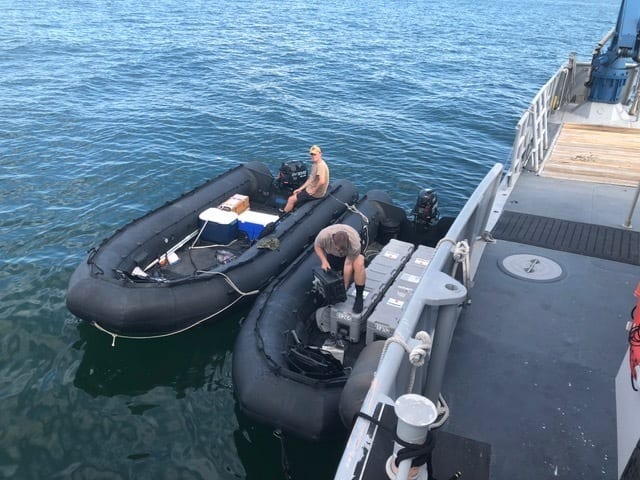
AG3 Brandon Vanbuytene and AG1 Jason Quinn with Naval Oceanography Mine Warfare Center prepare unmanned underwater vehicles for deployment from two combat rubber raiding crafts in the Gulf of Mexico on Aug. 7, 2018, during the Gulf Coast portion of Naval Undersea Warfare Center’s (NUWC) Advanced Naval Technology Exercise. NAVAL OCEANOGRAPHY / Kaley Turfitt
MIDDLETOWN, R.I. — Rite-Solutions was recently awarded a $23.5-million, five-year IT services contract by the Naval Undersea Warfare Center (NUWC), the company said in an April 28 release. The company will support NUWC’s Activity Chief Information Officer Information Technology Division, which is responsible for managing and maintaining the Naval Undersea Warfare Center Division, Newport’s (NUWCDIVNPT’s) voice and data computer networks, including network backbone architecture for services such as email, web-based applications, database applications, file storage, and printing.
The NUWCDIVNPT data network, which includes 6,500 Research, Development, Test & Evaluation IT assets, provides the command with robust, secure, and fault-tolerant internal network services. It also supports external network connectivity to over 4,000 seats via multiple networks, including the Defense Research and Engineering Network (DREN) and Secure DREN.
The NUWCDIVNPT telephone network provides desktop telephone services to over 5,000 locations through the division’s internal Public Branch Exchange. The Information Technology Division is also responsible for operating media center services, such as the Integrated Display Center and video teleconferencing facilities, which provides state-of-the-art video, data, and worldwide telecommunication services over unclassified and classified IP networks, and/or ISDN.
“We are thrilled that NUWC chose to renew the contract with us,” says Dennis McLaughlin, CEO and President at Rite-Solutions. “While we are rapidly expanding into new technologies that give the Navy an information advantage, IT services and security remain a critical component of what we offer.”
“Cybersecurity touches every part of this contract,” adds Rocky Reeves, Rite-Solutions senior vice president and director of IT Services. “Our network, telephone, and audio-visual engineers supporting this contract must meet strict DoD Cybersecurity Workforce requirements.” Security certifications include Security+ce, CompTIA Advanced Security Practitioner, and Certified Information Systems Security Professional. Operating system certifications include Cisco Certified Network Architects, Cisco Certified Network Professionals, and Red Hat LINUX.
In addition to NUWCDIVNPT’s Enterprise Infrastructure located in Newport, Rhode Island, remote detachment support is also required for voice, video, and data networks located in West Palm Beach, Florida; Andros Island, Bahamas; Seneca Lake, New Tork; Fishers Island, New York; Dodge Pond, Connecticut; Kings Bay, Georgia; Fort Story, Virginia; and Norfolk, Virginia.
Gilday: Unmanned Systems, Hypersonic and Laser Weapons Will Maximize Navy’s Range and Security in the Pacific
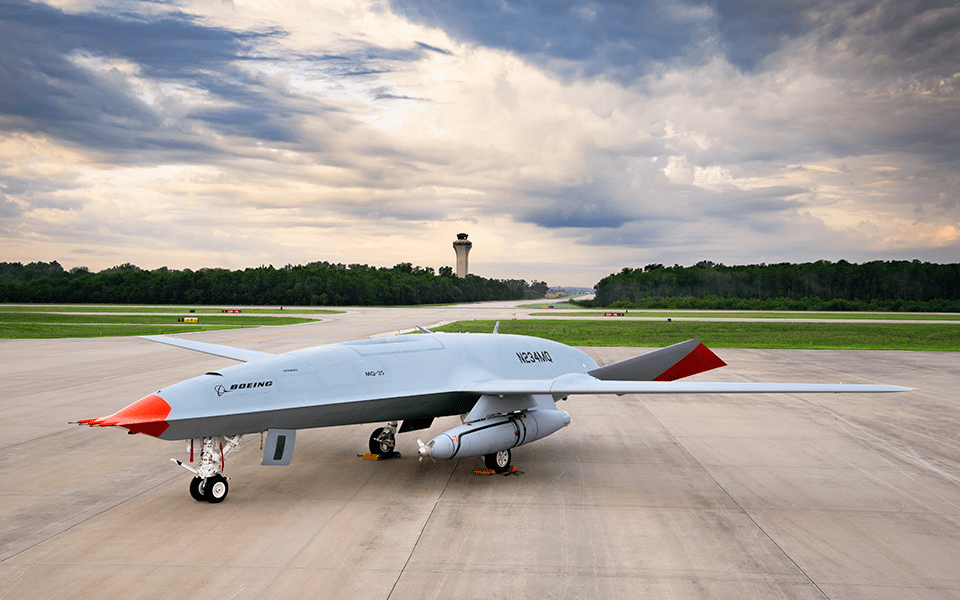
The MQ-25A Stingray unmanned aerial refueling vehicle, along with other unmanned aircraft, surface and under-sea vessels, will help maximize the U.S. Navy’s future range across the Pacific Ocean, according to Adm. Mike Gilday, the chief of naval operations. The Navy plans to procure 72 Stingrays from Boeing and Gilday directed the establishment of Unmanned Carrier-Launched Multi-Role Squadron 10 (VUQ-10) on Oct. 1, 2021. BOEING
ARLINGTON, Va. — Unmanned aircraft, surface and under-sea vessels will help maximize the U.S. Navy’s future range across the Pacific Ocean, while ships and submarines armed with hypersonic or directed energy weapons could protect them in contested areas, the chief of naval operations says.
“Our biggest R&D effort is in hypersonics,” Adm. Mike Gilday told a live streamed question and answer session April 27 at the Center for Strategic and Budgetary Assessments, a Washington think tank. Hypersonic weaponry is planned for delivery in 2025. “First on surface ships and then on Block 5 submarines,” Gilday said. “We want to bring that kind of capability forward, using distributed maritime operations to come at an adversary in a variety of different vectors and make it very difficult for him to target us.”
Gilday said he sees unmanned systems as a path to affordability and lethality despite expected leaner defense budgets in coming years. “Probably by the mid-to-late 2030s, we think up to a third of the fleet could be unmanned, if everything goes right,” Gilday explained. “And for the air wing of the future, we think about the same, initially about 40%, potentially going to 60% unmanned” teamed with fourth- and fifth-generation fighters in contested areas,” he added.
The MQ-25A Stingray carrier-based unmanned aircraft system should reach initial operational capability around 2025, Gilday said. Once it’s integrated into the carrier wing, the Boeing-built Stingray will enhance aircraft carrier reach as a sea-based, aerial refueling drone, that can also provide persistent intelligence, surveillance and reconnaissance around the carrier strike group.
On March 16, the Navy and Marine Corps released the Unmanned Campaign framework, (https://seapowermagazine.org/navy-marine-corps-release-unmanned-campaign-plan/) which presents their strategy for making unmanned systems a trusted and integral part of warfighting. The Navy is conducting collaborative experimentation and rigorous testing of unmanned systems “to get to a point, in probably five to seven years, where we’re much more confident about two real big pieces: reliability and trust,” Gilday said.
He added that trust is all about command and control. Reliability, is key in terms of operations. “With respect to the surface fleet, we really want a platform that’s going to run, run, run, run and not break down on us,” Gilday said, noting the Freedom-class littoral combat ships have 7,000 sensors in their engineering plant. “We can’t have that kind of complexity on a platform that’s eventually going to be unmanned. It’s got to be very reliable.”
Unmanned platforms, both on and under the sea, are also going to play a major role in distributed maritime operations in the future, although they have not yet been classified as part of the battle force. “They’re separate and distinct from the 355” ship Navy mandated by Congress, Gilday said.
While the Navy’s strategy calls for highly mobile and distributed maritime operations in the Pacific, in an age of ubiquitous satellite imagery, “it’s going to be difficult to hide,” Gilday said, adding “Directed energy, with respect to the future survivability of the fleet, is really important.”
Noting that Navy ships from Ford-class aircraft carriers to Zumwalt-class destroyers generate excess electrical power, Gilday said, “If we could get that same capability on an unmanned vessel,” armed with a directed energy weapon, it could provide a surface fleet with a “high degree of defense-in-depth coverage against an incoming threat.”
ONR Global Launches Second Round of ‘Global-X’ Challenge Focused on Polar Science
Office of Naval Research Global graphic.
LONDON, U.K. — The Office of Naval Research (ONR) Global, in its sustained mission to become the partner of choice for the worldwide international Science and Technology (S&T) community, will launch the second round of Global-X, a nine-month international science challenge worth up to $500,000, to encourage groundbreaking research from all around the world, the office said in an April 26 release.
The decision comes after a successful 2020 inaugural Global-X Challenge that selected four winning teams with members from Australia, Denmark, Spain, Switzerland, the United Kingdom and the United States. These teams are now preparing for innovative concept demonstrations later this year.
The purpose of the Global-X Challenge is to discover, disrupt, and ultimately provide a catalyst through basic and applied research for later development and delivery of revolutionary capabilities to the U.S. Navy and Marine Corps, the commercial marketplace, and the public.
ONR Global is interested in receiving white papers and proposals on the following challenge topics:
Alternate Navigation at High Latitude
High Latitude High Bandwidth Communications
Persistent Polar Perception
Researchers from academia and industry may participate. ONR Global expects, but does not require, that multi-national teams will consist of at least two research entities outside of the U.S., whether from academia, industry and/or the broad research community. Researchers from U.S. research entities may also participate, but are not required.
“We expect a new round of revolutionary ideas from the brightest international researchers. Alongside an evaluation panel of experts from participant nations of the International Cooperative Engagement Program for Polar Research (ICE-PPR), we are interested in finding promising concepts that achieve innovative capability advances with both military and commercial value, specifically focused in polar science,” said ONR Global Executive Officer Capt. Matt Farr.
Live Webinar launch
The Global-X Challenge will officially launch during a kick-off webinar set for April 29 at 7 a.m. Eastern Daylight Time (EDT). Interested applicants can register for and view the webinar at the following link: https://goto.webcasts.com/starthere.jsp?ei=1456602&tp_key=b2ae9e815d
Applicants can also ask questions during the webinar, which will be recorded and posted to a public Global-X website for subsequent review. Furthermore, more information on the challenge statements, important dates, official guidelines and Frequently Asked Questions (FAQ) can be found on the Global-X website: https://www.onr.navy.mil/Global-X
“We want to build on our previous success and attract the best polar research-focused scientists worldwide. We live in an era where this specific scientific discipline is key for our fleet, and trying to find the best collaborative solutions will help solve present and future U.S. Navy and Marine Corps technology needs,” said ONR Global Technical Director Dr. Rhett Jefferies.
Significant Dates and Times
White Paper Submission Date: May 28, 2021, by 11:59 p.m. EDT
Notification of White Paper Valuation: June 11, 2021, by 5 p.m. EDT
Full Proposal Submission: July 9, 2021, by 11:59 p.m. EDT
Notification of Selection: Full Proposals: July 30, 2021, by 5 p.m. EDT