Houston Nominated for Vice Adm., commander, Naval Submarine Forces
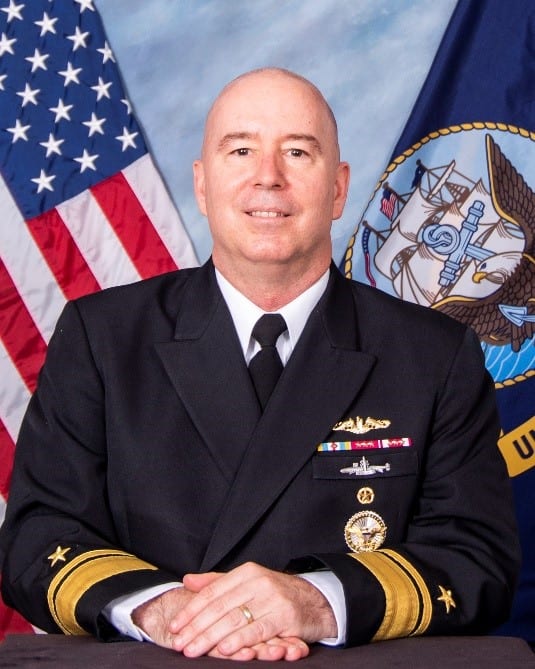
Rear Adm. William J. Houston, nominated for appointment to vice admiral and assigned as commander, Naval Submarine Forces, commander, Submarine Force, U.S. Atlantic Fleet, and commander, Allied Submarine Command, Norfolk, Virginia. U.S. NAVY

ARLINGTON, Va. — Secretary of Defense Lloyd J. Austin III announced April 21 that the president has nominated Navy Rear Adm. William J. Houston for appointment to the grade of vice admiral, and assignment as commander, Naval Submarine Forces; commander, Submarine Force, U.S. Atlantic Fleet; and commander, Allied Submarine Command, Norfolk, Virginia.   

Houston is currently serving as director, Undersea Warfare Division, N97, Office of the Chief of Naval Operations, Washington, D.C. 

Rear Adm. Houston is a native of Buffalo, New York, and graduated from the University of Notre Dame in May 1990 with a bachelor of science in electrical engineering and was commissioned via the Navy Reserve Officer Training Corps (NROTC) program. He holds a master’s of business administration from the College of William and Mary. 
 
His sea tours include division officer assignments on USS Phoenix (SSN 702), engineer officer onboard USS Hampton (SSN 767), and executive officer onboard USS Tennessee (SSBN 734) Blue. He commanded USS Hampton (SSN 767) in San Diego and was commodore of Submarine Squadron 20 in Kings Bay, Georgia. 

His staff assignments include flag lieutenant for Commander Submarine Force, U.S. Atlantic Fleet; the Atlantic Fleet Nuclear Propulsion Examining Board; special assistant to the Director of Naval Reactors for Personnel and Policy; deputy commander for Submarine Squadron 20; the principal director for Nuclear Matters within the Office of the Secretary of Defense; the submarine and nuclear community manager, Military Personnel Plans and Policy (N133) and division director of Submarine and Nuclear Propulsion Distribution, Navy Personnel Command (PERS-42). 

His first flag assignment was deputy director for Strategic Targeting and Nuclear Mission Planning (J5N) United States Strategic Command. Following this, he served as director of operations, Naval Forces Europe-Africa; deputy commander, U.S. 6th Fleet, and commander, Submarine Group Eight. 
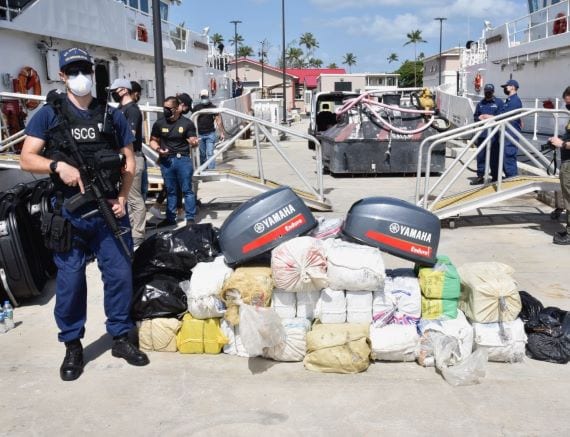


Coast Guard Offloads Nearly $20 million in Seized Cocaine in San Juan, Puerto Rico

The Coast Guard Cutter Richard Dixon crew offloaded nearly $20 million in seized cocaine at Coast Guard Base San Juan on April 20. U.S. COAST GUARD

SAN JUAN, Puerto Rico — The Coast Guard Cutter Richard Dixon crew offloaded nearly $20 million in seized cocaine at Coast Guard Base San Juan on April 20, following the interdiction of a suspected drug smuggling vessel, approximately 45 nautical miles north of Aguadilla, Puerto Rico, the Coast Guard 7th District said in an April 21 release. 

A Customs and Border Protection Caribbean Air and Marine Branch maritime patrol aircraft crew detected a vessel on April 17 with three people aboard suspected of drug trafficking. The Coast Guard Cutter Paul Clark and a Coast Guard MH-60 helicopter responded to intercept the vessel. 

The Coast Guard Jayhawk aircrew successfully stopped the vessel. Following the interdiction, it was discovered one of the suspected smugglers was injured and needed to be medevaced. A Coast Guard Air Station Borinquen MH-65 Dolphin aircrew transported the person to a hospital in Puerto Rico to receive further medical care.  

The Paul Clark crew embarked the two remaining suspected smugglers and recovered close to 18 bales, which weighed approximately 1,052 pounds and tested positive for cocaine. 

The three suspects are two men and a woman, Dominican Republic nationals, who are facing possible federal prosecution on drug trafficking criminal charges. Department of Justice partners in the U.S. Attorney’s Office for the District of Puerto Rico are leading prosecution efforts in this case. 

“Stopping illegal drug trafficking vessels like the one interdicted Saturday is inherently dangerous and involves a high level of skill and risk,” said Capt. Gregory H. Magee, Commander of U.S. Coast Guard Sector San Juan. “These vessels represent a serious threat to the Caribbean region. The professionalism of the interdicting crews and strong partnerships with federal, local and regional law enforcement led to the apprehension of three smugglers and seizure of a major drug shipment in our shared resolve to protect the people of Puerto Rico and the U.S. Virgin Islands from this threat.” 

The interdiction resulted from multi-agency efforts in support of U.S. Southern Command’s enhanced counter-narcotics operations in the Western Hemisphere, the Organized Crime Drug-Enforcement Task Force and High-Intensity Drug-Trafficking Area programs and the DEA Caribbean Division Financial Investigative Team. 

“This Organized Crime Drug Enforcement Task Force investigation is one of several cases targeting transnational criminal organizations operating out of South America, Dominican Republic, and Puerto Rico,” said A.J. Collazo, DEA Caribbean Division special agent in charge. “DEA will continue to work alongside other federal agencies as more seizures like this one can be expected.”  

Cutters Paul Clark and Richard Dixon are 154-foot fast response cutters respectively homeported in Miami and San Juan, Puerto Rico. 


Italian Aircraft Carrier ITS Cavour Departs Norfolk, Completing F-35B Certification

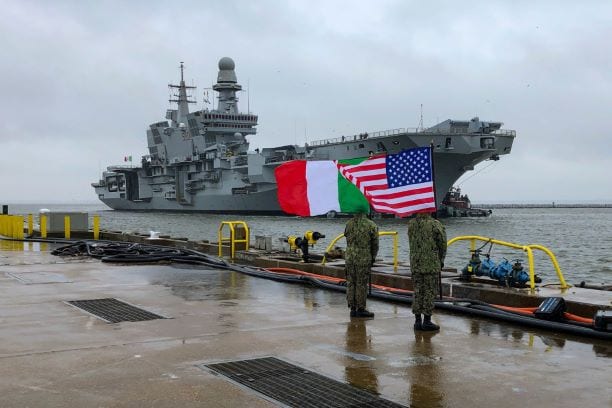
U.S. Sailors, assigned to the aircraft carrier USS John C. Stennis (CVN 74), greet the Italian navy flagship, aircraft carrier ITS Cavour (CVH 550), as it arrives at Naval Station Norfolk, Virginia, Feb. 13, 2021. The Cavour’s visit is part of a series of operations alongside U.S. military assets to attain the Italian navy’s “ready for operations” certification to safely land and launch F-35B aircraft, U.S. 2nd Fleet exercises operational authorities over assigned ships, and landing forces on the East Coast and the Atlantic. U.S. NAVY

NORFOLK, Va. — The Italian navy flagship, the aircraft carrier ITS Cavour (CVH 550), departed Naval Station Norfolk April 16 after Joint Force operations with U.S. military forces in the Atlantic Ocean, the U.S. 2nd Fleet Public Affairs said in an April 21 release. 

ITS Cavour participated in a sequence of operations with U.S. assets and the F-35 Joint Program Office has delivered a flight clearance recommendation to the Italian navy for the safe operation of fifth generation F-35B fighter aircraft. 
 
“I am very proud for the success of ITS Cavour’s ‘Ready for Operations’ campaign,” said Italian navy Capt. Giancarlo Ciappina, commanding officer of ITS Cavour. “Our allies will soon perceive the Italian navy and the Italian armed forces as a whole, as enhanced cooperative partners thanks to the strategic enabler that the fifth-generation aircraft carrier capability would represent, in either specific maritime or wider joint operations.” 

An F-35 Joint Program Office (JPO) test team embarked on ITS Cavour to conduct sea trials, a series of tests and functional activities to create a safe flight operating envelope for the short-takeoff-and-vertical-landing (STOVL) variant of the aircraft aboard the recently upgraded ship. 
 
The F-35 Pax River Integrated Test Force (ITF) team from Naval Air Station Patuxent River, Maryland, includes almost 200 people with the engineering and test pilot expertise and experience to conduct F-35B envelope expansion flight test, two specially instrumented developmental flight test aircraft, and support equipment. 
 
During the sea trials, two F-35Bs of the ITF were embarked aboard Cavour and carried out more than 50 flight missions in challenging weather conditions sea states, a night session, around 120 vertical landings, 115 short takeoffs with the aid of the ski jump, and two vertical takeoffs. These activities were followed by a sufficient amount of data analysis, yielding the information telling the U.S. Marine Corps and the Italian navy how to safely conduct F-35B flight operations on Cavour. 
 
“It was a privilege to work alongside our Italian counterparts while they certified their flagship to launch and recover the cutting-edge F-35B,” said Vice Adm. Andrew Lewis, commander, U.S. 2nd Fleet. “I look forward to continuing to build upon our trans-Atlantic bridge, enhancing our collective capabilities and strengthening partnerships with our NATO allies.” 
 
In coordination with the Italian navy, U.S. Marine Corps MV-22s conducted shipboard landing qualifications on the deck of the Italian Carrier ITS Cavour.
 
Also while operating in the western Atlantic, ITS Cavour collaborated with the Arleigh Burke-class guided-missile destroyer USS Stout (DDG 55). They conducted a three-day interoperability exercise with support from Carrier Air Wing Seven and Patrol and Reconnaissance Wing 11. ITS Cavour also conducted dual-carrier operations alongside USS Gerald R. Ford (CVN 78), marking the first time a Gerald R. Ford-class and Italian carrier operated jointly. 
 
ITS Cavour departed Norfolk after disembarking the ITF personnel prior to completing the necessary preparation to undertake the last phases of the ready for operations campaign before returning to Italy. Cavour was also greeted by a performance by the U.S. Fleet Forces band as an expression of goodwill between the U.S. and Italian navies. 
 
For decades, the bond between Europe and North America has made NATO the strongest alliance in history. Conducting training and exercises alongside allies and partners increases our collective capacity and capabilities as well as increased interoperability with the U.S. forces. 


Future USS Mobile Set for Namesake City Commissioning

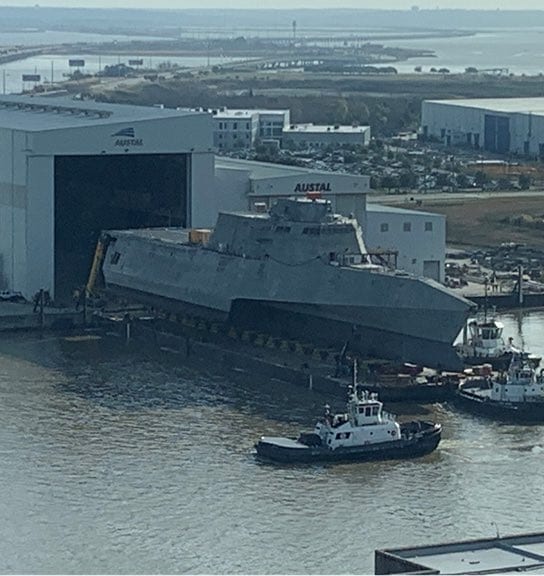
The future USS Mobile (LCS 26) moves from its construction bay to the Mobile River in this 2020 photograph. OFFICE OF BRADLEY BYRNE / Wikipedia

MOBILE, Alabama – The future USS Mobile (LCS 26), the U.S. Navy’s newest Independence-variant littoral combat ship (LCS), will be commissioned May 22, 2021 at 10:00 a.m. (CT) in Mobile, Alabama, the U.S. Naval Surface Force, U.S. Pacific Fleet said in an Apr. 21 release. 

Due to ongoing public health and safety concerns related to the COVID-19 pandemic, the ceremony will take place in compliance with Department of Defense, Centers for Disease Control, state public health, state, and local government guidelines and restrictions. The event will be livestreamed to offer maximum viewing by the general public. 

“The Mobile crew worked hard to prepare their ship for this moment, and they will continue to see the fruits of their labor as they train and operate at sea,” said Vice Adm. Roy Kitchener, commander, Naval Surface Force, U.S. Pacific Fleet. “We are refining the LCS class lethality and global sustainment infrastructure to better harness the versatility these ships bring to the surface force. Mobile is entering the fleet at a prime time in the LCS progression, as we implement lessons learned from other LCS deployers.” 

Rebecca Byrne, president and CEO of The Community Foundation of South Alabama and wife of former U.S. Rep. Bradley Byrne, R-Alabama, is the ship’s sponsor. As a former chairman of the Downtown Mobile Alliance and former executive director of United Way of Baldwin County, Rebecca has long served her community through civic, cultural, and church leadership roles. 
 
Highlighting the commissioning is a time-honored Navy tradition where Rebecca will give the first order to, “man our ship and bring her to life.” 
 
Mobile’s commanding officer, Cmdr. Christopher W. Wolff, a graduate of Carnegie Mellon University, the University of Oklahoma, and the U.S. Naval War College, has deployed five times on five different ships. The third-generation naval officer leads a crew of 70 officers and enlisted Sailors. 
 
USS Mobile was built in Mobile, Alabama, by Austal USA and was launched on January 11, 2020. The future USS Mobile is the fifth Navy ship to honor the city of Mobile, which has a rich historical relationship with the Navy. 
 
The first Mobile was a Confederate, government-operated, side-wheel steamer operating as a blockade runner and captured in New Orleans in April 1862 by U.S. forces. Commissioned as USS Tennessee, the ship was later renamed Mobile. Commissioned in March 1919, the second Mobile, a Hamburg Amerika Lines passenger liner operating between Germany and the U.S. until the outbreak of World War I, was taken over by the Allied Maritime Council and assigned to the United States after the Armistice. USS Mobile (CL 63) participated in numerous Pacific Theater campaigns during World War II. Commissioned on March 24, 1943, the cruiser received 11 battle stars for the ship’s time in service and was decommissioned in May 1947. The fourth Mobile (LKA 115) was an amphibious cargo ship serving from September 1969 until decommissioning in February 1994. 
 
LCS is a highly maneuverable, lethal and adaptable ship designed to support focused mine countermeasures, anti-submarine, and surface warfare missions. The Independence-variant LCS integrates new technology and capability to affordably support current and future missions, from deep water to the littorals. 
 
LCS is now the second-largest surface ship class in production, behind the Navy’s DDG 51 Arleigh Burke-class destroyer program. USS Mobile will be homeported at Naval Base San Diego, California.


HII Awarded $107M Advance Procurement Contract for LHA 9

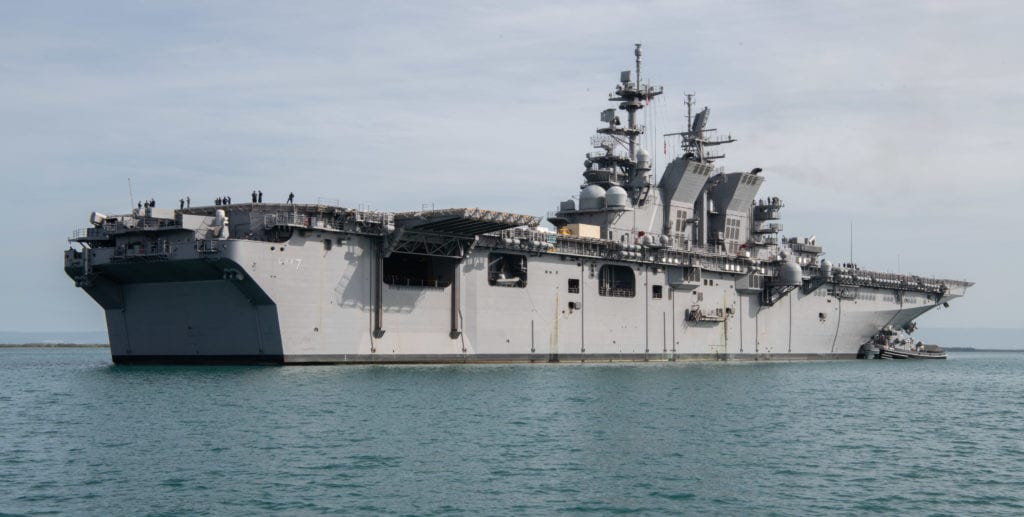
USS Tripoli (LHA 7), the second America-class amphibious assault ship, transits toward Naval Station Guantanamo Bay, Aug. 3, 2020. Huntington Ingalls Industries’ Ingalls Shipbuilding division has been awarded a $107 million contract modification for the LHA 9. U.S. NAVY / Mass Communication Specialist 3rd Class Annaliss Candelaria

PASCAGOULA, Miss. — Huntington Ingalls Industries’ Ingalls Shipbuilding division has received a contract modification from the U.S. Navy for $107 million to provide long-lead-time material and advance procurement activities for amphibious assault ship LHA 9, the company said in an April 19 release.  

“The amphibious warship production line is a critical component of our nation’s defense industrial base,” Ingalls Shipbuilding President Kari Wilkinson said. “This funding will strengthen our suppliers and sustain jobs across the country in support of LHA 9 construction.” 

Ingalls is the sole builder of large-deck amphibious ships for the Navy. The shipyard delivered its first amphibious assault ship, the Iwo Jima-class USS Tripoli (LPH 10), in 1966. Ingalls has since built five Tarawa-class (LHA 1) ships, eight Wasp-class (LHD 1) ships and the first in the new America class of amphibious assault ships (LHA 6) in 2014. The second ship in the America class, USS Tripoli (LHA 7), was delivered to the Navy in early 2020. Bougainville (LHA 8) is under construction. 


Navy’s Unmanned Integrated Battle Problem 21 to Culminate in Missile Shoot

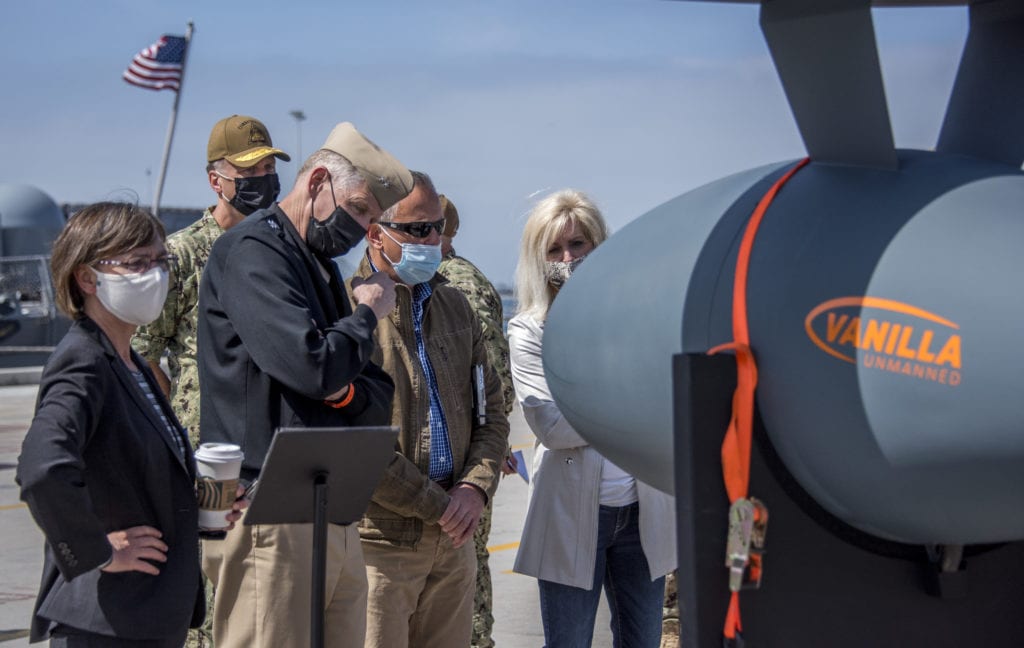
Chief of Naval Research, Rear Adm. Lorin Selby, observes a Vanilla Ultra Endurance unmanned aerial vehicle on Pier 12 during Integrated Battle Problem 21 (UxS IBP 21) Distinguished Visitors Day at Naval Base San Diego, April 16. U.S. Pacific Fleet’s UxS IBP 21, April 19-26, integrates manned and unmanned capabilities into the most challenging operational scenarios to generate war fighting advantages. U.S. NAVY / Mass Communication Specialist 2nd Class Natalie M. Byers

ARLINGTON, VA. — The U.S. Navy’s first large-scale unmanned systems (UxS) integrated battle problem (IBP) will involve manned/unmanned teaming and has a goal of developing a targeting solution for a planned missile shoot, the IBP executive agent said. 

The battle problem, led by the U.S. Pacific Fleet and executed by U.S. 3rd Fleet, began April 19 and is being conducted under the command of Rear Adm. James Aiken, commander, Carrier Strike Group Three. 

“This integrated battle problem provides an operational approach to integrating and adapting unmanned technology with our manned fleet,” Aiken said, speaking April 20 in a teleconference with reporters. “Various manned systems, including littoral combat ships, two classes of destroyers, an amphibious transport dock ship, and fixed and rotary-wing aircraft will test their enhanced capabilities alongside unmanned systems through operationally challenging scenarios and vignettes during this exercise. 
 
“This exercise generates warfighting advantages for our fleet by providing the operational environment to work through tactics, techniques, procedures, command and control, to integrate the fleet and we are ready to execute,” he said. “Our operational integration of these unmanned systems is here in our fleet today above the sea, on the sea and below the sea.   

“We want to move to a capability, to start applying operational concepts,” he said. “Foundationally, when actually planning this exercise, Sailors were part of the planning.

“Our goal for this exercise is to evaluate these unmanned systems and how they can actually team with manned systems,” he said. “As we team all those together, we will be able to evaluate what we can do and what we can’t do in trying to create a warfighting advantage … then we’re going to make sure we get it into the hands of the Sailors. We need to move things from the technical community to the tactical community.” 

Aiken said one of the vignettes of most interest is the most challenging: using “a combination of manned and unmanned assets in order to get after a target and provide a targeting solution. At range we’re going to put a missile on the target.” 

The admiral was not at liberty to name the type of missile to be used. 

Unmanned systems participating in the IBP include two medium-displacement unmanned surface vessels, Sea Hunter and its new sister ship, Seahawk; MQ-8B Fire Scout UAV; MQ-9 Sea Guardian UAV; Vanilla ultra-long-endurance UAV; Office of Naval Research’s Super Swarm Project; and the Ocean Aero Triton-Class Dual-Modality Underwater and Surface Autonomous Vehicle. 

Manned ships participating in the IBP include the Zumwalt-class guided-missile destroyer (DDG) USS Michael Monsoor; the Arleigh Burke-class DDGs USS Spruance, USS John Finn, USS Stockdale and USS Fitzgerald; Ticonderoga-class guided-missile cruiser USS Princeton; Freedom-class littoral combat ship (LCS) USS Fort Worth; Independence-class LCS USS Coronado; San Antonio-class amphibious transport dock ship USS Anchorage; and Los Angeles-class attack submarine USS Hampton.  

Manned aircraft participating include the P-8A Poseidon, E-2C Hawkeye, EA-18G Growler, MH-60R Seahawk and MH-60S Seahawk. 


Bollinger Shipyards Acquires Gulf Island Fabrication’s Shipyard Facilities

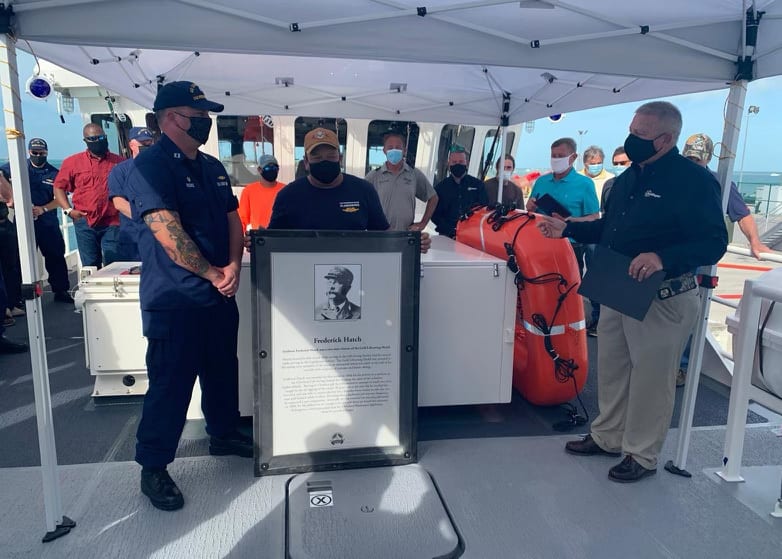
The Coast Guard accepts delivery of its newest Sentinel-class fast response cutter (FRC), the Coast Guard Cutter Frederick Hatch (WPC 1143), from Bollinger Shipyards in Key West, Florida, Feb. 10, 2021. Bollinger has now acquired Gulf Island Fabrication’s shipyard facilities, expanding its construction and repair capacity. U.S. COAST GUARD / Ensign Alexandra Hughes

LOCKPORT, La. — Bollinger Shipyards, a privately-held designer and builder of steel military and commercial vessels for the past three quarters of a century, has acquired Gulf Island Fabrication Inc.’s shipyard facilities, expanding Bollinger’s new construction and repair capacity and capabilities to better serve its key defense and commercial customers, the company said in an April 19 release. Financial terms of the transaction were not disclosed. 

This acquisition creates expanded opportunities for Bollinger to better serve and deepen its relationships with key defense and commercial customers with an increased capacity for new projects and footprint, access to a larger workforce skilled in steel construction, improved efficiencies and enhanced economies of scale. Current customers for Bollinger include the U.S. Coast Guard, U.S. Navy, General Dynamics-Electric Boat, and non-defense and commercial customers servicing energy production to dredging. Gulf Island had been building the Towing, Salvage and Rescue Ships for the U.S. Navy and Regional Class Research Vessels for the National Science Foundation and Oregon State University. These projects conveyed with the transaction.  
 
“The addition of the new Houma shipyard further strengthens our position within the U.S. defense industrial base as a leading shipbuilder and vessel repair company,” said Ben Bordelon, CEO and president of Bollinger Shipyards. “For 75 years, we’ve developed a deep expertise in and proven track record of building reliable, high endurance steel vessels for the Coast Guard, Navy and our commercial customers. As the needs of these customers change and grow, we are constantly looking for ways to invest in and expand our capabilities and innovative solutions so that we can continue to provide them with the highest levels of quality, support and service in our industry.”  

Bordelon continued, “For three quarters of a century, Bollinger’s greatest strength has and continues to be our people and their American ingenuity and quality craftsmanship. I am excited to welcome the Gulf Island Shipyard employees into the Bollinger family. Together, we will ensure that the ‘Bollinger standard’ will be the high bar we measure ourselves against for superior quality and safety as we work to deliver the next generation of American made high-performance vessels for our government and commercial customers.”  

The new Bollinger Houma facility encompasses 437 acres on the west bank of the Houma Navigation Canal, of which 283 acres is unimproved land that is available for expansion. The facility includes 18,000 square feet of administrative and operations facilities, 160,000 square feet of covered fabrication facilities and 20,000 square feet of warehouse facilities. It also has 6,750 linear feet of water frontage, including 2,350 feet of steel bulkheads. Located just 30 miles from the Gulf of Mexico, the strategic location provides short and unrestricted access to the newly acquired Houma facility from open waters. 

The acquisition also includes a 15,000-short ton drydock, a 4,000-short ton drydock, a 3,000-short ton drydock and a 1,500-short ton drydock.  

Bollinger’s acquisition increases the shipyard’s growing new construction and repair portfolio. In December of last year, Congress appropriated funds for Bollinger to build four additional Sentinel-class Fast Response Cutters (FRCs) for the U.S. Coast Guard. In addition to construction of the FRC, Bollinger is under contract to construct an Ocean Transport Barge and Floating Dry Dock for General Dynamics Electric Boat Division. In addition, Bollinger is participating in industry studies for five government programs, including the U.S. Coast Guard’s Offshore Patrol Cutter and the U.S. Navy’s Common Hull Auxiliary Multi-Mission Platform, Auxiliary General Ocean Surveillance, Large Unmanned Surface Vehicle and Light Amphibious Warship programs. 


Elbit Awarded $41M Order as Part of the Night Vision Goggles IDIQ Contract for U.S. Marine Corps

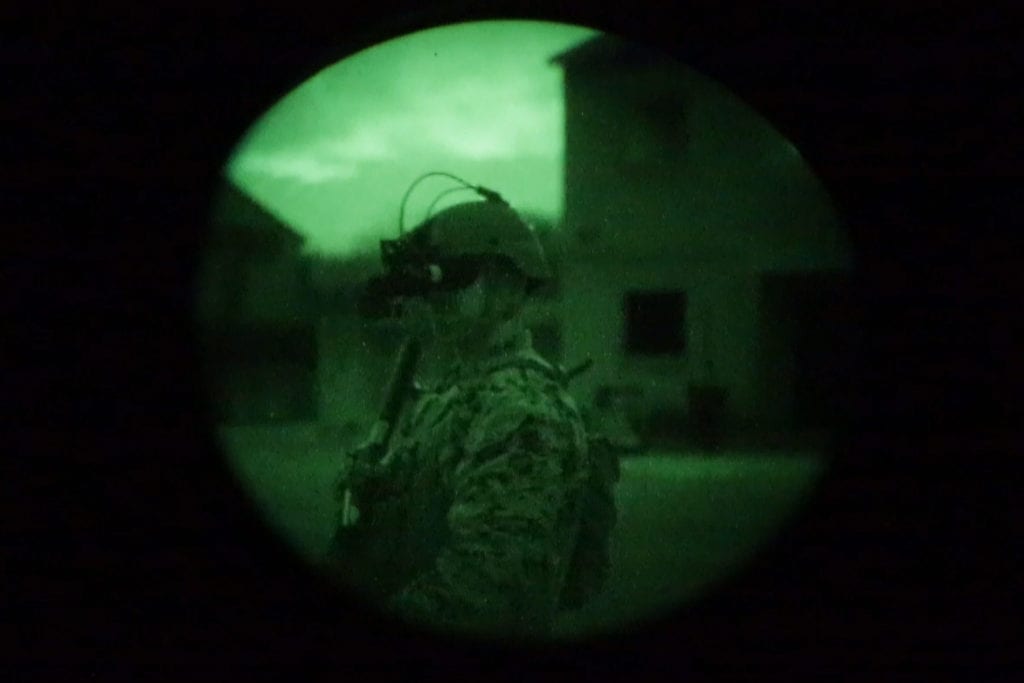
A view of a Marine through the Squad Binocular Night Vision Goggle at night. In January 2020, a group of Marines with The Basic School assessed the Squad Binocular Night Vision Goggle night vision system comprising an image-intensifier binocular and enhanced clip-on thermal imager. U.S. MARINE CORPS / Sgt. Kirstin Spanu

HAIFA, Israel — Elbit Systems Ltd.’s U.S. subsidiary, Elbit Systems of America LLC, has been awarded a delivery order valued at approximately $41 million for the supply of night vision systems and various spare components to the U.S. Marine Corps, the company said in an April 20 release. The order will be executed in Roanoke, Virginia, and will be supplied through March 2022. 

This order is part of a $249 million five-year Squad Binocular Night Vision Goggles indefinite delivery indefinite quantity (IDIQ) contract from Sept. 6, 2019, under which the U.S. Marine Corps are supplied with Squad Binocular Night Vision Goggle (SBNVG) systems consisting of high-performance, white phosphor image intensifier binoculars, modular uncooled thermal imaging sensors and common external power supplies — providing Marines improved mobility and situational awareness during night operations. 

“Marines need to quickly understand their surroundings and act to engage their targets — no matter the light conditions — and Elbit Systems of America’s SBNVG provides this power in a lightweight, adjustable system that is an ideal upgrade,” said Raanan Horowitz, president and CEO of Elbit Systems of America. 


Inaugural Unmanned Battle Problem 21 to begin April 19

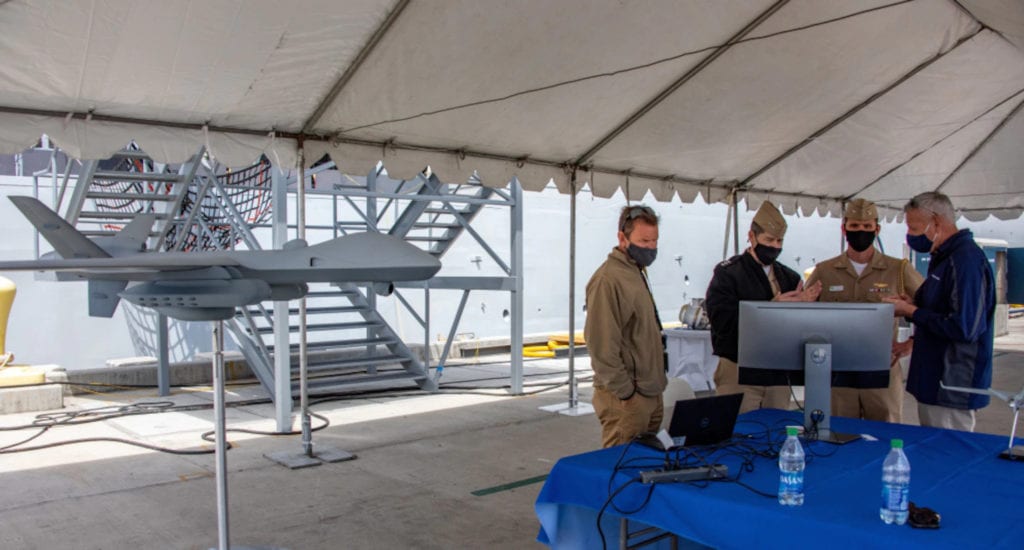
 Vice Adm. Michael Moran, principal military deputy assistant Secretary of the Navy (Research, Development and Acquisition), speaks with representatives from General Atomics Aeronautical about the MQ-9 Sea Guardian unmanned aircraft at Pier 12 on Naval Base San Diego. U.S. Pacific Fleet’s UxS IBP 21, April 19-26, integrates manned and unmanned capabilities into the most challenging operational scenarios to generate war fighting advantages. U.S. NAVY

SAN DIEGO – The Navy begins its inaugural multi-domain manned and unmanned capabilities exercise April 19, the U.S. 3rd Fleet said in an April 16 release. The exercise will feature unmanned capabilities “Above the Sea, On the Sea and Below the Sea.” 

Led by U.S. Pacific Fleet and executed by U.S. 3rd Fleet, Unmanned Integrated Battle Problem 21 will generate warfighting advantages by integrating multi-domain manned and unmanned capabilities into the most challenging operational scenarios. 
 
The exercise will feature operational, unmanned systems such as the MQ-9 Sea Guardian Unmanned Aerial Vehicle, the Medium Displacement Unmanned Surface Vessels Sea Hunter and Sea Hawk, and small and medium Unmanned Undersea Vehicles with modular payloads. 

“Building off advances achieved over the past decade in unmanned aviation, Pacific Fleet is answering the Chief of Naval Operations’ drive to put the Navy’s Unmanned Campaign Plan into action,” says Rear Adm. Robert M. Gaucher, director of maritime headquarters at U.S. Pacific Fleet. “Furthermore, by exercising our full range of unmanned capabilities in a Pacific warfighting scenario, UxS IBP21 directly supports U.S. Indo-Pacific Command’s warfighting imperative of driving lethality through experimentation.” 

Unmanned systems alongside the traditional, manned naval force will give the U.S. Navy the advantage needed to fight, win and deter potential aggressors. This exercise will directly inform warfighters, warfare centers and developers to further incorporate unmanned capabilities in day-to-day Fleet operations and battle plans. 
 
“The overall goal is to integrate our unmanned capabilities across all domains to demonstrate how they solve CNO and Fleet Commander Key Operational Problems,” says Gaucher. “To get after these problems, UxS IBP21 will include maneuvering in contested space across all domains; targeting and fires; and intelligence, reconnaissance and surveillance.” 


USS The Sullivans Deploys in Support of British Carrier Task Group 21

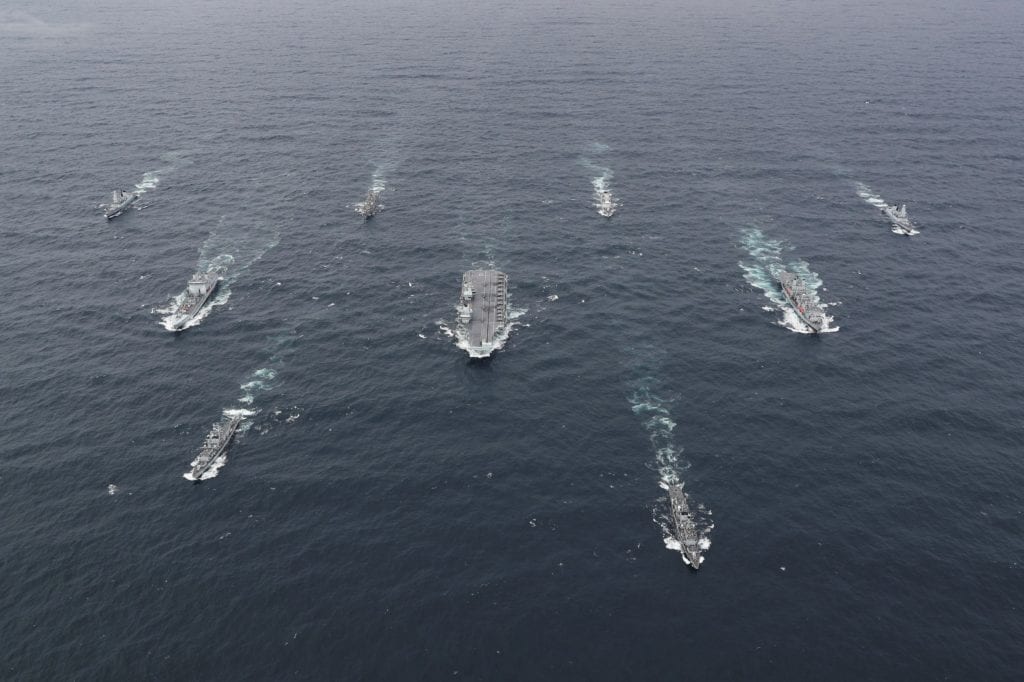
The Arleigh Burke-class guided-missile destroyer USS The Sullivans (DDG 68), departed Mayport, Florida, April 19, for deployment to participate in HMS Queen Elizabeth (R08) Strike Group. U.S. NAVY

MAYPORT, Fla. — The Arleigh Burke-class guided-missile destroyer USS The Sullivans (DDG 68), departed Mayport, Florida, April 19, for deployment to participate in HMS Queen Elizabeth (R08) Strike Group, the U.S. 2nd Fleet said in a release. 

The inclusion of U.S. forces in the strike group will improve expeditionary capabilities and interoperability between NATO allies, demonstrating the United States’ commitment to the NATO alliance. 

“It is an honor to sail in this elite multi-national strike group on the frontline demonstrating a fully integrated force that showcases the special relationship that our countries have,” said Cmdr. David Burkett, commanding officer of The Sullivans. “USS The Sullivans’ namesakes would be extremely proud of us as we boldly show that, we stick together!”

The ship is named after the five Sullivan brothers who died when their ship, the USS Juneau, was sunk by a Japanese submarine during the battle of Guadalcanal in World War II. It is the second Navy ship to be named after the brothers.

The Sullivans recently participated in a successful Composite Unit Training Exercise alongside the Iwo Jima Amphibious Ready Group and the 24th Marine Expeditionary Unit that included a NATO vignette and training with SEALS from an East Coast-based Naval Special Warfare Group. 
 
The vignette, developed by Carrier Strike Group Four and Combined Joint Operations from the Sea Centre of Excellence (CJOS COE), consisted of familiarity training designed to facilitate allied maritime interoperability and integration, in practical terms using NATO procedures, messaging formats and chat capabilities. 
 
The vignette developed and refined a clear list of interoperability requirements for future Navy force generation, and improved allied maritime command-and-control linkages. 
 
“To ensure truly effective deterrence and defense in the North Atlantic, we need to make sure that the navies of NATO can work as one team, and that means interoperability is vital,” said Commodore Tom Guy, Royal Navy, deputy director CJOS COE. “This NATO vignette has been a great step forward in pursuing allied interoperability. CJOS COE looks forward to continuing to develop this for future deploying strike groups.” 
 
In Oct. 2020, USS The Sullivans participated in U.K.-led exercise Joint Warrior 20-2 as part of HMS Queen Elizabeth Strike Group. The exercise provided pre-deployment opportunities for the international strike group.