Rigorous Systems Engineering Vital for Ensuring USV Reliability, Admiral Says
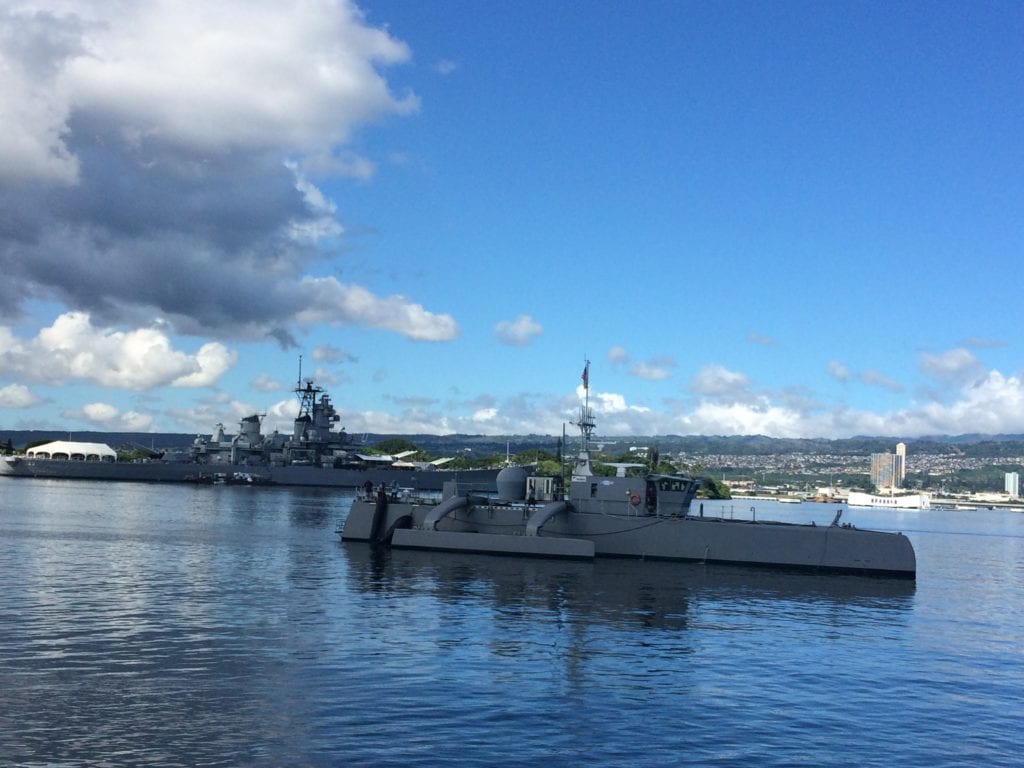
Sea Hunter, an entirely new class of unmanned sea surface vehicle developed in partnership between the Office of Naval Research (ONR) and the Defense Advanced Research Projects Agency (DARPA), recently completed an autonomous sail from San Diego to Hawaii and back — the first ship ever to do so autonomously. Sea Hunter is part of ONR’s Medium Displacement Unmanned Surface Vehicle (MDUSV) project, a forerunner of the Medium Unmanned Surface Vessel program. U.S. NAVY

ARLINGTON, VA. — The Navy plans to use extensive land-site testing for components and systems of the Medium Unmanned Surface Vessel (MUSV) in order to wring out risk in developing and integrating systems, the admiral in charge of developing unmanned vessels said. 

The Navy is committed to addressing the congressional concerns about, for example, the reliability of machinery of USVs, “to make sure that we go in this measured way of rigorous systems engineering approach,” said Rear Adm. Casey Moton, program executive officer, Unmanned and Small Combatants, speaking April 13 in an Unmanned Systems Defense webinar of the Association of Unmanned Vehicle Systems International.  

“Along with our prototypes that are out testing now, we’ve been maturing our execution plans,” Moton said, noting that the program engineers are “working on hybrid reliability and hull, mechanical and electrical [HM&E] equipment. 

“We are now going to do our testing at sea, but we are going to do land-based testing of our HM&E equipment for a Medium USV and we’re getting plans ready for Large USV and all of those aspects,” he said. 

Moton said a second pillar of the programs is for C4I [command, control, communications, computers and intelligence], “making sure that we carefully test the C4I system that is going to allow our unmanned vessels to be a part of this hybrid fleet. A lot of that is about [Project] Overmatch, but also be a principal component of Overmatch.” 

A third pillar of the unmanned systems focus is combat systems, adapting them for use on autonomous vessels. Weapons firing will always be performed by a human in the loop, he said. 

A fourth pillar, a common control system, is maturing and is to be something that can be designed once and then scaled up for fleet use. 

“Our initial prototypes were systems that we bought from industry,” Moton said. “We are all the time maturing that into a common system that is going to go in our program of record.” 

The fifth pillar is perception. “We have a very rigorous plan we’re already executing with our prototypes, testing out the perception systems … and the autonomy we need to do.” he said.    

The sixth pillar is prototyping.  

“We’re getting after the sea-based testing and land-based testing, that particularly has been a concern of Congress, and as we go forward, we’re going to articulate that more clearly, but, in each one of these, we’re going very carefully, doing the building blocks, in a good systems engineering manner,” he said.  

“We’re solving it [any given technological challenge] once. We’re going to scale it up like the framework [Unmanned Campaign Plan] talks about, [so that] we’re not having to learn the same lessons over and over again. Even though we have a set number of prototypes, we are developing systems that are going to apply across the fleet.”      
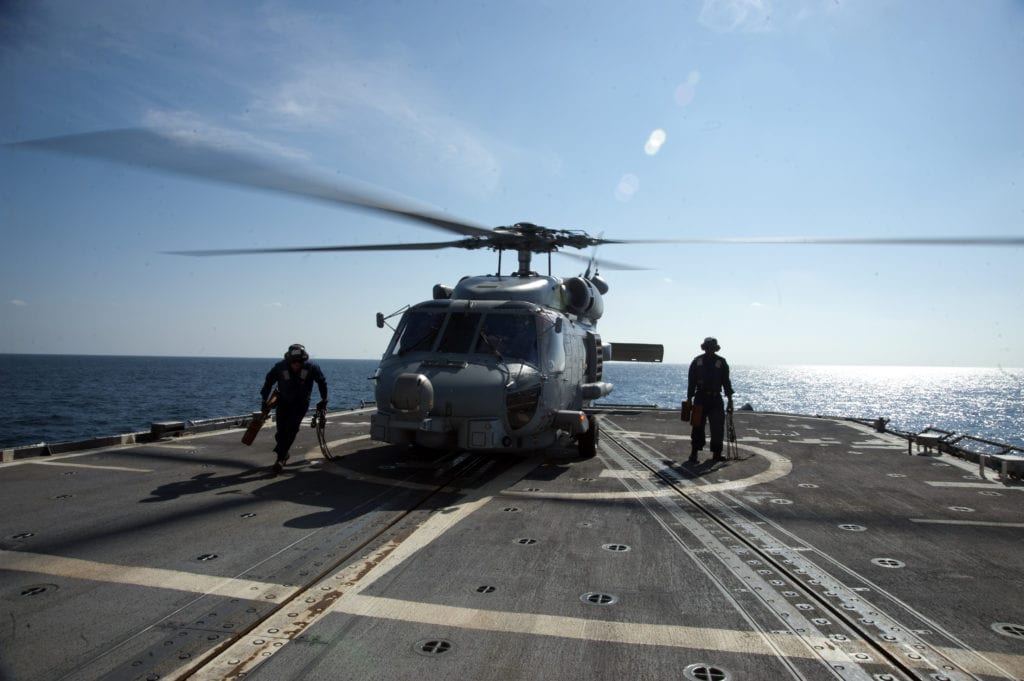


U.S. Navy Orders 12 MH-60R Helicopters for South Korean Navy

An MH-60R Seahawk helicopter assigned to Helicopter Maritime Strike (HSM) 74, on the flight deck of the guided missile cruiser USS Gettysburg (CG 64) Nov. 24, 2013, in the Gulf of Oman. U.S. NAVY / Mass Communication Specialist 3rd Class Lorenzo J. Burleson

ARLINGTON, Va. — The U.S. Navy has ordered 12 MH-60R Seahawk helicopters from Lockheed Martin for the South Korean navy through Foreign Military Sales program. 

The Naval Air Systems Command awarded Lockheed Martin a $447.2 million firm fixed-price order for the production and delivery of 12 MH-60R aircraft for the government of the Republic of Korea, an April 12 Defense Department announcement said.  

The sale of MH-60Rs to South Korea was approved by the U.S. State Department in August 2020. The sale “will improve the Republic of Korea Navy’s capability to perform anti-surface and antisubmarine warfare missions, along with the ability to perform secondary missions including vertical replenishment, search and rescue, and communications relay,” the release said. “The Republic of Korea will use the enhanced capability as a deterrent to regional threats and to strengthen its homeland defense. The Republic of Korea will have no difficulty absorbing these helicopters and support into its armed forces.” 

In addition to the U.S. Navy, the MH-60R has been operated or ordered by six other nations: Australia (24), Denmark (9), Saudi Arabia (10), India (24), Greece (4) and South Korea (12). 


Saildrone USVs to Collect Data on Gulf Stream

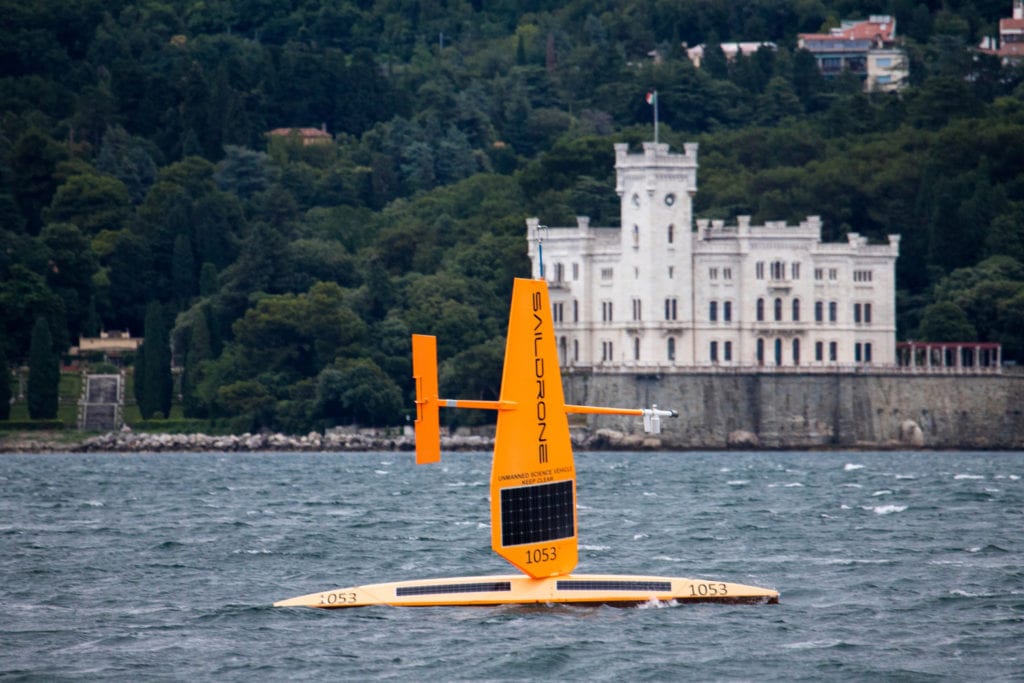
A Saildrone craft near Miramare Castle in Trieste, Italy, following a 2010-2020 Atlantic-to-Mediterranean mission. NATIONAL INSTITUTE OF OCEANOGRAPHY AND APPLIED GEOPHYSICS

ARLINGTON, Va. — Saildrone Inc., an operator of ocean-going unmanned surface vessels (USVs), has been selected by Google to collect oceanographic data on the Gulf Stream. 

“Saildrone has been selected to receive a grant of over €$1 million ($1.2 million USD) from the Google.org Impact Challenge on Climate to collect data in the Gulf Stream that has the potential to transform weather forecasting and our ability to create more accurate global carbon budgets,” Saildrone spokeswoman Susan Ryan said in a statement to Seapower

“The Gulf Stream region has a significant impact on weather and climate in Europe and around the globe but is undersampled due to the violent seas and harsh weather in the region,” Ryan said. “These treacherous conditions make it too dangerous to send research ships and crew into the area for extended periods, especially in winter. It is shocking that 70% of the world is covered by oceans, yet only 2% of the ocean has been sampled for critical ocean data.” 

“Saildrone is a company building and operating unmanned surface vehicles that are powered primarily by solar energy, with wind being the primary propellent for the craft,” said Ron Tremain, Saildrone’s vice president for Maritime Domain Awareness during an earlier interview with Seapower

The Gulf Stream expedition will be conducted by several of Saildrone Explorers, which are 23 feet long and typically proceed at four knots by sail.  

The carbon-fiber sail on each is more like a wing than a sail, but it is a sail that can be controlled mechanically and with the wind. Depending on which direction we want it to sail, the operator can make adjustments to increase the speed, decrease the speed, change course direction as needed, Tremain said. 

The Explorer, the smallest of Saildrone’s USVs, are fitted with an advanced sensor suite of atmospheric and oceanographic sensors, combined with radar, the Automatic Information System, and a set of electro-optical cameras. 

Saildrone will launch six Explorer USVs to spend up to a year continuously collecting critical data in the Gulf Stream while creating no environmental footprint, Ryan said. This mission will collect critical data at a resolution that has not been possible previously, yielding new insights into the transport of heat and carbon around our oceans.  


Clock Ticking for Strategy to Maintain U.S. Global Lead in Artificial Intelligence

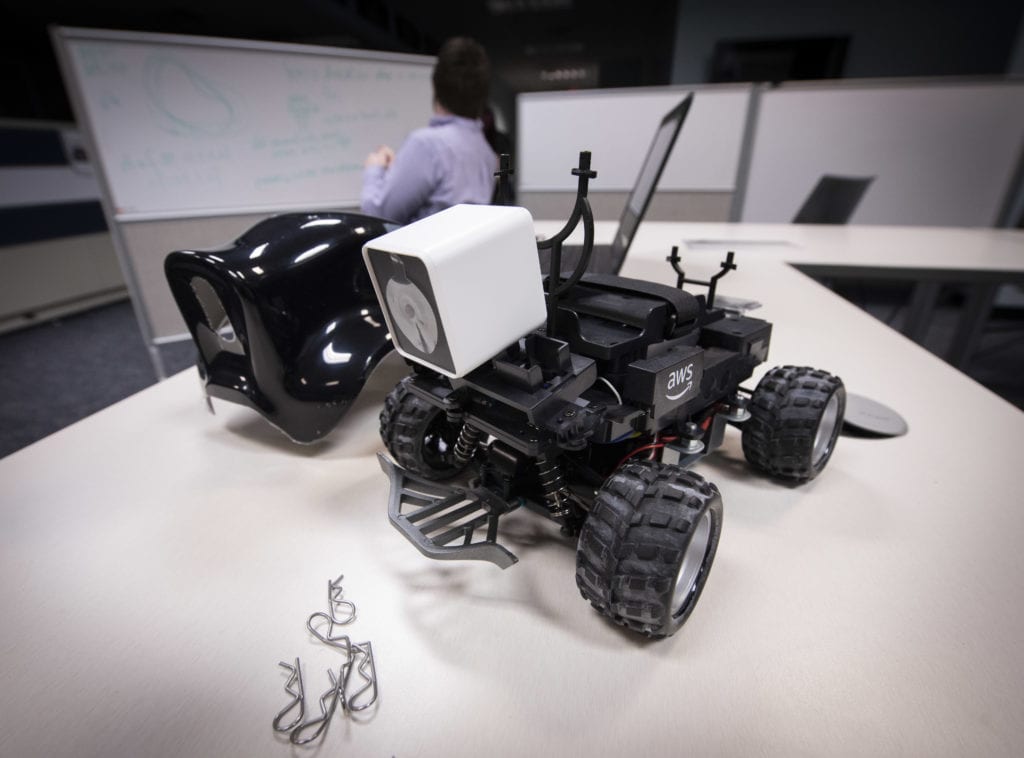
Naval Information Warfare Center (NIWC) Atlantic’s Amazon Web Services (AWS) DeepRacer vehicle is opened up for maintenance and a last minute check before being shipped off to participate in the First Annual virtual Army-Navy AWS DeepRacer Challenge. The challenge is centered around racing autonomous vehicles. U.S. NAVY / Joe Bullinger

ARLINGTON, Va. — U.S. technological advantages over great power competitor China could be lost in less than 10 years without a robust and comprehensive artificial intelligence (AI) security strategy, according to the findings of an independent government commission.

“For the first time since World War II, the United States’ technological predominance — which undergirds both our economic and military competitiveness — is under severe threat by the People’s Republic of China,” Robert Work, vice chairman of the National Security Commission on Artificial Intelligence, told a live-streamed Pentagon press briefing April 9 on the commission’s final report.

And the most important technology “that the United States must master is artificial intelligence and all of its associated technologies,” Work added. Likening artificial intelligence to how harnessing electricity opened up a field of fields, Work said AI would affect quantum computing, healthcare, finance and military competition.

Work, who served as deputy secretary of defense in the Obama and Trump administrations, stressed the immediate and long-term risks. He noted China has advantages in data collection, with no privacy restraints like Western democracies have, as well as applications and integration of AI. The United States has advantages in talent, hardware and algorithms.

“Although the Chinese are really pushing hard [on algorithms] and we think they could catch up with us within five to 10 years,” he cautioned. However, overall, Work explained, “we do not believe China is ahead right now in AI.”

But that could change, said Marine Corps Lt. Gen. Michael S. Groen, director of the Joint Artificial Intelligence Center.

“China’s declared intent is to be globally dominant in AI by 2030,” he told reporters. JAIC’s mission is to transform to accelerate the delivery and adoption of AI to achieve mission impact at scale across the Defense Department. He said there was positive momentum toward implementation of AI at scale. “We certainly have a long way to go, but you can see the needle trending positive.”

The Chinese “are far more organized for competition and have a strategy to win the competition,” backed by a lot of resources, Work added. By contrast, the United States is not organized to win the competition for AI dominance. “We do not have a strategy to win the competition,” Work said, adding “We do not have the resources to implement a strategy — even if we had one.”

That’s where the commission’s recommendations come in. They include setting up a steering committee of emerging technology, consisting of the deputy defense secretary, the vice chairman of the Joint Chiefs and the principal deputy director of national intelligence to coordinate all AI activities between the intelligence community and the Pentagon.

Other recommendations include establishing a dedicated AI fund to assist small innovative AI companies bridge the gap between initial research funding and program acquisition; creating a Defense Department digital corps, modeled on the Medical Corps, to identify and utilize digital-savvy warfighters and leaders; and boosting science and technology research and development to 3.4% of the defense budget and spend $8 billion on AI annually.

Groen described the massive NSCAI report as a “760-page to-do list.” With tightened future defense budgets expected, “the productivity gains and the efficiency gains that AI can bring to the department becomes an economics necessity.”  


Bahrain Delegation Commemorates Production of Its First AH-1Z Helicopter

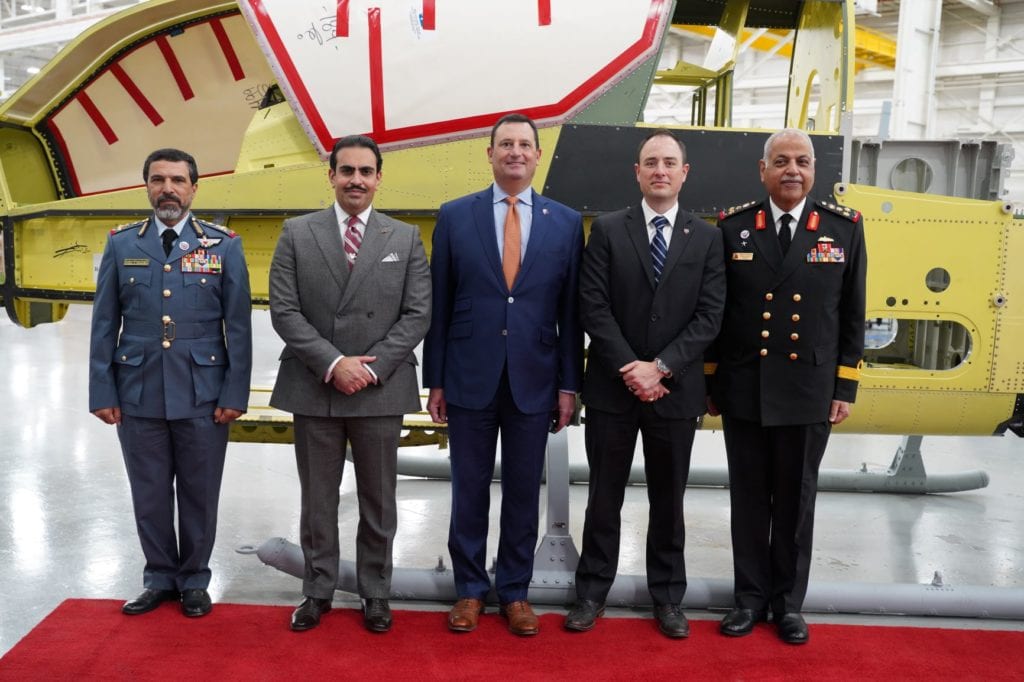
Brig. Gen. Faisal Al Kaabi, Bahrain Ambassador to the U.S. H.E. Shaikh Abdulla Al Khalifa, Bell Executive Vice President, Military Business, Vince Tobin, Bell Vice President and H-1 Program Director Michael Deslatte and Bahrain Defense Attaché to the U.S., Commodore Adm. Jasim Al Jowder, pose in front of an AH-1Z Viper during an aircraft frame signing ceremony at Bell’s Amarillo assembly center on 31 March 2021. BELL

AMARILLO, Texas — Bell hosted a delegation from the Kingdom of Bahrain to mark the start of production of AH-1Z Viper attack helicopters built as part of the Foreign Military Sales (FMS) program, the company said in an April 12 release. Delegates toured the Bell Amarillo production facility to observe the production line and ceremoniously sign the aircraft’s frame destined to join the Bahrain Air Force. 

“We are honored to host the Kingdom of Bahrain and share this milestone in production for the AH-1Z,” said Mike Deslatte, Bell H-1 vice president and program director. “Today’s ceremony marks a new milestone in bringing the advanced capabilities of the Viper a step closer to the Kingdom of Bahrain.”  

Bell designed the AH-1Z Viper to meet the modern battlefield’s expeditionary requirements across the full spectrum of military operations. The Viper routinely maintains a high operational tempo from forward operating facilities by minimizing its logistical footprint without losing warfighting capabilities. 

“Today also signifies the dedication of thousands of Bell and Team Viper employees around the world who are proud to support our international partner,” said Deslatte.  

The Department of Defense awarded Bell a contract to manufacture and deliver 12 Lot-16 AH-1Z aircraft to the Kingdom of Bahrain. Bell projects production deliveries to begin in late 2021. 


NAWCAD Team Brings First-of-its-Kind P-8A Decoy Prototype to Test

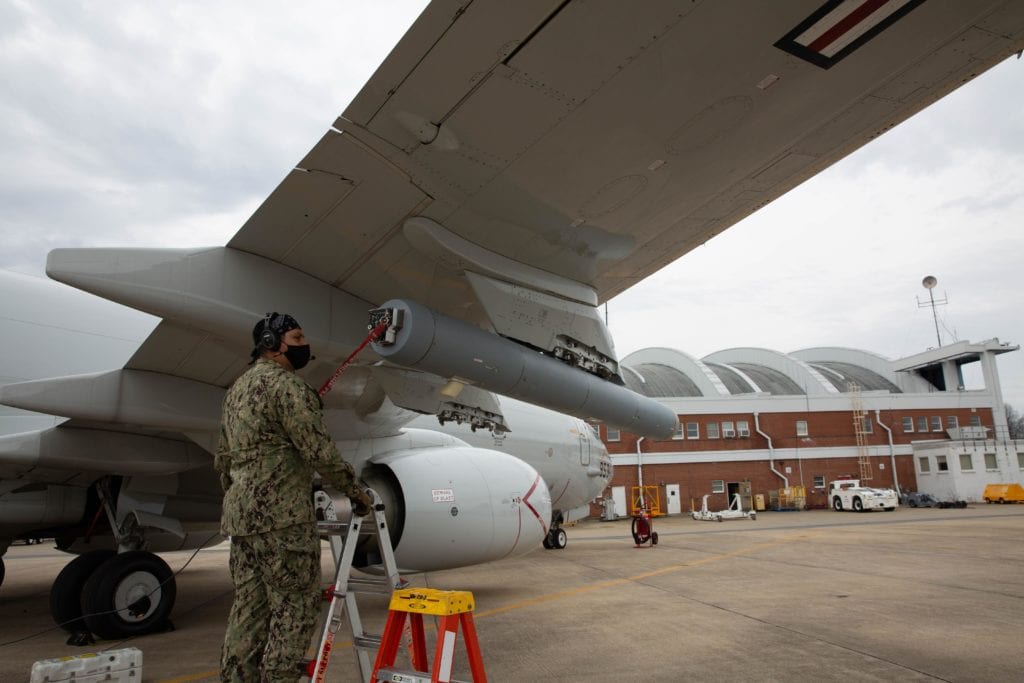
A member of Air Test and Evaluation Squadron (VX) 20 puts a pod-mounted radio frequency countermeasure system on a P-8A Poseidon, March 12. The pod successfully competed an air worthiness test at the Naval Air Warfare Center Aircraft Division (NAWCAD) Atlantic Test Ranges. U.S. NAVY

PATUXENT RIVER, Md. — An Air Test and Evaluation Squadron (VX) 20 P-8A Poseidon successfully completed an airworthiness test of a pod-mounted radio frequency countermeasure (RFCM) prototype at the Naval Air Warfare Center Aircraft Division (NAWCAD) Atlantic Test Ranges, March 12, the Naval Air Systems Command said in an April 9 release. 

The first-of-its-kind radio frequency defense decoy could allow the P-8A to thwart enemy radio frequency missile attacks. 

 “This has the potential to be a game-changer for protecting the warfighter,” said Capt. Eric Gardner, program manager for the Maritime Patrol and Reconnaissance Aircraft Program Office (PMA-290). “We continue to look for ways to enhance capabilities that allow the fleet to be successful.”  

Getting the pod into testing, in just over a year, took a complete team effort. 

Constantly looking for upgrades to the P-8A, PMA-290 set out to find a solution to a potential threat from surface-to-air radio frequency missiles. 

Outlining their needs and running lead on the project, PMA-290 brought in the Advanced Tactical Aircraft Protection Systems Program Office (PMA-272), the Rapid Prototyping, Experimentation & Demonstration (RPED) team, and the NAWCAD Aircraft Prototype Systems Division (APSD) to get the ball rolling. 

The RPED team supported APSD in designing the RFCM pod, which integrated the proven AN/ALE-55 Fiber Optic Towed Decoy from PMA-272 into a shell. The team developed the shell design based on the certified AGM-84 Harpoon missile, and then incorporated unique tracks and housing to fit and deploy the decoy. 

By employing the assistant secretary of the Navy for research, development and acquisition’s delegation of other transactions authority (OTA) for prototype projects, PMA-290 and NAWCAD were able to complete a one-of-a-kind contract with BAE Systems to develop the RFCM pod’s additional internal equipment suite. The OTA, a non-Federal Acquisition Regulation contracting approach, could potentially allow this critical self-protection technology to transition from prototype to fleet capability in much less time than a traditional effort. 

APSD and BAE leveraged the established AN/ALE-55 electrical design to accommodate the suite’s installation. 

“A lot of the challenge and effort went into designing, to our best estimates, for what BAE was expected to put in the pod,” said Michael Hansell, the leading APSD engineer for the project. “We had to adapt and redesign rapidly. We worked as fast as possible to support PMA-290 and RPED to make sure we could pivot and adjust to meet established timelines.” 

Constant tweaks were needed as the teams continued to hone in on a capable design. 

“Michael Hansell and his team’s flexibility and willingness to go above and beyond, to work through issues and prepare for BAE, was key in getting [the pod design and build] done in a timely manner,” said James Sherman, the APSD project lead. 

The Naval Innovative Science & Engineering (NISE) program funded the project, which provided the means to conceptualize, prototype, build, and test this new capability for the Navy. 

This funding accelerated the design and manufacturing cycle for the prototype to just under six months. The expedited developmental process supports the rapid prototyping of new and developing technologies and provides the resources to find solutions and incorporate improvements to fill capability gaps in the fleet faster. 

The teams were also able to use PMA-272’s F/A-18 lab equipment to speed up the timeline. 

All this teamwork culminated in the successful airworthiness test with VX-20. 

 “This shows that when we identify a need and work rapidly as a team we can bring a viable solution to test that has the ability to greatly impact the warfighter,” said Lt. Cmdr. Mike Marschall, PMA-290 weapons and rapid capabilities co-team lead. 

Following the test, the pod went to Naval Air Weapons Station China Lake, California, where it successfully completed effectiveness testing, March 21-26. It will now continue to be tested at a system level leading to platform integration through planned capability fielding phases. 


Vigor Begins Work on USS William P. Lawrence

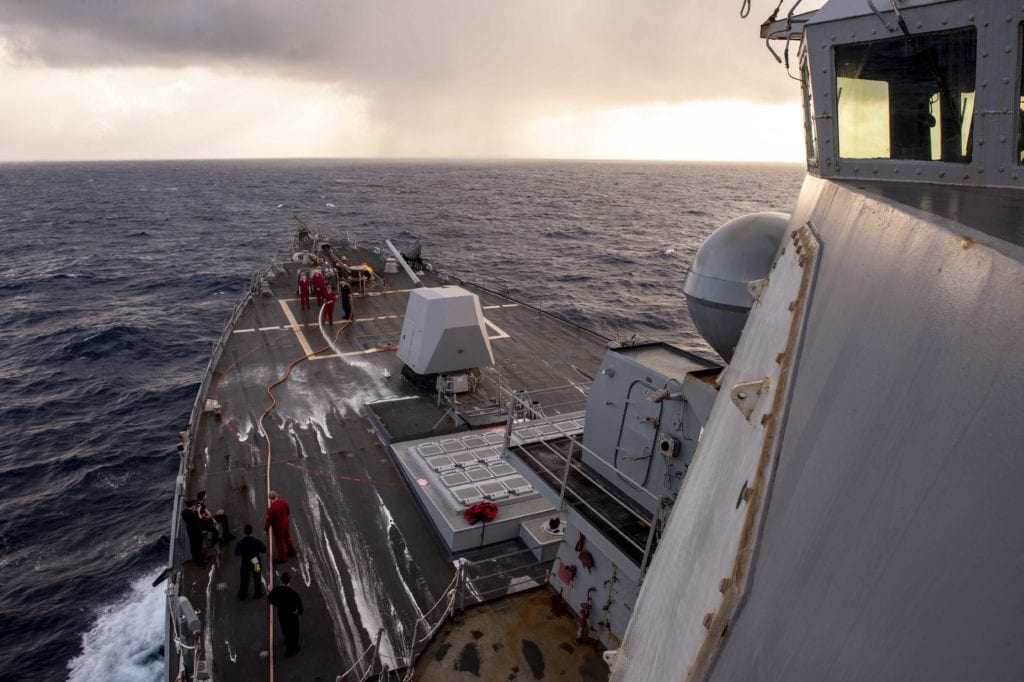
Sailors spray fresh water on the deck after testing aqueous film forming foam sprinklers on the foc’sle of the Arleigh Burke-class guided-missile destroyer USS William P. Lawrence (DDG 110) in this 2019 photo. U.S. NAVY / Mass Communication Specialist 3rd Class Caledon Rabbipal

PEARL HARBOR – USS William P. Lawrence (DDG 110), an Arleigh Burke-class guided missile destroyer, docked at Pearl Harbor Naval Shipyard and Intermediate Maintenance Facility (PHNSY & IMF) for the ship’s docking selected restricted availability (DSRA). Vigor began work that is expected to continue into early January 2022, the company said in a release.  

This is the second time Vigor, a Titan company, and Hawaii Regional Maintenance Center (HRMC), responsible for surface ship maintenance at PHNSY & IMF, will partner to complete a surface ship DSRA, following the successful completion of USS Wayne E. Meyer (DDG 108). Vigor’s first partnership with HRMC concluded in January, completing the Wayne E. Meyer’s DSRA 14 days ahead of schedule despite the challenges posed by COVID-19.  

“Vigor is grateful for another opportunity to partner with HRMC and serve the U.S. Navy at Pearl Harbor,” said Adam Beck, Vigor executive vice president, Ship Repair. “We are proud of the work to complete our first availability on the Wayne E. Meyer ahead of schedule, allowing an important Navy asset to return to service. Now our skilled workers are honored to be serving the Navy again on the William P. Lawrence. We look forward to a successful availability and the potential growth of our work in Hawaii in the future.”  

With its expansion into Hawaii in 2020, Vigor is now serving the U.S. Navy in ship repair across three states, including Oregon, Washington and Hawaii. USS Cape St. George (CG 71) recently arrived at Harbor Island in Seattle, alongside USS Chosin (CG 65), while work continues on USS McCampbell (DDG 85) at Swan Island in Portland, Oregon.  

William P. Lawrence’s availability will include routine maintenance, modernization and repair work to keep the ship operating at full technical capacity and mission capability for its entire service life. The contract for the DSRA totals nearly $84 million, with options that could increase the value to more than $85 million. Eighty direct employees supported Vigor’s work on Wayne E. Meyer. A similar number of jobs are projected to be supporting Vigor’s efforts for William P. Lawrence. 

“We are thrilled to get underway with William P. Lawrence’s availability and look forward to a successful partnership with ship’s force and Vigor Marine,” said Capt. Daniel Kidd, HRMC deputy commander, first shared by PHNSY & IMF. “The work the team will complete during this scheduled maintenance period will help maintain and modernize this mighty warship so that she can get back to sea executing the Navy’s mission.” 

“We all have a sense of excitement as we begin the availability knowing our work directly impacts the Navy’s mission,” said HRMC William P. Lawrence Project Manager J.C. “Harry” Herrera. “The HRMC and Vigor team is laser-focused on executing first-time quality work that will return the ship back to sea on time for her crew.” 


Exercise Arctic Guardian 2021 to Enhance Circumpolar Collaboration

Petty Officer 2nd Class Lauren Butnor, a crewmember aboard the Coast Guard Cutter Polar Star (WAGB 10), climbs aboard Polar Star after participating in ice rescue training in the Bering Strait, Wednesday, Jan. 20, 2020. U.S. COAST GUARD / Petty Officer 1st Class Cynthia Oldham

WASHINGTON — The Emergency Prevention, Preparedness and Response (EPPR) Working Group of the Arctic Council and the Arctic Coast Guard Forum (ACGF) will hold a joint online emergency response exercise from April 12-14, hosted by the Environment Agency of Iceland, the Polar Institute of the Wilson center said in an April 12 release.

The goal of the exercise is to improve Arctic nations’ capability to respond to maritime incidents requiring joint search and rescue (SAR) and marine environmental response operations. 

The Arctic Guardian 2021 exercise is designed to improve collaboration between Arctic Council and ACGF member states who are signatories of the Agreement on Cooperation on Marine Oil Pollution Preparedness and Response in the Arctic (MOSPA) and the Agreement on Cooperation on Aeronautical and Maritime Search and Rescue in the Arctic (Arctic SAR Agreement). The collaborative exercise will provide public and private operational and policy-oriented SAR and marine environmental response organizations with a means to discuss their communication and coordination processes in the event of a marine SAR and/or oil spill incident in the Arctic. 

The Arctic Guardian 2021 exercise follows a scenario where an oil tanker and an expeditionary cruise vessel collide off the North coast of Iceland. Originally intended as a live exercise following a table-top exercise in fall 2020, the virtual format will ensure that all stakeholders can participate, and the global pandemic does not hinder Arctic emergency preparedness. 

“As maritime activity in the Arctic increases, it elevates the risk of serious incidents and the need to plan and prepare for emergency and pollution responses,” said Jens Peter Holst-Andersen, chair of EPPR. “It is crucial to test and better understand the challenges of a coordinated response that involves many different players in a safe environment. It allows us to not only test response activities, but also build and strengthen the relationships between these diverse players, which are incredibly important at the time of real emergency.” 

“As we know, disasters can strike without any previous indication, anytime, anywhere. The Arctic and adjacent regions are incredibly challenging,” said RADM Georg Lárusson, chair of the ACGF and director general of the Icelandic Coast Guard. “Therefore, we have to exercise and prepare for major incidents, emphasizing harsh weather conditions, long distances involved and limited infrastructure. That is precisely the purpose of the Arctic Guardian exercise and workshop. We share and cooperate to battle these elements to make the area safer for the inhabitants and guests.” 

The Arctic Guardian 2021 exercise will engage stakeholders in Iceland, representatives from other Arctic States, key non-government organizations and industry actors involved in search and rescue and marine environmental response. The Wilson Center’s Polar Institute will provide overarching facilitation support, panel moderation, and contribute to exercise outcomes. “The Polar Institute team is pleased and honored to participate in this important international effort in support of the ACGF, the Arctic Council, and EPPR as they address the shared challenges brought about by a changing Arctic,” said Dr. Mike Sfraga, director of the Polar Institute. The entities jointly designing and organizing the exercise include ACGF Combined Operations Working Group (COWG), EPPR MOSPA Joint Design Team and the Environment Agency of Iceland. 

Following the exercise, an evaluation team will develop an after-action report to document lessons learned and possible areas for improvement in regard to preparedness and response capabilities and processes across the Arctic States in relation to SAR and marine environmental response. 


Norway’s First P-8A Aircraft Moves into Assembly

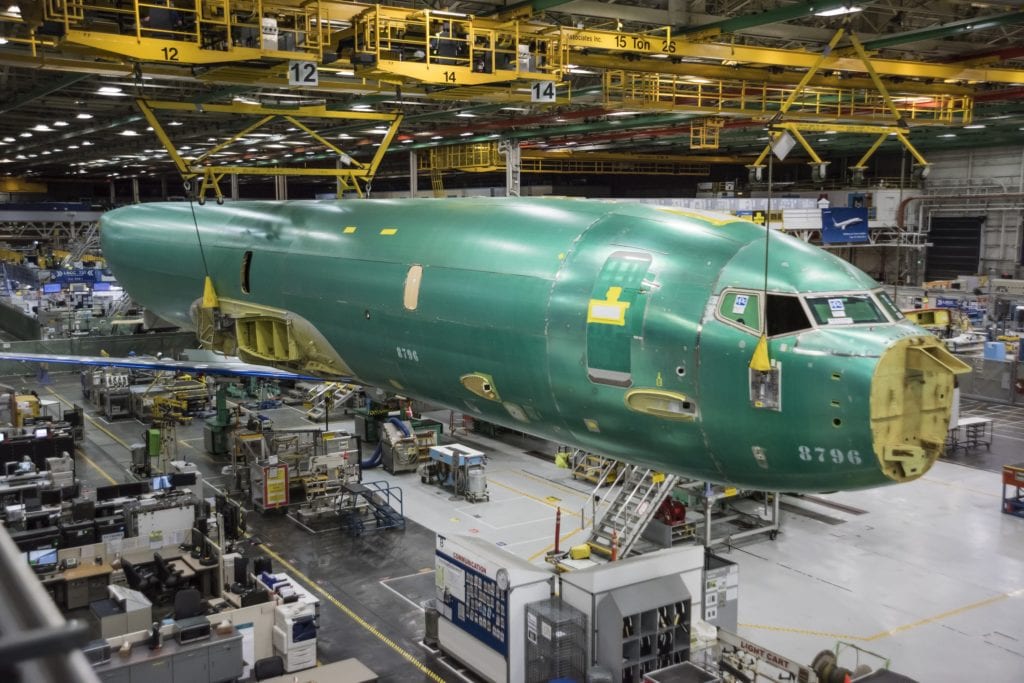
Norway’s first P-8A Poseidon aircraft is moved from a rail car through the air to the first step of the assembly process, the Fuselage Systems Installation tool, in Renton, Washington. BOEING

RENTON, Wash. — The first P-8A Poseidon fuselage for Norway arrived April 12 at Boeing facilities in Renton, Washington, from Spirit AeroSystems in Wichita, Kansas, marking a major milestone in the production of the first of five Poseidons for the Royal Norwegian Air Force. 

A derivative of the Boeing 737 Next-Generation commercial aircraft, the P-8 is first assembled at Boeing Commercial Airplanes’ 737 production line, where the fuselage receives additional wiring and systems needed to support military components, equipment and operation. The aircraft is then delivered to Boeing’s Defense, Space & Security unit for the installation of military systems, testing and delivery to military customers.    

“Boeing uses a proven in-line production process to efficiently build the aircraft,” said Christian Thomsen, P-8A Europe program manager. “Implementing established best practices and common, commercial production-system tools enables the team to reduce flow time and cost while ensuring quality and on-time delivery to our customers.” 

Norway is expected to receive its first P-8 later this year. In total, five P-8s will eventually replace Norway’s current fleet of six P-3 Orions and three DA-20 Jet Falcons and will provide advanced capabilities to maintain situational awareness in neighboring waters on and below the surface of the ocean. 

To date, Boeing has delivered 104 P-8 aircraft to the U.S. Navy and customers in Australia, India and the United Kingdom. 


Cutter Kimball Returns Home from Expeditionary Patrol in the Pacific

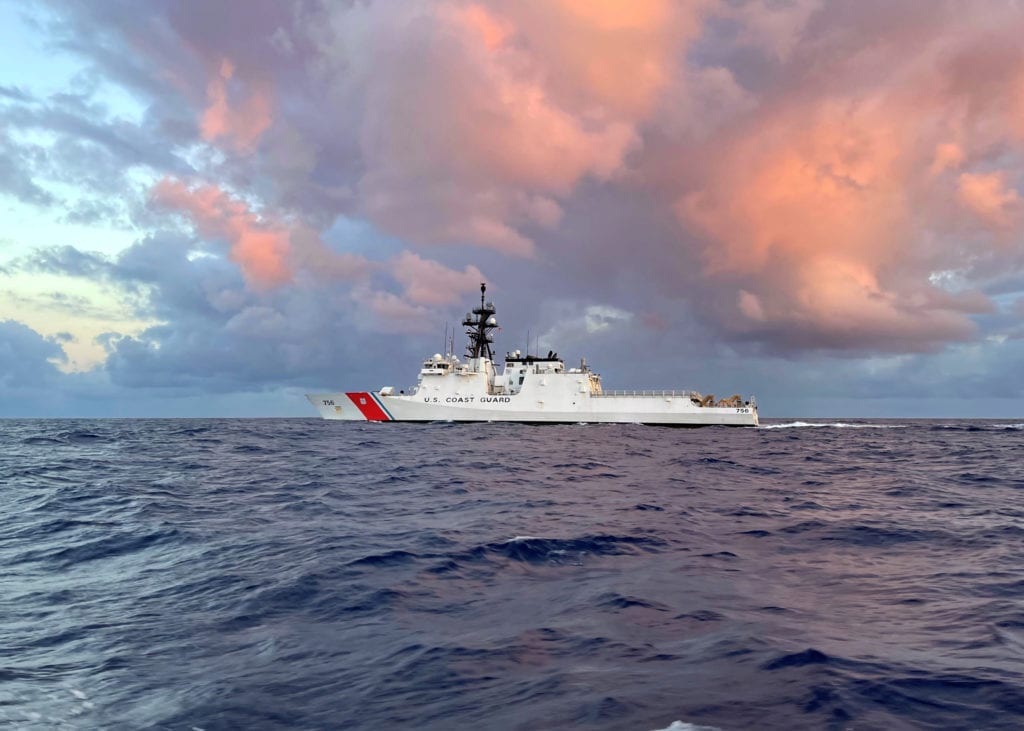
The crew of the Coast Guard Cutter Kimball (WMSL 756) underway in the Pacific, April 4, 2021. The Kimball was conducting an expeditionary patrol supporting Operation Blue Pacific, Op Rai Balang, and Op Aloha Shield. U.S. COAST GUARD

HONOLULU — The crew of the Coast Guard Cutter Kimball (WMSL 756) returned to Honolulu April 9 after completing an expeditionary patrol supporting Operation Blue Pacific, Operation Rai Balang and Operation Aloha Shield in the Pacific, the Coast Guard 14th District said in an April 9 release.  
 
During the 82-day patrol, the cutter’s crew worked closely with partners and allied nations on numerous missions ranging from search and rescue to the prevention of illegal, unreported, and unregulated fishing (IUU) while promoting stability and security throughout the region. 
 
“I’m tremendously proud of my crew’s exceptional performance, especially considering how their dedication and teamwork allowed them to overcome the many challenges associated with operating by ourselves for long periods of time in remote locations and the difficulties created by the global pandemic,” said Capt. Holly Harrison, the Kimball’s commanding officer. “They adapted and overcame every obstacle and challenge put in their way with ease, exactly what you’d expect from our phenomenal Coast Guardsmen and women.” 
 
One of the main goals of the 20,000 nautical-mile patrol was to assist the United States’ partners in the region with combating IUU. 
 
Throughout the deployment the cutter’s crew worked closely with the Pacific Islands Forum Fisheries Agency (FFA) during Op Rai Balang, a coordinated effort between partners in the region to combat IUU, while also enforcing Western and Central Fisheries Commission regulations on the high seas to protect the region’s fish stocks. 
 
Fish stocks are a vital renewable resource for many nations in the Pacific. Because of the migratory nature of fish, efforts towards their conservation requires teamwork between the partner nations.  
 
The multi-million-dollar IUU fishing industry represents a direct threat to the partners efforts to ensure these resources remain sustainable for years to come and throughout the patrol the crew of the Kimball worked with the governments of the Solomon Islands, Federated States of Micronesia, and Papau New Guinea to strengthen domain awareness and resource security within the nation’s economic exclusive zones. 
 
During the patrol, the crew queried 21 foreign fishing vessels and boarded six, generating vital information reports for the partners in their efforts to combat IUU. 
 
“The National Security Cutters bring a capacity and capability into the Coast Guard which are truly game changing when it comes to curbing IUU in the Pacific,” said Rear Adm. Matthew Sibley, commander, Coast Guard 14th District. “Patrols such as the Kimball’s display these cutters ability to cover large swaths of the Pacific and support our partners in joint conservation efforts while contributing to the overall stability of the region.” 
 
The Kimball is one of the Coast Guard’s newer 420-foot Legend-class National Security Cutter and boasts a wide array of modern capabilities helping the crew to complete their varied missions. 
 
Throughout the patrol, the crew used the cutter’s ability to deploy unmanned aircraft systems (UAS) to collect observation reports on vessels of interest which were shared with Maritime Security Advisors and the FFA Regional Fisheries Surveillance Center. 
 
The UAS was also utilized during both day and night searches for a missing mariner southwest of Guam, displaying the versatility of the new technology and its potential in multiple types of missions. 
 
Another key goal of the patrol was to increase interoperability between the Coast Guard and partners in the region. 
 
The Kimball’s crew participated in a number of exercises with partners in the region, including training with a Royal Australian Navy Sea Dragon aircraft crew during the FFA Op Rai Balang, joint interdiction training with the Japan coast guard ship Akitsushima, and an exercise with the USS Tulsa. 
 
“Over the past 82-days, Kimball’s crew conducted joint operations with the Japanese coast guard, Royal Australian Navy, Pacific Islands Forum Fisheries Agency and U.S. Navy.” said Harrison. “In each operation, we were thoroughly impressed with our partners’ professionalism, skill, and commitment to Oceania and regional security.”