Chinese, Russian Naval Build-ups Keep U.S Navy ‘Elbowing’ for Advantage, Navy’s Intel Director Says
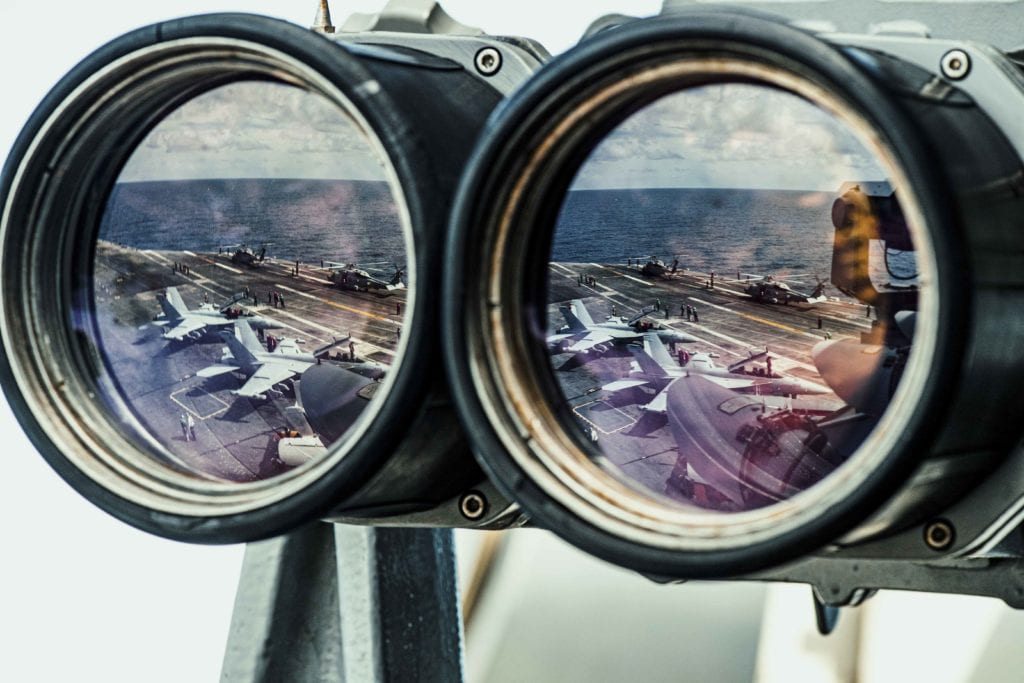
U.S. Sailors prepare for flight operations on the flight deck of the aircraft carrier USS Theodore Roosevelt (CVN 71) April 6, 2021, in the South China Sea. The Theodore Roosevelt Carrier Strike Group is on a scheduled deployment to the U.S. 7th Fleet area of operations. As the U.S. Navy’s largest forward-deployed fleet, 7th Fleet routinely operates and interacts with 35 maritime nations while conducting missions to preserve and protect a free and open Indo-Pacific Region. U.S. NAVY / Mass Communication Specialist 3rd Class Alexander B. Williams
ARLINGTON, Va. — The naval build-ups and more frequent activity of the Chinese and Russian navies in recent years is keeping the U.S. Navy’s intelligence activities busily engaged in collection and analysis.
“Business is good; there’s lots of opportunity out there,” said Vice Adm. Jeffrey Trussler, deputy chief of naval operations for Information Warfare and director of Naval Intelligence, speaking April 6 at a Navy League Special Topic Breakfast sponsored by General Dynamics, commenting on the need for increased attention to the near-peer competitors.
“Day to day, talk about information overload!” Trussler said. “The daily questions that might come out of ‘What if?’ [are] non-stop. In this 21st century, information is available. We want to develop capabilities that best position us, best give us advantage in the competitive space. We want to develop capabilities that might cause adversaries pause and say, ‘Not today.’”
Trussler said the Navy’s job is to be ready.
“We don’t want a kinetic event,” he said. “We would love to prevent it, showing that strength, understanding what their vulnerabilities are, what their capabilities are, how we might counter [them], how we might demonstrate that we’re ready, we know where you are, and what you [doing]. That’s the cat and mouse that goes on right now.”
The admiral said the Navy needs to be ready from day one if deterrence fails.
“Day one doesn’t happen because of what we do day minus one,” he said. “That is what Navy intel, in alignment and in conjunction with the larger intelligence community, is looking for: those opportunities and vulnerabilities at day minus one, or day minus two … before weapons fly.
“In the 21st century, before weapons fly, there is a lot that is going to be happening in the domains that are hard to get your arms around of at sea,” he said. “That’s the elbowing that goes on right now for information advantage, a little different than what was going on in the Cold War, a little more human-oriented advantage for information that’s taking place day after day in the cyber world.”
Trussler said that the intelligence community is trying to stretch the timeline of warning as much as possible.
“We’d like it to be of days,” he said. “If not, we’d like it to be in hours, but it may be only minutes or seconds, so that’s why we’ve got to develop the systems and the processes that can take advantage of that at the speed that commanders need to make decisions and hold that advantage.”
NNSY Welcomes MTS Sam Rayburn for Inactivation
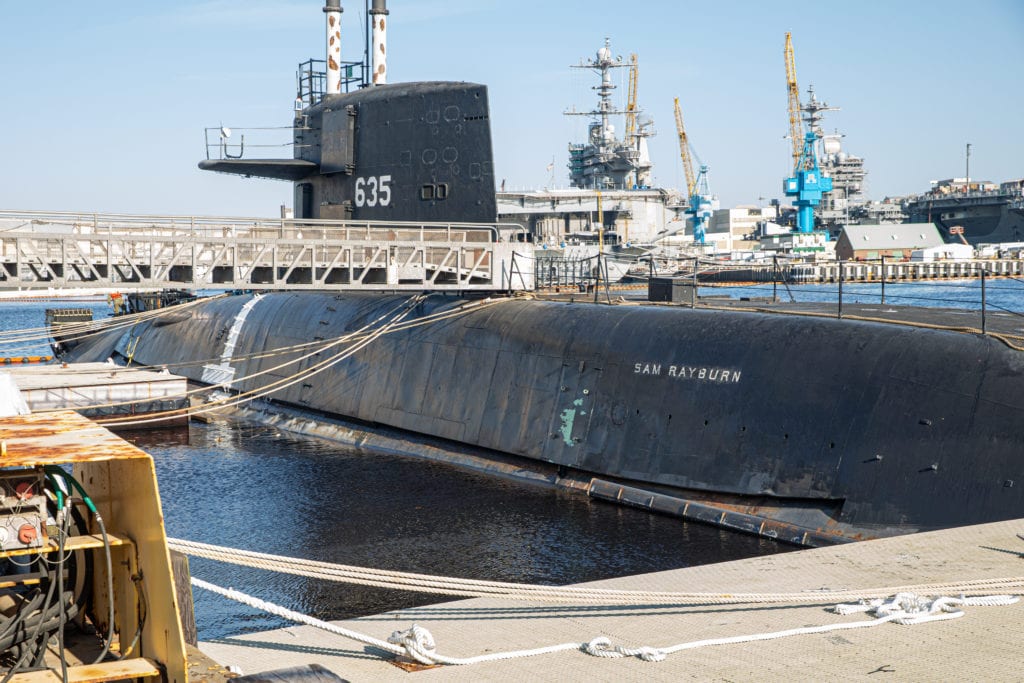
Norfolk Naval Shipyard welcomed the Moored Training Ship Sam Rayburn (MTS 635) in advance of its inactivation April 3. Along with MTS Daniel Webster (MTS-626), Rayburn is being replaced by the next-generation training vessels MTS La Jolla (MTS 701) and USS San Francisco (SSN 711). Danny De Angelis
NORFOLK, Va. — Norfolk Naval Shipyard (NNSY) welcomed the Moored Training Ship Sam Rayburn (MTS 635) April 3 in advance of its inactivation.
Rayburn (formerly SSBN 635) served as a MTS at Nuclear Power Training Unit – Charleston for more than 30 years training Sailors in the operation, maintenance and supervision of nuclear propulsion systems. Along with MTS Daniel Webster (MTS 626), Rayburn is being replaced by the next-generation training vessels MTS La Jolla (MTS 701) and USS San Francisco (SSN 711).
Providing unique opportunity for the NNSY workforce, Rayburn marks the Navy’s first inactivation of a MTS. Upon completion of this work, Rayburn will be towed to Puget Sound Naval Shipyard for recycling. NNSY will also perform Webster’s inactivation.
“USS Sam Rayburn has proudly served the U.S. Submarine Force and Navy Nuclear Propulsion Program since 1964, and we now welcome it to America’s Shipyard,” said Shipyard Commander Capt. Dianna Wolfson. “Performing the first inactivation of a Moored Training Ship will develop another important facet in our service to the fleet, and we look forward to excelling in our mission as one team.”
Throughout Rayburn’s three-decade stint as a training vessel, NNSY has performed maintenance on it as needed, sometimes in Portsmouth when a dry docking was required, and other times onsite in Charleston, sending upwards of 200 employees to perform Pierside Extended Maintenance Availabilities and support depot level repairs during continuous maintenance availabilities.
Commending Norfolk Naval Shipyard’s Charleston (NNSY-CHS) team for its record of planned maintenance and emergent repairs, Adm. James Caldwell, director, Naval Reactors, said, “NNSY-CHS’s efforts directly contributed to the Naval Nuclear Propulsion Training Program’s (NNPTP) ability to meet or exceed annual fleet requirements for qualified operators for the past several years, allowing the nuclear Navy to achieve 100 percent fleet manning for the first time in 10 years. This recognition speaks to the direct leadership, dedication and follow through of a passionate team striving for consistent impactful results.”
During this time of modernization for the NNPTP, the NNSY-CHS team has been concurrently working retirements of Rayburn and Webster; delivering and supporting work of the new vessels; and modernizing the site to enhance future training needs.
“Preparing and towing the MTS 635 represents the next step in modernizing the nuclear training program here in Charleston,” said MTS Project Superintendent Chrystal Brady. “By retiring the MTS 635, NPTU Charleston can move forward with the final preparations to receive the MTS 711 later this year. The NNSY Charleston team continues to demonstrate dedication to the mission of the site. To care for and deliver this asset, many personal sacrifices have been made over the years to deliver on maintenance schedules and, most recently, to ensure an on-time tow. Our team takes great pride in the way we represent NNSY and the Navy every day.”
Exemplifying Wolfson’s “One Mission-One Team” mantra, sending Rayburn to Portsmouth required constant communication and coordination between NNSY and its Charleston team hundreds of miles away. “There were several key parts to this plan for Norfolk Naval Shipyard — the safe departure from Charleston, tow, and safe arrival at Norfolk Naval Shipyard,” said Pat Ensley, NNSY Submarine program manager. “This was a great team effort to accomplish this mission. The detailed preparations for departure took significant planning and execution to complete the preparations for tow.”
Following La Jolla, which completed its conversion at NNSY in November 2019, San Francisco is now in the final stages of becoming a Moored Training Ship for towing to Charleston. These conversions are the closest NNSY has come to new ship construction since the 1950s, requiring two complete hull cuts, separating each boat into three pieces, recycling the center section, and adding three new hull sections, adding 76 feet to the overall length on both vessels.
This article is by Michael Brayshaw, NNSY Lead Public Affairs Specialist
Coast Guard, Navy Begin High Seas Oceania Maritime Security Initiative Patrol
Independence-variant littoral combat ship USS Tulsa (LCS 16), with an embarked Coast Guard law enforcement detachment from the Pacific Tactical Law Enforcement Team are conducting maritime law enforcement operations through the enforcement of international law and the Western and Central Pacific Fisheries Convention to protect United States and Pacific Island Nations’ resource security and sovereignty. U.S. NAVY
SAN DIEGO, Calif. — The U.S. Coast Guard and U.S. Navy began their joint mission in the Western and Central Pacific under the Oceania Maritime Security Initiative (OMSI) to reduce and eliminate illegal, unregulated, unreported (IUU) fishing, combat transnational crimes and enhance regional security, April 5, the U.S. 3rd Fleet said in an April 6 release.
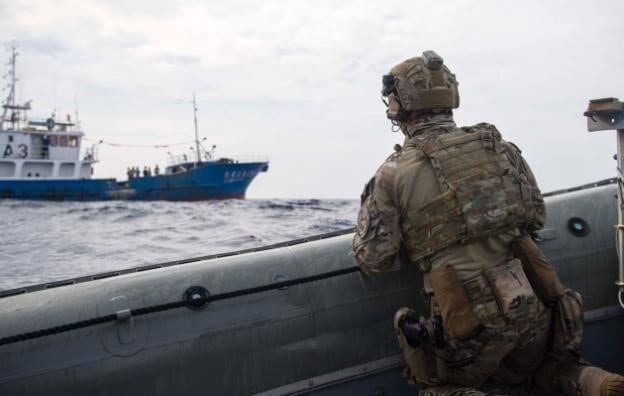
Independence-variant littoral combat ship USS Tulsa (LCS 16), with an embarked Coast Guard law enforcement detachment from the Pacific Tactical Law Enforcement Team, are conducting maritime law enforcement operations through the enforcement of international law and the Western and Central Pacific Fisheries Convention to protect United States and Pacific Island Nations’ resource security and sovereignty.
The Oceania Maritime Security Initiative (OMSI) program is a Secretary of Defense program that leverages Department of Defense assets transiting the region to improve maritime security and maritime domain awareness, ultimately supporting regional stability and partnerships in Oceania.
“USS Tulsa is proud to contribute to the OMSI mission” said Cmdr. William Dvorak, Tulsa’s commanding officer. “Working with the embarked U.S. Coast Guard law enforcement detachment, our crew is looking forward to supporting maritime security in the Indo-Pacific.”
The OMSI improves maritime security and maritime domain awareness by enabling U.S. Coast Guard law enforcement personnel to conduct maritime law enforcement operations from U.S. Navy assets in coordination with the Western and Central Pacific Fisheries Commission.
“Our team is ready and excited to execute the OMSI mission,” said Cmdr. Robert Berry, commanding officer of the embarked law enforcement detachment. “Collaborating with our U.S. Navy counterparts enables us to monitor and deter IUU fishing in the Western and Central Pacific and provides a presence for maritime surveillance and security in the region.”
Fleet Forces Re-Designation to Atlantic Fleet On Hold, CNO Says
Chief of Naval Operations Adm. Mike Gilday, right, during a February visit to San Diego. Gilday says the plan to bring back the name U.S. Atlantic Fleet is on hold pending the ongoing Global Force Posture Review. U.S. NAVY / Theresa McKenrick
ARLINGTON, Va. — The Navy’s plan to bring back the name “U.S. Atlantic Fleet” is on hold, the Navy’s top officer said.
“Right now, implementation is on hold, based on the findings of the ongoing Global [Force] Posture Review,” said Chief of Naval Operations (CNO) Adm. Michael Gilday, speaking April 5 to the Defense Writer’s Group, answering a question about the planned re-designation of U.S. Fleet Forces Command to U.S. Atlantic Fleet.
The Global Force Posture Review was announced by Feb. 4 by Defense Secretary Lloyd Austin.
“At the direction of the president, the [Defense] Department will therefore conduct a global force posture review of U.S. military footprint, resources, strategy and missions,” Austin said. “It will inform my advice to the commander-in-chief about how we best allocate military forces in pursuit of national interests. The review will be led by the acting under secretary of defense for policy, in close consultation with the chairman of the Joint Chiefs of Staff.”
Gilday said on Jan. 11 in a webinar of the Surface Navy Association convention that then-President Donald Trump signed off on the proposal of then-Navy Secretary Kenneth Braithwaite to re-designate U.S. Fleet Forces Command as the U.S. Atlantic Fleet. No timetable for the change was announced, but Fleet Forces Commander Adm. Chris Grady then was engaged in the planning for the CNO’s review.
The move to the return of the Atlantic Fleet moniker was deliberate. Braithwaite announced the re-designation plan Dec. 2 during testimony before the Senate Armed Services Committee’s Readiness and Management Support sub-committee, noting the changing world requires the Navy to evolve to meet the threat.
“Our existing structure operates on the premise that we still live in a post-9/11 state, where NATO’s flanks are secure, the Russian fleet is tied to the pier and terrorism is our biggest problem,” Braithwaite said. “That is not the world of today. As the world changes, we must be bold, evolved and change with it. Instead of perpetuating a structure designed to support Joint Forces Command, we are aligning to today’s threat.
“To meet the maritime challenges of the Atlantic theater, we will rename Fleet Forces Command as the U.S. Atlantic Fleet and will refocus our naval forces in this important region on their original mission, to controlling the maritime approaches to the United States and those of our allies. The Atlantic Fleet will confront the re-assertive Russian navy, which has been deploying closer and closer to our East Coast with a tailored maritime presence, capability and lethality,” Braithwaite said.
USS John Finn Returns from First Deployment
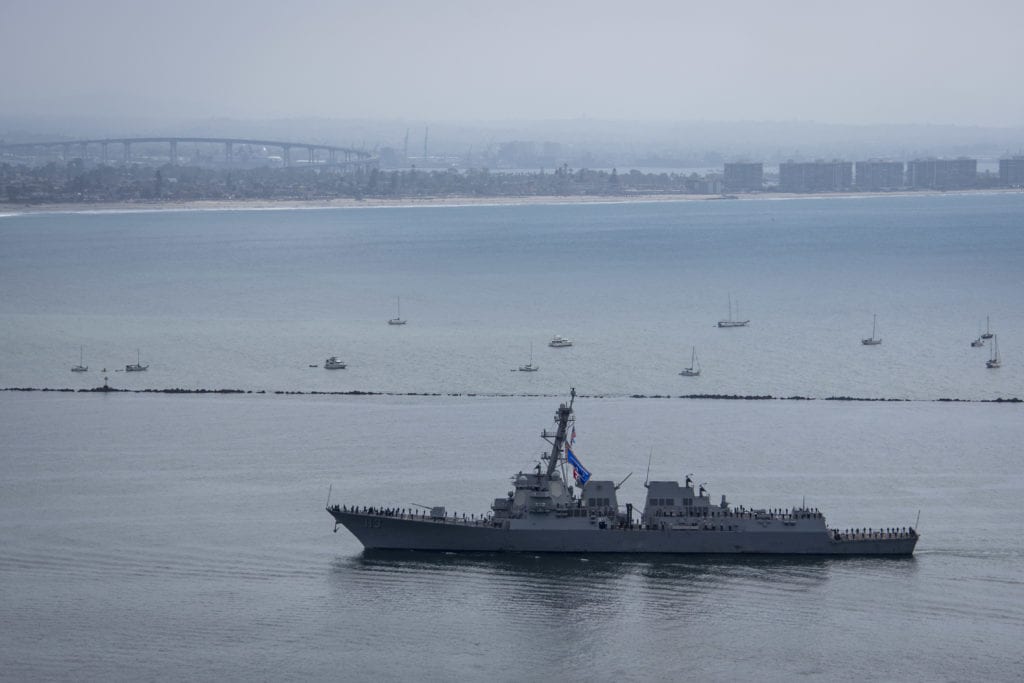
Arleigh Burke-class guided-missile destroyer USS John Finn (DDG 113) returns to Naval Base San Diego. John Finn, a part of the Theodore Roosevelt Carrier Strike Group, returned to Naval Base San Diego April 2, after the ship’s first deployment to U.S. 7th Fleet in support of maritime security operations to ensure a free and open Indo-Pacific. U.S. NAVY / Mass Communication Specialist 2nd Class Jessica Paulauskas
SAN DIEGO — Arleigh Burke-class guided-missile destroyer USS John Finn (DDG 113) returned to San Diego April 2 after its first deployment, U.S. 3rd Fleet Public Affairs said in a release.
John Finn departed with the Theodore Roosevelt Carrier Strike Group (TRCSG) for a scheduled deployment to the Indo-Pacific region Dec. 23.
“John Finn provided presence and maintained the freedom of the seas while deployed,” said Cmdr. Bralyn E. Cathey, commanding officer of John Finn. “My crew and ship were proud to show the flag abroad while executing myriad missions and exercises during our maiden deployment.”
The destroyer’s primary mission was conducting maritime security operations to ensure a free and open Indo-Pacific region. While operating in U.S. 7th Fleet, John Finn participated in freedom of navigation operations, conducted bilateral operations and coordinated maneuvering exercises with the Japan Maritime Self-Defense Force, executed multiple transits and operations within the Philippine archipelago, and sailed through the international waters of the Taiwan Strait.
“John Finn’s performance during her maiden deployment has been nothing short of phenomenal,” said Rear Adm. Doug Verissimo, commander, Carrier Strike Group Nine. “The captain and his crew should be incredibly proud of the job their team did, seamlessly integrating into the strike group and exceeding every expectation. I’m so proud to have them as a member of Team Fury.”
John Finn participated in dual carrier operations in February with TRCSG and Nimitz Carrier Strike Group that showcased the tactical capabilities of two carrier strike groups operating jointly.
Navy Awards Raytheon Contract for AQS-20C Mine-Hunting Sonars
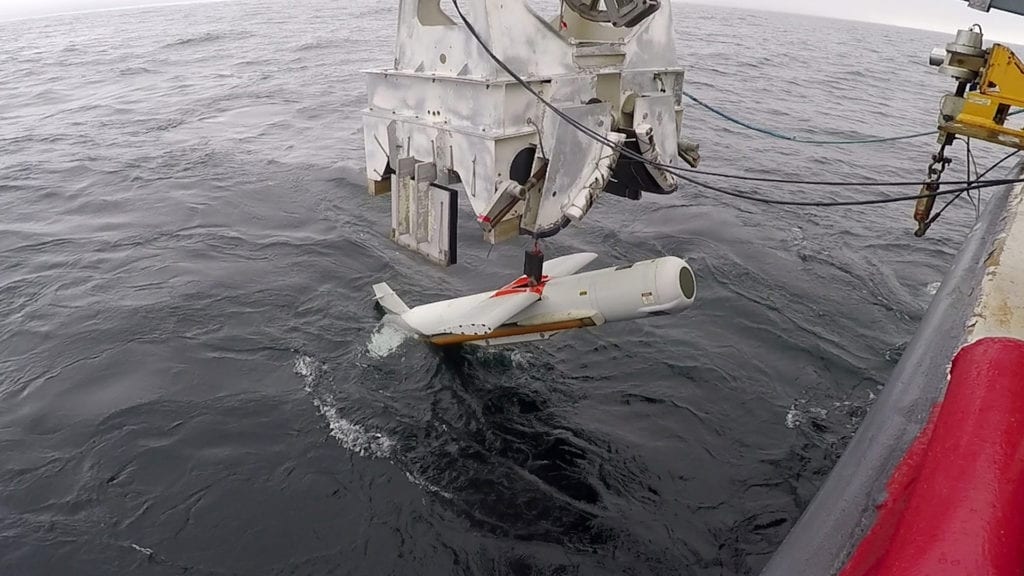
The AN/AQS-20C Towed Mine-hunting Sonar is streamed into Gulf of Mexico waters of the Naval Surface Warfare Center Panama City Division (NSWC PCD) Gulf test range. Developmental Testing was completed on Feb. 12, 2019. The testing marks completion of incorporating the ‘Charlie’ variant sonar sensor modernization. U.S. NAVY / Eddie Green
ARLINGTON, Va. — The U.S. Navy has awarded Raytheon Technologies a contract to upgrade some AQS-20A towed sonars to the AQS-20C configuration.
The Naval Sea Systems Command awarded Raytheon a $66.5 million firm fixed-price contract for engineering, design, development, production, integration and testing to physically upgrade 10 legacy AQS-20A mine hunting sonars to the AN/AQS-20C configuration.
The AQS-20 is a variable-depth, underwater mine-detection sonar designed to give a strike group an organic capability to detect, classify and localize bottom, close-tethered and volume mines. The AQS-20A also is fitted with an electro-optical sensor to identify underwater objects.
The sonar is deployed while the helicopter is in a hover and then towed undersea to scan the water in front and to the sides of the aircraft, as well as the sea bottom for anti-shipping mines. The sonar and EO sensor provide high-resolution images of mines and mine-like objects as well as high-precision location information. The AQS-20A is a component of the Remote Multi-Mission Vehicle and the Airborne Mine-Neutralization System in the mine warfare mission package of the LCS. It entered LRIP in 2005; 25 units were delivered.
The AQS-20C features four imaging sonars — including a synthetic aperture sonar that provides the highest possible resolution for acoustic identification — and an imaging laser system that hunt for mines in the entire water column over a large area in a single pass. The system detects, classifies, localizes and identifies mines on the seabed, near-bottom moored mines, volume mines and near-surface mines. Classification is accomplished within the body of the system using advanced algorithms and signal processing. With the Barracuda mine neutralizer, an AQS-20C can complete the search to engage in a single pass.
The AQS-20C is being integrated on the MCM Unmanned Surface Vehicle for mine hunting from an LCS. Delivery of 10 units began in summer 2018. Developmental test began in late 2018. IOC was achieved in late 2018. Developmental test with the LCS was completed in 2019. Raytheon Co. had delivered 10 AQS-20Cs to the Navy by January 2020.
Navy Orders Unmanned Influence Sweep System from Textron
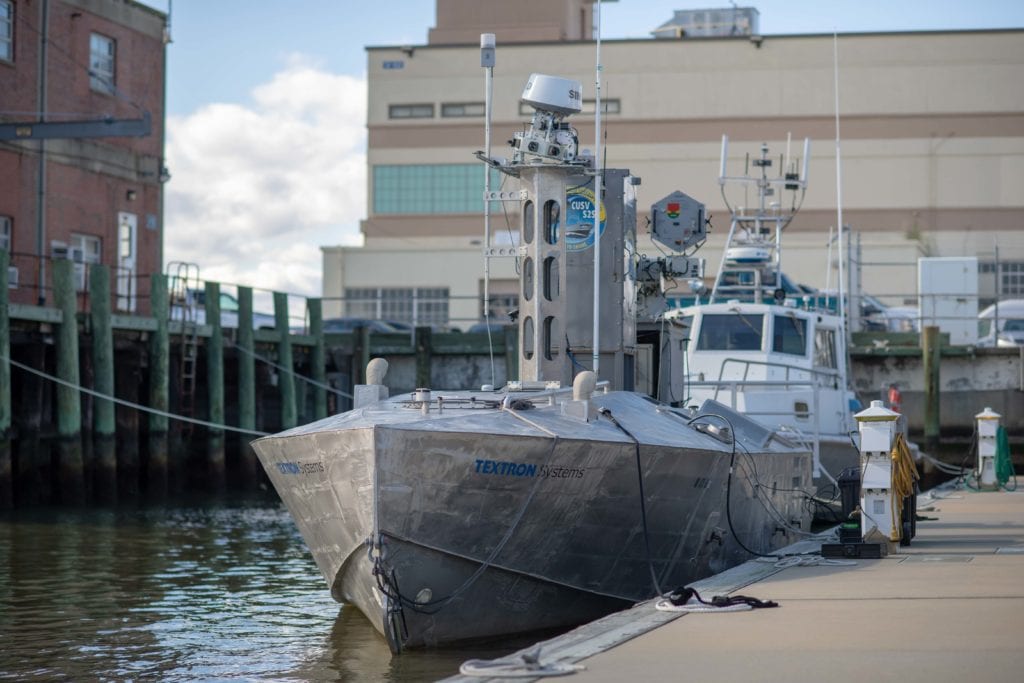
A developmental, early variant of the Common Unmanned Surface Vehicle (CUSV) autonomously conducts maneuvers on the Elizabeth River during its demonstration during Citadel Shield-Solid Curtain 2020 at Naval Station Norfolk. A development of the vehicle, the Mine Countermeasures USV, is part of the Unmanned Influence Sweep System. U.S. NAVY / Mass Communication Specialist 2nd Class Grant G. Grady
ARLINGTON, Va. — The Navy has ordered another Unmanned Influence Sweep System (UISS) unmanned surface vehicle (USV) from Textron, the Defense Department announced.
The Naval Sea Systems Command awarded Textron Systems a $12.9 million contract for one low-rate initial production (LRIP) UISS, the Navy’s first USV program of record. The UISS was approved for LRIP in February 2020, after which the Navy placed an order for three systems. This latest award brings the LRIP lot to four systems.
The UISS is a stand-off, semi-autonomous system designed with the capability to counter acoustic and/or magnetic mines. It includes a magnetic cable that tows a modified Mk104 sound source towed by a Mine Countermeasures USV (MCM USV). The Mk104 uses cavitation to create sound while the cable establishes a magnetic field to detonate mines. Developmental test and operational assessment was completed in November 2019. The UISS is to be deployed in the mine countermeasures package for LCSs and also on vessels of opportunity.
The MCM USV is a development of Textron’s Common USV (CUSV), a multi-mission vehicle capable of carrying multiple payloads including side-scan sonar, mine neutralization, non-lethal weapons, and intelligence, surveillance and reconnaissance sensors.
Logistics and Partnerships Sustain Ships at Sea
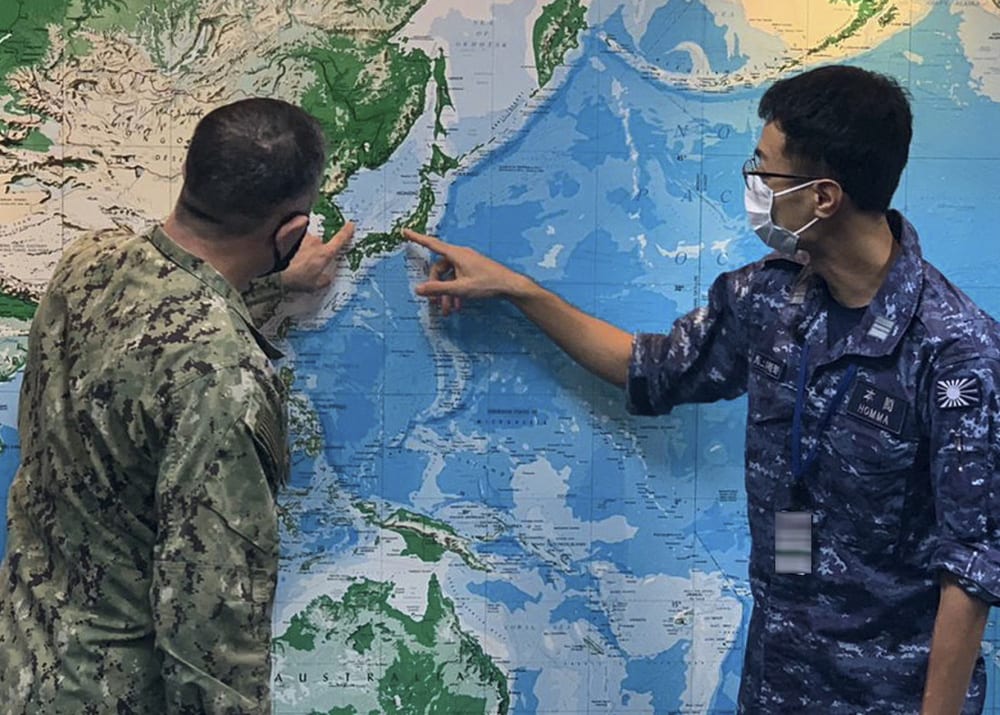
U.S. Navy Lt. Cmdr. Cory Eggers, left, replenishment officer with Commander, Logistics Group Western Pacific (COMLOG WESTPAC) and Japan Maritime Self-Defense Force Lt. Cmdr. Shuzo Homma discuss potential replenishment-at-sea locations in the COMOG WESTPAC conference room. This photo has been altered for security purposes by blurring out identification badges. U.S. NAVY / Lt. Teddy Haghverdi
To maintain a naval presence throughout the vast Indo-Pacific area of operations requires a logistics network that can supply and sustain naval ships while they are at sea. Singapore-based Commander, Logistics Group Western Pacific (COMLOG WESTPAC)/Task Force 73 (CTF 73), is the U.S. 7th Fleet’s provider of combat-ready logistics, operating government-owned and contracted ships to keep those ships armed, fueled and fed.
That includes the scheduling and coordination of the combat logistics force (CLF).
The Military Sealift Command operates three different classes of CLF ships. The 45,000-ton, 689-foot USNS Lewis and Clark class of Dry Cargo/Ammunition Ships (T-AKEs) deliver ammunition, food, fuel, parts and supplies and material to the fleet. The Henry J. Kaiser Class T-AOs are 677 feet long and displace more than 40,000 tons, carrying 180,000 barrels of aviation and diesel fuel for ships and aircraft deployed at sea. The 49,000-ton, 754-foot Supply-class of Fast Combat Support ships (AOE) can keep up with the carrier strike groups to bring 177,000 barrels of oil; 2,150 tons of ammunition; 500 tons of dry stores; and 250 tons of refrigerated stores to Navy task forces.
CTF 73 supports almost every exercise and operation that occurs in 7th Fleet, whether directly or indirectly. “The vastness of Seventh Fleet and shear number of ships demand teamwork between CTF 73 and Military Sealift Command Far East,” said Lt. Catherine Anthony, surface operations officer at Commander, Logistics Group Western Pacific. “Logistics is what enables our fleet to sustain at sea. Without our ability to [replenish at sea], combatants would be tethered to port, and we would not have the same power projection, flexibility, and mobility we as a Navy have become accustomed to.”
CTF 73’s mission also includes supporting, and being supported by, U.S. allies and partners in the region.
One of the closest of those partners is the Japan Maritime Self-Defense Force (JMSDF). Evidence of that cooperation is establishment and assignment of a JSMDF liaison officer (LNO), Lt. Cmdr. Shuzo Homma, at COMLOG WESTPAC/CTF 73. Homma works directly with the staff’s replenishment officer to ensure the interchangeability and combined logistics operations between the two services involving Military Sealift Command and JMSDF ships.
As LNO, Homma coordinated with Military Sealift Command Far East to execute numerous underway replenishments for U.S. and JMSDF ships.
“If we can achieve more-advanced and interchangeable logistics in the areas where both the U.S. Navy and JMSDF operate, we can achieve better efficiencies in the use of our CLF assets and extend our ability to support units further from logistics hubs,” said Homma.
Replenishment operations involve refueling at sea and the delivery of provisions via connected or vertical replenishments. Homma points to a replenishment-at-sea (RAS) between the JMSDF Masyuu-class supply ship JS Oumi (AOE 426) and the Arleigh Burke-class guided missile destroyer USS John S. McCain (DDG 56) as a prime example of what the two navies can accomplish together.
“That was the first RAS that delivered cargo and fuel to a U.S. ship that was engaged in operations from a JMSDF oiler,” said Homma. “In order to accomplish this event, we needed to work on both operational and legal issues related to ACSA [Acquisition and Cross-Servicing Agreement]. We were able to load U.S. supply parts and U.S. subsistence on a JMSDF logistics ship and deliver them during a RAS event. This is a process that could take weeks and we did it in days.”
The positioning of a JMSDF LNO at CTF 73 is a combined U.S. Pacific Fleet/JMSDF effort developed by the JMSDF/U.S. Navy Logistics Interoperability and Integration Strategic Framework. The goal is to build better interoperability and interchangeable logistics between JMSDF and U.S. Navy forces in the 7th Fleet area of operations.
“Our combined logistics capabilities play a big role in our navies’ abilities to operate effectively, efficiently and interchangeably in the Indo-Pacific,” said Lt. Cmdr. Cory Eggers, CTF 73’s fleet replenishment officer. “Having a JMSDF LNO here in Singapore and being able to work together, in person, to put the pieces together and overcome logistical challenges has absolutely enhanced our efforts.”
“Interoperable and interchangeable logistics require trust. We can move fuel and parts with speed, but only as far and fast as our network can take us. This partnership builds the collective strength, speed and operational reach of our supply chains,” said Capt. Chuck Dwy, assistant chief of staff for logistics at COMLOG WESTPAC, who was instrumental in developing the LNO program.
“The LNO program reflects the trust we place in partners at every level,” said Rear Adm. Joey Tynch, commander of COMLOG WESTPAC/CTF 73.
U.S. Coast Guard Ships Depart Puerto Rico on Mission to Strengthen Trans-Atlantic Ties
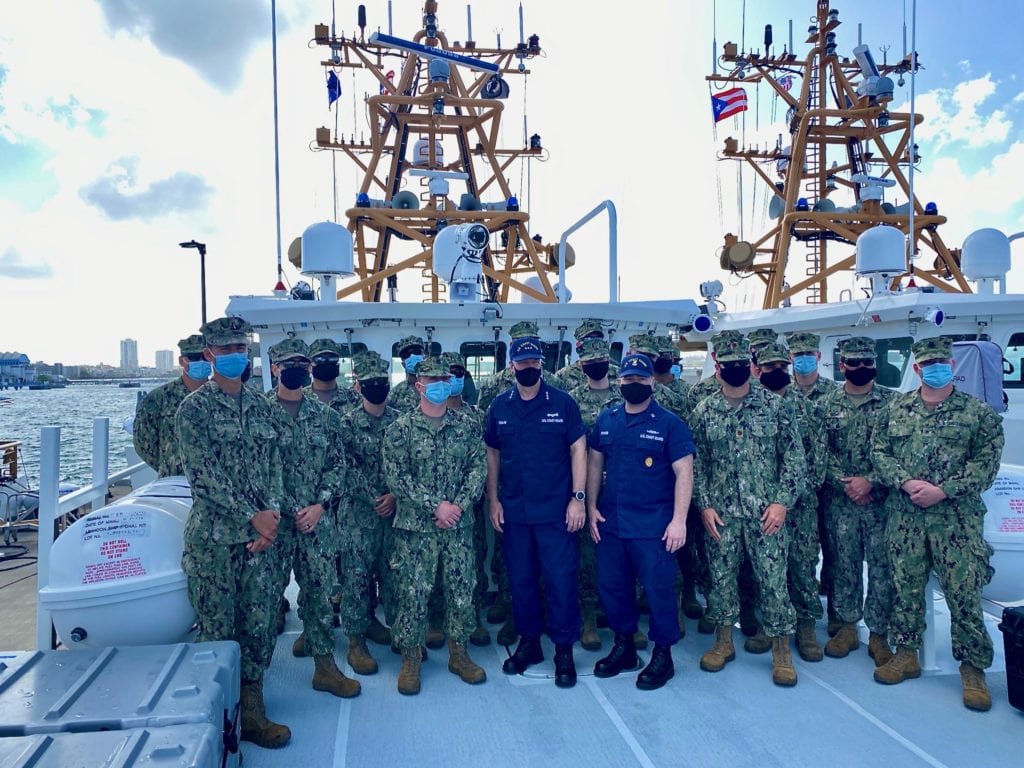
Vice Adm. Steven Poulin, commander, U.S. Coast Guard Atlantic Area, and Command Master Chief Devin Spencer, visit the crew of the Sentinel-class fast response cutter USCGC Charles Moulthrope (WPC 1141) in Puerto Rico prior to beginning their transit across the North Atlantic to Europe, March 31, 2021. The Moulthrope and USCGC Robert Goldman (WPC 1142) crews will continue to their new homeport of Manama, Bahrain, with brief stops for logistics and relationship building. Planning for the escort and deployment began last year to ensure smooth delivery of the fast response cutters, replacing the Island-class ships currently in operation under the U.S. Navy’s 5th Fleet command. U.S. COAST GUARD/ Lt. Dana Wanjon
ATLANTIC OCEAN — The Legend-class national security cutter USCGC Hamilton (WMSL 753) with the Sentinel-class fast response cutters USCGC Charles Moulthrope (WPC 1141) and USCGC Robert Goldman (WPC 1142) departed Puerto Rico on April 1 to transit the North Atlantic to Europe, Coast Guard Atlantic Area announced April 2.
“U.S. Coast Guard cutters have a long history of protecting America’s interests at home and abroad. This historic deployment demonstrates how we can strengthen our national security by extending the Coast Guard’s global reach and firming our commitments to allies and partners in the region,” Capt. Timothy Cronin, commanding officer, USCGC Hamilton.
Hamilton is escorting the fast response cutters across the Atlantic before conducting a patrol in the U.S. Navy’s 6th Fleet area of responsibility to maintain maritime security alongside NATO allies and partners. The Moulthrope and Goldman crews will continue to their new homeport of Manama, Bahrain, with brief stops for logistics and relationship building. Planning for the escort and deployment began last year to ensure smooth delivery of the fast response cutters, replacing the Island-class ships currently in operation under the U.S. Navy’s 5th Fleet command.
“Our primary goal for the fast response cutters is to complete the 9,000-mile voyage to homeport safely and efficiently. In addition, we will capitalize on opportunities to strengthen international partnerships promoting security and prosperity throughout some of the world’s busiest maritime trade routes,” Lt. Cmdr. Steven Hulse, commanding officer, USCGC Charles Moulthrope.
“We expect to showcase the capabilities of the fast response cutter, and the U.S. Coast Guard to advance the shared maritime strategy for security with the U.S. Navy and naval partners in the region, while concurrently engaging with them on the more traditional U.S. Coast Guard missions of search and rescue, maritime law enforcement, and illegal fisheries enforcement,” said Lt. Cmdr. Samuel Blase, commanding officer, USCGC Robert Goldman.
The U.S. Navy and U.S. Coast Guard operate forward, from the littoral to the open ocean, ensuring stability and open sea lanes across all maritime domains. U.S. Coast Guard operations in U.S. 6th Fleet demonstrate the country’s commitment, flexibility and capability to operate and address security concerns throughout Europe and Africa, the Coast Guard said.
“The U.S. Coast Guard is a member of the joint force, a key and always-ready instrument to further national security objectives globally,” said Vice Adm. Steven Poulin, commander, U.S. Coast Guard Atlantic Area. “It’s been almost two decades since we sent the Island-class patrol boats to Bahrain. As we seek to modernize our asset support to the U.S. Navy in the Arabian Gulf, this is an excellent opportunity to advance partnerships and learn from our allies in the region.”
Hamilton is the fourth ship in its class. The Legend-class is the largest current cutter class of the U.S. Coast Guard. These vessels support various missions, including environmental protection, search and rescue, fisheries, port security, counterterrorism, law enforcement, drug interdiction, defense operations and other military operations.
Moulthrope and Goldman are the first two of six Sentinel-class ships headed to U.S. Patrol Forces Southwest Asia. Established in 2002 to support Operation Iraqi Freedom, PATFORSWA played a critical role in maritime security and maritime infrastructure protection operations. It is the U.S. Coast Guard’s largest unit outside of the United States.
PATFORSWA is currently providing U.S. Navy’s 5th Fleet and U.S. Central Command with combat-ready assets, using its unique access to foreign territorial seas and ports, formulating strong and independent relationships with patterns throughout the Arabian Gulf, and leveraging the full-spectrum, flexible vessel boarding capabilities and maritime country engagements on the shore.
U.S. 6th Fleet, headquartered in Naples, Italy, conducts the full spectrum of joint and naval operations, often in concert with allied and interagency partners, to advance U.S. national interests and security and stability in Europe and Africa.
Based in Portsmouth, Virginia, U.S. Coast Guard Atlantic Area oversees all Coast Guard operations east of the Rocky Mountains to the Arabian Gulf. Also, they allocate ships to deploy to the Caribbean and Eastern Pacific to combat transnational organized crime and illicit maritime activity.
Space Mission Support: Coast Guard Patrols Restricted Areas Around Launches, Re-Entries
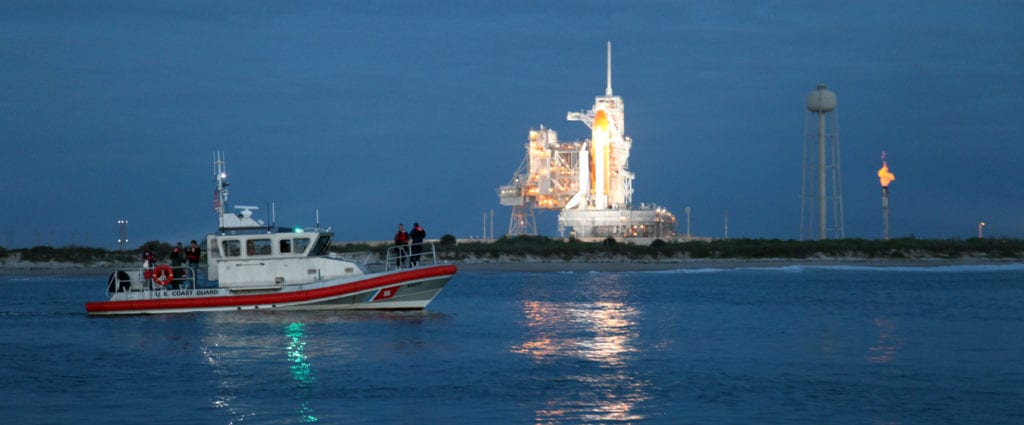
A Coast Guard Station Port Canaveral crew aboard a 45-foot response boat protects the waters near Cape Canaveral, Florida. U.S. COAST GUARD
The world was transfixed with the images of the NASA Perseverance rover landing on Mars in February. Like all space missions, it involved a myriad of partners and collaborators. Even the U.S. Coast Guard plays an important but little-known role in launch operations. In fact, the service is involved in ensuring maritime safety and security for almost every U.S. space launch.
NASA, Department of Defense and commercial space launch sites are located next to the ocean. In addition to the Kennedy Space Center (KSC) at Cape Canaveral in Florida, NASA and the Air Force also use Vandenberg Air Force Base near Lompoc, California, on the West Coast. NASA also conducts launches from its Wallops Island facility near Chincoteague, Virginia, and SpaceX has developed a commercial launch facility at Boca Chica near Brownsville, Texas, on the Gulf of Mexico. The Navy has the ability to launch targets from the Pacific Missile Range Facility on the island of Kauai, but these are not orbital missions. Other space ports are planned.
“We’ve been a mission supporter since 1955,” said Cmdr. Jill Lamb, chief of response for Sector Jacksonville, Florida.
When the space shuttle program shut down, major missions departing from the U.S. also wound down. That’s changed, however. The volume of space missions is growing as companies provide more opportunities to launch payloads, and space tourism is becoming a thing. Business is booming.
“We use a local risk assessment tool for each launch,” said Lamb. “It’s scalable, so we can look at all the factors and adjust our force laydown. It might vary, depending on if were dealing with a satellite launch or an astronaut launch.”
The Coast Guard has a memorandum of agreement with the Space Force’s 45th Space Wing. During major evolutions at the space center, the 45th, working with NASA and the commercial providers, will publish the limited access safety zone and establish a command center where the Coast Guard will participate. On launch day, the Coast Guard will monitor and patrol that zone.
Lamb said the captain of the port (COTP) promulgates a notice to mariners and local notice to mariners to set forth those limited access safety areas. In the case of the KSC launches, the COTP is the sector commander at Jacksonville, assisted by the commanding officer of Station Port Canaveral. On the day of the launch, the warnings are broadcast on marine radio channels. The restricted areas are created to keep unwary boaters or gawkers from being under an area where debris or hazardous materials might fall during a launch.
According to Chief Warrant Officer John Chandler, Station Port Canaveral’s commanding officer, the highest risk during a launch is typically within the first minute or minute and a half, depending on launch vehicle, configuration, and other factors. In some cases, flight abort tests intentionally come down shortly after launch.
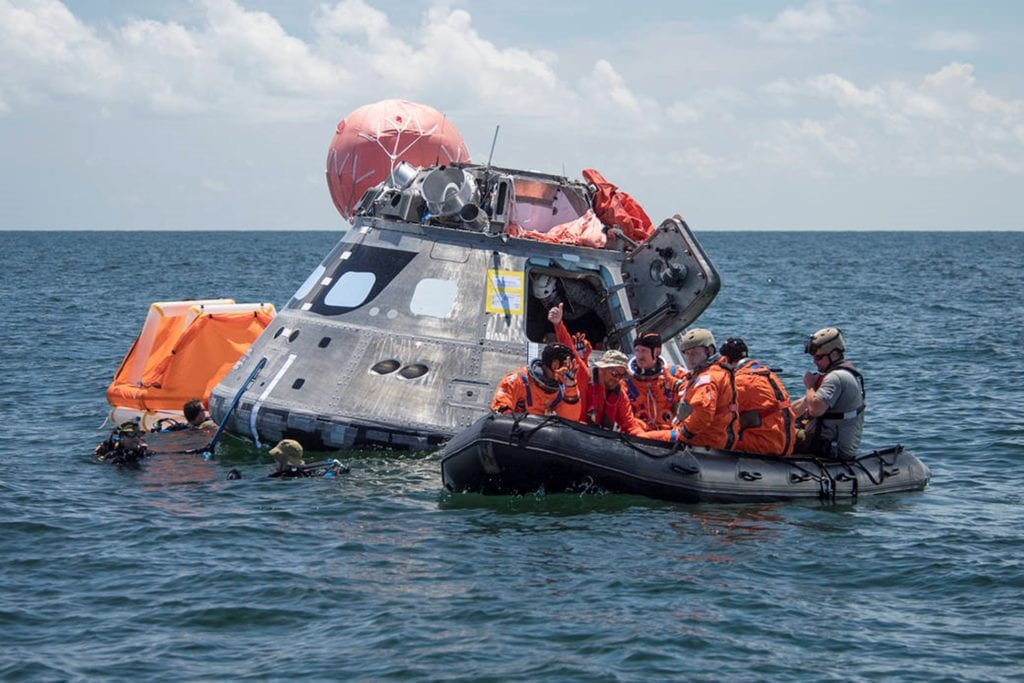
The Coast Guard provides security for landing zones when astronauts return to Earth in the Pacific or Gulf of Mexico. This 2017 test demonstrates how they will safely egress the spacecraft. NASA / Josh Valcarel
“As the local unit, we always maintain a standby SAR [search and rescue] posture,” Chandler said. “During those launches that are deemed high risk, or when we receive a request from the 45th for surveillance assets, our vessels would patrol within the launch danger area, ensuring vessel masters are aware of the hazardous areas and CG enforceable limited access areas [LAAs]. Our job with the USSF day of launch is to provide CG authority in the event a boater is causing the overall risk analysis to increase, which can affect proceeding to launch, hold or scrub.”
Usually, the mere act of informing the boaters to clear out is enough.
“No one really wants to place their vessels in any unwarranted danger. But, if our crews encounter vessels within the LAAs, we are authorized by the COTP to provide notification of violation and initiate additional enforcement documentation if necessary. Thus, for those masters who are less than cooperative, we make sure they understand that these areas are under Coast Guard authority and civil and criminal penalties can be applied.”
While space launches were traditionally a NASA show, today’s launch activities are increasing commercial operations.
“We interact with Canaveral Port Authority, Brevard County Sheriff’s Office, and Florida Fish and Wildlife,” Chandler said. “Our launch partnerships include Space Force, Air Force, NASA, FAA, as well as the launch providers themselves, such as SpaceX, United Launch Alliance, Blue Origin, Boeing and Orbital ATK.”
The sector commander also wears the officer in charge of marine inspection hat and, as such, is involved with inspecting and approving vessels such as the autonomous barges used to recover the booster sections and return them to port.
“They use some highly specialized maritime vessels, and we go aboard to ensure compliance with regulations and safety requirements,” Lamb said. “It’s becoming more challenging to learn these new vessels. They don’t fit squarely into the typical ship categories we’re used to, and each of these commercial operators have their own types of vessels. And as the technology advances and their experience grows, the operators are constantly adjusting their procedures and modifying their vessels, which means we need to conduct frequent inspections to deal with the changes.”
Historic Role
From its Cape Canaveral location just south of the Kennedy Space Center and the launch complexes operated by NASA and the U.S. Air Force, Port Canaveral has played a long and historic role in the development and growth of the space industry on Florida’s Space Coast.
Large assemblies and materials such as bulk fuels can arrive by sea at Port Canaveral. The port is an extremely busy cruise ship homeport, and also hosts Navy submarines when they call at the Navy Ordnance Test Unit.
According to Port Canaveral CEO Capt. John Murray, “Public interest in commercial space operations such as crew capsule splashdowns and recovery of space-related assets has grown as the industry’s operational cadence has increased.”
The port worked with the Coast Guard and local and state law enforcement agencies to create the security model for recovery missions off the coast of Florida.
Crew members aboard the Coast Guard Cutter Maria Bray watch as a SpaceX Falcon 9 rocket carrying NASA astronauts Doug Hurley and Bob Behnken in the Crew Dragon spacecraft launches from Launch Complex 39A at Kennedy Space Center, May 30, 2020, in Cape Canaveral, Florida. Coast Guard units and crews supported the launch by enforcing safety and security zones during the rocket’s launch in order to protect members of the public, vessels, harbors, ports and waterfront facilities. U.S. COAST GUARD / Petty Officer 2nd Class Ryan Dickinson
Traditionally, Coast Guard safety zones may not extend beyond U.S. waters. In December 2020, Congress included a provision to expand the safety zone authority from 12 miles up to 200 miles offshore in the National Defense Authorization Act. This gives the Coast Guard the ability and authority to set and enforce restricted vessel navigation zones to protect the safety and security of offshore and at sea space recovery operations.
Port Canaveral also worked with its state law enforcement partners at the Florida Fish and Wildlife Conservation Commission (FWC) and commercial and military space partners to craft proposed legislation that would allow for FWC personnel to come alongside the U.S. Coast Guard in enforcing restricted vessel traffic and access to near-shore recovery operations in Florida’s coastal waters.
A new space port is being established in the Gulf of Mexico. The SpaceX South Texas launch site, also known as the Boca Chica launch site, is a private rocket production facility, test site and spaceport constructed by SpaceX, located approximately 32 kilometers east of Brownsville, Texas, on the U.S. Gulf Coast. Those launches will be supported by Sector Corpus Christi and Station South Padre Island.
The Coast Guard has the additional job of recovering rocket boosters and returning them to port. Due to the trajectories, the boosters are not jettisoned close to the launch sites — in the case of Canaveral launches, they are recovered off North Carolina. This work started in the era of the space shuttle but continues, although now some booster sections are landing on autonomous barges so they can return to port and be reloaded for a subsequent flight.
Now that U.S. capsules are once again returning to Earth, the Coast Guard has worked closely with NASA and SpaceX to plan the recovery of the SpaceX Dragon crew in August 2020. The Coast Guard established a safety zone and warned boaters to stay out of the zone before splashdown. Mariners were alerted to pending hazardous operations within a specified boundary by a broadcast notice to mariners. The zone went into effect three hours before the capsule splashed into the Gulf.
“When a when capsule detaches from the ISS, it’s coming home pretty quick,” Lamb said. “We need to be in the right place at the right time.”
When the two NASA astronauts landed in the water near Pensacola, Florida, boaters basically ignored the safety zone. The Coast Guard was not involved in recovering the crew or the capsule but was helping to keep the area clear. Boaters crowded around the spacecraft while recovery crews tried to get to the Dragon capsule and get the crew safely onto the recovery boat.
The Coast Guard said later that “numerous boaters ignored the Coast Guard crews’ warnings and decided to encroach the area, putting themselves and those involved in the operation in potential danger,” according to a statement.
More recently, an unmanned SpaceX CRS-21 Cargo Dragon capsule came down in the Gulf of Mexico west of Tampa Bay in January of this year. The Coast Guard established the safety zone and warned boaters to stay out before splashdown. The zone went into effect three hours before the capsule splashed into the Gulf exactly on time, and this time there was no interference.
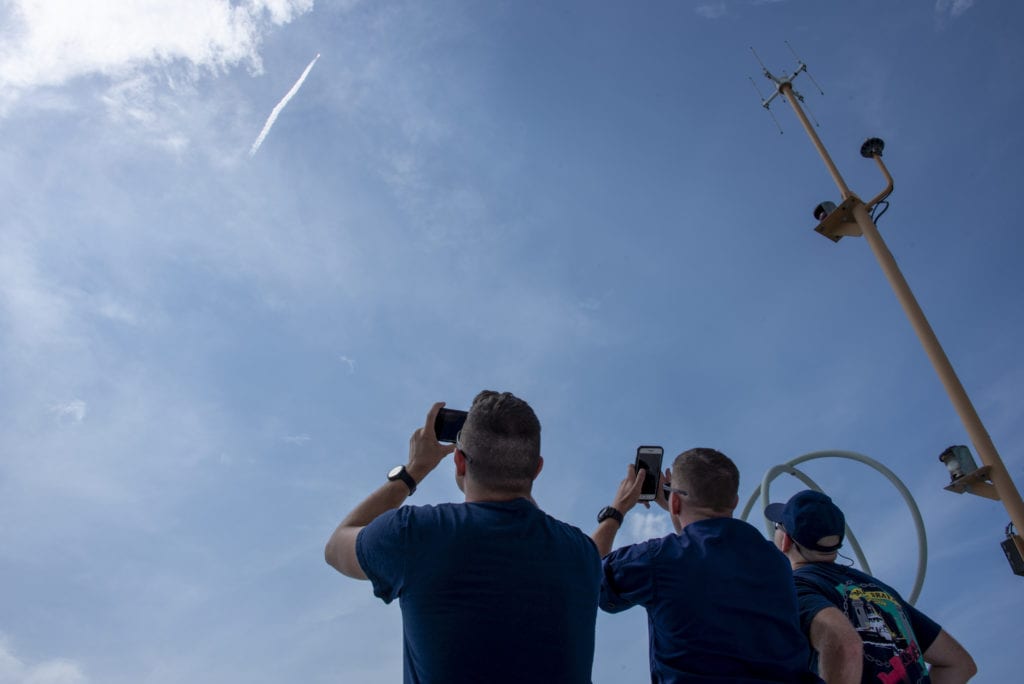
While launches are becoming more routine, Lamb said they’re still spectacular to observe. “It’s a pretty incredible view.”