Coast Guard Cutter Dorado Decommissioned after 23 Years of Service
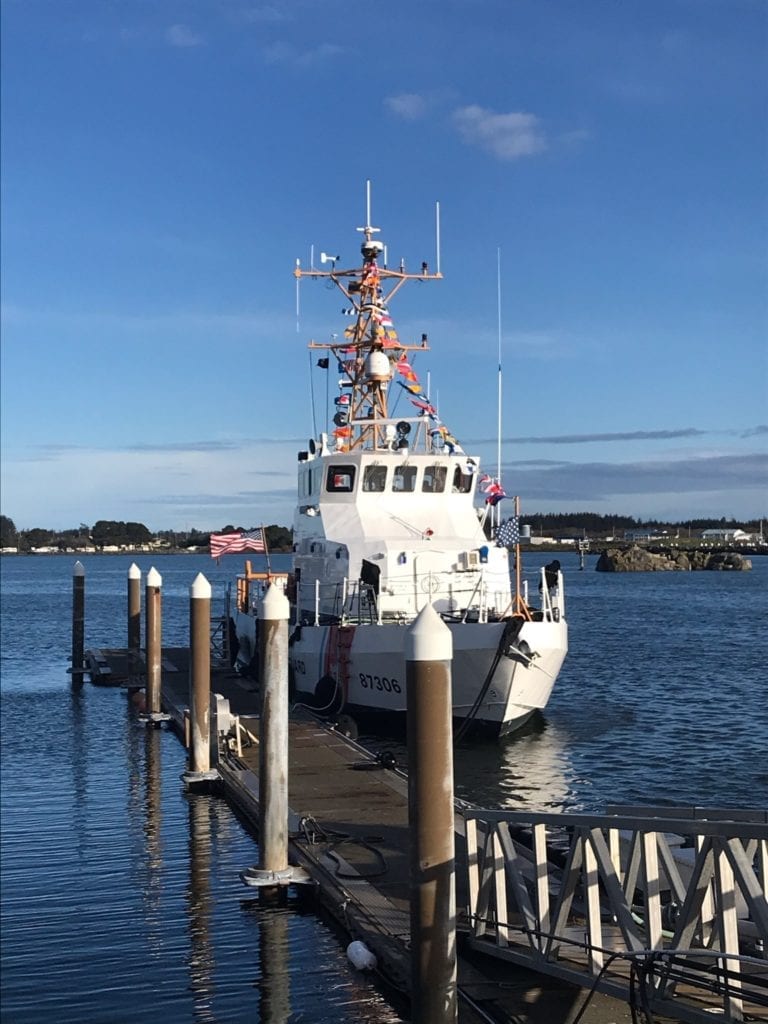
The Coast Guard Cutter Dorado (WPB-87306) is shown before a decommissioning ceremony for the cutter, March 10, 2021 in Crescent City, California. The Dorado is being decommissioned after 23 years of service in the Coast Guard from 1999 to 2021. U.S. Coast Guard

MCKINLEYVILLE, Calif. — The Coast Guard Cutter Dorado (WPB-87306) was decommissioned March 10 after 23 years of service during a ceremony in Crescent City, California. 

The Dorado was the Coast Guard’s sixth 87-foot Marine Protector-class patrol boat to serve as the Coast Guard’s primary nearshore patrol asset. 

“I would like to thank my crew and all previous sailors for bolstering her highly successful service life,” said Lt. Rebecca Cotton, the Dorado’s commanding officer. “They made the Dorado an unforgettable cutter in which to serve the West Coast for the past 23 years. Equally important are our partners at the 11th Coast Guard District, Coast Guard Sector Humboldt Bay and the city of Crescent City. I would like to extend tremendous thanks as Dorado’s success throughout the years would not have been possible without their support.” 

The Dorado was built in 1998 by Bollinger Machine Shop and Shipyard, Inc. in Lockport, Louisiana. Once construction was complete, Dorado’s crew transited the ship through the Panama Canal to reach its new homeport in Crescent City where it was officially placed into commission. 

During Dorado’s time in service, the crew completed more than 135 search and rescue cases and 1,000 law enforcement and fishery boardings. 

“The Coast Guard Cutter Dorado and her crew have been vital to our mission of safeguarding the waters of Northern California,” said Capt. Mark Hiigel, the Sector Humboldt Bay commander. “No matter what was asked of them, they answered the call and I am extremely grateful for their hard work and dedication. Dorado will be missed along our coast. However, we always stand ready to ensure the safety and security of our waterways.” 

Dorado’s crew is scheduled to sail the ship to Baltimore where it is slated to be turned in to the Foreign Military Sales program. 

Marine Protector-class patrol boats are primarily used for combating drug smuggling, illegal immigration, marine fisheries enforcement and search and rescue. 

The Coast Guard commissioned four 154-foot fast response cutters in California between 2018 and 2019, which operate along California’s entire coast and international waters off Mexico and Central America conducting missions such as search and rescue, fishery patrols, national defense and port, waterways and coastal security. 


Cutter Offloads 7,500 Pounds of Interdicted Cocaine, Marijuana in San Diego

The crew of the Coast Guard Cutter Bertholf (WMSL-750) offloads approximately 7,500 pounds of seized cocaine and marijuana in San Diego, March 20, 2021. U.S. Coast Guard / Petty Officer 2nd Class Travis Magee

SAN DIEGO — The crew of the Coast Guard Cutter Bertholf (WMSL-750) offloaded approximately 7,500 pounds of seized cocaine and marijuana in San Diego, March 10, the Coast Guard 11th District said in a release. 

The drugs, worth an estimated $126.7 million, were seized in international waters of the eastern Pacific Ocean between January and February, representing 10 suspected drug smuggling vessel interdictions off the coasts of Mexico, Central and South America by the following Coast Guard and Navy ships: 

The Coast Guard Cutter Bertholf (WMSL 750) crew was responsible for four interdictions seizing approximately 6,200 pounds of cocaine.  

The Coast Guard Cutter Munro (WMSL 755) crew was responsible for three interdictions seizing approximately 1,100 pounds of cocaine and 50 pounds of marijuana. 

The Coast Guard Law Enforcement Detachment 107 deployed aboard the USS Freedom (LCS 1) was responsible for one interdiction seizing approximately 22 pounds of cocaine. 

The Coast Guard Cutter Harriet Lane (WMEC 903) crew was responsible for one interdiction seizing approximately 50 pounds of marijuana. 

The Coast Guard Cutter Vigilant (WMEC 617) crew was responsible for one interdiction seizing approximately 22 pounds of cocaine. 

Speakers at the event included Adm. Karl Schultz, the Coast Guard commandant, and Capt. Brian Anderson, the Bertholf commanding officer. 

“The 7,000 pounds of cocaine offloaded today was interdicted as a result of extraordinary effort and joint and interagency partnerships,” said Schultz. “While the Bertholf may have physically stopped or interdicted the drug smuggling vessels, our DoD and DHS partners, particularly CBP Air and Marine Operations maritime patrol aircraft, coordinated through Joint Interagency Task Force-South, put the Bertholf in the right place at the right time to conduct at-sea interdictions.” 

On April 1, U.S. Southern Command increased counter-narcotics operations in the Western Hemisphere to disrupt the flow of drugs. Numerous U.S. agencies from the departments of Defense, Justice, and Homeland Security cooperated in the effort to combat transnational organized crime. The Coast Guard, Navy, Customs and Border Protection, FBI, Drug Enforcement Administration, and Immigration and Customs Enforcement, along with allied and international partner agencies, play a role in counter-drug operations. 

The fight against drug cartels in the Eastern Pacific Ocean requires unity of effort in all phases from detection, monitoring, and interdictions, to criminal prosecutions by international partners and U.S. Attorneys’ Offices in districts across the nation. The law enforcement phase of counter-smuggling operations in the eastern Pacific Ocean is conducted under the authority of the 11th Coast Guard District, headquartered in Alameda. The interdictions, including the actual boardings, are led and conducted by members of the U.S. Coast Guard. 

“The crew is lauded for their dedication to duty and resiliency throughout this patrol,” Anderson said. “Tasks that once seemed routine, became more complex with personal protective equipment and decontamination procedures added to our standard operating procedures. Early in the deployment, we interdicted three go-fast vessels over a span of six hours, which demonstrated our full capabilities and our commitment to keeping America safe and secure. I couldn’t be more proud of my crew.” 

The Bertholf is a 418-foot national security cutter, commissioned in 2008 and homeported in Alameda. The Munro is a 418-foot national security cutter homeported in Alameda. The Freedom is a 387-foot littoral combat ship homeported in San Diego. The Harriet Lane is a 270-foot medium-endurance cutter homeported in Portsmouth, Virginia. The Vigilant is a 210-foot medium-endurance cutter homeported in Port Canaveral, Florida. 


AeroVironment’s Arcturus UAV Subsidiary Awarded $7M for SOCOM UAS Program

Arcturus UAV’s Jump 20 unmanned aircraft. AeroVironment

SIMI VALLEY, Calif., March 9, 2021 – AeroVironment Inc.’s wholly owned subsidiary Arcturus UAV, now operating under the AeroVironment brand, was awarded a competitive task order valued at approximately $7 million from the U.S. Special Operations Command (USSOCOM), the company said in a March 9 release. The competitive task order is for a one-year period of performance, which started Feb. 3, 2021. 

USSOCOM selected Arcturus UAV as one of six companies qualified for the potential $975 million Indefinite Delivery, Indefinite Quantity (IDIQ) MEUAS contract in June 2020. The contract enables awardees to compete for site-specific task orders and provide USSOCOM with unmanned aircraft systems services and support for intelligence, surveillance and reconnaissance (ISR) operations.  

“Part of AeroVironment’s expanded portfolio of medium UAS, the fixed wing Jump 20 is capable of vertical takeoff and landing, making it completely runway independent,” said Rick Pedigo, AeroVironment vice president of global sales and business development. “Runway independence maximizes the ability of customers to deploy the Jump 20 in a broad range of locations and environments, while minimizing the logistical footprint required to operate it. Jump 20 is also capable of hosting multiple different payload options, delivering true versatility and multi-mission capabilities to support a wide array of customer requirements.”  

AeroVironment recently successfully demonstrated the Jump 20 for the U.S. Army Future Tactical Unmanned Aircraft System (FTUAS) “Rodeo,” which took place from Feb. 22 through March 5 at Fort Benning, Georgia. 


DOD Releases Fiscal Year 2020 Freedom of Navigation Report

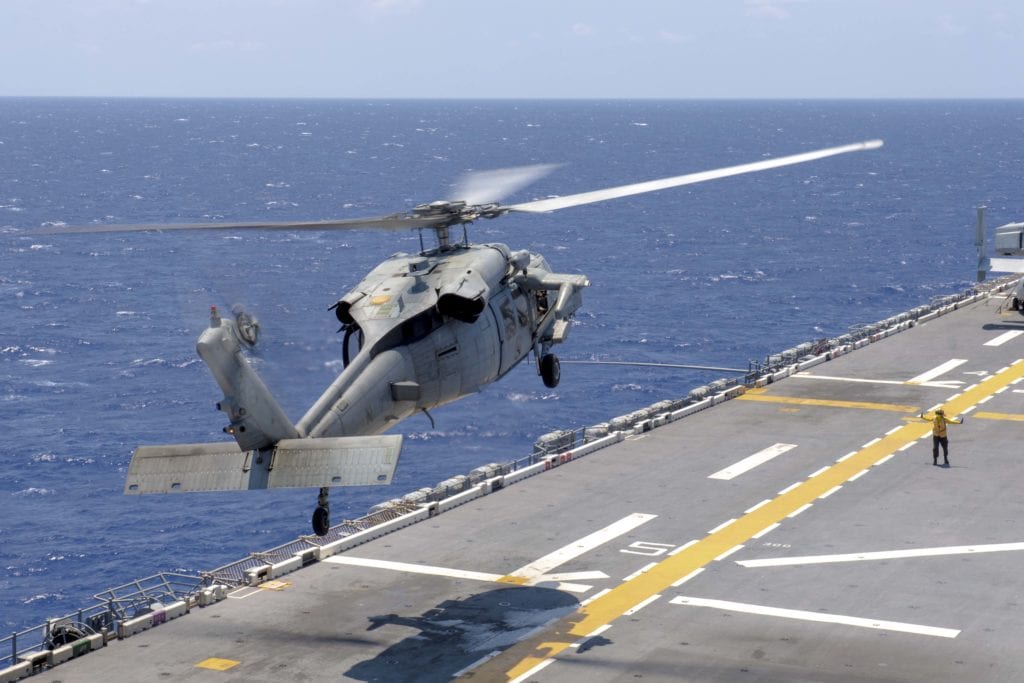
An MH-60S Sea Hawk helicopter assigned to the Archangels of Helicopter Sea Combat Squadron (HSC) 25 Detachment 6 prepares to land on the flight deck of the forward-deployed amphibious assault ship USS America (LHA 6) as part of a 2020 FONOP. U.S. Navy / Mass Communication Specialist 2nd Class Shelby Tucker

ARLINGTON, Va. — The Department of Defense (DoD) released on March 10 its annual Freedom of Navigation (FON) Report for Fiscal Year 2020. During the period from Oct. 1, 2019, through Sept. 30, 2020, U.S. forces operationally challenged 28 different excessive maritime claims made by 19 different claimants throughout the world. 

Unlawful and sweeping maritime claims — or incoherent legal theories of maritime entitlements — that are inconsistent with customary international law as reflected in the Law of the Sea Convention pose a threat to the legal foundation of the rules-based international order.  Consequently, the United States is committed to confronting this threat by challenging excessive maritime claims. 

DoD’s operational challenges are also known as “FON assertions,” “FON operations,” and “FONOPs.” The comprehensive, regular, and routine execution of these operations complements diplomatic engagements by the U.S. State Department and supports the longstanding U.S. national interest in freedom of the seas worldwide.  

Upholding freedom of navigation as a principle supports unimpeded lawful commerce and the global mobility of U.S. forces. FONOPs demonstrate the United States will fly, sail, and operate wherever international law allows — regardless of the location of excessive maritime claims and regardless of current events.  

Each year, DoD releases an unclassified summarized FON Report identifying the broad range of excessive maritime claims that are challenged by U.S. forces. The FON Report also includes general geographic information to describe the location of FON assertions while still maintaining operational security of U.S. military forces.  

“Excessive maritime claims” are those that are inconsistent with international law as reflected in the Law of the Sea Convention. They include a variety of restrictions on the exercise of navigation and overflight rights and freedoms and other lawful uses of the sea. If left unchallenged, excessive maritime claims could limit the rights and freedoms enjoyed by the United States and other nations. 

As long as restrictions on navigation and overflight rights and freedoms that exceed the authority provided under international law persist, the United States will continue to challenge such unlawful maritime claims.  

The United States will uphold the rights, freedoms, and lawful uses of the sea for the benefit of all nations — and will stand with like-minded partners doing the same.  

Previous DoD FON Reports are available at http://policy.defense.gov/OUSDPOffices/FON.aspx 


Virginia SSN New Jersey Construction Advances with Pressure Hull Complete

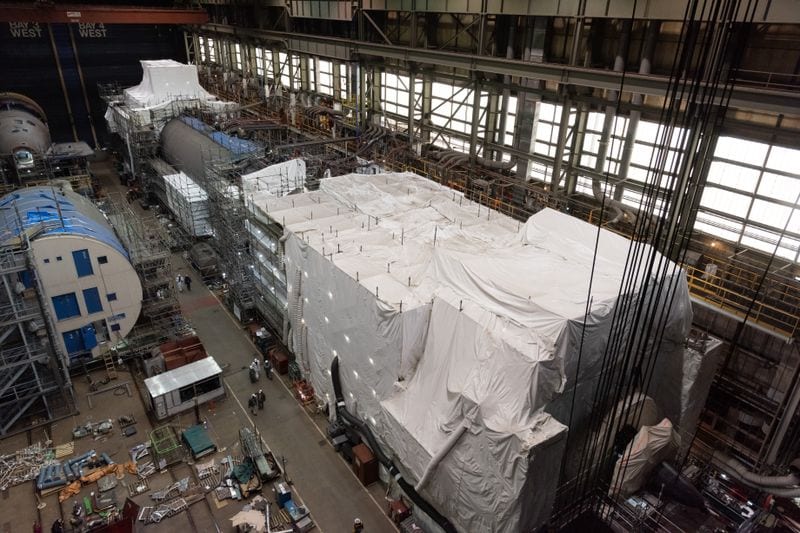
The Virginia-class submarine New Jersey (SSN 796) reached pressure hull complete in February 2021. The construction milestone signifies that all of the submarine’s hull sections have been joined to form a single, watertight unit. The boat is currently 72% complete. HII / Matt Hildreth

NEWPORT NEWS, Va. — Huntington Ingalls Industries’ Newport News Shipbuilding division has achieved a milestone in the construction of the submarine New Jersey (SSN 796), the company said in a March 9 release. 

The company reached pressure hull complete on Feb. 10, meaning that all of its hull sections were joined to form a single, watertight unit. This is the latest major milestone before the submarine is christened and floated off. 

“Achieving this milestone is especially significant as it continues to prove our teams can safely perform at a high level in the face of the COVID-19 pandemic,” said Jason Ward, vice president of Virginia-class submarine construction. “The successful execution of this event demonstrates our culture of trust, accountability and strict adherence to standards, which is paramount in our building warships for our Navy customer.”  

New Jersey is the 23rd Virginia-class fast attack submarine. Construction began in March 2016 and is about 72% complete. The boat is scheduled for delivery to the Navy in 2022. 


Cobham Wins NAVAIR Contract for T-45 Fleet-Wide Oxygen Concentrator

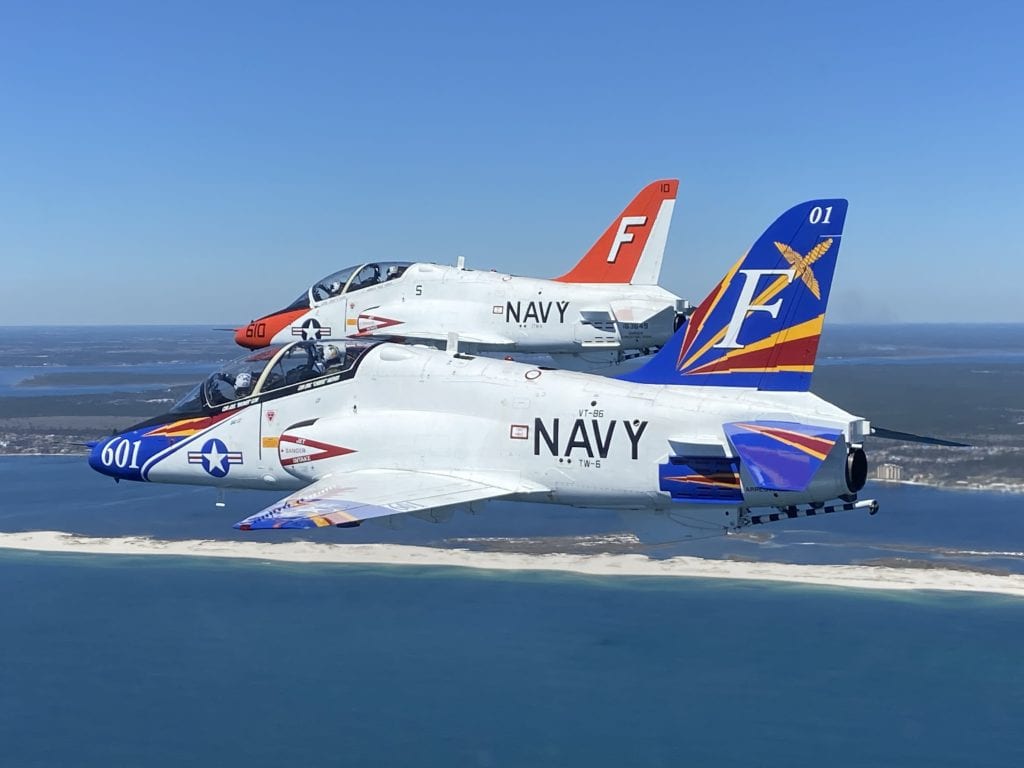
Cmdr. Eric Reeves (blue aircraft) relinquishes command of the “Sabrehawks” of Training Squadron (VT) 86 to Cmdr. George Zintak during an aerial change of command ceremony above Pensacola, Florida, Feb. 4. VT-86 conducts undergraduate strike naval flight officer training for the Navy, Marine Corps, and select international military partners. U.S. Navy photo by Capt. Scott Janik

DAVENPORT, Iowa — Cobham Mission Systems has been awarded a new contract from the U.S. Naval Air Systems Command (NAVAIR) for production and delivery of two lots of GGU-25 oxygen concentrators, the company announced in a March 9 release. This program includes delivery of a fleet-wide oxygen concentrator legacy system upgrade for U.S. Navy T-45 Goshawk jet trainers. Cobham Mission Systems’ enhanced smart concentrators will deliver optimal oxygen for pilots while also monitoring and recording necessary operational data.  

“We are honored to have the Navy’s ongoing confidence in our products and to be given this opportunity to continue serving the T-45 fleet,” said Jason Apelquist, senior vice president for business development and strategy, Cobham Mission Systems. “We have advanced our oxygen concentrator technologies and design standards significantly in the last decade to further support the warfighter and ensure critical operational data is monitored in real time. We’re excited to be delivering our GGU-25 to this fleet. It is an upgraded version of GGU-7, our legacy product on the T-45. This will ensure that Navy pilots in training are provided an environment for adequate breathing under all conditions.”  

GGU-25 is designed to be a smart concentrator that delivers the required amount of oxygen to the pilot and also records key operational parameters in real time. This data is extremely useful in troubleshooting any possible incidence of unexplained physiological episode during flight.  


Naval Technology Processes Misaligned, Research Admiral Says

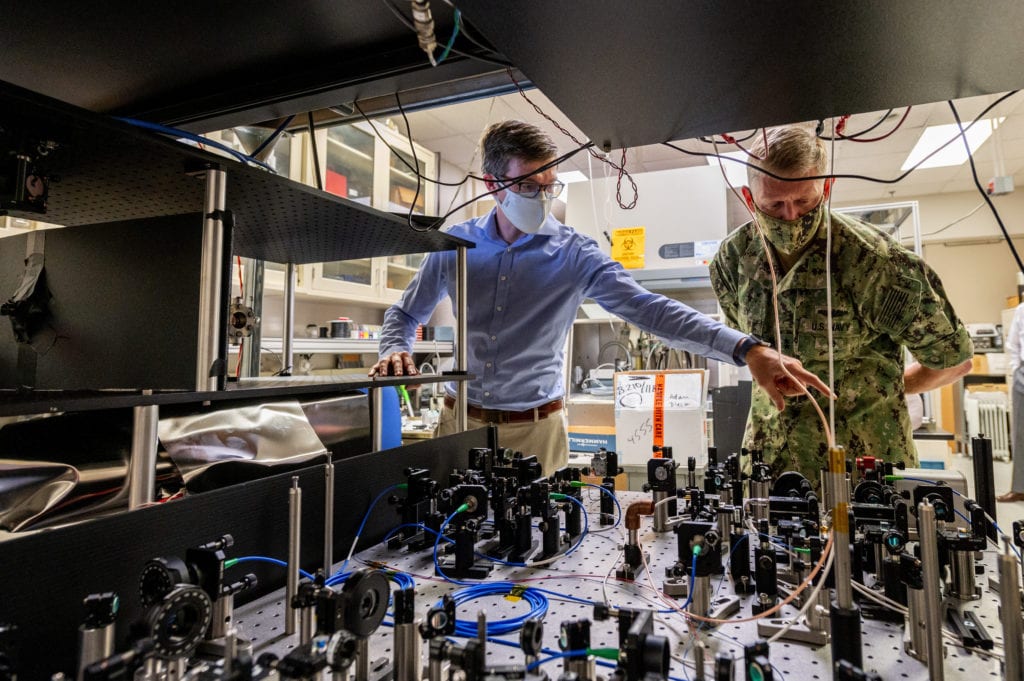
Jonathan Kwolek, Ph.D. (left), a U.S. Naval Research Laboratory research physicist, shows an atom interferometer to Chief of Naval Research Rear Adm. Lorin Selby (right) in 2020 at NRL facilities in Washington, D.C. U.S. Navy / Jonathan Steffen

ARLINGTON, Va. — The admiral in charge of naval technology research said he is looking hard at the processes of technology development to see how they can be refined to speed development.

“We are not structurally aligned to move that tech as fast as we need it moving,” said Rear Adm. Lorin Selby, chief of naval research (CNR), speaking March 8 in a webinar of the National Defense Industrial Association’s Pacific Operations Science and Technology Conference. “We’re going to develop the tech, and I’m convinced that more of this probably will happen on the industry side than the government. It will be a partnership but it’s primarily going to be driven by the dollar, the profit of these things coming down the pike. I get concerned about the structural alignment of our processes — that I think are misaligned, with the pace we’re trying to get at.”  

Selby said improvements can come through the budget and executive and legislative action, but “It’s in the way we insert tech in the acquisition pipeline from different places” that he is focused on.  

“Looking back over the last 20 years or so, we have tried to put in place ‘HOV lanes’ around the traffic, things like DIU [Defense Innovation Unit] are things primarily intended to go around the congestion,” he said. “The problem is they invariably have to start in the congestion or they totally merge back into it just because they have to; that’s the way it works. There are some structural issues there that we need to go after. 

“Let’s face it: we’re still operating like it’s 1985 or something,” Selby said. “It worked great in 1985. For the most part, for big high-ticket things, it still works pretty well today — aircraft carriers, submarines, fighter-bombers. Could you make some tweaks? Yeah, you could. Fundamentally, when you talk about high-tech payloads, the software, the things that are really going to be the game changers — that’s where we’ve really got to look hard at the structure and figure out ways to make some alterations.”  

Selby, said “there are some things that could be done within the existing lifelines, changing the way some of the A to B to C works. It has become so complex that it’s hard for any one program manager to figure out to manage all of this. There are so many relationships. We need to go back to a simpler, more linear approach. We’d actually go faster.”

The CNR, a submarine officer who has been a program manager, chief engineer for the Naval Sea Systems Command and head of a warfare center, said his experience give him a perspective of the whole life cycle of technological systems. 

“I’ve seen the entire flash of an idea all the way to the disposal of the thing at the end of its life,” he said. 


Bill Introduced to Boost Coast Guard Icebreaking Mission, Great Lakes Icebreaking Capacity

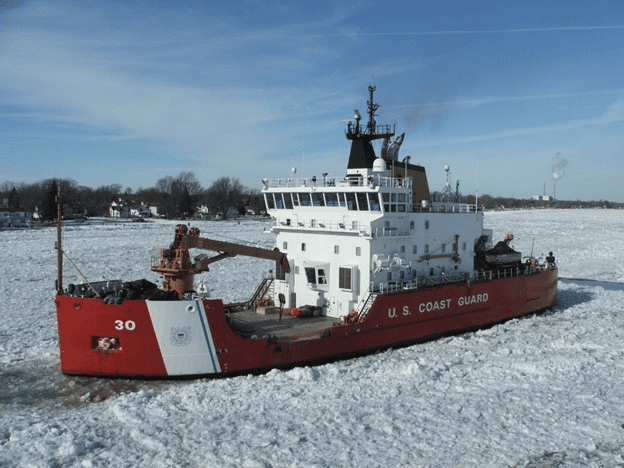
The Coast Guard Cutter Mackinaw, a 240-foot heavy icebreaker, breaks ice near Marine City, Michigan, along the St. Clair River, 2015. U.S. Coast Guard / Daniel R. Michelson

Recognizing the importance of maritime commerce on the Great Lakes, three U.S. senators are calling for legislation to help the Coast Guard keep the shipping lanes open during the winter.

“Inadequate icebreaking capacity in the Great Lakes is costing us thousands of American jobs and millions in business revenue. We must boost our icebreaking capacity in the Great Lakes to keep our maritime commerce moving,” said Sen. Tammy Baldwin (D-Wisconsin), who along with Sens. Todd Young (R-Indiana) and Gary Peters (D-Michigan) are reintroducing the Great Lakes Winter Commerce Act.

The bill would update the U.S. Coast Guard’s (USCG) Great Lakes icebreaking mission and increase the icebreaking capacity of the Great Lakes fleet to support “reasonable demands of commerce.” 

According to a statement from Baldwin’s office, “the Coast Guard currently interprets the ‘reasonable demands of commerce’ as meaning that an ice-covered waterway is open until a second vessel is stuck in the ice for more than 24 hours as a result of another vessel’s inability to move. They only report to Congress ice restrictions in four connecting channels for the entire Great Lakes.”

The bill defines “reasonable demands of commerce” as the “safe movement of commercial vessels transiting ice-covered waterways in the Great Lakes, regardless of type of cargo, at a speed consistent with the design capability of Coast Guard icebreakers operating in the Great Lakes.”

A study commissioned by the Lake Carriers’ Association found that during the 2018-2019 ice-season, businesses that depend upon the Great Lakes maritime industry lost over $1 billion in revenues because of delays caused by inadequate icebreaking.

“This historic bill will codify into law a long time Coast Guard mission that protects national and economic security,” said Jim Weakley, president of the Lake Carriers’ Association.

The legislation authorizes $350 million for the construction of a new Great Lakes icebreaker.

The Coast Guard currently has one heavy icebreaker based at Cheboygan, Michigan, as well as six icebreaking tugs. The Great Lakes icebreaker USCGC Mackinaw (WLBB 30) can break ice up to 32 inches thick at continuous speeds of 3 knots. Commissioned in 2006, the 240-foot heavy icebreaker is the largest Coast Guard vessel on the Great Lakes. There are also Bay-class 140-foot icebreaking tugs that can break ice up to 22 inches thick, based at Cleveland, Detroit, Sault Ste. Marie, Michigan, Sturgeon Bay, Wisconsin, and St. Ignace in Michigan.

“Icebreaking in the Great Lakes is critical not just for Michigan’s economy, but for our entire country. As we have seen this winter, the economic crisis caused by the coronavirus pandemic has made the importance of icebreaking more vital than ever to our small business community,” Peters said. 

Icebreaking capacity in the Great Lakes supports more than 90 million tons of cargo annually.

“Our legislation will support icebreaking missions to expand capacity to ship goods, create jobs, and strengthen the economy in Indiana and other Great Lake states,” Young said.


Navy Awards Logistics Support Contract for Advanced Helicopter Training Program

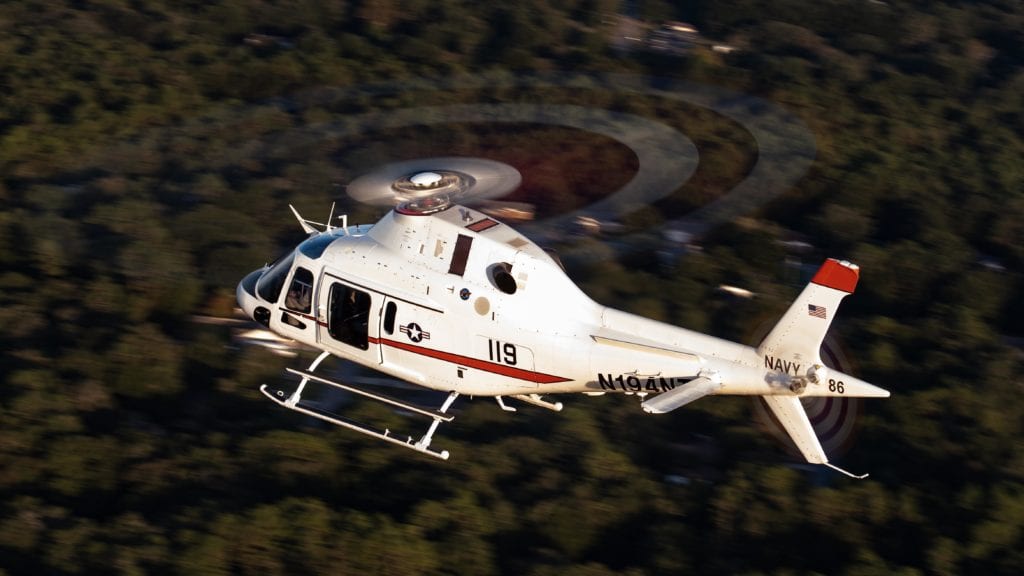
TH-73A Advanced Helicopter Training System. U.S. Naval Air Systems Command

PATUXENT RIVER, Md. — The U.S. Navy awarded Vertex Aerospace LLC (Vertex) a contract for $71.4 million on March 2 for the base year for the Contractor Logistics and Maintenance Support (CLS) in support of the Advanced Helicopter Training System (AHTS) program, with six options for a total contract value of more than $471 million, the Naval Air Systems Command said in a March 8 release. 

“The new Leonardo TH-73A helicopters are the cornerstone of AHTS, which is the planned replacement to address the capability and capacity gaps of the current aging TH-57 Sea Ranger helicopter training platform,” said Capt. Holly Shoger, Naval Undergraduate Flight Training Systems (PMA-273) program manager. “This contract ensures the Navy can successfully maintain the TH-57 helicopters until the TH-73A is operational in the fleet.  Vertex will ensure the Navy has capacity to train several hundred aviation students per year at Naval Air Station (NAS) Whiting Field in Milton, Florida.”  

The award comes following the Oct. 22, 2020 award to Vertex Aerospace, LLC., when a post-award protest was submitted to the Government Accountability Office (GAO) on Oct. 27, 2020.  

While reviewing information to respond to the protest, the government identified a matter which necessitated corrective action. The government notified the GAO of its intent to take corrective action and the GAO subsequently dismissed the protest as academic on Nov. 13, 2020. The government took corrective action by issuing an amendment and allowing offerors to submit revised proposals. Following its evaluation of the proposals, the government awarded the contract to Vertex Aerospace LLC on March 2. 

The task order contract for CLS was awarded on a best-value tradeoff basis with a base and six options. CLS availability is scheduled to begin in calendar year 2021 and continue through calendar year 2027. 

The procurement of this CLS includes logistics, maintenance and supply for both the TH-73A and the TH-57. The resultant task order award will provide services and materials necessary to provide aircraft maintenance and logistics aircraft support for both the TH-73A and the TH-57 platforms, to include the repair of airframe and aircraft subsystems, including engines; maintenance/repair and logistics support of support equipment, as required; and maintaining records and reporting for aircraft and associated systems. 

Using a combination of best industry and Navy practices, AHTS will ensure Chief of Naval Air Training efficiently produces rotary wing aviators who are prepared for advanced rotary wing and intermediate tilt-rotor training and who will meet the challenges faced in the fleet through 2050. 


Navy Accepts Delivery of Future USS Daniel Inouye

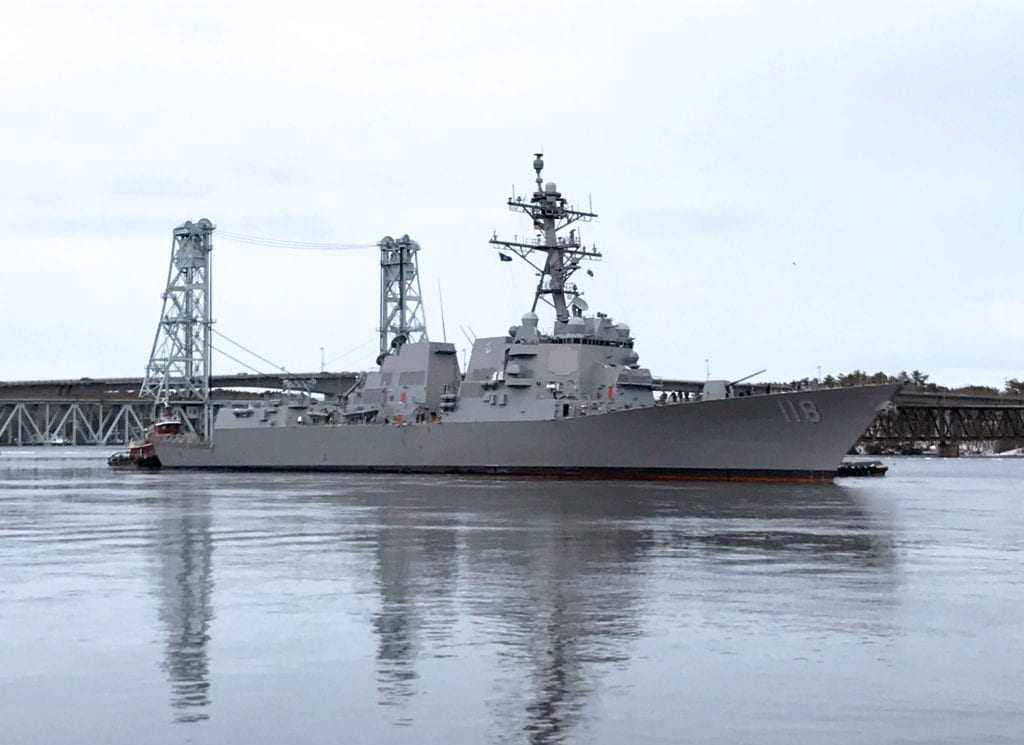
The future USS Daniel Inouye (DDG 118) departs General Dynamics Bath Iron Works shipyard on Feb. 3 for acceptance trials. SUPSHIP Bath

BATH, Maine – The Navy accepted delivery of the guided-missile destroyer Daniel Inouye (DDG 118) from shipbuilder General Dynamics Bath Iron Works, March 8, Team ships Public Affairs said in a release. 

Delivery of DDG 118 represents the official transfer of the ship from the shipbuilder to the Navy. Prior to delivery, the ship successfully conducted a series of at-sea and pier-side trials to demonstrate its material and operational readiness.  

The future USS Daniel Inouye is named in honor of Daniel Inouye, who served as a United States Senator for Hawaii from 1963 until his death in 2012. He received the Medal of Honor June 21, 2000 for his extraordinary heroism in action while serving with the 442nd Infantry Regimental Combat Team in Italy during World War II. 

“This highly capable platform will deliver the necessary combat power and proven capacity as the ship joins the world’s greatest Navy.” said Capt. Seth Miller, DDG 51 class program manager, Program Executive Office (PEO) Ships. “DDG 118 will continue to honor the legacy of its namesake and ‘Go For Broke’ for decades to come as it supports our country.” 

DDG 118 is a Flight IIA destroyer equipped with Aegis Baseline 9, which provides improved Integrated Air and Missile Defense capabilities, increased computing power, and radar upgrades that improve detection range and reaction time against modern air warfare and Ballistic Missile Defense threats. 

BIW is also in production on the future Arleigh Burke-class destroyers Carl M. Levin (DDG 120), John Basilone (DDG 122), Harvey C. Barnum (DDG 124), Patrick Gallagher (DDG 127), and Flight III ships, Louis H. Wilson, Jr. (DDG 126), and William Charette (DDG 130), as well as the future Zumwalt-class destroyer, Lyndon B. Johnson (DDG 1002).