Astronics Awarded Boeing Contracts to Support Navy’s MQ-25 Unmanned Tanker
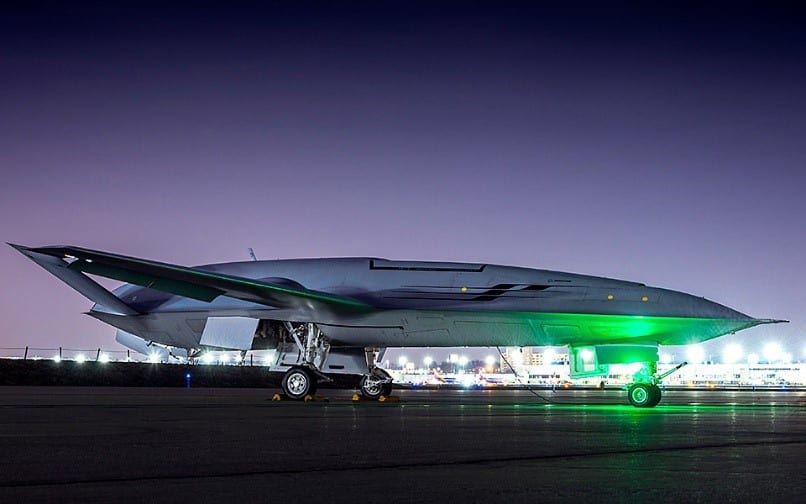
The MQ-25 unmanned aerial refueling tanker. Boeing

EAST AURORA, N.Y. — Astronics Corp. has been awarded contracts by Boeing to supply CorePower aircraft power distribution units and custom-engineered exterior lighting for the MQ-25 unmanned aerial refueling program, Astronics said in a Feb. 17 release. 

“Our CorePower Electronic Circuit Breaker Unit (ECBU) technology is ideally suited for use in unmanned aircraft. This COTS [commercial off the shelf] power distribution technology will support the success of the MQ-25 program by providing intelligent control and visibility of the on-board power systems,” said Pete Gundermann, president and CEO of Astronics. “Additionally, we are proud to bring our exterior lighting expertise for military programs to Boeing on this project.” 

The CorePower system replaces pilot-operated, thermal mechanical breaker systems with intelligently controlled, solid-state switches to provide safe, reliable performance remotely. The system planned for the MQ-25 incorporates the use of Astronics’ latest generation ECBU products to create an evenly distributed system at a fraction of the wire weight and increased reliability compared with traditional systems. 

Astronics is also currently working with Boeing to design custom lighting for the MQ-25 that to provide for safe operations for flight deck personnel and aid in the aerial refueling process. 

The MQ-25 is the U.S. Navy’s first operational carrier-based unmanned aircraft and is designed to provide a much-needed refueling capability. The contract supports Boeing’s engineering and manufacturing development program. 

“The MQ-25 program is vital because it will help the U.S. Navy to extend the range of the carrier air wing and Boeing and our industry team is all-in on delivering this capability,” said Dave Bujold, Boeing’s MQ-25 program director. “The work we’re doing is also foundational for the future of Boeing — where we’re building autonomous systems from seabed to space.” 


Navy Awards Collins Aerospace $64 Million Contract for Warship Sonar Domes

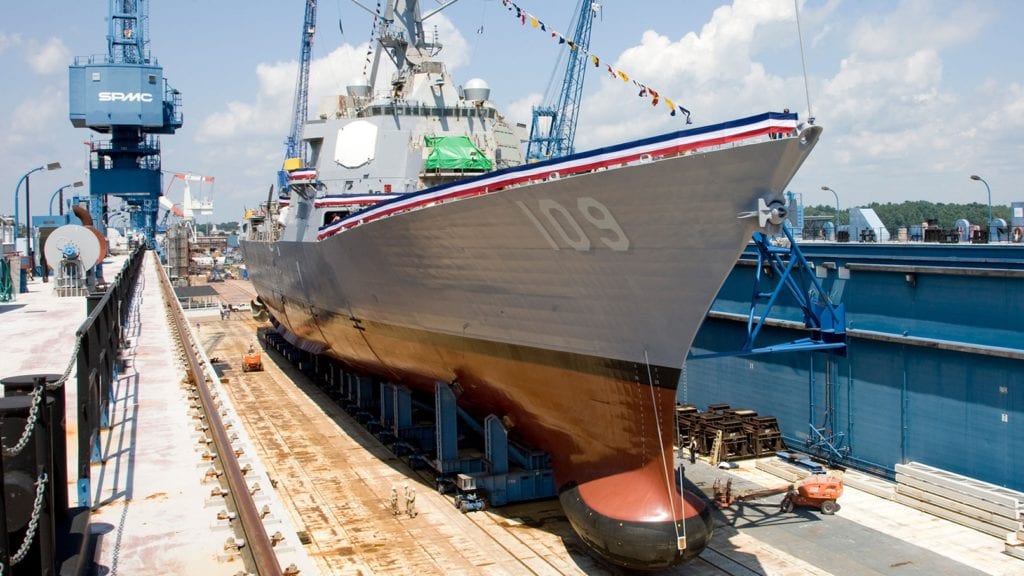
The Naval Programs group within Aerostructures at Collins Aerospace has supplied more than 25 composite keel domes and 360 rubber bow windows for U.S. Navy surface ships. Collins Aerospace

JACKSONVILLE, Fla. — The Naval Surface Warfare Center in Crane, Indiana, has awarded Collins Aerospace Systems, a unit of Raytheon Technologies, a seven-year, $64 million indefinite delivery, indefinite quantity contract to provide sonar domes for surface combat ships for the U.S. Navy and allied forces, the company said in a Feb. 16 release. 
 
The agreement, which builds upon a previous five-year production contract, includes shipping, installation, engineering support, field services, inspection and repairs. Work will be produced by the Naval Programs (Engineered Polymer Products) group of the Aerostructures business unit at Collins Aerospace. 
 
Sonar domes, located on the hulls of warships, protect critical electronic equipment used for detection, navigation and ranging. The domes permit acoustic energy to pass through with minimal sound transmission interference. 
 
The contract includes domes made of a proprietary advanced composite material developed by Collins Aerospace that provides optimal structural and acoustic performance to the ship’s sonar system. This allows for enhanced detection and classification of underwater targets. These composite keel domes replaced traditional rubber domes on U.S. and Allied Navy frigates in 1997 because they require less maintenance and are expected to last more than 30 years even under the most extreme operating conditions. 
 
“Our sailors are putting their lives on the line, and they need the most advanced solutions available to keep them safe. We’ve spent more than 25 years refining our sonar systems technologies and materials to do just that,” said Marc Duvall, president of Aerostructures at Collins Aerospace. “We’re honored to serve the men and women of the Navy and provide the technology they need to see deep into the seas they protect.” 
 
To date, Naval Programs has supplied over 25 composite bow domes for U.S. Navy Virginia-class submarines, as well as more than 25 composite keel domes and 360 rubber bow windows for U.S. Navy surface ships. 


First ACV Command Variant Delivered to Marine Corps for Testing

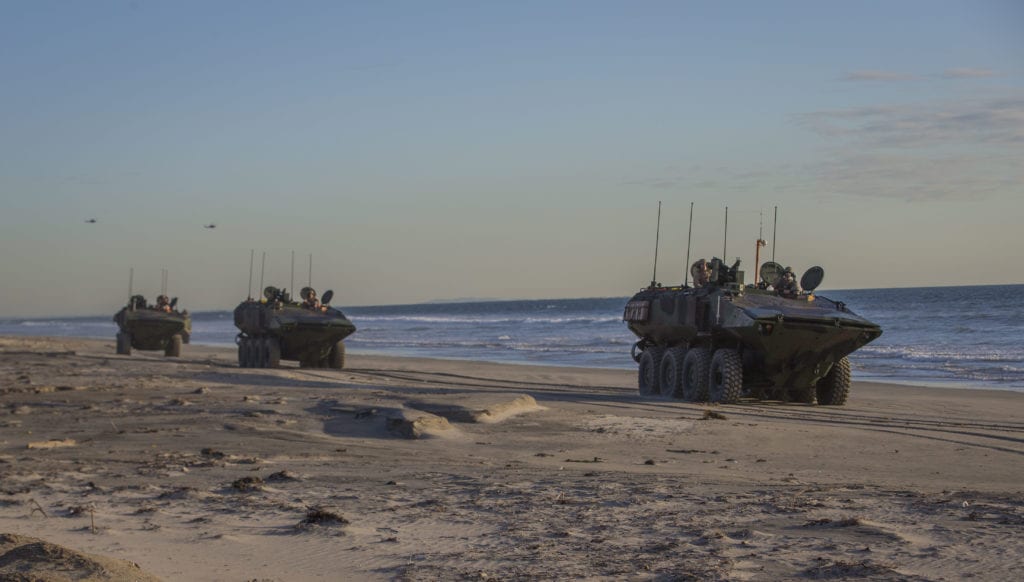
U.S. Marines with Amphibious Vehicle Test Branch, Marine Corps Tactical Systems Support Activity, drive new Amphibious Combat Vehicles along the beach during low-light surf transit testing at AVTB Beach on Marine Corps Base Camp Pendleton, California, Dec. 18, 2019. U.S. Marine Corps / Lance Cpl. Andrew Cortez

STAFFORD, Va. — BAE Systems has handed over the first of a new variant of the Amphibious Combat Vehicle to the U.S. Marine Corps for testing, the company said in a Feb. 18 release. The Command variant (ACV-C) is designed to provide the highest levels of communications, coordination, and analysis on the battlefield to support command and control.  

BAE Systems is under contract to deliver two variants to the Marine Corps under the ACV Family of Vehicles program: the ACV personnel carrier (ACV-P) and the ACV-C. A 30mm cannon (ACV-30) is currently under contract for design and development and a recovery variant (ACV-R) is also planned.   

The ACV-C employs multiple workstations for Marines to maintain and manage situational awareness in the battle space. The workstations access independent networks for advanced digital communications while on the move. This capability supports immediate information synchronization in the application of combat power.  

“This ACV’s base design for payload makes it a uniquely adaptable platform for the integration of numerous mission capability sets,” said John Swift, director of amphibious programs at BAE Systems. “The delivery of the first ACV-C for testing is significant as it provides Marines with advanced operational control for defeating adversaries. Marines will be able to quickly receive and analyze data, coordinate battlefield functions, and transmit information to provide terminal mission control rapidly from the mobile protected ACV-C.” 

The ACV platform was designed to grow and adapt to mission needs, allowing space for new capabilities as technology evolves such as turreted, reconnaissance, electronic warfare, anti-air, and UAS systems integration.  

The Marine Corps and BAE Systems entered full-rate production on the ACV program with a contract award in December, achieving its most significant milestone to date along with the Marine Corps’ decision to declare initial operational capability. Work is currently underway on the ACV-30 variant. 

ACV production and support is taking place at BAE Systems locations in Stafford, Virginia; San Jose, California; Sterling Heights, Michigan; Aiken, South Carolina; and York, Pennsylvania. 


Cutter Delivers Water to Alaska Residents Experiencing Waterline Failures

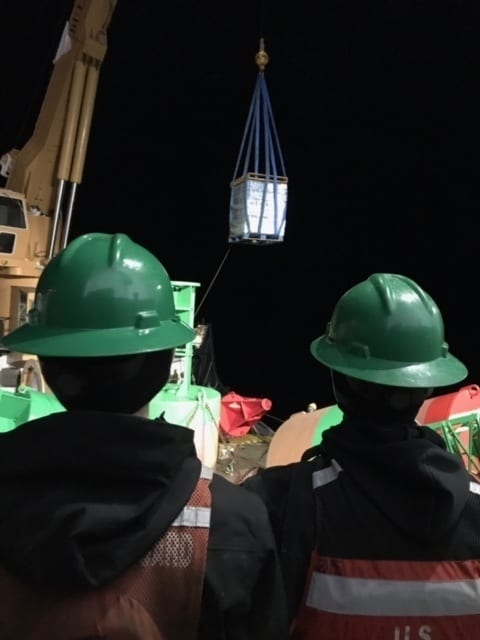
Coast Guard Cutter Hickory crewmembers offload pallets of water in a humanitarian effort to deliver goods to the small community of Angoon, Alaska, Feb. 14, 2021. U.S. Coast Guard

KODIAK, Alaska — The Coast Guard Cutter Hickory crewmembers delivered pallets of water to the remote community of Angoon, Alaska, on Feb. 14, after the residents experienced waterline failures, the Coast Guard 17th District said in a Feb. 16 release.  

The cutter crew loaded four pallets of water onto the ship with each pallet containing 1,700 bottles and delivered the supplies to Angoon Sunday evening. 

Along with the nearly 7,000 bottles of water being delivered, the Hickory crew reportedly had 8,000 gallons of potable water onboard that could be offloaded to the residents if needed. 

Coast Guard District 17 Command Center watchstanders received a call Saturday afternoon from the Alaska Emergency Operations Center requesting assistance in delivering the pallets. 

Angoon, a small community with a population of 400, is experiencing waterline failures resulting in one third of the community being completely without water while the rest of the residents have been advised to boil water before consumption. 

There was no water available at the local store and commercial services are not available to deliver water until late next week. The waterline failures are expected to last for a couple of weeks. 

The Hickory is a 225-foot sea-going buoy tender homeported in Homer, Alaska. 


Cutters Interdict 3 Suspected Smuggling Vessels, $156M of Cocaine in Eastern Pacific

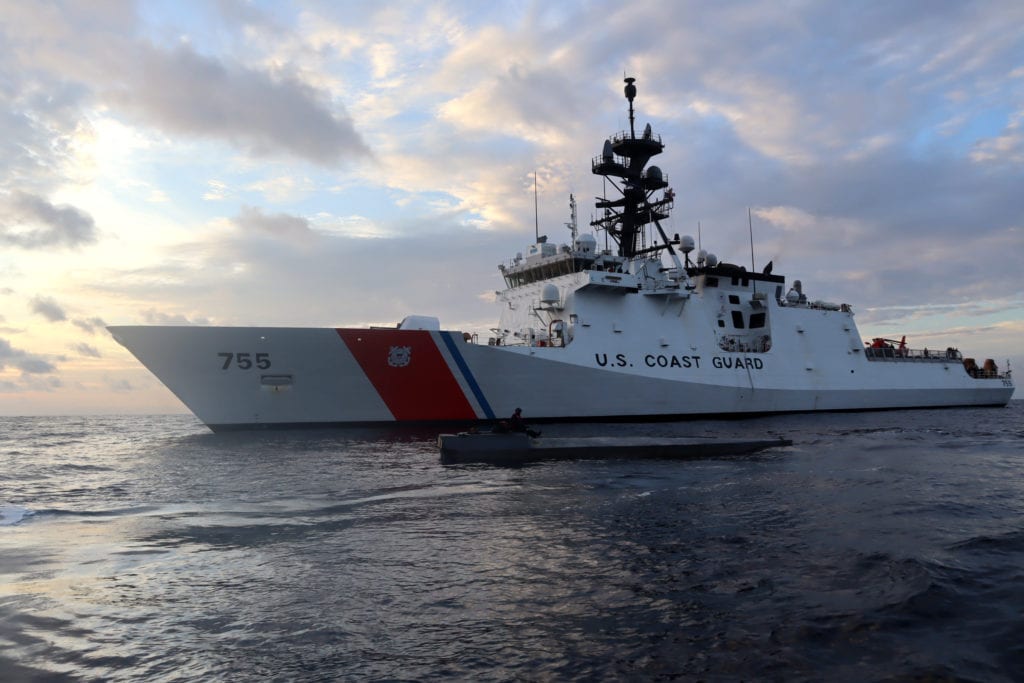
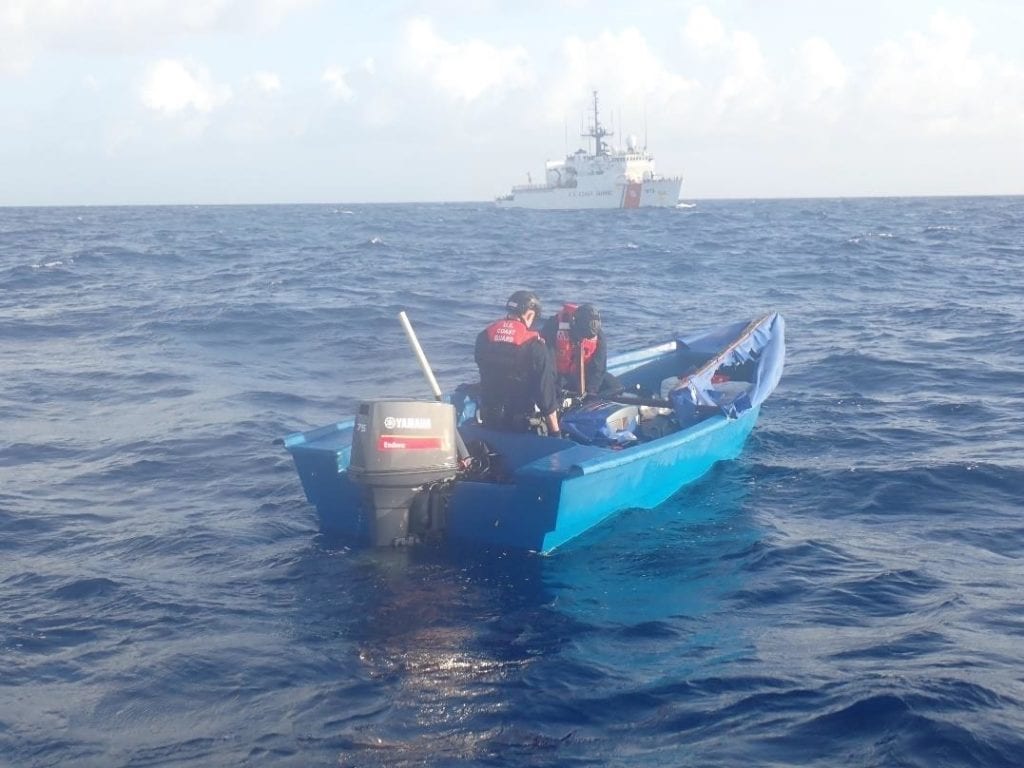
Coast Guard Cutter Munro (WMSL 755) boarding team member sits atop an interdicted low-profile vessel in the Eastern Pacific Ocean after crews seized 3,439 pounds of cocaine from the LPV, Jan. 27, 2021. U.S. Coast Guard

ALAMEDA, Calif. – Crews aboard two Alameda-based Coast Guard cutters interdicted three suspected drug smuggling vessels in the Eastern Pacific Ocean between Jan. 26 and Feb. 1 and seized more than 9,000 pounds of cocaine worth an estimated $156 million, the Coast Guard Pacific Area said in a Feb. 17 release. 

Conducting the operations were the crews of the Coast Guard Cutters Munro (WMSL 755) and Bertholf (WMSL 750). 

Munro’s crew boarded a fishing vessel Jan. 26 suspected of smuggling illicit narcotics. Exercising a bilateral agreement with a partner nation, the boarding teams searched and discovered 1,300 pounds of cocaine concealed within the vessel. 

Munro’s crew interdicted a second suspected drug smuggling vessel hours later after a maritime patrol aircraft detected a suspicious vessel and directed Munro’s crew towards it. Munro launched a helicopter aircrew and boarding teams, and together they interdicted a low-profile vessel. The boarding teams discovered 3,439 pounds of cocaine aboard the purpose-built drug smuggling vessel. 

“Having back-to-back cases lasting 31 hours pushed our limits, but our crew took on the challenge,” said Capt. Blake Novak, commanding officer of the Munro. “Cartels are cunning and sophisticated, and this is a dynamic environment, which required interagency and international coordination which yielded results. I am proud of our crew, but these successes would not be possible without our Central and South American partnerships.” 

On Feb. 1, Bertholf’s boarding teams also interdicted a low-profile vessel, seizing more than 4,380 pounds of cocaine. 

Cartels design low-profile vessels specifically to evade law enforcement by being difficult to detect. These vessels are built to ferry large quantities of illicit contraband while riding low in the water. 

“The crew continues to impress me as they rise above challenges, stand a taut watch, and conduct themselves in a professional manner as we go about our business of stemming the flow of narcotics in the Eastern Pacific,” said Capt. Brian Anderson, commanding officer of the Bertholf. “I could not be more pleased with the overall teamwork between the aircraft, our small boats, and my crew in the interdiction of this drug laden vessel. Together we are making a difference.” 

Nine suspected traffickers were taken into custody between the three interdictions. 

Munro and Bertholf are two of four 418-foot Legend-class national security cutters homeported in Alameda. National security cutters have a crew of more than 150 and are among the largest and most technologically sophisticated vessels in the Coast Guard’s fleet. The cutters can operate globally in the most demanding open ocean environments, from the North Pacific’s hazardous fishing grounds to the Eastern Pacific’s vast approaches, where its crews battle transnational crime. 


Navy Details Revised 2021 Ship Decommissioning Schedule

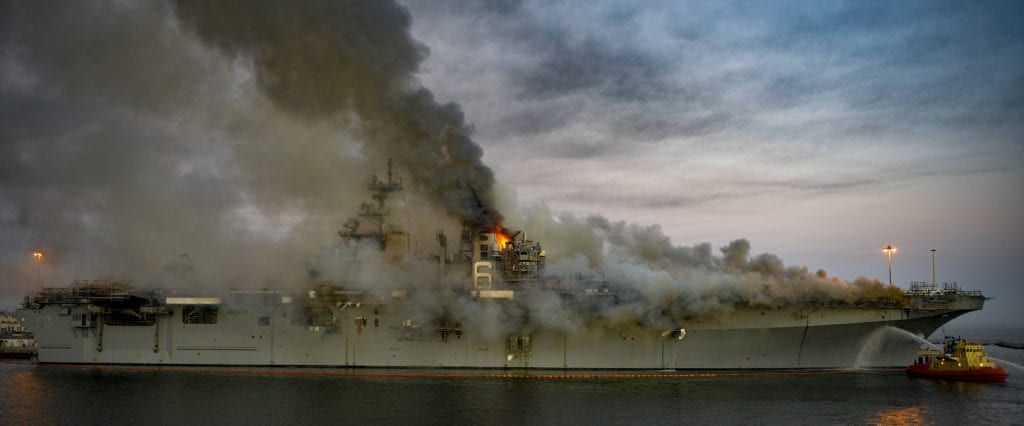
USS Bonhomme Richard (LHD 6), due to be dismantled after its devastating fire in 2020. U.S. Navy / Mass Communication Specialist 2nd Class Austin Haist

ARLINGTON, Va. — The U.S. Navy has revised its ship decommissioning schedule for fiscal 2021, including the date for the Wasp-class amphibious assault ship USS Bonhomme Richard, severely damaged by fire in 2020. The list also included the first two littoral combat ships. 

In an Feb. 12 administrative message, the Office of the Chief of Naval Operations announced the plans to decommission seven ships from the fleet and remove from service one ship from the Military Sealift Command. 

The ships to be retired and their 2021 retirement dates are listed below: 

Ship Name           Projected Inactivation Date        Post Inactive Status 

USS Zephyr (PC 8)           March 2            Dismantle 

USS Shamal (PC 13)      Feb. 25            Dismantle 

USS Tornado (PC 14)    March 4           Foreign Military Sales 

USS Fort McHenry (LSD 43)   Apr. 16          Reserve 

USS Freedom (LCS 1)          Sept. 30                 Reserve 

USS Independence (LCS 2)      July 31             Reserve 

USS Bonhomme Richard (LHD 6) April 15     Dismantle  

USNS Sioux (T-ATF 171)    Sept. 30         Foreign Military Sale 

The first two littoral combat ships are considered experimental and are of an earlier configuration than later production ships. They will be placed in a preserved status for re-activation if needed, as will the USS Fort McHenry. 

The three Cyclone-class coastal patrol ships are the only ones of the class not based in the Persian Gulf.  

The Navy also plans to retire 48 more ships during fiscal 2022-2026. 


Winston S. Churchill Seizes Illicit Weapons from Two Dhows off Somalia

A Sailor assigned to the guided-missile destroyer USS Winston S. Churchill (DDG 81), in accordance with international law, boarded a stateless dhow off the coast of Somalia and interdicted an illicit shipment of weapons and weapon components, Feb. 12. U.S. Navy / Mass Communication Specialist 3rd Class Louis Thompson Staats IV

INDIAN OCEAN – The guided-missile destroyer USS Winston S. Churchill (DDG 81) seized illicit shipments of weapons and weapons components from two stateless dhows during a maritime security operation in international waters off the coast of Somalia, Feb. 11-12, U.S. Naval Forces Central Command / U.S. 5th Fleet Public Affairs said in a Feb. 16 release. 

Churchill’s Visit, Board, Search, and Seizure (VBSS) team and embarked joint service Advanced Interdiction Team (AIT) discovered the illicit cargo during a flag verification boarding conducted in accordance with international law and in international waters. 
 
The cache of weapons consisted of thousands of AK-47 assault rifles, light machine guns, heavy sniper rifles, rocket-propelled grenade launchers, and crew served weapons. Other weapon components included barrels, stocks, optical scopes and weapon systems. 

The original source of the weapons has not yet been identified. Churchill located the dhows and provided more than 40 hours of over watch and security for the ship and its boarding teams throughout the two-day operation. 
 
The dhow crews were provided food and water before being released. 
 
“We are proud of the combined efforts of the AIT and Churchill crew members for executing dynamic and demanding boardings,” said Lt. Travis Dopp, assistant AIT leader aboard Churchill. “We are proud to have a positive impact on the safety and security of coalition forces by interdicting shipments of lethal aid.” 
 
The seizure of the illicit weapons by Churchill was conducted as part of the U.S. Navy’s regular maritime security operations in the region. These routine patrols are performed to ensure the free flow of commerce for legitimate traffic and to disrupt the transport of illicit cargo that often funds terrorism and unlawful activity. 
 
“This joint team [Army, Navy and Coast Guard] on board Churchill came together to successfully execute this operation over the course of two days in the Indian Ocean. These operations prevent nefarious actors from illegally spreading their lethal aid,” said Cdr. Timothy Shanley, commanding officer of Churchill. 
 
Winston S. Churchill departed Norfolk, Virginia, Aug. 10 for a regularly-scheduled deployment to maintain maritime security and ensure the freedom of navigation in critical waterways. 
 
U.S. 5th Fleet, headquartered in Manama, Bahrain, conducts joint and naval operations in order to support regional allies and partners and U.S. national security interests in the Middle East. 


Cutter Mohawk Returns to Key West after Interdicting $69 Million in Drugs

Coast Guard Cutter Mohawk (WMEC 913) crewmembers interdicted a 25-foot vessel with two suspected smugglers and over 660 pounds of cocaine in Caribbean waters Jan. 24, 2021. U.S. Coast Guard

KEY WEST, Fla. — Coast Guard Cutter Mohawk’s (WMEC 913) crew returned home to Key West Feb. 12 after a 59-day patrol in the Caribbean Sea. 

The crew interdicted four drug vessels, detained five suspected drug smugglers and seized approximately 4,000 pounds of cocaine with a street value of approximately $69 million. 

“These interdictions reflect teamwork and the unwavering resolve between the Coast Guard, federal law enforcement, Department of Defense, and our international partners to protect the region against the scourge of transnational criminal organizations,” said Cmdr. James L. Jarnac, Coast Guard Cutter Mohawk commanding officer. “The crew of Mohawk demonstrated remarkable enthusiasm and commitment during the execution of our missions over the last eight weeks, and it remains my pleasure to serve with and for them.” 

During the patrol, Mohawk’s crew worked with multiple interagency and international maritime patrol aircraft and surface assets to counter transnational criminal organizations and hinder the illicit flow of drugs, people, and other dangerous cargo into the United States. This includes joint operations with the Dominican Republic navy, and Panamanian law enforcement officers, which further strengthened foreign partnerships and to detect, deter, and interdict vessels engaged in illegal, unreported, and unregulated fishing within the Exclusive Economic Zone of Panama. 

Coast Guard Cutter Mohawk is a 270-foot medium-endurance cutter with a crew complement of 80. 


Fairbanks Morse Opens Mayport Facility to Support Navy, Coast Guard

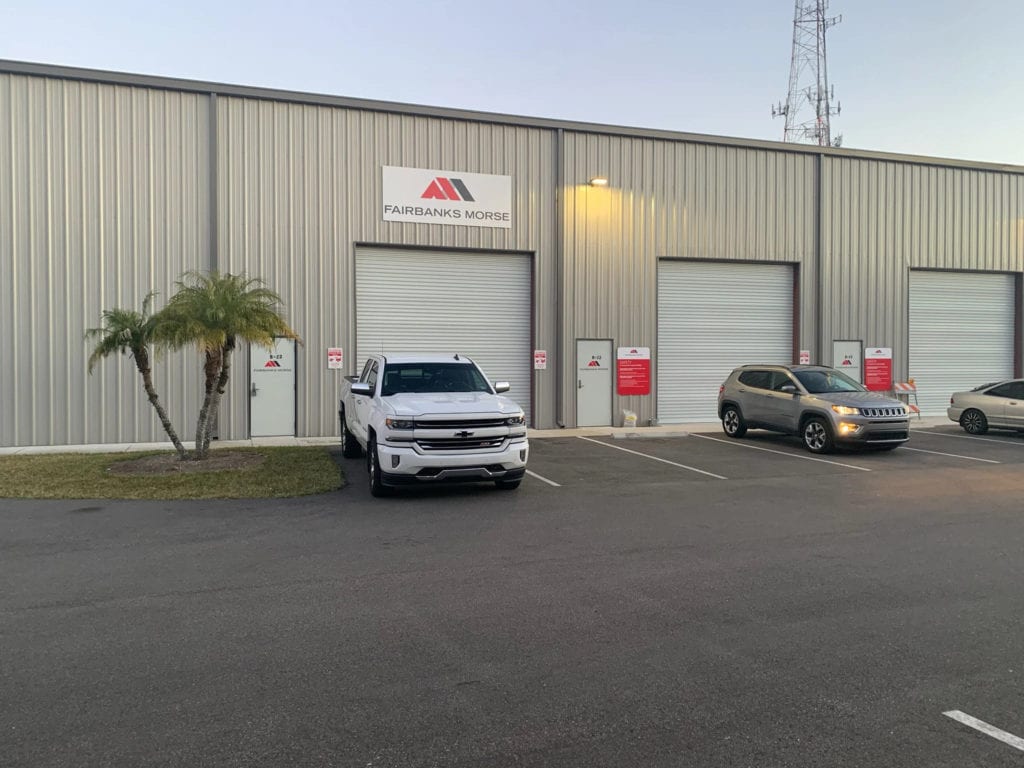
Fairbanks Morse’s new Mayport Service Center in Jacksonville Beach, Florida. Fairbanks Morse

BELOIT, Wis. and JACKSONVILLE BEACH, Fla. — Fairbanks Morse, a portfolio company of Arcline Investment Management, announced the opening of its 8,000-square-foot Mayport Service Center at 950 10th Street, Building B in Jacksonville Beach, Florida, the company said in a Feb. 16 release.

The facility represents a $350,000 investment in the community and places Fairbanks Morse in closer proximity to core customers such as Mayport Naval Station, Naval Submarine Base Kings Bay, and other U.S. Navy and U.S. Coast Guard installations.  

“The opening of our Mayport Service Center is another step that Fairbanks Morse is taking to fulfill its promise to deliver world-class service to our customers,” said George Whittier, CEO of Fairbanks Morse. “From this facility, we are stocking a wide range of inventory to make parts available when and where our customers need them. This is just the beginning of our broader plan for a geographic expansion that extends our aftermarket services to help customers meet their mission-critical power needs.”  

The Mayport Service Center will be staffed with factory certified, OEM [original equipment manufacturer] technicians to provide local engine, motor and controls maintenance and repair services to improve performance and reliability. Fairbanks Morse’s OEM technicians undergo rigorous qualifications to meet the company’s high standards for delivering best-in-class support. 

A wide range of Fairbanks Morse engine and Ward Leonard motor and controls inventory will be available at the Mayport Service Center to reduce the amount of time for installation, repair and maintenance services. The move is part of the company’s renewed emphasis on expediting aftermarket services to military and commercial maritime customers across the nation.  


Italian Navy Aircraft Carrier Arrives at Norfolk for F-35B Certification

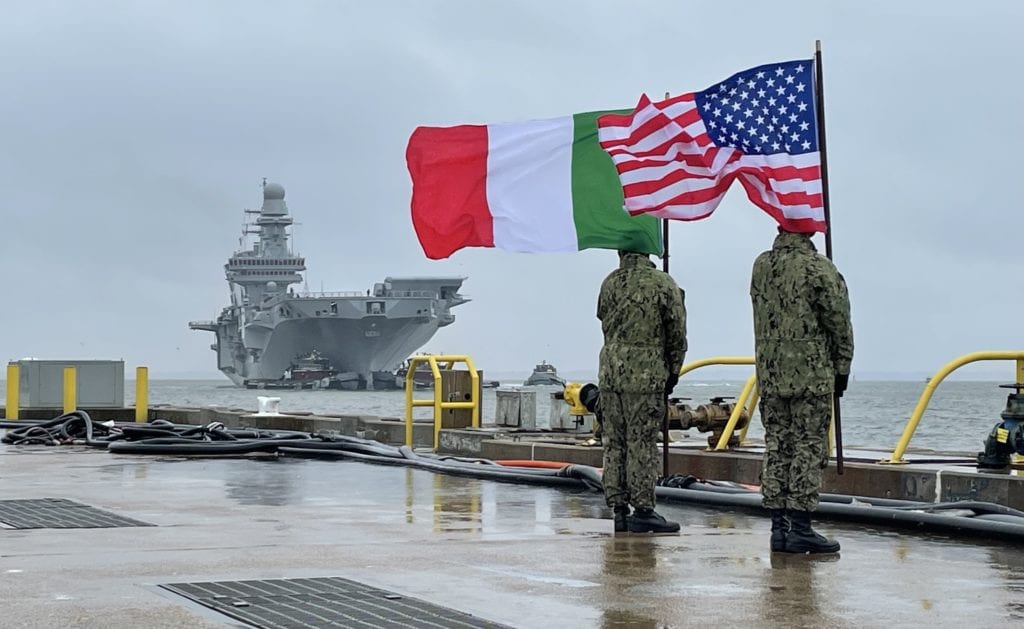
Italian navy flagship, the aircraft carrier ITS Cavour (CVH 550), arrives at Naval Station Norfolk, Virginia, Feb 13. The Cavour’s visit is part of a series of operations alongside U.S. military assets to attain the Italian navy’s “ready for operations” certification to safely land and launch F-35B aircraft. U.S. Navy / Capt. Cassidy Norman

NORFOLK, Va. — The Italian navy flagship, the aircraft carrier ITS Cavour (CVH 550), arrived at Naval Station Norfolk, Virginia, Feb. 13 for a series of operations alongside U.S. military assets to attain the Italian navy’s “ready for operations” certification to safely land and launch F-35B aircraft, the U.S. 2nd Fleet said in a release. 

While in the Western Atlantic, Cavour will be embarked by an F-35 Joint Program Office test team to conduct sea trials, a series of tests and functional activities to create a safe flight operating envelope for the short takeoff and vertical landing (STOVL) variant of the fifth-generation aircraft aboard the recently upgraded ship. 

This carrier-based flight test and other actions with U.S. 2nd Fleet ships and aircraft improve interoperability and strengthen the relationship between two NATO Allies. 
 
“Operating in the Western Atlantic with our NATO allies presents a mutually beneficial opportunity to enhance both of our navies’ capabilities,” said Vice Adm. Andrew Lewis, commander of U.S. 2nd Fleet. “Supporting our Italian allies in certification of their aircraft carrier increases our collective experience in safety and combat abilities. We are stronger together.” 
 
While crossing the Atlantic from Italy, ITS Cavour was met by the Arleigh-Burke class guided-missile destroyer USS Stout (DDG 55) and conducted a three-day interoperability exercise with support from Carrier Air Wing (CVW) 7 and Patrol and Reconnaissance Wing (CPRW) 11. Specific events included integrated ship maneuvering, low-slow-flyer detect-to-engage, anti-surface warfare serials with P-8 participation, air defense/air intercept control event with F/A-18 participation, and C5I interoperability events in the Western Atlantic 10-12 Feb. 
 
“We are deeply grateful for the warm welcome received by the U.S. Navy 2nd Fleet upon our arrival in the Western Atlantic waters,” said Capt. Giancarlo Ciappina, commanding officer of ITS Cavour. “My officers and the whole crew were impressed for the professionalism and seamanship shown during these three days of training by the crews of USS Stout, CVW-7 and CPRW-11. We consider a real privilege having the opportunity to sail and exercise alongside our closest allies and friends and we are very proud to share with the USN Community such important certification deployment, which will provide ITS Cavour and the Italian naval aviation with the fifth-generation air combat capability of the Joint Strike Fighter.” 
 
Upon arriving in Norfolk, ITS Cavour was hosted by USS John. C. Stennis (CVN 74). Stennis is coordinating and providing all pier services required by Cavour, to include refueling, diving operations, equipment and personnel on load, security, and contingency medical functions. 
 
“We couldn’t be more excited to host our Italian ally,” said Capt. Cassidy Norman, Stennis’ commanding officer. “The Stennis team fully understands the importance of building trust and cooperation by supporting Cavour’s certification with the newest multi-role combat aircraft, the F-35. We are happy to see our Italian naval aviation counterparts dramatically increase their operational capability, strengthening our collective capability.” 
 
The F-35 Pax River Integrated Test Force (ITF) team from Naval Air Station Patuxent River, Maryland. NAS PAX River comprises almost 200 people with the engineering and test pilot expertise and experience to conduct F-35B envelope expansion flight test, two specially instrumented developmental flight test aircraft, and support equipment. 
 
“Italy is a critically important Cooperative Program Partner in the F-35 enterprise,” said Andrew Maack, F-35 Pax River ITF chief test engineer and site director. 

“We are excited to get underway with the sailors of Cavour and honored to contribute to the aircraft carrier achieving the Italian navy’s strategic goal of it being ready for operations,” Maack said. “We look forward to a phenomenally successful shipboard detachment.” 
 
For decades, the bond between Europe and North America has made NATO the strongest alliance in history. Conducting training and exercises alongside allies and partners increases our collective capacity and capabilities as well as increased interoperability with the U.S. Forces. 
 
U.S. 2nd Fleet exercises operational authority over assigned ships, aircraft, and landing forces on the East Coast and the Atlantic.