Oshkosh Defense Celebrates Production of the 10,000th JLTV
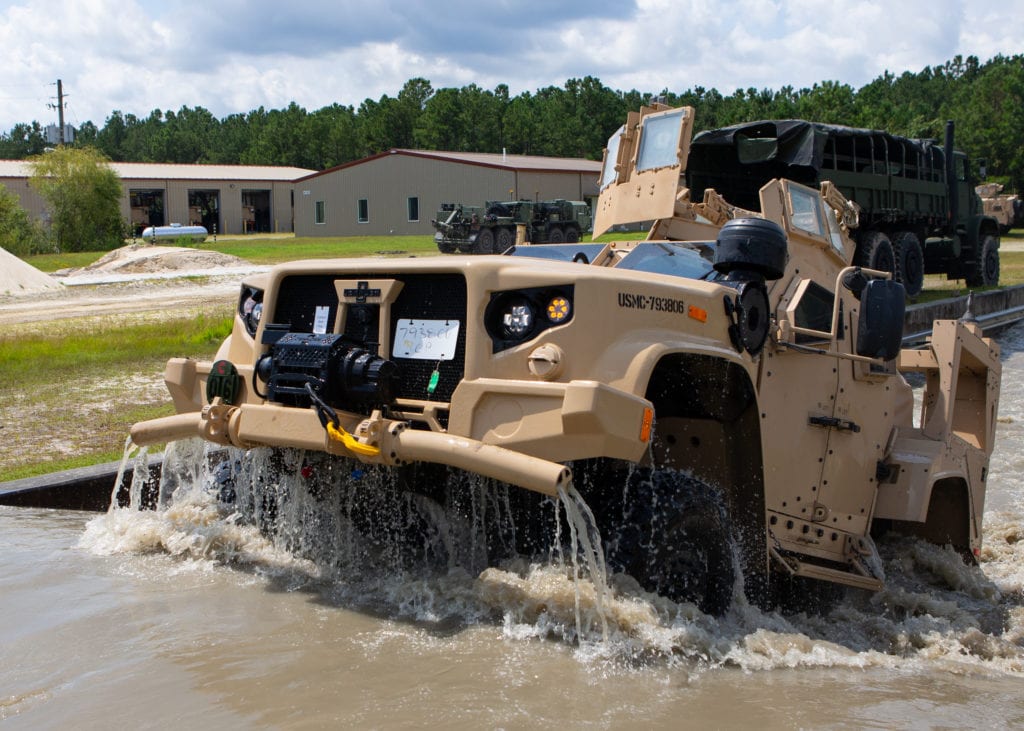
A joint light tactical vehicle with Marine Wing Support Squadron 271 emerges from a fording pit at Camp Lejeune, North Carolina, Sept. 2, 2020. U.S. Marine Corps / Lance Cpl. Elias E. Pimentel III

OSHKOSH, Wis. — Oshkosh Defense LLC, an Oshkosh Corp. company, recently produced the 10,000th Joint Light Tactical Vehicle (JLTV), the company said in a Feb. 9 release. 

This significant milestone represents over a decade of proprietary experience in designing, building, and delivering the world’s most capable light tactical vehicle. Since the program was awarded to Oshkosh Defense in August 2015, the company has built a robust, dependable supply chain; optimized its manufacturing process and maximized efficiencies; and provided JLTVs at a contractual price substantially lower than the government cost estimate. 

“This milestone is a true testament to the pride and dedication that our team members have in the JLTV program which has become a central piece of the U.S. military’s ground force,” said George Mansfield, vice president and general manager of Joint Programs for Oshkosh Defense. “Producing the 10,000th JLTV in under five years is further evidence of our ability to meet the demands of our domestic and international customers by providing the world’s most capable light tactical vehicle at a great price. We’re excited to continue working with our military customer to further refine and expand the platform.” 

To date, Oshkosh Defense has received orders for 18,126 JLTVs for a total contract value over $6 billion. Over 6,500 of those vehicles have been fielded with warfighters around the globe, including over 30 U.S. and international military installations. The U.S. Army and U.S. Marine Corps are the customers for the majority of the JLTVs ordered so far. 

International interest in the Oshkosh Defense JLTV also continues to grow. Oshkosh Defense has received orders or commitments from seven NATO and non-NATO allies including United Kingdom, Belgium, Montenegro, Slovenia, Lithuania, Brazil, and North Macedonia. 


Boeing Is Refurbishing Harpoon Missiles for U.S. Navy Submarines

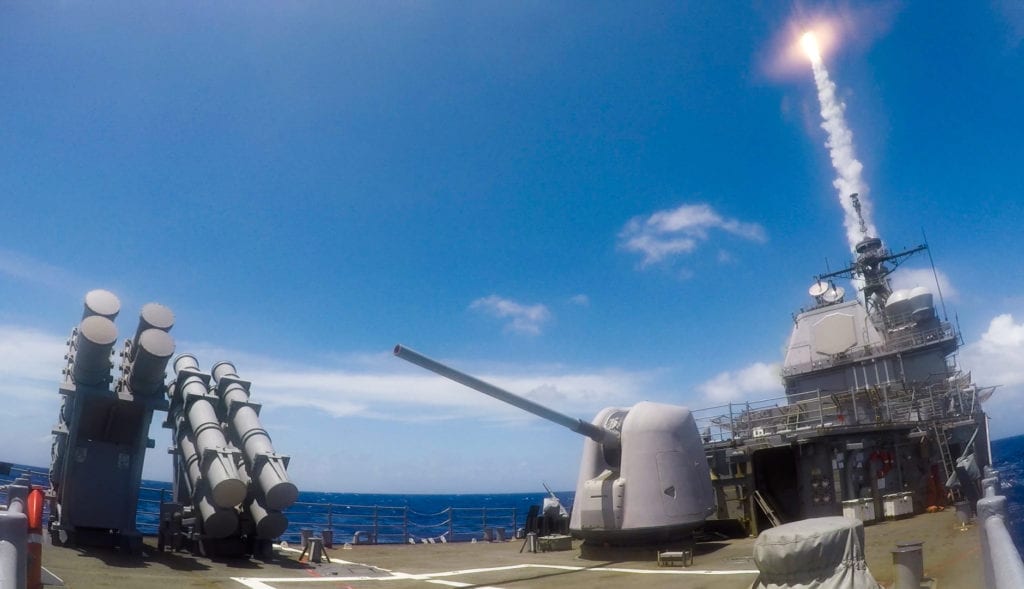
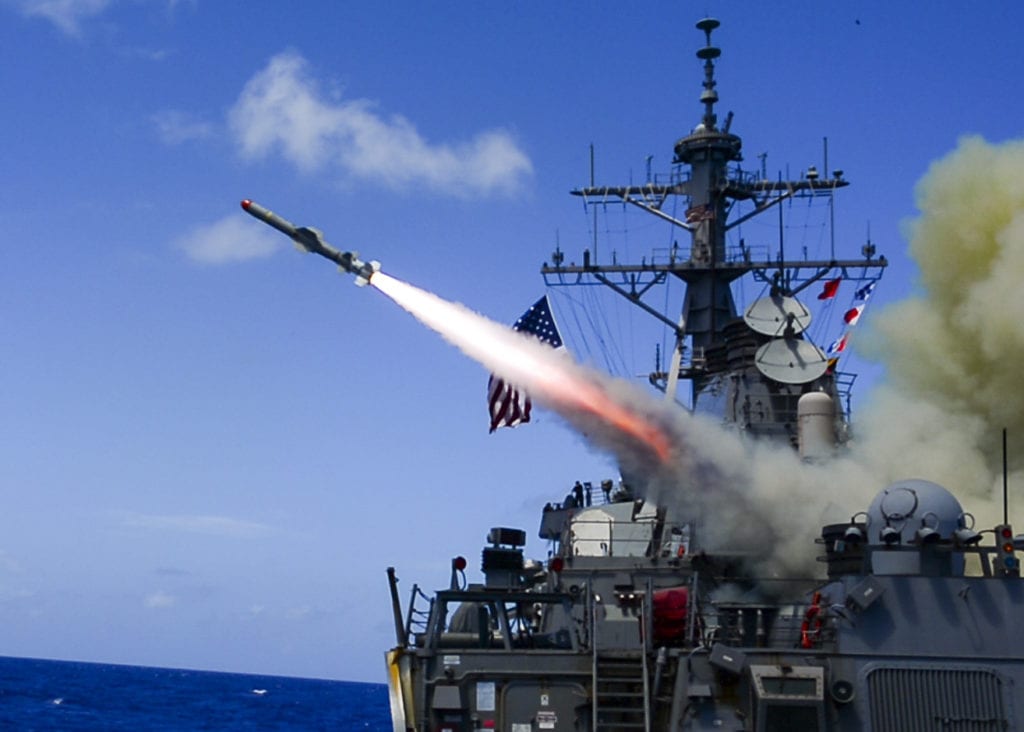
The Arleigh Burke-class guided missile destroyer USS Fitzgerald (DDG 62) conducts a live fire of a ship-launched variant Harpoon missile during Multi-Sail 2016. Boeing has now begun work to return Harpoon cruise missiles to operational status with the Navy’s submarine force. U.S. Navy / Mass Communication Specialist 3rd Class Eric Coffer

ARLINGTON, Va. — Boeing has begun work to return the Harpoon cruise missile to operational status in the U.S. Navy’s submarine force after a more than 20-year absence. 

Boeing received an $10.9 million Naval Sea Systems Command contract late last month to refurbish 16 Harpoon missile capsules and four all-up rounds of encapsulated Block 1C Harpoon missiles for the Navy’s submarines. Work is scheduled for completion by December 2022.  

The UGM-84A Harpoon Block 1C missiles will be integrated on the Navy’s Los Angeles-class submarines. The UGM-84A is encapsulated to be fired from a torpedo tube and has a rocket booster to propel it above the surface of the water and into flight. 

“I am happy to report that we will have the first refurbished [Harpoon] missiles delivered to the fleet in [fiscal] ‘21,” said Rear Adm. Thomas Ishee, director of undersea warfare in the Office of the Chief of Naval Operations, speaking Nov. 7 at the Naval Submarine League’s annual symposium in Arlington.  

In a demonstration in the 2018 Rim of the Pacific exercise, a Harpoon was fired from the Los Angeles-class attack submarine USS Olympia at a target ship, the first time one was fired from a U.S. Navy submarine since the UGM-84A Harpoons were withdrawn from the force in 1997.  

The UGM-84A is encapsulated to be fired from a torpedo tube and has a rocket booster to propel it above the surface of the water and into flight. 

“The Navy has a deep inventory of Harpoon Block IC missiles,” said Sally Seibert, director, Cruise Missile Systems at Boeing, in a statement. “These missiles can be refurbished and reintegrated into the fleet in a shorter timeframe, and at a fraction of the cost, compared to purchasing new missiles — and that is exactly what our team is doing.” 

The Harpoon cruise missile is a combat-proven, all-domain anti-ship missile used by the Navy and more than 30 international customers, a statement from Boeing said. “Evolving over the years to keep pace with emerging threats, the Harpoon Block II includes a GPS-aided guidance system that allows for autonomous, all-weather capability — and can execute both anti-ship and land-strike missions. The more advanced Harpoon Block II+ adds a data link that allows for in-flight targeting updates.” 

“The shelf life of the Harpoon missile allows us to maximize existing capability by bringing this weapon back to the submarine fleet,” Seibert said. “Customers who currently have Harpoon missiles in their inventory are prime candidates for refurbishments, or even upgrades, to add this extremely viable and cost-effective weapon to their arsenal.” 

Currently, more than 600 ships, 180 submarines, 12 different types of aircraft and several land-based launch vehicles across the world are integrated with Harpoon missiles, Boeing said. 


Atlantic Area-based Coast Guard Cutters Offload More than $330M Worth of Illegal Narcotics

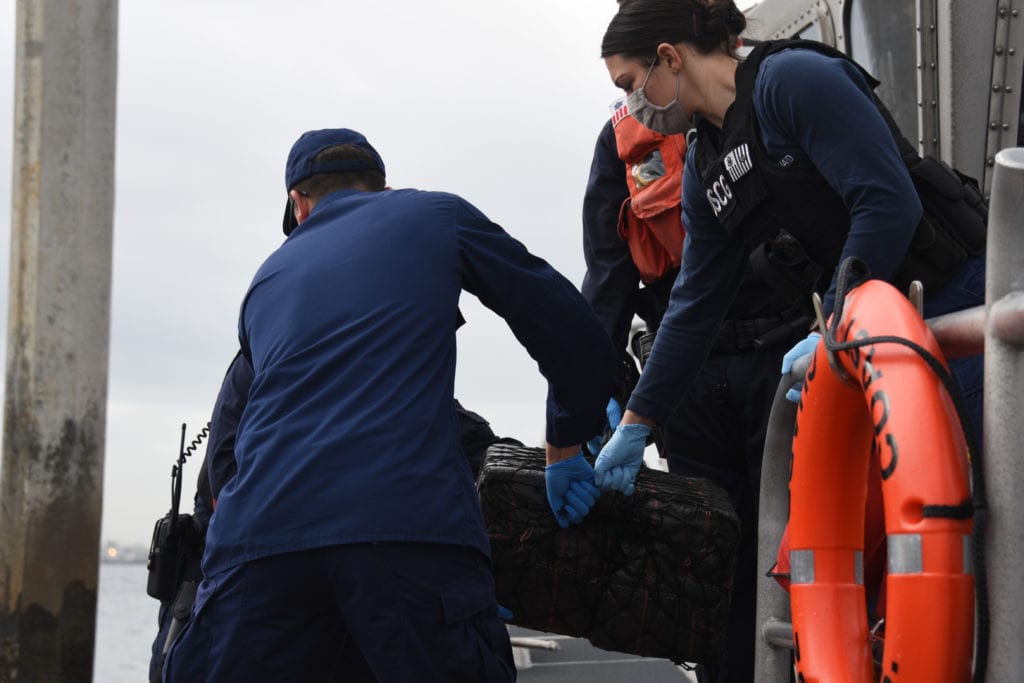
The Coast Guard Cutter Campbell (WMEC 909) crew and crane operator offloads approximately 7,250 pounds of cocaine at Port Everglades, Florida, Feb. 4, 2021. The Campbell’s crew patrolled the Eastern Pacific Ocean in support of counter-narcotics operations in the Western Hemisphere to disrupt transnational crime organizations. U.S. Coast Guard / Petty Officer 3rd Class Jose Hernandez

MIAMI — Two Coast Guard Atlantic Area-based cutters offloaded more than $330 million worth of illegal narcotics, Feb. 4 and Feb. 8, at Port Everglades, in Ft. Lauderdale, Florida, the Coast Guard 7th District said in a Feb. 8 release.  

The Coast Guard Cutter Campbell crew offloaded on Feb. 4 more than 7,200 pounds of cocaine, worth more than $123 million, and on Feb. 8 the Coast Guard Cutter Harriet Lane crew offloaded more than 11,800 pounds of cocaine and marijuana, Monday, worth more than $206 million.  

The illegal narcotics offloaded are a direct reflection of 14 interdictions that occurred in the Eastern Pacific Ocean involving seven Coast Guard and two US Navy assets.  

On April 1, U.S. Southern Command increased counter-narcotics operations in the Western Hemisphere to disrupt the flow of drugs. Numerous U.S. agencies from the Departments of Defense, Justice and Homeland Security cooperated in the effort to combat transnational organized crime. The Coast Guard, Navy, Customs and Border Protection, FBI, Drug Enforcement Administration, and Immigration and Customs Enforcement, along with allied and international partner agencies, play a role in counter-drug operations.  

The fight against drug cartels in the Eastern Pacific Ocean and the Caribbean Sea requires unity of effort in all phases from detection, monitoring and interdictions, to criminal prosecutions for these interdictions by United States Attorney’s Offices from the Middle District of Florida, the Southern District of Florida, and the Southern District of California. The law enforcement phase of counter-smuggling operations in the Eastern Pacific Ocean is conducted under the authority of the 11th Coast Guard District, headquartered in Alameda. The law enforcement phase of counter-smuggling operations in the Caribbean Sea is conducted under the authority of the 7th Coast Guard District, headquartered in Miami. The interdictions, including the actual boardings, are led and conducted by members of the U.S. Coast Guard. 

The medium-endurance cutter USCGC Campbell is homeported in Kittery, Maine. The medium-endurance cutter USCGC Harriet Lane is homeported in Portsmouth, Virginia. 


Future USS Daniel Inouye Completes Acceptance Trials

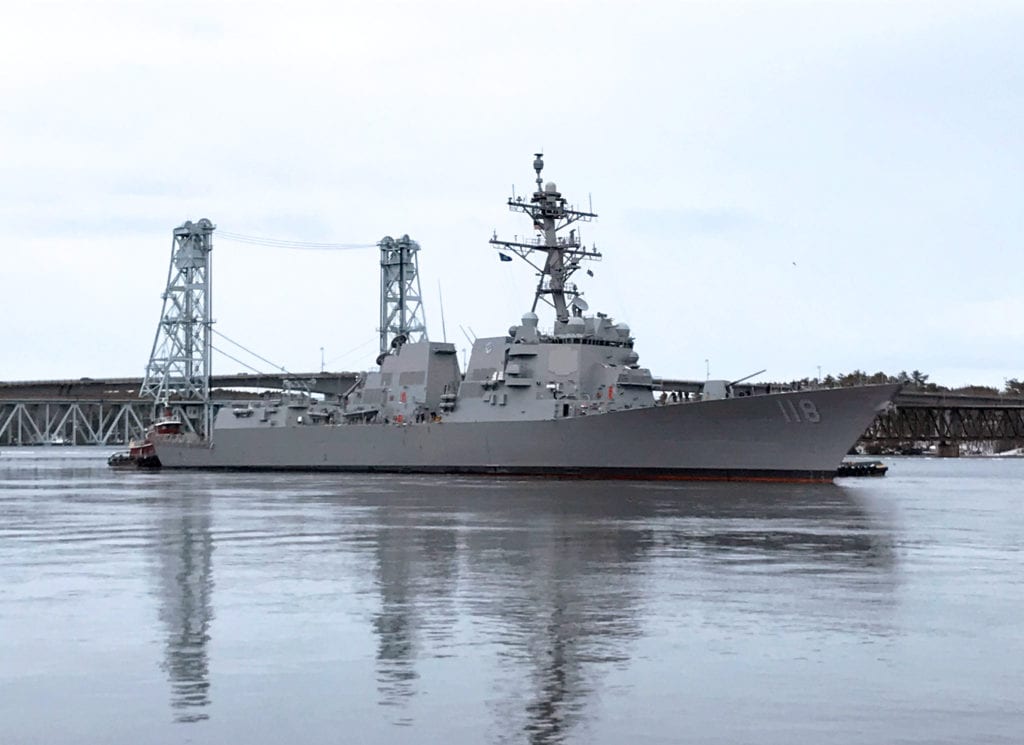
The future USS Daniel Inouye (DDG 118) departs General Dynamics Bath Iron Works shipyard on Feb. 3 for acceptance trials. SUPSHIP Bath

BATH, Maine — The future USS Daniel Inouye (DDG 118) successfully completed acceptance trials Feb. 4 after spending a day underway off the coast of Maine, the Program Executive Office (PEO) – Ships announced in a Feb. 5 release.     

The Bureau of Inspection and Survey inspected the ship during a series of demonstrations while pier side and underway. Many of the ship’s onboard systems, including navigation, damage control, mechanical and electrical systems, combat systems, communications, and propulsion applications, were tested to validate performance and met or exceeded Navy specifications. 

“Following an outstanding Combined Alpha and Bravo trials this past December, DDG 118 performed superbly during the ship’s Acceptance Trial earlier this week,” said Capt. Seth Miller, DDG 51 class program manager, PEO-Ships. “The Navy and industry team are ready to deliver a highly capable multi-mission warship to the fleet within the next few weeks.”   

Daniel Inouye is a Flight IIA destroyer, equipped with the Aegis Baseline 9 Combat System, which includes Integrated Air and Missile Defense capability and enhanced Ballistic Missile Defense capabilities. This system delivers quick reaction time, high firepower, and increased electronic countermeasures capability against a variety of threats. 

Following delivery, Daniel Inouye will be the 37th Arleigh Burke (DDG 51)-class destroyer to be delivered by BIW. The shipyard is also in production on the future Arleigh Burke-class destroyers Carl M. Levin (DDG 120), John Basilone (DDG 122), Harvey C. Barnum (DDG 124), Patrick Gallagher (DDG 127), and Flight III ships, Louis H. Wilson, Jr. (DDG 126), and William Charette (DDG 130), as well as the future Zumwalt-class destroyer, Lyndon B. Johnson (DDG 1002). 


State Dept. Approves Sale of SM-2 Missiles to Chile

An SM-2 telemetry surface to air missile is launched from the forward vertical launch system of the Ticonderoga-class guided-missile cruiser USS Shiloh (CG 67) while conducting a live-fire exercise. U.S. Navy / Mass Communication Specialist 2nd Class Ryre Arciaga

WASHINGTON — The State Department has approved a possible Foreign Military Sale to the government of Chile of Standard Missile-2 (SM-2) Block IIIA missiles and related equipment for an estimated $85 million, the Defense Security Cooperation Agency said in a Feb. 5 release. 

The government of Chile has requested to buy up to 16 Standard Missile-2 (SM-2) Block IIIA missiles, rail launched, including two missiles with manufacturer installed telemeter; two Mk89 Mod 0 Guidance Sections; and one Target Detection Device Kit (including shroud), Mk45 Mod 14, the release said.   

The potential sale also includes “Intermediate Level Maintenance Facility; spare parts and associated containers; personnel training and training equipment; publications and technical data; U.S. government and contractor technical assistance and other related logistics support, including ordnance handling equipment, and other related elements of logistics and program support.   

This proposed sale would support Chile’s anti-air warfare capabilities for the two recently transferred former Adelaide-class frigates to the Chilean navy.   

The principal contractor will be Raytheon Missiles and Defense, Tucson, Arizona.   


NAVAIR Orders Five VH-92 Presidential Helicopters from Sikorsky

Marine Helicopter Squadron (HMX) 1 conducts test flights of the new VH-92A helicopter over the South Lawn of the White House, Sept. 22, 2018, in Washington, D.C. U.S. Marine Corps / Sgt. Hunter Helis

ARLINGTON, Va. — Naval Air Systems Command has awarded Sikorsky a third production contract to build five VH-92A helicopters for the U.S. Marine Corps.  

The Naval Air Systems Command awarded Sikorsky Aircraft Corp. — a Lockheed Martin company — a $478.6 million firm-fixed-price contract modification to build five Low-Rate Initial Production Lot III VH-92As, according to a Feb. 5 Defense Department announcement. The award also includes orders for “interim contractor support, two cabin interior reconfiguration kits, support equipment, initial spares and system parts replenishment,” the release said. Work on the contract is expected to be completed by December 2023. 

The VH-92A was selected in 2014 to provide transport for the president of the United States, the vice president and other high-level government officials. The helicopter will replace the 19 VH-3D Sea King and VH-60N “White Hawk” helicopters operated by Marine Helicopter Squadron One. The Corps plans to acquire a total of 23 VH-92As, 21 for operations and two for testing. The May 2014 engineering and manufacturing development contract procured two test aircraft and four production aircraft. Six VH-92As were ordered in June 2019, followed by six more in February 2020. 

The presidential helicopter fleet is operated by Marine Helicopter Squadron One, based at Marine Corps Air Station Quantico, Virginia, with a detachment at Joint Base Anacostia-Bolling in Washington.  

“Government testing to validate system performance and prepare for Initial Operational Test and Evaluation is progressing on schedule and will support an Initial Operational Capability (IOC) planned for July 2021,” a Navy spokeswoman said.  “The VH-92A will enter service post IOC at the determination of the White House Military Office.” 


Marine Corps Adds 5th F-35B Squadron to its Force

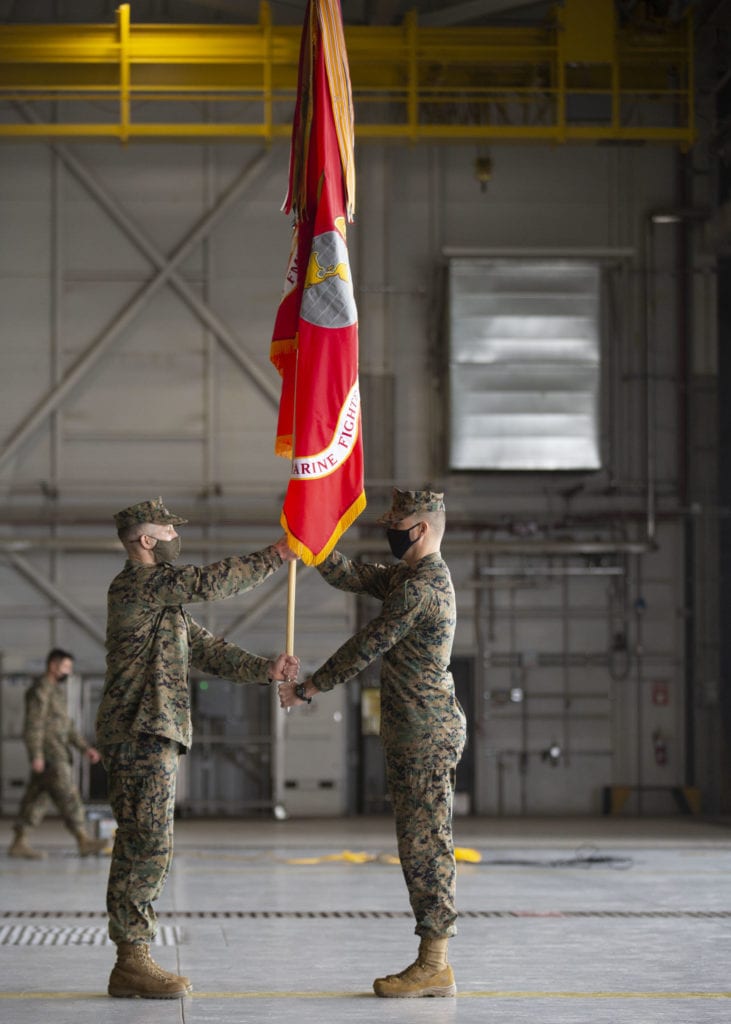
U.S. Marine Corps Lt. Col. Alexander Goodno, the incoming commanding officer, left, and Sgt. Maj. Collin Barry, the incoming sergeant major, with Marine Fighter Attack Squadron (VMFA) 225, Marine Aircraft Group 13, 3rd Marine Aircraft Wing, exchange the organizational colors during the redesignation and assumption of command ceremony at Marine Corps Air Station Yuma, Ariz., Jan. 29, 2021. U.S. Marine Corps / Lance Cpl. Juan Anaya

ARLINGTON, Va. — The Marine Corps is converting a fifth squadron to the F-35B Lightning II strike fighter. 

In a Jan. 29 ceremony at Marine Corps Air Station (MCAS) Yuma, Arizona, the “Vikings” of Marine All-Weather Fighter Attack Squadron 225 (VMFA(AW)-225) were re-designated Marine Fighter Attack Squadron 225 (VMFA-225) as they engaged in the process of learning to operate and maintain the F-35B version of the Lightning II, according to a release from the 3rd Marine Aircraft Wing. 

The squadron retired its last F/A-18D Hornet strike fighter a year ago, on Jan. 23, 2020.  

VMFA-225 follow VMFAs 121, 211, 122, and 242 as the Corps’ fifth operational F-35B squadron. VMFA-225 moved from MCAS Miramar, California, to MCAS Yuma, Arizona, to join 211 and 122, both of which have flown combat missions in the Middle East. VMFAs 212 and 242 are based at MCAS Iwakuni, Japan.  

“It’s an exciting day for [VMFA-225],” said Lt. Col. Alexander Goodno, the commanding officer of VMFA-225, in the release. “We will grow over the next 18 to 24 months to a full, combat-ready, capable squadron and be ready to do the nation’s bid in the war.” 
 
“We have aircraft afloat right now from VMFA-122; we’re flying combat missions,” said Col. Benjamin Hutchins, commanding officer of Marine Aircraft Group 13, in the release. “We have VMFA-211 getting ready to deploy on [HMS Queen Elizabeth]. This is a busy business, this is our nation’s business, this is our Corps’ business.” 
 
The Corps’ single F-35C squadron, VMFA-314, is scheduled to be ready for a deployment on the USS Carl Vinson in early fiscal 2022.   


Lockheed Martin’s SPY-7 Radar Is Going to Sea

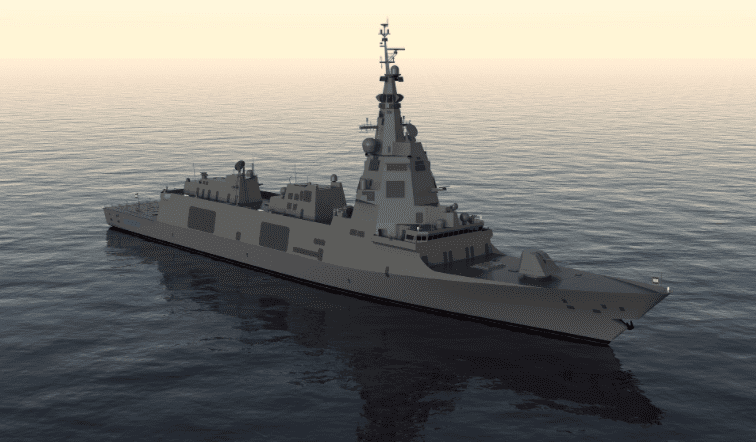
An artist’s rendering of a Spanish future F-110 frigate equipped with AN/SPY-7(V)2. Navantia

ARLINGTON, Va. — Lockheed Martin’s new SPY-7 radar will be sailing to sea on the ships of three navies as the company highlights the radar’s capabilities for application to other navies, including the U.S. Navy. 

The SPY-7, which uses gallium nitride modules, initially was developed for the Navy’s Air and Missile Defense Radar competition. It was adapted into the Long-Range Discrimination Radar (LRDR) procured by the U.S. Missile Defense Agency (MDA) as a sensor of the Ground-Based Midcourse Defense system. Being installed at Clear Air Force Station in Alaska, the LRDR is designed to discriminate between incoming warheads and decoys.  

The core building blocks [of the LRDR] are the same core building blocks in SPY-7,” said Jon P. Rambeau, vice president and general manager, Integrated Systems & Sensors, Lockheed Rotary and Mission Systems, during a Feb. 2 interview with Seapower. “[SPY-7] is a modular radar that allows us to build different configurations for both land-based and sea-based applications.” 

The SPY-7 has been selected by the Spanish navy to integrate it with the Aegis Combat System on its F110 frigates. The Canadian navy is procuring the radar to install it on its new Halifax-class surface combatant.  

Japan had selected the SPY-7 for its two planned Aegis Ashore ballistic-missile defense sites, but when the plans were cancelled in part out of concern for missile debris falling on populated areas, Japan shifted to a plan to deploy the SPY-7 on some future, unspecified sea-based BMD platform. Japan already has BMD capabilities in its Kongo-class guided-missile destroyers with Aegis systems using the SPY-1 radar. 

Japan, which already has placed an order for the SPY-7, “is going through a process now to determine exactly what that platform is going to look like,” Rambeau said. “We are pleased with the progress that the technology has made, and we’re starting to see some uptake both here in the U.S. as well as abroad.” 

“SPY-7 is part of the Aegis common source library (CSL) and the interfaces are understood,” said Patrick W. McNally, director of communications for Integrated Warfare Systems & Sensors, in a statement to Seapower. “For Japan, we have completed the first of three releases which were recently demonstrated to MDA. Starting from the CSL, with over one million lines of code, Japan will be receiving the best of both Baseline 9 and 10 [Aegis software].” 

The U.S. Navy is considering backfitting some Flight IIA Arleigh Burke-class guided-missile destroyers with a radar more modern than the SPY-1, and Lockheed is keeping a watch on developments in the event the SPY-7 could complete in the program if it comes to pass. 

Rambeau said his company also “has some more affordable options available to upgrade some of the SPY-1 arrays to provide improved sensitivity and improved resistance to electronic attack and we think we can do that at a fraction of the cost of a wholesale replacement, so we’ve put forth a couple of options for upgrades to SPY-1 to both MDA and the Navy.” 


CGC Steadfast Returns Home after 45-Day Counter-Narcotics Patrol

U.S. Coast Guard members conduct drug offload in San Diego, Jan. 22. The drugs were offloaded after Coast Guard Cutter Steadfast interdicted 1,675 pounds of cocaine, worth more than $28 million. U.S. Coast Guard / Petty Officer 3rd Class Alex Gray

ASTORIA, Ore. — The Coast Guard Cutter Steadfast returned to its homeport of Astoria, Oregon, Jan. 30 following a 45-day counter-narcotics patrol, where the crew transited more than 10,000 miles conducting law enforcement operations in the Eastern Pacific Ocean, the Coast Guard 13th District said in a Feb. 4 release. 

During the deployment, the Steadfast’s crew interdicted four vessels suspected of smuggling illicit narcotics. Steadfast boarding teams discovered and seized 1,675 pounds of cocaine, worth more than $28 million, and detained seven suspected narco-traffickers. 

Steadfast also completed biennial Aviation Standardization Training, certifying the cutter for Aerial Use of Force, and served as a training platform for tactical law enforcement units from Maritime Security Response Team-West. 

The Steadfast crew celebrated Christmas and rang in the New Year while on patrol. The Steadfast’s ombudsman coordinated gifts and a compilation video with holiday wishes from crewmembers’ families. Crewmembers were surprised on Christmas morning when Santa visited and shared the personalized messages and gifts.  

“The Steadfast crew, families, and friends really came together to keep spirits high while deployed over the holidays,” said Cmdr. Craig Allen, Jr., commanding officer of the Steadfast. “During the patrol, the crew displayed superb skill and professionalism in achieving a perfect detection-to-interdiction record, thus ensuring the holidays were considerably less jolly for narco-traffickers.” 

To ensure the safety of Steadfast’s crew during the COVID-19 global pandemic, the crew conducted pre-deployment COVID-19 testing, followed by a 14-day monitoring period.  

Throughout their patrol, Steadfast’s crew maintained strict health precautions during all interactions with the public, including wearing face coverings at all times and undergoing intensive health screenings prior to each boarding. 

The Steadfast is a 210-foot medium-endurance cutter homeported in Astoria.


Besides Supplying Food, Fuel and Equipment, Logistics Could Confuse an Adversary, Pentagon Planner Suggests

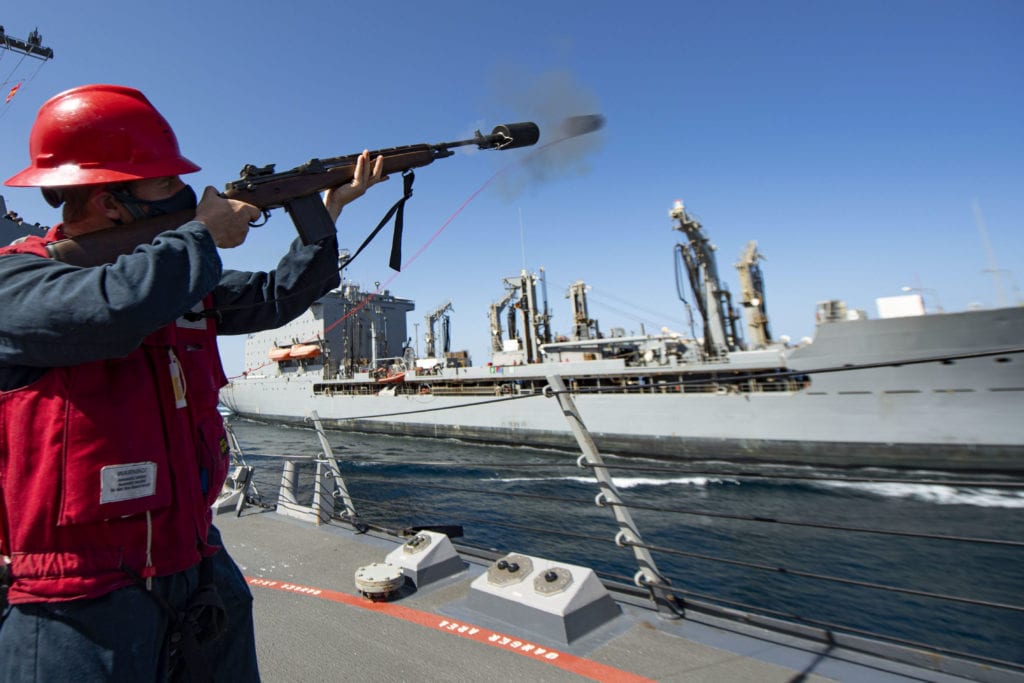
Gunner’s Mate 3rd Class Gage Duncan, from Cardington, Ohio, fires a shot line from the deck of the guided-missile destroyer USS Sterett (DDG 104) to the fleet replenishment oiler USNS Leroy Grumman (T-AO 195) during a replenishment-at-sea. U.S. Navy / Mass Communication Specialist Seaman Drace Wilson

ARLINGTON, Va. — Supporting United States forces in the vast and likely contested areas of great power competition will be an enormous challenge, but a top Defense Department planner says using logistics “as a warfighting function” could throw adversaries off balance.

Logistics isn’t just about planes, ships and trucks carrying stuff, Marine Corps Maj. Gen. David Maxwell, the Pentagon’s vice director for logistics (J4) told a virtual defense industry conference Feb. 3. “In fact, I would offer that we really need to be thinking about employing logistics as a warfighting function,” he said.

“The military challenge for logistics,” Maxwell told the Defense Industrial Association’s Expeditionary Warfare Conference, “is that under all domain persistent attack, we have to be able to rapidly aggregate and deploy forces worldwide and support those forces potentially over vast distances, through contested domains and most likely over a protracted time frame.”

That’s going to be a tall order, compared to the decades after the Cold War, when the maritime environment was largely uncontested.

“Logistics support, something we’ve taken for granted for quite a while, is no longer a given,” Maxwell said, adding that in a contested environment the integration of logistics, operations and command and control is more critical than ever, but “our ways of doing it are no longer adequate.”

U.S. strategy calls for a geographically distributed force across the Pacific to confound and deter adversaries armed with increasingly formidable air and sea denial capabilities. In addition to reducing the signatures of supply vessels, greater use of autonomous vehicles, artificial intelligence, machine learning and better training the troops who will use those digital tools, Maxwell said logistics, itself, should be added to the commander’s toolbox.

He suggested logistics could be used as a reconnaissance or counter reconnaissance tool “to probe and identify” competitors’ surface areas. “Would a commander intentionally use logistics movement as a signaling activity to assess adversary reactions as either a deterrent or an indication of escalation?” he asked. He also suggested a commander could conceal logistics activities “in order to deceive the adversary and retain an element of surprise.”

Those actions “have the potential to either deter or deny adversary objectives if we employ them intentionally,” Maxwell said.