Teledyne Technologies to Acquire FLIR Systems
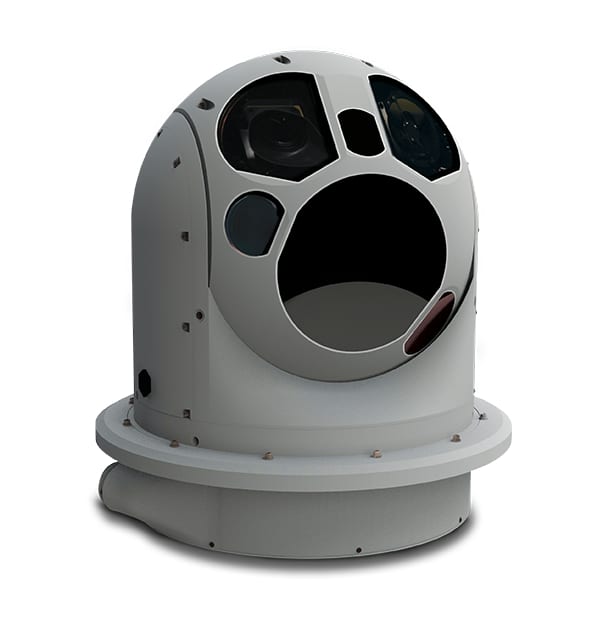
FLIR Systems’ SeaFLIR 380 HD, which provides long range, shipboard multispectral surveillance. FLIR Systems

THOUSAND OAKS, Calif. and ARLINGTON, Va. — Teledyne Technologies Inc. and FLIR Systems announced Jan. 4 they have entered into a definitive agreement under which Teledyne will acquire FLIR in a cash and stock transaction valued at approximately $8 billion. 

Under the terms of the agreement, FLIR stockholders will receive $28 per share in cash and 0.0718 shares of Teledyne common stock for each FLIR share, which implies a total purchase price of $56 per FLIR share based on Teledyne’s five-day volume weighted average price as of Dec. 31, 2020. The transaction reflects a 40% premium for FLIR stockholders based on FLIR’s 30-day volume weighted average price as of Dec. 31. 

As part of the transaction, Teledyne has arranged a $4.5 billion, 364-day credit commitment to fund the transaction and refinance certain existing debt. Teledyne expects to fund the transaction with permanent financing prior to closing. Net leverage at closing is expected to be approximately 4x adjusted pro forma EBITDA with leverage declining to less than 3x by the end of 2022. 

Teledyne expects the acquisition to be immediately accretive to earnings, excluding transaction costs and intangible asset amortization, and accretive to GAAP earnings in the first full calendar year following the acquisition. 

“At the core of both our companies is proprietary sensor technologies. Our business models are also similar: we each provide sensors, cameras and sensor systems to our customers. However, our technologies and products are uniquely complementary with minimal overlap, having imaging sensors based on different semiconductor technologies for different wavelengths,” said Robert Mehrabian, executive chairman of Teledyne. “For two decades, Teledyne has demonstrated its ability to compound earnings and cash flow consistently and predictably. Together with FLIR and an optimized capital structure, I am confident we shall continue delivering superior returns to our stockholders.” 

“FLIR’s commitment to innovation spanning multiple sensing technologies has allowed our company to grow into the multi-billion-dollar company it is today,” said Earl Lewis, chairman of FLIR. “With our new partner’s platform of complementary technologies, we will be able to continue this trajectory, providing our employees, customers and stockholders even more exciting momentum for growth. Our board fully supports this transaction, which delivers immediate value and the opportunity to participate in the upside potential of the combined company.”  

Jim Cannon, president and CEO of FLIR, said, “We could not be more excited to join forces with Teledyne through this value-creating transaction. Together, we will offer a uniquely complementary end-to-end portfolio of sensory technologies for all key domains and applications across a well-balanced, global customer base. We are pleased to be partnering with an organization that shares our focus on continuous innovation and operational excellence, and we look forward to working closely with the Teledyne team as we bring our two companies together to capitalize on the important opportunities ahead.” 


U.K. Carrier Strike Group Achieves Initial Operational Capability

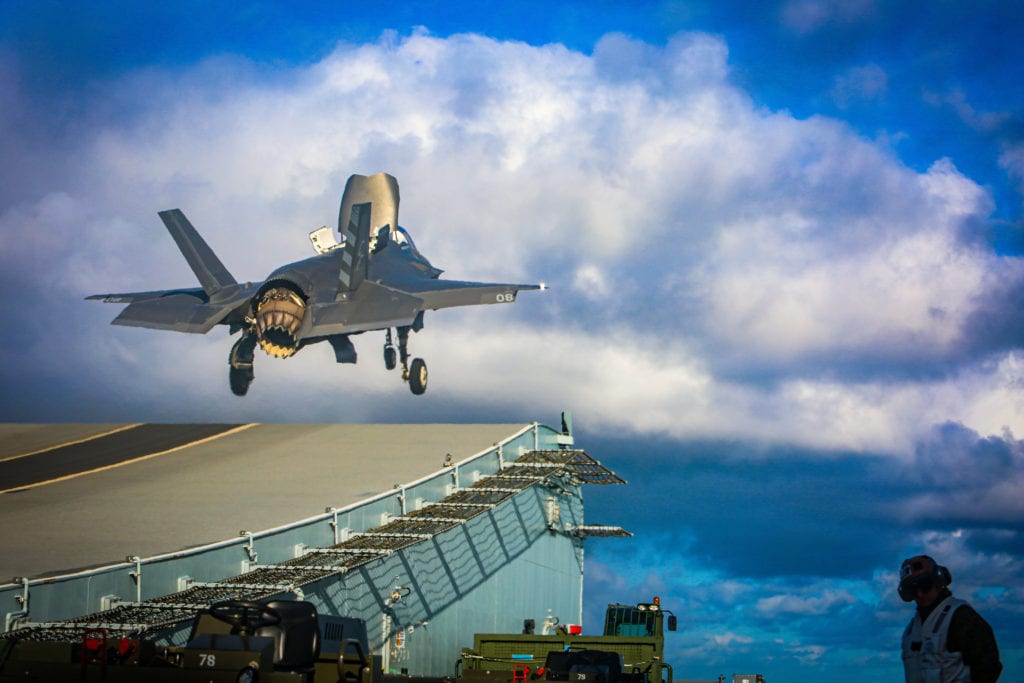
A Marine with Marine Fighter Attack Squadron (VMFA) 211 launches an F-35B Lightning II Joint Strike Fighter from the deck aboard Her Majesty’s Ship (HMS) Queen Elizabeth at sea on 10 October, 2020. U.S. Marine Corps / 1st Lt. Zachary Bodner

LONDON — The United Kingdom Royal Navy’s Carrier Strike Group (CSG) has reached Initial Operating Capability (IOC), meaning all elements of the group from fighter jets to radar systems to anti-ship weapons have been successfully brought together and operated, the U.K Ministry of Defence said in a Jan. 4 release. 

Both the air and naval elements of the CSG have now met this milestone, which includes qualified pilots and ground crews being held at short notice for carrier-based operations and trained to handle weapons and maintain the equipment. 

Another marker of success at this stage includes the ability to deploy Anti-Submarine Warfare capabilities such as frigates and destroyers, as well as both fixed and rotary wing aircraft including Merlin helicopters to operate alongside the carrier. 

“This is a hugely significant milestone for HMS Queen Elizabeth, the Royal Navy and the whole country,” said Defence Minister Jeremy Quin. “This achievement is a testament to the determination of our service personnel and industry workforce who have delivered this first-rate military capability, a capability held by only a handful of nations. I wish the entire Carrier Strike Group well ahead of their first operational deployment this year.” 

Following the success of the NATO Joint Warrior Exercises last autumn, the Carrier Strike Group capability has reached the key IOC milestone for the program on schedule. 

The multinational deployment in 2020 focused on incorporating all elements of the CSG with 13 of the United Kingdom’s allies including Belgium, Canada, Denmark, France, Germany, Latvia, the Netherlands, Norway, Spain, Turkey, Japan, United Arab Emirates and the United States. Exercise Joint Warrior saw the largest number of aircraft on a British Royal Navy carrier since 1983, as well as the most F-35B jets at sea across the globe. In addition to U.K. F-35Bs, the Queen Elizabeth has operated with U.S. Marine Corps F-35Bs assigned to Marine Fighter Attack Squadron 211. 

Full operating capability for the CSG is expected by December 2023. 


BAE Systems Tapped to Demonstrate P-8 Countermeasure System for U.S. Navy

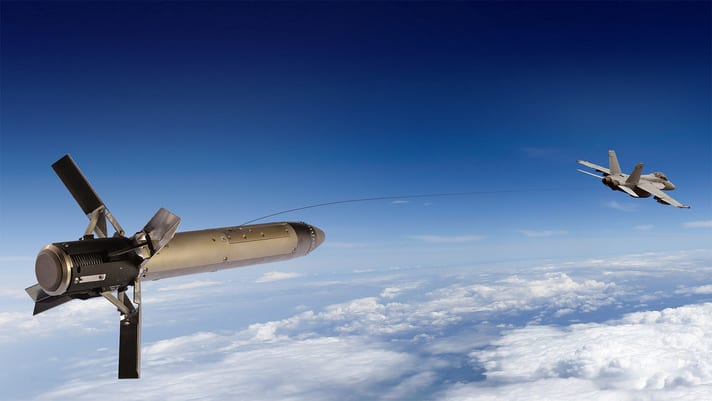
An artist’s rendering of a BAE Systems ALE-55 Fiber-optic towed decoy deployed on an F/A-18 Super Hornet strike fighter. BAE Systems

ARLINGTON, Va. — BAE Systems will be demonstrating for the U.S. Navy this spring a podded radio frequency countermeasures (RFCM) self-protection system on the service’s P-8A Poseidon maritime patrol reconnaissance aircraft, the company said. 

BAE Systems has received a $4 million contract from the Navy to conduct a quick-turnaround demonstration of a new RFCM system for the P-8A, the company said in a Jan. 5 release.  

The RFCM is designed to jam or decoy missiles guided by RF energy, including radar-guided surface-to-air missiles and some air-to-air missiles. A maritime patrol reconnaissance aircraft is more likely to face these threats while operating against a near-peer competitor than in the more benign environment of the past three decades. 

“The P-8 is now considered a high-value asset with these emerging threats from hostile countries,” said Donald Davidson, director of the Advanced Compact Electronic Warfare Solutions product line at BAE Systems, in a Jan. 5 interview with Seapower. “The Navy was interested in an ability to rapidly prototype and demonstrate an RF counter-measures system for the platform.”    

Davidson said the Navy desired a system housed in a pod similar in its outer mold lines to a Harpoon missile that could be mounted on the aircraft’s existing wing stations.  

The lightweight, high-power RFCM system pod will include some components that have been proven in the ALQ-214 electronic countermeasures system installed on the F/A-18E/F Super Hornet strike fighter, including a high-powered electronics frequency converter, a launch controller, and expendable ALE-55 fiber-optic towed decoys. The RFCM pod for the P-8A will include a component called the MDX, a small form factor jammer which is about half the size of a loaf of bread and integrated with the decoy, Davidson said.  

The RFCM system will be demonstrated in the spring of 2021, Davidson said, “and if the demonstration proved effective, then [the Navy] would look to move to a more formal EMD [Engineering and Manufacturing Development]/production program to get it fielded as soon as possible.” 

He said that a successful demonstration would “lead to opportunities for additional funding” as the Navy develops its program budget in the 2022-2023 time frame. 

“The ability to meet this unprecedented response time underscores our agility, focus on meeting customer needs, and our ultimate goal of protecting our warfighters,” Davidson said in the BAE release. “A process that used to take 18 to 24 months has been scaled to five or six months, which is remarkable, as is deploying this new self-protection capability. 

BAE Systems said the “rapid response is the result of collaboration among small focus teams who developed an innovative approach to the design and fabrication of the system’s mechanical parts. As a result, BAE Systems will design, build, integrate, and ship the RFCM system in approximately five months, followed by two months of flight testing on the P-8A Poseidon platform.” 

Work on the RFCM contract will be performed at the company’s state-of-the-art facility in Nashua, New Hampshire, the release said. 


Australia Set to Acquire Two More P-8A Aircraft to Boost Maritime Patrol Capability

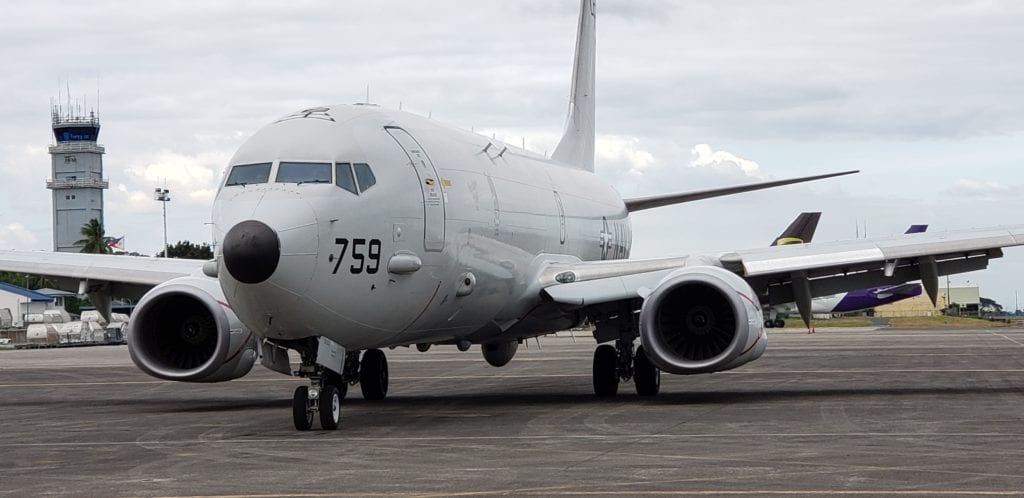
A P-8A aircraft 759 arrives at its parking spot in this 2019 photo. The Royal Australian Air Force will acquire two more P-8A Poseidons, bringing it total fleet size to 14. U.S. Navy / Lt. Cmdr. Alan Johnson

CANBERRA, Australia—The Royal Australian Air Force’s maritime patrol capability will be boosted with Australia set to acquire two more P-8A Poseidon surveillance and response aircraft, bringing the total fleet size to 14, the Australian Department of Defence said in a Jan. 4 release. 

The government has also approved sustainment funding for the current approved fleet of three MQ-4C Triton aircraft. 

Sen. Linda Reynolds, the Australian defense minister, said the announcement is part of the Morrison government’s unprecedented $270 billion investment in defense capability over the next decade. 

“Together, the Poseidon and the Triton will provide Australia with one of the most advanced maritime patrol and response capabilities in the world,” Reynolds said. “The Poseidon is a proven capability that will conduct tasks including anti-submarine warfare, maritime and overland intelligence, surveillance and reconnaissance, and support to search and rescue missions. These additional aircraft will enhance Air Force’s flexibility to support multiple operations and will play an important role in ensuring Australia’s maritime region is secure for generations to come. 

“The Morrison government’s continued investment in the Poseidon program is also creating more Australian jobs and opportunities for Australian small businesses, she said. “Several Australian companies are already completing work for Boeing Defence Australia, and industry investment including facilities works is over $1 billion.” 

The additional Poseidon aircraft are to be purchased through Australia’s existing cooperative program with the U.S. Navy. Reynolds said the program allows Australia to share in the benefits of their technical expertise and divide project costs. 

“Defence is committed to this cooperative approach; together we are striving to develop this military technology to the highest standards,” Reynolds said. 

The Poseidon is a highly versatile, long endurance platform capable of a range of mission types including maritime intelligence surveillance and reconnaissance and striking targets above and below the ocean’s surface. 

The planned integration of the Long Range Anti-Ship Missile (LRASM) into RAAF capability will also allow it to strike adversary surface vessels at significantly increased ranges. 


HII Expands Unmanned Capabilities by Acquiring Autonomy Business from Spatial Integrated Systems

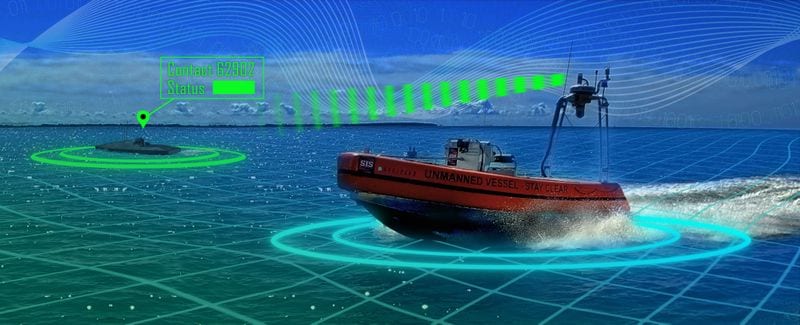
An illustration of Spatial Integrated Systems’ capabilities in unmanned systems. SIS’ unmanned systems solutions, including multi-vehicle collaborative autonomy, sensor fusion and perception, have been fielded for more than 6,000 hours on 23 vessel types. Huntington Ingalls Industries

NEWPORT NEWS, Va. — Huntington Ingalls Industries (HII) has acquired the autonomy business of Spatial Integrated Systems Inc. (SIS), HII said in a Jan. 4 release. The acquisition further expands HII’s unmanned systems capabilities with this highly skilled team and proven unmanned surface vessel (USV) solutions. 

“We are excited to welcome the SIS autonomy business employees to the HII family,” said Andy Green, HII executive vice president and president of Technical Solutions. “2020 was a significant year for HII in the unmanned systems industry, and this acquisition is the perfect complement to our existing portfolio and strategic partnerships.” 

“I am pleased that HII will carry on SIS’s vision to deliver advanced autonomy to our armed forces in support of our national interest,” said Dr. Ali Farsaie, CEO and founder of SIS. 

SIS’s unmanned systems solutions — including multi-vehicle collaborative autonomy, sensor fusion and perception — have been fielded for more than 6,000 hours on 23 vessel types. They have supported multiple development projects and demonstrations advancing autonomy in unmanned systems in the maritime, ground and air domains. 

“SIS is a leader in autonomous technology, and this acquisition adds significant breadth to our unmanned systems solutions,” said Duane Fotheringham, president of Technical Solutions’ Unmanned Systems business group. “This technology and the talented team provide unmatched capabilities in multi-domain collaborative autonomy and perception, allowing HII to uniquely address our customers’ needs.” 

SIS’s solutions are actively in use throughout the Department of Defense, coordinating and controlling multiple collaborative unmanned vehicles in the execution of mission applications including intelligence, surveillance, and reconnaissance, harbor patrol, high-value unit escort missions, payload delivery, mine clearance, and transporting supplies. SIS’s intelligent, goal-oriented USV solutions follow Unmanned Maritime Autonomy Architecture standards and integrate proven obstacle avoidance and International Regulations for Preventing Collisions at Sea-compliant behaviors. 

The acquisition of SIS’s autonomy business follows other recent unmanned systems activity by HII, including the acquisition of Hydroid, a strategic alliance with Kongsberg Maritime, an equity investment in Sea Machines, and the groundbreaking on a new HII Unmanned Systems Center of Excellence in Hampton, Virginia. 

The transaction closed on Dec. 31, 2020, and approximately 50 employees from SIS, primarily located in Virginia Beach, Virginia, have joined HII Technical Solutions’ Unmanned Systems business group. Sam Lewis, president and chief operating officer of SIS, will lead the company’s USV efforts, reporting to Fotheringham. The cost of the transaction is not being disclosed. 


Navy Awards Contract to Thoma-Sea Marine to Build 2 NOAA Ships

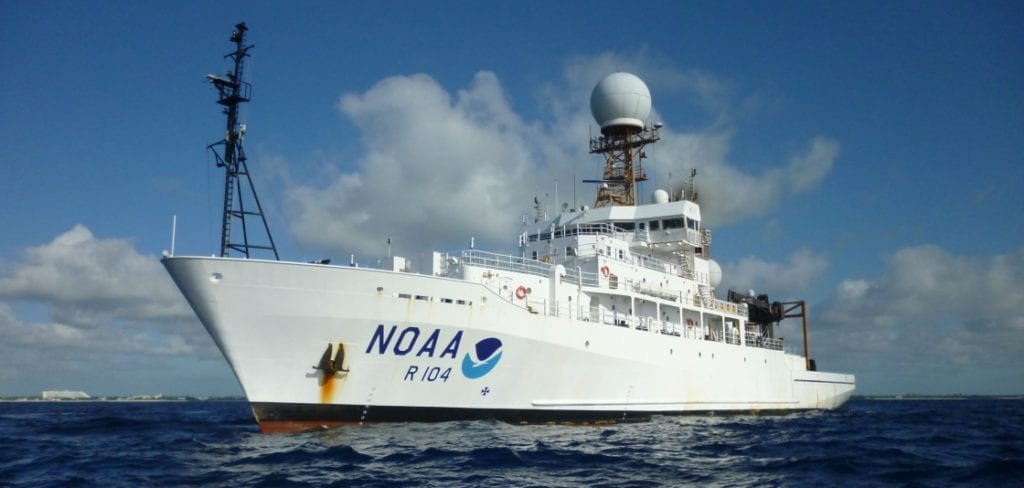
An existing NOAA research ship, the Ronald. H. Brown. NOAA / Wes Struble

WASHINGTON — The National Oceanic and Atmospheric Administration’s (NOAA’s) effort to recapitalize its aging fleet of research ships took a major step forward today with the U.S. Navy’s award of a $178.1 million contract to Thoma-Sea Marine Constructors LLC, Houma, Louisiana, for the detailed design and construction of two new oceanographic ships for the agency, NOAA said in a Dec. 31 release.

NOAA is acquiring the vessels through an agreement with the Naval Sea Systems Command, a leader in building, providing and procuring large research ships for the nation’s research fleet. 

“We can all be proud that these two new NOAA ships will be built in the United States by highly skilled workers, and to the highest standards,” said U.S. Secretary of Commerce Wilbur Ross. “The nation will benefit greatly from the information these state-of-the-art vessels will collect for decades to come.” 

The first ship, to be named Oceanographer, will be homeported in Honolulu. The second ship, to be named Discoverer, will be assigned a homeport at a future date. Both vessels will continue the legacies of their namesakes.  

The first Oceanographer served in the NOAA fleet from 1966 to 1996 and her sister ship, Discoverer, served from 1967 to 1996. 

The new ships will support a wide variety of missions, ranging from general oceanographic research and exploration to marine life, climate and ocean ecosystem studies. These missions include shallow coastal, continental shelf, and worldwide ocean survey and data collection. 

Designed as single-hull ships, Oceanographer and Discoverer will be built to commercial standards. They will incorporate the latest technologies, including high-efficiency, environmentally friendly EPA Tier IV diesel engines, emissions controls for stack gases, new information technology tools for monitoring shipboard systems, and underwater scientific research and survey equipment. 

“These state-of-the-art ships will play a vital role in collecting high-quality data and leading scientific discoveries,” said Neil Jacobs, Ph.D., acting NOAA administrator. “The science missions aboard these vessels promise to push the boundaries of what is known about our still largely undiscovered ocean.” 

The ships will be equipped to launch work boats, perform maintenance on buoys and moorings, deploy scientific instruments to collect weather and water column data, and conduct seafloor mapping surveys. Each vessel will operate with a crew of 20 and will accommodate up to 28 scientists. 

“This contract award represents a major step forward in the process to recapitalize NOAA’s ship fleet,” said NOAA Rear Adm. Michael J. Silah, director of the NOAA Commissioned Officer Corps and NOAA Office of Marine and Aviation Operations (OMAO). “We thank the Navy, our valued partner, for its assistance with this acquisition.” 

The NOAA ship fleet is operated, managed and maintained by OMAO, which is composed of civilians and officers with the NOAA Commissioned Officer Corps, one of the nation’s eight uniformed services. 


Navy Orders Logistics Support & Engineering for BQM-177A Targets

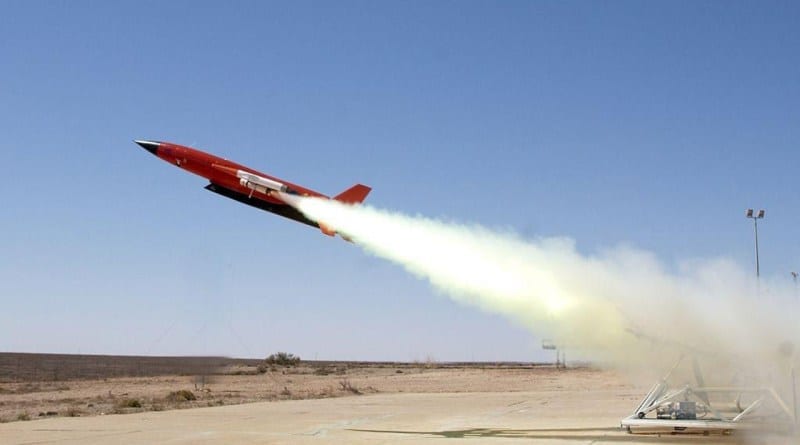
A BQM-177A subsonic aerial target. Kratos Defense & Security

SAN DIEGO — Kratos Defense & Security Solutions Inc. will receive an additional $3.6 million from the U.S. Naval Air Systems Command for the next option of its Contractor Logistics Support (CLS) and Engineering Services contract supporting BQM-177A subsonic aerial target system (SSAT) operations, the company said in a Dec. 28 release. 

“Now that we’re beyond the full-rate production acquisition milestone, we’ve entered the operations and sustainment phase of the SSAT lifecycle,” said Steve Fendley, president of Kratos Unmanned Systems Division. “CLS and engineering services are vital to ensuring the continuing adaptation, operations, and maintenance of this agile, realistic, and highly configurable aerial target system designed specifically for the Navy’s challenging threat representation missions. Kratos is proud to be providing this support today and for the future as the number of missions and operational sites increase.” 

The work under this contract will be incrementally funded and conducted primarily in Kratos facilities in both Sacramento and Point Mugu, California. When fully funded, the total contract value after exercise of this option is $7.4 million. 


Omnibus Spending Bill Funds Four Additional Fast Response Cutters

The Coast Guard accepted delivery of the newest Sentinel-class fast response cutter (FRC), the Coast Guard Cutter Oliver Henry (WPC-1140), from Bollinger Shipyards, July 30th, 2020. The fiscal 2021 omnibus spending bill funds four more Sentinel-class FRCs. U.S. Coast Guard

LOCKPORT, La. — President Trump on Dec. 27 signed into law the omnibus spending bill for fiscal Year 2021, which included funding for four more Sentinel-class Fast Response Cutters (FRCs), allowing Bollinger Shipyards to build and deliver four more FRCs to the U.S. Coast Guard, the company said in an Dec. 28 release. This increases the total number of funded boats to 64.  

“It’s a great honor to have the confidence of the U.S. Congress to continue the work we’re doing in support of the U.S. Coast Guard,” said Ben Bordelon, Bollinger Shipyards president and CEO. “The Fast Response Cutter program is something we’re all proud of here in Louisiana. Delivering vessels on schedule and on budget to the Coast Guard during these challenging times shows the determination and resiliency of our workforce.” 

All four of the newly appropriated FRCs will be built at Bollinger’s Lockport, Louisiana, facility. 

Earlier this month, Bordelon wrote an opinion piece on how an expanded U.S. Coast Guard presence around the globe can “help further the regional partnerships and alliances necessary to curb the creeping influence of America’s strategic competitors and adversaries.” Bordelon argues that the Coast Guard has the opportunity to establish itself as the preferred regional partner through its work with Patrol Forces Southwest Asia, Operation Aiga and elsewhere. Bordelon concludes that “white-hull diplomacy should be looked to more and more as a complementary arrow in the whole-of-government quiver.” 

The FRC program has had a total economic impact of $1.2 billion since inception and directly supports 650 jobs in Southeast Louisiana. The program has indirectly created 1,690 new jobs from operations and capital investment and has an annual economic impact on GDP of $202 million, according to the most recent data from the U.S. Maritime Administration on the economic importance of the U.S. Shipbuilding and Repair Industry. Bollinger sources over 271,000 different items for the FRC consisting of 282 million components and parts from 965 suppliers in 37 states. 

“We’re proud that Bollinger continues to be an economic pillar and job creator in south Louisiana,” Bordelon said. “More than 600 of our 1,500-plus employees have important roles related to the FRC program. Without the support of the Coast Guard and Congress for the continuation of this critical program, the security of these jobs would be thrown into question.”  

The FRC is one of many U.S. government shipbuilding programs Bollinger is proud to support. In addition to construction of the FRC, Bollinger is now participating in industry studies for five programs, including the U.S. Coast Guard’s Offshore Patrol Cutter program, the U.S. Navy’s Common Hull Auxiliary Multi-Mission Platform program, the U.S. Navy’s Auxiliary General Ocean Surveillance (T-AGOS(X)) program, the U.S. Navy’s Large Unmanned Surface Vehicle program and the U.S. Navy’s Light Amphibious Warship program. 

The FRC is an operational “game changer,” according to senior Coast Guard officials. FRCs are consistently being deployed in support of the full range of missions within the United States Coast Guard and other branches of our armed services. This is due to its exceptional performance, expanded operational reach and capabilities, and ability to transform and adapt to the mission. FRCs have conducted operations all over the globe and embarked on journeys as far as 10,620 nautical miles from its port of origin. Measuring in at 154-feet, FRCs have a flank speed of 28 knots, state of the art C4ISR suite (command, control, communications, computers, intelligence, surveillance, and reconnaissance), and stern launch and recovery ramp for a 26-foot, over-the-horizon interceptor cutter boat. 


Coast Guard Reports Busy December with IUU Missions, Rescues, Repatriations

USCGC Stone (WMSL 758) crew members learn how to use immersion suits during an abandon ship drill on the Stone in the waters south of Pensacola, Florida, on Dec. 23, 2020. U.S. Coast Guard / Petty Officer 3rd Class John Hightower

The U.S. Coast Guard announced a spate of activities around the holidays, most recently that the brand-new Coast Guard Cutter Stone (WMSL 758), having just been delivered from builder Huntington Ingalls Industries’ Ingalls Shipbuilding, has embarked on a multi-month deployment to the South Atlantic.

There, Stone will counter illegal, unregulated, and unreported (IUU) fishing while strengthening relationships for maritime sovereignty and security throughout the region.

The brand new Legend-class national security cutter, one of the U.S. Coast Guard’s flagships, will provide a presence and support national security objectives throughout the Atlantic. This patrol is the cutter’s initial shakedown cruise following its delivery in November. 

This the service’s first patrol to South America in recent memory, engaging partners including Guyana, Brazil, Uruguay, Argentina, and Portugal. The cutter also embarked an observer from the Portuguese navy for the operation’s duration.

Operation Southern Cross is conducted in conjunction with U.S. Southern Command, charged with managing operations in Central and South America by working collaboratively to ensure the Western Hemisphere is secure, free, and prosperous. 

Christmas Rescue

On Christmas Day, the Coast Guard rescued four boaters Friday from Yamani Islets, 27 miles south of Sitka, Alaska. 

A Coast Guard Air Station Sitka MH-60 Jayhawk helicopter crew hoisted the four boaters, a 50-year-old female, and her three children, ages 21, 17, and 13, from shore after their 15-foot vessel capsized. The helicopter crew transported them to Coast Guard Air Station Sitka where they were reported to be in stable condition.

Watchstanders in the Sector Juneau command center received initial notification from a friend at approximately 11 p.m. of an overdue vessel. Sector watchstanders directed the launch of an aircrew from Air Station Sitka and the crew of Coast Guard Cutter Bailey Barco. 

During their search, the aircrew received a distress call over VHF radio channel 16 at the entrance of Necker Bay and was able to make contact with the boaters confirming they were all ashore after their vessel capsized.

Counter-Drug Deployment

The week before, Coast Guard Cutter Active returned to its homeport of Port Angeles following a 46-day deployment to the Eastern Pacific Ocean.

Nicknamed “Lil Tough Guy,” the Active’s crew patrolled 10,056 total nautical miles off the coast of Central America, deployed with an armed Coast Guard MH-65 Dolphin helicopter crew from the Helicopter Interdiction Tactical Squadron (HITRON) in Jacksonville, Florida.

HITRON helped Active search for, detect and stop, drug smuggling vessels.

Pacific Area Tactical Law Enforcement Team (TACLET) personnel sailed with the Active and augmented the unit’s law enforcement capabilities, proving critical during interdictions. TACLET are Coast Guard members that specialize in counter-narcotics tactics and procedures and deploy aboard U.S. and allied navy ships that transit drug trafficking areas.

In just 72 hours, the Active crew interdicted two vessels suspected of drug smuggling and seized approximately 4,200 kilograms of cocaine worth $159 million. These efforts resulted in the detainment of 13 suspected narcotics traffickers.

The Active is a 210-foot medium endurance cutter homeported in Port Angeles and routinely deploys in support of counter-drug, migrant interdiction, fisheries, and search and rescue and homeland security missions.

Repatriation

On Dec. 18, the crew of Coast Guard Cutter Resolute repatriated 110 Haitian migrants after stopping a voyage approximately 50 miles north of Cap-Haitien, Haiti.

A forward-deployed Coast Guard Air Station Clearwater MH-60 Jayhawk helicopter crew spotted a 40-foot vessel overloaded with people. Resolute’s crew diverted and brought the people aboard out of abundance of caution for safety of life at sea.

“I could not be prouder of the crew for safely interdicting and deterring migrant ventures through coordinated efforts to enforce U.S and partner nation treaties and laws,” Cmdr. Justin Vanden Heuvel, commander, Coast Guard Cutter Resolute. “Resolute’s crew was exceptional in ensuring safety of life at sea, as well as providing around-the-clock care for 110 guests and creating an atmosphere of compassion and dignity prior to repatriation.”

IUU Fishing

Earlier in the month, the crew of the Palau Division of Marine Law Enforcement patrol boat PSS President HI Remeliik II coordinated with the U.S. Coast Guard to apprehend a suspected illegal fishing vessel off Helen Reef. 

The U.S. Coast Guard dispatched resources that included an Air Station Barbers Point HC-130 Hercules search plane and the Coast Guard Cutter Myrtle Hazard, from Sector Guam, to support the government of Palau to protect their sovereignty and natural resources. The law enforcement action by the crew of the Remeliik II represents the continued cooperation between the Republic of Palau, United States, Australia, Japan, and other partners to halt IUU fishing in the Pacific.

“Our bilateral agreements with Palau and other island nations are proving highly impactful,” said Cmdr. Jason Brand, the Coast Guard Fourteenth District Chief of Enforcement. “IUU fishing has replaced piracy as the leading global maritime security threat. If IUU fishing continues unchecked, we can expect a deterioration of fragile coastal States, collapse of critical fish stock populations and increased tension among foreign-fishing nations, threatening geopolitical stability around the world.” 

On Dec. 9, Palau Rangers near Helen Reef reported witnessing an 80-foot vessel illegally fishing nearby. In coordination with the U.S. Coast Guard and the U.S. Global Defense Reform Program contractor assigned to Palau’s Maritime Law Center, the crew of the Remeliik II was dispatched from Koror to apprehend the vessel.


F-35 Deliveries by Lockheed Martin in 2020 Total 123

Two U.S. Air Force F-35A Lightning IIs conduct flight training operations over the Utah Test and Training Range on Feb 14, 2018. Lockheed Martin has delivered the 123rd F-35 aircraft of the year, an F-35A delivered to the Italian air force. U.S. Air Force / Staff Sgt. Andrew Lee

FORT WORTH, Texas – Lockheed Martin delivered the 123rd F-35 aircraft of the year last week, the company said in a Dec. 28 release.  

The 123rd aircraft is an F-35A conventional takeoff and landing (CTOL) variant, built at the Cameri, Italy, Final Assembly and Checkout facility and delivered to the Italian air force. In 2020, 74 F-35s were delivered to the United States military, 31 to international partner nations and 18 to Foreign Military Sales customers. 

In response to COVID-19 related supplier delays, in May the initial annual delivery goal was revised from 141 to 117-123 aircraft to strategically avoid surging, which would increase production-related costs and create future delays and disruption. 

“The F-35 joint enterprise team rapidly responded to the challenges of the COVID-19 pandemic to continue to deliver the unmatched combat capability the F-35 brings to the warfighter,” said Bill Brotherton, acting vice president and general manager of the F-35 program. “Achieving this milestone amid a global pandemic is a testament to the hard work and dedication of the team and their commitment to our customers’ missions.” 

Lockheed Martin took proactive measures to mitigate COVID-19 supplier impacts and position the program for the fastest possible recovery by adjusting employee work schedules, maintaining specialized employee skillsets, and providing accelerated payments to small and vulnerable suppliers. Lockheed Martin provided accelerated payments to more than 400 F-35 suppliers in 45 states and Puerto Rico. 

Though COVID-19 will have short-term impacts on production, the F-35 program continues to work diligently and is on track to meet the joint government and industry recovery commitments over the coming years.   

There are more than 600 aircraft operating from 26 bases and ships around the globe. More than 1,200 pilots and 10,000 maintainers are trained, and the F-35 fleet has surpassed more than 350,000 cumulative flight hours. Nine nations have F-35s operating from a base on their home soil, nine services have declared Initial Operational Capability and six services have employed F-35s in combat operations. The U.S. Air Force deployed the F-35 for 18 consecutive months from April 2019 until October 2020 in the U.S. Central Command Area of Responsibility with hundreds of weapons employments in support of U.S. servicemembers and their allies.  

The year also included initial fielding of the Operational Data Integrated Network, the follow-on to the Autonomic Logistics Information System, with excellent initial results. The system will be fully operational in 2022. Mission capable rates for the aircraft continued to improve in 2020 with rates greater than 70% across the fleet, and even higher for deployed units. The F-35 also proved its value in joint all-domain operations with multiple exercises that highlighted the aircraft’s ability to gather, interpret and share information with various platforms.