Jones Act Defenders Challenge Economic Arguments for Repealing Century-Old Law
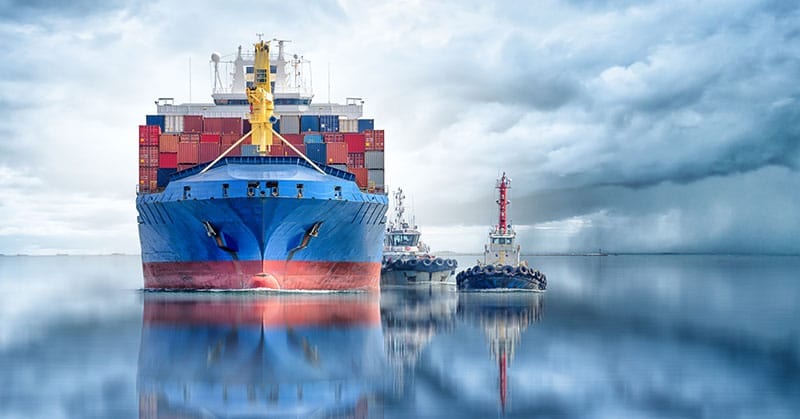
The usefulness today of the 100-year-old Jones Act was the main topic of discussion during a webinar aired on April 14 as part of the Navy League’s Sea-Air-Space 2020: Virtual Edition.

ARLINGTON, Va. — The 100-year-old Jones Act is far from an outdated law that keeps shipping prices high and hurts the nation’s economy, a panel of maritime policy experts argued on April 14.

“The biggest misconception of the Jones Act is the cost impact, the final cost to delivered goods,” John McCown, founder of Blue Alpha Capital, a maritime financial services firm, said on a webcast for Navy League’s Sea-Air-Space 2020: Virtual Edition. “Many of the critics have distorted what that number is, cherry picked it, taken it out of context,” McCown added.

To register and then watch this Sea-Air-Space 2020: Virtual Edition webinar live online, click here.

The Jones Act — also known as the Merchant Marine Act of 1920 — bars foreign-built, foreign-owned or foreign-flagged vessels from conducting coastal and inland waterway trade within the United States and between the United States and some of its territories such as Puerto Rico. The law also generally applies restrictions that effectively prohibit Jones Act-compliant ships from being overhauled at foreign shipyards. Ship crews must be composed of U.S. citizens or legal U.S. residents.
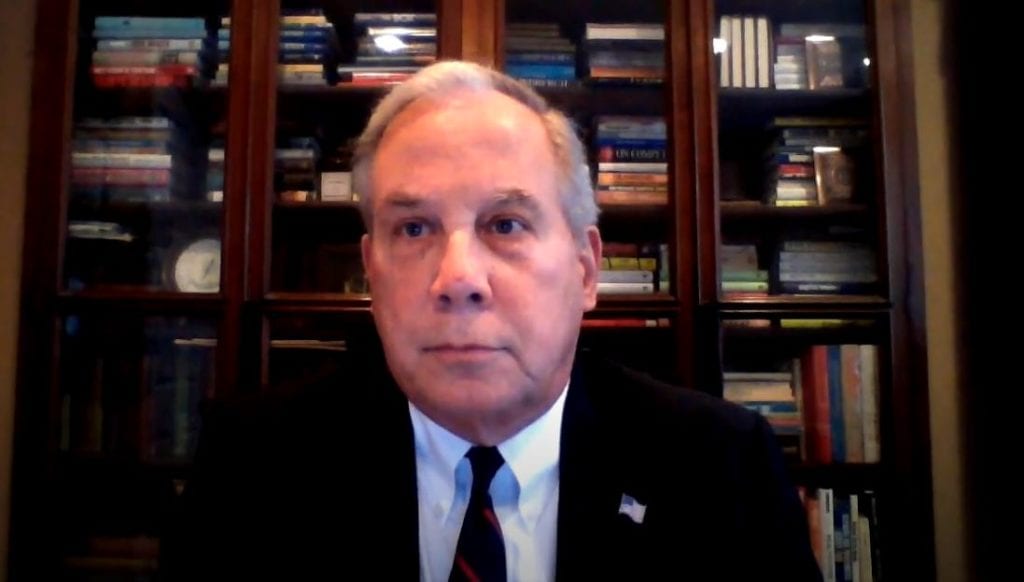
John McCown, founder of Blue Alpha Capital, a maritime financial services firm, joined the discussion on the Jones Act during a webcast for the Navy League’s Sea-Air-Space 2020: Virtual Edition.

Opponents say it’s time to repeal the law because it has led to higher shipping costs, which pass along higher prices to vendors, retailers and consumers. They also maintain higher costs have driven the commercial shipbuilding industry overseas, leading to a smaller pool of qualified U.S. merchant mariners.

That claim has turned the Jones Act into a scapegoat for “all sorts of economic ills,” McCown said. He noted that after Hurricane Maria devastated Puerto Rico in 2017, critics claimed the Jones Act was strangling Puerto Rico’s economy and, without the law, there would be a 15% drop in consumer prices. Such a price cut “translates to $9 billion a year,” which, McCown said, was a ludicrous estimate many times the total annual revenue of the Jones Act.

“The biggest misconception of the Jones Act is the cost impact, the final cost to delivered goods. Many of the critics have distorted what that number is, cherry picked it, taken it out of context.”

John McCown, founder of Blue Alpha Capital

U.S. Navy and Coast Guard officials have defended the law, saying that without it, there would be no pool of U.S. noncombat ships — or trained American seafarers to man them — in a war or other national emergency. If cost becomes the deciding factor in maritime trade, leading to elimination of the Jones Act, then commerce on U.S. coastal waters and internal waterways like the Mississippi River would be taken over by another nation, most likely China, the second-biggest economy and shipbuilder in the world, and a “Great Power” competitor, proponents of the law argue.

Given medical supply shortages in the current COVID-19 pandemic, dependence on foreign vessels and foreign crews could pose not just a national security risk, but economic and homeland security risks if the U.S. remains dependent on foreign supply chains, especially for medical equipment and pharmaceuticals, noted former Oklahoma Rep. Ernest Istook, a senior fellow at the Frontiers of Freedom, a conservative think tank. “If they decide to do something that might cut us off, then we are at their mercy,” he added.
NAVSEA, PEO USC Host Virtual Industry Day on Hammerhead Program

WASHINGTON — Naval Sea Systems Command (NAVSEA) and Program Executive Office Unmanned and Small Combatants (PEO USC) hosted a virtual industry day in April, pressing forward with PEO’s mission priorities despite restrictions on gatherings brought on by the COVID-19 pandemic. 

The virtual program discussed the requirements for the design, development and production of the Mine Warfare Program Office’s Hammerhead program, according to an April 13 release from NAVSEA. 

Sixteen companies participated in the industry day in support of the maritime mine deployment system. Hammerhead is designed to deploy from an unmanned underwater vehicle and detect, classify and destroy anti-submarine warfare assets. The day’s objective was to improve industry’s understanding of the Hammerhead program and accelerate the design, development and production of the system. 

The industry day, said PEO USC Rear Adm. Casey Moton, should “stress the importance of the program to the fleet — they want it today, they need it today. … We’re still going to deliver the mission-essential capability, so it’s important that we proceed.” 

Moton said the Hammerhead program is designated both a Middle Tier Acquisition Rapid Prototyping Program and a Navy Maritime Accelerated Acquisition, reflecting the urgent need for the capability the system promises to bring. 

“We’re looking for industry feedback,” said Capt. Danielle George, program manager of Mine Warfare Programs. “That’s how we’re going to be successful” in meeting the program’s aggressive schedule to deliver this new capability to the fleet. 

Chief of Naval Operations Mine Warfare branch Capt. Samuel Davis, resource sponsor for the program, said: “The Hammerhead program will bring important capabilities to the fleet, and we look forward to its development and fielding.” 

The government intends to post the final Hammerhead prototype solicitation later this year. Industry will have about four weeks to submit a full proposal for Hammerhead prototypes. 

Award of a design and test contract for an expected quantity of up to 30 prototypes is anticipated in fiscal year 2021, with delivery of operationally relevant prototypes by the end of fiscal year 2023.


MARAD’s Buzby: Readiness of Sealift, Ready Reserve Force Suffering

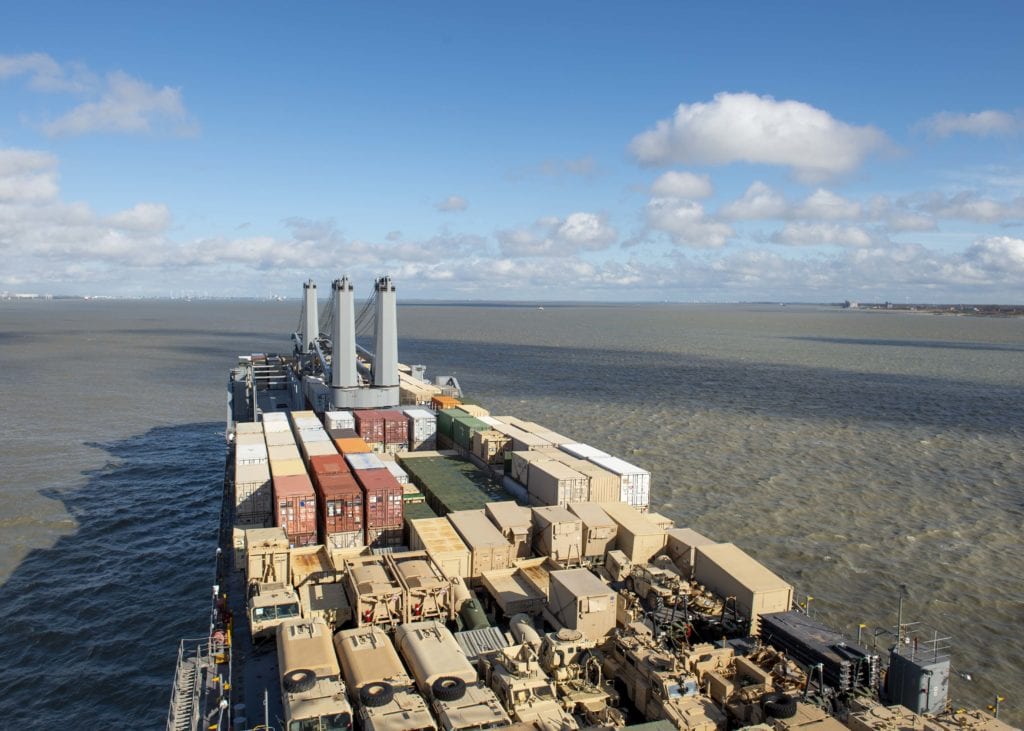
The U.S. Military Sealift Command large, medium speed roll-on/roll-off ship Benavidez transits the English Channel. U.S. Navy/Mass Communication Specialist 3rd Class Jordan R. Bair

ARLINGTON, Va. — U.S. strategic sealift fleets need recapitalization and some increased manning to achieve the readiness that the nation needs to sustain its maritime power, the U.S. maritime administrator said April 14.   

“The readiness is suffering,” a fact that sealift stakeholders recognize, Maritime Administrator Mark H. Buzby said during a webcast that is part of the Navy League’s Sea-Air-Space 2020: Virtual Edition.  

To register and then watch this Sea-Air-Space 2020: Virtual Edition webinar live online, click here.

Buzby pointed out that rusting ships, obsolete equipment, unavailable parts and repairing and replacing ships are the materiel challenges faced by the Maritime Administration (MARAD) and the U.S. Navy’s Military Sealift Command (MSC).  

MARAD’s Ready Reserve Force of 46 ships and MSC’s 15 sealift ships all need recapitalization, Buzby added. 

He said the federal government is taking three approaches to recapitalizing the fleets and that a combination of those “will help us renew the fleet”:  

  • Extending the service lives of some existing ships to possibly 60 years. 
  • Replacing 25 to 26 ships with new or converted used vessels. 
  • Procuring built-for-purpose sealift ships “from the keel up.” 

Recruiting and retaining enough mariners remains a challenge as well, Buzby said. Commercial mariners in the U.S. Merchant Marine — including those in the Ready Reserve Force, on Maritime Security Program ships available for mobilization and the declining U.S.-flag merchant fleet — and the government’s civilian mariners who work for the MSC are part of the pool that man the sealift ships. 

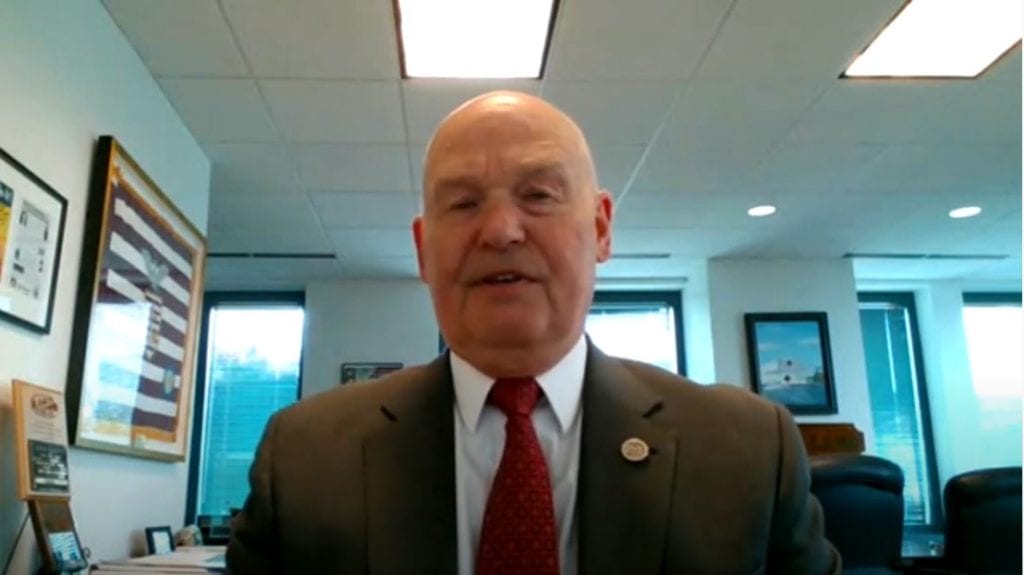
Maritime Administrator Mark H. Buzby participates in a webcast for the Navy League’s Sea-Air-Space 2020: Virtual Edition

He said that 24 ships in the Ready Reserve Force are steam-powered, operated by a shrinking pool of technicians qualified to operate and maintain the obsolete propulsion system.  

Buzby said the mariner pool is “enough for a steady state today” but inadequate for a substantial mobilization requirement.  

Of help would be to place more merchant ships “under the U.S. flag so it gets the pool … where it needs to be,” he added. 

Building up the U.S.-flag merchant fleet is a considerable challenge, he said, because competitors such as China that have state-run enterprises can undercut the U.S. in terms of lower-cost shipbuilding and manning and can therefore compete more effectively for cargo business. 

“We’re asking our merchant marine to play on an unlevel playing field,” he said. 


Elbit Integrates Active Towed Array Sonar Onboard Seagull USV

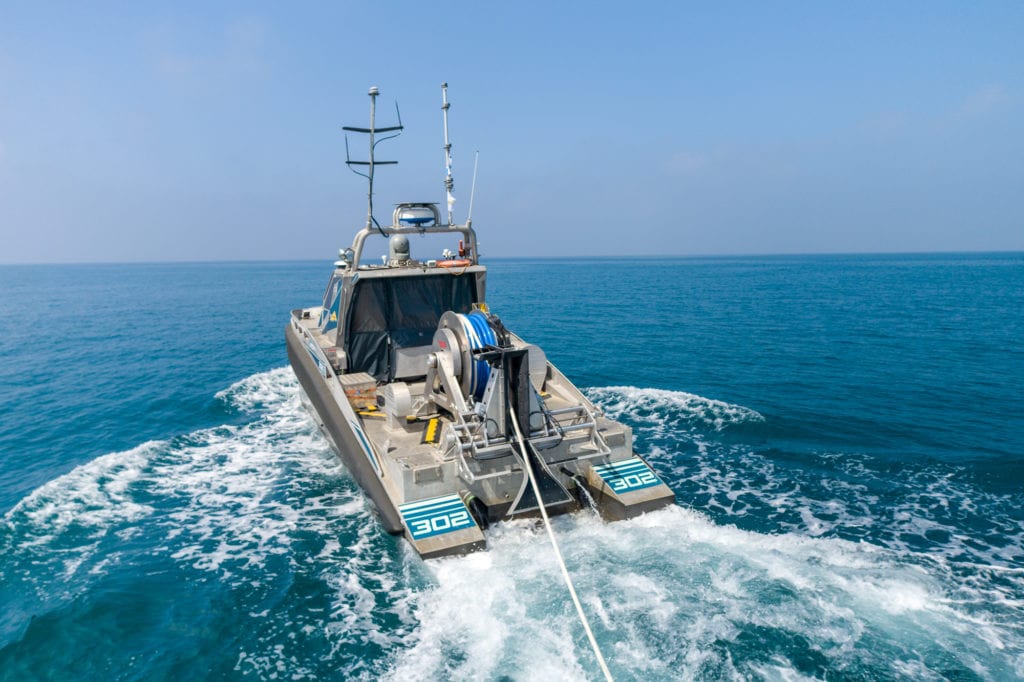
Elbit Systems has integrated the TRAPS-USV with its Seagull unmanned surface vehicle. Elbit Systems

HAIFA, Israel — Elbit Systems has integrated the Towed Reelable Active Passive Sonar for Unmanned Surface Vessels (TRAPS-USV) with its Seagull USV, according to an April 14 company release. The sea trials included several deployment and recovery cycles, towing at different speeds and transmission at various power levels. 

The TRAPS-USV version is a compact variant of the TRAPS, a technology that is intended for detection, classification, localization and tracking of submarines in anti-submarine warfare (ASW) operations. TRAPS versions are containerized or permanent-fit for any size, diverse-purpose vessel. 

The TRAPS-USV variant is lighter weight but maintains all acoustic active sonar capabilities of TRAPS. TRAPS-USV is the compact and powerful low frequency towed sonar that was recently introduced by Geospectrum, Elbit’s wholly owned Canadian subsidiary. 

The Seagull autonomous multimission USV features plug and play, modular mission payload suites and can perform — in addition to ASW — mine countermeasure missions, electronic warfare, maritime security, underwater surveys and other missions using the same vessel, mission control system and data links. 

Integration of the TRAPS-USV enables the Seagull to perform ASW operations on the move, substantially extending its operative range and further enhancing its flexibility. The integration of the TRAPS-USV follows the recent conversion for operation, by Israel’s navy, of helicopter long-range active sonar dipping sonar onboard the Seagull USV.


USMI to Build Special Operations Combatant Craft

ARLINGTON, Va. — United States Marine Inc. (USMI) has been awarded a $108 million contract to build combatant craft for the U.S. Special Operations Command, the Defense Department said in a release.  

The $108 million maximum indefinite-delivery/indefinite-quantity delivery order contract with a five-year ordering period calls for combatant craft assault vessels to support Special Operations Command (USSODOM) missions around the world, the release said. USSOCOM operates a fleet of coastal and riverine craft in support of those operations. 

USMI CEO Barry Dreyfus Jr. said the contract would allow the company to retain and possibly expand its workforce, according to another release from the office of Sen. Roger Wicker (R-Miss.). USMI is based in Wicker’s state in Gulfport. 

“USMI looks forward to continuing our work on behalf of the warfighter, and we appreciate the confidence [USSOCOM] continues to have in us,” Dreyfus said. 

The sole source contract is expected to be completed by April 2025.


Coast Guard, International Partners Seize 1,700 Pounds of Cocaine

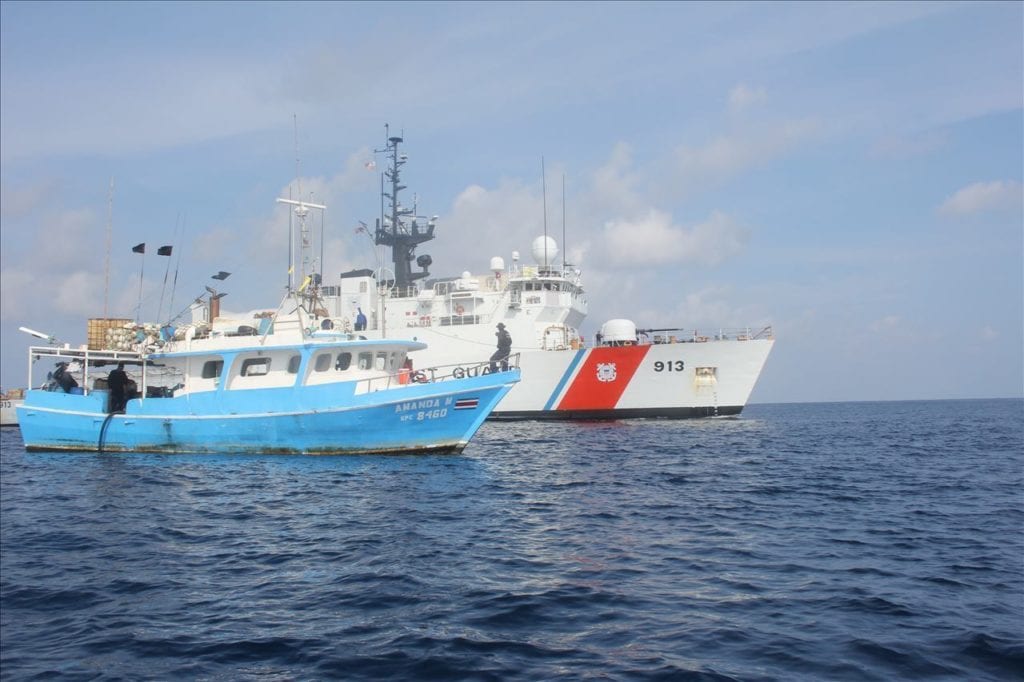
Coast Guard Cutter Mohawk crew members conduct a boarding of the Amanda M fishing vessel in the eastern Pacific Ocean off the coast of Central America on April 9. During the boarding, the crew discovered several false compartments where they were able to uncover 1,700 pounds of cocaine and transfer four suspected smugglers to Costa Rica for legal action. U.S. Coast Guard

ALAMEDA, Calif. — The U.S. Coast Guard and Costa Rican authorities seized about 1,700 pounds of cocaine on April 9 with an estimated value of more than $29 million from a fishing boat in international waters of the Pacific Ocean off Central America, according to the Coast Guard’s 11th District. 

While on patrol, a Coast Guard cutter’s Helicopter Interdiction Tactical Squadron MH-65 Dolphin helicopter crew identified a fishing boat suspected of smuggling narcotics and requested the assistance of a Costa Rican Air Surveillance Service (Servicio de Vigilancia Aérea) maritime patrol aircraft. 

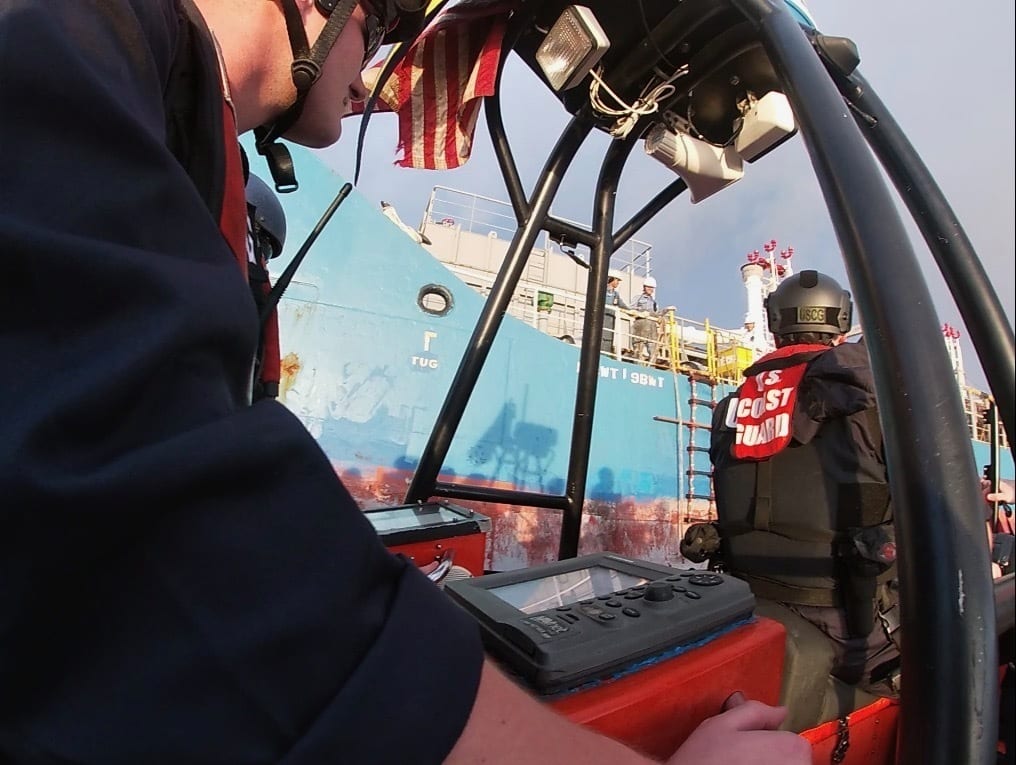
The Coast Guard cutter’s small boat arrived on scene with the fishing vessel, Amanda M, homeported in Costa Rica, with four suspected smugglers and received authorization to board the vessel.  

Coast Guard members discovered several false compartments throughout the fishing boat, where they were able to uncover 1,700 pounds of cocaine. 

“This interdiction is a great example of what we can accomplish with strong international partners,” said Rear Adm. Peter Gautier, the 11th District’s commander.  

The Coast Guard transferred the four suspected smugglers to Costa Rican authorities for further legal actions. 

On April 1, U.S. Southern Command began enhanced counter-narcotics operations in the Western Hemisphere to disrupt the flow of drugs. Numerous U.S. agencies from the Departments of Defense, Justice and Homeland Security cooperated in the effort to combat transnational organized crime.

The Coast Guard, Navy, Customs and Border Protection, FBI, Drug Enforcement Administration, and Immigration and Customs Enforcement, along with allied and international partner agencies, play a role in counter-drug operations.


Coast Guard Academy to Host Virtual Class of 2020 Graduation

NEW LONDON, Conn. — The U.S. Coast Guard Academy announced that it is preparing to hold a virtual graduation ceremony on May 20 due to social distancing restrictions during the COVID-19 pandemic. 

The graduating Class of 2020, along with the rest of the Academy Corps of Cadets, were on spring break when travel restrictions were imposed and were ordered to stay home. The Corps then shifted to virtual remote classes, which are ongoing. 

During the virtual ceremony, Chad Wolf, the acting Department of Homeland Security secretary, is scheduled to deliver the keynote address. Coast Guard Commandant Adm. Karl Schultz also will provide remarks.  

“This decision was made in the best interest of the health and well-being of our entire academy family and our local community,” said Rear Adm. Bill Kelly, the academy’s superintendent. 

“I’d like to thank our faculty and staff who have made it possible to graduate the Class of 2020 on time and deliver them to their duty stations prepared to serve our nation. The entire academy community has come together to match an unprecedented mission with unprecedented effort and innovation. I am enormously proud of them.” 

The Class of 2020 is the largest graduating class with 258 cadets in the academy’s 144-year history as well as the largest class of women at 102.


Coast Guard: Illegal Fishing in Oceans a National Security Issue

Boarding officers from the U.S. Coast Guard and Canadian Conservation and Protection navigate to board a fishing vessel in the South Pacific in January 2019. Canadian Department of Fisheries and Oceans

WASHINGTON — Illegal, unreported and unregulated fishing (IUU) is a national security issue that threatens global economic order and the sovereignty of nations and that enforcement is over-stretched to counter the threat, U.S. officials said. 

IUU includes fishing without a permit, catching over a legal limit, catching the wrong species and catching fish that are too small.

To register and then watch this Sea-Air-Space 2020: Virtual Edition webinar live online, click here.  

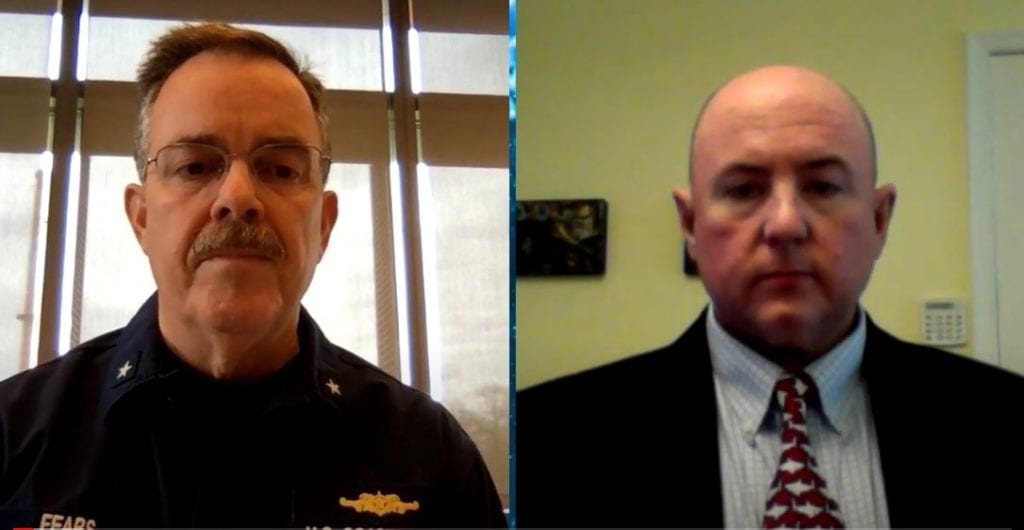
Speaking during a Navy League Sea-Air-Space: Virtual Edition webcast on April 13, Rear Adm. Doug Fears, the Coast Guard’s assistant commandant for response policy, said that IUU “is an issue of sovereignty and a national security issue because the competition for global fish stock and protein is ongoing.” 

Fears said the Coast Guard “is as an internationally trusted partner and is a supporter of an international rules-based governance structure that benefits each country that has an economic exclusion zone.” 

Rear Adm. Doug Fears (left), the U.S. Coast Guard’s assistant commandant for response policy, and Dave Hogan, acting director of the Office of Marine Conservation with the U.S. State Department, discuss Illegal, unreported and unregulated fishing during a Navy League Sea-Air-Space: Virtual Edition webinar.

Dave Hogan, acting director of the Office of Marine Conservation with the U.S. State Department, who also spoke during the Navy League webcast, said the State Department negotiates with international and regional partners to establish the rules to manage the fish stocks on the high seas in cooperation with the National Oceanic and Atmospheric Administration’s Fisheries Service, the Coast Guard and other agencies.  

“Each nation exercises sovereignty over its economic exclusion zone,” Fears said. “When another nation violates that, [IUU] is harming the fish stock that may not be recoverable.” 

Fears also pointed out that some nations are engaging in aggressive behavior against others in driving away fishing boats of other nations that are legally fishing and thus violating the sovereignty of those nations. He cited a recent example of Chinese coast guard activity against an Indonesian fishing vessel. The U.S. Defense Department on April 9 called out China’s coast guard for sinking a Vietnamese fishing vessel

“The United States Coast Guard has the authorities, the capability, the global reach — we’re trusted partners. Our model is a well-respected model. Our limiting factor is capacity.”

Rear Adm. Doug Fears

Hogan said the United States has an ongoing dialogue with China on IUU issues. He said the State Department has asked China to “do better” with its distant-water fleet fishing in the waters of other countries. 

He said IUU fishing is going on in all the world’s oceans, and that the violators include stateless high-seas drift-net vessels in the North Pacific. Whereas most fishing companies worldwide are privately owned, China’s are state-run. 

“The United States Coast Guard has the authorities, the capability, the global reach — we’re trusted partners,” Fears said. “Our model is a well-respected model.” 

“Our limiting factor is capacity,” he added. “While we operate around the world, we can’t operate in all the places that deserve the attention in IUU fishing.” 

Fears cited the South China Sea, the waters off West Africa and the central and western Pacific and the Gulf of Mexico as prime areas where IUU occurs. 

Hogan said the United States is still trying to find a multilateral solution to the competing claims in the South China Sea. He also said he encourages nations to cooperate, despite their disputes, so fish stocks aren’t depleted and that their own economic security and the environment aren’t undermined.  

Fears said that IUU often is networked by organized crime, such as the drug cartels, which have “tentacles” in human trafficking and other smuggling operations. “A lot of the drug cartels and similar organizations monetize illicit activities, whatever they be,” he said. 

Fears also said a Coast Guard presence is an effective counter to IUU fishing but that the sea service needs more ships, aircraft and personnel to project that presence.


COVID-19 Piles on Coast Guard’s Funding, Readiness Challenges, Says Commandant

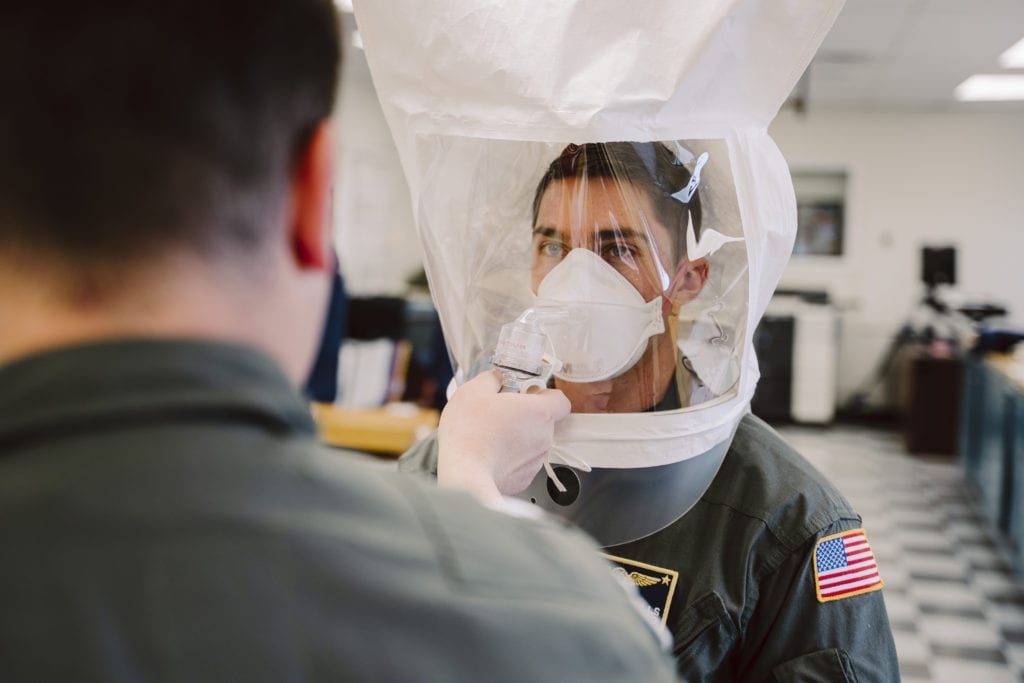
Coast Guard Petty Officer 3rd Class Evan Grills is fitted for an N95 respirator at Air Station Kodiak, Alaska, on March 24. Amid the COVID-19 pandemic, aircrews are taking additional measures to reduce potential exposure to the virus while also maintaining full mission readiness. U.S. Coast Guard/Petty Officer 1st Class Bradley Pigage

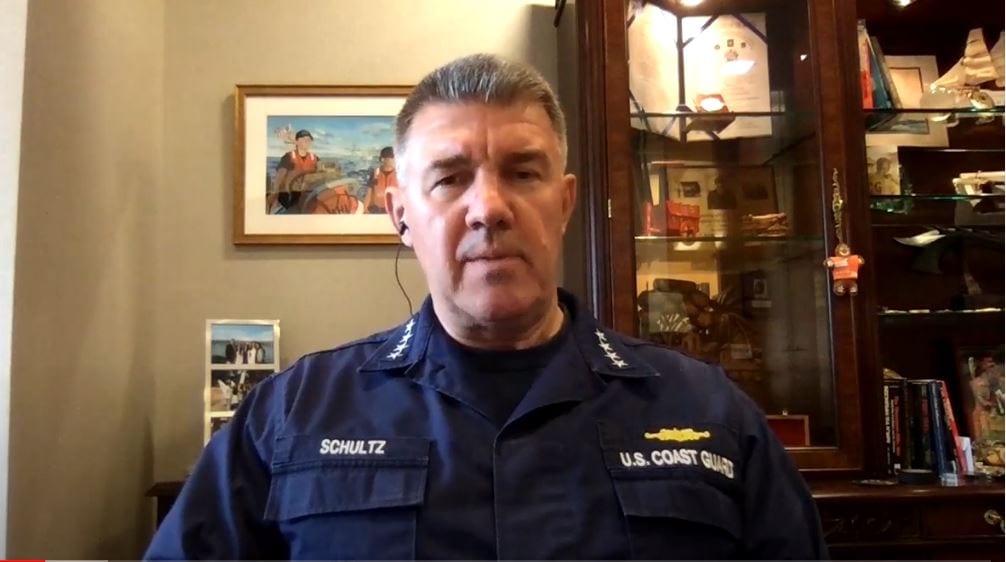
ARLINGTON, Va. — The U.S. Coast Guard, already facing longer term readiness and funding issues, is shifting manpower and equipment to meet the new challenge of the COVID-19 pandemic, the commandant of the Coast Guard told Navy League’s Sea-Air-Space 2020: Virtual Edition on April 13.

With the novel coronavirus also forcing the U.S. Navy, Marine Corps, Army and Air Force to come up with new ways to shield the force while still protecting the nation, Adm. Karl Schultz said his primary focus is on “maintaining a ready, healthy workforce to accomplish the Coast Guard’s primary missions” to facilitate the marine transportation system.

To register and then watch this Sea-Air-Space 2020: Virtual Edition webinar live online, click here.

See: As Part of Investments, Coast Guard Creates Major S.C. Base  

“Right now, we’re focused on people, readiness and enabling the economic prosperity and security of the nation,” Schultz said, noting the Coast Guard’s role as part of the Department of Homeland Security and its mission.

In addition to safeguarding the nation’s 355 seaports and 25,000 miles of commercial waterways as well as conducting maritime search and rescue and counter-narcotics operations, the constantly moving COVID-19 challenge has added new obstacles like offloading tens of thousands of cruise ship passengers, some of them ill with the virus. Coast Guardsmen did so April 2, helping to escort the cruise ships Zaandam and Rotterdam to port in Port Everglades, Florida.

Commandant Adm. Karl Schultz participates in the Navy League’s Sea-Air-Space: Virtual Edition.

Schultz also noted that there are between 75 and 100 commercial vessels in U.S. waters with as many as 100,000 crewmen on board who may need Coast Guard assistance at some point during the crisis.

Before the coronavirus outbreak, the Coast Guard was facing a readiness challenge with aging ships and aircraft,  deteriorating infrastructure ashore and an information-technology system on “the brink of catastrophic failure,” the commandant said in his State of the Coast Guard address in February. 

“But the focus right now is [a] ready Coast Guard, men and women, to get into the fight and get after these COVID-19 challenges that are in our wheelhouse.”

Coast Guard Commandant Adm. Karl Schultz

Schultz said thousands of Coast Guard personnel are now teleworkers because of social-distancing rules, but thousands more are still front-line operators in the air and on the water. “This is really showing just how critical this C5I [command, control, communications, computers, cyber and intelligence] issue is,” Schultz said. “Clearly there’s a money piece to this,” he added. “We’ve got to stop patching old systems.”

When he took command of the Coast Guard in June 2018, Schultz said his focus was on people — getting better facilities and equipment for them, an improved retirement system and recruiting for a more diverse force representative of the nation.

“People remains the absolute center of gravity for Coast Guard readiness,” he said in a live-streamed question-and-answer session during Sea-Air-Space 2020: Virtual Edition.

“But the focus right now is [a] ready Coast Guard, men and women, to get into the fight and get after these COVID-19 challenges that are in our wheelhouse,” he added.

The Sea-Air-Space 2020: Virtual Edition event was created after the annual live exposition had to be canceled due to a prohibition against large gatherings in the wake of the COVID-19 pandemic.


Theodore Roosevelt Sailor Dies of COVID-19 Complications

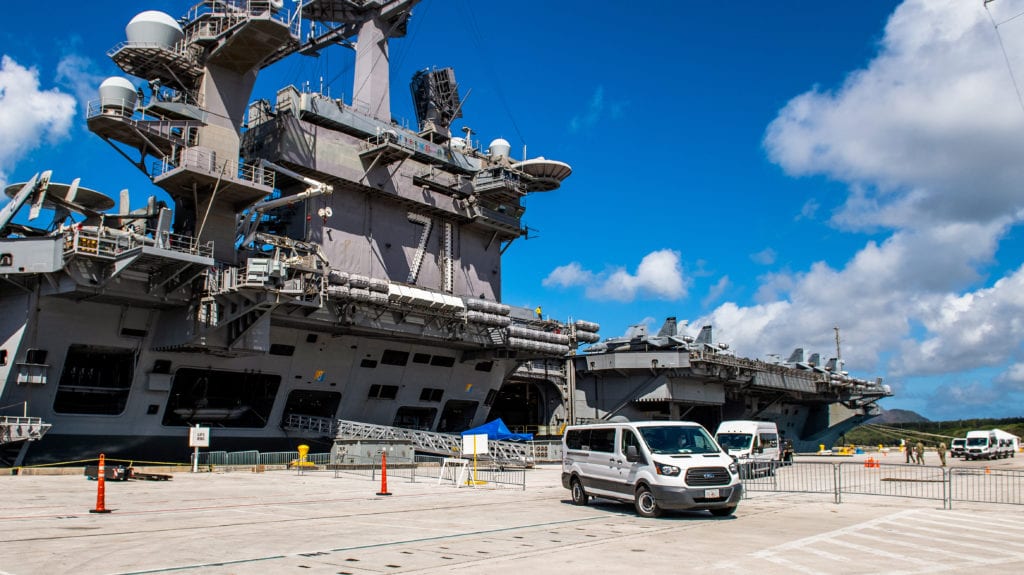
Seabees assigned to Naval Mobile Construction Battalion 1 and 5 coordinate transportation of Sailors assigned to the aircraft carrier USS Theodore Roosevelt who have tested negative for COVID-19 and are asymptomatic from Naval Base Guam to Guam government and military-approved commercial lodging. U.S. Navy/Mass Communication Specialist 1st Class Nathan Carpenter

PEARL HARBOR, Hawaii — A Sailor assigned to the aircraft carrier USS Theodore Roosevelt who was admitted to the intensive care unit at the U.S. Naval Hospital Guam on April 9 died of COVID-related complications on April 13, the U.S. Navy confirmed.

The name of the Sailor is being withheld for 24 hours after the crew member’s family is notified.

The Sailor, who tested positive for COVID-19 on March 30, was removed from the ship and placed in an isolation house on Naval Base Guam with four others from the Theodore Roosevelt. Like other Sailors in isolation, he received medical checks twice daily from Navy medical teams.

At about 8:30 a.m. on April 9, the Sailor was found unresponsive during one of those medical checks. While Naval Base Guam emergency responders were notified, CPR was administered by fellow Sailors and onsite medical team in the house. The Sailor was transferred to U.S. Naval Hospital Guam, where the Sailor was moved to the ICU.

USS Theodore Roosevelt arrived in Guam on March 27 for a scheduled port visit for resupply and crew rest but remains there while its crew members are treated or housed. As of April 12, the Navy reported 945 servicewide cases of COVID-19 — a majority of those, 735, are Sailors, including 550 from the Theodore Roosevelt itself.

The captain of the carrier, Brett Crozier, who later tested positive and went into quarantine himself, drew attention to his Sailors’ plight with a March 30 letter to Navy leadership.

The four-page letter was leaked and ran the next day with a story in the San Francisco Chronicle, drawing worldwide media attention to the ship and setting off a series of events that saw the captain relieved of his command and the acting Navy secretary resigned after criticizing Crozier in a profanity-laced speech in front of his crew.

In an April 13 statement, Chief of Naval Operations Adm. Mike Gilday said, “We mourn the loss of the Sailor from USS Theodore Roosevelt who died today, and we stand alongside their family, loved ones and shipmates as they grieve.”

He continued: “This is a great loss for the ship and for our Navy. My deepest sympathy goes out to the family, and we pledge our full support to the ship and crew as they continue their fight against the coronavirus. While our ships, submarines and aircraft are made of steel, Sailors are the real strength of our Navy.”