AUSTAL USA Christens Future USNS Solomon Atkinson 
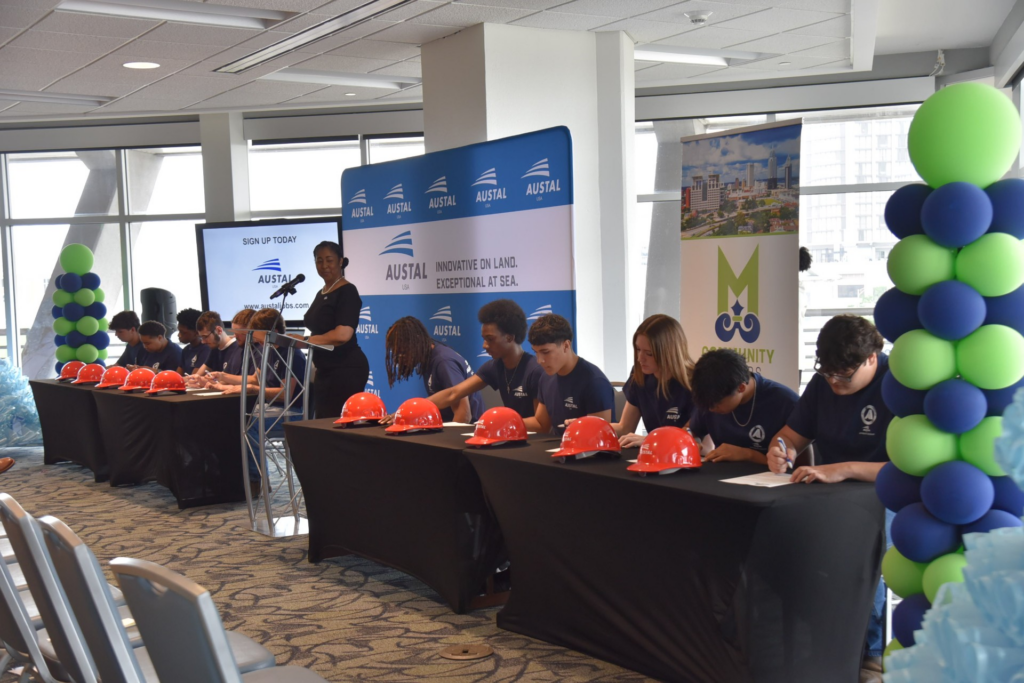
From Austal USA, May 2, 2026  

MOBILE, Ala. – Austal USA christened the future USNS Solomon Atkinson (T-ATS 12) today at its Mobile, Alabama shipyard, marking a significant milestone in the construction of the U.S. Navy’s newest Towing, Salvage, and Rescue Ship. 

 The ship’s sponsor, Joann Atkinson, widow of Solomon Atkinson, and their daughters Michele Gunyah and Maria Hayward, performed the time-honored christening tradition by breaking a ceremonial bottle across the bow, formally naming the vessel. Among the dignitaries attending the ceremony were Captain Thomas Cunningham III, USN, Chief of Staff, Military Sealift Command; The Honorable Daniel Marsden, Sr., Acting Mayor, Metlakatla Indian Community; Rear Admiral Walter H. Allman III, USN, Commander, Naval Special Warfare; The Honorable Brendan Rogers, Assistant Secretary of the Navy for Energy, Installations, and Environment; and Gene Miller, Austal USA Interim President. 

Named in honor of Chief Warrant Officer 4 Solomon Atkinson, a pioneering Navy SEAL, plankowner of the SEAL teams, and one of the service’s most decorated Alaska Native sailors from the Metlakatla Indian Community, the ship recognizes a legacy of service, leadership, and dedication to the nation. The Atkinson family’s role as sponsors reflects a lasting bond between the ship, its crew, and the namesake’s enduring legacy. In honoring her father’s life and service, Maria Hayward has shared the Tsimshian value he lived by: “akadi lip a’algyaga sm’ooygit,” meaning “a chief never speaks for himself”—a principle that guided his leadership and continues to inspire. 

 “This christening marks an important milestone for T-ATS 12 and the dedicated workforce who brought this ship to life,” said Gene Miller, interim president of Austal USA. “It is an honor to take part in this ceremony alongside the Atkinson family as we recognize Solomon Atkinson’s legacy of service. We are proud to support the Navy with a platform that will serve critical missions around the world and look forward to delivering this ship to the fleet.” 

 Solomon Atkinson is the second of three T-ATS ships being constructed at Austal USA and is the second ship in its class launched from the company’s Mobile ship manufacturing facility—highlighting the strength, efficiency, and momentum of Austal USA’s growing steel shipbuilding program. 

 The Navajo-class Towing, Salvage, and Rescue Ships are designed to provide ocean-going towing, salvage, and rescue capabilities to support fleet operations. This multi-mission vessel will be capable of towing U.S. Navy ships and feature approximately 6,000 square feet of deck space to support a wide range of embarked systems and mission sets. The platform combines the capabilities of the retiring Rescue and Salvage Ship (T-ARS 50) and Fleet Ocean Tug (T-ATF 166) classes, while enabling future rapid capability initiatives through modular payloads, hotel services, and flexible interfaces. The T-ATS platform will support missions including towing, salvage, rescue, oil spill response, humanitarian assistance, and wide-area search and surveillance. 


Texas Returns from Deployment 

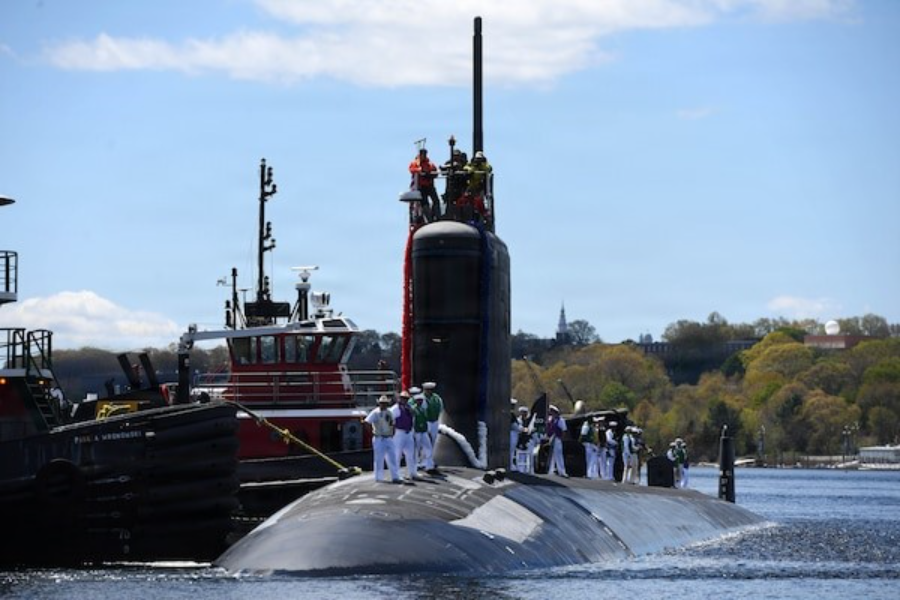
The Virginia-class nuclear-powered fast-attack submarine USS Texas (SSN 775) returns to Naval Submarine Base New London in Groton, Conn., May 1, 2026, following a six-month deployment to the U.S. Southern Command area of responsibility. Texas and crew operate under Submarine Squadron (SUBRON) 12 whose primary mission is to provide fast-attack submarines that are ready, prepared, and committed to meet the unique challenges of undersea combat and deployed operations in unforgiving environments across the globe. (U.S. Navy photo by Chief Mass Communication Specialist Darren M. Moore) 

From Chief Petty Officer Darren Moore, May 4, 2026 

GROTON, Conn. – The Virginia-class fast-attack submarine USS Texas (SSN 775), under the command of Cmdr. Andrew S. McGovern, returned to Naval Submarine Base New London Friday, May 1, completing a six-month deployment to U.S. Southern Command area of responsibility. 

Capt. Philip Castellano, commander of Submarine Squadron (SUBRON) 12, under which Texas operates, welcomed them home and praised their efforts while deployed. 

“Texas and her crew did an outstanding job throughout their deployment,” Castellano said. “They continued the Navy submarine force’s tradition of excellence while performing their mission to perfection. Our submarine force is critical to deterring aggression and maintaining freedom of the seas, and Texas’ efforts exemplified this to its core. Welcome home Texas and crew and thank you for a job well done” 

McGovern praised his crew and their devotion to the mission. 

“In a time of heightened tensions our team remained resilient, focused and ready,” McGovern said. “Our Sailors performed at the highest level for six months and I could not be prouder of everything we achieved while executing our mission.” 

McGovern also credited the crew’s family and friends for taking care of the homefront. 

“The support our loved ones provided while we were away was critical to our sustained success,” McGovern said. “Knowing they were home cheering for us inspired us to continue accomplishing our mission at peak form.” 

Texas steamed more than 21,200 nautical miles and made port calls to Port Canaveral, Florida. 

Thirty-four personnel earned their submarine warfare devices – commonly referred to as “dolphins”. Five Sailors welcomed new babies. 

Seaman Bronson McIntosh, a member of the Royal Australian Navy serving aboard Texas, and his spouse, Jessica McIntosh, were honored with the ceremonial first kiss on the pier. 

Chief Machinist’s Mate (Nuclear) Derrick Altenberger was awarded the ceremonial first hug with his spouse, Kayla Altenberger. 

Texas was commissioned in 2006 as the fourth U.S. Navy ship to be named for the Lone Star State. The first two were battleships, commissioned in 1895 and 1914, respectively. The third was a Virginia-class guided-missile cruiser in service from 1977 through 1993. The submarine is 377 feet long and has a 34-foot beam, as well as a crew of more than 130 Navy personnel. 

The Virginia-class of nuclear-powered fast attack submarines are designed for a broad spectrum of open-ocean and littoral missions. Fast-attack submarines are multi-mission platforms enabling five of the six Navy maritime strategy core capabilities – sea control, power projection, forward presence, maritime security and deterrence. They are designed to excel in anti-submarine warfare, anti-ship warfare, strike warfare, special operations, intelligence, surveillance and reconnaissance, irregular warfare and mine warfare. Fast-attack submarines project power ashore with special operations forces and Tomahawk cruise missiles in the prevention or response to regional crises.


Textron Systems to Provide Tsunami USVs to SOUTHCOM And U.S. Navy 4th Fleet

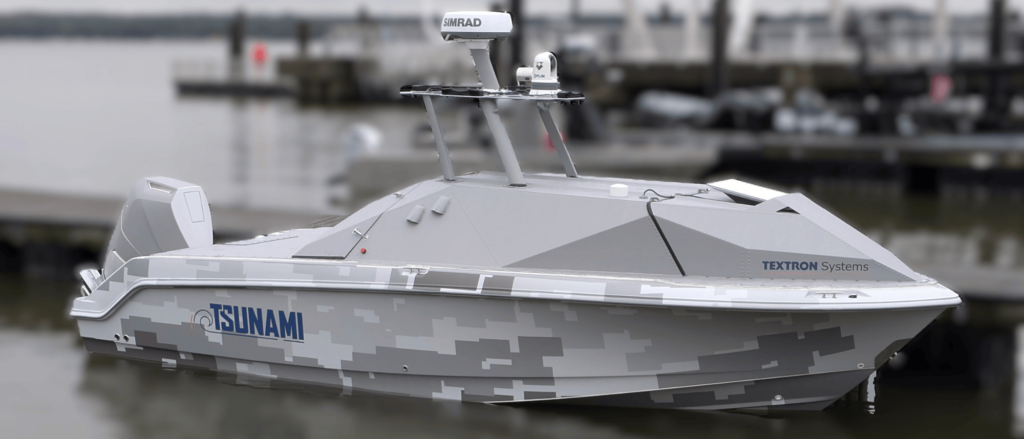
Textron Systems’ Tsunami uncrewed surface vessel. Photo credit: Textron Systems

Textron Systems Corp. announced today a contract award from the Defense Innovation Unit (DIU) to produce and deliver multiple Tsunami uncrewed surface vessels (USVs), which will be used to support the U.S. Navy Fleet Experimentation (FLEX) exercise in Key West, Florida and provide three months of joint operations with U.S. Southern Command and the U.S. Navy 4th Fleet.

Under the contract, Textron Systems will provide long-dwell Tsunami interceptor USVs and Field Service Representatives to the FLEX exercise, demonstrating cooperative intelligence, surveillance reconnaissance and targeting with its Aerosonde 4.7 vertical takeoff and landing UAS from a littoral combat ship. The exercise will also demonstrate manned-unmanned surface warfare with Invariant Corporation’s Surface-to-Air Kinetic Engagement, or STAKE, system.

The Tsunami family of autonomous maritime surface vessels are designed to meet the needs of the U.S. Navy and its allies for a readily available, versatile portfolio of multi-mission uncrewed assets to team effectively across the fleet. Using Brunswick Corp.’s reliable, high-performance vessels, Textron Systems developed the Tsunami family of products with its trusted Common Unmanned Surface Vehicle autonomy control system, leveraging mature commercial technologies to deliver increased capacity and immediate scale.

“The Tsunami family of vehicles leverage Textron Systems’ decades of expertise in autonomous systems innovation, coupled with the speed and scalability of Brunswick Corporation’s established and globally sustainable production line of vessels,” said Ryan Schaffernocker, senior vice president of Air, Land and Sea Systems. “This award establishes a partnership foundation for Tsunami USV government-owned, contractor-operated and contractor-owned, contractor-operated services, allowing for rapid deployment with a lower cost of ownership for the Navy.”

Textron Systems is the originator of the CUSV, the mine countermeasure USV for the U.S. Navy Unmanned Influence Sweep System program of record. Most recently, Textron Systems introduced the Multi Mission USV, the fifth generation of its CUSV craft, designed to expand the Navy’s capacity for advanced mission capabilities. 


Northrop Grumman Delivers 70th E-2D Advanced Hawkeye to US Navy

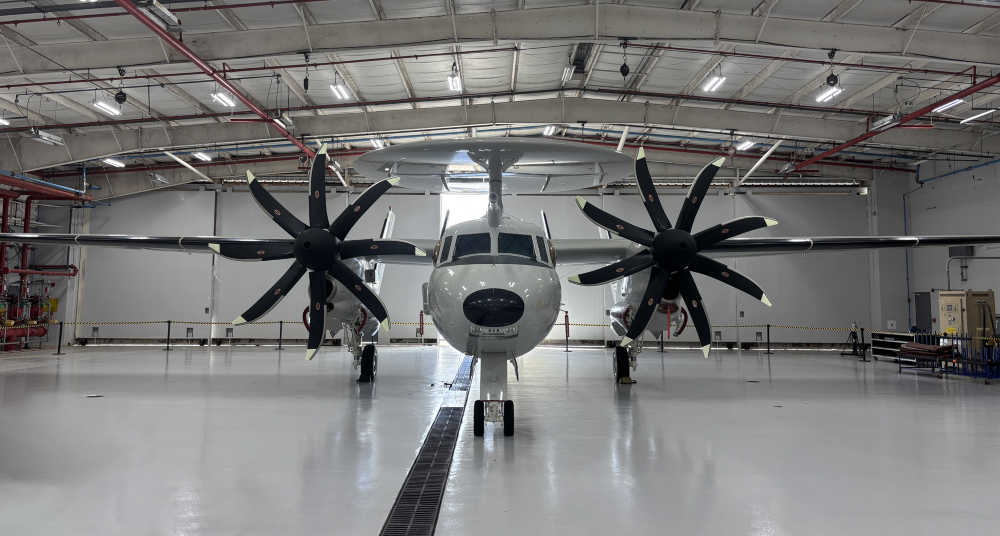
The E-2D Advanced Hawkeye delivers advanced airborne early warning and battle management to ensure air superiority. Photo Credit: Northrop Grumman

Northrop Grumman said it has delivered the 70th E-2D Advanced Hawkeye to the U.S. Navy, demonstrating steady production momentum and continued collaboration with the Navy and industry partners. 

  • Northrop Grumman has produced a total of 82 E-2D Advanced Hawkeyes for the U.S. Navy and Japan Air Self-Defense Force to date. 
  • The company continuously modernizes the E-2D to meet evolving mission requirements driven by lessons learned from today’s operations.
  • The system is purpose-built for airborne early warning and battle management, capabilities that are deliberately enhanced to maintain air superiority now and decades to come.

Janice Zilch, vice president and program manager, E-2D Advanced Hawkeye, Northrop Grumman, said, “E-2D deliveries demonstrate our commitment to quality and performance with speed and scale, supporting those who operate and maintain this platform. We’re seeing the Advanced Hawkeye’s exceptional performance in today’s operational environments, and we’re actively planning its future advancements.”

From remote, austere locations to the most advanced airfields, the E-2D Advanced Hawkeye provides exceptional airborne early warning and battle management capabilities that enhance joint and coalition operations and ensure air superiority. E-2D is a versatile airborne command node that connects joint and allied forces into a unified network. Equipped with an advanced 360-degree radar and powerful mission, data and communications systems, it delivers real-time data and communications to dominate across domains and missions.


Navy Awards Raytheon $335M for SM-6 Missiles

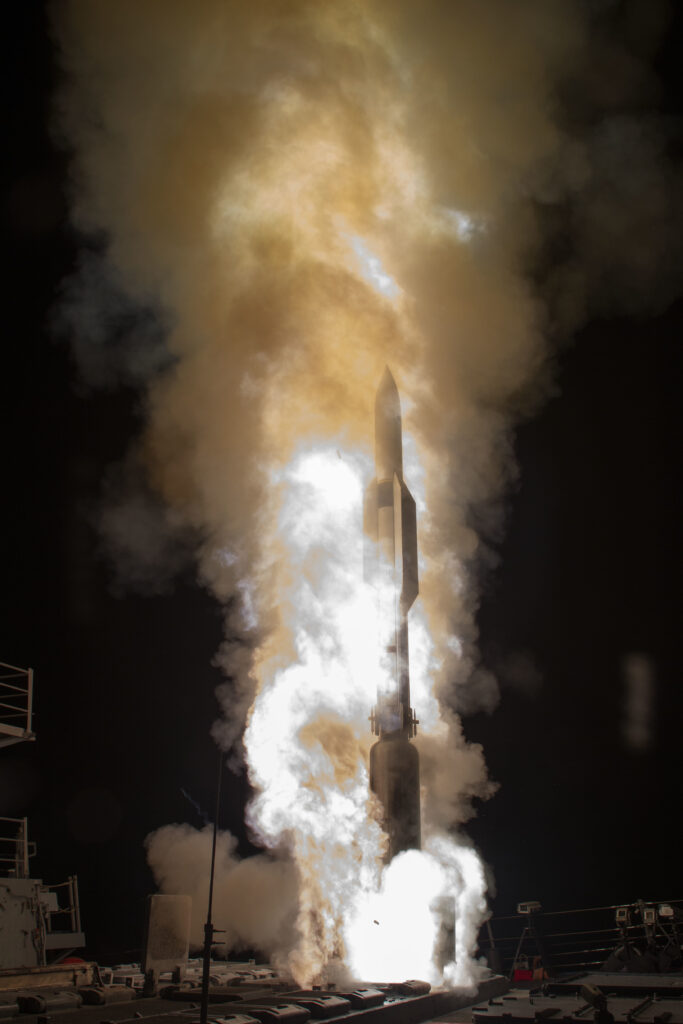
A Standard Missile-6 (SM-6) guided missile is launched from the USS John Paul Jones (DDG 53) during Flight Test Standard Missile-27 Event 2 in 2017. During the test, a medium-range ballistic missile target was successfully intercepted by SM-6 missiles fired from the USS John Paul Jones. Photo credit: Missile Defense Agency | Latonja Martin

ARLINGTON, Va. — The U.S. Navy has awarded Raytheon a $335 million contract modification to “exercise options and provide funding for the manufacturing, assembly, test, and delivery of Standard Missile-6 Tactical All-Up Rounds,” according to an April 30, 2026, Department of War contract announcement.

The SM-6, deployed on U.S. Navy guided-missile destroyers and cruisers, has featured heavily in combat in actions in the Middle East since 2024 against Houthi and Iranian missiles. The Navy has received funding to replenish and increase stocks of missiles to maintain readiness. 

This contract modification, awarded April 24, is funded weapons procurement accounts for fiscal years 2025 and 2026.

“Standard Missile-6 is a critical, combat-proven system that provides a vital layer of protection for ships and Sailors — a capability that has never been more critical than it is today,” said Phil Jasper, president of Raytheon. “Contracts of this nature are an essential step in sustaining production, and we remain focused on enhancing our operations to meet unprecedented demand. To support this growth, Raytheon has invested nearly $900 million over the last three years to expand capacity at key sites, including Tucson, Arizona, and Huntsville, Alabama. These investments paired with the clear demand signal will help ensure we deliver these critical munitions at the speed of the mission.”


Exercise Obangame Express Closes 15th Iteration in Cameroon

By U.S. 6th Fleet Public Affairs, April 30, 2026

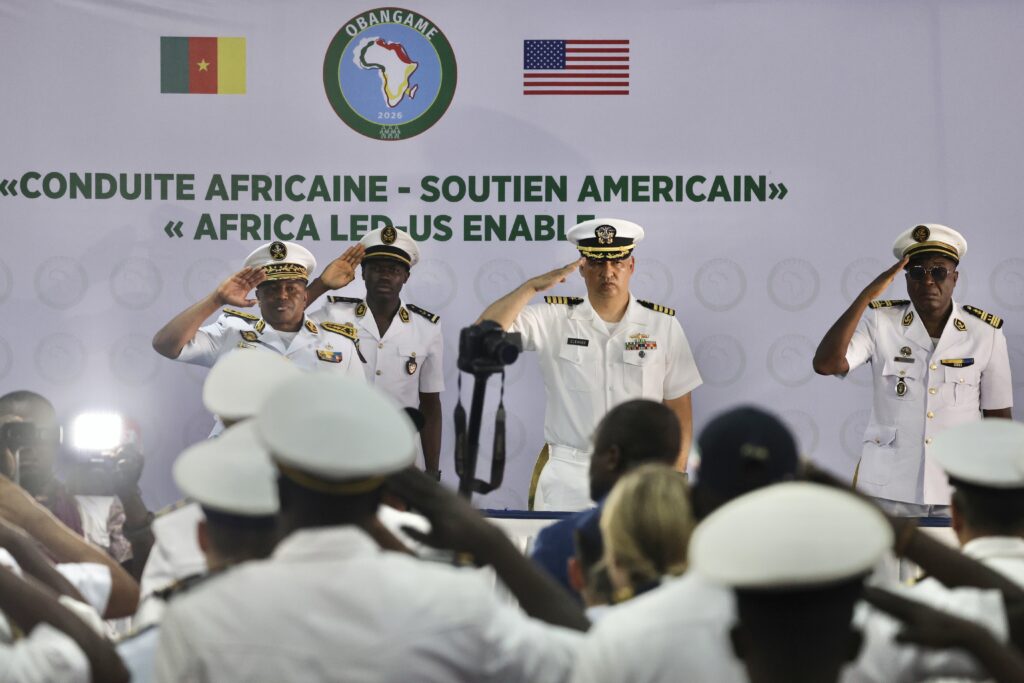
Exercise Obangame Express 2026 officially concluded during a ceremony in Douala, Cameroon, on April 30. Photo credit: U.S. Navy

Exercise Obangame Express 2026 officially concluded during a ceremony in Douala, Cameroon, host nation for the 15th iteration, on April 30. The ceremony marked the conclusion of three weeks of training for participants from 30 nations across Africa, Europe, South America and the U.S. reinforcing regional collaboration and maritime security in the Gulf of Guinea.

As this exercise concludes, our work is not over. Obangame Express is not simply an annual event; it is a catalyst for continuous cooperation,” said Capt. Andrew Cleeves, exercise director for Obangame Express 2026. “I challenge you to maintain the networks you have built, to keep the lines of communication open, and to make ‘togetherness’ a daily practice.”

Obangame Express, the largest multinational maritime exercise in West and Central Africa, is an annual event facilitated by U.S. 6th Fleet and sponsored by U.S. Africa Command. Obangame means “togetherness” in the Fang language to symbolize the partnerships built and strengthened through the collaborative effort.

This year, participants worked together from Maritime Operations Centers located across the Gulf of Guinea and from ships at sea, focusing on countering illicit maritime activity and improving communication and information sharing between nations. With over 30 nations working together across the 5 Yaounde Code of Conduct zones in maritime operations centers and at sea, partners operated in real-time to conduct complex scenarios including piracy interdiction, illegal, unreported, unregulated fishing enforcement and search-and-rescue operations.

“With piracy, illegal fishing, various forms of trafficking and attacks faced on the maritime environment, our response must be commensurate with the challenges: concerted, structured, and sustainable,” said Vice Adm. Jean Mendoua, chief of naval staff of the Cameroon navy. “Cameroon, faithful to its international commitments, will continue to play its full role in this collective dynamic.”

In addition to at-sea training, subject matter experts from participating nations led classroom instruction on topics such as maritime law and interdiction, medical readiness, and command-and-control techniques. These exchanges are vital for building long-term cooperation and understanding among the partner nations.

“Every time you demonstrate the capability to counter piracy, you are safeguarding the flow of global commerce that fuels economic growth for the entire continent,” said Cleeves. “Maritime security is the bedrock of economic prosperity.”

Participating nations in OE26 include: Angola, Benin, Belgium, Brazil, Cabo Verde, Cameroon, Cote d’Ivoire, Democratic Republic of Congo, Denmark, Equatorial Guinea, France, Gabon, Gambia, Ghana, Guinea, Guinea-Bissau, Italy, Liberia, Mauritania, Morocco, Netherlands, Nigeria, Republic of Congo, Sao Tome & Principe, Senegal, Sierra Leone, Spain, Togo, Tunisia and the United States. 

OE26 is one of three regional maritime “Express” series exercises led by U.S. 6th Fleet as part of a comprehensive strategy to provide collaborative opportunities to African forces and international partners to address maritime security concerns.

Commander, U.S. 6th Fleet, headquartered in Naples, Italy, conducts the full spectrum of joint and naval operations, often in concert with allies, international partners, and other U.S. government departments and agencies to advance U.S. national interests, security and stability in Europe and Africa.


Southern Command, 4th Fleet Complete FLEX in Key West

By Lt. j.g. Paul Archer

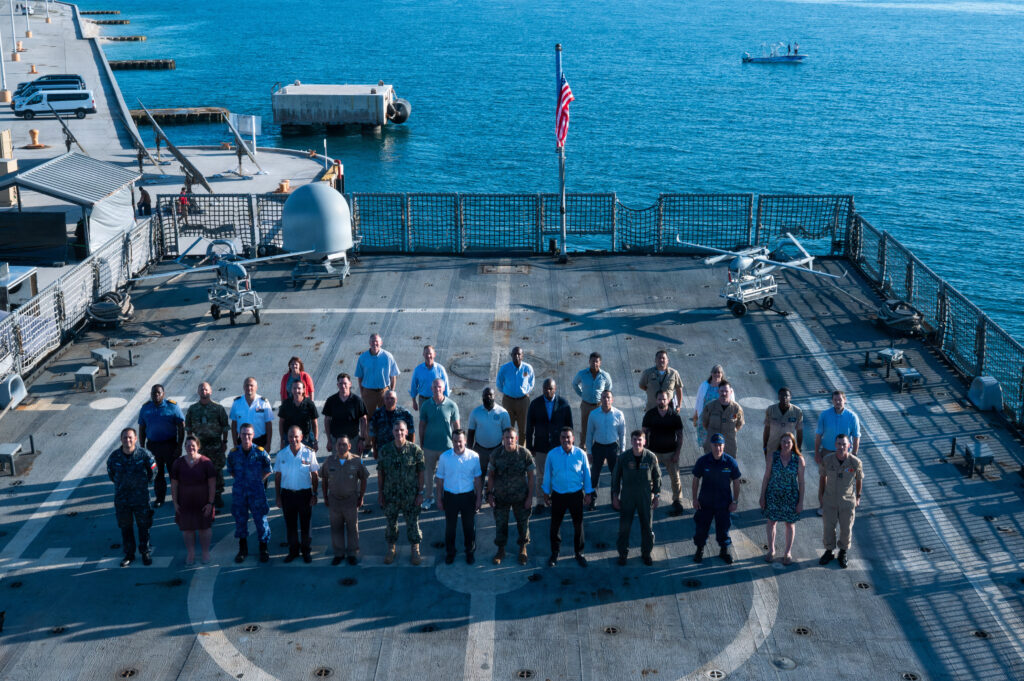
U.S. Marine Gen. Francis L. Donovan, commander of U.S. Southern Command and Rear Adm. Carlos Sardiello, commander of U.S. Naval Forces Southern Command/U.S. 4th Fleet, along with senior executive services representatives and partner nation officials stand for a group photo during FLEX 2026 on April 29, 2026. Photo credit: U.S. Air Force | Staff Sgt. Christopher Bermudez

U.S. Naval Forces Southern Command/U.S. 4th Fleet successfully concluded their annual Fleet Experimentation (FLEX) event from April 24-30. The exercise showcased the powerful integration of unmanned systems and artificial intelligence in the fight against transnational organized crime.

FLEX is a cornerstone of USNAVSOUTH’s strategy to field advanced robotic and autonomous systems, addressing the challenge of patrolling vast maritime regions with a limited number of traditional naval assets. The campaign focuses on operationalizing AI alongside innovative air, surface, and subsurface platforms to accelerate the delivery of next-generation capabilities to the fleet.

“The time to work with international partners and industry leaders to secure the Western Hemisphere is now,” said Rear Adm. Carlos Sardiello, commander of USNAVSOUTH/4th Fleet. “Through FLEX, we leverage and operationalize new technological advancements to increase maritime domain awareness, counter illicit traffic, and defend our homeland.”

The at-sea portion of the exercise demonstrated a sophisticated kill chain where commercially developed unmanned aerial systems (UAS) and unmanned surface vehicles (USV) worked in concert with traditional manned platforms — MH-60 helicopters and the Freedom-variant littoral combat ship USS Wichita (LCS 13). These synchronized platforms successfully found, fixed, tracked and targeted a captured drug boat. This scenario culminated in a successful law enforcement interdiction and kinetic engagements destroying several captured drug boats, proving the concept’s real-world effectiveness.

Highlighting the event’s strategic importance was a group of distinguished visitors, including Undersecretary of War for Research and Engineering Emil Michael; Gen. Francis L. Donovan, commander of U.S. Southern Command; and Vice Adm. John Dougherty IV, commander of Naval Air Systems Command. Leaders from the U.S. Navy, U.S. Coast Guard, Joint Interagency Task Force South, partner-nation militaries and various industry partners also attended.

“FLEX provides a unique opportunity for stakeholders to operationalize new technologies that directly support our warfighters in countering illicit activities and threats,” said Dr. Christopher Heagney, the Naval Air Systems Command Fleet / Force advisor to USNAVSOUTH/4th Fleet. “From initial concept in December, to fielding operational systems by April, we showed how quickly the acquisition community and Fleets are delivering increased capability and lethality at a lower cost and risk to the Warfighter.  This is the result of strengthening partnerships between Congress, defense laboratories and programs, industry, and academia.”

This year’s FLEX in Key West serves as a prelude to further experimental operations later this year in Comalapa, El Salvador, deepening international partnerships and advancing the integration of unmanned platforms into a hybrid fleet.

FLEX 2026 featured a comprehensive collaboration across the Department of War. Participants included operational commands like U.S. Naval Forces Southern Command/U.S. 4th Fleet and Joint Interagency Task Force South, alongside premier research and development entities from the Navy, Army and Air Force, as well as the Chief Digital and Artificial Intelligence Office.

The success of FLEX and the development of the hybrid fleet are critically dependent on robust collaboration between the Congress, Department of War, and trailblazers in industry and academia. These partnerships are the engine of innovation, accelerating the development and fielding of cutting-edge unmanned systems and AI. By bridging the gap between commercial ingenuity and military requirements, these collaborations ensure the fleet can rapidly adapt and integrate the most advanced technologies, maintaining a decisive advantage at sea.

U.S. Naval Forces Southern Command/U.S. 4th Fleet supports U.S. Southern Command’s joint and combined military operations by employing maritime forces in cooperative maritime security operations to maintain access, enhance interoperability, and build enduring partnerships to enhance regional security and promote peace, stability, and prosperity in the Caribbean, Central and South American region.


Bell to Provide Bell 505 Airframe for U.S. Marine Corps’ MARV-EL Program

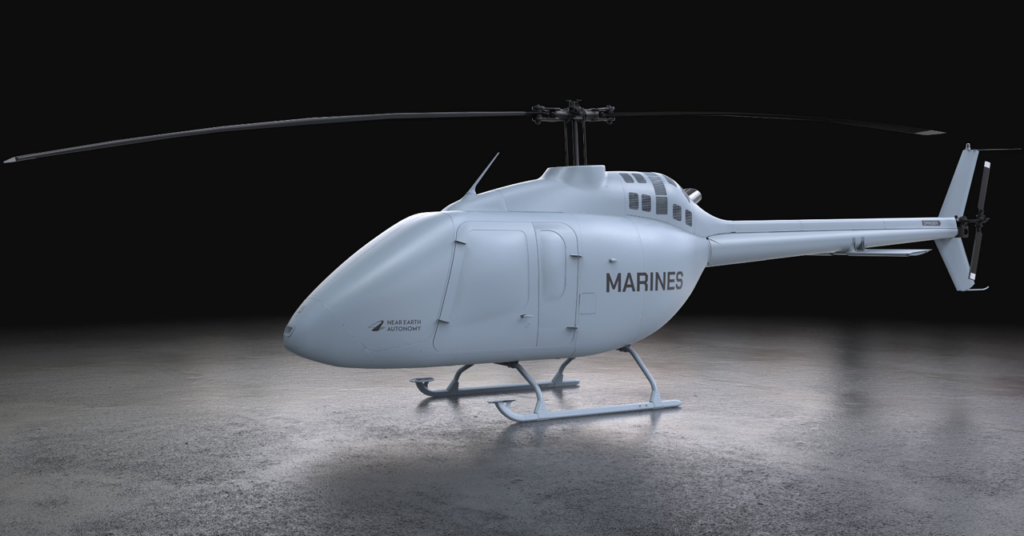
Bell Textron will provide its Bell 505 airframe for the U.S. Marine Corps’ MARV-EL uncrewed logistics aircraft program. Photo credit: Bell Textron

Bell Textron Inc., a Textron Inc. company, announced it was selected by Near Earth Autonomy (Near Earth) as a partner on the prototyping of an autonomous Bell 505 for the U.S. Marine Corps’ Aerial Resupply Vehicle – Expeditionary Logistics (MARV-EL) Increment 2 program.

The goal of the program is to prototype an uncrewed logistics aircraft ready for tactical-edge resupply in contested environments and serve as a middle-weight uncrewed logistics asset. 

“This platform will be a step forward in transforming the U.S. Marine Corps’ autonomous operations and how our warfighters navigate on the battlefield,” said Jason Hurst, Bell SVP, Engineering. “We’re leveraging our decades of experience with the U.S. Armed Forces and innovative product development applying it to the versatile Bell 505 for this program.”

The awarded contract will deliver an autonomous aerial logistics capability that exceeds MARV-EL performance threshold requirements and accommodates a wide range of payloads and standard containers. Bell will provide engineering support to the Near Earth team on modifications to the Bell 505 for autonomy integration and enhanced cargo handling. 

“Bell looks forward to continuing to build upon our relationship and prior autonomy development with Near Earth in support of the MARV-EL program,” added Hurst.  

In 2024, Bell revealed its Aircraft Laboratory for Future Autonomy (ALFA) platform – a step forward in its autonomous flight efforts. Bell and Near Earth collaborated to integrate an advanced perception system for flight demonstrations on the ALFA aircraft, working towards fully autonomous flight capability. 


USS Dwight D. Eisenhower Completes Planned Incremental Availability at Norfolk

From U.S. Fleet Forces Command

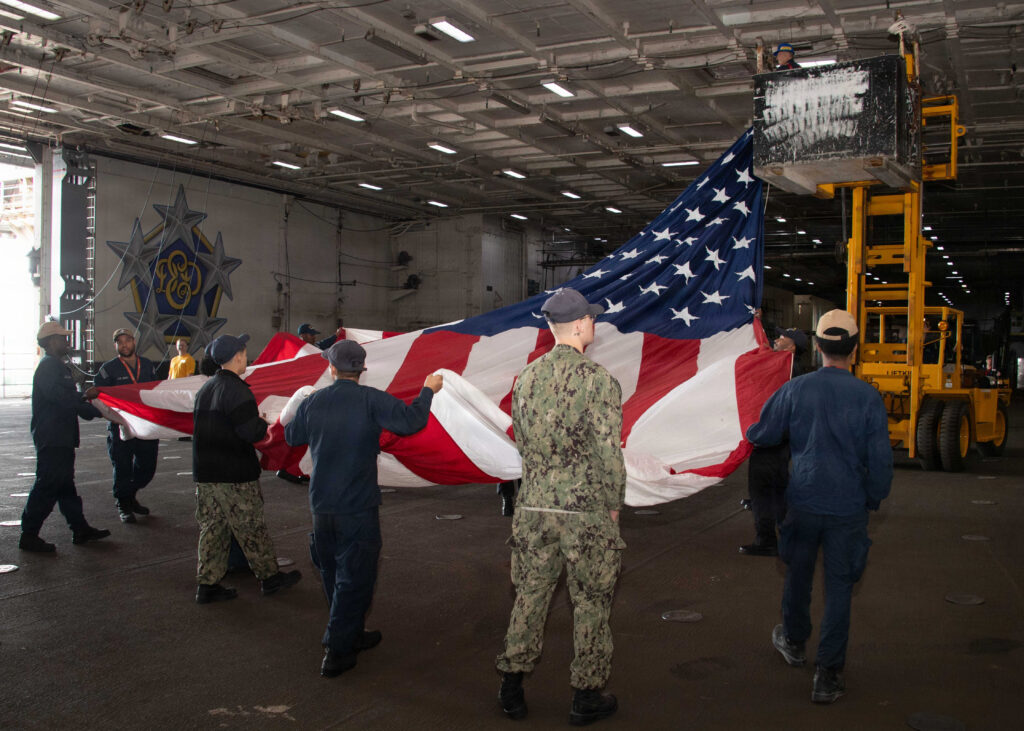
U.S. Navy Sailors hang the national ensign aboard Nimitz-class aircraft carrier USS Dwight D. Eisenhower (CVN 69), Apr. 6, 2026. Eisenhower was moored at Norfolk Naval Shipyard for a Planned Incremental Availability maintenance period, which it has now completed. Photo credit: U.S. Navy | Mass Communication Specialist Seaman Melina Rossi

USS Dwight D. Eisenhower (CVN 69) has completed sea trials, marking the successful early completion of its Planned Incremental Availability at Norfolk Naval Shipyard.

A PIA is a scheduled period for an aircraft carrier to undergo extensive maintenance, repairs and modernization to meet future operational demands, spanning a wide array of overhauls and inspections. Regularly scheduled maintenance maximizes the lifespan of Navy warships and ensures mission readiness.

“Mighty IKE” becomes NNSY’s second timely carrier delivery back to the fleet following USS George H.W. Bush (CVN 77) completing its PIA in November 2024.

“The primary drivers behind IKE’s successful availability are the NNSY, Ship’s Force, and contractor teams who ensure the ship is materially ready to fight,” said Project Superintendent, Cmdr. Jason Downs. “The entirety of the project team mustered more than 4,000 people daily, all with one common vision–deliver IKE, fully mission capable, back to the fleet before our commitment date. The highly skilled tradespeople and sharp engineering acumen are the heroes in the IKE FY25 PIA story.”

The project team proved resourceful in accomplishing work pier side while NNSY’s carrier dry dock continued its multiyear renovation as part of the Shipyard Infrastructure Optimization Program. NNSY firsts during this availability included installing a main seawater valve for a waterborne carrier, as well as performing nozzle block inspections of main engine high pressure turbines to scope repair to similar components in the fleet. For the first time at any of the nation’s four public shipyards, underwater carrier shafting inspections were performed to help gauge future dry dock work on IKE. “Lastly, we executed first-time catapult trough non-destructive test inspections and structural repairs, efforts that were pivotal to extending the life of this significant aircraft launch system,” added Downs.

During the PIA, the project team worked to prioritize new work and effectively manage workload with available workforce capacity, efforts that contributed to a timely delivery. By aligning resources with readiness priorities, more ships and submarines are available as needed for fleet tasking. “This team thoughtfully budgeted workload and workforce to execute more than 25,000 resource days of new work,” said Downs. “This team also meticulously managed to execute the required new work under budget, saving 2,000 resource days.”

“IKE represents the SECOND consecutive early finish of an aircraft carrier availability at Norfolk Naval Shipyard. Our NNSY project teams are now setting the corporate standard for aircraft carrier maintenance,” said Shipyard Commander Rear Admiral Kavon Hakimzadeh. “Thank you to everyone who drove to focus and finish this significant availability, meeting our commitment and enabling IKE to continue supporting our national defense.”

“Based on the current global security landscape, IKE’s early delivery is a critical national security imperative,” said Downs. “An aircraft carrier is one of the most powerful instruments of national will, and having one delayed in the shipyard creates a significant strategic gap at a time when US military presence is in high demand across multiple theaters.”

A Nimitz-class nuclear-powered aircraft carrier, Dwight D. Eisenhower serves as flagship for Carrier Strike Group 2. As one of the largest, most historic and multifaceted shipyards in the nation, Norfolk Naval Shipyard’s mission is to repair, modernize and inactivate Navy warships and training platforms to maximize readiness and availability for fleet tasking.


Blue Ridge Returns to Yokosuka After Spring Patrol

By Lt. Jaliya Wilson, U.S. 7th Fleet Public Affairs, April 27, 2026

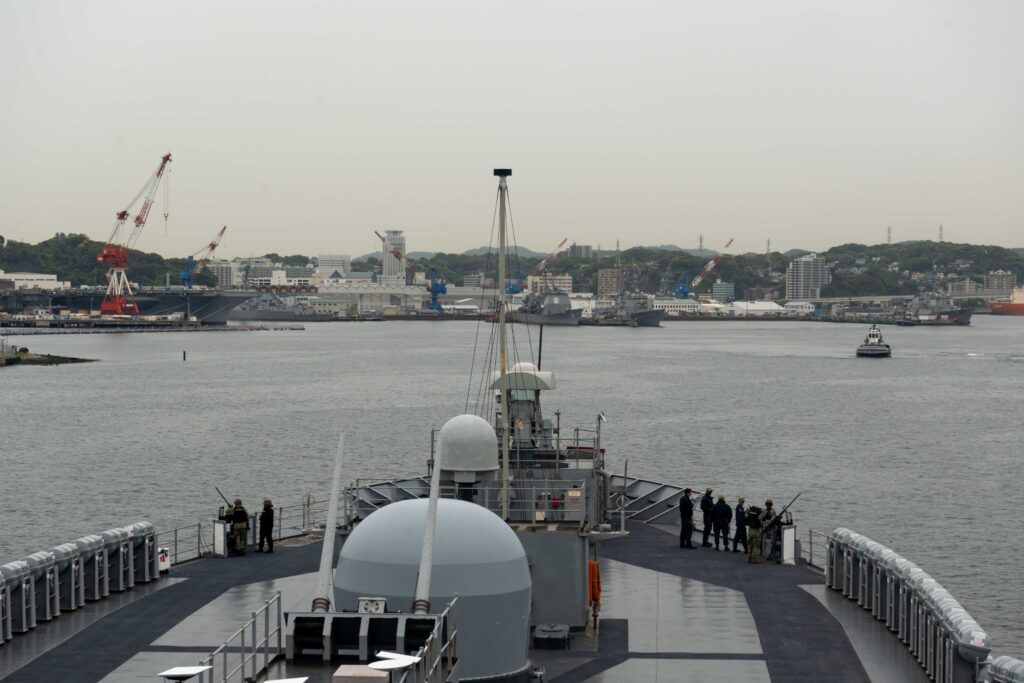
U.S. 7th Fleet flagship USS Blue Ridge (LCC 19) returns to Commander, Fleet Activities Yokosuka, Japan following a patrol in the Indo-Pacific region, April 23, 2026. Photo credit: U.S. Navy | Mass Communication Specialist 3rd Class Damian Cook

U.S. 7th Fleet flagship USS Blue Ridge (LCC 19) returned to Commander, Fleet Activities Yokosuka, Japan, April 23, marking the completion of the spring patrol in the Indo-Pacific region.

Blue Ridge departed for patrol March 8 and traveled 6,613 nautical miles, making port visits to Okinawa, Japan; Changi, Singapore; Manila, Philippines; and Laem Chabang, Thailand. 7th Fleet leadership also disembarked to conduct staff talks with military counterparts in Jakarta, Indonesia, and the commander hosted Philippine Navy, Royal Australian Navy and Japan Maritime Self-Defense Force leadership aboard Blue Ridge while underway.

“Each engagement with our partners and allies advances our fleet interoperability, readiness and lethality,” said Vice Adm. Pat Hannifin, commander, U.S. 7th Fleet. “Blue Ridge provides a unique capability to command and control forces from the sea, enhancing our military-to-military partnerships across the theater. We appreciate the hospitality of each of these port cities and their respective nations’ commitments to ensuring maritime security throughout the Indo-Pacific.”

During the port visits, 7th Fleet and Blue Ridge leadership met with foreign dignitaries, as well as local leaders, to discuss ways of improving operational readiness, advancing future military capabilities and enhancing relationships in the region.

7th Fleet, embarked aboard Blue Ridge, commands the world’s largest forward-deployed fleet. Its primary mission is providing operational command and control for forces in the Western Pacific and Indian Oceans while promoting regional stability and maritime security through engagements with allies and partners.

“This patrol was a huge success,” said Capt. Louis F. Catalina IV, commanding officer of Blue Ridge. “The hard work and commitment to excellence by our Sailors allowed us to meet every mission throughout a dynamic schedule. Their professionalism enabled the completion of 10 sea and anchor evolutions, four port visits, two big top receptions, and safe navigation alongside our Japanese, Australian, and Philippine allies during two group sail events. I am extremely proud to lead and serve alongside the Sailors who make up this talented team.”

U.S. 7th Fleet, the Navy’s largest forward-deployed numbered fleet, routinely interacts and operates with allies and partners in preserving a free and open Indo-Pacific.