Coast Guard seizes 40,000 pounds of cocaine through Operation Pacific Viper, averages over 1,600 pounds interdicted per day 
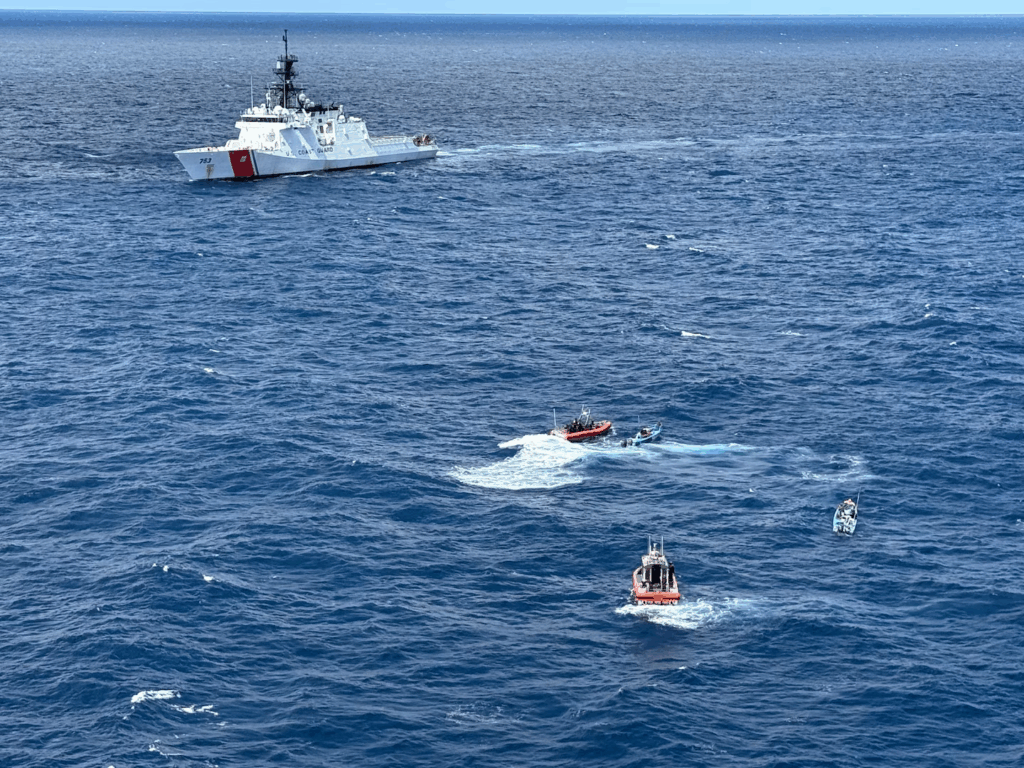
U.S. Coast Guard Cutter Hamilton (WMSL 753) boarding team interdicting two go-fast vessels suspected of drug smuggling approximately 115 miles southeast of the Galapagos Islands, Ecuador, June 26, 2025. The vessels were initially detected by a maritime patrol aircraft, and Hamilton’s embarked Helicopter Interdiction Tactical Squadron (HITRON) aircrew provided airborne tactical support, resulting in the seizure of more than 4,475 pounds of cocaine. (U.S. Coast Guard photo)

From U.S Coast Guard Southeast District, Sept. 4, 2025 

WASHINGTON — The U.S. Coast Guard announced Thursday it has seized more than 40,000 pounds of cocaine in the Eastern Pacific Ocean since launching Operation Pacific Viper in early August, averaging over 1,600 pounds interdicted daily.   

These drug seizures, and the apprehension of 36 suspected drug smugglers, were the result of 14 interdictions since Aug. 8.  

Through Operation Pacific Viper, the Coast Guard is accelerating counter-drug operations in the Eastern Pacific Ocean, where significant transport of illicit narcotics continues from South America. In coordination with international and interagency partners, the Coast Guard is surging additional assets—cutters, aircraft and tactical teams—to interdict, seize and disrupt transshipments of cocaine and other bulk illicit drugs. These operations continue the Coast Guard’s efforts to protect the Homeland, project maritime law enforcement presence and disrupt transnational criminal organizations and cartels seeking to produce and traffic illicit drugs into the United States.  

“The U.S. Coast Guard brings unique authorities and unmatched capabilities as the world’s leader in maritime counter-drug operations,” said Rear Adm. Douglas Schofield, acting deputy commandant for operations. “Our maritime fighting force is accelerating counter-drug operations in the Eastern Pacific Ocean. We are leveraging our full range of capabilities to disrupt transnational criminal organizations and cartels and prevent the scourge of illicit drugs from reaching our communities. The men and women of the Coast Guard will not relent in our efforts to control, secure and defend U.S. borders and maritime approaches—where defense of America begins.”  

Reflecting the early success of Operation Pacific Viper, Coast Guard Cutter Hamilton recently offloaded 76,140 pounds of illicit drugs, including 61,740 of cocaine and 14,400 of marijuana, in Port Everglades, Florida. This historic milestone was the largest offload in Coast Guard history, resulting from 19 interdictions in international waters of the Eastern Pacific Ocean and Caribbean Sea.  

Detecting and interdicting drug traffickers on the high seas involves significant interagency and international coordination. U.S. Southern Command’s Joint Interagency Task Force-South, based in Key West, Florida, detects and monitors both aerial and maritime transit of illegal drugs. Once interdiction becomes imminent, the law enforcement phase of the operation begins, and control of the operation shifts to the U.S. Coast Guard throughout the interdiction and apprehension. Interdictions in the Eastern Pacific Ocean are performed by members of the U.S. Coast Guard under the authority and control of the Coast Guard’s Southwest District, headquartered in Alameda, California.     

The Coast Guard is the United States’ lead federal agency for maritime drug interdiction. We are part of the Department of Homeland Security team protecting our nation and are at all times a military service and part of the joint force defending it.  

For more information about the Coast Guard, visit www.uscg.mil.  

Watch Coast Guard drug interdiction in action here: How the Coast Guard Seizes 45,000 lbs of Cocaine at Sea – YouTube  


Adm. Caudle Conducts First All Hands Call Aboard USS Harry S. Truman as CNO

Release From CNO Public Affairs

NORFOLK, Va.—Chief of Naval Operations (CNO) Adm. Daryl Caudle held his first all-hands call as the Navy’s 34th CNO aboard USS Harry S. Truman (CVN 75) at Naval Station Norfolk, Aug. 28, addressing Truman Sailors and commands from across the waterfront. 

Sailors filled the hangar bay as Caudle outlined his priorities for the Navy’s future—The Foundry, The Fleet, and The Way We Fight. 

Truman Commanding Officer Capt. Daniel Prochazka said he was proud his ship was chosen to host the CNO’s first visit. 

“Having Adm. Caudle choose Truman for his first all-hands call as CNO was a powerful moment for this crew and for the fleet,” said Prochazka. “Our Sailors came home from deployment combat-tested and proud, and that spirit was on full display as they welcomed him aboard. It was a meaningful start to his tenure and a reminder of Norfolk’s central role in the strength of our Navy.” 

While aboard, Caudle discussed the importance of taking care of Sailors, advancing readiness, and delivering a combat-credible Fleet.   

“Let there be no doubt that the single greatest and enduring competitive advantage against our adversaries is all of you—the Sailors,” Caudle said to the Sailors in attendance. “You are the engine that brings our ships to life, ensures our equipment performs with maximum endurance and efficacy, and delivers the lethal ordnance to win in combat.”  

Caudle emphasized the key elements of his strategic vision, emphasizing the Navy’s focus on operational readiness, force generation, and warfighting excellence.   

“Our Navy must be resilient, agile, globally present, and combat credible—ready to fight and win decisively – today, tomorrow, and well into the future,” said Caudle. “To achieve this vision, everything we do will be viewed through an operational lens focused on three priorities: the Foundry, the Fleet, and the way we Fight.” 
During the engagement, Caudle answered questions from the crew, listened to their feedback, and personally recognized the achievements of several Sailors.  

“Being recognized by the CNO at his first fleet event is something I’m proud of, but it really reflects the hard work of my division,” said Petty Officer 2nd Class Cory Juncker, who received a challenge coin from Caudle. “We put a lot into keeping our gear ready, and this shows our effort makes a difference.” 

“Having the CNO come here first shows he really wants to connect with Sailors,” said Seaman Eliana Gilson, a Sailor of the quarter aboard Truman. “For me, being early in my career, it makes the Navy feel a little smaller and more personal.” 

Before departing Truman, Caudle expressed his confidence in the Navy’s ability to meet future challenges and achieve success through unity and relentless dedication.  

“With battle-ready Sailors like you manning the helm, our Fleet delivers overwhelming effects like no other in the world: mobility, persistent presence, and global reach—causing our adversaries to think twice, while reassuring our allies that peace is best kept through strength,” said Caudle.   

Caudle, a native of Winston-Salem, North Carolina, has served nearly four decades in uniform. A career submariner and magna cum laude graduate of North Carolina State University, he has commanded at every level from submarine to fleet. He most recently led U.S. Fleet Forces Command before assuming duties as CNO earlier this month. 

USS Harry S. Truman, the flagship of the Harry S. Truman Strike Group, is a Nimitz-class aircraft carrier homeported at Naval Station Norfolk, Virginia. Carrier Strike Groups remain the cornerstone of the Navy’s forward presence through sea control and power projection. 


USS Springfield Returns to Guam Following Indo-Pacific Deployment

Release From Lt. James Caliva, Commander, Submarine Squadron

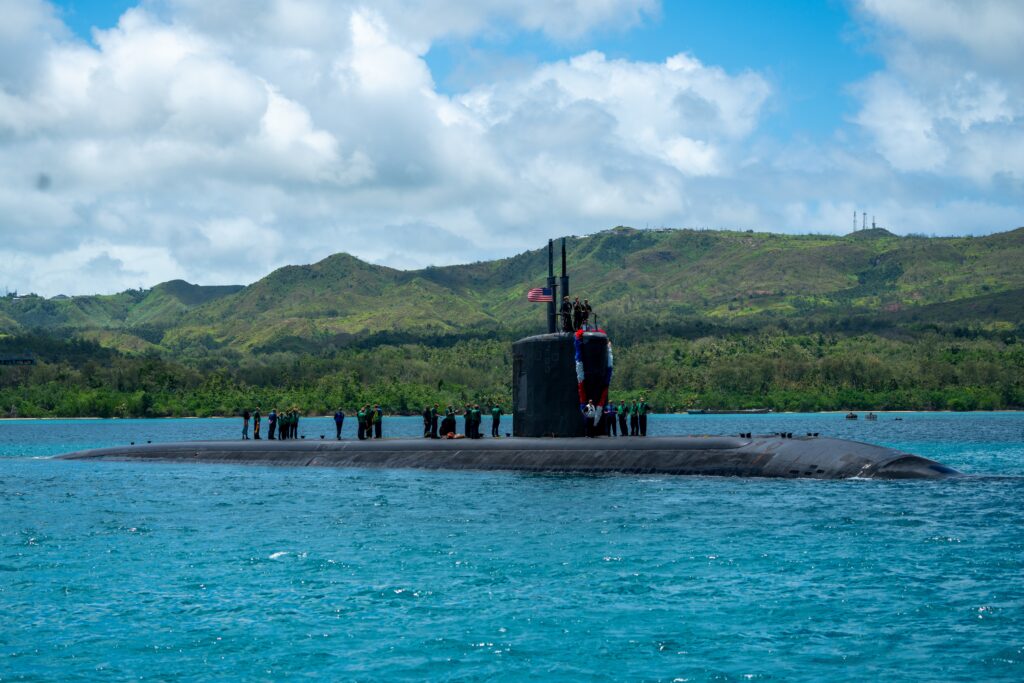
NAVAL BASE GUAM (August 31, 2025) — The Los Angeles-class fast-attack submarine USS Springfield (SSN 761) returned to its homeport, August 31, after completing a routine deployment in the Indo-Pacific, reaffirming its vital role in maintaining security and stability in the region. 

“USS Springfield showcases the strength and professionalism of our submarine force, playing a critical role in sustaining a free and open Indo-Pacific,” said Capt. Neil Steinhagen, commander, Submarine Squadron 15. “The crew’s readiness, warfighting excellence, and dedication to the mission reflect our enduring commitment to regional security and embody their motto, United for Freedom.” 
 
During the deployment, Springfield conducted missions vital to national security, enhanced operational capabilities, reinforced deterrence across the Indo-Pacific, and made port visits to Sasebo and Okinawa, Japan. 
 
“Whatever the mission demanded, this crew delivered,” said Cmdr. Greg Storer, commanding officer of USS Springfield. “Their resilience, precision, and teamwork ensured we remained operationally ready at every turn. I couldn’t be prouder—every Sailor’s contribution was essential to our success, and together they proved why our submarine force remains second to none.” 
 
During the deployment, 31 Springfield Sailors advanced in rank and 19 earned their submarine warfare insignia—commonly known as “dolphins” or “fish.” The insignia signifies qualification to operate at the highest standards of the undersea force and reflects mastery of their watch stations and responsibilities. 
 
“This deployment tested our crew in every way, and they answered the call,” said Master Chief Information Systems Technician (Communications) Chris Ries, Springfield’s chief of the boat. “They worked as one team, stayed steady under pressure, and showed exactly what makes our Sailors the strength of this submarine.” 
 
Springfield’s return was marked by the Navy’s time-honored “first kiss” and “first hug” traditions, with Culinary Specialist (Submarine) 2nd Class Dimitri Rathke receiving the first kiss and Sonar Technician (Submarine) 1st Class Zachary Bergeron receiving the first hug. 
 
Commissioned Jan. 9, 1993, USS Springfield is the fourth U.S. Navy ship to bear the name, honoring the cities of Springfield, Illinois, and Springfield, Massachusetts. Assigned to Commander, Submarine Squadron 15 at Polaris Point, Naval Base Guam, Springfield is one of five forward-deployed fast-attack submarines. Renowned for their speed, endurance, stealth, and mobility, fast-attack submarines are the backbone of the Navy’s submarine force. Regarded as apex predators of the sea, Guam’s fast-attack submarines serve at the tip of the spear, reaffirming the submarine force’s forward-deployed presence in support of a free and open Indo-Pacific. 


Sparton DeLeon Springs, LLC Receives Competitive Delivery Order for the U.S. Navy for the AN/SSQ-53H Sonobuoy 

DELEON SPRINGS, FLORIDA – Aug. 28, 2025 – Sparton DeLeon Springs, LLC  has been awarded a Firm Fixed Price Competitive Delivery Order under Fair Opportunities procedures for production of the AN/SSQ-53H for the United States Navy in support of annual training, peacetime operations and testing expenditures, as well as to maintain sufficient inventory to support the execution of major combat operations based on naval munitions requirements process.  

Sparton President and CEO Donnelly Bohan said:  

“The Sparton workforce prides itself on quickly responding to our customers’ needs. Our portfolio of sophisticated sonobuoys, sensors, and undersea payload delivery systems equip our customers with the very best maritime solutions to be used for Anti-Submarine Warfare and Undersea Warfare anywhere on the globe. This sizeable sonobuoy contract from the Air Anti-Submarine Warfare Systems Program Office signifies the U.S. Navy’s confidence in our solutions and we’re proud to deliver them.” 


Coast Guard Cutter Vigilant Returns Home After Seizing 3,100 Pounds in Drugs

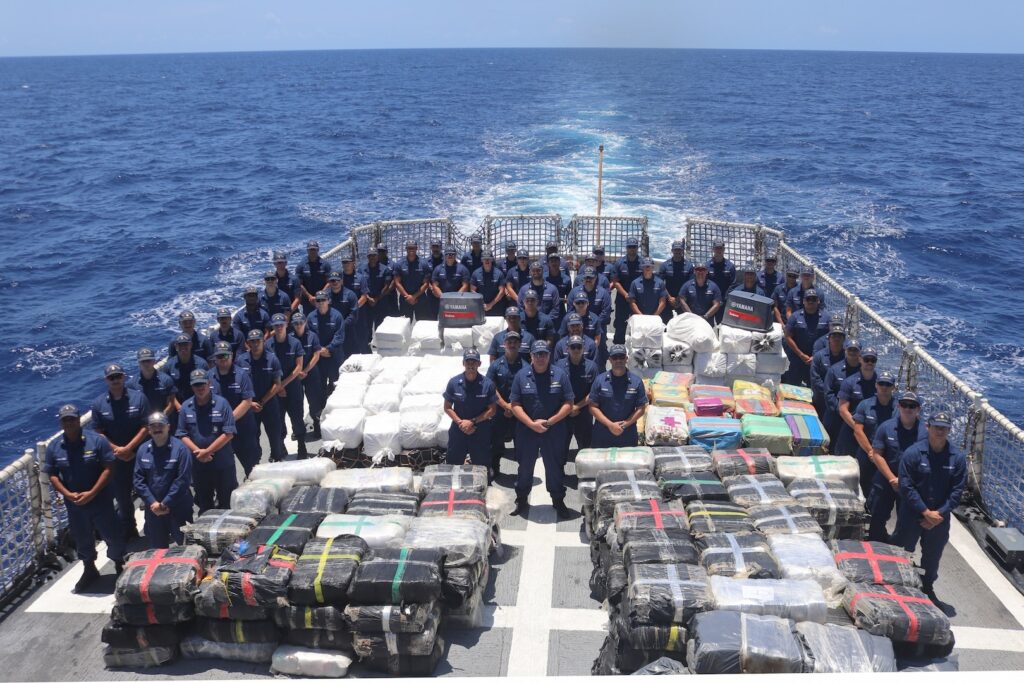
The crew of Coast Guard Cutter Vigilant (WMEC 617) poses for a photo with contraband seized or transferred aboard the cutter during a deployment in the Caribbean Sea, Aug. 16, 2025. Vigilant’s crew conducted a two-month, maritime border security patrol in the Windward Passage and Caribbean Sea to protect America’s maritime borders and prevent illicit drug smuggling in the region. (U.S. Coast Guard photo) 

Release From U.S. Coast Guard Atlantic Area

CAPE CANAVERAL, Fla. — The crew of Coast Guard Cutter Vigilant (WMEC 617) returned home to Cape Canaveral, Aug. 19, following a 59-day patrol in the Caribbean Sea and Windward Passage.  

During the patrol, Vigilant’s crew interdicted 3,100 pounds of illicit drugs in the Caribbean Sea while underway in the Coast Guard Southeast District’s area of operations. Vigilant’s crew deployed in support of the Joint Interagency Task Force – South (JIATF-S) mission of detecting and monitoring illegal drug shipments in the maritime domain for subsequent interdiction and apprehension.   

On July 25, a maritime patrol aircraft notified Coast Guard Cutter Vigilant’s crew of a suspicious go-fast vessel approximately 180 miles south of the Dominican Republic. Vigilant’s boarding team interdicted the vessel, seizing more than 1,410 pounds of cocaine and 80 poundsof marijuana.    
  
On Aug 15, a maritime patrol aircraft notified Coast Guard Cutter Vigilant’s crew of a suspicious go-fast vessel approximately 35 miles southwest of Haiti. Vigilant’s boarding team interdicted the vessel, seizing more than 1,615 pounds of marijuana.     
 
These drug seizures contributed toward the Coast Guard’s largest drug offload in history. To read more about Coast Guard Cutter Hamilton’s (WMSL 753) recent offload, visit: Coast Guard achieves historic milestone with offload over 76,140 lbs. in illegal narcotics at Port Everglades > United States Coast Guard News > Press Releases 
 
Vigilant’s crew initially deployed in support of Operation Vigilant Sentry (OVS) while on patrol in the Windward Passage, working alongside other Coast Guard assets to deter illegal alien migration along the coast of Haiti. 
 
Crew members executed maritime intelligence, surveillance and reconnaissance operations while maintaining a continuous presence in the region. This mission is essential to deterring unsafe and unlawful migration ventures bound for the United States.  

“I am incredibly proud of this crew’s dedication, performance and resilience during a challenging 59-day patrol in support of Coast Guard and national objectives to secure our maritime borders and safeguard lives at sea,” said Cmdr. Steven Welch, commanding officer of Vigilant. “Working closely with our Department of Defense and law enforcement partners, as well as multiple partner nations, we seized or disrupted over 3,100 pounds of illegal narcotics bound for the United States. Additionally, we safeguarded lives at sea by preventing dangerous and illegal migration attempts across the open ocean in unseaworthy vessels. We look forward to returning home to our families and friends and beginning the arduous process to prepare Vigilant and her crew for the next deployment.”  

Detecting and interdicting illicit drug traffickers on the high seas involves significant interagency and international coordination because 80% of drugs are interdicted on the high seas. U.S. Southern Command’s Joint Interagency Task Force – South based in Key West conducts the detection and monitoring of aerial and maritime transit of illegal drugs. Once interdiction becomes imminent, the law enforcement phase of the operation begins, and control of the operation shifts to the U.S. Coast Guard throughout the interdiction and apprehension.   

OVS is a Department of Homeland Security-led operation comprised of federal, state and local partners responsible for preventing and responding to maritime migration. OVS, previously known as Homeland Security Task Force – Southeast, was established in 2003 and is comprised of more than 50 federal, state, and local agencies.     

Vigilant is a 210-foot, Reliance-class medium endurance cutter. The cutter’s primary missions are search and rescue, counter-drug operations, alien interdiction and enforcement of federal fishery laws.  

Vigilant is an asset that falls under the command of U.S. Coast Guard Atlantic Area. Based in Portsmouth, Virginia, Atlantic Area oversees all Coast Guard operations east of the Rocky Mountains to the Arabian Gulf.   

For information on how to join the U.S. Coast Guard, visit GoCoastGuard.com to learn about active duty, reserve, officer and enlisted opportunities. Information on how to apply to the U.S. Coast Guard Academy can be found here.   


Can the U.S. Navy’s E-2D Hawkeye Substitute for the Canceled Air Force E-7A Wedgetail?

An E-2D Hawkeye attached to the “Greyhawks” of Airborne Command and Control Squadron (VAW) 120 performs a touch-and-go landing aboard the Nimitz-class aircraft carrier USS George H.W. Bush (CVN 77). Photo credit: U.S Navy | Mass Communication Specialist 2nd Class Pierce Luck

The U.S. Air Force’s E-7A Wedgetail Airborne and Early Warning and Control (AEW&C) aircraft was canceled by the Trump Administration in the summer of 2025, although Congress is moving to block such a decision and enacting legislation to prevent the movement of funds out of the E-7A program.

Can its duties be undertaken by the U.S. Navy’s smaller, cheaper E-2D Hawkeye?

“I’ll leave that to the decision makers in the United States Air Force as to what the right thing is,” Vice Admiral Daniel L. Cheever, commander of Naval Air Forces and Naval Air Force, U.S. Pacific Fleet, said during a Center for Strategic and International Studies’ “Future of Naval Aviation” live webinar event on Aug. 26, in response to a question from Seapower.

“Is the E-2D one of the most capable command and control platforms out there? Yes, it is,” he said. “It has air refueling, so we can stay on station and go serious long ranges. And that team, very small team in the E-2D, is incredibly capable … the three folks in the back are incredible warfighters. Talk about folks that can think strategic, operational, and tactical all at the same time. I think of them as a large umbrella over the whole force, and command and control, and give you the right call at the right time.

“And I think about the trust … the implicit trust I have in the E-2D crew. If they say something and direct me, I do it,” said Cheever, an F/A-18 Hornet pilot. “I don’t pause. I don’t go `Is that the right decision?’ I do whatever they say whenever they say it because they’re always right. And they have that global essay situational awareness that the E-2D brings. And so, it’s kind of inherent [in] that trust piece.”

The E-7A program has been behind schedule and over budget. A single E-7A airborne battle management aircraft’s cost increased by $136 million, or 23%, from $588 million to $724 million. The E-7A is needed to replace the decades old and outdated E-3 Sentry Airborne Warning and Control System (AWACS). Both aircraft are manufactured by Boeing and both have aerial refueling capabilities.

The E-7A is already in foreign air forces’ service, flying for the Royal Australian Air Force, the Republic of Korea air force, and the Turkish air force. The E-7A production numbers are low, with 13 flying or in order with air forces around the world in 2025.

The U.S. Air Force has none, although it wanted 26 before the Pentagon canceled the program and concluded the E-2D Hawkeye can fulfill the AEW&C task, even though the turboprop-powered E-2D is much smaller and thus less capable in speed, range, and endurance. E-2Ds use a 360-degree rotating dorsal antenna that can switch from mechanical to electronic scanning for detecting threats over land, water, and in the littorals.

The jet-powered E-7A is based on a larger Boeing 737 Next Generation (737-700) commercial jetliner and has more range and endurance because it doesn’t have to take off from an aircraft carrier. E-7As use a Multi-role Electronically Scanned Array (MESA) fixed to the top of the aircraft, which provides 360-degree long-distance detection and tracking of airborne and sea targets.

“As an interim solution, the U.S. military wants to grow the Navy’s E-2D Hawkeye fleet to perform that mission while it builds a network of space-based sensors that can warn troops of enemy aircraft and missiles and help direct the movement of forces,” according to an article in Air & Space Forces magazine. “Hawkeyes would supplement a diminished [E-3] AWACS fleet, about half of which have already retired with no alternative in place.”

The Pentagon’s fiscal 2026 budget request calls for $1.4 billion to buy more E-2s, Bryn Woollacott MacDonnell, the department’s acting budget chief, told the magazine. It would also spend $150 million to create a joint expeditionary Hawkeye unit with five planes.

“The E-2D is in production and, as Admiral Cheever indicates, it’s a very capable platform that can operate with both persistence and at range from areas of interest,” Bradley Martin, a retired U.S. Navy captain and RAND Corporation’s senior policy researcher, told Seapower.

“It could carry out missions for the joint force in an effective manner. The main advantage is that it’s an aircraft in production with a capability for upgrades as new technology becomes available. This observation does not imply that RAND necessarily recommends the E-2D over the E-7A, just that E-2Ds could perform most of the missions the joint force requires.”


Austal USA Launches First New Utility Landing Craft 

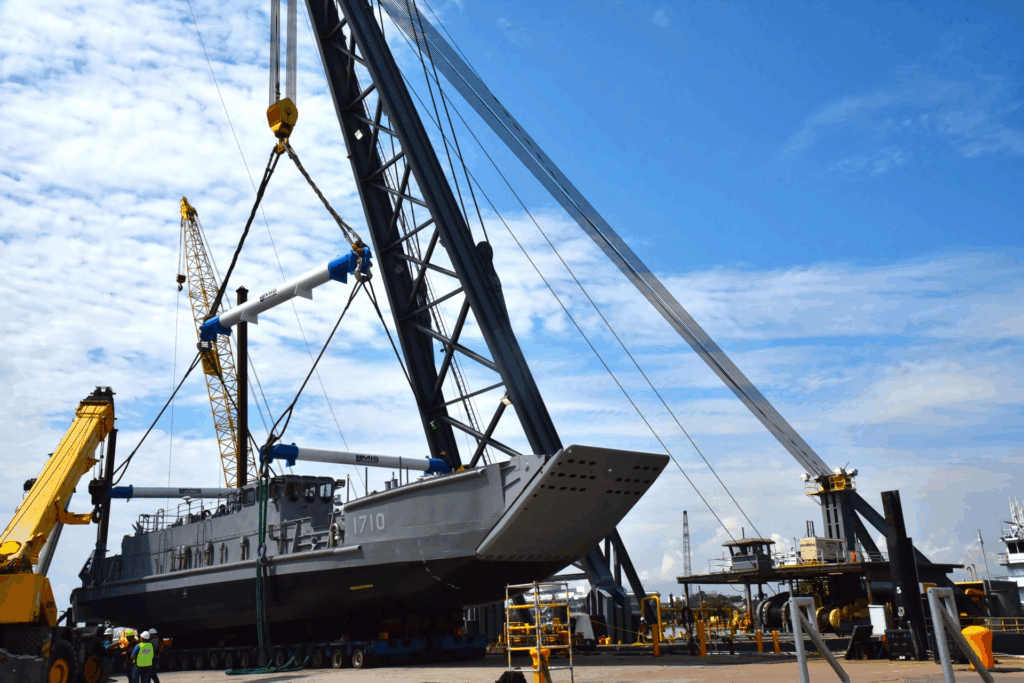
MOBILE, Ala. – Austal USA launched the company’s first Navy Landing Craft Utility (LCU) vessel at its ship manufacturing facility in Mobile, Ala. on Aug. 22.  LCU 1710 is the first of 12 Navy LCUs under contract at Austal USA, part of a $91.5 million contract awarded by the Navy in 2023. Austal USA has three LCU under construction. 

“I am proud of the LCU program team for the hard work they’ve put forth to reach this important milestone,” stated Michelle Kruger, Austal USA President. “LCU is an important program that plays a critical role in supporting expeditionary operations for the Navy and Marine Corps. Each milestone achieved shores up our position as a key contributor to the strength and success of the maritime industrial base.” 

LCU are carried aboard amphibious assault ships to the objective area and used across a range of military operations to deliver vehicles, personnel and cargo from sea-to-shore and back. These connectors provide a heavy-lift capability and can carry about the same payload capacity as several C-17 aircraft. 

LCU is one of three shipbuilding programs in serial production at Austal USA’s facility.  The company also has three Navy Navajo-class Towing, Salvage and Rescue ships (T-ATS) and two U.S. Coast Guard Heritage-class Offshore Patrol Cutters (OPC) under construction. 


Navy Accepts Delivery of Ship to Shore Connector, Landing Craft, Air Cushion 114 

By Team Ships Public Affairs, Aug. 29, 2025 

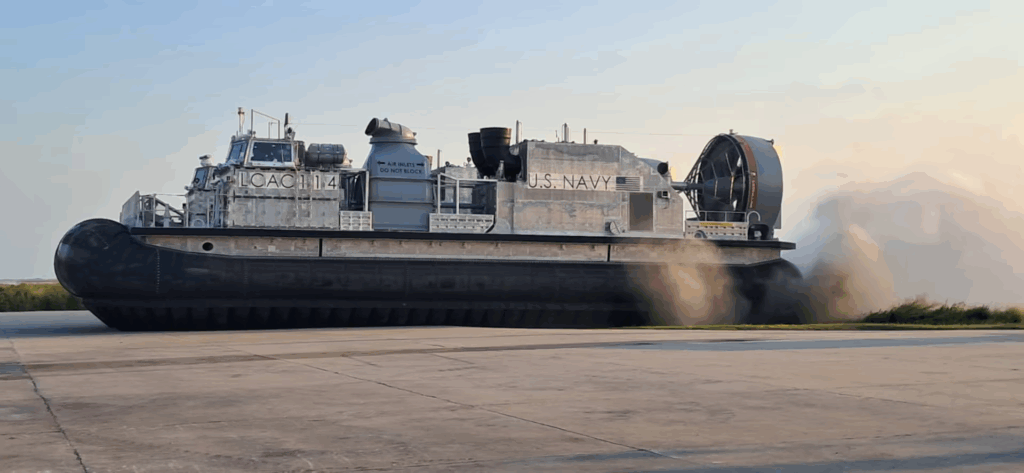
NEW ORLEANS – The U.S. Navy accepted delivery of Ship to Shore Connector, Landing Craft, Air Cushion (LCAC) 114, from Textron Systems, August 28.   

Delivery of LCAC 114 follows completion of acceptance trials and represents the official transfer of the craft from the shipbuilder to the Navy. During acceptance trials, the Navy’s Board of Inspection and Survey tested the readiness and capability of the craft to effectively meet requirements. 

This addition to the fleet enhances Navy’s amphibious capability, providing a vital asset for rapid deployment and logistical support. 

“The delivery of LCAC 114 reinforces the urgency needed to deliver amphibious capabilities to the Navy and Marine Corps team,” said Angela Bonner, acting program manager for Amphibious Assault and Connectors Programs, Program Executive Office (PEO) Ships. 

The current LCAC is built with configurations, dimensions, and clearances similar to legacy LCACs—ensuring that it is fully compatible with existing well deck-equipped amphibious ships. LCACs can carry an approximate 60 to 75-ton payload and primarily transport weapon systems, equipment, cargo, and assault element personnel through a wide range of conditions, including over-the-beach. 

Textron Systems is currently in serial production on LCACs 115-126.   

PEO Ships, one of the Department of Defense’s acquisition organizations, is responsible for executing the development and procurement of all destroyers, amphibious ships and craft, and auxiliary ships, including special mission ships, sealift ships and support ships.  


Coast Guard Cutter Mohawk returns home to Key West, Florida after 75-day maritime border security patrol 

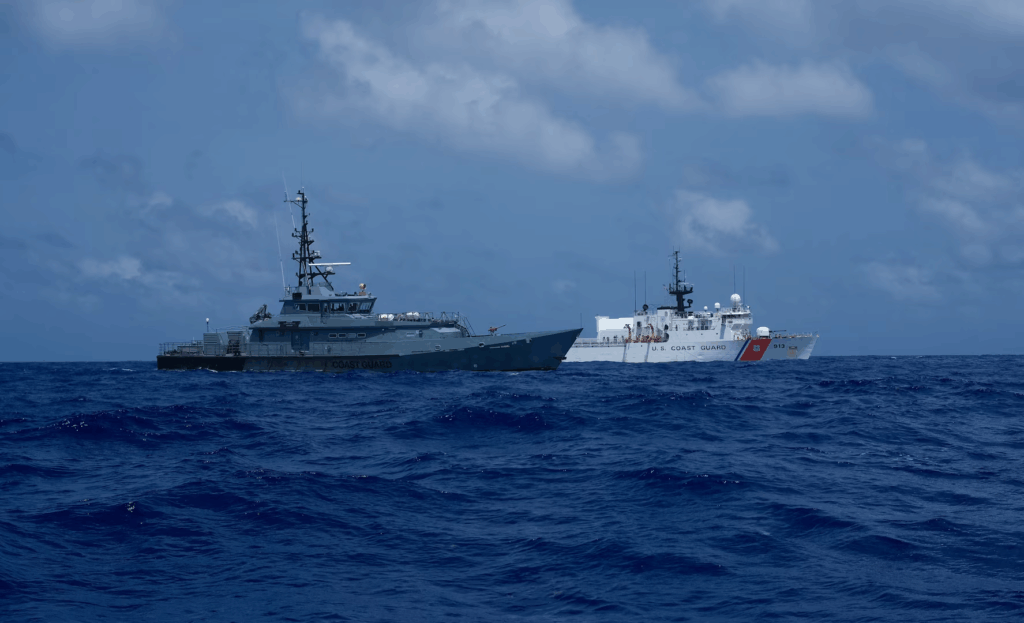
Jamaica Defence Force Coast Guard patrol vessel HMJS George William Gordon and U.S. Coast Guard Cutter Mohawk (WMEC 913) conduct an at-sea transfer of contraband and suspected drug smugglers in the Caribbean Sea, Aug. 23, 2025. Mohawk’s crew conducted a 75-day maritime border security patrol in the Caribbean Sea, Florida Straits and Caribbean Sea. (U.S. Coast Guard photo by Ensign Andrew Ferderer) 

From U.S. Coast Guard Atlantic Area, Aug. 29, 2025 

KEY WEST, Fla. — The crew of Coast Guard Cutter Mohawk (WMEC 913) returned to their home port in Key West, Friday, following a 75-day maritime border security patrol in the Windward Passage, Florida Straits and Caribbean Sea.   
  
During the patrol, Mohawk’s crew deployed to the Coast Guard Southeast District (CGD-SE) area of responsibility, where crews conducted multi-mission operations with joint service, international, and interagency partners to protect America’s maritime borders from illegal drug trafficking and prevent unlawful alien migration in the region.  

Mohawk’s crew initially deployed in support of Operation Vigilant Sentry (OVS) while on patrol in the Windward Passage to deter illegal alien migration along the coast of Haiti.   
  
On Aug. 16, Mohawk’s crew assisted the Jamaica Defence Force by interdicting and transferring a vessel with five Haitians aboard who were attempting to illegally enter Jamaica.  

The crew also patrolled the Caribbean Sea in support of the Joint Interagency Task Force – South (JIATF-S) mission of detecting and monitoring illegal drug shipments in the maritime domain for subsequent interdiction and apprehension.     

On Aug. 21, a U.S. Navy aircrew identified a suspicious vessel in the Caribbean Sea, and a U.S. Coast Guard aircrew assisted in tracking the go-fast vessel with three suspected drug smugglers aboard. Once Mohawk was vectored in, crew members launched the cutter’s primary interceptor boat, the service’s newest 26-foot, Mk-V over-the-horizon cutter boat, for a 113-nautical-mile pursuit and later coordination with Jamaica Defence Force personnel, who interdicted the vessel in Jamaican waters.  

In total, while working with the Jamaica Defence Force during four maritime law enforcement cases, Mohawk’s crew interdicted or assisted in the interdiction or transfer of 13 suspected smugglers, two suspect vessels and seized marijuana to Jamaican authorities for prosecution in Jamaica.   

In addition, Mohawk worked alongside Department of Defense and Department of Homeland Security partners, contributing to the disposition of 21 drug smugglers, 2,425 pounds of cocaine, and 4,300 pounds of marijuana with an estimated street value of nearly $23 million. 

Throughout the deployment, Mohawk engaged in joint patrols and at-sea transfers with a variety of Coast Guard assets, including Coast Guard Cutter Spencer (WMEC 905), Coast Guard Cutter Vigorous (WMEC 627) and Coast Guard Cutter Alert (WMEC 630).   

Reinforcing interagency cooperation, Mohawk partnered with the crews of the USS Cole (DDG-67) and USS Jason Dunham (DDG-109), who provided maritime patrol aircraft support and facilitated a critical transfer of contraband and detainees. These operations support U.S. national objectives and a commitment to a coordinated, multi-faceted approach to deter illicit trafficking and bolster regional security.  

Collaborating with U.S. Customs and Border Protection, Mohawk’s crew also provided offshore presence to support Coast Guard Sector Miami alongside additional Coast Guard air and surface assets to help prevent illegal immigration and drug smuggling, while augmenting search and rescue capability off the coast of Florida.     

“Mohawk’s recent operations demonstrate our unwavering commitment to safeguarding our nation’s maritime approaches,” said Cmdr. Taylor Kellogg, commanding officer of Mohawk. “Our efforts over the last 75 days have served as a deterrent to criminal organizations seeking to exploit our waterways and reinforce our dedication to a safe and secure maritime environment. I’m proud of our crew for their selfless service, teamwork and devotion to duty.”  

CGG-SE is responsible for Coast Guard activities throughout a 1.7 million square mile area including Puerto Rico, the U.S. Virgin Islands, Florida, Georgia, South Carolina, as well as 34 foreign nations and territories. Interdictions are performed by members of the U.S. Coast Guard under the authority and control of CGD-SE, which is headquartered in Miami.   

OVS is a Department of Homeland Security-led operation comprised of federal, state and local partners responsible for preventing and responding to maritime migration. OVS, previously known as Homeland Security Task Force – Southeast, was established in 2003 and is comprised of more than 50 federal, state and local agencies.  

JIATF-S, in conjunction with partner nations, works to target, detect and monitor illicit drug trafficking within the joint operating area. The organization facilitates the interdiction and apprehension of illicit traffickers to dismantle transnational criminal organizations while reducing the flow of drugs to the public. Once interdiction becomes imminent, the law enforcement phase of the operation begins, and control of the operation shifts to the U.S. Coast Guard throughout the interdiction and apprehension.  

Mohawk is a 270-foot, Famous-class medium endurance cutter. The cutter’s primary missions are counter-drug and alien interdiction operations, enforcement of federal fishery laws and search and rescue in support of U.S. Coast Guard operations throughout the Western Hemisphere. The cutter falls under the command of U.S. Coast Guard Atlantic Area, which is based in Portsmouth, Virginia.     

For more information on how to join the U.S. Coast Guard, visit GoCoastGuard.com to learn about active duty, reserve, officer and enlisted opportunities. Information on how to apply to the U.S. Coast Guard Academy can be found here.   


Undersea Technology is a Top Priority for National Security Leaders 

From the Undersea Technology Innovation Consortium, Sept. 2, 2025  

NEWPORT, R.I. – The Undersea Technology Innovation Consortium (UTIC) reinforced its role as a leader in undersea defense innovation at SENEDIA’s 11th annual Defense Innovation Days. The national event attracted nearly 400 influential defense decisionmakers and innovators. 

“UTIC was proud to serve once again as a platinum sponsor for this important conference, which creates valuable opportunities for our members to connect, collaborate and innovate,” said Molly Donohue Magee, Chief Executive Officer of UTIC. “Our members displayed their cutting-edge technology that will provide solutions for future undersea challenges.” 

Government – Industry Collaboration 

The sold-out event included panels and keynote speeches that touched upon the importance of government-industry collaboration and the need to move faster in the scaling of the technology that will maintain the United States’ competitive advantage in undersea warfare. 

“The battlespace is expanding from the seabed to space, in all oceans and seas across the globe. We must sustain our focus on the fleet needs to make certain our warfighters have the capabilities to dominate any fight, anywhere, any time,” said Marie Bussiere, Technical Director at the Naval Undersea Warfare Center, Division Newport, as part of a panel discussion she moderated on undersea innovation. “To maintain the undersea advantage, we need to get solutions into the hands of the fleet faster.”  

Pathway to Procurement 

UTIC manages the industry consortium for the U.S. Navy’s Other Transaction Agreement (OTA), which provides members with the ability to rapidly research, test and prototype undersea and maritime technological innovations in support of Navy requirements. 

Several speakers highlighted the U.S. Navy’s increasing emphasis on the OTA as a tool for delivering the critical technology needed to enhance mission readiness.  

“OTAs now make up 20% of the contracting portfolios spent at Division Newport, and that continues to increase. OTAs are now the first-look for contracting activities. We expect that there will be increased opportunities there,” said Steve Lamb, Chief of the Contracting Office at the Naval Undersea Warfare Center, Division Newport. 

Sponsorships 

More than a dozen UTIC members served as sponsors of Defense Innovation Days, supporting the event and in turn, promoting meaningful undersea tech innovation.  

  • Comark – A Division of SourceCode 

  • General Dynamics 

  • Globe Composite Solutions 

  • Granite State Manufacturing 

  • L3Harris Technologies 

  • Leidos 

  • McLaughlin Research Corporation 

  • Northrup Grumman 

  • Rite-Solutions 

  • RTX Corporation 

  • SEACORP 

  • SERCO 

  • Teledyne Marine 

  • Vatn Systems