Lockheed Martin Awarded $720 Million Contract for JAGM, HELLFIRE Production 
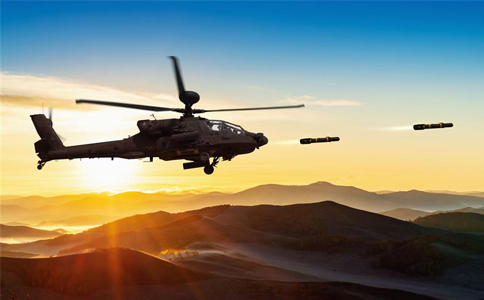
Orlando, Fla., August 21, 2025 – The U.S. Army has awarded Lockheed Martin a $720 million contract for the production of Joint Air-to-Ground Missiles (JAGM) and HELLFIRE missiles, marking the fourth and final follow-on award as part of its current multiple-year contract. This contract will provide critical procurement and production support for the U.S. Army, U.S. Navy and international customers, further solidifying Lockheed Martin’s position as a leading provider of multi-domain missile systems. 

Under this contract, Lockheed Martin will deliver JAGM and HELLFIRE missiles to meet the urgent operational needs of the Army, Navy and its international partners. The contract includes key Foreign Military Sales (FMS) including 160 JAGMs for the United Kingdom. The award also includes HELLFIRE FMS orders for key NATO allies Poland, Spain, Czech Republic and Italy. In addition, the contract award includes new HELLFIRE international customer Canada. 

“This contract is a significant milestone in our ongoing partnership with the U.S. Army, U.S. Navy and our international allies, and we’re proud to continue playing a vital role in their defense strategies,” said Casey Walsh, program management director of Multi-Domain Missile Systems at Lockheed Martin Missiles and Fire Control. “As we continue to evolve our deterrence capabilities, we remain committed to supporting the military’s critical missions and helping to protect those who serve, both at home and abroad.” 

The importance of this contract extends beyond the production of JAGM and HELLFIRE, as it also underscores the strength of Lockheed Martin’s partnerships with the Army, Navy and its international allies. For example, the Poland HELLFIRE FMS order, a part of this contract, supports the recent U.S. government FMS agreement for AH-64E Apache attack helicopters for the Polish Air Force. As the global security landscape continues to evolve, Lockheed Martin remains committed to delivering innovative solutions that meet the changing needs of its customers, and this contract is a significant step forward in that effort. 

Both the JAGM and HELLFIRE systems are designed and developed in Orlando, Florida. The weapon systems are manufactured across various Lockheed Martin facilities in Dallas, Texas; Orlando and Ocala, Florida.; Archbald, Pennsylvania.; and Troy, Alabama. With more than 145,000 missiles produced, JAGM and HELLFIRE continue to be the weapon of choice in critical, precision engagement opportunities. 


Get SAT Equips Republic of Korea Navy P-3C Aircraft with Advanced SATCOM Capabilities 

August 18, 2025 

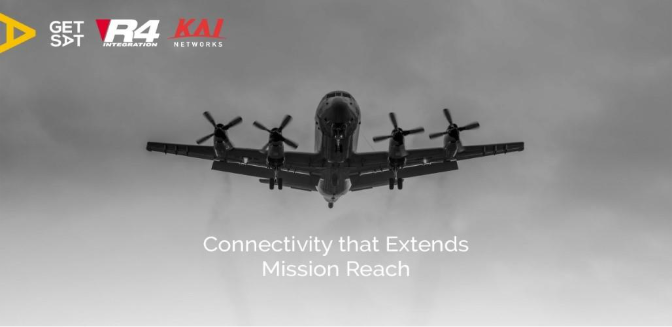
Auguest 2025 — Israel, South Korea Get SAT, an innovator in lightweight satellite communication terminals for ground, air, and maritime applications, together with KT SAT, Korea’s leading satellite service provider offering comprehensive communication solutions across Korea and globally, and KAI Networks, a system integration company specializing in military and aerospace communications, and R4 Integration, the leading provider of airborne roll-on/roll-off communication systems for U.S. and partner government aircraft, have successfully completed the upgrade of two P-3C maritime patrol aircraft for the Republic of Korea Navy. 

The P-3C is a maritime patrol and reconnaissance aircraft, used for anti-submarine warfare (ASW), anti-surface warfare (ASuW), intelligence, surveillance, and reconnaissance (ISR), and search and rescue (SAR) missions. The fleet plays a key role in securing South Korea’s maritime domain and supporting regional stability. 
This upgrade marks a significant step in the modernization of the ROK Navy’s long-range ISR fleet and is part of a broader initiative to enhance airborne connectivity across the Navy’s 16-aircraft P-3C fleet. 

At the core of the upgrade is Get SAT’s Milli H LW Ku-band terminal, a lightweight, low-profile solution for airborne beyond-line-of-sight (BLOS) communication. Measuring just 33×37cm and weighing 10.2kg, the Milli H delivers reliable, high-performance satellite connectivity—making it well-suited for legacy aircraft upgrades. 

The installation was carried out using R4 Integration’s hatch-mount solution, tailored for the P-3C platform to minimize disruption to the aircraft structure while maximizing ease of deployment. Collaboration between Get SAT, KT SAT, Kainet, and R4 ensured smooth integration, drawing on each partner’s specialized expertise. 
By leveraging KT SAT’s network, the upgraded system now provides real-time data links and persistent command-and-control connectivity—empowering crews with enhanced situational awareness and operational flexibility. 

“This successful deployment demonstrates the agility and global reach of Get SAT’s airborne SATCOM solutions,” said Kfir Benjamin, CEO at Get SAT. “Together with KT SAT, KAI Networks, and R4, we’ve delivered a rugged, high-throughput communication system that significantly improves the operational capabilities of the ROK Navy’s patrol aircraft.” 
“We are proud to have partnered with Get SAT and R4 Integration to bring this high-performance communication upgrade to the P-3C platform,” said Mr. Seo, CEO of KT SAT. “This project represents an important step forward for Korea’s airborne mission capabilities and highlights the value of international collaboration in defense innovation.” 

“Our hatch-mount solution is designed for fast integration with minimal impact to the aircraft, and we are pleased to see it supporting critical missions for the Republic of Korea Navy,” said John Parsley, President of R4 Integration. “Working alongside Get SAT, KT SAT, and KAI Networks was a great example of how industry partnerships accelerate operational readiness. 


BAE Systems to deliver advanced stealth missile sensors for Long-Range Anti-Ship Missile 

Radio-frequency sensor enables persistent strike capability for the U.S. Navy and U.S. Air Force 

From BAE Systems  

NASHUA, New Hampshire — August 21, 2025 — BAE Systems received a contract from Lockheed Martin in December 2024 for additional radio-frequency (RF) sensors that provide critical guidance capabilities for the stealthy Long-Range Anti-Ship Missile (LRASM). 

BAE Systems has been delivering RF sensors for the LRASM program since 2018. Under this new production contract, BAE Systems will deliver RF sensors through 2030. The large-lot procurement helps the government to build a capable maritime strike arsenal while reducing acquisition costs. 

“BAE Systems is dedicated to its work with Lockheed Martin to provide discriminating capabilities to the warfighter,” said Vanessa Varrati, LRASM sensor program director at BAE Systems. “This contract recognizes our technical and operational expertise that brings this critical deterrence and strike capability to the U.S. Navy and U.S. Air Force.” 

LRASM is a persistent strike capability with range, survivability, and lethality. BAE Systems is uniquely qualified to produce RF sensors for LRASM. Looking to the future, the company is developing modular, scalable systems to meet the needs of future warfighters in a rapidly changing battlefield environment. 

“We’re anticipating the need for small, powerful, multi-function hardware that can work on a variety of platforms, and we’re building the core elements today,” said Ed Leonard, director of Small Form Factor Solutions at BAE Systems. 


Fire Aboard USS New Orleans Extinguished 

By U.S. 7th Fleet Public Affairs, Aug. 20, 2025 

YOKOSUKA, Japan  –  A fire aboard the San Antonio-class amphibious transport dock ship USS New Orleans (LPD 18), which is anchored near White Beach Naval Facility, Okinawa, was declared extinguished at 4 a.m., Aug. 21. 

The fire began at approximately 4 p.m., Aug. 20. The cause of the fire is currently under investigation. 

New Orleans Sailors’ firefighting efforts were supported by the crew of the San Antonio-class amphibious transport dock ship USS San Diego (LPD 22), which is moored at White Beach Naval Facility. 

Japan Maritime Self-Defense Force; Japan Coast Guard; and U.S. Navy commands from across Commander, Fleet Activities Okinawa also provided critical support to the firefighting efforts.   

Two Sailors were taken to New Orleans’ medical for minor injuries. 

New Orleans’ crew will remain aboard the ship. Additional services and berthing are available aboard San Diego and Commander, Fleet Activities Okinawa, if needed. 


Marines Pilot Artificial Intelligence Fellowship at Naval Postgraduate School 

(Back row, left to right) Dr. Christopher Paul, Maj C. Teska, Dr. N. Rowe, Dr. M. Orescanin, Dr. M. Kolsch. (Front row, left to right) Ms. T. Nguyen, Capt S. Stekler, SSgt K. Harris, Mr. D. Zietz, Cpl J. Sadler, Dr. Y. Zhao.

HEADQUARTERS, MARINE CORPS – U.S. Marines gathered at the Naval Postgraduate School (NPS) in Monterey, California, August 11–14, to launch a new initiative in military innovation and education: the inaugural U.S. Marine Corps–Naval Postgraduate School Artificial Intelligence (AI) Fellowship. 

Part of the implementation of the 2024 Marine Corps Artificial Intelligence Strategy, the fellowship is designed to accelerate AI adoption and development across the force by building a cadre of AI-literate Marines empowered with technical knowledge, practical experience, and operational insight. 

“This fellowship leverages eager Marines knowledgeable about the Fleet’s modern and relevant issues, faculty experts, state-of-the-art facilities at Naval Postgraduate School, and the incomputable potential of artificial intelligence and machine learning,” said Dr. Christopher Paul, U.S. Marine Corps Chair for Information at NPS and lead organizer of the program. 

The pilot cohort of Marines will spend five months immersed in AI education and applied research, splitting time between their home commands and the NPS campus. Through a mix of mentorship, coursework, and prototype development, each fellow will address a real-world challenge aligned to the needs of the Fleet Marine Force. 

“Our goal is to optimize AI’s application across the force,” Paul said. “To do that, we need to grow the AI-proficient and literate population in the military, which this fellowship aims to do.” 

The Marine Corps is committed to developing and deploying emerging technologies that give Marines the advantage in future conflicts. The USMC–NPS AI Fellowship is a concrete step toward equipping warfighters with tools and knowledge to operate in an increasingly digital battlespace. 

While the pilot program is currently limited to Marines, future iterations aim to expand participation to include service members from other branches of the Joint Force. 

The fellowship reflects the Marine Corps’ broader commitment to education, innovation, and preparing for the complex challenges of the modern operating environment. 

Information on future fellowship opportunities will be announced via Marine Corps administrative message. 

For inquiries regarding the pilot program, contact: 

Capt. Stephanie Baer, Communication Strategy Officer, Deputy Commandant for Information, [email protected] 


Zelim Signs CRADA with US Navy to Trial Maritime AI Detection System ZOE at Bluetide 2025 

From Zelin, Aug. 21, 2025 

Zelim, a leader in AI-driven maritime safety and security systems, has signed a Cooperative Research and Development Agreement (CRADA) with the U.S. Navy’s Naval Undersea Warfare Center (NUWC), Division Newport to trial ZOE for the detection of uncrewed surface vessels (USVs).  

The agreement enables Zelim’s participation in BlueTIDE 2025, a high-profile demonstration event led by 401 Tech Bridge, NavalX, and the Northeast Tech Bridge. The event will culminate in a full-scale in-water trial on August 28 in Narragansett Bay, Rhode Island. 

Zelim is one of just a handful of international companies selected as finalists in the 2025 BlueTIDE Prize Challenge, following a competitive evaluation process.  

This year’s mission scenario focuses on protecting critical subsea infrastructure from hostile activity involving small crewed and uncrewed autonomous systems. Zelim’s role in the scenario involves detecting small remotely operated surface vessels operating covertly in sensitive areas, which may pose a precursor threat to subsurface sabotage. 

The award-winning ZOE MOB system is already deployed in the cruise industry and offshore sector, detecting, alerting, and tracking persons in the water following man overboard incidents. The same AI engine, trained to identify specific shapes, behaviours and anomalies in complex marine environments, also powers ZOE Shield – a new capability under development that delivers maritime situational awareness by detecting and classifying small surface craft that will be operating without AIS.  

ZOE Shield adds automated threat classification and alerting logic, supporting operators with early warning and response capabilities. Critically, the system is immune to GPS denial and radar jamming scenarios, which can disrupt traditional situational awareness technology. The ZOE Shield system will be evaluated during BlueTIDE as part of the Navy’s interest in layered, intelligent safety, security and surveillance. 

“This agreement gives us a unique opportunity to trial ZOE Shield in an operational defence scenario at a US Navy facility, where multiple assets, including USVs will be deployed on the mission,” said Sam Mayall, CEO and co-founder of Zelim.  

CRADAs allow non-federal entities to collaborate directly with US Navy personnel and facilities without being subject to federal acquisition rules, while also protecting intellectual property and proprietary data throughout the research period. 

The BlueTIDE trial will take place off the coast of Newport, Rhode Island, where ZOE will be used to detect and to keep eyes on surface threats as they come within proximity of the critical infrastructure. The goal is to demonstrate how ZOE can improve reaction time and situational awareness in areas where traditional radar or human watchkeeping might miss or misclassify an approaching threat. Data from the demonstration will be shared with the Navy to support capability assessment and further development. 

“This is about closing the gap between detection and decision, especially in domains where the threat is small, fast-moving and unpredictable,” Mayall added. “Our mission is to help operators identify anomalous behaviour earlier, whether the goal is rescue or protection. This demo is a vital step toward deploying ZOE for real-world defence scenarios.” 

Further information will be released following the demonstration and in accordance with the CRADA framework. 


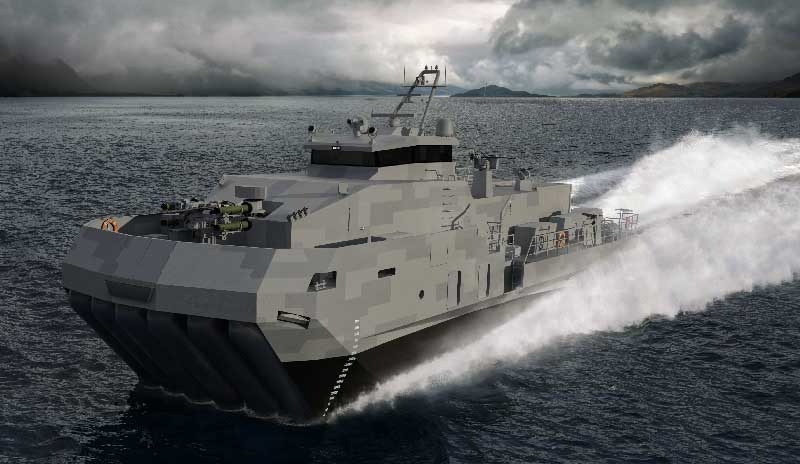
Eureka Naval Craft Signs MOU with Singapore Shipbuilder to Build AIRCAT BENGAL Warships and Offshore Workboats 

Release from Eureka Naval Craft

Houston-headquartered defense company Eureka Naval Craft is seeking to ramp up production of its AIRCAT BENGAL MC warship in Asia after signing an MOU with Singapore shipbuilder Strategic Marine (S) Pte Ltd. 

Eureka Naval Craft CEO Bo Jardine said the aim of the partnership is to bring a highly advanced Modular Attack Surface Craft (MASC) to the US Navy and allied navies quickly at a time of increased threat. The versatile catamaran vessel design can further be retooled for the commercial offshore industry as a workboat. 

He said the AIRCAT BENGAL MC solves a pain-point for navies having sophisticated lethality including Tomahawk cruise missile capability.  But importantly Jardine says the vessel comes without the crippling costs and complex design requirements which have dogged naval shipbuilding programs in recent years. 

“By joining forces with Strategic Marine, we are combining American innovation with Singaporean shipbuilding excellence to meet the needs of navies worldwide,” he said. “The AIRCAT BENGAL MC’s modular payload system, large aft deck range, and speed ensure it is at the forefront of maritime technology—ready to adapt to the ever-evolving threats and mission requirements. Our collaboration demonstrates the value of U.S.-Singapore cooperation in driving innovation, strengthening supply chains, and supporting regional security. We are proud to contribute to the U.S. DoD and U.S. Navy’s vision for a more innovative, autonomous, and collaborative maritime force.” 

Mr. Chan Eng Yew from Strategic Marine said: “We are delighted to collaborate with Eureka on this groundbreaking project. Our Singapore shipyard is equipped with the latest technology and staffed by a highly experienced team, enabling us to deliver complex vessels quickly and at scale. The AIRCAT BENGAL MC, with its advanced autonomy, exemplifies the future of high-performance vessels for both defense and offshore energy logistics. This partnership not only benefits our companies, but also contributes to the broader economic and security interests of both Singapore and the United States, while supporting allied and partner country collaboration in the Indo-Pacific.” 

Jardine said the 36m multi-mission Surface Effect Ship (SES) can operate as a fully or semi autonomous vessel. Meanwhile it is the first naval vessel anywhere in the world to be able to carry a 40-tonne payload with a top speed of more than 50 knots, payload depending, and a range of 1,000 nautical miles.   

“The reality is the naval market in this weight class needs disrupting,” he said. “Too many vessels today are outdated, sluggish, and expensive. The AIRCAT BENGAL MC provides an alternative to naval corvettes and frigates, thanks to its optimized design and use of modular construction techniques. And the vessel is so versatile it can be used as a troop transport vessel, landing support craft, electronic warfare platform, drone mothership and for mine laying and counter-mine warfare.” 

Jardine said the MOU will further have an AUKUS dimension via Eureka’s partnership with Australian defense company Greenroom Robotics. He said the AIRCAT BENGAL MC has one of the most advanced autonomous navigation systems thanks to deploying the Greenroom Advanced Maritime Autonomy (GAMA) Software system. Greenroom has spent years developing the system notably on a 57m decommissioned Armidale-class patrol boat, Sentinel, known as the Patrol Boat Autonomy Trial (PBAT). 

Jardine said the MOU will further see the AIRCAT BENGAL vessels adapted for the commercial offshore oil and gas sector. He pointed to the vessel’s ability to move items offshore and provide a fast, safe alternative for personnel transfer as key advantages.  

Jardine confirmed Eureka is in talks with US shipyards and the US Navy to build AIRCAT vessels in the United States. 


Coast Guard Establishes New PEO Dedicated to Robotics and Autonomous Systems

Release From U.S. Coast Guard Headquarters

WASHINGTON — The U.S. Coast Guard announced Tuesday the Initial Operating Capability of the Robotics and Autonomous Systems (RAS) Program Executive Office (PEO). 

This PEO is a key component of the Service’s Force Design 2028 (FD 2028) plan, aimed at integrating capabilities and is poised to be the most transformational enhancement to capability since the inception of aviation.   

The RAS PEO is dedicated to the rapid operationalization of the Unmanned Systems Strategic Plan. Robotics and autonomous systems are anticipated to revolutionize Coast Guard operations, leading to significant impacts to securing our border, facilitating commerce, and responding to contingencies. The establishment of a separate PEO is the most efficient mechanism to translate the evolving technology landscape into fielded capabilities – including Counter-Unmanned Aircraft Systems (C-UAS) – and allows for dedicated advocacy for resources. As an organizational innovation under FD 2028, this initiative will leverage this technological revolution and deliver RAS capabilities that are better, faster, safer and cheaper across all mission sets.  

The core mission of the RAS PEO is to accelerate the development, acquisition, fielding and sustainment of RAS capabilities across the Coast Guard to enhance mission effectiveness and operational readiness. Key goals include achieving RAS Full Operating Capability (FOC), ensuring seamless integration with ongoing RAS initiatives, developing a robust and adaptable acquisition process tailored to technological advancement, fostering innovation through collaboration with industry, academia, and other government agencies and ensuring the long-term sustainability of deployed RAS capabilities through comprehensive sustainment planning. A central element of this effort will be advancing the Coast Guard’s C-UAS Strategy. The RAS PEO will facilitate the Coast Guard’s efforts to forge the C-UAS doctrine, partnerships, and capabilities necessary to defend the U.S. Marine Transportation System and safeguard National Special Security Events. 

The PEO’s responsibilities span the full capability lifecycle, including requirements definition and prioritization, managing acquisition and contracting, overseeing system development and integration, managing fielding and deployment, developing sustainment plans and collaborating with stakeholders. A temporary implementation team comprised of subject matter experts and supporting personnel has been created to focus on achieving FOC, integrating ongoing RAS efforts and launching pilot projects. 

Force Design 2028 is an accelerated effort to establish a blueprint for change and transform the Coast Guard to ensure the Service is ready for the future. Focused on four campaigns—people, organization, contracting and acquisition, and technology—FD 2028 is a once-in-a-generation initiative to transform the Coast Guard’s ability to adapt to its current and future operating environment.  


Navy F/A-18E Pilot Safely Recovered After Ejection Off Coast of Virginia

By Lt. Jackie Parashar, Commander, Naval Air Force Atlantic, Aug. 20, 2025 

NORFOLK, Va. – At approximately 9:53 a.m. EDT, a pilot assigned to Strike Fighter Squadron (VFA) 83, ejected from an F/A-18E Super Hornet while operating off the coast of Virginia during a routine training flight. 
  
Multiple search and rescue assets were deployed and quickly arrived on scene. The pilot was rescued at approximately 11:21 a.m. EDT and was transported to a local hospital for further medical evaluation. The F/A-18E remains in the water where it crashed. 
  
The cause of the mishap is under investigation. 


HII Selected for U.S. Navy Training Contract to Enhance Readiness

Release From HII

MCLEAN, Va., Aug. 20, 2025 (GLOBE NEWSWIRE) — HII (NYSE: HII) announced today that its Mission Technologies division is among the companies included on a multiple award contract to provide training products and services that will enhance U.S. Navy fleet readiness. 

The indefinite-delivery, indefinite-quantity (IDIQ) contract has a ceiling of $267 million and will enable HII to compete for task orders for the Naval Education and Training Professional Development Center, which supports professional growth and readiness for U.S. Navy enlisted personnel, and other naval education training commands. 

“Sailor training and professional development are mission-critical — especially when it comes to force protection and combat readiness,” said Michael Lempke, president of Mission Technologies’ Global Security business. “This initiative empowers sailors with the technical skills they need to perform at the highest level, while opening doors for career advancement and lifelong learning.” 

The multiple award contract will support and enhance education, training, career development and personnel advancement for the Navy’s force development enterprise, including curriculum development and learning management systems like Navy e-learning that will enable sailors to participate in on-demand web-based training. Training opportunities like these will enable sailors to meet rapidly changing mission tasks in an increasingly network-centric warfare environment. 

HII provides high-value engineering and technology solutions for multi-domain training, creating realistic live and synthetic training environments that provide real-world mission rehearsal support.