Sparton selected by Australia, Canada and India for maritime defense technologies
Multiple contract awards to exceed $34 million, equipping allies with sophisticated Undersea Warfare and Anti-Submarine Warfare solutions
DELEON SPRINGS, FLORIDA– Aug. 18, 2025 – Sparton DeLeon Springs, LLC (Sparton) was recently awarded multiple firm-fixed-price contracts to supply electro-acoustic devices and various models of sonobuoys to the Australian Department of Defence, the Canadian Department of National Defence, and the Indian Ministry of Defence. The combined value of these contracts exceeds $34 million. All work to support these contracts will be performed at Sparton’s facility in DeLeon Springs, Florida.
“Sparton is the global leader in designing, developing and producing complex underwater systems that are used to locate submarines,” said Sparton President and CEO Donnelly Bohan. “Securing contracts from multiple allied nations demonstrates the superiority of our solutions and their globally recognized utility in Anti-Submarine Warfare and Undersea Warfare efforts.”
USNS Comfort Returns Home After Continuing Promise 2025
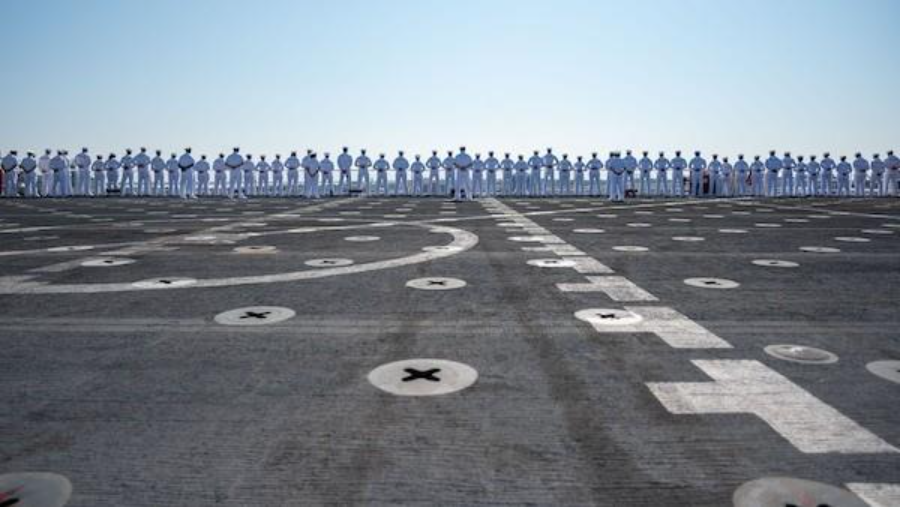
NORFOLK, Va. – Sailors assigned to the Mercy-class hospital ship USNS Comfort (T-AH 20) man the rails during Comfort’s homecoming to Naval Station Norfolk after completing Continuing Promise 2025 (CP25) Aug. 17, 2025. (U.S. Navy photo by MC2 Deven Fernandez)
From USNAVSOUTH/4th Fleet Public Affairs, Aug. 18, 2025
NORFOLK, Va. – The Mercy-class hospital ship USNS Comfort (T-AH 20) returned to Naval Station Norfolk (NSN), Aug. 17, 2025, marking the successful completion of Continuing Promise 2025 (CP25). Comfort returned to NSN after a 79-day deployment, providing medical care, humanitarian assistance and strengthening relationships with partner nations in the Caribbean and South and Central America.
During CP25, Comfort conducted port visits in Grenada, Panama, Ecuador, Dominican Republic, Costa Rica, and Trinidad and Tobago.
“We departed with a clear plan to execute the Continuing Promise mission. The environment demanded adaptability, but our commitment to that promise never wavered,” said Capt. Ryan Kendall, commodore, Destroyer Squadron 40 (DESRON 40) and CP25 mission commander. “The Comfort team and our partners exceeded all expectations, delivering exceptional care and expertise at every mission stop. We forged stronger bonds and honed our collective capabilities, ensuring we are better prepared to support our allies in the face of natural disasters, medical crises, or regional conflict.”
CP25 highlights the U.S. Navy’s dedication to global health and humanitarian aid. Through collaboration, Comfort addressed critical healthcare needs, improved community well-being, and fostered lasting relationships. From surgeries to veterinary care, construction, and music, the mission’s diverse approach achieved sustainable development and strengthened regional security.
During CP25, Comfort’s medical team provided care to 12,616 patients across six countries. Aboard the ship, surgeons performed 242 surgeries, including cataract removals, hernia repairs, cleft lip surgeries, and a variety of other plastic and general surgeries. At shore-based medical sites, the team encountered 1,919 dental patients, filled 17,166 prescriptions, and distributed 7,429 pairs of glasses and sunglasses. Furthermore, the biomedical crew restored more than $2,235,000 worth of medical equipment, including sterilizers, defibrillators, microscopes, X-ray, and anesthesia units.
“Doing this type of work has been incredibly gratifying for me,” said Hospital Corpsman 2nd Class Malachi Gregory, assigned to the central sterilization room aboard Comfort. “Having the opportunity to come down here and help people who otherwise wouldn’t be helped, and seeing them afterwards with their families is what makes this mission worth it.”
The CP25 team extended its reach beyond medical care by actively supporting local communities. Seabees from Naval Mobile Construction Battalion (NMCB) 11 dedicated 2,571 man-hours to improving eight local schools throughout the Caribbean, Central and South America. These repairs enhanced the learning environment for students and staff and provided valuable opportunities for the Seabees to engage with the community.
“It touched my heart to hear the stories of people from the countries we’ve visited,” said Construction Electrician 3rd Class Fransisco EspinozaJuarez, assigned to NMCB 11. “I feel that the work is better out here, because it’s to help a group of people in need and improving the way of their life.”
Beyond human patients and school repairs, U.S. Army veterinarians from the 248th Medical Detachment Veterinary Service Support significantly improved animal welfare during the mission, delivering 2,267 treatments, including spays and neuters, and training 512 animal handlers in best practices from cattle farming to food safety.
“I was on Continuing Promise 2024, so I came here with an idea of what the mission would look like,” said Spc. Shahhawaz Peer, a veterinarian assigned to the 248th Medical Detachment. “We were able to make a larger impact than before because of the capabilities of Comfort and the team, especially in Costa Rica with 1,700 animals treated.”
Beyond providing direct animal care, CP25’s veterinary team empowered local dog handlers with essential skills for independent animal treatment.
“We also trained different militaries, including police forces and dog handlers, in K-9 tactical combat casualty care (TCCC) so they can be prepared for whatever happens to their dogs,” explained Spc. Shahhawaz Peer, a veterinarian assigned to the 248th Medical Detachment.
K-9 TCCC was one of 113 subject matter expert exchanges conducted during CP25. The Comfort team hosted other medical expertise exchanges – covering topics such as TCCC, preventative medicine, and “Stop the Bleed” – for 4,022 participants across all mission stops.
“I was meeting experts from the countries that we were visiting and exchanging knowledge with them,” said Lt. Cmdr. Laurie Tantlier, a preventative medicine doctor aboard Comfort. “I am also responsible for the force health protection of the ship, which means I’m responsible for ensuring the crew is healthy and prepared. It is rewarding, especially because it means my team and I are able to help so many people, both my fellow service members and partner nations.”
Community relations (COMREL) events and U.S. Fleet Forces Band “Uncharted Waters” performances were instrumental in forging connections that transcended languages with the communities in all six locations. The mission included 33 band performances and 24 COMREL events, reaching a 10,545 people and 2,358 man-hours, respectively.
“It was great to see familiar faces and to see that what we’re doing has a lasting impact,” said Ensign Christopher McGann, “Uncharted Waters” band director. “Trinidad and Tobago was the best example because their band recognized us from 2023 and immediately jumped at the opportunity to work with us. It’s a unique opportunity to see new places, meet new people, and have a commonality of sharing music together.”
These COMREL events included painting projects, beach cleanups, and sports days with the community.
“I got the opportunity to participate in a COMREL in Grenada,” said Hospital Corpsman 2nd Class Bryce Rowley, assigned to surgical services aboard Comfort. “We expected a friendly soccer match with the local school team, but we ended up facing their national squad. The unexpected challenge proved to be incredibly rewarding. I built lasting friendships that day, and now I watch familiar faces dominate the national stage, cheering them on with the warmth of a true supporter.”
A testament to enduring commitment, CP25 is the 16th mission to the region since 2007 and the eighth aboard Comfort. These missions have been instrumental in cultivating goodwill, strengthening critical partnerships with allied nations, and catalyzing collaborative initiatives among countries, non-federal entities, and international stakeholders.
Comfort’s return to Naval Station Norfolk marks the culmination of CP25, a mission forging strengthened alliances and revitalized communities. The true impact transcends statistics, visible instead in the gratitude of those served and the transformative experience of the crew, returning as U.S. ambassadors of goodwill. The enduring legacy of Continuing Promise: a testament to the power of compassion and collaboration.
U.S. Naval Forces Southern Command/U.S. 4th Fleet supports U.S. Southern Command’s joint and combined military operations by employing maritime forces in cooperative maritime security operations to maintain access, enhance interoperability, and build enduring partnerships in order to enhance regional security and promote peace, stability and prosperity in the Caribbean, Central and South American region.
Airbus and Shield AI Accomplish First Autonomous Aerial Logistics Connector Helicopter Flight
WASHINGTON (August 19, 2025) — Airbus U.S. Space & Defense recently completed its first autonomous helicopter test flight utilizing Shield AI’s Hivemind autonomy package.
The test flight, which took place in Grand Prairie, Texas, marks a significant step in the development of the MQ-72C Lakota Connector, in support of the U.S. Marine Corps (USMC) Aerial Logistics Connector (ALC) program.
The H145 helicopter was utilized as the test vehicle for the flight to help perfect the mission technology, drive schedule timelines, and reduce cost and technical risk. Integration of Hivemind into the aircraft was completed in under two months, demonstrating the benefits of its modular and platform-agnostic architecture.
During the test, the H145 flew under the direct control of Shield AI’s Hivemind autonomy software, in collaboration with Airbus’ Helionix. The integrated software served as the mission system control of the aircraft, performing an auto takeoff, landing, and other test points to illustrate the software’s ability to direct the aircraft without pilot input.
The tested software will be incorporated into the future MQ-72C helicopter design to meet the USMC requirements for the ALC program.
“This flight test is a testament to the strength of our ALC team and opens the aperture on new mission possibilities to support the Marine Corps,” said Rob Geckle, Chairman and CEO of Airbus U.S. Space & Defense. “We are bringing together the best across industry to deliver an aircraft that changes how unmanned operations can support missions across a wide range of logistics.”
The MQ-72C Logistics Connector is currently being developed as an unmanned variant of the UH-72 Lakota, a proven multi-mission platform trusted to perform across a range of missions. The incorporation of Shield AI’s Hivemind autonomy software expands the platform’s mission capabilities through autonomy-enabled operations across a wide range of logistics and operational scenarios.
“This flight marks an important validation of our approach to mission autonomy,” said Gary Steele, CEO of Shield AI. “Hivemind was built to enable adaptable, intelligent flight across a wide range of aircraft, and this milestone shows how quickly capable teams can leverage that foundation. The collaboration with Airbus is focused, professional, and effective—an excellent example of what can be achieved when both teams are aligned on mission and execution. We’re excited to build on this momentum in the flights to come.”
The MQ-72C’s level of autonomy will be scaled during more test activities and demonstrations to come, ultimately leading to unmanned operations in contested logistics environments. Airbus U.S.’ goal is that mission autonomy software can ultimately be leveraged to add autonomous capabilities to other helicopter variations, in addition to the MQ-72C.
Airbus U.S. is entering the second year of the Aerial Logistics Connector Middle Tier of Acquisition (MTA) Rapid Prototyping Program, which aims to provide the service with aircraft prototypes to demonstrate capabilities to the warfighter through a series of operational demonstrations and experiments.
In May 2024, Naval Air Systems Command (NAVAIR) awarded Airbus U.S. Space & Defense a Phase I Other Transaction Authority (OTA) through the Naval Aviation Systems Consortium, based on its unmanned UH-72 Logistics Connector concept, a variant of the proven UH-72 Lakota platform.
The Aerial Logistics Connector effort is one of several initiatives across the Department of Defense aimed at delivering logistical support in distributed environments during peer or near-peer conflicts.
GA-ASI ACQUIRES ASSETS OF ACHATES POWER INC.
From General Atomics Aeronautical Systems Inc.
SAN DIEGO – 19 August 2025 – General Atomics Aeronautical Systems, Inc. (GA-ASI), a global leader in unmanned aircraft systems and cutting-edge aerospace technologies, today announced the acquisition of key assets, including a portfolio of patents and other intellectual property, from Achates Power, Inc., a San Diego-based innovator in advanced engine technology.
The acquisition strengthens GA-ASI’s capabilities in high-performance propulsion systems and underscores GA-ASI’s commitment to advancing propulsion technologies for its line of unmanned aircraft systems that enhance the performance and sustainability of its aerospace systems.
“We are excited to incorporate Achates Power’s opposed-piston engine technology into GA-ASI’s portfolio,” said David Alexander, President of GA-ASI. “Their advancements in green technology emission reduction, fuel efficiency and power density align perfectly with our mission to deliver innovative solutions for airborne platforms.”
Achates Power has long been recognized for its groundbreaking work in developing best-in-class low-emission, fuel-efficient, and high-power-density engines.
“Achates Power’s engine designs deliver exceptional value for applications requiring high efficiency and power density, particularly in environments with strict emissions regulations,” said Dave Crompton, CEO of Achates Power. “We are proud that our technology will continue to thrive under GA-ASI, a company renowned for its technical excellence and diverse expertise.”
U.S. Coast Guard, Navy Seize Nearly 1,300 Pounds of Cocaine in Eastern Pacific
U.S. Coast Guard Law Enforcement Detachment (LEDET) 105 embarked aboard the Arleigh Burke-class guided-missile destroyer USS Sampson (DDG 102), prepare to offload interdicted contraband from a rigid-hull inflatable boat while conducting maritime interdiction operations in the Eastern Pacific, Aug. 11, 2025. (U.S. Navy photo by MC2 Sheryssa Dodard)
From MC1 Brandon Roberson, Aug. 18, 2025
U.S. Coast Guard Law Enforcement Detachment (LEDET) 105 embarked aboard the Arleigh Burke-class guided-missile destroyer USS Sampson (DDG 102), prepare to offload interdicted contraband from a rigid-hull inflatable boat while conducting maritime interdiction operations in the Eastern Pacific, Aug. 11, 2025. (U.S. Navy photo by MC2 Sheryssa Dodard)
PACIFIC OCEAN – A U.S. Coast Guard Law Enforcement Detachment (LEDET), embarked aboard the Arleigh Burke-class guided-missile destroyer USS Sampson (DDG 102), interdicted a suspected drug smuggling vessel and seized approximately 1,296 pounds of cocaine in international waters Aug. 11.
The Sampson, operating in a known drug trafficking corridor, identified a suspicious vessel exhibiting telltale indicators of smuggling, including excessive fuel barrels and packaged cargo visible on deck. Upon receiving authorization, the ship launched a U.S. Navy MH-60R Sea Hawk helicopter from Helicopter Maritime Strike Squadron (HSM) 49, as well as a rigid-hull inflatable boat (RHIB) to intercept.
The suspect vessel attempted to flee and began jettisoning packages overboard. After warning shots failed to compel compliance, the helicopter crew, under Coast Guard direction, employed disabling fire, successfully halting the vessel without injury. Two boarding teams, including members from LEDET 105, conducted a non-compliant boarding and recovered 12 bales of suspected narcotics. Field tests confirmed the presence of cocaine, and two individuals were taken into custody.
Due to deteriorating seaworthiness and heavy seas, the vessel began taking on water and was deemed unsafe to tow. The suspects were transferred to Sampson, and the vessel was left to sink to mitigate navigational hazards.
The interdiction was conducted under international law and a bilateral agreement with Ecuador. Upon mission completion, tactical control of the Sampson returned to U.S. 3rd Fleet.
This operation reflects ongoing cooperation between the U.S. Navy, U.S. Coast Guard, and interagency partners to disrupt transnational criminal networks operating in the maritime domain.
The Sampson is employed under U.S. Northern Command’s maritime homeland defense authorities with a Coast Guard Law Enforcement Detachment embarked to enable maritime interdiction missions to prevent the flow of illegal drugs and other illegal activity. U.S. Northern Command is working together with the Department of Homeland Security to provide additional military forces and capabilities at the southern border.
Australia’s MQ-4C Triton Fleet Grows to Three
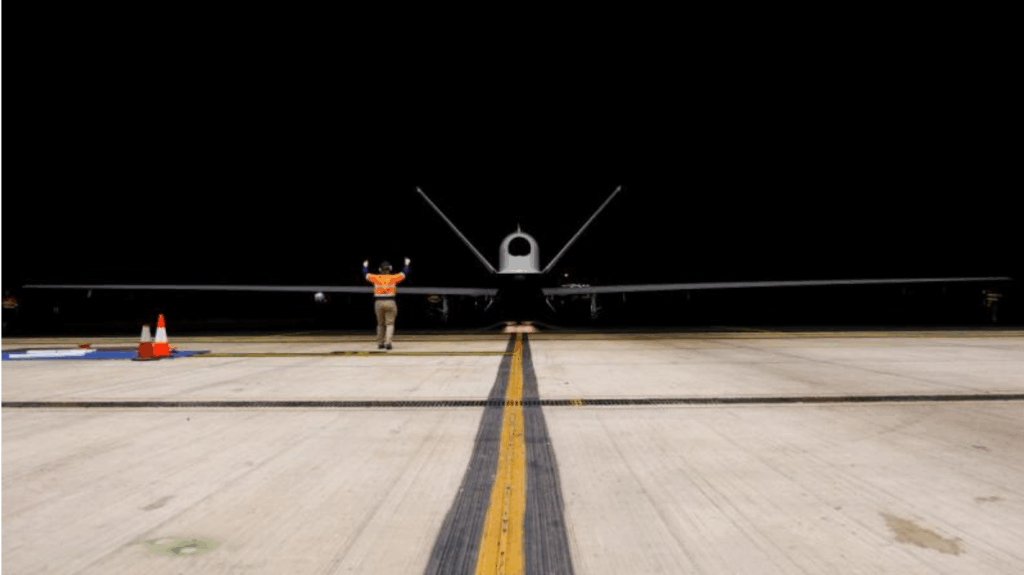
Three Royal Australian Air Force MQ-4C Triton aircraft on the taxiway at RAAF Base Tindal. (Australian Department of Defence)
From Australian Ministry of Defence, June 27, 2025
Australia’s second and third MQ-4C Triton remotely piloted aircraft systems arrived at RAAF Base Tindal, Northern Territory, in May.
The two aircraft were remotely piloted from United States Naval Air Station Patuxent River in Maryland, safely arriving on Australian soil after completing a multi-day, multi-leg journey across the Pacific Ocean. The aircraft join Australia’s first MQ-4C Triton, which was delivered in July 2024 and successfully completed its first test flights under Australian control.
Chief of Air Force Air Marshal Stephen Chappell said the arrival of the MQ-4C Triton two and three represents a significant milestone for Air Force.
“It delivers unprecedented persistence and awareness over Australia’s extensive maritime domain in support of the integrated focused force,” Air Marshal Chappell said.
“This acquisition clearly demonstrates the ongoing success of the cooperative program with the United States Navy, and strengthens our integrated focused force.”
Australia will acquire a total of four MQ-4C Triton aircraft and associated ground support systems through a Cooperative Program with the United States Navy and in collaboration with the manufacturer of the MQ-4C Triton, Northrop Grumman.
All four aircraft will be based at RAAF Base Tindal, and operated by Air Force’s 9 Squadron, located at RAAF Base Edinburgh, South Australia.
‘It’s going to be an exciting and challenging period, with significant learning opportunities as we continue to unlock and exploit the capabilities of the MQ-4C Triton.’
Commanding Officer 9 Squadron Wing Commander Lawry Benier said the safe arrival of Australia’s second and third MQ-4C Triton was the culmination of a large integrated effort across Defence, United States Navy and Northrop Grumman.
“It will continue to be a team game across Defence and defence industry, as we take the MQ-4C Triton further afield and put it through the paces of its mission roles,” he said.
“It’s going to be an exciting and challenging period, with significant learning opportunities as we continue to unlock and exploit the capabilities of the MQ-4C Triton.”
The MQ-4C Triton will provide the ADF with a persistent, high altitude, long endurance, maritime intelligence, surveillance, reconnaissance and electronic warfare capability that can contribute to a range of tasks including intelligence surveillance and reconnaissance, anti-surface warfare and electronic warfare.
“Additional MQ-4C aircraft further realises the Triton’s ability to enable the delivery of long-range, persistent and networked surveillance and reconnaissance for the integrated force,” Wing Commander Benier said.
“It creates necessary fleet depth to afford 9 Squadron with resilience and flexibility to enable introduction into service and operational test activities.”
The MQ-4C Triton will operate alongside Air Force’s crewed P-8A Poseidon aircraft as a “family of systems” that will provide support to national security response activities, both domestically and abroad.
Australia’s fourth and final MQ-4C Triton is in production, and is scheduled to be delivered in 2028.
Coast Guard Continues Response to Chinese Research Vessel Activity in U.S. Arctic
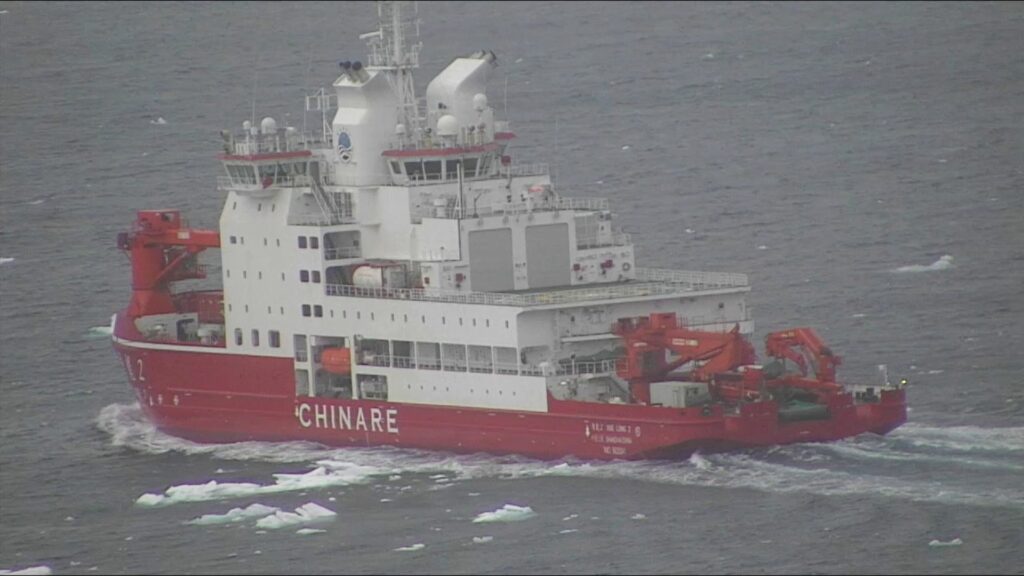
A C-130J Hercules airplane crew from Coast Guard Air Station Kodiak responds to a Chinese research vessel operating in the U.S. Arctic as part of Operation Frontier Sentinel Aug. 13, 2025. (U.S. Coast Guard courtesy photo)
JUNEAU, Alaska — The Coast Guard is continuing its response to five Chinese research vessels operating in the U.S. Arctic.
The Coast Guard Arctic District has been monitoring activity and deployed a C-130J Hercules fixed wing aircraft from Air Station Kodiak Wednesday to query the vessels. The U.S. Coast Guard, in conjunction with U.S. Northern Command and Alaskan Command, constantly monitor the activity of foreign vessels operating in and near U.S. waters in support of U.S. homeland defense and security efforts.
The Arctic is a growing zone of strategic global competition. The Coast Guard is the only U.S. surface presence in the Arctic and recently, in Alaska, commissioned U.S. Coast Guard Cutter Storis (WAGB 21), the service’s newest polar icebreaker, and U.S. Coast Guard Cutter Earl Cunningham (WPC 1159), the newest Sentinel-class fast response cutter.
“Commissioning the Storis and Earl Cunningham increases our ability to control, secure, and defend Alaska’s U.S. border and maritime approaches,” said Rear Adm. Bob Little, commander, U.S. Coast Guard Arctic District. “As we continue to grow our surface fleet, we utilize our aviation resources which play a vital role in countering foreign malign influence.”
The five Chinese Research Vessels are: Xue Long 2, China flagged; Shen Hai Yi Hao, China flagged; Zhong Shan Da Xue Ji Di, Liberia flagged; Ji Di, China flagged; andTan Suo San Hao, China flagged.
Task Force Forge Marines and Sailors Assume Southern Border Mission in Arizona
Aug. 18, 2025 | By Marine Corps 1st Lt. John Carter
Service members assigned to Combat Logistics Battalion 15, 1st Marine Logistics Group, I Marine Expeditionary Force, known as Task Force Forge, assumed operational responsibilities last month from 1st Combat Engineer Battalion, 1st Marine Division, known as Task Force Sapper, to support U.S. Northern Command’s ongoing assistance to the Department of Homeland Security under Joint Task Force Southern Border.
Comprised of 500 Marines and sailors, Task Force Forge is conducting vital ground engineering and logistical operations within the U.S. Border Patrol’s Yuma Sector located in Arizona. These missions include reinforcing the existing southern border barrier, emplacing national defense area signage and performing roadway surveys and maintenance — all part of the Defense Department’s continued support to U.S. Customs and Border Protection.
Before starting barrier reinforcement tasks, the unit completed a series of barrier surveys along key segments to evaluate conditions, identify reinforcement needs and guide mission planning. These assessments form the foundation for ongoing operations.
The barrier reinforcement mission, previously conducted by Task Force Sapper in the San Diego Sector, was an anticipated requirement that Task Force Forge had prepared for in advance. Marines and sailors are now welding prefabricated steel brackets onto the existing barrier infrastructure. Once installed in sufficient numbers, these brackets will support the placement of barbed and concertina wire, enhancing the overall security of the barrier.
“The Marines and sailors of Task Force Forge bring precision, professionalism and purpose to every mission,” said Marine Lt. Col. Colin Graham, CLB 15 battalion commander and Task Force Forge commanding officer. “Reinforcing the border barrier is a tangible way we assist our interagency partners to strengthen security and protect the territorial integrity of the United States.”
In parallel, following the recent establishment of the Yuma National Defense Area — located adjacent to the Barry M. Goldwater Range and now part of Marine Corps Air Station Yuma — Task Force Forge has been tasked with emplacing NDA signage throughout the NDA 4 East region. This land, previously owned by the Interior Department, was transferred to the Navy, with Marine Corps Air Station Yuma delegating operational authority to Northcom.
Additionally, the task force is conducting detailed surveys of unimproved roads essential for maintaining mobility for CBP and DOD personnel operating in rugged desert terrain. These surveys evaluate road geometry, surface conditions and drainage patterns.
Task Force Forge engineering experts are using these findings to plan targeted maintenance activities such as blading, reshaping and dust abatement. These efforts aim to preserve the environmental integrity of each route while ensuring safe and reliable travel for mission-critical operations.
Gerald R. Ford Carrier Strike Group Transits Strait of Dover
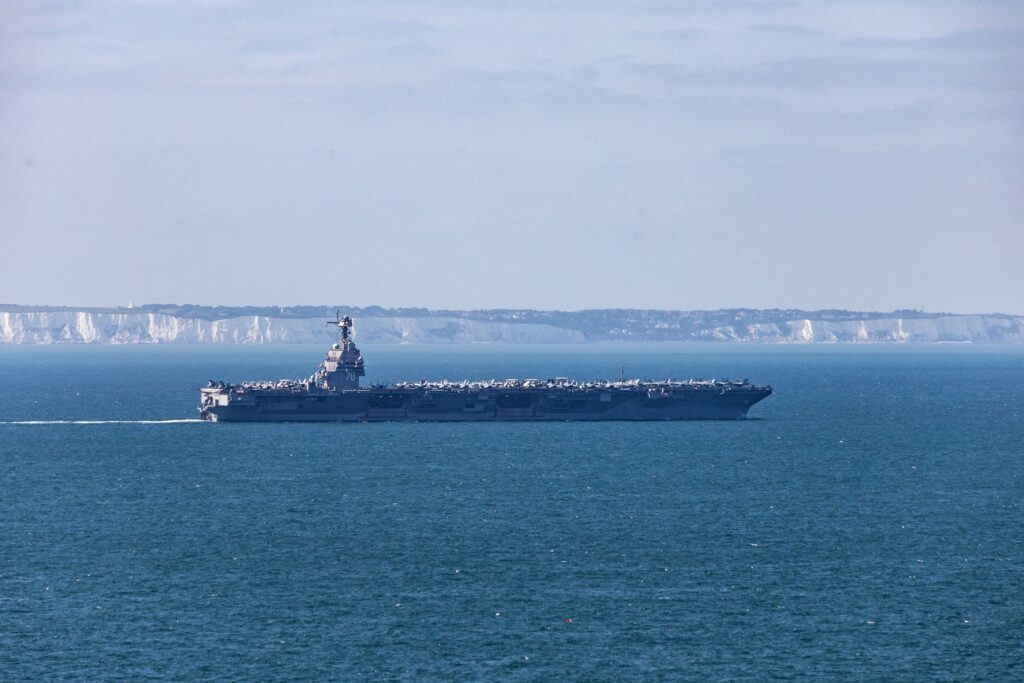
The world’s largest aircraft carrier, USS Gerald R. Ford (CVN 78), passes the Cliffs of Dover in the English Channel, Aug. 17, 2025. Gerald R. Ford, a first-in-class aircraft carrier and deployed flagship of Carrier Strike Group Twelve, is on a scheduled deployment in the U.S. 6th Fleet area of operations to support the warfighting effectiveness, lethality and readiness of U.S. Naval Forces Europe-Africa, and defend U.S., Allied and partner interests in the region. (U.S. Navy photo by Mass Communication Specialist 3rd Class Gladjimi Balisage)
NORTH SEA – The world’s largest aircraft carrier, USS Gerald R. Ford (CVN 78), and Arleigh Burke-class guided-missile destroyers USS Mahan (DDG 72), USS Winston S. Churchill (DDG 81), and USS Bainbridge (DDG 96), all assigned to Gerald R. Ford Carrier Strike Group (GRFCSG), transited the Strait of Dover into the North Sea, Aug. 17.
The Harry S. Truman Carrier Strike Group was the last U.S. carrier strike group to transit through the Strait of Dover, on Oct. 14, 2024.
“Gerald R. Ford’s agile transit through the Strait of Dover between England and France is a testament to our power projection capability that supports peace through strength,” said Capt. Dave Skarosi, commanding officer of Gerald R. Ford. “Our skilled navigation team ensures that the world’s largest aircraft carrier brings our capability as a forward-positioned force anytime, anyplace, to defend the Euro-Atlantic region from hostile action.”
The inherent flexibility and scalable maritime force that GRFCSG provides to the NATO Alliance is unrivaled, and their continued operations in the U.S. European Command area of operation reinforces the U.S. Navy’s ironclad commitment to the stability and security of the European theater.
“A free and open maritime domain benefits all nations,” said Capt. Mark Lawrence, commodore of Destroyer Squadron Two, embarked aboard Gerald R. Force as the Sea Combat Commander. “Our collective surface force’s transit into the North Sea demonstrates our resolve to strengthen peace, stability, and deterrence across the European continent.”
Historically known as the Dover Narrows, the Strait of Dover is the slimmest part of the English Channel and separates Great Britain from mainland Europe. It also delineates the border between the Atlantic Ocean and the North Sea.
Carrier Strike Group Twelve is on a scheduled deployment to the U.S. 6th Fleet area of operations to support the warfighting effectiveness, lethality, and readiness of U.S. Naval Forces Europe-Africa, and defend U.S., Allied and partner interests in the region. For more than 80 years, U.S. Naval Forces Europe-U.S. Naval Forces Africa has forged strategic relationships with our Allies and partners, leveraging a foundation of shared values to preserve security and stability.
Sailors assigned to the Arleigh Burke-class guided-missile destroyer USS Sterett (DDG 104) man the rails as the ship returns to its homeport of San Diego following a nine-month deployment to the U.S. 5th and 7th Fleet areas of operations, Aug. 13, 2025. An integral part of the U.S. Pacific Fleet, U.S. 3rd Fleet leads naval forces in the Indo-Pacific and provides the realistic, relevant training necessary to execute the U.S. Navy’s role across the full spectrum of military operations. U.S. 3rd Fleet works together with allies and partners to advance freedom of navigation and overflight, the rule of law and other principles that underpin security for the Indo-Pacific region. (U.S. Navy photo by Mass Communication Specialist 2nd Class Lordin Kelly)