Electric Boat, New England Institute of Technology Announce Expansion of Shipbuilding Training
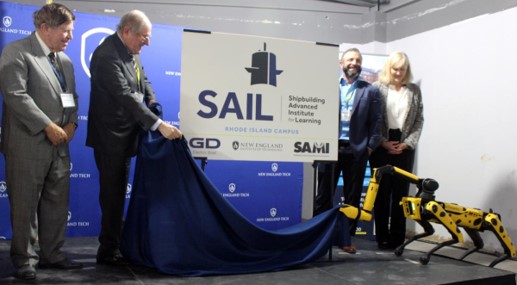
WARWICK, R.I. — General Dynamics Electric Boat (Electric Boat), New England Institute of Technology (NEIT) and the U.S. Navy Submarine Industrial Base (SIB) joined federal and state leaders today to announce a major expansion of their training partnership for the submarine workforce. To meet Electric Boat’s need for 8,000 new employees, NEIT is retrofitting its Warwick campus (Post Road), tripling the training space from 30,000 sq. ft. to 100,000 sq. ft. to serve as the company’s primary workforce training center in Rhode Island.

 “As submarine production accelerates, workforce development has emerged as one of the greatest challenges,” said Richard Gouse, President of New England Institute of Technology. “Our strong relationship with Electric Boat creates a direct pathway into skilled, good-paying manufacturing careers and is yet another example of how New England Tech prepares its graduates for careers the marketplace demands.”

“With the expansion of our training facility, we are positioned to significantly grow our training footprint, enabling us to recruit additional talent and deepen our commitment to continuous skill development,” said Courtney Murphy, Director of Talent Acquisition & Workforce Development at General Dynamics Electric Boat. “This investment strengthens EB and RI’s submarine industrial base, ensuring we deliver submarines at the pace required by the U.S. Navy. Our partnerships with organizations like NEIT are vital in helping us achieve this goal.”

Approximately 3,000 new hires per year are expected to go through the Shipbuilding Advanced Institute for Learning (SAIL) for at least the next three years before transitioning to Electric Boat’s Quonset Point shipyard. In addition to new hire training, the space will accommodate recurring training, recertification and upskilling for career employees.

The SAIL will be home to more than 20 state-of-the-art classrooms designed for a blended learning environment, integrating hands-on skills development with high-quality classroom instruction in the areas of welding, shipfitting, pipefitting, machining, sheet metal, paint, electrical, as well as EB’s future hiring center.

For more than ten years, NEIT, through its Shipbuilding and Manufacturing Institute (SAMI), has trained new Electric Boat employees in welding, shipfitting and machining. To date, more than 4,500 new employees have been trained, and thousands of career employees have experienced on-going continuing education.

NEIT’s shipbuilding training expansion is supported by $20 million from the U.S. Navy’s Submarine Industrial Base and $25 million from General Dynamics Electric Boat. The US Navy Submarine Industrial Base strengthens America’s undersea advantage by investing in the supply chain, workforce, and manufacturing technologies that submarine production and sustainment demand.

Last month, the Department of War awarded Electric Boat construction contracts for 14 submarines totaling $76.6 billion. To explore Electric Boat jobs, visit: ebcareers.com.

Support for the Workforce Training Expansion

“EB is in the midst of a hiring boom and the SAIL program has demonstrated success helping students get the hands-on training they need to launch successful trade careers and land good-paying jobs building high-tech submarines. This partnership and NEIT’s new expanded campus here in Warwick will strengthen, accelerate, and increase the capacity of the local defense manufacturing pipeline, connecting people to career pathways and a variety of job opportunities,” said U.S. Senator Jack Reed, the Ranking Member of the Senate Armed Services Committee who helped make federal funds available to the Navy for this type of workforce training expansion program.

“Rhode Island’s world-class shipbuilding industry is an engine of the Ocean State’s economy,” said U.S. Senator Whitehouse. “In partnership with Electric Boat, NEIT’s new SAIL facility will provide Rhode Islanders with more well-paying career opportunities working to equip our Navy with state-of-the-art submarines in the years ahead.”

“Rhode Island’s shipbuilding workforce is critical for our nation’s defense,” said Congressman Seth Magaziner. “The Shipbuilding Advanced Institute for Learning will help train the welders, machinists, and ship fitters who make it all possible for local jobs. I am excited to work with New England Institute of Technology and General Dynamics Electric Boat to provide SAIL with the resources it needs to train Rhode Island’s next generation of shipbuilders.”

“This latest investment in Rhode Island’s workforce will ensure that our state remains at the cutting edge of naval production and innovation while preparing thousands of Rhode Islanders for good-paying jobs in the shipbuilding industry,” said Congressman Gabe Amo. “Thank you to the New England Institute of Technology and Electric Boat for your continued work to strengthen Rhode Island’s Blue Economy, and congratulations on this new expansion.”

“Warwick is proud to play a central role in this important investment in Rhode Island’s future. Expanding New England Tech’s training facility will help prepare thousands of skilled workers for good-paying careers while strengthening our state’s submarine industry and manufacturing workforce,” said Warwick Mayor Frank Picozzi. “This partnership between Electric Boat, New England Tech, the U.S. Navy and our state and federal partners is a tremendous investment in both our local economy and our national security.”

From New England Institute of Technology, Aug. 24, 2026


Coast Guard coordinates rescue of 27 from vessel fire 527 miles off Galapagos Islands

SAN FRANCISCO — The Coast Guard coordinated the rescue of 27 crew members from the Ecuadorian-flagged fishing vessel Drennec after the vessel experienced a fire approximately 527 miles southwest of the Galapagos Islands, Aug. 20, 2026.

At approximately 8 p.m. Thursday, Coast Guard Southwest District watchstanders received multiple distress alerts from the Drennec, including an emergency beacon alert and Iridium alert from a Garmin inReach device. Watchstanders established contact with Garmin Response who confirmed that the vessel had caught fire and all 27 crew members had abandoned ship into a life raft.

Using the Automated Mutual-Assistance Vessel Rescue System (AMVER), Coast Guard watchstanders reached out to nearby vessels, alerting them to the situation and requesting assistance.

Two good Samaritan vessels, the container ship Oluf Maersk and the fishing vessel Ricky A, diverted to assist. Ricky A recovered all 27 mariners from the lifeboat, while Oluf Maersk remained on scene to assist. At 10:15 a.m. Friday, all 27 individuals were reported safely aboard the Ricky A, who will transport them to Guayaquil, Ecuador.

“Rescuing 27 crew members within 11 hours of the distress alert in a remote area of the Pacific Ocean is an incredible achievement that highlights how the Global Search and Rescue System is designed to work,” said Mr. Doug Samp, search and rescue mission coordinator.  “This rapid response was made possible by the crew’s proper emergency devices and the seamless coordination between the Coast Guard, Maritime Rescue Coordination Center Ecuador, and the good Samaritans who responded. We sincerely appreciate the response from the Oluf Maersk and Ricky A, who directly contributed to 27 lives saved.”

AMVER is a worldwide voluntary ship-reporting system sponsored by the U.S. Coast Guard. Search and rescue authorities use AMVER vessel position information to identify participating commercial ships near a maritime distress and request their assistance. Participation allows merchant vessels around the world to play a vital role in saving lives at sea.

From U.S. Coast Guard District Southwest, Aug. 22, 2026


Coast Guard awards $60 million contract for Sector St. Petersburg facilities

WASHINGTON – The U.S. Coast Guard awarded a $60 million contract on Aug. 13, 2026, to repair, recapitalize and improve waterfront facilities at Sector St. Petersburg in St. Petersburg, Florida.

The contract, awarded to Tutor Perini Corp. of Framingham, Massachusetts, will support the removal and rebuilding of facilities damaged by Hurricane Helene, as well as constructing new infrastructure to support future Fast Response Cutter operations.

The project, expected to be completed in summer 2028, will include:

  • Demolition of damaged facilities.
  • Construction of new berthing, marine maintenance facilities, and a multipurpose training facility.
  • Delivery of new stormwater management facilities, a boat ramp and a fuel station.
  • Construction of a new waterfront bulkhead, upgrading berth strength to accommodate crane operations and new mooring fenders and hardware.
  • Installation of new shore utility connections and waterfront lighting to support fast response cutters and other cutter classes.
  • Improvements to the buoy storage lot to facilitate access and stormwater management.
  • Construction of a Maintenance and Weapons Detachment facility to support cutter maintenance.

“Investing in Sector St. Petersburg’s waterfront infrastructure is an investment in Coast Guard readiness,” said Capt. Courtney Sergent, commander, Sector St. Petersburg. “This project will restore storm-damaged facilities, modernize critical shore support, and give our crews the resilient infrastructure they need to operate, maintain, and deploy cutters along Florida’s Gulf Coast.”

Sector St. Petersburg is an essential homeport for Coast Guard cutters, which support Coast Guard missions to save lives; control, secure, and defend U.S. borders and maritime approaches; ensure the safe and secure flow of commerce; and respond to crises and contingencies that may come with little or no warning.

Improvements to Sector St. Petersburg are made possible by the Coast Guard’s historic $25 billion investment provided by the One Big Beautiful Bill Act, the American Relief Act of 2025, and other annual appropriations.

Using the $25 billion investment in the One Big Beautiful Bill Act, the largest capital investment in the Service’s history, the Coast Guard has already ordered over $15 billion in new assets and capabilities, critical depot maintenance, and shore facilities. This rapid investment demonstrates the Coast Guard’s commitment to modernizing acquisition, delivering next-generation technology, restoring readiness, and revitalizing shore infrastructure.

From U.S. Coast Guard Headquarters, Aug. 21, 2026


Navy Removes Bureaucratic Barriers to Accelerate 3D Printing and Accelerate Submarine Lethality

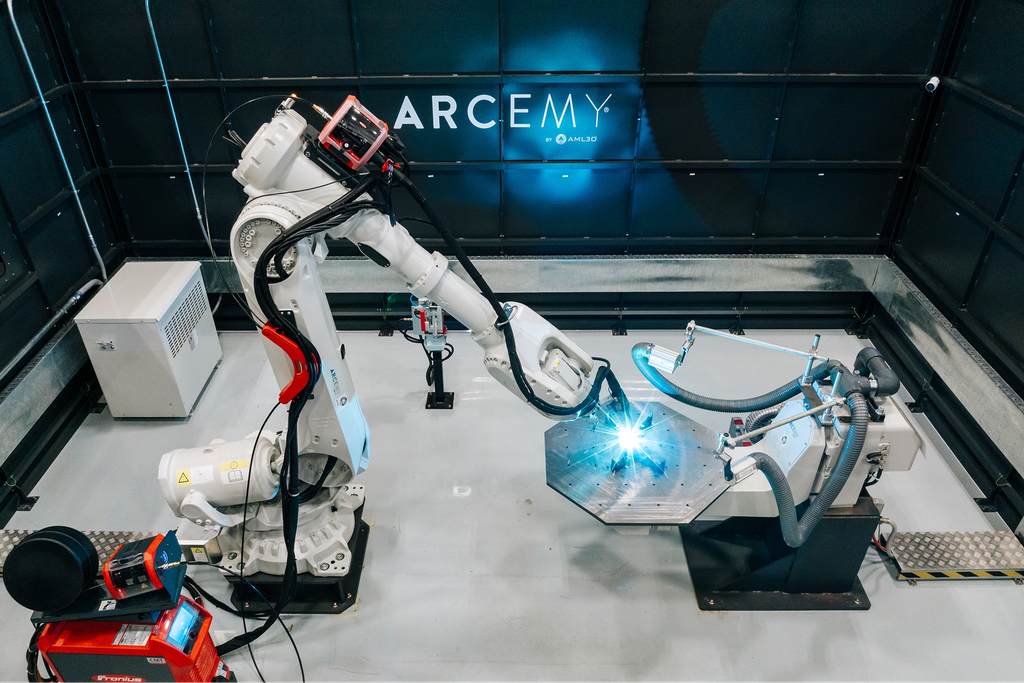
WASHINGTON — In a decisive move to accelerate warfighting capability and eliminate industrial bottlenecks, the Navy released new technical requirements on August 11 designed to rapidly scale the use of metallic 3D-printed materials across the submarine enterprise. The new standards strip away legacy administrative and engineering hurdles, clearing the launchpad for Additive Manufacturing (AM) to be integrated directly into submarine construction, maintenance, and combat-ready repair at unprecedented speeds.

Additive manufacturing represents a paradigm shift in production velocity, on par with the historic transition from riveting to welding. By removing supply chain friction, this technology enables rapid, on-demand component fabrication and unlocks advanced designs engineered to win the high-end maritime fight.

The newly approved Project Peculiar Document (PPD) 802-8436658 establishes a streamlined, repeatable technical pathway to substitute legacy cast and wrought parts with 3D-printed metallic materials. Historically, swapping a traditional component for an AM equivalent triggered a number of slow, part-by-part engineering assessments, manual drawing modifications, and repetitive first-article testing. The new requirements remove this bottleneck, allowing engineers to bypass redundant approvals and field advanced components at the speed of relevance.

“This is exactly the type of barrier we must remove if we are going to unlock 21st century technology to get our submarine programs on plan and ahead of the threat,” said Vice Adm. Robert Gaucher, Director, Submarine Programs. “Additive manufacturing gives us a tool to get after supply chain constraints and part obsolescence by reducing the time it takes to get critical capability to our warfighters. This directive hands our engineers, shipbuilders, and suppliers authority to execute at scale.”

For submarine construction and sustainment, 3D printing serves as a critical pressure valve—providing more immediate, alternative sourcing for long-lead parts, bypassing defunct suppliers, and neutralizing obsolescence risks before they impact fleet readiness. Additively manufactured metal components are already performing flawlessly in deep-sea operations aboard USS Washington and USS Nevada. The new framework build on these operational victories to deploy AM materials deeper into the platform.

Moving at high speed does not mean cutting corners or sacrificing quality or safety. For high-consequence applications—including Level I material control and SUBSAFE systems—AM materials remain subject to applicable Navy quality requirements, augmented by rigorous tracking and non-destructive inspection.

“Moving faster does not mean accepting less,” Gaucher emphasized. “As we scale our advanced manufacturing capabilities, we will relentlessly enforce the safety and quality standards our crews rely on. Our objective is clear: embrace advanced manufacturing to solve hard problems, update or removal of legacy processes, and deliver quality submarines safely.”

The Submarine Industrial Base (SIB) Program Office’s Advanced Manufacturing team worked directly with Navy enterprise stakeholders, shipbuilders, and suppliers to forge these requirements. Their mission is to scale advanced manufacturing technologies to drive industrial throughput, fortify the supply chain, and maximize fleet availability.

The requirements are authorized for immediate operational use across submarine design, construction, overhaul, and repair.

To meet the national security mandate of “1+2,” building one Columbia-Class and two Virginia-Class submarines annually, while sustaining the current fleet, the Navy is exploiting AM as a force multiplier. Expanding these technologies is vital to expanding industrial capacity, reducing production bottlenecks, and securing the undersea advantage.

PPD 802-8436658 and its accompanying technical resources are fully indexed and searchable via the Defense Logistics Agency (DLA) Quick Search Portal and the Navy Digital Sea Resource Portal.

From the Navy’s Chief of Information, Aug. 21, 2026


USS George Washington Celebrates Historic Aircraft Milestone

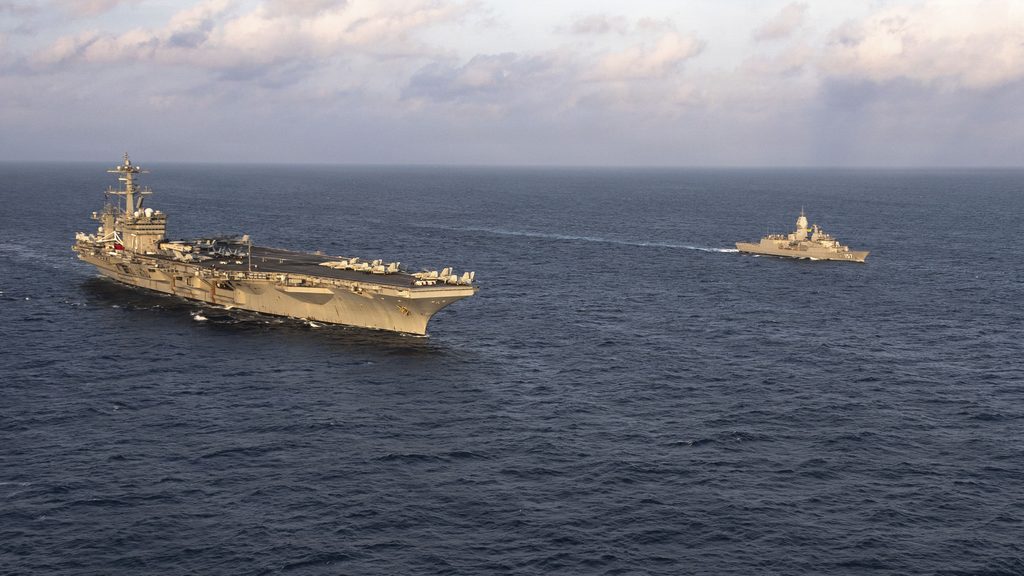
After 34 years of continuous service projecting American sea power, the aircraft carrier USS George Washington achieved a major aviation milestone by recovering its 200,000th fixed-wing aircraft while underway in the Indian Ocean, Aug. 18. 

Navy Lt. Steven Frazier, a pilot assigned to Strike Fighter Squadron 147, received the historic honor by landing on the ship in an F-35C Lightning II fighter jet after flying routine operations in the U.S. 7th Fleet area of operation.  

Frazier emphasized that the successful aircraft recovery was a team effort. 

“For the George Washington, more than anything, it shows consistency over the last 34 years to be able to complete whatever mission the country calls upon it to do,” he said. “For me personally, it shows that if this aircraft carrier launches me off of the ship, I’ll be able to come back and land on it.” 

Each aircraft recovery — or “trap” — consists of fixed-wing aircraft safely landing on the ship by catching a thick, steel arresting gear cable with its tail hook. The carrier can land one aircraft on deck per minute and typically lands 70 aircraft across several events throughout the day. 

“Two hundred thousand traps is not just a number — it is a testament to the enduring strength of American naval aviation and the unmatching professionalism of the sailors who make it possible,” said Navy Rear Adm. Jeffrey L. Heames, Carrier Strike Group 5 commander. “This milestone reminds the world that U.S. carriers remain ready to launch and recover aircraft anywhere, anytime, in defense of freedom and our allies.” 

For more than three decades, thousands of USS George Washington sailors have played a vital role in safely launching and recovering aircraft. These daily evolutions by the countless warfighters who served aboard the ship led to this historic achievement. 

“I am immensely proud of every sailor who has served aboard [the] George Washington over the past 34 years,” said Navy Capt. Nicholas DeLeo, the ship’s commander. “The 200,000th trap belongs to the arresting gear teams, the yellow shirts, the maintainers and every watchstander who ensures this afloat airfield stays full mission capable. Our ship continues to deliver combat power from the sea, and this milestone is proof that [we are] ready for whatever the nation asks of us.” 

Each successful trap represents seamless teamwork among pilots, landing signal officers, flight deck crews, arresting gear operations below deck, and maintainers who keep the complex hydraulic and mechanical systems ready day and night, in all weather. For more than 34 years, the George Washington has recovered aircraft ranging from F-14 Tomcats, F/A-18 Hornets and Super Hornets, EA-18G Growlers, E-2 Hawkeyes and F-35C Lightning IIs. 

“Every trap is a high-stakes ballet of skill, trust and precision. Reaching 200,000 on [the] George Washington is a shared achievement between the air wing and the ship’s company,” said Navy Capt. Brian Kesselring, Carrier Air Wing 5 commander. “All-hands, past and present, who served aboard [the] George Washington played a part in reaching this monumental historical milestone.” 

As the USS George Washington continues its service well into its fourth decade, the 200,000-trap mark celebrates past excellence and lays the foundation for the tens of thousands of traps still to come.

By USS George Washington, Aug. 20, 2026 


Saildrone and Lockheed Martin Demonstrate Missile Launch from Saildrone USV

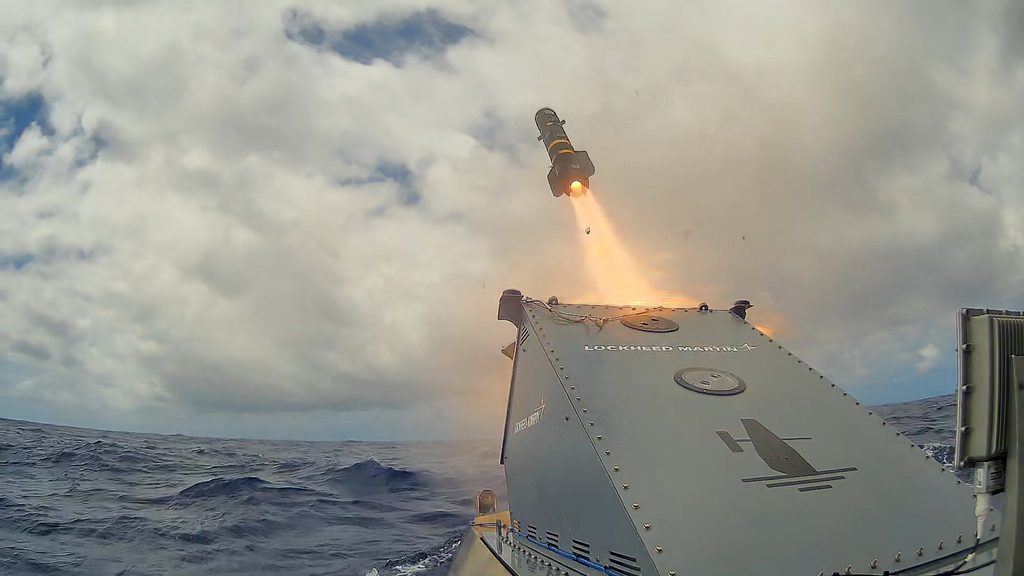
HONOLULU, Hawaii — Marking a significant advancement in autonomous naval warfare, Saildrone—the global leader in unmanned surface vehicle (USV) technology—executed two Joint Air-to-Ground Missile (JAGM) launches from a Saildrone Surveyor USV during the US Navy’s Rim of the Pacific (RIMPAC) exercise. This operation, conducted off the coast of Hawaii under the sponsorship of the US Navy Fleet Experimentation Program (FLEX), represents the first-ever missile launch from a Saildrone USV.

In coordination with the USS THEODORE ROOSEVELT(CVN-71) Carrier Strike Group-9 and enabled by the Navy’s ARES (Adjunct Remote Engagement System)—a remotely operated combat system—the Saildrone Surveyor demonstrated its interoperability by acting on target data for a surrogate high-speed surface craft. 

“This successful live fire demonstration was the result of pairing one of the most tried and trusted munitions with the most operationally deployed class of USV on the planet,” said Richard Jenkins, Saildrone’s founder and CEO. “Not only does this deliver mission-ready, kinetic USV capability today, but it also de-risks and accelerates our journey of fitting more sophisticated kinetic capabilities, like the Mk70 launcher, to our larger platform, the Saildrone Spectre. Saildrone will continue to develop our platform capabilities to meet the rapidly evolving operational requirements of our customers.”

This live-fire demonstration is the culmination of six months of joint development between Saildrone and Lockheed Martin, which originated from a strategic partnership established in October 2025. The RIMPAC exercise further highlighted the Surveyor’s versatility by deploying a passive electronic warfare sensor that successfully detected, classified, and identified a surrogate threat radar system in conjunction with an MH-60 aircraft.

These integrations serve as a powerful example of the ability to rapidly combine Saildrone’s commercially proven USV technology with Lockheed Martin’s combat-ready effectors to address the evolving requirements of the US military.

“Lockheed Martin and Saildrone are leading the way to act differently and leverage the strength of all of industry for our national defense. We will continue to invest in new capabilities ahead of need to accelerate and de-risk deployment of urgently needed defense technologies,” said Paul Lemmo, Vice President and General Manager, Sensors, Effectors and Mission Systems at Lockheed Martin.

This demonstration is the first of a series of planned integrations ahead of the launch of Saildrone’s largest and most advanced USV—the Saildrone Spectre. Measuring 52 meters (170 feet) in length, the Spectre can accommodate much larger, containerized mission sets and payloads. Future capabilities for this platform include the integration of the Lockheed Martin Mk 70 launcher and various towed arrays designed to support anti-submarine warfare operations.

The Saildrone Surveyor is a multi-mission USV designed for global missions including persistent maritime intelligence, surveillance, and reconnaissance (ISR), deep-ocean mapping for undersea advantage, and distributed, long-endurance power projection.

From Saildrone, Aug. 20, 2026


Underwater Construction Corp. Announces Strategic Investment

ESSEX, Conn. — Underwater Construction Corporation (UCC), a leading provider of specialized underwater diving services, today announced a strategic investment from Crescentia Capital, in partnership with Graham Capital Investments (GCI). The investment provides UCC with additional resources to accelerate organic growth, expand capabilities and geographic reach, invest in technology, and pursue strategic acquisitions.

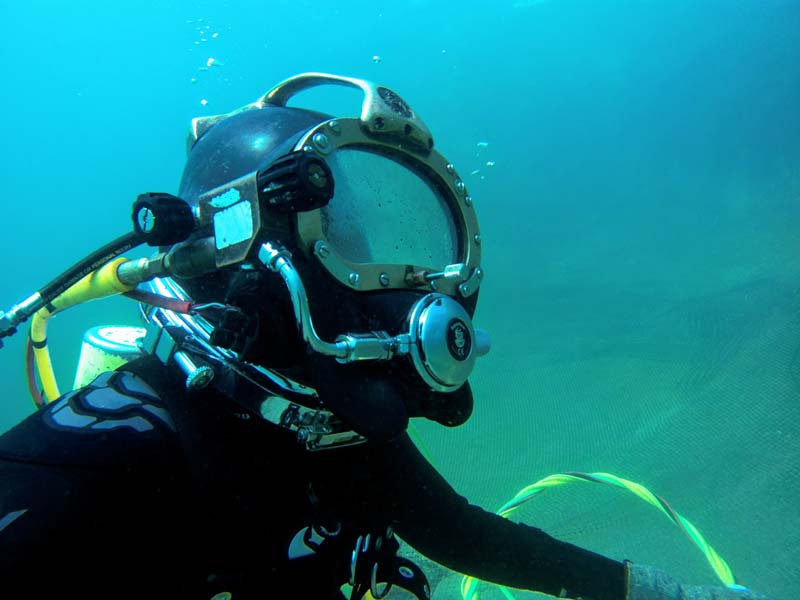
Founded in 1969, UCC has built a reputation for performing technically demanding, mission-critical underwater work across the nuclear and hydroelectric power, U.S. Navy, municipal water infrastructure and industrial markets. Today, the company operates from seven regional offices and employs more than 225 certified commercial divers. Its capabilities include underwater inspection, cleaning, repair and maintenance, underwater welding, specialty coatings, carbon fiber structural wrapping, and remotely operated vehicle (ROV) operations.

The investment marks the next stage of growth for UCC while building on the leadership, people, and expertise that have defined the company for more than five decades. Raymond W. Palumbo will continue to serve as President and CEO, with UCC’s experienced leadership team, project supervisors and divers continuing to lead the company’s operations.

“Our foundation is not changing — what is changing is our ability to invest in the future,” said Raymond W. Palumbo, President and CEO of UCC. “Crescentia Capital and Graham Capital Investments recognize what makes UCC different: our people, our technical expertise, our safety culture, and our ability to take on some of the most demanding underwater work. This investment gives us the resources to expand our capabilities, strengthen our presence in the markets we serve, and continue building UCC for the future.”

The investment also provides UCC with additional resources to invest in its people, technology and operational capabilities, while expanding its ability to provide localized support to customers. UCC expects to continue strengthening its regional footprint while investing in equipment that enhances the company’s ability to serve customers across critical infrastructure markets.

“This effort is not about becoming a larger company,” Palumbo added. “It’s about becoming a stronger and more capable partner for our customers. That means investing in our divers and our technology, expanding our regional operations, and increasing our capabilities to meet the evolving needs of the industries we serve.”

Crescentia Capital completed the investment in partnership with Graham Capital Investments. Webster Bank and Avante Capital Partners provided financing in support of the transaction. Robinson & Cole served as legal counsel to UCC and its shareholders. Saybrook Capital Advisors served as the exclusive M&A advisor to UCC and its shareholders.

About Underwater Construction Corporation

Founded in 1969, Underwater Construction Corporation is a leading provider of specialized underwater diving services across the United States. UCC pioneered commercial nuclear diving in the early 1970s and has grown into one of the largest nuclear diving companies in the world.

UCC provides inspection, cleaning, repair and maintenance, underwater welding, specialty coatings, carbon fiber structural wrapping and remotely operated vehicle (ROV) operations to customers across the nuclear and hydroelectric power, defense, municipal water utility and industrial sectors. For more information, visit www.uccdive.com.

From Underwater Construction Corporation, Aug. 20, 2026


Exercise Northern Viking 2026 Marks 75 Years of U.S.-Iceland Defense Cooperation

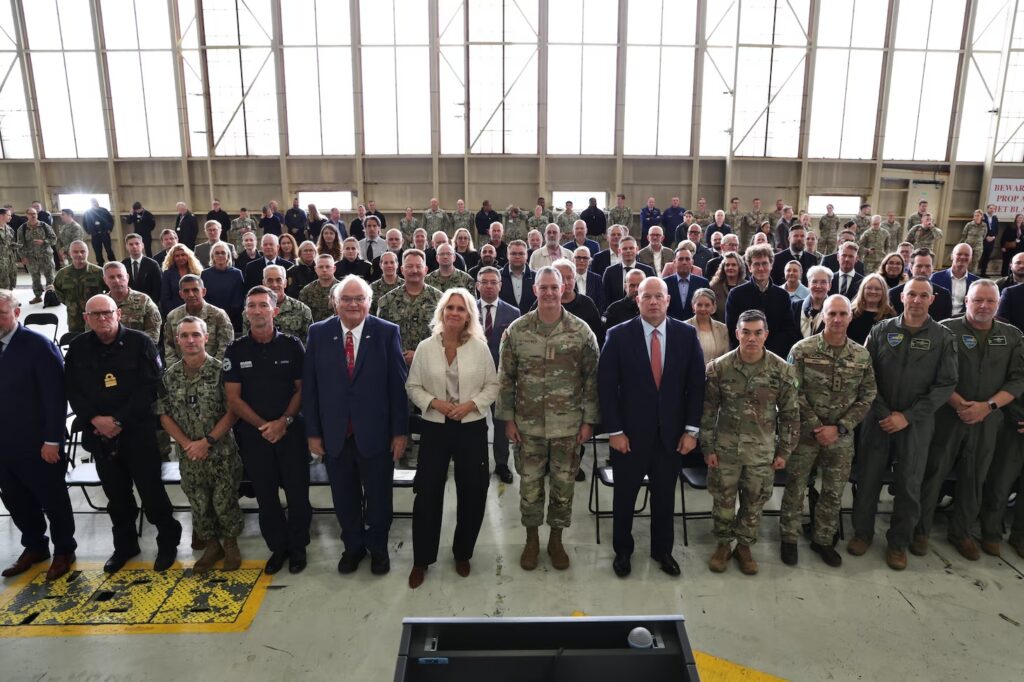
KEFLAVIK, Iceland  —  U.S. Sailors, Marines, Airmen, and Soldiers have arrived in Keflavik, Iceland, joining forces with the Icelandic Coast Guard and other NATO Allies to officially kick off U.S. Sixth Fleet’s Northern Viking 2026 (NV26) exercise during an opening ceremony on August 18, 2026.

Participating nations in NV26 include Belgium, Denmark, France, Iceland, Norway, Poland, and the United States, alongside specialized assets and personnel from Allied Maritime Command (MARCOM) and NATO Joint Force Command Norfolk.

“Our defence cooperation with the United States has thrived for 75 years because it has never stood still; it has developed to meet evolving challenges of our time,” said Þorgerður Katrín Gunnarsdóttir, Iceland’s Minister for Foreign Affairs. “The best way to celebrate this anniversary is not merely by commemorating our partnership, but by actually practicing it — together and alongside our Allies. Northern Viking is precisely that, a demonstration that the commitments we have made to one another are dynamic, practical and built on trust – underpinned by shared interests.”

This year’s iteration of the biennial exercise marks a milestone 75th anniversary of the 1951 Bilateral Defense Agreement between Iceland and the United States. Running from August 22 to September 3, NV26 will challenge joint and coalition forces with a series of highly realistic training scenarios. Key training opportunities will focus on anti-submarine warfare, mine countermeasure, expeditionary construction, search and rescue, humanitarian medical response, and disaster response.

“Seventy-five years of bilateral defense cooperation is a testament to the unbreakable bond between the United States and Iceland,” said Vice Adm. J. T. Anderson, Commander, U.S. Sixth Fleet. “Northern Viking 2026 is a demonstration of our commitment to the collective defense of the North Atlantic. Together with our Allies, we continue to create an environment that allows interoperability among NATO maritime forces so that European Allies can take over primary responsibility for deterrence and defense in the European Theater.”

Exercise Northern Viking 2026 is designed to strengthen interoperability and force readiness between the United States, Iceland, and other allied nations. The exercise enables critical multi-domain command and control of joint and coalition forces defending Iceland and safeguarding the sea lines of communication within the Greenland, Iceland, and United Kingdom (GIUK) gap. As a vital global shipping corridor, keeping the GIUK gap secure is imperative for transatlantic trade, commerce, and security between North America and Europe.

“Together, we’re honing our war fighting skills and ensuring our ability to secure this critical region and to project decisive combat power wherever and whenever necessary,” said Gen Alexus G. Grynkewich, Supreme Allied Commander Europe and commander U.S. European Command. “We will deliver precision effects and will practice defense against rapidly proliferating unmanned systems. Throughout this exercise, and others, we will leverage the power of data in AI enabled decision support tools, will integrate data streams in real time, and ensure our command and control structures can make decisions at the speed of future conflict.

The 1951 Defense Agreement was the foundation of a unique security framework designating the United States as responsible for Iceland’s defense in the absence of Iceland’s own standing military. This treaty established a highly specialized and enduring defense presence in the region. Over the last 75 years, this partnership has adapted from Cold War deterrence to modern multi-domain defense operations, ensuring that the transatlantic bridge remains open and secure.

First held in 1982, Northern Viking is a biennial joint and coalition live exercise centered around the provisions of the 1951 Defense Agreement between Iceland and the United States. It remains a key venue for testing defense plans, reinforcing allied cohesion, and refining tactics in the North Atlantic.

U.S. 6th Fleet, headquartered in Naples, Italy, conducts the full spectrum of joint and naval operations, often in concert with allied, interagency and partner forces, to advance U.S. national interests and promote security and stability in Europe and Africa.

For more information from U.S. Naval Forces Europe and Africa/U.S. 6th Fleet, visit www.c6f.navy.mil.

By U.S. Sixth Fleet Public Affairs, Aug. 18, 2026


Navy Advances MH-60 Modernization with TALON Prototype Project


PATUXENT RIVER, Md. — In a critical step to ensure long-term fleet readiness and secure dominance in the maritime domain, the Navy’s MH-60 service life modernization program recently announced the industry performers identified to proceed to the first phase of a Statement of Work (SOW) collaboration for the MH-60 Tailorable Architecture Leveraging Open-systems (TALON) prototype project.

Led by the H-60 Multi-Mission Helicopter program office (PMA-299), in a joint cooperative effort with the Royal Australian Navy, TALON will simultaneously modernize the MH-60 avionics and mission system architecture while resolving multiple obsolescence issues.

TALON is designed to deliver a cost-effective platform that can rapidly respond to emerging threats, adapt to new fleet requirements, and support MH-60 sustainment through the 2050 timeframe. Through collaborative digital engineering and open-system design, this joint effort strengthens the ability of U.S. and allied maritime forces to outpace emerging global threats for decades to come.

To execute this modernization strategy, the government is using an Other Transaction Authority (OTA) agreement facilitated by the Naval Aviation Systems Consortium (NASC) to engage industry partners across three critical roles:

  • Lead Aircraft Integrator (LAI): Sierra Nevada Corp. was identified to design the physical and structural integration for the MH-60S (Sierra) variant. Lockheed Martin Rotary and Mission Systems (LM RMS) was identified to design the physical and structural integration for the MH-60R (Romeo) variant.
  • Segment Lead Integrator – Flight Critical Avionics Segment (FCAS) (SLI-F): Rockwell Collins Inc. and LM RMS were identified as the SLI-F responsible for hardware and software architecture design, interface management, and system-level software integration for the FCAS and Digital Backbone (DBB).
  • Open System Verification Demonstration Third-Party Integrator (O3PI): Technology Security Associates Inc. was identified to support the government’s assessment of how segment integrators implement Modular Open Systems Approach (MOSA) in the FCAS and DBB system, to include OSVDs.

This does not constitute formal contract or agreement awards, which remain contingent upon successful negotiation and finalization of the Phase 1 SOWs, laying the groundwork for a major leap in naval aviation technology and marking a critical step toward potential prototype development for FCAS and DBB.

Under this phased acquisition approach, Phase 1 will focus on preliminary FCAS and DBB design, establishment of the collaborative digital engineering environment (DEE) and characterizing the baseline aircraft, which involves physical integration, structural modification, A-kit fabrication, and preparation for aircraft-level testing. Phase 2 will focus on prototype development and verification activities.

By utilizing modern digital acquisition practices and MOSA standards, TALON will support MH-60 key business drivers while also streamlining Future Vertical Lift (Maritime Strike) (FVL(MS)) development with a core open architecture that is portable.

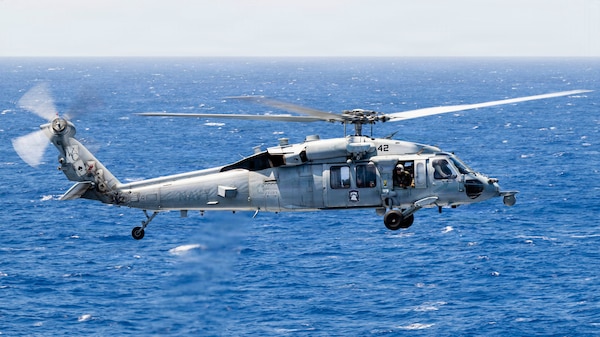
The MH-60R specializes in anti-submarine warfare, surface warfare, electronic warfare, and command and control. The MH-60S is used for performing anti-surface warfare, combat search and rescue, special warfare support and airborne mine countermeasures.

From Katherine Coughlan, PAE Aviation, Aug. 19, 2026


Bollinger Shipyards Launches ‘NextGen Shipbuilders’ Program with Gulfport School District

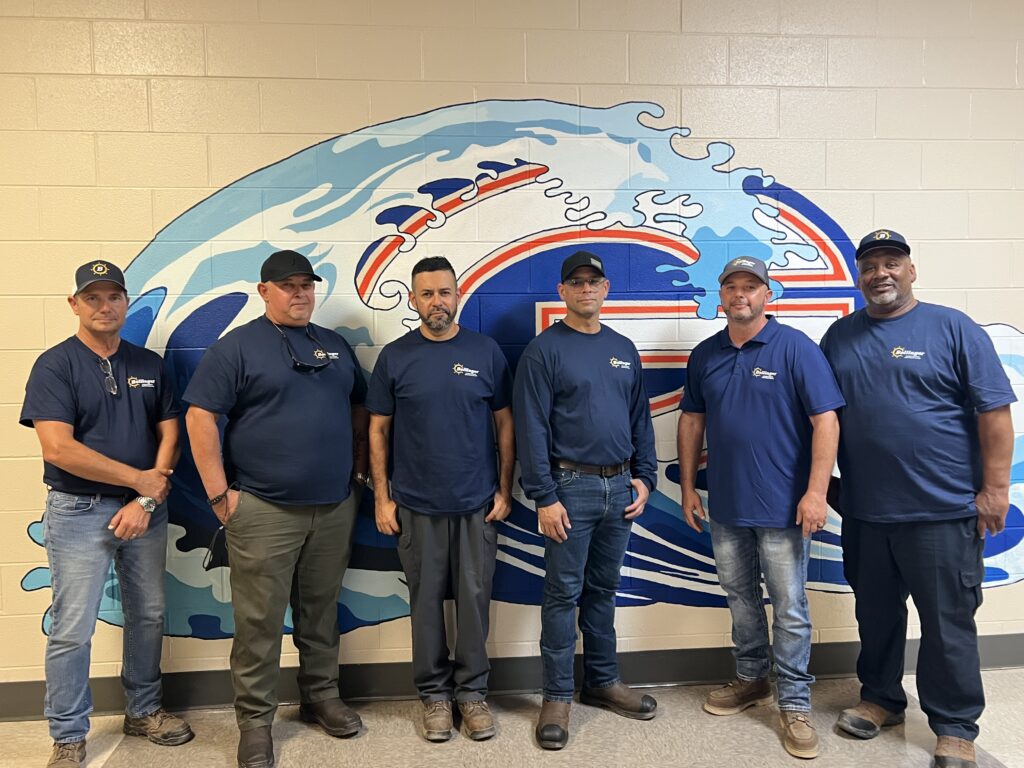
GULFPORT, Mississippi — Bollinger Shipyards, a leading designer and builder of high-performance military and commercial vessels, today announced a new partnership with the Gulfport School District to launch ‘Bollinger NextGen Shipbuilders’, a work-based learning program designed to introduce high school students to the skills, trades and career pathways that support the Gulf Coast’s shipbuilding industry.

“Bollinger is proud to partner with Gulfport School District to create a direct, hands-on pathway for students interested in shipbuilding careers,” said Ben Bordelon, President and CEO of Bollinger Shipyards. “Our industry depends on highly skilled tradespeople, and this program gives students early exposure to the tools, training and mentorship they need to succeed while strengthening the Gulf Coast workforce for years to come.”

Through the initiative, Gulfport High School students will gain hands-on exposure to five core maritime manufacturing disciplines: welding, pipefitting, marine electrical, maritime carpentry, and rigging and fitting. Students will train at Bollinger’s new state-of-the-art training facility, where they will receive instruction and mentorship from experienced shipbuilders and skilled trades professionals while applying classroom lessons in a real-world industrial setting.

“We are incredibly excited about this new adventure and the doors it opens for our students,” said Jennifer Hornback, CTE Director. “This partnership provides our youth with invaluable hands-on industry experience, financial independence potential, and a direct pipeline into the Bollinger family upon graduation.”

The program reflects Bollinger’s continued commitment to building the next generation of skilled shipbuilders who will support America’s maritime industrial base. By connecting students directly with industry professionals, Bollinger NextGen Shipbuilders will help participants build market-ready skills before graduation while introducing them to meaningful, family-supporting careers close to home.

From Bollinger Shipyards, Aug. 18, 2026