Collaboration Boosts E-6B Pilot Readiness with New Training Asset 

E-6B aircrew celebrate a successful first Public Air Operations training flight, showcasing the Navy’s commitment to innovative solutions for maintaining peak readiness.  Pictured left to right: Cmdr. Nathaniel Whitman, Fleet Air Reconnaissance Squadron SEVEN (VQ-7) executive officer; Marc Thomason, AAR E-6B In-Flight Trainer chief pilot; Senior Chief Jake Perry, VQ-7 flight engineer; Chief Charles Breen, VQ-7 flight engineer; and Capt. Zach Brown, SCW-1 prospective deputy wing commander. U.S. Navy photo. 

From Naval Air Systems Command, June 11, 2025  

NAS PATUXENT RIVER, Md. — E-6B Mercury pilots from Strategic Communications Wing One (SCW-1) and subordinate commands have successfully completed their first Public Aircraft Operations (PAO) training flight, a significant milestone in maintaining readiness for the critical Take Charge and Move Out (TACAMO) mission. The flight, which occurred on May 30, 2025, was the culmination of fast-paced collaboration and contract award to address an urgent fleet need. 

The TACAMO community required an in-flight trainer (IFT) solution that enables pilots to meet hands-on training requirements. 

The Airborne Strategic Command, Control and Communications Program Office (PMA-271) entered into an agreement with the Adversary and Specialized Aircraft Program Office (PMA-226) in January 2025 to provide flight hours on a Boeing 737 Next Generation (NG) aircraft. 

“PMA-271 and PMA-226 teammates maintained a fleet focused perspective throughout the entire acquisition process to meet the fleet requested ’North Star’ milestone of having an in-flight trainer solution for TACAMO pilot training as expeditiously as possible.” said Capt. Greg Sutton, PMA-226 program manager. 

PMA-226 subsequently awarded an Undefinitized Contract Action to KALS, LLC, a joint venture between AAR Corp. and KIRA Aerospace, on March 3, 2025, to provide the Contractor Owned Government Operated (COGO) Contracted Air Services (CAS) under a PAO framework. 

PMA-226 CAS executed its first-ever COGO contract, working daily with KALS to continuously review documentation and flight clearance requirements. PMA-226, PMA-271, and SCW-1 also met on a weekly basis to ensure all identified requirements and deadlines were being met. This collaboration enabled the transition from contract award to training flight operations in less than three months. 

“This first PAO training flight demonstrates the Navy’s commitment to finding innovative solutions to maintain the readiness of our E-6B pilots,” said Capt. Roger Davis, PMA-271 program manager. “This collaborative effort, from contract award to first flight, reflects the dedication and ingenuity of the entire team.” 

“The phenomenal speed of contract award and execution of the first flight is very much appreciated.” said Capt. Britt Windeler, SCW-1 commander. “My utmost thanks go out to the entire team behind this effort.” 

This new training program represents a significant step forward in PMA-271’s ongoing commitment to deliver a timely, affordable, and effective IFT for the E-6B. In June 2021, the Navy purchased an E-3D aircraft from the Royal Air Force for $15 million, planning to convert it into a TE-6B IFT. However, a subsequent assessment determined that the cost of converting the E-3D and restoring its airworthiness no longer provided a positive return on investment. The Navy issued a stop-work order on the contract with Northrop Grumman Corp. in November 2023. The aircraft is now slated for parts harvesting and disposal by Northrop Grumman, where valuable parts, with an estimated value exceeding the initial $15 million purchase price, will be recovered and can be inducted into the supply system for use by the current E-6B fleet. 

“I’m excited and looking forward to the bright future of continuing to train E-6B pilots as we start improving the flight experience in the community,” said Capt. Zach Brown, SCW-1 prospective deputy wing commander and primary SCW-1 lead for this effort. 

PMA-271 is headquartered at Naval Air Station Patuxent River, Maryland. Its mission is to deliver and support survivable, reliable and endurable airborne command, control and communications for the president, secretary of defense and U.S. Strategic Command. 

PMA-226 is responsible for life cycle cradle-to-grave management of several legacy and out-of-inventory aircraft and engines, assigned by NAVAIR and contracted air services. Assigned platforms and services include: adversary aircraft (F-5, F-16); contracted aircraft services; U.S. Naval Test Pilot School / Naval Postgraduate School (T-38, H-72, X-26, U-6, NU-1B, O-2, OH-58C); and foreign military sales out-of-active Navy inventory aircraft (T-2, H-2, H-3, and A-4). 


Navy Secretary Advocates for Sailors’ ‘Right to Repair’ Equipment 

June 10, 2025 | By C. Todd Lopez, Dod News 

Navy Secretary John Phelan told senators during a Senate Armed Services Committee hearing on Capitol Hill today that he believes sailors should be able to repair the hardware they are trained to operate without having to wait for contractors to do the work.  

The issue concerns contract agreements that often contain language preventing service members from performing repairs themselves because of intellectual property rights.  

In the private sector, the movement to allow owners of equipment to repair it themselves, rather than being forced to have the manufacturer perform the work, is known as the “right to repair.”  

“I am a huge supporter of ‘right to repair,'” Phelan said, explaining his support comes after observing the issue in the fleet.  

“I went on the [USS Gerald R. Ford] carrier; they had eight ovens — this is a ship that serves 15,300 meals a day,” Phelan said. “Only two were working. Six were out [for repair].”  

The secretary said he was surprised that on a ship with so many people and with so many mouths to feed, there wasn’t someone on board with the ability to repair the broken ovens. It turns out, he said, the sailors could fix the ovens but weren’t allowed to do so; instead, they had to wait for the contractor to do the work.  

Similarly, Phelan told lawmakers that when elevators stopped working aboard the ship, the manufacturer had to be called in.  

“They have to come out and diagnose the problem, and then they’ll fix it,” he said. “It is crazy. We should be able to fix this.”  

Phelan said intellectual property issues related to military hardware are a concern.  

“We end up paying for a lot of things that we don’t control, and we need to change that,” he said. “And, so, contracting, in general, is something we’re looking at very hard, and we need to really try to ensure going forward we control our IP, and we have the ability to fix things because if we’re in a fight, how do we … fix it then?”  

In April 2025, Defense Secretary Pete Hegseth issued guidance regarding the transformation of the Army. Part of that guidance included direction for the Army to attempt to include “right to repair” provisions in existing and future contracts, creating a potential roadmap for the Navy.  

On Capitol Hill, June 4, 2025, before the House Armed Services Committee, Army Secretary Daniel Driscoll explained how the Army is addressing this challenge.  

“On a go-forward basis, we have been directed to not sign any contracts that don’t give us a right to repair,” Driscoll said. “On a go-back basis, we have been directed to go and do what we can to go get that right to repair. … We hope that anyone listening to us who hopes to pitch us a contract going forward will look back at their previous agreements they’ve signed with us, and if they’re unwilling to give us that right to repair, I think we’re going to have a hard time negotiating with them.” 


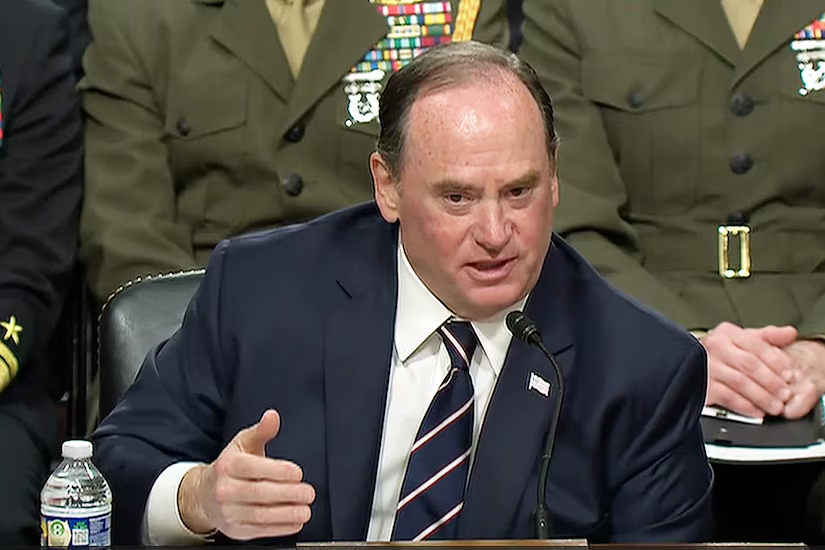
Marines for Los Angeles Trained in Crowd Control, Commandant Said 

By Richard R. Burgess, Senior Editor 

ARLINGTON, Va. — The Marines in the regiment being surged to protect federal buildings and personnel in Los Angeles are trained in crowd control, the commandant of the Marine Corps told Congress. 

“All Marines are trained in crowd control, embassy reinforcement, etc., so this is part of their training, sir,” said General Eric M. Smith, commandant of the Marine Corps, testifying June 10 on Capitol Hill before the Senate Armed Services Committee. “The standard Marine expeditionary unit — before they deploy — is trained, and this battalion is ready for that.” 

Smith was responding to questions from Sen. Richard Blumenthal, D-Connecticut, about the imminent deployment of Marines to Los Angeles in response to recent rioting from people protesting the enforcement actions of Immigration and Customs Enforcement (ICE) personnel in the city.  

The 700 Marines assigned to Los Angeles are from the 2nd Battalion, 7th Marine Regiment, 1st Marine Division, based at the Marine Air-Ground Combat Training Center at Twentynine Palms, California. 

The Marines were activated on June 9 by U.S. Northern Command. 

“The activation of the Marines is intended to provide Task Force 51 with adequate numbers of forces to provide continuous coverage of the area in support of the lead federal agency,” NORTHCOM said in a June 9 release. “Task Force 51 is U.S. Army North’s Contingency Command Post, which provides a rapidly deployable capability to partner with civil authorities and DoD entities in response to a Homeland Defense and Homeland Security Operations. It is commanded by Maj. Gen. Scott M. Sherman.”  

Task Force 51, which includes up to 2,100 personnel from the California National Guard, is has been trained “in de-escalation, crowd control, and standing rules for the use of force,” the NORTHCOM release said.  

“They are there at the SECEDEF’s [Secretary of Defense’s] direction to NORTHCOM [U.S. Northern Command],” Smith of the Marines in response to a question from Sen. Mike Rounds, R-South Dakota. “It’s one of our most ready battalions. They’re prepared to respond to lawful orders from the chain of command. They’re there to protect federal property and federal officers. 

Blumenthal asked about the equipment the Marines would have in Los Angeles and if the Marines would have arrest authority. 

“Sir, they have shields and batons,” Smith said. “They need not have arrest authority. They are there to protect federal property and federal personnel.” 

When Blumenthal expressed concern for the reputation of the Marines thrust into a civil disturbance, Smith replied, “I am not concerned. I have great faith in my Marines and their junior leaders and their more senior leaders to execute the lawful tasks that they are given.” 


Leonardo DRS Awarded $41M Contract to Provide Combat Management System Hardware

From Leonardo DRS, June 9, 2025 

ARLINGTON, Va., JUNE 9, 2025  ̶  Leonardo DRS, Inc. (NASDAQ: DRS) announced today that it has been awarded a $41 million contract from the Naval Sea Systems Command to continue delivering critical combat management system hardware for U.S. Navy surface combatants, allied naval forces, and the U.S. Coast Guard. 

Under the contract, Leonardo DRS will provide a range of advanced hardware—including multi-screen consoles, displays, and peripheral equipment—designed to support the AEGIS Combat System and Ship Self-Defense System (SSDS) deployed on a variety of large and small deck ships. 

The hardware serves as the primary operator interface for sailors to gather, process, and display vital battlespace information and make rapid tactical decisions. The system’s open architecture design ensures interoperability and scalability across current and future platforms. 

This award also includes systems for allied navies, including those of Australia, South Korea, and Japan, reinforcing Leonardo DRS’s long-standing role as a key partner in global maritime security. 

“We are proud to continue our strong partnership with the U.S. Navy, the Coast Guard, and our closest allies on this critical program,” said Cari Ossenfort, Senior Vice President and General Manager of the Leonardo DRS Naval Electronics business unit. “Leonardo DRS remains the leading provider of critical combat and network hardware supporting surface ships and submarines, ensuring our maritime forces are equipped with the most advanced and reliable systems available.” 

Leonardo DRS’s combat system hardware is deployed across a wide range of mission-critical platforms, enhancing situational awareness, interoperability, and command effectiveness in multi-domain operations around the globe. 

Work will be performed at the Leonardo DRS production facility in Johnstown, PA. 

The design and build of these combat management system consoles is an example of DRS’s deep experience as a leader in complex design and manufacturing supporting a wide range of missions and capabilities. The company’s abilities extend across all domains to support naval, ground, air, space, and cyber missions in areas of sensing, force protection, computer networking, as well as naval power and propulsion systems. 


USS Comstock Returns to Homeport Following Operations in U.S. 7th Fleet 

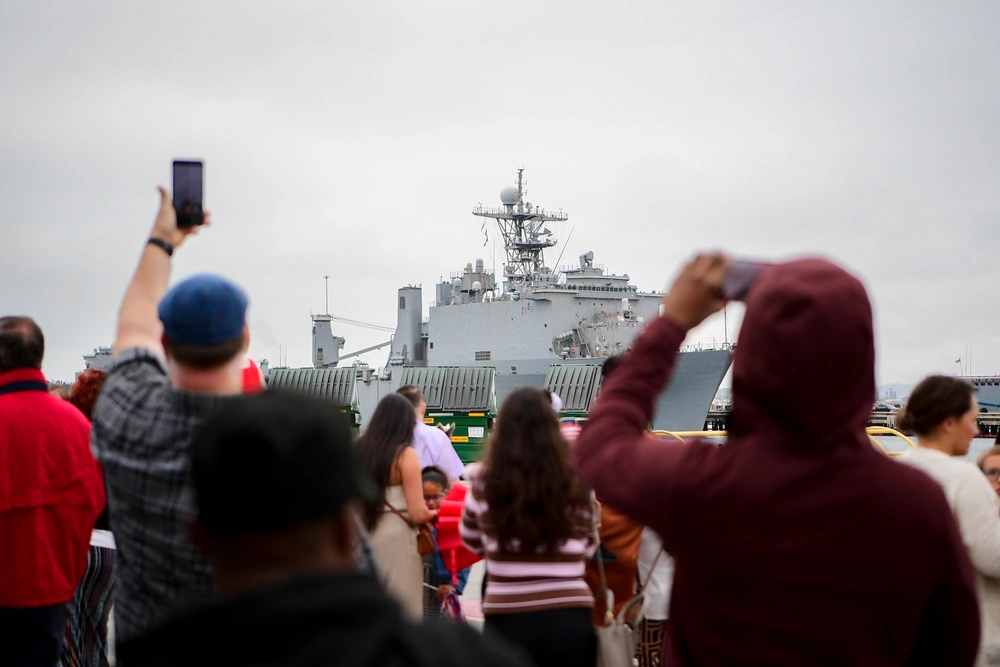
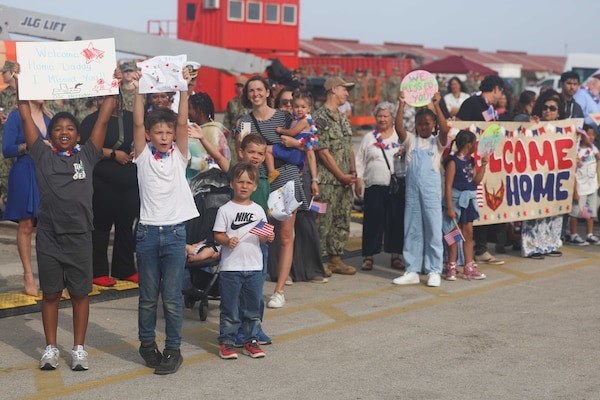
Families of Sailors aboard USS Comstock (LSD 45) watch as the ship returns to Naval Base San Diego following a three-month deployment, June 5, 2025. Comstock is a Whidbey Island-class dock landing ship homeported in San Diego. (U.S. Navy photo Mass Communication Specialist Seaman Eliora Sims) 

From Commander, U.S. 3rd Fleet, June 6, 2025 

SAN DIEGO – Whidbey Island-class dock landing ship USS Comstock (LSD 45) returned to Naval Base San Diego following a three-month mission to the U.S. 7th Fleet area of operations, June 5, 2025. 
 
While in U.S. 7th Fleet, the Comstock participated in exercises Tiger Triumph in India and Balikatan 25 in the Philippines, demonstrating U.S. commitment to Allies and partners and a free and open Indo-Pacific region. 
 
“Our ship’s successful completion of Tiger Triumph and Balikatan 2025 is a testament to the dedication, resilience, and skill of our crew,” said Cmdr. Byron Stocks, the commanding officer of the Comstock. “Together, we strengthened partnerships, honed our readiness, and proudly represented our nation on the world stage.” 
 
Additionally, 115 U.S. Marines and Sailors from Alpha Company, 1st Light Armored Reconnaissance Battalion, 1st Marine Division embarked Comstock during the deployment. 
 
During Tiger Triumph, the Comstock, with embarked U.S. Marines, worked alongside Indian counterparts for two weeks, enhancing interoperability and combined capacity to respond to crises. Featuring approximately 3000 personnel, two warships, and seven aircraft, Tiger Triumph gave participating forces the opportunity to refine humanitarian assistance and disaster response operations, conduct amphibious beach landings and build relationships and camaraderie through cultural exchanges. 
 
“The tireless work ethic of the U.S. and Indian Armed Forces at all levels directly contributed to the successful execution of the amphibious landing,” said U.S. Marine Capt. Erik Ayala, commander of troops for Alpha Company, 1st Light Armored Reconnaissance Battalion, 1st Marine Division. “This success highlights the cohesion we currently have with our Indian Partners and will enable us to build on the complexity in the future.” 
 
Following Tiger Triumph, the Comstock participated in exercise Balikatan 25 April 25 to 29, the 40th iteration of the largest annual bilateral exercise conducted between the Philippines and U.S. In addition to humanitarian projects and logistics operations, the exercise featured a Full Battle Test, incorporating real-world forces and events in an exercise scenario. The Full Battle Test combined all domains – air, land, sea, space and cyber – and gave the U.S. and Philippines forces the opportunity to practice and test tactical actions and techniques. The Comstock participated in a multilateral maritime exercise alongside the Philippine Navy and the Japan Maritime Defense Force. This group sail tested maritime maneuvers and validated interoperability of doctrine, tactics, techniques, and procedures at sea. 
 
The Comstock is a Whidbey Island-class dock landing ship homeported in San Diego. 
 
For more information on the Comstock, please visit https://www.surfpac.navy.mil/lsd45/ 


USS Oscar Austin Completes Patrol with Newly Awarded Combat Action Ribbon 

From U.S. Sixth Fleet Public Affairs, June 10, 2025 

NAVAL STATION ROTA, Spain - The Arleigh Burke-class guided-missile destroyer USS Oscar Austin (DDG 79) returned to Naval Station Rota, Spain on Jun. 10, 2025 with a Unit Combat Action Ribbon following completion of her first Forward-Deployed Naval Forces-Europe (FDNF-E) patrol in the U.S. Sixth Fleet and Fifth Fleet areas of operations. 

Oscar Austin departed for Patrol One on Dec. 11, 2024, during which she sailed over 37,900 nautical miles supporting U.S. national security interests in Europe and Africa. She operated as an independently deployed destroyer in the Mediterranean and in the Red Sea conducting combat operations with the USS Harry S. Truman Carrier Strike Group. 

“I’m honored to have assumed command of Oscar Austin during her first patrol as a forward deployed warship,” said Cmdr. David Nicolas, who took Command in May. “Having served previously as the ship’s executive officer, I feel immense pride in witnessing the growth and development of the crew in their preparation for and completion of Patrol One.” 

Oscar Austin welcomed the New Year in the East Mediterranean by sailing alongside the Republic of Cyprus National Guard. Oscar Austin and the Republic of Cyprus offshore patrol vessel Commodore Andreas Ioannides (P61) completed events involving advanced signaling and maneuvering. The exercises reinforced partnerships with regional partners, highlighting the strategic importance in fostering multinational cooperation. 

In April, Oscar Austin transited the Suez Canal into the U.S. Fifth Fleet area of operations with the USS Harry S. Truman Carrier Strike Group. The ship provided air and missile defense, joining fellow Arleigh Burke-class guided-missile destroyers USS Jason Dunham (DDG 109) and USS Stout (DDG 55), and the Ticonderoga-class guided-missile cruiser USS Gettysburg (CG 64). 


In the Red Sea, Oscar Austin and the Harry S. Truman Carrier Strike Group came under fire from various airborne threats. Sailors onboard Oscar Austin acted swiftly and professionally to defend the strike group, upholding freedom of navigation in the Red Sea. 

Capt. Alexander Mamikonian, Commodore of Destroyer Squadron (DESRON) 60, presented Nicolas and the Oscar Austin crew the distinguished award when they returned home. 

“This was Oscar Austin’s maiden patrol as a Rota-based FDNF-E destroyer and her team performed exceptionally,” Mamikonian said. “As their Commodore, I was impressed by their professionalism, proficiency and self-sufficiency on a daily basis. It was a pleasure watching them perform on patrol, but we’re glad they’re back home in Rota reunited with their loved ones.” 

Sailors wear the ribbon proudly around the ship: exclusive to units in the Department of the Navy demonstrating satisfactory performance under enemy fire. 

Nicolas praised the crew for their skilled and courageous efforts during the patrol. 

“Executing multiple missions across two theaters, Oscar Austin displayed the immense versatility of the Arleigh Burke class destroyer: from conducting ballistic missile defense in the eastern Mediterranean Sea to seamlessly integrating with the Harry S. Truman Carrier Strike Group in the Red Sea. But overall, it was the crew’s grit and resiliency that fueled the ship’s success throughout the patrol.” 

After her time in the Red Sea, in May, Oscar Austin returned to the Eastern Mediterranean, postured to support America’s commitment to NATO, defending Allies and working together to deter malign actors from escalating the war in Israel. 

Beyond crew-wide accomplishments, the Sailors onboard Oscar Austin also fulfilled numerous individual milestones, including six naval officers who earned their Surface Warfare Officer (SWO) pins, 78 enlisted personnel who acquired their Enlisted Surface Warfare Specialist (ESWS) pins, and 54 promotions of rank. While underway, Oscar Austin also saw 17 Sailors raise their right hands to reenlist in the Navy, reaffirming the command’s commitment to a culture of excellence. 

“This crew has demonstrated remarkable resilience and unwavering dedication throughout a period of significant change and demanding operations,” said Cmdr. Gerald Sellars, the ship’s Executive Officer. “From navigating the complexities of a homeport shift to successfully executing deployments in both Fifth and Sixth Fleets, their teamwork and commitment have been instrumental in overcoming every challenge. The crew’s ability to adapt and persevere ensures mission success and, most importantly, a safe return home to their families. It is an honor to serve alongside this team.” 

Upon their return home, Sailors manned the rails in their dress whites and newly-earned ribbons as the ship pulled into Pier 1 in Rota, Spain, marking the completion of its first FDNF-E patrol. 

Commander, U.S. Sixth Fleet, headquartered in Naples, Italy, conducts the full spectrum of joint and naval operations, often in concert with allies, international partners, and other U.S. government departments and agencies to advance U.S. national interests, security and stability in Europe and Africa. 


Navy’s T-54A Brings New Era of Pilot Training 

The U.S. Navy’s T-54A Marlin II is a modern training aircraft designed to prepare pilots for advanced fleet platforms. It will support Navy, Marine Corps, Coast Guard, and allied training needs through 2055.

From Naval Air systems Command, June 9, 2025 

NAS PATUXENT RIVER, Md. — The U.S. Navy declared initial operational capability for the T-54A Marlin II training aircraft in May, giving future naval aviators a modern platform to prepare them for the advanced aircraft they will fly in the fleet. 

“Achieving IOC reflects our commitment to provide student naval aviators with the most realistic, effective training aircraft to equip them for today’s complex battlespace,” said Capt. Duane Whitmer, Naval Undergraduate Flight Training Systems Program Office (PMA-273) program manager. “We know what’s at stake for our nation’s sons and daughters. The T-54 team’s tireless dedication and hard work are making an impact on the next generation of pilots.” 

The T-54A multi-engine training system is replacing the aging T-44C Pegasus aircraft, which the Navy has begun to retire. The T-54A incorporates the latest avionics and navigational updates, including a pressurized, state-of-the-art cockpit with side-by-side seating and a jump seat. The platform provides advanced instrument and asymmetric engine handling training to student naval aviators selected for multi-engine and tilt-rotor fleet communities.  

The aircraft’s technology also captures data that allows for conditioned-based maintenance plus, a capability that enables the Navy to trend aircraft health over time to facilitate improved maintenance planning and efficiency.  

The Navy has received 15 T-54A aircraft and plans to procure up to 64 aircraft per the contract it awarded to Textron in 2023. Aircraft deliveries are scheduled through calendar year 2026. The T-54A meets training requirements for the Navy, Marine Corps, Coast Guard and select U.S. allies through 2055. 

As part of Program Executive Office for Tactical Aircraft Programs, PMA-273 manages the T-54A, T-44C and other training aircraft. The program office develops and oversees diverse and carrier-capable naval flight training systems where student pilots and undergraduate military flight officers acquire mission-critical aviation skills necessary to carry out current and future missions of the U.S Navy. 


USS Cole Relieves USS Gravely, Assumes Southern Border Mission 

From U.S. Naval Surface Force Atlantic, June 6, 2025 

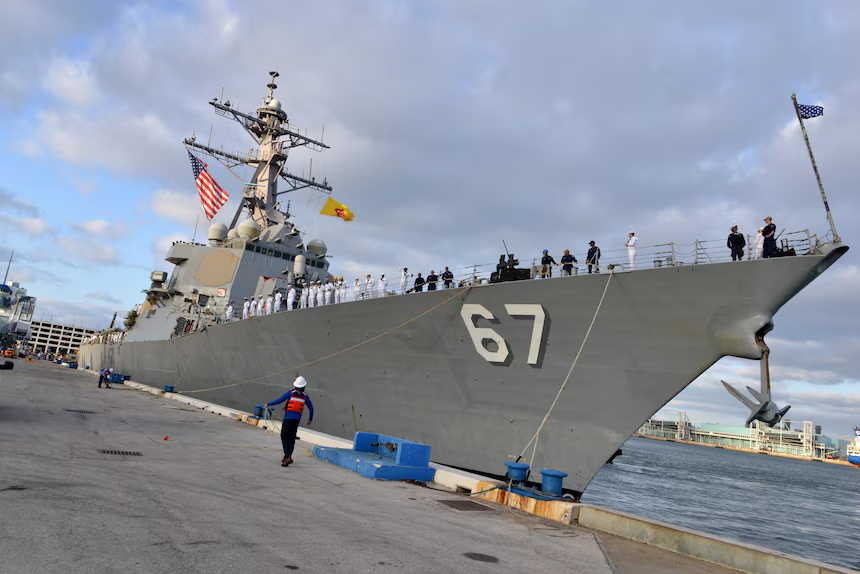
MAYPORT, Fla. — The Arleigh Burke-class guided missile destroyer USS Cole (DDG 67) departed Naval Station Mayport, Florida, to support U.S. Northern Command (USNORTHCOM) southern border operations, June 5.  
 
Cole takes over duties previously carried out by the Arleigh Burke-class guided missile destroyer USS Gravely (DDG 107) and will conduct similar operations in support of USNORTHCOM’s border security objectives.  
 
USNORTHCOM is working together with the Department of Homeland Security to provide additional military forces and capabilities at the southern border. 
 
The Cole, homeported in Norfolk, Va., will deploy under U.S. Naval Forces Southern Command/U.S. Fourth Fleet. The deployment aims to enhance maritime security and support interagency collaboration in the region through presence operations and the support of an embarked U.S. Coast Guard Law Enforcement Detachment (LEDET).  
 
Since entering the Gulf of America on March 15, Gravely has received support from P-8 aircrafts assigned to Naval Air Station Jacksonville, Florida, allowing for enhanced and increased identification of illicit activity for the embarked Coast Guard LEDET in the Gulf of America. Along with the embarked USCG LEDET, the “Swamp Foxes” of Helicopter Maritime Squadron (HSM) 74, MH-60R Sea Hawk helicopters, is the attached helicopter detachment. 
 
“USS Gravely remains at the forefront of maritime operations, ready to take on any challenge,” said Cmdr. Gregory Piorun, commanding officer, USS Gravely. “We will continue to stand strong, protect vital waters, and ensure that justice prevails. True to our motto, we remain always, ‘First to Conquer’.” 
 
On May 25, Gravely seized an estimated 860 pounds of illegal drugs from a vessel in the Caribbean Sea. The interdiction by Gravely was conducted by the ship’s Visit, Board, Search and Seizure (VBSS) team alongside a LEDET assigned to the ship. The VBSS team boarded a vessel of interest and discovered and seized 19 bales of cocaine, with an approximate weight of 860 pounds and an estimated value of $13,650,000. 
 
“This operation supports the administration’s focus on integrated homeland defense and maritime border security,” said Capt. Raymond Jackson, commanding officer, Coast Guard Tactical Law Enforcement Team South. “By uniting Coast Guard law enforcement expertise with Navy reach and surveillance, we’re enhancing deterrence, increasing domain awareness and reinforcing our commitment to protecting the homeland.” 
 
The U.S. Coast Guard LEDET has unique legal authority to conduct U.S. law enforcement operations in support of border security missions under U.S. Northern Command. Utilizing the Coast Guard’s jurisdiction, the Cole will employ LEDET personnel to perform vessel boardings, searches, and seizures in U.S. and international waters, targeting drug trafficking, illegal immigration, and transnational crime with a nexus to the U.S. southern border. With LEDET’s tactical expertise guiding interdiction efforts, the Cole will harness its advanced surveillance systems and mobility to locate and intercept suspect vessels, effectively extending Coast Guard authority through naval power to enhance maritime security operations. This collaboration ensures a robust, legally empowered response to maritime threats, strengthening U.S. border protection efforts. 
 
U.S. 2nd Fleet, reestablished in 2018 in response to the changing global security environment, develops and employs maritime forces ready to fight across multiple domains in the Atlantic and Arctic in order to ensure access, deter aggression and defend U.S., allied, and partner interests. 
 
For more U.S. 2nd Fleet news and photos, visit facebook.com/US2ndFleet, https://www.c2f.usff.navy.mil/, X – @US2ndFleet, and https://www.linkedin.com/company/commander-u-s-2nd-fleet. 
 
U.S. Naval Forces Southern Command/U.S. 4th Fleet serves as a trusted maritime partner for Caribbean, Central and South American maritime forces and promotes unity, security, and stability in the region. 
 
For more USNAVSOUTH/4th Fleet news and photos, visit facebook.com/NAVSOUS4THFLT, https://www.fourthfleet.navy.mil/, X – @ NAVSOUS4THFLT, and https://www.linkedin.com/company/u-s-naval-forces-southern-command-u-s-4th-fleet 


Coast Guard Offloads More than $138M in Drug Interdictions in Caribbean Sea 

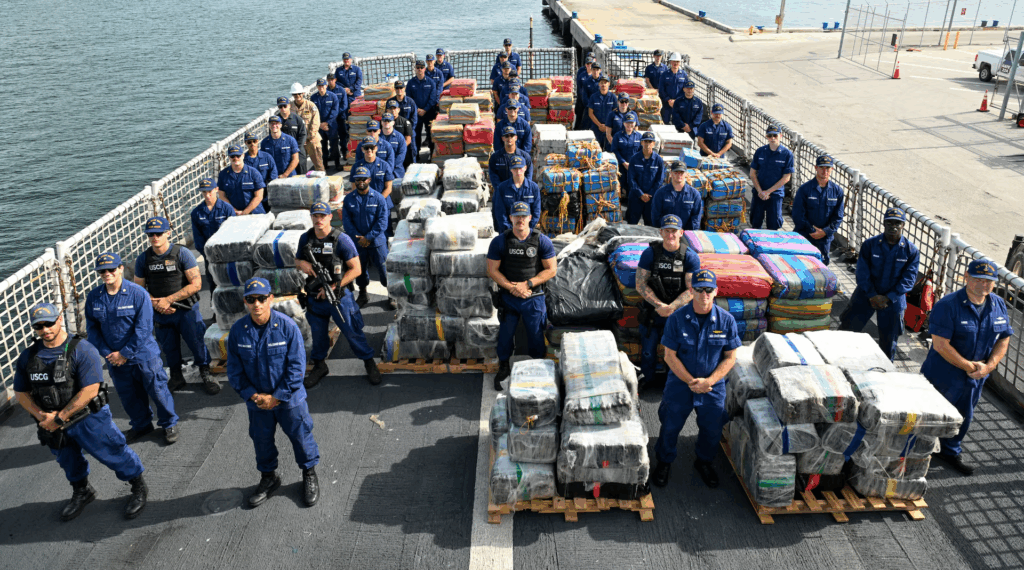
USCGC Valiant (WMEC 621) crew members pause for a group photo with pallets of drugs before offloading at Port Everglades in Fort Lauderdale, Florida, June 6, 2025. The Valiant crew offloaded more than $132 million in illicit drugs interdicted in the Caribbean Sea. (U.S. Coast Guard photo by Petty Officer 1st Class Diana Sherbs)

From U.S. Coast Guard 7th District, June 6, 2025 

MIAMI –U.S. Coast Guard Cutter Valiant’s crew offloaded 17,450 pounds of cocaine and 2,585 pounds of marijuana worth $132 million, Friday, at Port Everglades.  

U.S. Coast Guard Cutter Vigorous crew offloaded approximately 840 pounds of cocaine worth an estimated $6.2 million, Thursday, at Coast Guard Base Miami Beach.  

The seized contraband was the result of six interdictions in the Caribbean Sea by Coast Guard and interagency partners.   

“I am incredibly proud of our Valiant team and how they exemplify American values. They sacrifice time away from their families and when necessary, put themselves in harm’s way to secure our borders and protect the American people,” said Cmdr. Matthew Press, commanding officer of Valiant. “Collaborating with the United States Navy, Royal Canadian, and Royal Netherlands Navies, our multinational team disrupted transnational criminal organizations making the world a safer place.”  

On May 19, a maritime patrol aircraft located a suspicious vessel approximately 85 miles north of Aruba. Valiant’s crew interdicted the vessel and seized approximately 2,645 pounds of cocaine.   

On May 22, a maritime patrol aircraft located a suspicious vessel approximately 170 miles north of Aruba. Valiant’s crew interdicted the vessel and seized approximately 7,750 pounds of cocaine.   

On May 25, a maritime patrol aircraft located a suspicious vessel approximately 290 miles south of the Dominican Republic. USS Gravely’s crew and embarked U.S. Coast Guard Law Enforcement Detachment 401 interdicted the vessel and seized approximately 840 pounds of cocaine. The narcotics were transferred to the Vigorous.  

On May 29, a maritime patrol aircraft located a suspicious vessel approximately 140 miles south of the Dominican Republic. His Majesty’s Canadian Ship William Hall’s crew and embarked Coast Guard LEDET 103 interdicted the vessel and seized approximately 750 pounds of cocaine. The narcotics were transferred to the Valiant.  

On May 29, a maritime patrol aircraft located a suspicious vessel approximately 15 miles north of Venezuela. The Royal Netherlands Navy ship HNLMS Friesland crew and embarked Coast Guard LEDET 404 interdicted the vessel and seized approximately 4,050 pounds of cocaine and 2,585 pounds of marijuana. The narcotics were transferred to the Valiant.  

On May 31, a maritime patrol aircraft located a suspicious vessel approximately 185 miles north of Colombia. HMCS William Hall’s crew and embarked Coast Guard LEDET 103 interdicted the vessel and seized approximately 2,250 pounds of cocaine. The narcotics were transferred to the Valiant.  

The following crews assisted with interdiction operations:  

  • U.S. Coast Guard Tactical Law Enforcement Team South  

  • U.S. Coast Guard Tactical Law Enforcement Team Pacific  

  • Seventh Coast Guard District watchstanders  

Detecting and interdicting illicit drug traffickers on the high seas involves significant interagency and international coordination. Joint Interagency Task Force-South, in Key West, conducts the detection and monitoring of aerial and maritime transit of illegal drugs. Once an interdiction becomes imminent, the law enforcement phase of the operation begins, and control of the operation shifts to the U.S. Coast Guard for the interdiction and apprehension phases. Interdictions in the Caribbean Sea are performed by members of the U.S. Coast Guard under the authority and control of the Seventh Coast Guard District, headquartered in Miami.     

These interdictions relate to Organized Crime Drug Enforcement Task Forces’ Strike Force initiatives and designated investigations. OCDETF identifies, disrupts, and dismantles the highest-level criminal organizations that threaten the United States using a prosecutor-led, intelligence-driven, multi-agency approach. Additional information about the OCDETF program can be found at https://www.justice.gov/OCDETF.     

USCGC Valiant is a 210-foot medium-endurance cutter homeported in Jacksonville under U.S. Coast Guard Atlantic Area Command.   

USCGC Vigorous is a 210-foot medium-endurance cutter homeported in Virginia Beach, Virginia under U.S. Coast Guard Atlantic Area Command.  

For breaking news, follow us on X (formerly Twitter). For additional information, find us on Facebook and follow us on Instagram.     


Raytheon Awarded $646M Production and Sustainment Contract for SPY-6 Radars  

From RTX, June 9, 2025 

Production continues for U.S. Navy’s most advanced maritime radar 

ANDOVER, Mass., (June 9, 2025) — Raytheon, an RTX (NYSE: RTX) business, was awarded a $646 million contract to continue producing AN/SPY-6(V) radars for the U.S. Navy. This is the fourth option exercised from the March 2022 hardware, production and sustainment contract that is valued up to $3 billion over five years. 

Under this contract, the U.S. Navy will receive four additional radars, increasing the total amount of radars under contract for procurement to 42. 

“SPY-6 enables the U.S. Navy to see further than they’ve ever seen before, providing sailors with more time to respond to detected threats,” said Barbara Borgonovi, president of Naval Power at Raytheon. “This latest contract builds on our decades of experience and technical expertise in developing modular, scalable, and highly maintainable radars.” 

SPY-6 is one of several radar programs designed and manufactured at Raytheon’s Radar Development Facility in Andover, Massachusetts, a 30,000-square foot site supporting the production of diverse types of radars for U.S. and allied forces. This vertically integrated and highly automated site is one of the most advanced in the world, with sophisticated radar testing and integration happening around the clock. 

Majority of the work under this contract will take place at the Andover facility through 2028.