Trump’s MARAD Pick Signals Commercial Maritime Focus

ARLINGTON, Va. — President Donald Trump’s decision to nominate former Maersk executive Stephen Carmel to lead the Maritime Administration, replacing retired Navy submarine commander Brent Sadler as the nominee, signals a strategic pivot toward commercial maritime expertise as the administration pursues its ambitious shipbuilding revival agenda.

The nominee switch reflects the administration’s belief that rebuilding America’s maritime industrial base requires deep industry experience rather than purely military credentials. Carmel’s four decades in commercial shipping — from tanker captain to corporate executive — align with Trump’s emphasis on taking a business approach to maritime challenges.

From Bridge to Boardroom

Carmel brings a rare combination of operational and executive experience to MARAD. A 1979 graduate of the U.S. Merchant Marine Academy, he achieved his first command — a 40,000-ton clean product tanker — at age 26, according to his biography at the academy where he now serves on the Board of Visitors.

“Steve began his career sailing as a deck officer and Master primarily on tankers for Maritime Overseas Corporation and Military Sealift Command,” his USMMA biography states, before transitioning to corporate roles at Maersk Line Limited, where he served as senior vice president for maritime services.

Currently president of U.S. Marine Management LLC, Carmel was a Ph.D. candidate at Old Dominion University.

The Trump Administration’s April executive order establishing a Maritime Action Plan emphasized commercial competitiveness over traditional military-centered thinking. A fact sheet on the White House website claims that 0.2% of the world’s ships are built by the United States, compared to 74% built by China.

Carmel’s experience with Maersk Line Limited — a major participant in the Maritime Security Program — provides some insight into the public-private partnerships the administration seeks to expand. His corporate background appears to be seen as a plug as the administration focuses on expanding the U.S.-flag fleet for both international and domestic trade, and as MARAD implements new initiatives including the Maritime Security Trust Fund and Maritime Prosperity Zones.

“Steve knows maritime, he knows the American Flag, and he sailed commercially in the U.S. Merchant Marine,” said Dredging Contractors of America CEO William Doyle in supporting the nomination.

Carmel’s selection follows the administration’s pattern of choosing industry veterans for key maritime positions, including the creation of a new Office of Maritime and Industrial Capacity at the National Security Council. This approach contrasts with previous administrations’ emphasis on military appointees for these types of roles.

If confirmed, Carmel would become the first MARAD administrator since 2005 to hold a Master’s Unlimited license, underscoring the administration’s preference for hands-on maritime experience.

His advisory experience on the Chief of Naval Operations Executive Panel and Naval Studies Board provides some additional government experience, potentially easing coordination between defense and transportation maritime programs.

Implementation Challenges Ahead

The nominee inherits a MARAD facing significant personnel challenges, with approximately 12% of authorized positions vacant, according to recent reports. If confirmed, he will be a key figure in Trump’s ambitious maritime agenda, including expanded shipbuilding incentives and Arctic strategy development.

Carmel has corporate experience managing profit-and-loss responsibility for complex vessel operations, which may be helpful as MARAD balances expanded responsibilities with constrained resources.

The Senate Committee on Commerce, Science and Technology will consider Carmel’s nomination as the administration pushes to implement its Maritime Action Plan. With Trump promising to “resurrect the American shipbuilding industry,” Carmel’s confirmation could signal a new commercial-first era in the U.S. maritime industry.

USS Harry S. Truman Strike Group Returns from 8-Month Deployment

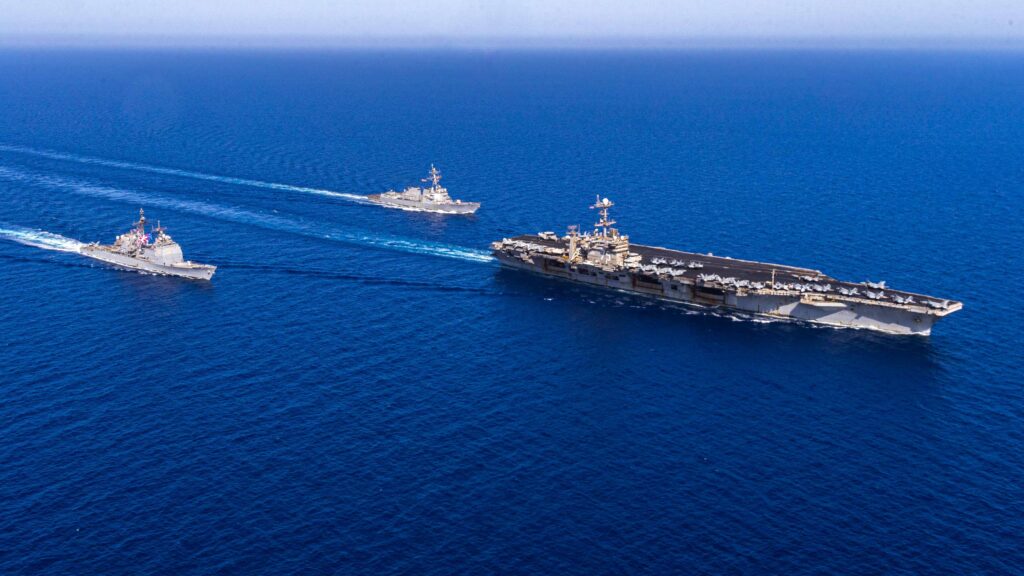
MEDITERRANEAN SEA (May 19, 2025) The Nimitz-class aircraft carrier USS Harry S. Truman, right, the Arleigh Burke-class guided-missile destroyer USS Jason Dunham (DDG 109), center, and the Ticonderoga-class guided-missile cruiser USS Gettysburg (CG 64) sail in the Mediterranean Sea. USS Harry S. Truman, the flagship of the Harry S. Truman Carrier Strike Group (HSTCSG), is on a scheduled deployment in the U.S. 6th Fleet area of operations supporting U.S. Naval Forces Europe-Africa to defend U.S., allied and partner interests. (U.S. Navy photo by Mass Communication Specialist 3rd Class Mike Shen)

by Commander, U.S. 2nd Fleet Public Affairs, June 2, 2025 

NORFOLK, Va. — The flagship of the Harry S. Truman Carrier Strike Group returned to its homeport of Norfolk, Virginia on June 1, following an eight-month deployment to the U.S. 5th and 6th Fleet areas of operations. 

The strike group, which departed for deployment in September 2024, consisted of USS Harry S. Truman (CVN 75), Ticonderoga-class cruiser USS Gettysburg (CG 64), Arleigh Burke-class destroyers USS Stout (DDG 55) and USS Jason Dunham (DDG 109) of Destroyer Squadron (DESRON) 28, and Carrier Air Wing (CVW) 1 with nine embarked squadrons. 
  
While sailing across Europe and the Middle East, the strike group conducted a wide range of missions, including exercises with NATO Allies and combat operations in the Red Sea. 
  
“The performance of every Sailor and asset in our strike group has been nothing short of exceptional,” said Rear Adm. Sean Bailey, commander of HSTCSG. “I am immensely proud of my team. They have repeatedly proven time and again that they are warfighters who stand ready for anything. As we return home, it is truly gratifying to reunite our Sailors with their families and friends who have supported them throughout this journey.” 
  
The strike group operated in the North Sea during NATO’s Neptune Strike 24-2 and supported maritime and air presence operations with ships from Portugal, Norway, and Italy. Italian frigate ITS Carabiniere (F 593) also deployed alongside the strike group during operations in Europe. 
  
Harry S. Truman Carrier Strike Group made port calls to Norway, Sweden, Finland, Germany, Spain, France, Croatia and Greece while deployed to the U.S. 6th Fleet area of operations, promoting peace through strength. 
  
On Feb. 1, while operating in support of U.S. Africa Command from the Red Sea, the strike group supported a large-scale airstrike and delivered 124,000 pounds of ordnance against ISIS-Somalia operatives.  
  
“Throughout this deployment, our aviators showed immense proficiency and professionalism while striking Houthi targets across Yemen and defending the strike group and merchant vessels from threats,” said Capt. Leslie Mintz, commander of CVW-1. “I could not be prouder of the dedication and hard work of all the maintainers, ordnance handlers, administrative, and logistics support for their work keeping our aircraft flying, aviators safe, and ordnance ready to drop around the clock.” 
  
In March, the Harry S. Truman Carrier Strike Group led initial strikes against Iran-backed Houthi targets in Yemen during U.S. Central Command’s Operation Rough Rider. The strike group launched Tomahawk Land Attack Missiles and precision airstrikes for more than 50 days, conducting continuous operations to degrade Houthi capabilities and disrupt threats to commercial shipping. 
  
“These warrior Sailors demonstrated superb grit for more than eight months,” said Capt. Chris Hill, commanding officer of USS Harry S. Truman. “Even in the face of significant challenges, they persevered, never giving up when their nation needed them. It’s been an honor to serve alongside such dedicated professionals and to take them home to their families.” 
  
During the deployment, the Harry S. Truman strike group completed more than 13,000 sorties and 25,000 flight hours, and the ships sailed over 240,000 nautical miles combined. 
 
The strike group’s mission is to conduct prompt and sustained combat operations at sea and maintain a forward presence through sea control and power projection capabilities.  
  
For more information, visit DVIDS at https://www.dvidshub.net/unit/CVN75. 
 
U.S. 2nd Fleet, reestablished in 2018 in response to the changing global security environment, develops and employs maritime ready forces to fight across multiple domains in the Atlantic and Arctic in order to ensure access, deter aggression and defend U.S., allied, and partner interests. 
 
For more U.S. 2nd Fleet news and photos, visit facebook.com/US2ndFleet, X – @US2ndFleet, and https://www.linkedin.com/company/commander-u-s-2nd-fleet. 


Coast Guard Cutter Diligence Returns Home After 61-day Counter-Drug and Fisheries Patrol 

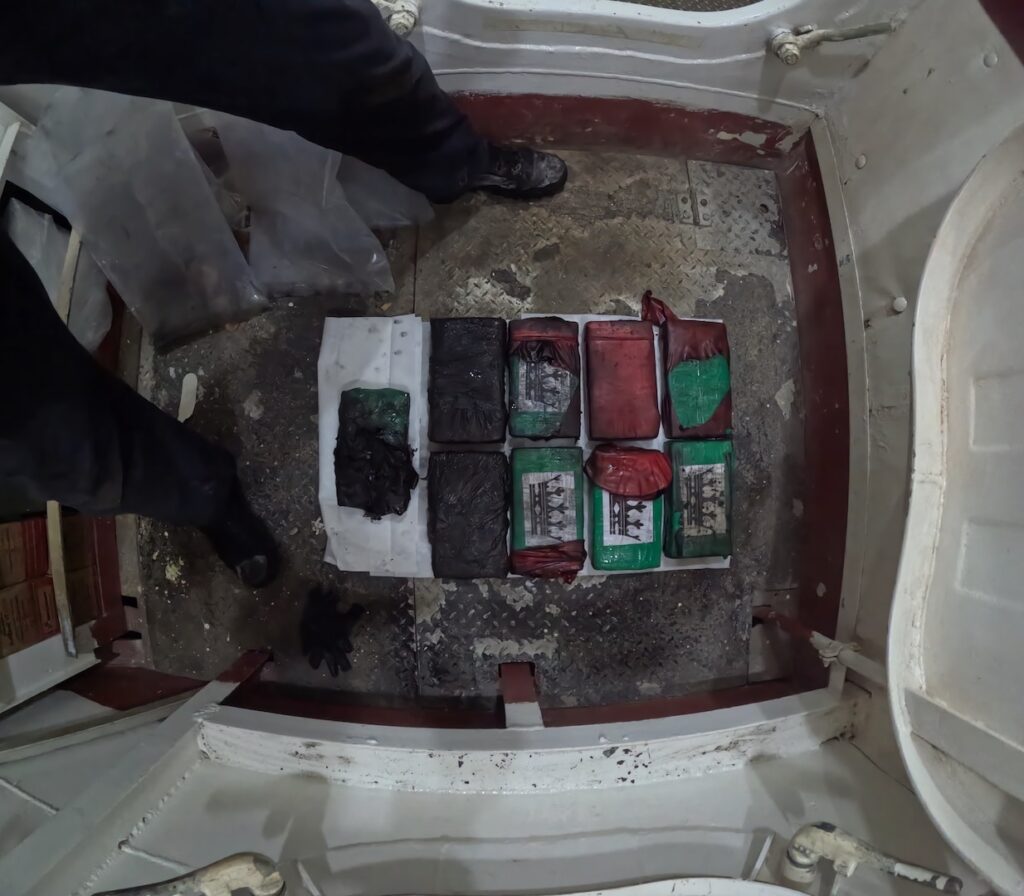
Coast Guard Cutter Diligence (WMEC 616) crew members seize approximately 40 pounds of cocaine from a disabled sailing vessel in the Caribbean Sea, April 24, 2025. Diligence’s crew conducted a 61-day counter-drug and fisheries patrol in the Caribbean Sea and Gulf of America. (U.S. Coast Guard photo) 

From U.S. Coast Guard Atlantic Area, June 2, 2025 

PENSACOLA, Fla. — The crew of Coast Guard Cutter Diligence (WMEC 616) returned to their home port in Pensacola, May 21, following a 61-day patrol in the Caribbean Sea and Gulf of America, where crew members conducted counter-drug operations and fisheries boardings to enforce U.S. federal law at sea and protect America’s maritime boundary. 

Diligence deployed in support of Joint Interagency Task Force – South (JIATF-S) while underway in the Seventh Coast Guard District’s area of responsibility. Crew members worked closely with international and interagency partners to disrupt drug trafficking ventures in the Caribbean Sea. 
 
While at sea, the crew interdicted two separate drug-smuggling vessels suspected of drug trafficking and provided logistical support to partners for several additional interdictions. 

On April 12, Diligence interdicted a vessel suspected of drug smuggling. After a pursuit and use of disabling fire, crew members gained control of the go-fast style vessel. After retrieving 28 bales of jettisoned marijuana, the crew of Diligence seized approximately 1,660 pounds of marijuana in total and apprehended the three suspected smugglers on board. 
 
On April 23, a military patrol aircraft located a disabled sailing vessel approximately 170 miles off Colombia. Coast Guard Cutter Diligence’s crew boarded the vessel and seized approximately 40 pounds of cocaine. 

During patrol, Diligence worked with the Royal Netherlands navy offshore patrol vessel HNLMS Groningen (P 843), U.S. Navy assets, Tactical Law Enforcement Team – Pacific (PACTACLET), and Coast Guard Cutters Campbell (WMEC 909), Venturous (WMEC 625) and John Patterson (WPC 1153). The collective interoperability of these units highlights the importance of multi-national and interagency cooperation in support of maritime counter-drug operations. 

While underway in the Eighth Coast Guard District’s area of responsibility, the crew conducted fisheries enforcement missions while underway in the Gulf of America. While patrolling near the maritime boundary line near Mexico, Diligence’s law enforcement teams conducted five boardings of U.S. commercial fishing vessels. These inspections ensured compliance with federal safety standards and fishery management regulations, supporting the Coast Guard’s mission to promote safe and sustainable fishing practices. 

While moored in Galveston, Texas, Diligence was opened to the public and the crew provided over 100 tours, sharing information about the ship and the Coast Guard’s missions. 

“Our success during this recent patrol is tied to a much broader effort that includes regional and interagency partners, said Cmdr. Nolan Cain, commanding officer of Diligence. “The crew continues to work incredibly hard to secure the maritime border and bring narcotics traffickers to justice. A special thanks to the City of Galveston for hosting us during two port calls.” 

Based in San Diego, California, PACTACLET personnel provide counter-narcotic law enforcement capabilities and support the interdiction, apprehension and processing of suspected drug smugglers. PACTACLET members are skilled in law enforcement boarding procedures at sea and are critical for mission execution.  

Detecting and interdicting illicit drug traffickers on the high seas involves significant interagency and international coordination. JIATF-S, in Key West, conducts the detection and monitoring of aerial and maritime transit of illegal drugs. Once an interdiction becomes imminent, the law enforcement phase of the operation begins, and control of the operation shifts to the U.S. Coast Guard for the interdiction and apprehension phases. Interdictions in the Caribbean Sea are performed by members of the U.S. Coast Guard under the authority and control of the Seventh Coast Guard District, headquartered in Miami.   

Diligence is a 210-foot, Reliance-class medium endurance cutter. Its primary missions include counter-drug and migrant interdiction operations, enforcement of federal fishery laws, and search and rescue in support of U.S. Coast Guard operations throughout the Western Hemisphere. 

For information on how to join the U.S. Coast Guard, visit GoCoastGuard.com to learn about active duty, reserve, officer, and enlisted opportunities. Information on how to apply to the U.S. Coast Guard Academy can be found here.  


Coast Guard Cutter William Hart Returns Home

A crew member of Coast Guard Cutter William Hart (WPC 1134) embraces his family on the pier at Coast Guard Base Honolulu, May 31, 2025. The crew of the William Hart traveled more than 7,000 nautical miles during their 46-day patrol of Oceania. (U.S. Coast Guard photo by Petty Officer 3rd Class Avery Tibbets) 

Coast Guard 14th District External Affairs, May 31, 2025  

HONOLULU – The crew of Coast Guard Cutter William Hart (WPC 1134) returned to Honolulu Saturday following a 46-day patrol in support of Coast Guard District Fourteen’s Operation Blue Pacific in Oceania.   

The William Hart crew departed Coast Guard Base Honolulu in April and traveled more than 7,000 nautical miles spanning from the Hawaiian Islands to the Kingdom of Tonga. Patrolling in support of Operation Blue Pacific, the cutter’s crew worked alongside Pacific Island Countries to enhance maritime domain awareness, combat illegal fishing activities and reinforce a shared commitment to maritime governance and regional stability.  

Reinforcing U.S. border security and territorial integrity, the William Hart crew also patrolled U.S. and neighboring Exclusive Economic Zones, including those in American Samoa. These operations advanced the United States’ commitment to securing our borders and maritime approaches to detect, deter, and interdict illegal activities and threats to the homeland.  

Leveraging existing bilateral maritime law enforcement agreements, the William Hart crew conducted seven vessel boardings and seven observation reports alongside Pacific Island law enforcement partners within the respective exclusive economic zones. The cutter’s crew also conducted two fishery boardings on the high seas in concert with the Western and Central Pacific Fisheries Commission, addressing illegal, unreported, and unregulated fishing within the region.  

During William Hart’s patrol, the crew made port calls in American Samoa, Fiji, Tonga, and Samoa. The crew hosted tours for members of the Fijian Navy, U.S. Embassy Nuku’alofa, and the Tongan Royal Navy. The crew also engaged with the next generation of maritime professionals, providing tours for students from the National University of Samoa Maritime School and the Ministry of Police Maritime Division. A sporting event hosted by the Tongan Royal Navy, alongside personnel from an Australian naval vessel, further solidified regional camaraderie. In Samoa, a dinner hosted by the Australian Embassy served to strengthen diplomatic and maritime partnerships.  

“This patrol emphasizes the Coast Guard’s vital role in promoting maritime security and regional stability throughout Oceania, while safeguarding U.S. interests” said Lt. Cmdr. Stephen A. Hills, commanding officer of the William Hart. “Our crew worked alongside our Pacific partners to strengthen maritime governance, counter illegal fishing and narcotics trafficking and build lasting relationships that enhance safety and sovereignty across the region.”  

The William Hart is the third 154-foot Sentinel-class fast response cutter homeported in Honolulu. The cutter’s primary missions are maritime law enforcement, search and rescue and national defense.   


USS Tripoli Forward Deploys to Japan 

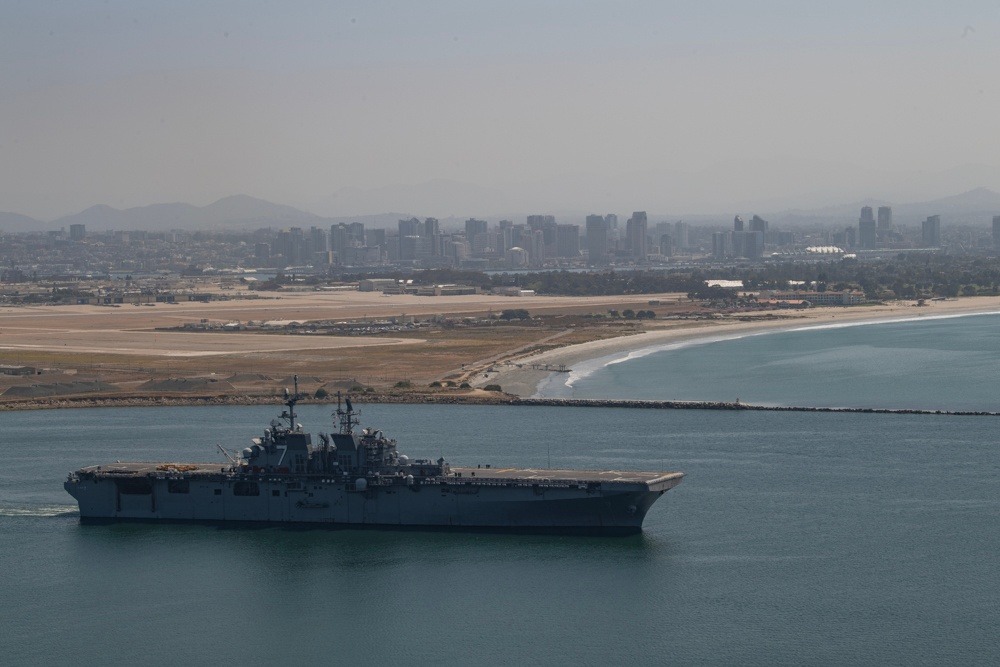
America-class amphibious assault carrier USS Tripoli (LHA 7) transits San Diego Bay, May 19, 2025. The ship departed Naval Base San Diego to complete a homeport change and join forward-deployed naval forces in Sasebo, Japan as part of a scheduled rotation of forces in the Pacific. (U.S. Navy photo by Mass Communication Specialist 1st Class Sara L. Eshleman) 

From Commander, Naval Surface Force, U.S. Pacific Fleet, May 19, 2025 

SAN DIEGO – The America-class amphibious assault ship USS Tripoli (LHA 7) departed Naval Base San Diego May 19 to forward deploy to Sasebo, Japan, as part of a scheduled rotation of forces in the Pacific. The Tripoli will replace the amphibious assault ship USS America (LHA 6), which will depart Sasebo and move to San Diego. 
 
“The Tripoli is ready to defend U.S. interests abroad and strengthen our long-standing partnership with Japan,” said Capt. Eddie Park, commanding officer of the Tripoli. “I am extremely proud to lead this hard-working and motivated team of Sailors and Marines overseas to support security, stability and prosperity in this vital region.” 
 
The forward presence of the Tripoli supports the United States’ commitment to the defense of Japan, enhances the national security of the United States and improves its ability to protect strategic interests. The security environment in the Indo-Pacific requires the most capable ships to enable rapid response times for maritime and joint forces. 
 
“The U.S. has a vital relationship with Japan, and their hospitality and professionalism are unmatched,” said the Tripoli’s executive officer (XO), Capt. Patrick Sullivan, whose previous assignment was deputy commander of Naval Surface Group Western Pacific in Sasebo. “I’m honored and excited to return as the XO of such a highly capable warship to honor our nation’s security commitment to Japan.” 
 
San Diego has been the Tripoli’s homeport since September 2020. Since then, the Tripoli supported multiple exercises including Valiant Shield, Iron Storm, Kamandag, Steel Knight, and the 31st Marine Expeditionary Patrol 22.2. The ship also completed numerous maintenance availabilities and earned various fleet and type commander excellence awards. 
 
“This crew has been diligently preparing to forward deploy since last year,” said Park. “I am fully confident in the crew’s abilities to execute any mission assigned to us.” 
 
The Tripoli was commissioned July 15, 2020, and is the second America-class amphibious assault ship built for the United States Navy. The ship is named after the U.S. Marine Corps victory against Tripoli at the Battle of Derna during the First Barbary War in 1805. 
 
The mission of Commander, Naval Surface Force, Pacific Fleet is to man, train, and equip the Surface Force to provide fleet commanders with credible naval power to control the sea and project power ashore


Navy Reserve Chief Looks Forward to KC-130J Aircraft 

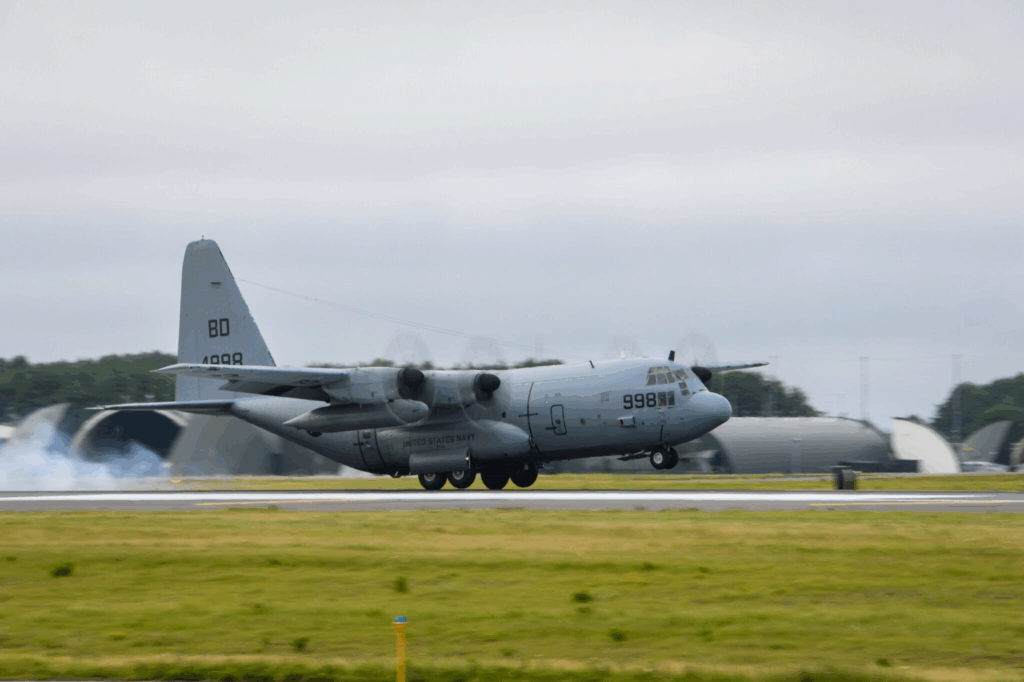
MISAWA, Japan (July 12, 2021) A C-130T Hercules, assigned to the Condors of Fleet Logistics Support Squadron (VR) 64, recovers at Naval Air Facility (NAF) Misawa. (U.S. Navy photo by Mass Communication Specialist 3rd Class Benjamin Ringers)

By Richard R. Burgess, Senior Editor 

ARLINGTON, Va. — The admiral in charge of the U.S. Navy Reserve Force expressed appreciation for congressional support in procuring KC-130J Super Hercules tanker/transport aircraft to modernize the force’s organic airlift fleet. 

“We are grateful for the strong bi-partisan alignment on this priority,” said Rear Admiral Nancy S. Lacore, chief of Navy Reserve, testifying May 20 before the House Appropriations Committee’s defense subcommittee. “We are grateful for the adds we got in 2024 [and] 2025 for the C-130. The C-130 is our number one equipment priority, and we are behind in that re-capitalization effort.” 

The Navy Reserve operates 27 C-130T/KC-130T Hercules aircraft with an average age of 34 years and a mission-capable rate of 40%. Lacore anticipates a mission-capable rate of 75% with a fleet of KC-130Js. 

We’re also anticipating a 75% mission-capable rate, which will go a long way,” Lacore said. “The plan was to be at 32 aircraft by 2030. We got one in 2024, two in 2025 and we’re super-grateful for them. Right now, in the out years, we need to be looking at six per year in order to get us to where we need to go.”  

Lacore said the C-130T Hercules “operates exclusively by the Reserve is the Navy’s only long-range, inter-theater airlift for oversize cargo. Its capability is in high demand from fleet commanders, particularly in the Indo-Pacific, playing a critical role in the contested logistics necessary to sustain a maritime fight. 

“For the past few months, Reserve C-130 crews have transported thousands of pounds of ordnance into the Red Sea fight, keeping our ships on station intercepting Houthi missiles, conduction precision strikes, and safeguarding global commerce,” she said. “When the fleet needs logistics, whether to deliver firepower or staying power, Navy Reserve answers the call.” 

She pointed out that the C-130T fleet “lacks the survivability necessary to operating in a contested environment. Recapitalizing with the KC-130J is critical to ensuring that we effectively and safely carry out the critical inter-theater logistics mission for the fleet in 2027 and well beyond that.” 

Lacore also noted the need for improved aerial refueling capability in the Pacific theater. 

“The PACFLT [U.S. Pacific Fleet] commander has already asked us to work on organic aerial refueling and we are doing that with the Tangos [KC-130Ts],” she said. “It’s a long haul; they’re not all plumbed for that, whereas the Juliets [KC-130Js] will come with that plumbing already established. We anticipate that at least two times the aerial refueling rate. And if we include ground refueling as well, we’re looking at probably eight times our refueling capability in theater, which is a huge win for us in the Pacific. 


Vigor Marine CM San Diego Completes USS Tripoli (LHA 7) 

Vessel’s early departure shows skill, commitment of San Diego team 

SAN DIEGO, Calif. (May 30, 2025) – Vigor Marine CM San Diego, a division of Vigor Marine Group, has successfully completed a Continuous Maintenance Availability on USS Tripoli (LHA 7), returning the vessel five days ahead of schedule. More than 250 skilled workers supported the effort to get the Tripoli back to the fleet ahead of schedule, allowing the vessel to commence its rotation to Japan.  

“This successful availability showed our skilled workers’ commitment to excellence and to the success of our customer, the U.S. Navy,” said Adam Beck, Head of Maintenance and Modernization Pacific for Vigor Marine Group. “We are aware of the importance of quality, on-time maintenance to the success of the warfighter and we are proud of our team for the work they do in support of our national defense.” 

This CMAV consisted of a comprehensive body of work, including platform repairs, tank repairs and preservation, bulkhead shaft seal repair, pump mechanical seals, service diesel generator repair, piping replacements, rotating machinery/pump overhaul and replacement, refrigeration compressor overhaul and various aircraft/cargo weapon elevator repairs. Work was completed at the CM San Diego shipyard from February through mid-May.  

“The expert team in San Diego not only completed this work ahead of schedule, they did it with a strong focus on working safely,” said Carlos Aguayo, President of Vigor Marine CM San Diego. “Our strong relationship with the Navy is founded on our commitment to their success and our safe, quality performance. We are grateful to be a partner of choice and look forward to further opportunities to support our valued customer.” 

Vigor Marine CM San Diego, formerly Continental Maritime of San Diego continues work on the USS Russell (DDG 59) DSRA, USS Momsen (DDG 92) and the planning for an upcoming SRA on the USS Sterett (DDG 104). This is the second time CM San Diego has been trusted with an availability on the Tripoli. The work not only supports the U.S. Navy, it provides hundreds of family wage jobs in San Diego, and thousands across the entire Vigor Marine Group footprint.  


USNS Comfort Departs Norfolk in Support of Continuing Promise 2025 

by LaShawn Sykes – USN Military Sealift Command, May 30, 2025 

NORFOLK, Virginia (May 30, 2025) – The U.S. Navy Mercy-class hospital ship USNS Comfort (T-AH 20) departed Naval Station Norfolk to begin its summer deployment to the U.S. Southern Command area of operation in support of U.S. Naval Forces Southern Command/U.S.4th Fleet’s Continuing Promise 2025, May 30. 

 
After several months of detailed planning, Comfort is on-track to conduct mission visits to Grenada, Panama, Colombia, Ecuador, Costa Rica, and the Dominican Republic. 
 
“Continuing Promise has been conducted since 2007, with a mission to forge enduring partnerships by providing medical and humanitarian aid, thereby creating a lasting reputation for goodwill throughout the region,” said Capt. Ryan Kendall, commodore, Destroyer Squadron 40, and mission commander of Continuing Promise. 
 
The focus during each mission stop will be working alongside partner nation medical personnel to provide direct patient care and technical expertise in community clinics to improve medical readiness, strengthen partnerships, and enhance the combined capabilities of the U.S. Navy and partner nations to respond to public health disasters and humanitarian crises. 
 
The Continuing Promise team also includes a U.S. Army veterinary element from the 248th Medical Detachment (Veterinary Service Support), which will collaborate with host nation colleagues to provide direct public health education and animal care at local veterinary organizations in-country. U.S. Navy Seabees from Navy Mobile Construction Battalion 11 will assist in host nation led community engineering projects. U.S. Navy experts will host seminars and training exercises with host nation civilian officials and military professionals covering disaster preparedness and response. These exchanges aim to support host nation facilities, improve readiness, and empower local and national officials with the knowledge and experience to act with confidence during emergencies. 
 
The U.S. Fleet Forces Band, “Uncharted Waters,” will also support the Continuing Promise mission. The band will embark on USNS Comfort to conduct classes at community schools, collaborate with military and civilian musical organizations in partner nations, and entertain local communities with concerts at each mission stop. This cultural exchange aims to strengthen community ties and foster goodwill. 
 
Capt. Stephen P. Arles, commanding officer, USNS Comfort, expressed excitement about working with the band and professional medical team. He added, “This is the Comfort’s eighth deployment supporting Continuing Promise. The team is eager to collaborate with partner nations, exchange knowledge, and aid those in need, strengthening the legacy of the Continuing Promise mission.” 
 
USNAVSOUTH/FOURTHFLT is the trusted maritime partner for Caribbean, Central and South America maritime forces leading to improved unity, security and stability. 
 
For more information about the mission, please visit https://www.fourthfleet.navy.mil, and follow at https://www.facebook.com/NAVSOUS4THFLT, https://x.com/navsous4thflt, and https://instagram.com/usnavysouth4thflt/. 
 
For more news from Military Sealift Command, visit https://sealiftcommand.com/. 


Marine Attack Squadron 231 completes its final Harrier flight at Cherry Point 

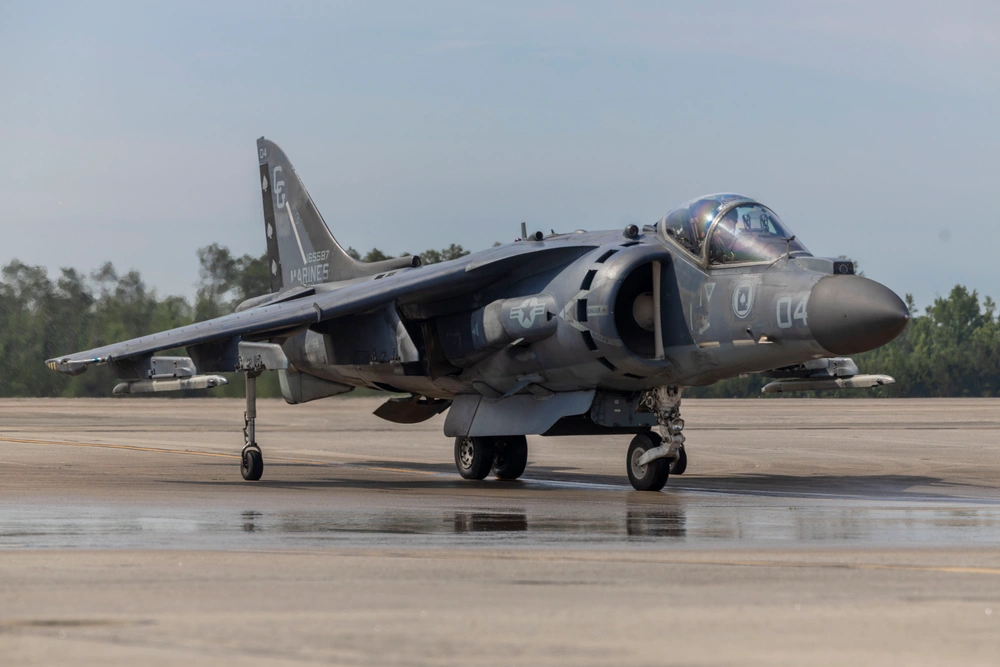
U.S. Marines Corps AV-8B Harrier II with Marine Attack Squadron (VMA) 231 taxis during the squadron’s final flight ceremony at Marine Corps Air Station Cherry Point, North Carolina, May 29, 2025. VMA-231 conducted a ceremony to celebrate its last Harrier flight before its deactivation in September. In 2026, the squadron will reactivate as Marine Fighter Attack Squadron 231 and prepare to operate the F-35B Lightning II Joint Strike Fighter. (U.S. Marine Corps photo by Lance Cpl. Bryan Giraldo) 

From 2d Marine Aircraft Wing Strategic Communications 

MARINE CORPS AIR STATION CHERRY POINT, N.C. – Marine Attack Squadron (VMA) 231, known as the “Ace of Spades,” marked the end of an era with its final AV-8B Harrier II flight on Thursday, culminating decades of rich history and distinguished service with the iconic vertical takeoff and landing aircraft. 

First commissioned in 1919, VMA-231 is the Marine Corps’ oldest flying squadron and has served with distinction in multiple conflicts worldwide over the last century. After adopting the Harrier II in 1985, VMA-231 supported major overseas operations to include Operations Desert Shield, Desert Storm, Allied Force, Odyssey Dawn, Inherent Resolve, and most recently, Prosperity Guardian.    

The squadron’s final flight and colors casing ceremony took place at Marine Corps Air Station Cherry Point and represented a significant milestone in the Marine Corps’ ongoing fifth-generation tactical aircraft transition. Attendees of the ceremony included active-duty Marines and Sailors with VMA-231, their families, and veterans who had previously served with the squadron. Maj. Gen. William Swan, commanding general of 2nd Marine Aircraft Wing (MAW), and Maj. Gen. James Wellons, commanding general of 3rd MAW, as well as several distinguished guests, community leaders and former commanding officers of the squadron were also in attendance.  

“Today is not a sad day,” stated Lt. Col. Paul Truog, current commanding officer of VMA-231, during the ceremony, “This is a momentous day for Marine aviation. It’s a day that we’re going to celebrate.” 

Truog, alongside Sgt. Maj. Christianna Wolford, will oversee VMA-231’s official deactivation in September 2025. The squadron will then reactivate as Marine Fighter Attack Squadron (VMFA) 231 in fiscal year 2026. As VMFA-231, the squadron will continue the unit’s storied legacy with fifth-generation capabilities as an F-35B Lightning II Joint Strike Fighter squadron. 

“Everybody knows that VMA-231 is transitioning to F-35s. The Wing, the [Marine Aircraft Group], and the squadron are going to be more capable of responding to any crisis. But that capability is not just because it’s our most technically advanced weapons system,” Truog said in his remarks. “That capability is because of the Marines and the pilots that, in record amounts, raise their hands saying, ‘I want to continue on, I want to keep moving forward.’”   

Truog’s comments referred to the many Marines who will continue the squadron’s earned legacy as future members of VMFA-231 and who will continue their service by piloting, maintaining and supporting F-35 aircraft in squadrons across the Marine Corps. 

“They’re going to take that, they’re going to go forward in Marine aviation, and they’re going to make Marine aviation better,” he added. 

The squadron’s transition from the legacy AV-8B Harrier II to the F-35B Lightning II Joint Strike Fighter is representative of 2nd MAW’s ongoing modernization efforts to meet the needs of the future fight. As the aviation combat element for the service-retained Marine Expeditionary Force, 2nd MAW continues to balance modernization efforts with providing combat-ready aviation forces to the Marine Corps and joint force. 


MSPF Conducts Maritime Interception Operations During ARMEUEX 

Photo by Sgt. Tanner Bernat, 22nd Marine Expeditionary Unit, May 18, 2025   

ATLANTIC OCEAN — U.S. Marines with Maritime Special Purpose Force, 22nd Marine Expeditionary Unit, board a vessel in rigid-hull inflatable boats while conducting maritime interception operations aboard U.S. Navy training support vessel USNS Vindicator (TSV 5) in support of Iwo Jima Amphibious Ready Group Marine Expeditionary Unit Exercise (ARGMEUEX) while underway in the Atlantic Ocean, May 18, 2025. During ARGMEUEX, the 22nd MEU, aboard IWO ARG shipping, conducts various mission essential tasks that enhance operational readiness and lethality as a unified IWOARG/22 MEU team. (U.S. Marine Corps photo by Sgt. Tanner Bernat)