DOD Uses Unfavorable Sea Conditions to Gain Efficiencies on Gaza Aid Mission

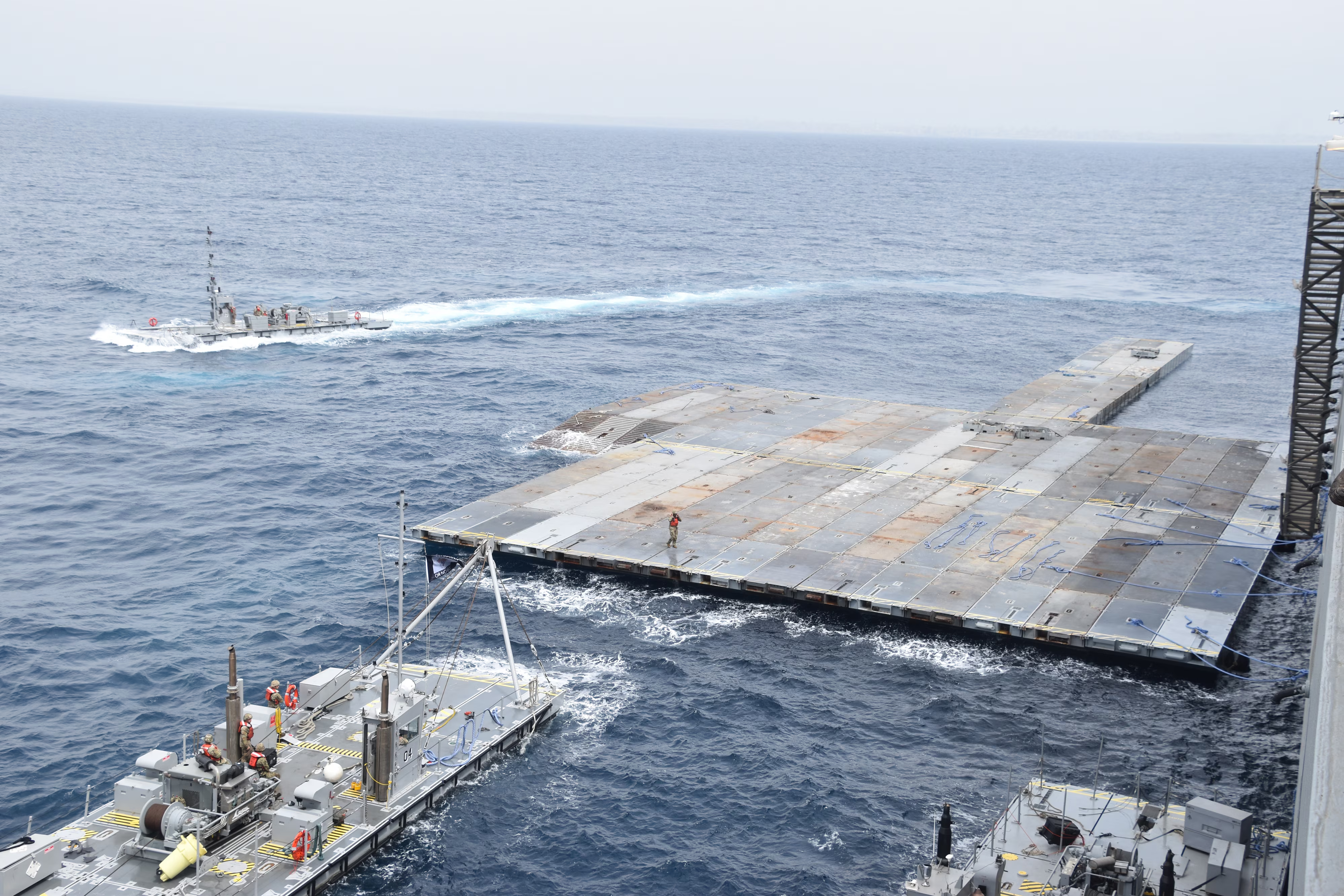
Pier-building begins Construction of the floating JLOTS pier in the Mediterranean is underway. The pier will support USAID and humanitarian partners to receive and deliver humanitarian aid to the people of Gaza. U.S. Transportation Command and U.S. European Command support the movement of humanitarian aid. U.S. Central Command

While unfavorable sea conditions have slowed deployment of two piers meant to deliver humanitarian aid into Gaza, the Defense Department has found a way to use the delay to its advantage and get ahead on the mission once it gets underway.

Earlier this week the Defense Department announced completion of the construction of two floating piers, which will be used to deliver humanitarian aid into Gaza.

Construction of the Joint Logistics Over-the-Shore, or JLOTS, system on the Mediterranean Sea was completed Tuesday. One floating pier will be deployed several miles offshore outside Gaza, while the other, called the Trident pier, or “causeway,” will be pushed onto and attached to the Gazan shore. Together they will be used to move humanitarian aid into Gaza. 

Both of the floating piers, along with the MV Roy P. Benavidez — a large, medium-speed, roll-on, roll-off ship — are off the coast of Israel near the Port of Ashdod, about 18 miles north of Gaza. Unfavorable sea conditions prevent movement of the piers to their final location. 

In the meantime, the MV Sagamore — a commercial cargo ship — has been loaded with humanitarian aid in Cyprus and has made its way to Ashdod. Instead of waiting for the piers to be deployed, humanitarian aid on the Sagamore will be moved to the Benavidez so that the Sagamore can go back to Cyprus to get more aid supplies, said Pentagon Press Secretary Air Force Major General Pat Ryder.

“In this period of time that we have before the pier becomes operational, we’re essentially using that time to get ahead,” Ryder said during a briefing today. “Since the Sagamore has been loaded with humanitarian assistance, by transloading that on to the Benavidez, the Benavidez is essentially in position to immediately start loading that onto the floating pier for subsequent shipment to the causeway and delivery to the shore.” 

Because the Benavidez will remain near Gaza when the humanitarian mission begins, Ryder said, the Sagamore is free to go back to Cyprus to get additional aid. 

Once the two floating piers are deployed, ships loaded with humanitarian aid will dock at the floating pier off the coast of Gaza and have their cargo unloaded onto trucks that are onboard Army-owned landing craft utility ships, or LCUs, and logistic support vessels, or LSVs. 

The Army ships will then travel toward Gaza where they will meet up with the Trident pier. There, the trucks onboard the LCUs and LSVs will drive onto the pier and onto the shore of Gaza where the humanitarian aid supplies can then be staged for delivery inside Gaza. Ryder said non-U.S. civilian contractors will be responsible for driving those vehicles. 

It’s expected that initially about 90 truckloads of supplies will transit the causeway each day and make their way into Gaza. When the operation reaches full capacity, as many as 150 trucks will make their way into Gaza daily. 

“This is a complex operation which requires close coordination with many partners,” said Ryder. “The United States is joining an international community-backed effort, led by with support from the United Nations, the World Food Programme, the Republic of Cyprus, other partner nations and the to expand the delivery of humanitarian assistance via a maritime corridor to the people of Gaza.”


Aegis Ashore in Poland on Target for 2022

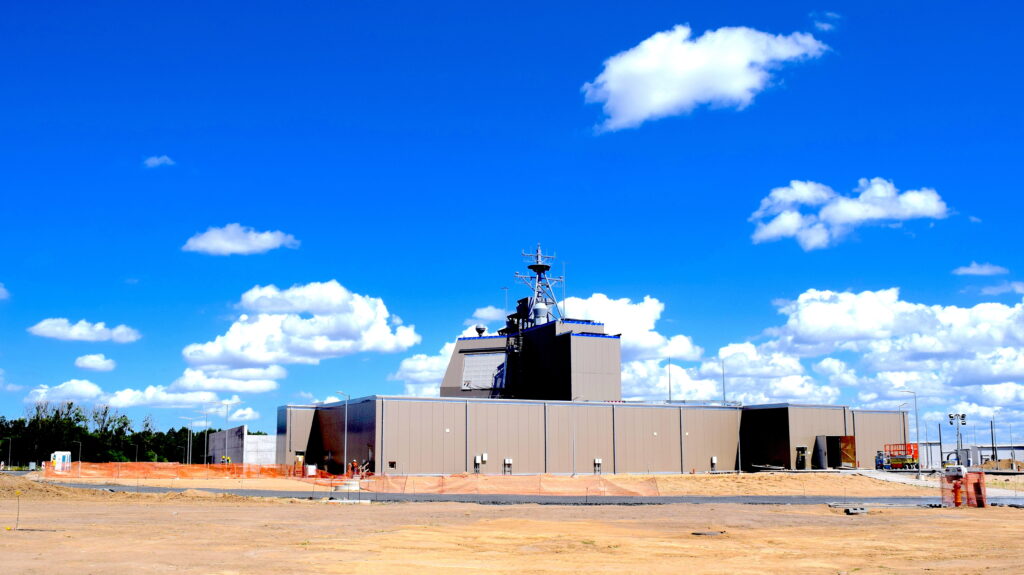
The new Naval Support Facility in Redzikowo, Poland, will be home to the Aegis Ashore Ballistic Missile Defense System(AABMDS) mission in the coming years and is expected to be completed sometime in late 2020. U.S. NAVY / Lt. Amy Forsythe

ARLINGTON, Va. — The Aegis Ashore capability planned for Poland is moving ahead to be operational by the end of next year, the program executive officer for Aegis Ballistic Missile Defense said Nov. 19. 

The Aegis Combat System was originally designed as a shipboard system to track and destroy incoming enemy targets, but the system has also been deployed for use on land as “Aegis Ashore.” 

Already an Aegis Ashore capability is up and running in Deveselu, Romania, about 90 miles from Bucharest. The site, under the control of NATO, has been in operation for more than five years now. 

A site similar to the one in Romania is also planned for Redzikowo, Poland, near the Baltic Sea. But that site has been delayed due to construction issues, although efforts are now underway to get the site operational by the end of next year. 

“My part, which is to install the Aegis Weapon System, has been delayed as we work the military construction with our contractors,” said Rear Adm. Tom Druggan during a discussion on Thursday at the Center for Strategic and International Studies in Washington, D.C. “We are behind, given the original schedule, no question about that. The good news is we’re getting the quality we want for a facility that’s going to be there 50 to 75 years, and we now have the right management in place in order to move ahead and complete this.” 

Over the summer, Druggan said, the Aegis system in Poland was pulled out of storage there and assembled to test its operations. 

“We … put the whole weapon system together with the exception of the antennas,” he said. “We energized it. And the equipment had been in the containers for a while. We found some issues — good news is we fixed them. And then we did an upgrade, which is saving time from a future availability. So that system is actually our most upgraded system today, ready to be installed.” 

In an unusual move, Druggan said, the Aegis Ashore capability in Poland is now being set up as the infrastructure on the ground to support it becomes available. He said antennas for the AN/SPY radar system have already been set up. 

“We’re installing the backbone of the radar behind it,” he said. “We’ve installed some systems. And we’re going to keep installing our pieces in parallel to the commissioning of all the industrial equipment, power, cooling, ventilation, that’s going on, on the construction side.” 

Normally, he said, installing an Aegis system wouldn’t happen until all the supporting construction was complete. 

“I made the decision long ago that we were not going to wait,” he said. “We were going to do what we could, when we could, based on the conditions within the deckhouse. That has proved to be a successful strategy. And now we’ve got good momentum.” 

Druggan said he expects the Aegis Ashore site in Poland to be operational by the end of 2022, and at that point the transition of the system can happen first to the Navy, then to U.S. European Command, and finally to NATO.