Philippine Navy Retires Four Ships as it Transitions to Modern Fleet
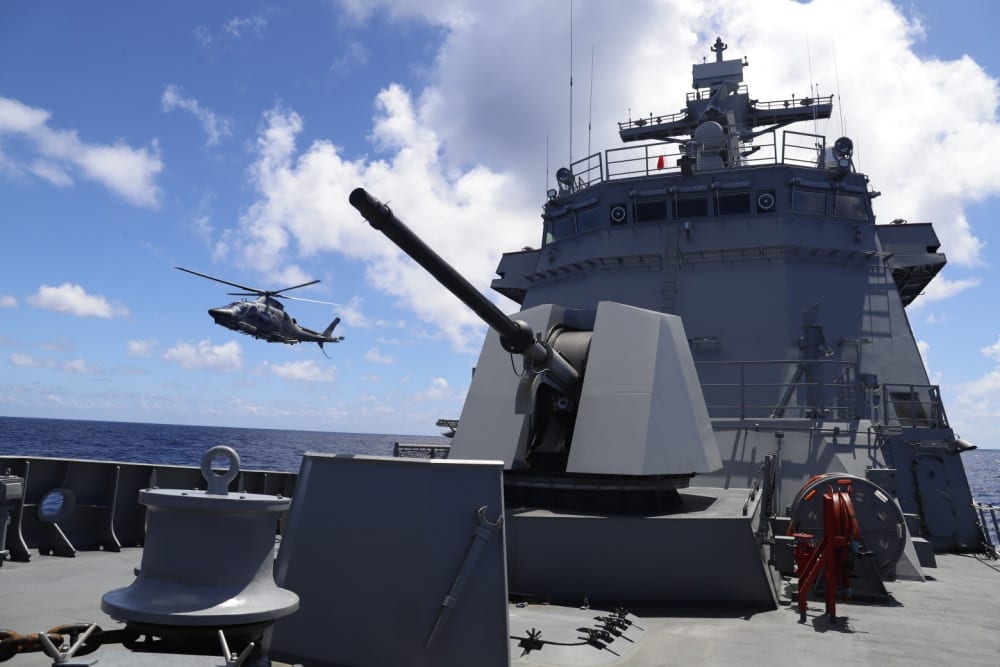
Republic of the Philippines navy ship BRP Jose Rizal (FF 150) conducts flight operations during Exercise Rim of the Pacific 2020. Republic of the Philippines navy / SN1 Pataueg

The Republic of the Philippines’ navy is making a pivot from older legacy ships and craft to newer and more capable surface combatants.

On March 1, 2021, the RPN decommissioned four of its oldest ships in a ceremony at the Heracleo Alano Naval Base in Sangley Point, Cavite City on the island of Luzon. Following guidance from Defense Secretary Delfin Lorenzana, decommissioning “vintage assets” paves the way for the new platforms pursuant to the Armed Forces of the Philippines Modernization Program.

To be decommissioned are Patrol Corvettes BRP Pangasinan (PS-31) and BRP Quezon (PS-70), and Fast Attack Craft BRP Salvador Abcede (PC-114) and BRP Emilio Liwanag (PC-118).

“Indeed, the decommissioning of PS-31, PS-70, PC-118, and PC-114 is a symbolism that there is a new horizon in sight. We are geared towards becoming a stronger and more capable Philippine navy [PN]. With our newest acquisitions, we are more confident that we can better perform our mandate and provide better protection of our maritime domains,” Vice Adm. Giovanni Carlo Bacordo, chief of the navy, said in a statement.

“The accomplishments of these PN vessels won’t be possible without their courageous crew. We are preparing and transitioning from a legacy navy into a modern navy, and part of this is making sure that we allocate our valuable resources and manpower to our new platforms,” Bacordo said in his speech, delivered by PN vice commander Rear Adm. Adeluis Bordado.

The Navy is implementing Defense Secretary Delfin Lorenzana’s guidance to decommission vintage assets to pave the way for the incoming platforms as part of the Armed Forces of the Philippines Modernization Program, and supports the PN’s capability development program to acquire modern platforms with state-of-the-art equipment, sensors, weapons and combat management systems.

In a release from the government-run Philippine News Agency (PNA), Bacordo said the old ships are too old and costly to maintain and operate, and that by decommissioning them, the Navy could “devote more resources to our newly-acquired ships.”

Long-serving veterans

BRP Quezon was one of the last of the 95 Auk-class of minesweepers built during the second world war. She was originally the 221-foot, 1,100-ton Auk-class minesweeper USS Vigilance (AM-324), and  was commissioned in January 1943, serving in the Pacific during World War II. She was transferred to the Philippines in 1967 and underwent a major refit in the mid-1990s. At the time of her decommissioning, Quezon was one of the oldest active fighting ships in the world, serving for 77 years, of which 53 years were with the Philippine navy.

The 185-foot, 914-ton BRP Pangasinan began life as PCE 891, a patrol craft commissioned in the U.S. Navy in 1944 and transferred to the Philippines four years later.  Although her armament changed over the years, at the time of her deactivation she carried a Mk.26 3-inch/50-caliber gun, three twin Mk.1 Bofors 40mm cannons, four Mk.10 Oerlikon 20mm cannons, and four M2 Browning 12.7mm 50-caliber machine guns. She had 72 years of active service at the time of her retirement.

The two Tomas Batilo-class patrol boats among the four ships deactivated, BRP Salvador Abcede (PC-114) and BRP Emilio Liwanag (PC-118), previously served in the Republic of Korea navy as fast attack craft, designated Patrol Killer Medium (PKM), and were the last of eight ex-Korean PKMs in the Philippine Navy. The PKMs were built in Korea in the 1970s. Five of them were acquired in 1995, one in 1998 and two in 2006. Salvador Abcede and Emilio Liwanag were transferred from the Korean navy in 1996. 

The 121-foot, 170-ton PKMs could achieve speeds up to 37 knots, and were armed with Bofors 40/60 caliber guns and pair of Oerlikon 20mm/70 caliber Gatling guns and two 12.7mm/50 caliber machine guns.

Fleet renewal

New ships are joining the fleet.  Two new Jose Rizal-class frigates, built by Hyundai Heavy Industries (HHI) in South Korea BRP Antonio Luna (FF 151) was commissioned at Subic Bay earlier this month.  The lead ship in the class, BRP Jose Rizal (FF 150), was commissioned in July 2020, and promptly deployed to Hawaii to participate in the Rim of the Pacific multi-national fleet exercise.

These two ships are the Philippine Navy’s most modern surface combatants, and the first with surface-to-air missiles for defense, but the ships were delivered without all of the combat systems installed, including VLS launchers, a close-in weapon system and towed array sonar. They will also be able to embark an AW-159 Wildcat helicopter.

The Philippine navy also received one former Republic of Korea navy Pohang-class coastal defense and anti-submarine corvettes, the BRP Conrado Yap (PS 39), in 2019. At 353 feet long and 2,600 tons, she carries a 76-mm gun, twin 40mm/70 caliber guns and torpedoes.

The 24 ships of the Pohang class were designed and built in Korea and commissioned in the Republic of Korea navy between 1984 and 1993. Ten remain in service with the ROKN, while others have been disposed of or transferred to other navies, as was BRP Conrado Yap. One of the ships in the class, ROKS Cheonan (PCC 772), was sunk by North Korean torpedoes in 1989.

Three former U.S. Coast Guard 378-foot Hamilton-class cutters — Hamilton (WHEC 715), Dallas (WHEC 716) and Boutwell (WHEC 719) — were transferred to the Philippine navy between 2011 and 2016 and became BRP Gregorio del Pilar (PS-15), BRP Ramon Alcaraz (PS 16) and BRP Andres Bonifacio (PS 17), respectively. Although these former 3,250-ton cutters had been in service for about 45 years, they were extensively modernized before being turned over to the Philippines.
Panel Examines Strategic Balance: Is the Navy You Have the Navy You Need?

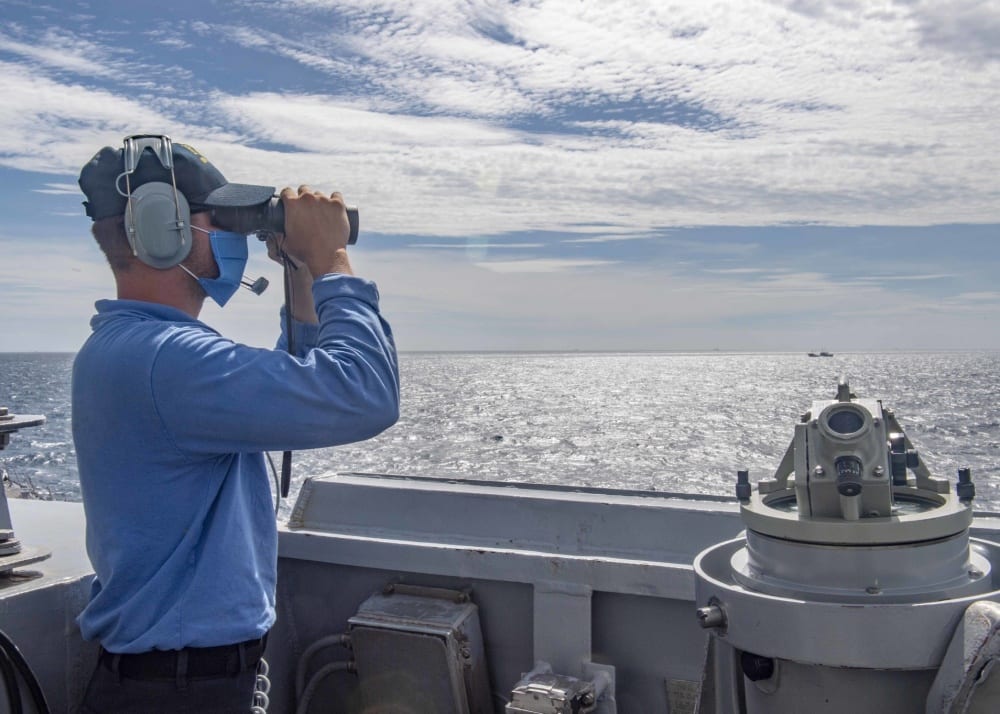
Seaman Zachery Douglas, from Dansville, New York, looks through binoculars on the bridge as the Arleigh Burke-class guided-missile destroyer USS Mustin (DDG 89) conducts routine operations in the Taiwan Strait. Mustin is forward-deployed to the U.S. 7th Fleet area of operations in support of security and stability in the Indo-Pacific region. U.S. Navy / Mass Communication Specialist 3rd Class Cody Beam

A March 16 webinar on “Maritime Competition and the Maritime Strategy,” hosted by the Center for Strategic and Budgetary Assessments examined several recently published papers dealing with maritime strategy, the role of the U.S. Navy and the composition of peacetime and wartime fleets in the current era of great power competition.

The virtual forum featured leading international security scholars, each of whom has contributed to a recent special issue of the journal Security Studies (Volume 29, Issue 4), as well as several companion pieces from a recent series published by War On The Rocksentitled Maritime Strategy on the Rocks.

The discussion was moderated by Evan Braden Montgomery, CSBA’s director of research and studies, who was also one of the authors in the collection. He was joined by panel of experts, including Jonathan Caverley, professor of strategy at the U.S. Naval War College; Fiona Cunningham, assistant professor of political science and international affairs at George Washington University; Peter Dombrowski, professor of strategy at the U.S. Naval War College; Erik Gartzke, professor of political science at the University of California at San Diego; Jon Lindsay, assistant professor at the University of Toronto; Paul van Hooft, senior strategic analyst at the Hague Center for Strategic Studies; and Sara McLaughlin Mitchell, professor of political science at the University of Iowa. 

Also participating was Dr. Doyle Hodges, executive editor of Texas National Security Review, who served as curator and editor of the series.

The papers focused on the Indo-Asia-Pacific region, which is primarily a maritime theater. The authors looked at how naval officers and scholars think about the INDO-PACOM maritime domain, and noted that they often viewed things quite differently.

The authors commented on the new tri-service strategy, and the distinct strength that of each of the three sea services bring to the security calculus. They also noted the U.S. is basically providing presence far from home, while China is essentially defending what it perceive as its home waters.  As such, the U.S. cannot face China alone and requires commitments from allies and partners in the region. In the Taiwan scenarios, however, the authors debated whether other countries would join the U.S. in coming to the aid of Taiwan if China were to invade.

Beyond simple territorial disputes, the authors examined various triggers and thresholds that have led to armed conflict in the past, including resources like fisheries and oil and gas.

The panelists debated the right mix of ships in the Navy fleet, and the relative merits of highly visible platforms as a form of deterrence, like carrier strike groups, and those less visibly but perhaps more potent, like ballistic missile submarines.

There may be reluctance to take the risk of fully committing very expensive platforms. Less expensive platforms are more affordable and can be built in larger quantities, but the ships need to be credible.  Furthermore, ships that are good at fighting might not be so good at preventing combat, or performing missions short of combat.

The panelists talked about how China’s strength exactly targets U.S. weaknesses, and that the U.S. today must go to greater lengths to be reassuring to allies and a deterrence to adversaries.


Italian Navy Commissions New Logistics Support Ship

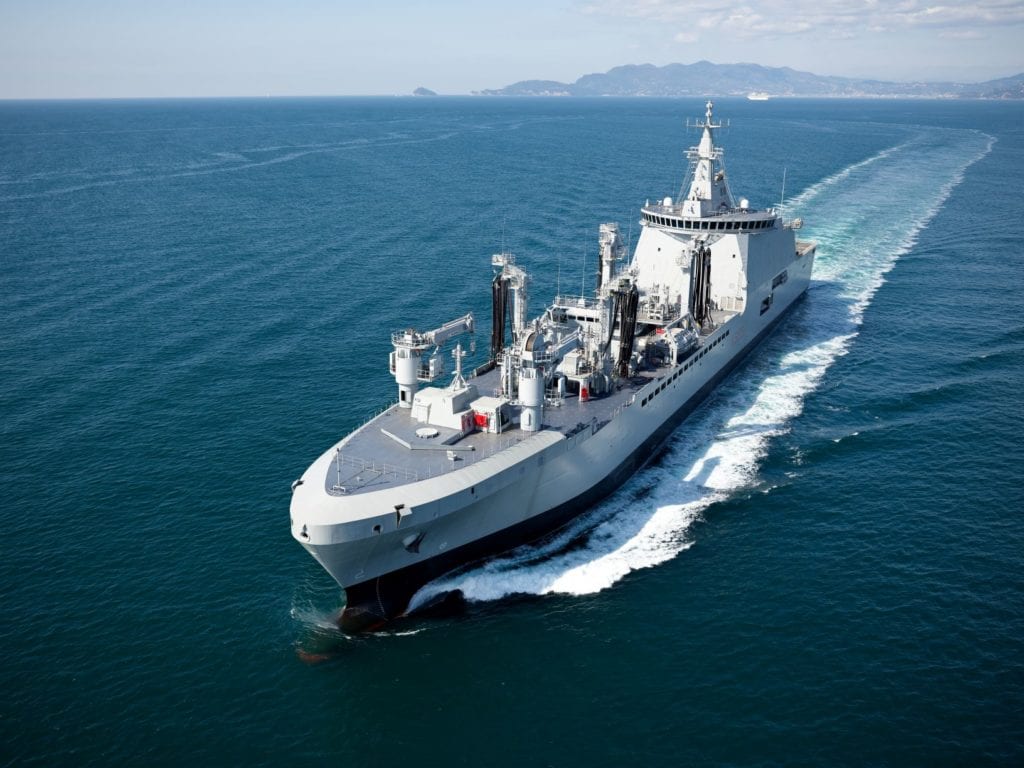
The Italian navy’s newest logistics support ship, the ITS Vulcano. Fincantieri S.p.A.

The Italian navy commissioned its newest logistics support ship (LSS), the ITS Vulcano (A5335) at a ceremony at the Fincantieri Naval Integrated shipyard in Muggiano, Italy. 

The 633-foot (193 meter), 27,200-ton LSS can replenish a surface ship task group and transfer cargo to other auxiliary vessels, including diesel fuel, jet fuel, fresh water (including the ability to produce fresh water), spare parts, food and ammunitions, as well as perform maintenance and repairs at sea repairs for other vessels with integrated maintenance workshops. Vulcan replaces ITS Stromboli, and carries significantly more fuel and JP5.

The ship has a crew of 235, including troops, special teams and medical personnel. The LSS has can carry eight 20-foot container living modules or other modular units.

According to a statement from Fincantieri, the LSS is a dual-use vessel, meaning it can be used for traditional replenishment of underway naval forces with four alongside refueling rigs and one astern refueling station, or support humanitarian assistance, disaster relief and other civil purposes. Vulcano’s hospital is equipped with surgical rooms, radiology and analysis rooms, a dental facility, and hospital beds for up to 17 seriously injured patients as well as an additional eight patients in the clinic area.

The statement also says the LSS has a reduced environmental impact thanks to a state-of-the-art CODLAD propulsion system which generates lower levels of pollution emissions. The ship can shift between a high-powered diesel for speeds up to approximately of about 20 knots, and electric motors using diesel generators for slower speeds (around 10 knots).

Vulcano was fabricated in three different Fincantieri yards. The forward section of the vessel was built at Castellammare di Stabia Shipyard in Naples, while the aft section was built in the Riva Trigoso shipyard. The sections were assembled at the yard in Muggiano, near La Spezia, where the ship underwent harbor and sea trials for final delivery.

The  Vulcano project is the basis of the “Flotte Logistique” program, which includes the construction of four LSS for the French navy through an Italo-French consortium between Chantiers de l’Atlantique and Naval Group under the Italian-French LSS program led by OCCAR, the Organisation for Joint Armament Cooperation. The construction of the forward sections of these ships has been commissioned to Fincantieri, which last month has laid the keel of the first vessel at its shipyard in Castellammare di Stabia in Naples.

In addition to the LSS, the Fincantieri’s Muggiano shipyard is also building the Landing Helicopter Dock Trieste, due to be delivered next year, as well as seven Multipurpose Offshore Patrol Ships, which will begin entering the fleet beginning this year.


Coast Guard, Navy Help Rescue Cold-Stunned Turtles, Return Them to Warmer Waters

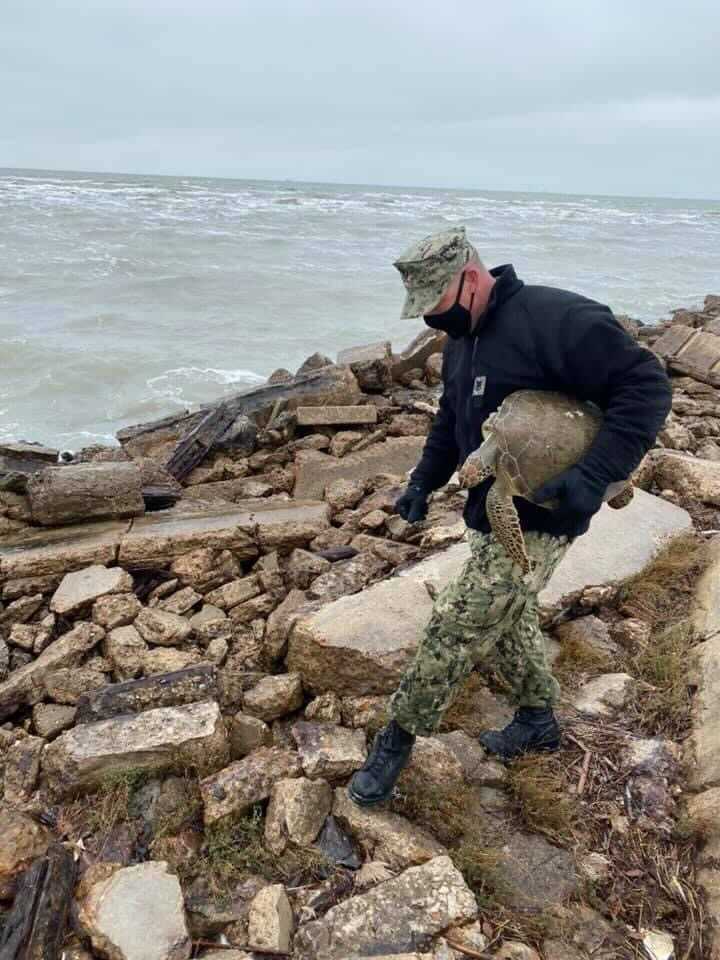
Command Master Chief Eric Kinnaman rescues a cold-stunned green sea turtle from the waterfront at Naval Air Station (NAS) Corpus Christi. Sailors, civilians and family members worked with the Texas Parks and Wildlife department and the National Park Service to transport the turtles to safety. The NAS Corpus Christi environmental team lead the multi-agency wildlife protection effort and rescued more than 600 turtles. U.S. Navy / Capt. Christopher Jason

Texas recently experienced record-breaking cold temperatures, causing the largest cold-stunning event for sea turtles in the state’s history. As the water temperate dropped to the mid-30s Fahrenheit, thousands of turtles were found stranded on beaches or floating in the water.

In the shallow bays and inlets of the Laguna Madre next to Padre Island, water temperatures can change rapidly. As reptiles, turtles are cold-blooded and cannot regulate their body temperature. Cold-stunned turtles experience hypothermia when the sea water drops to about 50°F or below, and become lethargic and unable to swim. 

According to Sea Turtle Inc., a non-profit organization on South Padre Island, “cold-stun events happen when the water gets too cold for sea turtles to maintain their body temperature. As a result, the turtles are awake but unable to move or swim. If not rescued, while they are awake and alive, the turtles will drown from being unable to lift their head to draw their breath.”

Fortunately, the Coast Guard and Navy were ready, willing and able to join in the effort with a team of organizations to help the turtles.

A consortium of organizations including the Turtle Survival Alliance, Sea Turtles, Inc., the Gladys Porter Zoo in Brownsville, the Texas Sealife Center, Texas Department of Parks and Wildlife and the National Park Service make up the South Padre Island Sea Turtle Stranding and Salvage Network, which works to rescue and care for cold-stunned turtles. While the area has experienced cold weather before, the February 2021 cold weather event was unprecedented. With 7,000 or more turtles knocked out by the frigid waters, ranging in size from a few pounds to more than 400 pounds. The rescuers were overwhelmed.

Active-duty Sailors, Marines and Coast Guardsmen pitched in, including student pilots for Naval Air Station Corpus Christi. Volunteers also included Navy civilian employees, retirees, spouses and family members.

NAS Corpus Christi and Coast Guard Sector Corpus Christi, like many military installations, are used to encountering wildlife suffering from severe weather. But this 2021 event has resulted in thousands of turtles stupefied by the cold. It is remarkable that so few of them died, but without the intervention of the Navy, Coast Guard and others, the toll would have been much higher.

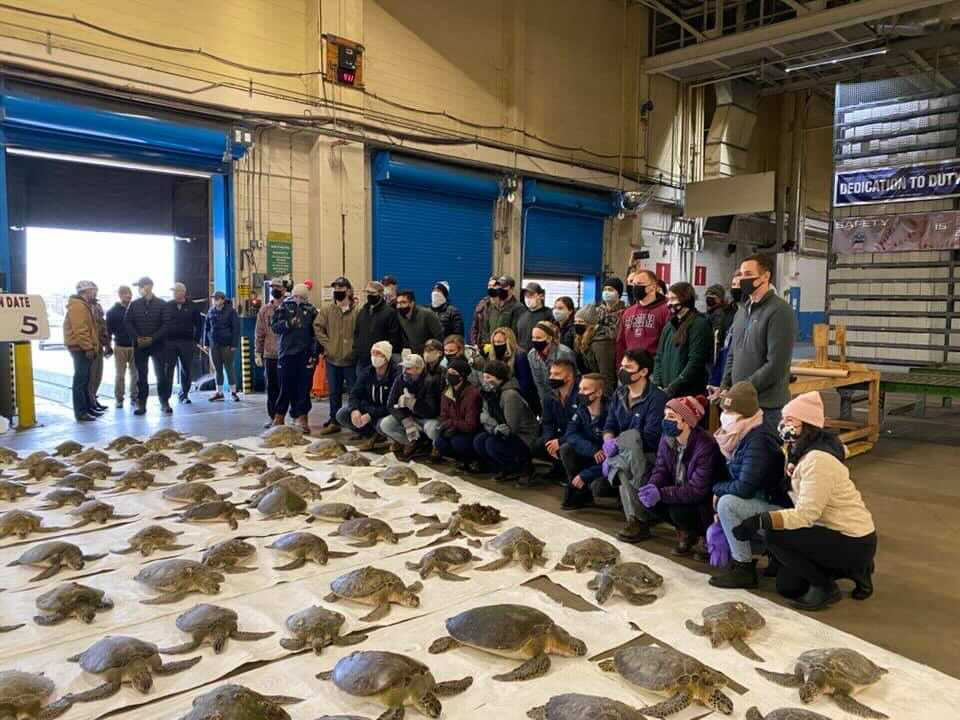
Capt. Christopher Jason, the commanding officer of Naval Air Station Corpus Christi, used his kayak to paddle out to the turtles and pull them out of the water. Turtles were kept in a hanger and later moved to a Defense Logistics Agency temperature-controlled warehouse to recover.

The rescues started with a base resident wanting to help a couple of injured birds. It turned into a large-scale operation involving dozens of volunteers rescuing more than 1,200 threatened sea turtles, at the same time as many of those volunteers did not have heat or water because of the unusually cold winter storm.

“The scale of the effort was unprecedented,” said Biji Pandisseril, NASCC environmental director. “Usually, about 20 to 30 turtles are rescued here after a cold snap.”

U.S. Coast Guard Rescue swimmers from Air Station Corpus Christi swam through rough and cold water to reach turtles far away from the shore. Petty Officer 3rd Class Will Groskritz and Petty Officer 2nd Class Russell Grizzard brought 60 turtles to safety in one day. The next day, Grizzard and Petty Officer 1st Class Rob Rendon saved another 40 to 50 turtles.

Responding to cold stun events is one of Sea Turtle Inc.’s ongoing rescue and rehabilitation efforts. For example, Sea Turtle Inc. has released over 55,000 sea turtle hatchlings into the Gulf of Mexico, and each year helps with any cold-stunned turtles that are found.  But, with more recued turtles coming in the Sea Turtle Inc.’s facility could handle. The rescued turtle filled the facility to capacity, with many turtles placed in children’s play pools. A makeshift rescue center was established at the South Padre Island Convention Center and Visitors Bureau.

In addition to the turtles being affected by the cold, their rescuers also had to contend with power outages and water shortages of their own as the cold snap surprised Texans.

Aerospace Company SpaceX donated a large power generator from their Boca Chica launch facility in Brownsville to provide electricity to the Sea Turtles Inc. facility, which already had hatchlings and other turtles being cared for. The power helped to keep the water in facility’s tanks warm enough for the turtles to survive. 

“This event had the potential to be devastating to both the sea turtle population and our hospital and residents. We prepare for cold stun events, but to respond as efficiently as we have although the additional challenge of no power speaks volumes about the passion and commitment of the Sea Turtle Inc staff and the Rio Grande Valley community,” said Wendy Knight, executive director of Sea Turtle Inc.

Volunteers pose with rescued green sea turtles at Naval Air Station (NAS) Corpus Christi, Texas. Sailors, civilians and family members worked with the Texas Parks and Wildlife department and the National Park Service to transport the turtles to safety. U.S. Navy

Unique ecosystem

Dr. Donna Shaver, chief of the division of sea turtle science and recovery with the National Park Service at Padre Island National Seashore, is the Texas coordinator of  the Sea Turtle Stranding and Salvage Network.

Shaver and her team were not completely unprepared. Back in October, Shaver, along with Texas State Aquarium and U.S. Coast Guard representatives, held a tabletop exercise to discuss what the response to a mass cold-stunning event such as this would look like. Because of the planning and preparation of that exercise, rescue, rehabilitation, and release of these animals was swift and effective. 

Shaver said the February cold snap was the coldest event since 1895, when a cold-stunning event was thought to have decimated the Green Sea Turtle population in Texas. She called it the “perfect storm” for cold study.

Shaver explained that the Laguna Madre, the salt water lagoon between mainland Texas and Padre Island, with lush sea grasses and algae, is a prime habitat for the juvenile green turtles, which represent the vast majority of the cold-stunned turtles. 

Once-numerous, the green sea turtle is today a threatened species in Texas. Considered a delicacy, there was once a large commercial fishery harvesting turtles in the area. “This used to be a thriving population in Texas until it was decimated in the late 1800s. It’s rebuilding, but now needs our help with these rescues,” Shaver said. 

At about 125 miles long, Laguna Madre is one of the few hypersaline lagoon systems in the world, meaning it is saltier than most seawater. There isn’t much inflow of fresh water or rainwater, and circulation with the Gulf of Mexico is limited. Laguna Madre is  one of the most productive estuarine systems and a valuable habitat for wildlife. It is protected by Padre Island, the longest stretch of undeveloped barrier island in the world, and there are only a few channels that allow access to open water. The precipitous decline of the temperatures, how long it stayed cold, and the depth of the cold water spelled trouble for the trapped turtles.

The water temperature can change temperature rapidly, and sea turtles swimming in Laguna Madre may not have had enough time to swim out of to the deeper, warmer waters of the Gulf of Mexico before becoming cold stunned.

Rehabilitation is fairly straight forward, Shaver said. “The first step is to bring in them in out of the elements and gradually warm up — but not too quickly — and then determine which ones are still alive, because we can’t tell for many of these turtles.”

“When they start to move around, we can put them in the water, let them expel some gas, and give them a swim test.  Then we wait until the Gulf of Mexico waters when the waters are warm enough so we can release them there,” Shaver said. “We don’t want to release them back into the Laguna Madre, because they could become cold-stunned again.”

“Working with our partners in the Texas State Aquarium and Texas Game Wardens to release these animals back into the wild is a surreal experience,” said Coast Guard Ensign Austin Sawicki. “Getting to play a small part in keeping the green sea turtle population safe is a very rewarding experience.”

Coast Guard Sector Corpus Christi and Station Port Aransas crewmembers assisted partner organizations to release the rehabilitated sea turtles back into the Gulf of Mexico in areas where the water was at least 55 degrees Fahrenheit were selected.


U.S. Navy Asserts Freedom to Navigate in International Waters

The Arleigh Burke-class guided-missile destroyer USS John Finn (DDG 113) transits the Taiwan Strait March 10, 2021. John Finn, part of the Theodore Roosevelt Carrier Strike Group, is on a scheduled deployment to the U.S. 7th Fleet area of operations. U.S. Navy / Mass Communication Specialist 3rd Class Jason Waite

The U.S. Navy continues to assert its right to operate freely in international waters with yet another Taiwan Strait transit, following several recent freedom of navigation operations (FONOPS) in the South China Sea, particularly in the vicinity of the Spratly and Paracel Islands. 

The Arleigh Burke-class guided missile destroyer USS John Finn (DDG 113) conducted a routine Taiwan Strait transit March 10 (local time) in accordance with international law.

According to a statement from the U.S. 7th Fleet, the ship’s transit through the Taiwan Strait “demonstrates the U.S. commitment to a free and open Indo-Pacific. The United States military will continue to fly, sail, and operate anywhere international law allows.”

China’s People’s Liberation Army officials said the USS John Finn transit was a provocation intended to undermine regional and cross-strait stability.

The John Finn transit isn’t the only one in recent weeks. The Arleigh Burke-class guided missile destroyer USS Curtis Wilbur (DDG 54) conducted a routine Taiwan Strait transit Feb. 24 in accordance with international law. On Feb. 17, USS Russell (DDG 59) “asserted navigational rights and freedoms in the Spratly Islands, consistent with international law.” And on Feb. 5, USS John S. McCain (DDG 56) asserted navigational rights and freedoms in the vicinity of the Paracel Islands, consistent with international law.

Each of these transits occurred in areas where nations have disputed claims regarding sovereignty.

“A Taiwan Strait transit is not a freedom of navigation operation. Freedom of navigation operations challenge excessive maritime claims, while Taiwan Strait transits simply exercise the rights of all ships to pass through an international waterway, said Lt. Mark Langford, deputy public affairs officer for the U.S. 7th Fleet.

According to statements from the 7th Fleet, the FONOP “upheld the rights, freedoms and lawful uses of the sea recognized in international law by challenging the unlawful restrictions on innocent passage imposed by China, Taiwan, and Vietnam and also by challenging China’s excessive straight baseline claims enclosing the Paracel Islands.”

The statement said China, Vietnam, Taiwan, Malaysia, Brunei and the Philippines each claim sovereignty over some or all of the Spratly Islands. China, Vietnam, and Taiwan require either permission or advance notification before a foreign military vessel engages in “innocent passage” through the territorial sea.

The 7th Fleet statement says, “Under international law as reflected in the Law of the Sea Convention, the ships of all states — including their warships — enjoy the right of innocent passage through the territorial sea. The unilateral imposition of any authorization or advance-notification requirement for innocent passage is not permitted by international law. By engaging in innocent passage without giving prior notification to or asking permission from any of the claimants, the United States challenged these unlawful restrictions imposed by China, Taiwan, and Vietnam. The United States demonstrated that innocent passage may not be subject to such restrictions.”

The 7th Fleet statement said U.S. forces have operated in the South China Sea on a daily basis, and have done so for more than a century. “They routinely operate in close coordination with like-minded allies and partners who share our commitment to uphold a free and open international order that promotes security and prosperity. All of our operations are designed to be conducted professionally and in accordance with international law and demonstrate that the United States will fly, sail, and operate wherever international law allows — regardless of the location of excessive maritime claims and regardless of current events.”

The Department of Defense’s annual Freedom of Navigation Fiscal Year 2020 Report to Congress, released March 10, said during the period from Oct. 1, 2019, through Sept. 30, 2020, U.S. forces operationally challenged 28 different excessive maritime claims made by 19 different claimants throughout the world. 


Naval Academy Makes More Room for Keeping Midshipmen Safe

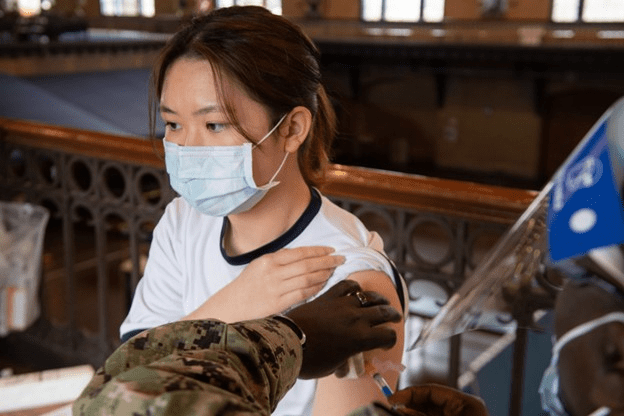
Midshipman 3rd Class Angelina Chan receives the COVID-19 vaccine, which is currently voluntary for active duty members, including midshipmen, while it is in an Emergency Use Authorization status. Vaccinating the midshipmen now will allow them to participate in summer training programs to meet Navy requirements. U.S. Navy/ MC2 Nathan Burke

Due to what Naval Academy officials are calling an “an uptick in positive cases within the Brigade of Midshipmen,” increased COVID-19 mitigation measures have been implemented, to include a full restriction of movement.

Ninety-eight midshipmen are now being housed in the Hilton Garden Inn, and an additional 98 midshipmen have been moved to the Graduate Hotel, both located on West Street in downtown Annapolis, to provide more quarantine and isolation space in Bancroft Hall, the Naval Academy’s dormitory.

The midshipmen in the hotels will attend classes virtually and be required to stay in their rooms except when “escorted outdoors at set times for wellness purposes.”

Meals are being served as “grab and go” via King Hall, as they have been since the midshipmen returned over the summer. Because food deliveries from off base are restricted, the Naval Academy Business Services Division is providing some complimentary menu items directly to the midshipmen currently in isolation.

“This is a dynamic situation and decisions are made on a daily basis in a way that prioritizes the healthcare needs of the midshipmen and well-being of our entire Naval Academy community,” said Superintendent Vice Adm. Sean Buck. “I am thankful for the flexibility and adaptability of the Brigade and our entire team here on the Yard and in the local community as we navigate this challenging period, especially the hotels for their responsiveness and hospitality.” 

During a virtual address on Feb. 28., Buck said, “The health and safety of our entire Naval Academy family is, and will remain, my highest priority while we continue to execute our mission of developing our future naval leaders.

“We need this to be an all-hands effort from our faculty, staff, coaches … this is not just a midshipman effort,” Buck said. “Additionally, those who may have approved credentials to access the Yard, such as sponsors, parents, active/reserve/retired military, shall refrain from visiting the Naval Academy, even to drop off deliveries, at this time in order to minimize the spread of this virus.”  

A shot in the arm

While the academy had already been inoculating staff and faculty, the midshipmen began receiving the vaccination on March 11.

“The Navy has prioritized vaccinating the operational forces first, and they’re developing very safe and healthy bubbles. For midshipmen to participate in summer training programs to meet Navy requirements, we need to begin vaccinating them now,” Buck said.

According to USNA Public Affairs Officer Cmdr. Alana Gara, “A total of 1,800 vaccines were administered to midshipmen, faculty, and staff last week, and will continue to vaccine this week based on the number of vaccines received.” 

Summer STEM Camp

USNA officials decided to host its 2021 Summer Seminar and Summer STEM Camp virtually. According to a statement from the academy, the decision was made “to protect the health and welfare of our summer program attendees, as well as our midshipmen, faculty and staff for each program. It is also necessary to move these programs to a virtual format for 2021 in order to enable the Naval Academy to safely prepare for the induction of the incoming Class of 2025.”

Due to the pandemic, last year’s Summer Seminar and STEM Camp were forced to be virtual events. Based on that experience, the 2021 event will “offer enhanced programming. “This year, STEM Camp participants will receive USNA STEM kits to support engagement during the academic modules. Additionally, participants for both programs will receive USNA apparel and promotional items specific to their program.”

The Summer Seminar is open to rising 12th graders. The STEM Camp is for rising 9th graders. Applications for both programs remain open until March 31, 2021, at https://www.usna.edu/Admissions/Programs/index.php.


Royal Malaysian Navy Stands Up Unmanned Aircraft Squadron

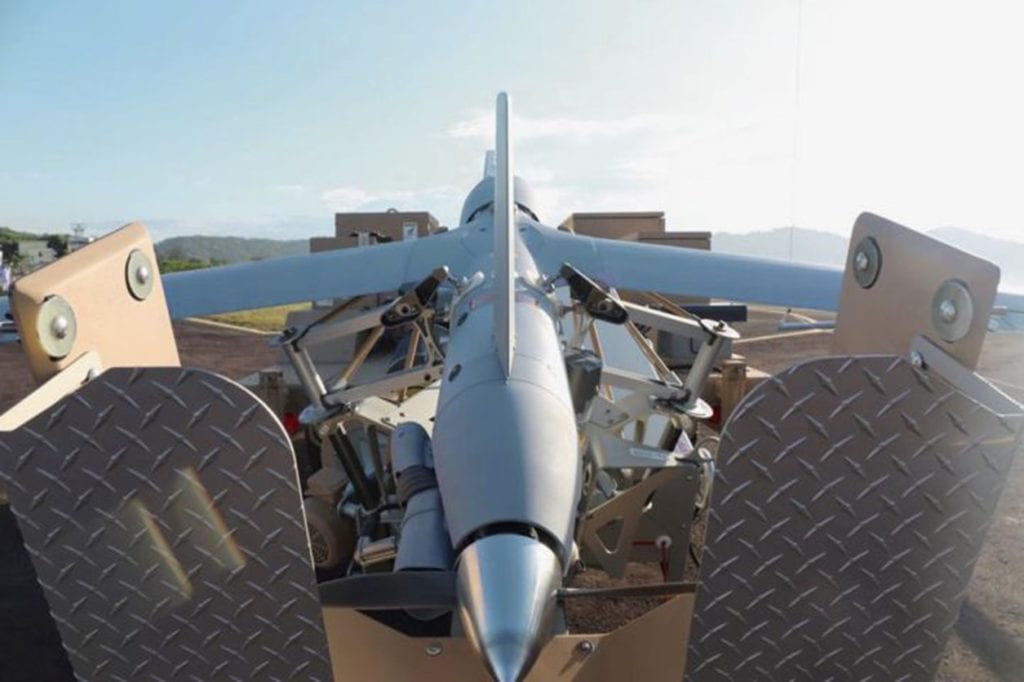
A ScanEagle UAS being displayed on its pneumatic launcher at the inauguration ceremony of Malaysia’s 601 Squadron on 4 March 2021. Royal Malaysian Navy

The Royal Malaysian Navy (RMN) established the 601st Unmanned Aerial System Squadron on March 4, 2021, operating the Boeing Insitu ScanEagle UAS from its base at Kota Kinabalu in Sabah. It is the RMN’s first unit dedicated to unmanned aerial systems.

According to First Admiral Ahmad Shafirudin, commander of the Naval Air of the RMN, the squadron will acquire capability and knowledge for UAS operations and support for the RMN and Malaysia’s joint forces.

The RMN has already received six aircraft from Insitu Boeing as part of an order for a total of 12 systems, announced by the U.S. Department of Defense on May 31, 2019 under of the Foreign Military Sales program, and part of the U.S. government’s Maritime Security Initiative. The remaining six ScanEagles are to be delivered by 2022. The value of the contract is $19.3 million. The Naval Air Systems Command, Patuxent River, Maryland, is the contracting activity. That contract also announced systems for Indonesia, Philippines and Vietnam. 

At that time, the U.S. Embassy in Kuala Lumpur issued a statement saying, “These UAVs will enhance the Royal Malaysian Navy’s ability to defend the country’s territorial integrity.”

The contract also included two pneumatic launchers, two SkyHook UAS retrieval systems, two ground control units, as well as spare payloads, spare and repair parts, support equipment, tools, training and maintenance technical services, and field service representatives. 

ScanEagle is a small, long-endurance, low-altitude system that can carry electro-optical imagers, long-wave infrared sensors and X-band radar payloads. The RMN intends to initially operate the systems from land with a mobile detachment concept, but eventually they could be hosted aboard ships. 

The 601 squadron will be located at RMN Naval Base at Kota Kinabalu in Sabah on the northern part of the island of Borneo, in East Malaysia. There are several reasons the squadron will be located in East Malaysia.  Unmanned air operations in Western Malaysia are complicated by the more complex and crowded airspace. More importantly, RMN officials acknowledge a more pressing need for maritime ISR across Malaysia’s eastern maritime border, where there is a current threat of non-state-sponsored militant activities.

Malaysia’s chief of navy, Adm. Tan Sri Mohd Reza bin Mohd Sany, participated in the event. U.S. Defense Attaché Capt. Muzzafar Khan, who attended the official handover ceremony, said, “For over 60 years the U.S. and Malaysia have shared a productive and mutually beneficial security cooperation partnership, and I am glad to see that continuing today.”


China Adopts ‘Assertive Posture’ With Eye on Taiwan, Admiral Says

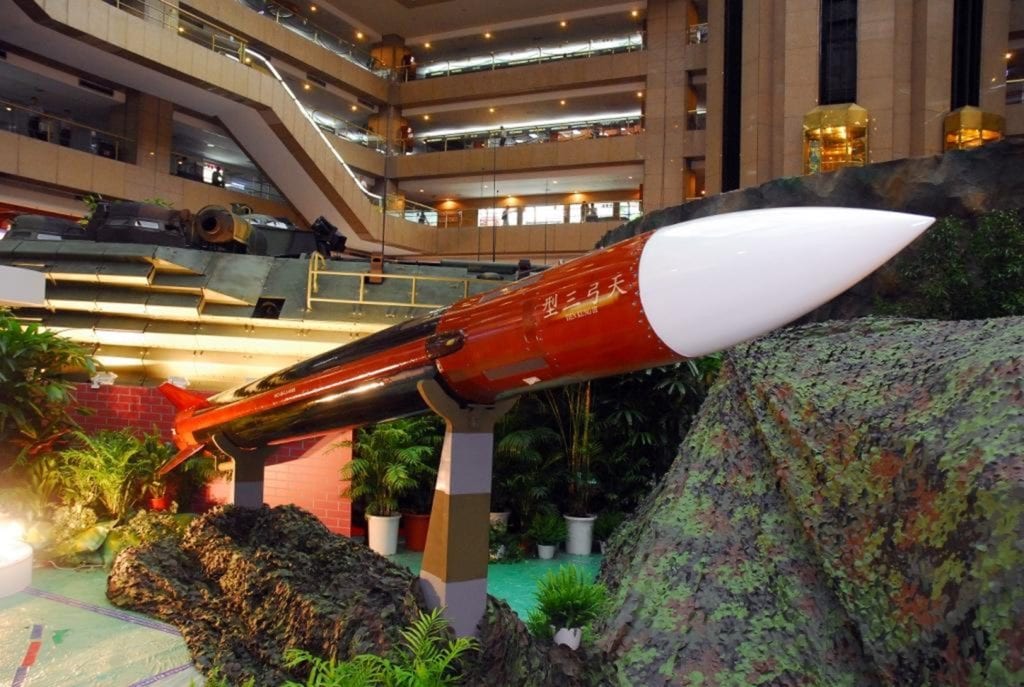
The Tien Kung Ⅲ area defense system, developed indigenously by the National Chun-Sheng Institute of Science and Technology (NCSIST), is designed to intercept tactical ballistic missiles. NCSIST

Admiral Philip Davidson, commander of the U.S. Indo-Pacific Command, speaking at the American Enterprise Institute on March 4 and in testimony to Congress on March 9, said the People’s Republic of China (PRC) is stepping up its pressure on Taiwan and called for the island nation to increase it defensive capabilities.

In his testimony on Capitol Hill, Davidson said, “The PRC has adopted an increasingly assertive military posture to exert pressure and expand its influence across the region. This is particularly stark concerning Taiwan. Over the past year, Beijing has pursued a coordinated campaign of diplomatic, informational, economic, and — increasingly — military tools to isolate Taipei from the international community and if necessary, compel unification with the PRC.”

“I worry that they’re [China] accelerating their ambitions to supplant the United States and our leadership role in the rules-based international order… by 2050,” he said.  “Taiwan is clearly one of their ambitions before that. And I think the threat is manifest during this decade, in fact, in the next six years.”

At the American Enterprise Institute, Davidson said it is vital the U.S. continue arms sales to Taiwan and encouraged their continued investments in national defense. Taiwan receives military assistance from the United States, but being diplomatically and commercially isolated, Taiwan has had to develop much of its defense capabilities on its own. 

“Helping to encourage Taiwan on its investments, a mix of capabilities that include capabilities that helps Taiwan deter, as well as provides some decent [other] capabilities that helps Taiwan defend, I think is a very important approach that the [Defense] Department needs to take,” Davidson.  “And I would say, you know, for the greater U.S. government — consistent arms sales to Taiwan to help in this deterrence strategy is critically important. And again, that takes a balance to capabilities to go to them.”

The Taiwan News reported on Feb. 17 that Taiwan’s National Chung-Shan Institute of Science and Technology (NCSIST) has been directed to ramp up production of Taiwan-made weapons systems, including anti-aircraft and anti-ship missiles. NCSIST is responsible for the development, manufacture and sale of Taiwan’s indigenous defense technology and weaponry.

According to the news report, the list includes the Sky Bow III (Tien Kung III) surface-to-air, anti-ballistic missile and the Hsiung Feng III supersonic missile capable of destroying both land-based and naval targets.  Development of the Sky Sword II (Tien Chien II) radar-guided air-to-air missile, as well as some classified missile systems, will be stepped up. 

The PRC is a nation of 1.4 billion, with the largest navy in the world. One hundred miles away is Taiwan, a country of 22 million people. Militarily, it almost seems to be an untenable position. 

“Taiwan is the most dangerous Sino-American flashpoint, because regaining de facto sovereignty over Taiwan has long been a Chinese core interest, and the potential for the use of force to accomplish reunification is always on the table,” said Ret. Rear Adm. Michael McDevitt, author of the recently published “China as a Twenty-First-Century Naval Power: Theory, Practice, and Implications” from Naval Institute Press. 

Should China and Taiwan begin hostilities, the People’s Liberation Army (PLA) has a decided home-field advantage. “In the face of almost two decades of Chinese military modernization, Taiwan’s forces — as well as the U.S. forward deployed forces — are vastly outgunned on a day-to-day basis, as they operate literally in China’s front yard,  because they face the totality of China’s armed forces,” McDevitt said.

‘“[PRC President and Communist Party Secretary] Xi Jinping has suggested that an indefinite perpetuation of the current status quo, with Taiwan existing as a de facto independent country, cannot go on forever. Xi gives the impression he is impatient because he fears perpetuation of the status quo will eventually lead to ‘peaceful separation,'” he said.

McDevitt said there are those that think Xi Jinping wants to be remembered as the party secretary that finally resolves the Taiwan question. “Taiwan is always going to be just a hundred miles of the coast of China, it will never be towed out to the mid-Pacific,” he said.

“The basic U.S. policy on reunification is straightforward,” he said. If the people of Taiwan decide in favor of it, “that is fine, but in the meanwhile, any attempts by the mainland to unify through coercion or outright aggression might result in U.S. military intervention,” said McDevitt. “Given the economic clout and military capability of the mainland, it is hard to imagine that reunification of some sort, a commonwealth for example, will not eventually take place, unless of course, Beijing agrees to let Taiwan declare independence, which in my mind would be the sensible thing for Beijing to do. Taiwan is not going anywhere.”

The Biden administration has signaled its support for Taiwan. State Department Spokesman Ned Price said on Jan. 21, “The United States notes with concern the pattern of ongoing PRC attempts to intimidate its neighbors, including Taiwan. We urge Beijing to cease its military, diplomatic, and economic pressure against Taiwan and instead engage in meaningful dialogue with Taiwan’s democratically elected representatives. We will stand with friends and allies to advance our shared prosperity, security, and values in the Indo-Pacific region — and that includes deepening our ties with democratic Taiwan.

“The United States will continue to support a peaceful resolution of cross-strait issues, consistent with the wishes and best interests of the people on Taiwan,” Price said. “The United States maintains its longstanding commitments as outlined in the Three Communiqués, the Taiwan Relations Act, and the Six Assurances. We will continue to assist Taiwan in maintaining a sufficient self-defense capability. Our commitment to Taiwan is rock-solid and contributes to the maintenance of peace and stability across the Taiwan Strait and within the region.”


Bill Introduced to Boost Coast Guard Icebreaking Mission, Great Lakes Icebreaking Capacity

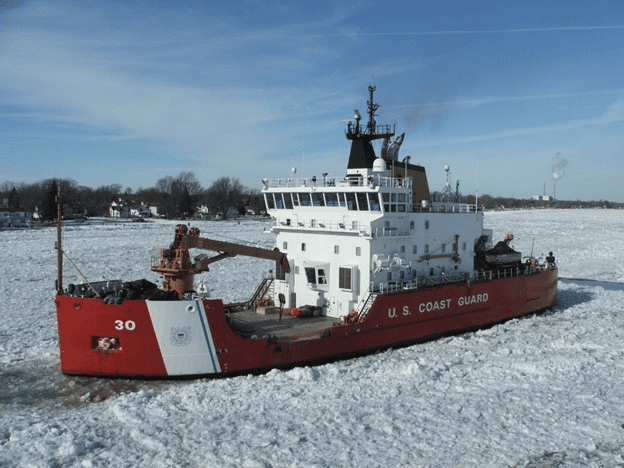
The Coast Guard Cutter Mackinaw, a 240-foot heavy icebreaker, breaks ice near Marine City, Michigan, along the St. Clair River, 2015. U.S. Coast Guard / Daniel R. Michelson

Recognizing the importance of maritime commerce on the Great Lakes, three U.S. senators are calling for legislation to help the Coast Guard keep the shipping lanes open during the winter.

“Inadequate icebreaking capacity in the Great Lakes is costing us thousands of American jobs and millions in business revenue. We must boost our icebreaking capacity in the Great Lakes to keep our maritime commerce moving,” said Sen. Tammy Baldwin (D-Wisconsin), who along with Sens. Todd Young (R-Indiana) and Gary Peters (D-Michigan) are reintroducing the Great Lakes Winter Commerce Act.

The bill would update the U.S. Coast Guard’s (USCG) Great Lakes icebreaking mission and increase the icebreaking capacity of the Great Lakes fleet to support “reasonable demands of commerce.” 

According to a statement from Baldwin’s office, “the Coast Guard currently interprets the ‘reasonable demands of commerce’ as meaning that an ice-covered waterway is open until a second vessel is stuck in the ice for more than 24 hours as a result of another vessel’s inability to move. They only report to Congress ice restrictions in four connecting channels for the entire Great Lakes.”

The bill defines “reasonable demands of commerce” as the “safe movement of commercial vessels transiting ice-covered waterways in the Great Lakes, regardless of type of cargo, at a speed consistent with the design capability of Coast Guard icebreakers operating in the Great Lakes.”

A study commissioned by the Lake Carriers’ Association found that during the 2018-2019 ice-season, businesses that depend upon the Great Lakes maritime industry lost over $1 billion in revenues because of delays caused by inadequate icebreaking.

“This historic bill will codify into law a long time Coast Guard mission that protects national and economic security,” said Jim Weakley, president of the Lake Carriers’ Association.

The legislation authorizes $350 million for the construction of a new Great Lakes icebreaker.

The Coast Guard currently has one heavy icebreaker based at Cheboygan, Michigan, as well as six icebreaking tugs. The Great Lakes icebreaker USCGC Mackinaw (WLBB 30) can break ice up to 32 inches thick at continuous speeds of 3 knots. Commissioned in 2006, the 240-foot heavy icebreaker is the largest Coast Guard vessel on the Great Lakes. There are also Bay-class 140-foot icebreaking tugs that can break ice up to 22 inches thick, based at Cleveland, Detroit, Sault Ste. Marie, Michigan, Sturgeon Bay, Wisconsin, and St. Ignace in Michigan.

“Icebreaking in the Great Lakes is critical not just for Michigan’s economy, but for our entire country. As we have seen this winter, the economic crisis caused by the coronavirus pandemic has made the importance of icebreaking more vital than ever to our small business community,” Peters said. 

Icebreaking capacity in the Great Lakes supports more than 90 million tons of cargo annually.

“Our legislation will support icebreaking missions to expand capacity to ship goods, create jobs, and strengthen the economy in Indiana and other Great Lake states,” Young said.


Taking COVID into account, NATO presses on with ambitious ASW exercise in Mediterranean

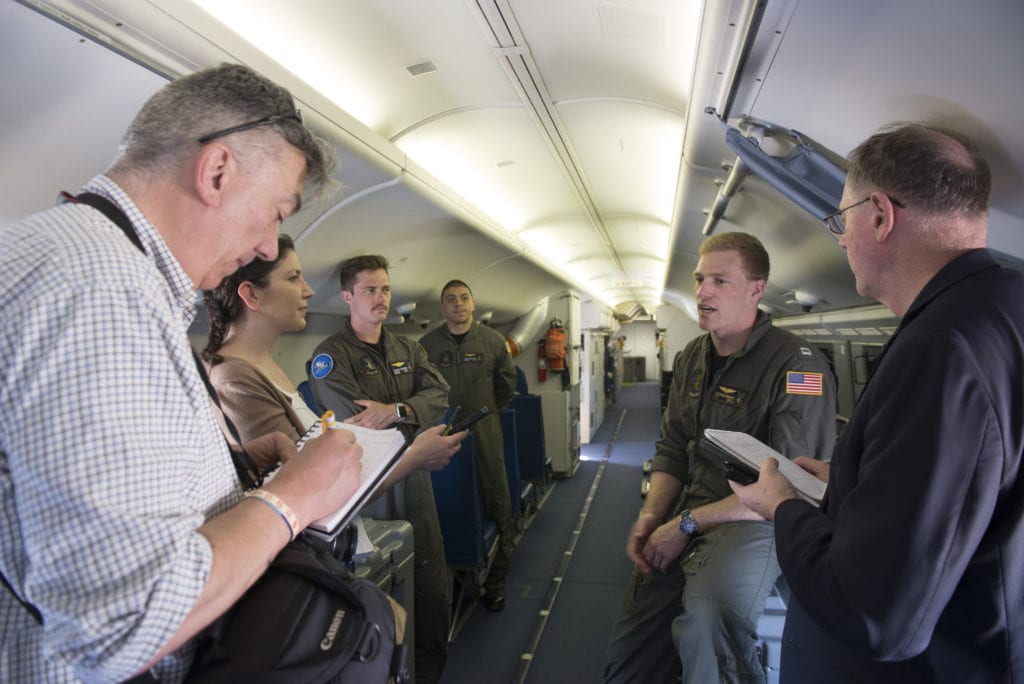
Lt. Stefan Knight, a naval flight officer assigned to Patrol Squadron (VP) 4, speaks to the press about VP-4’s involvement in Dynamic Manta 2020, Feb. 25, 2020. Dynamic Manta is an annual exercise hosted by NATO’s Allied Maritime Command to provide training in anti-submarine warfare and anti-surface warfare in order to enhance overall multi-lateral operations among NATO allies. U.S. Navy / Mass Communication Specialist 2nd Class Juan Sua

NATO will exercise its anti-submarine warfare and anti-surface warfare capabilities of allied naval units from Feb. 22 to March 5 during Exercise Dynamic Manta in the central Mediterranean.

Dynamic Manta 2021 includes five surface combatants with their organic helicopters from France, Greece, Italy, Spain and Turkey; six submarines from France, Germany, Italy, Turkey and the U.S.; five land-based maritime patrol aircraft from France, Germany, Greece, Italy and the U.S.; and the French Navy’s Charles De Gaulle Carrier Strike Group, with escorts from France, Germany, Greece and the U.S. 

Spanish navy Rear Adm. Manuel Aguirre Aldereguía, commander of Standing NATO Maritime Group Two (SNMG 2), is the on-scene commander of Exercise Dynamic Manta.

Last year, Dynamic Manta 2020 began just as the global pandemic was gripping Italy and the world. This year, the exercise was planned and is being executed with all the precautions and health regulations to keep people safe.

According to French navy Vice Adm. Didier Piaton, deputy commander of NATO Allied Maritime Command, Dynamic Manta in the Mediterranean is one of two major anti-submarine warfare exercises held each year, along with Dynamic Mongoose in the high North Sea.

“Like all MARCOM exercises, this one will demonstrate NATO’s willingness and capacity of keeping resilience and readiness, and to maintain the security of our allied nations,” Piaton said.

This year, the French navy’s Charles DeGaulle carrier strike group will join for training for a limited time, and will enhance its own ASW skills on its way to its operational deployment. This interaction is an opportunity for NATO and allied units to train together to enhance interoperability and build expertise.

The Italian navy is hosting the exercise in waters near the Sicilian city of Catania, not far from the naval air station at Sigonella. Rear Adm.Andrea Petroni, commander of the Italian navy’s submarine service, said the central Mediterranean and its location on the southern flank of Europe represents a realistic and valuable training opportunity.

“It’s important to participate in this kind of advanced International training activity to exchange knowledge and share lessons learned in order to increase the operational capabilities and professional development of the crews,” Petroni said.

Aldereguía said COVID-19 was a new factor in exercise planning process.  Procedures were instituted to prepare the units of SNMG 2 so the task group can maintain its high degree of readiness while taking care of the health and well-being of the crews and staff members.

“We are in a COVID-limited environment, “said U.S. Navy Rear Adm. E. Andrew Burcher, Commander Submarines, NATO, and exercise director.  “A year ago, we became aware of the virus just as Dynamic Manta 2020 was starting. We had to make adjustments as we went. We were able to hold Dynamic Mongoose 2020 later in the summer. And we’re going ahead and conducting this exercise, with no material impact on the operation or the exercise. It shows how well the NATO Alliance and the countries have adapted to this new reality and travel-restricted environment. We’re doing the best we can under the circumstances, and that’s a testament to how great this organization is.”

While NATO is technically able to complete the exercise and have a productive training experience, Burcher said the pandemic has precluded a lot of personal interaction compared to previous years.

“What’s lost are the personal connections that make the alliance stronger,” he said. “Our center of gravity of NATO is alliance cohesion, and the reason alliance cohesion exits is because of the friendships and partnerships exist when we meet personally on ships and shake hands with each other.” 

Burcher said there are other differences between the 2020 and 2021 event.  Although NATO’s Science and Technology Organization Center for Maritime Research and Experimentation (CMRE) will not join the ships at sea with its research ship, the Alliance, and its group of unmanned vehicles as they did in 2020, CMRE will still be involved this year. “We will be utilizing CMRE for technical analysis capability to improve our training as well as our understanding of the operating environment,” Burcher said.

“Most importantly, we’re going to have the benefit of having the Charles de Gaulle carrier strike group go through the exercise area,” Burcher said. “This is an important and unique opportunity for both the submarines and the surface ships to engage in a high threat environment. The submarine will be looking at how they prosecute a high-value unit as it transits in a typical transit scenario, while at the same time the CSG will be able to proceed through a submarine-dense environment and practice their ASW skills. That is a unique opportunity. We are taking advantage of integrating the schedules of national operations with NATO operations.

“Even in the COVID environment we are advancing and moving forward with our ASW skills,” Burcher said.