Navy Seeking Innovation in New Places Despite Challenges, ONR Director Says

Anne Sandel, executive director, Office of Naval Research. U.S. Navy / John F. Williams

While there is a new administration and leadership, the Office of Naval Research’s executive director said she does not expect any major changes in the Department of the Navy’s priorities, and the acquisition team will continue to be focused on delivering and sustaining lethal capability, increasing agility, driving affordability and developing a work force to compete and win.

Anne Sandel, also the acting principal civilian deputy to the assistant secretary of the Navy for research, development and acquisition, spoke at the National Defense Industrial Association’ s Expeditionary Warfare Conference, which took place virtually Feb. 2 and 3.

Sandel said the Navy acquisition and research and development enterprise, like everyone else, was challenged by the global pandemic during 2020.  COVID 19 had a big impact on the work environment. But, she said, through adaptation and process, the Navy has continued to execute.

“We’ve leapfrogged ahead to embrace that virtual and electronic environment,” Sandel said. “Our outreach, communication and our collaboration has actually increased. Although people like to be in room with one another, I have seen much more collaboration across the board, whether it’s Navy, Marine Corps, or any of our industry partners or allies. We are able to reach out on a moment’s notice and do what we’re doing today with one another. Many times, it’s a force multiplier, because we can include people who personally would not have been available because of travel, cost or schedule demands. Today, they can log on, be part of a phone call, and be there instantaneously. It’s multiplied our ability to communicate and move forward in a format that is unusual for those of us who grew up in an industrial infrastructure. We’ve had to transcend that with the acquisition, design, engineering and construction efforts. It’s improved our processes.”

Sandel has a long career in shipbuilding, maintenance and repair, but in her current role, she has a view of the many evolving technologies and concepts to address current and future warfighting requirements across all of the warfare domains. 

In her job at ONR, Sandel said she came to better appreciate just how much of ONR’s portfolio is focused on the expeditionary mission and in support of Marines. In fact, the vice chief of naval research is a Marine who also commands the Marine Corps Warfighting Laboratory.

“We are very closely aligned with the Marine Corp and the expeditionary portfolio,” she said.

Leveraging innovation

Sandel talked about finding and leveraging innovation. The NavalX organization, established by then-Assistant Secretary of the Navy for Research, Development and Acquisition James Guerts, focuses on embracing non-traditional agility methods across the DON workforce, and linking up isolated or disparate pockets of excellence and subject matter experts. As a part of NavalX, the Navy established storefront “TechBridge” offices — “agility cells” to broaden the network to help the Navy and Marine Corps learn and act faster in key locations.

The TechBridge storefront concept applies both internally within the Department of the Navy, but also externally, with other federal, state, regional and local government organizations, academia, nonprofits, trade and professional organizations and industry. 

“Think of NavalX as the ‘network,’ and the TechBridges as the nodes on the network,” Sandel said.

While she said the Navy is committed to developing and supporting America’s industrial base, she also is looking at capabilities that are available on the global market, including government-to-government and international commercial collaboration.

Sandel said Rear Adm. Lorin Selby, the Chief of Naval Research, has an international component to his job, and ONR Global has offices around the world to connect with academia, industry and governments to share developing technologies. The first TechBridge outside the U.S. has been established in the U.K., collocated with ONR Global at Northwood, to help make connections and find innovative technologies.

Another way to accelerate getting technology into the hands of warfighters is through experimentation. The Navy and Marine Corps are planning an ambitious array of exercises in the months and years ahead, including Trident Warrior, RIMPAC, Sea Dragon, Bold Alligator, Valiant Shield, Valiant Blitz, Large Scale Exercise 2020, to name a few, along with Advanced Naval Technology Exercises (ANTX) and Joint Interagency Field Exercises.  

Originally planned for 2020, the Navy is looking to leverage Large Scale Exercise 2021 to operationalize concepts like Distributed Maritime Operations (DMO), Expeditionary Advanced Base Operations (EABO), and Littoral Operations in a Contested Environment (LOCE), naval operational architecture, and command and control in a contested environment to  develop and test alternative warfare concepts.

“We’re putting tools and kit in the hands of the actual operators, experiment with it, and give us feedback directly,” she said.

Sandel discussed some of the ways the Navy in general, and ONR specifically, can move quickly to find, develop and field new technology.  She pointed to ONR’s TechSolutions program as an example of how ONR can act promptly on ideas from deckplate Sailors or Marines to improve mission effectiveness. TechSolutions has resources to rapidly address suggestions and ideas from the fleet, investigate available technologies, and deliver prototype solutions.

She also recognized the importance of small business, such as those participating in the Small Business Innovation Research (SBIR) program.  “During my tenure at ONR, and now at the enterprise level, I have seen how we have been able to leap forward greater agility using the SBIR funding than I was aware of in all my years in the engineering and acquisition organizations. I knew they were there, and how to get innovation from small companies that couldn’t compete as primes, but I’ve learned that they’re more agile than I recognized, The SBIR program, the way its architected and funded, has the agility to take innovative technologies and leapfrog forward,” she said. 


Marine Corps Commandant wants Marines to trust technology

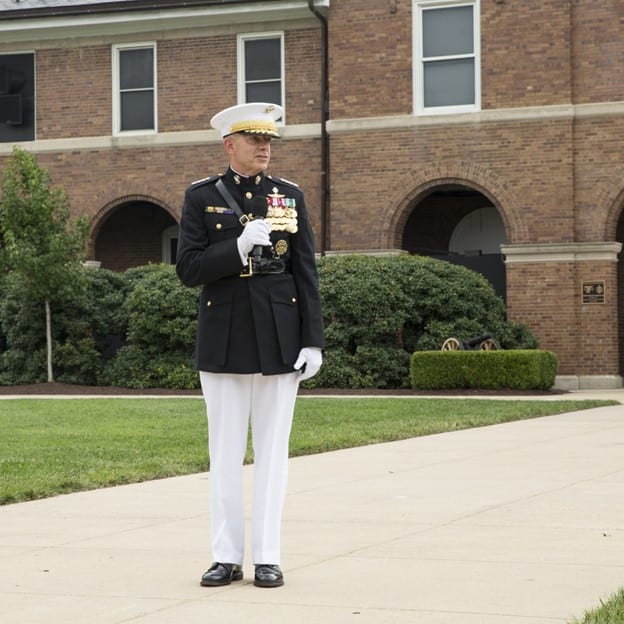
Commandant of the Marine Corps Gen. David H. Berger addresses the crowd during a change of command ceremony at Marine Barracks Washington, D.C., July 11, 2019. U.S. Marine Corps / Lance Cpl. Morgan L. R. Burges

Commandant of the Marine Corps Gen. David Berger said cooperation, innovation and trust are keys to future success for the sea services.

“Going forward in a great power competition, no single service is going to keep our advantage,” said Berger, speaking at the National Defense Industrial Association’s virtual Expeditionary Warfare Symposium, being held Feb. 2-3.  “Only by the Marine Corps and the Navy working together as a naval force will we be able to maintain our margin. Add the innovative technologies, that’s how you get an asymmetric advantage against a near peer or a peer adversary.”

Berger said despite the arrival of a new administration, the premise or foundation of the current National Defense Strategy — to discourage malignant military countries that want to challenge the international security environment — is solid.

In his view, the future operating environment is going to be characterized by a maturing and more proliferating precision strike regime in a maritime region. That’s going to require the Marine Corps, as the Joint Force’s stand-in force, to be forward deployed and distributed.

 “If a conflict comes, then I think that our near peer competitors are not going to allow us to build up and set the theater and take a couple of months to do that,” said Berger.  “Where you start from in a great power competition is where you were the day before. They’re not going to allow a flow of forces, because the know how that’s going to work. So, our forward standing in forces have to be ready immediately respond to a crisis. If we don’t start posturing and strengthening the naval services today, we’re going to fall behind. And that’s not going to happen.”

Altering our trajectory

Innovation is being driven by the threat, and by available resources.

“All of us in the Navy and Marine Corps recognize the same challenges in the emerging operating environment that’s before us. There is an urgent need for innovation and rapid change,” said Berger. “We are being driven by a pacing threat. We have to do it with no additional funding or resources.”

Berger expressed confidence in the force structure changes as set out in the Marine Corps Force Design 2030 effort, which examines the right mix of hardware, but also unmanned systems, artificial intelligence and sophisticated and survivable networks. “That’s how our force in readiness will alter our trajectory to create an advantage for the fleets and the overall force.”

“That force design — the major overhaul of the Marine Corps — provides the nation a force that’s capable of denying key maritime terrain to an adversary because of our forward presence, and its going to force our competitors to think twice before challenging our interests,” Berger said.  “That is the essence of deterrence.”

To achieve that, Berger said the service needs to reset is systems and equipment.

“The Marine Corps has to modernize, not just our equipment, but we’ve got to modernize our training, our forces and our equipment. I am convinced that yesterday’s force will not compete effectively with tomorrow’s adversary, especially in the maritime gray zone. Putting it bluntly, just making our legacy platforms better, or just making more of them available will not allow us to maintain an advantage against either China or Russia in the maritime domain.”

Berger said that Marines operate in an expeditionary distributed operational environment, and operating in that environment with repurposed kit or repurposed equipment would be “irresponsible, and it’s not good enough. We can’t continue to invest in programs that don’t support force design and where we’re going.”

This is where Berger said he needs help from industry to “creatively find the solutions that will get us there. I’m not just talking about a better version of what we’ve got, but how can we disrupt; how can we deter an adversary — especially on the high end. A new and improved version of the light armored vehicle is not going to solve the problem. We have to look at building totally new capabilities, and use technologies in new ways to solve these complex future problems,” he said. “We have to outthink and outmaneuver a pretty capable adversary.”

Confidence and trust

“I’m a believer in manned and unmanned teaming,” Berger said. “That’s where we’re headed. But technology is not going to replace the individual Marine, of course. It will enable the Marine to be more lethal.”

Berger said it’s a matter of confidence and trust. In some instances, Berger said we don’t trust the machines.

“There are systems that offer fully automated sensor to shooter targeting, but we don’t trust the data,” he said. “We still ensure there is human intervention, which adds more time and opportunities for mistakes.”

Berger talked about emergency medical evacuations, which are today conducted using manned helicopters to get a wounded Marine from the battle front to a medical facility safely in the rear. He alluded to expensive manned helicopters, such as the CH-53K helicopter, which may be too big to risk in a hostile environment, but there are unmanned options, like the unmanned K-Max helicopter, that have been demonstrated to carry patients to safety.

“In the same way a squad leader has to learn to trust his or her Marines, a squad leader is going to have to learn to trust the machines.”


DMO is Navy’s Operational Approach to Winning the High-End Fight at Sea

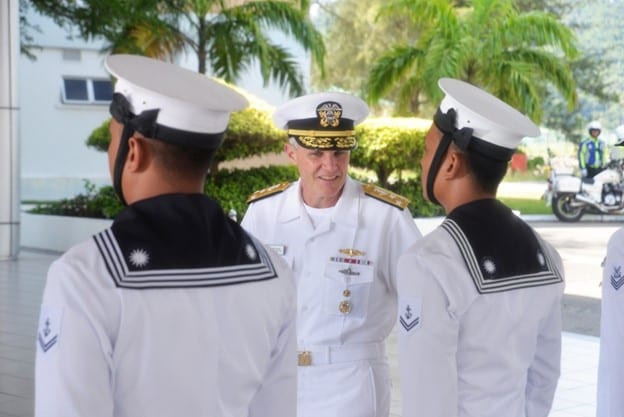
Vice Adm. Phil Sawyer inspects sailors of the Royal Malaysian Navy in this 2018 photo. U.S. Navy / Mass Communication Specialist 1st Class Chris Krucke

Navy Vice Adm. Phil Sawyer says the Chief of Naval Operation’s Navigation Plan 2020 and the Distributed Maritime Operations (DMO) concept are central for the Navy going forward and for the Navy and Marine Corps team’s ability to conduct enduring sea control and power projection missions.

Speaking at the NDIA Expeditionary Warfare Conference on Feb. 2, Sawyer, the deputy CNO for Operations, Plans and Strategy, said enduring means as a maritime nation, “the sea control and power projection mission hasn’t changed in 200 years, but the way we do it today has.”

The Navigation Plan 2020, released last month by CNO Adm. Mike Gilday, and the Tri-Service Maritime Strategy released last year, assert that the U.S. and Navy are “involved in a long-term competition that threatens our security and our way of life.  Russia and China are both undermining the free and open conditions that has enabled the world to largely prosper since the end of World War II.”

Both countries are attempting to unfairly control sea-based resources, intimidate their neighbors, and both are turning incremental gains into long-term advantages, with Crimea and the South China Sea as examples.

Although we must be clear-eyed about both Russia’s and China’s actions and intentions, Sawyer said China is the long-term strategic threat to the U.S.  “That is not to discount Russia, but it looks like China is our pacing threat.”

“The nation needs a larger hybrid fleet — consisting of manned and unmanned platforms,” Sawyer said  “But, it’s not just the number, but it’s about the composition of the fleet.”

Sawyer said unmanned platforms will play a very important role, from ISR above, on and below the sea, to platforms  that are large weapons batteries to aerial refuelers.

He said it’s easy to fixate on numbers, but the mix is also very important.  “Getting the right mix of platforms is just as important as the total number.”

The Navigation Plan calls for a lethal, better connected fleet — a fleet that is able to deliver synchronized lethal and nonlethal effects across all domains. That includes distributed weapons of increasing range and lethality Hypersonic and directed energy weapons are key R&D efforts for the Navy, he said.

Tying the Navigation Plan to  theme of the NDIA conference, “Distributed Maritime & Expeditionary Operations in a Peer Contested Environment,” Sawyer said, “DMO is principally a warfighting concept. It’s our operational approach to winning the high-end fight at sea.”

According to Sawyer, DMO is geographically distributed naval forces integrated to synchronize operations across all domains. “DMO is a combination of distributed forces, integration of effects, and maneuver. DMO will enhance battle space awareness and influence; it will generate opportunities for naval forces to achieve surprise, to neutralize threats and to overwhelm the adversary; and it will impose operational dilemmas on the adversary.”

A key capability to achieving DMO is the Naval Operational Architecture, which Sawyer said will enable decision superiority at speed in a high-end fight. “It’s the connective tissue between sensors, platforms and weapons, and its central to our DMO operating concept,” Sawyer said. It’s more than “every sensor connected to every shooter.”

It includes the infrastructure (computing power and data storage); the network (data links, antennas, routers, and protocols); a data architecture and a data strategy; and finally, the tool (tactical decision aids to help analyze and display data with understandable and actionable information to the operators). 

The ability to communicate and share information is critical in a contested environment, he said.

“In peacetime, or against lesser adversaries, we know how to C2 distributed forces. We do it all the time. We know how to synchronize effects in time. We know how to dynamically maneuver our forces. What we working on is how to do this — assuming every domain is contested, or denied — and with speed, such that we decision superiority.”

Another DMO imperative is logistics, and an enterprise to operate and sustain us in a contested space. That will require new platforms, manned and unmanned, to sustain small, dispersed units far to the front.

DMO is not a Navy or Marine Corps problem. “DMO is a naval concept.  Navy and Marine Corps integration is pivotal to us winning the high-end fight, particularly in the Pacific,” Sawyer said. “In the future, the Marine will be able to project power in order to support sea control or sea denial efforts.”

Sawyer said the Navigation Plan fully supports DMO, and fueling those capabilities necessary to fully realize the DMO concept. “New capabilities are important. But while the fleet waits for the introduction of these capabilities, we are moving out and exercising with what we have.”


Polar Star Takes Cuttermen to School in the Arctic

Coast Guard Cutter Polar Star (WAGB 10) crewmembers participate in ice rescue training in the Bering Strait, Wednesday, Jan. 20, 2020. The 45-year-old heavy icebreaker is underway to project power and support national security objectives throughout Alaskan waters and into the Arctic, including along the Maritime Boundary Line between the United States and Russia. U.S. Coast Guard / Petty Officer 1st Class Cynthia Oldham

America’s only heavy icebreaker is conducting training in a realistic environment — the Arctic.

When the National Science Foundation scaled back the research activities at McMurdo Station in Antarctica because of COVID 19, USCGC Polar Star’s annual deployment in support of Operation Deep Freeze was put on ice.  To maintain crew skills in icebreaking and polar operations, the Polar Star’s crew was presented a unique opportunity to get some realistic training.

“When 44-year-old Cutter Polar Star’s annual trip to resupply McMurdo Station in Antarctica was cancelled this year by the National Science Foundation, and Cutter Healy, which typically heads North experienced a major engineering casualty — a main propulsion generator catastrophic failure — we saw an opportunity to send Polar Star to the Bering Sea and North,” said Commandant of the Coast Guard Adm. Karl Schultz, speaking at the Surface Navy Association Annual Symposium last month.

The Coast Guard has another polar icebreaker, the 399-foot, 13,000-ton Polar Sea (WAGB 10), but it is not operational.  The 420-foot, 16,000-ton medium icebreaker USCGC Healy (WAGB 20) suffered a fire about 60 nautical miles from Seward, Alaska, in August of last year on her way to the high north, and is currently undergoing major repairs to replace her propulsion motor.

Schultz said a replacement polar icebreaker is a priority. The Polar Security Cutter (PSC) program, which currently has one 460-foot, 23,000-ton multi-mission PSCs on order with options for two more, is so important.

“We need a minimum of six icebreakers. Within that six, three need to be heavy, or Polar Security Cutters. And we need one now,” Schultz said at the symposium.

But with Healy undergoing repairs, and the first PCS not expected to be delivered until 2024, it’s important to keep the services icebreaking knowledge, expertise and experience. Polar operations are more challenging, especially in winter darkness, and the Antarctic and Arctic environments are not the same. When the new cutters come on line, they will need qualified crews.

“We need to train more cuttermen to break ice,” Schultz said.  

Schultz said there’s no better place to learn about Arctic operations that the Arctic.

“On Christmas Day, Polar Star set a cutter record, traveling North of the 72-degree, 11-minute North latitude line in Chukchi Sea, breaking four-feet thick ice along the way. Aboard Polar Star, there are University of Washington scientists, British sailors from the Royal Navy, midshipmen from the U.S. Merchant Marine Academy, and Ice Pilots from Cutter Healy — another example of partnerships. This is Polar Star’s first Arctic winter deployment since 1982 … presence equals influence in the high latitudes.”


Sea Dragon Exercise Tests ASW Skills for Maritime Patrol Aircraft Crews

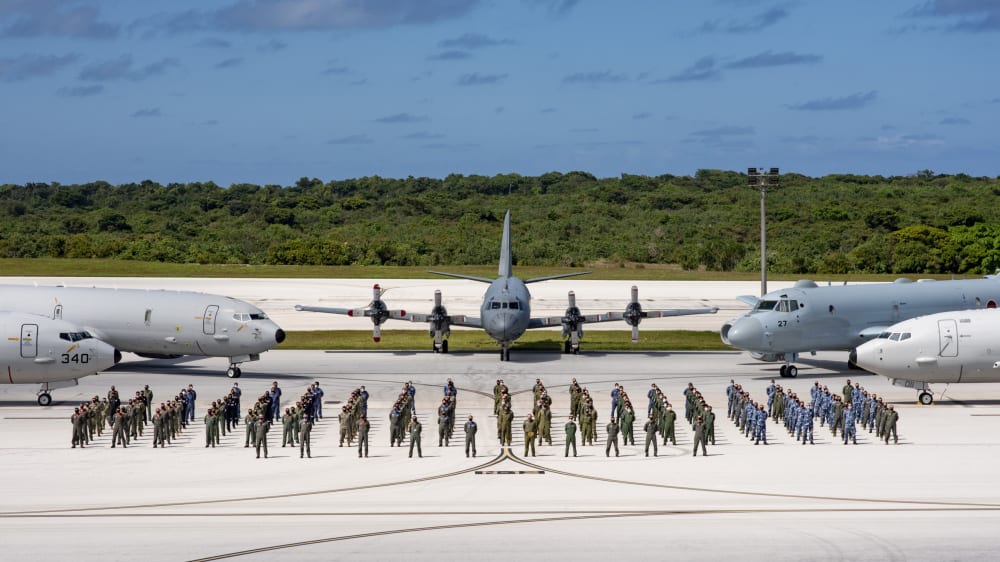
Members of the Royal Australian Air Force, Japan Maritime Self Defense Force, Indian navy and Royal Canadian Air Force, along with Patrol Squadron (VP) 5’s “Mad Foxes” and VP 8’s “Fighting Tigers,” pose for a photo at the conclusion of Exercise Sea Dragon. U.S. Navy / Lt. Cmdr. Kyle Hooker

Maritime Patrol aircraft and crews from five partner nations gathered at Andersen Air Force Base in Guam to participate in Sea Dragon 2021 Anti-Submarine Warfare (ASW) exercise. The exercise wrapped up Jan 27.

The Sea Dragon series of exercises are led by commander, Patrol & Reconnaissance Force, 7th Fleet (CTF-72), based out of Misawa, Japan. They are intended to demonstrate advanced ASW tactics, while at the same time continuing to build on multinational participation with U.S. allies and partners, as well as commitment to the security of the Pacific region.

This year, P-8A Poseidon Maritime patrol and reconnaissance aircraft and crews from Patrol and Reconnaissance Squadrons (VP) 5 and 8 trained together with the counterparts from the Royal Australian Air Force, Japan Maritime Self Defense Force, Indian navy and the Royal Canadian Air Force during the exercise.

The “Mad Foxes” of VP-5 are currently deployed to Kadena, Okinawa, and the “Fighting Tigers” of VP-8 are operating from Misawa, Japan. Both squadrons are based at Naval Air Station Jacksonville, Florida.

The U.S., Australia and India took part in the exercise with Boeing P-8 Poseidon aircraft. Japan flew the Kawasaki P-1, while Canada operated the CP-140 Aurora.

Sea Dragon 2021 centered on ASW training and excellence. The exercise included 250 hours of ground and classroom training and 125 hours of in-flight training ranging from tracking simulated targets to the final problem of finding and tracking Los Angeles-class nuclear submarine. The classroom training sessions helped the aircrews build plans and discuss how to incorporate tactics, capabilities and equipment for their respective nations into the exercise.

At the beginning of the exercise, Lt. Cmdr. Kyle Hooker, officer in charge of the VP-5 detachment, said he was eager for the opportunity to further develop our partnerships with Japan, India, Canada, and Australia during at Sea Dragon 2021.

“The COVID environment will be challenging for all our participants, but I know we will come together to adapt and overcome while executing our goal of anti-submarine warfare interoperability,” he said.

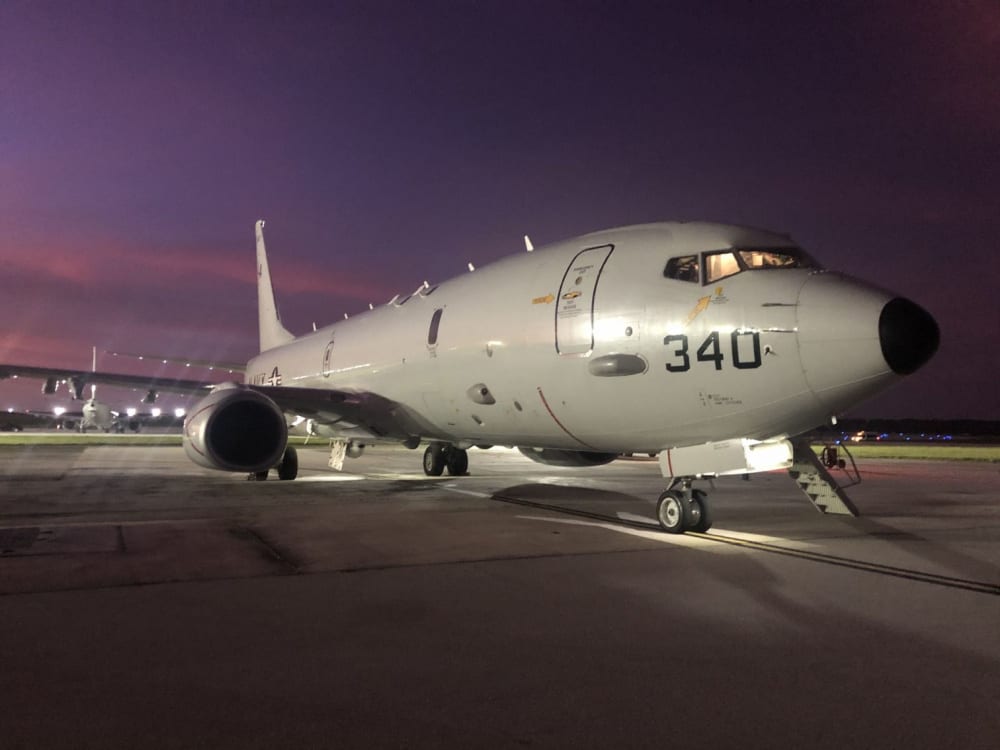
A P-8A Poseidon from Patrol Squadron (VP) 5 is prepared for its first training event of Sea Dragon 21. It involved tracking several Expendable Mobile Anti-Submarine Warfare Training Target’s (EMATT), which simulate the characteristics of a submarine. U.S. Navy / Lt. Cmdr. Kyle Hooker

VP-5 pilot Lt. Reed Arce said his squadron viewed Sea Dragon 2021 as an opportunity for both learning and competition.

“VP-5 was certainly looking forward to the opportunity to flex our ASW muscles and enjoy some friendly competition with our allied partners during Exercise Sea Dragon. We learned so much when comparing tactics between aircrews, and the ability to constantly improve our warfighting skills. We hope to leave Guam with all participants being at their peak performance in prosecuting sub-surface threats anywhere in the world,” he said.

VP-8 pilot Lt. Joseph Moralesvargas  said Sea Dragon 2021 gave his squadron the chance to coordinate and be on station with other crews and other countries.

“The opportunity to speak with other operators and hear their philosophy and insight on ASW has given me new perspective,” he said.  “I can’t think of any other exercise that would give us this chance,” he said.

Sea Dragon culminated with live tracking exercises with the nuclear-powered fast attack submarine, USS Providence (SSN-719) acting as the adversary.

The Sea Dragon events are graded, and the nation with the highest overall score wins the Dragon Belt award. The belt was awarded to the Royal New Zealand Air Force last year.  This year, Royal Canadian Air Force 407 Long Range Patrol Squadron, which operates the CP-140 Aurora, had the highest total point score, and will bring the coveted Dragon Belt home with them to Canadian Forces Base Comox in British Columbia.

The importance of ASW in the Indo-Pacific region cannot be understated, with growing numbers of Chinese, Russian and North Korean submarines. The ability for allies and partners to work together with capable MPA aircraft and crews to successfully conduct ASW is vital to counter this threat.


Royal Navy Ready to Deploy a Carrier Strike Group for First Time in a Generation

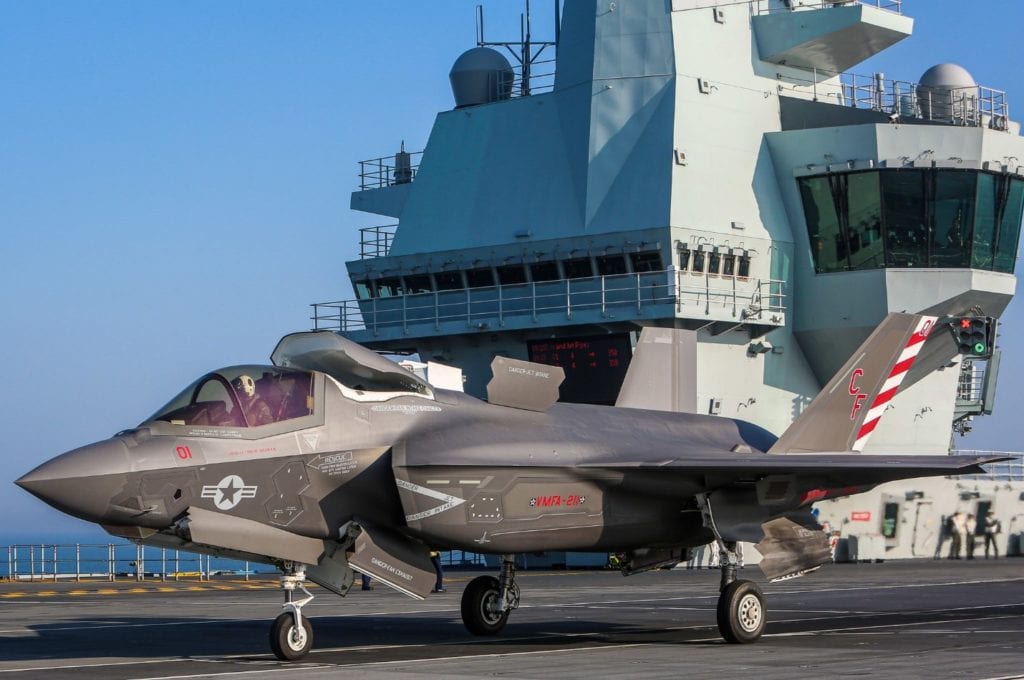
A VMFA-211 F-35B operates from HMS Queen Elizabeth. U.K. Royal Navy

Adm. Anthony David Radakin, First Sea Lord of the Royal Navy, said the upcoming deployment of the HMS Queen Elizabeth (R08) carrier strike group exemplifies the Royal Navy’s commitment to global operations.

Speaking this week at the Surface Warships 2021 conference in London, Radakin said the U.K. continues to demand more from the Royal Navy’s “equipment and people, deploying further, faster and longer to deliver U.K. forward presence around the globe.” 

“We, as a nation, have declared ourselves ready to deploy a carrier strike group for the first time in a generation,” Radakin said.  “HMS Queen Elizabeth, one of the most advanced and capable aircraft carriers in the world, will deploy at the heart of a multi-national carrier strike group, with Royal Navy and RAF jets and helicopters embarked. She will sail through the Mediterranean, Suez, Indian Ocean and on into the Indo-Pacific, and, on the way, she will exercise with our allies and partners from around the world.”

The U.S. and U.K. defense secretaries made a joint declaration on Jan. 19 regarding the joint participation for the Queen Elizabeth Carrier Strike Group deployment this spring.  “The leaders look forward to seeing the culmination of nearly a decade of U.S.-U.K. carrier cooperation when Carrier Strike Group 2021 sets sail from Portsmouth, UK later this year,” the statement said.

The inaugural deployment will include a submarine, destroyers HMS Diamond and HMS Defender, frigates HMS Kent and HMS Richmond, as well as USS The Sullivans (DDG-68) and a frigate from the Royal Netherlands Navy.  The strike group will be supported by the Royal Fleet Auxiliary stores ship RFA Fort Victoria and new Tide-class oiler. The airwing will  include jet and rotary wing aircraft from the Royal Navy and Royal Air Force, along with F-35B Joint Strike Fighters from U.S. Marine Fighter Attack Squadron 211 (VMFA 211).

VMFA 211 has been operating from Queen Elizabeth and helped the carrier strike group achieve its initial operating capability (IOC) declaration for the carrier strike group earlier this month.

According to a MOD UK statement, the CSG’s IOC means that all elements of the group from fighter jets to radar systems to anti-ship weapons have been successfully brought together and operated.

“Both the air and naval elements of the CSG have now met this milestone, which includes qualified pilots and ground crews being held at short notice for carrier-based operations and trained to handle weapons and maintain the equipment,” the statement said. “Another marker of success at this stage includes the ability to deploy anti-submarine warfare capabilities such as frigates and destroyers, as well as both fixed and rotary wing aircraft including Merlin helicopters to operate alongside the carrier.”

The Queen Elizabeth was commissioned in 2017. With a displacement of 65,000 tons and 920 feet in length, she is the Royal Navy’s largest ship ever.  Her sister ship, HMS Prince of Wales (R09), was commissioned two years later.

Radakin said the Royal Navy is taking a larger role in global operations. He pointed to recent deployments of ships like the amphibious assault ship HMS Albion and to the Pacific, and HMS Montrose (F236), which has been deployed in Bahrain, serving with the U.S. Fifth Fleet since April 2019.

“We didn’t just forward base her, she has been available 99 percent of the time, and has the lowest rate of defects of any ship in class,” Radakin said.  “The successful Montrose model gives me confidence that we can manage deploying ships, and even start to imagine them never returning to U.K.”


SBA announces Tibbets Awards for SBIR/STTR excellence

The U.S. Small Business Administration has announced 38 companies, seven organizations and 14 individuals as the winners of the prestigious Tibbetts Award for their accomplishments in creating cutting-edge technologies through the Small Business Innovation Research (SBIR) and Small Business Technology Transfer (STTR) programs.

The Tibbetts Awards, named after Roland Tibbetts, the founder of the SBIR Program, honors these awardees for the exceptional successes they achieved through SBIR/STTR programs administered by DoD and other federal agencies.

In the individuals category, three civilians from the Department of the Navy received Tibbets Awards.  They were Anthony Brescia, Naval Air Warfare Center Aircraft Division, Patuxent River, Maryland; Thomas Hill, Naval Air Systems Command, Lakehurst, New Jersey; and Dave Noel, Navy Expeditionary Combat Command, Virginia Beach, Virginia.

Of the small business recognized as Tibbets Award winners, seven of them have participated in the Navy’s SBIR/STTR Transition Program, which helps small companies build upon the Navy’s SBIR investment to create capability for warfighters and value for the companies.  The winning Navy companies are:

ATA Engineering, San Diego

Bascom Hunter Technologies Inc., Baton Rouge, Louisiana

BlackBox Biometrics Inc. , Rochester, New York

Colorado Engineering Inc., Colorado Springs, Colorado

KCF Technologies Inc., State College, Pennsylvania

Orbit Logic, Greenbelt, Maryland

SubUAS LLC, Hillsborough Township, New Jersey

The products and services developed across various industries include artificial intelligence, genetics, nanotechnology, pharmaceuticals, semiconductors, clean energy, sensors, aerospace and telecommunications. Details on each of the winners can be found on www.tibbettsawards.com.

“For nearly four decades, the SBIR and STTR programs have been assisting small businesses with launching ideas from conception to market. The Tibbetts Awards highlight our nation’s next generation of competitive creators who help push the U.S. economy into the future,” said SBA Administrator Jovita Carranza. “SBA continues to play a key role in administering these research and technology funding programs, providing ‘seed money’ to help our nation’s greatest and most innovative research entrepreneurs start, grow and transition into high-growth companies. The companies and the technologies they create played a unique role in job creation, the building of new industries and communities and addressing the nation’s most pressing challenges.”

In addition to DoD, other federal agencies such as the National Institutes of Health, Department of Homeland Security and Department of Energy take advantage of SBIR/STTR funding to help small companies deliver innovation technology.

According to the SBA, the SBIR/STTR program has awarded over 170,000 awards with over $50 billion in funding to small businesses through the 11 participating federal agencies since its inception in 1982. It boasts one of the highest returns on taxpayer investment when measuring federal funding and economic impact, the SBA statement said.


Royal Canadian Navy Welcomes New Commander

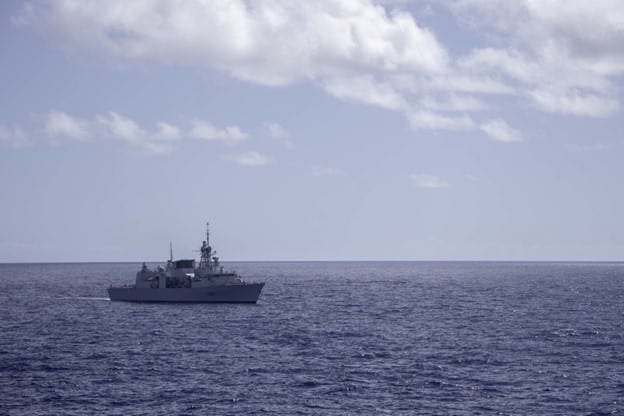
The Royal Canadian Navy ship HMCS Winnipeg (FFH 338) transits the Pacific Ocean while participating in a gunnery exercise during Exercise Rim of the Pacific 2020.  U.S. Navy / Mass Communication Specialist 3rd Class Jenna Dobson

OTTAWA – Vice Adm. Craig Baines assumed the duties of commander of the Royal Canadian Navy (CRCN) in a virtual change of command ceremony ceremonies Jan. 12, presided over by Gen. Jonathan Vance, chief of the defense staff (CDS), at National Defence Headquarters.

Baines becomes the 37th CRCN, relieving Vice Adm. Art McDonald, who will be promoted to the rank of admiral and will succeed Vance as the 20th CDS.

Baines is a 33-year veteran of sea-going appointments and staff officer positions, with an initial sea tour aboard HMCS Saguenay (D79) and command of HMCS Winnipeg (FFH 338).  He commanded Canadian Forces Base Esquimalt, Canadian Fleet Atlantic, Maritime Forces Atlantic and Joint Task Force Atlantic, and became the of deputy vice chief of the defense staff in July 2020.

“Change of command ceremonies represent both continuity and change, and it’s a tremendous pleasure to mark the change of command of the Royal Canadian Navy between two great sailors: Vice Admiral Art McDonald and Vice Admiral Craig Baines,” said Minister of Defence Harjit S. Sajjan. “Under Vice Admiral McDonald’s leadership, we have seen the RCN maintain an impressive operational tempo at home and abroad. His focus on people and innovation have positioned the navy for success as it transitions to the future fleet.”

“Through his 33 years of service, Vice Admiral Baines has a proven operational and institutional track record from which to draw upon as he continues to put Canada’s sailors first in all that he does,” Sajjan said. “I am delighted to appoint Vice Admiral Baines to command the Royal Canadian Navy and I know that he will lead by example, put our ethos into practice, and continue to steer the navy towards the objectives of the future fleet.” 

Baines said it was a huge honor to continue to serve with a group of outstanding Canadians who wear a uniform on behalf of their country, often serving in a complex environment far from home.

“We will continue to prioritize support to our sailors, defense team members and their families while managing ongoing cultural change, domestic and international operations, fleet recapitalization, training and readiness, all while innovating throughout our organization to make us the most inclusive, respect-driven navy we can be.”

The Royal Canadian Navy is composed of 28 warships, submarines, and coastal defense vessels, plus many more auxiliary and support vessels, with approximately 8,300 regular force and 3,600 reserve sailors, supported by approximately 3,800 civilian employees.

With its motto of “Ready, Aye, Ready,” the RCN generates combat-capable, multipurpose maritime forces that support Canada’s efforts to participate in security operations anywhere in the world, as part of an integrated Canadian Armed Forces.


Environmental Changes in the Arctic Seen Having Strategic Implications for US and Partner Nations

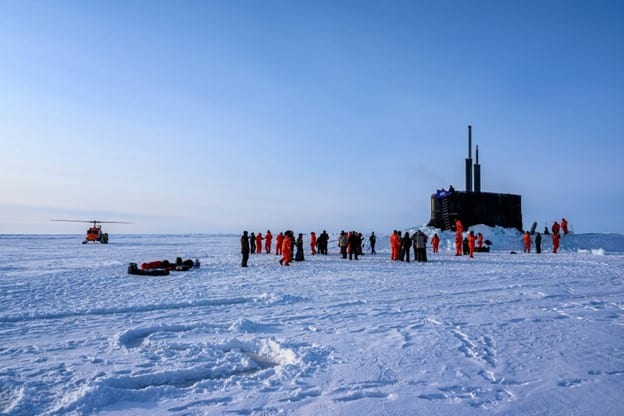
The crew of the Seawolf-class fast-attack submarine USS Connecticut (SSN 22) enjoys ice liberty after surfacing in the Arctic Circle during Ice Exercise (ICEX) 2020 in this May, 2020, photo. ICEX 2020 is a biennial submarine exercise which promotes interoperability between allies and partners to maintain operational readiness and regional stability, while improving capabilities to operate in the Arctic environment. U.S. Navy / Mass Communication Specialist 1st Class Michael B. Zingaro

A Jan. 6, 2021, report from the Congressional Research Service on changes in the Arctic says the diminishment of Arctic sea ice has led to increased human activities in the region and heightened interest in, and concerns about, the Arctic’s future.

Accessibility to the region has increased interest in tourism, mineral extraction, fishing and commerce.  An open Arctic means during some times of the year, ships can cut about 40% of the time it takes to pass from Asia to Europe, cutting time and costs to ship goods. The resurgence of Russia’s military, which has a significant presence in the Russian Arctic, and especially the growing numbers and quality of Russian submarines, means the region’s strategic importance has also increased.

And, of course, the scientific community wants to understand the environmental changes and all of the implications.

“Record low extents of Arctic sea ice over the past decade have focused scientific and policy attention on links to global climate change and projected ice-free seasons in the Arctic within decades,” the CRS report says. “These changes have potential consequences for weather in the United States, access to mineral and biological resources in the Arctic, the economies and cultures of peoples in the region, and national security.”

Broadly speaking, the report states physical changes in the Arctic include warming ocean, soil, and air temperatures; melting permafrost; shifting vegetation and animal abundances; and altered characteristics of Arctic cyclones. All these changes are expected to affect traditional livelihoods and cultures in the region and survival of polar bear and other animal populations, and raise risks of pollution, food supply, safety, cultural losses, and national security. Moreover, linkages (“teleconnections”) between warming Arctic conditions and extreme events in the mid-latitude continents are increasingly evident, identified in such extreme events as the heat waves and fires in Russia in 2010; severe winters in the eastern United States and Europe in 2009/2010 and in Europe in 2011/2012; and Indian summer monsoons and droughts. Hence, changing climate in the Arctic suggests important implications both locally and across the hemisphere.

Due to observed and projected climate change, scientists have concluded the Arctic will have changed from an ice-covered environment to a recurrent ice-free ocean (in summers) as soon as the late 2030s. The character of ice cover is expected to change as well, with the ice being thinner, more fragile, and more regionally variable. The variability in recent years of both ice quantity and location could be expected to continue.

While it will still be a cold and inhospitable place, these changes will appear to be a warm welcome to increased human activity. Concerns about these concerns are shared by America’s allies, including NATO.

Great power competition

In testimony before Congress, Chief of Naval Operations Adm. Mike Gilday said the Arctic “has become an emerging area of great power competition,” and the sea services are seeking to “better understand the Navy and Marine Corps’ role in protecting the Arctic homeland, safeguarding the Arctic region’s global commons.”

With the return of great power competition, the Department of Defense and the Coast Guard (part of the Department of Homeland Security) are devoting increased attention to the Arctic in their planning and operations, the CRS report noted. “DoD as a whole, as well as the Navy and Marine Corps, the Air Force, and the Coast Guard individually, have issued Arctic strategy documents in recent years, and the Army reportedly is planning to issue one.”

The newly released Navy-Marine Corps Arctic Strategy looks at the Arctic as part of the great power competition maneuver space. “Without sustained American naval presence and partnerships in the Arctic region, peace and prosperity will be increasingly challenged by Russia and China, whose interests and values differ dramatically from ours,” it says.

Navy Secretary Kenneth Braithwaite said the Navy remains committed to protecting the Arctic environment and ensuring naval forces do their part to help preserve it. The Navy, he said, will be “operating again in a more permanent manner above the Arctic Circle.”

The CRS report points to remarks made by Secretary of State Michael Pompeo from a May 2019 Arctic Council meeting where he praised international cooperation in the Arctic, but specifically called out Russia and China for their lack of transparency and self-serving activities.

“Just because the Artic is a place of wilderness does not mean it should become a place of lawlessness,” Pompeo said.

According to the report, some observers believe the U.S.-led international order in general may be eroding or collapsing, and the nature of the international order that could emerge in its wake is uncertain, with significant implications for the Arctic.

China’s growing activities in the Arctic may also reflect a view that as a major world power, China should, like other major world powers, be active in the polar regions for conducting research and other purposes.

Asserting sovereignty in the U.S. Arctic requires presence, and maritime presence requires ships. While The Coast Guard is building new multi-mission, heavy icebreakers called Polar Security Cutters, the Coast Guard currently has few ice-capable vessels, and the Navy has none.


MARAD Cuts Steel on New Training Ships, Congress Funds Fourth NSMV to Prepare New Mariners

An artist’s conception of the purpose-built National Security Multi-Mission Vessel (NSMV), to which the Maritime Administration (MARAD) wants to transition to replace obsolete training ships. MARAD

America’s merchant fleet and maritime industry are vital to the nation’s commerce. The six state maritime academies together produce more than 70 percent of U.S. Coast Guard licensed officers each year. Along with the U.S. Merchant Marine Academy, the schools are addressing the shortage of qualified seafarers for U.S.-flagged ships. 

The six state maritime academies (SMAs) rely on dedicated platforms for at-sea training in in engineering, seamanship and navigation. Each of the schools have training ships owned by the Maritime Administration (MARAD), but the ships are getting old and challenged by maintenance, repairs and obsolescence, and were never intended for the school-ship role in the first place.

MARAD has embarked on an ambitious effort to replace the fleet of training ships with the new National Security Multi-Mission Vessel (NSMV).  

Construction of the first two NSMVs will replace training ships at SUNY Maritime Academy and Massachusetts Maritime Academy, ships which are both more than 50 years old.

Steel was cut for the first NSMV Dec. 15 in Philadelphia. The keel laying is expected in about a year,  with delivery anticipated for early 2023. The new ship will replace SUNY Maritime Academy’s current school ship, Empire State VI.

The current training ships are not representative of the types of vessels on which academy graduates may expect to serve. The NSMV will have a modern, efficient and environmentally compliant diesel-electric power plant and state-of-the-art navigation equipment, which is more typical in commercial shipping today. 

Currently, all of the SMAs operate hand-me-down ships that have been adapted for the training mission. With the adoption of the NSMV, the academies will have a standardized and purpose-built state-of-the-art training platform.

NSMV will be 524.5 feet long with a beam of 88.6 feet and a draft of 21.4 feet. It will displace 19,237 tons. The NSMV is equipped with berthing, classrooms and laboratories to train up to 600 cadets, but can also support humanitarian assistance and disaster response (HA/DR) missions with medical facilities, a helicopter deck, roll-on/roll-off and container storage capacity, and the ability to accommodate up to 1,000 people in times of a humanitarian crisis. The ship is compatible with pier length, draft restrictions and mooring limitations at each of the academies, as well as being able to call at austere ports to conduct HA/DR operations.

Congress authorized funding for the fourth ship on Dec. 21, approving $390 million to fund construction of a fourth NSMV, which will be assigned to the Texas A&M Maritime Academy at Texas A&M University at Galveston, and is expected to be delivered to campus in 2025.

“Having the ability to live, learn, and train together as a single unit is essential to meeting our mission in educating and training the next generation of merchant mariners who go on to serve in both our armed forces and the maritime industry,” said Col. Michael E. Fossum, vice president of Texas A&M University, chief operating officer of the Galveston Campus and superintendent of the Texas A&M Maritime Academy.  The new ship will replace the 224-foot, 1,900-ton TS General Rudder, which began her career in 1983 as the USNS Contender, an ocean surveillance ship for the U.S. Navy.

“While the ship will serve as a state-of-the-art classroom for the maritime program at Texas A&M University at Galveston, it will also provide a key mission capability for disaster response along the Gulf Coast – able to respond to emergencies in other states and U.S. territories – and will provide a needed emergency response resource to Texas and the gulf,” said Nim Kidd, chief of the Texas Division of Emergency Management and vice chancellor for disaster and emergency services.

Herbert Engineering Corp. of Alameda, California, was responsible for generating the preliminary specifications and design. In May 2019, TOTE Services LLC was awarded a contract to be the vessel construction manager for the NSMV program. In April 2020, TOTE Services awarded Philly Shipyard Inc. the contract to construct up to five NSMVs. TOTE Services is working with its design partners – Glosten Inc., Philly Shipyard, and Philly Shipyard’s subcontractors, including the design team at DSEC – to deliver the first NSMV in early 2023. Key ship equipment includes GE Wabtec engines and generators, GE Transportation main generator engines, Cummins USA emergency generator sets and Bronswerk air conditioning systems.

“This program will further advance excellence in American maritime education and reignite the jobs engine that is America’s shipyards,” said MARAD Administrator Mark H. Buzby.

Current Training Ships

TS Empire State VI, ex-S.S. Oregon, ex-Mormactide
State University of New York Maritime College
Fort Schuyler, Bronx, NY
Built 1962/Converted 1989
Modified C4-S-1u commercial breakbulk freighter

USTS Kennedy, ex-USTS Enterprise, ex-MV Cape Bon, ex-MV Velma Lykes
Massachusetts Maritime Academy
Buzzards Bay, Massachusetts
Built 1966/Converted 2009
C4-S-66a break bulk cargo freighter

TS State of Maine, ex-USNS Tanner (T-AGS 40)/ex-Upshur, launched as ex-President Hayes 1952
Maine Maritime Academy
Castine, Maine
Build 1990/Converted 1997
Maury Class Hydrographic Survey Ship

T/S State of Michigan, ex- USNS Persistent (T-AGOS-6), ex-USCGC Persistent (WMEC-6)
Great Lakes Maritime Academy
Traverse City, Michigan
Built 1985/Converted 2002
Stalwart-class Tactical Auxiliary General Ocean Surveillance Ship (TAGOS

TS General Rudder (ex- USNS Contender (T-AGOS-2), ex-T/V Kings Pointer)
Texas Maritime Academy
Galveston, Texas
Built 1984/Converted 1992
Stalwart-class Modified Tactical Auxiliary General Ocean Surveillance Ship

TV Golden Bear (ex-USNS Maury T-AGS 39)
California Maritime Academy
Vallejo, California
Built 1989/Converted 1996
Pathfinder-class survey ship

TV Kings Pointer, ex-MV Liberty Star
U.S. Merchant Marine Academy
Kings Point, New York
Built 1981/Converted 2013
MV Liberty Star, NASA-owned and United Space Alliance-operated vessel for solid rocket booster SRB recovery ship supporting space shuttle missions.