Naval Research Laboratory Takes Science from the Lab to the Fleet

Senior Chief Mineman Abraham Garcia, left, and Aerographer’s Mate 1st Class Joshua Gaskill, members of the Knifefish unmanned underwater vehicle test team, work tending lines during crane operations as part of an operational assessment conducted by members from Operational Test and Evaluation Force. U.S. Navy / Mass Communication Specialist 1st Class Brian M. Brooks

As the U.S. Navy’s corporate laboratory, the purpose of the Naval Research Lab in Washington, D.C., is to be cognizant of – and have world-class expertise in – the very basic sciences that are fundamental to all the technologies that we have in our society, and to create new technology through continued investment in science at the very basic level.

NRL comes under the Chief of Naval Research as head of the Office of Naval Research (ONR). ONR directs much of the work of the Naval Research Enterprise (NRE), of which NRL is a part, along with Navy warfare centers, academic institutions and federally funded research and development centers.

“We are a working laboratory at NRL, and we execute science and technology development and transition it to the fleet,” said NRL’s Acoustics Division Superintendent Dr. Brian Houston.

“Our work is basic and exploratory, all the way up to applied research and transitions. Unlike many of the organizations in the NRE, we do very basic science work — so-called 6.1 level work, where you have people on the lab, for example, that are developing new mathematical theories, and making new materials using surface science techniques, or developing new optics and lasers at the very fundamental level. Like much of NRL, in the acoustics division we intertwine that very basic science with exploratory research [6.2 research] where it’s more applied, taking what we’ve learned from the basic science and identify what can evolve into technology that might eventually benefit our warfighters,” Houston said.

According to Houston, NRL must be aware of the work being conducted by colleagues in the other organizations in the NRE. But, he said, while the other organizations tend to engage in engineering refinement, NRL explores new basic science and develops technologies from it.

“When you see some NRL research that’s resulted in a breakthrough technology or capability, you’re just seeing the tip of the iceberg. That’s because there is so much basic science behind it. Our technology development teams that are bringing new capabilities and systems to our ships, aircraft and submarines have scientists who understand the very basic physics integrated with those technology teams.”

Houston came to NRL as a student, but says, “It just became a home very quickly because of the people, the facilities here and the really great problems we have to solve. I’ve been here 35 years and have never worked anywhere else.

“The acoustics piece of undersea warfare represents a lot of what we do — and it’s a very challenging area,” Houston said. “That includes finding things in the water, like submarines and things on the seabed, like mines. A major area encompassed by undersea warfare is mine warfare and not just offensive mines, but how to detect and localize adversary mines and how to deal with them. A mine is a very inexpensive weapon, and it’s relatively easy to make effective. It costs very little compared to the targets it goes after, like a billion-dollar warship, for example. They’re very difficult to detect and classify. We worry about mines today as much as we ever did.

“With regards to detection, there is a lot of stuff in the water column and even more stuff on the bottom. Mines are typically used in close proximity to the bottom, so you have to sort out the mines and detect and classify them in the context of all of this clutter and the topology of the bottom itself.”

Transcending Platforms

Houston said his work transcends platforms, sensors and processing, to include the systematic employment of all of that together. NRL has developed both a sensor approach as well as methods to analyze the data to carry out missions. From the sensor perspective, that whole technology area is what NRL calls low-frequency broad- band (LFBB), an active sonar that employs synthetic aperture processing, with processing that employs artificial intelligence for detection and classification.

“LFBB exploits the structural acoustics involved with underwater sonar. When you transmit sound, the acoustic return is very different depending on the physical object reflecting that acoustic energy. It might be a naturally occurring thing like a rock on the bottom or something that’s man-made, like a mine. In the water column, it might be a submarine versus a whale. What’s in the acoustic return is very different for each of those targets. Sonar has traditionally helped us know where something is, how far a way it is and sometime provides an image. But in addition to bearing and range, we can now determine what it is,” Houston said. “That return has specific physics in it that we can exploit, and we can know something about the physical object and based on how it responds.”

Houston said structural acoustics focuses on the inter- action of the sound with structures in a fluid — in this case, water.

“If I ping on an object underwater, the sound will propagate across the water volume and interact with the structure. The acoustic energy will cause the casing of a mine, or the hull of a submarine, to vibrate. So, the interaction of sound with a structure, and then the re-radiation of sound, is the realm of structural acoustics. Some years ago, we put together our one-of-a- kind Laboratory for Structural Acoustics here at NRL to focus on precision measurements.”

Houston’s team frequently uses unmanned systems in their research, and not just as platforms to hang sensors on or as scientific measurement tools.

“We’re also trying to figure out how to use them in under- sea warfare,” Houston said. “We’re engaging in the development of the artificial intelligence that’s needed to make those platforms work for the Navy. We’re figuring out how to best use them in terms of sensor platforms, in an applied way, the way the Navy might apply them in terms of an offensive capability. There’s a lot going on here.”

The NRL team has used their autonomous underwater vehicles Reliant and Black Pearl to develop LFBB for mine countermeasures, ASW and counter-UUV applications. Many mine-hunting UUVs employ change detection — knowing what’s on the bottom and coming back later to see if anything has changed.

“You can do change detection with almost any sonar system, including our systems, but we do not rely on change detection. Our system operates at a very high-performance level to go into an area and you can rely on the results from just a single pass,” said Houston. “That’s the objective.”

The Reliant and Black Pearl vehicles are unique compared with other platforms.

“The major difference is the sonar itself,” Houston said. “One of the reasons why we like the General Dynamics Bluefin Robotics 21-inch vehicle — both Reliant and Black Pearl are Bluefin vehicles — is they are ‘open ocean capable.’ They have a lot of energy on them, fairly high- end navigation systems, plus we have other things on them to make them very useable and capable in the open ocean. We also can go into shallow water areas and even very shallow water areas. So, we like that aspect of it. We want to have some ‘legs’ on the vehicle and navigate accurately. The sensors themselves aren’t consistent with a small vehicle, particularly because the low frequencies require larger sources and sensor apertures. We are doing a lot of onboard processing, so we can take the data and process it on board the vehicle to enable autonomous decision making enabled by the sensors, so it has access to the real-time processing of the sensor data, and it makes decisions based on that.”

Cuts Like a Knifefish

NRL has worked closely with the acquisition community. The LFBB sonar is now operational aboard the Knifefish Surface Mine Countermeasure Unmanned Undersea Vehicle Program, used to find buried, bottom and volume targets in highly cluttered environment. The system consists of two unmanned undersea vehicles along with support systems and equipment and is a critical element of the Littoral Combat Ship (LCS) Mine Countermeasure Mission Package. Knifefish received Milestone C approval last year, and the system entered low-rate initial production.

Knifefish is being built in blocks to incorporate new technology as it matures, to increase performance in each block. In addition to the LCS mine countermeasures mission package, the system can also be employed from other vessels of opportunity. Like NRL’s Reliant and Black Pearl reserve vehicles, Knifefish employs a General Dynamics Mission System Bluefin-21 vehicle.

“Knifefish’s common open systems architecture design and modularity provides the ability to quickly reconfigure the mission package to respond to evolving and dynamic mission requirements, and can be readily upgraded as new technologies or payloads are developed,” said Dr. Andrew Rogers, vice president, Undersea Defense Systems at General Dynamics Mission Systems.

For Houston and the NRL team, the scientists, engineers, and the people who know how to bend metal and make it function, are all working together in an integrated fashion to accelerate the transition of scientific discoveries to applications.

“If you don’t have that connectivity, you just can’t make the arguments that will bring a new piece of science to an application that the fleet needs,” Houston said.

The result is a program of record that will help the fleet safely find mines. “We demonstrated at-sea performance and were successful in transitioning the technology into a program of record,” Houston said. “It was basic research — the science — that started it all.”


NPS Annual Workshop Goes Mostly Virtual, Seeks to Prepare Military for Future Conflicts

The 2020 WIC annual workshop was largely virtual but tackled real-world issues focusing on future conflict scenarios. Naval Postgraduate School

The Warfare Innovation Continuum (WIC) at the Naval Postgraduate School (NPS) in Monterey, California, conducts an annual workshop to better understand a major issue that will be the subject of study for the year to follow.

In 2020, the school examined “Resurrecting War Plan Blue,” which refers to an examination conducted by the War Department between the first and second world wars about the nation’s ability to support and sustain a major conflict. 

The September 2020 Workshop, the 13th in the series, tasked participants to consider a conflict scenario in the year 2035 requiring the U.S. to quickly mobilize forces and assets in response to a rapidly deteriorating global security environment.

The three-and-a-half-day experience allowed NPS students focused interaction with faculty, staff, fleet officers, and guest engineers from Navy labs, system commands and industry. The workshop tasked participants to apply emerging technologies to shape the way we fight in a 2035 global conflict. Concept generation teams were given a design challenge: How might emerging technologies and concepts and joint, combined and coalition forces contribute to enhancing the resiliency of naval forces, logistics, and support facilities in an extended campaign against a peer adversary?

The intent was to explore technologies and policies to undertake now to increase the nation’s resiliency for an extended conflict.

The 2020 WIC workshop included 157 registered participants in the roles of concept generation team members, facilitators, panelists, mentors and observers. The full participant pool included representatives from 72 different organizations, most participating virtually. Half of the workshop participants were NPS students drawn from all naval warfare domains, as well as from the full range of armed services on campus.

Prof. Jeff Kline, Director of the Naval Warfare Studies Institute and Professor of Practice in Operations Research, said the proposed topics each year were narrowed down by employing selection criteria.

“Is the concept feasible, either physically or fiscally; is the concept unique; does the concept solve a key problem or fill a key gap; and is the concept testable?” he asked.

The issues examined for War Plan Blue are relevant today, Kline said. “We want to investigate our vulnerabilities in mobilization and industrialization, and potentially in our ability to operate forward with our infrastructure as it currently exists.” 

“Our junior officers are focused on their course of study at NPS, and early career engineers at the labs or with industry are focused on their particular project work … mixing them together in this way to work within these problem spaces is a really rich environment to not only explore what’s in the realm of the possible, but understand what that exploration can be.

“We want our own students to have an appreciation for operational challenges that are going to be emerging over the next 10 years, and [we are] teaching them how to do critical thinking to find solutions for them.”

Trending topics

In addition to supplying topics for further NPS research, past WIC Workshops have informed senior leadership and provided information and concept ideas to Naval Warfare Development Command (NWDC) and the Marine Corps Warfighting Lab (MCWL). The September 2017 workshop tasked participants to apply emerging “Distributed Maritime Operations” technologies within a near-future conflict in an urban littoral environment, and the 2018 “Cross Domain Operations” workshop looked at integration of assets. The September 2019 workshop “Logistics in Contested Environments” asked teams to focus on how to maintain forces in a sustained conflict.

Kline said the workshop brings together a mix of faculty and students with the field, fleet, academia and industry. 

“We examine the issues, and take the best ideas to inspire research and prototyping for the whole academic year. By taking on these topics suggested by senior leadership, and by socializing the results with our stakeholders, we are maintaining NPS as a thought leader, both in emerging technologies and developing concepts,” Kline said.

“Our officer students bring the tactical operational experience of this environment, and they walk away with a broadened experience in order to be able to tackle the unknown in the future,” Kline said.  “We also hope to build informal networks among the junior engineers of the nation and the operating naval officers here at NPS and those that participate, so that they start to maintain contact across both industry and the services to know how to find some of these solutions to complex problems.”

NPS students have completed several tours of duty before coming to Monterey. “They have tactical experience, and they have operational experience, although not at a senior level,” said another facilitator, Matt Largent, head of forecasting, assessment and transition at Naval Information Warfare Center Atlantic in Charleston, South Carolina. “This workshop invites them to be part of the higher-level conversation.”

Another facilitator, retired Marine Col. Todd Lyons, vice president for the NPS Alumni Association and Foundation, said the workshop was as much about problem framing as problem solving.

Prof. Lyla Englehorn was the workshop facilitator.

“My biggest goal in any of these workshops is to introduce a new toolbox to approach a complex problem space — what we call ‘wicked problems,’” she said. “You can’t propose a solution or solve a problem until you understand the status quo.”

“When we present these emerging technologies in this forum, it gives our concept generation team members a sense of what’s just outside of the box, what’s the adjacent possible,” she said. “We hear ‘thinking outside the box’ all the time. But stand on the edge of that box, what can you touch? What’s within the potential 2035 time-frame?”

Following panel discussions and presentations from leading technical experts, the teams and their embedded facilitators had seven hours of scheduled concept generation time to meet that challenge, and presented their best concepts on the final morning of the workshop.

According to Englehorn, this applied approach ensures that NPS provides defense-focused graduate education, including classified studies and interdisciplinary research, to advance the operational effectiveness, technological leadership and warfighting advantage of the naval service.

Avoiding Cost, Time, Jetlag

While the coronavirus presented challenges, there were also opportunities. The COVID-19 pandemic pushed all resident work at the Monterey campus to a remote environment, so WIC workshop became a mostly virtual affair. 

Englehorn said in spite of the pandemic, the workshop was able to include a greater breadth of participants around the world this year.

“We broadened our participation quite extensively. Technology allowed us to do that. We had students participating remotely from Singapore and Romania, and a U.S. Marine Corps officer who is on an exchange program at the Colombian Naval Academy.”

The NPS Virtual Campus employs a combination of remote learning tools, including Microsoft Teams for plenary session and concept generation team breakout rooms. The NPS distance learning platform, Sakai, supported all materials for the workshop which allowed for participants to review materials in advance, reference them throughout the workshop as well after the results have been posted. The teams also used the MURAL3 collaboration tool for concept generation work in an unclassified remote environment.

“We normally conduct this as a resident activity. Most of the teams were working at unclassified levels because of the way we executed the event. However, one team of select NPS students was able to gather in person on campus (following strict COVID 19 protocols) working on technologies related to informational warfare at the classified level. They brainstormed the old-fashioned way, with whiteboards, Post-it notes and Sharpies,” Englehorn said.

Even if Covid-19 restrictions are removed next year, Englehorn said NPS may keep some of its newly learned best practices.

“Having hybrid events using these online tools allows us to involve many more people working on these problems,” he said. “We’re not looking at the ‘new normal,’ but the ‘new next.’”


All five NATO RQ-4D Phoenix drones are on station at Sigonella, Sicily

One of five NATO RQ-4D aircraft called “Phoenix” presented in the hangar on Sigonella airbase in Italy. The remotely piloted aircrafts are part of the Alliance Ground Surveillance System that 15 NATO Allies have acquired together. NATO / OR7 Pia Dunkel, German army

NATO now has all five NATO RQ-4D Phoenix unmanned Alliance Ground Surveillance (AGS) aircraft at the Main Operating Base at Sigonella, Sicily.

AGS is based on the Northrop Grumman RQ-4 Global Hawk wide-area surveillance drone and the MQ-4C Triton maritime surveillance platform. Northrop Grumman is the prime contractor for AGS and leads an industry team comprised of Leonardo, Airbus, and Kongsberg and other defense companies from all of the procuring nations participating in the AGS program.

The first AGS arrived a year ago.  The first test and training flight of the unmanned aircraft by NATO AGS Force pilots was conducted on 4 June 2020.  The final AGS landed at Sigonella yesterday (Nov. 12, 2020).

Northrop Grumman ferried the aircraft to Sigonella via a non-stop transatlantic flight. The aircraft departed on Wednesday, Nov. 11 from Palmdale, California and landed nearly 20 hours later on Nov. 12 at Sigonella, near the Italian city of Catania on the island of Sicily.

According to a NATO statement, “The five drones will support NATO operations by monitoring the ground and providing situational awareness, also known as Joint Intelligence, Surveillance and Reconnaissance, or JISR. This gives decision makers an increased tactical awareness of what’s happening on the ground, in the air and at sea, allowing accurate decision making based on real time-shared information.”

The AGS RQ-4D Phoenix is a remotely piloted surveillance aircraft developed with contributions from 15 NATO Allies: Bulgaria, the Czech Republic, Denmark, Estonia, Germany, Italy, Latvia, Lithuania, Luxembourg, Norway, Poland, Romania, Slovakia, Slovenia and the United States. Intelligence data gathered by the AGS system – which also includes associated command and control ground stations – will be available to all NATO Allies.

The 30 NATO nations have ships, battalions and aircraft, funded and maintained by the nations themselves.  But there are some capabilities that are owned by NATO, itself.  It amounts to less than 1% in investment money, and includes programs like the NATO  AWACs (Airborne Warning and Control System) and AGS, which are owned by NATO itself.

According to a statement from Northrop Grumman, NATO AGS is a system of systems comprised of aircraft, ground and support segments. Work remains to complete handover of the AGS System to the NATO AGS Force (NAGSF), the statement said.

“Once the NATO AGS system achieves handover, NATO commanders will have greater flexibility and redundancy to support the mission of protecting ground troops, civilian populations and international borders in peacetime and times of conflict as well as humanitarian missions during natural disasters,” said Jane Bishop, vice president and general manager, autonomous systems, Northrop Grumman.


Vaporizing Trash with a Compact Waste-to-Energy System that Runs at 10,000 Degrees C

Creare’s solid waste disposal system, which burns trash at up to 10,000 degrees Celsius. Creare

Just like any city or town, Sailors on ships or Marines ashore generate trash. Getting rid of rubbish isn’t always as simple as filling the dumpster in the back of the building or rolling the bins down to the curb once a week. The days of burning trash in smelly, smokey incinerators are over, and we no longer “dump all trash clear of the fantail.”

A small company, Hanover, New Hampshire-based Creare, Inc., has come up with a solution that turns the problem upside down.

The Navy Expeditionary Combat Command (NECC) and Navy Facilities Engineering Command (NAVFAC) expressed an interest in technologies applicable to a forward operating base (FOB) or a remote location to efficiently dispose of its garbage. 

Dr. Jay Rozzi, Creare’s principal investigator for the effort, said “Solid waste disposal is an ongoing problem for the Department of Defense. So, we turned solid waste into useful energy.”

Creare partnered with Cogent Energy System of Merrifield, Virginia, which had developed an innovative and scalable gasifier to cleanly and efficiently process waste. Cogent’s Heliostorm uses  multiple stacked electrodes to fill the 3,800 cubic-inch  gasifier with an energized plasma field. Waste is fed directly into the plasma field that can reach up to 10,000 degrees Celsius — hotter than the surface of the sun.

The result is what Rozzi called “complete vaporization of the waste into its constituent elements,” resulting in the “full ionic conversion of waste into surplus energy.” 

Unlike plasma-assisted gasification technologies, the Heliostorm produces very little residue because waste is placed in direct contact with the plasma. Glass and metals  turn into inert  slag that can be used as construction material. Everything else becomes a very pure syngas.

“Once conditioned, we have high-quality syngas containing only hydrogen and carbon monoxide for reformatting into electricity or hydrogen-based fuel,” Rozzi said. “We turn waste to value.”

Creare designed the waste handling system, which can handle between one and four tons of waste per day, as well as a way to capture the resulting syngas from the vaporization process to power a diesel generator that provides the electricity to run the system. The result is a compact waste-to-energy (WTE) system.

Creare has received funding from the Navy’s Small Business Innovation and Research program to develop the process. The company is seeking opportunities to conduct a demonstration at a military installation with an operational prototype. According to Paul Movizzo, Creare’s DoD business and commercialization development manager, the company wants to transition the system out of the lab and into a representative operating environment to better understand how much it costs to run, how many people are required to operate it, what the mean-time-between failure will be for the different components, and how to refine the design towards more compact production systems.


Tanker loading crude damaged by floating mine in Yemen

Explosive Ordnance Disposal Technicians Attach demolition materials to a simulated floating mine in order to dispose of the mine in this 2019 photo taken during exercises in the Arabian Gulf. A similar floating mine is thought to have damaged the Maltese-flagged tanker MV Syra. U.S. Army / Staff Sgt. Sidney Weston

A Maltese-flagged tanker has reportedly been damaged by a mine while taking on crude on October 3 outside the Yemeni port of Bir Ali. MV Syra reportedly suffered significant damage, resulting in a oil spill.

The Iranian Press News Agency (IP) reported on Oct. 6 that “An oil tanker of the United Arab Emirates was exploded and sunk in Yemen’s Al-Nashimah oil port.  The Emirati oil tanker Syra carrying 500,000 barrels of oil was exploded and sunk in Al-Nashimah oil port, due to a collision with marine mines.”

Other sources report that Syra was damaged, but not sunk. In fact, as of 8:30 a.m. EDT, the vessel was underway on its own power and preparing to arrive at the Port of Khor Fakkan in the UAE. 

According to maritime website Splash, “A number of suspicious floating objects were reported to have drifted towards the tanker as it was loading its cargo. One or two of these objects – assessed as likely to have been floating IEDs or sea mines – later exploded in proximity to the tanker.”

Splash reported that significant pollution has been spotted in satellite images in the wake of the Syra.  “Splash understands the tanker suffered damage to its forward ballast tanks, but has been able to move on its own power and is due to arrive in Fujairah in the United Arab Emirates later today where its cargo will be transferred and then the ship will head for repairs.

A listing of maritime casualties on vesseltracer.com stated that “Syra was targeted by a marine mine which caused an explosion at the Rudhum/Al-Nashimah terminal, Yemen, on Oct 3, 2020, at 8 p.m. The mine was planted by the Southern Transitional Council militias, while the tanker was in the process of loading oil at the terminal. The Syra immediately halted the pumping process after the explosion, which caused minor damage. She departed the terminal on Oct. 4 at 7 a.m. headed to Khor Fakkan, United Arab Emirates, where further damage evaluation was to take place after the arrival on Oct 9. One ballast tank was reportedly damaged.”

Yemen has been devasted since 2014 by a civil war between the Saudi-backed government forces and Iranian-supported Houthi rebels. 

Mines, both on land and at sea, have been employed by the Houthis. Three Egyptian fishermen were killed in International waters by sea mines near Yemen in February of this year.  A Saudi Press Agency (SPA) report said that Houthis indiscriminately planted 137 mines in the south of the Red Sea and Bab-el-Mandeb strait, which were located and destroyed.

“Houthi militia’s continued planting and deploying naval mines is a serious threat to maritime navigation and international trade in the south of the Red Sea and Bab-el-Mandeb strait,” an SPA spokesman said.


Auto-Carrying Ship Could Usher in Era of Sustainable Shipping

An artist’s conception of the Oceanbird wind-powered cargo ship.

Could the solution for achieving truly sustainable shipping be blowing in the wind, literally?

The Oceanbird, an automobile-carrying cargo ship, may soon be sailing to a port near you on a stiff breeze. Swedish shipping company Wallenius Marine leading a study of wind-powered ships, along with a Swedish consortium of the KTH Centre for Naval Architecture, and maritime tech developer SSPA, with funding from the Swedish Transport Administration, with a goal of designing Wind Powered Car Carrier (WPCC) by 2021.

Oceanbird features vertical metal or composite wings to harness wind energy for propulsion. They will be raised and lowered telescopically and will be fully rotational. The ship will have diesel engines for entering and leaving port, and to augment the sails to maintain schedules. Wind-powered car carriers will generate less speed than today’s conventionally-powered ships, and will take about 12 days to cross the Atlantic instead of the usual seven or eight. The tradeoff is a vastly reduced fuel costs and emissions. The WPCC will carry 7,000 automobiles.

“We’ve been working on this for several years,” said Carl-Johan Söder, a naval architect with Wallenius Marine during a webinar today (September 10, 2020).  “Today we’re introducing design 3.0.”

Approximately 450 large car transporters currently carry vehicles across the oceans between continents, each using about 40 tons of fossil fuel per day. According to the International Maritime Organization (IMO), the maritime transport industry has established a goal of reducing overall carbon emissions by half by 2050. The WPCC team is aiming even higher.

“We are going much further and aiming for a reduction of 80-90 percent,” said Prof. Jakob Kuttenkeuler of the KTH Centre of Naval Architecture in Stockholm.  “This entails a paradigm shift as today’s ships travel far too fast and with high fuel consumption. We are developing the world’s first emission free shipping concept in modern times.”

Kuttenkeuler said the design is a blend of aerospace and marine engineering. “The rigging should be aerodynamically optimized, robust, light and cheap to manufacture. It can be likened to designing sailing mechanics for an airplane that is going to be tossed about at sea.”

The Swedish Transport Administration provided US$3.01 million to the consortium for the WPCC research project. KTH was commissioned to provide aerodynamic and sailing mechanics expertise including calculations of performance and route optimization. SSPA will perform water hydrodynamic modelling and testing to validate concepts and designs. 

A 1:25 scale model of the WPCC is being evaluated at SSPA in Gothenburg, Sweden. 

“We have done extensive computer simulations. Now we need to confirm these simulations with the experiments to get more accurate numbers of the performance and the forces acting on the ship,” said Sofia Werner, Manager Strategic Research Hydrodynamics at SSPA.

Students at KTH developed a seven-meter model to conduct” sea trials” at Viggbyholm, north of Stockholm.

“Putting it in water the first time helps a lot afterwards. Now we know more precisely how the boat will behave and we can calculate how to make it stable,” says Ulysse Dhomé, Project Supervisor at KTH.

Per Tunell, COO, Wallenius Marine said the Wind Powered Car Carrier project “changes the prerequisites for oceangoing sea transportation.”

The team said the wind concept can be applied to other types of ships in the future.

“The industry faces enormous challenges in terms of sustainability and this type of solution with wind powered ships on the oceans is by far the most interesting solution for achieving truly sustainable shipping,” Tunell said.

The research effort will run until 2023, and the team expects to have a full-size ship soon after.

“I’m absolute sure this will happen,” said Tunnell.  “Definitely.”


This weekend, get a fleeting view of the Navy in Los Angeles

Los Angeles Fleet Week fireworks over Battleship Iowa. Discover Los Angeles

Even a pandemic doesn’t stop the Navy and Los Angeles from celebrating “Fleet Week.”

So much is different now due to COVID, but, according to Los Angeles Mayor Eric Garcetti, “Certain values never change … our commitment to serve the people who serve us.”

Each year, the popular celebration that marks the end of summer brings huge crowds to the San Pedro port to experience the U.S. Navy up close. This year’s Fleet Week festivities begin today (Friday, Sept. 4, 2020), but many of the activities are occurring virtually, such as remarks by Mayor Garcetti and U.S. Third Fleet Commander Vice Adm Scott D. Conn. 

Most Angelenos know that the Navy Hospital ship USNS Mercy (T-AH 19) came to the city’s aid early in the COVID-crisis. LA Fleet Week President Jonathan Williams noted that this virtual LA Fleet Week will give the community a chance to learn much more about their Navy. 

Throughout the weekend, there will be virtual ship tours of the amphibious ships USS Comstock (LSD 45) and  USS Pearl Harbor (LSD 52), minesweeper USS Scout (MCM 8), nuclear attack submarine USS Iowa (SSN 797), and guided missile cruiser USS Princeton (CG 59), as well as U.S. Navy Explosive Ordnance Disposal teams, U.S. Marines and with performances by the Navy Band Southwest.

Many of the events will be anchored around Battleship Iowa, moored at the San Pedro port and one of the Los Angeles area’s top visitor attractions. A reprise of past performances by big-name entertainers and fireworks will also be viewable on the LA Fleet Week virtual platform.

Because so much of the Fleet Week festivities are virtual, anyone can attend, no matter where you are.  See the schedule of events at https://www.lafleetweek.com/.


NATO Allies condemn assassination attempt on Russian opposition leader

NATO Secretary General Jens Stoltenberg addresses the Navalny poisoning. NATO

The North Atlantic Council met Friday, Sept. 4 to address the assassination attempt on Russian opposition politician Alexey Navalny.

Last month, Navalny was hospitalized after getting sick during a Russian flight. He was later evacuated to Berlin, where experts said he was poisoned, and not by a “non-state actor.”

Germany briefed allies on the toxicology findings of their specialist laboratory.

“There is proof beyond doubt that Mr. Navalny was poisoned using a military-grade nerve agent from the Novichok group,” NATO Secretary General Jens Stoltenberg in a press conference today.

According to a NATO statement, all NATO allies condemned the attack and called on Russia to cooperate with the Organization for the Prohibition of Chemical Weapons (OPCW) on an impartial, international investigation.

Stoltenberg called on Russia to provide “complete disclosure of the Novichok program to the OPCW.”

Stoltenberg called the assassination attempt on Navalny “appalling,” and said “the use of such a weapon is horrific.”

“Any use of chemical weapons shows a total disrespect for human lives, and is an unacceptable breach of international norms and rules,” he said.

“Time and again, we have seen opposition leaders and critics of the Russian regime attacked, and their lives threatened. Some have even been killed. This is not just an attack on an individual, but on fundamental democratic rights; and it is a serious breach of international law, which demands an international response,” Stoltenberg said.

The secretary general said the allies were united in condemning the attack, and will continue consultations and consider the implications of this incident.

“Those responsible for this attack must be held accountable and brought to justice,” Stoltenberg said.


NATO’s Mine Countermeasures Group is on the move

NATO exercise Dynamic Move 20-2 in La Spezia, Italy on Sept. 1, 2020. Photo: Italian navy

Despite the COVID 19 pandemic, Standing NATO Mine Countermeasures Group Two (SNMCMG2) is on the move, participating in exercise Dynamic Move 20-2.

Even though the exercise had fewer participants this year in order to reduce risk in the training rooms, 11 nations are involved in the event, planned and executed by the NATO Allied Maritime Command (MARCOM).

Dynamic Move is the principal biannual computer assisted exercise aimed at building international staff capabilities in conducting a full range of mine countermeasures operations,” said MARCOM press officer Vitnija Saldava.

This phase of Dynamic Move is being hosted by the Italian Mine Warfare Forces Command at La Spezia, Italy. Participating nations include Belgium, Estonia, Germany, Greece, Italy, Norway, Netherlands, Poland, Spain, Turkey, and the US.  The exercise will run until September 11.

According to Saldava, the exercise is controlled by naval mine warfare experts and other subject matter experts including maritime scientists, NATO Shipping Centre officers, legal advisors and media experts as well as personnel from École de Guerre des Mines, the NATO Naval Mine Warfare Centre of Excellence, the Italian Mine Warfare Training Centre (MARICENDRAG) and the NATO Centre for Maritime Research and Experimentation (CMRE).

SNMCMG2 is one of four standing forces that comprise the maritime component of the Very High Readiness Joint Task Force (VJTF), which is part of the NATO Response Force (NRF). These forces can be augmented by additional forces in contingencies to provide timely support to NATO operations.

“Dynamic Move 20-2 is an excellent opportunity to cooperate and train with officers from Allied nations in the field of mine countermeasures operations and thus developing and maintaining highly trained forces that can integrate seamlessly,” said Hellenic Navy Commander Dimitrios Katsouras, Commander of SNMCMG2.


Military Consumers React to Life During Pandemic

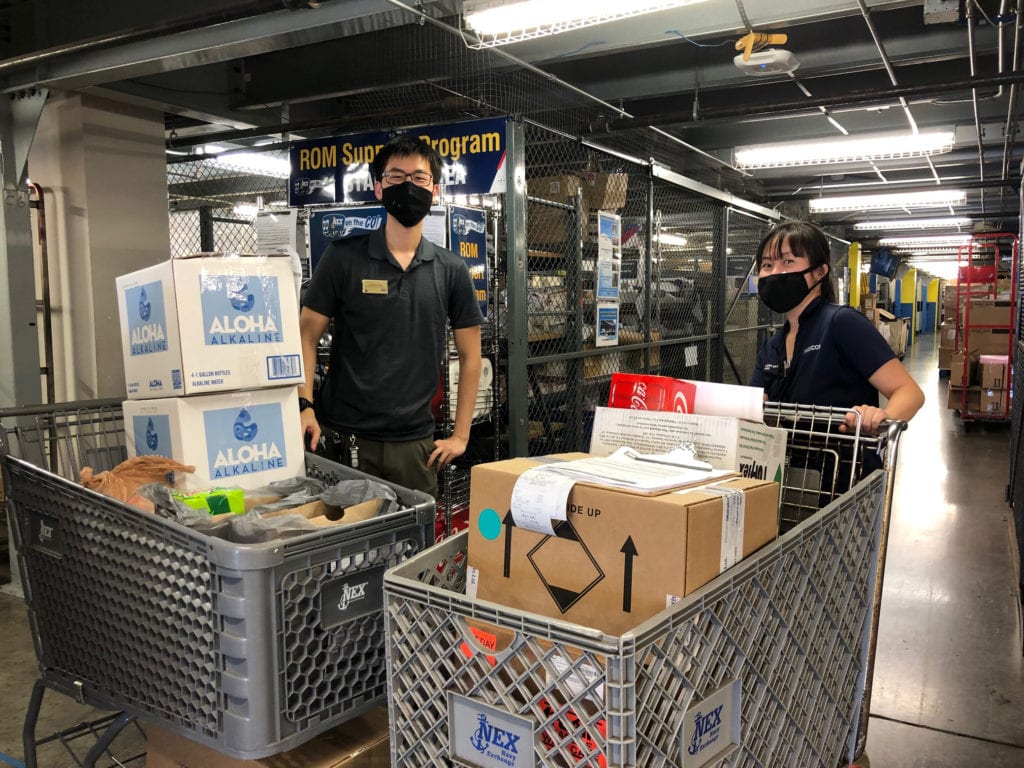
NEX Pearl Harbor launched its Quarantine Support Program by taking orders and delivering goods to military members on restriction of movement orders and quarantined in rooms on Joint Reserve Base Pearl Harbor-Hickam, Hawaii. U.S. Navy/NEXCOM Public Affairs

The COVID-19 crisis has cut back on time spent shopping for food and necessities, changing some military and dependent shopping habits and causing sales of some items — both essential and nonessential — to jump.

Kristine Sturkie, a spokesperson for the Navy Exchange Service Command, said the U.S. Navy Exchanges haven’t seen a rush to stockpile items, although there are limits on some essential items such as toilet paper, hand sanitizers and some cleaning products, so that more customers have access to these needed products. Sturkie said the stores have seen an increase in sales of personal items such as hair clippers.

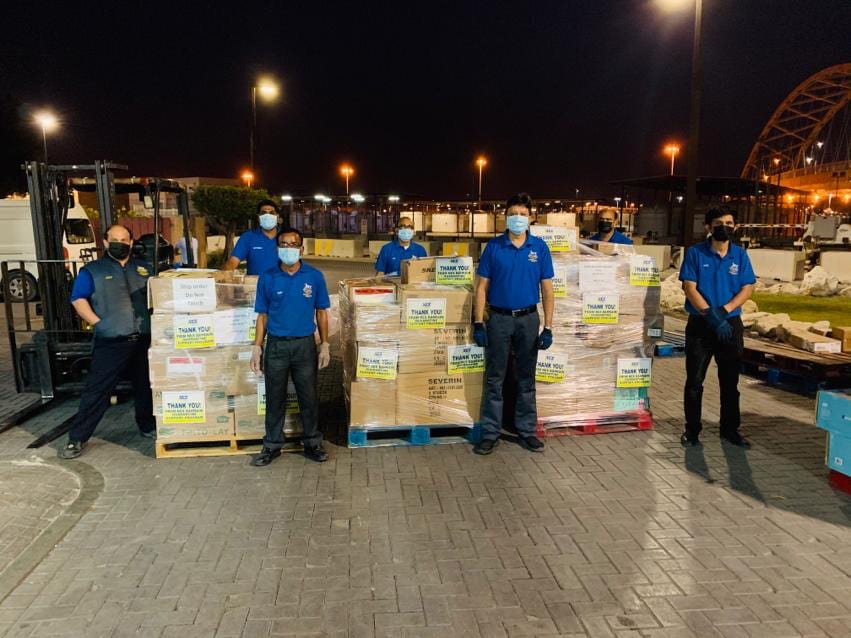
NEX associates are accepting requests and delivering orders to military patrons who are in a restricted movement status or confined to quarters while under quarantine.

Since fewer people are commuting to work or venturing out, gasoline sales are down, as they are for civilians. Sturkie said the number of gallons sold at Navy Exchange gas stations was down about 21% worldwide compared to last year, and although the data is not available yet for April, she expects gallon purchases to be down for the month as well.

“Laptop and home office supply sales have spiked with more people teleworking, along with light fitness equipment to support home workouts,” Sturkie said. “Sales of outdoor items like bubbles, sidewalk chalk, basketballs and footballs and games, coloring books and playing cards are trending with the kids spending more time at home as well as home-organization and home-improvement type products.”

“Laptop and home office supply sales have spiked with more people teleworking, along with light fitness equipment to support home workouts.”

Kristine Sturkie, Navy Exchange Service Command spokesperson

Even though people are at home, many are conducting business in Zoom and other online platform meetings, where they must look presentable. As salons are closed, the health-and-beauty aids industry is seeing a sharp increase in the sale of do-it-yourself hair coloring products.

While online shopping has been strong, many more consumers are resorting to the web as a last resort. Online retailers like Amazon have seen dramatic increases in sales of both food and non-food items. While the nation is seeing huge unemployment numbers, parcel delivery companies like UPS and FedEx are hiring.

John Blythe, the Defense Commissary Activity Fort Belvoir store director, said there are no food shortages, but the commissary is having some challenges in replenishing merchandise from manufacturers during the novel coronavirus crisis. 

The commissary stores sell military Meals-Ready-to-Eat (MRE) year-round and for camping, hunting and for use in the event of adverse weather like blizzards or hurricanes. With the COVID-19 crisis, Blythe said some customers are worried and purchasing MREs at a higher rate than normal. Large pallets of MREs by the case are on display immediately as you enter the Fort Belvoir Commissary.

NEX Bahrain Distribution Center associates prepare NEX Quarantine Support Program orders for a portside delivery to a ship in port at Naval Support Activity Bahrain. U.S. Navy/NEXCOM Public Affairs

“In speaking with customers, many are concerned with food shortages and purchasing them for home use or shipping them to family members who are serving overseas,” Blythe said. “MRE sales usually peak in the summer months but we have never had such a demand for them as we had in the past 30 to 45 days.”

Hugo Ostreng of the Norwegian company DryTech, which makes Arctic rations for NATO forces, camping and backpacking as well as survival meals, said his company has seen an increase in the number of orders from both civilian as well as military customers. DryTech is a manufacturer of freeze-dried meals and as well an assembler of food rations for field applications for the military and outdoor markets.

“DryTech saw a sudden increase in the sale of freeze-dried meals for the civilian market,” said Jan Trondsen, key account manager for military sales.

“Many households thought it was a good idea to build up a little more food on stock in their own houses. We also had an increase in the orders to units and institutions because the system of distributing food from buffets and serving lines in not currently permitted. Our products proved very useful as they can be prepared, distributed and consumed without a kitchen or food-service personnel.”

Jessica Davis of Patagonia Provisions said sales of the company’s shelf-stable food products have seen a large spike. Backpacking food is usually expensive, but Davis said people are willing to pay a premium for lightweight, healthy, easy-to-prepare meals that are nutritious and taste good, especially after a long day of outdoor activities. 

“Our customer base is expanding due to COVID-19 with folks filling their pantries in preparation for what’s ahead. But our existing customers are also coming back and placing larger-than-normal orders. Our supply chain and distribution system are healthy and equipped to handle the increased demand,” Davis said.

“We’ve been selling a lot of selling a lot of buffalo jerky, soups and chilis, seafood and the gift boxes. High-protein freeze-dried meals last a long time and you can live off them, so people are stocking the pantry. Patagonia Provisions is certainly feeling those effects.”