Virtual Tools Help Real-World Suicide Prevention Efforts
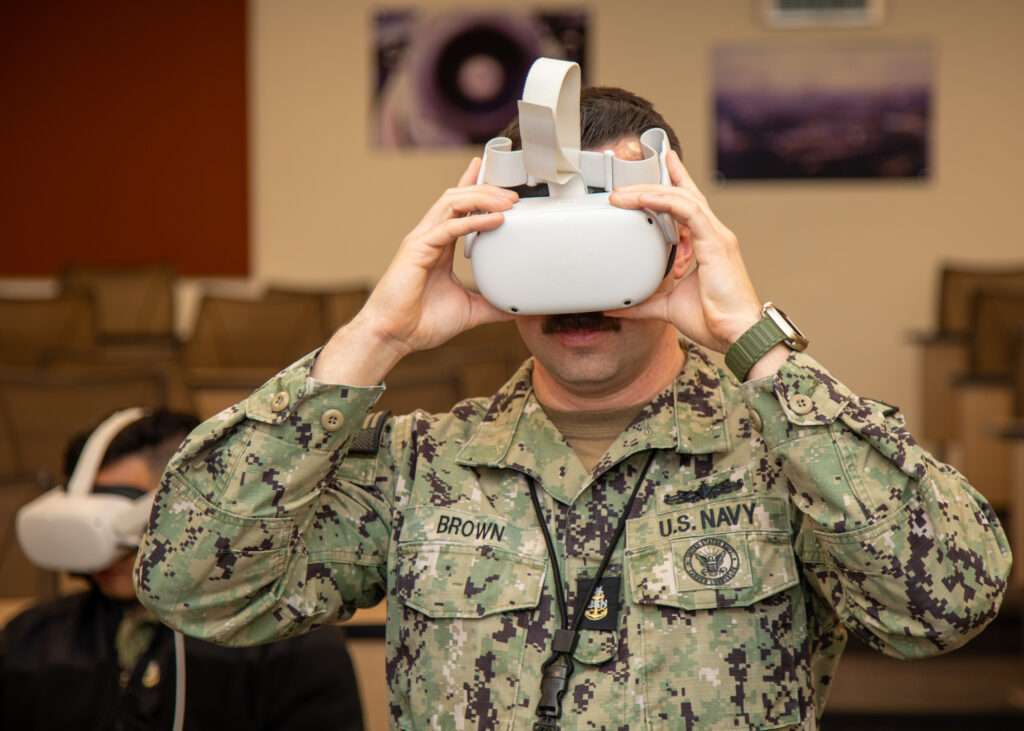
A Sailor assigned to Mid-Atlantic Regional Maintenance Center tests the Oculus headset utilized for sexual assault prevention and suicide prevention virtual reality training onboard Naval Station Norfolk, November 14, 2024. Photo credit: U.S. Navy | Harrison Cox

Veterans, service members and military family members have significantly higher rates of suicide than the general population. The demands of military life can cause anxiety, depression, interpersonal conflicts and emotional distress. Exposure to combat and traumatic experiences can lead to post-traumatic stress disorder and other mental health issues; chronic pain and disability from service-related injuries can worsen these challenges. Access to and familiarity with weapons increases the risk.

Reducing the risk of suicide among service members and their families is the chief mission of the Defense Suicide Prevention Office, a division of the U.S. Department of Defense. It works with military branches, veterans’ organizations and mental health professionals to enhance suicide prevention resources. As part of its mission, it is constantly exploring new technology to support or expand existing programs.

Emerging technologies show great promise in the mission to reduce suicides among active-duty forces and veterans. Artificial intelligence, machine learning and advanced algorithms can help identify high-risk individuals and connect them with early intervention resources. Virtual reality technology is enhancing suicide prevention training, while VR-based therapy and online gaming provide veterans with tools to cope with PTSD and foster community engagement.

Early intervention aims to identify service members and veterans who are experiencing an elevated risk of suicide and proactively connect them with prevention resources. AI-powered algorithms can help improve early intervention efforts. These programs can analyze an individual’s speech patterns, social media activity and biometric data to detect warning signs of suicidal thoughts.

One example is the Recovery Engagement and Coordination for Health — Veterans Enhanced Treatment, or REACH VET, program used by the Department of Veterans Affairs. It uses predictive analytics to identify at-risk veterans and offer early intervention before a crisis occurs.

REACH VET uses sophisticated AI and machine learning techniques to review and assess a veteran’s medical history, psychiatric records and prescriptions. It also considers nontraditional indicators such as chronic pain diagnoses, sleep disorders and major life stressors. The system then runs complex statistical models, evaluating each individual’s data and flagging those whose health patterns resemble others who have attempted or died by suicide.

If the system identifies an individual as high-risk, a VA healthcare provider contacts them for a wellness check and assessment. To mitigate risk, the provider offers personalized care plans, therapy sessions, medication adjustments and peer support programs. Studies show veterans enrolled in REACH VET experience lower hospitalization rates and improved mental health engagement, a point in favor of proactive, data-driven intervention.

Programs like REACH VET may see additional improvement by integrating data from wearable devices like smartwatches and fitness trackers. These devices monitor sleep patterns, heart rate variability and stress levels. Incorporating this data could offer another layer of early detection and support, alerting caregivers or medical professionals if a veteran’s vitals indicate distress or elevated risk.
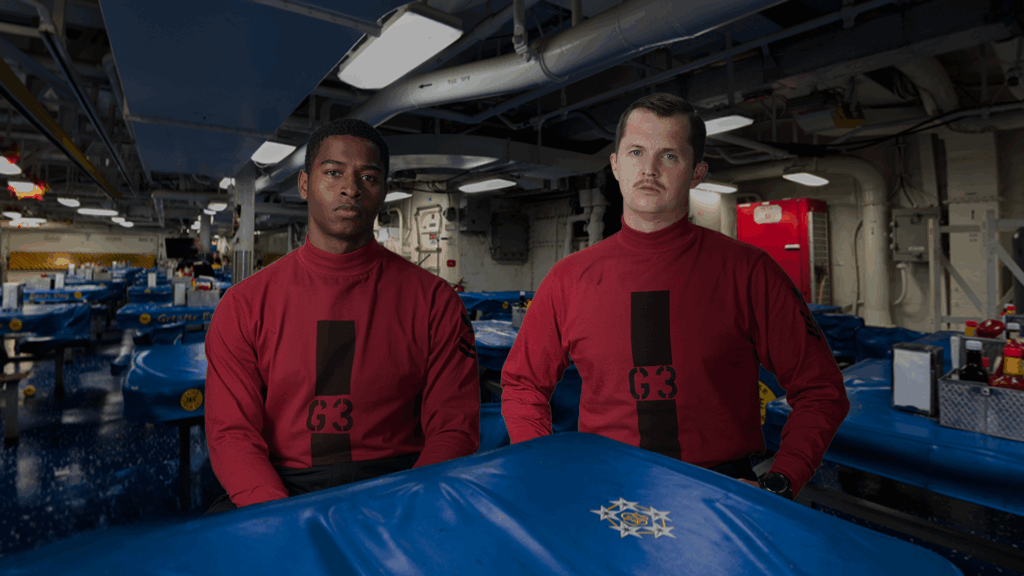
Real actors portray Sailors in realistic environments to allow trainees to have significant conversations. Image credit: Moth + Flame

VR Tech and Suicide Prevention Training

Traditional suicide prevention training is derisively and ironically referred to as “death by PowerPoint.” These boring presentations convey information about available resources but do little to help service members learn what to actually do to help a friend, comrade or family member in crisis.

New York City-based Moth+Flame, a leading developer of immersive VR training solutions, partners with the U.S. Navy and other military branches to provide state-of-the-art training programs. Although it offers many types of interactive simulations, one area of focus is suicide prevention. It provides customized training modules for each branch of service, addressing their specific environmental stressors.

Its VR training encompasses many suicide prevention strategies, including leadership development, crisis response and mental resilience. Officers can improve their ability to foster a better atmosphere for everyone’s mental well-being as well as learn how to support individuals in crisis.

Unlike traditional classroom-based training, VR immerses service members in lifelike conversations where they must recognize distress signals, respond to struggling comrades and practice de-escalation techniques. Participants engage with AI-driven, emotionally responsive avatars in realistic, high-pressure scenarios. The avatars are based on real actors, which the Navy helps select to make sure they look, sound and interact as authentically and realistically as possible.

These scenarios simulate interactions with colleagues, subordinates and family members. Using VR technology, participants can rehearse difficult conversations, building their empathy and confidence in handling real-life crisis situations. As the participant responds, the program provides real-time feedback and suggestions. It also provides post-session feedback and analysis.

“So, in this goggle is a character that is a peer in crisis that the shipmate has to talk to using his or her own voice. … They will have a practical application that they guide hopefully to a successful outcome,” said Matt Frost, an account executive for Moth+Flame, speaking at the Surface Navy Association meeting in January. “We’re not making a video game. This is a real actor in a real environment.”

The biggest users of the technology in the Navy are OPNAV N-17, the Navy Culture and Force Resilience Office; Naval Surface Force, U.S. Pacific Fleet; Naval Surface Force Atlantic; and Naval Special Warfare Command, Frost said.

Studies show that VR-based training improves knowledge retention and engagement compared to PowerPoint-based instruction. Trainees must actively interact with avatars, ensuring a hands-on learning experience. Early reports suggest that VR enhances readiness and significantly boosts confidence in suicide prevention efforts among active-duty service members.

Improving Mental, Physical Wellness

Virtual reality therapy is also transforming mental health care for service members and veterans. It is especially beneficial because it offers a customizable, controlled environment to help process PTSD, anxiety and depression.

A leading program is Bravemind, which was developed in collaboration with the VA Innovation Center and the SoldierStrong charitable organization. It uses VR to facilitate prolonged exposure therapy, a treatment that helps individuals confront and reprocess traumatic memories in a safe setting.

Bravemind creates virtual environments based on real-world combat settings, allowing therapists to guide individuals through difficult memories while helping them develop coping mechanisms. Though exposure therapy is challenging, it has been proven effective in reducing PTSD symptoms and improving emotional resilience.

In addition to structured therapeutic uses, VR can help service members manage stress during long deployments or offshore missions. VR relaxation programs can transport users to peaceful, calming environments, such as beaches, forests or familiar cities to help manage anxiety and promote well-being. Providing these tools to active-duty service members can help improve their overall health and wellness, another building block in fostering readiness and reducing psychological distress.
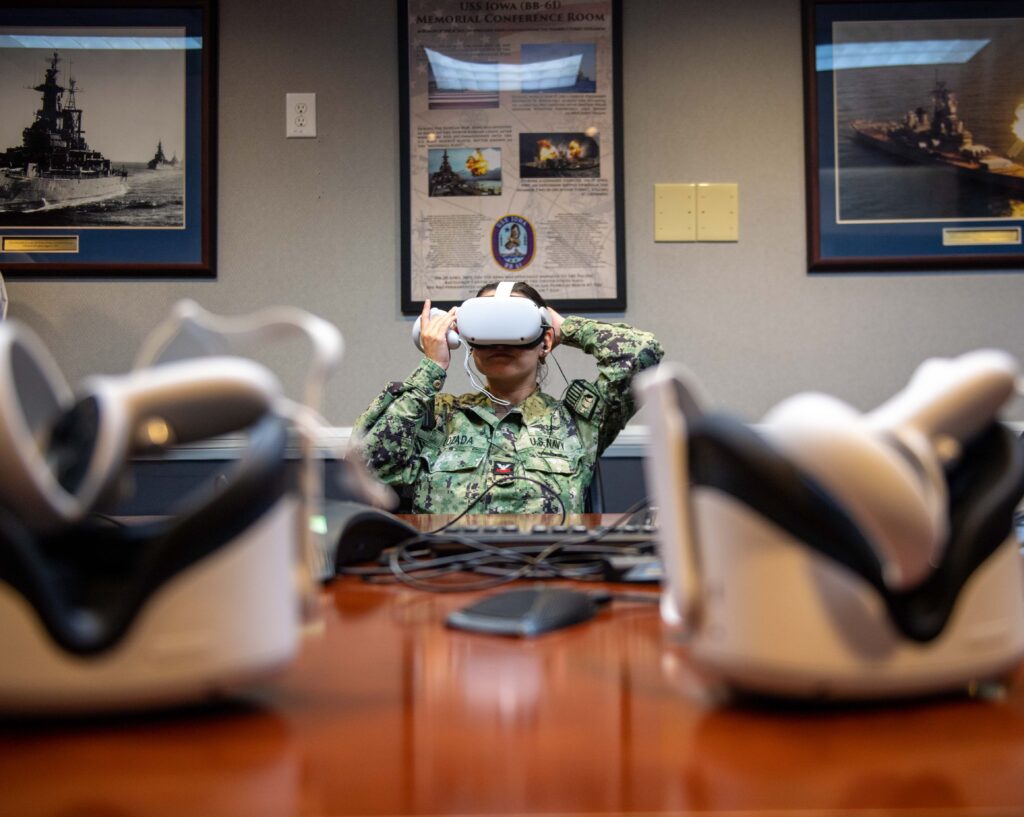
Legalman1st Class Alejandra Lozada, assigned to Commander, Naval Surface Force Atlantic, dons virtual reality equipment to complete training at SURFLANT, Aug. 6, 2024. U.S. Navy | Mass Communication Specialist 1st Class Sophie A. Pinkham

Gaming the (Mental Health) System

First-person shooter video games can be unexpectedly helpful for individuals coping with PTSD. Hyperrealistic games like Call of Duty, Battlefield and Escape from Tarkov allow combat veterans to experience combat-like scenarios in a safe, controlled manner, which can help them process trauma and manage stress.

These games can help players regain a sense of control and desensitization to triggers. They can also induce an adrenaline rush similar to real-life combat, allowing players to practice self-regulation in high-stress situations without real-world consequences.

However, there is another surprising benefit to FPS games, one that has nothing to do with their technological wizardry but is likely far more powerful. Service members and veterans often struggle with isolation and loneliness, feelings that sharply increase suicide risk. They may be reluctant to seek therapy or discuss their issues with their command, family members or real-world friends. Online gaming communities can provide crucial support in ways traditional resources can’t, reaching individuals who slip through the cracks of conventional support systems.

Multiplayer gaming fosters teamwork, communication and camaraderie, mirroring the bond of military units. Organizations like MilitaryGamers.com, Stack Up and Warfighter Engaged provide gaming communities centered around service members and veterans. Twitch streamer GrndPa Gamer, a veteran himself, has built a supportive online community where service members and fellow veterans can share experiences, find camaraderie and use gaming as a mental health tool.

As technology advances, VR therapy, AI-powered analytics and other developments will continue to change the landscape of suicide prevention efforts. The integration of biometric tracking, real-time clinical feedback and AI-driven therapy solutions has the potential to make suicide prevention efforts even more effective. By combining cutting-edge technology with compassionate care and community involvement, the military and veteran support organizations can provide life-saving resources and a path toward better mental health.

Jamie L. Pfeiffer was a lawyer in Illinois, Oregon and Washington states before retiring. She is currently based in Chicago. This story first appeared in the May issue of Seapower magazine.


Building Bonds: 35 Years of United Through Reading

Sgt. Nikole Stradley, a radio operator with Service Company, Combat Logistics Battalion 26, 26th Marine Expeditionary Unit, and mother of a 9-month-old reads a book while being videotaped for the United Through Reading Program, Sept. 23. 26th MEU continues to support relief operations in Pakistan and is also serving as the theater reserve force as elements of the MEU conduct training and planned exercises. Credit: U.S. MARINE CORPS | Staff Sgt. Danielle Bolton

Then-Sergeant Nikole Stradley, a radio operator with Service Company, Combat Logistics Battalion 26, 26th Marine Expeditionary Unit, and then the mother of a nine-month-old, reads a book while being videotaped for the United Through Reading Program in 2010.

Holidays can be stinging reminders of the challenges military families face as a result of frequent, extended separation. Deployments, rotations and training assignments cause parents and loved ones to miss both milestones and everyday activities. For nearly 35 years, the United Through Reading program has offered military families a simple way to connect across the miles.

The program offers service members and their families a chance to share personal and present moments. It has helped more than three million service members and their families strengthen their relationships and weather the long stretches of separation simply by sharing a bedtime story.

Although modern technology has improved the ability of many service members to communicate with their families, many Soldiers and Sailors aren t able or allowed to stay in frequent contact. Mission security, remote deployments and high op-tempo limit the amount of time an on-duty Sailor can spend reconnecting. Often, a service member s availability doesn t sync with that of their family, leading to abbreviated calls and rushed voicemails.

The United Through Reading program offers a simple, elegant solution. It provides a means for service members to create video-recorded story sessions. Children can watch these videos on their own schedule, whenever they need to see their loved one and feel their presence.

UTR recording stations are located at military bases, USO locations, ships and other deployment hubs. These stations offer a library of popular books and all necessary recording equipment. The reader simply selects a book and begins reading aloud. UTR also has a downloadable app for service members who can use an internet connection and their own device. The app includes a wide selection of eBooks.

After the recording is finished, the UTR station can mail a physical copy of the book and video to the family or provide digital access to the files. Families can also download the app and access the videos and eBooks. While the child watches the video, their caregiver is encouraged to capture the child s reaction in an e-mail, photo, or video to send back to the service member.

One Dream, Many Benefits

United Through Reading began in 1989 as the passion project of Betty J. Mohlenbrock, a military spouse and former teacher. Mohlenbrock was concerned that military children were especially vulnerable to falling behind in school due to frequent relocations and emotional trauma. She devised UTR as a unique way to accomplish two intertwined goals: supporting and comforting children of deployed parents while encouraging literacy and reading skills.

The program started with a few volunteers recording videos in makeshift settings, but the concept caught on quickly. UTR gained support from military leaders, the USO and educators, eventually blossoming into a global initiative. Today, the program provides books and resources to nearly everywhere U.S. service members are stationed or deployed. Mohlenbrock was awarded the Congressional Medal of Honor Society Community Service Hero Award in recognition of UTR s success and impact.

United Through Reading strives for inclusivity and ease of use. It serves members and veterans of all military branches, regardless of their duty status. It can be used for all types of separation, including deployment, drill weekends and duty nights. While it started as a resource for parents, it s no longer limited to parent-child relationships; readers can record videos for any child in their lives.

As anyone with young children knows, kids often watch their favorite programs over and over (and over) again. Playing a UTR recording on demand and watching it multiple times can reinforce a sense of connection when family members are separated by miles or oceans. Many families observe their children are less anxious and adjust more easily to homecomings because of the familiarity sustained by repeated watching of UTR videos.

UTR also offers a way to answer questions and provide reassurance to you children, who may struggle to understand why a parent or loved one isn t home for long stretches of time. Seeing their faces, hearing their voices and reading along to a familiar story can soothe their fears and help them feel safe.

Psychologists affirm that listening to stories read by a familiar voice helps children feel emotionally supported, especially when they face stressful or frightening situations. Children of all ages even teenagers benefit emotionally and intellectually from being read to out loud.

Establishing a book reading routine can also provide emotional benefits to service members and reduces homesickness. The program provides a way to participate more specifically and deeply in their children s lives from afar. It can help adults create a personal, special connection with young children, tweens and even teenagers as they explore and experience reading a book together.

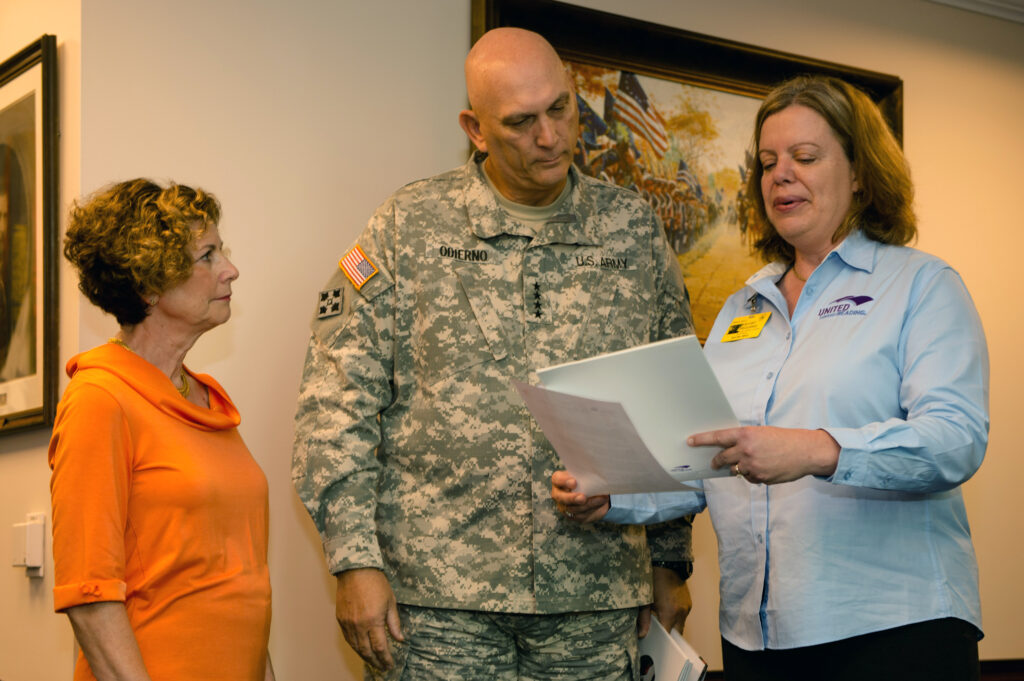
Linda Odierno, then Army Chief of Staff Gen. Raymond T. Odierno and Kara Dallman from the United Through Reading Program discuss the book Otis in 2013 at the Pentagon, Washington D.C. Credit: U.S. ARMY | Sgt. Mikki L. Sprenkle

Turning the Page

In addition to recording videos, UTR promotes numerous initiatives to encourage a lifelong love of reading in military families. These include reading tracking logs, online community support networks and community reading events.

United Through Reading relies on volunteers to keep the program running smoothly. Volunteers can assist at UTR recording stations, guiding service members through the recording process, troubleshooting equipment and recommending books. They can also help manage the follow-up process if a family requests a physical copy of the recording and book.

Communities, schools, and businesses can organize book drives. UTR stations welcome donations of new, high-quality children s books for service member readers and their families.

The organization s Literacy Ambassador Program trains volunteers to speak at schools, libraries and community events to emphasize the value of reading and staying connected through UTR. These ambassadors help raise awareness of the program s benefits and encourage more eligible families to participate.

Although UTR receives grants and corporate support, it operates as a non-profit. Therefore, donations are a critical aspect of its operations. Individuals who wish to help further its mission can host fundraisers, spread the word about the program on social media or collaborate with businesses to secure sponsorships.

Studies show promoting literacy and language development during the first few years of a child s life is an integral part of healthy neural development. Reading aloud to children helps improve their vocabulary, language aptitude and engagement in literary activities. Establishing a reading routine can also provide a source of consistency for children during frequent relocations, which can help them adjust more easily to new learning environments and social communities.

UTR ensures service members stay constantly present and active in their children s lives during deployments, separations and other absences. Parents help their children learn while they connect in positive and meaningful ways while creating permanent reminders of their lived experiences.

Jonny Cain remembers using UTR when her husband, a UH-60 Black Hawk pilot, was deployed on missions with spotty and unreliable phone and internet services. One of their children was especially fond of the video stories, standing as close as possible to the television and whispering back at the end: I love you, Daddy. .

This article appears in the December issue of Seapower. Jamie L. Pfeiffer practiced in Illinois, Oregon and Washington states before retiring from active law practice. She is currently based in Chicago.

To get involved with United Through Reading, visit their website at unitedthroughreading.org.


Rebuilding a Skilled Workforce, Full Speed Ahead

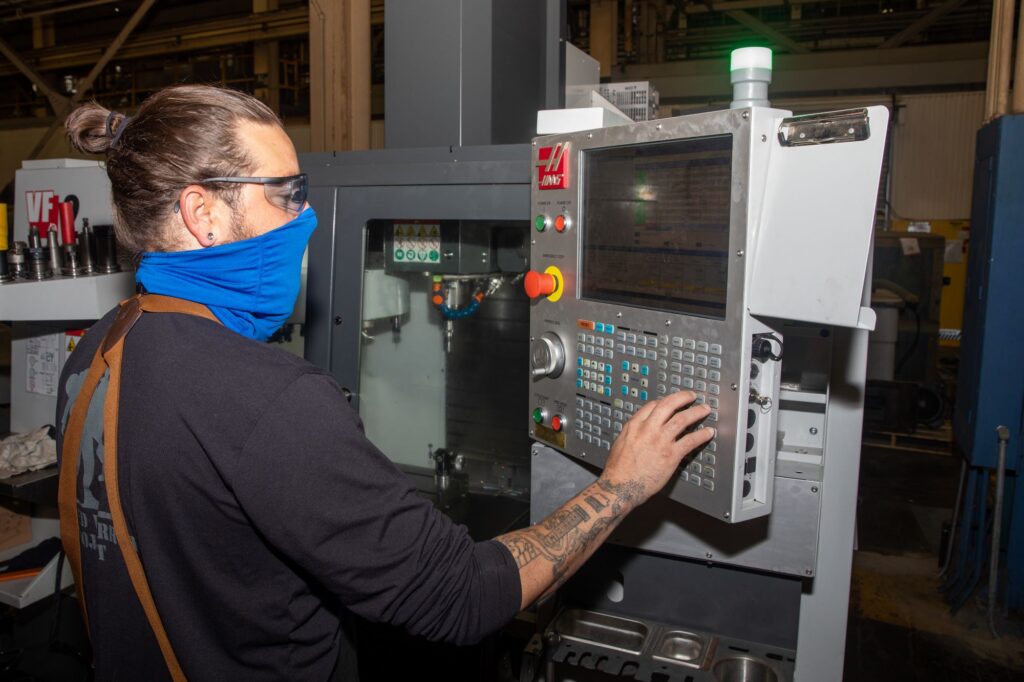
Mechanical Group (Code 930) Production Inside Machine Shop Machinist Shawn Martin uses computer numerical control machining to complete daily machining operations, part of the training available under the Accelerated Training in Defense Manufacturing program. NORFOLK NAVAL SHIPYARD | Daniel DeAngelis

If you’ve transitioned out of the sea services, you may struggle to chart a course for your future. The Accelerated Training in Defense Manufacturing (ATDM) program allows veterans to retrain or uptrain for jobs with military suppliers. This accelerated training opportunity helps strengthen national defense capabilities while providing veterans with stable, lucrative career opportunities.

The best part? It’s free.

Submarines and unmanned underwater vehicles are a vital and rapidly expanding component of U.S. defense and marine security. The Department of Defense anticipates that nearly 10,000 additional skilled workers will be needed each year to design, build and test these vessels to support the submarine industrial base.

Unfortunately, the number of trained workers in manufacturing fields has shrunk to record lows. In addition to limiting growth, not having the resources to maintain and repair existing assets impacts the readiness of the current fleet and threatens national security. To address this deficiency, the Department of Defense has partnered with private institutions to develop the ATDM program.

ATDM is a rigorous, rapid and innovative prototype training platform operating on the campus of the Institute for Advanced Learning and Research (IALR) in Danville, Virginia. It is a cooperative effort supported by the Navy, the Office of the Secretary of Defense, state and local officials and defense industry partners.

The program has five strategic goals: Fill the gaps in submarine industrial base and defense industrial base trades; decrease the time-to-talent to place workers “on the line;” modernize the workforce; diversify the workforce; deliver trained workers to the industrial base in scale and velocity.

The four-month program provides each student with 600+ hours of instruction in one of five specialized trades: additive manufacturing, computer numerical control machining, non-destructive testing, quality control inspection (metrology) and welding.

This intensive, accelerated training allows students to gain proficiency quickly, obtain industry-recognized credentials and “hit the ground running” as soon as they begin work in the private sector. The program connects educators, government agencies and industry leaders to ensure the curriculum aligns with industry standards and requirements.

Classes progress on a rolling schedule, with new cohorts beginning approximately every two months. Students train on three shifts (7 a.m.-3 p.m., 3 p.m.-11 p.m., and 11 p.m.-7 p.m.), mirroring standard private-sector manufacturing schedules.

Each shift cohort has 12 students, one instructor and one experienced technician. The teachers and technicians work closely with students to help them master concepts and practice execution. Dr. Debra Holley, the program’s director, estimates 90% of the training is hands-on, adapting to each student’s ability and allowing them to learn more quickly and effectively.

Diverse and Dynamic Workforce

Any adult U.S. citizen or permanent resident with a high school diploma or GED can apply to ATDM. Candidates accepted into the program are scheduled for the next available cohort. If the soonest cohort is full, they may be waitlisted, or they may be able to choose a start date farther in the future to accommodate personal or professional needs.

Students’ backgrounds, experiences and education levels vary widely. Approximately 25% of current and past students are veterans. ATDM also works with the Department of Defense’s Skillbridge program to help current servicemembers pursue retraining as they transition out of service. It also partners with the U.S. Chamber of Commerce Foundation’s Hiring Our Heroes jobs connection program and the NextOp nonprofit organization to help veterans retrain for civilian careers.

ATDM also works with the Veterans Administration’s Computer/Electronic Accommodations Program to provide accommodation solutions for veterans with visual, hearing, cognitive, communication and dexterity disabilities. While each student has unique needs, and each specialization has different requirements, facilities like a welding booth designed for wheelchair users reflect the program’s commitment to helping overcome barriers that can limit veterans’ employment options.

About 209 students (five cohorts) have completed the ATDM program since it opened its doors in June 2021. Upon completion, graduates from this program can obtain critical defense industry jobs. ATDM also provides job placement assistance, partnering with nearly 100 companies and conducting employment fairs.

According to Holley, 92% of the cohort that finished in June 2024 had job offers upon completion. Many of the program’s corporate partners provide ringing endorsements of the quality and applicability of the ATDM graduates’ skills and training.

The ATDM program also anticipates its own continued success and growth in the next few years. In October 2023, it began constructing a new, state-of-the-art training facility that will allow it to graduate 800-1,000 skilled workers annually by 2025.

Currently, the ATDM program is entirely free. No service obligation or commitment is required. However, after completing their training, students are expected to pursue employment in the defense manufacturing industry.

The program provides each student with a complimentary, private apartment located about five minutes away and connected to the campus by shuttle. Spouses and children may accompany students. Although the program doesn’t cover the cost of food or other living expenses, it can help connect students with local charitable organizations and government resources.

In addition to furthering national defense objectives, ATDM is having a markedly positive impact on the local economy. The expansive new training center is a significant capital investment by the Navy in the Danville area. It is expected to increase economic stability and prosperity in the region and throughout the Commonwealth of Virginia.

Program director Holley recognizes the unique nature of the ATDM program’s public-private collaboration, noting it benefits everyone involved.

“It’s a way to make an impact and serve your country and community,” she said, “and also train for a really good job.”


Undeterred: Baltimore Coast Guard Yard Work Continues Despite Bridge Collapse

U.S. Coast Guard Cutter Diligence (WMEC 616) is hoisted on blocks while in dry dock, March 21, 2024, at the Coast Guard Yard in Baltimore, Maryland. Diligence conducted a two-month living marine resources patrol in the Gulf of Mexico and received a maintenance availability. U.S. Coast Guard | Lt. Cmdr. Brian Waller

On March 26, a container ship struck the Francis Scott Key Bridge, causing it to collapse. The catastrophe halted marine traffic to and from the Port of Baltimore, one of the busiest ports in the United States, for nearly two months.

However, the U.S. Coast Guard’s ongoing efforts to complete midlife maintenance on its fleet of seagoing buoy tenders at the Coast Guard Yard were undeterred.

The U.S. Coast Guard Yard: A Baltimore Harbor Fixture

The U.S. Coast Guard Yard has built, repaired and maintained vessels in Curtis Bay, just south of Baltimore Harbor, since 1899. Because it is the USCG’s primary facility for major repairs, vessels from around the globe journey to the yard when it’s time for service.

Strategic preventative maintenance helps improve the reliability of Coast Guard vessels, control maintenance costs and reduce downtime. The Coast Guard’s In-Service Vessel Sustainment (ISVS) evaluates and schedules the major maintenance and upgrades necessary for its vessels to reach or extend their service lives. According to ISVS, each Juniper-class cutter must head to the yard in Baltimore harbor about halfway through its expected lifetime for major maintenance.

Next Generation of Buoy Tenders 

The Juniper-class cutters, which took to the seas in the late 1990s and early 2000s, are the second generation of purpose-built Coast Guard seagoing buoy tenders. The 16 225-foot cutters replaced a fleet of 180-foot class cutters, built from 1942 to 1944, which served for more than 50 years. The last of the 180s, the Acacia, was decommissioned in June 2006.

Juniper-class buoy tenders are multi-mission platforms that help protect American shipping interests worldwide. They have better speed, communications, navigation and maneuverability than their predecessors. Dynamic Positioning allows them to maintain position within a 33-foot circle in winds of up to 30 knots (35 mph) and waves of up to eight feet.

These nimble, adaptable craft handle law enforcement, oil spill recovery, search and rescue, homeland security, ice-breaking operations and other marine missions. They are also instrumental in the U.S. Coast Guard’s participation in the Western and Central Pacific Fisheries Commission, which oversees the conservation and management of migratory fish stocks.

The cutters also enable missions like Operation Blue Pacific, the latest wave of bilateral Shiprider agreements that partner the Coast Guard with myriad nations in Oceania to combat illegal fishing, human trafficking and other international problems.

Service to the Fleet

The standard midlife maintenance package includes upgrading technology, replacing worn decking, making safety upgrades and updating the sewage system to reduce environmental impact. Maintenance professionals at the yard remove obsolete, unsupportable or maintenance-intensive equipment, making updates to the buoy crane, controllable pitch propellers, boat davits and HVAC systems. They also perform comprehensive system-wide checks and fix any issues they uncover.

The first of the Juniper-class cutters began its midlife maintenance in 2017; the last, the Hollyhock, should finish this year. The yard professionals have streamlined the process, which usually takes about a year. Once a vessel is finished, it is relaunched and tested in the harbor. Upon passing inspections, it’s ready to return home, fully prepared for another two decades or more of service.

Around the World in 80 Days

Taking a vessel to the Coast Guard Yard isn’t like dropping your car off at the local dealership — most of the Juniper-class cutters are based many thousands of miles from Baltimore. The voyage itself can take weeks. However, because the mission is primarily to transport the vessel, there are usually some unexpected perks along the way.

As the old saying goes, Sailors go to sea to see the world. Voyages to the yard allow Coast Guardsmen to sail outside their base areas and experience the world beyond their shores. A maintenance trip can include crossing the equator, the tropic of Cancer or Capricorn or the international date line; many include a journey through the Panama Canal.

It can also allow the crew to enjoy some well-deserved liberty time ashore at desirable vacation destinations. For example, the voyage from Hawaii to the Coast Guard Yard takes at least six weeks. Port calls along the way can include stops in Puerto Vallarta, Cozumel and Key West.

Sometimes, these stops include Coast Guard business, such as picking up ammunition or dropping off cargo. Other port calls simply involve restocking supplies and refueling. Either way, they offer a respite from Coast Guardsmen’s usual day-to-day operations and a chance to see some of the world’s most beautiful coastal towns.

Overcoming Obstacles, Responding to Challenges

Trips to the yard are often delayed for a myriad of reasons, like all long sea voyages. Storms, fog and other weather issues can necessitate altering a vessel’s course or port call. Lack of pier space is a recurring theme because ports usually prioritize Coast Guard vessels below profitable cruise liners and other commercial ships.

A vessel may divert to a nearby port if it has enough food and fuel to change its course. Otherwise, it can wait at anchor for hours or even days to obtain pier space. Fortunately, the Coast Guard excels at changing tack and responding to unexpected delays. Sometimes, thinking outside the hull leads to clever solutions.

Finding himself lacking pier space outside of Puerto Vallarta, Mexico, one enterprising captain used the local tourist amenities to make the best of the delay. After dropping anchor, she called a water taxi to pick up the crew. They spent a day ashore enjoying the town’s historic beauty and culinary delights rather than impatiently waiting for the traffic to clear.

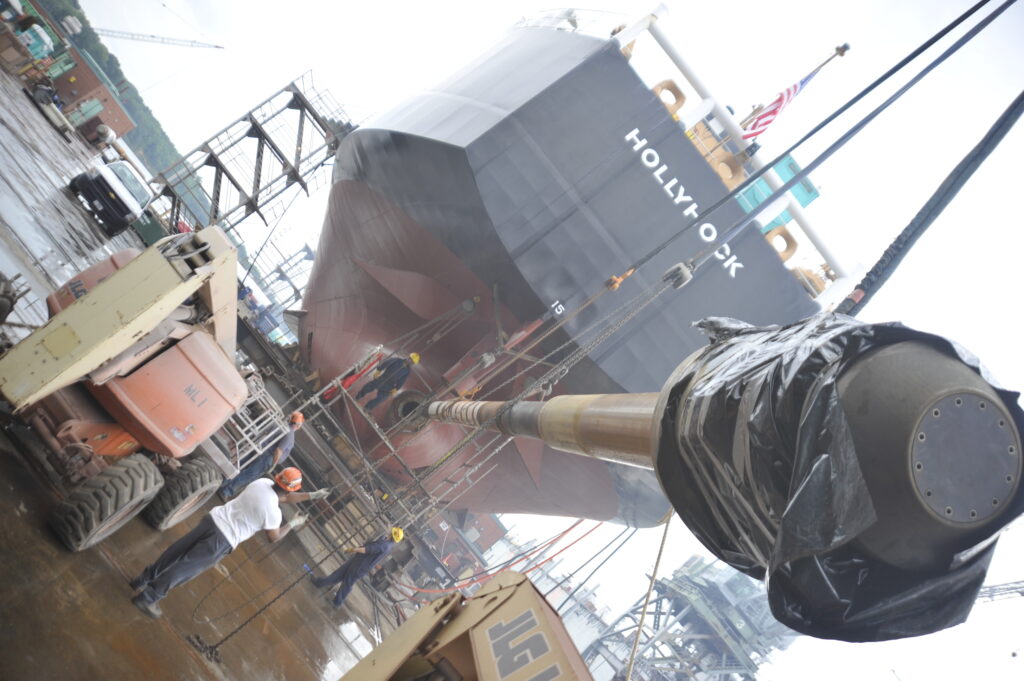
Coast Guard civilian employees remove the shaft of the Coast Guard Cutter Hollyhock, a 225-foot seagoing buoy tender home-ported in Port Huron, Mich., during a dry dock at the Coast Guard Yard in Baltimore, Aug. 1, 2013. The Yard is the service’s sole shipbuilding and major repair facility, and an essential part of the Coast Guard’s core industrial base and fleet support operations. U.S. Coast Guard | Petty Officer 2nd Class David R. Marin

Reached the Yard, Now What?

Once the vessel arrives at the yard, its crew has a new mission: preparing it for dry dock maintenance. Everything onboard must be removed, inventoried and transferred to Conex shipping containers or sent to the dumpster. Some items remain in storage at the yard while the hull is serviced in dry dock, while others are sent back home with the crew.

Lieutenant Commander Jessica McCollum, who has shepherded several cutters to the yard for their midlife service, summarized the goal of this process: “Pretend like it’s a toy ship. Take it in your hands, turn it upside down and shake it. If nothing falls out, it’s ready for the yard.” When she took the USCGC Walnut up for service in 2020, it took about three weeks to finish this offloading process.

Once the commanding officer signs over the hull, the crew generally transfers to the vessel finishing its maintenance. If it’s not ready, or there are other delays, they may have to cool their heels in the harbor. Many things can delay the process of completing midlife maintenance, most of which are far more mundane than the bridge disaster.

The seasoned professionals at the Coast Guard Yard don’t release a vessel until they’re satisfied it is shipshape and Bristol fashion. Often, their scrupulous inspection uncovers other issues; a ship doesn’t sail until these are fixed, tested and cleared. Such was the case with the USCGC Hickory, which was scheduled to leave the harbor at the time of the Key Bridge collapse but wound up delayed due to additional maintenance needs.  

Flexibility, Versatility and Readiness

During a delay, the crew may spend weeks or months in Baltimore performing other duties, take personal leave or return to their home post, depending on their job. After the bridge collapsed, some Coast Guardsmen were assigned temporary duty cleaning up the mess, ensuring safety and enforcing security in the harbor. Coasties are often tasked with search and rescue operations and responding to maritime disasters, as they are often the first responders on the scene.

Surprisingly, the extended closure of Baltimore Harbor didn’t hamstring the Coast Guard cutters like it did commercial shippers or larger military vessels. This is partly because these vessels and their crews are incredibly adaptable. The port opened an auxiliary channel quickly and the Coast Guard quickly pivoted, enabling their mission to continue.

As McCollum prepares to collect the Hollyhock, the last cutter to complete midlife service, she will set sail with an entirely new crew. Just like after a new vessel is commissioned, these Coast Guardsmen must quickly learn to work well together as a team and respond to adversity during the weeks-long voyage home. Fortunately, as advertised, the U.S. Coast Guard is Semper Paratus: Always Ready. .

From the July/August issue of Seapower magazine. Jamie L. Pfeiffer practiced in Illinois, Oregon and Washington states before retiring from active law practice. She is currently based in Chicago.