Northrop Grumman Introduces Team for Capture of Navy’s E-XX Program

By Ann Tropea, Editor in Chief, and Richard R. Burgess, Senior Editor

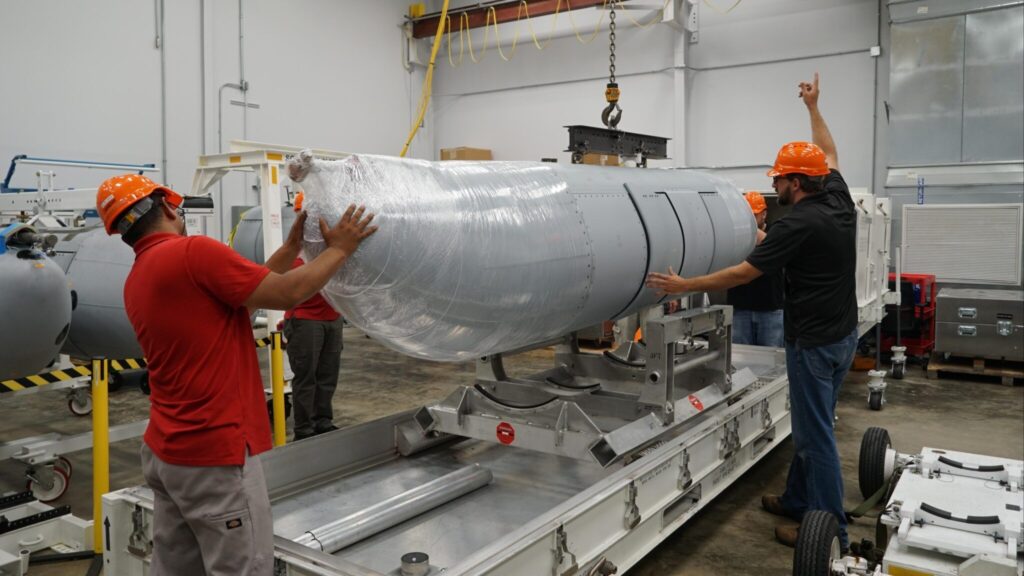
NATIONAL HARBOR, Md. — Northrop Grumman Corporation has formed its team to bid on the E-XX program, the recapitalization of the U.S. Navy’s strategic communications aircraft, a component of the nation’s nuclear strategic deterrent force.

The E-XX program is designed to produce a replacement for the Navy’s E-6B Mercury strategic communications aircraft that provides reliable command-and-control connectivity to the ballistic-missile submarines that carry Trident nuclear-armed missiles and the Air Force’s ground-based strategic missiles.

“We are very excited about the opportunity that we have today to announce the superior team that we have put together to pursue, capture, and deliver the United States Navy’s next powerful weapon system,” said Jane Bishop, vice president & general manager, Northrop Grumman, briefing reporters at the Navy League’s Sea-Air-Space Expo in National Harbor. “The expected cargo aircraft will be based upon the C-130J-30 platform and it will provide survivable, reliable and endurable command, control and communications connectivity, which is obviously very important for our national command authority to be able to communicate with ballistic submarines that are obviously capable of delivering nuclear weapons. It is absolutely crucial that the team that we put together has extensive knowledge as well as experience and weapons system integration and battle management, command, and control.”

Bishop announced the members of the Northrop Grumman capture team:

  • Lockheed Martin Skunk Works
  • Raytheon Intelligence and Space
  • Crescent Systems Inc.
  • Long Wave Inc.

“This is an all-star lineup of domain experts that we feel positioned us very well,” she said.

“Developing this team has been strategic and intentional to ensure that collectively we are an unmatched and unparalleled team, making us the optimal choice, as Jane said, to right size this mission for the United States Navy,” said Henry Cyr, director of Multi-Domain Command and Control Capture Programs for Northrop Grumman. “Together, we will go fast. We will be secure on this. Can’t fail the nuclear command control communication mission. And we are ready to take charge and move out.”

“Our 21st century security vision is designed to help the U.S. and its allies leverage emerging technologies, capitalizing on advancements in artificial intelligence, capitalizing on the increase of processing power,” said Mike Acree, director, Lockheed Martin Aeronautics, Skunk Works. “And as the 5G mil infrastructure continues to build, ensuring that the U.S. and its allies is leveraging all those technologies to ensure it’s effective in the future in constant, increasingly more complex battlespace. This mission advances the highly capable national security platform’s command and control access across all domains. … We’re developing operations in an integrated digital environment and we’re going to deliver an open system architecture that meets the compliance standards for open systems. We look forward to working with this industry dream team and will bring to bear this work C-130 mission systems integration expertise to develop a survival solution tailored to the U.S. Navy’s most critical missions in support of its tactical fleet.”

“Our resilient communication solutions are critical enablers to what we do around multi-domain operations and the nuclear command control communications enterprise,” said Paul Mongillo, vice president, Requirements and Capabilities Group, Surveillance and Network Systems. So, we’re looking forward to being part of that environment. We’re proud to be able to provide our systems integration expertise to the Navy’s E-XX program.”

“We’re excited to be part of this team,” said Clark Red, chief executive officer and co-founder of Crescent Systems. “Our focus has always been on providing the men and women who stay on alert with the best tools possible to do their job. We understand the significance of this critical system. We understand the importance as it runs 24/7/365 and the importance of it as a never-fail mission.”

“Long Wave’s first contract about 30 years ago was with the VLF Propagation Analysis for Strategic Communications,” said Tom “TC” Conroe, executive vice president of Long Wave Inc. “The E-6 community has been central to our business. It’s been a true focus on everything we do.”

.


Navy Studying Arming P-8A Aircraft with the AARGM-ER Missile

************* 

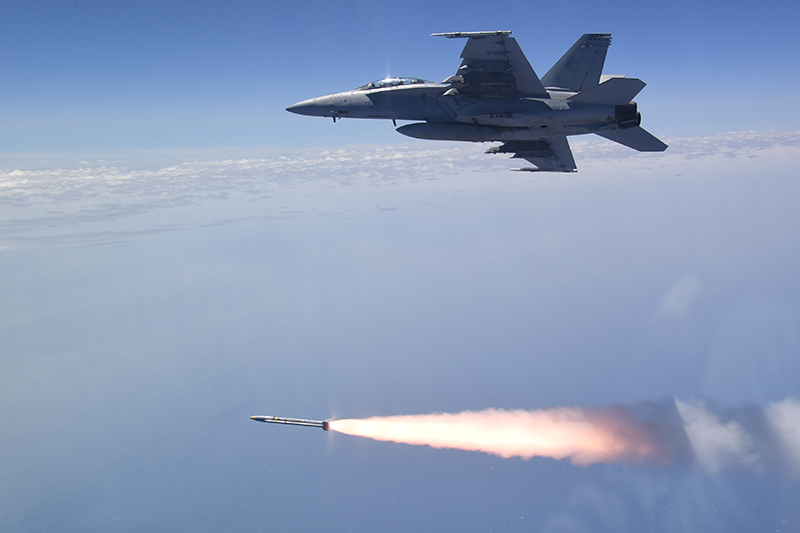
NATIONAL HARBOR, Md. — The Navy is conducting an integration study for arming its P-8A maritime patrol aircraft with the AGM-88G Advanced Anti-Radiation Guided Missile – Extended Range (AARGM-ER), a Navy program official said.

Capt. Alex Dutko, program manager for Direct and Time-Sensitive Strike, speaking April 3 to reporters in person and remotely at the Navy League’s Sea-Air-Space Expo in National Harbor, said the integration of AARGM-ER on the P-8A would be for external carriage on the aircraft’s wing stations.

The AARGM-ER, the latest version of the anti-radar missile designed to neutralize or destroy enemy air-defense radar stations, is an upgrade of the AGM-88E AARGM and is designed for internal or external carriage. The ER version integrates the AGM-88E sensors and electronics with a new solid-fuel rocket motor and tail control. The ER has a diameter of 11.5 inches, compared with the baseline’s 10-inch diameter.

The new version is designed to be carried internally in a weapons bay as well as externally. The AARGM-ER will be carried internally on the F-35A and F-35C versions of the Lightning II strike fighter and externally on those aircraft plus the F-35B, F/A-18E/F Super Hornet strike fighter, and the EA-18G electronic attack aircraft.

The AARGM-ER entered Low-Rate Initial Production (LRIP) during the fourth quarter of fiscal 2021 and has completed three of four Developmental Test firings. The fourth is scheduled for April. The second LRIP contract was awarded during the first quarter of fiscal 2022. LRIP 3 currently is in negotiation with Northrop Grumman, Dutko said.

Operational Test of the AARGM-ER is scheduled for completion during fiscal 2024, with Initial Operational Capability slated for the first quarter of that year. Full-Rate Production is expected to begin in fiscal 2025.

The missile will be available for Foreign Military Sales with LRIP 4, with deliveries occurring in fiscal 2026. Dutko said that the Navy is working to expand a cooperative agreement with the Italian Air Force — which carries the AARGM on its Toronado strike fighters — to include the AARGM-ER version. He said that multiple countries have expressed interest in the AARGM-ER.


Textron Developing New Unmanned MAGNUSS Minesweeping Technology

*************** 

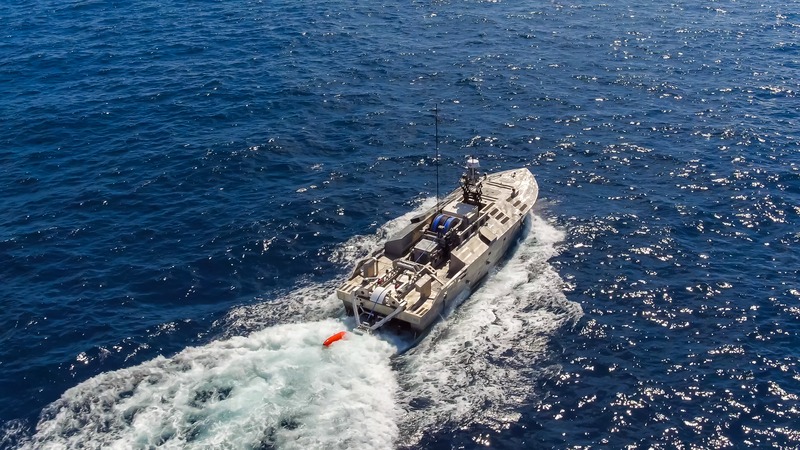
ARLINGTON, Va. — The technology to sweep sea mines without endangering Sailors has made another advance with a recent contract award to Textron Systems Corporation for the development of the Magnetic and Acoustic Generation Next Unmanned Superconducting Sweep (MAGNUSS) system for the Mine-Countermeasure Unmanned Surface Vehicle (MCM USV). 

The MAGNUSS system includes a high-temperature superconducting magnetic source with an advanced acoustic generator, designed to defeat magnetic- and acoustic-triggered sea mines by spoofing them. 

The $20.8 million contract award from the Office of Naval Research (ONR)-sponsored Future Naval Capability effort calls for the “development, fabrication, and demonstration” of the MAGNUSS payload, according to the Defense Department contract announcement, which also said that the payload “is expected to transition to the Naval Sea Systems Command program” for the MCM USV.   

Textron earlier developed the Unmanned Influence Sweep System (UISS), a towed cable with a magnetic and acoustic minesweeping system designed to be deployed by an MCM USV. The UISS is a mission module of the Mine Countermeasures Mission Package for the U.S. Navy’s littoral combat ships. 

Minesweeping with Magnets 

David Phillips, Textron Systems’ senior vice president for Sea Systems and Land Systems said in a March 23 interview with Seapower that the MAGNUSS offered, “a different, unique way to sweep mines” with a modular “non-towed, zero-drag system that sits within the unmanned surface vessel and basically spoofs mines through acoustics and magnetics.” 

Phillips said that the UISS towed sensor sweep cable was less effective in shallow water because it can get damaged by or tangled or snagged in underwater obstacles, including such objects as crab traps. These factors affected the life of the tow cable, and hence a concern with the cost of replacing it.  

He also said the UISS magnetic generator was heavily influenced by the salinity of the water, with lower performance in low-salinity water. He noted that these factors would be of no concern with a payload within the hull of a USV that would no longer need to deploy and retrieve a tow cable. 

Applying a magnetic field through water, the salinity affects the level of resistance, said Tim Livelsberger, Textron Systems’ systems engineer for the project, during the interview. “The more salt you have, the easier it is for the power to flow through. The less salt that you have, the more power you need to generate to maintain that magnetic field. 

“This technology simplifies the operations for the Sailors and increases the envelope where they can operate at and what salinity levels [they can operate in],” Livelsberger said.  

Under the contract, Textron will be working to provide a low-risk, advanced development model of the MAGNUSS that will be put through a demonstration for the Navy using a company-owned Common USV like those the company delivered to the Navy for the UISS program. 

Operational Testing 

Phillips said that following the demonstration, options exist for furthering the Technical Readiness Level and the maturity into Engineering Development Models.   

The MAGNUSS high-temperature superconducting magnetic source is built by American Superconductor and the advanced acoustic generator is built by General Dynamics Applied Physical Sciences

Livelsberger said that the CUSV has gone through Initial Operational Test and Evaluation of the MCM mission package with the littoral combat ship with the UISS and the AQS-20 mine-hunting system.  

He said the Navy’s requirements for the MAGNUSS were essentially the same as for the UISS. 

Livelsberger said that one of the major challenges with using a super-conducting magnetic system is the interoperability of the MAGNUS with the CUSV, shielding the USV’s instrumentation and electronic systems from the intense magnetic field generated by the source. He said the magnetic source leverages the technology used to degauss large warships. 

Last year, Textron’s CUSV was equipped with anti-submarine warfare identification and tracking systems to participate in the Robotic Experimentation and Prototyping Using Maritime Uncrewed Systems, a multi-national exercise conducted in Portugal. 


Navy Commissions First LCS with New GE Composite Engine Enclosure

NATIONAL HARBOR, Md. — The littoral combat ship (LCS) commissioned April 1 is the first equipped with the new lightweight gas turbine engine enclosure designed by GE Marine to provide greater safety and more comfortable engineering spaces for Sailors, a GE Marine official said.

Steve Rogers, director of Marketing and Business Development for GE Marine Engines, told Seapower in an April 3 interview at the Navy League’s Sea-Air-Space Expo in National Harbor, said that the Independence-class littoral combat ship USS Santa Barbara (LCS 32) is the first LCS to be fitted with the new lightweight composite-material enclosure for its engines.

“Traditionally what the Navy has used is a is a steel base on which it sits and then an enclosure with steel walls. So … loud, noisy, hot,” Rogers said. “Now it’s a single forward composite piece for the walls and the roof. So, you don’t have rust maintenance and things like that. But more importantly, [there’s] 60% less airborne noise in the engine room.”

Rogers said the temperature of the enclosure walls, “is anywhere from 25 to 50 degrees cooler. So, a lot less heat is being ejected into the engine room and the Sailors have more access, better access to the engine.”

He said the composite enclosure is 2.5 tons lighter than the steel enclosure with the same footprint, providing ship designers with the flexibility to devote more weight capacity to fuel, payloads, or other uses. The new enclosure meets the Navy’s standards for fire protection and toxicity.

The U.S. Navy will be installing the composite enclosures on its Flight III Arleigh Burke-class guided-missile destroyers and Constellation-class guided-missile frigates. The enclosure also is being installed on the Finnish Navy’s Pohjanmaa-class corvettes.

Rogers said his company has seen no supply chain issues with producing the composite enclosure, pointing out that composite material is made five miles from the plant where the enclosure is made.

GE Marine Engines is working to improve the efficiency of its gas turbine engines while maintaining the same power output and reliability, Rogers said, also noting that the company is working to meet power requirements for warships to deploy such systems as laser weapons.

He said GE Marine Engines is expanding its global network — maintenance, repair, and overhaul (MRO) facilities and service technicians — to meet the requirements of its far-flung customers. The company maintains MROs in Canada, Germany, India, Italy, Japan, and South Korea.


Transition Connection Provides Career Support for Service Members

Over a million men and women serve as active-duty members of our military, with an additional 800,000 in reservist roles. Every year, approximately 200,000 of those service members transition out of the military and into civilian roles. That transition is not always easy.

Transition Connection is an important hiring and networking event that links everyone in the military community, from enlisted service members to veterans to military spouses and civilians, with organizations looking for the caliber of employees that come from having a strong military connection. 

Navy League CEO Mike Stevens kicked off the event, introducing Dr. Ernie Rosado, Director of Military Outreach for Columbia Southern University. The Navy League has recently partnered with Columbia Southern to offer a new scholarship for military spouses that grants 60 credit hours towards any degree program at CSU.

“You folks are critical in this next process for all these folks that are transitioning,” said Rosado. “I know you will match that individual that has been protected by the military for years. And now they’re stepping out and they’re by themselves with their families. So, help them out. Let’s do a good job today,” he said.

During the four-hour event, members of the military had the opportunity to meet with some of the leading employers seeking to make offers to individuals that are either transitioning out of military service, trying to find a job that offers flexibility for military families on the move, or looking for out-of-the box options and support for civilian employment.

First time participants from American Systems commented on the big turnout and were excited to assist service members with the hiring process. “We support a number of different types of programs throughout the country and enterprise,” said Ed Wakeley and Chris McBeth of American Systems. “I support mostly Navy waterfront programs,” commented McBeth. “So engineering, training of getting ships ready to get back out to the South China Sea.”

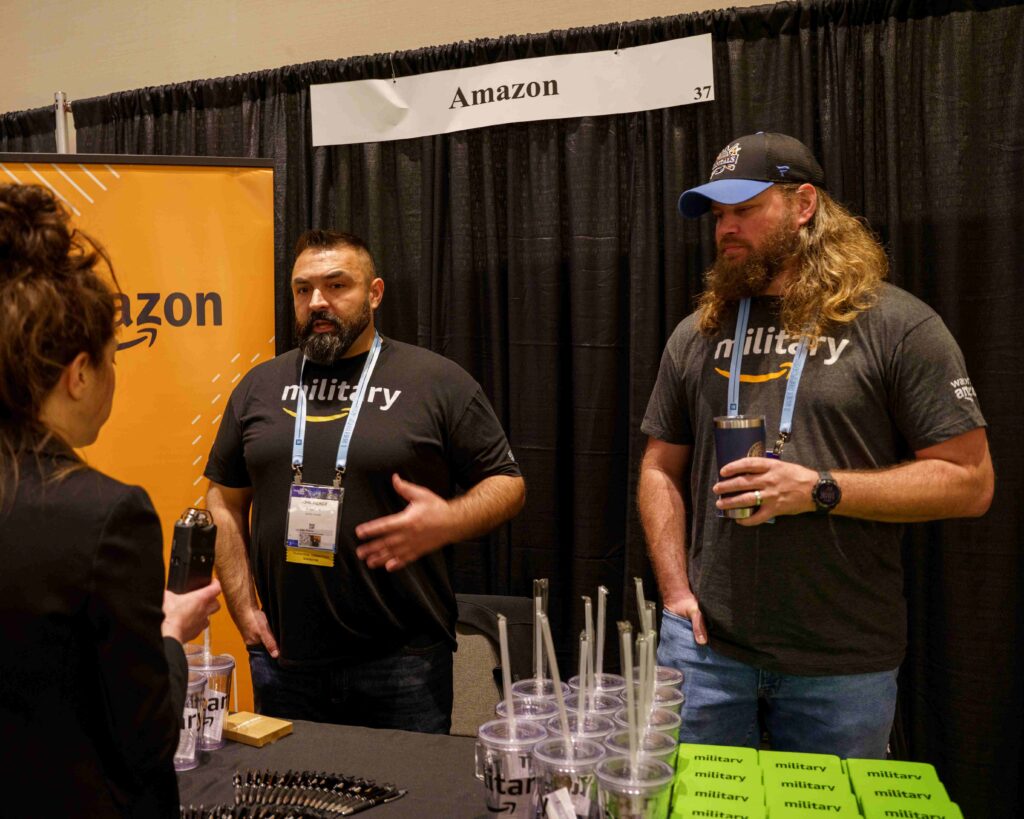
Amazon, a regular Sea-Air-Space participant, have pledged to hire 100,000 transitioning service members, veterans, and spouses over the course of five years, said representatives John Pierce and Matt McGury. “As transitioned service members and advocates, we’re here to help answer questions [and] give guidance,” said Pierce. He also stressed that many of the roles at Amazon are a good fit because they utilize similar skill sets. “A lot of our data center positions are cleared facilities […] operations mission critical facilities, very similar for military individuals. The skill sets that they offer work very well within our teams and the jobs that we have,” Pierce said.

Laura Hatcher, a 31-year Navy veteran turned photographer, wasn’t at the event to hire, but to provide professional headshots to attendees at no cost. “This is my second career, and the majority of my clients are transitioning veterans, because that’s what I went through,” Hatcher said. “I understand it. And I love these kinds of events, mainly because you get to stay in the community and [help] a lot of people that are looking for jobs,” she said.


HII Dedicated to STEM

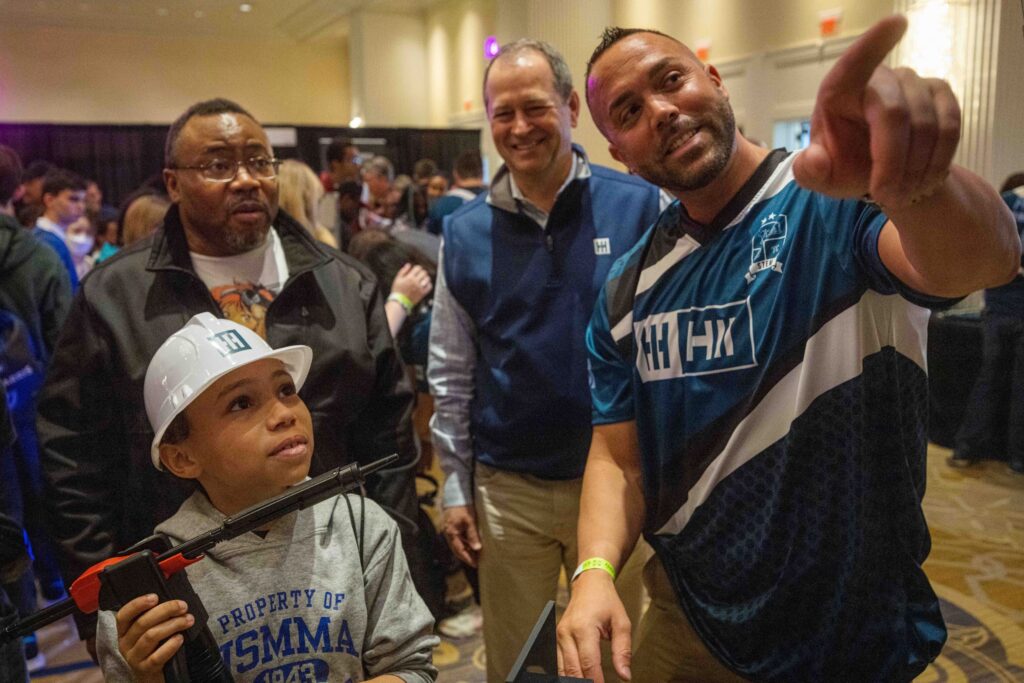
Amidst a maze of colorful exhibition booths, a bustling stream of kids and parents explore cutting edge tech, including 3D printers, tablet-controlled robots, rocket testing stations, and hands on (literally!) electricity experiments.

America’s largest shipbuilder, HII, is at the center of it all with a huge variety of interactive exhibit stations and lots of smiles from their enthusiastic staff. Grant Ronquillo and Kelsie Rountree (mechanical engineer and trade school coordinator for HII, respectively) both talked about the fun being at the Navy League Expo, grinning as they watched kids learn how to weld in a virtual reality simulator.

President and CEO of HII, Chris Kastner, also spoke with Seapower about HII’s dedication to STEM, including a rigorous internship program. “We have a good conversion rate from our interns, especially our technical interns, because we actually give them real work to do when they come into the company,” he said. “They’re not just doing busy work.”

But ultimately, HII’s focus is on the benefit to the larger community.

“If we don’t invest our communities, in STEM, and make sure we have technical talent that can work in the shipyards, then we’re not doing the right thing for the community,” said Kastner.


Building a City

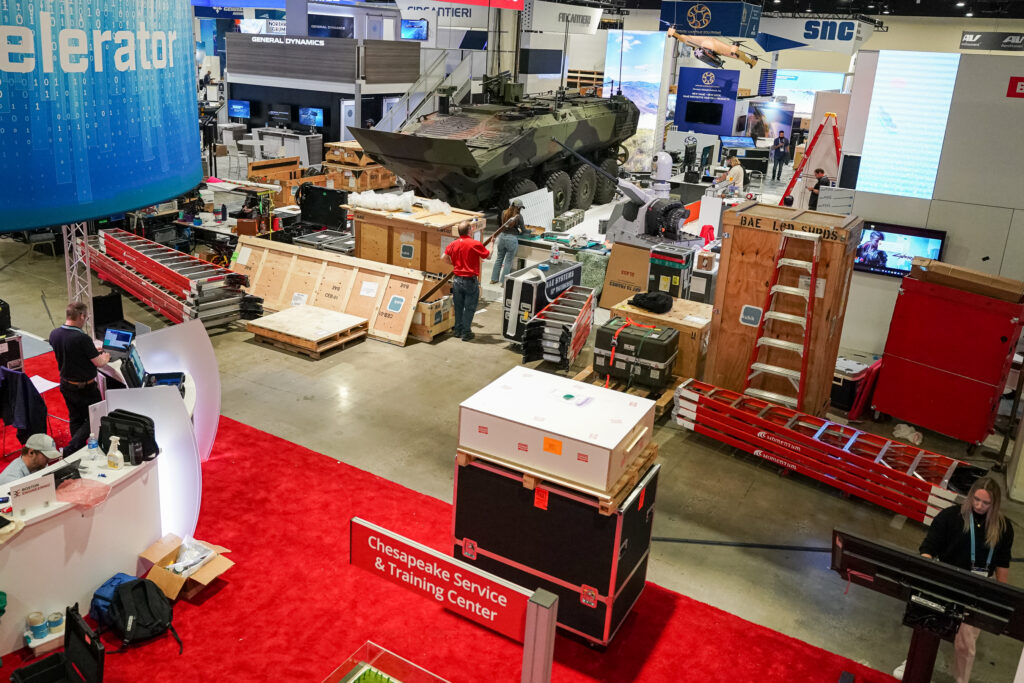
The Exhibit Hall under construction.

Armchair experts and motivational speakers the world over are fond of saying that Rome wasn’t built in a day. Less an historical account of Roman expediency, the saying is meant to convey the idea that great things take time. Civilizations don’t happen overnight. And certainly, building a city represents a commitment to an idea.  

The sprawling city you see before you here at Sea-Air-Space 2023 also wasn’t built in a day. But close. It took three. 

Last Thursday, these exhibit halls were empty shells. Footsteps rang across football-field expanses, voices echoed, and dust motes — not bands — played in ballrooms. We got to work. Everyone, from Navy League staff to contractors and vendors, to exhibit builders, to operations and logistics experts rolled up their sleeves and began the process of turning nothing into something. And not just any something, but something amazing. 

The exhibition booths themselves are an incredible feat on their own. They showcase possibilities, and in many cases, fantastic realities of technology and innovation that will bulwark our sea services and support their missions in the years to come. The panel discussions and other events are built as well, and not only with the physical infrastructure of microphones, lights, speakers, and chairs. Our Navy League team built these events with dedication, with people, and with a commitment to an idea.  

Our idea is this: What if we amass the best and brightest together for three days once a year, put our collective heads together, and create real solutions that affect the viability of our seapower. What if we change our world. What if.  

Welcome to our city.  


Q&A with Naval Supply Systems Command

Seapower magazine interviews Vice Commander Kurt J. Wendelken 

What are the roles of the Naval Supply Systems Command? 

  1. NAVSUP and the Supply Corps conduct and enable supply chain, acquisition, operational logistics and Sailor & family care activities with our mission partners to generate readiness and sustain naval forces worldwide to prevent and decisively win wars. 

How is the era of great power competition affecting NAVSUP’s roles and responsibilities? 

  1. As Navy’s end-to-end supply chain integrator, NAVSUP is working hard to maximize efficiencies and effectiveness in Navy’s supply chains. One major initiative is Naval Sustainment System-Supply (NSS-S). Naval Sustainment System (NSS) is a combination of commercial best practices, process improvements, governance and oversight to maximize efficiencies and effectiveness within available means. NSS-Supply embraces industry best practices tailored for specific Navy needs and fleet operations in order to reduce maintenance turnaround times, increase end-to-end velocity of spares, repairs, and reduce costs.   

Why does the Navy’s supply chain need the transformation of the Naval Sustainment System-Supply? 

  1. NSS-Supply seeks to strengthen Navy’s supply chain in order to increase readiness, thus enhancing combat capability and creating a model of sustainment that will allow the Navy to effectively generate readiness and sustain global navy power. 

How does NAVSUP fit in the Navy’s push for more distributed maritime operations and in the Marine Corps’ expeditionary advance base operations? 

  1. Combined with the most robust, end-to-end logistics doctrine that the world has ever seen, NAVSUP provides uninterrupted (despite contested environment) supply chain management, bulk and aviation fueling capability, material handling equipment, contracting, hazardous material management, household goods and vehicle processing and postal operations to fleet, installation and other service components throughout every area of operations. 

How will management of the supply chain be more integrated and streamlined with the warfighting commands? 

  1. By extension, NSS-Supply embraces industry best practices tailored for specific Navy needs and fleet operations in order to reduce maintenance turnaround times, increase end-to-end velocity of spares, repairs, and reduce costs. 

What major segments of the supply chain are not owned by NAVSUP? How does the Defense Logistics Agency’s roles compare with those of NAVSUP? 

  1. NAVSUP and the Supply Corps conduct and enable service specific supply chain, acquisition, operational logistics, and Sailor & family care activities with our mission partners to generate readiness and sustain naval forces worldwide to prevent and decisively win wars. The Defense Logistics Agency is the DoD executive agent for specific classes of supply that are common across the military services like food, fuel, construction material, and medical supplies. They also provide extensive warehousing services across DoD.  

What are that current challenges that NAVSUP faces with the defense industry in executing the supply chain? 

  1. Executing an effective naval supply chain is increasingly challenging, in part due to the Defense Department’s pressure on industry to become lean. We now face raw material shortages, weapon systems obsolescence, a shrinking skilled labor pool, excessive acquisition lead times, and a dwindling sub vendor base with a heavy reliance on sole source vendors. Maintaining our current warfighting edge requires better collaboration and transparency with industry. We need to invest in sustainment up front, consider where prepositioning materials makes sense, and work better to reverse the current trends deteriorating material lead times. 

What new technologies look promising in aiding NAVSUP in streamlining the supply chain? 

  1. NAVSUP manages Navy’s globally distributed, highly complex, and increasingly digital supply chains. LOG IT and Supply Chain systems are critical enablers in generating and sustaining readiness. NAVSUP is proactively taking steps to deliver modern digital solutions that support real-time operations to include system modernization, leveraging internet of things (IOT) technology and machine learning/artificial intelligence to improve asset visibility. 

What can be done to expand competition among suppliers? 

  1. NAVSUP contracting offices attempt to enhance competition through early outreach in an effort to identify as many potential sources as possible. The use of Industry Days is also a popular method among NAVSUP contracting offices for specific types of procurements, such as ship repair or husbanding. These are established days where potential sources are invited to attend and learn as NAVSUP provides guidance on doing business with the government. This is a way to ease private sector concerns and generate interest. 

What can the defense industry do to help the Navy improve its supply chain? 

  1. Just as the Navy has incorporated a “Get Real, Get Better” mantra, so we ask industry to embrace the same. We are all working towards a collective goal of supporting national defense, and it is imperative to operate with transparency and honesty, not distrust. Short-term, be accurate with contract schedules and deliver on time in accordance with contractual commitments. Increase the number and scope of strategic contracts to help offset material, labor, and financial stressors.  Long-term, deepen the partnership with the Navy to create a more effective sustainment environment earlier in weapons system development. With more agility and cooperation, we can identify, plan, and overcome supply chain barriers to better support our fleet, which is the ultimate goal. 


Navy Orders Third Lot of Next-Generation Jammer Pods

***** 

ARLINGTON, Va. — The U.S. Navy has placed an order with Raytheon for the third lot of ALQ-249 Next-Generation Jammer-Mid-Band (NGJ-MB) pods.

The Naval Air Systems Command awarded a $650 million fixed-price incentive (firm target) and cost-plus-fixed-fee contract to Raytheon, “for the production and delivery of low-rate initial production (LRIP) Lot III Next Generation Jammer (NGJ) Mid-Band (MB), to include 15 NGJ-MB LRIP ship sets (2 pods per ship set), 11 for the Navy and four for the government of Australia,” a March 30 Defense Department contract announcement said. 

The contract also includes “associated spares, support equipment, non-recurring engineering and associated data.” 

The NGJ-MB is a portion of the overall NGJ program that will replace the legacy ALQ-99 jamming pods on board the EA-18G aircraft. When the NGJ is combined with the EA-18G’s comprehensive suite of radar and communications receivers, electronic warfare officers can detect, analyze and react to current and future threat systems. 

Raytheon delivered two production-representative NGJ-MB pods to the Navy’s Airborne Electronic Attack Systems Program Office (PMA-234) pod shop in July 2022 where they were used for testing.  

Initial operational capability of the NGJ-MB was scheduled for fall 2023, according to information obtained in 2022.   


Congressman Questions Navy’s Delay in Super Hornet Contract

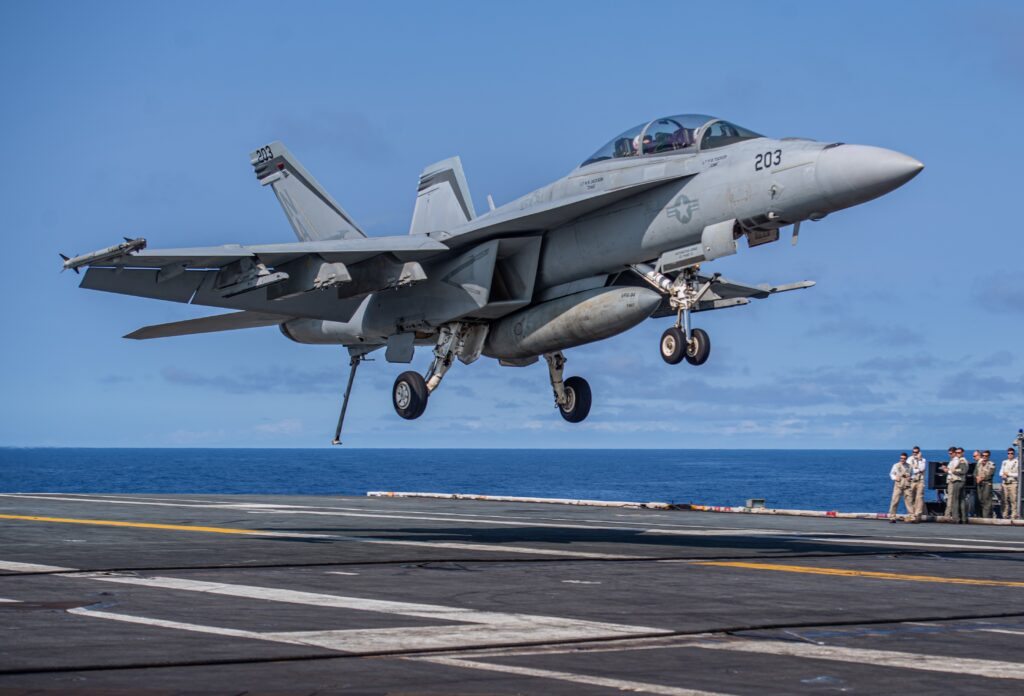
PHILIPPINE SEA (March 21, 2023) An F/A-18F Super Hornet from the “Mighty Shrikes” of Strike Fighter Squadron (VFA) 94 approaches for an arrested landing aboard the aircraft carrier USS Nimitz (CVN 68). Nimitz is in U.S. 7th Fleet conducting routine operations. U.S. 7th Fleet is the U.S. Navy’s largest forward-deployed numbered fleet, and routinely interacts and operates with Allies and partners in preserving a free and open Indo-Pacific region. (U.S. Navy photo by Mass Communication Specialist 2nd Class Justin McTaggart)

***** 

WASHINGTON — The delay in the Navy’s award of a contract for the service’s final procurement of 20 F/A-18E/F Super Hornet strike fighters is exacerbating the service’s strike fighter shortage, a congressman said, and is reducing the Navy’s future warfighting capacity. 

Rep. Mike Garcia, R-California, a former Navy F/A-18 pilot and a member of the House Appropriations Committee’s defense subcommittee (HAC-D), questioned Navy Secretary Carlos Del Toro about the delay in a March 29 hearing. 

Garcia said the Navy currently is, “effectively two air wings short [of strike fighters] over the next 10 years” which will not be resolved until 2031. 

The congressman noted that the 12 Super Hornets approved in fiscal 2022 and the eight approved in fiscal 2023 are not yet on contract. He noted that there are discussions between the Navy and Boeing, the Super Hornet’s manufacturer regarding the technical data package for the aircraft. 

Data Package Negotiations 

“The Department of the Navy is committed to putting on contract those 20 additional F/A-18E/Fs,” Del Toro said. “In fact, we’ve extended an RFP [Request for Proposal] to the Boeing Corporation. They have told us that they will come back to us with a proposal sometime in the June time frame. In the meantime, what we’re trying to actually do is to ensure that Boeing does deliver to us the data rights are essential for us to be able to in the future maintain and repair those aircraft. 

“And what I’m most concerned about, Congressman, is that if we do actually get into a conflict with China, we’re not going to be able to send those aircraft back to the continental United States to get repaired at a manufacturing plant,” he said. “We’re going to have to repair those things ourselves. Which means the government — we need on behalf of the American people and our service members the data rights — the full data package that we paid for and deserve to have in order to be able to repair and sustain those aircraft in combat. That’s our major concern. […] Our engineers are meeting with their engineers to get the full definition of what the data package actually calls for.” 

Del Toro also said he instructed the respective general counsels to meet to have parallel discussions on the issue. 

Get the Jets Delivered 

Garcia noted his own experience on the warfighting side and the defense contracting side and that he has read Super Hornet contracts specifically. 

“I would submit that I agree with you the Navy has a requirement to maintain and repair and the tech data package to support that, not to manufacturing, and there is a clear bifurcating line there,” he said. “You are calling right now an IP [intellectual property] that is not within the government’s domain. Boeing has been very supportive in the SLM [F/A-18E/F Service-Life Modernization] projects and making sure that the FRCs [Fleet Readiness Centers] — the O-level depot maintenance is actually functional. 

“And I would submit that the IP that you’re calling for right now — the manufacturing know-how, which is not only Boeing but their entire supply chain is not nearly as valuable in closing the strike fighter as the 20 jets,” Garcia said. We have mandate — it’s not formal, but we should — to be ready for something in 2025. Closing the gap in 2023 (sic) would be interesting, but your gap by that point will be significantly higher because our carriers will be schwacked, our air wings will be missing, and our warfighters will be dead. 

“I think this conversation between the lawyers and the contracting officers is screwing the customer,” Garcia said. “The customer is the warfighter, the customer is the taxpayer, and I implore you sir, with all the power and levers at your disposal, to compartmentalize this IP conversation, get these jets so they can get delivered. They’re already going to be late. I don’t know if we’re going to get 20 for the amount of money that we allocated at this point.”