General: Marine Corps Future Force to Include VTOL Family of Systems 
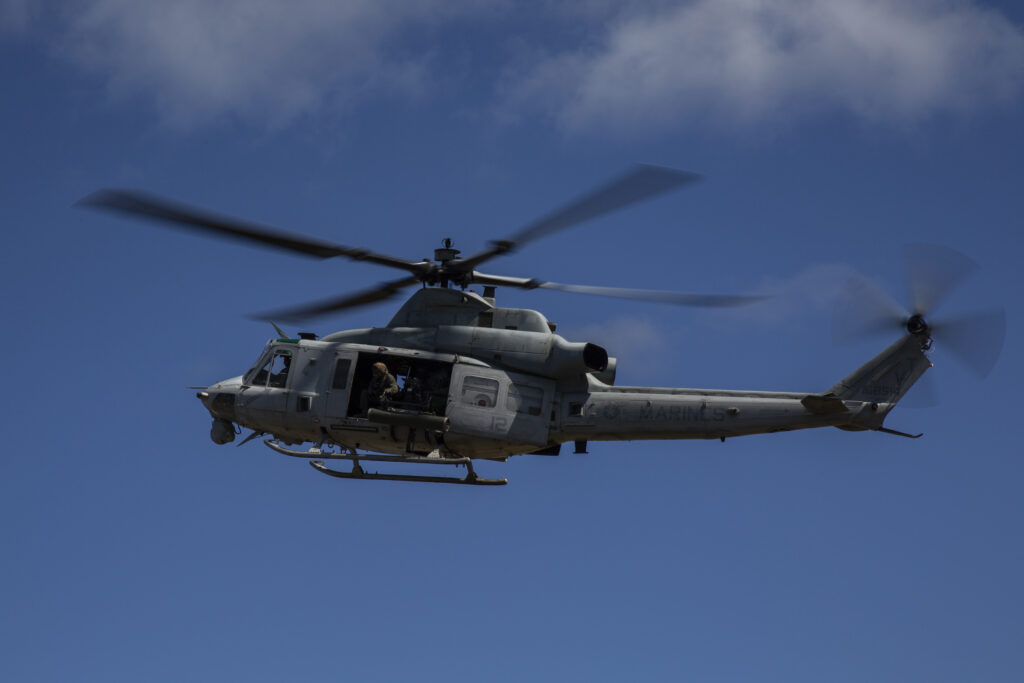
A U.S. Marine UH-1Y Venom helicopter prepares to land at a forward arming and refueling point at Marine Corps Base Hawaii on Feb. 3. Marine Corps plans to replace its rotary wing aircraft is evolving into a concept called VTOL family of systems. U.S. MARINE CORPS / Cpl. Dalton J. Payne

ARLINGTON, Va. — The U.S. Marine Corps’ plan to develop future replacements for its rotary wing aircraft is evolving to a concept called VTOL FOS, or vertical takeoff and landing family of systems, a senior Corps aviation official said. 

Brig. Gen. Matthew Mowery, assistant deputy commandant for aviation, speaking Feb. 9 at the National Defense Industrial Association’s Expeditionary Warfare Conference, said the Corps’ plans to replace its AH-1Z and UH-1Y helicopters in the future has evolved over several iterations over the past few years, especially as Commandant Gen. David Berger’s Force Design 2030 was introduced. 

Mowery said the initial effort was centered on involvement in the Army’s Future Vertical Lift program, specifically its Capability Set 3. As the various services branched out, the Marine Corps’ effort became the Attack-Utility Replacement Aircraft, or AURA. 

Mowery said the Corps “started thinking differently” about the AURA with the emergence of Force Design 2030, and now has folded AURA into the VTOL FOS. The data generated from the Marine Corps’ Future Vertical Lift analysis of alternatives, which concluded in 2019, laid the groundwork for analysis and to develop the capability development document. The Marine Corps issued a request for information in September 2019 and a “broad agency announcement for the introduction of advanced technologies in model-based systems engineering and condition-based maintenance in 2020,” the Corps said in information provided to Seapower.  

The VTOL FOS program “will develop a weapon system or systems that fills capability and performance gaps identified by the Marine Corps,” the Corps told Seapower in November 2021. “The VTOL family of systems will be designed for optimal manning and for manned-unmanned teaming with the MAGTF [Marine Air-Ground Task Force] Unmanned Aircraft System Expeditionary capability. Additionally, it will include a common mission system architecture to enable interoperability across the MAGTF. The Marine Corps’ driving requirement is attached escort in tomorrow’s battlespace during distributed expeditionary operations from the sea. Speed, maneuver envelope, all-weather capability and survivability will facilitate full integration of this aircraft into the MAGTF. To meet these goals, the VTOL family of systems will operate above legacy helicopter performance attributes like airspeeds, combat range, altitude and endurance with a full payload.  

“The VTOL family of systems program will require a comparable mission radius and loiter time to match MV-22Bs, as well as time on station to support distributed air combat element operations,” the Corps said. “The VTOL family of systems will have a greater capability to employ a more diverse set of weapon systems and operate in a larger spectrum of environments by using fused, onboard sensor data and terrain avoidance systems. Amphibious operations and shipboard compatibility will be a key attribute to this air vehicle.” 


Admiral: ‘Urgency’ Needed in Fielding of New Systems 

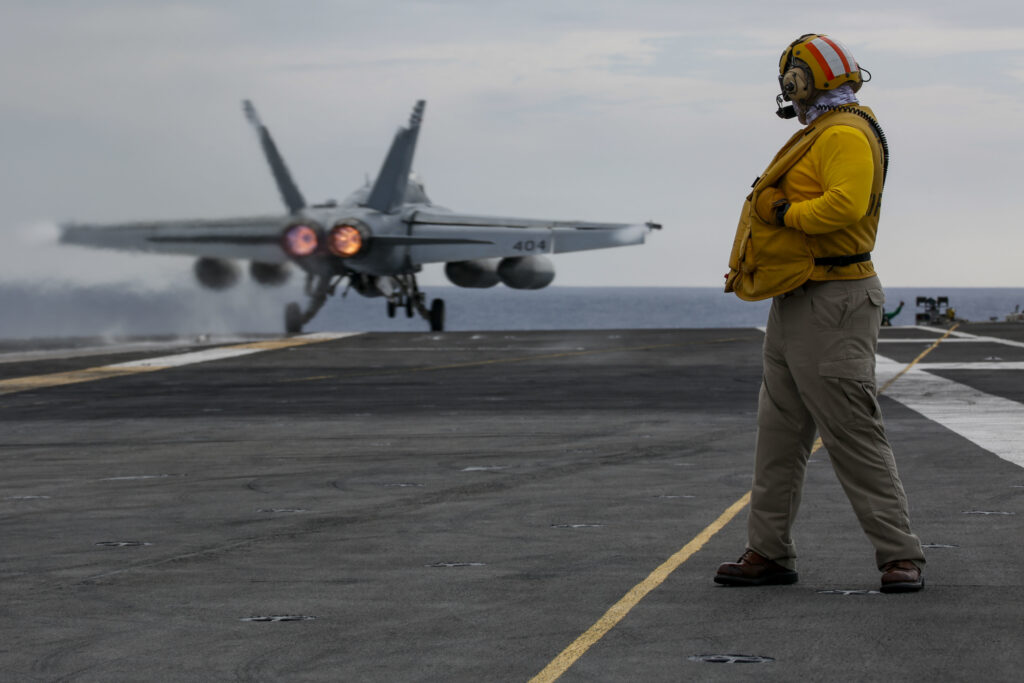
Lt. Stephen Yaccarino observes an F/A-18E Super Hornet, assigned to the “Vigilantes” of Strike Fighter Squadron (VFA) 151, launch from the flight deck of the Nimitz-class aircraft carrier USS Abraham Lincoln (CVN 72) on Feb. 8. U.S. NAVY / Mass Communication Specialist 3rd Class Michael Singley

ARLINGTON, Va. — The current world geo-political climate is evidence of the need for urgency in the fielding of new systems, a Navy program executive officer said. 

“It shouldn’t take 18 months to get [a new system] on contract; it should take 90 days,” said Rear Adm. Shane Gahagan, the Navy’s program executive officer for Tactical Aircraft Programs, speaking Feb. 9 at the National Defense Industrial Association’s Expeditionary Warfare Conference. 

Gahagan discussed several ongoing and future programs such as a replacement for the MH-60 helicopters; the Next-Generation Air Dominance program to replace the FA-18E/F Super Hornet strike fighter; the fielding of the Block III of the F/A-8E/F, and the life-extension program for the F/A-18E/F.  

“The pressure is the idea to pull all that to the left,” he said, stressing the need to accelerate development and field systems sooner in order to counter the rapid development weapons and other systems by potential adversaries such as China and Russia. 


Analysts: Navy’s LAW Shipbuilding Program Must Resist Requirements Creep 

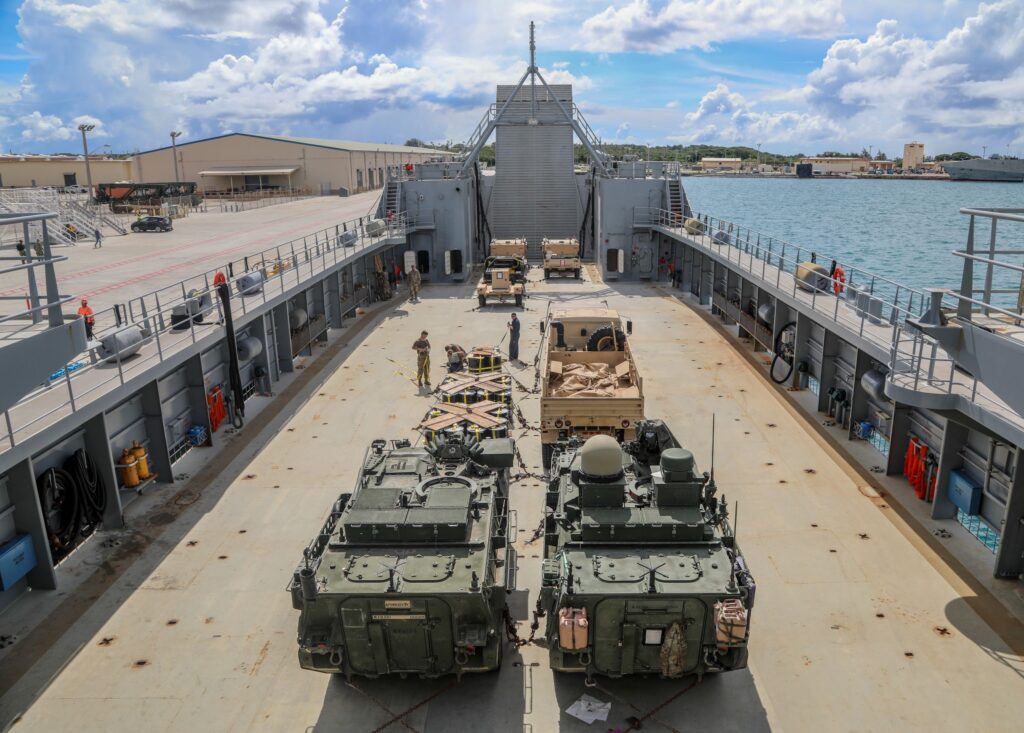
The crew of U.S. Army logistics support vessel Lt. General William B. Bunker (LSV-4), loaded equipment and supplies on LSV-4 in Guam in July 2021 for theater distribution operations in support of Defender Pacific 2021. Some call for the LSV to be used as a bridge to the Navy’s planned light amphibious warship. U.S. ARMY / Staff Sgt. Kevin Martin

ARLINGTON, Va. — The U.S. Navy’s program to build a force of light amphibious warships faces challenges, including an uncertain amphibious warfare fleet force structure requirement and a risk of requirements creep, according to analysts.

Eric Labs, senior analyst for Naval Forces and Weapons, Congressional Budget Office, and Ron O’Rourke, naval affairs analyst for the Congressional Research Service, spoke Feb. 8 at the National Defense Industrial Association’s Expeditionary Warfare Conference, addressing Navy shipbuilding plans with a focus on amphibious warfare ships.

The Navy, in response to the need of the Marine Corps for a large number of smaller amphibious warfare ships for distributed maritime operations and expeditionary advance base operations, is planning to design and build the light amphibious warship to augment the amphibious lift fleet. The LAW would be able to beach and discharge Marines and their vehicles on a shore. 

Labs pointed out that the future of amphibious forces is “facing challenging times for the next five years,” and finds that there is “no natural constituency” for the LAW. 

Labs said the number of LAWs needed by the fleet has not been refined. Recent shipbuilding plans, he pointed out, have variously assumed a build range of 24-35 LAWs. The requirement for large and medium-sized amphibious warfare ships — amphibious assault ships (LHA/LHDs) and amphibious transport dock ships (LPDs) — is no longer 38 ships, but over the last year variously is said to be 24 to 32 ships. The Navy has not provided to Congress a 30-year shipbuilding plan for two years. 

O’Rourke warned against requirements creep that could increase the cost of the LAW program and threaten the Navy’s estimate of a LAW’s cost of $130 million to $150 million. 

“The LAW represents an effort to break that price trend,” O’Rourke said. 

He noted the success of the Arleigh Burke-class guided-missile destroyer (DDG) in its beginnings, when the Navy determined to build five DDGs in one fiscal year, designing ships not just with capabilities in mind but also with numbers of ships in mind, and was able to meet its goal of five in one year.  

O’Rourke noted there is some pushback in Congress about the LAW concept because of concerns about the survivability of the ship and of the ability to resupply Marines inside an island chain where the Marines would be delivered. 

O’Rourke also noted a suggestion as an option that a small number U.S. Army’s logistic support vessels — similar in size to that envisioned for the LAW — be used as surrogates for the LAW, as a bridge to the LAW. The Army LSVs are equipped with a bow ramp to discharge vehicles on shore.  


Rep. Luria: Congress Needs Frank Budget Requirements from Navy — and Consequences of Not Funding Them  

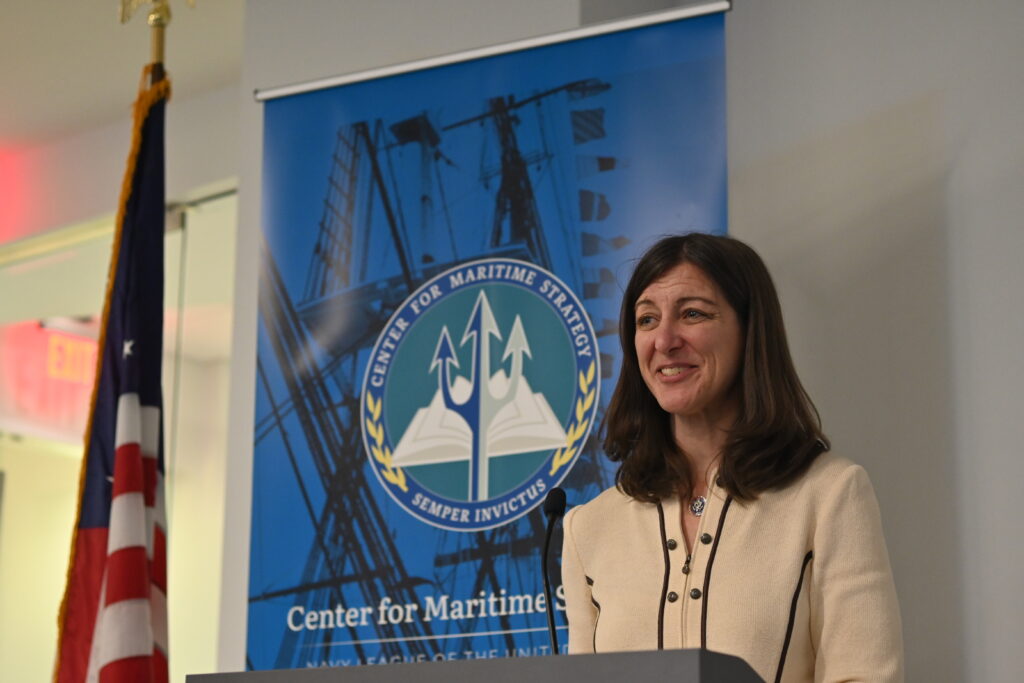
Rep. Elaine Luria (D-Virginia), speaking at the Jan. 31 ribbon cutting for the Center for Maritime Security. NAVY LEAGUE / Brett Davis

ARLINGTON, Va. — The Navy needs to be frank in telling Congress what it needs to meet its warfighting requirements in the National Defense Strategy and the consequences if requirements are not funded, the vice chair of the House Armed Services Committee said Feb. 7.  

“As a member of Congress, what do we want to hear? We want the services to come to us and essentially say, ‘This is what we need, this is why, and — most of all — this is the risk of not doing it,’” said Rep. Elaine Luria, (D- Virginia), deputy chair of the HASC, in a conversation with the Hudson Institute’s Bryan Clark. “And that is a portion of what is not being communicated.  

“It’s like a shell game,” Luria said. “The Navy comes to us and says, ‘We only want to build one DDG this year,’ but the other DDG is on your unfunded list?”  

She said Congress needs to know the risks of not funding budget requirements. 

“Then it is on Congress to make a decision about the risk of not doing those things,” she said. “It is never articulated. It shouldn’t be up to Congress to say to the Navy, ‘Hey, we really want to give you more,’” she said. 

“It’s all backwards,” Luria said. “There should be a strategy, the strategy drives the requirements, the requirements drive the POM [Program Objective Memorandum], the POM [becomes] the budget.” 

Luria, a retired Navy nuclear-trained surface warfare officer, said she watched recordings of the testimony before Congress during the 1980s of then-Navy Secretary John Lehman advocating his Maritime Strategy and a 600-ship Navy. 

“Essentially, where the discussion led [was], ‘This is what we need — that equals 600 ships — and here’s the risk of not doing that,’” she paraphrased Lehman as saying.  

“That’s not being communicated in that way [today],” noting that things like 30-year shipbuilding plans are not “put into context, what that means, what presence delivers, and what deterrence that equates to with regard to China potentially trying to take Taiwan by force. It’s not being communicated in a way that’s compelling.  

“There is a lack of a maritime strategy, and it is important to understand what the strategy is,” Luria said. “I think the previous administration had a good focus on what needed to be done. … We’re kind of starting over again without really understanding what the future of the fleet looks like.”  

Luria questioned the integrated deterrence concept of the current administration as not something new, but a “just the newest buzzword. Has anyone clearly defined what it is?” 

The lawmaker said for deterrence, “you actually have to have deterrence — you have to have the forces.” 

She has been critical of Navy plans to “divest to invest,” noting the investments are frequently short-changed, resulting, for example, in “two decades of lost shipbuilding opportunities.” 

Luria affirmed that more budget resources “need go to the Navy and the Air Force because that’s the nature of the [Pacific] theater.”   


Rear Adm. Okano: Modern Sensors Making Navy Ships ‘Data-Providing Monsters’ 

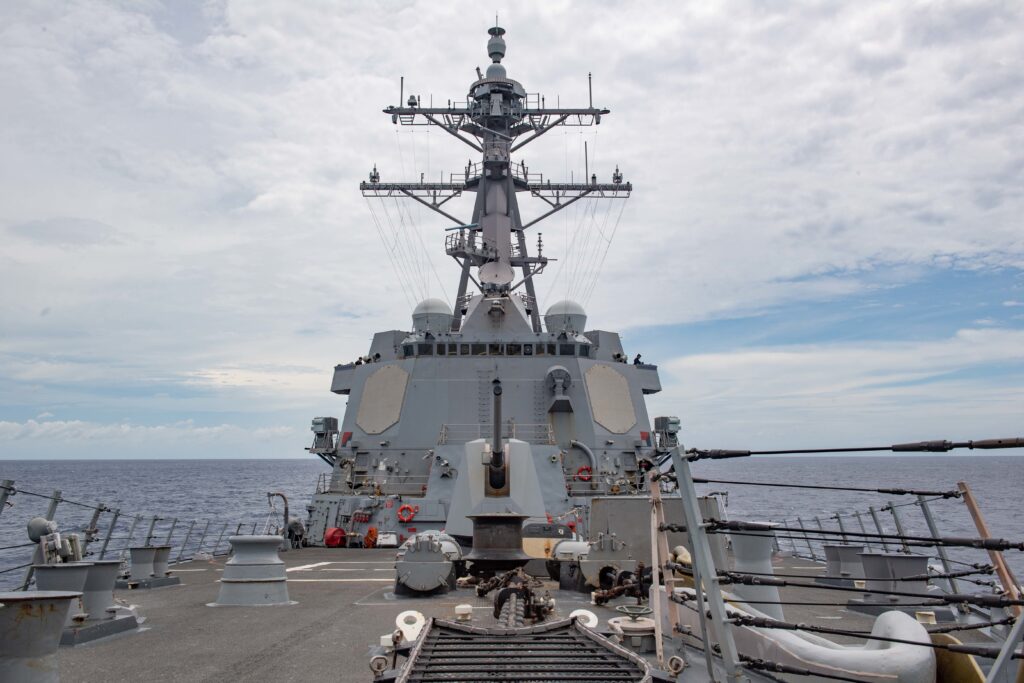
Arleigh Burke-class guided-missile destroyer USS Pinckney (DDG 91) transits the South China Sea in July 2021. Surface Electronic Warfare Improvement Program Block 3 is being installed on Pinckney, giving it an electronic attack capability. U.S. NAVY / Mass Communication Specialist 2nd Class Jeffery L. Southerland

ARLINGTON, Va. — Sensors on naval platforms are becoming multi-purpose — some even weapons — and are making the U.S. Navy’s surface ships the most data-rich platforms in the Department of Defense as their sensors become part of an analog-to-digital transformation, a senior Navy program executive said.  

Noting the amount of data that comes from modern surface-ship sensors, Rear Adm. Seiko Okano, program executive officer – Integrated Warfare Systems, speaking Feb. 3 during the Combat Systems Symposium conducted by the American Society of Naval Engineers, said the amount “is absolutely incredible. … Our surface ships are the most data-rich platforms ever. … We are data-providing monsters.” 

She noted that each array face of the SPY-6 radar for the Flight III Arleigh Burke guided-missile destroyer (DDG) is producing terabytes per minute of data. 

“We’re right now not digesting that to its full capacity,” she said. “We’re doing with that what we did 40 years ago, … which is why we’ve got to invest in digitizing our fleet and the power of AI/ML [artificial intelligence/machine learning]. There’s so much capability we’ve got to unleash from those sensors alone. 

“We’ve shifted to this digital era,” Okano said. “Where before, your hardware and software were really tightly coupled … now it is all software-programmable. And that’s the world we’re living with SEWIP [Surface Electronic Warfare Improvement Program], Aegis, SPY-6 and our sensors right now, which allows us to change and adapt a lot faster than we ever had before.” 

Okano pointed to examples of radars such as the SPS-48 and SPS-49 search radars as single-purpose sensors. The trend now, she said, is “we’re going multi-mission. These sensors are no longer just used for air search or surface search. 

“Are we really unleashing the power of what we are putting on board ships?” she asked. “Our infrastructure isn’t one that really we can manipulate that sensor to do whatever we want. We’re already behind the power curve.”  

The admiral noted new sensors “are absolutely fantastic and they are only getting more powerful.” 

She noted SEWIP Block 3 [SLQ-32(V)7] is being installed on the Arleigh Burke-class DDG USS Pinckney. This SEWIP block has an electronic attack capability.  

“Sensors [are] becoming weapon systems,” Okano said. “You’re both sensing and you’ve got a capability to react as well. [That] is the world we’re getting into.” 


First MQ-4C Triton with Multi-Intelligence Upgrade Delivered to the Navy 

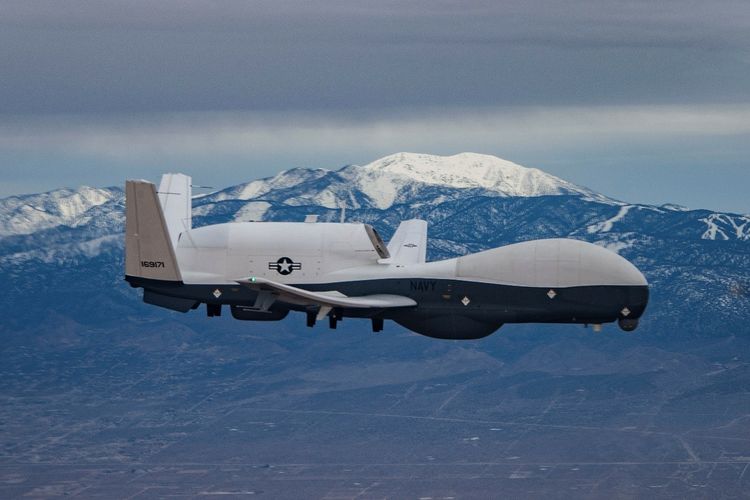
A Northrop Grumman Corp. MQ-4C Triton takes to the skies over the California desert as the Triton low-rate initial production schedule progresses. Known as B8, this is the first production Triton to be upgraded to the multi-intelligence configuration to meet the Navy’s critical maritime intelligence, surveillance, reconnaissance and targeting needs. B8 was delivered to Naval Air Station Patuxent River, Maryland, on Feb. 1.

ARLINGTON, Va. — The first production MQ-4C Triton unmanned aerial vehicle to be upgraded to the multi-intelligence configuration was delivered to the U.S. Navy at Naval Air Station Patuxent River, Maryland, on Feb. 1, Northrop Grumman said in a release. 

The MQ-4C’s new configuration Integrated Functional Capability Four is designed to bring an enhanced multi-mission sensor capability as part of the Navy’s Maritime Intelligence, Surveillance, Reconnaissance and Targeting transition plan.  

The Triton, designated B8 by the manufacturer, Northrop Grumman, went through a 30-month modification period to the new configuration.  

The two MQ-4Cs currently deployed to Guam for the U.S. 7th Fleet’s Task Force 72 by Unmanned Patrol Squadron 19 (VUP-19) as part of the early operational capability deployment are in the baseline IFC-3 configuration.  

The Triton in the IFC-4 configuration is designed to complement the Navy’s P-8A Poseidon maritime patrol aircraft and eventually will enable the Navy to retire its EP-3E Orion electronic reconnaissance aircraft. The initial operational capability for the Triton will be declared in 2023 when IFC-4-configured Tritons are deployed in one complete orbit. The Navy plans to deploy Triton to five orbits worldwide. 


Vice Adm. Hill: MDA Pushes Space-Based Sensor for Tracking Hypersonic Missiles for Fleet Defense 

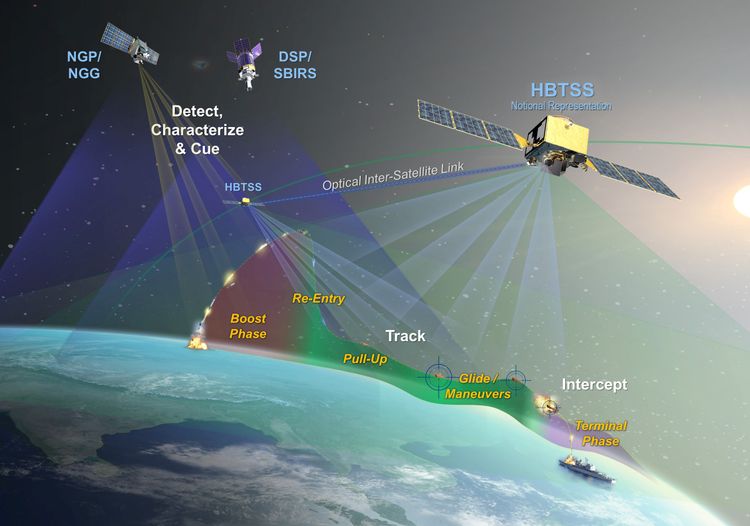
A graphic illustrates how Hypersonic and Ballistic Tracking Space Sensor satellites would provide continuous tracking and handoff to enable targeting of enemy missiles launched from land, sea or air. NORTHROP GRUMMAN

ARLINGTON, Va. — With hypersonic missiles emerging as a serious threat to U.S. Navy ships, the Missile Defense Agency is focused on the use of a space-based sensor for hypersonic regional defense to provide tracking of both hypersonic and ballistic missiles all the way to hand off to the terminal phase.  

The MDA has been designated the Defense Department’s executive agent for defense against hypersonic missiles. 

“It’s going to maneuver and come in at a high velocity,” said Vice Adm. Jon Hill, speaking Feb. 2 during the Combat Systems Symposium conducted by the American Society of Naval Engineers, noting the challenge of defeating hypersonic missiles. 

Hill said that tracking of a hypersonic missile in flight will be the job of the Hypersonic and Ballistic Tracking Space Sensor, a satellite with sensors to detect and track hypersonic missiles. Defense against the missiles in the terminal phase would be the job of the ship-based Aegis Combat System and Standard surface-to-air missiles. 

Hill said of hypersonic missiles that with existing sensors “we’re seeing them, we’re capturing data, we’re collecting on them, though noting that the U.S. sensors are “not always in the exact right place, because many of them are land-based and stationary because sensors are purpose built for a particular part of the battlespace. 

“We have that and the SM-6 missile with its nascent capability to take on a hypersonic [missile],” he said. “We didn’t call it that back when we got the letter from the CNO [chief of naval operations] to go develop this program. But the whole idea was to handle high-speed maneuver. [The SM-6] is really the nation’s only hypersonic defense capability.” 

“We can do warning today on hypersonics, so we’re not at zero,” he said. 

“We’re going to take those first hypersonic tracking space-based sensors in coordination with the U.S. Space Force and we’re going to get them on in orbit,” he said. “That’s through a competitive process and we’re really excited about that. We did so much risk-reduction on the ground we’re absolutely confident that those sensors are going to deliver what we need when we put them up.” 

The admiral said terminal defense is necessary but not sufficient to defeat hypersonic missiles. 

“We’re going to leverage space cueing and fire control from space because, to handle maneuvers across the globe, you’ve got to look down” he said. “Field of view is limited from radars and we’re running out of islands to put radars on. 

Under the concept, the HBTSS would detect a missile’s launch and the separation of the first and second stages of the rocket motors. The satellite’s data is continuously relayed and is used to create a track of the hypersonic glide vehicle. The remote track data passed via satellite to an Aegis ship to compute an intercept with a glide-phase interceptor.  


Official: Navy Interested in Moving Away from Towed Sensors for USVs 

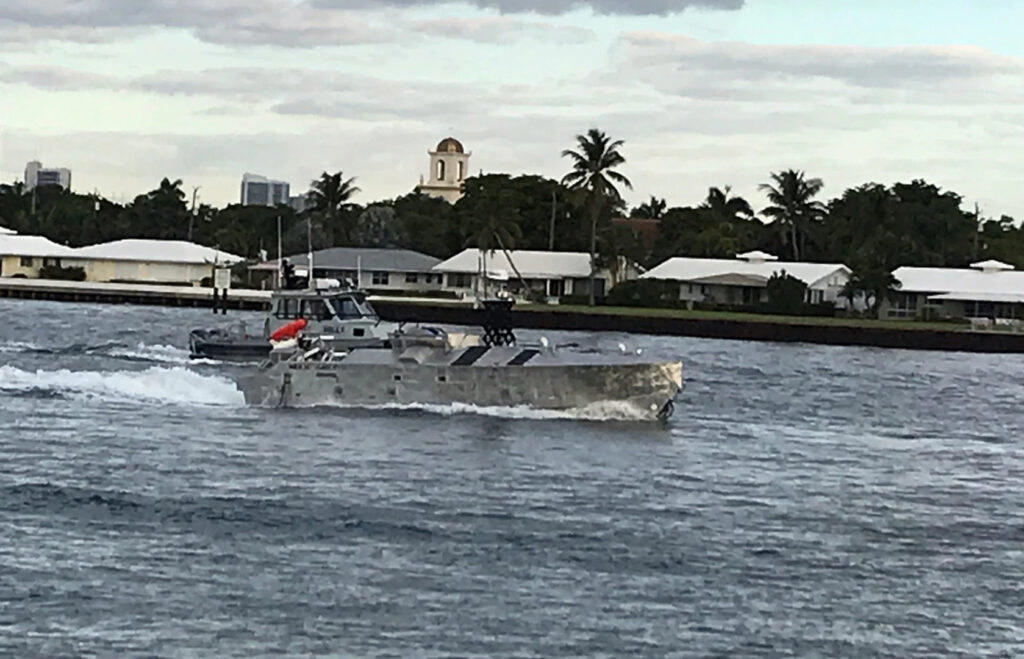
The Mine Countermeasures USV heads out for an operational assessment in this November 2019 photo. U.S. NAVY

ARLINGTON, Va. — The use of towed sensors provides a measure of survivability for small unmanned surface vessels but presents other problems such that the Navy is looking to move away from towed sensors in favor of onboard sensors, a Navy official said. 

The Navy is soon to award a production award for the Textron-built Mine Countermeasures USV, equipped with the Unmanned Influence Sweep System, a towed sensor, said George Saroch, director for unmanned surface vessels at Naval Sea Systems Command, speaking Feb. 1 during a panel discussion at the Technology, Systems and Ships Symposium conducted by the American Society of Naval Engineers. 

In 2017, Saroch said, the Navy recognized the versatility of the MCM USV and decided to build the boat to handle various payloads, which soon would include the AQS-20 mine-hunting towed sonar and eventually the Barracuda mine-neutralization munition. He sees these as building blocks to a single-sortie detect-to-engage mine countermeasures system. 

“So, fundamentally, it’s focused on building a boat, and then we have separate contracts for the payloads,” he said. 

The UISS has been through operational testing and shock testing, he said. The MCM USV with the mine-hunting AQS-20C system will be going through developmental and operational test this spring and summer.  

Saroch stressed the importance of automatic target recognition as necessary to avoid the expenditure of neutralization charges on objects other than mines. 

However, Saroch said the Navy is “very interested in getting away from towing things. You can snag a lot of things when you tow systems, a lesson from the [MH-53E MCM helicopter] community” which often snags objects while towing MCM systems through the water. 

“We’re learning that lesson over again about snagging things,” he said, noting that the Navy is trying to move sensors back aboard the boat, “which brings some other operational capabilities.” 


Meier: Ford CVN to Range Widely in the Atlantic for U.S. 2nd Fleet 

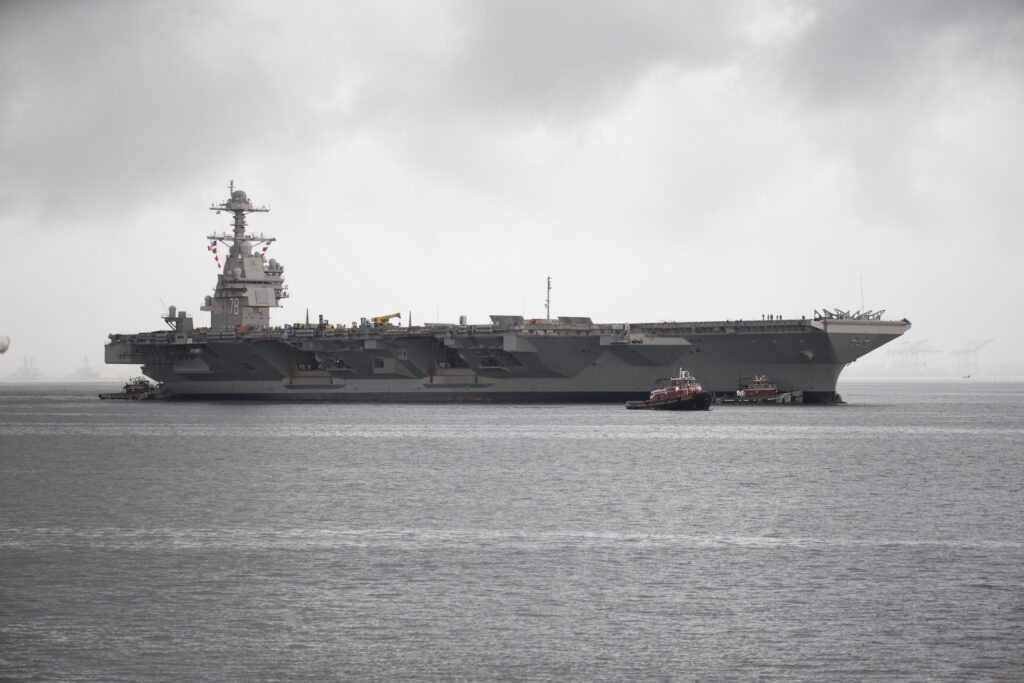
The aircraft carrier USS Gerald R. Ford (CVN 78) departed Naval Station Norfolk to transit to Newport News Shipyard in support of its planned incremental availability, a six-month period of modernization, maintenance, and repairs, Aug. 20, 2021. U.S. NAVY / Mass Communication Specialist 1st Class William Spears

ARLINGTON, Va. — The Navy’s newest aircraft carrier, the USS Gerald R. Ford (CVN 78), will operate all over the North Atlantic this year when it completes its current shipyard availability, a Navy admiral said, and will operate under the auspices of the U.S. 2nd Fleet. 

“Ford is doing amazingly well, coming out of the shipyard her for initial employment,” said Rear Adm. John F. Meier, commander, Naval Air Force Atlantic, speaking Feb. 1 during a panel discussion at the Technology, Systems and Ships Symposium conducted by the American Society of Naval Engineers. 

“I think it’s a great opportunity for us to demonstrate the new technology,” Meier said. “We’re going to do that as a service-retained employment, so not part of the normal global force deployment schedule, but we will be working with partners, we’ll be working all over the place as 2nd Fleet takes charge of that carrier and operates with a wide variety of operations up and down the coast, across the Atlantic [and] down in the Caribbean.” 

Meier said the Ford’s upcoming operations would be “a really great opportunity to show off that aircraft carriers are in fact extremely maneuverable, upwards of 700 [nautical] miles a day. And robust — most especially robust when you think about the refueled range of the aircraft that fly from them.”  

The Ford currently is in a planned incremental availability at Newport News Shipbuilding. All 11 weapon elevators have been certified as of December. Since it began flight operations, it has completed 8,100 catapult launches and the same number of arrested landings, said Rear Adm. Jim Downey, program executive officer for aircraft carriers, also speaking at the event. 


Navy Looking to Launch Analysis of Alternatives for SSN(X) Within the Next Year 

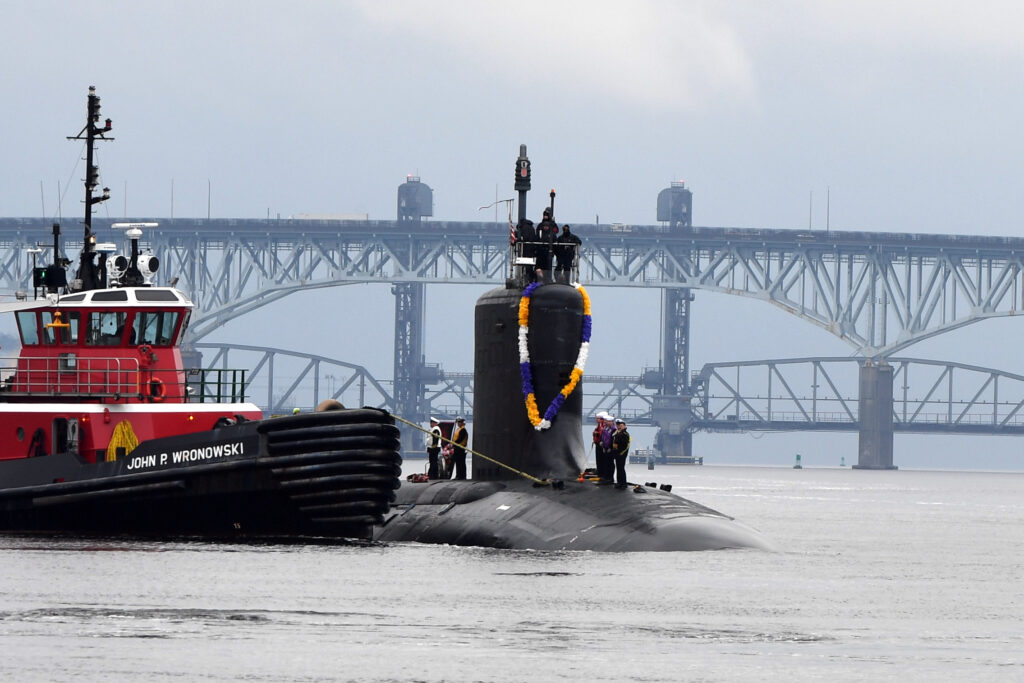
The Virginia-class submarine USS Minnesota (SSN 783) transits the Thames River toward Naval Submarine Base New London in Groton, Conn., Nov. 26, 2021. U.S. NAVY / Chief Petty Officer Joshua Karsten

ARLINGTON, Va. — The Navy plans to begin a formal Analysis of Alternatives for its next generation nuclear-powered attack submarine, or SSN(X), a senior program official said. 

“We are looking at starting an AoA here probably within the next year said Lisa Radocha, executive director of the Navy’s Program Executive Office – Attack Submarines, speaking Jan. 31 on a panel at the Technology, Systems and Ships Symposium conducted by the American Society of Naval Engineers. 

Radocha said the Initial Capabilities Document for the SSN(X) is now under development. Research and development funds for the SSN(X) program are in the fiscal 2022 budget. 

She said the SSN(X) design will feature increased speed, an increased horizontal payload, improved acoustic superiority, and higher operational availability. 

Radocha pointed out that the period between the delivery of the first Virginia-class SSN and the planned delivery of the first SSN(X) will be four decades. She said one of her concerns is holding onto the engineering and design expertise in the shipbuilding industrial base for the SSN(X) program. 

The Virginia-class SSN program will total 48 boats. The technological improvements over the seven blocks of the Virginia SSN will help to reduce risk for the SSN(X) program. 

Radocha said her focus is creating an “on-ramp” for the SSN(X) program over the next two fiscal years.  

Last August, during the Navy League’s Sea-Air-Space Expo, Rear Adm. (now Vice Adm.) Bill Houston, then-director, Undersea Warfare, Division, Office of the Chief of Naval Operations and now commander, Submarine Forces, labeled the SSN(X) as “the ultimate apex predator for the maritime domain.” 

Houston said the SSN(X) has “got to be faster, carry a significant punch, a bigger payload, a larger salvo rate. It’s got to have acoustic superiority and simultaneously we’re going to work on operational availability with respect to maintenance and life of the ship.” 

The admiral explained that the SSN(X) is timed to capitalize on the ‘very robust” design team for the Columbia-class SSBN when that program is ramping down amid production of the SSBNs.