Rear Adm. Pappano: Supply Chain Fragility is No. 1 Risk to Columbia SSBN Program
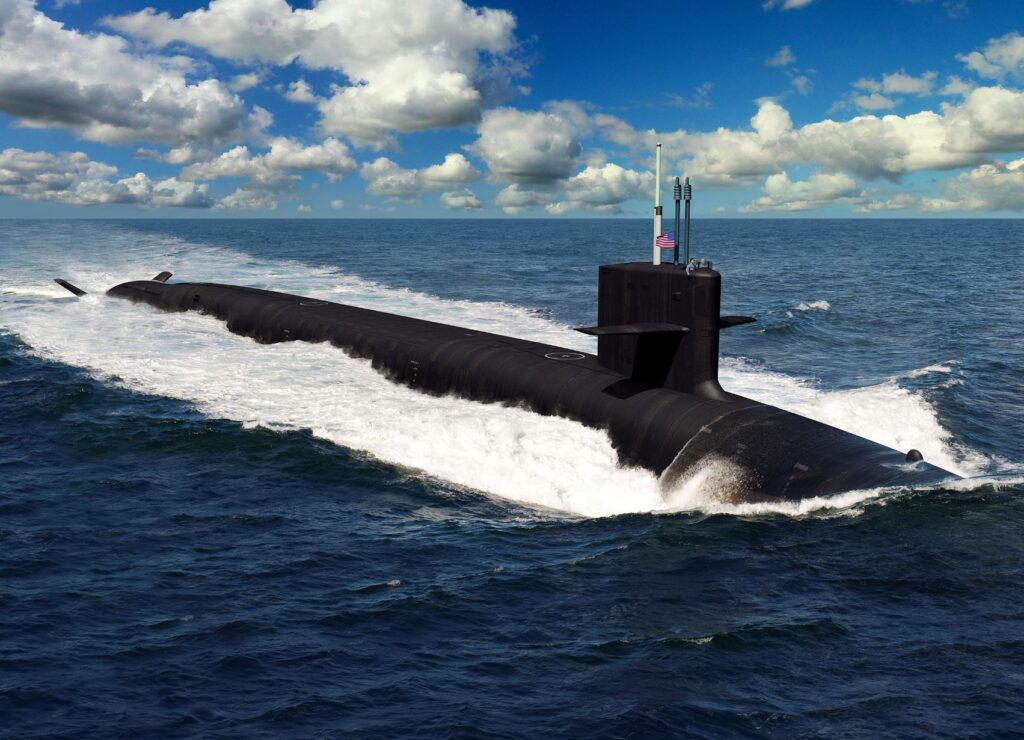
An artist’s rendering of the future U.S. Navy Columbia-class ballistic missile submarines. U.S. NAVY

ARLINGTON, Va. — The admiral in charge of building the Navy’s next-generation ballistic-missile submarine (SSBN) said the fragility of the submarine industrial base supply chain is the main risk to the Columbia SSBN going on patrol on time in October 2030. 

“The supply chain is the No. 1 risk to Columbia and 1 + 2,” said Rear Adm. Scott Pappano, program executive officer for Strategic Submarines, speaking Nov. 18 at the Naval Submarine League’s annual symposium in Arlington.  

The “1+2” refers to the current submarine building load of one Columbia-class SSBN and two Virginia-class attack submarines (SSNs) per year. 

Pappano also said because the Columbia-class SSBN is the Navy’s No.1 procurement priority, any schedule adjustment to the submarine programs would be borne by the Virginia-class SSNs before it would affect Columbia. 

The admiral noted that in the post-Cold War period the submarine industrial base had 17,000 suppliers, a number that has declined to 5,000 today. He said the fragility is greatest with components such as castings, fittings, valves and electrical equipment. 

Pappano said the Navy needs some sort of tripwire to warn the service when a supplier is faltering. 

PEO Submarines soon is standing up a new directorate, PMS-396, to manage sustainment of in-service SSBNs. 

He said there is no margin in the build schedule, so the Navy is not going to sponsor competitions for many components and systems already proven but will leave some room for competition.  

The admiral also said that the Ohio-class SSBNs — designed for 30-year careers and extended to 42 years — may be extended even longer on an individual basis.  

“Individual extensions are being looked at for targeted work,” he said. 

The admiral also said that the patrol and refit cycles of the Ohio class may be adjusted “to better maximize” their service until the boats are retired in the late 2030s. 

Pappano also stressed that the shore infrastructure that supports the SSBN force — such as the Trident Refit Facilities — needs attention if it is to last through the 2080s to service the Columbia SSBN force for its entire life. 
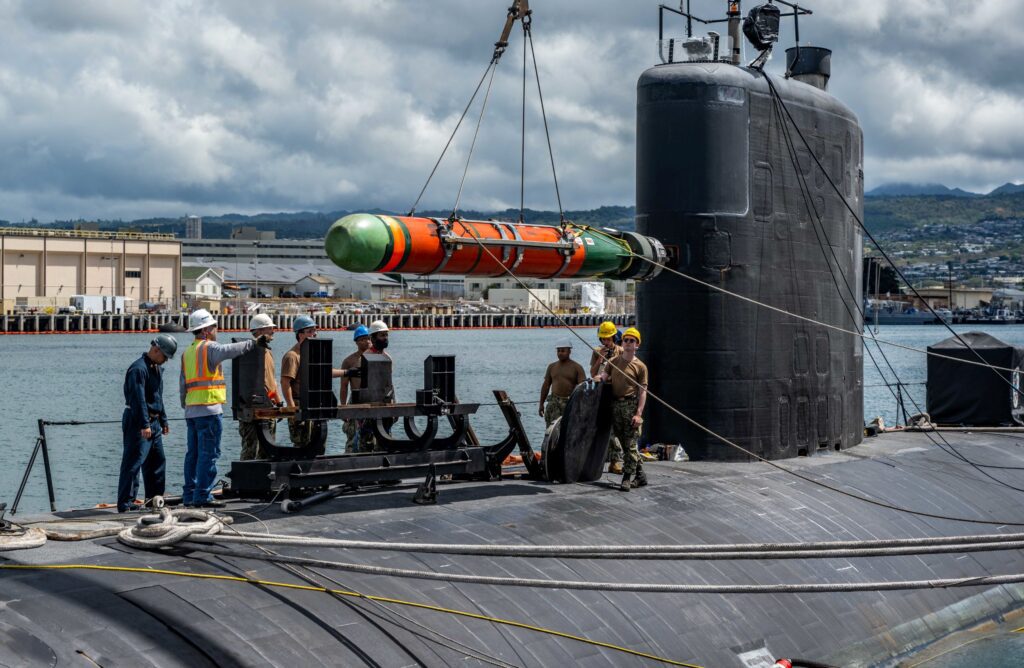


Rear Adm. Perry: First New-Production Mark 48 Torpedoes Set for 2022 Delivery

Sailors assigned to the Los Angeles-class fast-attack submarine USS Columbia (SSN 771) load a Mark 48 advanced capability torpedo for Exercise Agile Dagger 2021. U.S. NAVY / Mass Communication Specialist 1st Class Michael B. Zingaro

ARLINGTON, Va. — The first of a new-production batch of heavy-weight torpedoes (HWTs) is slated for delivery to the U.S. Navy fleet beginning in fiscal 2022, the Navy’s submarine resource sponsor said.  

Rear Adm. Doug Perry, director of Undersea Warfare Programs speaking Nov. 18 at the Naval Submarine League’s annual symposium in Arlington, said the Mark 48 HWT was last delivered in 1996, but that it has been incrementally upgraded ever since to the Advanced Capability (ADCAP) standard. However, new production was needed to build up the Navy’s inventory to meet potential warfighting needs. 

“The heavy-weight torpedo will remain the weapon of choice for the submarine for the foreseeable future, primarily due to its intended stealth, its destructive effectiveness in the battlespace, and [is] pretty difficult to defend against.” 

Perry also noted that the HWT sustains the stealth of the launch platform, the submarine. 

The Navy restarted the ADCAP production in 2016, with the program bearing fruit this year. 

Perry said the Navy is focusing on capacity in parallel with improvements for the torpedoes, including in sensor capability and in defeating countermeasures. 

The modernization upgrades over the last two decades primarily have been focused on software algorithms and processing, he said. 

“We’re past time about introducing some game-changing capability into this mainstay weapon,” Perry said. “We’re introducing significant range increase through the re-introduction of a proven engine that can give us longer legs, much longer than the average ADCAP. 

With the combination of some longer legs, some better sonar and processing and a digital backbone vice analog, it will enable us to have a one-shot, one-kill ADCAP into the next decade against those key platforms that the submarine force will be responsible to ‘service’.”     


Vice Adm. Wolfe: Hypersonic Weapon Load for Zumwalt DDGs Under Study

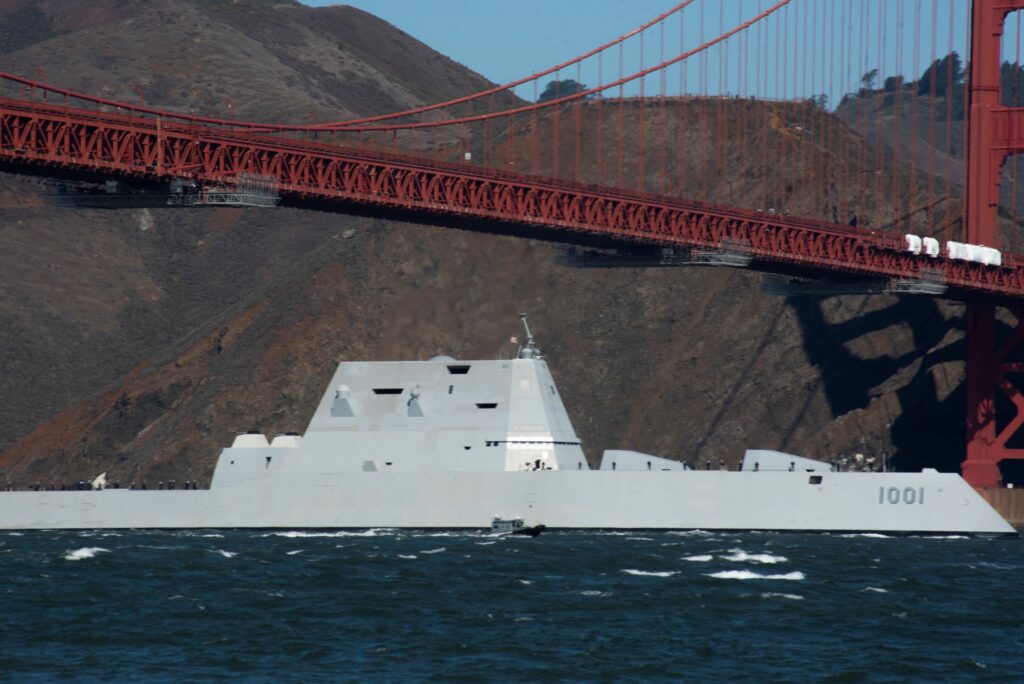
The Zumwalt-class guided-missile destroyer USS Michael Monsoor (DDG 1001) transits under the Golden Gate Bridge during San Francisco Fleet Week 2021. U.S. NAVY / Mass Communication Specialist 2nd Class Hector Carrera

ARLINGTON, Va. — With the Zumwalt-class destroyer set to be the first ship to be armed with the Conventional Prompt Strike (CPS) hypersonic missiles, the Navy is studying the parameters for the weapon load-out for the ships, a senior Navy admiral said. 

Vice Adm. Johnny Wolfe, director, Strategic Systems Program, speaking Nov. 18 at the Naval Submarine League’s annual symposium in Arlington, said the CPS “will be the primary weapon system” on the Zumwalt DDGs. 

The Zumwalt is equipped with 20 four-call Mk57 peripheral vertical launch systems which can launch Tomahawk, Standard, Evolved SeaSparrow and Vertical-Launch Anti-Submarine Rockets. The ship is expected to be fitted with separate launchers for the CPS. The two Advanced Gun Systems on the ship — which are inactive because of lack of an affordable munition — may be removed to make room for CPS launchers.  

The Navy originally had planned to deploy the CPS on the Ohio-class guided-missile submarines (SSGNs), but the delay in funding for an underwater launch test facility for the missiles pushed development into the future such that, with the Navy’s plan to decommission the SSGNs in the mid-2020s, Wolfe said it made more sense to skip the SSGNs as a platform. The underwater launch test facility development will be restarted in 2022. 

The Block V Virginia-class attack submarine (SSN) equipped with the Virginia Payload Module will be the second platform to be armed with hypersonic missiles. 

“What we’re doing is trying to leverage Zumwalt — even though it is a surface platform,” Wolfe said. “A lot of things that we’re going to test on Zumwalt are still going to be applicable on Virginia [SSN] and we’re looking at how we can get that learning to get to that platform sooner.” 

Wolfe said, “We’ve been hitting our milestones” toward fielding all-up rounds for the Army in 2023 and the Navy in its Zumwalt DDGs in 2025. 

Two tests of all-up rounds for the Army will be tested in fiscal 2022 and he said the Navy will start ramping up to five Advanced Payload Modules which will go into the Zumwalts and then go into the Virginia SSN. 

Wolfe said the Navy has been including CPS equipment in sounding rocket sorties from NASA’s facility in Wallops Island, Virginia, along with payloads from other users to advance technology maturation. 

The hypersonics program so far has had three successful rocket motor tests and the first slug test, the latter demonstrating the ability to eject-test in a cold launch. 


Vice Adm. Houston: Sub Force Approaching Inflection Point of 50 SSNs

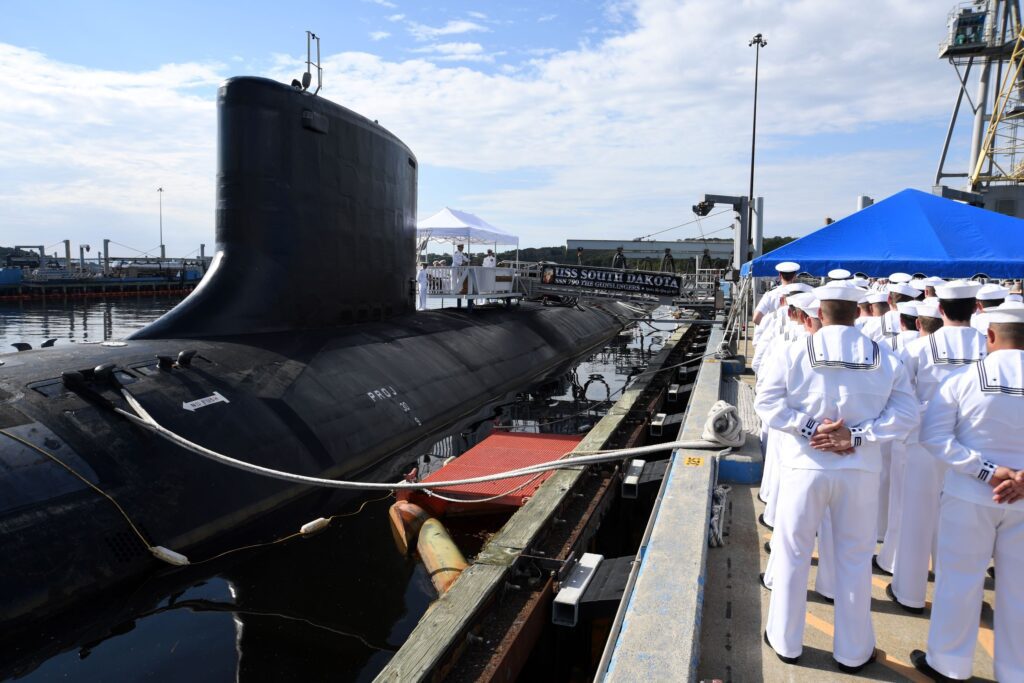
The crew of the Virginia-class submarine USS South Dakota (SSN 790) stand at parade rest during a change-of-command ceremony onboard Naval Submarine Base New London in Groton, Connecticut, Sept. 27. U.S. NAVY / Chief Petty Officer Joshua Karsten

ARLINGTON, Va. — The decline in the number of the Navy’s attack submarines (SSNs) is leveling out sooner than was feared just a few years ago, made possible by the decision to extend the service lives of some older SSNs. 

Previously, the force level of SSNs was predicted to decline to a “trough” of 41 SSNs in the mid-2020s before the number would start to increase as the building of two Virginia-class SSNs per year hit its stride.  

With 50 submarines “we are at that inflection point right now,” said Vice Adm. Bill Houston, commander, Naval Submarine Forces, speaking Nov. 17 at the Naval Submarine League’s annual symposium in Arlington. “We are actually very stable right now [at 50] and we’re starting to increase our numbers. 

“How are we doing that? Through an awful lot of hard work by those people who came before me and whose shoulders we’re standing on right now; tremendous hard work from the shipbuilders and tremendous from the Navy, from the Department of Defense and from our overall government,” Houston said. 

An important initiative is the service life extension of several Los Angeles-class SSNs.  

“There is additional margin in the Los Angeles class,” he said. “We actually have reactor cores available which will refuel and extend a significant number of Los Angeles-class submarines.” 

Houston was not specific in the number of Los Angles-class SSNs submarines that will go through life extensions. The Navy previously has mentioned consideration of extending the service lives of five to seven boats.   

“We found that on most of our Los Angeles [SSNs] had significant hull margins, so we were able to extend them, and they had the fuel to go longer,” he said. “There are several Los Angeles’s that we will physically refuel and add years on them. Just due to the absolutely incredible job we did when we built the Los Angeles and the Ohio [SSBN and SSGN] that we could extend those ships as long as we can.” 


Adm. Caldwell: ‘It’s a Great Time to Be a Submariner’

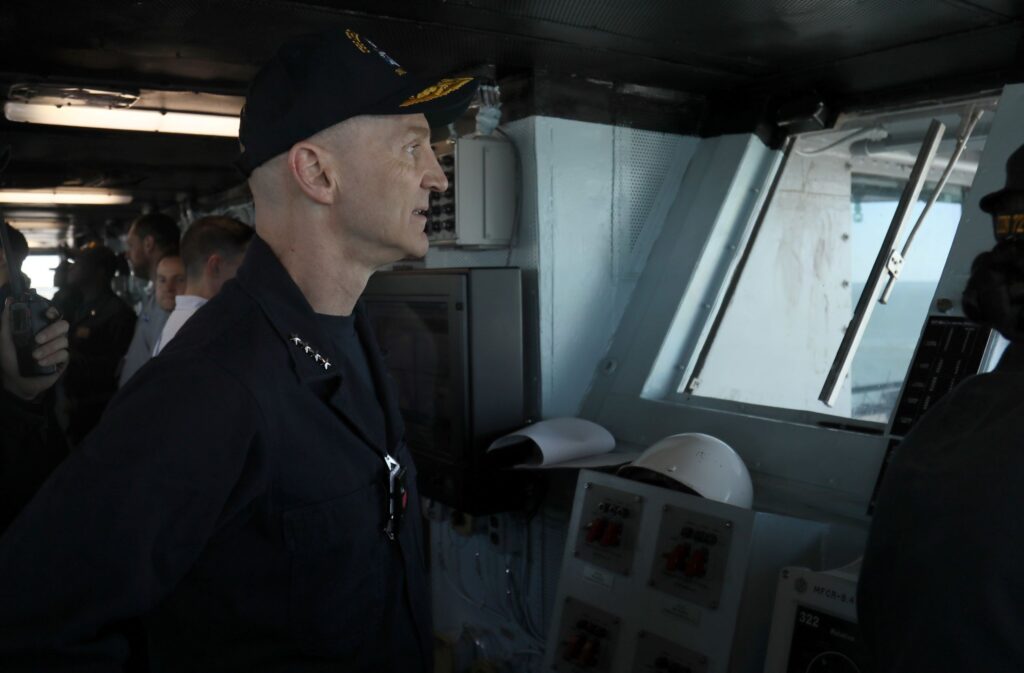
Adm. Frank Caldwell observes Nimitz-class aircraft carrier USS Abraham Lincoln (CVN 72) getting underway on the bridge in this 2017 photo. U.S. NAVY / Mass Communication Specialist 1st Class Josue L. Escobosa

ARLINGTON, Va. — The director of the U.S. Navy’s Nuclear Propulsion Program told an audience of active-duty and retired submariners that the current era of great power competition is highly demanding of the submarine force but is an exciting time as the challenges are met. 

“Our submarines are consistently in high demand,” said Adm. Frank Caldwell, director, Navy Nuclear Propulsion Program, speaking Nov. 17 at the Naval Submarine League’s annual symposium in Arlington. “We are always improving our game, our team, our platforms. … It’s a great time to be a submariner.” 

Caldwell noted that while the United States faced a formidable adversary during the Cold War — the Soviet Union — it now faces two nuclear-capable competitors: Russia and China. He said that the U.S. Navy’s attack submarines and guided missiles are deployed forward daily. 

He especially praised the wisdom of the conversion of four Ohio-class ballistic-missile submarines (SSBNs) into guided-missile submarines (SSGNs), each able to deploy with up to 154 Tomahawk cruise missiles and with special operations forces. 

“We can’t keep these platforms at sea enough,” he said of the Ohio-class SSGNs, calling their development in the 2000s a “monumental decision.” 

The SSGNs are slated for retirement in the mid-2020s, and their missile capacity will be replaced by Block V Virginia-class submarines equipped with the Virginia Payload Module. 

Caldwell noted the new strike weapons entering the submarine force’s arsenal in the next few years, including the Maritime Strike Tomahawk, the Conventional Prompt Strike hypersonic weapon, and the return of the submarine-launched Harpoon cruise missile. 

Seabed warfare also is a capability being sought by the submarine force, he said, with an emphasis on unmanned vehicles. 

Caldwell said the submarine force is focusing on all methods of transferring data on and off the ship to be networked with the fleet, including incorporating machine learning and artificial intelligence, to enable faster decision-making. 

“Just as we pursue acoustic superiority, we are pursuing decision superiority,” he said. 

He also noted that the United States currently is building submarines at the highest rate since the 1990s. 

Electric drive will be returning to the submarine force with the Columbia-class SSBN. Caldwell said that every electric drive train bound for a Columbia-class SSBN will be thoroughly tested at a land-based test site in Philadelphia and then shipped to Electric Boat in Groton, Connecticut for installation in their respective hulls.  

Caldwell briefly addressed the recent AUKUS agreement between Australia, the United States and the United Kingdom, which plans to build a nuclear-powered submarine force for Australia. 

The U.S. Navy stands ready to support the historic announcement, but Caldwell stressed the importance of wise stewardship, looking at various options, and the importance of trust in the endeavor. He also said the Navy must be sure not to let AUKUS slow its own efforts. 

“We have an already busy enterprise,” he said, noting that it is important for the Navy to remain focused. 


Moran: China Way Ahead of US on AI Data

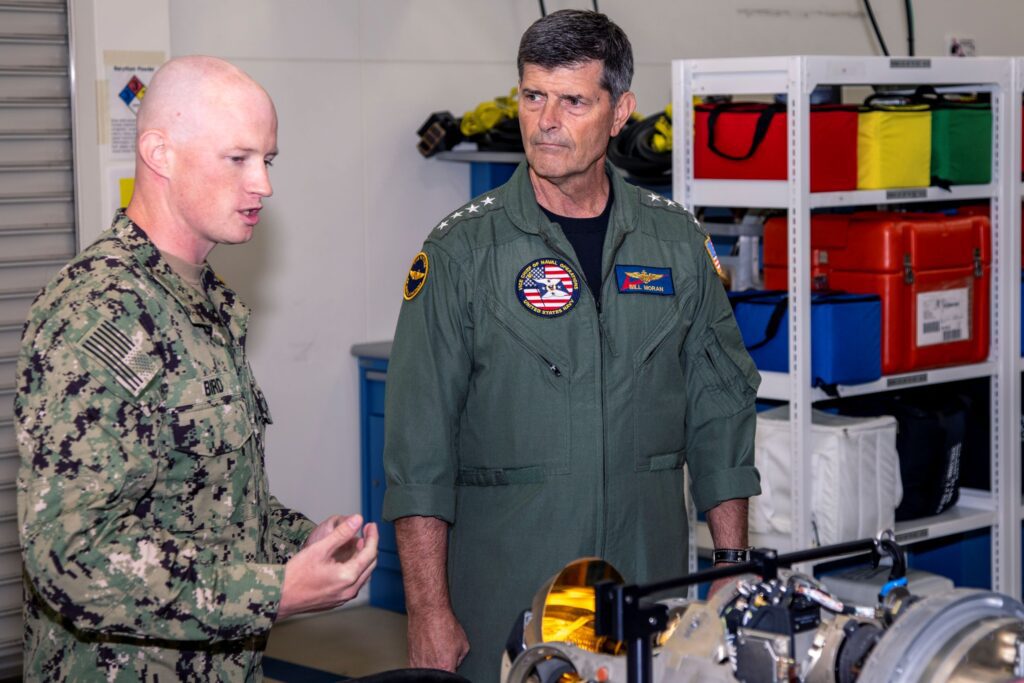
Retired U.S. Navy Adm. William Moran, then vice chief of naval operations, visits Aircraft Intermediate Maintenance Detachment Iwakuni at Marine Corps Air Station Iwakuni, Japan, Sept. 12, 2018. U.S. MARINE CORPS / Lance Cpl. Stephen Campbell

ARLINGTON, Va. — The United States still has an edge in two aspects of artificial intelligence (AI), but the People’s Republic of China is ahead on a third aspect and rapidly closing on the other two, a retired Navy admiral said.  

Speaking on AI in a Nov. 16 webinar — hosted by the Navy League of the United States and sponsored by Deloitte — was retired Adm. William Moran, former vice chief of naval operations and currently a strategic advisor for several companies, a board member at the US Naval Institute and as the founder and president of WFM Advisors LLC. 

Moran considered three legs of AI in his assessment: quality of data; AI expertise; and domain expertise. 

“You add those things together and that’s where the magic happens,” he said. 

The admiral said that much available data has to be refined, a time-consuming task that requires a large investment in personnel to convert stove-piped data in stove-piped systems to be useful across networks. 

The United States — inside the U.S. Navy and outside — is flush with AI expertise, Moran said.  

“We ae the best in the world in developing algorithms and developing AI capability,” he said. 

But even more so, the Navy is vastly endowed with domain expertise. 

“From a DoD [Department of Defense] perspective, we are so far ahead of the Chinese, in my opinion,” he said. “ASW [anti-submarine warfare], ASUW [anti-surface warfare], even — to some extent — cyber, we’re way ahead on domain expertise. 

Moran said that on the aspect of data, “China is way ahead of us, because they can put raw manpower and unlimited resources towards data and they’ve done that for quite some time … and they don’t have a lot of the roadblocks to obtaining that data, not worried about the security pieces that we rightfully have in front of mind, whether it’s on the operational or tactical edge or the operational management structure.” 

He said that China is going to close gaps quickly in AI and domain expertise. 

“They’re in a race to get there sooner than we do,” he said. 

“You’ve got to get the domain folks in with the software engineers that are writing the code, with the data that’s high quality, and it can happen pretty quickly. … You just have to commit and get after it.” 


Hypersonics Pose ‘Huge Physics Challenge’ for Weapon Design

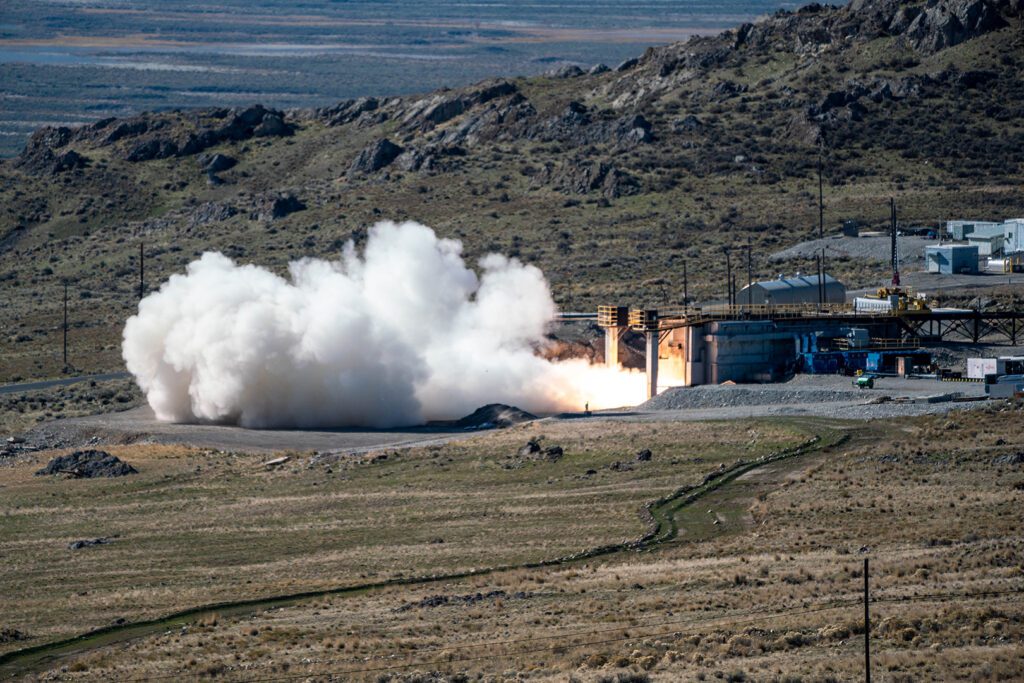
The U.S. Navy, in collaboration with the U.S. Army, conducts a static fire test of the first stage of the newly developed 34.5” common hypersonic missile that will be fielded by both services. U.S. NAVY / NORTHROP GRUMMAN

ARLINGTON, Va. — Arming hypersonic weapons with the advanced fuzing needed to give the weapon the desired effects is one of the more significant challenges facing the armaments industry, an industry official said. 

Hypersonic fuzing “is a huge physics challenge,” said Charlie Zisette, executive director of the National Armaments Consortium, a trade association of manufacturers of explosives, propellants, materials, fuzing, and other technologies related to armaments. 

“Here we’re trying to push the state of the art with fuzing now having to go on the front end of hypersonic weapons, which is a new problem statement for us in terms of the environment that the fuze has to function in … including hard-target penetration,” Zisette told Seapower. “We now can miniaturize things that we weren’t able to do before. Size and volume are critically important because we’ve got to be able to miniaturize and yet still take very significant accelerations that are as high as 10,000 Gs. 

“The ability to both miniaturize and harden our electronics will open up an opportunity to do some things that will help the hypersonics, that will help some of these long-range weapon systems that we’re trying to develop to support the warfighter,” he said. 

Zisette said “one of the advantages we have today in trying to solve that is we’ve really improved our modeling and simulation capabilities. That’s an important aspect in solving some of these very difficult fuzing problems at high rates of speed and rates of closure, in particular for things like hypersonic fuzing for ground-launched missiles.  

“An advantage we have today is people who have entered into our armaments ecosystem that are coming from what I would call a nontraditional defense contractor world who are very capable in computational analysis and modeling and simulation and bringing that to our arena within the armaments sector,” he said. “That has been very beneficial. So, we can do a lot of work before we actually have to get to the bench and start prototyping hardware where we can do a fair amount of advanced design through modelling and simulation.”  

The National Armaments Consortium membership includes 950 companies and universities. 


USS Connecticut Leadership Relieved by Fleet Commander

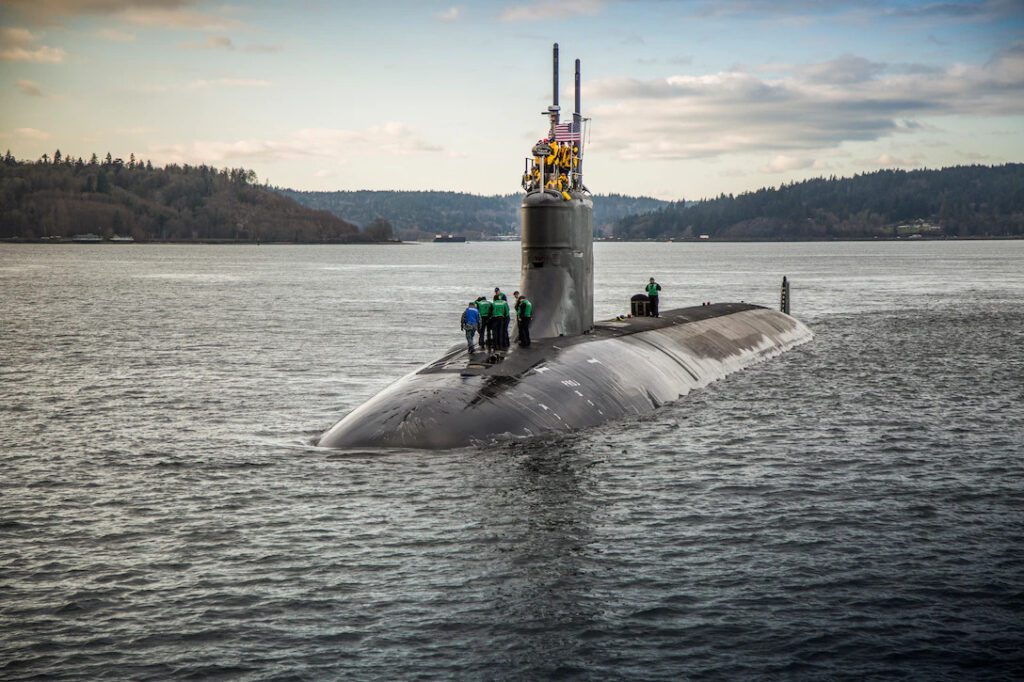
The Seawolf-class fast-attack submarine USS Connecticut (SSN 22) departs Naval Base Kitsap-Bremerton for deployment, May 27. U.S. NAVY / Lt. Mack Jamieson

ARLINGTON, Va. — The leadership of the Seawolf-class attack submarine USS Connecticut (SSN 22) has been relieved and replaced by an interim leadership team, the Navy said Nov. 4. 

The USS Connecticut grounded an uncharted seamount on the afternoon of Oct. 2 while submerged in the South China Sea, while operating in international waters in the Indo-Pacific region. There were no life-threatening injuries. The submarine made a transit to the naval bae in Apra Harbor, Guam, for an assessment of the damage.  

“Vice Adm. Karl Thomas, commander, U.S. 7th Fleet, relieved Cmdr. Cameron Aljilani as commanding officer, Lt. Cmdr. Patrick Cashin as executive officer, and Master Chief Sonar Technician Cory Rodgers as chief of the boat,” the release said. 

Loss of confidence in the leadership team was the reason the Navy cited in the release. 

“Thomas determined sound judgement, prudent decision-making and adherence to required procedures in navigation planning, watch team execution and risk management could have prevented the incident,” the Navy said. 

Capt. John Witte will assume duties as interim commanding officer, Cmdr. Joe Sammur will assume duties as interim executive officer and Command Master Chief Paul Walters will assume duties as interim chief of the boat, the Navy said. 
 
The Navy said the Connecticut is undergoing damage assessment in Guam and will be repaired at Bremerton, Washington. 

In January 2005, the Los Angeles-class attack submarine USS San Francisco (SSN 711) struck a sea mount while submerged southeast of Guam. The submarine’s bow sonar dome was crushed, but the pressure hull was not compromised. Dozens of crewmen were injured, and one later died of injuries. The submarine was repaired and returned to fleet service in 2009 with the bow from the ex-USS Honolulu installed.  

The Connecticut, commissioned in 2005, is the second of the three-boat Seawolf class. 


SOCOM Commander: Navy SEALS to Focus on Strategic Reconnaissance, Working with Partners

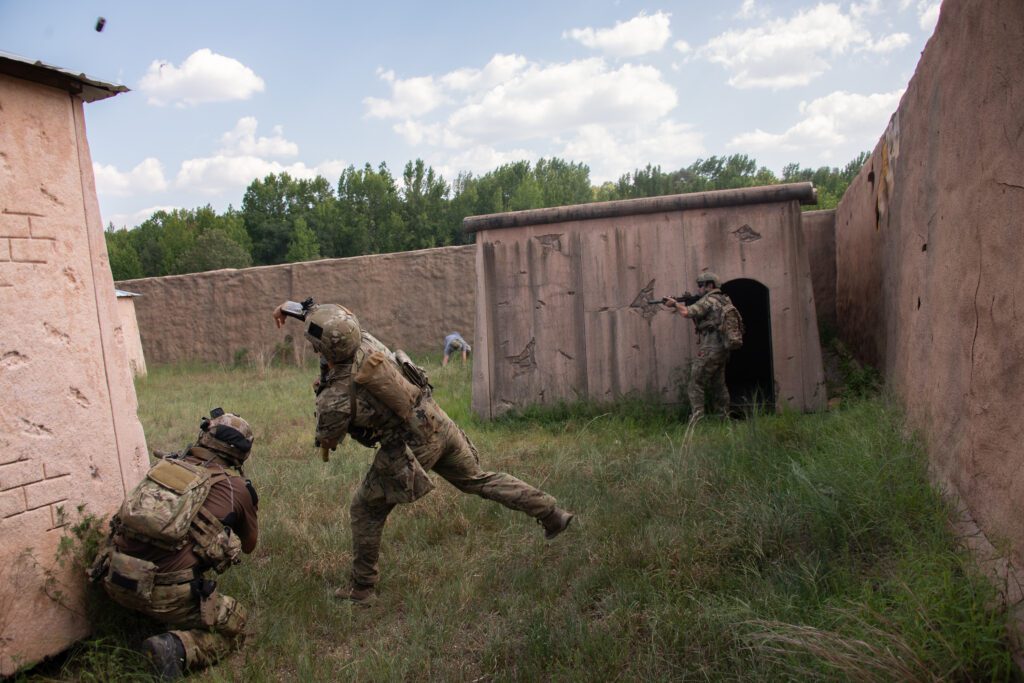
A U.S. Navy SEAL throws an M18 colored smoke grenade during a sweep of a training compound during Sentry Rescue IV, a joint command initiative to develop tactics, techniques and procedures for personnel recovery scenarios, Arkansas, Aug. 26, 2021. U.S. AIR NATIONAL GUARD / Tech. Sgt. Brigette Waltermire

ARLINGTON, Va. — The commander of the nation’s special operations forces said the Navy’s SEALs will have an important role in the future in enabling commanders to understand the enemy’s capabilities and intentions. 

The SEALs, along with the special operations forces of the other U.S. military services, have had a super-sized role in the Southwest Asian wars since 9-11, serving at the forefront of U.S. and coalition forces in the low-intensity conflicts in Afghanistan, Iraq, Syria, and other locations. 

With U.S. focus on deterring a future conflict with China and shifting the focus to high-end operations, the 70-000-strong special operations forces (SOF) also are shifting focus. 

Speaking to the Military Reporters and Editors at a symposium in Arlington, Army Gen. Richard D. Clarke, commander, U.S. Special Operations Command, said the SOF are “more integrated than ever before,” including with inter-agency partners. 

Clarke said he sees Navy SEALS as ‘working with partners, able to train, and also to conduct another key mission or activity, which is strategic reconnaissance. They can get in places that no one else can get they can be in the littorals — in subsea/subsurface domain — and are critical.” 

Clarke said SOF are more than just a direct-action raid force, but the force will still maintain that capability, one which “we have honed to an exquisite degree.” 

The commander said the SOF benefits from working closely with the general-purpose forces and that his command will look for every opportunity to leverage high-end training for its forces. 


Submarine USS Connecticut Grounded on Uncharted Seamount, 7th Fleet Says

The Seawolf-class fast-attack submarine USS Connecticut (SSN 22) departs Puget Sound Naval Shipyard for sea trials following a maintenance availability in this 2016 photograph. U.S. NAVY / Thiep Van Nguyen II

ARLINGTON, Va. — The nuclear-powered attack submarine USS Connecticut (SSN 22) “grounded an uncharted seamount,” 7th Fleet Public Affairs said in a Nov. 1 statement. 

The Connecticut’s incident occurred on the afternoon of Oct. 2 while submerged in the South China Sea, while operating in international waters in the Indo-Pacific region. There were no life-threatening injuries. The submarine made a transit to the naval bae in Apra Harbor, Guam, for an assessment of the damage.  

“The submarine remains in a safe and stable condition,” the Navy said at the time. “USS Connecticut’s nuclear propulsion plant and spaces were not affected and remain fully operational.”  

“The command investigation for USS Connecticut (SSN 22) has been submitted to Commander, U.S. 7th Fleet for review and endorsement,” the Navy said in the Nov. 1 statement. “Commander, U.S. 7th Fleet will determine whether follow-on actions — including accountability — are appropriate.”   

In January 2005, the Los Angeles-class attack submarine USS San Francisco (SSN 711) struck a sea mount while submerged southeast of Guam. The submarine’s bow sonar dome was crushed, but the pressure hull was not compromised. Dozens of crewmen were injured, and one later died of injuries. The submarine was repaired and returned to fleet service in 2009 with the bow from the ex-USS Honolulu installed.  

The Connecticut, commissioned in 2005, is the second boat of the three-boat Seawolf class.

Editor’s note: The original version of this article incorrectly described the Connecticut as having a 100-foot extension section for enhanced payloads. That submarine is the USS Jimmy Carter.